Taiwan FDA mulls lower threshold for food firm certification
Minister of Health and Welfare Lin Tzou-yien (林奏延) yesterday dismissed media reports that the ministry is planning to lift a ban on food imports from five Japanese prefectures that were affected by radioactive fallout from the Fukushima Dai-ichi nuclear power plant disaster in March 2011.
The Chinese-language United Daily News yesterday said that Japanese media had reported that Taiwan would gradually lift the ban on food imports from the five prefectures.
The United Daily News report also said that Food and Drug Administration (FDA) Director-General Chiang Yu-mei (姜郁美) had stated that there is the possibility of gradually allowing food imports from four prefectures of the five affected prefectures — excluding Fukushima.
Since the disaster, all food imports from five Japanese prefectures — Fukushima, Ibaraki, Tochigi, Gunma and Chiba — have been banned.
“From when I took office on May 20, we have not discussed any issues about radioactive contaminated products from the five Japanese prefectures at all” Lin said in response to media queries.
Regarding rumors that Chiang had admitted the possibility, Lin said: “It is what I say that counts.”
Later, at a meeting of the legislature’s Social Welfare and Environmental Hygiene Committee, Chiang responded to lawmakers’ queries over the issue by saying that his ministry “had not had any contact or discussion” with Japan over the issue.
http://www.taipeitimes.com/News/taiwan/archives/2016/05/31/2003647556
“TEPCO reveals only handful knew meltdown manual existed”
Too Late…
Although a manual existed that outlined the criteria for a meltdown, Tokyo Electric Power Co. admitted that only five or so employees at its main office knew of it at the onset of the 2011 nuclear crisis.
Those employees belonged to a section that manages the manual at the company’s Tokyo headquarters, TEPCO said at a news conference on May 30.
The utility has been under fire for the delay in acknowledging in May 2011 that triple meltdowns took place at the Fukushima No. 1 nuclear power plant, two months after they actually occurred following the Great East Japan Earthquake and tsunami.
TEPCO had maintained that the reactors at the plant suffered “core damage,” rather than more serious meltdowns.
Explaining the delay, the company initially cited a lack of guidelines for determining a meltdown.
But TEPCO admitted in February this year that the company manual did contain entries defining a meltdown, although the company said it was unaware of the descriptions for the past five years. The criteria requires the company to declare a meltdown when damage to a reactor core passes 5 percent.
Takafumi Anegawa, chief nuclear officer with TEPCO, told the news conference that a third-party panel will investigate why it took the company five years to disclose the existence of the manual.
In April, a TEPCO senior official admitted that he knew of the criteria when the crisis was unfolding at the plant.
http://www.asahi.com/ajw/articles/AJ201605310068.html
Taiwan definitely to abandon nuclear power

 Gov’t to end nuclear power in 2025: MOEA
|
The China Post news staff
May 26, 2016, Economics Minister Lee Shih-guang Wednesday stressed that Taiwan will definitely abandon nuclear power in 2025, amid renewed speculation about the fate of the nearly completed Fourth Nuclear Power Plant. Lee said there has been a national consensus on turning Taiwan into a “nuclear-power free home,” a goal that many hope will be achieved by 2025. The policy is against extending the service lives of the three currently operational nuclear power plants, he said. “There is no room for discussion. When 2025 comes, nuclear power will be abandoned,” Lee said at his first press conference since taking office on May 20, reiterating President Tsai Ing-wen’s promise of giving up nuclear power…….http://www.chinapost.com.tw/taiwan/national/national-news/2016/05/26/467321/Govt-to.htm |
‘Nuclear energy has no sustainable, democratic future in Japan’,
‘Nuclear energy has no sustainable, democratic future in Japan’, DW, 29 May 16 Despite the majority of Japanese opposing a restart of the nation’s nuclear reactors, the government continues to press for a full resumption of nuclear power. Energy expert Tetsunari Iida tells DW the reasons behind it. “…….Tokyo plans to increase nuclear power as a share of the country’s energy profile to between 20 and 22 percent by 2030.
However, public opposition to nuclear energy remains steadfast, as the disaster continues to loom in the Japanese psyche and many harbor safety concerns in the earthquake-prone country.
Kansai Electric Power Co. announced on January 28 plans to restart the nation’s third nuclear reactor, after it cleared new post-Fukushima safety regulations.
In a DW interview, sustainable energy policy expert Tetsunari Iida says the nuclear lobby in Japan has not only economic interests, but also a strong conviction in the conservative energy policy concept, which gives nuclear power a major role in the energy policy mix.
DW: Why has the government decided to restart some of the reactors despite protests from the population?
Tetsunari Iida: There is a strong belief among certain sections in Japan that nuclear power is one of the most important components of the energy mix. This is an old-fashioned and conservative energy policy concept shared by those at the center of Japan’s energy policy circle, such as the ruling Liberal Democratic Party (LDP) and the country’s industry association Keidanren.
For them, the resumption of nuclear power generation is of utmost importance. That is why Japan’s government has been strongly urged to restart the nuclear reactors.
Is the conservative government of PM Abe not taking the concerns of the population seriously?
No, I do not believe PM Abe takes the concerns of the population seriously. I am of the view that Abe still believes nuclear energy is safe, cheap and stable, even after the Fukushima disaster.
According to nuclear energy opponents, many Japanese are afraid of the potential consequences of restarting the nuclear reactors, and demand a change in energy policy. So why isn’t there much more public resistance to the government’s plans?
The majority of people in Japan have been against the Abe government’s plans to restart the nuclear reactors. This opposition, however, is not necessarily having an impact on the people’s political affiliations and their voting tendencies……….
Of course, renewable energy is really helpful to achieve energy independence. But the benefits are not solely limited to securing energy independence, as renewables also help to mitigate climate change, create jobs and boost economic growth.
Speaking in ecological and economic terms, which renewable energy sources are best suited for an industrialized nation such as Japan?
From resource potential point of view, wind and solar power are the best suited for Japan…….
Japan can afford to completely give up nuclear power. In fact, sticking to nuclear represents an old-fashioned economy, whereas renewable energy is a symbol of a new industrial revolution……. http://www.dw.com/en/nuclear-energy-has-no-sustainable-democratic-future-in-japan/a-19011468
Indian company exits nuclear project, switches to wind energy
Nalco pulls out of JV with NPCIL for nuclear power plant in Gujarat Business Standard, Dillip Satapathy | Bhubaneswar May 30, 2016 Aluminium major Nalco has decided to drop its plan to foray into nuclear energy generation. The company had signed a memorandum of understanding (MoU) with Nuclear Power Corporation of India Ltd (NPCIL) in 2012 to set up two units of Kakrapara Atomic Power Station in Gujarat with capacities of 700 Mw each. The cost of the project was estimated at Rs 12,000 crore…….
We have decided to pull out of the JV with NPCILfollowing change in technology of the project. Initially, it was decided to build the plant with indigenous technology. But later, it was decided to use foreign technology. The foreign technology will not only be more expensive, the gestation period of the project will also be more and we are not in a mood to wait that long with so much of investment exposure,” said Nalco Chairman and Managing Director Tapan Kumar Chand……..
Notwithstanding its unsuccessful bid to foray into nuclear energy, Nalco has identified renewable energy as its next focus area. “We have set up wind mills in Andhra Pradesh (50.4 Mw) and Jaisalmer, Rajasthan (47.6 Mw). We plan to set up more wind power mills in Rajasthan and Maharashtra (50 Mw each) and a 20 Mw solar power plant in Madhya Pradesh. We are also in the processing of installing a 14-Mw wind power mill at Damanjodi,” said Chand. http://www.business-standard.com/article/companies/nalco-pulls-out-of-jv-with-npcil-for-nuclear-power-plant-in-gujarat-116052900518_1.html
Fukushima evacuation order to be lifted in July

TOKYO — The Japanese government decided Friday to lift an evacuation order put in place after the March 2011 disaster at the Fukushima Daiichi nuclear power plant.
The order covering part of the nearby city of Minamisoma will now expire July 12, allowing over 10,000 people to return to their homes. The central government, the city and Fukushima Prefecture all approved the measure, the scale of which would be one of the largest of its kind in Japan.
“We have met our objectives concerning decontamination and critical infrastructure construction, fulfilling the conditions needed to cancel the order,” said Yosuke Takagi, who heads the government’s on-site nuclear disaster response headquarters.
“After considering resident arguments for and against the cancellation, we have decided that lifting the restrictions is necessary given that there are people who wish to quickly move forward on the road to recovery,” said Minamisoma Mayor Katsunobu Sakurai.
The Silencing of Japan’s Free Press
Under the heavy hand of Prime Minister Shinzo Abe, Japan’s media is being forced to toe the government line. Or else.

TOKYO — As the leaders of the G-7 liberal democracies convened in the Japanese shrine town of Ise-Shima this week, host Prime Minister Shinzo Abe used the event to showcase his nation as a regional beacon of democratic values and a counterweight to authoritarian China. However, recent events have raised doubts about his commitment to at least one of those values — freedom of the press.
There have been alarming signs of deteriorating media freedoms in Japan. In March, three of the country’s most outspoken television anchors were removed almost simultaneously by three different networks. While the networks were acting on their own, the dismissals were widely seen as orchestrated by the Abe government: The three were some of the last high-profile media critics of its agenda, which includes restarting Japan’s nuclear power industry and rolling back its postwar pacifism. The sacked anchors joined a growing list of critical media voices that have been muted since Abe took office in December 2012. And their ouster came just weeks after the country’s communications minister, Sanae Takaichi, declared in Japan’s parliament, the Diet, that the government had the legal power to shut down TV broadcasters that it deemed to be politically biased. That announcement capped a difficult year-and-a-half for independent media that saw the largest liberal newspaper, the Asahi Shimbun, subdued and other critical commentators removed from the airwaves.
The taming of Japan’s media watchdogs has attracted growing attention from overseas. On April 19, David Kaye, the U.N. special rapporteur on freedom of expression, wrapped up a weeklong fact-finding mission to Japan by expressing “deep and genuine concern” about declining media independence in Asia’s richest democracy. The following day, the Paris-based media advocacy group Reporters Without Borders lowered Japan’s place in its annual ranking of world press freedom to 72nd out of 180 nations, between Tanzania and Lesotho — down from 61st the previous year. “The Abe administration’s threats to media independence, the turnover in media personnel in recent months and the increase in self-censorship within leading media outlets are endangering the underpinnings of democracy in Japan,” the group said.
According to one Japanese news source, the Abe government’s efforts to suppress critics may have taken a more ominous turn. In its June edition, Facta, a monthly business magazine noted for its scoops, reported that the administration had used Japan’s spy agency, the Cabinet Intelligence and Research Office, to keep tabs on a Japanese lawyer who helped Kaye during his visit. (On her blog, the lawyer, Kazuko Ito, proclaimed she would never yield even if the government monitored her.) The allegations of surveillance conjured the same heavy-handed tactics that Reporters Without Borders and other international media watchdogs have warned might follow Japan’s passage in late 2013 of a new state secrecy law. They say the vagueness of the law, and the draconian prison terms of up to 10 years for revealing secrets, will put a damper on journalists, as well as the whistleblowers within government who may try to help them.
Japan’s mainstream media have never been noted for hard-hitting, independent coverage, instead emphasizing cozy relations with power and a brand of access journalism that can seem extreme even by the standards of the Washington press corps. The Japanese press’s symbiotic relationship with the government is institutionalized in the so-called press clubs, monopolistic arrangements that give reporters from the big national newspapers and broadcasters privileged access to officials, whose perspectives they end up sharing.
But press watchers now warn that Japan is losing even that limited press independence. Consider the case of the Asahi Shimbun, the world’s second-largest newspaper with a daily circulation of 6.8 million. The Asahi, the intellectual flagship of Japan’s political left, had been endeavoring to beef up its investigative coverage following the 2011 Fukushima nuclear disaster, when it and other Japanese mainstream media lost public trust for dutifully repeating the official line that all were safe — even as reactor buildings exploded. What it lacked in investigative prowess, the liberal Asahi had tried to make up for in editorial spunk, opposing the revisionist right’s efforts to whitewash sordid aspects of Japan’s World War II-era history like the “comfort women” forced to work in military brothels.
But in August 2014, the Asahi pulled back from both its comfort women coverage and its investigations into Fukushima following harsh right-wing attacks, led by Abe himself, on missteps in some of its articles. On Oct. 3, 2014, Abe attacked the Asahi for damaging Japan’s reputation after the newspaper belatedly admitted that more than a dozen stories published a quarter-century ago about comfort women had been based on the sourcing of a discredited Japanese army veteran. “It is a fact that its misreporting has caused numerous people to feel hurt, sorrow, suffering, and outrage,” Abe told the lower house budget committee. “It has caused great damage to Japan’s image.”
Japanese government officials and other journalists have pushed back against the criticism of Japan’s press freedoms, calling the pessimistic assessments unfairly harsh. In an April 27 article on Yahoo Japan, journalist Shoko Egawa said “it didn’t make sense” for Reporters Without Borders to rank Japan below places like Hong Kong and South Korea, where there are much more real pressures on journalists. “While it is okay to take as a reference the evaluation of a foreign NGO, there is no need to get all worked up about the low ranking,” she wrote.
There are also few in Japan who believe Takaichi would ever actually try to close down broadcasters. Takaichi raised alarms on Feb. 8, when she told the Diet that the 1950 Broadcast Law, which regulates the nation’s airwaves, allowed the government to shut down broadcasters that fail to remain “politically neutral” by highlighting “only one aspect of a polarizing political issue.” However, when questioned by legislators a day later, she seemed to back down a bit. “I don’t think I would resort to such measures myself,” she said, “but there is no guarantee that future [communications] ministers won’t.”
Japanese and foreign media observers agree that the pressures visibly placed on journalists in Japan can seem quite tepid by international standards. After all, there have been no arrests of journalists or forced closures of media outlets. Nor has the new secrecy law been used to pursue journalists, as the George W. Bush and Obama administrations have done by subpoenaing investigative reporter James Risen of the New York Times in an attempt to force him to reveal his sources of classified information.
What has been worrying, however, is the willingness of major Japanese media to silence themselves in response to a level of behind-the-scenes chiding by Abe administration officials that most U.S. journalists would probably just laugh off. A dramatic example of this was exposed in March 2015, when one of Japan’s biggest networks, TV Asahi, removed Shigeaki Koga, an ex-Trade Ministry official turned sharp-tongued TV commentator, from its Hodo Station evening news program.
Koga drew the administration’s ire when he protested its ineffective handling of a hostage crisis in Syria on air by holding up a placard in January 2015 that read “I’m not Abe.” Before the Abe era, such antics would not have raised eyebrows on Hodo Station, which was known for its feisty commentary. However, the government’s top media handler, Chief Cabinet Secretary Yoshihide Suga, told reporters at a background briefing how unhappy he was with the “completely mistaken” comments of an unnamed commentator at an unspecified network, according to an internal memo of the conversation recorded by a TV Asahi reporter who was present.
That internal memo was passed back to network executives. Koga says this was enough to convince TV Asahi to remove both himself and a highly regarded producer on the show, Fumie Matsubara. Their departure was followed a year later by TV Asahi’s decision in March to remove the host of Hodo Station, Ichiro Furutachi, who was one of the three anchors ousted this spring.
Other journalists relay similar stories, saying that TV executives quickly take the hint to avoid an actual confrontation with the administration. “It’s not that the media have cowered in the face of some obvious pressure, but this all takes place out of sight, until you suddenly notice that they have retreated,” Shuntaro Torigoe, a veteran TV newscaster, said at a March 2016 press conference at the Foreign Correspondents’ Club of Japan, where he and four other top TV journalists warned of growing efforts to intimidate the press. “The administration’s will is passed along to the media executives, becoming part of the atmosphere inside the newsroom that leads to self-censorship and restrained coverage.”
According to Torigoe, the result has been a form of self-censorship that Japanese journalists call sontaku, a term with no exact English translation but that refers to a Japanese social strategy of trying to please others, usually superiors, by preemptively acting in accordance with their perceived whims. Journalists say that while conformity has always been prevalent within Japan’s homogeneous society, the feeling has grown more intense recently as anxieties about the rise of neighboring China have increased the pressure to toe the line.
This conformity has been enforced by the verbal attacks and intimidation from the so-called Net Right, a loose-knit community of shrilly nationalistic netizens whom some members of the Abe government have openly embraced. “Recently, I feel a growing pressure for conformity,” Hiroko Kuniya, another of the three TV anchors ousted in late March, wrote in the May edition of the magazine Sekai, a highly regarded liberal opinion magazine. “This is a pressure that says you must conform to the majority without resisting, that such conformity is normal and expected. It seems even the media have become a party in exerting this pressure.”
Besides the Sekai article, Kuniya has said nothing else about her removal after 23 years at the helm of Close-Up Gendai, the prime-time showcase for investigative journalism on national broadcaster NHK. (She has also declined interview requests.) However, other NHK reporters say they have come under blatant pressure to tamp down criticism of the administration from the broadcaster’s president, Katsuto Momii, a conservative businessman whom Abe installed at the helm in December 2013. Momii has made no secret of his desire for NHK to toe the government line. After April’s deadly earthquake in the southern city of Kumamoto, when there were concerns about damage at a nearby nuclear plant, Momii told his journalists that their coverage must be “based on official government announcements,” not independent reporting.
At private broadcasters, where the government cannot just appoint executives, the administration has found other means of pressure, say journalists and media scholars. They say it has done this by skillfully exploiting structural weaknesses in the media. One of the biggest weaknesses is the extreme emphasis on access to inside information via the press clubs. This results in an intense competition for scoops, in which news agencies vie to be the first to report on the future intentions of government officials or agencies. Reporters’ careers can be made or broken based on their ability to curry enough favor with officials to be tipped off ahead of rival journalists.
Toshio Hara, a former reporter with the Japanese wire service Kyodo News who now writes on media issues, says the Abe administration has manipulated this exaggerated version of access journalism by limiting the prime minister’s press conferences and group interactions with the press gaggle in favor of exclusive interviews. These are bestowed upon only cooperative reporters, who are also favored with advanced leaks about future actions by the administration. News organizations deemed critical are excluded and cut off from the flow of scoops given to other journalists. This preferential access can also take the form of private dinners with the prime minister himself: The Tokyo Shimbun newspaper reported that Abe dined with top political journalists and media executives more than 40 times during his first two years in office alone.
Hara says the administration has made an unprecedented use of access to reward friendly journalists and punish critics. He notes that this has been part of an aggressive push to control media messages — a lesson of Abe’s first stint as prime minister in 2007, when he resigned after only 12 months following intense criticism from the press regarding scandals in his administration. “The power relationship between the prime minister’s office press corps and the prime minister has been completely changed,” Hara wrote in the 2015 book How Ready Is Journalism for the Abe Government? “With a few exceptions, the media have become supplicants.”
Selective granting of access has also allowed the administration to pursue a divide-and-conquer strategy, in which media organizations try to stay in Abe’s good graces by turning on each other. This is what happened to the Asahi, which lost the will to fight after finding that every other major media outlet had ganged up against it, say journalists in the newspaper. “We found ourselves standing all alone,” said Ryuichi Kitano, a senior Asahi reporter. “The administration didn’t even have to criticize us because the media did it for them.”
Shigetada Kishii, another of the three anchors removed this year, says media infighting prevented them from presenting a united front against the threat by Takaichi. The outspokenly liberal Kishii left the TBS network’s News 23, a highly regarded nightly news program, after crossing the Abe government by criticizing the 2015 passage of new laws to expand the role of Japan’s military. “There is something structural in the Japanese media, when it comes to why they couldn’t object as a group” to Takaichi’s comments, said Kishii, who also spoke at the Foreign Correspondents’ Club press conference in March. “Rivalry between newspapers and TV stations prevents them from even thinking about coordinating.”
Lack of solidarity among news companies was also one of the factors cited by Kaye, the U.N. special rapporteur, to explain the Japanese media’s apparent inability to resist political pressure. He linked this to a broader lack of shared professional identity among Japanese journalists, who spend entire careers at the same newspaper or broadcaster, unlike their more peripatetic Western counterparts.
This made them more loyal to company than profession, preventing them from taking a united stand, or forming some sort of effective union or lobby group to defend their interests. Kaye also faulted Tokyo for failing to create a political environment that tolerates the expression of diverse opinions, including dissenting ones. This was all too apparent in his own visit to Japan, which ran into problems created by an administration that appears overly thin-skinned to criticism regardless of its high approval ratings.
Originally scheduled for December, Kaye’s trip to Japan was abruptly canceled just weeks before when Tokyo said it was “unable to arrange meetings.” Even after he managed to make the visit in April, Kaye received a cold shoulder from the Abe government. Despite repeated requests, Takaichi refused to meet him, as did other top officials and media executives — including NHK’s Momii. The highest-ranking member of the administration who agreed to talk with him was a vice minister of communications, who gave him just 15 minutes. Kaye said the vice minister just repeated what Takaichi had said — without elaborating or even trying to explain her comments.
Political experts say that such undiplomatic behavior only further damages Japan’s credibility as a purveyor of democratic values. “Japan’s slide down the global rankings for press freedom and its skewering by the U.N. rapporteur on his recent visit are a black eye for Abe and the nation,” said Jeff Kingston, the director of Asian studies at Temple University in Tokyo. “They undermine Japan’s democratic identity and its constitutional freedoms.” Kingston and others say that Japan needs a vigorous democracy, including robust media freedoms, to compete for influence with a larger and richer China. But with the press either suppressed or in submission, one wonders whether that important warning is even reaching Abe — or likely to appear on the nightly news anytime soon.
http://foreignpolicy.com/2016/05/27/the-silencing-of-japans-free-press-shinzo-abe-media/
Obama meets Hiroshima survivors, calls for a ‘Moral Revolution’ for nuclear disarmament
At Hiroshima Memorial, Obama Says Nuclear Arms Require ‘Moral Revolution’, NYT 27 May 16 HIROSHIMA, Japan — President Obama laid a wreath at the Hiroshima Peace Memorial on Friday, telling an audience that included survivors of America’s atomic bombing in 1945 that technology as devastating as nuclear arms demands a “moral revolution.”
Thousands of Japanese lined the route of the presidential motorcade to the memorial in the hopes of glimpsing Mr. Obama, the first sitting American president to visit the most potent symbol of the dawning of the nuclear age. Many watched the ceremony on their cellphones.
In an emotional moment afterward, Mr. Obama embraced and shook hands with survivors of the attack, which exposed humanity to risks the president has repeatedly said the world must do far more to resolve.
……..For weeks, the White House had refused to say whether Mr. Obama, would meet survivors. It was a delicate decision. Many survivors long for an apology for an event that destroyed just about everyone and everything they knew, and there were small demonstrations near the ceremony on Friday by protesters demanding an apology. But Mr. Obama said before his trip that he would not apologize for the attack.
Still, Mr. Obama’s homage to the victims and his speech were welcomed by many Japanese. “I am simply grateful for his visit,” said Tomoko Miyoshi, 50, who lost 10 relatives in the Hiroshima attack and wept as she watched Mr. Obama on her cellphone.
In his speech, Mr. Obama, using the slow and deliberate cadence that he uses on only the most formal and consequential occasions, said that the bombing of Hiroshima demonstrated that “mankind possessed the means to destroy itself.”
In a striking example of the gap between Mr. Obama’s vision of a nuclear weapons-free world and the realities of purging them, a new Pentagon census of the American nuclear arsenal shows his administration has reduced the stockpile less than any other post-Cold War presidency.
“We must have the courage to escape the logic of fear and pursue a world without them,” he said, although he quickly added: “We may not realize this goal in my lifetime, but persistent effort can roll back the possibility of catastrophe.” http://www.nytimes.com/2016/05/28/world/asia/obama-hiroshima-japan.html?_r=0
Japanese government to announce a shift away from nuclear power?

 Japan Nuclear Power Outlook Bleak Despite First Reactor Restart Japan to cut emphasis on nuclear in next energy plan http://www.dw.com/en/japan-to-cut-emphasis-on-nuclear-in-next-energy-plan/a-19289705
Japan is rethinking its energy diet and could announce a shift away from nuclear power as soon as next year. Scrapping nuclear would mean more renewable energy generation, but also a heavier reliance on coal.
Japan will cut its reliance on nuclear power after releasing an updated energy plan next year, the Reuters news agency reported on Friday, citing three people with knowledge of the matter.
The Japanese remain strongly opposed to nuclear power after the 2011 Fukushima disaster, and a shift in energy policy would reflect that widespread aversion. But it would also likely usher in a new era of dependence on coal-fired power plants.
Japan will never go back to nuclear energy.
Burning coal is less expensive than producing nuclear power, but a recent decision by Japan’s environment ministry to drop its opposition to coal-fired power plants has raised questions about the industry’s ability to lower its greenhouse gas emissions.
Is coal the way to go?
Japan is one of several Asian countries that are expanding their coal portfolios faster than natural gas, which is viewed as another big potential source of growth in the energy sector.
Renewables are also on the upswing, and Tokyo’s decision to move away from nuclear power would definitely see it boost its reliance on renewable energy.
A target set by Japan’s energy ministry that would have seen nuclear energy make up a fifth of the country’s electricity was widely criticized. Another target, which foresaw nuclear accounting for 10-15 percent of electricity by 2030, was also nixed.
A shift away from nuclear energy, while publicly popular, wouldn’t be without risk, according to experts.
“There is a real risk that investment in coal or fossil fuel power generation within five to 10 years will become a stranded asset, which means that they’re no longer a viable investment,” the head of the International Renewable Energy Agency (IRENA), Adnan Z. Amin, told Reuters. “You’re seeing in more and more countries around the world a determination to move out of coal.”
‘I Do Not Want Any Children to Develop Cancer Like Me’, a Fukushima Resident Says
Independent filmmaker Ian Thomas Ash has uploaded to YouTube a four-part interview with a young woman from Fukushima Prefecture who has been diagnosed with thyroid cancer. Now 20, the interviewee was 15 years old when, following the March 2011 earthquake and tsunami, the Fukushima Daiichi nuclear power complex lost power and the ability to cool fuel in the reactors. The lack of cooling caused a series of hydrogen explosions that severely damaged four of the six reactors at the Daiichi complex.
As a result of the explosions and subsequent fires, nuclear contamination was spread over a large part of Japan’s northeast. The young woman interviewed in the documentary, who wishes to remain unidentified, is one of 166 Fukushima residents who were 18 or younger at the time of the nuclear disaster who have been diagnosed with or suspected of having thyroid cancer (as of February 2016).
While some attribute the rise in cases of thyroid cancer to more rigorous screening, Ash notes that 74.5% of young people aged 18-21 as of April 1, 2014 who were living in Fukushima at the time of the nuclear accident have not yet taken part in the official thyroid ultrasound examination.
“This young woman’s reason for speaking out is to motivate the families of children who have not yet received the thyroid ultrasound examination to have their children tested,” Ash says in his introduction to the interview.
The interview has been uploaded to YouTube in four parts: part 1, part 2, part 3, part 4
The woman says according to her doctors, her cancer was caught at the right moment. Had she waited any longer, they told her, the cancer could have spread. As a result of the illness, she had part of her thyroid removed.
She will begin working in a nursery school this year, and is pained to think of any other children going through what she has endured:
I would hate if any children I taught developed cancer. To tell the truth, I do not want any children to develop cancer like me.
Ash, based in Tokyo, makes short documentaries about life in Japan after the March 11, 2011 earthquake, tsunami and nuclear disaster.

In Fukushima, even robots can’t survive nuclear mayhem
The company that runs the Fukushima plant sent 5 robots to ground zero and not a single one survived. Incredibly high radiations in the block causes heat levels to rise and this melts the robots’ wiring.
A tsunami, triggered by an earthquake on March 11, 2011, initiated the Fukushima Daaiichi nuclear disaster in Japan which led to the evacuation of over 200,000 people.
Even after 5 years, there is still a tremendous amount of cleanup work left at ground zero. The Tokyo Electric Power Co. (TEPCO) which runs the plant has managed to clean up one building but is still struggling to do the same with other buildings which has burnt fuel rods. These fuel rods are nothing but chunks of radioactive waste weighing hundreds of metric tonnes.
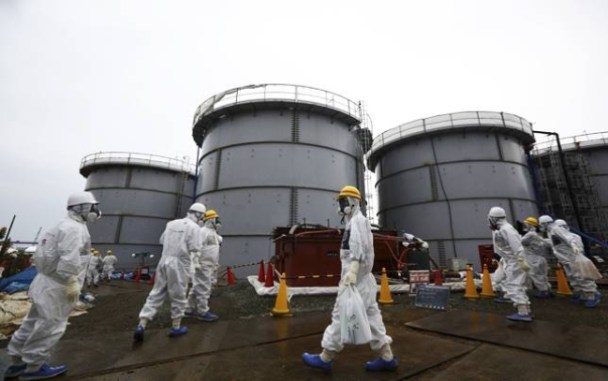
It took 2 years for TEPCO to design the robots for the job of extracting melted fuel rods and according to TEPCO’s head of decommissioning, Naohiro Masuda, the heat levels due to radiation are so extreme that it simply melts the robot’s wiring.
Japan had been trying out various methods to stop the radiations from damaging the area further. One such method was building “ice walls” to keep groundwater from reaching the reactors. A refrigerant chemical that forms an ice wall to block Fukushima’s fallout water and stop the ground water intrusion into the plant.

A million metric tonnes of irradiated water is being stored on the site and is pumped in to cool down the reactors. Disposing the radioactive water is still a challenge for TEPCO as storage tanks have already leaked some of the material into the ocean.
After TEPCO’s robots not surviving the heat levels of the radiations, it’s a place for no man or machine. Toshiba has developed new robots for picking up the fuel rods and to clean up the scene which previous robots failed to.
The entire cleanup process is expected to take around 30 to 40 years, but TEPCO is being blamed for its lukewarm response to the incident and is facing flak from the Japanese government and the people alike.
China readies nuclear armed submarines for the Pacific
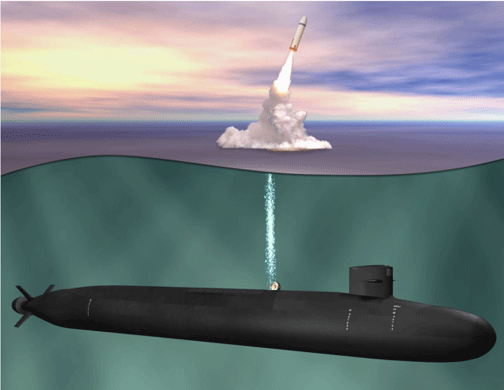
 China to send nuclear-armed submarines into Pacific amid tensions with US
Beijing risks stoking new arms race with move although military says expansion of the US missile defence has left it with no choice, Guardian, Julian Borger , 26 May 16 [ video, excellent graphics] The Chinese military is poised to send submarines armed with nuclear missiles into the Pacific Ocean for the first time, arguing that new US weapons systems have so undermined Beijing’s existing deterrent force that it has been left with no alternative.
Chinese military officials are not commenting on the timing of a maiden patrol, but insist the move is inevitable.
They point to plans unveiled in March to station the US Thaad anti-ballistic system in South Korea, and the development of hypersonic glide missiles potentially capable of hitting China less than an hour after launch, as huge threats to the effectiveness of its land-based deterrent force.
A recent Pentagon report to Congress predicted that “China will probably conduct its first nuclear deterrence patrol sometime in 2016”, though top US officers have made such predictions before…….
Last Tuesday, a US spy plane and two Chinese fighter jets came close to colliding 50 miles of Hainan island, where China’s four Jin-Class ballistic missile submarines are based. A fifth is under construction.
The two countries’ navies have also come uncomfortably close around disputed islands in the same region, and the chance of a clash will be heightened by cat-and-mouse submarine operations, according to Wu Riqiang, an associate professor at the School of International Studies at the Renmin University in Beijing.
“Because China’s SSBNs [nuclear missile submarines] are in the South China Sea, the US navy will try to send spy ships in there and get close to the SSBNs. China’s navy hates that and will try to push them away,” Wu said.
The primary reason Chinese military officials give for the move towards a sea-based deterrent is the expansion of US missile defence, which Moscow also claims is disturbing the global strategic balance and potentially stoking a new arms race.
The decision to deploy Thaad anti-ballistic interceptors in South Korea was taken after North Korea’s fourth nuclear test, and the stated mission of the truck-launched interceptors is to shield the south from missile attack.
But Beijing says the Thaad system’s range extends across much of China and contributes to the undermining of its nuclear deterrent. It has warned Seoul that relations between the two countries could be “destroyed in an instant” if the Thaad deployment goes ahead……
Under Xi’s assertive leadership, China seems determined that the Chinese nuclear deterrent will take finally to the ocean, and it has already taken thestep of putting multiple warheads on its missiles. Those steps are mostly in response to US measures, which in turn were triggered by unrelated actions by the North Koreans.
The law of unintended consequences is in danger of taking the upper hand. “The two sides may thus be stumbling blindly into severe crisis instability and growing competition by China with respect to strategic forces,” Lewis argues. “A competition between unevenly matched forces is inherently unstable.”http://www.theguardian.com/world/2016/may/26/china-send-nuclear-armed-submarines-into-pacific-us
1MDB Unit Bought by China Nuclear Firm Was Distressed, Auditor Says
1MDB Unit Bought by China Nuclear Firm Was Distressed, Auditor Says China General Nuclear Power bought Edra Global Energy from debt-laden 1MDB last year, WSJ, By YANTOULTRA NGUI May 26, 2016
KUALA LUMPUR, Malaysia—An audit of a key energy group sold by troubled state investment fund 1Malaysia Development Bhd. to a Chinese state-owned nuclear-power company flagged deep uncertainty over the company’s viability.
Notes from auditor Deloitte in the 140-page financial accounts of Edra Global Energy Bhd. for the year ended March 31, 2015, said the audit found “an existence of a material uncertainty which may cast significant doubt about the group’s and company’s ability to continue as a going concern.”
The auditor’s notes, reviewed by The Wall Street Journal, are part of the most detailed account of Edra’s finances at the time that China General Nuclear Power Corp.purchased the firm for 9.83 billion ringgit ($2.4 billion) last November as the fund, known as 1MDB, was struggling to meet its debt obligations……..http://www.wsj.com/articles/1mdb-unit-bought-by-china-nuclear-firm-was-distressed-auditor-says-1464251503
10% of TEPCO’s frozen soil wall at Fukushima site not working

The solid frozen soil wall that Tokyo Electric Power Co. is trying to create at its stricken Fukushima No. 1 nuclear power plant is falling short of expectations.
TEPCO said May 25 its attempt to freeze the soil around the crippled reactors to decrease contaminated groundwater has hit an unexpected glitch.
The utility said it has been unable to freeze the soil at about 10 percent of points it surveyed even though more than one-and-a-half months have passed since the program started.
This is due to the fact that soil temperatures have failed to drop sufficiently. In places where the temperature remains especially high, there is a possibility the soil will never freeze.
TEPCO reported the situation to the Nuclear Regulation Authority, the nation’s nuclear watchdog, saying it plans to implement additional work, such as injecting cement or other materials into the soil.
The project involved the construction of a 1,500-meter-long circular frozen soil wall around the No. 1 to No. 4 reactor buildings. The utility inserted 1,568 pipes to a depth of 30 meters and 1 meter apart. The idea was that each pipe would then freeze the soil around it once liquid of minus 30 degrees circulated inside the cylinders.
The project is aimed to stop flow of groundwater into reactor buildings, where melted nuclear fuel has accumulated in the basements, and, as a result, reduce the volume of highly contaminated water.
To date, around 34.5 billion yen ($315 million) has been spent on the project.
TEPCO started to freeze the soil in late March, with the goal of first creating an 820-meter-long portion, mainly along the side of the plant facing the sea.
According to TEPCO, the temperature of soil around pipes was lower than zero in only 88 percent of 5,800 or so sites it surveyed as of May 17. In the remaining 12 percent, temperatures were as high as 10 degrees in places.
In spots where temperatures fell short, the soil wall was riddled with holes. TEPCO plans to fill them in by injecting cement or other agents.
On the site of the plant facing a mountain, the utility has been freezing the soil in phases. Although it had planned to double the number of frozen soil sites as early as mid-May, that has not materialized.
“If the effects of the frozen soil wall fall short of what we have expected, we will hold talks with TECPO about additional steps,” said an NRA official in charge of the issue.
A-bomb survivors’ leader says Japan shares blame, too

Terumi Tanaka, secretary general of Japan Confederation of A-and H-bomb Sufferers Organizations, speaks during an interview in Tokyo on May 11.
The debate over whether U.S. President Barack Obama should apologize to Japanese survivors of America’s atomic bombings in World War II made Terumi Tanaka think: What about his own government?
Tanaka, secretary-general of Japan Confederation of A-and H-bomb Sufferers Organizations, was 13 when the United States dropped its second atomic bomb on Nagasaki city on Aug. 9, 1945, three days after the first on Hiroshima.
He was at home on a mountainside and survived, but lost five relatives in the blast. His family lived in an anti-firebombing shelter until Japan surrendered six days later.
“To be honest, I think Mr. Obama should apologize to the survivors,” said Tanaka, 84, a retired engineering professor. “I’ve seen my relatives die in front of my eyes, which I never forget.”
He added, though, that Japan also should take some of the blame.
“Japan started the war and kept dragging it on,” he said. “The government should fully take responsibility for our suffering.”
The Japanese government offered little help for survivors until the confederation he now leads was established in 1956 to demand support. A year later, a national medical compensation law was enacted, but because of stringent standards, dozens of survivors are still fighting in court to get recognized as victims.
Referring to the White House stressing that Obama’s visit Friday is not to revisit history, and Prime Minister Shinzo Abe’s push for future-oriented relations with the rest of Asia, Tanaka said: “You can see the future and move on only when you squarely face the past and come to terms with it.”
Excerpts of video interviews with Tanaka, another Japanese atomic bomb survivor and U.S. veterans are available at http://apne.ws/243ZLSD.
1 This Month





PLEASE OPPOSE HR 8255 AND S.3639 – bills would accelerate satellite deployment, with no environmental review or safeguards – https://ncstd5li.quorum.us/campaign/169331/
To see nuclear-related stories in greater depth and intensity – go to https://nuclearinformation.wordpress.com
-
Archives
- October 2026 (58)
- September 2026 (339)
- August 2026 (330)
- July 2026 (355)
- June 2026 (287)
- May 2026 (306)
- April 2026 (356)
- March 2026 (251)
- February 2026 (267)
- January 2026 (308)
- December 2025 (358)
- November 2025 (359)
-
Categories
- 1
- 1 NUCLEAR ISSUES
- business and costs
- climate change
- culture and arts
- ENERGY
- environment
- health
- history
- indigenous issues
- Legal
- marketing of nuclear
- media
- opposition to nuclear
- PERSONAL STORIES
- politics
- politics international
- Religion and ethics
- safety
- secrets,lies and civil liberties
- spinbuster
- technology
- Uranium
- wastes
- weapons and war
- Women
- 2 WORLD
- ACTION
- AFRICA
- Atrocities
- AUSTRALIA
- Christina's notes
- Christina's themes
- culture and arts
- Events
- Fuk 2022
- Fuk 2023
- Fukushima 2017
- Fukushima 2018
- fukushima 2019
- Fukushima 2020
- Fukushima 2021
- general
- global warming
- Humour (God we need it)
- Nuclear
- RARE EARTHS
- Reference
- resources – print
- Resources -audiovicual
- Weekly Newsletter
- World
- World Nuclear
- YouTube
-
RSS
Entries RSS
Comments RSS

