Tokyo Hopes To Lift No Go Zone Order In Fukushima In Next Five Years
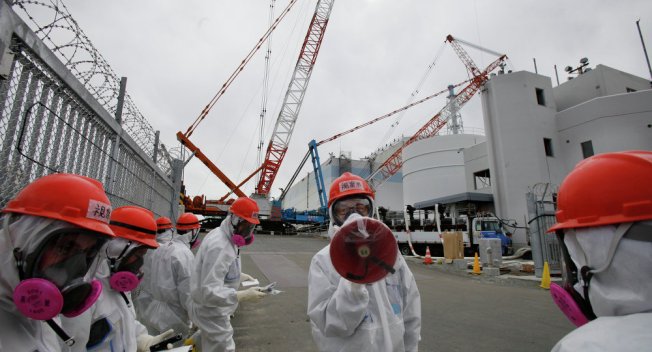
By the end of the 2021 fiscal year, the Japanese government intends to repeal an evacuation order on the remaining “no go zone” around the Fukushima no.1 nuclear plant, the site of one of the worst nuclear accidents in history.
Tokyo announced Wednesday that it aims to conduct infrastructure restoration and radiation clean ups in reconstruction bases built within the zone, which was highly contaminated when the plant, operated by Tokyo Electric Power Co. Holdings Inc. (TEPCO), was shut down during a March 2011 tsunami and earthquake.
Prime Minister Shinzo Abe, at a joint meeting of the Reconstruction Promotion Council and Nuclear Emergency Response Headquarters, where the proposal was adopted, said, “Based on the basic policy, we will embark on reconstruction work in the zone as soon as possible.” In June 2015 the government decided it would lift the ban on areas of Fukushima with lower contamination levels by March of 2017.
Headquarters also announced that the decontamination of Fukushima would be paid for with state funds. It was estimated in 2013 that cleanup would cost upwards of 2.5 trillion yen (about $24 billion), and the decontamination efforts would be financed with funds collected from selling state-owned shares of TEPCO.
Tokyo hopes to profit 2.5 trillion yen from selling the shares, but TEPCO stock would have to trade at about 1,050 yen for that to happen, and shares are currently valued at around 360 yen. After evacuation and some rearranging, Tokyo has been gradually lifting no-go zones restrictions in Fukushima since 2013.
53-year-old Toshiko Yokota, who was able to return to clean up her home in Naraha in 2015 said, “My friends are all in different places because of the nuclear accident, and the town doesn’t even look the same, but this is still my hometown and it really feels good to be back. I still feel uneasy about some things, like radiation levels and the lack of a medical facility,” she said. “In order to come back, I have to keep up my hope and stay healthy.”
According to Jiji Press, the public cost of decontamination and cleanup of the nuclear accident exceeded 4.2 trillion yen by the end of the 2015 fiscal year. Factoring in costs for reactor decommissioning, compensation payments to people and organizations affected by the accident and radioactive decontamination, the government spent about 33,000 yen per capita.
http://sputniknews.com/asia/20160902/1044873179/tokyo-lift-no-go-zone.html
Japan may invest $10 bln in Russian oil firm Rosneft – Nikkei
Japan will propose a broad cooperation in the energy sector with Russia that could include a nearly $10 billion investment in Russian state-owned oil giant Rosneft, the Nikkei newspaper reported on Friday.
The report comes as Prime Minister Shinzo Abe plans to meet Russian President Vladimir Putin on the sidelines of a two-day business conference beginning Friday in Vladivostok.
The two are expected to discuss closer cooperation in such areas as energy and technology, with Japan hoping to strengthen economic ties and create a breakthrough in a decades-long territorial dispute.
The Nikkei said the Ministry of Economy, Trade and Industry (METI) is considering investing as much as 1 trillion yen ($9.7 billion) to buy 10 percent of Rosneft through the government-backed Japan Oil, Gas and Metals National Corp, or Jogmec.
In addition, Japan will consider joint surveys for oil and gas projects in Eastern Siberia and the Russian Far East. It will also seek technical cooperation in decommissioning the Fukushima Daiichi power plant, the site of the 2011 nuclear disaster, the paper said.
METI was not immediately available for comment.
Japan may invest $10 bln in Russian oil firm Rosneft – Nikkei
Steel in Troubled French Nuclear Reactor Used in 13 Japanese Reactors
Thirteen Japanese nuclear reactors were constructed with steel from the same company used in a French power plant that’s under scrutiny for anomalies found in the reactor vessel’s structure.
Six utilities used steel from Japan Casting & Forging Corp., they all said in separate statements on Friday. The steelmaker was identified by Japanese authorities last month as supplying steel to the Flamanville nuclear plant, developed by Electricite de France SA and Areva SA, where the French safety authority last year found weaker-than-expected steel.
Japan’s nuclear regulators asked utilities last month to examine reactor parts manufactured by the same companies as the Flamanville facility. Utilities must now evaluate whether their reactor pressure vessels meet Japan’s standards and report the results to the Nuclear Regulation Authority by Oct. 31.
The Japanese facilities affected include Kyushu Electric Power Co.’s Sendai No. 1 and 2 reactors, the company said Friday. The plant was restarted last year and is facing opposition from the region’s new governor, who has demanded they be temporarily shut for inspections.
Reactors that are currently operating don’t need to be shut down, Yoko Kobayashi, an official with the NRA’s planning division, said Friday. The affected utilities are now required to submit manufacturing reports and past evaluation results, she said.
Nuclear Challenge
The steel scrutiny is latest hurdle for nuclear power in Japan and the government’s goal of having it account for as much as 22 percent of its energy mix by 2030 in the wake of the 2011 Fukushima disaster. Local court challenges have threatened reactor operations, and even those restarted under new post-Fukushima safety rules have faced a rocky road. Only three of the nation’s 42 operable reactors are online.
Parts manufactured by JCFC met rigorous standards requested by the utilities, and the company will provide support going forward, Seigo Otsubo, an official at the company, said Friday.
EDF and Areva are conducting additional tests to determine whether the anomalies are a safety issue. The two companies said in April that the submission of their report to French regulators about the Flamanville reactor has been delayed until year-end.
EDF has also determined that steam generator channel heads at 18 French reactors contain anomalies similar to those at Flamanville, Autorite de Surete Nucleaire, the safety regulator, said in June.
Japanese reactors that used steel from JCFC, according to statements from the companies:
- Tokyo Electric Power Co. Holdings Inc.’s Fukushima Dai-2 No. 2, No. 4
- Kansai Electric Power Co.’s Takahama No. 2, Oi No. 1 and No. 2
- Kyushu Electric Power Co.’s Genkai No. 2, No. 3, No. 4, Sendai No. 1, No. 2
- Shikoku Electric Power Co.’s Ikata No. 2
- Hokuriku Electric Power Co.’s Shika No. 1
- Japan Atomic Energy Agency’s Tsuruga No. 2
Hitachi sued for $1 billion Over Hitachi Fukushima Cleanup Contracts
 1 Billion USD Lawsuit Over Hitachi Fukushima Cleanup Contracts http://www.fukuleaks.org/web/?p=15716 September 1st, 2016 Purolite company based in the US has sued Hitachi for 1 billion USD in a US court over theft of intellectual property.The suit alleges that Hitachi signed on to a joint venture to develop contaminated water systems for Fukushima Daiichi back in 2011 or 2012. Once Hitachi had the proprietary technical information from Purolite they signed on to work on the project with AVANtech, also a US company, according to the allegation in the suit.
Purolite claims they have evidence that AVANtech and Hitachi conspired to do the work but cut Purolite out of the project. The high dollar amount in the lawsuit was based on the assumption that Hitachi would see significant income out of the water decontamination contracts they won for Fukushima Daiichi. Purolite has also filed suit in a court in Japan related to this issue.
With all of the high dollar contracts related to Fukushima Daiichi and the large number of joint projects this may not be the only one in the future.
Typhoons have damaged Ice Wall at Fukushima Daiichi
 Ice Wall at Fukushima Daiichi damaged by recent typhoons in Japan http://enformable.com/2016/09/ice-wall-fukushima-daiichi-damaged-recent-typhoons-japan/?utm_source=twitterfeed&utm_medium=twitter Tokyo Electric Power Company (TEPCO) has announced that the “ice wall” (formally known as the “Land-Side Impermeable Wall”) under construction at the crippled Fukushima Daiichi nuclear power plant in Japan has been critically affected by rainfall from recent typhoons that have melted parts of the ice structure, allowing new pathways for highly contaminated water to leak from the basements of the reactor buildings.
Tokyo Electric will attempt to repair the melted portions of the ice wall by adding additional refrigerant into the underground pipes.
TEPCO has had to repeatedly address issues with the ice wall project, including an announcement in the spring of 2016 that one of the sections had not yet fully frozen.
Experts have warned that the ice wall, being electrically powered, is just as susceptible to damage from natural disasters as the nuclear power plant itself.
“The plan to block groundwater with a frozen wall of earth is failing. They need to come up with another solution, even if they keep going forward with the plant,” said Yoshinori Kitsutaka, a professor of engineering at Tokyo Metropolitan University.
South Korea keen to market nuclear reactors to Kenya
 Kenya pens nuclear power deal with South Korea By Anthony Mugo, Citizen Digital2 September 2016 “……Kenya Nuclear Electricity Board (KNEB) penned a Memorandum of Understanding with the Korea Electric Power Corporation, (KEPCO), Korea Nuclear Association for International Cooperation (KNAIC) and the KEPCO International Graduate School (K-INGS).
This partnership deal will help Kenya to obtain important knowledge and expertise from Korea by way of capacity building, specialized training and skills development, as well as technical support for its intended nuclear power program……….This development comes as KNEB is gearing up for feasibility studies to identify potential sites for Kenya’s nuclear power plants as well as undertaking reactor technology assessment aimed at settling on the best option in terms of nuclear power plant model.
Keter has been leading a Kenyan delegation for a four-day nuclear power cooperation visit to South Korea which included a visit to Doosan Heavy Industries and Construction Company and the Kori Nuclear Power Plant Complex in Busan.
In May 2016 during the visit by president Park Gun-Hye in the country, the ministry of energy entered into an agreement with the Korea’s ministry of Trade Industry and Energy
The agreement facilitated the exchange of technical information, three specialists as well as training opportunities for Kenyans in Korea’s vast nuclear power industry……..Other than the agreement with South Korea, Kenya has previously signed nuclear power cooperation pacts with Russia, China and Slovakia. https://citizentv.co.ke/business/kenya-pens-nuclear-power-deal-with-south-korea-139655/
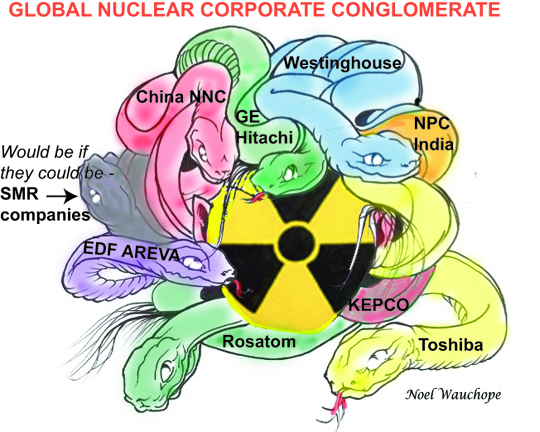
Global nuclear lobby desperate to sell reactors to Asia (Europe and North America don’t want them)

IAEA sees Asia as driver of nuclear energy WNN 02 September 2016 Asia is one of the regions where nuclear energy is “high on the agenda” and could be one of the drivers for global nuclear power deployment, according to the deputy director general of the International Atomic Energy Agency (IAEA).
Speaking at a conference in Manila, Mikhail Chudakov said, “There are several member states already operating nuclear power plants, and many more aspiring states [are] exploring the potential for developing nuclear power programs in this region.”
The conference – titled The Prospects for Nuclear Power in the Asia Pacific Region – was held 30 August to 1 September. It was organized by the IAEA in collaboration with the International Framework for Nuclear Energy Cooperation and hosted by the Philippines Department of Energy. More than 120 participants attended the event, including representatives from 14 member states.
The conference covered issues such as the legal, regulatory and government support for nuclear power, the management of used fuel and radioactive waste, human resource development and capacity building, and other related technical issues……
There are currently 128 nuclear power reactors operable in five Southeast Asian countries plus Taiwan with a total generating capacity of more than 100 GWe. There are also 40 units under construction and firm plans in place to build dozens more. In addition, there are about 56 research reactors in 14 countries of the region. http://www.world-nuclear-news.org/NP-IAEA-sees-Asia-as-driver-of-nuclear-energy-0209166.html
Typhoons cause ‘ice wall’ to melt at Fukushima nuclear plant
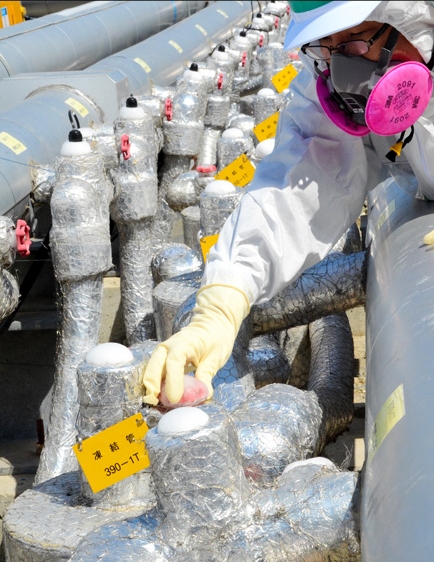
Workers examine pipes for the wall of frozen soil at the embattled Fukushima No. 1 nuclear power plant.
Rainfall from recent typhoons caused partial melting of the “ice wall” at the Fukushima No. 1 nuclear plant, allowing highly radioactive water to leak from around the damaged reactor buildings, the plant’s operator said Sept. 1.
Tokyo Electric Power Co. said melting occurred at two sections of the ice wall, which is designed to divert groundwater away from the reactor buildings.
TEPCO officials believe that during the latest typhoon, contaminated water from around the reactor buildings flowed through openings of the ice wall created by the deluge and reached downstream toward the sea.
The groundwater level near a seaside impermeable wall temporarily rose to 28 centimeters below the ground surface when Typhoon No. 10 passed the area on Aug. 30.
Before the typhoon hit, the water level was 35 cm below the surface.
Around 5.5 cm of rainfall a day fell in the area when the typhoon hit.
The groundwater level, however, actually rose by 7 cm, although 740 tons of groundwater was pumped out of the section.
“If there had been an additional 15 cm of rain, (the contaminated water) could have poured out over the ground surface” and spilled into the sea, a TEPCO official said Sept. 1.
The Meteorological Agency’s initial forecast said Typhoon No. 10 would bring a maximum 20 cm of rain a day at some locations in the Tohoku region.
The 34.5-billion-yen ($335 million) frozen wall was completed in spring to prevent groundwater from entering the reactor buildings and mixing with highly radioactive water.
TEPCO admitted the underground wall of frozen dirt is not working.
The company said the temperatures at the two sections of the frozen wall have climbed above zero since Typhoon No. 7 approached Fukushima Prefecture on Aug. 17.
The company believes that the partial melting was caused by the influx of water brought by the typhoons and heavy rain in between.
TEPCO plans to freeze the wall again by pouring chemicals into pipes that extend underground.
Ban to be lifted on Fukushima’s worst-affected zone in 2022

A barrier set up at the difficult-to-return zone as Typhoon No. 10 approaches Okuma, which co-hosts the Fukushima No. 1 nuclear power plant, in Fukushima Prefecture on Aug. 30
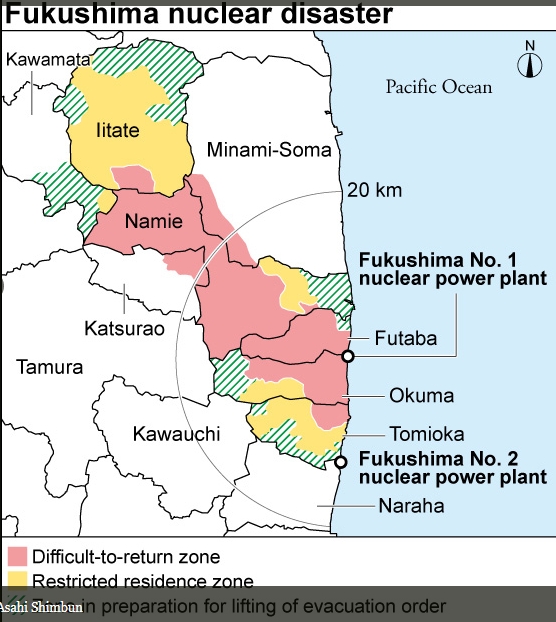
Some of the most contaminated areas of Fukushima Prefecture rendered uninhabitable by the 2011 nuclear disaster will be declared safe to live in again in 2022.
The government’s decision to lift the partial ban on repatriation to the “difficult-to-return zone” was announced Aug. 31 after Prime Minister Shinzo Abe called a joint meeting of the government’s Nuclear Emergency Response Headquarters and Reconstruction Promotion Council.
By 2022, the area’s 24,000 or so residents will have been displaced for more than a decade and there is no way of knowing how many will choose to return to their hometowns.
The difficult-to-return zone encompasses seven municipalities situated in a 20-kilometer radius of the crippled Fukushima No. 1 nuclear power plant as well as a spur of land northwest of the radius.
Partial lifting of the ban, in the eyes of the government, is reasonable as “radiation levels in the zone have dropped” even though no decommissioning work has been done there.
The government said the move is aimed at bolstering efforts to rebuild the prefecture, adding that leaving the zone intact would only perpetuate negative images of the area and sully the reputation of local products.
The ban will initially be lifted for areas where local government buildings, train stations and community halls are located, and eventually the rest of the zone.
There was no word, however, on how many years it will take for that to happen.
The government envisages enacting a law to designate areas earmarked as rebuilding hubs so as to encourage residents to return. The government will try to give priority to decisions by local officials as to which areas fall into that category.
In preparation for the lifting of the partial ban, the government will start extensive decontamination work in the zone from fiscal 2017, which begins next April.
The government estimates it would take 1 trillion yen ($9.7 billion) to clean up the entire zone, and is balking at making such an outlay on grounds of time and cost.
Even if the operation done on a limited basis, it is bound to come with a hefty price tag.
Funds needed for construction of housing and makeshift shops in the hub areas will be set aside in the government’s budget, starting from fiscal 2017.
According to government officials, some municipalities will likely to set up more than one rebuilding hub.
But one of the villages in the zone may end up having no hub at all due to depopulation.
A 2015 survey by the Reconstruction Agency found that the share of displaced people from Okuma, Futaba, Namie and Tomioka who expressed their intention to return to their hometowns varied from 11.4 percent to 17.8 percent. While the ratio was 32.8 percent for Iitate, no figures were available for Katsurao and Minami-Soma.
Underground Ice Wall – Japan’s gamble to contain Fukushima’s irradiated water
Even if the ice wall works, Tepco will face the herculean task of dealing with the huge amounts of contaminated water that have accumulated.
Japan’s $320 Million Gamble at Fukushima: An Underground Ice Wall, NYT By MARTIN FACKLER, AUG. 29, 2016 FUKUSHIMA DAIICHI NUCLEAR POWER STATION — The part above ground doesn’t look like much, a few silver pipes running in a straight line, dwarfed by the far more massive, scarred reactor buildings nearby.
More impressive is what is taking shape unseen beneath: an underground wall of frozen dirt 100 feet deep and nearly a mile in length, intended to solve a runaway water crisis threatening the devastated Fukushima Daiichi Nuclear Power Station in Japan.
Officially named the Land-Side Impermeable Wall, but better known simply as the ice wall, the project sounds like a fanciful idea from science fiction or a James Bond film. But it is about to become a reality in an ambitious, and controversial, bid to halt an unrelenting flood of groundwater into the damaged reactor buildings since the disaster five years ago when an earthquake and a tsunami caused a triple meltdown.
Built by the central government at a cost of 35 billion yen, or some $320 million, the ice wall is intended to seal off the reactor buildings within a vast, rectangular-shaped barrier of man-made permafrost. If it becomes successfully operational as soon as this autumn, the frozen soil will act as a dam to block new groundwater from entering the buildings. It will also help stop leaks of radioactive water into the nearby Pacific Ocean, which have decreased significantly since the calamity but may be continuing However, the ice wall has also been widely criticized as an expensive and overly complex solution that may not even work. Such concerns re-emerged this month after the plant’s operator announced that a section that was switched on more than four months ago had yet to fully freeze. Some also warn that the wall, which is electrically powered, may prove as vulnerable to natural disasters as the plant itself, which lost the ability to cool its reactors after the 45-foot tsunami caused a blackout there.
The reactor buildings are vulnerable to an influx of groundwater because of how the operator, Tokyo Electric Power Co., or Tepco, built the plant in the 1960s, by cutting away a hillside to place it closer to the sea, so the plant could pump in water more easily. That also put the buildings in contact with a deep layer of permeable rock filled with water, mostly rain and melted snow from the nearby Abukuma Mountains, that flows to the Pacific.
Since the accident, five robots sent into the reactor buildings have failed to return because of high radiation levels and obstruction from debris.
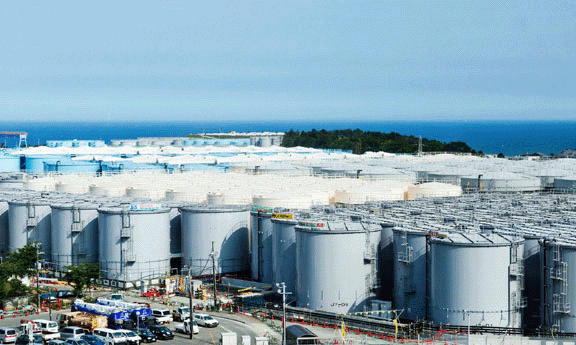
The water has also created a waste-management nightmare because Tepco must pump it out into holding tanks as quickly as it enters the buildings, to prevent it from overflowing into the Pacific. The company says that it has built more than 1,000 tanks that now hold more than 800,000 tons of radioactive water, enough to fill more than 320 Olympic-size swimming pools.
On a recent visit to the plant, workers were busily erecting more durable, welded tanks to replace the temporary ones thrown up in a hurry during the early years after the accident, some of which have leaked. Every available patch of space on the sprawling plant grounds now appears to be filled with 95-foot tanks.
“We have to escape from this cycle of ever more water building up inside the plant,” said Yuichi Okamura, a general manager of Tepco’s nuclear power division who guided a reporter through Fukushima Daiichi. About 7,000 workers are employed in the cleanup.
The ice wall is a high-technology bid to break that cycle by installing what might be the world’s largest freezer. Continue reading
North Korea’s grandiose plans for ‘nuclear backpack’ squad, and giant submarine
 North Korea trains its elite soldiers to use ‘nuclear backpacks’ as individual bombs as it emerges Kim Jong Un wants to build a 3,000 tonne submarine
- North Korea training ‘outstanding’ troops to join ‘nuclear backpack’ squad
- They would be ordered to infiltrate South and set off bombs in event of war
- Pyongyang has tested a submarine-launched missile for the first time
- Kim Jong Un also wants to built a giant 3,000 tonne submarine
By JULIAN ROBINSON FOR MAILONLINE , 1 September 2016 |
North Korea is training its elite soldiers to smuggle ‘nuclear backpacks’ across the border with the South before detonating their individual bombs. Troops from the People’s Army will be trained to enter enemy territory and, in the event of war, unleash their own nuclear bomb. Sources within the secretive country say ‘outstanding’ military personnel have been selected to join the battalion.
It comes as it emerged Kim Jong Un is planning to build a giant 3,000 tonne submarine made from old Russian submarine parts. Defector Kim Heung-kwang claimed the dictator has ordered the huge vessel to be completed by October, 2017. The huge submarine will be capable of carrying four ballistic missiles which can be launched from the vessel.
Meanwhile, there are also plans to create a unit of soldiers capable of carrying their own nuclear weapons. It has yet to be clarified whether Pyongyang intends the unit to be a suicide squad similar to Japanese Kamikaze pilots who attacked warships in the Second World War.
According to Radio Free Asia, formation of the units has been taking place since March and is stationed in the North Hamgyong province. It added that dummy bombs used for training purposes weigh between 22lbs and 62 lbs and rather than generating huge explosions, the back pack bombs would be designed to spray radioactive material over a large area.
News of the unit emerged as it was revealed that North Korea has made considerable progress this year on weapons technology, including testing a submarine-launched missile for the first time.
However, it’s still not clear if the isolated nation has developed a nuclear warhead. It also does not yet have a fleet of submarines that can launch the newly developed missile……….http://www.dailymail.co.uk/news/article-3768447/North-Korea-trains-elite-soldiers-smuggle-nuclear-backpacks-border-South-unleash-individual-bombs.html
UK PM Theresa May to be pressured at G20, by China, to approve Hinkley nuclear power project
 G20: China expected to press Theresa May on Hinkley nuclear plant As PM prepares to meet Xi Jinping at summit, officials have reportedly raised issue of delayed power station, Guardian, Rowena Mason, Tom Phillips, 2 Sep 16, Theresa May is expected to come under pressure from China at the G20 summit over her decision to review the proposed Hinkley nuclear plant, after the issue was raised by Beijing in a meeting with the British energy minister.
The new British prime minister will have her first face-to-face meeting with Xi Jinping, the Chinese premier, at the summit on Sunday or Monday, amid continuing tensions over Hinkley Point in Somerset.
May angered Beijing by deciding in July that approval of the French- and Chinese-backed £18bn nuclear plant would be delayed, apparently as a result of security concerns over Chinese involvement.
The Chinese government has been publicly making its clear it wants the project to go ahead, but May and her ministers have stuck to the position that the government is “considering all the component parts of the project before making its decision in the early autumn”.
It is understood Chinese officials raised the issue of Hinkley last week when Baroness Lucy Neville-Rolfe, the new energy and intellectual property minister, made a low-profile trip to China. The Chinese National Energy Administration said on its website that Neville-Rolfe met one of its top officials in Beijing to discuss Hinkley Point……..
anti-nuclear groups urged the prime minister to stand firm against Chinese and French lobbying for the Hinkley Point power station to go ahead.
John Sauven, executive director of Greenpeace UK, said May had a “delicate diplomatic job awaiting her at the G20, and she will no doubt come under renewed pressure to give Hinkley the go-ahead.”
“But the prime minister has shown before that she won’t be bullied into signing up to a deal that doesn’t serve the interests of the British public,” he added…….. https://www.theguardian.com/uk-news/2016/sep/01/g20-china-expected-press-theresa-may-hinkley-nuclear-plant
China, USA, Russia, Japan all vying to sell nuclear reactors to Turkey
 Sealing the Deal: Turkey, China Launch Nuclear Cooperation Partnership,http://sputniknews.com/middleeast/20160901/1044832084/turkey-china-nuclear.html , 1 Sep 16 The news follows last week’s ratification by the Turkish parliament of the Sino-Turkish Agreement for Cooperation in Peaceful Uses of Nuclear Energy.
Niigata prefecture governor Hirohiko Izumida not seeking re-election: new hope for restarting Fukushima nuclear plant
 New Hope For The Fukushima Nuclear Power Plant, Oil Price, By Zainab Calcuttawala – Aug 31, 2016 Tokyo Electric Power Co. Holdings Inc.’s (TEPCO) plan to restart the defunct Fukushima nuclear power plant has an increased chance of being implemented after the prefecture governor, who has campaigned against its reopening, decided against running for re-election, according to a new report by Bloomberg.
TEPCO shares rose as much as 12 percent Wednesday morning – the largest price jump since May 2015, presumably in reaction to the announcement.
Niigata prefecture governor Hirohiko Izumida said he would not pursue a bid for a fourth term for the October 16th elections, according to a personal statement posted on his fan page.
The governor has long opposed plans to return the Kashiwazaki-Kariwa nuclear power plant – the largest of its kind in the world – to production. Japanese laws do not require that utility companies obtain the approval of local leaders before commencing operations, but it is the expected practice.
Izumida has previously demanded that TEPCO conduct further investigations into the causes of the triple meltdown at the Fukushima Dai-Ichi plant in 2011 before proposing plans to restart any of the firm’s reactors.
“The next Niigata governor will likely not make as many relentless demands as Izumida,” Japanese analyst Hidetoshi Shioda said…….
The New York Times reported on Monday that Japanese government has funded the construction of a $320 million block of man-made permafrost that would continue 100 feet underneath the Dai-Ichi plant to solve “an unrelenting flood of groundwater” that had been headed into the damaged reactors.
The project will stop the leak of radioactive water into the Pacific Ocean, which may be continuing at low levels to this day, The Times said.
TEPCO has applied to return reactors No. 6 and 7 to production at Kashiwazaki-Kariwa. The company expects to boost profits by $97 million a month for each reactor it restarts, TEPCO spokesperson Tatsuhiro Yamagishi said earlier this week. http://oilprice.com/Latest-Energy-News/World-News/New-Hope-For-The-Fukushima-Nuclear-Power-Plant.html
USA determined to market nuclear reactors to India
 India, US set the ball rolling for Westinghouse’s nuclear plants By Dipanjan Roy Chaudhury, ET Bureau | Sep 01, 2016, NEW DELHI: India and the US moved closer to the planned construction of six reactors by American company Westinghouse at a proposed nuclear plant in Andhra Pradesh, with the two sides deciding to immediately commence the work on engineering and site design, and make an early conclusion of a competitive financing package.
1 This Month





PLEASE OPPOSE HR 8255 AND S.3639 – bills would accelerate satellite deployment, with no environmental review or safeguards – https://ncstd5li.quorum.us/campaign/169331/
To see nuclear-related stories in greater depth and intensity – go to https://nuclearinformation.wordpress.com
-
Archives
- October 2026 (29)
- September 2026 (339)
- August 2026 (330)
- July 2026 (355)
- June 2026 (287)
- May 2026 (306)
- April 2026 (356)
- March 2026 (251)
- February 2026 (267)
- January 2026 (308)
- December 2025 (358)
- November 2025 (359)
-
Categories
- 1
- 1 NUCLEAR ISSUES
- business and costs
- climate change
- culture and arts
- ENERGY
- environment
- health
- history
- indigenous issues
- Legal
- marketing of nuclear
- media
- opposition to nuclear
- PERSONAL STORIES
- politics
- politics international
- Religion and ethics
- safety
- secrets,lies and civil liberties
- spinbuster
- technology
- Uranium
- wastes
- weapons and war
- Women
- 2 WORLD
- ACTION
- AFRICA
- Atrocities
- AUSTRALIA
- Christina's notes
- Christina's themes
- culture and arts
- Events
- Fuk 2022
- Fuk 2023
- Fukushima 2017
- Fukushima 2018
- fukushima 2019
- Fukushima 2020
- Fukushima 2021
- general
- global warming
- Humour (God we need it)
- Nuclear
- RARE EARTHS
- Reference
- resources – print
- Resources -audiovicual
- Weekly Newsletter
- World
- World Nuclear
- YouTube
-
RSS
Entries RSS
Comments RSS

