TEPCO: Groundwater Surfaced and Possibly Leaked at Fukushima Plant During Typhoon
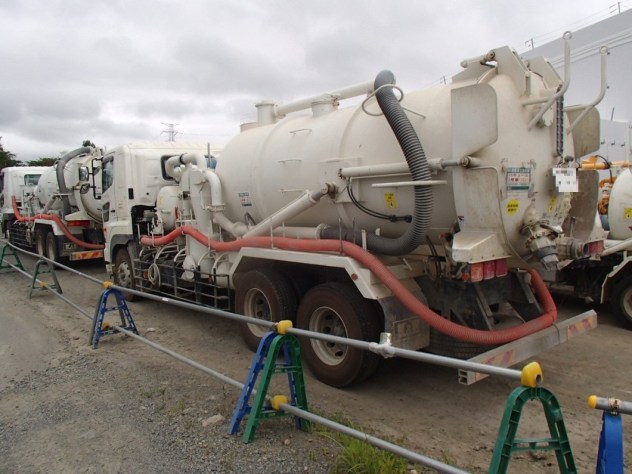
Fukushima Daiichi Floods, Show Lack of Preparedness
News reports indicated that groundwater at Fukushima Daiichi had risen so high it broke the surface and flowed into the port as a recent typhoon passed through the area. As TEPCO prepared to close the steel sea wall and freeze the underground frozen wall, NRA stopped the process for a review of the potential for flooding within the reactor building area.
The conclusion was that TEPCO thought they could sufficiently remove excess groundwater with the sump pump subdrain system near the reactor buildings. There were also concerns of the groundwater dropping too low, allowing contaminated water to flow out of the reactor building basements.
With all this review, nobody conceived a need for more water removal capacity. TEPCO ended up employing some sort of makeshift pumps and also using septic tank trucks to pump up water. This lack of anywhere for rainwater to go may have contributed to the water flowing out into the port as it built up on the surface.
Without some major changes at Daiichi this problem of groundwater rising to the surface and flowing into the port or the sea will continue to happen when significant rainfall takes place.
http://www.fukuleaks.org/web/?p=15765
Typhoon rain raises tainted Fukushima plant groundwater to surface
Heavy rain brought by Typhoon Malakas caused contaminated groundwater to rise to ground level at the radiation-hit Fukushima No. 1 nuclear plant Tuesday night, raising fears of tainted water flooding out to the plant’s port area, its operator said.
Tokyo Electric Power Company Holdings Inc. said in a press release that plant workers are doing their utmost to pump up tainted groundwater at the Fukushima compound, while trying to measure the level of radioactive substances contained in the water.
Under normal circumstances, groundwater taken from wells around the damaged reactor buildings at the Fukushima plant is filtered and stored in numerous tanks built on the compound.
Shortly before 10 p.m. Tuesday, groundwater reached the surface level at an observation well near the seawall at the power plant’s port, and at 11:30 p.m. Tuesday, groundwater stood at 3 cm above the surface level, Tepco said.
The well has a far higher wall and the ground around it is paved, the company said, playing down the possibility that any water flowed out of the well.
By 9 a.m. Wednesday, the water level had dropped to 3 cm below the surface.
Meanwhile, some rainwater may have flowed directly into the port before seeping underground, according to the company.
Tepco will continue pumping groundwater around the seawall, located near the damaged No. 1 to No. 4 reactors, and carry out close examinations of water inside the port, the company said.
In order to curb the flow of groundwater into the sea, the company has covered the seawall with water shields and carries out groundwater pumping operations.
Typhoon Malakas itself was downgraded to an extratropical depression at around 9 p.m. Tuesday as it moved along the coast of the Tokai region and swayed toward the Pacific. It was initially forecast to hit the Kanto region in the early hours of Wednesday.
The previous typhoon, Lionrock, earlier this month killed at least 17 people. Before Lionrock, two typhoons had claimed at least two lives in the northeast.
TEPCO: Possible water leak at Fukushima plant during typhoon
Tokyo Electric Power Co. said Sept. 21 it will check for radiation contamination in seawater near its crippled Fukushima nuclear plant after heavy rain from Typhoon No. 16 brought tainted groundwater to the surface.
The water reached the top of wells at the Fukushima No. 1 nuclear power plant, and there is a possibility that some of it spilled into the sea.
“We will analyze the seawater because we cannot determine whether groundwater containing radioactive materials has actually leaked,” a TEPCO official said.
The official added that the company believes most of the water that may have poured into the sea was rainwater that had not seeped into the ground.
The utility constantly monitors groundwater levels in wells around the reactor buildings at the plant to prevent overflows.
TEPCO said groundwater in wells on the seaside area of the nuclear complex reached the surface around 10 p.m. on Sept. 20 amid the heavy rain brought by the approaching typhoon. The water kept rising despite workers’ efforts to lower the level using makeshift pumps and septic tank trucks.
The groundwater level remained the same as of 7 a.m. on Sept. 21 before it finally dropped to about 3 centimeters from the surface two hours later, the company said.
According to TEPCO, about 575 millimeters of rain fell in the area of the nuclear plant from Aug. 1 to Sept. 20.
http://www.asahi.com/ajw/articles/AJ201609210047.html
Public to get new $83-billion bill for Fukushima, reactor expenses
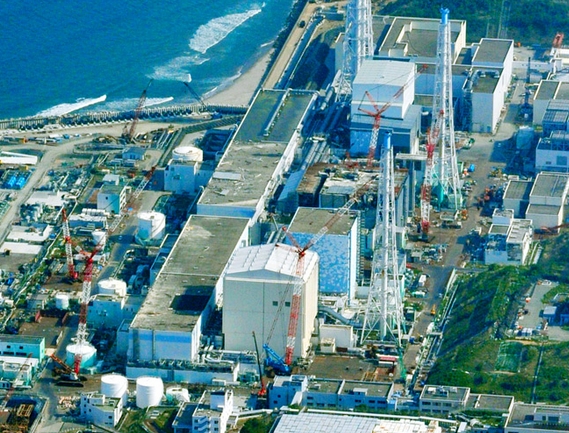
The crippled Fukushima No. 1 nuclear power plant is located in the towns of Okuma and Futaba in Fukushima Prefecture.
The government plans to make the public pay an additional 8.3 trillion yen (about $83 billion) to decommission reactors at the crippled Fukushima nuclear plant and provide compensation for evacuees of the 2011 disaster, sources said.
The public’s money will also be used for the future decommissioning of reactors at other nuclear plants, they said on Sept. 20.
The burden will also affect families that switched from nuclear power generating utilities to new electric power companies after the liberalization of the electricity retail market for families in April this year.
Major utilities that operate nuclear plants are, in principle, required to secure funds through electricity charges to decommission their reactors. Tokyo Electric Power Co., operator of the stricken Fukushima No. 1 nuclear plant, is no exception.
Under the reforms of the power industry, the new electric power companies, which do not operate nuclear plants, were exempt from shouldering any burden related to nuclear power.
But the industry ministry wants to change that arrangement.
Even people in the ruling coalition and the government are criticizing the plan as an attempt to ease the burden of utilities that had long held regional monopolies.
“The plan will damage the basic idea of the reforms,” said Taro Kono, former chairman of the National Public Safety Commission and a lawmaker of the ruling Liberal Democratic Party.
To realize the plan, the Ministry of Economy, Trade and Industry aims to submit revisions to the Electricity Business Law to the next year’s ordinary Diet session.
A government-approved organization is procuring funds from major electric power companies to assist in the eventual decommissioning of the reactors at the Fukushima No. 1 plant.
However, TEPCO has asked the government for additional support because more money will be needed for the lengthy operation.
The costs to decommission the reactors at the Fukushima plant are expected to soar to 6 trillion yen from the current estimate of 2 trillion yen, according to in-house documents of the industry ministry.
The ministry also needs an additional 3 trillion yen to cover compensation payments for evacuees from the 2011 nuclear disaster and 1.3 trillion yen to decommission reactors of other nuclear plants in the future, according to the documents.
To get the new electric power companies to pay part of the 8.3 trillion yen, the ministry plans to increase power grid “usage fees,” which are paid to major electric power companies.
“It is necessary to collect costs from all of the people fairly,” said a high-ranking official of the ministry.
Some of the consumers switched to new electric power companies because they did not want to continue using electricity produced by nuclear power plants.
But the ministry official pointed out that those consumers had been using nuclear-generated electricity until March.
New electric power companies, which do not have their own power grids, have concluded contracts with only 2 percent of all households in Japan.
The ministry is concerned that if more families switch from nuclear plant operators to the new companies, it could become difficult to secure sufficient funds to cover reactor decommissioning costs.
Under the ministry’s plan, a standard family of three in areas covered by TEPCO will be required to pay an additional 180 yen every month. In areas covered by other major electric power companies, the corresponding figure will be about 60 yen.
Japan to scrap troubled ¥1 trillion Monju fast-breeder reactor

The Monju plant in Tsuruga, Fukui Prefecture, is seen in this file photo from January. Its scrapping will leave a massive plutonium stockpile that cannot be reduced quickly
The government decided to cut its losses Wednesday on the ¥1 trillion Monju fast-breeder reactor, pulling the plug on the project after years of mishaps, cover-ups and waste.
At an extraordinary meeting, the Cabinet decided to decommission the idle facility in Fukui Prefecture but reaffirmed a national commitment to obtaining a nuclear fuel cycle.
At the end of the Cabinet meeting, Chief Cabinet Secretary Yoshihide Suga said the government will set up an expert panel on fast-breeder reactor issues that will “carry out an overall revision of the Monju project, including its decommissioning” by the end of this year.
Fast-breeder reactors like Monju are designed to produce more plutonium than they consume. The government has long envisioned them as playing a role in the nation’s nuclear profile.
During the same meeting, the government also pledged to draw up a road map of developing “demonstration fast reactors” by the end of the year.
A demonstration reactor is more advanced than a prototype reactor like Monju. Specifically, Japan is considering participating in France’s project to develop a fast-breeder reactor of the demonstration type, documents submitted to the meeting by industry minister Hiroshige Seko showed.
But given the record of Monju’s serious accidents and mismanagement scandals, Seko’s pledge to go to the next development stage — with little public explanation on the failure of the Monju project itself — is likely to draw strong criticism from the public.
Monju dates back to 1980, when work began amid the realization of a need to reduce reliance on fossil fuel. Almost all oil, coal and gas burned in Japan is imported.
Monju not only absorbed fistfuls of taxpayer money, but also suffered repeated accidents and mismanagement while only going live for a few months during its three-decade existence.
The Monju reactor reached criticality for the first time in 1994 but was forced to shut down in December 1995 after a leak of sodium coolant and fire. There was a subsequent attempt at a cover-up.
In November 2012, it emerged that the operator, Japan Atomic Energy Agency, had failed to check as many as 10,000 of Monju’s components, as safety rules require.
In November last year, the Nuclear Regulation Authority declared that the government-affiliated JAEA was “not qualified as an entity to safely operate” Monju.
It told the government either to find an alternative operator or scrap the project. The government was unable to find new management.
On Wednesday after the Cabinet meeting, education minister Hirokazu Matsuno said investments of another ¥500 billion would be needed if the Monju reactor were to be maintained.
“And it is also true we have yet to find an (alternative) entity to run Monju,” he noted.
Later the same day during a briefing for reporters, government bureaucrats emphasized that the government has yet to draw any conclusion on the fate of the Monju reactor.
But the comments of Suga and Matsuno were widely interpreted as signaling that the Cabinet is willing to eventually mothball the Monju reactor.
Meanwhile, decommissioning Monju will raise international concerns over Japan’s massive plutonium stockpile, extracted from spent fuel at the nation’s dozens of conventional nuclear power plants.
The stockpile is estimated at 48 tons of plutonium, enough to produce thousands of atomic bombs.
With no way to consume plutonium directly, the government plans to continue using MOX fuels — a mix of plutonium and uranium — in conventional nuclear reactors.
But most commercial reactors remain idle in the wake of the 2011 Fukushima nuclear crisis, and for now the rate of consumption will be slow. The No. 3 reactor of the Ikata nuclear power plant in Ehime Prefecture is currently the sole active unit that uses MOX fuel.
The Cabinet of Prime Minister Shinzo Abe hopes to reactivate more reactors once the NRA completes its safety checks.
Meanwhile, the matter remains a divisive one between government ministries.
The education and science ministry, which oversees the Monju project, reportedly opposes scrapping the reactor, arguing its importance in setting up a nuclear fuel cycle and tackling the plutonium oversupply.
But the Ministry of Economy, Trade and Industry, which oversees national nuclear policy, reportedly backs Monju’s scrapping as officials fear its tainted reputation could fuel opposition to nuclear power.
At the same time, METI wants to keep the fuel cycle policy afloat. It has reportedly argued for Japan’s participation in France’s ASTRID project to develop a demonstration fast-breeder reactor. ASTRID, or Advanced Sodium Technological Reactor for Industrial Demonstration, will use more advanced technologies than those on which Monju was based. But the project is still in the designing phase, which will continue at least until the end of 2019.
Sodium coolant used for fast-breeder reactors can catch fire easily and is very difficult to handle, which is why no countries have developed such a reactor yet.
Area not far from Tokyo hit by 6.4 earthquake

 6.4 quake hits Japan southeast of Tokyo, Rt.com 23 Sep, 2016 A powerful 6.4-magnitude earthquake rocked Japan some 230km southeast of the country’s capital, Tokyo, at a depth of 10km on Thursday night, the US Geological Survey (USGS) reported on its website.
Japan’s Meteorological Agency reported that the earthquake “has caused no damage to Japan,” while adding that “slight sea-level changes in coastal regions” may be observed.
No immediate tsunami warning has been issued.
Small tremors were reportedly felt in nine Japanese prefectures, including in Fukushima and Tokyo……..https://www.rt.com/news/360331-tokyo-southeast-quake-reaction/#.V-R_nRi_Fis.facebook
USA and South Korea to conduct mock attack on nuclear facility, (with North Korea in mind)


 South Korea, US to simulate attack on nuclear facility By Jungeun Kim, Paula Hancocks and Joshua Berlinger, CNN September 21, 2016
Story highlights
- The two countries will simulate attacks on nuclear facilities and sudden missile strikes
- The announcement comes after North Korea conducted a nuclear test this month
Failure of Japan’s 20 year, costly, nuclear reprocessing project
 Costly Japanese prototype nuclear reactor shuts down http://eandt.theiet.org/content/articles/2016/09/costly-japanese-prototype-nuclear-reactor-shuts-down/ By Jack Loughran, September 21, 2016
The Monju nuclear reactor in Japan, which has operated for less than a year in more than two decades at a cost of 1tn yen (£7.6bn), is set to be scrapped. The prototype fast-breeder reactor was designed to burn plutonium from spent fuel at conventional reactors to create more fuel than it consumes.
The process is appealing to a country whose limited resources force it to rely on imports for virtually all its oil and gas needs.
But Tokyo believes it would be difficult to gain public support to spend several hundred billion yen to upgrade the Monju facility, which has been plagued by accidents, missteps and falsification of documents.
There is also a strong anti-nuclear sentiment in Japan in reaction to the 2011 Fukushima atomic disaster, and calls to decommission Monju have been growing in the ruling Liberal Democratic Party, with scant results from using around 20 billion yen of public money a year for maintenance alone.
Science Minister Hirokazu Matsuno, Trade Minister Hiroshige Seko and others had decided to shift policy away from developing Monju, a fast-breeder nuclear reactor in the west of the country, the government said.
They had also agreed to keep the nuclear fuel cycle intact and would set up a committee to decide a policy for future fast-breeder development by the end of the year.
A formal decision to decommission Monju is likely to be made by the end of the year, government officials said.
The decision would have no impact on Japan’s nuclear recycling policy as Tokyo would continue to co-develop a fast-breeder demonstration reactor that has been proposed in France, while research will continue at another experimental fast-breeder reactor, Joyo, which was a predecessor of Monju.
“The move will not have an impact on nuclear fuel balance or nuclear fuel cycle technology development or Japan’s international cooperation,” said Tomoko Murakami, nuclear energy manager at the country’s Institute of Energy Economics.
Before the Fukushima disaster, Japan had planned to build a commercial fast-breeder before 2050, but according to the International Energy Agency that project may be delayed, given the difficulties at Monju.
The fallout from the Fukushima disaster is continuing. Specialised robots have been developed to retrieve some of the radioactive material from the ill-fated plant but they have been repeatedly unable to complete their task because the high levels of radiation destroys their circuitry.
Canada’s SNC Lavalin marketing nuclear reactors to China
 SNC-Lavalin to build Candu nuclear reactor for China, BERTRAND MAROTTE, MONTREAL — The Globe and Mail, Sep. 22, 2016 SNC-Lavalin Group Inc. is closing in on its goal of becoming a major player in China’s thriving nuclear-energy industry with an agreement for the development in that country of the next generation of Candu reactors.
The Montreal-based global engineering giant said on Thursday it has an agreement in principle for a joint venture with state-owned atomic-power and weapons company China National Nuclear Corp. and manufacturing conglomerate Shanghai Electric Group Co. Ltd. to design, market and build the Advanced Fuel Candu Reactor (AFCR).
SNC signed an initial memorandum of understanding with CNNC to pursue power generation, mining and nuclear-related environmental projects around the world more than two years ago.
SNC bought the Candu unit from Ottawa for $15-million in 2011. But Candu has had a poor track record of selling its technology abroad and questions have also been raised over its cost-effectiveness.
China, however, appears to have endorsed the concept of building reactors that run on recycled uranium…….
The proposed joint venture follows the signing of a framework agreement in 2014 and is subject to government and regulatory approvals, SNC said. http://www.theglobeandmail.com/report-on-business/industry-news/energy-and-resources/snc-lavalin-strikes-deal-to-build-nuclear-reactors-in-china/article32000350/
USA could lend $billions to India – anything to sell nuclear reactors!
 India Could Get Billions from the U.S. To Build a Nuclear Reactor, Fortune, by Reuters SEPTEMBER 22, 2016 If a lending freeze doesn’t get in the way.
India is negotiating with U.S. Export-Import Bank for an $8-9 billion loan to finance six Westinghouse Electric nuclear reactors, two sources familiar with the talks said, although a lending freeze at the trade agency threatens progress.
The mega-project, the result of warming U.S.-India ties in recent years, could open up billions of dollars of further investment in India’s nuclear power sector, ……..
The Westinghouse deal, however, is contingent on financing and Ex-Im cannot approve loans of more than $10 million, owing to a row in the U.S. Congress over board appointments stemming from a campaign by conservatives to close the government lender……..
“Financing of the reactors is the critical piece; everything is down to this,” said one source involved in protracted negotiations to build the reactors in the south-eastern Indian state of Andhra Pradesh.
The source, requesting anonymity because of the sensitivity of the talks, said Indian negotiators and Ex-Im officials were trying to set the terms of the financial package in the hope that the freeze on the bank, affecting potential sales of several major U.S. companies, would lift soon.
Westinghouse is owned by Japan’s Toshiba Corp but is based in the United States……..
In addition to U.S. Ex-Im, India is also seeking funding from Japan and South Korea for the reactors to be built in Kovvada, two sources familiar with the talks said……..
While negotiators are unlikely to nail down a contract under Obama, who steps down in January, their challenge will be to come up with concessional financing terms that will make Westinghouse’s AP1000 reactors affordable.
Westinghouse did not respond to a request for comment, while a U.S. Ex-Im Bank spokeswoman declined to comment. An NPCIL official said the firm had nothing to say at this stage…….
ndia is also in talks with Russia to build four more reactors on top of the two already completed in Kudankulam in southern Tamil Nadu state, as well as with France’s EDF for the construction of six reactors of 1650 MW each in western India, which would be the world’s biggest nuclear power complex.
But talks with Westinghouse are more advanced than those with the French, with the two sides aiming to sign an early works agreement next month, sources familiar with their progress said.
A delegation from the U.S.-based firm visited New Delhi earlier this month to finalize the pact that would include the timeline and up-front costs such as land acquisition and site preparation, said a source familiar with the matter. http://fortune.com/2016/09/22/india-nuclear-power/
Further nuclear power development in China will need local public consent
 China nuclear developers must seek public consent: draft rules, http://www.reuters.com/article/us-china-nuclear-safety-idUSKCN11Q18K (Reporting by David Stanway; editing by Jason Neely), 20 Sept 16 China’s nuclear developers must seek the consent of local stakeholders before going ahead with new projects, according to draft rules published by the country’s cabinet on Monday.
Developers will need to assess the impact a nuclear project will have on social stability and solicit public opinion through hearings or announcements, the Legislative Affairs Office of the State Council said.
China is in the middle of a rapid nuclear reactor building program and aims to have 58 gigawatts (GW) of capacity in full commercial operation by the end of 2020, up from 30.7 GW at the end of July.
But despite a strong safety record at existing plants, the government has struggled to convince the public about the safety of nuclear power.
Protests in the eastern coastal city of Lianyungang last month led to the cancellation of a proposed $15 billion nuclear waste processing plant.
“Japan’s Fukushima accident once again created doubt about the safety of nuclear power among the public, and also caused feelings of fear and opposition to occur from time to time,” the Legislative Affairs Office said in a statement.
It said the new draft rules would improve information disclosure and allow the public to participate more actively in the construction and supervision of nuclear projects.
The Legislative Affairs Office has made the draft guidelines available to the public and will accept suggestions until Oct. 19, it said in a notice posted on its website (www.chinalaw.gov.cn).
A team of experts from the International Atomic Energy Agency said this month that China’s “unparalleled” nuclear expansion would pose challenges for its regulators, and more work needed to be done in areas such as waste management and the handling of ageing reactors.
China’s nuclear marketing plan gets a big boost from Theresa May’s decision to go ahead on Hinkley project
 British Project May Clear Way for China’s Nuclear Exports to the West VOA, Saibal Dasgupta, 20 Sept 16 BEIJING —
There’s a whole lot more in British Prime Minister Theresa May’s decision to allow a Chinese company to invest in the Hinkley Point C nuclear plant than mere business.
Chinese investment is limited to investing funds in the $24 billion project, which will use two French reactors supplied by Electricity de France. But the project could clear the way for Chinese involvement in a more crucial project at Bradwell, east England, which would allow China to export its nuclear technology to the Western world, analysts say.
China General Nuclear Corporation, the investor in Hinkley Point, already has signed a pre-feasibility agreement for the Bradwell project……..
Only a few developing countries like Pakistan are using Chinese reactors. These countries are not known to have the kind of strict regulatory control seen in the West.
The Bradwell B project could be a game changer. Getting regulatory approval in Britain for its reactors is crucial for China because it can open the doors for Chinese nuclear exports to the West……..
But there’s many a slip between May’s lip and China’s cup of hope. Britain already is in the midst of fierce debate with critics voicing concern about security issues. Critics question a provision in the contract that provides for a fixed electricity rate for 35 years at a time when energy prices are falling, and are expected to be much lower in the future……..
For Beijing, British approval for the Hinkley Point project is a major image booster, analysts say. Chinese business is seen in the West as an acquirer of property and trader of low-tech, unbranded goods, they point out…….http://www.voanews.com/a/british-project-china-nuclear-exports-west/3517485.html
Fukushima Daiichi Contaminated Groundwater Pouring into the Sea
Fukushima Daiichi Groundwater Rises from Typhoon N°16 Sept. 21, 2016
« Groundwater level rises in the aftermath of Typhoon 16, due to its heavy rain the groundwater now reaches now the surface.
It is unclear as whether or not the groundwater has been contaminated with radioactive material as it poured out into the sea, To be determined later, Tepco says. »
http://www.news24.jp/sp/articles/2016/09/21/07341567.html
Tepco pumping groundwater from Fukushima plant.
The operator of the Fukushima Daiichi nuclear power station says it is pumping groundwater from under the plant to prevent contaminated water from leaking into the adjacent port.
Tokyo Electric Power Company says the heavy rains brought by Typhoon Malakas have raised the underground water levels around the plant’s embankments.
TEPCO officials say they added pumps to prevent the groundwater from rising further. They say the water rose nearly to the surface shortly before 10 PM on Tuesday.
The officials say this has prevented rain from permeating the ground and increased the risk that the rainwater could become contaminated and flow into the port.
The utility says that while it is pumping the groundwater to prevent leakage, it will measure the radioactive substances in the water.
http://www3.nhk.or.jp/nhkworld/en/news/20160921_09/
Underground Water Now Surfacing in Fukushima Daiichi
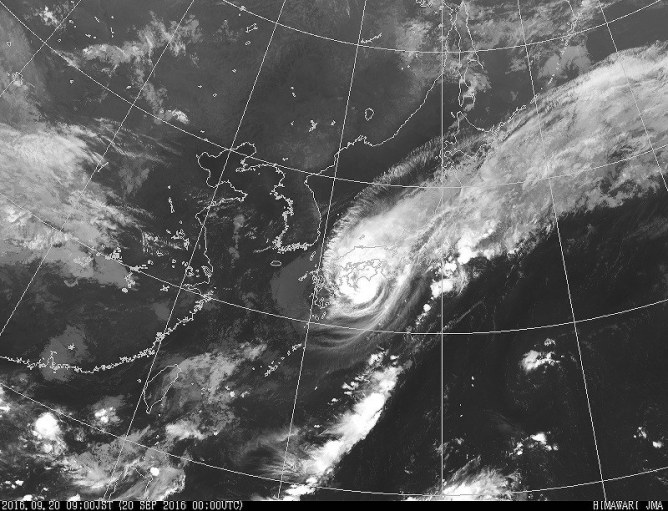
With Typhoon N°16 heavy rain, underground water level reaches ground surface at Fukushima Daiichi.
With the heavy rain associated with the approach of typhoon No. 16, Tepco announced that the underground water level of the sea side of the Fukushima Daiichi nuclear power plant area is now at ground level.
There is a possibility that contaminated groundwater has flowed into the sea mixed with the rain.
TEPCO plans soon to analyze the surface of the water and the seawater.
Reconstruct ‘difficult-to-return zones’ in keeping with residents’ wishes
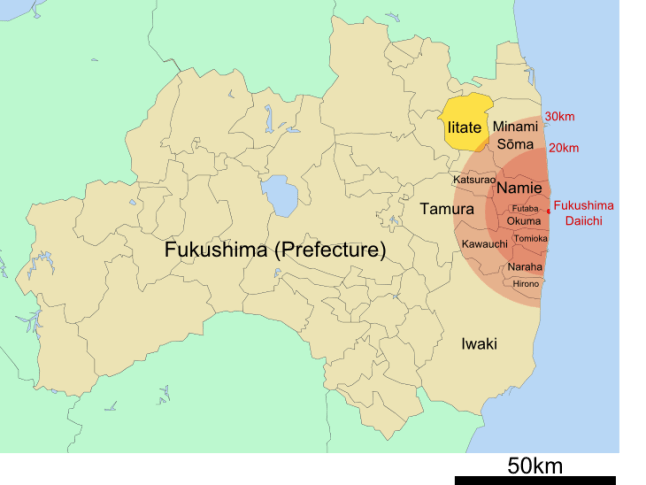
In consideration of the feelings of evacuees who want to return home, it is important to promptly present a specific picture of how towns affected by the nuclear disaster will be reconstructed.
Regarding the “difficult-to-return zones” designated following the disaster at Tokyo Electric Power Company Holdings, Inc.’s Fukushima No. 1 nuclear power plant, the government has announced a policy of designating priority areas and carrying out full-scale decontamination work there starting next fiscal year.
Entry remains strictly restricted for the difficult-to-return zones, where the yearly dose of radiation was higher than 50 millisieverts as of March 2012. This is the first time for the government to announce a policy of allowing evacuees to eventually return home in the zones.
The zones spread over seven municipalities around the Fukushima plant, including the towns of Okuma, Futaba and Namie.
The latest policy is characterized by the government establishing “reconstruction bases” that center around town offices and railway stations, and drawing up development plans exclusively for the base areas. The government will implement the development of infrastructure, including roads, concurrently with the decontamination work. It aims to lift the evacuation orders for residents in the year 2022, making it possible for evacuees to return home.
To decontaminate the entire area within the difficult-to-return zones will require a sizable amount of money. It is an appropriate measure to move ahead with the decontamination work by narrowing down the target area from the viewpoint of pursuing efficiency.
In areas where the radiation dose is relatively low, namely areas where residence is restricted and where preparations are being made for the lifting of evacuation orders, evacuation orders have already been rescinded for five municipalities. Another four municipalities have also taken such measures as allowing residents to return home for long-term stays, with the aim of lifting the evacuation orders next spring.
Limited progress in returns
However, in areas where evacuation orders have already been lifted, there has not been as much progress in residents’ return as was hoped. Even in the town of Naraha, for which evacuation orders were lifted last autumn and which is considered a model case for residents’ return, only about 10 percent of residents have come back.
There has not been sufficient development of bases closely linked to people’s daily life, such as medical institutions and commercial facilities. This can be a primary factor in evacuees’ reluctance to return home. Younger generations also have strong concerns about their jobs and their children’s education following their return.
Even if residents of the difficult-to-return zones were able to return, that would be six years from now. It would be difficult for residents to plan for their daily life.
At the moment, matters such as where the reconstruction bases can be located and the details of development plans have yet to be decided. It is important to show residents early on how their hometowns would be reconstructed, so as to fulfill evacuees’ wishes of returning home.
Many evacuees have given up on returning home and rebuilt their lives within or outside Fukushima Prefecture. According to a survey taken last year by the Reconstruction Agency, only 11 percent of evacuees from Okuma and 13 percent of those from Futaba — the towns straddled by the plant — said they want to return home.
How should towns be reconstructed to induce evacuees to consider returning? Each municipality is urged to carefully take up the wishes of evacuees and reflect them in the development plans.
As Fukushima’s reconstruction progresses, the government needs to continue doing its utmost in assisting the prefecture so as not to have the difficult-to-return zones become “left-behind areas.”
Monju fast-breeder reactor operator insiders say project is a failure: survey

The Monju prototype fast-breeder nuclear reactor in Tsuruga, Fukui Prefecture, is pictured in this file photo taken from a Mainichi helicopter on Oct. 7, 2015
Employees of the operator of the troubled Monju prototype fast-breeder nuclear reactor in Tsuruga, Fukui Prefecture, which the government may decommission, say that the reactor is a failure or criticize the project in other ways, according to a labor union survey.
A survey conducted by one of the labor unions representing workers at the Japan Atomic Energy Agency (JAEA), the results of which the Mainichi Shimbun has obtained, shows that over half of the respondents said the government should consider decommissioning the trouble-plagued reactor.
The JAEA was founded in 2005 through a merger between the Japan Nuclear Cycle Development Institute (JNC) and the Power Reactor and Nuclear Fuel Development Corp. (PNC). There are two labor unions within the JAEA — the Japan Atomic Energy Labor Union (JAELU) comprised mainly of those who worked at PNC and Genken Roso mainly representing those employed by JNC.
Genken Roso conducted the latest survey on all 234 members between December last year and January this year after the Nuclear Regulation Authority advised the Minister of Education, Culture, Sports, Science and Technology last November to consider replacing JAEA with another body as the operator of the Monju reactor. Of its members, 71 responded. The respondents do not include workers at Monju since the union does not have a branch in Tsuruga.
JAEA employs some 3,130 workers across the country, of whom about 380 work at the Tsuruga business headquarters that supervises Monju.
According to the results of the survey obtained by the Mainichi Shimbun, some respondents wrote critical views in the survey’s section in which they were asked to freely express their opinions on Monju.
“It’s questionable to continue to use a massive amount of money for the reactor,” one of them said.
“Monju is a failure. The reactor should be shut down after reviewing the project,” another wrote.
“Fast-breeder reactors require extremely difficult technology, and it’s difficult to commercialize such a project,” a further respondent said.
One other employee insisted that the project should be split from the JAEA.
When asked about the future of Monju, 57.7 percent said the government should consider decommissioning the reactor while only 8.5 percent said the project should be continued under the supervision of the JAEA.
Moreover, 71.8 percent replied that they do not think the JAEA has become an organization that has never betrayed the trust of the public as a result of reforms following revelations in 2012 that the group omitted check-ups on about 10,000 items in the Monju reactor.
An official of the Genken Roso union said, “Since the response rate is low, the outcome doesn’t represent the opinions of all members.”
However, Fumiya Tanabe, who previously served as a senior researcher at the JAEA, pointed out that the results of the survey shows the true opinions of employees.
“The outcome shows workers’ real feelings. They are also probably dissatisfied with the current situation of the organization, in which an annual 20 billion yen in taxpayers’ money is injected into the idled Monju while sufficient funds can’t be spent on other research projects,” said Tanabe.
The JAELU’s Tsuruga branch, which has 240 members, has conducted a similar survey but has withheld its results.
Commenting on the outcome of the Genken Roso survey, a JAELU official said, “Employees’ enthusiasm to work hard for the future of Japan remains unchanged.”
http://mainichi.jp/english/articles/20160920/p2a/00m/0na/017000c
Panel to examine options for wrecked Fukushima plant
A panel of experts will discuss reforms at Tokyo Electric Power Company Holdings Inc., including the costly plans to scrap its Fukushima No. 1 nuclear power plant, Industry minister Hiroshige Seko said Tuesday.
The costs of decommissioning the plant, ravaged by the 2011 triple meltdown, is expected to far exceed the initial estimate of ¥2 trillion, prompting the government to review its financial aid to the utility with the help of the private sector.
The government-appointed panel will meet for the first time in early October and draft proposals by year-end, Seko said, as Tepco plans to revise its business plan, compiled in 2014, possibly early next year.
Members of the panel include Akio Mimura, head of the Japan Chamber of Commerce and Industry, and other senior officials of major business groups. Tepco President Naomi Hirose will also join as an observer.
The utility’s business has been pressured by the costs of cleaning up contaminated areas and compensating those affected by the accident.
The growing costs of scrapping the plant as well as increased competition in the sector led the company to seek fresh government assistance in July.
1 This Month





PLEASE OPPOSE HR 8255 AND S.3639 – bills would accelerate satellite deployment, with no environmental review or safeguards – https://ncstd5li.quorum.us/campaign/169331/
To see nuclear-related stories in greater depth and intensity – go to https://nuclearinformation.wordpress.com
-
Archives
- October 2026 (29)
- September 2026 (339)
- August 2026 (330)
- July 2026 (355)
- June 2026 (287)
- May 2026 (306)
- April 2026 (356)
- March 2026 (251)
- February 2026 (267)
- January 2026 (308)
- December 2025 (358)
- November 2025 (359)
-
Categories
- 1
- 1 NUCLEAR ISSUES
- business and costs
- climate change
- culture and arts
- ENERGY
- environment
- health
- history
- indigenous issues
- Legal
- marketing of nuclear
- media
- opposition to nuclear
- PERSONAL STORIES
- politics
- politics international
- Religion and ethics
- safety
- secrets,lies and civil liberties
- spinbuster
- technology
- Uranium
- wastes
- weapons and war
- Women
- 2 WORLD
- ACTION
- AFRICA
- Atrocities
- AUSTRALIA
- Christina's notes
- Christina's themes
- culture and arts
- Events
- Fuk 2022
- Fuk 2023
- Fukushima 2017
- Fukushima 2018
- fukushima 2019
- Fukushima 2020
- Fukushima 2021
- general
- global warming
- Humour (God we need it)
- Nuclear
- RARE EARTHS
- Reference
- resources – print
- Resources -audiovicual
- Weekly Newsletter
- World
- World Nuclear
- YouTube
-
RSS
Entries RSS
Comments RSS

