The government is considering staying involved in Tokyo Electric Power Co.’s business management longer than currently planned, given larger-than-expected costs for scrapping the Fukushima Daiichi nuclear power plant, sources close to the matter said Saturday.
A delay in the process for reactivating its Kashiwazaki-Kariwa nuclear power plant in Niigata Prefecture, a main pillar of the utility’s reconstruction plan, is another factor prompting the government to think it would be too soon to end state control next April as initially planned, they said.
The government is leading business operations of the utility facing huge compensation payments and other problems from the 2011 Fukushima nuclear disaster as it has acquired 50.1 percent of the firm’s voting rights through the state-backed Nuclear Damage Compensation and Decommissioning Facilitation Corp.
Some bureaucrats of the Ministry of Economy, Trade and Industry are dispatched to the utility, known as TEPCO.
TEPCO said in a business plan in 2014 it would turn itself from the “temporarily publicly managed” company to a self-managed one starting next April.
The industry ministry will hold the first panel meeting Wednesday to discuss additional government support for the utility.
TEPCO faces swelling costs for decommissioning the Fukushima Daiichi plant and compensating those affected beyond the previously estimated 11 trillion yen ($108 billion). Two reactors at the Kashiwazaki-Kariwa plant are under prolonged safety examinations by nuclear regulators.
TEPCO’s new business plan including the revised schedule for ending state control is expected to be compiled next January.
Rice was among a number of products from Fukushima being promoted at the festival today, in order to help the recovery of the region. Young women were making their way through the throng holding up huge peaches and apples from Fukushima.
Members of Kick Nuclear London, Japanese Against Nuclear and friends handed out a few hundred copies of the following leaflet to visitors at the festival this afternoon :
“Tokyo believes it would be difficult to gain public support to spend several hundreds of billion yen to upgrade the Monju facility, which has been plagued by accidents, missteps and falsification of documents.”
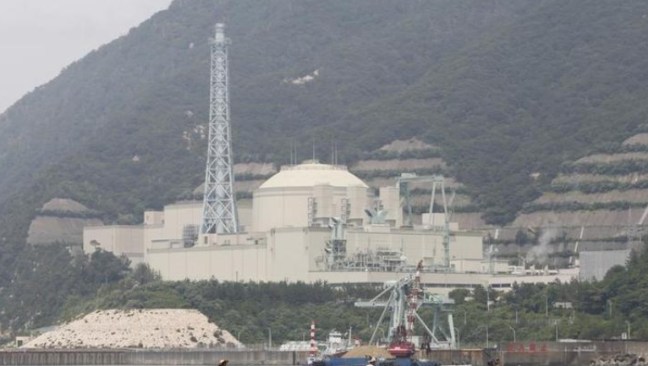
Japan signalled on Wednesday it would scrap a costly prototype nuclear reactor that has operated for less than a year in more than two decades at a cost of 1 trillion yen (£7.6 billion).
Tokyo believes it would be difficult to gain public support to spend several hundreds of billion yen to upgrade the Monju facility, which has been plagued by accidents, missteps and falsification of documents.
There is also a strong anti-nuclear sentiment in Japan in reaction to the 2011 Fukushima atomic disaster and calls to decommission Monju have been growing in the ruling Liberal Democratic Party, with scant results from using around 20 billion yen of pubic money a year for maintenance alone.
Monju was designed to burn plutonium from spent fuel at conventional reactors to create more fuel than it consumes. The process is appealing to a country whose limited resources force it to rely on imports for virtually all its oil and gas needs.
Science Minister Hirokazu Matsuno, Trade Minister Hiroshige Seko and others had decided to shift policy away from developing Monju, a fast-breeder nuclear reactor in the west of the country, the government said.
They had also agreed to keep the nuclear fuel cycle intact and would set up a committee to decide a policy for future fast reactor development by the end of the year.
A formal decision to decommission Monju is likely to be made by the end of the year, government officials said.
The decision would have no impact on Japan’s nuclear recycling policy as Tokyo would continue to co-develop a fast-breeder demonstration reactor that has been proposed in France, while research will continue at another experimental fast-breeder reactor, Joyo, which was a predecessor of Monju.
“The move will not have an impact on nuclear fuel balance or nuclear fuel cycle technology development or Japan’s international cooperation,” Tomoko Murakami, nuclear energy manager at the Institute of Energy Economics, Japan, said.
Before the Fukushima disaster, Japan had planned to build a commercial fast-breeder before 2050, but that may be delayed given the difficulties at Monju, the International Energy Agency said on Wednesday.
If India and Pakistan detonated 100 nuclear warheads, over 21 million people will die immediately, and half the world’s ozone layer would be destroyed, September 29, 2016 –By Abheet Singh Sethi, 30 Sept 16
If India and Pakistan fought a war detonating 100 nuclear warheads (around half of their combined arsenal), each equivalent to a 15-kiloton Hiroshima bomb, more than 21 million people will be directly killed, about half the world’s protective ozone layer would be destroyed, and a “nuclear winter” would cripple monsoons and agriculture worldwide.
As the Indian Army considers armed options, and a Bharatiya Janata Party (BJP) MP urges a nuclear attack, even as the Pakistan Defence Minister threatens to “annihilate” India in return, the following projections, made by researchers from three US universities in 2007, are a reminder of the costs of nuclear war.
According to the study by researchers from Rutgers University, University of Colorado-Boulder and University of California, Los Angeles, about 21 million people – half the death toll of World War II – would perish within the first week from blast effects, burns and acute radiation in India and Pakistan.
This death toll would be 2,221 times the number of civilians and security forces killed by terrorists in India over nine years to 2015, according to an IndiaSpend analysis of South Asia Terrorism Portal data.
Another two billion people worldwide would face risks of severe starvation due to the climatic effects of the nuclear-weapon use in the subcontinent, according to a 2013 assessment by the International Physicians for the Prevention of Nuclear War, a global federation of physicians. Continue reading →
PAKISTAN’S Defence Minister has threatened to “destroy” India – after India said on Thursday it had carried out “surgical strikes” on suspected militants preparing to infiltrate from Pakistan-ruled Kashmir.
The strikes, which were a response to shots fired across the de facto border through the disputed Himalayan territory, could lead to a military escalation between the two nuclear-armed neighbours – risking a ceasefire agreed in 2003.
Tensions have been heightened since an attack on an Indian military base in Kashmir earlier this month, which left 18 soldiers dead.
Both countries claim Kashmir in full, but rule separate parts – and have fought three wars over Kashmir since gaining independence from Britain in 1947
Responding to India’s latest strikes, Defence Minister Khawaja Asif said: “We will destroy India if it dares to impose war on us.
“Pakistan army is fully prepared to answer any misadventure of India.
“We have not made atomic device to display in a showcase.
“If a such a situation arises we will use it and eliminate India.”
Meanwhile, US Defence Secretary Ashton Carter said: “Pakistan nuclear weapons are entangled in a history of tension, and while they are not a threat to the United States directly, we work with Pakistan to ensure stability.”
China, a traditional Pakistani ally, has also called for dialogue between the two nations.
“We made that clear to them. Repeatedly,” the official said when asked whether the U.S has conveyed to Pakistan that no nuclear capable country is expected to threaten anyone with the use of nukes. “We haven’t kept the devices that we have just as showpieces. But if our safety is threatened, we will annihilate them (India),” the defence minister of Pakistan had said.
“It is very concerning, it is a serious thing,” the U.S official said, adding that the U.S has been urging both countries to “pull back and deescalate.” “At the same time we have made it very clear that what happened in the Indian arm base (Uri) is an act of cross border terrorism,” the official added.
The U.S is concerned about the safety of Pakistani nuclear weapons otherwise also, the official said. “The safety of these weapons is always a concern for us. So we are always monitoring it, regardless of what they said on this particular occasion,” he said.
Nuclear War: Pakistan, China, Russia Vs India, America Nuclear Warheads USA Morning News 1 Oct 16 “……… Nuclear Warhead Assessment
So if it comes down to an all-out nuclear war between the US-India on one side and China-Russia-Pakistan on the other, here is an assessment of which side is likely to have an upper hand in the war:
It has been estimated that China, India, and Pakistan all possess ballistic missile, cruise missile, and sea-based nuclear weapons.
Even though China, Russia, and the U.S. possess nuclear weaponry, according to the NPT, they have been banned from building and maintaining such weapons in perpetuity.
China has 260 approximate warheads, Russia has roughly 7300 and Pakistan has 120.
The USA is lagging slightly behind Russia with 7100 warheads and India currently has 110.
Abe, Modi look to ink civil nuclear pact at November meeting, Japan Times, KYODO, 30 Sept 16 A meeting between Prime Minister Shinzo Abe and his Indian counterpart Narendra Modi is set to be held in Tokyo in mid-November, with a civil nuclear cooperation pact likely to be signed, a source said Friday.
The pact would pave the way for Japan to export nuclear power plant technology to the fast-growing Asian economy. It would be Japan’s first signing of a civil nuclear cooperation pact with a country which has not joined the Nuclear Non-Proliferation Treaty…….
Earlier, other diplomatic sources said that under a provision in the pact, Japan will permit Indian power producers to reprocess spent fuel at designated facilities on the condition the country accepts comprehensive inspections by the International Atomic Energy Agency…….
JAPAN SIGNALS END FOR $10BN NUCLEAR PROTOTYPE, Eyewitness News, 30 Sept 16 Tokyo believes it would be difficult to gain public support to spend several hundreds of billion yen. Reuters |
TOKYO – Japan signalled on Wednesday it would scrap a costly prototype nuclear reactor that has operated for less than a year in more than two decades at a cost of 1 trillion yen (£7.6 billion).
Tokyo believes it would be difficult to gain public support to spend several hundreds of billion yen to upgrade the Monju facility, which has been plagued by accidents, missteps and falsification of documents.
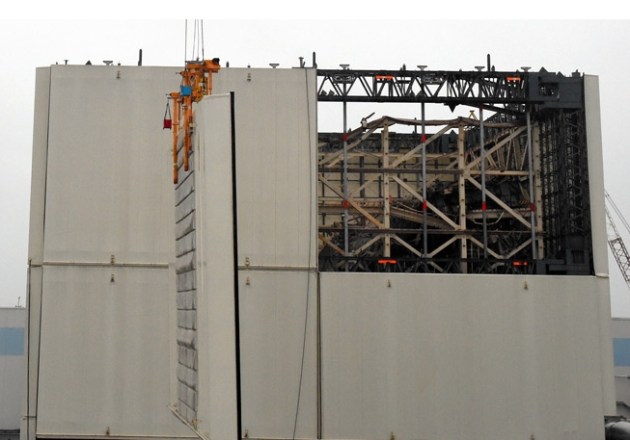
The cover on reactor 1 was installed around the building of the devastated the reactor 1 in October 2011 and Tepco plans to dismantle it by December. It remains 17 panels of 20 tonnes to move. Inside, the spent fuel pool with 392 fuel assemblies in it, which Tepco intends to empty starting 2020 …
Now this uncovered “reactor” freely spits its radioactive lungs again in the open air. Yes that’s right. Tepco had mounted this cover to avoid polluting the air. Today we go back to square one.
The three reactors 1, 2 and 3 have lost their seal and radionuclides roam freely. There is simply no way to seal leaks. Even when the pool will be emptied, the problem will still be the same.
The levels of radioactivity escaping from the three reactors are unknown until Tepco wants to give us some figures, still without any true independent body to verify.
The devastated outer layer of Fukushima No. 1 nuclear power plant’s No. 1 reactor building has been exposed for the first time in almost five years in the painstaking reactor decommissioning process.
Plant operator Tokyo Electric Power Co. began removing on Sept. 13 the exterior walls of the cover installed around the structure to prevent the dispersal of radioactive materials on Sept. 13.
Shortly past 6 a.m., a large crane began removing a massive piece of the cover installed around the reactor building. The panel dismantled that day measured 23 by 17 meters and weighed 20 tons.
The cover was installed in October 2011 as a temporary measure after a nuclear meltdown occurred following the Great East Japan Earthquake and tsunami in March that year. The meltdown caused a hydrogen explosion, blowing the walls off the building.
Once the cover is dismantled, the operator can assess the state of the building’s interiors and remove the debris fallen onto the spent fuel pool inside.
“Steady progress is necessary in reconstruction, but we hope they will carry on the procedure with safety as the No. 1 priority,” said a Fukushima prefectural government official.
TEPCO said that it plans to remove the remaining 17 panels of the covering by the end of the year. The portion covering the roof has already been removed.
Once the cover is removed, the utility will begin drawing up plans to remove the 392 fuel assemblies from the spent fuel pool and melted nuclear fuel from inside the building.
The plant operator said that it plans to be extra careful during the procedure. It will shroud the building in tarpaulins once the cover is removed as a precautionary measure against dust and other materials containing radioactive materials from being carried aloft by the wind.
The utility and central government’s joint schedule for the decommissioning process of the reactor states that the removal of the fuel rods from the pool will start in fiscal 2020.
As Mr. Ikuo Hatsukade says : « I wish that these three companies could cooperate to produce renewable energies without nuclear energy. »
A nuclear fuel assembly, center, sits in a spent fuel pool.
TOKYO — Japan’s Hitachi, Toshiba and Mitsubishi Heavy Industries aim to merge their nuclear fuel units to gain an edge on cost in an effort to better compete with Chinese and South Korean rivals.
Amid bleak prospects for getting current domestic reactors up and running, let alone building new ones, the next challenge will be to consolidate their nuclear reactor businesses.
Of the more than 40 reactors in Japan, Kyushu Electric Power‘s Sendai Nuclear Power unit Nos. 1 and 2 in Kagoshima Prefecture and Shikoku Electric Power‘s Ikata Nuclear Power Station unit No. 3 in Ehime Prefecture are the only reactors in operation. Bringing the country’s reactors back online is proceeding very slowly due to strict safety standards set by the Nuclear Regulation Authority.
With the liberalization of Japan’s retail energy market in April, electric power companies are finding it difficult to invest in nuclear power plants, as it is difficult to make forecasts for power generation costs including future decommissioning. The government plans to generate 20-22% of the county’s overall power mix from nuclear power plants by 2030, but many market watchers remain skeptical.
To improve competitiveness, major reactor makers appear to have begun discussing the possibility of integrating their nuclear fuel businesses. One executive of a reactor maker said they cannot hire new nuclear engineers and develop advanced technologies if no measures are taken. “All Japanese reactor makers need to join hands to protect the country’s nuclear technology,” he said.
With the merger of nuclear fuel businesses in sight, the next challenge will be to restore each company’s reactor unit, which have barely remained profitable with only maintenance operations being done. Reactors are classified into two types: pressurized water reactors and boiling water reactors. Some market experts are saying that reactor makers should consolidate operations regardless of reactor type.
Some countries, including Germany, are trying to break away from nuclear power generation, while a number of countries are planning to build new ones. In the U.K., a consortium of Hitachi and General Electric are planning to build nuclear power plants, while Toshiba has plans to construct them on its own. Toshiba’s U.S. nuclear power unit Westinghouse Electric is looking to boost orders in China and India. Mitsubishi Heavy is also looking to expand overseas with new reactors jointly developed with Areva group of France.
That said, Chinese, South Korean and Russian rivals are also actively expanding overseas. To hold a technological lead, Japanese makers must curb costs and build a system to develop technologies.
Five years after the nuclear accident in Fukushima, an end to the disaster is not in sight. This short documentary tells the story of the people from Fukushima, forced to leave their homes without knowing if they could ever return, and explores the work that Greenpeace has been doing in the region since 2011. Sign the petition to end the nuclear nightmare and switch on renewables! http://grnpc.org/IgNDC
Tokyo Electric Power Co. intends to begin pumping up highly contaminated water accumulating in the basements of buildings at its wrecked Fukushima No. 1 nuclear power plant by the end of March.
TEPCO disclosed its strategy Sept. 28 at a review meeting with the Nuclear Regulation Authority, the government’s nuclear watchdog.
In response, the NRA urged the utility to provide a detailed road map for the project.
Removing the huge volume of radioactive water in the reactor, turbine and other buildings has posed an urgent challenge for TEPCO.
The NRA pressed it to take action as soon as possible, pointing out that the contaminated water in the buildings’ basements is a likely reason flowing groundwater also gets polluted.
The NRA is also concerned that the contaminated water in the basements might leak into the sea if the nuclear complex is struck by another powerful tsunami.
TEPCO estimates that 68,000 tons of tainted water exists below the reactor and turbine buildings, as well as other structures.
Particularly worrisome is the estimated 2,000 tons of highly radioactive water in the condensers of the No. 1 through No. 3 turbine buildings, which accounts for 80 percent of the radioactive materials in all of the tainted water.
The contaminated water was transferred to the condensers in the immediate aftermath of the March 2011 triple meltdown.
TEPCO plans to finish transferring the water in the condensers by the first half of the next fiscal year and all of the contaminated water in the basements by 2020.
The equipment that cools coolant for the ice wall at the Fukushima No. 1 nuclear power plant
Tokyo Electric Power Co. reported a delay in the underground ice wall project at its Fukushima No. 1 nuclear power plant, citing the stalled assessment of the structure due to heavy rains from a recent typhoon.
The utility reported the delay at a review meeting with the Nuclear Regulation Authority, the government’s nuclear watchdog, on Sept. 28. TEPCO initially planned to assess the effectiveness of the ice wall by the end of this month.
According to TEPCO, the volume of groundwater pumped up in areas on the sea side of the facility was supposed to have dropped by now if the ice wall functioned properly.
But the company acknowledged this had not happened.
TEPCO had sought NRA approval to freeze a section of the ice wall facing the mountainside to enhance the effect of blocking groundwater, but it did not get the go-ahead.
“It does not make sense that the company sought approval to freeze the area facing the mountainside, just because the ice wall on the sea side did not go well,” said Toyoshi Fuketa, a commissioner of the NRA, told the meeting.
The groundwater level in the sea side portion outside the ice wall reached the surface on and off between Sept. 20 and Sept. 23 when the plant was struck by torrential rain as a result of Typhoon No. 16.
TEPCO said rainwater flowed into the sea, rather than seeping into the ground, because of the higher groundwater level.
Radioactive cesium in samples taken from the sea nearby measured a record high 95 becquerels per 1 liter.
According to the company, 0.8 percent of 5,800 or so observation spots set up on the sea side section of the ice wall showed that the soil has not been entirely frozen.
TEPCO officials believe that groundwater penetrated gaps in the ice wall before pushing up the groundwater level in the area downstream near the sea.
The frozen soil wall was built around the No. 1 through No. 4 reactor buildings. The government poured 35 billion yen ($350 million) into the project.
The objective was to block groundwater from mixing with contaminated water in the basements of the reactor and other buildings.
TEPCO started freezing soil in late March, but not all of the soil turned into ice, allowing a huge volume of groundwater to accumulate.