Japan’s New Utilities Object to Footing Part of Fukushima Bill
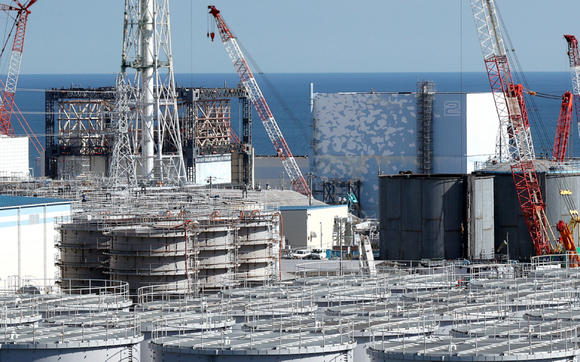
TOKYO — Japanese independent power providers are up in arms over a government proposal to have them shoulder some costs related to the fallout of the 2011 Fukushima Daiichi nuclear disaster, including compensating victims and decommissioning old reactors.
“Why should we have to pick up compensation costs for Tepco’s accident?” fumed a top official at a company selling electricity in the Tokyo area, referring to Fukushima Daiichi operator Tokyo Electric Power Co. Holdings.
Given the narrow profit margins involved in power retailing, new suppliers will likely pass these costs on to customers. More than half a year on from the full liberalization of Japan’s electricity retail market, just 3% or so of households have switched to independent power providers from big regional utilities that had monopolized the market. Some observers worry that forcing newcomers to take on some of the nuclear costs could further slow the glacial pace of the market expansion by taking away their price advantage.
The charges will likely be collected by adding them onto fees for using the regional utilities’ transmission infrastructure. “We won’t have any choice but to raise rates,” sighed an executive at a major independent power supplier.
Many people chose to make the jump from regional utilities as a protest against nuclear power. “It’d be tough to get customers to accept” covering nuclear-related costs, Tokyo Gas President Michiaki Hirose told reporters in October. Tokyo Gas is the largest of the new players with more than 500,000 service contracts.
Sure enough, Tokyo-area suppliers have heard complaints from such customers arguing that having independent providers cover decommissioning expenses would render their decision to switch pointless. “We’ve gotten questions from customers about whether we’re going to pay” these costs, said the head of an independent power company that focuses on renewable energy.
The government aims to scrap aging nuclear reactors while bringing newer facilities back online. One of the major new power providers acknowledges that it would be impossible to maintain nuclear power generation without support from the whole country.
But the new suppliers are demanding to know the details of Tepco’s compensation costs before they pay up. Many also argue that regional utilities should be forced to provide some cheap nuclear power to the electricity wholesale market so they will also feel pain if newcomers are forced to contribute funds.
Destroyed N°1 Nuclear Reactor Building Exposed at Fukushima Daiichi
Video shot from a Kyodo News airplane on Nov. 4, 2016, shows the destroyed No. 1 reactor building at the disaster-hit Fukushima Daiichi nuclear plant, after the removal of 16 of 18 panels covering the building. Tokyo Electric Power Co. plans to dismantle the remaining two panels the following week to complete the panel removal work that started in July 2015 as part of decommissioning the plant.
Fukushima Consequences of Radiation on Wildlife
By Pierre Fetet (translation by Hervé Courtois)
Source : http://www.fukushima-blog.com/2016/09/fukushima-consequences-de-la-radioactivite-sur-la-faune.html
Scientific studies conducted following the Fukushima disaster revealed little by little the consequences of radioactivity on the living and particularly on wildlife. Although published, they are nevertheless rarely circulated. This is why I would like to put a spotlight on some of them and publicize various observations which we do not hear much about, to counter the silly optimism to always relativize the consequences of low doses on life. Any dose of radiation, however small it be, has effects on the living: the ionizing radiation breaks the DNA molecules.
The birds
The feathers of birds take radioactive dust released into the atmosphere continuously by the wind. They therefore suffer permanent external irradiation.
We can see this dust by placing a contaminated bird on a radio-sensitive paper for a month. Here is an example with a bird picked in Iitate in December 2011.
Autoradiography also allows to highlight that the birds also undergo internal contamination.

Autoradiography of a bird revealing radioactive contamination in the plumage and stomach (Source Morizumi)
Yasuo HORI has also reported that some swallows Fukushima undergo depigmentation, as had already been found in Chernobyl. The Wild Bird Society of Japan also noted that the tail feathers of some Japanese swallows were not uniform.
It must be said that nests of swallows up to 1.4 million becquerels of radioactive cesium per kilogram (Bq / kg) have been found in the towns of Okuma and Namie. The nests of chickadees, were not better: 1.3 million Bq / kg.

Left: Swallow from Minamisoma (Fukushima Prefecture) – Right: deformed tail of a swallow from Kakuda (Miyagi Prefecture)
According to studies conducted by Tim Mousseau (University of South Carolina), the population of fifteen bird species living in contaminated areas of Fukushima prefecture decreases with time, with a 30% survival rate.
Another research focused on a falcon species returning in the same nest every year was also conducted by a team of scientists led by Naoki Murase (Nagoya University) at a distance of 100 to 120 km from the Fukushima Daiichi nuclear plant. The interest of this study is that raptors are at the top of a food chain and concentrate radionuclides accumulated by their prey. The authors have shown that the reproductive capacity of the bird was related to radiation measured directly under the nest : radioactivity affects the germline of the bird. The ability of birds to leave the nest fell from 79 to 55% in 2012 and 50% in 2013.
Another study finally published in 2015 by ASN and the Anders Møller laboratory (CNRS), focused on the total dose – internal and external – of birds.
It showed that 90% of the 57 species studied had been chronically exposed to radioactivity dose rate possibly affecting their reproduction.

Simplified representation of the level change of maximum exposure of adult birds (in dose rate) for 57 species of the bird community observed on 300 sites and four years of study. Compared to the range of variation (in blue) ambient dose rate measured on the sites and ranges (red) corresponding to various effects in birds published by the ICRP (2008) (Source IRSN)
So there are three factors that affect living organisms in contaminated areas: the ambient radiation (the dose that is received by being next to a radioactive object), the external contamination (radioactive dust that sticks to the skin, hair, feathers), and internal contamination (radionuclides ingested or trapped in organs).
The butterflies
The first scientific evidence of damage to a living organism by radioactive contamination due to the disaster of Fukushima Daiichi was delivered by the team of researcher Chiyo Nohara (University of Okinawa).
The study highlighted the physiological and genetic damage of a common butterfly of Japan, the maha zizeeria. In May 2011, some show relatively slight abnormalities. But the first female offspring of the first generation showed more serious defects, inherited by the second generation. Adult butterflies collected in September 2011, then showed more severe abnormalities than those collected in May: abortive hatching, infertility, size reduction, slow growth, high mortality and morphological abnormalities (Atrophied wings, curved or in excess number, malformed antennae, bumpy eyes, discolored).
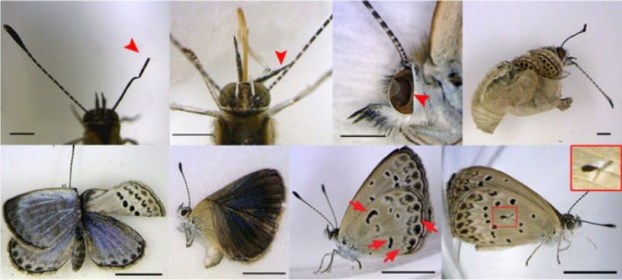
Representative anomalies of butterflies fed contaminated leaves. (Source: Hiyama et al)
Aphids
In 2014, Shin-ichi Akimoto (Hokkaido University) found that about 10% of certain insects, such as aphids, have malformations in Fukushima. But their survival and their reproduction remain possible.
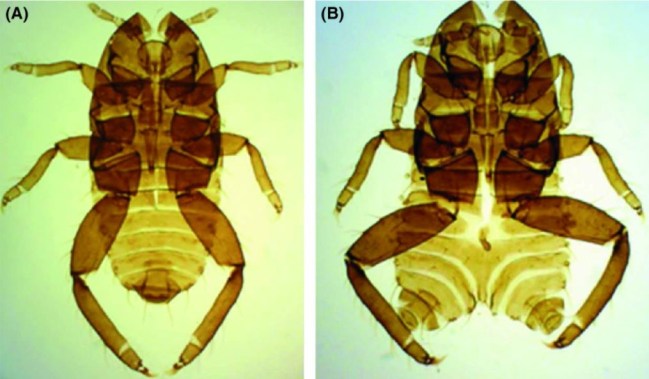
Sorini aphid T. From Fukushima. (A) normal morphology, (B) Level 3 malformation of the abdomen (Source: S. Akimoto)
The cows
The phenomenon of white patches (depigmentation) on the observed swallows in Fukushima and Chernobyl is also found on the cows of Masami Yoshizawa, at the Farm of Hope in Namie, a town located 14 km from the destroyed plant .

A cow of Masami Yoshizawa was brought to Tokyo in 2014 to the government for diagnosis (AFP Photo)
Horses
The biologist Hayato Minamoto reported the carnage suffered by Tokuei Hosokawa, an Iitate farmer who lost a hundred horses in two years. Iitate had suffered the brunt of the radioactive cloud from the Fukushima Daiichi plant in March-April 2011.
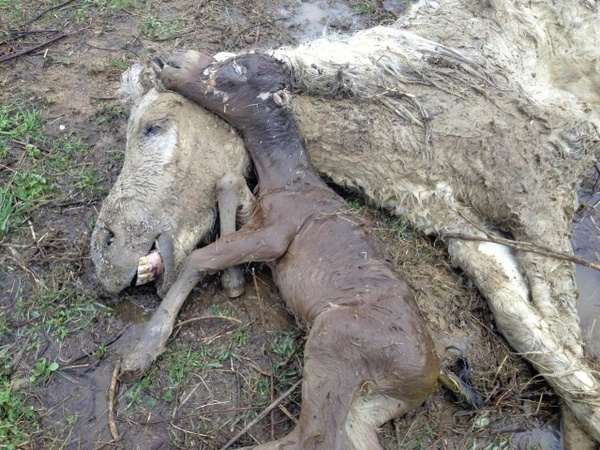
Iitate horses
Monkeys
Between April 2012 and March 2013, researchers led by Shin-ichi Hayama (Japan University of Life Sciences and Veterinary Sciences) analyzed the blood of 61 Japanese monkeys living in a forest 70 km from the Fukushima Daiichi nuclear power plant. The total concentration of cesium in monkeys muscles was between 78 and 1778 Bq / kg. Blood tests in these animals revealed a small quantity of white blood cells and red blood cells, which could make them more vulnerable. The decrease of blood cells was directly proportional to the concentration of cesium in the muscles, which suggests a dose-response correlation. Researchers estimate that exposure to radioactive materials contributed to hematological changes in Fukushima monkeys.

Drawing by Julien Loïs
Provisional Conclusion
The consequences of radioactivity on animals are visible to anyone who will bother to observe what happens. In this article, I focused on some animals only (there would be other cases to develop: the population decline of the cicadas, the increased cataract of rodents, etc.). Scientists could conduct similar studies on this strange animal that is man, but it would not be politically correct.
Yet this has already been done, in Hiroshima and Nagasaki, Chernobyl. For example, studies conducted between 1993 and 1998 on Ukrainian children permitted to observe a drop of blood cells, which was related to the exposure of each child to cesium depending on the place of residence. And yet, in Tokyo, from 2011 to 2014, Dr. Mita observed that white blood cells, especially neutrophils, decreased in children under 10 years old. (Which prompted him to move and to ask his patients to leave Tokyo). But no, do not say anything, and do not look into such matter.
In Japan, the denial of the danger is a must. The only mention of a nosebleed in a manga can cause a national affair and censorship … To speak of the negative consequences of the nuclear disaster at Fukushima Daiichi is not accepted.
You must rebuild, you must forget, you must think about the future. Institutionally, only one study is accepted, the monitoring of thyroids of children in Fukushima. That study is the screen that hides the forest of lies.
And yet, despite 131 thyroid cancers confirmed in June 2016, the official Japanese scientists refuse to see them as caused by radioactivity.
Pierre Fetet
To read more:
1) Scientific studies cited in this article
The biological impacts of the Fukushima nuclear accident on the pale grass blue butterfly, A. Hiyama, C. Nohara, S. Kinjo, W. Taira, S. Gima, A. Tanahara, J.-M. Otaki, 2012
Low blood cell counts in wild Japanese monkeys after the Fukushima Daiichi nuclear disaster, K. Ochiai, S. Hayama, S. Nakiri, S. Nakanishi, N. Ishii, T. Uno, T. Kato, F. Konno, Y. Kawamoto, S. Tsuchida, T. Omi, 2014
Morphological abnormalities in gall-forming aphids in a radiation-contaminated area near Fukushima Daiichi: selective impact of fallout?, S. Akimoto, 2014
Effects of the Fukushima Daiichi nuclear accident on goshawk reproduction, K. Murase, J. Murase, R. Horie, K. End, 2015
Radiological dose reconstruction for birds reconciles outcomes of Fukushima with knowledge of dose-effect relationships, J. Garnier-Laplace, K. Beaugelin-Seiller, C. Della-Vedova, J.-M. Métivier, C. Ritz, T. A. Mousseau, A. P. Møller, 2015
Cumulative effects of radioactivity from Fukushima on the abundance and biodiversity of birds, A. P. Møller, I. Nishiumi & T. A. Mousseau, 2015
2) Articles and file
Tchernobyl, une histoire pas si naturelle que ça (Pierre Fetet)
Non, Tchernobyl n’est pas devenu une réserve naturelle (Timothy Mousseau)
A Fukushima, les souris sont aveugles et les oiseaux ne chantent plus (Anne-Laure Barral)
Japan’s renewed nuclear fuel recycling dream faces obstacles
After finally acknowledging the failure of its fast-breeder reactor, Japan plans to continue pursuing nuclear fuel recycling in a French project, but this program also faces an unclear future.
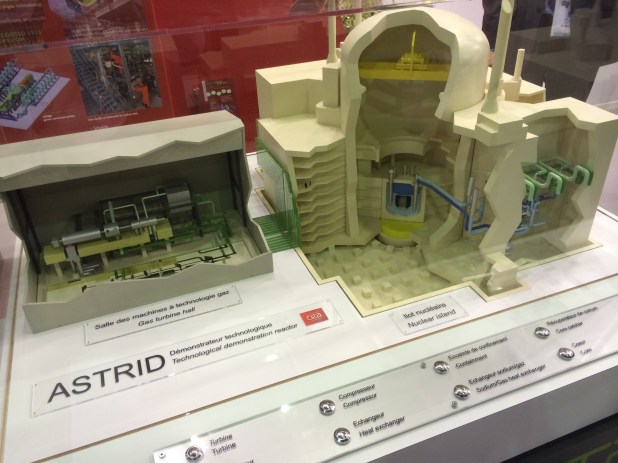
Jean-Marie Carrere, manager of the Advanced Sodium Technological Reactor for Industrial Demonstration (ASTRID) program, said the French Alternative Energies and Atomic Energy Commission (CEA) will decide in 2019 on whether to build the fast demonstration reactor.
The decision, he said, will be based on the results of 1 billion euros (about 115 billion yen) in research and development.
Carrere told Japanese reporters in Marcoule, southern France, on Oct. 14 that the CEA has no intention to scrap the ASTRID project, and that it was looking forward to Japan’s financial contributions.
But he did suggest the ASTRID project would require many changes following Japan’s decision to decommission the Monju prototype fast-breeder reactor in Fukui Prefecture.
The CEA, lacking a fast reactor in operation in France, had planned to conduct some of its fuel-burning experiments at Monju.
Carrere indicated the CEA could possibly seek a partnership with Russia, which has a fast reactor the size of Monju.
The money-losing, problem-plagued Monju reactor was one of the pillars of Japan’s efforts to create a nuclear fuel recycling program. The plan was to reprocess spent nuclear fuel to extract plutonium, which would be burned in nuclear reactors.
Fast-breeder reactors, such as Monju, are supposed to produce more plutonium than they burn.
According to Carrere, the concept for ASTRID has been completed, and it is now in its preliminary design phase. If the decision is made to build the reactor, the goal would be to put it into operation around 2030, he said.
The fast reactor is expected to generate 600 megawatts of electricity.
Relevant Cabinet members have discussed Japan’s direction in this field in a “committee for fast reactor development.”
Some expect joint research in the ASTRID project would allow Japan to keep alive its fast reactor research and maintain its nuclear fuel recycling policy, even if Monju is scrapped.
However, a senior science ministry official said in September that Japan could end up serving as a cash cow for the French project.
http://www.asahi.com/ajw/articles/AJ201611020001.html

Japan’s government should stay out of U.S. sailors’ lawsuit against Tepco
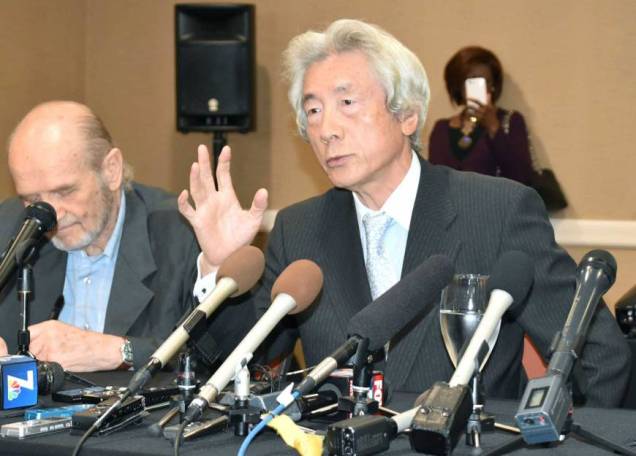
Anti-nuclear village voice: Former Prime Minister Junichiro Koizumi attends a press conference in Carlsbad, California, in May with former U.S. soldiers who have sued Tokyo Electric Power Co. for damage to their health they believe was caused by the Fukushima nuclear disaster. The author of this column, Brian Victoria, who acted as translator for Koizumi during the trip, is seated on the left.
Dear Prime Minister Shinzo Abe,
Let me first acknowledge that after four long years of silence, the Japanese government has finally taken a position regarding the lawsuit filed against Tokyo Electric Power Co. in the U.S. by more than 450 American sailors, marines and civilians who were on board the USS Reagan and accompanying military ships off the coast of Tohoku after 3/11.
These young people experienced serious health problems resulting from, they allege, radiation exposure while participating in Operation Tomodachi, the U.S. military’s humanitarian rescue mission launched in response to the Great East Japan Earthquake and tsunami of March 11, 2011, and subsequent multiple meltdowns at the Fukushima No. 1 nuclear plant.
While the Japanese government’s acknowledgement of the suit is welcome, the unconditional support it has given to Tepco is a matter of deep concern. Even now, U.S. service personnel find themselves prevented from seeking justice because Tepco, with the support of the Japanese government, is doing its utmost to ensure the case will never be heard in an American court.
The Japanese government submitted an amicus curiae brief to the Ninth Circuit Court of Appeals on Feb. 3. An amicus curiae (friend of the court) brief is one presented by a party not directly involved in the suit in the hope of influencing the outcome. The brief contains two points:
1. “The Government of Japan has developed a comprehensive system to ensure compensation for victims of the Fukushima Nuclear Accident.”
2. “Damage claims brought in tribunals outside of Japan threaten the continuing viability of the compensation system established by the Government of Japan.”
Examining the first point, if the Japanese government truly had “a comprehensive system to ensure compensation for victims,” there would be no need for the U.S. service members’ lawsuit. Yet, as you know, the Japanese government and its subsidiaries have, to date, not paid a single yen to any non-Tepco-related victim of radiation exposure from Fukushima No. 1. This includes, as of March this year, a total of 173 children from the prefecture who underwent surgery after being diagnosed with suspected thyroid cancer, 131 of whom were confirmed to have had cancer.
If the Japanese government will not admit that the suffering of its own children was caused by radiation exposure, how confident can young Americans be that the apparently radiation-induced injuries they experienced will be recognized as such, let alone compensated for, in Japan?
Further, at least seven of these previously healthy young Americans have already died and many others are too ill to travel to Japan even if they could afford to, let alone reside in this country during lengthy legal procedures, which typically take years to resolve. This is not to mention the prospect of expensive legal costs, including for court fees, hiring Japanese lawyers, translation of relevant documents, etc. And let us never forget, Prime Minister, it was the Japanese government that requested the assistance of these American military personnel.
As for the second point above, I agree the U.S. military personnel’s lawsuit threatens “the continuing viability of the compensation system established by the Government of Japan.” For example, if a U.S. court were to ascribe the plaintiffs’ illnesses to radiation exposure, how could the Japanese government continue to claim that none of the many illnesses the children and adults of Fukushima presently experience are radiation-related? The American service personnel truly serve as “the canary in the coal mine” when it comes to demonstrating the damaging effects of radiation exposure. Moreover, this canary is out of the Japanese government’s ability to control.
Let us further suppose that an American court were to award $3 million per person as compensation for the deaths, currently standing at seven, of the military personnel who were irradiated. By contrast, the Japanese government continues to deny compensation, for radiation-induced illnesses let alone deaths, to its own citizens. This would surely impact the “viability” (not to mention reputation) of the Japanese government in its ongoing denial of radiation-related injuries to non-Tepco employees.
Let me close by noting that there is one Japanese political leader who has accepted personal responsibility for the injuries inflicted on American service personnel. I refer to former Prime Minister Junichiro Koizumi who, after meeting with injured servicemen and women in San Diego in May, initiated a fund to meet as many of the medical needs of these sailors and marines as possible.
Fortunately, thanks to the support of thousands of ordinary Japanese, he has already raised $700,000 toward his $1 million goal. With tears in his eyes, Koizumi explained that he could not ignore the suffering of hundreds of formerly healthy young Americans who willingly put themselves at risk in order to render aid to the Japanese people.
Prime Minister Abe, I call on you to end the Japanese government’s unconditional legal support of Tepco. Further, if the Japanese government has a conscience, please immediately provide medical aid and compensation to the hundreds of American victims of Operation Tomodachi.
BRIAN VICTORIA
Kyoto
Tokyo to Burden New Utilities, Public With Paying Soaring Costs of Fukushima
Struggling to curb the ever-growing cost of the fallout from the 2011 Fukushima nuclear disaster, Tokyo has come up with an idea of obliging future utility companies to pay a share of the compensation to victims, and for potential future meltdowns.
Today, Japan’s top ten conventional energy companies, including Tokyo Electric Power Company, Inc. (Tepco), which owned the Fukushima plant, are providing regular contributions to the Nuclear Damage Compensation and Decommissioning Facilitation Corp., established following the March 2011 disaster.
The Ministry of Economy, Trade and Industry (METI) proposed Wednesday that electricity companies that enter the retail electricity market after the regulatory loosening up in April 2016 will pay a share of Fukushima compensation as well, the Japa Times reported.
The agency has also designed a new system that would force Tepco, Japan’s largest electric utility, to allocate its excess profits to a fund dealing with the decommissioning of the Fukushima facilities’ reactors. Under current legislation, Tepco’s extra profits are returned to customers in the form of lowered electricity bills. METI noted that customers should have to share responsibility for the liquidation of the disaster aftermath, as they have long benefited from nuclear power. In the meantime, the costs for relieving the disaster’s consequences continue to surge. Expenditures on cleanup of the meltdown site have already exceeded the two trillion yen that the government had hoped to spend on it. By the end of the 2015 fiscal year, some 4.2 trillion yen had been spent to decommission the reactor, compensate victims and carry out radioactive decontamination at the meltdown spot.
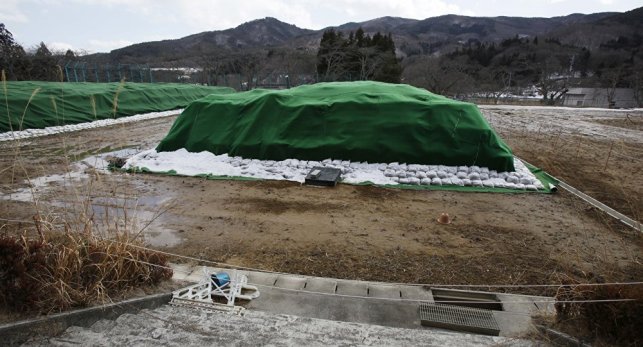
Some 2.34 trillion yen have also been allocated to a special account for creating an interim storage facility for contaminated soil, disposal of contaminated water and for the decontamination of affected areas.
Tepco’s efforts to prevent the contamination of underground water with frozen soil barriers have not been fruitful so far, however, suggesting that new solutions and new transactions are required. METI has estimated that cleanup and decommissioning efforts will likely take more than 30 years to complete. The Fukushima Daichii plant’s reactors melted down after the Great East Japan Earthquake, followed by a disastrous tsunami. It was the most significant nuclear disaster since the Chernobyl catastrophe in 1986.
https://sputniknews.com/asia/201611031047015858-new-utilities-public-pay-fukushima/
Mother’s Radiation Lab and Clinic
The relatively short video shows a female perspective of how women are dealing with the risk despite the Japanese governments, lack of radiation testing, children’s health checks, financial and social support – the social responsibility to their community
Women suffer the most from this stoic denial that radiation effects the community, causing unnecessary stress from risk of radionuclide ingestion on a child’s growing body, well established to be many times more sensitive to radiation due to rapidly dividing cells programmed by DNA at risk during early development
It is sad a mother’s worldview has been largely left out of the South Australian debate around the whole nuclear cycle dominated by senior male nuclear sales executives and academics
However, that isn’t any surprise, as that is how the world embraced the whole nuclear industry in the first place, that is from a purely patriarchal worldview and that is a matter of our species shameful human history https://www.facebook.com/groups/1314655315214929/
Japan’s nuclear hypocrisy
 Japan’s hypocritical nuclear stance, Japan Times, NOV 3, 2016 Japan’s vote at the United Nations last week to oppose a resolution to start talks on a treaty outlawing nuclear weapons is regrettable. It contradicts the nation’s long-standing call for the elimination of such weapons as the sole country to have suffered nuclear attacks. Tokyo’s latest move — which reflects the government’s reliance on the U.S. nuclear umbrella for the nation’s security — not only runs counter to the wishes of survivors of the 1945 Hiroshima and Nagasaki atomic bombings but will weaken its voice in international efforts to rid the world of nuclear arms.
On Oct. 27, the First Committee of the U.N. General Assembly, which deals with disarmament and international security, adopted the resolution, with 123 nations voting in favor, 38 against it and 16 abstaining. Six nuclear powers — the United States, Russia, Britain, France and Israel — voted against it, backed by U.S. allies such as Japan, South Korea, Germany and Australia. Three nuclear powers — China, India and Pakistan — abstained. Surprisingly, North Korea, which recently carried out a fifth nuclear weapons test, voted in favor…..
It is clear, however, that the U.S. put pressure on its allies, including Japan, to oppose the resolution. The U.S. government reportedly sent a letter dated Oct. 17 to NATO member nations urging them to “vote against negotiations on a nuclear treaty ban, not to merely abstain” and “to refrain from” joining talks on such a treaty. The letter said such a treaty, if enforced, “could have a direct impact on the U.S. ability to meet its NATO and Asia/Pacific extended deterrence commitments and the ability of our allies and partners to engage in joint defense operations with the United States and other nuclear weapons states.” A government official has disclosed that Washington made similar representations to Japan.
It would be logical to assume that Japanese officials believed they cannot resist such pressures given Japan’s dependence on the U.S. nuclear umbrella. But did it not occur to them that opposing the resolution would deprive Japan of moral credibility in its repeated calls for creating a nuclear weapons-free world, or could they not at least have considered abstaining from the vote — just like the Netherlands, a NATO member, did — even merely as a gesture? It is absurd to think that the U.S. would not care about Japan’s unique and special position as the only country to have experienced nuclear attacks.
Japan submitted a resolution calling for the abolition of nuclear weapons for the 23rd time in a row this year and it was adopted the same day as the one to begin talks on the nuclear weapons ban treaty cleared the same U.N. committee — with 167 nations in favor, four countries — China, North Korea, Russia and Syria — voting against and 17 abstaining. The U.S., which abstained from the vote last year, joined in co-sponsoring the resolution. The development raises suspicions that Tokyo opposed the resolution for the nuclear weapons ban treaty as a quid pro quo for Washington’s support of Japan’s resolution.
Given its contradictory behavior, it will be extremely difficult for Japan to regain the trust of other nations in U.N. efforts to seek the elimination of nuclear weapons. http://www.japantimes.co.jp/opinion/2016/11/03/editorials/japans-hypocritical-nuclear-stance/#.WBuiAtJ97Gg
Warning that a USA strike on North Korea would spark war with China
 US strike on North Korea would spark world war with China, think-tank warns https://www.thesun.co.uk/news/2090813/crushing-crazy-kims-nuke-bid-will-spark-war-with-china/
U.S. warned against nuking nutty North Korea because it risked war with neighbouring China BY PATRICK KNOX 1st November 2016,
China determined to export nuclear expertise: it all hangs on UK Hinkley project
 Xi says UK nuclear success is crucial, Shanghai Daily, Source: Agencies | November 1, 2016, PRESIDENT Xi Jinping said yesterday China and France should properly implement the Hinkley Point C nuclear project in Britain, the first new UK nuclear power plant for two decades.
Xi made the remarks when meeting with visiting French Foreign Minister Jean-Marc Ayrault.
Chinese and French companies signed the agreement to build an 18 billion pound (US$21.9 billion) nuclear power plant at Hinkley Point C during Xi’s state visit to Britain in October last year. The CGN-led Chinese consortium and French company EDF respectively take 33.5 percent and 66.5 percent stakes.
The Hinkley Point project finally got the go-ahead after Britain’s new prime minister Theresa May delayed the deal because of national security concerns.
As part of the agreement, EDF will help CGN to gain a license to build its own nuclear reactor, Hualong, in Britain, whose nuclear regulatory regime is seen as one of the most stringent in the world.
China is keen to establish itself as an exporter of nuclear expertise so successfully building a plant in the UK would open the door to other markets……..
France and China would set up a fund for joint investment in overseas projects, he said yesterday. “Hinkley Point is a very good example of what we’re going to do together, to win contracts in third markets and in all sectors.”
The project to build the UK nuclear power plant station was “a model that we support everywhere, including in Africa and Asia,” he said.
The new joint fund would be set up soon, he said, without giving further details……….
China and France also signed a social insurance agreement yesterday that will exempt company employees assigned to work in each other’s countries from the mandatory social insurance contributions. http://www.shanghaidaily.com/nation/Xi-says-UK-nuclear-success-is-crucial/shdaily.shtml
Asahi Shimbun made brave effort for investigative journalism
Sinking a bold foray into watchdog journalism in Japan , Columbia Journalism Review By Martin Fackler OCTOBER 25, 2016 IT SEEMED LIKE COMPELLING JOURNALISM:a major investigative story published by The Asahi Shimbun, Japan’s second largest daily newspaper, about workers fleeing the Fukushima nuclear plant against orders.
It was the work of a special investigative section that had been launched with much fanfare to regain readers’ trust after the triple meltdown at the Fukushima Daiichi nuclear power plant in March 2011, when the Asahi and other media were criticized for initially repeating the official line that the government had everything safely under control.
The team had been producing award winning journalism for three years, but the story on the workers would be the last for some of its ace reporters. And its publication in May 2014 would come to mark the demise of one of the most serious efforts in recent memory by a major Japanese news organization to embrace a more independent approach to journalism.
The hastiness of the Asahi’s retreat raised fresh doubts about whether such watchdog journalism—an inherently risky enterprise that seeks to expose and debunk, and challenge the powerful—is even possible in Japan’s big national media, which are deeply tied to the nation’s political establishment.
The editors at Asahi, considered the “quality paper” favored by intellectuals, knew the culture they were facing, but they saw the public disillusionment in Japan that followed the nuclear plant disaster as the opportunity launch a bold experiment to reframe journalism.
No more pooches
On the sixth floor of its hulking headquarters overlooking Tokyo’s celebrated fish market, the newspaper in October 2011 hand-picked 30 journalists to create a desk dedicated to investigative reporting, something relatively rare in a country whose big national media favor cozy ties with officials via so-called press clubs. The clubs are exclusive groups of journalists, usually restricted to those from major newspapers and broadcasters, who are stationed within government ministries and agencies, ostensibly to keep a close eye on authority. In reality, the clubs end up doing the opposite, turning the journalists into uncritical conduits for information and narratives put forth by government officials, whose mindset the journalists often end up sharing.
The choice to head of the new section was unusual: Takaaki Yorimitsu, a gruff, gravelly-voiced outsider who was not a career employee of the elitist Asahi, and had been head-hunted from a smaller regional newspaper for his investigative prowess. Yorimitsu set an iconoclastic tone by taping a sign to the newsroom door declaring “Datsu Pochi Sengen,” or “No More Pooches Proclamation”—a vow that his reporters would no longer be kept pets of the press clubs, but true journalistic watchdogs.
The new section gave reporters a broad mandate to range across the Asahi’s rigid internal silos in search of topics, while also holding to higher journalistic standards, such as requiring using the names of people quoted in stories instead of the pseudonyms common in Japanese journalism.
The Investigative Reporting Section proved an instant success, winning Japan’s top journalism award two years in a row for its exposure of official coverups and shoddy decontamination work around the nuclear plant, which was crippled when a huge earthquake and tsunami knocked out vital cooling systems. The section’s feistier journalism offered hope of attracting younger readers at a time when the 7 million-reader Asahi and Japan’s other national dailies, the world’s largest newspapers by circulation, were starting to feel the pinch from declining sales.
“The Asahi Shimbun believes such investigative reporting is indispensable,” the newspaper’s president at the time, Tadakazu Kimura, declared in an annual report in 2012. The new investigative section “does not rely on information obtained from press clubs, but rather conducts its own steadfast investigations that require real determination.”
That is why it was all the more jarring when, just two years later, the Asahi abruptly retreated from this foray into watchdog reporting. In September 2014, the newspaper retracted the story it had published in May about workers fleeing the Fukushima plant against orders, punishing reporters and editors responsible for the story, slashing the size of the new section’s staff and forcing the resignation of Kimura, who had supported the investigative push.
A newspaper-appointed committee of outside experts later declared that the article, which the Asahi had trumpeted as a historic scoop, was flawed because journalists had demonstrated “an excessive sense of mission that they ‘must monitor authority.’”
While the section was not closed down altogether, its output of major investigative articles dropped sharply as the remaining journalists were barred from writing about Fukushima.
Emasculating the Asahi
The abrupt about-face by the Asahi, a 137-year-old newspaper with 2,400 journalists that has been postwar Japan’s liberal media flagship, was was an early victory for the administration of Prime Minister Shinzo Abe, which had sought to silence critical voices as it moved to roll back Japan’s postwar pacifism, and restart its nuclear industry………..
Despite peer pressure, Asahi journalists say the newspaper initially intended to defend its Fukushima scoop, going so far as to draw up a lengthy rebuttal that was to have run on page one in early September. As late as Sept. 1, Seiichi Ichikawa, the head of the Investigative Section at the time, told his reporters that the newspaper was ready to fight back. “The government is coming after the Special Investigative Section,” Ichikawa said in a pep talk to his team, according to Watanabe and others who were present. “The Asahi will not give in.”
The rebuttal was never published. Instead, President Kimura surprised many of his own reporters with a sudden about face, announcing at a press conference on Sept. 11 that he was retracting the Fukushima-Yoshida article. Reporters say the newspaper’s resolve to defend the piece crumbled when journalists within the newspaper began an internal revolt against the article and the section that produced it.
This was compounded by a sense of panic that gripped the newspaper, as declines in readership and advertising accelerated markedly after the scandals. Fearing for the Asahi’s survival, many reporters chose to sacrifice investigative journalism as a means to mollify detractors, say media scholars and some Asahi journalists, including Yorimitsu.
The Asahi’s official line is that the story was too flawed to defend.The paper’s new president, Masataka Watanabe, continues to talk about the importance of investigative journalism, and some current and former Asahi journalists say investigative reporting will make a comeback.
However, scholars and former section reporters say the setback was too severe. They say the Asahi’s decision to punish its own journalists will discourage others from taking the same risks inherent in investigative reporting. Worse, they said the Asahiseemed to lapse back into the old, access-driven ways of Japan’s mainstream journalism. “The Asahi retreated from its experiment in risky, high-quality journalism, back into the safety of the press clubs,” said Tatsuro Hanada, a professor of journalism at Waseda University in Tokyo. Hanada was so dismayed by the Asahi’s retreat that he established Japan’s first university-based center for investigative journalism at Waseda this year. “It makes me think that the days of Japan’s huge national newspapers may be numbered.”
Martin Fackler is a Research Fellow at the Rebuild Japan Initiative Foundation, a Tokyo-based think tank. Prior to joining RJIF in 2015, he worked for two decades as a correspondent in Asia, including as Tokyo bureau chief for The New York Times from 2009 to 2015. http://www.cjr.org/the_feature/asahi_shimbun_japan_journalism.php
Strong case for solar power in Taiwan
20GW by 2025: Behind Taiwan’s big solar numbers, PV Tech Nov 02, 2016 By Tom Kenning Nuclear reactors approaching end-of-life, a sound PV manufacturing industry and a robust legal system all make a strong case for solar PV to muscle into Taiwan’s energy mix. A new government set the tone for renewables integration by setting a target of 20GW solar by 2025 last year, but this is one of the most densely populated countries on earth, with two thirds of the island covered in steep mountainous forest and national parks; where the city ends the mountains begin. Moreover, a list of unique geographical and cultural challenges to PV development is topped off by the looming threat of some of the most gruelling typhoons in all Asia.
The capital city Taipei, to the north of the island, where population is most concentrated, also happens to have the poorest irradiation. Meanwhile, if solar deployment is concentrated in the more favourable conditions of the south, transmission infrastructure is limited. An island population of more than 23 million needs a solid agricultural industry, so the government has had to focus on releasing uncultivable land for solar, which is again in short supply. Even floating solar is being promoted in an attempt to alleviate these land constrictions. However, with many more hurdles for solar developers ahead, the proximity of Japan and the fallout over Fukushima means the appetite for nuclear has been quashed. New forms of energy are the priority.
As the Taiwan government prepares to finalise details of how its target will be met, PV Tech examines some of the huge numbers being proposed and what it will take to realise them. The government has shown clear support for its clean energy transition with Chen Chien-Jen, vice president of the Republic of China (Taiwan), speaking at the opening ceremony of the PV Tawain exhibition in Taipei this year. He cited the need for more energy independence while reiterating plans to phase out nuclear by 2025 through focusing on solar and off-shore wind.
He said: “Taiwan has great resources and is in a good positon to develop PV and green energy.”
According to the green energy policy released in 2015 by the Bureau of Energy, Ministry of Economic Affairs, the plan is to have 20% of Taiwan’s energy mix coming from renewables by 2025. With all the island’s constraints, it would make sense to concentrate on the highest efficiency solar modules to make the most of every hectare of land used. As it happens, Taiwanese cell manufacturers have tended to produce some of the highest efficiency cells across the globe. It has roughly 2GW annual capacity of the higher efficiency cells, which would translate into the 2GW per year necessary over ten years to reach the domestic 20GW target.
It is no wonder then that Taiwan’s new feed-in tariff (FiT) is bias towards higher efficiency solar modules by offering a higher reward.
It may also be the reason that several Taiwanese cell manufacturers including Neo Solar Power (NSP) and AU Optronics have started to focus on vertical integration, as discussed by Solar Intelligence’s Finlay Colville in his two-part blog on upstream trends from PV Taiwan. For example, Alex Wen, senior vice president, NSP, tells PV Tech that with cell prices dropping as much as 33% in a period of just three months, the firm is increasing its module manufacturing as well as investing in solar PV projects to raise cash. Proximity to the sea and floating solar opportunities are also driving innovation in modules, with NSP due to release a double-glass module that benefits from water reflection.
PV Tech has already detailed how the landscape for solar in Taiwan is changing, but having canvassed industry members at PV Taiwan, here we go into more detail:
The numbers……… http://www.pv-tech.org/features/20gw-by-2025-behind-taiwans-big-solar-numbers?utm_source=twitterfeed&utm_medium=twitter
France’s nuclear reactor unsafety raises same problem for Japan
JAPANESE STEEL AT CENTRE OF FRENCH NUCLEAR CRISIS – MAJOR QUESTIONS AND IMPLICATIONS FOR JAPANESE REACTOR SAFETY http://www.greenpeace.org/japan/ja/news/press/2016/pr201610251/
プレスリリース – 2016-10-25 Tokyo – The safety and regulation of the Japanese nuclear fleet is called into serious question by the discovery of Japanese-manufactured flawed steel components installed in operating French nuclear reactors forced to shut down last week by the French nuclear safety regulator ASN, according to a new Greenpeace report. The threat to nuclear reactor safety in Japan is due to the supply of steel components to the nuclear industry from both Japan Casting and Forging Company (JCFC) and the Japan Steel Works (JSW), according to the technical report (http://bit.ly/2eMqJMm) released today by Greenpeace Japan, by the nuclear engineering consultancy, Large&Associates of London. Evidence of astonishingly high levels of excess carbon far outside regulatory limits with the associated loss of steel toughness and significant increase in the risk of catastrophic failure of primary containment components, have been discovered in JCFC-manufactured components installed in steam generators in 12 reactors owned by the French state-utility, EdF. The independent French nuclear agency, IRSN, recently warned that due to the excess carbon content, there was an increased risk of failure of the affected steam generator leading to a potential reactor core meltdown
During the period 1994-2006, JCFC supplied flawed components to France, which somehow managed to pass through the quality assurance controls of JCFC, the supplier Areva, and the French regulator to be installed in operating reactors. How the defects were not detected along the supply chain has not yet been disclosed. A commissioner from the NRA is visiting France this week to discuss the crisis.
From 1984-1993, JCFC also supplied steam generator components to the following Japanese reactors: Takahama 3&4, Sendai 2, Tomari 1&2 and Tsuruga 2; JCFC steam generator and reactor pressure vessel components are installed in a total of 14 Japanese reactors (not including two reactors at Fukushima Daiini).
“As a result of substandard manufacturing in Japan, citizens in France have been unknowingly exposed to the risk of catastrophic failure of critical reactor components which could result in a reactor core meltdown. Japanese-supplied steel is now at the center of France’s unprecedented nuclear crisis the scale of which has never been seen in any country. All 12 reactors supplied by JCFC are either in forced shutdown or about to be. It lacks all credibility that the Japanese nuclear industry would claim that there are no implications for the safety of their own nuclear reactors. The steel production records released in France did not reveal the scale of excess carbon, which was only found after physical testing. There are currently no plans for such tests in Japan. That is wholly unacceptable. There are many urgent questions that need to be answered by the industry and the NRA, and with full public disclosure and transparency,” said Shaun Burnie, senior nuclear specialist at Greenpeace Germany.
The French nuclear safety regulator has been investigating components supplied by both JCFC and the Japan Steel Works (JSW). Test results obtained by Greenpeace in June 2016 indicated that there was a possibility of excess carbon problem in JSW-manufactured components in the steam generator boiler pods – there are 3 or 4 steam generators in each pressurized water reactor PWR nuclear power plant, each weighs upwards of 300 to 400 tonnes and, typically, the cost of replacement is around US$130 to 150 million.
Since the French publication of the JCFC and JSW component test results, it has been claimed that JSW components are free of excess carbon. However, no tests results proving this have been disclosed and Large&Associates research raises questions over the credibility of this claim. The non destructive testing that has been conducted in France is incapable of identifying the scale of excess carbon. Large&Associatess recommends destructive testing .
The Japanese utilities are required to submit documentation to the NRA by 31 October 2016 detailing the quality of the steel components supplied by Japanese companies, JCFC, JSW and the other steel supplier, JFE. This is however only a paper exercise and not the result of actual physical testing of components installed in reactors.
Greenpeace has today sent a copy of the Large&Associates report to the NRA. A series of urgent questions will be submitted, via a member of the Japanese Diet, to the NRA in the coming days.
Priority reactors to be assessed and tested in Japan due to their status: operating, possibility of early operation or approval by the NRA for restart are: Ikata 3, Sendai 2, Takahama 2, Takahama 3&4 (under appeal by Kansai Electric); and next in line for approval by NRA – Genkai 3&4 and Kashiwazaki-kariwa 6&7.
Notes:
(1) The Japanese supplied components under investigation in France are designated Class 1, by which they are not permitted under any circumstances to fail during operation due to the potentially severe consequences. Specifically the components are Steam Generator tube support plates, elliptical domes, and bottom channel heads; as well as Reactor Pressure Vessel upper and lower heads, rings and pressurizers. The French governments Institute for Radiological and Nuclear Safety (IRSN) warned in August that there was a risk of reactor fuel melt down if steam generators with excess carbon operated. A maximum carbon limit is set by regulation to prevent a reduction in the toughness of the steel in the steam generators and Reactor Pressure Vessel, reduced toughness can lead to thermal shock induced fast fracture, where the steel shatters like glass. See, IRSN, 2016 2016-00275 Objet: EDF – REP – Paliers CP0, CPY et N4 – Ségrégations en carbone des fonds primaires de générateurs de vapeur – Analyse de sûreté et mesures compensatoires, 5th August 2016.
Download the report
For further information:
Shaun Burnie, senior nuclear specialist, Greenpeace Germany (Tokyo):shaun.burnie@greenpeace.org, +81 (0)80 3694 2843
Kendra Ulrich, senior global nuclear campaigner, Greenpeace Japan:kendra.ulrich@greenpeace.org, +81 (0) 90 6478 5408
Chisato Jono, communications officer, Greenpeace Japan: chisato.jono@greenpeace.org, +81 (0)80-6558-4446
Japan’s danger: spent nuclear fuel pools
“Reprocessing of spent nuclear fuel is something only about one-fifth of countries operating nuclear power plants are paying any attention to, as most places like the UK and France are either halting operation or considering it,” said von Hippel.
“Declining international prices for low-enriched uranium, the fuel for light-water reactors, mean there is no economic value,” he explained.
If there’s a fire at spent nuclear fuel pool, 24 million would need to be evacuated http://english.hani.co.kr/arti/english_edition/e_international/768290.html by Lee Keun-young, senior staff write Nov.1,2016 Analysis indicates that method of storing spent nuclear fuel presents risk, and is going mostly ignored
More than 24 million people would have to be evacuated if a fire occurred at the water pool holding spent nuclear fuel at the Kori No. 3 Nuclear Power Plant, an analysis indicates.

“Analysis with HYSPLIT (Hybrid Single Particle Lagrangian Integrated Trajectory) model, the computer recognized by the US Nuclear Regulatory Commission (NRC) for assessment of atmospheric radiation exposure from a nuclear power plant accident, showed maximum damages covering an area of 54,000 square kilometers or over 50% the national territory, and the evacuation of up 24.3 million people due to leaking of cesium-137 (Cs-137) and other radioactive materials in the event of a fire in the Kori No. 3 reactor spent nuclear fuel water pool,” said senior researcher Kang Jung-min of the US Natural Resources Defense Council in an Oct. 31 debate at the National Assembly on the topic “How dangerous is spent nuclear fuel?”
HYPSLIT code was also the analytical program applied by the US at the time of the 2011 Fukushima Nuclear Power Plant disaster in Japan.
Averages from the analysis, which involved the inputting of meteorological conditions for the first weeks of the months January to December 2015, showed large-scale damages in other countries besides South Korea. In addition to the 5.4 million people who would have to be evacuated in South Korea, another 1.1 million would require evacuation in North Korea, 7.9 million in Japan, and 700,000 in China.
“The method of storing spent nuclear fuel in dense water pools presents a serious risk of accident from the loss of cooling functions, not just from an earthquake, tsunami or other natural disaster but also potentially from a terrorist or missile attack,” Kang said.
“To reduce the damage risk, we need to move [spent fuel] into dry storage facilities five to six years after it comes out of the reactor, and to store in a regular rather than dense way,” he added.
Princeton University professor Frank von Hippel noted the same day that “the US Nuclear Regulatory Commission reported benefits equivalent to just 10% of costs in the case of dry storage, but it also reduced the costs by limiting the danger radius to 80 km and using 1995 figure to calculate life values for cancer deaths.”
“It costs far less to move spent fuel into dry containers than it does to reprocess it,” von Hippel added.
In 2003, the US Congress asked the National Academy of Sciences (NAS) to review a plan for keeping spent nuclear fuel in water pool storage for five years before transferring it to dry containers and storing it on open racks. A report was published in 2006, but the NRC did not take action. Its benefit calculations were released only recently after the Fukushima disaster.
“Reprocessing of spent nuclear fuel is something only about one-fifth of countries operating nuclear power plants are paying any attention to, as most places like the UK and France are either halting operation or considering it,” said von Hippel.
“Declining international prices for low-enriched uranium, the fuel for light-water reactors, mean there is no economic value,” he explained.
Fukushima Facility to Become Soccer Training Camp for 2020 Olympics
Tepco to end operations at the J-Village complex by March
Facility to be used as training camp for 2020 Tokyo Olympics
The base for the cleanup of the Fukushima nuclear plant will be returned by March to its original use: the training camp for the Japanese national soccer team.
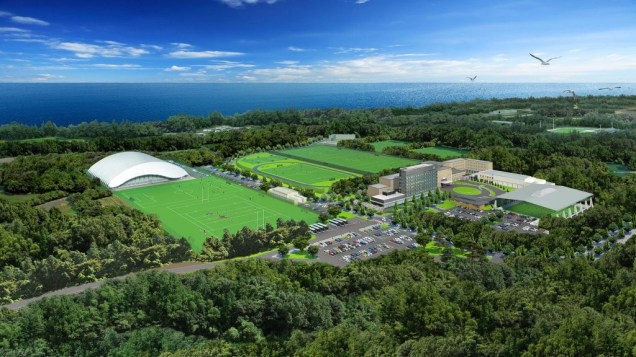
In a symbolic step in the struggle to contain one of the worst nuclear disasters, Tokyo Electric Power Co. Holdings Inc. will return the J-Village facility — about 20 kilometers (12 miles) from the crippled Dai-Ichi plant and just 7 kilometers from the current exclusion zone — to the prefectural government during the current fiscal year, company spokesman Tatsuhiro Yamagishi said Tuesday. It’s also a boon for soccer players who will use the complex as their training base for the 2020 Tokyo Olympics.
The complex, opened in 1997 and shut down after March 2011 meltdown, will be fully reopened for players of “The Beautiful Game” in April 2019. It boasts 11 soccer pitches, a 1,200 square-meter gymnasium and a four-lane pool.
The hand-over is a shot in the arm for Prime Minister Shinzo Abe, who has vowed the nuclear disaster will not impede the nation’s plans to host the 2020 Games. In September, the premier said the situation at Fukushima is “under control” and that there doesn’t need to be a review of measures to prevent contamination.
“This promised handover of J-village would serve as a symbol of progress,” Daniel Aldrich, professor and director of the security and resilience studies program at Northeastern University in Boston, said by e-mail.
“Tepco clearly hopes that this will show the nation that it is on track in the Fukushima accident clean up process,” Aldrich said. “However, a number of obstacles, including expanding costs for decommissioning, a lack of physical control over the contaminated groundwater at the site, and complaints about the decontamination process nearby will no doubt hinder the process.”
As Tepco begins in coming years to remove melted fuel at Fukushima, clean-up costs may rise to several hundred billion yen annually from the current 80 billion yen ($763 million), Japan’s industry ministry said in October. About 300 metric tons of water — partly from the nearby hills — flow into the reactor building daily, mixing with melted fuel and becoming contaminated, according to the company.
The utility used the soccer facility as a make-shift base for tasks from corporate communications to measuring the radiation exposure of employees. It even built temporary dormitories there.
1 This Month





PLEASE OPPOSE HR 8255 AND S.3639 – bills would accelerate satellite deployment, with no environmental review or safeguards – https://ncstd5li.quorum.us/campaign/169331/
To see nuclear-related stories in greater depth and intensity – go to https://nuclearinformation.wordpress.com
-
Archives
- October 2026 (19)
- September 2026 (339)
- August 2026 (330)
- July 2026 (355)
- June 2026 (287)
- May 2026 (306)
- April 2026 (356)
- March 2026 (251)
- February 2026 (267)
- January 2026 (308)
- December 2025 (358)
- November 2025 (359)
-
Categories
- 1
- 1 NUCLEAR ISSUES
- business and costs
- climate change
- culture and arts
- ENERGY
- environment
- health
- history
- indigenous issues
- Legal
- marketing of nuclear
- media
- opposition to nuclear
- PERSONAL STORIES
- politics
- politics international
- Religion and ethics
- safety
- secrets,lies and civil liberties
- spinbuster
- technology
- Uranium
- wastes
- weapons and war
- Women
- 2 WORLD
- ACTION
- AFRICA
- Atrocities
- AUSTRALIA
- Christina's notes
- Christina's themes
- culture and arts
- Events
- Fuk 2022
- Fuk 2023
- Fukushima 2017
- Fukushima 2018
- fukushima 2019
- Fukushima 2020
- Fukushima 2021
- general
- global warming
- Humour (God we need it)
- Nuclear
- RARE EARTHS
- Reference
- resources – print
- Resources -audiovicual
- Weekly Newsletter
- World
- World Nuclear
- YouTube
-
RSS
Entries RSS
Comments RSS

