Fukushima Daiichi to cost TEPCO $170 billion
Japan’s government estimates the crippled Fukushima Daiichi nuclear plant will end up costing its operator more than 170 billion dollars. The figure includes the costs of decommissioning the facility, as well as compensation and decontamination work.
Tokyo Electric Power Company has said it will secure about 17 billion dollars to decommission the plant’s reactors.
However, government officials now say the total cost will be more than 4 times higher. They estimate about 70 billion dollars will be required for the work, which includes removing melted nuclear fuel and dealing with radioactive wastewater.
The costs of decontamination work and constructing intermediate storage facilities for contaminated soil and waste materials are also likely to increase.
An additional 70 billion dollars will be needed to compensate farmers seeking damages.
The government will temporarily shoulder some of the compensation costs, and seek repayment from TEPCO at a later date. Other power companies are sharing some of the burden, which means higher electricity bills for consumers.
Japan’s industry ministry is currently working on a plan to reform TEPCO’s management and divert its profits to decommissioning work. But the ballooning costs are threatening this plan. The government aims to decide by the year-end how to share the financial burden, and how the work will be done.
Radioactive water splashes Japan reactor workers; no injuries, no contamination. So they say as usual
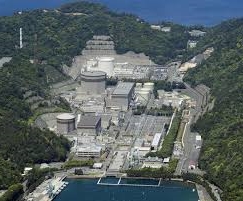
Japan Atomic Power Co said on Wednesday water used for cooling its Tsuruga No.2 reactor, shut for maintenance, splashed on 10 employees at work inside an auxiliary plant building without causing injuries or radioactive contamination.
The electricity wholesaler said about 160 liters of water spilled, splashing the workwear of staff conducting inspections on Wednesday. The company said there was no leak of radiation to the surrounding environment.
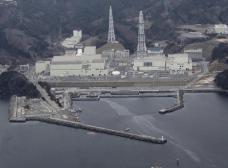
The incident was reported two days after utility Tohoku Electric Power Co said about 12.5 tonnes of seawater used for cooling pumps and motors inside its Onagawa No.1 reactor building had leaked. The Onagawa reactor is also shut for maintenance.
The utility said in a statement the seawater contained no radioactive material and had not leaked to the outside environment.
http://www.reuters.com/article/us-japan-nuclear-water-idUSKBN13P0TS
12,000 evacuee households from Fukushima fret over benefit loss
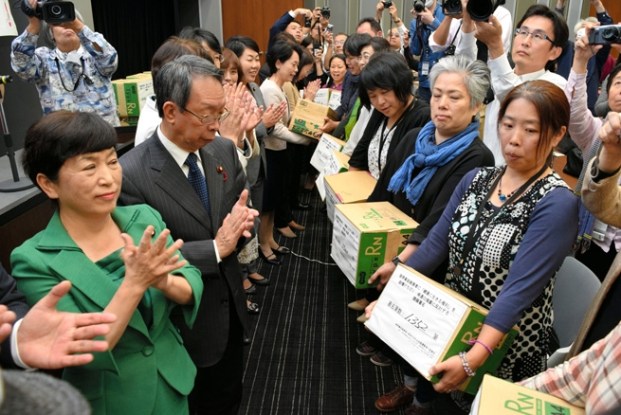
Evacuees from the Fukushima nuclear disaster deliver a petition to politicians in Tokyo on Oct. 26 calling for the extension of free housing benefits.
Anxiety is spreading among many of the 12,000 or so households evacuated after the Fukushima nuclear disaster five years ago as their free housing benefits will end next March.
In late October, about 180 people, who have been receiving free housing after leaving their homes in Fukushima Prefecture, delivered a 200,000-signature petition to politicians in Tokyo asking for the accommodation allowance to be extended.
At the Upper House Members’ Office Building, they voiced their concerns, one after another.
“We are being told to get out of our house,” one of them said. “We are in a real fix.”
The central government and Fukushima prefectural authorities have been providing prefabricated temporary housing units or paying the rent of those who have evacuated either within or to outside the prefecture, even if they did not come from designated evacuation zones.
The measures were introduced because many residents living outside evacuation zones left their homes out of anxiety over the spread of radioactive fallout.
A total of 231.6 billion yen ($2.9 billion) had been spent by March 2016 on 44,000 households, including the cost of building prefab temporary housing units.
But the Fukushima prefectural government decided in June 2015 to discontinue the assistance for evacuees from areas outside evacuation zones.
“With cleanup efforts moving ahead, the living environments are getting better,” Fukushima Governor Masao Uchibori said at the time.
The decision will affect the so-called voluntary evacuees, who lived in areas that were never designated evacuation zones, and evacuees from areas where evacuation orders were lifted in 2014.
Briefing sessions have been held by the prefectural government since December 2015 at about 40 locations within and outside the prefecture to explain details of rent subsidy measures for low-income households, which will replace the free housing benefits.
In late September, prefectural government officials faced a barrage of questions from about 70 residents of Kawauchi, Fukushima Prefecture, who packed a meeting hall in a temporary housing complex in Koriyama, also in the prefecture.
The village of Kawauchi had 2,739 residents as of Oct. 1 and at least 889 of them were living for free in rented housing, prefab temporary housing units and elsewhere outside the village.
Fumio Sakuma, 67, is one of them. His wife, who has a kidney disease, takes a 40-minute drive to hospital three times a week to undergo dialysis. Sakuma said he is anxious about having to relocate with his sick wife.
“We would feel grateful if we were allowed to stay here for one or two more years,” he said at the meeting.
Municipalities in disaster areas in Fukushima Prefecture, in the meantime, are hoping that the end of the free housing benefits will see a return of residents.
“Assistance measures by the central and prefectural governments cannot continue forever,” said Yuko Endo, mayor of Kawauchi. “We might as well take a step forward to rebuild our livelihoods.”
The town of Naraha, also in Fukushima Prefecture, has seen less than 10 percent of its residents return.
“More than five and a half years have passed since the onset of the nuclear disaster,” said Naraha Mayor Yukiei Matsumoto. “It’s time for every one of us to think about standing on our own two feet.”
http://www.asahi.com/ajw/articles/AJ201612010006.html
Full-scale model used to test decommissioning for Fukushima reactor
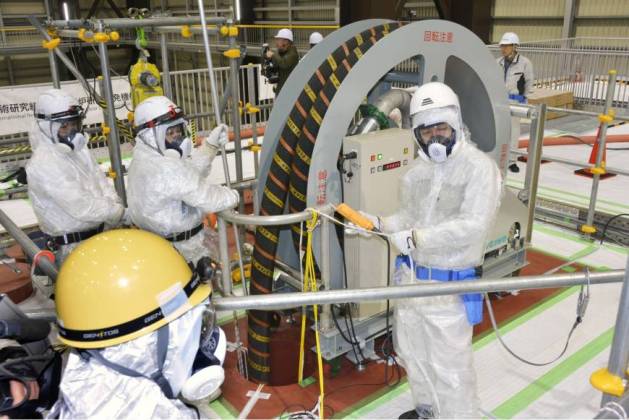
A test using a model of the No. 2 reactor’s suppression chamber and torus room at the Fukushima No. 1 plant is demonstrated for media in Naraha, Fukushima Prefecture, on Tuesday.
NARAHA, FUKUSHIMA PREF. – A research institute used a full-size mock-up of part of a nuclear reactor on Tuesday to conduct trial decommissioning experiments for use on the disaster-hit Fukushima No. 1 plant.
The International Research Institute for Nuclear Decommissioning (IRID) carried out the experiments using a 20-meter wide, 12-meter high model of the No. 2 reactor’s suppression chamber and torus room — areas located below the reactor’s containment vessel.
IRID was established in 2013 by nuclear plant makers, power firms and government organizations to develop technology needed for the decommissioning of the Fukushima plant, which was damaged by the March 3, 2011 earthquake and tsunami. After the disaster, three of the plant’s reactors suffered meltdowns in the world’s most severe nuclear crisis since the 1986 Chernobyl disaster.
The model is located at the Naraha Remote Technology Development Center, near the crippled Fukushima No. 1 plant.
“We would like to continue testing until next summer, approximately, and use (the outcomes) in deciding methods to retrieve fuel debris,” Atsufumi Yoshizawa, IRID executive director, said.
Removing nuclear fuel debris is perceived as one of the most difficult challenges in the decommissioning process.
With radiation emitting from the debris, a method is under consideration to fill containment vessels at the plant with water and remove debris from the top of the vessels, using the water to provide some protection from the harmful radiation.
Challenges in implementing this method include how to prevent contaminated water leaking from cracks in the vessels.
During Tuesday’s experiments, which were open to the media, workers wearing protective suits and masks attempted to insert a hose into the torus room mock-up while using remote cameras to observe their work.
A further experiment to stop water leaking from a suppression chamber is planned.
Kagoshima governor under fire after effectively accepting restart of nuclear reactor
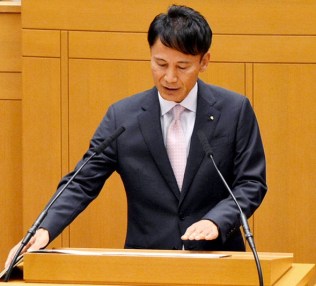
Kagoshima Governor Satoshi Mitazono on Nov. 28 explains to the prefectural assembly why he has requested a budget to form a committee of experts on nuclear power generation.
Governor under fire as Sendai nuclear reactor likely to restart
KAGOSHIMA—Anti-nuclear activists are castigating Governor Satoshi Mitazono, saying the politician has retreated from his campaign promises regarding the planned restart of a nuclear reactor in the prefecture.
Despite stressing that he would take a hard look at safety issues, Mitazono’s actions on Nov. 28 indicate that Kyushu Electric Power Co. will be allowed to restart the No. 1 reactor at its Sendai plant on Dec. 8 as was expected.
“What he had done over the past months now appears to be a mere publicity stunt,” said Yukio Taira, chief of a confederation of labor unions in Kagoshima Prefecture.
Taira withdrew his candidacy in the governor’s race in July after he and Mitazono agreed on many policy measures toward a temporary halt of operations at the nuclear plant in Satsuma-Sendai.
Mitazono on Nov. 28 submitted to the prefectural assembly a budget proposal for establishing an expert panel on nuclear power generation–a centerpiece of his campaign pledges.
“I will make a comprehensive judgment on how to respond when the panel releases its findings of the utility’s reports on ‘special checks,’” Mitazono told the assembly session, referring to the reactor restart plan.
However, given that a governor does not have the legal authority to order a halt, the No. 1 reactor will probably already be running by the time those findings are released.
The assembly is expected to vote on the budget request for the panel on Dec. 16. Kyushu Electric is scheduled to release the outcome of its special checks in early January.
The utility agreed to carry out the additional checks in response to the new governor’s concerns. These inspections, including checking bolts fastened on barrels containing nuclear waste, are nothing new and have been done in the past, according to Kyushu Electric.
Two reactors at the Sendai plant were the first in the nation to go online under new nuclear safety regulations set up after the 2011 nuclear disaster in Fukushima Prefecture.
The No. 1 reactor has been shut down for maintenance since October. The No. 2 reactor is scheduled to be taken offline in December for a routine inspection.
Mitazono, a former TV journalist, was elected on campaign promises to take a “strong response regarding a reactor restart if the envisaged committee deems the plant unsafe.”
Concerns over the safety of the nuclear complex arose when roads and other infrastructure were damaged in a series of powerful quakes that began rattling neighboring Kumamoto Prefecture in April.
After gaining support from anti-nuclear groups, Mitazono won the race against the incumbent, who was seen as friendlier toward nuclear power generation.
But after he took office, Mitazono appeared to back off from his campaign promises.
He did request an “immediate halt” of plant operations to Michiaki Uriu, president of Kyushu Electric, in late August and early September.
After the company refused the governor’s requests, Mitazono decided not to pursue the issue, saying a governor does not have the legal authority to demand a halt to operations.
He tried to assuage public concerns about the safety of the plant, citing the extra special checks the utility promised to conduct.
Taira said Mitazono has rejected repeated requests for a meeting with him and other anti-nuclear activists. They have asked Mitazono to quickly establish the expert panel for possible action to counter Kyushu Electric’s reactor restart plans. But the governor did not reply.
Mitazono also did not submit a budget request for the expert panel in the September session.
When asked by reporters, Mitazono merely kept saying he would establish the panel “as soon as possible.”
“He is breaking the campaign promise if he allows the resumption of the plant without obtaining the conclusion of the panel,” Taira said.
According to one source, the governor told an informal gathering of members of the Liberal Democratic Party, the largest group in the assembly, that he shares the LDP’s direction in nuclear power policy.
http://www.asahi.com/ajw/articles/AJ201611290066.html
Kagoshima Governor Satoshi Mitazono on Nov. 28 explains to the prefectural assembly why he has requested a budget to form a committee of experts on nuclear power generation,
Kagoshima governor effectively accepts restart of nuclear reactor
KAGOSHIMA — Gov. Satoshi Mitazono on Nov. 28 effectively expressed his approval for the restart of the No. 1 reactor at the Sendai Nuclear Power Plant in Satsumasendai, which is undergoing inspections.
The governor said that he will draw a conclusion on operation of the No. 1 reactor after the completion of special checks that are concurrently being performed by the plant’s operator, Kyushu Electric Power Co. Since the special checks include items that are to be completed after the reactor is scheduled to resume operation on Dec. 8, the governor’s comments indicate that he accepts reactivation of the reactor.
In a prefectural assembly meeting on Nov. 28, the governor presented a supplementary budget draft for December that earmarked 3 million yen to set up an inspection committee to probe the safety of the Sendai Nuclear Power Plant and the appropriateness of evacuation plans. In explaining this, he stated, “We will have the inspection committee verify and confirm a report on the result of the special check to be submitted by Kyushu Electric Power Co. and make a comprehensive decision based on its conclusions.
http://mainichi.jp/english/articles/20161129/p2a/00m/0na/008000c
Very dubious market for nuclear power in South East Asia
 The limited role for nuclear can be explained by the high upfront capital costs, limited access to financing, and uneven and tepid public support in the wake of the Fukushima Daiichi nuclear accident. Public opposition has been especially evident in Indonesia, Malaysia, Philippines and Thailand.”
former Rosatom head Sergey Kirienko’s team has been excellent at drawing up and signing nonbinding nuclear agreements … Actually building nuclear plants seems to be beyond them.
Vietnam’s amazing nuclear journey – why it ended, what it means for South East Asia, Energy Post, November 29, 2016 by Jim Green On November 10, Vietnam took the historic decision to scrap its nuclear power program, after many decades of nuclear preparations, up to a ground-breaking ceremony at the first proposed nuclear site in the country in 2014. Jim Green, editor of Nuclear Monitor, published by WISE (World Information Service on Energy), tells the amazing story of nuclear power in Vietnam – and discusses what the Vietnamese decision means for the prospects of nuclear power in South East Asia. Courtesy of Nuclear Monitor.
2016 cancellation
On November 10, Duong Quang Thanh, CEO of staterun Electricity of Vietnam, said the government would propose the cancellation of plans for reactors at the two Ninh Thuan sites to the National Assembly. He added that nuclear power was not included (or budgeted for) in the power plan which runs until 2030 and had already been approved by Prime Minister Nguyen Xuan Phuc.
The National Assembly voted on November 22 to support the government’s decision to abandon plans to build nuclear power plants. Energy analyst Mycle Schneider said: “Vietnam is only the latest in a long list of countries, including more recently Chile and Indonesia, that have postponed indefinitely or abandoned entirely their plans for nuclear new-build.”
The decision to abandon nuclear power was primarily based on economics. Duong Quang Thanh said nuclear power is “not economically viable because of other cheaper sources of power.”
Le Hong Tinh, vice-chair of the National Assembly Committee for Science, Technology and Environment, said the estimated cost of four reactors at the two sites in Ninh Thuan province had nearly doubled to VND400 trillion (US$18 bn; €17.9 bn). The estimated price of nuclear-generated electricity had increased from 4‒4.5 US cents / kwh to 8 cents / kwh. Vietnam has spent millions of dollars on the project so far, Tinh said, but continuing the program would add more pressure to the already high public debt.
Another media report states that Japanese and Russian consultants said that the cost has escalated from the original estimate of US$10 billion to US$27 billion (€9.5‒25.6 bn). “The plants will have to sell power at around 8.65 cents a kWh, which is almost twice the rate approved in the project license and is not competitive at all,” according to the VN Express newspaper.
Vietnam’s rising public debt, which is nearing the government’s ceiling of 65% of GDP, was another reason for the program’s cancellation, saidCao Si Kiem, a National Assembly member and former governor of the central bank………
A May 2016 report by WWF-Vietnam and Vietnam Sustainable Energy Alliance (VSEA) finds that 100% of Vietnam’s power can be generated by renewable energy technologies by 2050. There are many available renewable power sources in Vietnam including solar, wind, geothermal heat, biomass and ocean energy. The report contrasts three scenarios: business as usual (with only modest growth of renewables), a Sustainable Energy Scenario (81% renewable power generation by 2050) and an Advanced Sustainable Energy Scenario (100%).
Nuclear power in South East Asia – or not
A 2015 International Energy Agency report anticipates that nuclear power will account for just 1% of electricity generation in south-east Asia by 2040.
The report states: “All countries in Southeast Asia that are interested in deploying nuclear power face significant challenges. These include sourcing the necessary capital on favourable terms, creation of legal and regulatory frameworks, compliance with international norms and regulations, sourcing and training of skilled technical staff and regulators, and ensuring public support. … The limited role for nuclear can be explained by the high upfront capital costs, limited access to financing, and uneven and tepid public support in the wake of the Fukushima Daiichi nuclear accident. Public opposition has been especially evident in Indonesia, Malaysia, Philippines and Thailand.”
A June 2016 media article began: “Rosatom, Russia’s state nuclear-energy agency, is bullish on the outlook of its business in Southeast Asia after the speedy development of a project in Vietnam and a range of agreements with every country in the region except Singapore, the Philippines and Brunei.”
Nikolay Drozdov, director of Rosatom’s international business department, said Rosatom is focusing a lot of attention on south-east Asia, reflected by the decision to establish a regional headquarters in Singapore.
Russia has nuclear cooperation agreements with seven countries in south-east Asia ‒ Vietnam, Indonesia, Malaysia, Thailand, Cambodia, Myanmar and Laos. But not one of those seven countries ‒ or any other country in south-east Asia ‒ has nuclear power plants (the only exception is the Bataan reactor in the Philippines, built but never operated) and not one is likely to in the foreseeable future. Nor are other nuclear vendors likely to succeed where Russia is failing.
Drozdov said that after the (stalled) nuclear power project in Vietnam, Indonesia and Malaysia would likely be the next countries in the region to develop nuclear power.2 But Indonesia’s situation is much the same as Vietnam’s ‒ decades of wasted efforts with little to show for it (and the same could be said about Thailand).
Malaysia’s consideration of nuclear power is preliminary. Why would Russia be making such efforts in southeast Asia given that nuclear power prospects in the region are so dim? The answer may lie with domestic Russian politics. Given Rosatom’s astonishing industry in lining up non-binding nuclear agreements with over 20 countries ‒ ‘paper power plants’ as Vladimir Slivyak calls them ‒ we can only assume that such agreements are looked on favorably by the Russian government.
Slivyak writes: “These ‘orders’ are not contracts specifying delivery dates, costs and a clear timescale for loan repayments (in most cases the money lent by Russia for power plant construction comes with a repayment date). Eighty to ninety per cent of these reported arrangements are agreements in principle that are vague on details, and in the overwhelming majority of cases the contracts aren’t worth the paper they’re printed on. … So it is clear that [former Rosatom head Sergey] Kirienko’s team has been excellent at drawing up and signing nonbinding nuclear agreements … Actually building nuclear plants seems to be beyond them.” http://energypost.eu/vietnam-dumps-nuclear-power-economic-reasons-rest-south-east-asia-may-follow/
Northeastern Japan Asks Koike for Tokyo Olympics Support
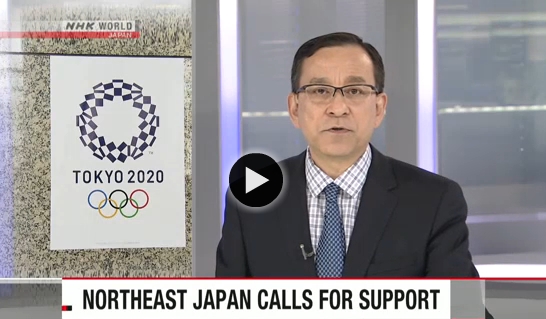
Northeastern Japan asks Koike for support
Prefectural leaders from northeastern Japan have asked the Tokyo governor for cooperation in supporting reconstruction of the 2011 disaster-hit region through the 2020 Olympic and Paralympic Games.
The governors and vice governors of the 6 prefectures handed a letter to Yuriko Koike when they met in Tokyo on Monday.

They hope the Tokyo Games will help revitalize areas affected by the 2011 earthquake and tsunami. The region’s recovery is a key theme for the Games.
The letter calls for the region’s festivals and traditional arts performances to be featured in events held in the run-up to the Olympics and Paralympics.
It also asks that the region’s wood materials be used at the Games facilities and food products at cafeterias in the athletes’ village.
The letter requests the torch relay course pass through the entire region so as many residents as possible will be able to take part in the run.
The governors said they hope the Games will contribute to bringing more foreign tourists to northeastern Japan.
They also said people in the region want an opportunity to express their gratitude to other countries for assisting in reconstruction.
Tokyo Governor Koike said the Games are the best opportunity to show to the world how the region has recovered.
Fund for Children with Thyroid Cancer in 15 Prefectures

A member of a fund that helps children with thyroid cancer explains the prefectures to be covered by its offer to defray medical costs, at an event in Chiyoda Ward, Tokyo, on Monday.
Thyroid cancer fund to defray costs for young patients in Fukushima, 14 other prefectures
A fund supporting children with thyroid cancer said Monday it will pay part of the medical costs for young patients in Fukushima Prefecture and elsewhere in Japan.
The fund, called 3.11 Children’s Fund for Thyroid Cancer, will offer up to ¥200,000 to each patient 25 and under in 15 prefectures mainly in northeastern and eastern Japan, including Tokyo.
The regions were selected in accordance with various atmospheric dispersion models for radioactive iodine spread during the Fukushima nuclear crisis in 2011.
The fund will accept applications between December and March. After review, it will provide ¥100,000 for each case and additional ¥100,000 for relatively serious patients. A second round of applications will be accepted again from April.
The fund was initially promoted by politicians including former Prime Ministers Junichiro Koizumi and Morihiro Hosokawa, and supported by celebrities such as actress Sayuri Yoshinaga. It has received ¥20 million in donations from the public since September.
Some Japanese researchers published a report attributing most of the thyroid cancer cases found among children and adolescents after the disaster began to radiation spewed by the triple core meltdown at the tsunami-swamped Fukushima No. 1 power plant.
Private fund to help young thyroid cancer patients
A Japanese private foundation will offer financial aid to young people who have been diagnosed with thyroid cancer since the accident at the Fukushima Daiichi nuclear power plant.
The foundation said on Monday it will provide a lump sum of 100,000 yen, or about 900 dollars, starting next month.
People aged 25 years old and younger who have been diagnosed with thyroid cancer, including suspected cases, are eligible for the aid. They should be residents of Fukushima or one of the 14 other prefectures in eastern Japan.
The foundation says it has raised about 20 million yen in public donations to help them.
Fukushima Prefecture has been conducting medical checkups for about 380,000 children aged 18 or younger after the 2011 accident. 175 have been diagnosed with thyroid cancer or are suspected cases.
The foundation’s representative, Hisako Sakiyama, says these young people will have to live with the risk of cancer for many years. She says the foundation wants to provide psychological support as well.
Applications for the financial aid will be accepted through March next year. http://www3.nhk.or.jp/nhkworld/en/news/20161128_17/
Fukushima costs to soar to $176 billion
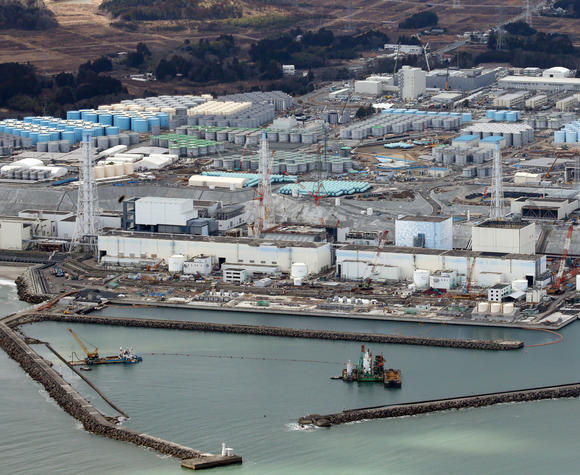
Fukushima costs to soar to 20 trillion yen
TOKYO — The combined costs of paying compensation for the Fukushima nuclear disaster and the decommissioning of the plant’s reactors may be double the initial estimate, rising to more than 20 trillion yen ($176 billion), according to estimates by the country’s industry ministry.
At the end of 2013, the Ministry of Economy, Trade and Industry calculated the cost at 11 trillion yen, which has since become the government’s official estimate.
As electric companies other than Tokyo Electric Power Co., the operator of the crippled plant, will also pass part of the cost on to consumers through higher rates, an increase in the public burden is unavoidable.
According to multiple sources, the ministry has already conveyed its new estimates to members of its expert panel, which is in discussions on reforming the management structure at Tepco and measures to secure funds.
The ministry aims to reach an agreement with the Ministry of Finance during planned discussions over the expansion of an interest-free loan program from 9 trillion yen to support Tepco.
The 11-trillion estimates foresaw 5.4 trillion yen for compensation payments; 2.5 trillion yen for decontamination work; 1.1 trillion yen for the construction of interim radioactive waste storage facilities; and 2 trillion yen secured by Tepco to scrap the reactors.
The new estimates see compensation payments costing 8 trillion yen and 4-5 trillion yen for decontamination.
The cost of decommissioning reactors — a process which will span at least 30-40 years — are projected to swell to hundreds of billions of yen a year from the current 80 billion. That would add several trillion yen to the overall cost.
Combined with the cost of building interim storage facilities, the total cost is forecast to exceed 20 trillion yen.
The snowballing costs are due mainly to the expansion of the number of people eligible for damages and the difficulty of conducting decontamination work, neither of which was fully understood when the initial estimates were made.
http://asia.nikkei.com/Politics-Economy/Economy/Fukushima-costs-to-soar-to-20-trillion-yen*
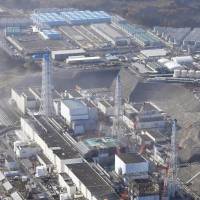
Cost of Fukushima disaster expected to soar to ¥20 trillion
The overall cost of wrapping up the Fukushima nuclear disaster is now estimated at more than ¥20 trillion, nearly double the previous estimate, sources familiar with the matter said Monday.
The Ministry of Economy, Trade and Industry, which previously put the overall cost at ¥11 trillion, is considering passing on a portion of the costs, including for compensation and the decommissioning of the Fukushima No. 1 nuclear plant, to consumers via higher electricity prices, the sources said.
The aged, six-reactor plant, operated by Tokyo Electric Power Co. Holdings Inc., was plunged into a blackout by the March 2011 earthquake and subsequent tsunami, leading to three core meltdowns and the worst nuclear disaster since Chernobyl in 1986.
According to the new estimate, Tepco’s compensation payments will rise to ¥8 trillion from ¥5.4 trillion and decontamination costs will double to around ¥5 trillion.
Trillions more will be needed to decommission the reactors and deal with radioactive water at the plant, on top of the ¥2 trillion earlier estimated, the sources said.
The ministry has been discussing reforming crisis-hit Tepco and is about to draft a plan for the utility based on the new estimate within this year.
Combined with the cost of building interim waste storage facilities, foreseen to remain at ¥1.1 trillion, the total cost is forecast to surpass ¥20 trillion, the sources said.
The government is studying the possibility of expanding a ¥9 trillion interest-free loan program for Tepco that was set up by issuing government bonds to cover compensation payments and decontamination costs in areas hit by the disaster.
It is expected to take up to 30 years to recover the ¥9 trillion through payments from Tepco and other big utilities.
The government also plans to recover the expected increase in compensation payments and decontamination expenses by raising charges for transmission line usage for new electricity retailers.
In principle, Tepco needs to secure funds on its own for decommissioning the plant. The government will manage the funds, which will be established using profits generated by the utility. But it is not clear if Tepco alone can shoulder the cost.
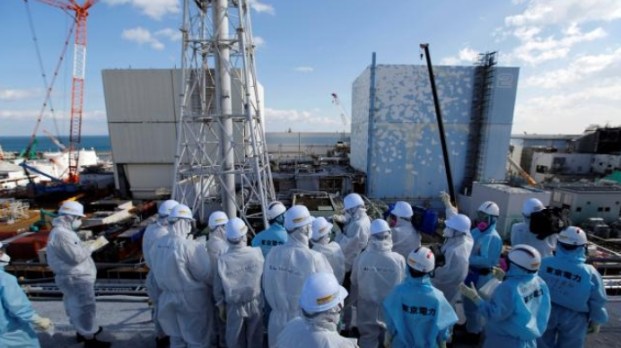
Fukushima nuclear decommission, compensation costs to almost double: media
Japan’s trade ministry has almost doubled the estimated cost of compensation for the 2011 Fukushima nuclear disaster and decommissioning of the damaged Fukushima-Daiichi nuclear plant to more than 20 trillion yen ($177.51 billion), the Nikkei business daily reported on Sunday.
The trade ministry at the end of 2013 calculated the cost at 11 trillion yen, which was comprised of 5.4 trillion yen for compensation, 2.5 trillion yen for decontamination, 1.1 trillion yen for an interim storage facility for contaminated soil, and 2 trillion yen for decommissioning, the report said.
The new estimate raised the cost of compensation to 8 trillion yen and decontamination to 4-5 trillion yen, the cost for an interim storage facility remained steady, and decommissioning will rise by several trillion yen, it added.
The part of the cost increase will be passed on in electricity fees, it added, citing multiple unnamed sources familiar with the matter.
The ministry could not provide immediate comment.
On March 11, 2011, a massive 9 magnitude earthquake, the strongest quake ever recorded in Japan, created three tsunamis that knocked out the Fukushima-Daiichi plant, causing the worst nuclear crisis since Chernobyl a quarter of a century earlier.
The Ministry of Economy, Trade and Industry will discuss with the Ministry of Finance a possible expansion of the interest-free loan program from 9 trillion yen, to help support the finances of the Fukushima plant operator Tokyo Electric Power Co’s, the report said.
The cost of cleaning up Tokyo Electric Power’s wrecked Fukushima-Daiichi nuclear plant may rise to several billion dollars a year, from less than $800 million per year now, the Japanese government said last month.
The Mainichi newspaper reported in October that Japan’s utilities lobby expects clean-up and compensation costs from the Fukushima disaster to overshoot previous estimates by 8.1 trillion yen.
http://www.reuters.com/article/us-tepco-outlook-idUSKBN13N03G
Fukushima aftershock renews public concern about restarting Kansai’s aging nuclear reactors
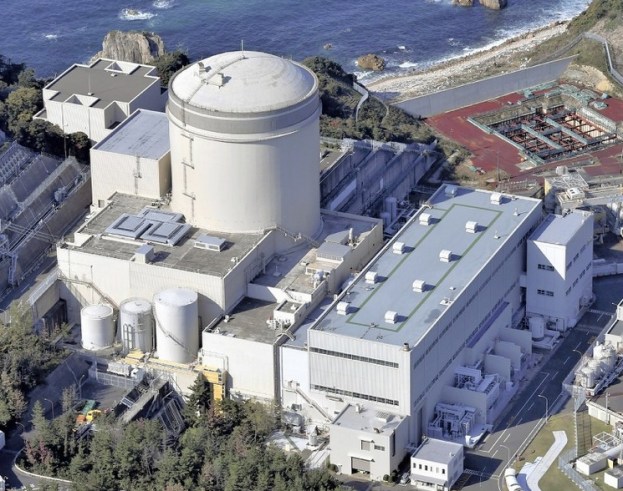
KYOTO – The magnitude-7.4 aftershock that rocked Fukushima Prefecture and its vicinity last week, more than five years after the mega-quake and tsunami of March 2011, triggered fresh nuclear concerns in the Kansai region, which hosts Kansai Electric Power Co.’s Mihama plant in Fukui Prefecture.
The aftershock came as the Nuclear Regulation Authority approved a two-decade extension for Mihama’s No. 3 reactor on Nov. 16, allowing it and two others that have already been approved to run for as long as 60 years to provide electricity to the Kansai region.
Residents need to live with the fact that they are close to the Fukui reactors, which are at least 40 years old. Despite reassurances by Kepco, its operator, and the nuclear watchdog, worries remain over what would happen if an earthquake similar to the one in 2011, or even last week, hit the Kansai region.
Kyoto lies about 60 km and Osaka about 110 km from the old Fukui plants. Lake Biwa, which provides water to about 13 million people, is less than 60 km away.
In addition to Kepco’s 40-year-old Mihama No. 3, reactors 1 and 2 at the Takahama nuclear power plant in Fukui are 42 and 41 years old, respectively.
In the event of an accident, evacuation procedures for about 253,000 residents of Fukui, Shiga, and Kyoto prefectures who are within 30 km of the plants would go into effect.
But how effective might they be?
The majority does not live in Fukui. Just over half, or 128,500, live in neighboring Kyoto, especially in and around the port city of Maizuru, home to a Self-Defense Forces base. Another 67,000 live in four towns in Fukui and about 58,000 live in northern Shiga Prefecture.
Plans call for Fukui and Kyoto prefecture residents to evacuate to 29 cities and 12 towns in Hyogo Prefecture and, if facilities there are overwhelmed, to Tokushima Prefecture in Shikoku. Those in Shiga are supposed to evacuate to cities and towns in Osaka Prefecture.
In a scenario put together by Kyoto Prefecture three years ago, it was predicted that tens of thousands of people would take to available roads in the event of an nuclear accident. A 100 percent evacuation of everyone within 30 km of a stricken Fukui plant was estimated to take between 15 and 29 hours, depending on how much damage there was to the transportation infrastructure.
But Kansai-based anti-nuclear activists have criticized local evacuation plans as being unrealistic for several reasons.
First, they note that the region around the plants gets a lot of snow in the winter, which could render roads, even if still intact after a quake or other disaster, much more difficult to navigate, slowing evacuations even further.
Second is the radiation screening process that has been announced in official local plans drawn up by Kyoto and Hyogo prefectures.
While automobiles would be stopped at various checkpoints along the roads leading out of Fukui and given radiation tests, those inside would not be tested if the vehicle itself has radiation levels below the standard.
If the radiation is above standard, one person, a “representative” of everyone in the car, would be checked and, if approved, the car would be allowed to continue on its way under the assumption that the others had also been exposed to levels below standard. This policy stands even if those levels might be more dangerous to children than adults.
Finally, there is the question of whether bus drivers would cooperate by going in and out of radioactive zones to help those who lack quick access to a car, especially senior citizens in need of assistance.
None of the concerns about the evacuation plans is new, and most have been pointed out by safety experts, medical professionals and anti-nuclear groups.
But with the NRA having approved restarts for three Kansai-area reactors that are over 40 years old, Kansai leaders are responding more cautiously to efforts to restart Mihama No. 3 in particular.
“It is absolutely crucial that local understanding for Mihama’s restart be obtained,” said pro-nuclear Fukui Gov. Issei Nishikawa in July, after a local newspaper survey showed that only about 37 percent of Fukui residents agree with the decision to restart old reactors.
Shiga Gov. Taizo Mikazuki, who is generally against nuclear power, was even more critical of the NRA’s decision to restart Mihama.
“There are major doubts about the law that regulates the use of nuclear reactors more than 40 years old. The central government and Kepco need to explain safety countermeasures to residents who are uneasy. People are extremely uneasy about continuing to run old reactors,” the governor said earlier this month.
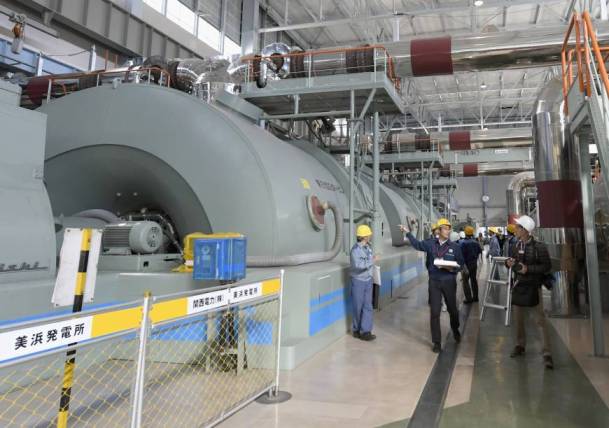
A turbine at the No. 3 reactor of Kansai Electric Power Co.’s Mihama plant in Fukui Prefecture is seen on Nov. 16.
Nobel-winning Belarusian writer Alexievich speaks on nuclear disasters and the future of human hubris
Alexievich: “the wonderful civilization turned into garbage” referring to the Fukushima Triple meltdowns…

Svetlana Alexievich, winner of the 2015 Nobel Prize in literature, called the nuclear catastrophes at Chernobyl and Fukushima events that people cannot yet fully fathom and warned against the hubris that humans have the power to conquer nature.
The 68-year-old Belarusian writer was in Tokyo at the invitation of researchers at the University of Tokyo, where she gave a lecture on Friday. More than 200 people attended.
The Nobel laureate, who writes in Russian, is known for addressing dramatic and tragic events involving the former Soviet Union – World War II, the Soviet war in Afghanistan, the 1986 Chernobyl nuclear disaster and the 1991 collapse of the communist state.
Her style is distinctive in that she presents the testimonies of ordinary people going through traumatic experiences as they speak, without intruding on their narratives.
Alexievich, who visited the Tomari nuclear power plant in Hokkaido in 2003, recalled a remark by an official there that a catastrophe like Chernobyl would not happen in Japan because “Japanese are well-prepared for quakes and are not drunken, unlike Russians.”
“But 10 years later, the wonderful civilization turned into garbage,” she said through a Russian-Japanese interpreter, referring to the 2011 Fukushima core meltdowns.
“Humans have occupied a position in nature that they should not. It is impossible for humans to conquer nature.
“Nature is now rebelling against humans. We need a philosophy for humans and nature to live together,” she said.
Referring to the policies of Japan and other countries to stick with nuclear power even after Chernobyl and Fukushima, she said: “I think that, unless we change our thinking, nuclear power generation will continue.”
Alexievich also said that documenting catastrophes like Chernobyl and Fukushima, whose effects will last for decades, is a big burden for writers. Listening to the voices of people affected by a catastrophe is like being forced to relive it, she explained.
Yet, pointing out that fictional works on Chernobyl, such as novels and movies, have not been successful, she stressed the importance of collecting the voices of citizens.
“A catastrophe has not yet been incorporated into culture. The only language that has been able to convey a catastrophe is testimonies (by people who have experienced it), she said.
She cited the story of a Soviet pilot who died of radiation exposure after splashing sand over the radiation-spewing Chernobyl plant. She remembers him as telling her: “I could not understand what I saw with my eyes. You will not understand, either. But you must record it and hand it down to future generations. Then they may understand it.”
Alexievich acknowledged that people today live in a difficult era.
“People are looking to the past to find solutions for today’s problems. This trend is testified to by the rise of conservatism. Never before in the past has the vulnerability of democracy manifested itself so clearly,” she said.
“Remembering that even German fascism and Soviet communism are gone, intellectuals need to encourage people so that they will not despair.”
On shaky ground: Australian uranium and Fukushima
‘There is a clear chain of consequence from a failed nuclear facility on Japan’s East coast to the back of a big yellow truck at an Australian mine-site.’
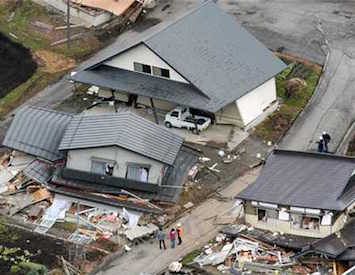
THE POWERFUL EARTHQUAKE that struck off the coast of Fukushima prefecture in Japan last week, is a stark reminder of the deep and continuing safety concerns following the 2011 nuclear disaster.
The stricken reactor complex remains polluted and porous and every added complication leads to further contamination.
Closer to home the renewed tectonic instability highlights the need for urgent Australian government action on the industry that directly fuelled the continuing nuclear crisis.
In October 2011, Robert Floyd, the director general of the Department of Foregn Affairs and Trade (DFAT) Australian Safeguards and Non-Proliferation Office (ASNO) confirmed to the Federal Parliament that
“Australian obligated nuclear material [uranium] was at the Fukushima Daiichi site and in each of the reactors.”
Rocks dug in Kakadu and northern South Australia are the source of Fukushima’s radioactive fallout. There is a clear chain of consequence from a failed nuclear facility on Japan’s East coast to the back of a big yellow truck at an Australian mine-site.
The Federal Government has cravenly ignored this fact and also remains resistant to an independent cost-benefit assessment of Australia’s uranium trade, as directly requested by the then UN secretary general Ban Ki Moon in the wake of Fukushima.
To date there has been no meaningful response from any Australian government, uranium company, uranium industry body or regulator. There have been political platitudes and industry assurances but no credible attention or action.
Indeed, instead of the requested industry review there has been a retreat from responsibility and a rush to rip and ship more uranium ore by fast-tracking risky and contested new uranium sales deals, including to India and Ukraine.
Despite Canberra’s irresponsible fire sale approach the Australian uranium sector is facing tough times.
“Rocks dug in Kakadu and northern South Australia are the source of Fukushima’s radiocative fallout.”
In June, BHP Billiton, the world’s biggest miner, confirmed that it scrapped its long planned, budgeted and approved Olympic Dam expansion in South Australia because of the impact of the Fukushima disaster on uranium demand and prices.
BHP says:
‘Fukushima changed everything.’
And the result is clear — nuclear power’s contribution to the global energy mix is shrinking and is being eclipsed by renewables. Uranium operations are on hold, extended care and maintenance or well behind planning schedules and prices, profits, share value and employment numbers have gone south.
IBISWorld’s March 2015 market report shows that less than 1,000 people are employed in Australia’s uranium industry. The uranium industry accounts for 0.01 per cent of jobs in Australia and in the 20131/14 financial year, accounted for a scant 0.19 per cent of national export revenue. Despite the uranium industry’s promises, uranium mining is not and never will be a significant source of employment or wealth in Australia.
Fukushima is a global game changer with Australian fingerprints. Like Japan, the Australian uranium sector is also on shaky ground and is in urgent need of review. This high risk, low return sector lacks social licence and it is time for less excuses and more examination of the asbestos of the 21st Century.
2nd Fukushima boy speaks up about bullying in new schools
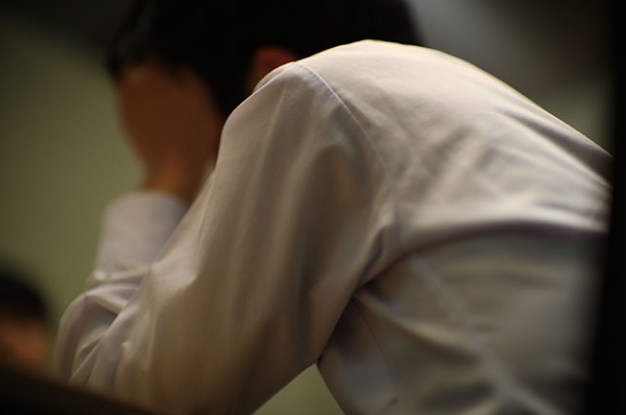
A junior high school boy from Fukushima Prefecture recounts his experiences of bullying after he moved to Tokyo with his family as a second-grader in an interview with The Asahi Shimbun on Nov. 24
In a troubling development, the bullying of students who fled the Fukushima nuclear disaster is apparently more widespread than the boy whose ordeal in Yokohama recently attracted much media attention and generated public sympathy.
A junior high school boy in Tokyo also has recounted his agonizing experiences of becoming the target of harassment, which continued off and on in his first and second elementary schools in the capital.
“Unless a person who experienced it speaks up, a true picture of bullying cannot be conveyed to the public,” the boy, accompanied by his parents, told of his decision to come forward in an interview with The Asahi Shimbun.
When the boy evacuated from Fukushima Prefecture in 2011, following the nuclear accident in March that year, he was in the second grade. All he could take with him from his home in the scramble to flee were a few clothes. He could not bring his school backpack or textbooks.
At his new school, he soon found himself being bullied by his classmates, including girls.
“Your germs will infect us,” one said, while another jeered, “What you touch will be contaminated.”
Still another commented, “You are living in a house for free.”
He took down a drawing that was on a classroom wall alongside those of other children after he found some classmates had scribbled disparaging comments on it.
At the school, students formed small groups with their desks when they have school lunch. But students in his group avoided doing so with him.
After the boy tried to join them by pushing his desk toward theirs, a homeroom teacher called his parents to urge him to improve his behavior, saying that their son was “restless.”
The boy finally began to refuse to go to school.
“I cannot stand up due to pain in my legs,” he complained to his parents.
His mother decided to transfer him to a new school only several months after he was enrolled in the Tokyo school.
But the boy quickly discovered that the new situation was not much different from his former school.
A teacher introduced him as a Fukushima evacuee in front of the entire school. Soon children asked him how much compensation money his family had received. They also told him that his family must live in a nice home for free just because they were evacuees.
In the face of such bullying at his new school as well, the boy made the wish that he would be strong enough to persevere through the difficulties.
His mother finally took action to help her son when he was a fifth-grader. She brought up his troubles during her talks with his homeroom teacher.
Until then, though concerned, she restrained herself from speaking out in the crowd as several Fukushima evacuees were also attending the school.
“If I spoke out in a strong tone, I might have caused trouble for other evacuees,” the mother said of her feelings at the time.
But her patience ran out.
In response to her pleas, the boy’s homeroom teacher asked her to “wait three months,” and the bullying stopped.
But the harassment continued at the boy’s cram school.
A few children from the same school were also enrolled at the cram school, and they, coupled with students from other schools, continued taunting him where the homeroom teacher’s oversight did not reach.
After a child dropped the boy’s shoe in the lavatory basin, he was told, “This is your home.”
The boy mustered the courage to resist when another child, showing him a pet bottle containing leftover food, said the bullying would stop if he consumed it.
The mother, alerted by her son, reported the harassment to cram school officials and the situation improved after that.
The boy said his relationships with his new classmates were good after he entered a junior high school away from his home.
Although he did not reveal that he is an evacuee, he did not become the target of bullying even after his classmates later found out by accident.
“I was under the impression that I was not equal to my peers as I was an evacuee at my elementary school,” the boy said. “Children were in an environment that barely accepts individuality and those with differing backgrounds, and an evacuee was viewed as an individual with an abnormal trait.”
The parents said his family, evacuating from outside the evacuation zone, did receive compensation, but only a fraction of the sum a family from the evacuation zone was entitled to.
The family’s access to free housing will end in March.
“I am so worried about my future because I have no clue as to our life after that,” he said.
Yuya Kamoshita, who heads a group of evacuees in the Tokyo metropolitan area, said the organization received five other complaints about bullying, in addition to the boy’s case.
He said many children from Fukushima are routinely derided as “a germ” or “dirty” in association with the disaster at the crippled Fukushima No. 1 nuclear power plant.
“People around the children who call out those taunts must know about their behavior,” he said. “School officials should make a firm response.”
http://www.asahi.com/ajw/articles/AJ201611270040.html
A junior high school boy from Fukushima Prefecture recounts his experiences of bullying after he moved to Tokyo with his family as a second-grader in an interview with The Asahi Shimbun on Nov. 24
Shame on TEPCO For Taking Kids into Fukushima Exclusion Zone for Damage Control Campaign
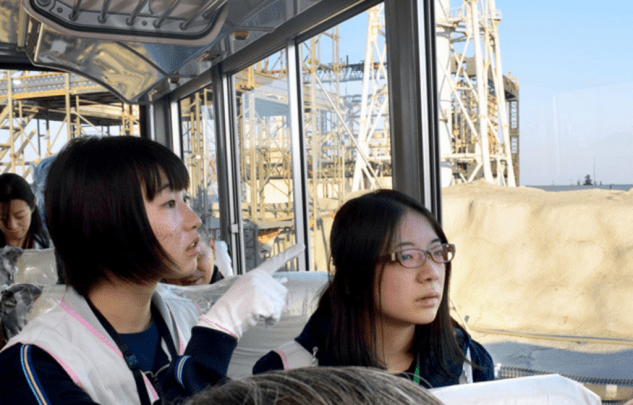
On November 18, 2016, Tokyo Electric Power Company, a.k.a. TECPCO, took a group of 13 students wearing dosimeters from Fukushima High School into the exclusion zone around the hobbled Fukushima Daiichi Power Plant for an educational tour. It is the opinion of the EnviroNews World News Editorial Board that this is unacceptable, and should not happen again until all radiation is cleaned up at the site.
The Asahi Shimbun reported, “It was the first tour by youngsters since the disaster as plant operator Tokyo Electric Power Co. had deemed the radiation risk was too high.”
To be clear, epidemiology and medical science have firmly established there is no “safe” amount of radiation to be exposed to — period — end of story. With each subsequent exposure, no matter how small, the bombarded organism experiences an increase in cancer risk.
Knowing that science has firmly established that there is no “safe” limit of radiation to be exposed to, it is the opinion of the EnviroNews World News Editorial Board that TEPCO should be ashamed of itself for taking a class of high school students into the still radioactive exclusion zone around the crippled power plant as part of what has been a continuous damage control campaign since the accident’s inception. Furthermore, TEPCO should apologize to the families, and commit publicly to not take any more children into the exclusion zone until all radioactivity has been removed.
FUKUSHIMA’S EXCLUSION ZONE: STILL A VERY DANGEROUS PLACE
The exclusion zone around the demolished Fukushima Daiichi power plant is a dangerous place. But when a person goes there, the invisible dangers that lurk don’t threaten to kill or maim right away — the hazardous radioactive rays and particles around Fukushima threaten to kill or harm them at some point years down the road — and those same radioactive exposures can also predispose and mutate their unborn children and grandchildren with birth defects, disease and cancer.
The gestation period of cancers from radiation ranges from as low as four years, to as high as fifty years or more. If an 80-year-old person is exposed to radioactivity, it is likely that other causes, either natural or unnatural, will lead to their demise before maladies caused by radiation will. However, for a very young person subjected to radioactivity, this is not the case, and for this reason, again, TEPCO should be ashamed of itself for taking children who may want to later have children themselves, into the exclusion zone for a publicity stunt. A physical trip to the location is not necessary to educate youth about the Fukushima accident, or nuclear power in general. To make a physical trip to the site with children is highly irresponsible. Less risky means of education must be used instead.
TEPCO AND JAPAN’S CONTINUOUS DAMAGE CONTROL CAMPAIGN
To suggest that TEPCO has been engaging in a continuous campaign of damage control and coverup is not a stretch at all. Earlier this year, TEPCO finally confessed publicly that it lied to the press and the entire world immediately following the meltdowns, downplaying the severity, and not admitting full meltdowns had occurred until several months later, when in fact, the company knew within hours that meltdowns were underway. This blatant lie put many thousands at risk and hampered evacuation strategies. Shortly after the company’s admission, former TEPCO Chairman Tsunehisa Katsumata, and two former Vice Presidents, Sakae Muto and Ichiro Takekuro were indicted for “professional negligence resulting in deaths and injury.”
Japan as a country, also has a serious PR problem with the ongoing Fukushima crisis — and that PR issue translates into economic problems, hence, Japan has done anything possible to slap a happy face on the disaster from the get-go.
Though it’s possible to display many examples of this, the country’s fervent and costly effort to host the 2020 Olympics, despite many concerns about Fukushima from the international community, may be the grandest. Japan has done much to stifle and stymie the voices of anti-nuclear protestors, while maintaining everything is “under control” at the rubbled plant. Nothing could be further from the truth.
It is the opinion of the EnviroNews World News Editorial Board that TEPCO, and the Japanese government, should come fully clean, relinquish their pridefulness, and engage the international community for help in the cleanup effort.
FUKUSHIMA: A SPEWING NUCLEAR DRAGON STILL ON THE LOOSE
To be clear on another point: the crisis at Fukushima Daiichi is in no way under control — quite the opposite. It is still out of control in many regards. For example, the radioactive waste water pileup problem at Fukushima is beyond critical, as over 1,100 massive storage tanks have engulfed nearly the entire area, filling the crumpled nuke site to the brim with deadly radioactive water. The operator has on multiple occasions had to discharge large amounts of tainted H2O out to sea. Secondly on this point is the fact that deadly uranium and plutonium contaminated water have been leaching into the ocean from under the reactor buildings on a continuous basis due to groundwater seepage.
Japan is a country that has been torn to shreds by radiation poisoning, possibly more than any other. Furthermore, Japan is one of only a couple dozen or so nations on earth suffering population decline, but scarily, Japan’s population is starting to contract at an alarming speed due to a low birth rate. The last thing organizations need to be doing is risking the genetic integrity and fertility of Japan’s youths by taking them to nuclear meltdown ground zeros. TEPCO should hang its head in front of the media, apologize, and agree to engage in no further publicity stunts that endanger the country’s children.
NUCLEAR COMPANIES SHOULD BE LIMITED, OR KEPT OUT OF SCHOOL-BASED NUCLEAR EDUCATION ENTIRELY
On another relevant topic, EnviroNews has long taken issue with nuclear companies being invited to participate in the educational process on nuclear issues, as our research has shown that children’s opinions are easily swayed when “educated” on the topic by nuclear companies. Many of the campaigns we’ve seen represent borderline indoctrination on the pros of nuclear power, while typically failing to mention catastrophes and the practically boundless risks and uncleaned waste sites still plaguing the planet today. Teachers and administrators should use more discretion on a topic as controversial as nuclear, and recognize that the industry’s propaganda campaigns know no boundaries.
One of many examples of these industry-driven “nukewashing” campaigns was witnessed by EnviroNews when EnergySolutions, a nuclear waste disposal company stationed in Utah, “educated” a class of students in Salt Lake City about the “benefits” of radiation. Before the event around three-quarters of the class was opposed to nuclear energy, but when surveyed again after EnergySolutions was finished, around three-quarters of the students had changed their stance to a pro-nuclear position. Naturally, the teacher failed to bring in an educator from any anti-nuclear groups who would paint a different picture entirely. Sadly, the U.S. Government, via the Department of Energy (DOE), has also gotten involved in the nukewashing with a curriculum based program called, the Harnessed Atom.
With that stated, it is the further opinion of the EnviroNews World News Editorial Board that nuclear companies should be kept out of the educational process on nuclear issues entirely — or at least limited to situations where anti-nuke organizations are allowed to present opposing views on the dangers and downsides of nuclear simultaneously.
“The tour made me realize that we should arm ourselves with accurate information if we want to change people’s perceptions of Fukushima as a scary place,” said Keika Kobiyama, a first-year student in the Fukushima High School tour group. Sadly Keika, the leaking radioactive nightmare at Fukushima Daiichi is still a very “scary place,” and should be recognized as such — and if TEPCO told you otherwise, the company is, well, full of radioactive crap.
Restart of Kansai’s aging nuclear reactors causes anxiety, with recent Fukushima quake after-shocks
 Fukushima aftershock renews public concern about restarting Kansai’s aging nuclear reactors http://www.japantimes.co.jp/news/2016/11/27/national/fukushima-aftershock-renews-public-concern-restarting-kansais-aging-nuclear-reactors/#.WDs4zdJ97Gg BY ERIC JOHNSTON STAFF WRITER KYOTO – The magnitude-7.4 aftershock that rocked Fukushima Prefecture and its vicinity last week, more than five years after the mega-quake and tsunami of March 2011, triggered fresh nuclear concerns in the Kansai region, which hosts Kansai Electric Power Co.’s Mihama plant in Fukui Prefecture.
The aftershock came as the Nuclear Regulation Authority approved a two-decade extension for Mihama’s No. 3 reactor on Nov. 16, allowing it and two others that have already been approved to run for as long as 60 years to provide electricity to the Kansai region.
Residents need to live with the fact that they are close to the Fukui reactors, which are at least 40 years old. Despite reassurances by Kepco, its operator, and the nuclear watchdog, worries remain over what would happen if an earthquake similar to the one in 2011, or even last week, hit the Kansai region.
Kyoto lies about 60 km and Osaka about 110 km from the old Fukui plants. Lake Biwa, which provides water to about 13 million people, is less than 60 km away.
In addition to Kepco’s 40-year-old Mihama No. 3, reactors 1 and 2 at the Takahama nuclear power plant in Fukui are 42 and 41 years old, respectively.
In the event of an accident, evacuation procedures for about 253,000 residents of Fukui, Shiga, and Kyoto prefectures who are within 30 km of the plants would go into effect.
But how effective might they be?
The majority does not live in Fukui. Just over half, or 128,500, live in neighboring Kyoto, especially in and around the port city of Maizuru, home to a Self-Defense Forces base. Another 67,000 live in four towns in Fukui and about 58,000 live in northern Shiga Prefecture.
Plans call for Fukui and Kyoto prefecture residents to evacuate to 29 cities and 12 towns in Hyogo Prefecture and, if facilities there are overwhelmed, to Tokushima Prefecture in Shikoku. Those in Shiga are supposed to evacuate to cities and towns in Osaka Prefecture.
In a scenario put together by Kyoto Prefecture three years ago, it was predicted that tens of thousands of people would take to available roads in the event of an nuclear accident. A 100 percent evacuation of everyone within 30 km of a stricken Fukui plant was estimated to take between 15 and 29 hours, depending on how much damage there was to the transportation infrastructure.
But Kansai-based anti-nuclear activists have criticized local evacuation plans as being unrealistic for several reasons.
First, they note that the region around the plants gets a lot of snow in the winter, which could render roads, even if still intact after a quake or other disaster, much more difficult to navigate, slowing evacuations even further.
Second is the radiation screening process that has been announced in official local plans drawn up by Kyoto and Hyogo prefectures.
While automobiles would be stopped at various checkpoints along the roads leading out of Fukui and given radiation tests, those inside would not be tested if the vehicle itself has radiation levels below the standard.
If the radiation is above standard, one person, a “representative” of everyone in the car, would be checked and, if approved, the car would be allowed to continue on its way under the assumption that the others had also been exposed to levels below standard. This policy stands even if those levels might be more dangerous to children than adults.
Finally, there is the question of whether bus drivers would cooperate by going in and out of radioactive zones to help those who lack quick access to a car, especially senior citizens in need of assistance.
None of the concerns about the evacuation plans is new, and most have been pointed out by safety experts, medical professionals and anti-nuclear groups.
But with the NRA having approved restarts for three Kansai-area reactors that are over 40 years old, Kansai leaders are responding more cautiously to efforts to restart Mihama No. 3 in particular.
“It is absolutely crucial that local understanding for Mihama’s restart be obtained,” said pro-nuclear Fukui Gov. Issei Nishikawa in July, after a local newspaper survey showed that only about 37 percent of Fukui residents agree with the decision to restart old reactors.
Shiga Gov. Taizo Mikazuki, who is generally against nuclear power, was even more critical of the NRA’s decision to restart Mihama.
“There are major doubts about the law that regulates the use of nuclear reactors more than 40 years old. The central government and Kepco need to explain safety countermeasures to residents who are uneasy. People are extremely uneasy about continuing to run old reactors,” the governor said earlier this month.
1 This Month





PLEASE OPPOSE HR 8255 AND S.3639 – bills would accelerate satellite deployment, with no environmental review or safeguards – https://ncstd5li.quorum.us/campaign/169331/
To see nuclear-related stories in greater depth and intensity – go to https://nuclearinformation.wordpress.com
-
Archives
- October 2026 (19)
- September 2026 (339)
- August 2026 (330)
- July 2026 (355)
- June 2026 (287)
- May 2026 (306)
- April 2026 (356)
- March 2026 (251)
- February 2026 (267)
- January 2026 (308)
- December 2025 (358)
- November 2025 (359)
-
Categories
- 1
- 1 NUCLEAR ISSUES
- business and costs
- climate change
- culture and arts
- ENERGY
- environment
- health
- history
- indigenous issues
- Legal
- marketing of nuclear
- media
- opposition to nuclear
- PERSONAL STORIES
- politics
- politics international
- Religion and ethics
- safety
- secrets,lies and civil liberties
- spinbuster
- technology
- Uranium
- wastes
- weapons and war
- Women
- 2 WORLD
- ACTION
- AFRICA
- Atrocities
- AUSTRALIA
- Christina's notes
- Christina's themes
- culture and arts
- Events
- Fuk 2022
- Fuk 2023
- Fukushima 2017
- Fukushima 2018
- fukushima 2019
- Fukushima 2020
- Fukushima 2021
- general
- global warming
- Humour (God we need it)
- Nuclear
- RARE EARTHS
- Reference
- resources – print
- Resources -audiovicual
- Weekly Newsletter
- World
- World Nuclear
- YouTube
-
RSS
Entries RSS
Comments RSS

