Anthropocene, Capitalocene, Chthulucene, staying with the trouble in Fukushima
In the space-time of environmental devastation announced by the Anthropocene, nuclear catastrophe is a type of “fuzzy boundaries trouble” that challenges our capacity for understanding. We know from Günther Anders that it operates in the supraliminary sphere, so large that it cannot be seen or imagined, which causes cognitive paralysis. By Ulrich Beck that produces an anthropological shock, the transformation of the consciousness of the subjects in relation to the experience of insecurity and uncertainty in the face of an invisible threat. By Svetlana Alexeivich that is characterized by vagueness and indefinition, which produces a war without enemies. And by Olga Kuchinskaya that generates a politics of invisibility regarding public knowledge of its consequences for life.
As Chernobyl before, the Fukushima disaster has reached the maximum level in the scale of accidents, when several nuclear reactors melted down 200 kilometers from the most populous metropolitan area of the planet. The dangerous radionuclides, once enclosed between concrete and steel walls, began to blend intimately with the biosphere. Before this mutant ecology, the artists have responded from the first moments. Through photography, guerrilla art, dance, video art or fiction narrative, this artistic response to the nuclear crisis has faced a double invisibility: the one of ionizing radiation and the institutional invisibility – the affirmation of the authorities that the problem “is under control”.
Taking as a theoretical framework the interdisciplinary discussion of the Anthropocene and its critical epistemologies, such Jason Moore’s Capitalocene and Donna Haraway’s Chthulucene, we investigate how artists are staying with the trouble in Fukushima. Recalibrating our sensory systems to adjust them to the contradiction and volatility of industrial advances, we explore the ability of art to construct an ontology complementary to hegemonic technoscience, one that allows us a more in-depth understanding of what nature and we humans has become in the Anthropocene.
NRA blasts Tokai nuclear facility ahead of dismantling plan

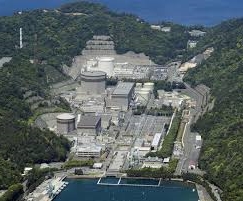
The Tokai spent nuclear fuel reprocessing plant in Tokai, a village in Ibaraki Prefecture
TOKAI, Ibaraki Prefecture–Drums of nuclear waste are stacked in disarray within a storage pool containing unidentified floating objects. Wires in the pool are feared entangled, and containers are believed corroded, possibly leaking radioactive substances. And highly toxic liquid waste remains untreated in a potentially explosive state.
After years of apparent mismanagement, the Tokai spent nuclear fuel reprocessing plant is a jumbled mess, as the operator, Japan Atomic Energy Agency (JAEA), prepares for the Herculean task of shutting down the facility.
The circumstances at the plant in this village northeast of Tokyo has raised concerns about the JAEA’s ability to dismantle it.
“A situation far from appropriate has been allowed to continue at the plant,” said an official of the Nuclear Regulation Authority, the nation’s nuclear watchdog. “Not only the JAEA, but also the former Science and Technology Agency and the former Nuclear and Industrial Safety Agency, have all looked the other way despite their knowledge of the situation.”
According to a JAEA report submitted to the NRA on Nov. 30, it will take 70 years to complete the dismantling process, with costs estimated at 217 billion yen ($1.92 billion) for the first decade alone.
A recent visit to the plant by Asahi Shimbun reporters revealed drums containing radioactive waste stacked in a disorderly manner in a storage pool.
JAEA officials showed pictures of the pool and explained that it contains about 800 drums piled about 7 meters high. The drums hold demolished clads from spent nuclear fuel assemblies.
The officials said that when an underwater camera was placed near the drums, it stirred up brown objects.
“We have no idea if they are water scale or rust,” one of JAEA officials said.
Workers put the drums in the storage pool between 1977 and 1994 by hanging them with cables above the pool and then cutting the cables to allow them to drop in, according to the officials.
The officials said they believed the cables also fell into the pool and became entangled.
Some experts at the NRA suspect the drums are now corroded and leaking radioactive materials.
Radiation at the pool surface measured 3 millisieverts per hour, three times the safety limit for annual exposure for a person, apart from background radiation.
The pool is not equipped with purification units.
Furthermore, JAEA officials said they do not know what’s in other containers at the facility.
Workers will eventually sort them out by opening their lids, they added.
One of the most challenging tasks facing the JAEA in the dismantling work is dealing with the 400 cubic meters of high-level radioactive liquid waste at the plant.
The liquid waste, which was generated during reprocessing, emits radiation registering 1,500 sieverts per hour, which would kill a person exposed for 20 seconds.
Left intact, this waste could produce heat and hydrogen, possibly leading to hydrogen explosions.
The JAEA has put the liquid waste in six stainless tanks and kept them cool with water. A ventilation system has been used to prevent hydrogen from accumulating inside the storage facility and sparking an explosion.
Ibaraki Prefecture is located immediately south of Fukushima Prefecture.
The Great East Japan Earthquake and tsunami that struck northeastern Japan in 2011 severed all power sources to the Fukushima No. 1 nuclear power plant, leading to hydrogen explosions and the triple meltdown there.
The natural disaster also cut off electricity to the Tokai plant for more than 40 hours. But the plant rode out the contingency with emergency power generators.
The NRA is aware of risks involved in keeping the liquid waste in the current state at the Tokai plant.
In 2013, the NRA allowed the plant to resume operations to solidify the liquid waste with glass as a special case before the watchdog checked whether the plant met tougher nuclear safety regulations set after the Fukushima disaster.
Work on the solidification process resumed this year, but it has been suspended because of a series of glitches. Only one-fourth of the scheduled volume of the liquid waste has been solidified.
The reprocessing plant began full operations in 1981. It had reprocessed 1,140 tons of spent nuclear fuel before the decision was made in 2014 to close down the facility.
http://www.asahi.com/ajw/articles/AJ201612050078.html
Mom of student called ‘germ’ at school links bullying to Fukushima disaster
The mother of a fourth-year elementary school student in Niigata, who has been staying home from school since late November after being called “germ” by his peers and his teacher, spoke to the Mainichi Shimbun, saying that her son was bullied because he came from nuclear disaster-hit Fukushima Prefecture.
The family evacuated from Fukushima after the nuclear disaster. While the Niigata Municipal Board of Education has denied a link between the bullying of the student and his Fukushima roots, according to the mother, the student started being called “germ” around March of this year, which marked five years since the disaster, and this is one reason she argues that there is a connection.
According to the mother, around March 11 of this year when the nuclear disaster issue came up in class, her son proactively talked about his own experiences.
“He must have been happy to be able to give lots of answers,” she says. However, it was around that time that he started being called “germ” by his classmates.
“Some kids who knew he had come from Fukushima started calling him germ, and that led to kids who didn’t know him also calling him that, like a nickname,” she says.
In June, the student talked to his teacher, complaining that he was “being treated like a germ.” At that point the student is thought to have not considered the name as bullying, and when the teacher referred to him as “germ” after summer vacation ended, he didn’t appear to be deeply bothered by it.
In early November, though, it was reported in the news that a junior high school student in Yokohama who had evacuated from Fukushima Prefecture was bullied by being called “germ.” When the student in Niigata heard this, he said, “It’s the same as me,” and the mother says she thinks “he probably began to see himself as being bullied.” On the mother’s advice, the student talked to his teacher about it again on Nov. 17. When he came home, he triumphantly said with a smile that he had talked to the teacher.
After a strong earthquake off the Fukushima Prefecture coast early on the morning of Nov. 22 this year, the boy went off to school looking anxious, he and his mother having not yet been able to get in contact with the father, who works in Fukushima Prefecture. During recess that day, while the student was receiving teacher-parent correspondence from his teacher, the teacher called him “germ” again. The shocked student returned home, and since Nov. 24 has been staying home from school, saying, “I want to go to school, but I can’t because that teacher is there.”
According to the mother, at first school authorities denied the teacher had called the student “germ.” On Nov. 25 the father called the school and said tearfully that “There are kids who commit suicide (when they are bullied).” Although the teacher apologized, the mother says that the teacher treated them coldly, saying it was only this year that they had become the student’s homeroom teacher. The teacher has said they want to apologize to the student, but the student is refusing to see the instructor and the school principal has been visiting the family’s home every day to try and deal with the matter.
The family has been planning to move after the free rent for the government-leased apartment they are living in ends at the end of this fiscal year. The mother says, “My son had been asking that we stay in the same school district, but now that this has happened, we have no choice but to have him change schools,” adding, “We evacuated voluntarily (from Fukushima), and I don’t want to impose on the people of Niigata.”
According to the Niigata Municipal Board of Education, there are 291 children who have evacuated from Fukushima Prefecture to the city of Niigata. It holds that “there is no bullying of students related to their Fukushima roots.”
———-
Timeline of events involving the bullying of the student:
2011:
March — The Great East Japan Earthquake and the Fukushima No. 1 Nuclear Power Plant disaster occur. The student evacuates to the city of Niigata.
2016:
Around March — Student begins to be ostracized by peers and called “germ.”
April — Student enters fourth grade and homeroom teacher changes.
June — Student speaks to teacher about being called “germ.” Teacher disciplines classmates who bullied student.
Early November — News is reported of a junior high school student in Yokohama who evacuated from Fukushima Prefecture and was bullied, including being called “germ.”
Nov. 17 — Student again speaks to teacher about being bullied.
Nov. 22 — During recess, student is called “germ” by teacher in classroom in front of classmates.
Nov. 24 — Student begins to stay home from school (Nov. 23 was a school holiday).
Nov. 29 — School questions students about incident. Multiple students testify that teacher called student “germ,” and teacher also says it is true.
(Based on sources including student’s parents and the Niigata Municipal Board of Education)
http://mainichi.jp/english/articles/20161205/p2a/00m/0na/020000c
Fukushima reactor N° 3 briefly loses cooling during inspection
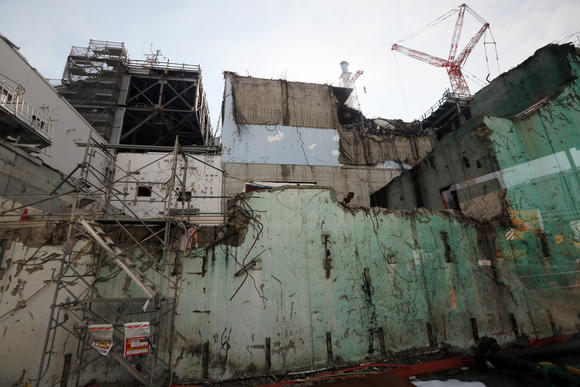
TOKYO — One of the melted reactors at the tsunami-hit Fukushima nuclear power plant had a temporary loss of cooling Monday when a worker accidentally bumped a switch while passing through a narrow isle of switch panels during an inspection and turned off the pumping system.
The plant’s operator, Tokyo Electric Power Co., said cooling for the No. 3 reactor, one of the three that melted following the 2011 earthquake and tsunami, was out for nearly an hour before a backup pump kicked in.
The reactor had enough water left inside and there was no temperature increase or radiation leak from the incident, TEPCO spokesman Yuichi Okamura said at a news conference.
Even though there was no radiation leak or overheating of the core, or any injuries, the incident was a reminder that Fukushima’s decommissioning work is running on a very fragile system.
The plant was largely running on makeshift pipes, wiring and other equipment in the first two to three years following the 2011 disasters, suffering a series of minor blackouts – including those caused by rats chewing cables – cooling stoppages and other problems.
The plant has since largely stabilized, but it remains vulnerable to unanticipated incidents as it continues to struggle with decommissioning work, which is expected to last decades.
Monday’s incident occurred when the worker was passing by a dimly lit isle that was only 85 centimeters (2.8 feet) wide, flanked by tall switch panels on both sides, Okamura said. With radiation levels still high, the worker was wearing a full-face mask and hazmat suit when he lost his balance while carrying equipment. His elbow jammed into the switch, breaking off its safety cover and inadvertently turning the lever to turn off the water injection pump to the No. 3 reactor.
Okamura acknowledged the lack of space at the site and said that the plant will seek ways to eliminate human errors like one on Monday.
Taiwan: Food products from Japanese areas are not on sale
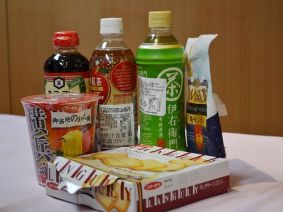
Food products from Japanese areas are not on sale: agency
The Food and Drug Administration yesterday rejected as rumors claims that food products produced in Japanese prefectures surrounding the Fukushima Dai-ichi nuclear power plant can be purchased in Taiwan, urging the public not to buy food products without Chinese-language labels.
The Council of Agriculture and the Ministry of Health and Welfare last month presented a two-stage plan to ease a ban on food imports, which was imposed in March 2011, from five Japanese prefectures near the site of the Fukushima nuclear disaster.
Taichung City Councilor Tuan Wei-yu (段緯宇) last week said that wine and snacks from the five prefectures could be purchased at department stores.
However, the Taichung Department of Health said that alcoholic products from the five prefectures can be imported if they have passed batch-by-batch radiation examinations, while the snacks Tuan used as examples were made in other prefectures.
One rumor that has recently spread across social networks claims that Japanese food products labeled as being made in Tokyo that have a “K” appended to the expiration date on their packaging are actually from Fukushima Prefecture.
The administration issued a statement clarifying that letters appended to expiration dates are in fact codes representing different areas for different food companies.
Consumers can check Japanese companies’ official Web sites to verify where products were made, the agency said, adding that, for example, an “A” appended to the expiration date on the packaging of products by Nissin Foods means they were made in Toride, Ibaraki Prefecture.
The administration urged people to only buy food products with Chinese-language labels, not believe everything they read online — especially information without reliable sources of scientific evidence — and avoid spreading false information.
http://www.taipeitimes.com/News/taiwan/archives/2016/12/04/2003660555
Dr. Timothy Mousseau speaks on consequences of Chernobyl and Fukushima
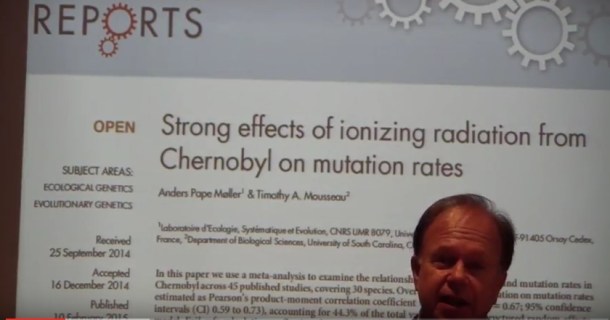
Dr Mousseau’s lecture on consequences of Chernobyl and Fukushima on plants and animals. Nov 4 2016
Dr. Timothy Mousseau speaks Nov. 4, 2016 to students and faculty of U of T about his research into the consequences of the Chernobyl and Fukushima nuclear accidents on plants and animals. His research shows increased mutations, genetic damage, poorer performing and malformed sperm, sterility, pollen inviability, cancers, cataracts, mental retardation, fewer species, fewer numbers, deadzones, and no evidence of adaptation.
His website is: http://cricket.biol.sc.edu/chernobyl/Chernobyl_Research_Initiative/Introduction.html
https://www.youtube.com/watch?v=cPWRinjQKyg
Cancer and birth defects in India’s uranium mining area
 Koodankulam struggle: Western nations are learning from their mistakes, India is not, The Weekend Leader, By Nityanand Jayaraman & Sundar Rajan, 30 Nov “…..In Jadugoda, Jharkhand, where India’s uranium is mined by the Uranium Corporation of India Ltd, the effects of radiation among the local adivasi population are horrendous.
Indian Doctors for Peace and Development, a national chapter of the Nobel-winning International Physicians for Prevention of Nuclear War, recently published a health study on Jadugoda. The study found that:
• Primary sterility is more common in people residing near uranium mining operations.
• More children with congenital deformities are being born to mothers living near uranium mining operations.
• Congenital defects as a cause of death of children are higher among mothers living near uranium mines.
• Cancer as a cause of death is more common in villages surrounding uranium operations.
• Life expectancy of people living near uranium mining operations is lower than Jharkhand’s state average and lower than in villages far removed from the mines.
• All these indicators of poor health and increased vulnerability are despite the fact that the affected villages have a better economic and literacy status than reference villages….. http://www.theweekendleader.com/Causes/833/Nuking-myths.html
Fukushima’s voluntary evacuees
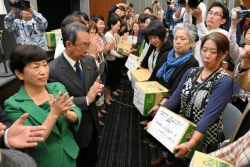
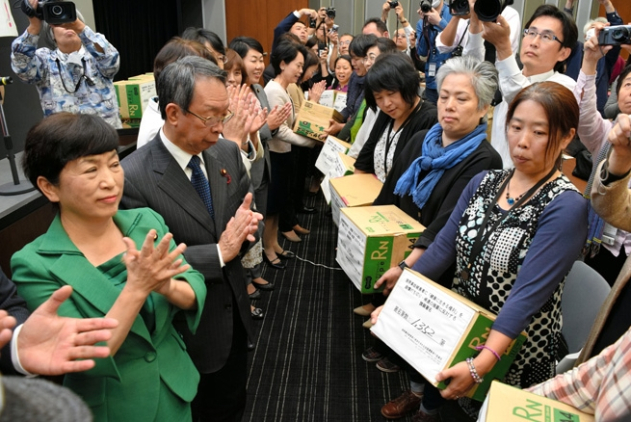
A citizens’ group supporting the people in Fukushima Prefecture who have fled from their homes in the wake of the March 2011 nuclear disaster has submitted a petition to the Diet with nearly 200,000 signatures asking for the continuation of public housing assistance for the evacuees. The prefectural government announced last year that it plans at the end of next March to terminate the assistance for people who voluntarily left their homes. However, most such evacuees have yet to find new residences.
Halting the housing assistance will place a heavy financial burden on low-income evacuees. Fears also persist over the radioactive contamination in the areas where they lived before the nuclear crisis. Not only the prefecture but the national government, which pays for a large portion of the assistance, should rethink the decision.
As of July, some 89,000 Fukushima people continued to live away from their homes — 48,000 inside the prefecture and 41,000 elsewhere in Japan — after they fled from the dangers posed by the triple meltdowns at Tokyo Electric Power’s Fukushima No. 1 power plant. Some evacuees followed the government’s designation of their hometowns as no-go zones due to the high levels of fallout, while others left their homes on their own out of fear of radiation exposure, particularly for their children, and other reasons even though they lived outside the designated evacuation zones.
The Fukushima Prefectural Government has since been providing housing assistance to the nuclear refugees regardless of whether they stayed within the prefecture — and regardless of whether they were forced out by government order or fled by choice — to cover their rent, including for public housing units owned by local governments. Fukushima has offered the aid by annually renewing the application of the Disaster Relief Law, under which a prefectural government carries out relief measures to residents in the event of a disaster — including supply of food, water, clothing and medical services as well as emergency repairs to damaged homes — with a large portion of the cost coming from national coffers. The national government has shouldered most of the expense of the housing assistance regarding Fukushima.
The prefectural government announced in June last year that it would end the assistance for voluntary evacuees at the end of next March. Gov. Masao Uchibori said the termination is aimed at prompting the evacuees to return to their original homes and at helping promote their sense of self-reliance. He explained that living conditions in the prefecture have improved with the development of public infrastructure and progress in the cleanup of radiation-contaminated soil.
According to a prefectural report based on a survey conducted in January and February, the decision will halt housing assistance for 12,436 households. Of the 3,614 households that voluntarily evacuated but remained in the prefecture, 56 percent have not yet found a place where they can live once the assistance is halted. The corresponding figure for the 3,453 such households living outside the prefecture is much higher — nearly 78 percent. The prefecture should pay serious attention to these findings. Some families may not be able to find and pay for a new home, although the prefecture reportedly plans to offer small subsidies for low-income and single-mother households after the large-scale assistance is ended.
The voluntary evacuees are confronted with various difficulties, both financial and psychological. The amount of compensation they received from Tepco is much smaller than that paid out to evacuees from the no-go zones. They also do not receive the monthly damages of some ¥100,000 that Tepco doles out to cover the mental suffering of those from the designated evacuation zones. Many of them face hardships ranging from the loss of their former jobs to separation from family members, long-distance commuting and divorces of couples due to differences over evacuating. The loss of housing assistance will likely result in even more hardships, both financial and emotional.
Many of the voluntary evacuees remain reluctant to go back to their hometowns for a variety of reasons, including the persistent fear of radiation, the desolate conditions of their original homes, and anticipated low levels of medical and other services in their former communities. The national government says it is safe for evacuees to return if the annual cumulative dose in the area is 20 millisieverts (mSv) or less, but that level is much higher than the legal limit of 1 mSv allowed for people in ordinary circumstances. In Ukraine, hit by the 1986 Chernobyl catastrophe, people are required to migrate if the annual cumulative dose in their area is 5 mSv or more and have “the right to evacuate” if the rate is between 1 mSv and 5 mSv. The national government and Fukushima Prefecture need to address why many of the volunteer evacuees are reluctant to return.
The national government may want to highlight the reconstruction in areas devastated by the March 2011 Great East Japan Earthquake and tsunami as well as the Fukushima nuclear disaster when Tokyo hosts the 2020 Summer Olympic Games. However, this should not result in the premature termination of vital relief measures for the affected people or untimely lifting of the designation of danger zones hit by the nuclear crisis. The government, which has sought to reactivate the nation’s nuclear power plants idled since the 2011 disaster, should understand why the evacuees felt they had to flee from their homes in the first place. It should not give up its duty of adequately helping the disaster victims.
School Bullyism Against Fukushima Evacuees Children
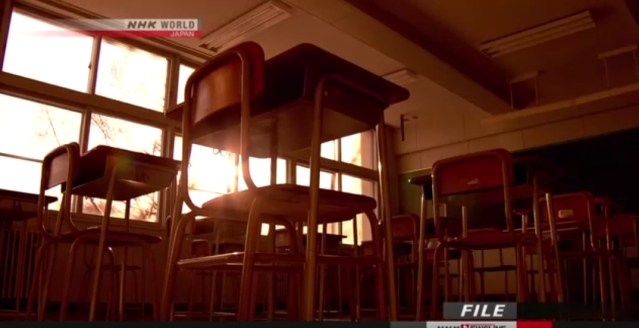
Fukushima evacuee hurt by teacher’s remark
Education authorities in Niigata City, north of Tokyo, have apologized after learning that a school teacher used a word that can mean “germ” to address a pupil. The boy had evacuated from Fukushima Prefecture after the 2011 nuclear accident.
Officials of the city’s education board said on Friday that the 4th grader has not been able to attend his elementary school for more than a week because of what happened.
They say the boy consulted his homeroom teacher several days before the incident. He said his classmates were calling him “kin”, which can mean “germ”.
The teacher has reportedly explained that the students had a habit of adding “kin” to each other’s names, as a way of showing friendliness to their classmates.
He said this also made them sound like “Anakin” Skywalker in the Star Wars movie series and other celebrities.
The teacher said he added the suffix to the students’ names, but he never intended to refer to them as “germs”.
But the officials said the teacher’s use of the term was inconsiderate and hurt the feelings of the pupil, who felt he was being bullied and was seeking help.
They said the teacher will visit the boy and his parents to apologize, and the education board will offer support so he can return to his school.
In a similar recent case, another young evacuee from Fukushima said he was called a “germ” at his school in Yokohama and he thought of killing himself many times.
His parents have criticized school and local education board officials for failing to promptly act on their complaint.
http://www3.nhk.or.jp/nhkworld/en/news/20161202_30/
Teacher ‘insulted’ Fukushima boy in latest school bullying case
NIIGATA–In the latest classroom bullying case involving children from Fukushima, a fourth-grader has not attended school for more than a week due to the alleged victimization by a teacher as well as his classmates.
The municipal board of education here is investigating the harassment of the boy who had the derogatory term “germ” added to his name by his classmates, which was then apparently emulated by his teacher.The boy has been absent from his elementary school since his homeroom teacher, who is in his 40s, is alleged to have used the insult on the boy. The teacher has denied the accusation, but other pupils have corroborated the boy’s account.
The school’s principal has admitted that the teacher’s behavior was problematic.
The principal also said in an interview with The Asahi Shimbun on Dec. 2 that the school will provide an opportunity for the teacher to apologize directly to the student and his parents.
The case is the latest to have surfaced of the potentially widespread bullying at their new schools of Fukushima students who fled the 2011 nuclear disaster.
Last month, media reports on a 13-year-old junior high school boy who moved to Yokohama recounted his experiences at his elementary school through his handwritten notes, sparking huge repercussions across the country.
In Tokyo, another Fukushima boy attending junior high school described his ordeal at his elementary school in an interview with The Asahi Shimbun later that month.
The two boys were called “germ” by their classmates, who also harassed them in other ways.
But in the Niigata case, the teacher called the boy by the insulting name in front of other students when he handed his pupil a correspondence notebook on Nov. 22, according to the boy’s mother.
The boy appeared to be devastated by the teacher’s behavior, which compounded the anxiety he already felt when his family was unable to contact his father to make sure he was safe after a powerful quake jolted Fukushima Prefecture earlier that day. His father works in the prefecture.
The following day was a national holiday and the school was closed. The boy has not attended the school since Nov. 24.
The boy’s family moved to Niigata over concerns about radiation in 2011 following the triple meltdown at the Fukushima No. 1 nuclear power plant in March that year.
According to his mother, some of his classmates began ostracizing him and calling him “germ” when he was in the third grade.
When he entered the fourth grade, some children threw away his stationery and broke his umbrella, and the harassment later escalated.
Although his mother was worried about him, he reassured her, saying, “I have friends who are trying to protect me. I will be OK.”
But he became visibly depressed when he learned of the report about the bullying the boy in Yokohama went through, according to his mother.
“My son must have thought that he is also the victim of severe harassment,” his mother said.
Urged on by his mother, he told his homeroom teacher on Nov. 17 that he, too, was being called “germ” by other children.
Five days later, however, he found that his teacher had joined in the name-calling.
His mother contacted the school to raise the issue. The teacher initially denied the allegation when school officials inquired.
“I have never said such a thing, given that the boy came to me for counseling,” the teacher was quoted by one of the officials as saying.
But the teacher was found to have actually used the insult when other teachers interviewed all the students in the boy’s class on Nov. 29. Some students admitted that they called the boys by an unkind name and that the teacher, too, had done the same.
According to the principal, the homeroom teacher said he wanted to apologize for being insensitive.
“The Silent Voices”: what is really to be living within the Fukushima disaster
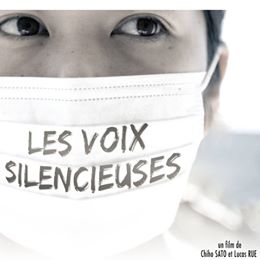
This Sunday, December 4th, 2016, I was invited to the premiere of a documentary film, produced by a couple, Lucas Rue, the french husband, and his Japanese wife Chiho Sato, from Fukushima.
Their documentary film titled “Les voies silencieuses” (The silent voices) in my humble opinion is definitely the best documentary film I have seen about the Fukushima catastrophe.
First because this documentary was made, written, directed by someone who is native of Fukushima. Only a person from Fukushima could penetrate in such manner the social fabric of the Fukushima people, to bring out the inner perspective of what the Fukushima people are living right now. An outsider, Japanese not from Fukushima or a foreigner could never penetrate the intimacy, the reserve of the people in such manner that Chiho Sato did.
Second, this film exposes very well the left unsaid things and the paradoxes in which the population of Fukushima is forced to live.
This film will help many people to better understand the dilemma in which these people live, bringing this living perspective from the inside that was really lacking, which is quite difficult to be understood by those who are not living it, living in it.
They are working right now to produce the english version to be soon screened. This Fukushima documentary is a must, to not be missed, to be absolutely watched by the many. I am also convinced that this documentary film will become THE film of Fukushima, and will win certainly some trophies for its excellency.
Thank you to both Lucas Rue and Chiho Sato for this absolutely excellent, quite unique documentary about Fukushima.
Schoolteacher calls Fukushima evacuee pupil ‘germ’

NIIGATA, Japan (Kyodo) — An elementary school pupil who evacuated from Fukushima in the wake of the 2011 nuclear disaster has skipped school for more than a week since a male teacher added “germ” to his name when addressing him in late November, a local education board said Friday.
The fourth-grade pupil told the teacher, in his 40s, before the summer holidays that he was distressed as other pupils were addressing him by adding “germ” to his name.
According to the education board, the teacher then added “germ” while addressing the boy in a classroom on Nov. 22, just five days after the boy approached the teacher again about his treatment by fellow pupils.
Nov. 22 was also the day of a strong earthquake off Fukushima in the early morning, reminding many of the massive March 2011 quake and tsunami that triggered the nuclear crisis at the Fukushima Daiichi nuclear plant.
On Nov. 24, the boy’s parents complained to the elementary school and other teachers interviewed every pupil in the class five days later.
“Despite being approached by the pupil for help, the teacher said something extremely inconsiderate and inappropriate,” an official of the education board said.
The case follows an earlier report of bullying in Yokohama, where a 13-year-old evacuee from Fukushima was verbally and physically attacked as he comes from the devastated prefecture. The elementary school and local education board failed to offer meaningful support in that case, according to a third-party panel of the city’s education board.
http://mainichi.jp/english/articles/20161202/p2g/00m/0dm/082000c
10 Tsuruga nuke plant workers doused with radioactive coolant water
FUKUI – Japan Atomic Power Co. has revealed that 10 workers were doused in radioactive coolant water during maintenance work in an auxiliary building for reactor 2 at the Tsuruga nuclear power plant in Fukui Prefecture.
The 10 employees were not exposed to radiation, the company said on Wednesday.
Up to 160 liters of room-temperature coolant water containing 272,000 becquerels of radioactive substances was spilled — about one-tenth of the level that must be reported to the government, Japan Atomic Power said, adding that the amount of the hazardous materials was “not small.”
Water from a pipe sprayed into a tank room on the second basement floor of the auxiliary building around 10:50 a.m. Wednesday, when a worker loosened a bolt on a valve from a pipe attached to a coolant storage tank, according to Japan Atomic Power.
Of the 15 workers from a subcontracting company who were in the room, four were soaked from head to toe, while six were partially soaked. The water splashed directly onto the faces of some of the workers, according to Japan Atomic Power.
When the water poured in, the workers, wearing jumpsuits, helmets, gloves and goggles, were trying to drain the pipe to allow the valve to be checked and to exchange a rubber part in a tank that temporarily stores coolant water while operations at the plant are halted.
Japan Atomic Power said there was more water in the pipe than had been anticipated.
In November last year, Japan Atomic Power applied to the Nuclear Regulation Authority for safety checks on the Tsuruga reactor. An NRA screening is required before the nuclear reactor is reactivated.
Plan to build Monju successor to Recycle Plutonium Stocks
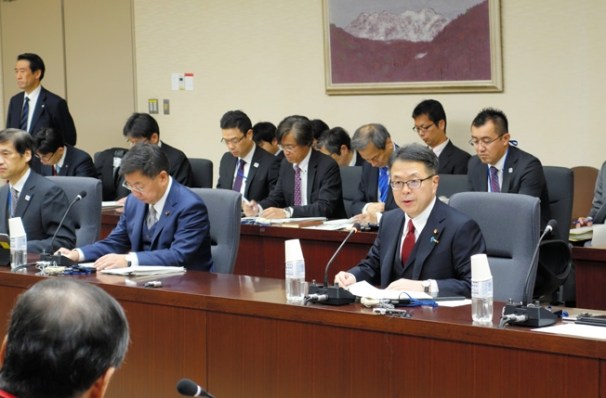
Hiroshige Seko, right, minister of economy, trade and industry, before a meeting of the government’s committee for fast reactor development on Nov. 30
Japan unable to scrap recycling program due to plutonium stocks
Japan is caught between a rock and a hard place when it comes to pressing ahead with its dream of a perpetual energy source through nuclear fuel recycling.
Having poured hundreds of billions of yen into the failed Monju prototype fast-breeder reactor project, it is belatedly considering decommissioning the facility. But it is still left with a huge stockpile of plutonium, and no way of reducing the amount in the coming years.
Having come this far, Japan is simply not able to abandon the problem-plagued, money-guzzling technology, hence its Nov. 30 plan to build a demonstration fast reactor to replace Monju.
Unlike Monju, which uses and generates plutonium, a fast reactor only burns plutonium.
“If Japan abandoned its nuclear fuel recycling policy, it would be like opening ‘Pandora’s box,’” said a senior official at the Ministry of Economy, Trade and Industry, which oversees the nation’s nuclear energy policy, referring to the new fast reactor program. “A project illustrating Japan’s intent to continue the development of a fast reactor serves as the seal of approval.”
The government’s committee for fast reactor development, which is headed by industry minister Hiroshige Seko, said it expects to have the development regime in place in 2018. The following 10 years would be given over to scientists to work on the basic design of the fast reactor.
A demonstration reactor is one stage closer to a commercial reactor compared with a prototype reactor such as Monju.
Nuclear fuel recycling uses plutonium recovered from reprocessing of spent nuclear fuel generated at nuclear power plants.
Monju in Tsuruga, Fukui Prefecture, also uses plutonium as fuel. Or rather, it was supposed to. The project has come under intense criticism because it has hardly operated since it achieved criticality more than 20 years ago. The government has poured about 1 trillion yen ($8.9 billion) into Monju.
If Japan pulled the plug on the development of a fast reactor, it would jeopardize the nuclear fuel recycling program and create new problems that the government has adroitly avoided dealing with to date.
For one, all spent nuclear fuel from nuclear power plants across the country would suddenly just become “waste.”
As a result, the government would have no compelling reason to justify the storage of nuclear fuel waste at the spent nuclear fuel reprocessing plant in Rokkasho, Aomori Prefecture. The plant has yet to be completed although it was initially expected to be finished in 1997.
The government has been unable to decide where nuclear waste should be placed for permanent disposal since no municipalities in Japan want such facilities in their backyards.
And then there is the issue of Japan’s stockpile of 48 tons of plutonium and being able to offer assurances to the international community that this country poses no threat to others.
The stockpile is sufficient to produce 6,000 atomic weapons.
If Japan retains the plutonium stockpile with no plan to use it in the near future after it abandons the development of a fast reactor, it could fuel international concerns that Japan may have nuclear ambitions.
The agreement between Japan and the United States concerning the civil use of atomic energy will expire in July 2018.
The pact allows Japan to recover plutonium from spent nuclear fuel on the condition that the country will not use plutonium to manufacture nuclear weapons.
If Japan holds on to the reprocessing program while scrapping the project to develop a fast reactor, it will be left with an ever-growing stockpile of plutonium.
“We cannot rule out the possibility that it could have ramifications on the revision of the agreement,” said a senior official at the Foreign Ministry with regard to the plutonium issue.
Tatsujiro Suzuki, a professor of nuclear energy at Nagasaki University and former vice chairman of the government’s Nuclear Energy Commission, expressed skepticism about taking on a new fast reactor project when scientists could elicit few tangible results about performance and operational safety from Monju.
With the government set to undertake a new reactor project, Japan is also banking on joining France’s ASTRID program to access a range of data on the operation of a demonstration fast reactor. This refers to the Advanced Sodium Technological Reactor for Industrial Demonstration.
But it is still unclear even whether the ASTRID program will ever go ahead.
“If we engaged in discussions with little transparency, the international community would come to harbor doubts about Japan’s intention concerning plutonium and lose confidence in Japan,” Suzuki said.
http://www.asahi.com/ajw/articles/AJ201612010089.html
Plan to build Monju successor is outrageously irresponsible
The government at a closed meeting on Nov. 30 revealed plans to develop a demonstration fast reactor as the successor to the Monju prototype fast-breeder reactor in Fukui Prefecture, which will be decommissioned.
A totally irrational policy decision is now being made behind closed doors only by people with vested interests in the trouble-plagued Monju program.
The government is making a head-long plunge into another costly reactor project that has no solid prospects of success. The government has not scrutinized nor learned lessons from the miserable failure of the Monju program.
This behavior is outrageously irresponsible.
More than 1 trillion yen ($8.8 billion) has been poured into the development and operation of Monju, but the reactor operated for only around 220 days during the 20-plus years since it first achieved criticality in 1994.
The experimental reactor has been mostly idle because of a series of accidents and troubles, including a 1995 leak of liquid sodium used as the coolant, a material that is famously hard to handle.
In contrast, the Joyo test fast reactor, which represents the first stage of developing a practical fast-breeder reactor, has operated for a total of 3,000 days, more than 13 times longer than Monju’s record.
This again shows that technological challenges involved in the development of such sophisticated new technology become far more formidable as the project moves to the later stages.
Unlike Monju, the new experimental fast reactor envisioned by the government would not be a breeder reactor that generates more fissile material–plutonium to be exact–than it consumes. But it will be based on the same fast reactor technology.
Given that even operating a prototype fast-breeder reactor has proved such a fierce challenge, there are countless reasons to doubt the viability of the government’s plan to develop a cheap and safe demonstration fast reactor.
The government says it will seek international cooperation for the project. But France’s Advanced Sodium Technological Reactor for Industrial Demonstration (ASTRID) program, which the Japanese government is counting on for its fast reactor project, is itself facing an unclear future. The French government is expected to decide in 2019 on whether to build the fast demonstration reactor.
The Japanese government is not even bothering to set up a proper forum for discussions on the new project.
The Nov. 30 meeting was attended by the industry minister, the science and technology minister, representatives of the Federation of Electric Power Companies, which is the power industry lobby, executives of Mitsubishi Heavy Industries Ltd., which makes nuclear reactors, and officials of the Japan Atomic Energy Agency, the operator of Monju. They are all parties involved in the Monju program.
The two officials of Japan Atomic Energy Agency who were present at the meeting are a former Mitsubishi Heavy Industries executive and a former science and technology official.
In other words, the decision-making process concerning the project is totally controlled by the interests of the government and the nuclear power industry.
Why is the government so fixated on developing fast reactor technology?
Monju has long been cast as the linchpin of a nuclear fuel recycling program in which plutonium extracted from reprocessed spent nuclear fuel is burned in a fast-breeder reactor.
Now that it has decided to decommission Monju, the government is apparently concerned that the lack of the troubled reactor’s successor could cause the entire nuclear fuel recycling program to collapse, undermining its efforts to promote nuclear power generation.
Japan, however, already has a stockpile of 48 tons of plutonium, enough to make 6,000 ordinary nuclear bombs.
With no prospects of practical use of a fast reactor, Japan’s fixation on establishing a nuclear fuel recycling system makes no economic sense and only raises suspicions in the international community.
The government has been roundly criticized for its obstinate adherence to nuclear power policy decisions made in the past.
But the disaster that occurred in 2011 at the Fukushima No. 1 nuclear power plant has led to broad public recognition of the importance of impartial debate on related issues not influenced by special interests or past developments.
Now, however, the government is ignoring the lessons learned from the nuclear disaster. It is seeking to make the decision in collusive meetings to spend a huge amount of taxpayer money on the highly questionable fast reactor project. This folly cannot be acceptable by any means.
Fukushima Food Ban in Taiwan Continued

Taiwan-Japan trade talks conclude with signing of two memorandums
Taipei, Nov. 30 (CNA) Annual trade and economic talks between Taiwan and Japan concluded in Taipei Wednesday, with the two sides signing two cooperation memorandums on product safety and language education.
Chiou I-jen (邱義仁), head of the Taiwan delegation and president of the Association of East Asian Relations (AEAR), and his Japanese counterpart, Japan Interchange Association Chairman Mitsuo Ohashi, signed the notes stipulating that the two countries will work together in the promotion of exchanges in the two areas.
Chiou and Ohashi left the venue without speaking to the press after the signing ceremony, but they agreed to be photographed.
Outside the venue, several dozen activists staged a protest against radiation-contaminated food products. The protest came after Ohashi urged Taiwan at the opening of the annual talks a day earlier to lift a ban on food products from five radiation-affected Japanese prefectures.
Asked if Japan had asked Taiwan to ease the ban during the two-day trade and economic meeting, AEAR Deputy Secretary-General Tsai Wei-kan (蔡偉淦) confirmed in a press conference held after the event that the Japanese side brought up the request, as had been expected.
However, the Taiwanese delegates expressed hope for understanding that there are still disputes over the issue, and that they would not discuss the issue during the annual talks, since it was not on the agenda, Tsai said.
Taiwan has banned imports of food products from five prefectures in Japan — Fukushima, Gunma, Chiba, Ibaraki and Tochigi — that were contaminated with radiation following the meltdown of the Fukushima Daiichi Nuclear Power Plant in March 2011, a catastrophe triggered by a massive earthquake and tsunami.
After Taiwan’s new government, inaugurated in May, revealed recently that it was considering lifting the ban on food from all of those prefectures except Fukushima, the idea has received strong opposition.
Economics Minister Lee Chih-kung (李世光) confirmed Wednesday that the controversial issue of Japanese food imports was not on the agenda of the 41st Taiwan-Japan Trade and Economic Meeting.
“It has been the Ministry of Economic Affairs’ consistent stance that no compromise can be made in the people’s welfare in the area of food safety,” Lee told the press.
He also agreed that all food regulations should meet international regulations and scientific rules.
Meanwhile, elaborating upon what was discussed during the meeting, Tsai said that Taiwan, as usual, asked Japan to co-sign an economic partnership agreement (EPA).
Such a pact is not just one that touches on simply economic problems, Tsai said, but involves political considerations.
Nevertheless, the Japanese side said its stance in establishing a comprehensive trade and investment relationship with Taiwan has not changed, he went on.
As for a request by Taiwan for Japan to open its doors to five more kinds of Taiwan-grown fruit, Tsai said the Japanese side requires more data and relevant documents.
At Wednesday’s press conference, Liu Ming-tang (劉明堂), head of the Bureau of Standards, Metrology and Inspection, said the cooperation memorandum on product safety mainly focuses on electronic and electrical products, as well as machinery.
It will help reduce safety risks, allowing consumers to enjoy a higher level of safety protection, Liu said.
On the language education memorandum, the Taiwanese delegation said that under the pact, personnel exchanges will be conducted in the hope of upgrading the quality of language and culture education on both sides.
The Taiwan-Japan trade and economic meeting has been the only official platform for Taiwanese and Japanese officials to discuss issues of mutual concern since diplomatic relations between the two countries were severed in 1972. It has been held annually since 1976.
New sanctions on North Korea in reaction to its latest nuclear and ballistic missile tests.
Coal sanctions newest move to block North Korean nuclear efforts SBS World News Radio: The United Nations Security Council has imposed new sanctions on North Korea in response to its latest round of nuclear and ballistic missile tests.By Gareth Boreham, 1 Dec 16
1 This Month





PLEASE OPPOSE HR 8255 AND S.3639 – bills would accelerate satellite deployment, with no environmental review or safeguards – https://ncstd5li.quorum.us/campaign/169331/
To see nuclear-related stories in greater depth and intensity – go to https://nuclearinformation.wordpress.com
-
Archives
- October 2026 (19)
- September 2026 (339)
- August 2026 (330)
- July 2026 (355)
- June 2026 (287)
- May 2026 (306)
- April 2026 (356)
- March 2026 (251)
- February 2026 (267)
- January 2026 (308)
- December 2025 (358)
- November 2025 (359)
-
Categories
- 1
- 1 NUCLEAR ISSUES
- business and costs
- climate change
- culture and arts
- ENERGY
- environment
- health
- history
- indigenous issues
- Legal
- marketing of nuclear
- media
- opposition to nuclear
- PERSONAL STORIES
- politics
- politics international
- Religion and ethics
- safety
- secrets,lies and civil liberties
- spinbuster
- technology
- Uranium
- wastes
- weapons and war
- Women
- 2 WORLD
- ACTION
- AFRICA
- Atrocities
- AUSTRALIA
- Christina's notes
- Christina's themes
- culture and arts
- Events
- Fuk 2022
- Fuk 2023
- Fukushima 2017
- Fukushima 2018
- fukushima 2019
- Fukushima 2020
- Fukushima 2021
- general
- global warming
- Humour (God we need it)
- Nuclear
- RARE EARTHS
- Reference
- resources – print
- Resources -audiovicual
- Weekly Newsletter
- World
- World Nuclear
- YouTube
-
RSS
Entries RSS
Comments RSS


