India’s push for solar energy is gaining steam
 India has just built the world’s largest solar plant in record time The nation’s push for solar power is gaining steam. Scroll In Ananya Bhattacharya, qz.com At the end of November, the country turned on the world’s largest solar power plant spanning 10 km sq in Kamuthi in the state of Tamil Nadu. It packs 648 megawatts of power – nearly 100 more than California’s Topaz Solar Farm, which was previously the largest solar plant at a single location. At full capacity, the Kamuthi plant can provide enough electricity to power around 150,000 homes.
The Rs 45.5 billion solar project consists of 380,000 foundations, 2.5 million solar modules, 576 inverters, and 154 transformers, according to the Deccan Chronicle. Each day, the plant is cleaned by a robotic system that is charged by its own solar panels, Al Jazeera reported…….http://scroll.in/article/823530/india-has-just-built-the-worlds-largest-solar-plant-in-record-time
China’s global nuclear marketing drive -= now looking to Bulgaria
 China eyes nuclear project in Bulgaria http://www.euractiv.com/section/energy/news/china-eyes-nuclear-project-in-bulgaria/ A delegation from the China National Nuclear Corporation (CNNC), the country’s largest state energy company, visited Sofia and met with Bulgarian Prime Minister Boyko Borissov, to possibly resuscitate a shelved nuclear power plant project.The Belene nuclear power plant, situated near the Danube, was frozen in 2012, reportedly due to a lack of funds.
Kyushu Electric Restarts Sendai Nuclear Reactor
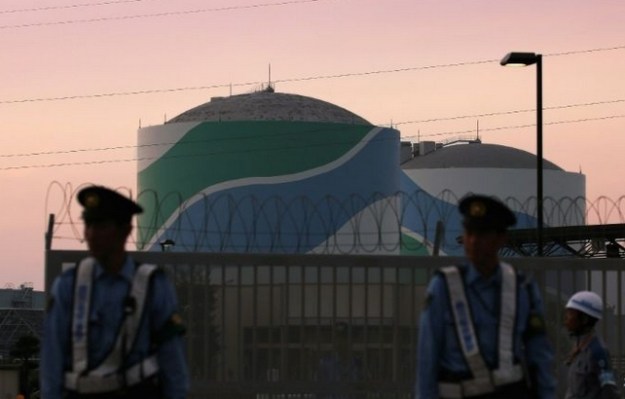
Loan ceiling for TEPCO to be raised

Reclaimed Land for Okinawa US Base Filled With Fukushima Radioactive Waste?

Japan to increase loan to Fukushima operator Tepco to $123 billion
Question to ask: why call this a loan when the law, like USA Price Anderson Act, limits nuclear power co from liability and puts the govt on the hook for everything beyond that?
Answer: I’d say most likely simple propaganda. That’s the taxpayers TRILLIONS that’s going to a ‘forever’ nuclear power plant black hole. That money will never be paid back to govt. The only thing I can imagine is that the Govt reneges on the agreement and socializes utilities in Japan. Because either the corporation nor govt can survive unless they do that…. or they can play fictionalized accounting for public.
What do you think?

Japan will increase an interest-free loan to the operator of the wrecked Fukushima nuclear plant, Tokyo Electric Power, by more than a third to 14 trillion yen ($123 billion), a source familiar with the matter said on Thursday.
Spiraling costs from the world’s worst nuclear disaster since Chernobyl in 1986 are threatening the viability of the utility known as Tepco and hampering its ability to clean up its wrecked Fukushima Daiichi nuclear plant.
The increase in the loan from 9 trillion yen is to cover the costs for compensation and decontamination areas around the plant, according to the source, who is not authorized to speak to the media.
Three reactors melted down at the plant after a magnitude 9 earthquake in March 2011, which sparked a tsunami that devastated a large section of Japan’s northeastern coastline.
More than 15,000 people were killed in the natural disaster, which also caused a loss of power and cooling at the Fukushima station.
Explosions in the wake of the reactor meltdowns led to a massive release of radiation that prompted the evacuation of 160,000 people from areas around the plant, many of whom will never be able to return.
The disaster is likely to cost 22.6 trillion yen ($199 billion), more than double an earlier government estimate.
Costs for decommissioning the wrecked reactors will be covered by a separate arrangement from the loan, according to the Nikkei newspaper, which earlier reported the increase in the loan for Tepco.
http://www.reuters.com/article/us-japan-fukushima-support-idUSKBN13X00G?il=0
The climate-water conflict – climate change increases risk of nuclear war

Kashmir, climate change, and nuclear war, Bulletin of the Atomic Scientists, Zia Mian , 7 Dec 16 “……..The climate-water conflict. Along with the risks of war triggered by an escalation along the Line of Control in Kashmir or by attacks on Indian cities by Islamist militants backed by Pakistan, a new source of conflict between Pakistan and India has emerged, also centered on Kashmir. It is a struggle over access to and control over the water in the rivers that start as snow and glacial meltwater in the Himalayas and pass through Kashmir on their way to Pakistan as the Indus River Basin, ending in the Arabian Sea.
The Indus River and its tributaries are central to Pakistan’s water supply, food supply, and electricity production, and India relies on some of the same water. Under the 1960 Indus Waters Treaty, Pakistan has control over the Indus, Jhelum, and Chenab Rivers, and India manages the Sutlej, Beas, and Ravi rivers until they cross into Pakistan and all merge into the Indus River. The treaty was established in part because of conflicts over water between the two countries following independence in 1947, including an Indian decision in 1948 to block some of the water flowing into Pakistan during the first India-Pakistan war over Kashmir.
As water demand in both countries has grown to meet the needs of rapidly growing populations and increased agriculture and industrial use, large hydroelectric dams have been constructed, and renewed disputes are testing the Indus Waters Treaty. A 2011 United States Senate Foreign Relations Committee report assessed that “water may prove to be a source of instability in South Asia [as] new demands for the use of the river flows from irrigation and hydroelectric power are fueling tensions between India and Pakistan. A breakdown in the [Indus Water] treaty’s utility in resolving water conflicts could have serious ramifications for regional stability.” The report concluded grimly that “the United States cannot expect this region to continue to avoid ‘water wars’ in perpetuity.”………
Pakistan’s government, nationalist and militant organizations, and right-wing media frequently now present India’s construction of dams in Kashmir as a pressing national security threat and one that may call for extreme responses. An editorial in one leading urdu-language Pakistani newspaper in 2011 declared “Pakistan should convey to India that a war is possible on the issue of water and this time war will be a nuclear one.” ………http://thebulletin.org/kashmir-climate-change-and-nuclear-war10261
Japanese nuclear industry’s history of corruption
“Kikawada once said that building a nuclear plant is like doing a deal with the devil,”
 Tepco ‘Deal With Devil’ Signals End to Japan’s Postwar Era, Business Week, October
 21, 2011, “…..Tepco in 2002 admitted it had falsified maintenance reports at nuclear plants for more than two decades. Chairman Hiroshi Araki and President Nobuya Minami resigned to take responsibility.
Faked Records
In 2007, the utility said it hadn’t come entirely clean five years earlier and admitted to concealing at least six emergency stoppages at Dai-Ichi and a “critical” reaction at the plant’s No. 3 unit that lasted seven hours.
Kansai Electric, Chubu Electric Power Co., Tohoku Electric Power Co. and Hokuriku Electric Power Co. have also said they faked safety records. “Accidents, mishaps, lies, duplicities — the postwar landscape of Japan’s nuclear power development is filled with fiascoes,” the University of Toronto’s Donnelly said.
Amid the accidents and fake safety reports, the underlying premise that resource-poor Japan had to rely on nuclear power was rarely questioned by the government, industry or the country’s bureaucrats……
The majority of opinion surveys show Japan’s public now opposes nuclear power. Sixty percent of respondents to a Mainichi newspaper poll published on Sept. 20 said they favor phasing out atomic energy…..
“The nuclear industry is a very Japanese bureaucracy in nature, similar to the Japanese army during World War II,” said Tetsunari Iida, executive director at the Tokyo-based Institute for Sustainable Energy Policies and a former nuclear industry official. “They don’t listen to anybody.”
Fukushima has ruptured the usual consensus within Japanese industry. http://www.businessweek.com/news/2011-10-21/tepco-deal-with-devil-signals-end-to-japan-s-postwar-era.html
Pakistan and India – a dangerous situation that could bring about global nuclear war
Kashmir, climate change, and nuclear war, Bulletin of the Atomic Scientists, Zia Mian , 7 Dec 16 In April 2016, speaking at the conclusion of the Nuclear Security Summit in Washington DC, which had brought together more than 50 government leaders, President Obama described what he saw as the three major nuclear weapons challenges. Along with difficulties in achieving further nuclear arsenal reductions by the United States and Russia and the problem of North Korea, President Obama listed Pakistan and India and the need, as he put it, for “making sure that as they develop military doctrine that they are not continually moving in the wrong direction.” The White House press secretary later explained that underlying the President’s concern about South Asia was “the risk that a conventional conflict between India and Pakistan could escalate to include the use of nuclear weapons.” It is a well-founded fear and one that has become more urgent as tensions between Pakistan and India have escalated.
As part of its efforts to pressure India into giving up Kashmir, Pakistan has backed Kashmiri insurgents and used Islamist militants to launch attacks across the Line of Control. ……
Frustration in the armies on both sides has led to furious, seemingly indiscriminate firing across the Line of Control. The scale of civilian casualties has led hundreds of people to flee their homes on both sides of the line; local villagers say it seems as “if a full-blown war is going on between India and Pakistan.”
Meanwhile many Kashmiris have turned to supporting groups resisting Indian rule and been met with repression from security forces………
It is not just attacks by Pakistan-backed militants on Indian forces in Kashmir and subsequent Indian reprisals that could escalate and tip the two countries into another major war. A related trigger would be an attack on an Indian city by Islamist militant groups, along the lines of the assault on Mumbai in November 2008 that claimed hundreds of casualties and was linked to intelligence agencies in Pakistan. ………
The climate-water conflict……
From tactical weapons to massive retaliation. India anticipates that Pakistan might use nuclear weapons against Indian conventional forces during a war. The Indian Army conducted a massive military exercise in April 2016 in the Rajasthan Desert bordering Pakistan, involving tanks, artillery, armored personnel carriers, and 30,000 soldiers who practiced what they would do if attacked with nuclear weapons on the battlefield. An Indian Army spokesman told the media that “our policy has been always that we will never use nuclear weapons first. But if we are attacked, we need to gather ourselves and fight through it. The simulation is about doing exactly that.” This was not the first such exercise.
Indian nuclear doctrine also calls for massive retaliation directed at Pakistani cities, and Pakistan has threatened to respond in kind. In 2003, India’s cabinet declared nuclear weapons “will only be used in retaliation against a nuclear attack on Indian territory or on Indian forces anywhere… [N]uclear retaliation to a first strike will be massive and designed to inflict unacceptable damage.” According to Admiral Vijay Shankar, a former head of Indian strategic nuclear forces, such retaliation would involve nuclear attacks on Pakistan’s cities.
General Kidwai from Pakistan describes such Indian threats as “bluster and blunder,” since they “are not taking into account the balance of nuclear weapons of Pakistan, which hopefully not, but has the potential to go back and give the same kind of dose to the other side.” This seems an explicit suggestion of Pakistan planning to target Indian cities with nuclear weapons in retaliation of Indian nuclear attacks on Pakistani cities.
From regional war to great power war. Time is not on our side. The failure to settle the Kashmir dispute despite the passage of 70 years has already triggered three wars. While Pakistan clings grimly to its claims on Kashmir, India seems less inclined to compromise as it grows in economic and military power. Adding to this will be the inevitable pressures from climate change over the coming decades on the Himalayan glaciers, the monsoons, and ground water in the Indus Basin, which will lead to reduced and less reliable access to water in an already water-stressed region, at a time of rapidly growing demand. These drivers have already started to overlap, and conflicts over land, people, blood, and water may become one.
Once initiated, possibly even by the actions of a small militant group, a Pakistan-India conflict may well escalate into a larger war and then bring in allied outside powers, as happened in Europe in World War I.
Pakistan is building ever closer military and economic ties to China; India is becoming a strategic partner of the United States. These alliances with great powers may give policy makers in Pakistan and Indian confidence in escalating a conflict and issuing nuclear threats during a crisis. Because of the increasingly tense and militarized nature of the rivalry between China and the United States, a South Asian conflict that draws them in could escalate into a potentially far more destructive war.
Given these risks, forestalling crises and possible war in South Asia should be a priority. The long history of failures to find a path to peace for Kashmir through United Nations resolutions and bilateral Pakistan-India agreements seems to have sapped the will to try to address the dispute directly. Preventing a South Asian war from becoming nuclear war will require progress on banning the bomb. http://thebulletin.org/kashmir-climate-change-and-nuclear-war10261
Mitsubishi Heavy makes huge and risky investment in AREVA nuclear
 Mitsubishi Heavy faces tough decisions in nuclear power business Orders dry up at home and abroad after Fukushima disaster, Nikkei Asian Review, 8 Dec 16, TOKYO –– Mitsubishi Heavy Industries and Japan Nuclear Fuel are putting the final touches on a plan to acquire a roughly 10% stake in the troubled French nuclear energy company Areva. But for Mitsubishi Heavy it is an agonizing decision.
Facing dim prospects for new domestic orders, both Mitsubishi Heavy and Japan Nuclear Fuel must find other ways to secure enough business to keep their equipment and workforces active.
Back in 2006, Mitsubishi Heavy partnered with Areva to develop a so-called Generation III+ pressurized-water reactor with state-of-the-art technologies. The team has been using the design to compete with the larger, older-generation pressurized-water systems promoted by two other groups: the team of Hitachi and General Electric, and the team of Toshiba and Westinghouse…….
The French government, which owns nearly 90% of Areva, is looking to cut its losses. Unprofitable businesses are being excised from Areva and a new company is being set up that will seek over 30% of its capital from Japan, China, and elsewhere. …
There are lingering worries inside Mitsubishi Heavy about this huge investment in Areva. To alleviate those concerns, Mitsubishi Heavy has voiced confidence that there will be another nuclear renaissance in 20 to 30 years……http://asia.nikkei.com/Business/Deals/Mitsubishi-Heavy-faces-tough-decisions-in-nuclear-power-business
Mitsubishi takes risk of investing in Areva , hoping to export nuclear reactors
 Mitsubishi Heavy, Japan Nuclear Fuel to invest in struggling Areva http://asia.nikkei.com/Business/Deals/Mitsubishi-Heavy-Japan-Nuclear-Fuel-to-invest-in-struggling-Areva, 7 Dec 16,
Japanese companies eye nuclear power plant exports amid low domestic demend TOKYO — Mitsubishi Heavy Industries and Japan Nuclear Fuel are finalizing plans to invest in French nuclear giant Areva, which is currently in the throes of restructuring.
The two companies will take stakes in Areva to a combined 10% by jointly injecting 40 billion yen to 50 billion yen ($352 million to $440 million) by January 2017.
Along with Mitsubishi Heavy and Japan Nuclear Fuel, China National Nuclear Corp. may also become an investor.
Mitsubishi Heavy has already revealed plans to invest in Areva and a subsidiary while holding talks with the French government and the struggling company over the deal.
Areva has booked significant losses following a series of delays and cancellations to plant-construction projects and now finds itself going through a financial crisis.
Fukushima Long Active Fault
A seismologist says about three-fifths of an active fault running more than 50 kilometers off the northeastern prefecture of Fukushima shifted in last month’s powerful earthquake.
The magnitude-7.4 quake on November 22nd registered a 5 minus on the Japanese seismic scale of 0 to 7. A tsunami 1.4 meters high was observed at a port in Miyagi Prefecture.
Professor Shinji Toda of Tohoku University analyzed the active fault that triggered the temblor, using data on seabed terrain and the locations of aftershocks.
He says a stretch of about 30 kilometers in the fault that runs from northeast to southwest shifted in the earthquake.
He believes a shift of the entire fault would have caused a more powerful quake, with a possible magnitude of 7.7.
He warns that the remaining part of the fault is close to the shore and has the potential to trigger a magnitude-7 quake.
Toda’s findings contradict a 2014 analysis of the area by Tokyo Electric Power Company, the operator of the damaged Fukushima Daiichi nuclear power plant.
It stated that 2 fault lines, each about 20 kilometers long, could cause an earthquake with a magnitude of up to 7.1, much less than that of November’s quake.
Toda says it is important to improve that analysis, since the quake was more powerful than the utility’s estimate.
TEPCO says it will review its estimates if necessary.
Fukushima Fish and Shellfish Radiation Levels Drop”Announced”

Volunteer group continues checking fish off Fukushima as radiation levels drop
An olive flounder, estimated at 11 years old, measuring 90 centimeters long and caught in waters near the Fukushima No. 1 Nuclear Power Plant, is seen on a ship about 2 kilometers from the plant, on Nov. 13, 2016.
IWAKI, Fukushima — As radioactive cesium levels in fish caught off the Fukushima Prefecture coast show lower levels that fall within safety limits set by the government, the Mainichi Shimbun recently accompanied a volunteer group that continues to measure these fish on one of its outings.
The group, called “Iwaki Kaiyo Shirabetai Umi Labo” (Iwaki marine investigative squad ocean lab), began its activities three years ago. Rather than relying on the national government, Fukushima nuclear plant operator Tokyo Electric Power Co. or others for data on radioactive pollution in the ocean off Fukushima Prefecture, the group aims to obtain this information itself and share it across the country.
On Nov. 13, a Mainichi Shimbun reporter boarded one of the group’s fishing ships, which set out from Hisanohama Port in Iwaki, Fukushima Prefecture. Two kilometers from the disaster-stricken plant, the group pulled up a large, 90-centimeter, 7.7-kilogram olive flounder. This fish was caught by Eriko Kawanishi, a civil servant who came from Tokyo to participate in the outing and said it was her first time ever to hold a fishing rod. A 90-centimeter fish would be a rare catch even for a veteran fisherman.
The olive flounder was refrigerated and taken back to veterinarian Seiichi Tomihara at the Aquamarine Fukushima aquarium in Iwaki for dissection. Based on the growth rings on its “otoliths,” a structure located near the brain, Tomihara estimated the fish’s age at 11 years. He said there is research estimating the life expectancy of olive flounders at around 12 years, adding, “This looks like one of the oldest (one can find).”
A 1-kilogram slice of the fish put in a detector showed 14.6 becquerels of radioactive cesium — below the 100 becquerels-per-kilogram national safety limit for regular food products. Lately the research group has found no fish, including bottom-dwelling fish like olive flounder, that exceed this limit. In addition, radiation checks done by the prefectural government find hardly any cases of fish that top the safety limit.
Riken Komatsu, 37, joint-representative for the group, says, “This is the first time for us to check such an old olive flounder, and I thought there would be dozens of becquerels detected. The result was lower than I had imagined and I feel relieved.”
Fish that were already adult at the time of the disaster, with a slowed metabolism and a narrow range of habitat, tend to show high radiation levels, Komatsu says. With time having passed since the disaster, the generational replacement of the fish in the area has moved forward. The group says the highest radiation level it has detected so far was 138 becquerels from a 56-centimeter olive flounder in July 2014.
Olive flounder caught off of Iwaki are known as “Joban-mono” and have a good reputation. There is hope among locals that the fish will regain their pre-disaster popularity.
Komatsu says, “The prefectural government and fishing cooperatives are also releasing radiation readings from fish taken off Fukushima Prefecture, but I feel there are few taken from waters near the nuclear plant. Stronger data showing the fish’s safety (like data from fish near the plant) should raise the value of Fukushima olive flounder.”
http://mainichi.jp/english/articles/20161205/p2a/00m/0na/022000c

Surf clams caught in waters off Iwaki, Fukushima Prefecture, in June
Radiation in fish off Fukushima tests below detectable level
FUKUSHIMA–Radiation in all seafood caught off Fukushima Prefecture tested below the detectable level in November for the first time since the 2011 nuclear disaster.
Species including bass, rockfish and stone flounder–sales of which were banned by the central government–were tested between Nov. 11 and Nov. 28, and the prefectural government said they all fell below the detection threshold, meaning radioactive cesium was not detected in any samples.
The main reason is that most fish species have undergone a generation change over the past five years with the contaminated marine life dying out, said officials at the prefectural government’s fisheries experimental station.
In addition, the passage of time helped fish exude radioactive cesium from their bodies.
The prefectural government began the tests in April 2011 following the disaster at the Fukushima No. 1 nuclear plant the previous month.
Forty thousand fish and shellfish samples have been checked from 186 species over the past five and a half years.
The initial tests found that more than 90 percent of the samples were contaminated with radioactive cesium above the central government’s safety limit of 100 becquerels per kilogram.
The percentage of polluted fish and shellfish then declined annually.
The tests since April last year showed that the pollution in all samples was within the safety limit.
The monitoring covers seafood caught in 30 locations, in waters with a depth of 5 meters and at a distance of hundreds of meters from the shore, including the area in a 20-kilometer radius of the crippled plant.
http://www.asahi.com/ajw/articles/AJ201612060039.html
As Costs of Disaster Keep Rising, State Ownership of Tepco Continues
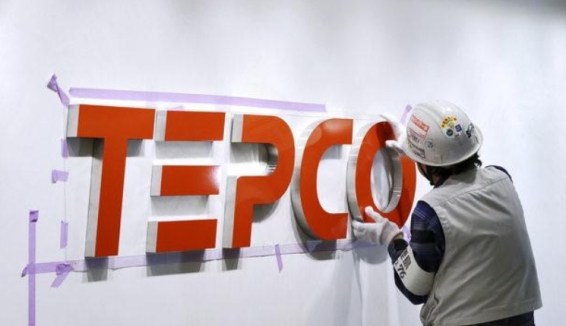
Tokyo says Tepco may stay nationalized to deal with massive cost of nuclear disaster
Faced with massive ongoing costs stemming from the 2011 nuclear crisis in Fukushima, Tokyo Electric Power Co. Holdings Inc. may remain under state control longer than initially planned, the government said Monday.
Under the current plan, the utility would gradually reduce government involvement in its management from April.
However, at a key panel meeting the government proposed a revised option in light of the huge compensation and decommissioning expenses that are involved.
The government leads the business operations of the utility, known as Tepco, acquiring 50.1 percent of its voting rights through the state-backed Nuclear Damage Compensation and Decommissioning Facilitation Corp.
Some ministry bureaucrats have also been dispatched to the utility.
It is understood the state-backed body will assess efforts to reform the company in late March and make a decision on whether to reduce state involvement.
“The direction of Tepco reform is coming into sight,” said Economy, Trade and Industry Minister Hiroshige Seko at the panel meeting. “We have to come up with a more detailed picture of the reform.”
The government is seeking to split the activities of the utility into “business operations,” including retail sales and power generation, and “Fukushima operations” related to decommissioning reactors at the disaster-hit Fukushima No. 1 nuclear plant and paying compensation, which would remain under public control.
As for Tepco’s business operations, the government plans to free them of state control at an early date, hoping to promote industry reorganization involving nuclear and energy distribution businesses.
The plan was revealed at the panel meeting at the trade ministry to study compensation and decommissioning issues facing the utility. The panel will compile proposals by the end of this year.
The government also seeks cooperation from other power companies in reactivating Tepco’s Kashiwazaki-Kariwa nuclear power plant in Niigata Prefecture, which would be the main source of its revenue.
With the involvement of other utilities, the government hopes to ease local distrust of Tepco’s nuclear plant operations. Two reactors at the Kashiwazaki-Kariwa plant are under prolonged safety examinations by nuclear regulators.
State ownership of TEPCO likely to continue as costs keep rising
The government will likely prolong its effective state ownership of Tokyo Electric Power Co. Holdings Inc. because the expected costs for decommissioning its ruined Fukushima No. 1 nuclear plant and paying compensation continue to soar.
The industry ministry mentioned the rising expenses at a meeting on Dec. 5 with scholars and others.
The ministry at the meeting showed a six-item report titled, “Tokyo Electric Power Co. and the state’s role.” One pillar of the report was that the state should urge TEPCO to perform its responsibilities.
However, one of the participants said, “The state should hold a certain ratio of (TEPCO) shares for a long period.”
The government-approved Nuclear Damage Compensation and Decommissioning Facilitation Corp. currently holds 50.1 percent of shares with voting rights of TEPCO.
The government planned to reduce the stake to less than 50 percent if it concluded at the end of this fiscal year that TEPCO could operate independently.
However, that scenario has collapsed.
Some sources now say total costs, including expenses for decommissioning and compensation, will probably exceed 20 trillion yen (about $176 billion).
TEPCO initially said that it would need a total of 11 trillion yen to resolve problems related to the plant that suffered a triple meltdown after being hit by the Great East Japan Earthquake and tsunami in March 2011.
That amount includes 2 trillion yen to decommission the reactors, 5.4 trillion yen to pay compensation to people affected by the disaster and 2.5 trillion yen to decontaminate areas polluted with nuclear substances.
However, an internal report worked out by the industry ministry in August showed that the costs for decommissioning would probably increase by 4 trillion yen and the compensation sum would likely rise by 3 trillion yen, making the total amount 18 trillion yen.
Human Error Stopped Reactor 3 Cooling System
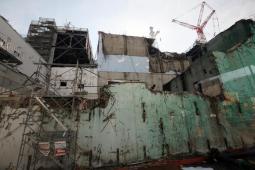
Cooling water briefly stopped at Fukushima plant
Injections of water to cool melted fuel in a reactor at the Fukushima Daiichi nuclear power plant stopped briefly due to human error on Monday.
The plant’s operator, Tokyo Electric Power Company, says an alarm system was activated at around 10 AM when a water pump at the No. 3 reactor shut down.
An internal investigation by the utility found that a worker had mistakenly hit the pump’s switch with his elbow while checking instruments. TEPCO resumed the water injections using a different pump about 1 hour later.
The utility notified local prefectural authorities and nearby areas of the problem just one minute before it resumed the water injections.
TEPCO officials say they detected no changes in the temperature at the bottom of the reactor or in radiation levels at monitoring posts around the plant.
Also on Sunday night, cooling operations temporarily stopped in the spent nuclear fuel pool at the plant’s numbers 1, 2 and 3 reactors when some valves inexplicably opened.
TEPCO says it takes these human errors seriously and will do it best to prevent recurrences.
http://www3.nhk.or.jp/nhkworld/en/news/20161205_27/
Fukushima reactor briefly loses cooling during inspection
One of the melted reactors at tsunami-hit Fukushima nuclear power plant had a temporary loss of cooling when a worker accidentally bumped a switch while passing through a narrow aisle of switch panels during an inspection and turned off the pumping system.
The plant operator, Tokyo Electric Power Co., said cooling for the No. 3 reactor, one of the three reactors that melted following the 2011 earthquake and tsunami, was out for nearly one hour Monday until a backup pump kicked in.
TEPCO said the reactor had enough water left inside and there was no temperature increase or radiation leak from the incident.
TEPCO acknowledged some other key switches are in similarly tight locations.
1 This Month





PLEASE OPPOSE HR 8255 AND S.3639 – bills would accelerate satellite deployment, with no environmental review or safeguards – https://ncstd5li.quorum.us/campaign/169331/
To see nuclear-related stories in greater depth and intensity – go to https://nuclearinformation.wordpress.com
-
Archives
- October 2026 (19)
- September 2026 (339)
- August 2026 (330)
- July 2026 (355)
- June 2026 (287)
- May 2026 (306)
- April 2026 (356)
- March 2026 (251)
- February 2026 (267)
- January 2026 (308)
- December 2025 (358)
- November 2025 (359)
-
Categories
- 1
- 1 NUCLEAR ISSUES
- business and costs
- climate change
- culture and arts
- ENERGY
- environment
- health
- history
- indigenous issues
- Legal
- marketing of nuclear
- media
- opposition to nuclear
- PERSONAL STORIES
- politics
- politics international
- Religion and ethics
- safety
- secrets,lies and civil liberties
- spinbuster
- technology
- Uranium
- wastes
- weapons and war
- Women
- 2 WORLD
- ACTION
- AFRICA
- Atrocities
- AUSTRALIA
- Christina's notes
- Christina's themes
- culture and arts
- Events
- Fuk 2022
- Fuk 2023
- Fukushima 2017
- Fukushima 2018
- fukushima 2019
- Fukushima 2020
- Fukushima 2021
- general
- global warming
- Humour (God we need it)
- Nuclear
- RARE EARTHS
- Reference
- resources – print
- Resources -audiovicual
- Weekly Newsletter
- World
- World Nuclear
- YouTube
-
RSS
Entries RSS
Comments RSS

