Japan’s plans to sell nuclear plants overseas derailed

Greenpeace study slams Japan’s plan to dump radioactive Fukushima water into the ocean
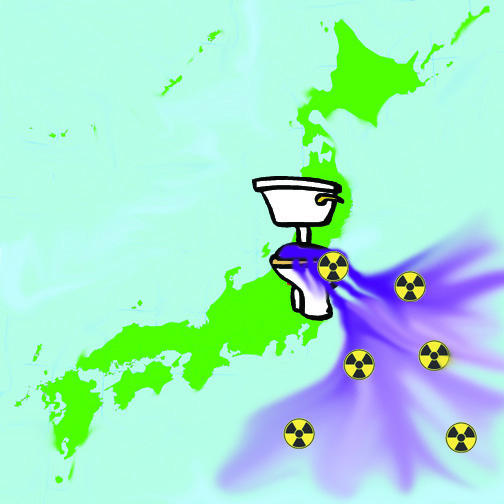
An estimated 1.09 million tonnes of water are presently stored in more than 900 tanks at the plant, which was destroyed by an earthquake and tsunami in March 2011, with up to 4,000 tonnes added every week.
The decision by the government and the plant’s operator, the Tokyo Electric Power Company (Tepco), to avoid developing the relevant technology “was motivated by short-term cost-cutting, not protection of the Pacific Ocean environment and of the health and livelihoods of communities along the Fukushima coast”, said Kazue Suzuki, campaigner on energy issues for Greenpeace Japan.
“We have raised the water crisis with the UN International Maritime Organisation and firmly stand with local communities, especially fisheries, who are strongly opposed to any plans to discharge contaminated water into their fishing grounds.”
The backlash against the plan jointly put forward by the government and Tepco began late last year after the Ministry of Economy, Trade and Industry (METI) held public hearings in Tokyo and Fukushima designed to convince local people that releasing the water into the ocean would have no impact on marine or human life.
Anti-nuclear and environmental groups had obtained data leaked from government sources, however, that showed that the water was still contaminated, triggering public anger. Tepco was forced to admit late last year that its efforts to reduce radioactive material – known as radionuclides – in the water had failed.
The company had previously claimed that advanced processes had reduced cancer-causing contaminants such as strontium-90, iodine-129 and ruthenium-106 in the water to non-detectible levels.
Despite the much-vaunted Advanced Liquid Processing System (ALPS) plant at Fukushima, Tepco has confirmed that levels of strontium-90, for example, are more than 100 times above legally permitted levels in 65,000 tonnes of water that have already been through the ALPS system.
In one of the hearings, Tatsuhiko Sato, a resident of Naraha who only returned to his home last spring because of contamination from the nuclear accident, accused Tepco of “not gathering all the data” and failing to adequately investigate reports that dangerous levels of radionuclides were still in the water after it was treated.
Local fishermen used the public hearing to express their “strong opposition” to plans to release the water, with one, Tetsu Nozaki, pointing out that while levels of radiation in locally caught fish and shellfish have been at or below normal levels for the past three years, releasing contaminated water would “deal a fatal blow” to the local fishing industry.
There has also been anger in some nearby countries, with environmental groups demonstrating in Seoul in November and Korea Radioactive Watch declaring that releasing the water “will threaten the waters of South Korea and other neighbouring nations”.
………..The Greenpeace report concludes that the water crisis at the plant will remain unresolved for the foreseeable future – and that the only viable option to safeguard local communities and the environment is to continue to store the water.
“The Japanese government and Tepco set an objective of ‘solving’ the radioactive water crisis by 2020 – that was never credible,” said Shaun Burnie, a nuclear specialist with Greenpeace Germany.
“The reality is that there is no end to the water crisis at Fukushima, a crisis compounded by poor decision-making by both Tepco and the government. Discharging into the Pacific is the worst option and must be ruled out.”https://www.scmp.com/news/asia/east-asia/article/2183175/greenpeace-slams-japans-plan-dump-radioactive-fukushima-water
Kim Jong Un continuing to play to the vanity of Donald Trump?
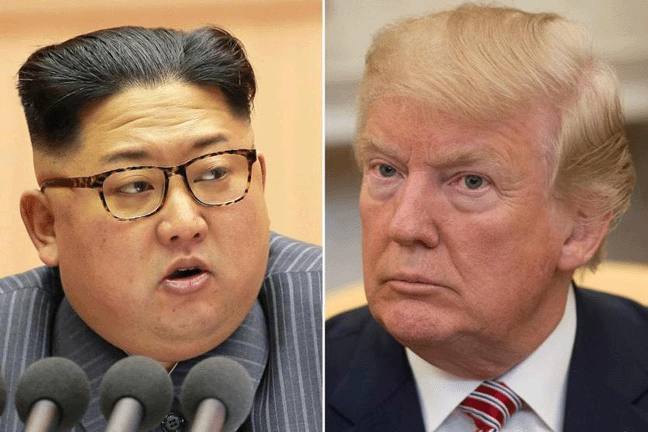 While Kim plays to Trump’s ego, he builds his nuclear arsenal, CNN, By Samantha Vinograd, January 20, 2019 “……..When President Donald Trump met Kim Jong Un in June 2018, they came to a vague agreement that North Korea would work toward the denuclearization of the Korean Peninsula. But, as Vice President Mike Pence stated last week, North Korea has failed to take concrete steps toward giving up its nuclear weapons, and it still represents a serious nuclear threat.
The threat to millions of people, as glaciers in Central Asia melt
 Melting glaciers spell trouble for millions in Asia, SMH, By Henry Fountain,19 January 2019 On a summer day in the mountains high above Almaty, Kazakhstan’s largest city, the Tuyuksu glacier is melting like mad. Rivulets of water stream down the glacier’s thin leading edge.
In Central Asia, a warming climate is shrinking many glaciers. The Tuyuksu is losing ice every year. Around the world, vanishing glaciers will mean less water for people and crops in the future. Here, the people need to prepare sooner.
As she has for nearly two decades, Maria Shahgedanova, a glaciologist at the University of Reading in England, has come here to check on the Tuyuksu. As one of the longest-studied glaciers anywhere, the Tuyuksu helps gauge the effect of climate change on the world’s ice.
Glaciers represent the snows of centuries, compressed over time into slowly flowing rivers of ice, up to about 300 metres thick here in the Tien Shan range of Central Asia and even thicker elsewhere. They are never static, accumulating snow in winter and losing ice to melting in summer.
But in a warming climate melting outstrips accumulation, resulting in a net loss of ice. That is what is happening in Kazakhstan and all over the globe.
The world’s roughly 150,000 glaciers, not including the large ice sheets of Greenland and Antarctica, cover about 500,000 square kilometres of the Earth’s surface. During the last four decades they have lost the equivalent of a layer of ice 20 metres thick.
Most are getting shorter, too. Small ones in places like the Rockies and Andes have disappeared. And researchers say that even if greenhouse gas emissions were sharply curtailed immediately, there has already been enough warming to continue shrinking glaciers around the world.
This great global melting contributes to sea level rise. It affects production of hydroelectricity. It leads to disasters like rapid, catastrophic floods and debris flows. It alters rivers and ecosystems, affecting the organisms that inhabit them.
But here in the Tien Shan, the biggest effect may be on the supply of water for people and agriculture. ……..The researchers analyse samples from streams to determine the mix of water sources, which is important for forecasting how the rivers will fare over time. A melting glacier can at first increase stream flow, but eventually the glacier reaches a tipping point, called peak flow, and meltwater begins to taper.
“At some point they cannot produce the water they are providing right now,” said Matthias Huss, a researcher at the Swiss Federal Institute of Technology in Zurich. “It’s really important for water managers to know when this tipping point is reached.”
Across the Tibetan Plateau and in the Himalayan and Karakoram ranges, the glaciers number in the thousands and the people who rely on them in the hundreds of millions, along rivers like the Indus in Pakistan, the Ganges and Brahmaputra in India, the Yellow and Yangtze in China and the Mekong in south-east Asia……… https://www.smh.com.au/environment/climate-change/melting-glaciers-spell-trouble-for-millions-in-asia-20190118-p50sb6.html
The pitfalls of Direct Democracy- Taiwan’s referendum and the vote on nuclear power

 How Direct Democracy Went Nuclear in Taiwan, A contentious vote on Taiwan’s nuclear future showed how the country’s public referendums went haywire. The Diplomat , By Nick Aspinwall, January 18, 2019 It only took one month for Huang Shih-hsiu, a 31-year-old nuclear energy advocate, to upend a core energy policy of Taiwan President Tsai Ing-wen. The policy, prior to its downfall, stated that Taiwan would decommission its three active nuclear power plants by 2025.
Japan’s plans to sell nuclear plants overseas have been derailed
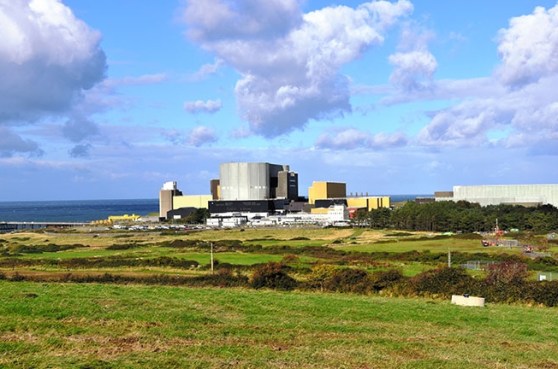
Plans to sell nuclear plants overseas derailed, Japan Times, 20 Jan 19, With the decision by Hitachi Ltd. to “freeze” its plan to build two nuclear power reactors in the United Kingdom, all of the overseas nuclear power plant projects pursued by Japanese firms — with the backing of the government seeking to promote export of nuclear power technology as a key pillar of its efforts to boost infrastructure sales in overseas markets — have now effectively been derailed.
……… Prime Minister Shinzo Abe has long taken the initiative to promote the overseas sale of Japanese nuclear power plants through top-level diplomacy. However, the nuclear power plant business cannot be a part of the nation’s growth strategy if its business feasibility is in doubt. The government and related industries need to face up to the situation surrounding the nuclear power business — which continues to face difficulties domestically as well — and reassess the way forward.
The Fukushima nuclear disaster, triggered by the March 2011 Great East Japan Earthquake and tsunami, has radically changed the global nuclear power market landscape. The cost of nuclear power, which had been promoted as a relatively inexpensive and “clean” source of energy that does not emit carbon dioxide, spiked as additional safety investments inflated plant expenses.
The cost of Hitachi’s project to build the two reactors in Anglesey, Wales, which began in 2012, has ballooned from the initial estimate of ¥2 trillion to ¥3 trillion. Another project pursued by Mitsubishi Heavy Industries Ltd. to build four reactors in Turkey has also been hampered by the swelling cost — which reportedly shot up from an initially estimated ¥2.1 trillion to ¥5 trillion. Toshiba Corp. has pulled out from the overseas nuclear power business after the huge losses incurred by its subsidiary Westinghouse Electric Co. in its nuclear power plant projects in the United States.
Even with a spike in plant construction costs, the nuclear power business would make economic sense if the expected earnings surpass the investments. But Hitachi reportedly decided to halt the U.K. project after it became clear that even with public support from the British government it could not possibly realize profits………
Behind the government’s drive to promote the sale of nuclear power plants overseas has been the domestic market’s bleak business prospects. While the government and the power industry have pushed for restarting the nation’s nuclear power plants idled in the wake of the Fukushima disaster, once they have cleared the tightened plant safety standards, only nine reactors at five plants have been put back online. The additional costs of safety investments required under the new Nuclear Regulation Authority standards to make the plants more resilient to natural disasters such as earthquakes and tsunami — estimated to range from ¥100 billion to ¥200 billion for each reactor — have prompted power companies to decide to decommission 23 aging reactors so far (including the six at Tepco’s Fukushima No. 1 plant).
As popular opposition in Japan remains strong against reactivating the idled plants, there is no prospect that the construction of new plants will be approved in the foreseeable future. The drive to promote the export of nuclear power plants may have been intended to make up for the loss of demand in the domestic market. But earlier plans for Japanese makers to build plants in Lithuania and Vietnam were canceled, while a civil nuclear cooperation pact signed with India in 2016 — which was aimed at paving the way for Japanese nuclear plant exports to the country — has not resulted in any deal. Along with Hitachi’s decision to halt the U.K. project, Mitsubishi Heavy Industries is reportedly set to abandon its plan in Turkey.
Even without construction of new plants, there will be demand for maintaining Japan’s existing nuclear power plants, and for decommissioning its aging plants. What to do with the spent nuclear fuel and the high-level radioactive wastes from the plants will also be among the challenges that confront Japan’s nuclear power business. There will be plenty of work for the industry, and it will be crucial to develop and maintain the technology and manpower to deal with the tasks. https://www.japantimes.co.jp/opinion/2019/01/20/editorials/plans-sell-nuclear-plants-overseas-derailed/#.XETUVtIzbGg
Trump plans North Korea nuclear summit with Kim Jong Un for February
WASHINGTON — President Donald Trump plans to meet face-to-face with North Korean leader Kim Jong Un next month for a second nuclear summit, the White House announced Friday. …..https://www.nbcnews.com/politics/white-house/trump-meets-top-north-korean-official-second-kim-summit-possibility-n960301
How US and China’s African nuclear mission could provide model for disarming North KoreaSC
- The recent joint operation to remove uranium from Nigeria could provide a template for denuclearisation on the Korean peninsula
- Although the two countries have proved they can still work together, the challenges posed by North Korea are likely to prove far more challenging
This week it emerged that Chinese and American nuclear experts had cooperated on a project to remove highly enriched uranium (HEU) from a reactor in Nigeria to prevent the material falling into the hands of terrorists.
The mission last year, which also involved British and Norwegian experts along with contractors from Russia and the Czech Republic, was completed within a day despite violent clashes in Kaduna province where the reactor was located, according to Defensenews.com.
US and China team up to keep nuclear material from terrorists
The Nigerian operation was not the first time the two countries had worked together to prevent nuclear proliferation in West Africa; a similar operation to remove HEU to China was carried out in Ghana in 2017.
Miles Pomper, a senior fellow at the James Martin centre for non-proliferation studies at the Middlebury Institute of International Studies at Monterey, said: “It is conceivable in the case of denuclearisation that North Korea’s nuclear weapons or material could be taken to China.
“Given the fact that China already has nuclear weapons, the US could likely accept that although the US would likely then push for their disassembly.”
Bruce Bennett, a senior defence researcher at the Rand Corporation, said the two countries would continue to cooperate on dismantling nuclear weapons.
“If instability developed in North Korea, China may well be at greater risk from terrorists or Chinese dissident groups seizing North Korean nuclear weapons and using them against China,” he said……… https://www.scmp.com/news/china/diplomacy/article/2182564/how-us-and-chinas-african-nuclear-mission-could-provide-model
Time to retire Japan’s aging nuclear reactor at Genkai
Decision looms on aging nuclear reactor at Genkai https://www3.nhk.or.jp/nhkworld/en/news/20190117_34/ The operator of a nuclear power plant in western Japan says it plans to decide early this year whether to scrap one of the plant’s reactors, or extend its life.
On Thursday, Kyushu Electric Power Company President Kazuhiro Ikebe revealed the plan during a meeting with the governor of Saga Prefecture that hosts the Genkai plant.
Ikebe said his firm is looking into technical aspects of the plan, including whether the aging reactor could meet the stricter regulations introduced after the March 2011 nuclear accident.
The No.2 reactor at Genkai will turn 40 years old in March 2021. It has been offline since January 2011.
Post-disaster guidelines limit the operation of reactors to 40 years in principle, but allow extensions of up to 20 years with approval of the nuclear regulation authority.
Governor Yoshinori Yamaguchi told Ikebe that he hopes society will reduce its dependence on nuclear energy and eventually be nuclear-free.
Yamaguchi said the utility must understand that the decision it takes will come under public scrutiny.
Kyushu Electric put Genkai’s No.3 and No.4 reactors back online last year, but decided to decommission the No.1 reactor.
If the utility wants to extend the operation of the No.2 reactor, it must file an application with the government by March next year and take additional safety measures.
Locals to go to court against public hearing for jetty near nuclear plant
https://www.thehindu.com/news/cities/mumbai/locals-to-go-to-court-against-public-hearing-for-jetty-near-nuclear-plant/article26044843.ece Alok Deshpande, MUMBAI, JANUARY 21, 2019 As the district administration went ahead with the public hearing for building a jetty next to the proposed 9,900 MW Jaitapur Nuclear Power Plant (JNPP) despite instructions against it from the State Environment minister and adverse reports from research institutes, locals have decided to approach the court and the Centre.
I Log Ports Private Limited has proposed developing a jetty at Nate village in Rajapur taluka of Ratnagiri, next to the site selected for the JNPP. The Hindu on Saturday reported that the Bombay Natural History Society (BNHS) in its letter to the Maharashtra Pollution Control Board pointed out that proposed jetty violates conditions stipulated in the clearance for the JNPP. Senior Shiv Sena leader and Environment minister Ramdas Kadam also wrote a letter to Ratnagiri collector Sunil Chavan to not conduct the public hearing on Saturday.
On Saturday, the hearing was conducted amid opposition from locals. District authorities said, they were asked to register their objections but no one came forward.
Satyajit Chavan, convener, Konkan Vinashkari Prakalp Virodhi Samiti, said the public hearing was illegal and unconstitutional. “The hearing shouldn’t have been held as there are legitimate questions against the environment impact assessment report. This project is against the very principle of clearance given to nuclear plant and the minister himself had ordered not to hold the hearing,” he said. There was no question of submitting objection in an illegally-held public hearing. “It was done at the behest of a private company and is unjustified for locals.”
In his letter, BNHS director Deepak Apte said that the proposed captive jetty is against the very principle of the JNPP clearance. The letter also said that Terms of Reference have not been fulfilled and so the project warrants out right rejection, making the public hearing untenable.
Hiroaki Nakanishi, chairman of the Japan Business Federation gave a gloomy view of nuclear power’s future
Hitachi chief’s remarks on nuclear industry spark debate, Japan Times, BY PHILIP BRASOR , 20 Jan 19, On Jan. 1, Hiroaki Nakanishi, chairman of the Japan Business Federation (Keidanren), held press interviews on the outlook of the business community and, at one point, the discussion turned to nuclear energy.
Nakanishi is also the chairman of Hitachi Ltd., a major supplier of nuclear technology, and he said that the commercial possibilities for nuclear energy in Japan, for both “clients,” meaning power companies, and “vendors,” meaning plant manufacturers such as Hitachi, were increasingly limited. If clients can’t make a profit, then neither can vendors, and that will continue to be the case as long as the public is opposed to nuclear energy. The industry can’t force nuclear power on the citizens of a democracy.
Major media were presumably represented at the interviews, but only one outlet, All-Nippon News Network (ANN), reported Nakanishi’s nuclear-related comments. Jan. 1 was a newspaper holiday, which means that no newspapers were published on Jan. 2, but there was still no other mention of his remarks on Jan. 3. On Jan. 5, journalist Hajime Takano commented on this lack of interest to former Prime Minister Yukio Hatoyama on the latter’s web channel for his East Asian Community Institute. The head of Hitachi, a key company in nuclear technology, had said that the business of nuclear energy is impossible without public support. Since nuclear energy is national policy, the ramifications are huge, Takano said, and yet no other major media had covered the remarks or ANN’s report. Were they afraid of upsetting the government?
As Takano pointed out, the Tokyo Shimbun, which as a regional newspaper doesn’t qualify as “major media” and tends to question the government’s nuclear policy, did mention Nakanishi’s remarks on its front page on Jan. 5, suggesting that the Hitachi chairman was no longer aligned with the administration on nuclear energy. Almost eight years after the disaster at the Fukushima No. 1 nuclear power plant, no nuclear plants in eastern Japan have resumed operation and, without an economic rationale for nuclear power, the policy is pointless.
But the Tokyo Shimbun also reported that Nakanishi said Japan does not have the right environment for renewable energy. This qualification seemed to imply that nuclear power was still preferable, but only if the public could be persuaded to accept it. So while part of Nakanishi’s remarks might give the impression that Japan’s nuclear power industry is throwing in the towel, they need to be contextualized within the larger picture of Hitachi’s business.
……… Ever since Japanese nuclear plant expansion ground to a halt after the Fukushima disaster, the government has promoted overseas nuclear development as a growth strategy, with Prime Minister Shinzo Abe as the lead international salesman. However, proposed projects in Vietnam, Taiwan and other places have stalled one after another. The collapse of the British project, which was formally announced Thursday, may be the final nail in the coffin.
In that light, Nakanishi’s new year remarks sound fatalistic, but pundits hear something different. Nikkan Gendai interviewed former trade ministry official Shigeaki Koga, who pointed out that Japan’s nuclear energy players are dependent on the government. Without support, there was no way private power companies or vendors could have made money on nuclear energy. They essentially stuck with it because it was national policy. Nakanishi’s remarks, Koga said, were really veiled threats directed at the government: If you don’t help us financially and legally, then we will have no choice but to get out of the nuclear business. If you want us to continue, he added, it’s your job to convince the public that nuclear energy is worth it………. https://www.japantimes.co.jp/news/2019/01/19/national/media-national/hitachi-chiefs-remarks-nuclear-industry-spark-debate/#.XETXadIzbGg
Hitachi boss just like proverbial general fighting the last war
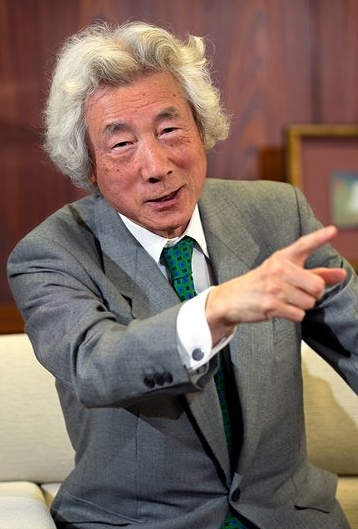
Koizumi says Japan must say ‘no’ to nuclear energy
Resona bans lending to those developing, making or possessing nuclear weapons

Nagasaki: Life after Nuclear War – the past and the future
 Ground Zero Nagasaki: Living the nuclear past – and future, Asia Times, By SUSAN SOUTHARD JANUARY 18, 2019 “………. Much of Nagasaki and the world have, of course, moved on from that terrible morning when a 5-ton plutonium bomb plunged at a thousand kilometers an hour toward the city of 240,000 people. Forty-three seconds later, it detonated half a kilometer above Nagasaki’s Urakami Valley. A super-brilliant blue-white flash lit the sky, followed by a thunderous explosion equal to the power of 21,000 tons of TNT. The entire city convulsed
Based on my book Nagasaki: Life after Nuclear War, I often give talks in the US about that unforgettable (or now often-too-forgettable) day when, for only the second time in history, human beings deemed it right to assault their own species with apocalyptic power. At these book talks, I’ve learned to be prepared for someone in the audience to say that the Japanese deserved what they got. It’s still hard to hear.
At its “burst point,” the Nagasaki blast reached temperatures higher than at the center of the sun, and the velocity of its shock wave exceeded the speed of sound. Within three seconds, the ground below had reached an estimated 3,000 to 4,000 degrees Celsius. Directly beneath the bomb, infrared heat rays instantly carbonized human and animal flesh and vaporized internal organs. Did the men, women, and children of Nagasaki really deserve that?
As the mushroom cloud rapidly ascended 3km over the city and eclipsed the sun, the bomb’s vertical blast pressure crushed much of the Urakami Valley. Horizontal blast winds tore through the region at two and a half times the speed of a Category 5 hurricane, pulverizing buildings, trees, animals, and thousands of people.
The blazing heat twisted iron, disintegrated vegetation, ignited clothing, and melted human skin. Fires broke out across the city, burning thousands of civilians alive.
And though no one knew it yet, larger doses of radiation than any human had ever received penetrated deeply into the bodies of people and animals.
…………. the United States bombed and incinerated all or parts of 66 Japanese cities, killing, maiming or irradiating more than 668,000 civilians. In Nagasaki alone, by the end of 1945 when a first count was possible, 74,000 men, women and children were dead. Of those, only 150 were military personnel. Seventy-five thousand more civilians were injured or irradiated.
Today, this kind of indiscriminate killing and harm to civilians would be called “terrorism.”
Despite the history most Americans have learned – that the atomic bombings of Hiroshima and Nagasaki were military necessities that ended World War II and saved a million American lives by obviating the need for an invasion of Japan’s home islands – there is no historical evidence that the Nagasaki bombing had any impact on Japan’s decision to surrender.
What we aren’t taught are the political and military complexities of the last few months of the war or how, in the postwar years, the US government crafted this end-of-war narrative to silence public opposition to the atomic bombings and build support for America’s fast-expanding nuclear-weapons program.
What many don’t realize is that this misleading version of history allows us to turn away from what happened in Hiroshima and Nagasaki and continue to support the development and proliferation of nuclear weapons without ever having to think about what those weapons do.
Still, so many decades later, in a world in which the Trump administration is preparing to withdraw from a key Cold War nuclear agreement with Russia and the US nuclear arsenal is being modernized to the tune of up to $1.6 trillion, it’s worth recalling the other side of the story, the kind of suffering the Hiroshima and Nagasaki bombings caused in August 1945 and long after.
Within weeks, people in both cities began experiencing mysterious symptoms: vomiting, fever, dizziness, bleeding gums, and hair loss from what doctors would later understand as radiation-related sickness. Purple spots appeared all over their bodies. Many died in excruciating pain within a week of the first appearance of such symptoms. Fear gripped Nagasaki. From one day to the next, no one knew when his or her time might come.
In those first nine months, pregnant women suffered spontaneous abortions, stillbirths, or the deaths of their newborn infants. Many of the babies who survived would later develop physical and mental disabilities.
Five years after the bombings, thousands more began dying from leukemia and other illnesses caused by high-dose radiation exposure, initiating cycles of higher than normal cancer rates that would last for decades. The bombs had, from the survivors’ perspective, burned their bodies from the inside out. Parents exposed to radiation feared possible genetic defects in their children and hovered over them year after year, terrified that what looked like a simple cold or stomach ache would lead to severe illness or death.
Even today, radiation scientists are still studying second- and third-generation hibakusha (atomic-bomb-affected people) for genetic effects passed down from their parents and grandparents, reminding us how much we still don’t understand about the insidious nature of radiation exposure to the human body…….. http://www.atimes.com/ground-zero-nagasaki-living-the-nuclear-past-and-future/
1 This Month
26 September – International Day for the Total Elimination of Nuclear Weapons





PLEASE OPPOSE HR 8255 AND S.3639 – bills would accelerate satellite deployment, with no environmental review or safeguards – https://ncstd5li.quorum.us/campaign/169331/
To see nuclear-related stories in greater depth and intensity – go to https://nuclearinformation.wordpress.com
-
Archives
- September 2026 (305)
- August 2026 (330)
- July 2026 (355)
- June 2026 (287)
- May 2026 (306)
- April 2026 (356)
- March 2026 (251)
- February 2026 (267)
- January 2026 (308)
- December 2025 (358)
- November 2025 (359)
- October 2025 (375)
-
Categories
- 1
- 1 NUCLEAR ISSUES
- business and costs
- climate change
- culture and arts
- ENERGY
- environment
- health
- history
- indigenous issues
- Legal
- marketing of nuclear
- media
- opposition to nuclear
- PERSONAL STORIES
- politics
- politics international
- Religion and ethics
- safety
- secrets,lies and civil liberties
- spinbuster
- technology
- Uranium
- wastes
- weapons and war
- Women
- 2 WORLD
- ACTION
- AFRICA
- Atrocities
- AUSTRALIA
- Christina's notes
- Christina's themes
- culture and arts
- Events
- Fuk 2022
- Fuk 2023
- Fukushima 2017
- Fukushima 2018
- fukushima 2019
- Fukushima 2020
- Fukushima 2021
- general
- global warming
- Humour (God we need it)
- Nuclear
- RARE EARTHS
- Reference
- resources – print
- Resources -audiovicual
- Weekly Newsletter
- World
- World Nuclear
- YouTube
-
RSS
Entries RSS
Comments RSS

