Japan to report that North Korea can now miniaturise nuclear warheads
North Korea now able to miniaturise nuclear warheads – Japan defence report
Upcoming review out of Tokyo will reportedly say missile programme poses ‘serious and imminent threat’ Guardian Justin McCurry in Tokyo 21 Aug 19, Japan’s government will reportedly state that North Korea is capable of miniaturising nuclear warheads in a forthcoming defence report, it has emerged.
Tokyo will upgrade its estimate of the regime’s nuclear capability, having said last year only that the technical feat was a possibility, the conservative Yomiuri Shimbun newspaper said on Wednesday, without citing sources.
The defence report will maintain Japan’s contention that North Korea’s nuclear and ballistic missile programmes pose a “serious and imminent threat” to its security after recent meetings between Donald Trump and the North’s leader, Kim Jong-un, failed to make progress on denuclearisation. The report is expected to receive cabinet approval in mid-September, the Yomiuri said…….
In 2017, a leaked US intelligence assessment concluded that North Korea had developed the technology to produce nuclear warheads small enough to fit inside missiles, theoretically giving it the ability to send nuclear-armed intercontinental ballistic missiles [ICBMs] to distant targets, including the US mainland.
North Korea’s short- and medium-range missiles can strike South Korea and Japan, including US military assets in those countries……. https://www.theguardian.com/world/2019/aug/21/north-korea-now-able-to-miniaturise-nuclear-warheads-japan-defence-report
Rare earths’ radioactive wastes -a toxic issue in Malaysia
Australian mining company Lynas gets permission to dispose of radioactive waste in Malaysia, dividing locals ABC
Key points:
- Malaysia has renewed the rare earth plant licence of Australian company Lynas
- Green groups say Lynas’ activities pose a threat to the local environment
- Lynas says it will meet the licence obligations set by Malaysia’s Government
Outside of China, the Australian firm, Lynas, is the world’s only major producer of rare earth minerals, which are crucial in the production of high-tech gear including smartphones, laser-guided missiles and electric car batteries.
The ore is dug up at Mount Weld in Western Australia and then shipped to Malaysia, where the cost of processing is significantly lower.
The low-level radioactive waste is a by-product of the enrichment process and Malaysian activists are convinced it poses a threat to local communities.
At a recent protest in Kuantan, several hundred people rallied against the Australian firm and Malaysian Prime Minister Mahathir Mohamad’s decision to extend its licence to operate.
“[The radioactivity] will be passed through our children and our children’s children,” said Moses Lim, a chemical engineer turned activist.
“We may be gone, but our grandchildren will curse us.”
Mr Lim claimed the issue had the potential to “tarnish the good name of Australia” in the minds of millions of Malaysians. But the Prime Minister, 94-year-old Dr Mahathir, dismissed criticism of Lynas’ operations in Malaysia.
“It’s not Chernobyl. This isn’t going to be dangerous,” he said.
‘We just have to accept this fate’
The issue has split the local community, which relies on the hundreds of high-paying jobs that the processing facility provides.
At a local fish market in Kuantan, a mother who declined to offer her name told the ABC she feared radioactive contamination from the facility would make its way into her food.
“I am scared, but I have no choice but to buy the fresh fish from here. We just have to accept this fate,” she said.
“I think Lynas should be shut down for the sake of the surrounding environment.”
But other locals said there was nothing to worry about, blaming politicians for trying to capitalise on the issue by whipping up fear in the community.
Raja Harris bin Raja Salleh, the chief fisher in Balok village, said the residents are “not at all scared”.
“Lynas is the same as other agencies and factories that produce chemicals. The accusations against Lynas are political,” he said.
Toxic waste becomes a toxic issue
The issue of Lynas’ radioactive waste has become politically toxic for the Mahathir-led coalition, which promised in opposition to close the Australian plant.
Now in government after last year’s shock election result, there has been a major backing down.
Lynas is allowed to keep operating its plant and has been given six months to find a suitable site within Malaysia to permanently dispose of 580,000 tonnes of low-level radioactive waste currently stockpiled at the Kuantan facility.
The company has also been given four years to relocate its cracking and leaching processing operation — which creates the radioactive waste — to Western Australia.
Wong Tak, a Malaysian Government MP who attended the Kuantan protest, said the cabinet decision to extend the licence was a “great disappointment”.
The long time anti-Lynas campaigner claimed the issue was serious enough to fracture the Mahathir-led Pakatan Harapan, or Alliance of Hope, Coalition.
“I know the majority of backbenchers are with us, and I will even say the majority of the cabinet are with the people.”
Dr Mahathir has taken a pragmatic approach to the issue, saying the decision to extend the licence was based on expert advice, not the “popular view”.
“Either we get rid of the industry and lose credibility in terms of foreign direct investment, or we can take care of the problem,” he said……
The fate of Lynas in Malaysia is being keenly watched around the world amid concerns rare earth materials could become a bargaining chip in the ongoing US-China trade war.
In 2010, the Chinese supply of rare earths to Japan suddenly stopped for two months following a territorial dispute over Japan’s claim to the Senkaku Islands, which angered China.
The construction of the Lynas plant in Malaysia was largely funded in 2011 by Japan, which needed a reliable supply of rare earths.
China currently holds a near-monopoly on the production of rare earth minerals, with Lynas producing about 13 per cent of global supply.https://www.abc.net.au/news/2019-08-22/malaysians-divided-on-radioactive-waste-from-aussie-miner-lynas/11434122
South Korean call for import ban on processed foods from Fukushima
 Lawmaker calls for import ban on processed foods from Fukushima http://www.koreatimes.co.kr/www/nation/2019/08/356_274166.html South Korea should restrict imports of processed foods from Japan’s Fukushima region as radiation has been found in shipments, an opposition lawmaker said Monday.
South Korea banned all seafood imports from eight Japanese prefectures near Fukushima in 2013 on concerns over their radiation levels in the wake of the 2011 Fukushima nuclear power plant meltdown. But no import restrictions have been put on processed foods from the areas.
Citing data from the Ministry of Food and Drug Safety, Rep. Kim Kwang-soo of the minor opposition Party for Democracy and Peace said radiation has been discovered in 16.8 tons of processed foods imported from the eight prefectures, or 35 shipments, over the past five years.
The figures were 10 tons (11 shipments) in 2014, 0.1 ton (six) in 2015, one ton (six) in 2016, 0.3 ton (four) in 2017, 0.4 ton (six) in 2018 and 5 tons (two) for the first half of this year.
South Korea imported 29,985 tons of processed foods from the Japanese prefectures between 2014 and June this year. Imports, which came to 3,803 tons in 2014, increased to 7,259 tons last year. In the January-June period of this year, imports reached 3,338 tons.
“It is urgent for the government to take necessary action against processed foods from the eight Japanese areas since they pose a serious risk to public health,” the lawmaker said.
In response to a complaint from Tokyo, the WTO ruled in April this year that Seoul’s measures do not amount to unfair trade restrictions or arbitrary discrimination.
Meanwhile, the Ministry of Food and Drug Safety said it sees no problem with imports of processed foods from the eight Japanese prefectures because the Japanese government submits inspection certificates and thorough checks are conducted at local quarantine offices. (Yonhap)
China dominates worldwide solar and wind energy generation
Nikkei Asian Review 17th Aug 2019 China has come to dominate worldwide solar and wind energy generation, in
terms of both its own capacity and its companies’ share of global markets,
leaving previous powerhouses — particularly the U.S. and Japan — to play
catch-up.
Kashmir – a “nuclear flashpoint”?
 Kashmir a nuclear flashpoint: Pakistan army spokesman Asif Ghafoor https://www.livemint.com/politics/news/kashmir-a-nuclear-flashpoint-pakistan-army-spokesman-asif-ghafoor-1566058203618.html : 17 Aug 2019,
- Indian defence minister Rajnath Singh on Friday said India could review its nuclear no first use policy
- The UN Security Council on Friday said India and Pakistan should sort out their differences bilaterallyNew Delhi: Pakistan army spokesman Asif Ghafoor on Saturday described Kashmir as a “nuclear flashpoint”, a day after defence minister Rajnath Singh said India could review its nuclear no first use policy.
Ghafoor’s comment, quoted by news reports, could be seen as another attempt by Pakistan to internationalise the Kashmir dispute between the two countries and invite offers of mediation. Western nations have always been wary of tensions flaring up between the two countries that have nuclear weapons.
Ghafoor’s comments also come after the UN Security Council on Friday said India and Pakistan should sort out their differences bilaterally after closed-door consultations. This came after China sought the meeting on Pakistan’s behalf after India revoked a provision in its constitution giving special status to Kashmir.
In his remarks on Saturday, Ghafoor also said Pakistan was ready to repulse any Indian attack, the news reports said.
On Friday, during a visit to Pokhran, defence minister Rajnath Singh said, “Till today, our nuclear policy is ‘No First Use’. What happens in future depends on the circumstances,” media reports said quoting the minister who was at an event in Pokhran, the site of India’s nuclear tests in 1998.
The comments followed heightened tensions between India and Pakistan after the Indian government revoked Article 370that gave special status to Jammu and Kashmir. Pakistan had condemned the move.
In a tweet, Rajnath Singh added, “Pokhran is the area which witnessed Atal Ji’s firm resolve to make India a nuclear power and yet remain firmly committed to the doctrine of ‘No First Use’. India has strictly adhered to this doctrine. What happens in future depends on the circumstances.”
Implications for India if it revokes its No First Use nuclear weapons policy
Nuclear rethink: A change in India’s nuclear doctrine has implications on cost & war strategy
A nuclear doctrine states how a nuclear weapon state would employ its nuclear weapons both during peace and war. Economic Times ET Bureau|, Aug 17, 2019,
“…….. revoking the NFU would have its own costs. First, India’s image as a responsible nuclear power is central to its nuclear diplomacy. Nuclear restraint has allowed New Delhi to get accepted in the global mainstream. From being a nuclear pariah for most of the Cold War, within a decade of Pokhran 2, it has been accepted in the global nuclear order. It is now a member of most of the technology denial regimes such as the Missile Technology Control regime and the Wassenaar Arrangement. It is also actively pursuing full membership of the Nuclear Suppliers Group. Revoking the ‘no first use’ pledge would harm India’s nuclear image worldwide.
In fact, when compared with the estimates a decade earlier of 70 nuclear warheads, there has only been a modest increase in India’s nuclear inventory. If India does opt for first use of nuclear weapons and given that it has two nuclear adversaries, it would require a far bigger inventory of nuclear weapons particularly as eliminating adversaries’ nuclear capabilities would require targeting of its nuclear assets involving multiple warheads. The controversy around the supposed low yield of its Hydrogen weapon test in 1998 further complicates this already precarious calculation.
Similarly, first use of nuclear weapons would require a massive increase in India’s nuclear delivery capabilities. There is yet no evidence suggesting that India’s missile production has increased dramatically in recent times. Moreover, India is yet to induct the Multiple Reentry Vehicle (MRV) technology in its missiles, which is fundamental to eliminating hardened nuclear targets. Finally, India’s ISR capabilities would have to be augmented to such a level where India is confident of taking out most of its adversary’s arsenal. According to a senior officer who had served in the Strategic Forces command, this is nearly an “impossible task”. Finally, India would have to alter significantly its nuclear alerting routine. India’s operational plans for its nuclear forces involve a four-stage process. Nuclear alerting would start at the first hints of a crisis where decision-makers foresee possible military escalation. This would entail assembly of nuclear warheads and trigger mechanisms into nuclear weapons. The second stage involves dispersal of weapons and delivery systems to pre-determined launch positions. The third stage would involve mating of weapons with delivery platforms.
The last and final stage devolves the control of nuclear weapons from the scientific enclave to the military for their eventual use. Canisterization of missiles has combined the dispersal and mating of weapons into a single step, cutting down the effort required for achieving operational readiness. Even then, this model does not support first use of nuclear weapons as it gives ample warning to the adversary of India’s intentions. There is certainly a need for a reappraisal of India’s nuclear doctrine.
All doctrines need periodic reviews and India’s case is no exception. Given how rapidly India’s strategic environment is evolving, it is imperative to think clearly about all matters strategic. But if Indian policymakers do indeed feel the need to review the nation’s nuclear doctrine, they should be cognizant of the costs involved in so doing. A sound policy debate can only ensue if the costs and benefits of a purported policy shift are discussed and debated widely. https://economictimes.indiatimes.com/news/defence/nuclear-rethink-a-change-in-indias-nuclear-doctrine-has-implications-on-cost-war-strategy/articleshow/70718646.cms
Anxiety over risks of radiation and heat at the 2020 Tokyo Olympics
 Controversy over radiation and heat surrounding Tokyo Olympics, HANKYOREH By Kim Chang-geum, staff reporter : Aug.14,2019
“…… Safety from radiation and heat at the Tokyo Olympics
Most of the issues related to the upcoming Tokyo Olympics, which are now only a year away, boil down to safety concerns over radiation and extreme heat. Some baseball and softball matches are scheduled to be held in a stadium located close to the Fukushima nuclear reactor that took direct damage during the 2011 earthquake. Korean civic groups have also pointed out that the Japanese government has failed to properly control water contaminated by radiation from the reactor. Plans to source some of the rice and ingredients for the Tokyo Olympics Athletes Village from Fukushima are adding to these concerns. Although the level of radiation measured in such rice is within the acceptable standards in Japan, it is believed to exceed Korean standards.
India ponders changing its “no first use” nuclear weapons policy
India hints at changing ‘no first use’ nuclear policy Channel News Asia, NEW DELHI: India’s defence minister hinted on Friday (Aug 16) that New Delhi might change its “no first use” policy on nuclear weapons, amid heightened tensions with fellow atomic power Pakistan.
India committed in 1999 to not being the first to use nuclear weapons in any conflict. Among India’s neighbours China has a similar doctrine but arch rival Pakistan does not.
Defence Minister Rajnath Singh made the comment on Twitter after visiting Pokhran, the site of India’s successful nuclear tests in 1998 under then prime minister Atal Vajpayee.
“Pokhran is the area which witnessed (Vajpayee’s) firm resolve to make India a nuclear power and yet remain firmly committed to the doctrine of ‘No First Use’ (NFU),” Singh wrote.
“India has strictly adhered to this doctrine. What happens in future depends on the circumstances,” Singh tweeted.
The statement comes as tensions rise with Pakistan after Prime Minister Narendra Modi’s government stripped Indian-administered Kashmir of its autonomy, a move sharply condemned by Islamabad……..
Observers said Singh’s statement is the clearest so far with regards to a change in India’s nuclear doctrine.
……….https://www.channelnewsasia.com/news/asia/india-hints-at-changing-no-first-use-nuclear-policy-11816218
Japan’s Government Ultimate Hypocrisy and Arrogance
“Remote-controlled robots that can withstand high radiation exposure are ‘expected in the near future’ to help remove melted nuclear fuel debris out of the reactors”
Uncapable at home to really handle a triple meldown while sacrificing its own population with an intensive denial and cover-up campaign, Japan is now proposing to the U.S. to help denuclearizing North Korea. Isn’t that the ultimate height of hypocrisy and arrogance?
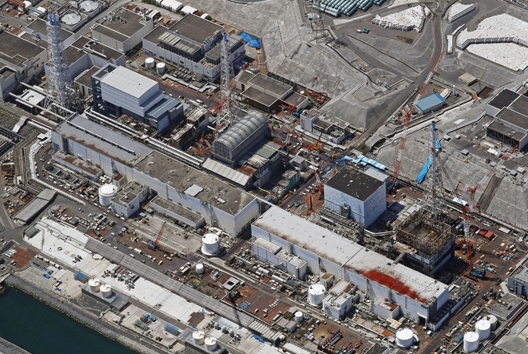 (File photo taken from a Kyodo News helicopter on April 23, 2019, shows the crippled Fukushima Daiichi nuclear power plant in northeastern Japan, where decommissioning work is under way.)
Japan tells U.S. of plan to offer robots for denuclearizing N. Korea
August 16, 2019
Japan has told the United States that it is ready to provide its robot technology for use in dismantling nuclear and uranium enrichment facilities in North Korea as Washington and Pyongyang pursue further denuclearization talks, Japanese government sources said Friday.
As Japan turns to remote-controlled robots it has developed to decommission reactors that suffered meltdowns in 2011 at the Fukushima Daiichi nuclear power plant, it believes the same technology can be used in North Korea, according to the sources.
The offer is part of Japan’s efforts to make its own contribution to the denuclearization talks amid concern that Tokyo could be left out of the loop as the United States and North Korea are stepping up diplomacy.
Tokyo has already told Washington it would shoulder part of the costs of any International Atomic Energy Agency inspections of North Korean facilities and dispatch Japanese nuclear experts.
The scrapping of nuclear facilities such as the Yongbyon complex that has a graphite-moderated reactor will come into focus in forthcoming working-level talks between Washington and Pyongyang.
North Korean leader Kim Jong Un offered to close the complex — seen as the center of the country’s nuclear material production activities — during his meeting with U.S. President Donald Trump in Hanoi in February.
But the Trump-Kim talks broke down after the two leaders failed to reconcile Washington’s demand for denuclearization and Pyongyang’s call for sanctions relief.
Earlier this year, Japan and the United States held a working-level meeting before the Hanoi summit, in which Washington pointed to the possibility of radioactive contamination near North Korea’s facilities due to its lax management of nuclear materials, the sources said.
Japan then offered “any support,” including technological assistance, according to the sources.
Remote-controlled robots that can withstand high radiation exposure are ‘expected in the near future’ to help remove melted nuclear fuel debris out of the reactors at the Fukushima Daiichi plant, crippled since the March 2011 earthquake and tsunami in northeastern Japan.
For such technology to be used in the decommissioning of a nuclear facility, experts need to inspect its internal structure and check radiation levels. Therefore, Pyongyang’s acceptance of such on-site inspections would be essential.
Trump has said on Twitter that he received a letter from Kim stating that the North Korean leader is willing to meet again after joint U.S.-South Korea military exercises end next Tuesday.
North Korea, which sees the joint drills as rehearsals for invasion, has fired a series of short-range missiles in apparent protest, most recently on Friday, but Trump has played down the significance of such launches.
While Prime Minister Shinzo Abe, who places priority on resolving the issue of Japanese nationals abducted by Pyongyang in the 1970s and 1980s, has expressed his hope to meet Kim “without preconditions,” such a summit appears unlikely.
Abe is the only leader yet to meet face-to-face with Kim among the countries involved in the long-stalled six-party talks on Pyongyang’s nuclear program — the two Koreas, China, Japan, Russia and the United States.
Trump has delivered on his promise to Abe to raise the abduction issue during his meetings with Kim. The U.S. president takes the view that neighboring countries such as Japan need to pay for North Korea’s denuclearization and extend economic assistance in return for Pyongyang scrapping its nuclear facilities.
“Japan’s security will be left out if we fail to be part of the U.S.-North Korea negotiations,” a Japanese Foreign Ministry source said.
Ballooning costs give lie to notion nuclear power is cheapest energy


No long term solution to the accumulating radioactive water at Fukushima
 Fukushima: Nuclear-contaminated water raises 2020 Games site fears,The Weather Network, Caroline Floyd ,
There may be another hitch in the road to recovery, however, and it’s looming on the horizon for next year.
Tremendous amounts of water flooded the reactors in the wake of the disaster, both from the tsunami itself and from water added to cover the melted reactors and allow them to cool as part of the efforts to clean up the site and decommission the plant. Since then, groundwater has also infiltrated the site. All of this water has been contaminated by radioactive substances, like cesium and tritium. While the cesium can be removed via processing, tritium generally remains, meaning the still-contaminated water must be stored.
TEPCO, the utility which operated the reactor, has installed about 1,000 large storage tanks at the site to hold the contaminated water; currently, more than 1.05 million tons of radioactive water are being stored in the tanks, and roughly 150 tons are added every day.
While more tanks can be installed, a long-term solution is still being sought and, so far, most of them aren’t going over well with the locals.
Setting a deadline on the current storage situation puts additional pressure on Japanese authorities and the public to reach a consensus.

Will the propaganda ploy – the Tokyo 2020 Olympics really revitalise the nuclear industry and Fukushima
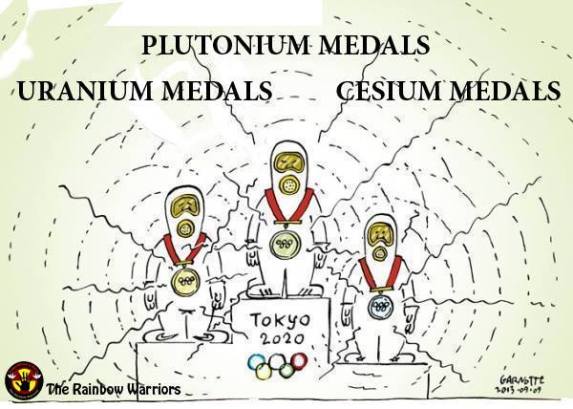 Can 2020 Summer Olympics help Fukushima rebound from nuclear disaster?, LA TIMES, DAVID WHARTON, AUG. 12, 2019
Under the moniker of the “Reconstruction Olympics,” they have plotted a torch relay course that begins near the crippled Fukushima Daiichi plant and continues through adjacent prefectures — Miyagi and Iwate — impacted by the disaster. The region will host games in baseball, softball and soccer next summer.
“We are hoping that, through sports, we can give the residents new dreams,” said Takahiro Sato, director of Fukushima’s office of Olympic and Paralympic promotions. “We also want to show how far we’ve come.”
The effort has drawn mixed reactions, if only because the so-called “affected areas” are a sensitive topic in Japan.
Some people worry about exposure to lingering radiation; they accuse officials of whitewashing health risks. Critics question spending millions on sports while communities are still rebuilding.
“The people from that area have dealt with these issues for so long and so deeply, the Olympics are kind of a transient event,” said Kyle Cleveland, an associate professor of sociology at Temple University’s campus in Japan. “They’re going to see this as a public relations ploy.”……
The populace began to question announcements from the Tokyo Electric Power Co. (Tepco) about the scope of the contamination, said Cleveland, who is writing a book on the catastrophe and its aftermath.
“In the first 10 weeks, Tepco was downplaying the risk,” he said. “Eventually, they were dissembling and lying.”……..
Reliable data on radiation risks is difficult to obtain, said Jonathan Links, a public health professor at Johns Hopkins University. …….
In terms of athletes and coaches visiting the impacted prefectures for a week or two during the Olympics, Links said the cancer risk is proportional, growing incrementally each day.
The Japanese government has raised what it considers to be the acceptable exposure from 1 millisievert to 20 millisieverts per year. Along with this adjustment, officials have declared much of the region suitable for habitation, lifting evacuation orders in numerous municipalities. Housing subsidies that allowed evacuees to live elsewhere have been discontinued.
But some towns remain nearly empty.
“People are refusing to go back,” said Katsuya Hirano, a UCLA associate professor of history who has who has spent years collecting interviews for an oral history. “Especially families with children.”……..
With infrastructure repairs continuing throughout the region, evacuee Akiko Morimatsu has a skeptical view of the Tokyo 2020 campaign.
“They have called these the ‘Reconstruction Games,’ but just because you call it that doesn’t mean the region will be recovered,” Morimatsu said.
Concerns about radiation prompted her to leave the Fukushima town of Koriyama, outside the mandatory evacuation zone, moving with her two young children to Osaka. Her husband, a doctor, remained; he visits the family once a month.
“The reality is that the region hasn’t recovered,” said Morimatsu, who is part of a group suing the national government and Tepco. “I feel the Olympics are being used as part of a campaign to spread the message that Fukushima is recovered and safe.”….. https://www.latimes.com/sports/olympics/story/2019-08-12/tokyo-olympics-2020-fukushima-nuclear-disaster
Solar power is now cheaper than grid electricity in cities across China
which could drive a surge in uptake, according to new research. Some
experts thought China would have to wait decades until solar generation
cost the same as electricity from the grid.
combination of technological advances and support from the government,
“grid parity” has already been reached. Scientists found that all of the
344 cities they looked at could have cheaper electricity powered by solar
energy, according to the study published in the journal Nature Energy.
Twenty-two per cent of cities could also have solar systems that would
generate lower cost electricity than coal, according to the researchers,
led by Jinyue Yan from the Royal Institute of Technology in Stockholm.
Fukushima’s ticking time-bomb, as space is running out for radioactive water storage
IN THREE YEARS, FUKUSHIMA COULD OVERFLOW WITH RADIOACTIVE WATER, https://futurism.com/the-byte/fukushima-overflow-radioactive-water AUGUST 9TH 19__DAN ROBITZSKI_
Ticking Clock
The effort to safely decommission Japan’s Fukushima Daiichi nuclear power plant just got hit by a looming deadline.
In about three years, the plant will run out of space for the massive quantities of treated but still-radioactive water that officials have been storing there, according to The Associated Press. While a government panel came up with a few possible courses of action, the 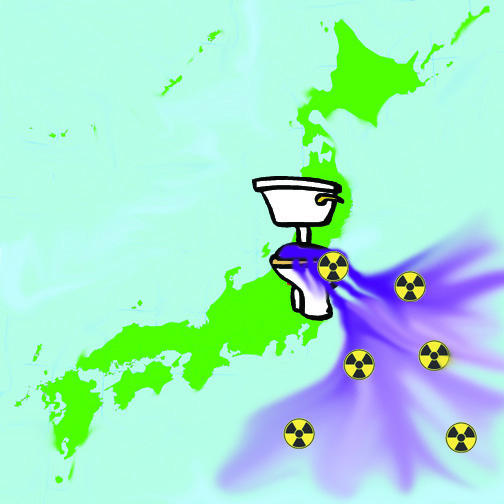 most feasible one at the moment is to simply dump the water into the Pacific — a bleak sign for nuclear disasters in the future.
Maximum Capacity
At the moment, Fukushima has over 1 million tons of water stored in almost 1,000 on-site tanks, the AP reports. Plans are in place to build enough to store nearly 1.4 million more tons, but that even those will reach capacity by mid-2022.
Local fishers and residents of the area say that dumping the water would devastate the area’s fishing and agriculture industry, per the AP. Other options considered by the panel include vaporizing the radioactive water or injecting it deep underground.
“When we talk about Fukushima’s reconstruction, the question is if we should prioritize the decommissioning at the expense of Fukushima people’s lives,” University of Tokyo professor of disaster social science Naoya Sekiya told the AP. “The issue is not just about science.”
India and Pakistan on Hair-Trigger Nuclear Alert Over Kashmir
Hair-Trigger Nuclear Alert Over Kashmir, Common Dreams, India and Pakistan, where people starve in the streets, waste billions on military spending because of the Kashmir dispute. Now some of India’s extreme Hindu nationalists warn they want to reabsorb Pakistan, Bangladesh, and even Sri Lanka into Mother India. by Eric Margolis 11 Aug 19
Kashmir has been a flashpoint since Imperial Britain divided India in 1947. India and Pakistan have fought numerous wars and conflicts over majority Muslim Kashmir. China controls a big chunk of northern Kashmir known as Aksai Chin.
In 1949, the UN mandated a referendum to determine if Kashmiris wanted to join Pakistan or India. Not surprisingly, India refused to hold the vote. But there are some Kashmiris who want an independent state, though a majority seek to join Pakistan……
What makes this confrontation so dangerous is that both sides have important tactical and nuclear forces arrayed against one another. These are mostly short/medium-ranged nuclear tipped missiles, and air-delivered nuclear bombs. Strategic nuclear weapons back up these tactical forces. A nuclear exchange, even a limited one, could kill millions, pollute much of Asia’s ground water, and spread radioactive dust around the globe – including to North America. ….https://www.commondreams.org/views/2019/08/11/hair-trigger-nuclear-alert-over-kashmir
1 This Month
26 September – International Day for the Total Elimination of Nuclear Weapons





PLEASE OPPOSE HR 8255 AND S.3639 – bills would accelerate satellite deployment, with no environmental review or safeguards – https://ncstd5li.quorum.us/campaign/169331/
To see nuclear-related stories in greater depth and intensity – go to https://nuclearinformation.wordpress.com
-
Archives
- September 2026 (291)
- August 2026 (330)
- July 2026 (355)
- June 2026 (287)
- May 2026 (306)
- April 2026 (356)
- March 2026 (251)
- February 2026 (267)
- January 2026 (308)
- December 2025 (358)
- November 2025 (359)
- October 2025 (375)
-
Categories
- 1
- 1 NUCLEAR ISSUES
- business and costs
- climate change
- culture and arts
- ENERGY
- environment
- health
- history
- indigenous issues
- Legal
- marketing of nuclear
- media
- opposition to nuclear
- PERSONAL STORIES
- politics
- politics international
- Religion and ethics
- safety
- secrets,lies and civil liberties
- spinbuster
- technology
- Uranium
- wastes
- weapons and war
- Women
- 2 WORLD
- ACTION
- AFRICA
- Atrocities
- AUSTRALIA
- Christina's notes
- Christina's themes
- culture and arts
- Events
- Fuk 2022
- Fuk 2023
- Fukushima 2017
- Fukushima 2018
- fukushima 2019
- Fukushima 2020
- Fukushima 2021
- general
- global warming
- Humour (God we need it)
- Nuclear
- RARE EARTHS
- Reference
- resources – print
- Resources -audiovicual
- Weekly Newsletter
- World
- World Nuclear
- YouTube
-
RSS
Entries RSS
Comments RSS

