IAEA urges Japan to slow the Fukushima wastes clean-up – delay release to Pacific till after Olympic Games

IAEA urges Japan to take ample time in Fukushima cleanup https://phys.org/news/2019-01-iaea-urges-japan-ample-fukushima.html January 31, 2019 by Mari Yamaguchi The International Atomic Energy Agency urged Japan on Thursday to spend ample time in developing a decommissioning plan for the tsunami-damaged Fukushima nuclear power plant and to be honest with the public about remaining uncertainties.
The cores of the three reactors melted after a massive 2011 earthquake and tsunami. Utility and government officials plan to start removing the melted fuel in 2021, but still know little about its condition and have not finalized waste management plans.
“The IAEA review team advises that before the commencement of the fuel debris retrieval activities, there should be a clear implementation plan defined to safely manage the retrieved material,” the report said. “TEPCO should ensure that appropriate containers and storage capacity are available before starting the fuel debris retrieval.”
The report also urged the government and TEPCO to carefully consider ways to express “the inherent uncertainties involved” in the project and develop “a credible plan” for the long term. It advised TEPCO to consider adopting contingency plans to “accommodate any schedule delays.”
Dale Klein, a former U.S. Nuclear Regulatory Commission chairman who heads a TEPCO reform committee, said in a recent interview that the decommissioning should not be rushed, even if the government and TEPCO have set a schedule and people want to see it move faster.
“It’s much better to do it right than do it fast,” he said, adding that it’s also good not to rush from a health and safety perspective. “Clearly, the longer you wait, the less the radiation is.”
He said he would be “astounded” if the current schedule ends up unchanged.
In order to make room in the plant compound to safely store the melted fuel and for other needed facilities, about 1 million tons of radioactive waste water currently stored in hundreds of tanks will have to be removed. The IAEA team, headed by Xerri Christoph, an expert on radioactive waste, urged the government and TEPCO to urgently decide how to dispose of it.
Nuclear experts, including officials at the IAEA and Japanese Nuclear Regulation Authority, have said a controlled release of the water into the Pacific Ocean is the only realistic option. A release, however, is unlikely until after the Tokyo 2020 Olympic Games in order to avoid concerns among visitors from overseas.
A new type of robot to probe inside damaged Fukushima nuclear reactor
Toshiba unveils robot to probe melted Fukushima nuclear fuel, WP, By Mari Yamaguchi | AP, January 28 YOKOHAMA, Japan — Toshiba Corp. unveiled a remote-controlled robot with tongs on Monday that it hopes will be able to probe the inside of one of the three damaged reactors at Japan’s tsunami-hit Fukushima nuclear plant and grip chunks of highly radioactive melted fuel.
The device is designed to slide down an extendable 11-meter (36-foot) long pipe and touch melted fuel inside the Unit 2 reactor’s primary containment vessel. The reactor was built by Toshiba and GE.
An earlier probe carrying a camera captured images of pieces of melted fuel in the reactor last year, and robotic probes in the two other reactors have detected traces of damaged fuel, but the exact location, contents and other details remain largely unknown.
Toshiba’s energy systems unit said experiments with the new probe planned in February are key to determining the proper equipment and technologies needed to remove the fuel debris, the most challenging part of the decommissioning process expected to take decades.
…….. The probe will mainly examine the fuel debris’ physical condition rather than its radioactive components or other details which require actual sampling and safe storage……. https://www.washingtonpost.com/world/asia_pacific/toshiba-unveils-robot-to-probe-melted-fukushima-nuclear-fuel/2019/01/28/4214f596-2314-11e9-b5b4-1d18dfb7b084_story.html?utm_term=.3bfe336cb31c
A bit of good news – Radioactive Cesium-137 diminishing in 2 Fukushima rivers, after close to 8 years
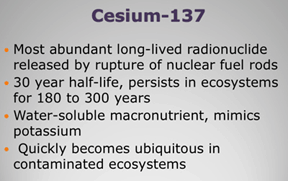 Survey finds concentration of radioactive cesium-137 rapidly decreasing in 2 Fukushima rivers, Survey finds concentration of radioactive cesium-137 rapidly decreasing in 2 Fukushima rivers,
http://www.the-japan-news.com/news/article/0005504609 January 26, 2019
The Yomiuri ShimbunThe concentration of radioactive cesium-137, which was spread about following the accident at Tokyo Electric Power Company Holdings Inc.’s Fukushima No. 1 nuclear power plant, has been rapidly decreasing in river waters in municipalities near the facility in Fukushima Prefecture, according to a survey by the Japan Atomic Energy Agency. Compared to the speed at which the radiation of cesium-137 naturally decreases, the concentration in the rivers is decreasing at a speed tantamount to 10 times that, said the JAEA, a national agency for research and development. The JAEA assesses that cesium on top of the ground is carried into rivers by rain but as the radioactive substance seeps underground, among other possible factors, the volume flowing into rivers might have decreased. Following the March 2011 nuclear accident, radioactive materials were dispersed and fell onto the earth. Among these materials was cesium-137, which has a relatively long half-life of about 30 years and is releasing radiation even now. From April 2015 to March 2018, the agency examined two rivers in the prefecture — the Ukedogawa river in Namie and the Otagawa river in Minamisoma. It sampled the waters in a 20-kilometer area around the nuclear power plant and precisely measured the concentration of cesium-137 in them. Results showed the concentration in the Ukedogawa river was around 0.2 becquerels per liter at the start of the study, but had dropped to around 0.1 becquerels in March 2018, indicating the concentration was decreasing 10 times faster than normal. The Otagawa river also showed a similar trend, according to the agency. Takahiro Nakanishi, a senior researcher at the JAEA, said, “If the concentration in river waters relied on for agricultural purpose decreases, the result could help local people resume their agricultural activities.” |
|
Japan’s plans to sell nuclear plants overseas derailed

Greenpeace study slams Japan’s plan to dump radioactive Fukushima water into the ocean
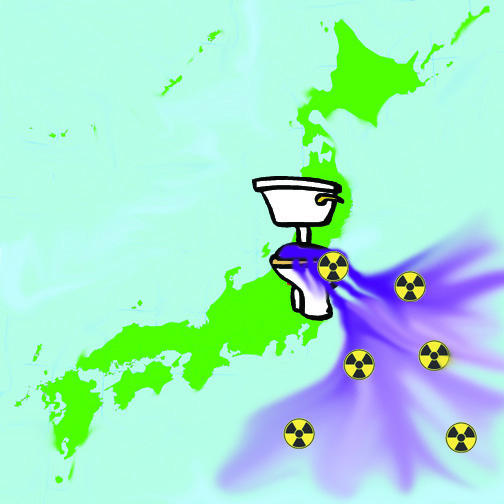
An estimated 1.09 million tonnes of water are presently stored in more than 900 tanks at the plant, which was destroyed by an earthquake and tsunami in March 2011, with up to 4,000 tonnes added every week.
The decision by the government and the plant’s operator, the Tokyo Electric Power Company (Tepco), to avoid developing the relevant technology “was motivated by short-term cost-cutting, not protection of the Pacific Ocean environment and of the health and livelihoods of communities along the Fukushima coast”, said Kazue Suzuki, campaigner on energy issues for Greenpeace Japan.
“We have raised the water crisis with the UN International Maritime Organisation and firmly stand with local communities, especially fisheries, who are strongly opposed to any plans to discharge contaminated water into their fishing grounds.”
The backlash against the plan jointly put forward by the government and Tepco began late last year after the Ministry of Economy, Trade and Industry (METI) held public hearings in Tokyo and Fukushima designed to convince local people that releasing the water into the ocean would have no impact on marine or human life.
Anti-nuclear and environmental groups had obtained data leaked from government sources, however, that showed that the water was still contaminated, triggering public anger. Tepco was forced to admit late last year that its efforts to reduce radioactive material – known as radionuclides – in the water had failed.
The company had previously claimed that advanced processes had reduced cancer-causing contaminants such as strontium-90, iodine-129 and ruthenium-106 in the water to non-detectible levels.
Despite the much-vaunted Advanced Liquid Processing System (ALPS) plant at Fukushima, Tepco has confirmed that levels of strontium-90, for example, are more than 100 times above legally permitted levels in 65,000 tonnes of water that have already been through the ALPS system.
In one of the hearings, Tatsuhiko Sato, a resident of Naraha who only returned to his home last spring because of contamination from the nuclear accident, accused Tepco of “not gathering all the data” and failing to adequately investigate reports that dangerous levels of radionuclides were still in the water after it was treated.
Local fishermen used the public hearing to express their “strong opposition” to plans to release the water, with one, Tetsu Nozaki, pointing out that while levels of radiation in locally caught fish and shellfish have been at or below normal levels for the past three years, releasing contaminated water would “deal a fatal blow” to the local fishing industry.
There has also been anger in some nearby countries, with environmental groups demonstrating in Seoul in November and Korea Radioactive Watch declaring that releasing the water “will threaten the waters of South Korea and other neighbouring nations”.
………..The Greenpeace report concludes that the water crisis at the plant will remain unresolved for the foreseeable future – and that the only viable option to safeguard local communities and the environment is to continue to store the water.
“The Japanese government and Tepco set an objective of ‘solving’ the radioactive water crisis by 2020 – that was never credible,” said Shaun Burnie, a nuclear specialist with Greenpeace Germany.
“The reality is that there is no end to the water crisis at Fukushima, a crisis compounded by poor decision-making by both Tepco and the government. Discharging into the Pacific is the worst option and must be ruled out.”https://www.scmp.com/news/asia/east-asia/article/2183175/greenpeace-slams-japans-plan-dump-radioactive-fukushima-water
Japan’s plans to sell nuclear plants overseas have been derailed
Plans to sell nuclear plants overseas derailed, Japan Times, 20 Jan 19, With the decision by Hitachi Ltd. to “freeze” its plan to build two nuclear power reactors in the United Kingdom, all of the overseas nuclear power plant projects pursued by Japanese firms — with the backing of the government seeking to promote export of nuclear power technology as a key pillar of its efforts to boost infrastructure sales in overseas markets — have now effectively been derailed.
……… Prime Minister Shinzo Abe has long taken the initiative to promote the overseas sale of Japanese nuclear power plants through top-level diplomacy. However, the nuclear power plant business cannot be a part of the nation’s growth strategy if its business feasibility is in doubt. The government and related industries need to face up to the situation surrounding the nuclear power business — which continues to face difficulties domestically as well — and reassess the way forward.
The Fukushima nuclear disaster, triggered by the March 2011 Great East Japan Earthquake and tsunami, has radically changed the global nuclear power market landscape. The cost of nuclear power, which had been promoted as a relatively inexpensive and “clean” source of energy that does not emit carbon dioxide, spiked as additional safety investments inflated plant expenses.
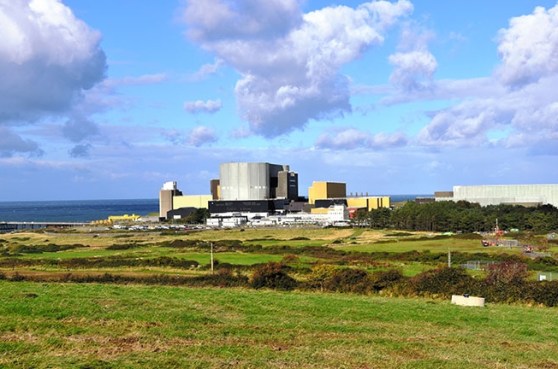
The cost of Hitachi’s project to build the two reactors in Anglesey, Wales, which began in 2012, has ballooned from the initial estimate of ¥2 trillion to ¥3 trillion. Another project pursued by Mitsubishi Heavy Industries Ltd. to build four reactors in Turkey has also been hampered by the swelling cost — which reportedly shot up from an initially estimated ¥2.1 trillion to ¥5 trillion. Toshiba Corp. has pulled out from the overseas nuclear power business after the huge losses incurred by its subsidiary Westinghouse Electric Co. in its nuclear power plant projects in the United States.
Even with a spike in plant construction costs, the nuclear power business would make economic sense if the expected earnings surpass the investments. But Hitachi reportedly decided to halt the U.K. project after it became clear that even with public support from the British government it could not possibly realize profits………
Behind the government’s drive to promote the sale of nuclear power plants overseas has been the domestic market’s bleak business prospects. While the government and the power industry have pushed for restarting the nation’s nuclear power plants idled in the wake of the Fukushima disaster, once they have cleared the tightened plant safety standards, only nine reactors at five plants have been put back online. The additional costs of safety investments required under the new Nuclear Regulation Authority standards to make the plants more resilient to natural disasters such as earthquakes and tsunami — estimated to range from ¥100 billion to ¥200 billion for each reactor — have prompted power companies to decide to decommission 23 aging reactors so far (including the six at Tepco’s Fukushima No. 1 plant).
As popular opposition in Japan remains strong against reactivating the idled plants, there is no prospect that the construction of new plants will be approved in the foreseeable future. The drive to promote the export of nuclear power plants may have been intended to make up for the loss of demand in the domestic market. But earlier plans for Japanese makers to build plants in Lithuania and Vietnam were canceled, while a civil nuclear cooperation pact signed with India in 2016 — which was aimed at paving the way for Japanese nuclear plant exports to the country — has not resulted in any deal. Along with Hitachi’s decision to halt the U.K. project, Mitsubishi Heavy Industries is reportedly set to abandon its plan in Turkey.
Even without construction of new plants, there will be demand for maintaining Japan’s existing nuclear power plants, and for decommissioning its aging plants. What to do with the spent nuclear fuel and the high-level radioactive wastes from the plants will also be among the challenges that confront Japan’s nuclear power business. There will be plenty of work for the industry, and it will be crucial to develop and maintain the technology and manpower to deal with the tasks. https://www.japantimes.co.jp/opinion/2019/01/20/editorials/plans-sell-nuclear-plants-overseas-derailed/#.XETUVtIzbGg
Time to retire Japan’s aging nuclear reactor at Genkai
Decision looms on aging nuclear reactor at Genkai https://www3.nhk.or.jp/nhkworld/en/news/20190117_34/ The operator of a nuclear power plant in western Japan says it plans to decide early this year whether to scrap one of the plant’s reactors, or extend its life.
On Thursday, Kyushu Electric Power Company President Kazuhiro Ikebe revealed the plan during a meeting with the governor of Saga Prefecture that hosts the Genkai plant.
Ikebe said his firm is looking into technical aspects of the plan, including whether the aging reactor could meet the stricter regulations introduced after the March 2011 nuclear accident.
The No.2 reactor at Genkai will turn 40 years old in March 2021. It has been offline since January 2011.
Post-disaster guidelines limit the operation of reactors to 40 years in principle, but allow extensions of up to 20 years with approval of the nuclear regulation authority.
Governor Yoshinori Yamaguchi told Ikebe that he hopes society will reduce its dependence on nuclear energy and eventually be nuclear-free.
Yamaguchi said the utility must understand that the decision it takes will come under public scrutiny.
Kyushu Electric put Genkai’s No.3 and No.4 reactors back online last year, but decided to decommission the No.1 reactor.
If the utility wants to extend the operation of the No.2 reactor, it must file an application with the government by March next year and take additional safety measures.
Hiroaki Nakanishi, chairman of the Japan Business Federation gave a gloomy view of nuclear power’s future
Hitachi chief’s remarks on nuclear industry spark debate, Japan Times, BY PHILIP BRASOR , 20 Jan 19, On Jan. 1, Hiroaki Nakanishi, chairman of the Japan Business Federation (Keidanren), held press interviews on the outlook of the business community and, at one point, the discussion turned to nuclear energy.
Nakanishi is also the chairman of Hitachi Ltd., a major supplier of nuclear technology, and he said that the commercial possibilities for nuclear energy in Japan, for both “clients,” meaning power companies, and “vendors,” meaning plant manufacturers such as Hitachi, were increasingly limited. If clients can’t make a profit, then neither can vendors, and that will continue to be the case as long as the public is opposed to nuclear energy. The industry can’t force nuclear power on the citizens of a democracy.
Major media were presumably represented at the interviews, but only one outlet, All-Nippon News Network (ANN), reported Nakanishi’s nuclear-related comments. Jan. 1 was a newspaper holiday, which means that no newspapers were published on Jan. 2, but there was still no other mention of his remarks on Jan. 3. On Jan. 5, journalist Hajime Takano commented on this lack of interest to former Prime Minister Yukio Hatoyama on the latter’s web channel for his East Asian Community Institute. The head of Hitachi, a key company in nuclear technology, had said that the business of nuclear energy is impossible without public support. Since nuclear energy is national policy, the ramifications are huge, Takano said, and yet no other major media had covered the remarks or ANN’s report. Were they afraid of upsetting the government?
As Takano pointed out, the Tokyo Shimbun, which as a regional newspaper doesn’t qualify as “major media” and tends to question the government’s nuclear policy, did mention Nakanishi’s remarks on its front page on Jan. 5, suggesting that the Hitachi chairman was no longer aligned with the administration on nuclear energy. Almost eight years after the disaster at the Fukushima No. 1 nuclear power plant, no nuclear plants in eastern Japan have resumed operation and, without an economic rationale for nuclear power, the policy is pointless.
But the Tokyo Shimbun also reported that Nakanishi said Japan does not have the right environment for renewable energy. This qualification seemed to imply that nuclear power was still preferable, but only if the public could be persuaded to accept it. So while part of Nakanishi’s remarks might give the impression that Japan’s nuclear power industry is throwing in the towel, they need to be contextualized within the larger picture of Hitachi’s business.
……… Ever since Japanese nuclear plant expansion ground to a halt after the Fukushima disaster, the government has promoted overseas nuclear development as a growth strategy, with Prime Minister Shinzo Abe as the lead international salesman. However, proposed projects in Vietnam, Taiwan and other places have stalled one after another. The collapse of the British project, which was formally announced Thursday, may be the final nail in the coffin.
In that light, Nakanishi’s new year remarks sound fatalistic, but pundits hear something different. Nikkan Gendai interviewed former trade ministry official Shigeaki Koga, who pointed out that Japan’s nuclear energy players are dependent on the government. Without support, there was no way private power companies or vendors could have made money on nuclear energy. They essentially stuck with it because it was national policy. Nakanishi’s remarks, Koga said, were really veiled threats directed at the government: If you don’t help us financially and legally, then we will have no choice but to get out of the nuclear business. If you want us to continue, he added, it’s your job to convince the public that nuclear energy is worth it………. https://www.japantimes.co.jp/news/2019/01/19/national/media-national/hitachi-chiefs-remarks-nuclear-industry-spark-debate/#.XETXadIzbGg
Hitachi boss just like proverbial general fighting the last war
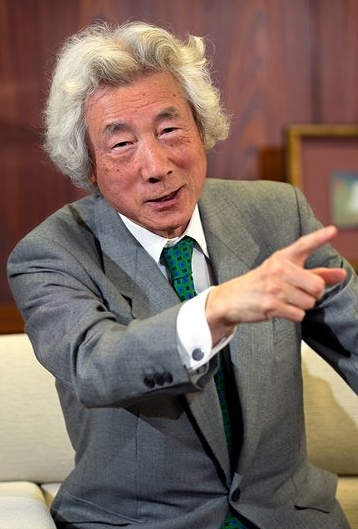
Koizumi says Japan must say ‘no’ to nuclear energy
Resona bans lending to those developing, making or possessing nuclear weapons

Nagasaki: Life after Nuclear War – the past and the future
 Ground Zero Nagasaki: Living the nuclear past – and future, Asia Times, By SUSAN SOUTHARD JANUARY 18, 2019 “………. Much of Nagasaki and the world have, of course, moved on from that terrible morning when a 5-ton plutonium bomb plunged at a thousand kilometers an hour toward the city of 240,000 people. Forty-three seconds later, it detonated half a kilometer above Nagasaki’s Urakami Valley. A super-brilliant blue-white flash lit the sky, followed by a thunderous explosion equal to the power of 21,000 tons of TNT. The entire city convulsed
Based on my book Nagasaki: Life after Nuclear War, I often give talks in the US about that unforgettable (or now often-too-forgettable) day when, for only the second time in history, human beings deemed it right to assault their own species with apocalyptic power. At these book talks, I’ve learned to be prepared for someone in the audience to say that the Japanese deserved what they got. It’s still hard to hear.
At its “burst point,” the Nagasaki blast reached temperatures higher than at the center of the sun, and the velocity of its shock wave exceeded the speed of sound. Within three seconds, the ground below had reached an estimated 3,000 to 4,000 degrees Celsius. Directly beneath the bomb, infrared heat rays instantly carbonized human and animal flesh and vaporized internal organs. Did the men, women, and children of Nagasaki really deserve that?
As the mushroom cloud rapidly ascended 3km over the city and eclipsed the sun, the bomb’s vertical blast pressure crushed much of the Urakami Valley. Horizontal blast winds tore through the region at two and a half times the speed of a Category 5 hurricane, pulverizing buildings, trees, animals, and thousands of people.
The blazing heat twisted iron, disintegrated vegetation, ignited clothing, and melted human skin. Fires broke out across the city, burning thousands of civilians alive.
And though no one knew it yet, larger doses of radiation than any human had ever received penetrated deeply into the bodies of people and animals.
…………. the United States bombed and incinerated all or parts of 66 Japanese cities, killing, maiming or irradiating more than 668,000 civilians. In Nagasaki alone, by the end of 1945 when a first count was possible, 74,000 men, women and children were dead. Of those, only 150 were military personnel. Seventy-five thousand more civilians were injured or irradiated.
Today, this kind of indiscriminate killing and harm to civilians would be called “terrorism.”
Despite the history most Americans have learned – that the atomic bombings of Hiroshima and Nagasaki were military necessities that ended World War II and saved a million American lives by obviating the need for an invasion of Japan’s home islands – there is no historical evidence that the Nagasaki bombing had any impact on Japan’s decision to surrender.
What we aren’t taught are the political and military complexities of the last few months of the war or how, in the postwar years, the US government crafted this end-of-war narrative to silence public opposition to the atomic bombings and build support for America’s fast-expanding nuclear-weapons program.
What many don’t realize is that this misleading version of history allows us to turn away from what happened in Hiroshima and Nagasaki and continue to support the development and proliferation of nuclear weapons without ever having to think about what those weapons do.
Still, so many decades later, in a world in which the Trump administration is preparing to withdraw from a key Cold War nuclear agreement with Russia and the US nuclear arsenal is being modernized to the tune of up to $1.6 trillion, it’s worth recalling the other side of the story, the kind of suffering the Hiroshima and Nagasaki bombings caused in August 1945 and long after.
Within weeks, people in both cities began experiencing mysterious symptoms: vomiting, fever, dizziness, bleeding gums, and hair loss from what doctors would later understand as radiation-related sickness. Purple spots appeared all over their bodies. Many died in excruciating pain within a week of the first appearance of such symptoms. Fear gripped Nagasaki. From one day to the next, no one knew when his or her time might come.
In those first nine months, pregnant women suffered spontaneous abortions, stillbirths, or the deaths of their newborn infants. Many of the babies who survived would later develop physical and mental disabilities.
Five years after the bombings, thousands more began dying from leukemia and other illnesses caused by high-dose radiation exposure, initiating cycles of higher than normal cancer rates that would last for decades. The bombs had, from the survivors’ perspective, burned their bodies from the inside out. Parents exposed to radiation feared possible genetic defects in their children and hovered over them year after year, terrified that what looked like a simple cold or stomach ache would lead to severe illness or death.
Even today, radiation scientists are still studying second- and third-generation hibakusha (atomic-bomb-affected people) for genetic effects passed down from their parents and grandparents, reminding us how much we still don’t understand about the insidious nature of radiation exposure to the human body…….. http://www.atimes.com/ground-zero-nagasaki-living-the-nuclear-past-and-future/
We must not forget the Hibakusha
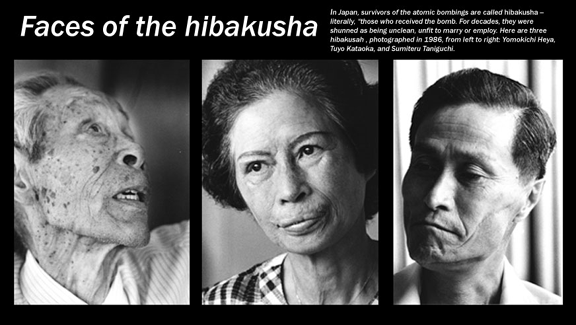
Ground Zero Nagasaki: Living the nuclear past – and future, Asia Times, By SUSAN SOUTHARD JANUARY 18, 2019 “…………….Hibakusha stories
It’s essential for us to remember such grim details, not just for the sake of history, but for our future, because nuclear weapons far more powerful and devastating than the Nagasaki bomb are now commonplace.
In a small area of Nagasaki that includes Hypocenter Park, the Nagasaki Atomic Bomb Museum, and Peace Park, dedicated teams of Japanese men and women still work tirelessly to counter the world’s inclination to forget what happened. For the past 35 years, one organization, the Nagasaki Foundation for the Promotion of Peace, has assembled cadres of hibakusha speakers – typically about 40 at any time – willing to tell their stories. They are now aging women and men with unique memories of the day of that bombing and the weeks, months and years that followed.
Sixteen-year-old Taniguchi Sumiteru was delivering mail on his bicycle about a kilometer and a half from the hypocenter when, a split-second after the bomb detonated, its tremendous force and searing heat blew him off his bicycle and slammed him face-down on to the road. His entire back was burned off. By all rights, he should never have survived. Three months later, he finally received medical treatment. Still in constant pain 10 years after the bombing, he became one of Nagasaki’s earliest anti-nuclear activists.
Wada Koichi, an 18-year-old streetcar driver at the time of the bombing, decided to speak out when he held his first grandchild and flashed back to the charred corpse of a baby he’d stepped over as he searched for his missing colleagues.
Do-oh Mineko, then 15, suffered critical injuries to her head and lingered near death for months. Though those injuries eventually healed, radiation exposure had caused all her hair to fall out. For nearly a decade, she hid in her house until her hair finally grew back. As an adult, she kept her identity as a hibakusha secret until, in her late 60s, she found new meaning for her life by telling her story to schoolchildren.
Yoshida Katsuji, only 13, was looking up in the direction of the bomb at the moment it exploded. His entire face was scorched. Years later, as friends and colleagues told their stories publicly, he remained silent, afraid of looks of disgust from audiences due to his disfigurement. He finally began speaking out in his late 60s after deciding that being shy was not a good reason to keep silent when it came to the terrorizing impact of nuclear weapons.
These four and many others dared to cross boundaries in Japanese culture to tell their personal stories of suffering and help others grasp what nuclear war would mean for the world. Unfortunately, most hibakusha – at least those who were old enough to have vivid memories of the bombing and its aftermath – have died or are reaching the end of their lives. They are the only people capable of telling us first-hand about the experience of nuclear war, and each year their numbers diminish. ………….. http://www.atimes.com/ground-zero-nagasaki-living-the-nuclear-past-and-future/
High radiation levels in Fukushima area, but the Japanese government is pushing people back there
Fukushima Residents Return Despite Radiation, Eight years after the nuclear meltdown, wary citizens are moving back to contaminated homesteads—some not by choice, Scientific American, By Jane Braxton Little January 16, 2019
 When the Fukushima Daiichi Nuclear Power Plant began spewing radioactive particles after it was clobbered by a tsunami in March 2011Kaori Sakuma fled. She bundled her infant and toddler into a car and left her husband and family in Koriyama, 44 miles west of the ruptured facility. “The truth is, I ran away,” she says. Confronting gas shortages and snarled roads, she transported her children 560 miles away to Hokkaido, about as far as she could get.
Radiation from the fuming plant spread over tile-roofed towns and rice paddies across an area the size of Connecticut. The meltdown 150 miles north of Tokyo drove more than 200,000 people out of the region. Most believed they were fleeing for their lives. Now, almost eight years after the accident, the government has lifted most evacuation orders. Nearly 122,000 people have been allowed to return to communities where weeds have overtaken parking lots. Most are elderly, relieved to be resuming their lives. Prime Minister Shinzo Abe is determined to end all evacuations by 2020, when Japan will host the Olympic Summer Games. The events will include baseball and softball competitions in Fukushima City, a mere 55 miles from the ruined reactors.
Around 35,000 other citizens still wait to return, but they and many others throughout northeastern Japan worry all of this is too soon. Radiation, which is generally linked to cancer, in some places continues to measure at least 5 millisieverts (mSv) a year beyond natural background radiation, five times the added level Japan had recommended for the general public prior to the incident. In certain spots radioactivity is as high as 20 mSv, the maximum exposure recommended by international safety experts for nuclear power workers.
In its haste to address the emergency, two months after the accident the Japanese government raised the allowable exposure from 1 mSv annually, an international benchmark, to 20 mSv. Evacuees now fear Abe’s determination to put the Daiichi accident behind the nation is jeopardizing public health, especially among children, who are more susceptible. Lifting most evacuations has also ended subsidies for evacuees, forcing many to return despite lingering questions.
As more people inside and outside the country absorb the radiation data, Japanese officials are confronting a collapse of public confidence. Before the accident residents in Japan (and the U.S.) were living with background radiation that averaged 3.1 mSv a year,most of it emanating naturally from the ground and space. In Japan and the U.S. many residents experience an additional 3.1 mSv annually, due mostly to medical testing. But the anxiety of Fukushima residents facing even higher levels is palpable. If the government is going to fully restore lives and livelihoods, it needs to regain their trust, says nuclear engineer Tatsujiro Suzuki, a professor at Nagasaki University and former vice chairman of the Japan Atomic Energy Commission. That, he says, should include respecting international safety standards for radiation and lowering the allowable level at least to 5 mSv, although he acknowledges “even 5 mSv is too high for children.”
……….Concern about children is one of the most controversial issues. When officials raised the allowable level of radiation to 20 mSv, including in schools, it was under the guise of giving people a measure of normalcy. But the May 2011decision became a flash point for opponents of the government’s handling of the accident. They were furious children would be subjected to the maximum radiation allowed for nuclear workers, spending day after day in buildings that increased their cancer risk to one in 200 people.
Sakuma was one of those who returned to Koriyama, from her outpost in Hokkaido. She did not want her young children to touch contaminated soil or water along their walk to school, so she carried them both on her small back. “We all want our kids to play in the dirt and pick flowers but I was afraid. We all were,” says Sakuma, now 46. ……https://www.scientificamerican.com/article/fukushima-residents-return-despite-radiation/
Japanese people losing trust in government, as the Fukushima nuclear catastrophe still poses health risks
 Fukushima Residents Return Despite Radiation Eight years after the nuclear meltdown, wary citizens are moving back to contaminated homesteads—some not by choice, SCIENTIFIC AMERICAN, BY JANE BRAXTON LITTLE JANUARY 16, 2019
“………. LACK OF PUBLIC TRUST
In the year after the accident Koriyama was one of 12 communities where the ongoing radiation rate measured between 3 and 5 mSv above background, but the town had not been evacuated. Today’s levels have stabilized at 1.5 mSv, but doubts remain. Skeptical of the government’s readings, Shigeru Otake, 49, takes his own. A slim man who wears a Dollar Store rope belt to give him “strength like a samurai,” he says he has measured radiation spikes at 15 mSv in Koriyama, where his family has lived for generations. Sakuma walks her sons, now eight and 10 years old, to school past a government monitoring post that she claims reads six times lower than her own dosimeter does.
Misgivings about government assurances of safety drove Hiroshi Ueki, 48, to move his family to Nagano Prefecture, where he is now growing “the best grapes in the world.” His parents stayed behind in Fukushima Prefecture. Ueki says he will never move back. “The prime minister says the accident is over but I won’t ever feel safe until the Daiichi plant itself is finally shut down. That will take 100 years.”
In spite of these concerns, Japan has continued to showcase repatriation as a barometer of progress toward recovery. By April 2017, the government had lifted all evacuations except for the most contaminated places closest to Daiichi. That decision also ended rent-free housing provided to people who were forced to leave as well as to some 26,600 people like Ueki who vacated voluntarily. Left without the $10,000 monthly subsidy provided by Tokyo Electric Company, some people have been forced to return home despite their safety concerns. They have no other economic options, says Hajime Matsukubo, general manager of the Citizens’ Nuclear Information Center. Some 16,000 people who refuse to return have been financially abandoned, according to the center.
Scientists generally agree on a few basics: The risks of getting leukemia or other cancers are higher for children than adults, and the risks for everyone increase significantly with exposure above 100 mSv annually. Various national agencies have set 20 mSv per year as a maximum for occupational exposure. Public exposure should be no more than 1 mSv per year above background levels, according to the International Commission for Radiological Protection. That raises questions about Japan’s 2011 emergency declaration of 20 mSv per year as the allowable exposure. …….
The public perception is that the Daiichi nuclear accident continues to pose health risks and, significantly, nuclear power is not safe. More than 80 percent of the Japanese public wants to phase it out, according to an October 2018 study by Suzuki, the former Japan Atomic Energy commissioner. He calls the erosion of public trust “the most unfortunate impact of the accident.”
Sakuma, the Koriyama mother, is using the Daiichi accident as a lesson in radical civic involvement. She intends to keep her sons in Koriyama despite radiation concerns. “I want them to grow up here so they can learn what the government does. I want them to tell other people about how it is to live with radiation,” she says. “This accident is not over.” https://www.scientificamerican.com/article/fukushima-residents-return-despite-radiation/
1 This Month
Chernobyl: The Lost Tapes – A good documentary on Chernobyl on SBS available On Demand for the next 3 weeks– https://www.sbs.com.au/ondemand/tv-program/chernobyl-the-lost-tapes/2352741955560

of the week–London Campaign for Nuclear Disarmament

Tell the Ukrainian Government to Drop Prosecution of Peace Activist Yurii Sheliazhenko
To see nuclear-related stories in greater depth and intensity – go to https://nuclearinformation.wordpress.com
-
Archives
- April 2026 (152)
- March 2026 (251)
- February 2026 (268)
- January 2026 (308)
- December 2025 (358)
- November 2025 (359)
- October 2025 (376)
- September 2025 (257)
- August 2025 (319)
- July 2025 (230)
- June 2025 (348)
- May 2025 (261)
-
Categories
- 1
- 1 NUCLEAR ISSUES
- business and costs
- climate change
- culture and arts
- ENERGY
- environment
- health
- history
- indigenous issues
- Legal
- marketing of nuclear
- media
- opposition to nuclear
- PERSONAL STORIES
- politics
- politics international
- Religion and ethics
- safety
- secrets,lies and civil liberties
- spinbuster
- technology
- Uranium
- wastes
- weapons and war
- Women
- 2 WORLD
- ACTION
- AFRICA
- Atrocities
- AUSTRALIA
- Christina's notes
- Christina's themes
- culture and arts
- Events
- Fuk 2022
- Fuk 2023
- Fukushima 2017
- Fukushima 2018
- fukushima 2019
- Fukushima 2020
- Fukushima 2021
- general
- global warming
- Humour (God we need it)
- Nuclear
- RARE EARTHS
- Reference
- resources – print
- Resources -audiovicual
- Weekly Newsletter
- World
- World Nuclear
- YouTube
-
RSS
Entries RSS
Comments RSS
 nuclear-news