Fukushima wild boar leather baby shoes?

‘Ionising radiation’ not so bad’ – subtle cover-up of the dangers, by Japan’s Centre for Environmental Creation
Teaching about radiation after Fukushima, Bulletin of the Atomic Scientists, By Maxime Polleri, February 26, 
 2019 ……..In the aftermath of the Fukushima meltdowns, which triggered a released of radioactive pollutants, the Japanese state initially decided to increase the mandatory evacuation trigger from 1 millisievert of radiation exposure per year to 20 millisieverts per year. In other words, the public was forced to accept a new threshold of safety. While this policy caused much scientific and public controversy, 20 millisieverts per year remains the benchmark for what is considered safe in Fukushima. Places like the Centre for Environmental Creation downplay the controversy of a raised threshold of exposure.
Situated in the town of Miharu and opened in July 2016, the center was established by the prefecture of Fukushima, with the financial support of the Japanese government, to conduct research and provide education on radioactive contamination. The center is one of several government-sponsored revitalization projects aimed at rebuilding the trust of people living in Fukushima. Mostly visited by young families, it represents a new approach to risk communication. As a technical advisor explained to me, this approach aims to “deepen the understanding of children about radiation” by allowing visitors to experience information firsthand through interactive games, fun activities, and cute presentations.
Our Friend the Atom (Tomorrow Land) – Walt Disney Treasures
Past efforts to present nuclear science in appealing ways have often blended education with propaganda. The 1957 Disney TV episode Our Friend the Atomis a perfect example of this. What are the dangers of resorting to such forms of explanations in the aftermath of a nuclear disaster? In 2015 and 2017, I spent a total of 14 months in Japan examining the public’s interactive experience at state-sponsored centers and public activities that explain radiation. I found that while the information on radiation is easy to understand, many aspects of its hazards are carefully concealed. In particular, the government’s educational approach shifts the post-Fukushima Japanese public’s attention away from manmade danger and toward a vision of naturalness, technological amusement, and scientific amazement. In doing so, this approach downplays the risk inherent to residual radioactivity in Fukushima.
The naturalness of radiation. One way to neutralize the perceived harmfulness of radiation is to make the phenomenon appear as natural as possible, by emphasizing the radioactivity coming from natural sources. At the Centre for Environmental Creation, one of the most popular attractions is an enormous spherical theater, where visitors are bombarded with sounds and images in a 360-degree multisensory experience that describes radiation as a natural part of daily life. “It can be found everywhere! From the sun’s ray to the mineral in the earth,” claims the theater’s narrator. “Without radiation, no life would exist on Earth!” After these explanations, an enormous Boeing passes above theatergoers’ heads in the cinematic sky, and the amount of radiation exposure received during an intercontinental flight is said to be higher than the level of radiation found in Fukushima. Their necks strained upward, visitors mumble words of apparent relief.
What the theater fails to explain, however, is that there is nothing natural about the radioactive isotopes released during the Fukushima nuclear disaster, and that background radiation has little to do with the hazards of breathing or swallowing fission products—which are not rays, but dust-like particles. For instance, strontium 90, if inhaled or ingested, mimics calcium to enter an individual’s bone marrow and cause lifelong radiation exposure. This exposure can cause mutations in living cells—a permanent alteration that can lead to cancers, genetic problems, or immune disorders.
It’s all fun and games. Information about radiation is often promoted through an enjoyable experience that conceals disturbing aspects of the phenomenon. In front of a giant interactive screen, for example, children can move their bodies to “block” radiation. By selecting the proper material, they can block either radioactive alpha particles, beta particles, or gamma rays. They pretend that their bodies are thick metal plates used to hamper harmful external exposure. By doing so, they collect points, and at the end of the game, the child with the highest score wins.
By transforming radiation protection into a game that focuses on blocking external radiation, children do not learn of the risk of internal contamination from radioactive particles such as cesium 137, which was released in significant amounts by the Fukushima disaster. If internalized, cesium 137 gets distributed throughout the body, irradiating soft tissues such as muscles and ovaries. And because the children’s game blocks radiation in “real time,” there is no mention of any delayed health effects of radiation exposure, such as potential harmful genetic changes.
At the Decontamination Info Plaza, the government promotes similar activities. Situated in the city of Fukushima, the Plaza was established in January 2012 as a joint program between the prefecture of Fukushima and Japan’s Ministry of the Environment. The Plaza’s purpose is to provide information about radiation in general, as well as explanations about monitoring methods, workshops on decontamination, and advice on contaminated sites. Basic information about radiation is presented to the public in a very accessible, visual, and interactive form…….
Radiation is our friend! A third way to downplay the perception of radiation danger is to link radiation with the wonders of science and technology. This was particularly apparent during an April 2016 open house organized by the National Institute of Radiological Sciences, Japan’s leading radiological institute, which is situated in Chiba, east of Tokyo. Titled “I Want to Know More! What Can You Do with Radiation?” the public fair was a popular event at which visitors could see the institute’s research facilities, the latest PET scan technology for medical imaging, and the cyclotrons used in nuclear medicine to produce radioisotopes. A special elevator led down to the Heavy Ion Medical Accelerator, situated in an impressive subterranean facility.
……..At this institute, manmade radiation was effectively linked to technologies that sustain life. For instance, the open house showed how the radiation-related devices at the institute produce particle therapies to treat cancer.
While there was nothing inaccurate about the center’s explanations of radiation as a medical treatment, the information presented was unrelated to the dangers faced during a nuclear disaster. If visitors wanted to hear more about such risks, they had to visit the station called “Impact of Fukushima.” The small station was, however, much less appealing than the other venues. It consisted of four small posters that focused on the decontamination process without explaining the adverse health effects of exposure to manmade radioisotopes.
… Radiation was emphasized as a useful agent that could penetrate the body and kill harmful tumors, as was demonstrated on medical dummies during the event. In the end, by heavily framing radiation information around a beacon of technological wonder, the public opening day glossed over the danger of radioactive contamination and selectively amplified the beneficial aspects of radiation.
Education vs. propaganda. In interviews that I conducted with officials and technical advisors employed at the aforementioned places, I was told that Fukushima is afflicted by “harmful rumors” surrounding the real extent of radiation harm and that this misunderstanding stems from public ignorance of radiological science. It is in this context that government-sanctioned approaches aim to provide “basic information” that will help citizens fear radiation in an “appropriate way,” thereby creating an environment in which people feel they can safely return to Fukushima. While this is a worthy endeavor, the government’s approach emphasizes specific understandings of radioactivity that overshadow the particular risks introduced by manmade radioactive pollutants resulting from a nuclear accident……….. https://thebulletin.org/2019/02/teaching-about-radiation-after-fukushima/
Fukushima’s mountains of radioactive soil – community opposition to recycling it

Fierce opposition to recycling radioactive soil from Fukushima http://www.asahi.com/ajw/articles/AJ201902260058.html, THE ASAHI SHIMBUN, February 26, 2019 How to dispose of mountains of soil contaminated by radiation from the 2011 Fukushima nuclear disaster poses a massive headache for the central government.
Officials had long insisted that contaminated surface soil removed after the triple meltdown at the Fukushima No. 1 nuclear power plant would eventually be stored outside of Fukushima Prefecture.
According to one estimate, the total volume of such soil will reach 14 million cubic meters by fiscal 2021. Local entities outside of Fukushima are understandably hesitant about serving as host to such vast quantities of possibly hazardous dirt.
Officials in Tokyo are now hoping to sway local governments to act as hosts by proposing reuse of the contaminated soil for public works projects under certain conditions.
One requirement would be that soil radiation levels below 8,000 becquerels per kilogram, the standard used by the government in classifying whether the waste material requires special treatment, could be used for various construction projects.
This poses a dilemma for Fukushima Prefecture, which fears local residents will be stuck with the problem despite repeated pledges by the government to move all contaminated soil from the prefecture.
Work got under way four years ago to move contaminated soil to intermediate storage facilities in Fukushima Prefecture. As of Feb. 19, the volume of soil transported to those facilities totaled 2.35 million cubic meters.
Initially, the government set a target date of March 2045 for moving all of the contaminated soil outside of Fukushima to a permanent storage facility.
However, discussions have yet to begin on where to build the structure.
Koji Yamada, an Environment Ministry official who has been involved in the issue, conceded it will not be easy to find a candidate municipality for the facility.
“We are now at the stage of trying to obtain understanding from a national perspective,” he said.
Ministry officials say that reusing contaminated soil to reduce the volume that eventually will have to be moved to the final storage facility could win favor from some municipalities.
A panel of experts set up by the Environment Ministry agreed in June 2016 that moving the entire volume of contaminated soil to a final storage facility is unrealistic.
The panel suggested that reducing the volume of contaminated soil by reusing portions deemed safe under radiation standards now in place seemed to offer the best option in finding a candidate site for the final storage facility.
It also proposed ways in which the soil could be reused; for example, in public works projects where the commissioning authority was clearly a responsible body.
The panel also proposed using the soil for the foundations of roads and embankments. It said sufficient quantities were available to ensure stable maintenance over many years.
When the panel met again last December, the members were briefed on the best-case scenario for the development of technology to reduce radiation levels in the soil. The most optimistic forecast was that as much as 99 percent of the debris could eventually be reused.
Under that scenario, only 30,000 cubic meters, or about 0.2 percent of the total volume, would have to be moved to the final storage facility to be buried there.
While Environment Ministry officials say that reusable treated soil would be considered for locations both within and outside Fukushima Prefecture, the only specific proposals made to date have been limited to three municipalities in Fukushima.
Local residents in two of those municipalities, one of which is Nihonmatsu, have mounted petition drives and other activities to block the reuse of contaminated soil in their areas. They contend that allowing such plans to go ahead would be at odds with government promises to store the soil outside of the prefecture.
The fact remains that the bulk of the contaminated soil is stored in Fukushima Prefecture. However, seven other prefectures also have a combined 330,000 cubic meters stored at various locations, such as parks and farmland.
Since August 2018, the Environment Ministry has been trying to determine whether using contaminated soil for land reclamation projects would prove detrimental to the health of local residents.
It has conducted field trials in Nasu, Tochigi Prefecture, and on the grounds of a facility operated by the Japan Atomic Energy Agency in Tokai, Ibaraki Prefecture.
But Nasu resident Masato Tashiro, who has been following the issue, was highly critical of the six-month period authorized to confirm the safety of such soil.
“That is way too short to make such a judgment, considering the fact the soil will be buried for such a long time,” Tashiro said. “Residents fear their health may be impaired over the long-term.”
(This article was written by Teru Okumura and Shintaro Egawa.)
Japanese Govt Olympic Games campaign to “showcase” Fukushima’s recovery is not really working

Reconstruction Olympics’ theme said not to have gathered momentum https://www.japantimes.co.jp/news/2019/02/27/national/reconstruction-olympics-theme-said-not-gathered-momentum/#.XHcN_IkzbGg KYODO AOMORI – Half of 42 municipalities in northeastern Japan hit by a massive earthquake in 2011 said the public is not fully aware of the government’s efforts to showcase the region’s recovery from the disaster through the 2020 Tokyo Olympics, a Kyodo News survey showed Wednesday.
The heads of 21 local governments in Fukushima, Iwate and Miyagi prefectures said in the survey that the “reconstruction Olympics” theme has yet to fully catch on among the public.
Asked whether the slogan has gained public attention, two mayors said “it has not” while 19 mayors said “it mostly has not.” Eighteen said “it has a little” and two said “it has.” The remaining municipality — the Fukushima city of Soma — did not answer.
“The phrase ‘reconstruction Olympics’ was thought up but no substantial progress has been made and the affected areas feel left behind,” said an official of the town of Minamisanriku in Miyagi Prefecture. “We have limited manpower and cannot spare personnel for Olympic events.”
“The sporting event will be held under the banner of the ‘reconstruction Olympics’ but venues are centered on Tokyo,” said an official of Otsuchi, Iwate Prefecture.
The Tokyo Organising Committee has promoted projects involving the disaster-stricken areas, such as holding baseball and softball games in Fukushima and starting the Japan leg of the Olympic torch relay in the prefecture, which was hit by a nuclear crisis in the wake of the earthquake and subsequent tsunami.
Before the relay, the flame will be displayed in the three northeastern prefectures. The Fukushima city of Iwaki expressed appreciation over the move to highlight the recovery of the affected areas in the Summer Olympics. “Fukushima will be hosting some games and the torch relay will start here. We have been given certain roles to play,” a city official said.
Asked what they expect from the Tokyo Games in a multiple-choice question, the biggest group, of 36 mayors, picked “promoting our progress toward recovery,” while 20 mayors, mainly from Fukushima, chose “overcoming reputational damage.”
“We want to use the Olympics as a chance to regain sales channels for our farm products,” said an official of the Fukushima town of Namie.
Hisashi Sanada, a professor of the anthropology of sport and Olympic history at the University of Tsukuba, said efforts by the central government and the organizing committee to promote reconstruction through the sporting event were “not enough.”
“The state needs to explain in detail to municipalities what kind of support it can offer, and the local governments should also rack their brains about how to link (the Olympics) to regional development,” Sanada said.
Northern Japan likely to experience a magnitude 7 or 8 earthquake in the next 30 years.
Japan earthquake risk: MAGNITUDE 8 earthquake predicted to strike RING OF FIRE near Japan
A MAGNITUDE 8 or 7 earthquake will likely hit Japan along the so-called Ring of Fire in the next 30 years, Japanese geologists have warned. By SEBASTIAN KETTLEY, Express UK , Wed, Feb 27, 2019 A Japanese Government panel said on Tuesday, February 26, the risk of a major earthquake in the near future is high. A magnitude 7 or 8 quake is expected to strike the Japan Trench just off the northeast coast of Japan. The oceanic trench forms part of the Pacific Ring of Fire – a hotspot of volcanic activity and earthquakes along the basin of the Pacific Ocean. Japan’s Earthquake Research Committee said there is at least a 50 percent chance of magnitude 7 to 7.5 earthquake in the Fukushima Prefecture……..
What is the Ring of Fire?The Ring of Fire is a major hotbed of seismic and volcanic activity stretching along the horseshoe-like basin of the Pacific Ocean.
Approximately 90 percent of the world’s earthquakes strike along the Ring of Fire.
And about 75 percent of the world’s active and dormant volcanoes are found in this part of the world.
The incredible activity in Ring of Fire is the result of tectonic plate movements deep beneath the waves of the Pacific Ocean.https://www.express.co.uk/news/science/1093212/Japan-earthquake-magnitude-8-earthquake-ring-of-fire-japan-trench
Subtle “education” in Japan, to downplay the risks of ionising radiation
Disney Educational Video Our Friend, the Atom (1957)
Teaching about radiation after Fukushima, Bulletin of the Atomic Scientists, By Maxime Polleri, February 26, 2019  “…………..Ultimately, I have doubts about these education programs – [ Centre for Environmental Creation, Japan] . They are selective in their nature, making only certain aspects of radiation tangible through their public activities, while rarely explaining in detail the dangers of adverse health effects linked with residual radioactivity. From my viewpoint, their purpose seems to be dual: While they aim to shed light on the phenomenon of radiation, they are also covertly looking to defuse the threat of widespread societal unrest, to reclaim political control and economic stability, and to pacify a fearful public—and in ways that are perhaps more beneficial to the state than to affected individuals.
In a community where dangerous residual radioactivity has become a public everyday concern, coming to grips with serious contamination requires more education than ever before. The important word here is education. Not state propaganda disguised as education. There is a fine line between these two, but it is a line that needs to be clearly drawn. While Japanese state approaches are innovative in their interactivity and freedom from jargon, they are less so in their content.
I strongly agree that the existence of state-sponsored educational programs is better than to simply ignore radioactive risk. But mobilizing specific explanations that downplay the real risk faced by citizens is not sustainable. Doing so will reproduce the ignorance, secrecy, and values that led to this disaster. Public well-being, democracy, and science cannot thrive in such context. An unbiased effort to educate people about the specific hazards of radioactive contamination, and correct misunderstandings about the risk of radiation exposure, does not have to be delivered in a dry and clinical manner. It can be as fun and engaging as anything the Japanese centers, exhibits, and public days are already doing.
There is one scene from my time in Japan that I cannot forget: the unadulterated smile of the happy child who had won the contest of blocking radiation. While the kid had learned much about radiation, he had learned little about the complexity of radiation hazards. I could not help thinking of Major Kong straddling the bomb in the film Dr. Strangelove, enjoying the nuclear ride without thinking about it too much, shouting “Yee Haw!” at the top of his lungs. https://thebulletin.org/2019/02/teaching-about-radiation-after-fukushima/
North Korea blasts Japan, claiming that Japan in “nuclear weaponizing”
In a commentary published Saturday in the Rodong Sinmun, the official newspaper of the North’s ruling party criticized what it claimed were “voices for the revision of the constitution and increased military spending and nuclear weaponization” from within the administration of Prime Minister Shinzo Abe.
The commentary said that under Abe, Japan “can go nuclear anytime after giving up ‘three non-nuclear principles.’ ” Consequently, it claimed, “peace in the Asia-Pacific region will be exposed to a great danger.”
Japan, the only country to have endured a nuclear attack, has long maintained that it adheres to its three nonnuclear principles of not possessing, not producing and not permitting the introduction of nuclear weapons. However, the government admitted in 2010 that previous administrations had lied to the public for decades about atomic weapons, after a government-appointed panel confirmed the existence of secret Cold War-era agreements allowing the U.S. to bring them into the country.
The Rodong Sinmun commentary said that if Japan ditches its three nonnuclear principles, there would be “unimaginable” and “catastrophic consequences.”
“All the countries that truly want global peace and security should keep close watch over Japan’s nuclear weaponization.”
Japan has ramped up military spending and the acquisition of sophisticated weapons in recent years, spending around 1 percent of its gross domestic product on the Self-Defense Forces — which, given the size of its economy, makes it one of the world’s biggest military spenders……. https://www.japantimes.co.jp/news/2019/02/25/national/politics-diplomacy/north-korea-alleges-nuclear-weaponization-japan-trump-kim-summit-draws-near/#.XHRA0YkzbGg
2020 Olympic Games – a promotion for the nuclear industry? But they’re not getting many volunteers

Disaster-hit Fukushima still short of 2020 Games volunteers, Japan Today Feb. 24 FUKUSHIMA Fukushima Prefecture is still well short of its target for recruiting volunteers to help it stage some events at the 2020 Tokyo Olympics and Paralympics — a setback to its efforts to showcase its recovery from the 2011 earthquake, tsunami and nuclear disaster.
With the deadline for recruitment approaching at the end of this month, the northeastern prefecture, which is to host several softball and baseball games, was only a third of the way to its target of 1,500 volunteers.
Of the 503 people who had applied as of early February, 70 percent were in their 40s or above, with much lower participation from those in their teens and 20s, according to the prefecture.
Prefectural officials said the low number of applicants may be because the schedules for most of the games have yet to be set, while also acknowledging that promotion efforts have barely paid off.
One of the main themes of the Tokyo games is to demonstrate Japan’s reconstruction from the 2011 disasters and Fukushima, one of the hardest-hit areas, wants to use the opportunity to show the progress it has made and convey a message of gratitude for support. It also hopes to promote inbound tourism.
The prefecture has increased events for recruiting volunteers at company offices and colleges, while seeking to reassure potential volunteers that they can always change their minds later and withdraw their applications……..
“Whenever the opportunity arises, I want to call out for more volunteers by stressing how attractive (the job) is,” said Takahiro Sato, head of the prefecture’s Olympic and Paralympic promotion office. https://japantoday.com/category/sports/disaster-hit-fukushima-still-short-of-2020-games-volunteers
Robot claw grasped bits of molten nuclear Fuel in Fukushima reactor
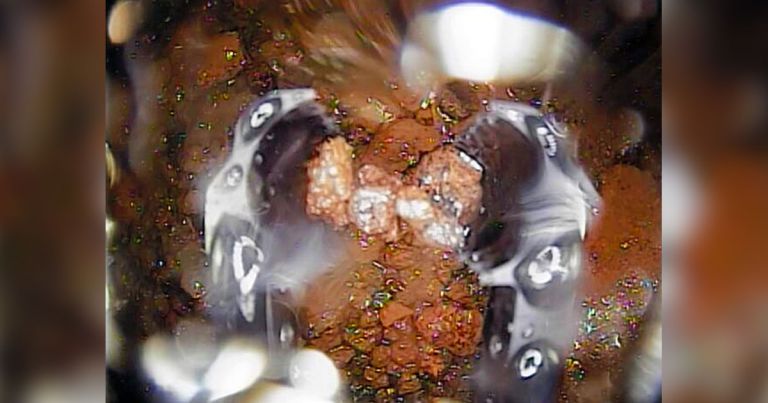
Claw Game Japan Sends Robot Into the Nuclear Hell of the Fukushima Reactor https://futurism.com/japanese-spacecraft-hayabusa2-bullet-asteroid It’s like a Roomba — for nuclear waste. Dan Robitzski, February 20th 2019
Nuclear Probe
The Tokyo Electric Power Company (TEPCO) just sent a robot into one of the reactors of the Fukushima nuclear power plant, which was destroyed by a tsunami back in 2011.
The robot made contact with the melted fuel, picking it up and putting it back down to determine whether it was solid enough to cart away during a future mission, according to Ars Technica.
The Claw
Fukushima won’t be fully decommissioned for another 30 to 40 years. But this robotic mission is the first step toward determining how other robots will go about cleaning it up.
In this case, the robot was able to pick up small chunks of the radioactive fuel at five of the six test sites, all of which were located inside one of the power plant’s three damaged reactors. TEPCO published a video of the process taken by the robot’s built-in camera, in which you can see a robotic claw position itself around and pick up small pieces of fuel.
Catch And Release
None of the radioactive fuel left the reactor along with the robot when the mission was over. But that wasn’t the plan. Rather, this mission marks the first time that a robot has been able to physically examine Fukushima’s fuel.
The team hopes to start retrieving some of the deadly fuel in 2021, now that they know it can be physically lifted. READ MORE: Japanese utility makes first contact with melted Fukushima fuel [Ars Technica]
For the 5th time, a court rules the Japanese govt liable for the Fukushima nuclear catastrophe
 Japan gov’t, Fukushima operator told to pay over nuclear disaster https://news.abs-cbn.com/overseas/02/20/19/japan-govt-fukushima-operator-told-to-pay-over-nuclear-disaster, Agence France-Presse, TOKYO- A Japanese court Wednesday awarded nearly $4 million in fresh damages to scores of residents forced to flee their homes after the 2011 Fukushima nuclear meltdown.
TEPCO sat by idly on reports of fires, glitches at nuclear plants

Tokyo Electric Power Co.’s Fukushima No. 2 nuclear power plant
Unit 2 of Genkai NPP will be decommissioned.

Japan’s Nuclear Authority investigated Tepco’s failure to report fires, glitches at nuclear plants
 TEPCO sat by idly on reports of fires, glitches at nuclear plants, By YUSUKE OGAWA/ Staff Writer, Asahi Shimbun 14th Feb 2019 , Tokyo Electric Power Co. ignored reports on fires and other problems from its nuclear power plants and didn’t even bother to share the information in-house or consider precautionary measures, the nuclear watchdog revealed.
The Nuclear Regulation Authority decided Feb. 13 it will investigate the failure by TEPCO’s headquarters to tackle the problems reported by its three facilities: the Kashiwazaki-Kariwa nuclear plant in Niigata Prefecture and the Fukushima No. 1 and No. 2 nuclear plants, both in Fukushima Prefecture.
A TEPCO official said that the company put off tackling the problems because the deadline for dealing with such matters “was not clearly stated.” TEPCO’s safety regulations stipulate that blazes, glitches in air-conditioning and other problems at nuclear plants must be dealt with by the main office of the operator.
ttp://www.asahi.com/ajw/articles/AJ201902140054.html
Long haul to clean up radioactive debris in Fukushima’s shattered nuclear reactors – remote probe in use
Call to preserve Japan’s historic “Fukuryu Maru” memorial of atomic bombing

Final mission: Keep anti-nuke message at site of Tsukiji market, http://www.asahi.com/ajw/articles/AJ201902130004.html, By NAOMI NISHIMURA/ Staff Writer, February 13, 2019 Busy construction workers and fast-walking passers-by pay little notice to a metal plate that symbolizes one of the darker periods in the postwar history of the now-closed Tsukiji fish market in Tokyo.
The continuing dismantling work and the future of the iconic former market has gained much of the public’s attention. The plate, measuring 42 centimeters tall and 52 cm wide, will remain on a fence surrounding the site at least until the project is complete.
The plate, marking the fallout of nuclear bomb tests carried out in the 1950s, carries a message that many people hope will remain in one form or another at the site.
“We have set up this plate out of the wish that there will be no suffering again from nuclear weapons,” the plate says in part.
A Tokyo metropolitan government official said “nothing has been decided on what objects will be installed” afterward at the Tsukiji site.
The plate is witness to the “A-bomb tuna” that arrived 65 years ago at the Tsukiji market in the capital’s Chuo Ward.
“Nearly 460 tons of contaminated fish were found from more than 850 fishing boats across Japan … and fish consumption dropped sharply,” another part of the plate’s inscription reads.
The radioactive “A-bomb” fish were actually exposed to radiation from hydrogen-bomb tests.
The text on the plate refers to the Daigo Fukuryu Maru (Lucky Dragon No. 5), a fishing vessel caught in the fallout of a U.S. H-bomb test near the Bikini Atoll in March 1954.
Some of the tuna and other fish caught by the Daigo Fukuryu Maru ended up at the Tsukiji market.
“There was a real panic” when the haul tested positive for radiation, said Takuji Adachi, 92, who was a metropolitan government official at the time in charge of hygiene on the market grounds.
Radiation was also found in other tuna hauls that arrived later from different parts of the country.
Workers sat up all night testing fish with radiation detectors borrowed from a university lab and elsewhere before their early-morning auctions, sources said.
Tuna lost half to two-thirds of their prices, and the values of other fish species also dropped. The radiation tests continued through the year-end, with 3,000 tuna going to waste.
The names of 856 Japanese fishing boats were identified as having been contaminated by radioactive fallout from a series of hydrogen-bomb tests conducted between March and May 1954, according to officials of the Daigo Fukuryu Maru Exhibition Hall.
The plate was installed at the Tsukiji fish market 45 years later.
PETITION FOR RELOCATING STONE MONUMENT
Matashichi Oishi, who was a crew member on the Fukuryu Maru involved in freezing the catch, wanted to set up a physical testimony to peace.
The now 85-year-old had asked the Tokyo metropolitan government to allow the installation at Tsukiji of a stone monument engraved with “Maguro Zuka” (tuna memorial).
He called for donations in units of 10 yen ($0.09) each time he gave a public speech. He ended up collecting 3 million yen, and the stone monument was completed.
However, opinion was divided at the time over whether the Tsukiji market should be relocated or redeveloped on the same site. Authorities said there was no space available for the stone monument, but they allowed the plate to be attached by the side of the main gate.
The stone monument currently stands in an open space on the grounds of the exhibition hall in Tokyo’s Koto Ward, where the hull of the Daigo Fukuryu Maru remains preserved.
The plate has since served as a memento for about two decades, but the Tsukiji market was relocated to the Toyosu district of Koto Ward in October last year.
With the future of the plate unknown, Oishi has collected 5,622 signatures over three years for a petition to have the stone monument relocated to a corner of the former Tsukiji market.
“Words engraved in stone will stay 50 years and 100 years down the road,” Oishi said last September during a meeting on the possible uses of the stone monument. “History could be repeated unless someone keeps talking about the horror of nuclear weapons.”
He said he hopes to hand the signatures to Tokyo Governor Yuriko Koike to coincide with the March 1 Bikini Day, the anniversary of the Fukuryu Maru’s nuclear exposure.
Oishi said setting a path for the stone monument’s relocation is his “final mission in life.”
“The Fukuryu Maru later symbolized calls for eliminating nuclear weapons,” he said. “Tsukiji must also have the role of being a witness to the nuclear exposure incident.”
1 This Month
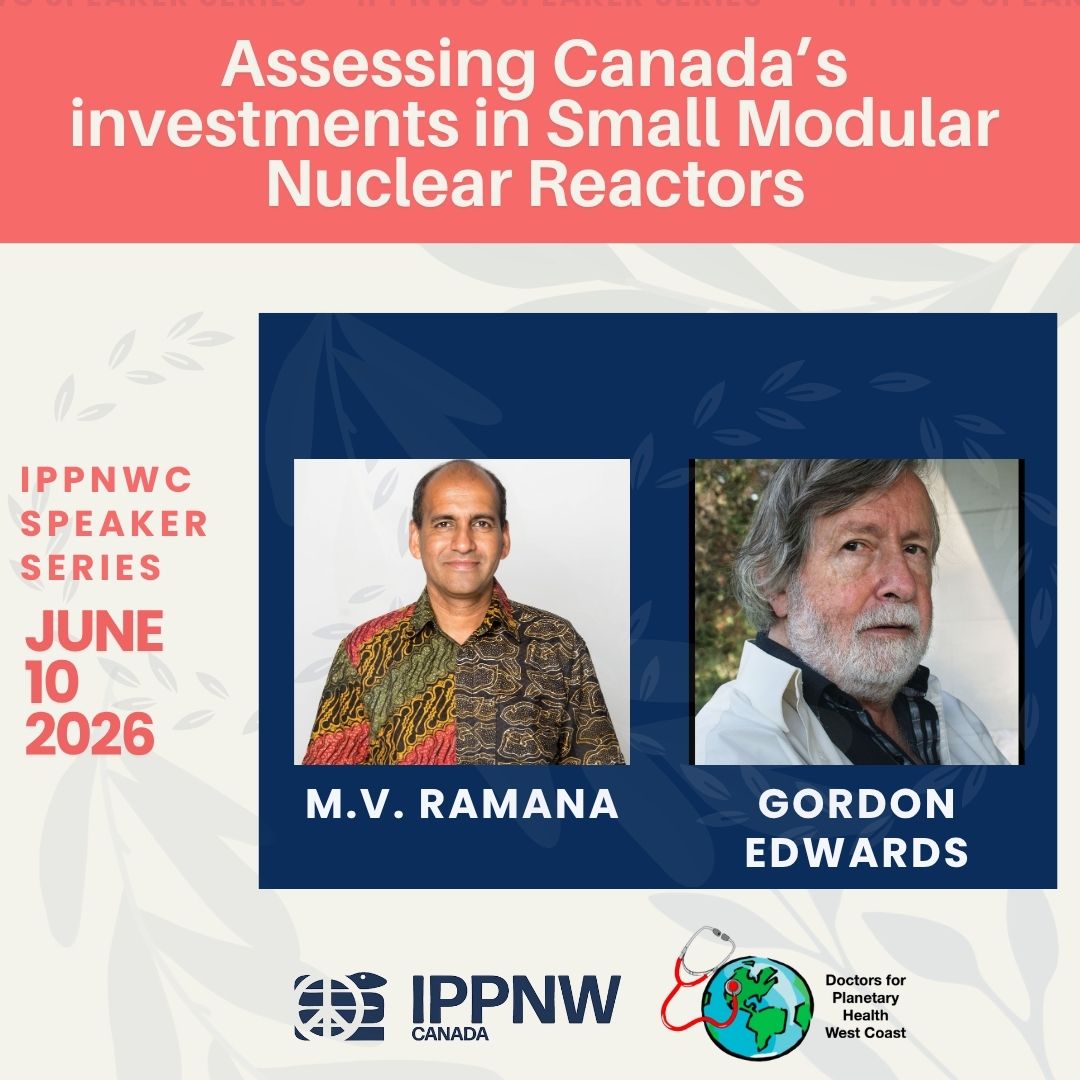
10 June – Assessing Canada’s Investments in Small Modular Nuclear Reactors – https://zoom.us/meeting/register/IiqHA5feRhaEBycOLNTJlA#/registration


Cuba Is Not a Failed State – It Is a Besieged State
PETITION: “Global Appeal to Endorse Palestinian Right of Return of Refugees”
To see nuclear-related stories in greater depth and intensity – go to https://nuclearinformation.wordpress.com
-
Archives
- June 2026 (79)
- May 2026 (306)
- April 2026 (356)
- March 2026 (251)
- February 2026 (268)
- January 2026 (308)
- December 2025 (358)
- November 2025 (359)
- October 2025 (376)
- September 2025 (257)
- August 2025 (319)
- July 2025 (230)
-
Categories
- 1
- 1 NUCLEAR ISSUES
- business and costs
- climate change
- culture and arts
- ENERGY
- environment
- health
- history
- indigenous issues
- Legal
- marketing of nuclear
- media
- opposition to nuclear
- PERSONAL STORIES
- politics
- politics international
- Religion and ethics
- safety
- secrets,lies and civil liberties
- spinbuster
- technology
- Uranium
- wastes
- weapons and war
- Women
- 2 WORLD
- ACTION
- AFRICA
- Atrocities
- AUSTRALIA
- Christina's notes
- Christina's themes
- culture and arts
- Events
- Fuk 2022
- Fuk 2023
- Fukushima 2017
- Fukushima 2018
- fukushima 2019
- Fukushima 2020
- Fukushima 2021
- general
- global warming
- Humour (God we need it)
- Nuclear
- RARE EARTHS
- Reference
- resources – print
- Resources -audiovicual
- Weekly Newsletter
- World
- World Nuclear
- YouTube
-
RSS
Entries RSS
Comments RSS
 nuclear-news