Japan Struggles to Secure Radioactive Nuclear Waste Dump Sites
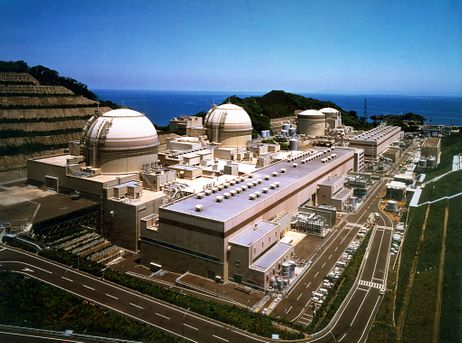
A small, aging town grapples with the financial lure of storing radioactive waste underground.
Japan’s worsening depopulation crisis is crippling the public finances of regional towns. Now one small town has made national headlines after expressing interest in storing radioactive nuclear waste underground in a last ditch effort to save itself from impending bankruptcy.
The small town of Suttsu in Hokkaido, the northernmost main island of Japan, has a population of just under 3,000 people. It’s the first local municipality to volunteer for the permanent storage site of highly radioactive nuclear waste and nuclear spent fuel. Suttsu Mayor Kataoka Haruo says the town has no more than 10 years left to find new sources of income after struggling with a slump in sales of seafood due to the global coronavirus pandemic.
Kataoka says there is an impending sense of crisis unless an urgent financial boost in the form of a government grant can be secured. He has called on local residents not to dismiss the idea of applying for the phase one “literature survey” without weighing the ways the grant could be spent — in contrast to the harsh reality of town funds running dry in 10 years’ time.
In Japan there are more than 2,500 containers of nuclear waste being stored in limbo without a permanent disposal site. Currently, the waste is stored temporarily in Aomori prefecture in northwest Japan at the Japan Nuclear Waste Storage Management Center. According to the Ministry of Economy, Trade, and Industry there are also approximately 19,000 tons of spent nuclear fuel stored at each nuclear power plant.
Nuclear waste projects immense heat and it needs to be cooled through exposure to air for between 30 to 50 years before it can be transferred and stored underground. However, it takes roughly 1,000 years to 100,000 years for radiation intensity to drop to safe levels.
The 2011 Fukushima nuclear disaster left long-lasting trauma further exasperating Japan’s already vexed relationship with nuclear energy as a resource deficient nation. The aftermath of the disaster and the slow road to recovery prompted many people to object to nuclear waste storage not only on geographic grounds but also out of strong emotional opposition.
Hokkaido has built a global reputation for its high quality dairy, agricultural products, and seafood. Nuclear waste storage, and the negative publicity that would follow, could jeopardize those industries.
With the proposal, local residents in Sutsu have been placed in a difficult situation, weighing up the health of their children and future generations against the town’s financial prospects and viable funding opportunities.
In August, Kataoka said he would not apply for phase one without the understanding of the general public. Last week, Kataoka held a local briefing session aiming to deepen local understanding and consent. But after discussing the damage to the town’s reputation and the possible conflict with a previous ordinance against accepting nuclear waste set by a radioactive waste research facility created in Hokkaido in 2000, Kataoka indicated the application for phase one would likely be delayed.
In 2000 the government enacted the Final Disposal Law, which outlined criteria for electing a permanent storage site. A three-stage investigation process sets out excavation to be deeper than 300 meters below ground and in doing so a survey of volcanoes, active fault lines, and underground rock must be performed in addition to installing an underground survey facility. It’s estimated that steps one through to three will take approximately 20 years in total.
In 2017 the government released a scientific map of Japan, pinpointing towns with suitable geographic conditions to host final disposal sites. If the application and survey are approved successfully, towns are eligible for grants up to 2 billion yen (around $19 million at current exchange rates) from the central government and another 7 billion yen if stage two goes ahead. In 2002 The Nuclear Waste Management of Japan (NUMO) launched an open call for local municipalities to consider applying for an initial investigation stage without success. Three years after the release of the map, NUMO has attempted to garner public support by hosting over 100 local discussion meetings all over Japan. Suttsu was the first town to express interest in phase one out of 900 local municipalities.
The final nuclear waste site is expected to make room underground for 40,000 barrels requiring six to 10 square kilometers — the equivalent of 214 Tokyo Dome Stadiums — to a tune of 3.9 trillion yen.
The government is currently formulating a “nuclear fuel cycle policy,” which aims to reduce the amount of nuclear waste generated by encouraging the recycling and reuse of spent fuel. But one major criticism of Japan’s nuclear power policy is the lack of a comprehensive strategy. The two year period for a “literature survey” has been touted as an opportunity for Japan to seriously consider the cleanup of nuclear power.
Offshore wind energy to replace more than half of the nation’s generation capacity by 2050
Japan’s offshore wind backers see clean heir to coal and nuclear, Japan Times, BY AYA TAKADA, BLOOMBERG, Sep 30, 2020
Offshore wind power in Japan will be able to replace more than half of the nation’s generation capacity forecast to retire by midcentury, according to an industry group promoting its developments.
The capacity of Japan’s offshore wind farms could total 90 gigawatts by 2050, equivalent to 60 percent of the fossil fuel and nuclear facilities expected to be closed by that time according to Shigehito Nakamura, a managing director of the Japan Wind Power Association.
Japan is seeking cleaner ways to feed its energy-hungry but resource-scarce economy, the world’s biggest after the U.S. and China. It’s reliance on fossil fuels faces resistance over climate change concerns, while its massive nuclear fleet is at risk of being abandoned due to widespread opposition to the technology following the 2011 Fukushima disaster.
The 90 gigawatts target for offshore wind is ambitious. The association expects that wind power, including onshore facilities, could account for one-third of the nation’s total power generation in 2050. Capacity in the U.K., the world’s top operator of the technology, is currently about 10.4 gigawatts.
Offshore wind, which the government is seeking to deploy in greater numbers in the coming years, could help replace facilities built during Japan’s economic boom from the 1960s to the 1980s. Those are now due for retirement at an average pace of 5 gigawatts a year over the next few decades, the association estimates.
Kimio Yamaka, a director at the Energy Strategy Institute in Tokyo, said offshore wind is a realistic option for new capacity as the government plans to reduce the share of coal power in the country’s generation to 26 percent by 2030, from 32 percent in the year to March 2019, while replacing or expanding nuclear plants is unlikely. ….
The Economy, Trade and Industry Ministry has started reviewing this target as it prepares to revise the plan next year. METI estimates that offshore wind projects can run at 95 percent utilization, a much higher level of reliability than onshore renewables.
The government plans to hold its first auction for fixed-foundation offshore wind projects in November. Winners will be announced around summer 2021 after the feasibility and economics of the proposed projects are assessed, according to Juntaro Shimizu, the director at the renewable energy division of METI……https://www.japantimes.co.jp/news/2020/09/30/business/corporate-business/offshore-wind-coal-nuclear-energy/
Energy authority clears TEPCO to restart Niigata’s Kashiwazaki-Kariwa nuclear plant
It is the largest nuclear generating station in the world by net electrical power rating. There are seven units, all lined up along the coast line. Numbering starts at Unit 1 with the south-most unit through Unit 4, then there is a large green space in between Unit 4 and 7, then it continues with Units 6 and 5, the newest of the reactors.
The plant is owned and operated by Tokyo Electric Power Company (TEPCO), same company which owns the Fukushima Daiichi nuclear plant where the nuclear disaster is still ongoing since March 2011.
The Kashiwazaki-Kariwa Nuclear Power Plant is a large, modern (housing the world’s first ABWR) nuclear power plant on a 4.2-square-kilometer (1,000-acre) site including land in the towns of Kashiwazaki and Kariwa in Niigata Prefecture, Japan on the coast of the Sea of Japan, from where it gets cooling water.
It was approximately 19 km (12 mi) from the epicenter of the second-strongest earthquake to occur at a nuclear plant, the Mw 6.6 July 2007 Chūetsu offshore earthquake.
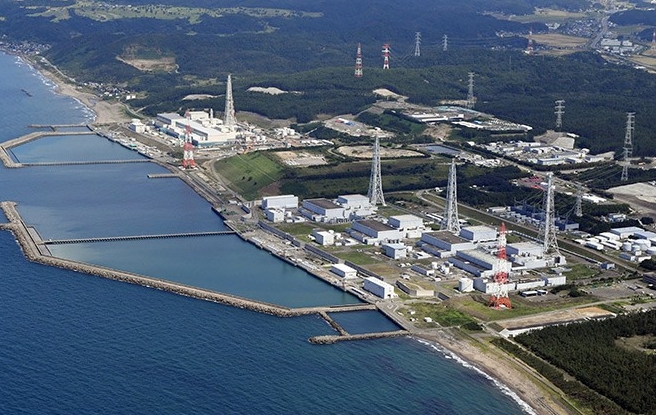
Tokyo Electric Power Co.’s Kashiwazaki-Kariwa nuclear complex in Niigata Prefecture
September 23, 2020
Tokyo Electric Power Co. cleared a major regulatory hurdle toward restarting a nuclear power plant in Niigata Prefecture, but the utility’s bid to resume its operations still hangs in the balance of a series of political approvals.
The government’s nuclear watchdog concluded Sept. 23 that the utility is fit to operate the plant, based on new legally binding safety rules TEPCO drafted and pledged to follow. If TEPCO is found to be in breach of those regulations, it could be ordered to halt the plant’s operations.
The Nuclear Regulation Authority’s green light now shifts the focus over to whether local governments will agree in the coming months to restart the Kashiwazaki-Kariwa plant.
TEPCO is keen to get the plant back up and running. It has been financially reeling from the closure of its nuclear plants in Fukushima Prefecture following the triple meltdown at the Fukushima No. 1 nuclear plant in 2011 triggered by the earthquake and tsunami disaster.
The company plans to bring the No. 6 and No. 7 reactors back online at the Kashiwazaki-Kariwa nuclear complex, which is among the world’s largest nuclear plants.
The two reactors each boast 1.35 gigawatts in output capacity. They are the newest of the seven reactors there, first put into service between 1996 and 1997.
TEPCO has not revealed specific plans yet on what to do with the older five reactors.
In 2017, the NRA cleared the No. 6 and No. 7 reactors under the tougher new reactor regulations established in 2013 in response to the Fukushima nuclear disaster.
It also closely scrutinized the operator’s ability to run the Niigata Prefecture plant safely, given its history as the entity responsible for the nation’s most serious nuclear accident.
After several rounds of meetings with top TEPCO managers, the NRA managed to hold the utility’s feet to the fire enough to make it pledge, in writing, to abide by a new seven-point safety code for the Kashiwazaki-Kariwa plant.
The creation of the new code, which is legally binding, is meant to hold the company accountable for safety measures at the facility.
“As the top executive, the president of TEPCO will take responsibility for the safety of nuclear power,” one of the points reads. “TEPCO will not put the facility’s economic performance above its safety,” reads another.
The company promised to abide by the points set out in writing during the NRA’s examination of its safety regulations.
TEPCO also vowed to set up a system where the president is directly briefed on risks to the nuclear complex, including the likelihood of earthquakes more powerful than what the plant is designed to withstand. It must also draft safeguard measures to deal with those kinds of earthquakes and confirm whether precautionary steps are in place.
The utility additionally pledged to promptly release public records on the decision-making process concerning crucial matters related to nuclear safety, and to preserve the documents until the facility is decommissioned.
TEPCO plans to complete its work to reinforce the safety of the No. 7 reactor in December. It has not set a definite deadline for similar work for the No. 6 reactor.
To restart the Kashiwazki-Kariwa plant, TEPCO needs to obtain consent from local governments, including the Niigata prefectural government.
The prefectural government is studying the plant’s safety through a panel of experts, which is reviewing whether evacuation plans are adequate and the health impact on residents from the Fukushima nuclear disaster.
Niigata Governor Hideyo Hanazumi said he will not decide on the restart until the panel completes its review.
The nuclear complex suffered damage, including from fire at an electric transformer, when an earthquake it deemed able to withstand hit in 2007.
Much at stake in picking a final nuclear waste disposal site
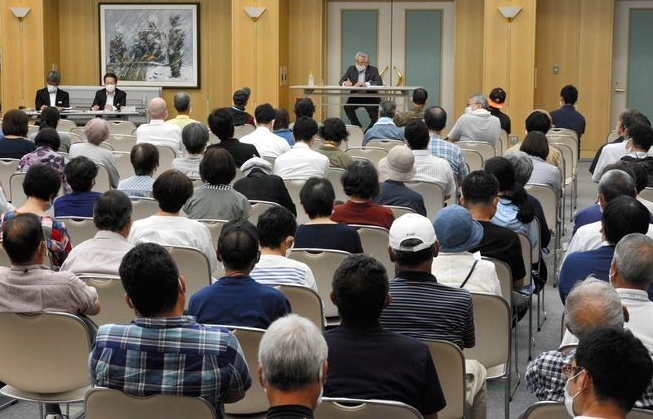
Local residents attend a meeting held Sept. 10 by the town government of Suttsu, Hokkaido, to explain plans to host a final disposal site for nuclear waste.
September 22, 2020
Two local communities in Hokkaido are considering pitching themselves as candidates for the site for final disposal of highly radioactive waste from nuclear power plants.
Last month, the mayor of Suttsu in the northernmost main island said the municipal government is thinking to apply for the first stage of the three-stage process of selecting the site for the nation’s final repository for nuclear waste.
During this period, past records about natural disasters and geological conditions for the candidate area are examined. Town authorities are holding meetings with local residents to explain its intentions.
In Kamoenai, a village also in Hokkaido, the local chamber of commerce and industry submitted a petition to the local assembly to consider an application for the process. The issue was discussed at an assembly committee. However, the assembly decided to postpone making a decision after further discussion.
Both communities are located close to the Tomari nuclear power plant operated by Hokkaido Electric Power Co. and struggling with common rural problems such as a dwindling population and industrial and economic stagnation.
The law decrees that when the first stage of the selection process starts, the municipality that is picked will receive up to 2 billion yen ($19.1 million) in state subsidies for two years.
But the Ministry of Economy, Trade and Industry and the Nuclear Waste Management Organization of Japan (NUMO), which are in charge of the selection process, have promised it will not move to the second stage if the prefectural governor or local mayor voices an objection.
Hokkaido Governor Naomichi Suzuki has already expressed his opposition.
A huge amount of spent nuclear fuel has been produced by nuclear plants in Japan, and it needs to be stored and disposed of somewhere in this country.
This policy challenge requires a solid consensus among a broad range of people, including residents of cities who have been beneficiaries of electricity generated at nuclear plants.
The two Hokkaido municipalities’ moves to consider applying for the first stage of the selection process should be taken as an opportunity for national debate on the issue.
The first step should be to establish a system for local communities to discuss the issue thoroughly from a broad perspective.
It is crucial to prevent bitter, acrimonious divisions in local communities between supporters and opponents.
The central government and other parties involved need to provide whatever information is needed from a fair and neutral position to help create an environment for healthy, in-depth debate.
There is also a crucial need to fix the problems with the current plan to build a final repository for radioactive waste.
Under the plan, which is based on the assumption that a nuclear fuel recycling system will eventually be established, the repository will be used to store waste to be left after spent nuclear fuel is reprocessed to recover and recycle plutonium and uranium.
But there is no prospect for the establishment of such a recycling system which would allow for disposing only of the waste from reprocessing and recycling.
Eventually, Japan, like most other countries with nuclear power plants, will be forced to map out plans for “direct disposal,” or disposing of spent fuel from nuclear reactors in underground repositories.
The central government has not changed its policy of maintaining nuclear power generation as a major power source. If nuclear reactors keep operating, they will continue producing spent fuel.
The government will find it difficult to win local support for the planned repository unless it makes clear what kind of and how much radioactive material will be stored at the site.
Many local governments are facing a fiscal crunch partly because of the impact of the COVID-19 pandemic.
Hokkaido Governor Suzuki has taken a dim view of the financial incentive offered to encourage local governments to apply for the first stage of the selection process, criticizing the proposed subsidies as “a wad of cash used as a powerful carrot.”
It takes tens of thousands of years for the radioactivity of spent nuclear fuel to decline to sufficiently safe levels.
Trying to stem local opposition by dangling temporary subsidies could create a serious problem for the future in the communities.
It is vital to ensure that the repository plan will secure a long-term policy commitment to the development of the local communities and ensure benefits for the entire areas.
Japan’s nuclear regulator approves restart of Kashiwazaki-Kariwa plant, but still hurdles to overcome

The Nuclear Regulation Authority’s green light now shifts the focus over to whether local governments will agree in the coming months to restart the
TEPCO is keen to get the plant back up and running. It has been financially reeling from the closure of its nuclear plants in Fukushima Prefecture following the triple meltdown at the Fukushima No. 1 nuclear plant in 2011 triggered by the earthquake and tsunami disaster.
The company plans to bring the No. 6 and No. 7 reactors back online at the Kashiwazaki-Kariwa nuclear complex, which is among the world’s largest nuclear plants.
The two reactors each boast 1.35 gigawatts in output capacity. They are the newest of the seven reactors there, first put into service between 1996 and 1997.
TEPCO has not revealed specific plans yet on what to do with the older five reactors……..http://www.asahi.com/ajw/articles/13753076
Japanese government dangles financial carrot to persuade reluctant communities to take nuclear wastess
 But there is no prospect for the establishment of such a recycling system which would allow for disposing only of the
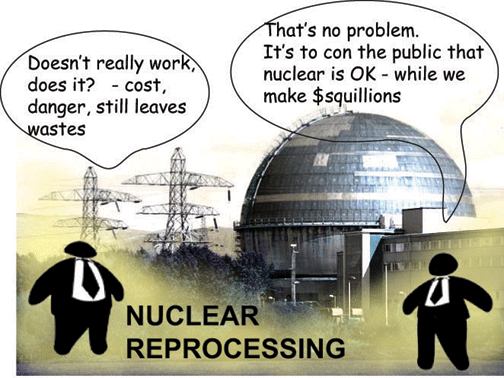 waste from reprocessing and recycling.
Eventually, Japan, like most other countries with nuclear power plants, will be forced to map out plans for “direct disposal,” or disposing of spent fuel from nuclear reactors in underground repositories.
Hokkaido Governor Suzuki has taken a dim view of the financial incentive offered to encourage local governments to apply for the first stage of the selection process, criticizing the proposed subsidies as “a wad of cash used as a powerful carrot.”
|
EDITORIAL: Much at stake in picking a final nuclear waste disposal site, http://www.asahi.com/ajw/articles/13749856 21 Sept 20, Two local communities in Hokkaido are considering pitching themselves as candidates for the site for final disposal of highly radioactive waste from nuclear power plants.Last month, the mayor of Suttsu in the northernmost main island said the municipal government is thinking to apply for the first stage of the three-stage process of selecting the site for the nation’s final repository for nuclear waste. During this period, past records about natural disasters and geological conditions for the candidate area are examined. Town authorities are holding meetings with local residents to explain its intentions. In Kamoenai, a village also in Hokkaido, the local chamber of commerce and industry submitted a petition to the local assembly to consider an application for the process. The issue was discussed at an assembly committee. However, the assembly decided to postpone making a decision after further discussion. Both communities are located close to the Tomari nuclear power plant operated by Hokkaido Electric Power Co. and struggling with common rural problems such as a dwindling population and industrial and economic stagnation. The law decrees that when the first stage of the selection process starts, the municipality that is picked will receive up to 2 billion yen ($19.1 million) in state subsidies for two years. But the Ministry of Economy, Trade and Industry and the Nuclear Waste Management Organization of Japan (NUMO), which are in charge of the selection process, have promised it will not move to the second stage if the prefectural governor or local mayor voices an objection. Hokkaido Governor Naomichi Suzuki has already expressed his opposition. A huge amount of spent nuclear fuel has been produced by nuclear plants in Japan, and it needs to be stored and disposed of somewhere in this country. This policy challenge requires a solid consensus among a broad range of people, including residents of cities who have been beneficiaries of electricity generated at nuclear plants. The two Hokkaido municipalities’ moves to consider applying for the first stage of the selection process should be taken as an opportunity for national debate on the issue. The first step should be to establish a system for local communities to discuss the issue thoroughly from a broad perspective. It is crucial to prevent bitter, acrimonious divisions in local communities between supporters and opponents. The central government and other parties involved need to provide whatever information is needed from a fair and neutral position to help create an environment for healthy, in-depth debate. There is also a crucial need to fix the problems with the current plan to build a final repository for radioactive waste. Under the plan, which is based on the assumption that a nuclear fuel recycling system will eventually be established, the repository will be used to store waste to be left after spent nuclear fuel is reprocessed to recover and recycle plutonium and uranium. But there is no prospect for the establishment of such a recycling system which would allow for disposing only of the waste from reprocessing and recycling. Eventually, Japan, like most other countries with nuclear power plants, will be forced to map out plans for “direct disposal,” or disposing of spent fuel from nuclear reactors in underground repositories. The central government has not changed its policy of maintaining nuclear power generation as a major power source. If nuclear reactors keep operating, they will continue producing spent fuel. The government will find it difficult to win local support for the planned repository unless it makes clear what kind of and how much radioactive material will be stored at the site. Many local governments are facing a fiscal crunch partly because of the impact of the COVID-19 pandemic. Hokkaido Governor Suzuki has taken a dim view of the financial incentive offered to encourage local governments to apply for the first stage of the selection process, criticizing the proposed subsidies as “a wad of cash used as a powerful carrot.” It takes tens of thousands of years for the radioactivity of spent nuclear fuel to decline to sufficiently safe levels. Trying to stem local opposition by dangling temporary subsidies could create a serious problem for the future in the communities. It is vital to ensure that the repository plan will secure a long-term policy commitment to the development of the local communities and ensure benefits for the entire areas. September 22, 2020 |
|
Suttsu, Hokkaido, residents oppose radioactive waste dump plan
Residents Oppose Hokkaido Town’s Radioactive Waste Site Plan https://www.nippon.com/en/news/yjj2020091000878/residents-oppose-hokkaido-town%27s-radioactive-waste-site-plan.html Suttsu, Hokkaido, Sept. 11 (Jiji Press)–Many residents of a Japanese town considering hosting a final disposal facility for high-level radioactive waste have voiced opposition to the plan at a briefing session organized by the municipal government.The meeting was the fourth of its kind for residents of the town of Suttsu in the northernmost Japan prefecture of Hokkaido. The first such session was held on Monday.
At Thursday’s meeting, which was opened to the press, Suttsu Mayor Haruo Kataoka explained the reasons for considering applying for a literature survey, the first stage of a three-stage research process to select the location of the final disposal site for high-level radioactive waste from nuclear power plants.
Some 260 residents attended the session, which lasted for over three hours from 6:30 p.m. (9:30 a.m. GMT).
Participating residents voiced concerns that the move will lead to harmful rumors about the town, and that if the town receives subsidies from the Japanese government as a result of applying for the literature survey, it will have no choice but to become a final disposal site. Some said that detailed discussions should be held after the mayoral election in the town next year.
Tokyo Olympics must be held at ‘any cost’, says Japanese minister
Seiko Hashimoto says country is planning for event next year even though a widely available vaccine is unlikely
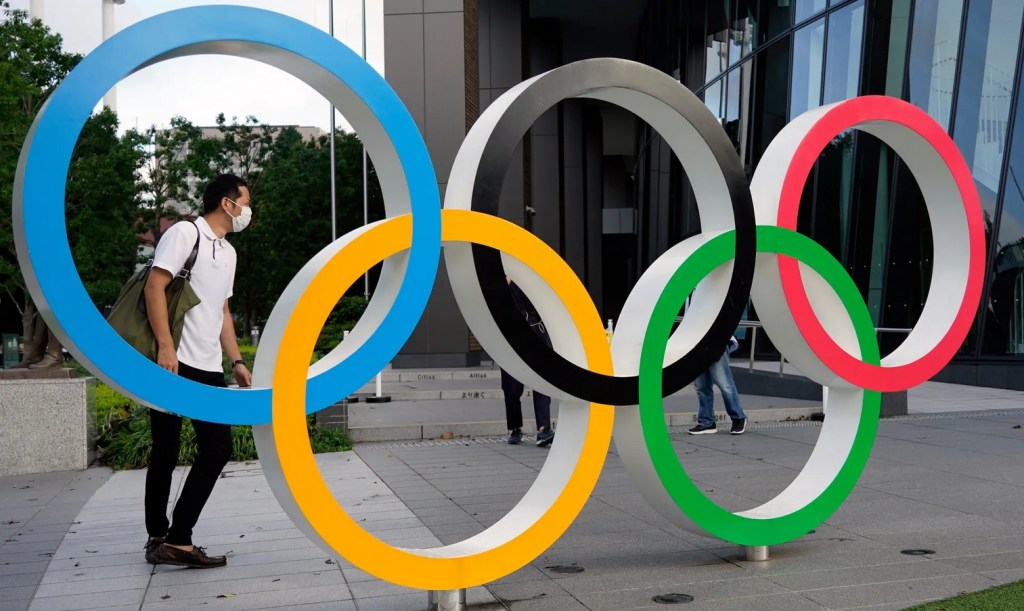
A man wearing a protective face mask walks past an Olympic Rings monument near the national stadium, the main venue of the Tokyo Olympics and Paralympics.
September 8, 2020
The Tokyo Olympics must be held “at any cost”, Japan’s Games minister, Seiko Hashimoto, has said, as organisers continue to weigh up options for staging a “post-pandemic” celebration of sport in the city next summer.
“Everyone involved with the Games is working together to prepare, and the athletes are also making considerable efforts towards next year,” Hashimoto told reporters on Tuesday.
The former Olympian suggested the priority had shifted from planning for the “complete Games” once favoured by the outgoing prime minister, Shinzo Abe, towards an event that would enable athletes to compete regardless of the status of the Covid-19 pandemic.
“I think we have to hold the Games at any cost,” she said. “I want to concentrate all our efforts on measures against the coronavirus.”
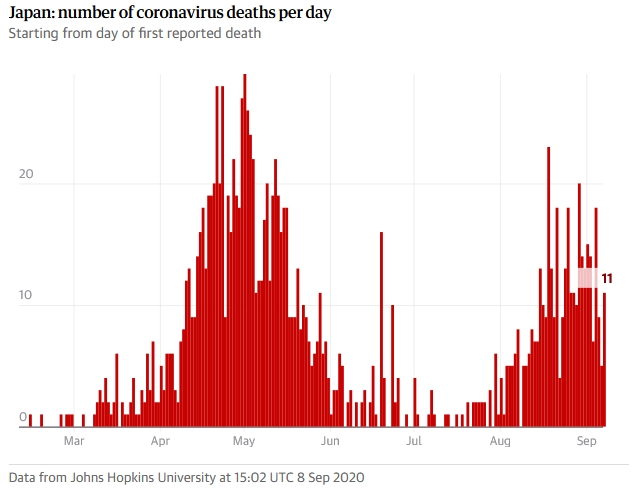
There is also a growing belief within national olympic committees that the Games will go ahead following lengthy discussions over the summer about how they can be staged safely. The Guardian understands that proposals under discussion include:
- Potentially keeping athletes in preparation camps for longer before they move into the Olympic village, enabling them to be tested regularly for Covid-19 and cleared before competing.
- Asking athletes to leave the athletes’ village immediately after they have competed, rather than stay until after the closing ceremony as is traditional.
- Having reduced capacities in stadiums observing social distancing rules.
However, suggestions that there could be a downsized Olympics, with fewer athletes and staff, are being downplayed by senior sources.
The 2020 Tokyo Olympics were postponed in March as the coronavirus began its rampage through Europe, the US, Brazil, India and other parts of the world.
With health experts warning that a vaccine is unlikely to be widely available by the time the opening ceremony is due to take place on 23 July 2021, a task force of organisers, national and local government officials and health experts met for the first time last week to consider anti-virus measures.
The group, which is expected to release an interim report at the end of the year, is sifting through more than 200 proposals on how best to prevent an Olympic-related outbreak while enabling around 11,000 athletes from more than 200 countries to travel to Japan.
“While living with the coronavirus, we need to make sure that athletes can perform at their best and audiences enjoy the Games safely,” the deputy chief cabinet secretary, Kazuhiro Sugita, said at the meeting. “To achieve that, we will adjust border controls, testing and medical systems and the operations of the venues.”
Last week, the Tokyo chief executive, Toshiro Muto, insisted the Games could be held even if a vaccine was not available.
“It’s not a prerequisite,” he said. “It’s not a condition for the delivery of the Tokyo 2020 Games. A vaccine is not a requirement. Of course, if vaccines are developed, we’ll really appreciate it. And for Tokyo 2020 that would be great.”
While the delayed start of domestic and international sports competitions show it is possible to reduce the risks to athletes, it will be harder to ensure the safety of huge numbers of spectators from overseas.
“As far as spectators, we don’t have any conditions yet, but we’d like to avoid no spectators,” Muto said.
The comments from Hashimoto, who represented her country in speed skating and track cycling, echo those made on Monday by John Coates, vice president of the International Olympic Committee [IOC]. He said the event would go ahead next summer “with or without Covid”.
“The Games were going to be … the ‘reconstruction Games’ after the devastation of the tsunami,” Coates said, referring to the disaster that struck north-east Japan in 2011.
“Now very much these will be the Games that conquered Covid, the light at the end of the tunnel.”
Public support is waning in Japan, however, with two-thirds of respondents to a poll in July saying they would prefer the Olympics to be postponed a second time – an option organisers and the IOC have ruled out – or cancelled.
Organisers said they had been encouraged to see international sports events such as the US Open tennis and the Tour de France go ahead in the midst of the pandemic, and by reports that Japan’s government is considering allowing more fans into stadiums to watch domestic baseball and football matches.
“This has been a big, big encouragement for the staff at Tokyo 2020,” organising committee spokesman Masa Takaya told reporters on Tuesday. “We feel that is another step towards seeing sports in action in our society.”
IOC Vice President Says 2021 Tokyo Olympics Will Happen
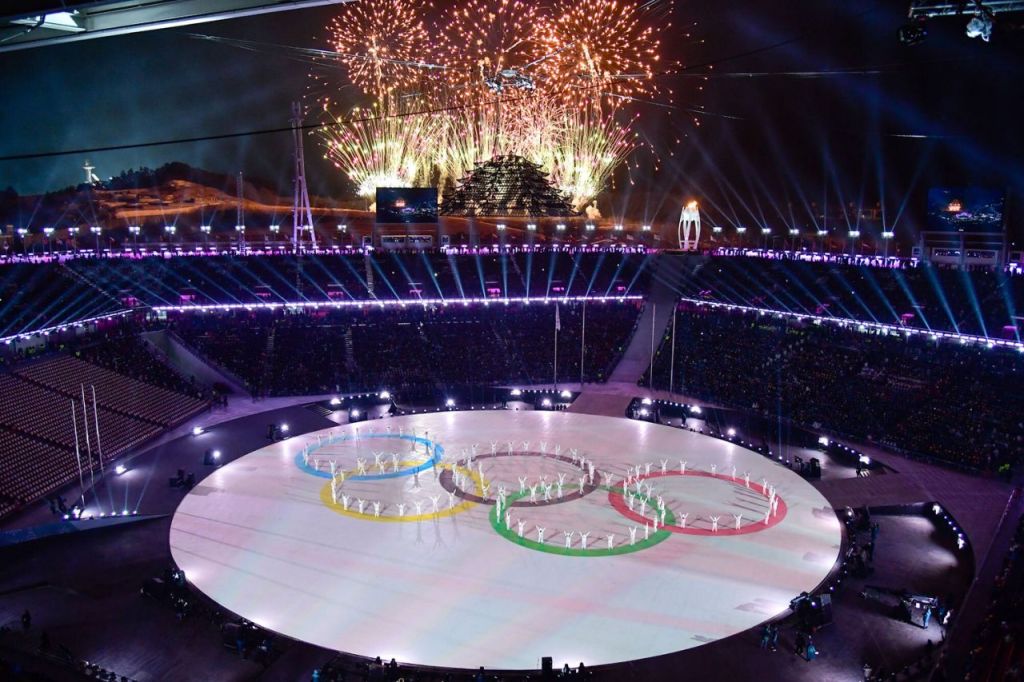
September 7, 2020
The Tokyo Summer Olympics are taking place next year regardless of the coronavirus pandemic, according to International Olympic Committee Vice President John Coates.
“It will take place with or without COVID. The Games will start on July 23 next year,” Coates told news agency AFP on Monday, according to multiple outlets.
“The Games were going to be, their theme, the Reconstruction Games after the devastation of the tsunami,” he added, referring to the devastating earthquake and tsunami that struck Japan in 2011. “Now very much these will be the Games that conquered COVID, the light at the end of the tunnel.”
In late March, the International Olympic Committee (IOC) announced that the Summer Games would be rescheduled for the same time slot next year due to the ongoing COVID-19 crisis.
The Olympics will now be held from July 23 through August 8, 2021.
There is still much uncertainty regarding the games, however. In June, various Japanese media sources published stories indicating that the Olympics will be “downsized,” “simplified” or “very different.”
Officials have not yet announced any specific modifications, but the reports indicated that athletes may face quarantines and coronavirus testing and seating could be reduced.
Following the published reports, Tokyo Olympics spokesman Masa Takaya appeared in an online news conference but did not confirm any of the leaked information about downsizing.
He did, however, address concerns about reducing the amount of seating, as millions of tickets have already been sold. “We want to brush away these concerns,” Takaya said, speaking to ticket holders.
“We understand that countermeasures for COVID-19 next year, particularly during games time, is one of the biggest things to address in preparing for the games next year,” he added. “But once again these countermeasures will be discussed in more depth from this autumn onward.”
Adam Rippon Says 2020 Winter Olympians Are ‘Grieving’ Amid Postponement
Figure skater Adam Rippon won a bronze medal in the 2018 Olympics in PyeongChang
Olympic Minister Seiko Hashimoto said that costs must be cut for the rescheduled games, but added that ensuring athletes’ safety may lead to higher expenses.
“Unless safety and security are ensured, there will be uncertainty for the athletes-first point of view,” she said, according to the Associated Press. “We must study measures including virus testing in order to ensure safety and security.”
The delay marks only the fourth time in modern Olympic history that the games have been disrupted.
https://www.yahoo.com/entertainment/ioc-vice-president-says-2021-155509392.html
There are 15 nuclear power plants in Fukui Prefecture.
By Akihiko Tamai
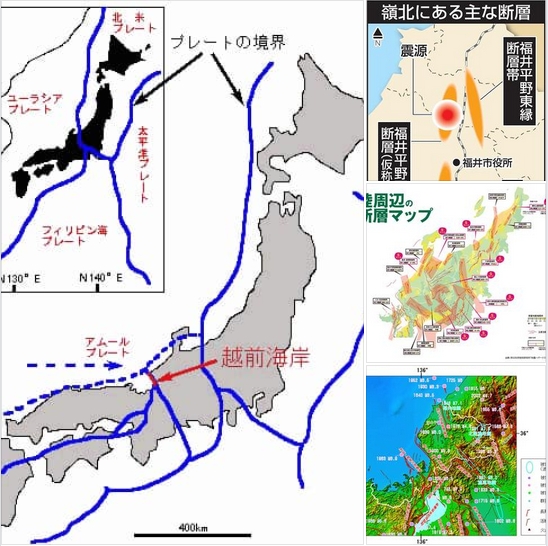
Fukui SEISMIC INTENSITY 5 weak epicenter, fault expert, chain warning ′′ it can be connected to a big earthquake ′′
According to Professor Taku Okamoto (Earthquake) of fukui college of technology, there is a fault in the hirano part of the epicenter of the earthquake that observed the maximum SEISMIC INTENSITY OF 5 in Fukui Prefecture on the morning of September 4th It was possible to wake up In the future, if the earthquake of magnitude (M) 5 0 class is frequent, it is a chain with the surrounding fault, and it is pointed out that ′′ it can be connected to a big earthquake like the kumamoto earthquake 5
According to Professor Okamoto, the next wave that does not appear if it is not a fault-specific structure near the epicenter of this time is observed in the past earthquake, and in the west rim of fukui hirano, it is a fault that penetrates the confluence of the kuzuryu and hinogawa to the north It is said that there is a.
According to the Japan Meteorological Agency, this earthquake is a ′′ reverse fault type ′′ that is pushed from both sides and moves in the upper and lower direction. Professor Okamoto points out that the fault of the fukui hirano west rim may have caused the fault of the estimated fault and epicenter.
The Epicenter of this time is about 5 km away from the fukui hirano fault belt, which caused the fukui earthquake on June 28, 1948, and it is not directly related. Also, the earthquake of 4 or more seismic intensity that epicenter the north of the north of the north of the north of the north of the north of the north of the
The current situation is close to the earthquake of the shaking aftershocks, but in the future, if there is a similar earthquake as this time, there is a sabae fault in the south, so it is pointed out that ′′ chain leads to a big earthquake On Top of that, ′′ I need to carefully look at the progression of aftershocks activities for 1 OR 2 weeks
The earthquake is also called ′′ emergency earthquake breaking news is not in time In the future of aftershocks, I’m calling ′′ if you feel the tremor, I want you to lower your posture and take action to protect your head (Fukui Shimbun September 5)
Tokyo Olympics will be most costly Summer Games, Oxford study shows

In this June 3, the Olympic rings float in the water at sunset in the Odaiba section in Tokyo.
September 4, 2020
TOKYO
The Tokyo Olympics are already the most expensive Summer Games on record with costs set to go higher, a wide-ranging study from Britain’s University of Oxford indicates.
The Tokyo cost overrun already exceeds 200%, lead author Bent Flyvbjerg explained in an interview with The Associated Press. This is even before several billion more dollars are added on from the one-year delay from the COVID-19 pandemic.
Flyvbjerg is an economist at Oxford’s Said Business School. His entire study is available here, and it’s set to be published on Sept. 15 in the journal “Environment and Planning A: Economy and Space.” It’s titled “Regression to the Tail: Why the Olympics Blow Up.”
Tokyo, postponed until July 23, 2021, is only a small part of the focus. The study — the third in a series following editions 2012 and 2016 — looks at Olympic costs since 1960 and finds they keep increasing despite claims by the International Olympic Committee that costs are being cut.
Flyvbjerg cites many reasons for the rising costs and cost overruns, and offers solutions for the IOC. The vast majority of costs are picked up by governments with the IOC contributing only a small portion.
“The Olympics offer the highest level of risk a city can take on,” Flyvbjerg told AP. “The trend cannot continue. No city will want to do this because it’s just too expensive, putting themselves into a debt that most cities cannot afford.”
In his paper, Flyvbjerg cites Los Angeles Mayor Eric Garcetti, whose city is to hold the 2028 Olympics following Paris in 2024.
“Most cities, unless you have a government that’s willing to go into debt or pay the subsidy of what this costs, most cities will never say ‘yes’ to the Olympics again unless they find the right model,” he quotes Garcetti as saying.
By the right model, Garcetti means lower costs.
Tracking Olympic costs is difficult, a dense maze of overlap and debate. Politicians and organizers always argue over what are — and what are not — Olympic expenses.
Flyvbjerg writes: “Unfortunately, Olympics officials and hosts often misinform about the costs and cost overruns of the Games. … We therefore cannot count on organizers, the IOC, and governments to provide us with reliable information about the real costs, cost overruns, and cost risks of the Olympic Games.”
Flyvbjerg looks only at costs to operate the games — the operating costs and capital costs — the cost to build sports venues. He leaves out a third category, which is usually many times larger: renovating roads, building airports, and what he calls “sprucing up projects,” which also fall to taxpayers.
“Our estimates are conservative because there are lots of costs that are hidden that we can’t get into,” Flyvbjerg said. “And there are lots of costs we decided not to include because it’s too complex. We include the things we can get the most reliable numbers for and we do it in the same way for each city that we study.”
He also excludes the cost of debt, and the future cost of running sports venues after the Olympics leave, and inflation.
According to the Oxford numbers. Tokyo’s spending is at $15.84 billion, already surpassing the 2012 London Olympics, which were the most expensive summer games to date at $14.95 billion. He expects several billion more from the cost of the one-year delay.
Tokyo organizers say officially they are spending $12.6 billion. However, a national auditor says the actual costs are twice that high, made up of some expenses that the Oxford study omits because they are not constant between different Olympics.
Tokyo said the cost would be $7.3 billion when it won the bid in 2013.
“They (IOC) obviously don’t like our results, but it’s very difficult to counter a piece of rigorous research like this,” Flyvbjerg said. “And they haven’t done that, and they can’t do that. Our research is a problem for them.”
In an email to Associated Press, the IOC said it had not seen the latest Oxford study and declined to comment.It referenced another study by Mainz and Sorbonne universities.
This study also found Olympic cost overruns but said they were in line with other large-scale projects. Flyvbjerg’s study finds they are not.
Flyvbjerg said he has been in touch on and off with the IOC and had sent a colleague to an IOC workshop. He said a major reason for the rising costs is that the IOC does not pay for them. He also cited rising security costs, and moving the games around the world. He calls this the “Eternal Beginner Syndrome” with new host cities starting basically from scratch.
He’s said the IOC has tried recently to rein in costs, but the effort is “too little, too late.”
“They (IOC) define the specs but don’t pay for them,”Flyvbjerg said. “This is pretty similar to you and I giving the specs for a house that we are going to live in, but we don’t have to pay for it. How do you think we’d spend? We’d gold-plate it. This is what has happened over time.”
Flyvbjerg said he’s relish a chance to sit and talk with IOC President Thomas Bach. He calls himself a fan of the Olympics.
“It’s not that the IOC hasn’t been willing to talk, or I am not willing to talk,”he said. “We certainly are. We have communicated in writing to keep the IOC informed. But yes, we would like to sit down with Thomas Bach.”
https://japantoday.com/category/sports/oxford-study-tokyo-olympics-are-most-costly-summer-games
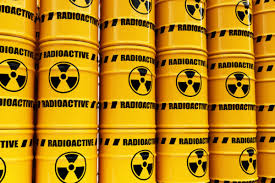
Nuclear waste disposal is a matter of environmental concern
Aug 31, 2020
It has been reported that the town of Suttsu in Hokkaido is considering applying for a two-year “literature research” into the possibility of storing high-level radioactive nuclear waste. A maximum of ¥2 billion in subsidies will be granted by the central government.
“The future of the town is financially precarious,” said Haruo Kataoka, the mayor of Suttsu, in an interview.
But the money that is thought to revive the town cannot reverse what the nuclear waste is likely to cause.
It is, in my opinion, never a financial issue, but a matter of environmental concern.
What is in question here is high-level radioactive nuclear waste, which can be dangerous for at least 200,000 years and therefore must be handled with the utmost care. It is indeed a problem that any country with nuclear power plants needs to address, however thorny it is. Any indiscreet decision is deemed extremely irresponsible and profoundly unethical.
“Financially precarious,” I must stress, is by no means comparable to environmentally threatening. Besides, it is specifically stated in a Hokkaido ordinance that nuclear waste is hardly acceptable in the prefecture.
Before a final disposal site is selected, or even before an application for research is submitted, the scientific facts ought to be thoroughly understood and the residents properly informed.
The span of recorded history is merely 5,000 years, while 200,000 years is far beyond human experience and comprehension. We certainly cannot live to see what is going to become of the nuclear waste, but I believe that we do not want to leave the thorny problem unaddressed to haunt our future generations.
Jive Sun
Sapporo
Fukushima’s citizen radiation testers still on the job.
Fukushima Has Turned These Grandparents Into Avid Radiation Testers, NPR, Kat Lonsdorf (@lilkat_bigworld) September 11, 2020 Takenori Kobayashi lugs a garbage bag full of soil across a parking lot to an unmarked office. His wife, Tomoko, holds the door to a tiny work space with lab equipment and computers set up. On the edge of Fukushima’s former nuclear exclusion zone, this is the place the couple likes to call their “grandma and grandpa lab.”
A handful of other residents help run the lab, and throughout the years, experts from nearby universities have come to teach them all about the different equipment and radiation science.
“All the grandparents here are radiation professionals now,” Takenori, 71, says with a smile……..
Opposition in Kamoenai to hosting nuclear waste dump
|
Second site in Hokkaido considers hosting nuclear waste dump, Japan Times, SAPPORO/SUTTSU, HOKKAIDO – The village of Kamoenai in Hokkaido is considering hosting a final disposal facility for high-level radioactive waste, it was learned Friday.The village is looking at applying for a literature survey, the first of three stages in the research process to select the location of a final disposal facility for high-level radioactive waste from nuclear power plants.
Kamoenai is the second municipality in the nation to be contemplating the process since the government published details of areas it considered suitable for nuclear waste disposal in its Nationwide Map of Scientific Features for Geological Disposal in 2017. The town of Suttsu, also in Hokkaido, was the first municipality to do so……. The village, which is located in western Hokkaido and had a population of 823 as of the end of August, faces the Sea of Japan and neighbors the village of Tomari, which hosts a nuclear power plant run by Hokkaido Electric Power Co. The plant is currently offline. According to the government map, almost all of Kamoenai except for some southern areas is unsuitable for waste disposal. Procedures to select a host for a final disposal site are conducted in three stages, comprising the “literary” survey, a “preliminary” investigation and a “detailed” investigation. A municipality undergoing a literature survey can receive subsidies of up to ¥2 billion from the central government. Meanwhile, many residents of Suttsu, Hokkaido, another municipality that is considering applying for a literature survey, voiced opposition to the plan Thursday at a briefing session organized by the municipal government. The meeting was the fourth of its kind for Suttsu residents. The first such session was held on Monday. At Thursday’s meeting, which was opened to the press, Suttsu Mayor Haruo Kataoka explained the reasons for considering applying for a literature survey. Some 260 residents attended the session, which lasted for over three hours from 6:30 p.m. Participating residents voiced concerns that the move would lead to harmful rumors about the town, and that if the town received subsidies from the government as a result of applying for the literature survey, it would have no choice but to become a final disposal site. Some said that detailed discussions should be held after the mayoral election in the town next year……. In talks with reporters after the meeting, Kataoka rejected the idea of holding a local referendum on the matter, saying, “It will divide the town residents.” According to the town, the first briefing session on Monday was cut short due to technical issues, such as not having reserved enough time for questions from residents. Therefore, the town government plans to hold an additional session within this month for participants that attended the Monday meeting. https://www.japantimes.co.jp/news/2020/09/11/national/hokkaido-village-nuclear-waste/ |
|
ICAN chief: Japan sabotaging nuclear disarmament
 Beatrice Fihn, Executive Director of the International Campaign to Abolish Nuclear Weapons, or ICAN, spoke to NHK about the possible game changers in the drive to get rid of the weapons of mass destruction.
Aug. 15, 2020
Hiroshima and Nagasaki in southwestern Japan are the only two cities to have suffered attacks using nuclear weapons. For people around the country, the anniversary month of August is a time to remember the tens of thousands of lives erased in the twin flashes in 1945, as well as the countless others affected by the subsequent radiation.
Fihn’s organization won the Nobel Peace Prize in 2017 for its efforts to bring people to the negotiating table to pledge to work toward nuclear disarmament. The adoption of the Treaty on the Prohibition of Nuclear Weapons at the United Nations was a step forward, in which ICAN played a major role.
Fihn says the next few months are crucial, as her team has given itself until the end of the year to get enough signatures to put the treaty into effect. Just this month, Ireland, Nigeria, Niue, and Saint Kitts and Nevis have signed up, bringing the total number on board to 44.
“We always aimed that we would be getting 50 in 2020.” She says. “And obviously COVID-19 has slowed down some processes, but we still think that there’s a really good chance that we can get the 50 ratifications needed this year. So we’re working very very hard on this.”
What about Japan?
But Japan remains one of the countries that’s yet to sign the treaty. Prime Minister Abe Shinzo has said every year at the memorial ceremonies that it’s Japan’s mission to, “realize a world without nuclear weapons.”
But Fihn wonders why the commitment hasn’t been backed up by action. “There is no leadership right now on nuclear disarmament from Japan’s side — rather the opposite,” she says. “Japan is going backwards as well and undermining its own resolutions that it’s supported for a long time ago, weakening language and documents.”
 Japanese Prime Minister Abe Shinzo made another pledge this year that the country would commit to achieving a world without nuclear weapons.
“That’s very serious. And I think that’s an insult to the survivors — to the hibakusha,” Fihn says. “We really know the Japanese people want the government to sign the treaty.”
“It’s very often that we look at nuclear armed states as the problem, but we have to recognize that the nuclear-allied states, like Japan for example, are protecting them. They are standing in a circle around them and protecting nuclear weapons. Until those countries stop doing that, it’s going to be very hard to convince the nuclear armed states.”
“How am I going to convince North Korea, the United States and Russia to disarm, if Japan cannot say that nuclear weapons should be illegal?”
Nuclear war ‘like the coronavirus’
Fihn says the coronavirus pandemic is proof that a global emergency could happen anytime. “Health experts have warned about this, and they have been preparing, thinking about it,” she says. “Yet people have been surprised that it happened. It’s the same thing with nuclear weapons. We don’t know when, we don’t know how exactly, but experts say it’s going to happen.”
She warns that nuclear weapons will be far more lethal than the coronavirus. “What we have to do with nuclear weapons — there’s no mitigating it once it happens.” she says. “When we feel the consequences, when the bombs are starting to fall on cities again, then it’s going to be too late to prevent it.”
Nuclear weapons don’t protect us
Fihn says the ongoing pandemic further highlights why governments should be investing in people, not weapons. “This pandemic has shown us where the threats to our security are and how we can’t absorb these things with nuclear weapons,” she says. “Nuclear armed states spend 73 billion dollars on nuclear weapons. Just imagine how many ventilators, doctors, nurses ICU, beds we can have… how many vaccinations we could develop.”
Listen to the hibakusha
She credits atomic bomb survivors for helping spread the message of a nuclear-free world. But she says their time is running out: “Given that it’s probably one of the last milestones where we will still have survivors who are able to speak about it in the first person. I really do think that it’s up to us to use this moment as much as possible to share their stories.”
For the first time, ICAN organized online tours of the Hiroshima and Nagasaki atomic bomb museums this year.
Fihn ended our interview with a message for the hibakusha. “Thank you for doing the incredibly difficult work of sharing your very traumatic experiences so that we can survive, and we can prevent it from happening again,” she says. “ICAN and the millions of people that support us are pledging to take action. We are going to honor the hibakusha, not through words, but through action to eliminate nuclear weapons.”
1 This Month
Chernobyl: The Lost Tapes – A good documentary on Chernobyl on SBS available On Demand for the next 3 weeks– https://www.sbs.com.au/ondemand/tv-program/chernobyl-the-lost-tapes/2352741955560

of the week–London Campaign for Nuclear Disarmament

Tell the Ukrainian Government to Drop Prosecution of Peace Activist Yurii Sheliazhenko
To see nuclear-related stories in greater depth and intensity – go to https://nuclearinformation.wordpress.com
-
Archives
- April 2026 (126)
- March 2026 (251)
- February 2026 (268)
- January 2026 (308)
- December 2025 (358)
- November 2025 (359)
- October 2025 (376)
- September 2025 (257)
- August 2025 (319)
- July 2025 (230)
- June 2025 (348)
- May 2025 (261)
-
Categories
- 1
- 1 NUCLEAR ISSUES
- business and costs
- climate change
- culture and arts
- ENERGY
- environment
- health
- history
- indigenous issues
- Legal
- marketing of nuclear
- media
- opposition to nuclear
- PERSONAL STORIES
- politics
- politics international
- Religion and ethics
- safety
- secrets,lies and civil liberties
- spinbuster
- technology
- Uranium
- wastes
- weapons and war
- Women
- 2 WORLD
- ACTION
- AFRICA
- Atrocities
- AUSTRALIA
- Christina's notes
- Christina's themes
- culture and arts
- Events
- Fuk 2022
- Fuk 2023
- Fukushima 2017
- Fukushima 2018
- fukushima 2019
- Fukushima 2020
- Fukushima 2021
- general
- global warming
- Humour (God we need it)
- Nuclear
- RARE EARTHS
- Reference
- resources – print
- Resources -audiovicual
- Weekly Newsletter
- World
- World Nuclear
- YouTube
-
RSS
Entries RSS
Comments RSS
 nuclear-news