Nuclear physicist recommends permanent relocation for Fukushima area residents
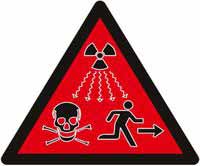 Mamoru Fujiwara, assistant professor of nuclear physics at Osaka University, said the residents from these locations “need to be relocated permanently.”
Japan Finds Radiation Spread Over a Wide Area, WSJ, By MITSURU OBE, 31 Aug 11, TOKYO—The first comprehensive soil survey from areas around the Fukushima Daiichi nuclear plant showed extensive ground contamination and another report warned of the continued threat to Japan’s food chain, underscoring the major challenges the country still faces in its radioactive cleanup efforts…. Continue reading
Evacuate high radiation area North West Japan, says Caldicott
Dr Helen Caldicott says radiation many times in excess of that which led to the evacuation of Chernobyl has been reported in North-West Japan — so the area should be evacuated immediately.
 Fukushima Crisis: Caldicott Says Evacuate North-West Japan, 31 August 2011,by: David Donovan, Independent Australia .………The problem is that the reliability of claims from TEPCO, NISA and the Japanese Government are – as we have reported before – highly questionable. All three bodies have a major credibility crisis, with clear evidence that they colluded to cover up evidence that they knew the nuclear reactors melted down within hours of the March 11 tsunami. The reason for this seems to be that Japan is highly dependent on nuclear energy for its power needs, such that NISA has become more or less a branch of TEPCO – with staff perenially shuffling between the two bodies – and with a Japanese Government that is primarily concerned with talking down the extent of the crisis to avoid widespread panic amongst the Japanese population and allay rumblings about the viability of nuclear power…. Continue reading
Risk of active geological faults near 14 Japanese nuclear power plants

 14 locations near nuclear plants could become active faults, agency warns, Mainichi Daily News, 1 Sept 11 Some 14 locations near nuclear facilities in Japan have been found to have the possibility of turning into active faults in the future, the Nuclear and Industrial Safety Agency (NISA) has announced.
NISA said on Aug. 30 that it has confirmed a total of 14 faults and other locations whose possibility of turning into active faults in the future cannot be ruled out near the Fukushima No. 1 and No. 2 nuclear power plants and Japan Atomic Power Co.’s Tokai No. 2 Power Station in Ibaraki Prefecture.
NISA had instructed plant operators to re-evaluate those locations after aftershocks following the March 11 Great East Japan Earthquake triggered the Yunotake fault in Iwaki, Fukushima Prefecture, to slip even though it had been believed to be inactive.
As a result of the re-evaluation, it emerged that five locations near the Fukushima nuclear plant, including the Yunotake fault, have a possibility of moving in the future due to crustal twists and increased seismic activity in the wake of the March 11 quake. A total of nine locations near the Tokai No. 2 Power Station and the Japan Atomic Energy Agency’s Tokai nuclear fuel reprocessing plant were also revaluated….http://mdn.mainichi.jp/mdnnews/news/20110831p2a00m0na024000c.html
Japan’s Parliament – vote for renewable energy tariff
The move has global implications, as the world’s third largest economy follows that of the world’s second-largest economy, China, and the world’s fourth-largest economy, Germany, in implementing feed-in tariffs in order to rapidly develop renewable energy.
Japan Creates Major Feed-In Tariff for Renewable Energy, SustainableBusiness.com News, By Paul Gipe 31 Aug 11, In a major breakthrough for the feed-in tariff movement worldwide, Japan’s upper chamber has approved a new law implementing a feed-in tariff policy for renewable energy. Continue reading
The expensive 30 year process of decommissioning Fukushima’s nuclear plant

 Experts split on how to decommission Fukushima nuclear plant, Mainichi Daily News, Japan) August 28, 2011 What is actually going to take place at the Fukushima No. 1 Nuclear Power Plant, where word is that the four reactors that were crippled in the Great East Japan Earthquake and tsunami will eventually be decommissioned?…
Aging, deteriorating nuclear reactors in Japan to seek extensions
 Extensions for aging reactors loom, Japan Times, By YURIY HUMBER and MASATSUGU HORIE. Bloomberg 30 Aug 11, More than a third of Japan’s nuclear reactors will have to apply for license extensions within five years or face decommissioning at a time when the industry’s safety record is in tatters.
The country’s 54 reactors were originally licensed for 30 years and operators can apply for 10-year extensions up to a maximum of six times. Twenty-one reactors will soon require license extensions, according to data from power companies and the World Nuclear Association. Of those, seven will enter their fifth decade if extensions are granted — which should be avoided, according to a metallurgy professor.
“Nuclear reactors shouldn’t be in operation for more than 40 years,” said Hiromitsu Ino at the University of Tokyo. “You can renew electrical wiring and other parts but you can’t do anything with their pressure vessels. They just get old and deteriorate, increasing the risk of accidents….http://search.japantimes.co.jp/cgi-bin/nn20110830n1.html
Radiation or education – dilemma for Fukushima City parents
Fukushima City kids should not have to choose between radiation and education Greenpeace (includes video) by Justin McKeating – August 29, 2011 The children of Fukushima City are due to return to their schools this week despite the continued contamination of school buildings by radiation from the Fukushima Daiichi nuclear power plant. Continue reading
Japan’s crisis of ionising radiation is only just beginning
 Slowly, steadily, and often well behind the curve, the government has worsened its prognosis of the disaster. …. sceptics note a consistent pattern of official lying, foot-dragging and concealment. …
 areas northwest of the plant have become atomic ghost towns after being ordered to evacuate – too late, say many residents, who believe they absorbed dangerous quantities of radiation in the weeks after the accident…….
many experts warn that the crisis is just beginning
Why the Fukushima disaster is worse than Chernobyl, Japan has been slow to admit the scale of the meltdown. But now the truth is coming out. David McNeill reports from Soma City, The Independent Asia, 29 August 2011
“…….it is the triple meltdown and its aftermath at the Fukushima nuclear power plant 40km down the coast from Soma that has elevated Japan into unknown, and unknowable, terrain. Across the northeast, millions of people are living with its consequences and searching for a consensus on a safe radiation level that does not exist…. Continue reading
Varying opinions on nuclear power, as Japan’s political candidates line up
 Top contenders for Japan premier post face nuclear issues, Gulf News, 29 Aug 11 Japan’s next premier set to be burdened with low public confidence and party problems Tokyo: Japan’s former Foreign Minister Seiji Maehara who is vying to become Japan’s next prime minister says the country should stop building nuclear power plants.
Maehara appeared to take the clearest stand against nuclear power at a news conference on Saturday where five ruling party members aiming to replace Prime Minister Naoto Kan outlined their policy goals.Another top contender for the job is Economy Minister Banri Kaieda. He says he plans to decommission aging nuclear plants found to have problems during stress tests.
Atomic energy is a key topic in Japan following the tsunami which caused a nuclear accident in March…… http://gulfnews.com/news/world/other-world/top-contenders-for-japan-premier-post-face-nuclear-issues-1.857990
Nuclear power the vital issue in Japan’s leadership race
Nuclear power key topic in Japan leader race, Google News, 27 Aug 11 TOKYO (AP) — Japan’s former Foreign Minister Seiji Maehara who is vying to become Japan’s next prime minister says the country should stop building nuclear power plants.Maehara appeared to take the clearest stand against nuclear power at a news conference Saturday where five ruling party members aiming to replace Prime Minister Naoto Kan outlined their policy goals.
Another top contender for the job is Economy Minister Banri Kaieda. He says he plans to decommission aging nuclear plants found to have problems during stress tests.
Atomic energy is a key topic in Japan following the tsunami-spawned nuclear accident in March. The ruling Democratic party will vote Monday to select a new party chief, who will become prime minister — Japan’s sixth in five years….. http://www.google.com/hostednews/ap/article/ALeqM5iNKIALDMeliTg7GD1i-HfddhNCLQ?docId=446239253def4a87bfa780998048a5de
Japan’s government dumps radiation cleanup responsibility onto local municipalities
Local leaders steamed at government’s ‘buck-passing’ radiation decontamination plan Mainichi Daily News, 26 Aug 11 Local leaders in areas contaminated by the disaster at the Fukushima No. 1 Nuclear Power Plant are angry and disappointed at the central government’s decontamination plan, which dumps much of the responsibility for the clean-up on municipalities. Continue reading
Long process of radiation cleanup in Japan
Japan aims to halve radiation in affected areas in 2 yrs
— Japan aims to bring radiation levels below 20 millisieverts annually
* Thorough cleanup of areas frequented by children also a priority
* Group launched which will form core of new nuclear watchdog
By Shinichi Saoshiro TOKYO, Aug 26 (Reuters) – Japan aims to halve radiation over two years in places contaminated by the Fukushima nuclear crisis, removing soil, plants and trees as well as cleaning roofs of buildings in an area spanning thousands of square kilometres.
The cleanup could cost tens of billions of dollars, and thousands of evacuees may not be able to return home for years, if ever. Continue reading
New evidence that Fukushima’s reactors were failing BEFORE the tsunami
The explosive truth behind Fukushima’s meltdown, Japan insists its nuclear crisis was caused by an unforeseeable combination of tsunami and earthquake. But new evidence suggests its reactors were doomed to fail, The Independent, By David McNeill in Tokyo and Jake Adelstein, 17 August 201
It is one of the mysteries of Japan’s ongoing nuclear crisis: How much
damage did the 11 March earthquake inflict on the Fukushima Daiichi
reactors before the tsunami hit?
The stakes are high: if the earthquake structurally compromised the plant
and the safety of its nuclear fuel, then every similar reactor in Japan
may have to be shut down. With almost all of Japan’s 54 reactors either
offline (in the case of 35) or scheduled for shutdown by next April, the
issue of structural safety looms over any discussion about restarting
them. Continue reading
Radioactive Caesium-137 from Fukushima equal to 10 Hiroshimas
Government nuclear experts, however, said the World War II bomb blast and the accidental reactor meltdowns at Fukushima, which has seen ongoing radiation leaks but no deaths so far, were beyond comparison.
The amount of caesium-137 released since the three reactors were crippled by the March 11 quake and tsunami has been estimated at 15,000 tera becquerels, the Tokyo Shimbun reported, quoting a government calculation.
That compares with the 89 tera becquerels released by “Little Boy”, the uranium bomb the United States dropped on the western Japanese city in the final days of World War II, the report said.
The estimate was submitted by Prime Minister Naoto Kan’s cabinet to a lower house committee on promotion of technology and innovation, the daily said…..http://www.google.com/hostednews/afp/article/ALeqM5hDHbdpOQcK44jyC_kypHkOo9UkBA?docId=CNG.d3f786cacc8763f78f6176c908ff1fd2.71
No end in sight to the cleanup and the costs of Fukushima radiation
“Fukushima is mountainous and such large-scale and highly concentrated contamination has not taken place on earth before in an area like this. How things will go is unpredictable.”
Japan faces costly, unprecedented radiation cleanup, By Yoko Kubota, TOKYO | Thu Aug 25, 2011 (Reuters) – Nearly six months after the world’s worst nuclear crisis in 25 years at the Fukushima nuclear plant, Japan faces the task of cleaning up a sprawling area of radioactivity that could cost tens of billions of dollars, and thousands may not be able to return home for years, if ever. Continue reading
-
Archives
- October 2026 (104)
- September 2026 (339)
- August 2026 (330)
- July 2026 (355)
- June 2026 (287)
- May 2026 (306)
- April 2026 (356)
- March 2026 (251)
- February 2026 (267)
- January 2026 (308)
- December 2025 (358)
- November 2025 (359)
-
Categories
- 1
- 1 NUCLEAR ISSUES
- business and costs
- climate change
- culture and arts
- ENERGY
- environment
- health
- history
- indigenous issues
- Legal
- marketing of nuclear
- media
- opposition to nuclear
- PERSONAL STORIES
- politics
- politics international
- Religion and ethics
- safety
- secrets,lies and civil liberties
- spinbuster
- technology
- Uranium
- wastes
- weapons and war
- Women
- 2 WORLD
- ACTION
- AFRICA
- Atrocities
- AUSTRALIA
- Christina's notes
- Christina's themes
- culture and arts
- Events
- Fuk 2022
- Fuk 2023
- Fukushima 2017
- Fukushima 2018
- fukushima 2019
- Fukushima 2020
- Fukushima 2021
- general
- global warming
- Humour (God we need it)
- Nuclear
- RARE EARTHS
- Reference
- resources – print
- Resources -audiovicual
- Weekly Newsletter
- World
- World Nuclear
- YouTube
-
RSS
Entries RSS
Comments RSS

