Dangerous to evaporate Fukushima’s radioactive water
Fukushima: Evaporating tank contents is not the solution http://www.ianfairlie.org/news/fukushima-evaporating-tank-contents-is-not-the-solution/ April 10, 2015 Recent news stories are suggesting that TEPCO is considering evaporating the 280,000 tonnes of highly radioactive water held in the 1,500 tanks at Fukushima. See http://www.reuters.com/article/2015/04/08/us-japan-fukushima-water-idUSKBN0MZ0WC20150408 and
http://rt.com/news/248041-fukushima-waters-evaporate-tepco/
Disposing large volumes of highly tritiated water is a serious problem for TEPCO but its evaporation proposal is quite dangerous. It is based on several misconceptions.
First, evaporating this radioactive water will NOT isolate the radioactivity: all it would do is convert liquid tritiated water to tritiated water vapour which would be emitted to the air at Fukushima and result in high exposures to those downwind of the plumes.
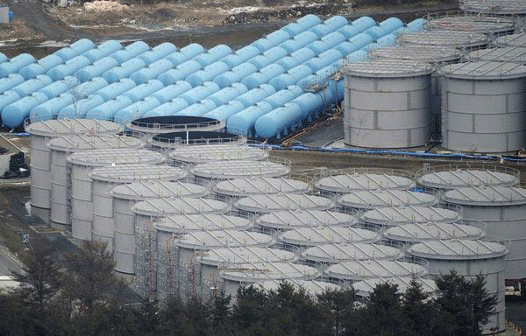
Second, evaporation would make the problem worse as, contrary to what many people assume, aerial emissions are more hazardous than liquid discharges to sea. Briefly, this is because you can avoid drinking tritiated water and food to a large degree, but you can’t avoid breathing in tritiated water vapour or absorbing it through skin.
Third, tritium is not “relatively harmless” as alleged. This is a common misconception: in fact, tritium is a relatively dangerous nuclide. For example, its beta particle inside the body is more harmful than most X-rays and gamma rays. But that’s just one aspect: tritiated water vapour has several other dangerous properties, and organically bound tritium (ie attached to lipids, carbohydrates and proteins) inside us is even more dangerous. See “Tritium- risks not properly assessed” in http://www.ianfairlie.org/lectures/
A complicating factor is the very high tritium levels in the tanks. From Japanese Government Meti fileshttp://www.meti.go.jp/earthquake/nuclear/pdf/140424/140424_02_008.pdf
– see slides 5 and 21- it can be seen that the tritium concentration in March 2014 was about 500,000 Bq per litre.
This is a very high level. As far as I’m aware, no internationally agreed limits exist for discharging tritium to water. But as a yardstick, the limit used by Ontario Power Generation (a nuclear utility in Canada) is 4,000 Bq/L.
TEPCO is facing a storage problem with its tanks on site now full, and no space to build more. But neither evaporating the tank contents nor discharging them to sea appears to be a solution. http://www.ianfairlie.org/news/fukushima-evaporating-tank-contents-is-not-the-solution/
Mutations in fir trees near Fukushima nuclear station, abnormalities in animal species
Major Japan Newspaper: Mutations in nearly every fir tree by Fukushima plant — Insects with missing legs or crooked — Abnormalities also found in monkeys, fish and frogs http://enenews.com/major-japan-newspaper-mutations-every-fir-tree-fukushima-plant-insects-missing-crooked-legs-abnormalities-found-monkeys-carp-frogs?utm_source=feedburner&utm_medium=email&utm_campaign=Feed%3A+ENENews+%28Energy+News%29
Asahi Shimbun, Dec 22, 2015 (emphasis added): More than 90 percent of the fir trees in forests close to the site of Japan’s 2011 nuclear disaster are showing signs of abnormality, and plant lice specimens collected in a town more than 30 kilometers from the crippled facility are missing legs or crooked. But it remains unclear whether the mutations in plants and animals are definitively connected to the disaster at the Fukushima No. 1 nuclear power plant. All that scientists in Japan are prepared to say is they are trying to figure out the effects of radioactive cesium caused by the release of huge amounts of radioactive materials from the triple meltdown at the Fukushima plant… Scientists are seeking… signs of mutation in plants and animals in areas close to the stricken nuclear plant…
Scientists have reported onmutations and abnormalities among species varying from fir trees and plant lice to Japanese monkeys, carp and frogs. The National Institute of Radiological Sciences (NIRS), a government-affiliated entity, said in late August that the trunks of fir trees are not growing vertically. Fir trees are among the 44 species that the Environment Ministry asked the NIRS and other research organizations to study in trying to determine the effects of radiation on living creatures. The NIRS reported that the frequency of these mutations corresponds to a rise in natural background radiation. More than 90 percent of fir trees in the town of Okuma, just 3.5 kilometers from the crippled plant, showed signs of abnormal growth… Among other changes reported: the legs of plant lice collected in Kawamata, a town more than 30 km from the plant, were found to be missing or crooked and the white blood cell count of Japanese monkeys was lower in Fukushima, the prefectural capital, which is about 60 km from the plant… There is also a possibility that some animals, even if they exhibited signs of radiation’s effect, may no longer be alive for analysis.
Fukushima Prefecture’s problem of disposal of radioactive trash
Behind the Scenes / Waste disposal site a dilemma for Fukushima, Japan Times 21 Dec 15 By Yuki Inamura and Keita Aimoto / Yomiuri Shimbun Staff Writes
On Dec. 4, the Fukushima prefectural government notified the national government that it would accept a proposal to dispose of the radioactive designated waste [definition below page] stored in the prefecture, where a catastrophic accident struck Tokyo Electric Power Co.’s Fukushima No. 1 nuclear power plant due to the 2011 earthquake. The Fukushima prefectural government’s recent decision signifies a step forward in efforts to rehabilitate the nuclear disaster-hit prefecture. However, the latest move poses a dilemma: In some neighboring prefectures that are home to a large amount of such designated waste, there are persistent calls for their waste to be concentrated in Fukushima Prefecture.

The government’s proposal would entail the use of the Fukushima Eco-tech Clean Center, an existing private-sector disposal plant in the town of Tomioka, to bury a portion of the designated waste stored in the prefecture. The waste subject to this disposal will consist of garbage and other waste material whose radiation levels stand at 100,000 becquerels or less per kilogram.
Two years ago, the national government formally presented the proposal to the Fukushima prefectural government. This coincided with the national government’s move to unveil another plan aimed at building an interim storage facility in the prefecture. This facility would be used to store, for extended periods, garbage whose radioactive levels exceed 100,000 becquerels per kilogram as well as a massive amount of contaminated soil. There has been a constant increase in the amount of contaminated soil as a result of ongoing decontamination work. The interim storage facility is currently being built. Continue reading
High plutonium content in MOX fuel leaked from Fukushima nuclear reactor
 Officials now say Fukushima reactor with MOX fuel “leaked directly from containment” — TV: Contamination of environment was due to “failure of vessel” — Experts: This has caused additional worries because MOX is more “radioactively aggressive” due to plutonium content (VIDEO) http://enenews.com/officials-fukushima-reactor-mox-fuel-leaked-directly-containment-vessel-tv-radioactive-contamination-environment-caused-failure-vessel-experts-caused-additional-worries-tepco-govt-because-mox-ra?utm_source=feedburner&utm_medium=email&utm_campaign=Feed%3A+ENENews+%28Energy+News%29
NHK, Dec 17, 2015 (emphasis added): [TEPCO] says radioactive fallout that polluted the environment in mid-March of 2011 was likely caused by a leak directly from a containment vessel of the facility’s No.3 reactor. Officials… on Thursday reported their latest findings on what happened at the plant… They concluded that radioactive contamination of the environment between the night of March 14th and the 16th was likely caused not by the vent operations but failure of the vessel. They said the vessel likely lost airtightness due to heat from nuclear fuel, leading to the direct release of radioactive substances into the environment.
NHK transcript, Dec 17, 2015: [TEPCO] said the substances in one of the reactors probablyleaked directly from the containment vessel… They suspect the heat of fuel caused the containment vessel to lose airtightness.
TEPCO, Dec 17, 2015: A significant release of steam from the night of March 14 to March 16, 2011 is believed to have been responsible for contamination to the surrounding environment of Fukushima Daiichi. The investigation reports that the primary containment vessels in Units 2 and 3 did likely lose leakage resistant properties by March 15 and had been in a condition where radioactive materials could leak directly from them. It is therefore presumed the environmental contamination outside Fukushima Daiichi during that period was caused by steam leakage directly from the primary containment vessels and not from the vent.
TEPCO, Dec 17, 2015: Leakage and release of a large amount of steam from the Unit 3 Reactor Building — The PCVs of Units 2 & 3 lost the airtightness in the end, which is confirmed by the fact that steam escaped from the Reactor Buildings. Analysis of the behavior of the pressure in the PCVs and the situation at the time of the accident has revealed that the environmental contamination from the night of March 14 to March 16 occurred by steam leakage together withradioactive materials directly from the PCVs not from the vent.
UBS Investment Research (via WikiLeaks), Apr 2011: Of particular concern was Unit 3, because, since September 2010, the plant had been fueled with mixed oxide, or MOx… Use of MOx heightened fuel risk — Fukushima Daiichi Unit 3 was fuelled with mixed oxide (MOx), which is about 93% uranium and 7% plutonium. This has caused additional worries for TEPCO and the government, because MOx is more radioactively aggressive. We think national nuclear safety reviews might consider restrictions on its use.
Groundwater at Fukushima Daiichi has become increasingly salty
Salt Water Infiltrates Fukushima Daiichi, Simply Info December 19th, 2015 TEPCO has admitted a new problem with the water management and steel sea wall at Fukushima Daiichi.Salt levels in groundwater being pumped up from around the reactor buildings and sea front were found to now have more than the expected amount of salt. This appears to indicate some amount of sea water is infiltrating back into the plant grounds near the reactors.
The solution so far has been to dump the salty water into the reactor building basements. This itself is problematic as excess salt levels will increase the corrosion of structures in the lower levels of the buildings. It has also created a problem for treating the contaminated water. The decontamination systems are not meant to handle water with significant salt levels………http://www.fukuleaks.org/web/?p=15233
TEPCO to evaporate 800,000 m3 of Tritium water to the air ?
Tepco considers evaporating 800,000 m3 of Tritium water to the air
http://fukushima-diary.com/2015/12/tepco-considers-evaporating-800000-m3-of-tritium-water-to-the-air/ On 12/11/2015, Tepco announced the possibility of evaporating Tritium water retained in Fukushima plant area. It was reported in the task force of METI (Minister of Economy, Trade and Industry).
From their report, the estimated volume to be released is 800,000 m3. 400 m3 of Tritium water is expected to be released per day.
The maximum density of Tritium is 4,200,000,000 Bq/m3.
The water is reportedly vaporized at 900 ~ 1,000 ℃, released to the atmosphere at 60m above the ground.
Tepco states the maximum density becomes lower than 5,000 Bq/m3 at 40m area from the releasing point, which is the notice concentration limit.
Nuclear disaster drill: thousands evacuated near Japan’s Sendai Nuclear Power Plant
Thousands evacuated in disaster drills near Japan’s 1st post-Fukushima nuclear plant, Rt.com 20 Dec, 2015 About 3,600 officials and residents have taken part in nuclear disaster drills near Japan’s Sendai Nuclear Power Plant. The plant was the first to be reopened following the 2011 Fukushima disaster, despite warnings over tectonic risks.
The drills in Kagoshima Prefecture in southwestern Japan, within 30 km of the power plant, simulated a serious nuclear accident, Kyodo news reported. At least 1,200 residents who were living within 5 km from the Sendai plant were evacuated by buses and other vehicles.
These exercises assumed that the nuclear plant might have been hit by an earthquake ranked 6 or higher on the Japanese scale of 7 and the plant lost power sources which made it unable to cool its reactors……
Sendai is located near the volcanically active Kirishima mountain range. Mount Ioyama, located just 65 kilometers away from the plant, is experiencing tremors, prompting the Meteorological Agency to issue warnings. The government’s nuclear agency has dismissed volcanic risks over Sendai’s lifetime as “negligible,” however.https://www.rt.com/news/326571-japan-nuclear-plant-drills/
Fukui governor intends to consent to nuclear power restart, but court injunction still holds
Fukui governor to give consent for nuclear plant restart Japan Today, DEC. 21, 2015 – FUKUI —
Fukui Gov Issei Nishikawa will soon give his consent for the restart of two nuclear reactors in the prefecture on the Sea of Japan coast, sources close to the matter said Sunday, as the central government seeks to bring more reactors back online after the 2011 Fukushima nuclear crisis.
The governor will visit the site of the Nos. 3 and 4 reactors at Kansai Electric Power Co’s Takahama plant on Monday to check safety measures before expressing his consent, they said. The governor’s consent is necessary to restart the reactors…….
In the talks, Hayashi said the central government will tackle issues such as nuclear accidents and decommissioning “with responsibility.” The minister also said the government plans to hold symposiums and other events across Japan to gain public support for the restart of nuclear reactors.
Nishikawa welcomed such measures by the central government and said he will make a decision that would “win the trust of the residents of the prefecture.”…..
However, a court injunction in April has banned Kansai Electric from reactivating the Takahama units over safety concerns. The Fukui District Court will make a decision Thursday on an objection filed by the utility over the injunction. http://www.japantoday.com/category/national/view/fukui-governor-to-give-consent-for-nuclear-plant-restart
Fukushima Waste Mathematics

I must admit that I have a bit of a hard time to follow the mathematics of the Japanese government and of the Japanese media when it comes about the Fukushima accumulated waste and its disposal.
In November 9, 2014 in its article the french Figaro was speaking of 43 millions cubic meters (metric tons) for the prefecture of Fukushima only.
http://www.lefigaro.fr/sciences/2014/11/09/01008-20141109ARTFIG00177-fukushima-le-japon-a-choisi-d-incinerer-des-tonnes-de-dechets-radioactifs.php
That number of 43 millions tons was confirmed on January 5, 2015 by the Japan Times in its article :
https://l.facebook.com/l.php?u=http%3A%2F%2Fwww.japantimes.co.jp%2Fnews%2F2015%2F01%2F05%2Fnational%2Fpermanent-radioactive-waste-disposal-facing-significant-hurdles%2F%23.VMISDC4bLD1&h=qAQGs4WIp
Now one year later, this December 10, 2015 the Mainichi is now giving us a 9 millions tons number :
http://mainichi.jp/english/articles/20151210/p2a/00m/0na/020000c
We know that there are a dozen of incinerators which were constructed in the year-end of 2014 in various towns of Fukushima prefecture, and which started operations in 2015.
We know that one of the main ones, the Tomioka incinerator, which started operations on March 19, 2015 has an incineration capacity of 500 tons per day.
Therefore if we assume that those 12 incinérators would have all similar incineration capacity:
12 incinérators x by 500 tons a day = 6000 tons a day
6000 tons a day x by 365 days in a year = 2,190 000 tons in a year,
Which means a little over 2 million tons could have been incinerated within this one year 2015 by that dozen of incinerators.
Now they are telling us that it remains only 9 millions tons of waste in Fukushima prefecture….
43 millions – 2, – 9, = 32 millions
Please can someone explain to me where those 32 million metric tons went ???
Yes, I know my maths are not up to Einstein level, but still I am smelling something fishy here…
One more thing, whatever the number of tons which have been incinerated in Fukushima prefecture by that dozen of incinerators during the year 2015, a radioactive dust remains radioactive even after incineration, incineration cannot assure that radioactive nanoparticles will not become redistributed into the environment, nearby or far away depending on the goodwill of the winds, incineration is therefore not a viable solution.
This incineration is the equivalent to a slow global murder, just helping to redistribute freely and widely those radioactive nanoparticles anywhere within the Northern Atmosphere, why does the international community not oppose Japan’s radioactive debris incineration? Why Japan neighboring countries do not oppose it? Especially Canada and the US which are receiving a good share of it carried by the Jet Stream to their shores and further than their shores to the inner lands, why do not they oppose it?

Tomioka incinerator
Anxieties about terrorism prompt Japan to increase nuclear security measures
 Japan Is Trying to Terror-Proof Its Recently Reopened Nuclear Reactors http://gizmodo.com/japan-is-trying-to-terror-proof-its-recently-reopened-n-1748754635 Bryan Lufkin In August, Japan reopened its first nuclear reactors after an almost two-year hiatus that followed the 2011 earthquake and tsunami. Now, months later, Kyushu Electric Power Co. is preparing to guard the controversial energy source against terrorist attacks, too.
Asahi Shimbun reports that Kyushu Electric Power Co. will build off-site terror response centers near the two rebooted reactors at Sendai Nuclear Power Plant in Kagoshima Prefecture on Japan’s southern tip. That’s on the opposite side of the country from where the Fukushima quake, tsunami, and resultant nuclear disaster at the Daiichi power plant unfolded—but the government had issued a nationwide nuclear shutdown following the crisis.
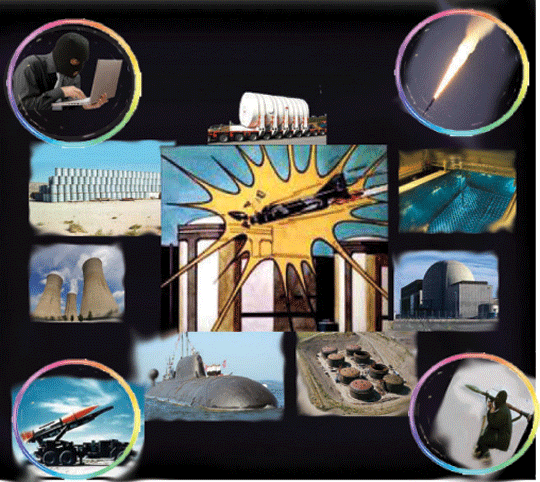
The $775 million emergency centers aren’t a direct response to recent terrorist attacks across the globe. Their installation is part of nuclear safety guidelines that were rolled out in 2013. They will be installed in Kagoshima first, and will then be built elsewhere in Japan.
Among other safeguards, there’ll be a control room from which staff can remotely cool reactors in case an aircraft crashes into them. The company hopes to have installation finished by 2020, the same year nearly a million foreigners will be in the country for Tokyo’s Summer Olympic Games.
Japan—one of the most quake-prone nations on Earth—has seen a lot of public opposition in the face of the government’s return to nuclear energy after the Fukushima tragedy. Problem is, the island country is largely mountainous and fairly small, so it lacks a lot of natural resources, and importing energy like natural gas is expensive. (Japan is the world’s largest importer of liquefied natural gas.)
Meanwhile, with the heightened global presence of Islamic State supporters, the Japanese government has been more concerned about facing possible terror threats in the future. Earlier this year, ISIS kidnapped and executed two Japanese journalists in Syria.
While there’s no way to truly terror-proof something, at least these steps are barriers to catastrophe.
Unknown – the methods, costs, time taken, to clean up Fukushima nuclear site
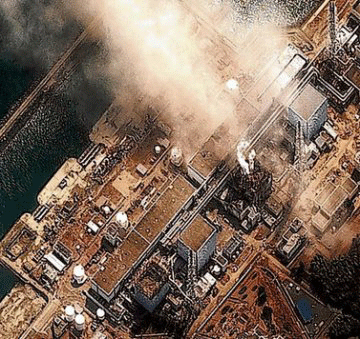
 Fukushima chief says ‘no textbook’ for nuclear cleanup, CTV News, Yuri Kageyama, The Associated Press , December 15, 2015 TOKYO — The man leading the daunting task of dealing with the Fukushima nuclear plant that sank into meltdowns in northeastern Japan warns with surprising candour: Nothing can be promised.
How long will it take to decommission the three breached reactors, and how will it be accomplished, when not even robots have been able to enter the main fuel-debris areas so far? How much will it ultimately cost? Naohiro Masuda, tapped last year as chief of decontamination and decommissioning for plant owner Tokyo Electric Power Co., acknowledges he is a long way from answering those questions definitively.
“This is something that has never been experienced. A textbook doesn’t exist for something like this,” Masuda told The Associated Press in an interview at TEPCO’s Tokyo headquarters Monday. Continue reading
Official data now reveals hugh extent of Fukushima radiation to USA West Coast
OFFICIAL DATA: FUKUSHIMA BOMBARDED WEST COAST WITH 790X NORMAL RADIATION http://www.thedailysheeple.com/official-data-fukushima-bombarded-west-coast-with-790x-normal-radiation_122015 DECEMBER 14, 2015 | JOSHUA KRAUSE | THE DAILY SHEEPLE |Ever since the meltdown of the Fukushima Daiichi power plant in 2011, our government has been pretty quiet about the environmental and health implications of that disaster. When the plant first melted down, much of our population was justifiably alarmed. After all, many of us remembered the Chernobyl incident and how the radiation it produced spread all across Europe, and in smaller amounts, the world.
But the government assured us that everything would be fine, and at most we would see a negligible amount of radioactive particles in the United States. Everyone who said otherwise was and still is, called a quack or a conspiracy theorist.
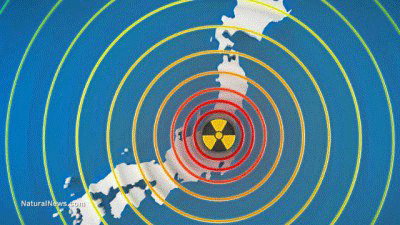
However, official government data that was collected in 2011 has just seen the light of day, and it suggests that our initial concerns were probably correct. The information was collected by officials with Los Angeles County when concerns were raised by residents. After state and federal agencies failed to test the area for radiation in a timely manner, the county hired their own people to run the test. Natural News reported on the results.
Samples were taken between April 29 and May 2, 2011, approximately seven weeks after the radioactive releases from Fukushima. The county found that gross alpha radiation levels at a location in Los Angeles were 300 femtocuries per cubic meter (fCi/m3), and levels at a Hacienda Heights location were 200 fCi/m3.
For context, the Lawrence Livermore National Laboratory reports the average (annual median) level of gross alpha activity for the state of California as just 0.38 fCi/m3 – that is, 790 times lower.
The levels detected in Los Angeles County were a full 100 times higher than the level that requires an investigation at a U.S. nuclear laboratory, according to the Environmental Monitoring Plan at Brookhaven National Laboratory: “If the gross alpha activity in the [air] filters is greater than 3 fCi/m3, then collect more samples in the vicinity, and project manager will review all detections above the limits … All values greater than the above-stated gross alpha/beta concentration shall trigger an investigation.”
Finally, the Los Angeles County levels were almost 15 times higher than the federal regulatory limit for alpha radiation, which is 21 fCi/m3, according to a 2010 document from Idaho National Laboratory.
Moreover, the alpha radiation emitting particles that were deposited on the West Coast are incredibly dangerous for humans. While Gamma and Beta Radiation have far more power and penetration, Alpha rays produce a tremendous amount of damage in the human body when ingested. Because they don’t penetrate materials like Gamma rays do, all of their energy is deposited into the cells that reside near the particle.
More importantly, it doesn’t take very many of these particles to ruin your long-term health. For instance, if you were exposed to a temporary large dose of radiation, your body could probably recover from it, perhaps without even developing cancer. But when the particle itself is embedded in your tissue for weeks, months, and in some cases for years, as it destroys and mutates surrounding cells over and over again, you can expect a significantly shorter lifespan. Even if the amount radiation is small, it’s also continuous, and its source is difficult to remove
So while the government was telling us that everything was hunky dory in the weeks after the Fukushima meltdown, major West Coast cities like Los Angeles were being drenched in alarming levels of this radioactive waste.
Who knows how much of that fell onto the countless farms in the Central Valley, which feed much of the United States? And since they failed to inform us about the danger we were in then, who knows how much danger we are in now? Our government hates to admit when its wrong (or they won’t admit that they lied to us), so if we are still in danger, somehow I doubt they will have anything to say to us now.
Delivered by The Daily Sheeple
We encourage you to share and republish our reports, analyses, breaking news and videos (Click for details).
Contributed by Joshua Krause of The Daily Sheeple.
Joshua Krause is a reporter, writer and researcher at The Daily Sheeple. He was born and raised in the Bay Area and is a freelance writer and author. You can follow Joshua’s reports at Facebook or on his personal Twitter. Joshua’s website is Strange Danger .
High level nuclear waste into the ocean: Japanese govt’s latest idea
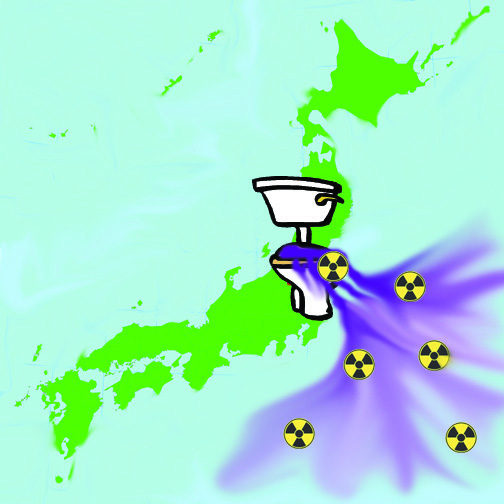 Japan to consider ocean disposal of nuclear waste http://ajw.asahi.com/article/behind_news/social_affairs/AJ201512120027 December 12, 2015 THE ASAHI SHIMBUN
The industry ministry will consider the feasibility of burying high-level radioactive waste from nuclear power plants under the seabed, which a working panel said Dec. 11 could be a “highly appropriate” solution.
In an interim report on disposal methods of highly contaminated materials from spent nuclear fuel, the panel said such waste could be disposed of in adjacent waters within 20 kilometers of the coastline.
It called the disposal method relatively realistic because the circulation of groundwater at sea is not as strong as on land. The panel said the site should be created in adjacent waters so that nuclear waste can easily be transported by ships.
The panel included the under-the-seabed disposal plan in nearby waters as a viable option for the final disposal site.
Based on this proposal, the ministry will set up an expert panel in January to discuss what specific technical challenges lay ahead.
The expert panel will discuss locations of active faults under the seabed and the impact of sea level changes to evaluate the feasibility of the project. It is expected to issue its recommendations by next summer.
While the government has encouraged municipalities to submit candidate sites for nuclear waste disposal, it is being forced to rethink this policy because no local government has come forward to provide a realistic disposal site.
Instead, it will hand-pick the “candidate sites from scientific perspectives” and unilaterally request local governments to comply with its research and inspection efforts.
Declassified report shows Fukushima nuclear situation much worse than we were told
Fukushima report declassified: Worse than we were told Rt.com 12 Dec, 2015 Fukushima nuclear power plant is still experiencing major contamination issues nearly five years after the earthquake, tsunami, and subsequent meltdown. A new declassified report from the US Nuclear Regulatory Commission, written on March 18, 2011 just days after the disaster, sheds light on just how bad it was.
We now know that “100% of the total spent fuel was released to the atmosphere from unit 4.” According to nuclear expert and whistleblower Arnie Gundersen in an interview with WBAI in New York, unit four contained more cesium “than in all 800 nuclear bombs exploded above ground”.
Cesium has been linked to thyroid cancer, which is on the increase in the Fukushima area since the tsunami, according to the US National Library of Medicine. The chemical is highly soluble in water and can find its way into foodstuffs that have been prepared in contaminated areas.
Another report this week revealed there are more than nine million bags of nuclear material piling up in Japan, according to the Fukushima Prefecture and the Environment Ministry.
Engineers at Fukushima are still dealing with fallout from four years ago. Last week, the radioactivity at Reactor 1 was measured at 482,000 becquerels per liter of radioactive cesium, Tokyo Electric Power Company (TEPCO) said.
This is 4,000 times higher than last year and the company believes the contaminated water stored at a nearby building may have leaked into the duct, according to The Asahi Shimbun.
Increases in other areas have not been registered, the company said.
400 to 500 tons of radioactive seawater that washed ashore in the 2011 tsunami is pooled in the tunnels, which lie next to a temporary storage facility for radioactive water being used to cool nuclear fuel inside the damaged reactors.
TEPCO said they plan to investigate the spike in radiation. https://www.rt.com/news/325663-fukushima-nuclear-report-declassified/
Japan-India nuclear deal sounds good, but not likely in practice
Much-feted Indo-Japan nuclear deal isn’t all that it’s made out to be and will mean little when implemented, First Post by Jaideep Prabhu Dec 13, 2015 News of an agreement on civil nuclear cooperation between India and Japan has been met with much fanfare in the Indian media. The announcement came on the second morning of Japanese prime minister Shinzo Abe’s three-day trip to India to attend the ninth annual India-Japan Summit. Despite the celebratory tone in India, the fine print and context of what was agreed upon between the two nations is less than satisfactory and will mean little in practice.
The nuclear deal has been a sensitive subject between Delhi and Tokyo for the past five years. ………
Japan holds an important position in international nuclear commerce. Over the years, the island nation has developed expertise in manufacturing several critical reactor components of high quality and become a key node in the supply chains of at least three of the major nuclear vendors, namely the French firm Areva and the American firms General Electric and Westinghouse. Among the major players, only Russia’s Rosatom and China’s two major state-run nuclear vendors – China General Nuclear Power Group (CGN) and China National Nuclear Corporation (CNNC) – are independent of Japanese components. As per Japan’s strict export controls stipulating end-user certification and other conditions, US and French nuclear firms would first need the permission of their Japanese suppliers before doing business with India. Tokyo’s consonance on nuclear cooperation with India thus achieved a greater import, not to mention the symbolic value India put on such an agreement as an indicator of its nuclear normalisation.
The declaration at the India-Japan Summit falls considerably short of a nuclear deal. The two sides merely signed a memorandum of understanding that has punted the legal and technical differences further down the road. In essence, this means that Japan has only agreed to the principle that it can conclude a civil nuclear cooperation agreement with India, that it will make an exception to its rule of not conducting nuclear commerce with a state that is not a signatory of the NPT. This is progress, no doubt, but what price Japan will extract for its concession in terms of technical requirements or how long the nuclear deal will take to operationalise is anyone’s guess……
1 This Month

Read the Public Inquiry Report, the Commissioners’ report, Surrendering Australia: The AUKUS Deception is available to download for free at aukuspublicinquiry.com. Or just watch the replay of the National Press Club Luncheon.


19 November – Webinar – The Reality of Reprocessing
Time: 11:00 AM Pacific Time (US & Canada) / 2:00 PM Eastern / 7:00 PM UK / 8:00 PM CET
Register for the Zoom Event Here



Shut down the radiation-damaged Heysham nuclear reactors now
To see nuclear-related stories in greater depth and intensity – go to https://nuclearinformation.wordpress.com

Say No to NASA’s Reckless Nuclear Reactor on the Moon
Say No to NASA’s Reckless Nuclear Reactor on the Moon
-
Archives
- November 2026 (94)
- October 2026 (302)
- September 2026 (339)
- August 2026 (330)
- July 2026 (355)
- June 2026 (287)
- May 2026 (306)
- April 2026 (356)
- March 2026 (251)
- February 2026 (267)
- January 2026 (308)
- December 2025 (358)
-
Categories
- 1
- 1 NUCLEAR ISSUES
- business and costs
- climate change
- culture and arts
- ENERGY
- environment
- health
- history
- indigenous issues
- Legal
- marketing of nuclear
- media
- opposition to nuclear
- PERSONAL STORIES
- politics
- politics international
- Religion and ethics
- safety
- secrets,lies and civil liberties
- spinbuster
- technology
- Uranium
- wastes
- weapons and war
- Women
- 2 WORLD
- ACTION
- AFRICA
- Atrocities
- AUSTRALIA
- Christina's notes
- Christina's themes
- culture and arts
- Events
- Fuk 2022
- Fuk 2023
- Fukushima 2017
- Fukushima 2018
- fukushima 2019
- Fukushima 2020
- Fukushima 2021
- general
- global warming
- Humour (God we need it)
- Nuclear
- RARE EARTHS
- Reference
- resources – print
- Resources -audiovicual
- Weekly Newsletter
- World
- World Nuclear
- YouTube
-
RSS
Entries RSS
Comments RSS

