Japanese government planning to subsidise Britain’s new nuclear build
 Tokyo eyes ¥1 trillion in financial support for Japanese firms pursuing U.K. nuclear plants http://www.japantimes.co.jp/news/2016/12/16/business/tokyo-eyes-%C2%A51-trillion-financial-support-japanese-firms-pursuing-u-k-nuclear-plants/#.WFONt9J97Gg The government is considering offering financial assistance through state-affiliated banks for projects won by Japanese companies for nuclear power plant construction in Britain, sources said Thursday.
Under study is a plan for the Japan Bank for International Cooperation and the Development Bank of Japan to invest in and provide loans to local companies that build and operate nuclear power stations, the sources said.
Visiting British Chancellor of the Exchequer Philip Hammond told reporters in Tokyo on Thursday that Britain is holding talks with the Japanese government, Hitachi Ltd. and Toshiba Corp. on a financial support framework for nuclear power plant construction projects in his country.
On the same day, Hammond met with Chief Cabinet Secretary Yoshihide Suga to exchange opinions about nuclear plant construction.
British Business, Energy and Industrial Strategy Secretary Greg Clark plans to visit Japan as early as next week and hold meetings with officials of Hitachi, Toshiba and the JBIC.
Under the envisaged scheme, the Japanese government expects to offer financial assistance to Horizon Nuclear Power Ltd., a unit of Hitachi, and NuGeneration Ltd., which is under the wing of Toshiba.
Taiwan to hold off on plans for problematic Japanese food imports
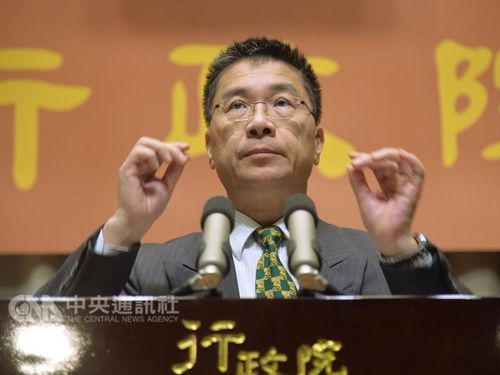
Cabinet spokesman Hsu Kuo-yung (徐國勇)
Taipei, Dec. 16 (CNA) The government is to put on hold a planned opening of food products from radiation-affected prefectures in Japan amid public misgivings about food safety, a Cabinet spokesman said Friday.
Hsu Kuo-yung (徐國勇) said in a news conference Friday that the Cabinet “has to first ensure a sound inspection and management mechanism,” before talking about any opening to food products from the affected areas of Japan.
Hsu pointed out that Premier Lin Chuan (林全) has stressed the importance of “rebuilding public trust in the government’s management of food safety,” after presiding over a cross-agency meeting the previous day.
The premier also said that “without a sound inspection and management mechanism, there can be no question of such an opening,” according to Hsu.
Taiwan banned food imports from Fukushima, Ibaraki, Tochigi, Gunma and Chiba prefectures in the wake of the Fukushima Daiichi nuclear power plant meltdown following a massive earthquake and tsunami in Japan on March 11, 2011.
Amid reports that the government is planning to lift its ban on food imports from the radiation-affected prefectures except for Fukushima, several brands of Japanese natto containing packets of soy sauce from Chiba and Ibaraki have recently been found in Taiwan.
Hsu said that although food products from Fukushima and the surrounding prefectures are banned, there are composite packaging foods, such as the condiment sashets in packages of instant noodles, that have not been subjected to scrutiny.
“The government will review the issue and plug the loopholes,” Hsu said.
Before establishing a sound management mechanism, the government will not make a decision, “and there is no timetable for any such opening,” Hsu said.
He said that there will be three more public hearings on imports of controversial Japanese food products, saying that holding the public hearings is significant in three ways.
They are aimed at establishing a model for future public hearings, then at clarifying false information, as the public has seen all kinds of rumors flying recently.
The public hearings will also be presided over by civic groups rather than by government officials as in previous hearings, in a bid to collect views from the public on how to plug loopholes for the reference of the government, he said.
Sheu Fuu (許輔), director of food safety office under the Executive Yuan, said that all questions raised by the civic groups will be discussed and clarified one by one.
The Cabinet held 10 public hearings on the safety of Japanese products around Taiwan from Nov. 12-14 after announcing them Nov. 10, but critics saw them as essentially being held for show to pave the way for lifting the ban.
Questions were raised about why the government seemed in such a rush to hold the hearings, and some of them ended in chaos amid protests.
Sheu said that if the public still cannot accept the situation after the three public hearings, the government will review the contentious points, and if it cannot resolve such points and effectively manage food safety, “it will not rule out the possibility of maintaining the current ban.”
Fukushima evacuee poll finds kids in eight Yokohama-area households had experienced bullying
YOKOHAMA – Eight households that evacuated from Fukushima following the 2011 nuclear disaster said their children have experienced bullying at their new schools, according to a survey of 61 families suing the government and the nuclear plant operator.
Of the 61 households, 30 have children in elementary or junior high school, and eight said their children had been verbally abused or even physically assaulted at schools in and around Yokohama, according to sources involved with the lawsuit.
One of the sources quoted a plaintiff as saying that person was “unaware of a causal relationship between evacuation and bullying.” But the source also noted there may also be more bullying because some children don’t want to talk about being bullied.
“In reality, it seems there are more cases,” the sources said in a statement.
Lawyers conducted the survey after it was revealed last month that a 13-year-old in Yokohama was bullied by classmates after evacuating from Fukushima, and called “germ” and extorted for money while at elementary school.
That bullying case drew public attention, prompting the Yokohama Board of Education to investigate.
Among the children of the eight households citing bullying in the survey, a male student was told such things as “Keep away from us!” and “Fukushima people are idiots,” while attending a junior high school in Kawasaki, the sources said.
The survey did not count as bullying cases in which parents said their children did not get accustomed to their new schools or could not make friends, the sources said.
In the lawsuit filed with the Yokohama District Court, 174 plaintiffs from 61 households are demanding ¥4.07 billion ($34.4 million) from the government and the Tokyo Electric Power Company Holdings Inc., the operator of the Fukushima No. 1 nuclear power plant where three reactors melted down after a massive earthquake and tsunami in March 2011.
Fukushima Daiichi Unit 2 Newly Erected Platform’s Enigma

A bird’s eye view of Units 1 and 2 from the hill
On December 15, 2016, the newly elected Kashiwazaki mayor, Mayor Masahiro Sakurai, who has called for a conditional restart of the Kashiwazaki-Kariwa nuclear power plant, one of the world’ largest nuclear plants, when he was elected mayor of this coastal city in Niigata Prefecture, northwestern Japan on Nov. 20, visited the Fukushima daiichi nuclear plant.
TEPCO, operator of the crippled Fukushima No. 1 nuclear plant, eager to restart reactors at the Kashiwazaki-Kariwa plant, invited him to tour the Fukushima Daiichi Nuclear plant, so as to show him that they fully control the situation there.
During the election campaign, Masahiro Sakurai said he would “approve a restart of the halted nuclear plant if safety is confirmed and certain conditions are fulfilled.”
One condition is the construction of a road that residents can use for evacuation in case of an emergency at the nuclear plant. Masahiro Sakurai also promised to start decommissioning older reactors at the plant.
Tepco made Mayor Sakurai visit the Fukushima Daiichi plant site, some of its buildings, its central control rooms 1 and 2, and the land side frozen by the impermeable ice wall.
On the same day, Tepco released 6 photos of Mayor Sakurai’s visit. One of the pictures was taken while Sakurai viewed Units 1 and 2 from the hill, it shows a new platform erected by Tepco around unit 2. This new platform with extensive stairwells and levels running the length of the building, might be part of some work to remove the refueling floor so as to replace it with a defueling building.
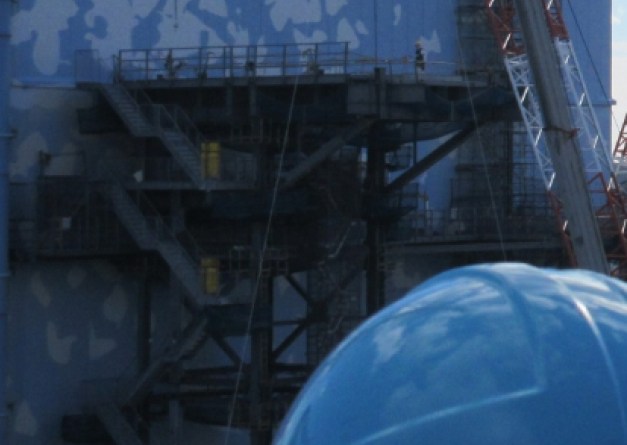
No information was yet provided by Tepco regarding that platform purpose.
Source : http://photo.tepco.co.jp/date/2016/201612-j/161215-01j.html
Food Products Imported from Fukushima Nuclear Disaster Zone Recalled in Taiwan and Hong-Kong
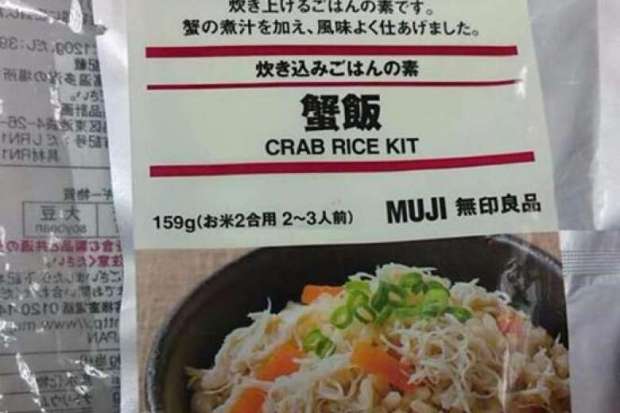
Muji ready meals, natto food products imported from Fukushima nuclear disaster zone recalled in Taiwan
TAIPEI – Two types of Muji ready meals were removed from shelves in Taiwan after they were found to have come from areas affected by the 2011 Fukushima nuclear disaster.
The Japanese lifestyle store removed 638 packets of the products from Tochigi prefecture voluntarily, Taiwan’s China Times reported on Wednesday (Dec 14).
The two products are the conger eel rice kit and the crab rice kit, said Ms Qiu Xiu-yi, northern district head of the Food and Drug Adminstration of Taiwan.
Muji Hong Kong said on Thursday that it was recalling the two products, following the reports in Taiwan.
“In consideration of customers’ concern, Muji Hong Kong has removed the related products from sales floor immediately and is recalling the related products,” it said on its website. “Customers can bring their purchased products to Muji stores in Hong Kong for refund.”
In Taiwan, natto or fermented soybean products imported by Yu Mao Trading were also found to have come from Chiba prefecture, another affected zone.
Five natto products, or 1,465 items in total, were recalled.
Companies which do not report the origin of food imports accurately can be fined NT$30,000 to NT$3 million (S$1,350 to S$135,0000), the Taiwanese report said.
Another Fukushima evacuee bullied at school: support group
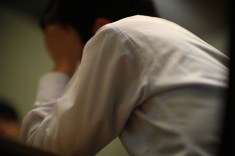
KAWASAKI, Kanagawa — A high school student who evacuated from Fukushima Prefecture in the wake of the 2011 nuclear disaster was bullied at a junior high school here, according to a legal team supporting evacuees.
The Kawasaki Municipal Board of Education has stated that there are currently no cases of bullying toward any pupils who have evacuated from Fukushima Prefecture in any of the city’s elementary or junior high schools. Since the student in question has come forward about bullying, however, the education board has begun an investigation into junior high school graduates as well, which would include this pupil.
According to the legal team, the pupil entered Kawasaki Municipal Junior High School in April 2012, and was verbally abused by classmates who told him, “People from Fukushima are stupid,” and, “Don’t come near me.” He was also punched and kicked, the team said. The pupil’s family consulted with the school but no solution was reached as his classmates denied any bullying.
The pupil’s parents appeared at the Yokohama District Court for a class action lawsuit filed by evacuees to demand compensation from the government and Tokyo Electric Power Co. (TEPCO), operator of the crippled Fukushima No. 1 Nuclear Power Plant, and stated that although they have had a tough time over the past few years, they have received support from people around them.
At this lawsuit, the parents of a boy who evacuated from Fukushima Prefecture to an elementary school in Yokohama said, “My son stopped attending school as a result of bullying.”
Meanwhile, it has been learned that another male student from Fukushima Prefecture was bullied in Yokohama.
http://mainichi.jp/english/articles/20161215/p2a/00m/0na/015000c
Taro Yamamoto Defends Fukushima Victims’ Rights
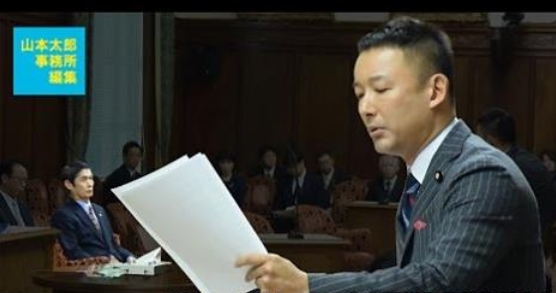
Taro Yamamoto of the Liberal Party is a member of the Chamber of Deputies. He is one of the few parliamentary members defending the rights of victims of the TEPCO Fukushima Daiichi nuclear power plant disaster.
The Association Nos Voisins Lointains 3-11 translated the questions of Taro Yamamoto to the Chamber of Deputies’ Special Commission on Reconstruction on 18 November 2016*. The content of his questions reveals the inhuman situation faced by the victims in the framework of the Japanese government’s return policy .
Taro Yamamoto’s questions (video in Japanese)
● Taro Yamamoto
Thank you. I am Taro Yamamoto from the Liberal Party. I would like to ask questions as the representative of a parliamentary group.
Declared on 11 March 2011, the state of nuclear emergency has not yet been lifted to date, 5 years and 8 months after the accident at the TEPCO Fukushima Daiichi nuclear power plant. Today, I will address a subject that is well known by the members here present.
I will start with the subject of the radioactivity controlled area. This is a demarcated area frequented by workers with professional knowledge who are exposed to the risks associated with ionizing radiation, such as an X-ray room, a research laboratory, a nuclear power plant and so on.
Here is my question. There are rules that apply to controlled areas of radioactivity, are not they? Can we eat and drink in such a controlled area?
● Government expert (Seiji Tanaka)
Here is the answer. According to the Ordinance on the Prevention of Risks from Ionizing Radiation**, eating and drinking are prohibited in workplaces where there is a risk of ingesting radioactive substances orally.
● Taro Yamamoto
Of course, it is forbidden to drink or eat there. So it’s obvious that it’s not possible to spend the night there, is it? Even adults cannot stay for more than 10 hours.
You are well aware of the existence of this Ordinance. This is a rule that must be respected in order to protect workers exposed to risks related to ionizing radiation in establishments such as hospitals, research laboratories and nuclear power plants, isn’t it?
It contains the definition of a radioactivity controlled area. This is Article 3 of the Ordinance in File No. 1. It states that if the situation corresponds to the definition described in Article 3/1 or to that specified in Article 3/2, the zone shall be considered as a controlled area and a sign shall be posted there. I will read parts 1 and 2 of this article.
1: The area in which the total effective dose due to external radiation and that due to radioactive substances in the air is likely to exceed 1.3mSv per quarter – over a period of three months! When the dose reaches 1.3mSv over a period of three months, a zone is called “controlled radioactivity zone”.
Part 3/2 refers to the surface density in the attached table.
Here is File No. 2. What will it be if we do the conversion of the density of the surface per m2?
● Government expert (Seiji Tanaka)
The conversion gives 40,000Bq/m2
● Taro Yamamoto
Thus, with 40 000Bq / m2, the zone is classified as a “controlled zone of radioactivity”. It is therefore necessary to monitor not only radioactivity in the air but also the surface contamination, ie the ground dose of radioactive substances, ie other elements in the environment, and to manage the area in order to protect workers from radiation-related risks, isn’t it?
A radioactivity controlled area is defined both by the dose rate of the ambient radioactivity and by the surface density of the radioactive substances. The point is that the risk in a situation where the radioactive substances are dispersed is quite different from that in the situation where the radiation sources are well identified and managed.
At present, the evacuation order applied to the evacuation zones following the nuclear power plant accident is lifted when the ambient radioactivity dose rate becomes less than 20mSv / year.
Here is my question. Concerning contamination, apart from the dose rate of ambient radioactivity, are there any conditions to take into account in order to lift the evacuation order? Please answer yes or no.
● Government expert (Takeo Hoshino)
Here is the answer.
Concerning the conditions necessary for the lifting of the evacuation order, as far as the radioactivity measurements are concerned, it is only the certainty that the annual cumulative dose rate of ambient radioactivity is less than 20 mSv.
● Taro Yamamoto
You did not understand. I asked you to answer yes or no. Are there any other conditions other than the dose rate of ambient radioactivity? To lift the order of evacuation below 20mSv / year, what are the conditions regarding the contamination?
The fact is that regarding contamination, there are no other conditions than the dose rate of the radioactivity in the air. This is abnormal. You, who belong to this Commission, certainly understand to what extent this situation is abnormal.
In the definition of a radioactivity controlled zone, apart from the dose rate of radioactivity in the air, account is taken of the substances dispersed and then deposited, that is to say contamination in the soil etc., which means a criterion of 40 000Bq / m2 is established for surface contamination.
However, in the return policy to return populations to territories where the annual cumulative dose rate is less than 20mSv / year, the condition of soil contamination is not considered necessary.
The latter is not an evaluation criterion, the only criterion used is the dose rate of the ambient radioactivity. Politicians and officials who consider this to be a regular situation do not deserve to receive wages paid from tax revenues.
Our job is to protect the life and property of the people. Now, you lighten those conditions. You create, at your discretion, a rule that is less stringent than that applied to workers with a professional knowledge of radioactivity. What are you doing !
Following the Chernobyl accident, laws have been established in Russia, Belarus and Ukraine, measuring both the dose rate of radioactivity in the air and the contamination of the soil. Why ?
That goes without saying. This is because it is difficult to grasp the amount of irradiation suffered by the population only with measurements of ambient radioactivity. In Ukraine, with 5mSv / yr, a measure corresponding to that of the controlled radioactivity zone, the population is evacuated, and even with 1mSv / year which corresponds to the limit of the average dose rate for the public, ‘they have the right to move out. This law known as the Chernobyl law is still in force.
On the other hand, what is the situation in Japan? According to the Cabinet decision of June 2015, the evacuation order is lifted if the dose rate in the air is less than 20mSv / year. There is no problem ! For example, if you stay 24 hours in a controlled area of radioactivity, you are exposed to a dose of 5.2mSv / year.
However, the criterion for the lifting of the order and the return of the population is 20mSv / year or less. The zoning is determined by a dose 4 times that of a controlled zone of radioactivity.
Go back, live there, continue your life, rebuild, what is this! I can find no other expression than “completely twisted”.
Can we still call it the State? I think it’s better to call it the mafia. It’s so inhuman!
The government appears to have adopted dose limits of 20 to 100mSv as recommended by the ICRP*** on radiation exposure limits after an accident. However, when considering the health effects on the population, the most reasonable would be to adopt 1mSv, the lowest dose measurement for radiation limit for public health, according to the global consensus.
The right to evacuate must be granted to the population until the dose rate falls below 1mSv / year. The right to decide when to return belongs to the victims. Why do you determine zoning as you wish? The State must make every effort to reduce the dose as close as possible to 1mSv / year, maximum dose in a normal situation. Then the State, the administration should warn the people, and let them make their own decisions. That would be the fairest way. The State should behave like this.
Who is responsible for this accident? It is TEPCO. Who supported it? It is the State. It is clear who the perpetrators of the crime are. And yet, only the charges of the criminals are being relieved. If it is permissible to develop zoning and associated rights to the convenience of the criminals, this world is a hell then.
In the town of Minamisoma in the coastal region of Fukushima Prefecture, three types of evacuation zone were established after the earthquake. In July 2016, the evacuation order was lifted in the “evacuation order lifting preparation area” and in the “restriction of housing” area. There is only one home with two people remaining in the “area where the return is difficult”.
According to the State, 90% of the territories of Minamisoma are safe.
There is a group called “The Measurement of Environmental Radioactivity Around the Fukushima Daiichi Nuclear Power Plant”**** composed mainly of residents of Minamisoma. Since 2012, its members are taking measurements of soil contamination in the vicinity of the neighborhoods of the members and in residential areas. They provided the information. Please look at File No. 3. You see a colored map ( Note from the translator: see the map here, https://dunrenard.wordpress.com/2016/11/12/the-minamisoma-whistleblowers-fukushima/ )
This is the map of soil measurements collected and measured in the territories where the decontamination works have been completed. The colors show the levels of contamination. The blue colored area indicates where the contamination measurements are below 40 000Bq / m2, ie below than the level of a radioactivity controlled zone. There is only one, at the right bottom. Apart from this one, at all other places, the colors show corresponding measurements above the measurements of a controlled zone of radioactivity. There is even a colored place in gray where the measurements exceed 1 000 000Bq / m2. There are people living there!
Compared to the extraordinary ambient radioactivity dose rate observed immediately after the accident, the dose rate of radioactivity in the air decreased considerably. It is not the same order of magnitude. However, according to the inhabitants, even with 0.1μSv / hr of ambient radioactivity dose rate, soil measurements may still be equivalent to those of a radioactivity-controlled zone.
It is senseless that only the dose rate of ambient radioactivity should be taken into account as a condition for lifting the evacuation order. It is so irresponsible and neglectful. It is exactly the opposite of protecting the life and property of the people. People do not live floating in the air at 1 meter above the ground*****. They sit down, lie on the ground, they stop to chat, standing or sitting. Children do not play on asphalted roads only. They can venture into the bushes. Children play freely. There are some who put soil in their mouth. Remember how you were when you were still a child. Gutters where contamination is concentrated provide one of the favorite playgrounds for children.
Mr. Masuchika Kono, a member of the above-mentioned project group, who was with the Engineering Department of Kyoto University, a specialist in nuclear engineering, a graduate of radiation manipulation, collected soil at the Minamisoma Michi-no-eki roadside (service and parking area), and passed it through a sieve of about 100 microns.
The measurements showed 11 410Bq / kg of Cs. These dust rises with the winds and the passages of the vehicles. In daily life, dust is inhaled by the people. You do not take internal radiation into account, do you? You calculate the amount of internal radiation by applying just a coefficient, but do not include internal radiation in real life.
Some people self-evacuated from areas outside the evacuation areas under evacuation order, as they consider that the State policies do not protect the children, their lives. To these persons, within the framework of the Disaster Relief and Disaster Relief Act******, dwellings – “temporary accommodation”******* – were made available.
However, in March 2017, next year, the free housing provision will be suspended. You are telling them that there is no more problem; Why then stay evacuated? That’s it, isn’t it? Those displaced from areas outside evacuation areas under evacuation order fled because their home and living environment are contaminated as a result of the TEPCO nuclear accident.
However, since their homes are located at some distance from the nuclear power plant, they were not included in the evacuation zones that the state established unilaterally. As a result, these displaced persons receive no public support except the provision of free housing. And even this aid will stop in March 2017.
It’s incredible to stop helping them. Moreover, what does it mean to stop the provision of free housing in March? It is the season when mobility is at its highest in the year. You expel them, force them to relocate at the time of the year when rents and costs become more expensive! You have no compassion. You are ruthless!
“I am afraid of the investigators of the Tokyo Metropolitan Prefecture visiting door to door. I hide under the cover for fear of hearing the ringing at the door. When I opened the door, the investigator stuck his foot into the door so that I could not close it. With a loud voice so that all the neighbors could hear, he shouted at me “you know very well that you can only live here until March”. I know, but I cannot move. “
The next person. “The Tokyo Metropolitan Prefecture demands that we move out in a fierce and haughty manner. We had to leave our home because of the accident at the nuclear power plant. I do not understand why they are expelling us again. I gave in to the pressure, and I filled up the Tokyo Metropolitan Prefecture housing application, but it was against my will. Psychologically, I can not accept the fact, and it causes me pain. They are forcing me to move into a prefecture owned housing where no one from Fukushima lives close by. It’s like abandoning the elderly in a mountain. “
The following testimony. It is a home where just a mother and her young children live. The other members of the family remained in Fukushima. They lead a double life. “If there is no more free housing provided, there is no resource to pay the rent. The only dream left to my child is his piano lesson. Do not take away that dream. “
The next person. “The deadline has not arrived …”
(Note from the translator : Taro Yamamoto can no longer hold his tears) Who does something like that? I beg your pardon. Who orders such a thing? It may be admitted that the State would ask local governments to carry out polite negotiations with the displaced. No, it is nothing but expulsion. Does not the State intend to stop such a situation? I do not allow you to say that you did not know. You see the problem before you now!
“Constant phone calls, visits without notice, and they shout at me asking what my intention is. They send documents to file, and leave passing notices in the mailbox. I am completely exhausted, physically and psychologically. “ This is understandable. They continue to live like that since the explosions of the nuclear power plant, and 5 years and 8 months later they are tracked down in a similar situation. To what extent do you want to tear the hearts of the victims? It is enough for the State to take a decision. This person says that the metropolitan prefecture of Tokyo has asked him to leave the housing, because the prefecture must return that housing for civil servants in March. It is monstrous that the State asks the Tokyo Metropolitan Prefecture to evict the evacuees and restore the house in proper condition.
These were testimonies of displaced people.
According to my research, to date there are 9327 vacancies among the housings for civil servants in the region of Kanto, including the Tokyo Metropolitan Prefecture and 6 other prefectures. It is enough for the State to take a decision, it can solve the problem, at least partially. Why should the inhabitants be expelled? Is it because, if there are tenants, those buildings could not sold during the financial bubble of the Olympic Games? It’s too cruel.
On April 4 last year, according to the newspaper Mainichi shinbun, the state does not request reimbursement from TEPCO for the rents of dwellings “considered as temporary housings”. Commission member Iwabuchi mentioned earlier that the government will oblige TEPCO to pay for the costs of the decontamination work. Why don’t you ask TEPCO to pay the rents? These people are the victims!
Finally, I would like to ask to the Minister. I would like you to answer two questions.
1st: You said that this is what the Fukushima prefecture wants. However, you are in a position to make suggestions to the Fukushima Prefecture. Please talk it over again. This situation is really irregular.
2nd: Please listen to the voices of the displaced. I think you have almost no opportunity to hear the voices of self-evacuees coming from locations outside the evacuation areas. Until then, you were too busy. Perhaps the people around you got acquainted with their testimonies. Please listen to them yourself. Today, too, they are here. There’s a break after this session. Could you give them 5 minutes? If you give us just 5 minutes today during the break, you can talk with the self-evacuees.
I would ask you to answer these two questions.
Secretary of State (Masahiro Imamura)
As I have already said, I am willing to consult with the prefecture of Fukushima, and I would like to ensure that the people concerned are not hurt. I will see to its smooth progress.
You said that self-evacuated people are here. I also have a plenary session after and I do not have time, but I will listen to them.
President (Mitsuru Sakurai)
Mr. Yamamoto, you have exhausted your time.
Taro Yamamoto
Thank you.
Please keep your promise. Thank you very much.
Credits to Kurumi Sugita from the Nos Voisins Lointains 3.11 Association for the japanese to french translation (http://nosvoisins311.wixsite.com/voisins311-france)
French to english translation by Hervé Courtois (Dun renard) from the Fukushima 311 Watchdogs (https://dunrenard.wordpress.com/)
* Source : Site web de Taro Yamamoto
** Ordinance on Prevention of Ionizing Radiation Hazards, Ministry of Labour Ordinance No. 41 of September 30, 1972, Latest Amendments: Ministry of Health, Labour and Welfare Ordinance No. 172 of July 16, 2001
*** International Commission on Radiological Protection
**** Fukuichi shûhen kankyôhôshasen monitoring project
***** The measurements of ambiant radioactivity are taken at 1 meter above the ground.
****** Saigai kyûjohô, Law of assistance in case of disaster , laws N°118 of octobre 18, 1947
******* Minashi kasetsu jyûtaku. Rental housing managed by private agencies inhabited by evacuees whose rent is borne by the central government or local governments.
New Fukushima evacuee bullying case emerges at Tokyo school

Garbage taken home by a bullied student in Tokyo’s Chiyoda Ward (Provided by the student’s mother)
After school bullying cases emerged recently in cities including Yokohama and Niigata, another student who was evacuated from Fukushima Prefecture after the 2011 nuclear disaster has come forward.
The latest case, at a junior high school in the capital’s Chiyoda Ward, involved the victimized student being intimidated into paying for three other students’ sweets, juices and other goods, worth about 10,000 yen ($87).
The case came to light after the student and the student’s mother reported the bullying to the school.
“It is regrettable that bullying existed at this school. I will do my utmost to prevent it from happening again,” said the principal of the Chiyoda Ward government-run school.
The victim told The Asahi Shimbun that some students had begun to utter the taunt “hinansha” (evacuee) around summer 2015.
This year, the name-calling escalated, and the bullies started making insulting and threatening remarks such as, “You don’t have money as you came from Fukushima,” “Can’t you pay the bills for us as you are poor?” and “I will reveal that you are an evacuee.”
The bullies then manipulated the victim into paying for their doughnuts, juices and other goods.
The picked-on student was also pressured by the student’s tormenters to take home their trash, which they did by putting it into the student’s school bag.
At school, the student’s textbooks and notebooks went missing. Some of them were found in a corner of the classroom with ripped pages.
“Since my elementary school days, I have been bullied on the grounds that I am an evacuee. I was not able to tell that to anybody. It was painful. I thought that if I can silence other students with money, I will do it,” the student said.
In late November, the student’s mother noticed all the garbage in her child’s school bag. Finally the student told the mother what had been happening, and then reported the case to the school, along with the mother.
The school investigated 15 pupils but was not able to confirm that the victim has been bullied on the grounds that the student was an evacuee from Fukushima Prefecture.
However, three of those investigated admitted that the student had paid their bills. The school confirmed that the bills totaled about 10,000 yen.
The school said that it did not investigate the missing books, as it was not clear when they had disappeared.
“I had thought that the school would investigate who dumped them,” the mother said of the missing books, adding, “I want the school to deal with the case by paying more consideration to the bullied student.”
Nuke crisis compensation costs tacked onto power bills to face 4 tril. yen cap

The Economy, Trade and Industry Ministry is set to limit the amount of additional costs of compensating those affected by the Fukushima nuclear crisis, tacked onto “wheeling charges” that power companies pay to use power lines, to 2.4 trillion yen, sources close to the ministry said.
The amount would eventually be added to power charges that consumers pay. Moreover, the ministry admitted that the total amount to deal with the aftermath of the nuclear disaster, which it estimates at 21.5 trillion yen, will certainly increase further.
The ministry made the disclosure at a meeting of the ruling Liberal Democratic Party (LDP) panel on the issue on Dec. 12 in response to concerns expressed by LDP legislators that the cost of dealing with the crisis could rise.
The estimated total amount of compensation for the Fukushima crisis, which had been estimated at approximately 5.4 trillion yen in 2013, has grown to about 7.9 trillion yen.
Following the outbreak of the nuclear crisis, a system has been established under which Tokyo Electric Power Co. (TEPCO), operator of the crippled Fukushima No. 1 Nuclear Power Plant, and other major power companies contribute funds for compensation payments in proportion to the outputs of their nuclear plants.
In order to secure funds to cover an increase in the total compensation cost from 5.4 trillion yen, the ministry has proposed to a panel of experts on decommissioning of the Fukushima plant and compensation payments that the additional cost be added to wheeling charges. Not only major power companies but new market entrants would be required to foot the bill, which would eventually be added to power charges paid by consumers.
The ministry explains that it aims to require market newcomers to foot part of the compensation cost in order to “prevent consumers who have benefited from nuclear power by major power companies from switching to new power companies to avoid footing the compensation cost.”
However, some experts have pointed out that such a move would run counter to the liberalization of the power market designed to spur new market entries.
Moreover, since the industry ministry is authorized to set the amount of wheeling charges at its own discretion without going through Diet deliberations, some members of the experts’ panel and the LDP have voiced concerns that the amount of compensation costs passed onto consumers could unlimitedly snowball.
In response to such concerns, the ministry is considering obligating power companies to clearly show the amount of compensation cost each consumer is required to shoulder in detailed statements on power charges. Moreover, if the amount of compensation were to increase further, the ministry would consider other measures to cover the additional cost, which could also increase the burden on consumers.
The industry ministry has also disclosed that the estimated cost of dealing with the accident, which it released on Dec. 9, does not include the expense of creating hubs for reconstructing affected areas where residents are unlikely to be able to return in the foreseeable future and that of disposing waste to be generated when fuel debris is removed from the crippled reactors.
Therefore, the estimated total cost of dealing with the aftermath of the disaster, which has almost doubled from 11 trillion yen as of 2013 to 21.5 trillion yen, will certainly increase further.
http://mainichi.jp/english/articles/20161213/p2a/00m/0na/012000c
More Evacuees Sue Govt, TEPCO over Fukushima N-Accident
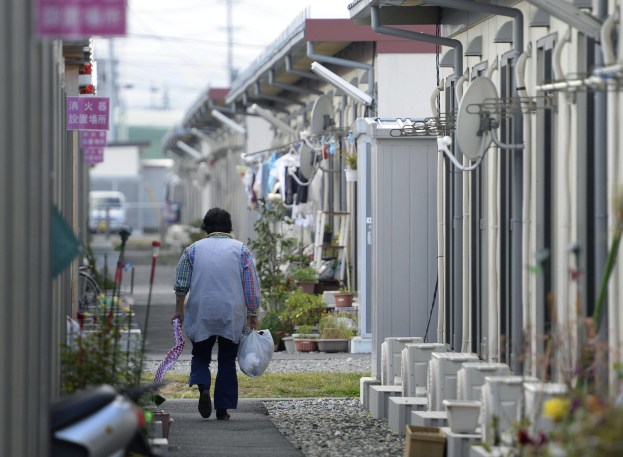
Fukushima, Dec. 12 (Jiji Press)–A group of 295 people, mainly nuclear disaster evacuees, on Monday joined lawsuits against the Japanese government and Tokyo Electric Power Company Holdings Inc. over the Mach 2011 meltdowns at TEPCO’s Fukushima No. 1 power plant.
Filing their suit with Fukushima District Court, the plaintiffs, many of whom were evacuees in and outside Fukushima Prefecture, demanded that the government and TEPCO pay compensation and restore conditions before the nuclear accident.
The group, made up of men and women from minors to 89 years old, said they were forced to evacuate and deprived of their peaceful lives because of the accident at the power plant in the northeastern Japan prefecture.
The team joined those who filed similar suits against the government and TEPCO in March 2013, raising the total number of plaintiffs to some 4,200.
At a news conference after the latest suit was filed, plaintiff Akemi Eda, who evacuated from the Fukushima Prefecture town of Namie, noted recent incidents in which children evacuated from the prefecture due to the accident have been bullied at schools.
Fukushima faces wall to hosting Olympic baseball
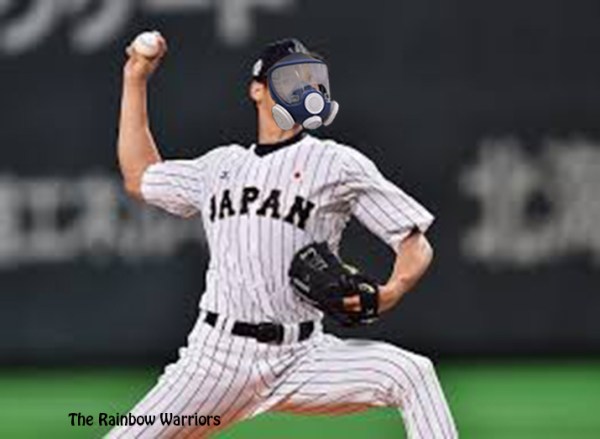
LAUSANNE, Switzerland – The world governing body for baseball and softball is calling on the organizing committee of the 2020 Tokyo Olympics to secure “a second stadium in the metropolitan area,” and is making it a prerequisite for the body to approve a plan to hold some games for the additional event in Fukushima Prefecture, it has been learned.
The organizing committee is finding it difficult to accept the idea of setting up “a second stadium” and negotiations are bound to reach a deadlock. The decision to make Fukushima an Olympic venue may have to wait until next spring or later.
The request from the World Baseball Softball Confederation was made known in a letter sent to the Tokyo Organizing Committee of the Olympic and Paralympic Games. Yoshiro Mori, the president of the organizing committee, revealed the content of the letter in an interview with The Yomiuri Shimbun on Wednesday. Mori is attending a board meeting of the International Olympic Committee held in Lausanne, Switzerland.
The IOC board approved of the plan to make Yokohama Stadium in the city of Yokohama the main venue for the additional event, but the decision on Fukushima was deferred.
According to Mori, the letter stated that the three possible venues in the prefecture – stadiums in the cities of Fukushima, Iwaki and Koriyama – were worthy candidates, but also set two conditions in order for the WBSC to approve the plan: to upgrade the stadium to be decided such as by turfing the infield and to secure a second stadium in the metropolitan area.
The IOC currently has plans to divide the six participating national teams into two groups for the preliminary round, so that eight to 10 games will be held in total including the final. The WBSC, on the other hand, intends to make the qualifying games a round robin of all six teams, which would likely increase the total number of games to from 17 to 19. With this in mind, the world body is hoping to add a second stadium to the event, such as Seibu Prince Dome in Tokorozawa, Saitama Prefecture, or Zozo Marine Stadium in Chiba.
Mori made it clear after the IOC board meeting that he would oppose the idea of a second stadium in the metropolitan area. He explained that the organizing committee has an understanding with the IOC that hosting an Olympic event in a disaster area should be considered separately as part of ongoing restoration efforts. “We have reconfirmed with the IOC that the principle of one venue still stands,” he said.
Financial concerns are another reason for opposing the second stadium plan. A senior official of the organizing committee said, “The budget will likely swell, and therefore, it would be difficult [to accept the idea].”
Mori had discussions with IOC President Thomas Bach at a luncheon on Wednesday. The IOC side informally told Mori that it backs the idea of hosting events in Fukushima and also that it will hear from the WBSC about the matter. The Japan side intends to continue negotiations with the WBSC while working in tandem with the IOC, and hopes to reach a conclusion at an IOC board meeting to be held next spring or later.
Deferring the decision to host the event in Fukushima will likely hinder preparations for the event, such as modifying the stadium and securing operation fees, and may put unwanted pressure on the disaster area.
The IOC board meeting on Wednesday came to a conclusion on the venues of five other additional events, including karate and surfing.
According to the decision, karate will be held at Nippon Budokan in Chiyoda Ward, Tokyo, while skateboarding and sport climbing will take place in the Odaiba and Aomi districts in Koto Ward, Tokyo. Tsurigasaki Beach in Ichinomiya, Chiba Prefecture, is the venue for surfing.
The organizing committee informed the board of its plan to cap the total cost of holding the Games at 2 trillion yen ($17.5 billion) and promoted Japan’s efforts to cut down costs.
An Option Discussed For Fukushima Contaminated Water: Evaporation
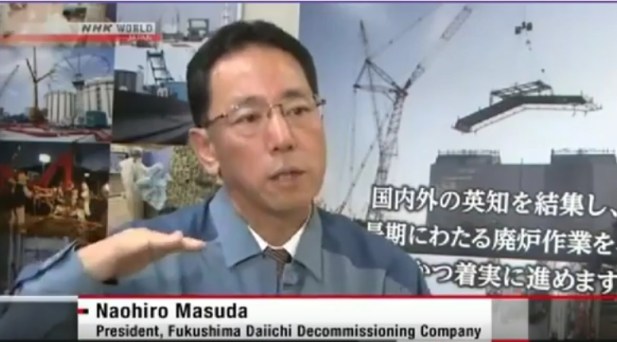
The person in charge of decommissioning the Fukushima Daiichi nuclear power plant has revealed a possible new way to deal with the radioactive water stored there: just let it evaporate.
“The amount of radioactive water at the plant continues to increase. We need to find a way to reduce it,” says Naohiro Masuda, president of the Fukushima Daiichi Decommissioning Company.
Masuda and his team of 6,000 workers have struggled with the problem of contaminated water. Workers must constantly inject water into the crippled reactors to cool molten debris and then pump it out. Groundwater flowing into the reactor buildings adds to the problem.
Executives with the plant’s operator, TEPCO, have said they will continue storing the water on site. Masuda says evaporation is one of the options being discussed.
“Diluting the contaminated water and discharging it into the ocean has been discussed. But another option is evaporating the water. This method was used following the Three Mile Island nuclear accident in the US,” he says.
Masuda says the task force of the government is discussing the methods. Masuda’s engineers and workers use purification equipment to remove most of the radioactive substance, but they can’t remove it all. Local fishermen strongly oppose releasing water directly into the ocean. The evaporation method could be an acceptable alternative for them, although some experts say its environmental consequences are unclear.
Handling contaminated water is just one aspect of the highly complex decommissioning process. Masuda believes that he’ll need to rely on the international community for support.
“We’ll be cooperating mainly with the United States, Britain, France, and Russia. We’re already getting help from people at nuclear-related facilities in these counties. We’re learning how to decommission and shut down facilities and deal with contaminated soil,” he says.
Abe Sees Fukushima Progress!!!
Radiation risks are being swept under the rug. That restoration plan voluntarily chooses to ignore the risks for people to be living in a contaminated environment, not differentiating between the external and internal exposures and their sure harmful consequences to people health. Not to mention the ongoing incineration of contaminated waste in the Fukushima Prefecture 19 municipal incinerators, continuously redistributing radioactive nanoparticles into the environment. All done in the name of economic reconstruction!
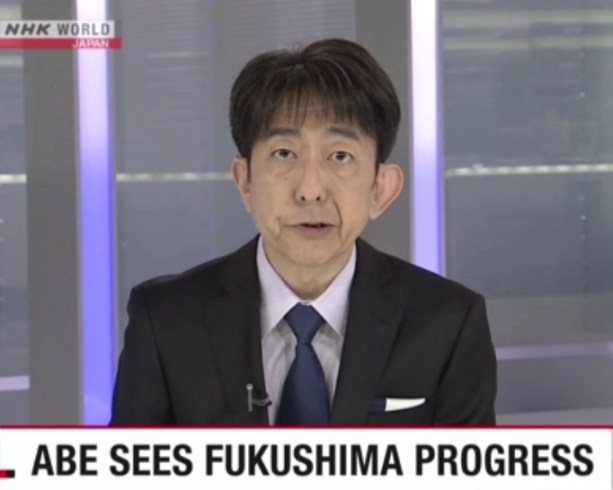
Cabinet to approve Fukushima restoration plan
Prime Minister Shinzo Abe has visited Fukushima Prefecture to inspect the progress of restoration following the 2011 nuclear accident.
Abe visited a machinery parts manufacturer in Minamisoma City on Saturday.
The government and Fukushima Prefecture have been working to create a cluster of robotics’ companies in the city.
The president of the manufacturer told the prime minister that he hopes the robotics industry will help revitalize the local economy.
Abe responded that the state-of-the-art robot testing facilities that had been built in the city should attract companies from around the world, and that he wants the region to develop around them.
Abe later visited the town of Kawamata, where an evacuation order is expected to be lifted next March.
He ate fermented natto soybeans manufactured in the town using local products.
Abe told reporters after the inspection that his government intends to help people from areas where the evacuation order will be lifted with housing and rebuilding their lives.
He also said his cabinet will approve a plan before the end of the month to accelerate Fukushima’s restoration. He said it includes partial governmental funding for decontamination in non-entry zones.
https://www3.nhk.or.jp/nhkworld/en/news/20161210_23/
Tsunami-swept Section of Joban Line, Northeastern Japan Reopens
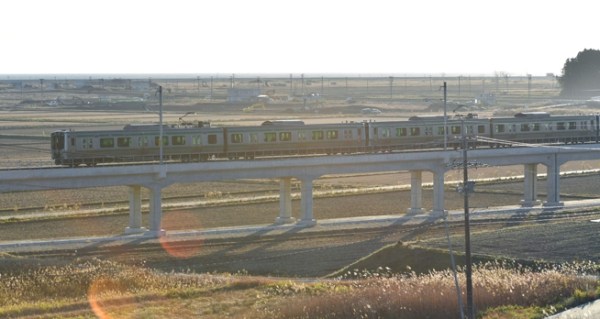
A Joban Line train travels further inland on Dec. 10 after operations resumed along that section for the first time in five years and nine months.
Tsunami-swept section of Joban Line finally running again
A massive project to move a section of track of the JR Joban Line from coastal areas, which involved building three new stations, is finally up and running nearly six years after the 2011 earthquake and tsunami disaster.
Operations for the new route further inland resumed Dec. 10.
The section that is back in business runs from Hamayoshida Station in Watari, Miyagi Prefecture, to Soma Station in Soma, Fukushima Prefecture.
The latest work means that all coastal sections traversing hard-hit Miyagi Prefecture are again connected by the lines operated by East Japan Railway Co.
However, parts of coastal sections in Iwate and Fukushima prefectures still remain impassable. Those sections will not be back in operation until 2020.
The new route involved moving a section covering 14.6 kilometers as much as 1.1 km inland, building three stations and constructing elevated tracks. The total cost came to 40 billion yen ($350 million).
When the tsunami struck the coast of the Tohoku region in northeast Japan, Joban Line trains were in operation. While one train was mangled beyond repair and stations were also destroyed, all passengers and train employees managed to flee to safety.
The writer Maru Ayase, 30, was a passenger on a train that departed Sendai and was headed for Iwaki, Fukushima Prefecture, on the day of the disaster.
The train she was on was delayed and forced to stop at Shinchi Station in Fukushima Prefecture when the magnitude-9.0 Great East Japan Earthquake struck.
Ayase recalled that the train car swung violently and she experienced whiplash. The woman sitting next to her grabbed on to her. The unnerving swaying seemed to last for 10 minutes.
Ayase and the woman sitting next to her decided to leg it to the next town. Walking along a road about a kilometer from the coast, Ayase saw a huge wave approaching and panicked.
Running for her life toward higher ground, Ayase managed to reach safety. Two young police officers who happened to be on the same train guided the 40 or so other passengers to a town government building further inland.
The driver and other workers on the train evacuated to a bridge over the rail lines at Shinchi Station.
The tsunami that struck the train cars and demolished the train station left only the bridge standing.
Recalling that day, Ayase said, “I feel a certain loneliness when I think that I was there to see Shinchi Station as it existed before the tsunami.”
http://www.asahi.com/ajw/articles/AJ201612100046.html
East Japan Railway line suspended since 2011 tsunami partially reopens
SENDAI (Kyodo) — A 23-kilometer section of East Japan Railway Co.’s Joban Line reopened Saturday five years and nine months after the March 2011 quake and tsunami.
The reopened section runs between Soma Station in Soma, Fukushima Prefecture, and Hamayoshida Station in Watari, Miyagi Prefecture, both in Tohoku in Japan’s northeast, the region hardest hit by the disaster.
There are six stations on the section. Following severe damage from tsunami, three of the six — Shinchi, Yamashita and Sakamoto stations — were moved inland by up to 1.1 km.
“This station is a symbol of recovery. I pray that many people visit this place,” said Prime Minister Shinzo Abe as he attended an opening ceremony for the new Shinchi station.
At 6 a.m. the first train to Sendai departed from Yamashita station in Yamamoto, Miyagi Prefecture.
“I become overwhelmed by emotion when I think about the roads after the quake. I celebrate the start of the first train,” Yamamoto Mayor Toshio Saito said at the ceremony.
“I want to go to Sendai for shopping,” said Tamaki Fujikawa, 12, who was at Yamashita Station with her mother and younger sister to see the train off.
Of the whole Joban Line, chiefly running along the Pacific coasts to connect Tokyo and Miyagi Prefecture, only a section in Fukushima Prefecture between Tatsuta Station in the town of Naraha and Odaka Station in Minamisoma, remains suspended.
The government hopes to enable the resumption of services between Tomioka and Namie stations, the section running closest to the Fukushima Daiichi nuclear power station that suffered meltdowns in the disaster, by the spring of 2020 after reopening other sections in 2017.
“I hope that the interrupted services restart soon,” said Yutaka Sugano, a resident of the town of Shinchi, 69, who was aboard the train going to Sendai.
http://mainichi.jp/english/articles/20161210/p2g/00m/0dm/063000c
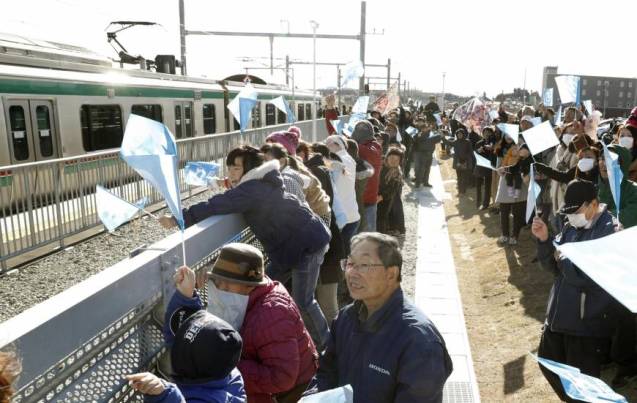
Local people attend the reopening ceremony for the new station in Shinchi, Fukushima Prefecture, on Saturday. The station on the Joban Line is on a section of line hardest hit by the 2011 Great East Japan Earthquake.
Section of East Japan Railways’ Joban Line, suspended since 2011 quake, partially reopens
SENDAI – A 23-km-long section of East Japan Railway Co.’s Joban Line reopened Saturday, some five years and nine months after the March 2011 Great East Japan Earthquake and tsunami struck.
The reopened section runs between Soma Station in Soma, Fukushima Prefecture, and Hamayoshida Station in Watari, Miyagi Prefecture, both in Tohoku, the region hardest hit by the disaster.
There are six stations on the section. Following severe damage from the tsunami, three of the six — Shinchi, Yamashita and Sakamoto stations — were moved inland by up to 1.1 km.
“This station is a symbol of recovery. I pray that many people visit this place,” said Prime Minister Shinzo Abe as he attended an opening ceremony for the new Shinchi Station.
At 6 a.m. the first train to Sendai departed from Yamashita Station in Yamamoto, Miyagi Prefecture.
“I become overwhelmed by emotion when I think about the roads after the quake. I celebrate the start of the first train,” Yamamoto Mayor Toshio Saito said at the ceremony.
“I want to go to Sendai for shopping,” said Tamaki Fujikawa, 12, who was at Yamashita Station with her mother and younger sister to see the train off.
Of the whole Joban Line, chiefly running along the Pacific coast to connect Tokyo and Miyagi Prefecture, only a section in Fukushima Prefecture between Tatsuta Station in the town of Naraha and Odaka Station in Minamisoma, remains suspended.
The government hopes to enable the resumption of services between Tomioka and Namie stations, the section running closest to the Fukushima No. 1 nuclear power station that suffered meltdowns in the disaster, by the spring of 2020 after reopening other sections next year.
“I hope that the interrupted services restart soon,” said Yutaka Sugano, a resident of the town of Shinchi, 69, who was aboard the train going to Sendai.
Fukushima’s Radiation Detected on Oregon’s Shores
That Fukushima’s radiation was detected on Oregon shores by Woods Hole chemical oceanographer Ken Buesseler thru its crowdfunded, citizen-science seawater sampling project and officially admitted is one thing, however a lot is still left unsaid or unknown regarding its possible biological effects on the marine ecosystem, as for lack of fundings or political will too few studies are being made.

1 This Month
26 September – International Day for the Total Elimination of Nuclear Weapons





PLEASE OPPOSE HR 8255 AND S.3639 – bills would accelerate satellite deployment, with no environmental review or safeguards – https://ncstd5li.quorum.us/campaign/169331/
To see nuclear-related stories in greater depth and intensity – go to https://nuclearinformation.wordpress.com
-
Archives
- September 2026 (305)
- August 2026 (330)
- July 2026 (355)
- June 2026 (287)
- May 2026 (306)
- April 2026 (356)
- March 2026 (251)
- February 2026 (267)
- January 2026 (308)
- December 2025 (358)
- November 2025 (359)
- October 2025 (375)
-
Categories
- 1
- 1 NUCLEAR ISSUES
- business and costs
- climate change
- culture and arts
- ENERGY
- environment
- health
- history
- indigenous issues
- Legal
- marketing of nuclear
- media
- opposition to nuclear
- PERSONAL STORIES
- politics
- politics international
- Religion and ethics
- safety
- secrets,lies and civil liberties
- spinbuster
- technology
- Uranium
- wastes
- weapons and war
- Women
- 2 WORLD
- ACTION
- AFRICA
- Atrocities
- AUSTRALIA
- Christina's notes
- Christina's themes
- culture and arts
- Events
- Fuk 2022
- Fuk 2023
- Fukushima 2017
- Fukushima 2018
- fukushima 2019
- Fukushima 2020
- Fukushima 2021
- general
- global warming
- Humour (God we need it)
- Nuclear
- RARE EARTHS
- Reference
- resources – print
- Resources -audiovicual
- Weekly Newsletter
- World
- World Nuclear
- YouTube
-
RSS
Entries RSS
Comments RSS

