Both Cesium 134 and 137 in Potato Chips

The ongoing Fukushima radiation contaminating the populace in Japan and abroad is still going unabated. Cleverly, authorities have succeeded in numbing millions of people to the danger of radiation from the Fukushima crisis.
Whether you are continously inhaling it (as they are incenarating radioactive waste under everyone noses for years now) or you are being dosed off in Cs 137 with some rains or snow, the most dangerous ways remains eating contaminated food. Even potato chips!
Kampu, a citizen food testing group found both cesium 134 and 137 in a potato chips bag. The chips were harvested and manufactured in 2015 with the potatoes coming from Ibaraki and Chiba prefectures. Both prefectures not included by the government in the areas having agriculture with risk of contamination.
The potato chip brand, Calbee is being sold in Japan and also globally including to the US. Calbee has a manufacturing plant in the US, so to determine what factory made a product may be a wise precaution.
So while the media prostitute and this lying led government is trying to tell everyone all Is ok, just know contaminated produces (at safe levels they will tell you ? when being caught) is openly being fed to you in restaurants (usually big chains in Japan thx Yoshinoya), convenience stores and super markets. It is also being sold all around the world.
Please note that these potato chips were harvested in Ibaraki and Chiba. .. not Fukushima. They are trying to tell you the contamination is limited to a few km away from the destroyed Nuclear Power Plant. It’s a damn lie and you should know better.
Anyway; Bon appetit!
Public funds earmarked to decontaminate Fukushima’s ‘difficult-to-return’ zone
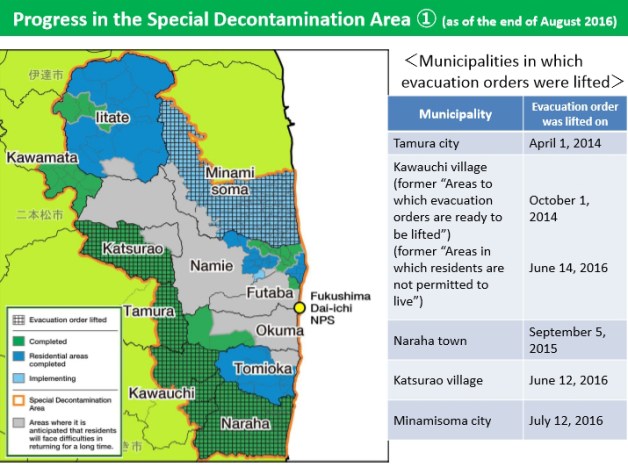
The so-called “difficult-to-return” areas are colored in grey
The government is set to inject some 30 billion yen in public funds into work to decontaminate so-called “difficult-to-return” areas whose annual radiation levels topped 50 millisieverts in 2012 due to the Fukushima No. 1 Nuclear Power Plant disaster, it has been learned.
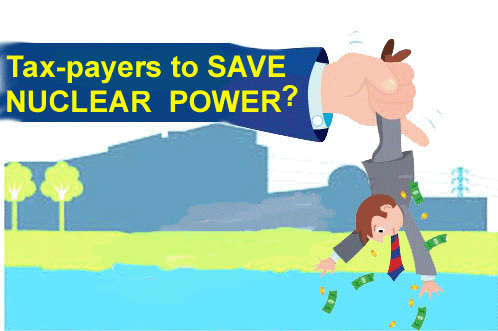
While the government had maintained that it would demand plant operator Tokyo Electric Power Co. (TEPCO) cover the decontamination expenses based on the polluter-pays principle, the new plan effectively relieves TEPCO from the hefty financial burden by having taxpayers shoulder the costs.
The new plan is part of the government’s basic guidelines for “reconstruction bases” to be set up in each municipality within the difficult-to-return zone in Fukushima Prefecture from fiscal 2017, with the aim of prioritizing decontamination work and infrastructure restoration there. The government is seeking to lift evacuation orders for the difficult-to-return zone in five years.
However, the details of the reconstruction bases, such as their size and locations, have yet to be determined due to ongoing discussions between local municipalities and the Reconstruction Agency and other relevant bodies.
The government is set to obtain Cabinet approval for the basic guidelines on Dec. 20 before submitting a bill to revise the Act on Special Measures for the Reconstruction and Revitalization of Fukushima to the regular Diet session next year. The 30 billion yen in funds for the decontamination work will be set aside in the fiscal 2017 budget.
In the basic guidelines, the government states that decontamination work at the reconstruction bases is part of state projects to accelerate Fukushima’s recovery and that the costs for the work will be covered by public funds without demanding TEPCO to make compensation. The statement is also apparently aimed at demonstrating the government’s active commitment to Fukushima’s restoration.
Under the previous guidelines for Fukushima’s recovery approved by the Cabinet in December 2013, the government had stated that it would demand TEPCO cover the decontamination expenses of both completed and planned work. However, it hadn’t been decided who would shoulder the decontamination costs for the difficult-to-return zone as there was no such plan at that point.
Masafumi Yokemoto, professor at Osaka City University who is versed in environmental policy, criticized the government’s move, saying, “If the government is to shoulder the cost that ought to be covered by TEPCO, the government must first accept its own responsibility for the nuclear disaster, change its policy and investigate the disaster before doing so. Otherwise, (spending taxpayers’ money on decontamination work) can’t be justified.”
http://mainichi.jp/english/articles/20161219/p2a/00m/0na/015000c
Russia and Japan Expand Nuclear Cooperation
“The key cooperation areas specified in the memorandum is the post-accident recovery at the Fukushima Daiichi plant, including radioactive waste management and possible decommissioning.”
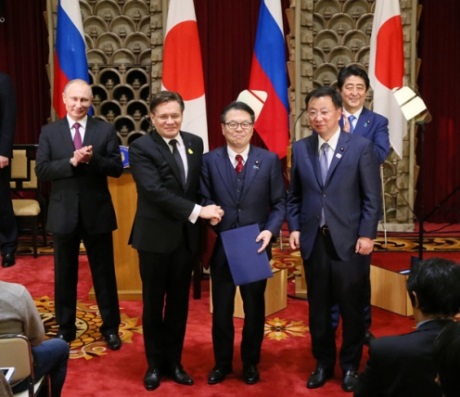
Putin and Abe applaud the signing of the memorandum of cooperation
Russian state nuclear corporation Rosatom has signed a memorandum of cooperation in peaceful uses of atomic energy with two Japanese ministries. One key area of cooperation under the agreement will be post-accident recovery at the damaged Fukushima Daiichi plant.
The memorandum was signed in Tokyo on 16 December during a meeting between Japan’s prime minister Shinzo Abe and Russian president Vladimir Putin. It was signed by Japan’s minister of economy, trade and industry, Hiroshige Seko; the minister of education, culture, sports, science and technology, Hirokazu Matsuno; and Rosatom CEO Alexey Likhachov.
In a statement, Rosatom said one of the key cooperation areas specified in the memorandum is the post-accident recovery at the Fukushima Daiichi plant, including radioactive waste management and possible decommissioning.
In addition, the parties will consider establishing a joint Russian-Japanese platform “to study the possibilities of fostering human resources exchange and exchange of ideas aimed at promoting innovative nuclear technologies based on the knowledge and experience of the two countries”.
“The memorandum serves as a tool to support and promote new mutually beneficial cooperation areas of business and scientific interest,” Rosatom said. The company said it has “all competences and experience” to help Japan in recovery efforts at Fukushima Daiichi and that it is “willing to become a partner of Japan in other possible joint mutually beneficial projects in the nuclear power area”.
The signing of the memorandum follows the signing of a cooperation agreement between the two countries in May 2009. This agreement was ratified by the Russian parliament in late 2010 and by the Japanese parliament in December 2011. Under the agreement, the two countries may cooperate in areas including uranium exploration and mining; the design, construction and operation of light water reactors; radioactive waste processing and management; nuclear safety, including radiation protection and environmental control; research and application of radioisotopes and radiation; and other areas based on additional written agreements between the two countries.
http://www.world-nuclear-news.org/NP-Russia-and-Japan-expand-nuclear-cooperation-1912164.html
The Scrapping Monju Saga
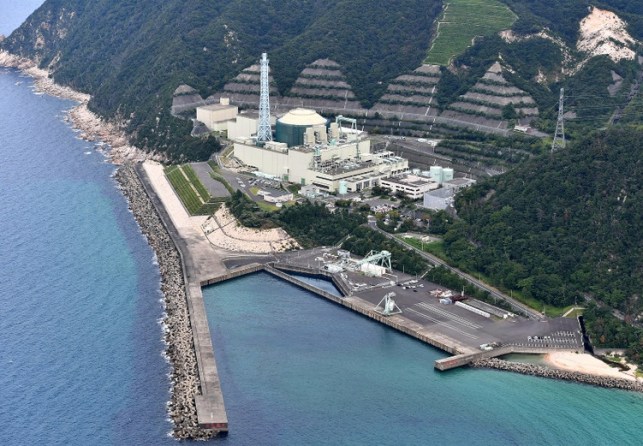
The Japan Atomic Energy Agency’s Monju fast-breeder reactor is seen in Tsuruga, Fukui Prefecture
Japan to scrap Monju reactor
The Japanese government will decommission the Monju nuclear reactor in Fukui prefecture after a series of safety problems.
Science minister Hirokazu Matsuno and industry minister Hiroshige Seko informed Fukui Governor Issei Nishikawa of the plan in Tokyo on Monday.
Government officials said resuming operations at the fast-breeder reactor would take at least 8 years and cost more than 4.5 billion dollars.
Instead, the officials plan to develop a new fast reactor through cooperation with France.
The government is considering installing a new experimental reactor at the Monju site and making the area a nuclear research and development center.
Nishikawa criticized the plan, saying the government hasn’t fully discussed whether nuclear fuel recycling is possible without the resumption of the Monju reactor.
He said there hasn’t been enough debate about a new operator if the government scraps the reactor.
https://www3.nhk.or.jp/nhkworld/en/news/20161219_20/
Plan to decommission troubled Monju reactor meets local criticism
TOKYO (Kyodo) — The central government’s plan to decommission the Monju fast-breeder reactor came under heavy criticism Monday from the governor of the prefecture where the trouble-prone nuclear facility is based.
Fukui Gov. Issei Nishikawa said the move to decommission the reactor is “totally unacceptable” after being told of the plan in a meeting with the central government on Monday.
“I strongly demand the government review the plan,” Nishikawa said, stating the central government had not provided sufficient justification for the decommissioning.
Nishikawa also said the Japan Atomic Energy Agency, which operates the plant, is not capable of safely dismantling the reactor, having been disqualified from operating the facility by a nuclear regulatory body last year following revelations of a massive number of equipment inspection failures in 2012 and other blunders.
The government was planning to officially decide to decommission the reactor at a ministerial meeting Tuesday but the schedule is likely to be pushed back as it is still trying to convince local residents about its plan.
In a separate meeting on Monday, the government said it expects scrapping the Monju reactor to cost more than 375 billion yen ($3.2 billion) over the next 30 years, based on a plan to begin the decommissioning process next year.
It expects 225 billion yen for maintenance, 135 billion yen for dismantling the facility, 15 billion yen for extracting spent nuclear fuel and preparation works for decommissioning.
The fee could further expand if the decommissioning process takes longer than estimated, the government said.
The government originally intended the Monju reactor to play a key role in achieving a nuclear fuel cycle aimed at reprocessing uranium fuel used in conventional reactors and reusing the extracted plutonium and uranium.
But it has remained largely offline since first achieving criticality in 1994, due to a leakage of sodium coolant and other problems.
In addition to revealing the decommissioning fee, the government also compiled a plan to develop an alternative fast reactor to Monju at the meeting attended by industry minister Hiroshige Seko, science minister Hirokazu Matsuno and Federation of Electric Power Companies Chairman Satoru Katsuno among others.
While maintaining its policy to promote the nuclear fuel cycle, the government plans to compile a roadmap by 2018 to develop the alternative fast reactor.
http://mainichi.jp/english/articles/20161219/p2g/00m/0dm/044000c
Community near nuke plant adopts statement against extending 40-year reactor rule
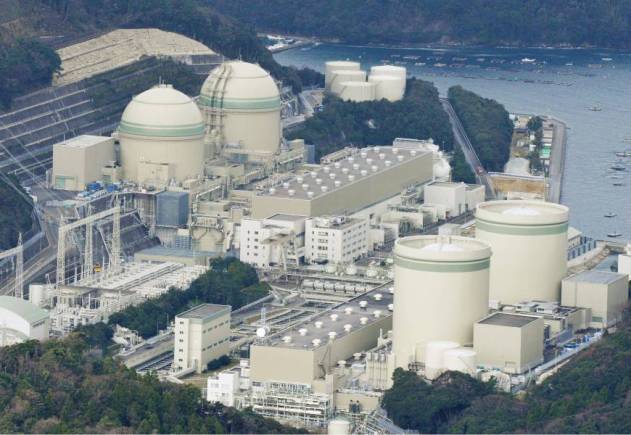
TAKAHAMA, Fukui — A residents’ association in a neighboring district of the Takahama Nuclear Power Plant here adopted a statement on Dec. 18 opposing the extension of the 40-year maximum lifespan rule for nuclear reactors.
Kansai Electric Power Co. aims to restart the No. 1 and 2 reactors at the Takahama plant to operate them over 40 years after the Nuclear Regulation Authority gave the green light for a 20-year extension.
The Otomi district in Takahama, with a population of 136 people as of November, which has adopted the statement, is located in the Uchiura Peninsula facing Wakasa Bay. It is separated from the mainland part of Fukui Prefecture by the Takahama plant, which is built at the base of the peninsula.
In the statement, adopted based on its draft, the neighborhood association expressed concern that restarting the reactors could cause further depopulation, saying that it will accelerate community deterioration due to the growing negative image of nuclear power after the 2011 Fukushima nuclear disaster. It is an unusual move by a residents’ association of a nuclear plant host municipality to approve a motion against the extension of reactor operation.
The association is set to submit the document to Kansai Electric, the Fukui Prefectural Government and the Takahama Municipal Government.
http://mainichi.jp/english/articles/20161219/p2a/00m/0na/003000c
8 Taiwanese firms to be fined for importing food from radiation-affected areas

Taipei, Dec. 18 (CNA) Fines will be imposed on eight companies which have been found to have imported foods from Japan’s radiation-affected areas, Taiwan’s Food and Drug Administration (FDA) said Sunday.
As of Sunday, a total of 39 Japanese food products and nearly 60,000 items have been pulled from store shelves in Taiwan, with many of them being soy sauce and wasabi packets that go with Japanese natto, or fermented soybeans.
FDA Northern Center Senior Executive Officer Wei Jen-ting (魏任廷) said 103 importers and 849 distributors island-wide have been questioned since Monday, urging vendors to check the food items they are selling, and notify health authorities if their products came from Fukushima, Ibaraki, Tochigi, Gunma and Chiba prefectures.
Of the 39 products, 26 have tested negative for radiation contamination, while 13 are still being screened, Wei said.
Among the eight importers of these problematic products, Tai Crown Co. (太冠公司) is subjected to a fine of NT$1 million, he said.
The FDA said it will step up inspection of food imported from Japan and will ask importers and distributors to list the places of origin, including the prefecture, on the product labels in Chinese.
Failure to provide Chinese labeling could also result in a fine of between NT$30,000 (US$937) and NT$3 million, it said.
The affected companies have one month to explain themselves, or else the fines will be issued in accordance with the law.
Environment Ministry to consolidate management of radioactive waste from Fukushima disaster
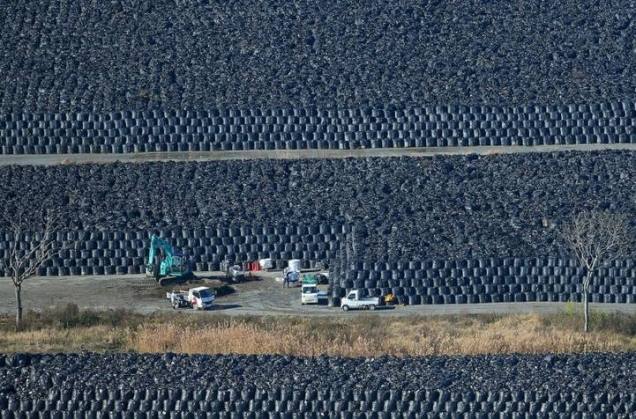
The government plans to set up a new bureau in the Environment Ministry to unify the handling of radioactive waste generated by the 2011 Fukushima disaster, informed sources said.
The bureau, which will also take on recycling management, will have around 200 staff and be created through a ministry reorganization in fiscal 2017 starting in April that will change the size of its workforce.
The reorganization will also abolish the Environmental Policy Bureau.
The government hopes the move will improve cooperation with municipalities damaged by the triple meltdown triggered at the Fukushima No. 1 nuclear plant in Fukushima Prefecture during the March 2011 earthquake and tsunami.
Thus far, measures to deal with radioactive waste, including decontamination, have been handled by three sections — the Waste Management and Recycling Department, the Environmental Management Bureau and the Director-General for Decontamination Technology of Radioactive Materials.
The ruling parties’ task forces on accelerating reconstruction from March 2011 are requesting the integration move in response to complaints from the affected municipalities.
Namie’s high recovery hopes haunted by dwindling coffers, fears of losing vital state dole
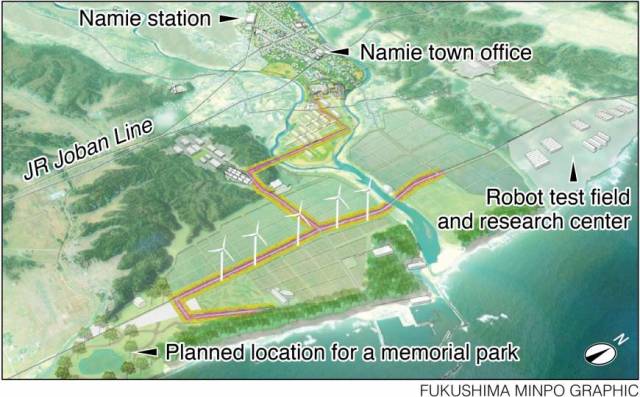
A robot testing facility, a robotics research center, a base for renewable energy and a memorial park — these are some of the plans the irradiated town of Namie, Fukushima Prefecture, has in mind for rebuilding after the triple reactor meltdown at the nearby Fukushima No. 1 power plant in March 2011.
But to pursue those plans, the town needs funds — a gigantic amount.
Namie is hoping to cover its funding needs with central government grants. But the two sides are still negotiating whether the municipality must shoulder a certain amount.
Also, there is no guarantee that the grants will continue beyond fiscal 2020, when the central government-designated reconstruction and revitalization period ends. This has residents worried that, even if the facilities are built, the municipality won’t be able to shoulder the maintenance and personnel costs needed to keep the facilities running.
“We are currently negotiating fiercely with the central government,” said Namie’s deputy mayor, Katsumi Miyaguchi, 61.
The town of Namie had the largest population in the Futaba district, but its coffers took a major hit after the calamity triggered by the Great East Japan Earthquake on March 11, 2011.
Residential tax revenue, which comprises about 30 to 40 percent of all tax revenues, sank to ¥500 million from about a ¥1 billion before 3/11 after the town decided to waive taxes for those with annual income below ¥5 million.
Whether to continue the waiver program is another difficult political issue.
The town was also waiving property taxes but plans to resume them when evacuations are lifted in some areas next spring. But land values have plunged since the meltdowns and any property tax revenues are expected to be low.
The same goes for corporate tax revenue, which has been hit by 3/11 business suspensions.
In short, Namie wouldn’t be able to pay the salaries of its town officials, let alone finance a reconstruction plan, if it weren’t for the central government grants.
As the centerpiece of its plan, Namie plans to build a facility adjacent to its town hall that would offer local information and house restaurants that serve up local specialties.
But that remains to be seen.
“We are making plans despite the uncertainty that the central government’s grants will cover them,” said a town official in charge. “If the funds don’t cover the entire plan, it may need to be revised.”
In the mayor’s office, currently in the city of Nihonmatsu, there is a calender showing the number of days that have passed since the disasters hit — over 2,000. But Namie is still far from recovery.
“The financial resources we’ve lost due to the disaster are excessive,” said Namie Mayor Tamotsu Baba, 68. “We desperately need the central government to continue its support.”
Another town executive agreed.
“If the government stops providing grants four years later when the reconstruction/revitalization period ends, it means the government has abandoned Namie,” the executive said.
Panel wants new power suppliers to add charges to bills to cover Fukushima costs
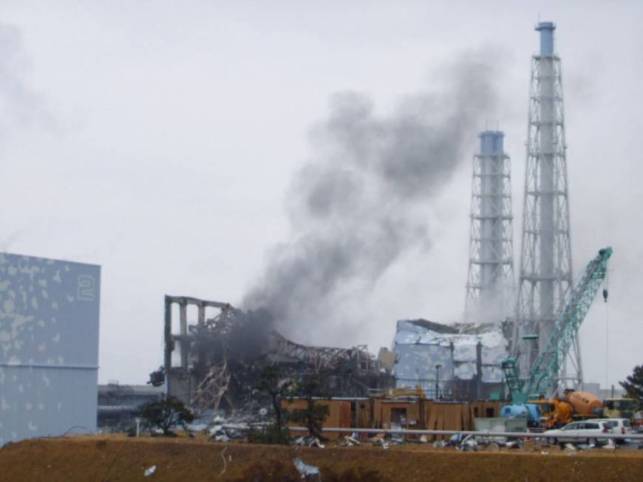
An expert committee of the Ministry of Economy, Trade and Industry put together a recommendation on Dec. 16 for energy policy revisions that would have new, small-scale power suppliers also help cover compensation for the Fukushima nuclear disaster and reactor decommissioning costs by adding charges to consumer power bills.
The estimated total cost of handling the Fukushima disaster has nearly doubled from 11 trillion yen to 21.5 trillion yen, with further increases possible. Since the disaster, Tokyo Electric Power Co. (TEPCO), the operator of the disaster-stricken Fukushima No. 1 Nuclear Power Plant, has been paying around 70 billion yen a year in disaster-related costs from its own money. TEPCO and other major power providers have also been paying around an additional 163 billion yen a year by charging higher power bills.
The plan would raise consumers’ share of the burden yet further. Under a scenario recommended by the committee, up to 60 billion yen a year for 40 years starting from fiscal 2020, or up to a total of 2.4 trillion yen, would be paid through charges to the power transmission costs of both traditional power producers and new producers.
Regarding this 2.4 trillion yen, the ministry argues, “The money should have been prepared prior to the accident at the Fukushima plant,” but says that, since that didn’t happen, “It is appropriate for all past users of cheap power (including those who switched to non-nuclear sources after the disaster) to equally share the burden (of post-disaster costs.)” Under ministry calculations, the proposal would lead to an additional payment of 18 yen per month for 40 years for an average household.
Additionally, the plan, which would also start in fiscal 2020, would have new power producers help finance the plans of major power producers to decommission aging nuclear reactors through higher power transmission costs.
In exchange for new power producers paying part of the compensation costs, major utilities would supply more power from cheap sources to the market, such as nuclear power and coal, which can be used by smaller providers.
Yoh Yasuda, specially-appointed professor at Kyoto University, is critical of this, saying, “This will lead to the protection of traditional power sources like coal and nuclear, and serve as a barrier to new technologies like renewable energy entering the market.”
The economy ministry argues that even with the extra costs for the Fukushima disaster added on, nuclear power is still cheaper than thermal power. At the meeting on Dec. 16, committee member Toshihiro Matsumura, a professor at the University of Tokyo, criticized the move, saying, “If the ministry claims that nuclear power is still cheap even after including the massive compensation costs, nuclear power producers and the ministry should realize that there will be people who say those utilities should cover the costs themselves instead of pushing the burden onto others.” However, most of the committee members generally agreed on the plan. After soliciting opinions from the public, the proposal will be officially decided upon.
The plan would go into effect with just a ministry order, not requiring a law amendment through the Diet, and there is criticism that the plan is being made without enough input from the public. The non-partisan Diet group working for zero nuclear power plants, jointly headed by Taro Kono of the ruling Liberal Democratic Party and Shoichi Kondo of the main opposition Democratic Party, has released a statement saying, “The idea of adopting a proposal after no public discussion, with no participation from the Diet at all in its creation, is unspeakable, as it will twist the basis of power system reforms and increase the burden on the people.”
http://mainichi.jp/english/articles/20161217/p2a/00m/0na/006000c
Tepco worker’s thyroid cancer is recognized as a work-related
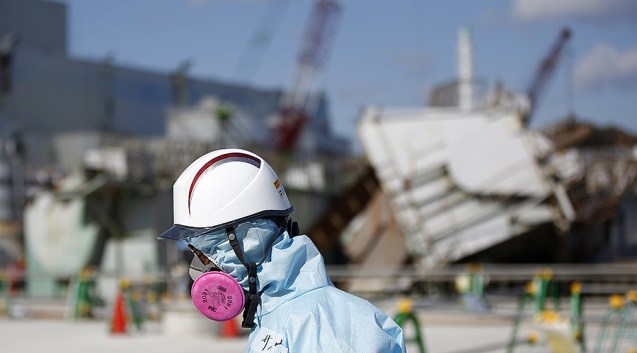
Tepco worker’s thyroid cancer is recognized as a work-related
Japanese labor authorities have recognized the thyroid cancer of a man who worked at Tepco’s stricken Fukushima No. 1 nuclear plant as a work-related, it was learned Friday.
It is the first time that thyroid cancer has been recognized as a work-related illness caused by radiation from the plant after it was damaged in the March 2011 earthquake and tsunami.
This is the third case labor authorities have linked to radiation exposure for workers at the Fukushima plant. The two previous cases involved leukemia.
At a meeting Friday, a Health, Labor and Welfare Ministry panel of experts presented for the first time criteria for recognizing thyroid cancer as a work-related disease from radiation, including doses of 100 millisieverts or more and a period of five years or more between exposure to radiation and the development of cancer.
Based on the criteria, a labor standards office in Fukushima Prefecture concluded that the cancer of the employee, who is in his 40s, was caused by radiation from the plant.
The man joined Tokyo Electric Power Company Holdings Inc. in 1992 and worked at several nuclear power plants for over 20 years.
After checking reactor instruments and carrying out other duties at the Fukushima No. 1 plant from March 2011 to April 2012, he was diagnosed with thyroid cancer in April 2014. His cumulative radiation dose after the accident stood at 139.12 millisieverts.
According to the International Commission on Radiological Protection, lifetime cancer mortality rises by about 0.5 percent for those exposed to a dose of 100 millisieverts.
Thyroid cancer compensation for Fukushima plant worker
A man who developed thyroid gland cancer after working at the stricken Fukushima No. 1 nuclear plant has for the first time won the right to work-related compensation.
While the case ranks as the third time a worker at the Fukushima plant has been recognized as eligible for work-related compensation because of cancer caused by radiation exposure, it is the first instance involving thyroid gland cancer.
The Ministry of Health, Labor and Welfare announced its decision Dec. 16.
The man in his 40s, an employee of plant operator Tokyo Electric Power Co., worked at the Fukushima plant after the triple meltdown triggered by the 2011 Great East Japan Earthquake and tsunami. He was diagnosed with thyroid gland cancer in April 2014.
The man worked at various nuclear plants, including the Fukushima facility, between 1992 and 2012. He was mainly involved in operating and overseeing reactor operations.
After the March 2011 nuclear accident, the man was in the plant complex when hydrogen explosions rocked the No. 1 and No. 3 reactor buildings. His duties included confirming water and pressure meter levels as well as providing fuel to water pumps.
The amount of his accumulated whole body radiation exposure was 150 millisieverts, with about 140 millisieverts resulting from the period after the nuclear accident. Of that amount, about 40 millisieverts was through internal exposure caused by inhaling or other ways of absorbing radioactive materials.
Along with recognizing the first work-related compensation involving thyroid gland cancer, the labor ministry also released for the first time its overall position on dealing with compensation issues for workers who were at the Fukushima plant after the accident.
The ministry said it would recognize compensation for workers whose accumulated whole body dose exceeded 100 millisieverts and for whom at least five years have passed since the start of work involving radiation exposure and the diagnosis of cancer.
Ministry officials said the dose level was not a strict standard but one yardstick for recognizing compensation.
According to a study by TEPCO and a U.N. scientific committee looking into the effects of radiation, 174 people who worked at the plant had accumulated whole body doses exceeding 100 millisieverts as of this past March.
There is also an estimate that more than 2,000 workers have radiation doses exceeding 100 millisieverts just in their thyroid gland.
http://www.asahi.com/ajw/articles/AJ201612170027.html
First thyroid cancer case in Japan recognized as Fukushima-related & compensated by govt
A man who worked at the Fukushima nuclear power plant in Japan during the disastrous 2011 meltdown has had his thyroid cancer recognized as work-related. The case prompted the government to finally determine its position on post-disaster compensation.
The unnamed man, said to be in his 40s, worked at several nuclear power plants between 1992 and 2012 as an employee of Tokyo Electric Power Company Holdings Inc. He was present at the Fukushima Daiichi nuclear power plant during the March 11, 2011 meltdown. Three years after the disaster, he was diagnosed with thyroid gland cancer, which the Japanese Ministry of Health, Labor and Welfare confirmed on Friday as stemming from exposure to radiation.
The man’s body radiation exposure was totaled at 150 millisieverts, almost 140 of which were a result of the accident. Although this is not the first time that health authorities have linked cancer to radiation exposure for workers at the Fukushima plant, it is the first time a patient with thyroid cancer has won the right to work-related compensation.
There have been two cases previously, both of them involving leukemia.
The recent case prompted Japan’s health and labor ministry to release for the first time its overall position on dealing with compensation issues for workers who were at the Fukushima plant at the time and after the accident. Workers who had been exposed to over 100 millisieverts and developed cancer five years or more after exposure were entitled to compensation, the ministry ruled this week. The dose level was not a strict standard but rather a yardstick, the officials added.
As of March, 174 people who worked at the plant had been exposed to over 100 millisieverts worth of radiation, according to a joint study by the UN and the Tokyo Electric Power Company. There is also an estimate that more than 2,000 workers have radiation doses exceeding 100 millisieverts just in their thyroid gland, Japanese newspaper the Asahi Shimbun reported.
The 2011 accident at the Fukushima nuclear power plant was the worst of its kind since the infamous 1986 catastrophe in Chernobyl, Ukraine. After the Tohoku earthquake in eastern Japan and the subsequent tsunami, the cooling system of one of the reactors stopped working, causing a meltdown. Nearly half a million people were evacuated and a 20-kilometer exclusion zone was set up.
https://www.rt.com/news/370650-thyroid-cancer-fukushima-plant-radiation/#.WFZfzwMDsFM.facebook
Taiwan recalls 37 food products from Japan’s radiation-affected area
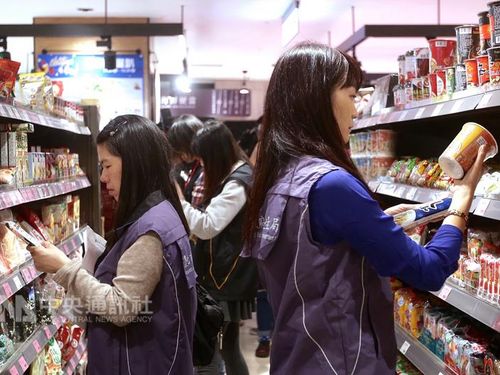
Taiwan recalls 37 food products from Japan’s radiation-affected area
Taipei, Dec. 16 (CNA) A total of 37 Japanese food products have been pulled from store shelves in Taiwan, after they were found to have come from Japan’s radiation-affected areas, Taiwanese authorities said Friday.
As of Thursday, 50,316 pieces of these products have been recalled, with many of them being soy sauce and wasabi packets that came with Japanese natto, or fermented soybeans, according to the Food and Drug Administration (FDA).
The FDA launched an inspection of food products from Japan on Dec. 12, after two brands of Japanese natto were found to contain packets of soy sauce from Ibaraki Prefecture, one of the five prefectures from which food imports have been banned.
Taiwan banned food imports from Fukushima, Ibaraki, Tochigi, Gunma and Chiba prefectures after the meltdown of the Fukushima Daiichi Nuclear Power Plant in March 2011.
Of the 37 products, 22 have tested negative for radiation contamination, while 15 are still being screened, according to the FDA.
Under Taiwan’s ban, even food products that test negative for radiation are restricted from being sold here, as long as they came from one of the five Japanese prefectures.
Among the recalled products is a brand of natto called “Hiruzen Nattou,” which was imported by Deep Cypress Co. (柏泓企業). The soy sauce and wasabi packets that were served with the product were found to have been made in Chiba Prefecture, said Wei Jen-ting (魏任廷), an official with the FDA.
The product was sold in supermarkets in department stores such as SOGO and Shinkong Mitsukoshi, Wei said.
Meanwhile, many of the 37 products were imported by Yumaowu Enterprise Co. (裕毛屋企業), according to the FDA.
Chiu Hsiu-yi (邱秀儀), director of the FDA’s Northern Center for Regional Administration, said the FDA will step up inspection of food imported from Japan and will ask importers and distributors to list the place of origin, including the prefecture, on the product label in Chinese.
If companies refuse to abide by the rules, the FDA said it will reveal their names to the public.
Failure to provide Chinese labeling could also result in a fine of between NT$30,000 (US$937) and NT$3 million, the FDA said, adding that the public can call the hotline 1919 to report such cases.
The recall of Japanese products comes amidst strong opposition to the Taiwanese government’s hopes of lifting the ban on food exports from at least some of the five affected areas if they are found to be free of radiation.
http://focustaiwan.tw/news/asoc/201612160020.aspx
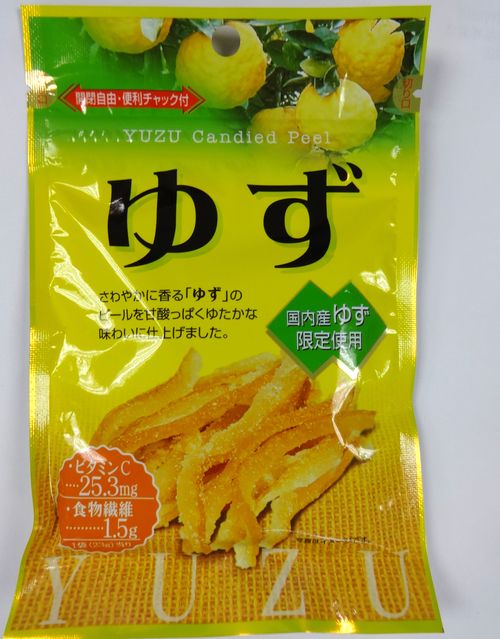
Unsourced Japanese snacks removed from shelves
Taipei, Dec. 16 (CNA) Two kinds of snacks sold at a shopping mart chain in Taoyuan were found to have come from unidentified source in Japan and have been ordered removed from shelves, health officials from Taoyuan City Government said Friday.
The officials said they launched an inspection of labels of origin on food imported from Japan on Dec. 9, checking a total of 707 food products in 273 shops.
On Thursday the Chinese labels of two snacks sold in Poya LivingMart identified them as having come Gifu prefecture, but the original labeling said they were from Tochigi prefecture, one of the radiation-affected areas from which food imports are banned in Taiwan.
After checking the manufacturer’s official website, the product was found to have been manufactured in Tochigi and Iwate, not Gifu.
Health officials have instructed the shop to stop selling the products immediately.
Poya Living Mart’s 11 outlets in Taoyuan have removed a further 214 packages of related food.
The incident came at a time of growing public concern over the safety of food products from five radiation-affected prefectures in Japan.
Taiwan banned food imports from Fukushima, Ibaraki, Tochigi, Gunma and Chiba prefectures in the wake of the Fukushima Daiichi nuclear power plant meltdown following a massive earthquake and tsunami in Japan on March 11, 2011.
Following reports that the government is planning to lift the ban on food imports from four of the radiation-affected prefectures, though not Fukushima, several brands of Japanese natto containing packets of soy sauce from Chiba and Ibaraki were recently found in local retail outlets. They were also ordered removed.
http://www.taiwannews.com.tw/en/news/3053224
Fukushima radiation has reached U.S. shores
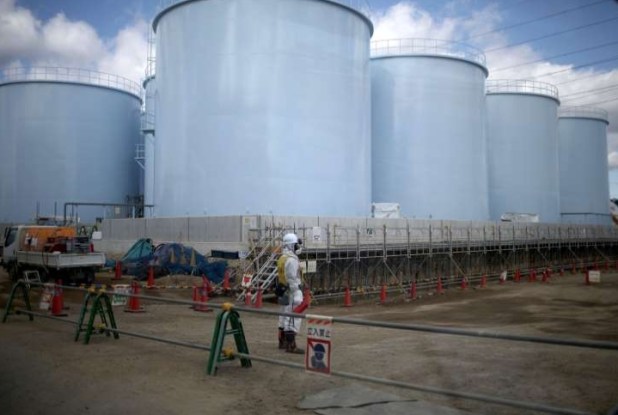
Tanks holding radiation contaminated water at the Tokyo Electric Power Co.’s embattled Fukushima Daiichi nuclear power plant on February 25, 2016 in Okuma, Japan.
Its official. Woods Hole Oceanographic Institute has samples of Fukushima-sourced cesium-134 in salmon off the Pacific Coast of Oregon. Given cesium-134 has such a short half-life the source is linked to the on-going leaks from Japan’s 2011 nuclear disaster. While the amount is still very, very low, it remains a concern given the Fukushima disaster is still not contained after more than five years.
SALEM, Ore. — For the first time, seaborne radiation from Japan’s Fukushima nuclear disaster has been detected on the West Coast of the United States.
Cesium-134, the so-called fingerprint of Fukushima, was measured in seawater samples taken from Tillamook Bay and Gold Beach in Oregon, according to researchers from the Woods Hole Oceanographic Institution.
Because of its short half-life, cesium-134 can only have come from Fukushima.
For the first time, cesium-134 has also been detected in a Canadian salmon, according to the Fukushima InFORM project, led by University of Victoria chemical oceanographer Jay Cullen.
Should we be worried? In both cases, levels are extremely low, the researchers said, and don’t pose a danger to humans or the environment.
Massive amounts of contaminated water were released from the crippled nuclear plant following a 9.0 magnitude earthquake and tsunami in March 2011. More radiation was released to the air, then fell to the sea.
Woods Hole chemical oceanographer Ken Buesseler runs a crowd-funded, citizen science seawater sampling project that has tracked the radiation plume as it slowly makes its way across the Pacific Ocean.
The Oregon samples, marking the first time cesium-134 has been detected on U.S. shores, were taken in January and February of 2016 and later analyzed. They each measured 0.3 becquerels per cubic meter of cesium-134.
Buesseler’s team previously had found the isotope in a sample of seawater taken from a dock on Vancouver Island, B.C., marking its landfall in North America.
In Canada, Cullen leads the InFORM project to assess radiological risks to that country’s oceans following the nuclear disaster. It is a partnership of a dozen academic, government and non-profit organizations.
Last month, the group reported that a single sockeye salmon, sampled from Okanagan Lake in the summer of 2015, had tested positive for cesium-134.
The level was more than 1,000 times lower than the action level set by Health Canada, and is no significant risk to consumers, Cullen said.
Buesseler’s most recent samples off the West Coast also are showing higher-than background levels of cesium-137, another Fukushima isotope that already is present in the world’s oceans because of nuclear testing in the 1950s and 1960s.
Those results will become more important in tracking the radiation plume, Buesseler said, because the short half-life of cesium-134 makes it harder to detect as time goes on.
Cesium-134 has a half-life of two years, meaning it’s down to a fraction of what it was five years ago, he said. Cesium-137 has a 30-year half-life.
A recent InFORM analysis of Buesseler’s data concluded that concentrations of cesium-137 have increased considerably in the central northeast Pacific, although they still are at levels that pose no concern.
“It appears that the plume has spread throughout this vast area from Alaska to California,” the scientists wrote.
They estimated that the plume is moving toward the coast at roughly twice the speed of a garden snail. Radiation levels have not yet peaked.
“As the contamination plume progresses towards our coast we expect levels closer to shore to increase over the coming year,” Cullen said.
Even that peak won’t be a health concern, Buesseler said. But the models will help scientists model ocean currents in the future.
That could prove important if there is another disaster or accident at the Fukushima plant, which houses more than a thousand huge steel tanks of contaminated water and where hundreds of tons of molten fuel remain inside the reactors.
In a worst-case scenario, the fuel would melt through steel-reinforced concrete containment vessels into the ground, uncontrollably spreading radiation into the surrounding soil and groundwater and eventually into the sea.
“That’s the type of thing where people are still concerned, as am I, about what could happen,” Buesseler said.
Scientists now know it would take four to five years for any further contamination from the plant to reach the West Coast.
Tracking the plume
Scientists are beginning to use an increase in cesium-137 instead of the presence of cesium-134 to track the plume of radioactive contamination from Japan’s Fukushima nuclear disaster. These figures show the increase in cesium-137 near the West Coast between 2014 and 2015.
Graphic courtesy Dr. Jonathan Kellogg of InFORM, with data from Dr. John Smith, Department of Fisheries and Oceans Canada, and Dr. Ken Buesseler, Woods Hole Oceanographic Institute.
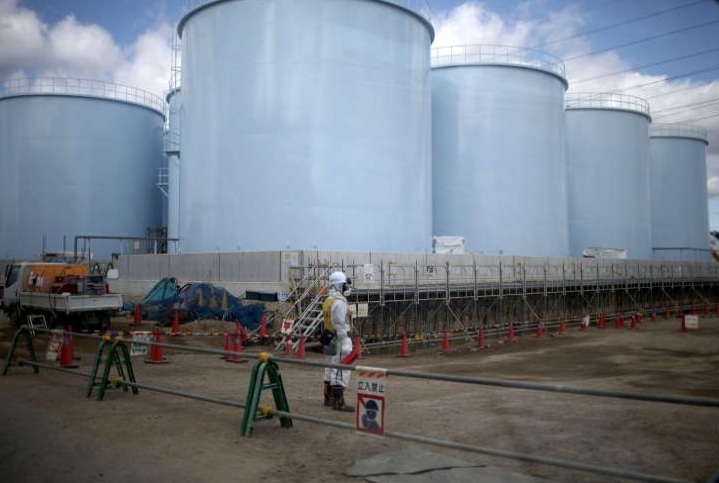
Nuclear worker at Fukushima gets compensation for thyroid cancer
 Thyroid cancer compensation for Fukushima plant worker http://www.asahi.com/ajw/articles/AJ201612170027.html, By YURI OIWA/ Staff Writer December 17, 2016 A man who developed thyroid gland cancer after working at the stricken Fukushima No. 1 nuclear plant has for the first time won the right to work-related compensation.
While the case ranks as the third time a worker at the Fukushima plant has been recognized as eligible for work-related compensation because of cancer caused by radiation exposure, it is the first instance involving thyroid gland cancer.
The Ministry of Health, Labor and Welfare announced its decision Dec. 16.
The man in his 40s, an employee of plant operator Tokyo Electric Power Co., worked at the Fukushima plant after the triple meltdown triggered by the 2011 Great East Japan Earthquake and tsunami. He was diagnosed with thyroid gland cancer in April 2014.
The man worked at various nuclear plants, including the Fukushima facility, between 1992 and 2012. He was mainly involved in operating and overseeing reactor operations.
After the March 2011 nuclear accident, the man was in the plant complex when hydrogen explosions rocked the No. 1 and No. 3 reactor buildings. His duties included confirming water and pressure meter levels as well as providing fuel to water pumps.
The amount of his accumulated whole body radiation exposure was 150 millisieverts, with about 140 millisieverts resulting from the period after the nuclear accident. Of that amount, about 40 millisieverts was through internal exposure caused by inhaling or other ways of absorbing radioactive materials.
Along with recognizing the first work-related compensation involving thyroid gland cancer, the labor ministry also released for the first time its overall position on dealing with compensation issues for workers who were at the Fukushima plant after the accident.
The ministry said it would recognize compensation for workers whose accumulated whole body dose exceeded 100 millisieverts and for whom at least five years have passed since the start of work involving radiation exposure and the diagnosis of cancer.
Ministry officials said the dose level was not a strict standard but one yardstick for recognizing compensation.
According to a study by TEPCO and a U.N. scientific committee looking into the effects of radiation, 174 people who worked at the plant had accumulated whole body doses exceeding 100 millisieverts as of this past March.
There is also an estimate that more than 2,000 workers have radiation doses exceeding 100 millisieverts just in their thyroid gland.
Clean-up costs for Fukushima nuclear wreck now set to double
Japanese government to provide $8.5 billion) for a UK nuclear power plant project in Wales
 Japan, Hitachi to stump up $8.5 billion for Horizon nuclear project in Wales: source http://www.reuters.com/article/us-britain-nuclear-hitachi-idUSKBN1440BA | TOKYO, 15 Dec 16 The Japanese government and a Hitachi Ltd (6501.T) unit will compile a package worth around 1 trillion yen ($8.5 billion) for a UK nuclear power plant project, a government official involved in the project said on Thursday.
The Japan Bank for International Cooperation and the Development Bank of Japan will provide financing for the project, the official told Reuters.
The funding plans are a boost for the project, one of several new nuclear plants planned in the UK, which is aiming to replacing its ageing fleet of atomic reactors.
Hitachi’s Horizon unit plans to construct at least 5.4 gigawatts of new nuclear capacity across two sites in Britain.
The funds will be provided for the first plant planned at Wylfa Newydd in Wales.
The Nikkei newspaper said Hitachi would invest about 10 percent of the expected 19 billion pounds ($24 billion) cost of the project. A Hitachi official declined to comment, saying the amount has not been announced.
($1 = 117.2600 yen)
($1 = 0.7971 pounds)
1 This Month
26 September – International Day for the Total Elimination of Nuclear Weapons





PLEASE OPPOSE HR 8255 AND S.3639 – bills would accelerate satellite deployment, with no environmental review or safeguards – https://ncstd5li.quorum.us/campaign/169331/
To see nuclear-related stories in greater depth and intensity – go to https://nuclearinformation.wordpress.com
-
Archives
- September 2026 (305)
- August 2026 (330)
- July 2026 (355)
- June 2026 (287)
- May 2026 (306)
- April 2026 (356)
- March 2026 (251)
- February 2026 (267)
- January 2026 (308)
- December 2025 (358)
- November 2025 (359)
- October 2025 (375)
-
Categories
- 1
- 1 NUCLEAR ISSUES
- business and costs
- climate change
- culture and arts
- ENERGY
- environment
- health
- history
- indigenous issues
- Legal
- marketing of nuclear
- media
- opposition to nuclear
- PERSONAL STORIES
- politics
- politics international
- Religion and ethics
- safety
- secrets,lies and civil liberties
- spinbuster
- technology
- Uranium
- wastes
- weapons and war
- Women
- 2 WORLD
- ACTION
- AFRICA
- Atrocities
- AUSTRALIA
- Christina's notes
- Christina's themes
- culture and arts
- Events
- Fuk 2022
- Fuk 2023
- Fukushima 2017
- Fukushima 2018
- fukushima 2019
- Fukushima 2020
- Fukushima 2021
- general
- global warming
- Humour (God we need it)
- Nuclear
- RARE EARTHS
- Reference
- resources – print
- Resources -audiovicual
- Weekly Newsletter
- World
- World Nuclear
- YouTube
-
RSS
Entries RSS
Comments RSS

