Japanese opposition party will phase out nuclear power – Japan nuclear stocks down
 Japan nuclear stocks down on opposition party’s phase-out plans, https://www.ft.com/content/1d201ea0-a9a9-3ead-b6e5-b430b59ccedc by Edward White Japanese nuclear power companies were losing ground on Friday after the opposition party affirmed its intention to phase out nuclear energy by 2030. Kansai Electric was the biggest loser, down 1.1 per cent, followed by Tokyo Electric, which was down 0.8 per cent. Kyushu Electric and Chugoku Electric Power lost 0.5 per cent and 0.3 per cent respectively.
That saw that utilities segment drop 0.6 per cent, dragging on the broader Topix index which was up 0.2 per cent in morning trading. Those same stocks had fallen around 5 per cent in late September in response to Tokyo governor Yuriko Koike, whose Party of Hope will challenge prime minister Shinzo Abe’s Liberal Democratic Party in the upcoming snap election, declaring her support for phasing out nuclear energy by 2030.
That anti-nuclear policy was listed as part of a campaign platform released on Friday by the Party of Hope. Fifty nuclear reactors were shut down in Japan after the 2011 Fukushima disaster. Despite public concern, Japan’s nuclear safety watchdog on Wednesday issued an initial approval to restart two reactors at Kashiwazaki-Kariwa, the world’s largest nuclear generating site.
Catastrophic outcome if North Korea were to attack Seoul and Tokyo
Nuclear hit on Tokyo, Seoul ‘could kill 2 million’ http://www.straitstimes.com/asia/east-asia/nuclear-hit-on-tokyo-seoul-could-kill-2-million 6 Oct 17
New research shows disastrous outcomes for nearby US allies if North Korea strikes
SEOUL • As United States President Donald Trump threatens to destroy North Korea, even some of his closest aides have warned of the potentially disastrous effects of a war.
New research published on the 38 North website points to just how catastrophic the impact might be on the regime’s neighbours.
If North Korean leader Kim Jong Un were to launch a nuclear attack on Seoul and Tokyo – both within striking distance of his weapons – as many as 2.1 million people could die and another 7.7 million could be injured, according to the 38 North report.
The analysis by Mr Michael Zagurek Jr, a consultant specialising in databases and computer modelling, is based on North Korea’s current estimated weapons technology and bomb strength.
Mr Zagurek assumes that Mr Kim has a baseline arsenal of 20 to 25 warheads and the capacity to put them on ballistic missiles.
Concerns about a nuclear conflict in North Asia have increased as Mr Kim accelerates his programme of acquiring weapons capable of hitting continental US, and as Mr Trump threatens preemptive military action.
North Korean Foreign Minister Ri Yong Ho last month said the regime’s possible next steps include testing a hydrogen bomb over the Pacific Ocean.
According to Mr Zagurek, it is possible that another nuclear test, an intercontinental ballistic missile test, or a missile test that has the payload impact area too close to US bases in Guam might see Washington react with force.
US options could include attempting to shoot down the test missiles or possibly attacking the North’s missile testing, nuclear-related sites, missile deployment areas or the Kim regime itself. In turn, the North Korean leadership might perceive such an attack as an attempt to remove the Kim family from power and, as a result, could retaliate with nuclear weapons, he added.
North Korea’s older warheads have yields in the 15-25-kilotonne range, around the size of the bombs that devastated Hiroshima and Nagasaki in 1945.
Fatality estimates rise significantly if North Korea were able to strike with bombs similar to the one it tested on Sept 3, which had a likely yield of 108-205 kilotonnes, Mr Zagurek said.
USA nuclear weapons sales business looking good: lucrative sales of missile to Japan planned
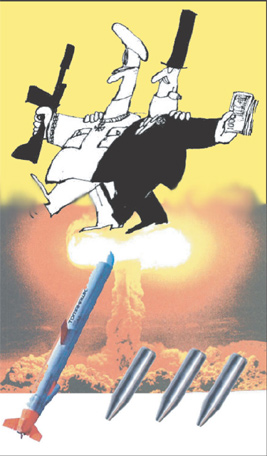 U.S. PREPARES NEW MISSILES FOR JAPAN AFTER NORTH KOREA THREATENS NUCLEAR WAR, newsweek BY The U.S. has moved closer to selling dozens of state-of-the-art missiles to Japan as part of President Donald Trump’s pledge to boost military support for Pacific allies opposed to nuclear-armed North Korea.
The State Department’s Defense Security Cooperation Agency said Wednesday it would back the Japanese government’s request for up to 56 AIM 120C-7 Advanced Medium Range Air-to-Air Missiles (AMRAAMs). The sale, which is estimated at $113 million and requires congressional approval, would also reportedly include various logistical, technical, engineering and weapons support services. It comes as Japan reconsiders its traditionally pacifist post-World War II stance on defense in the face of threats from North Korea, which has shot two missiles over Japanese territory in the past two months.
The proposed sale will provide Japan a critical air defense capability to assist in defending the Japanese homeland and U.S. personnel stationed there,” the agency said in a statement.
“Japan will have no difficulty absorbing these additional munitions into the Japan Air Self-Defense Force,” it added…….
Shortly after the nuclear test, Trump tweeted that he would “allow Japan & South Korea to buy substantially increased amount of highly sophisticated military equipment from the United States.”……http://www.newsweek.com/us-military-prepares-war-north-korea-selling-missiles-japan-678830
Watchdog’s safety clearance for Tepco reactors irks Fukushima victims
 Anti-nuclear activists protest on Wednesday near a building in Tokyo’s Minato Ward, where the Nuclear Regulation Authority held a meeting to give safety approval for two reactors at Tepco’s Kashiwazaki-Kariwa nuclear power plant in Niigata Prefecture.
Two nuclear reactors run by Tokyo Electric Power Company Holdings Inc. cleared the safety review of Japan’s nuclear watchdog on Wednesday, drawing fierce criticism from residents who remain displaced more than six years after the nuclear crisis at the utility’s Fukushima complex.
The government safety clearance of reactors 6 and 7 at the Kashiwazaki-Kariwa power station in Niigata Prefecture is a key step toward having operations resume.
“It appears that things are moving forward as if the (Fukushima nuclear) crisis is over,” said Hiroko Matsumoto, 68, who lives in a temporary shelter house in Iwaki, Fukushima Prefecture, away from her home in Tomioka, also in the prefecture, due to the triple meltdown at Tepco’s Fukushima No. 1 plant in March 2011.
“I want (Tepco) to never forget that a serious nuclear accident can cause enormous damage,” she said.
The approval by the Nuclear Regulation Authority shocked residents in Niigata and surrounding areas who are concerned about the reactors’ reactivation, but others are hoping to see economic benefits from the restart.
“I am surprised that the regulatory authority abruptly softened its stance toward Tepco. I doubt such a hasty decision can guarantee citizens’ safety,” said Nobuko Baba, 76, who lives about 23 kilometers east of the Kashiwazaki-Kariwa plant.
“Whether to resume operation (of the two reactors) should be the decision of Niigata Prefecture citizens. I am counting on Gov. Ryuichi Yoneyama, who has been wary about it,” she said.
Yoneyama ordered a local investigation into the causes and impact of the Fukushima disaster, and is not expected to decide on whether he will approve a restart until the assessment is completed around 2020.
In contrast, Yasuo Ishizaka, 53, an executive of an industrial equipment company in Kashiwazaki, was happy to hear the news.
“I am glad that the safety screening went smoothly, and it is a big step forward for the local economy,” Ishizaka said.
On Wednesday, anti-nuclear activists gathered near a building in Tokyo’s Minato Ward where the nuclear watchdog held a meeting and endorsed a draft document, which serves as certification that the two reactors have met the new, stricter safety standards introduced after the Fukushima disaster.
Amid chants of “Tepco should not be qualified” and “No reactor resumption,” a representative handed over a letter of protest to an official of the regulator.
With the authority’s safety approval, the two reactors became the first of Tepco’s idled units to pass the safety screening since the Fukushima nuclear crisis.
In a media statement on Wednesday, international environmentalist group Greenpeace criticized the regulator’s decision as reckless and said local opposition against the restarts remains strong.
“It’s the same disregard for nuclear risks that resulted in Tepco’s 2011 triple reactor meltdowns at the Fukushima No. 1 site. Approving the safety of reactors at the world’s largest nuclear plant, when it is at extreme risk from major earthquakes, completely exposes the weakness of Japan’s nuclear regulator,” said Shaun Burnie, senior nuclear specialist for Greenpeace Germany.
The World’s Biggest Nuclear Plant Approved to Be Restarted in Japan
Fukushima operator can restart nuclear reactors at world’s biggest plant
Tepco, still struggling to decommission Fukushima Daiichi, gets initial approval to start two reactors at Kashiwazaki-Kariwa
 Reactors No 6, right, and No 7 at Kashiwazaki-Kariwa nuclear power plant.
The operator of Japan’s stricken Fukushima Daiichi nuclear power plant has been given initial approval to restart reactors at another atomic facility, marking the first step towards the firm’s return to nuclear power generation more than six years after the March 2011 triple meltdown.
Japan’s nuclear regulator on Wednesday approved an application from Tokyo Electric Power (Tepco) to restart two reactors at Kashiwazaki-Kariwa – the world’s biggest nuclear power plant – even as the utility struggles to decommission Fukushima Daiichi.
The process will involve reviews and consultations with the public, and the restart is also expected to encounter strong opposition from people living near the plant on the Japan Sea coast of Niigata prefecture.
The Nuclear Regulation Authority (NRA) ruled that the No 6 and No 7 reactors, each with a capacity of 1,356 megawatts, met stringent new safety standards introduced after the Fukushima disaster. The authority’s five commissioners voted unanimously to approve the restarts at a meeting on Wednesday.
The decision drew criticism from anti-nuclear campaigners.
Shaun Burnie, a senior nuclear specialist with Greenpeace Germany, accused the NRA of being reckless.
He added: “It is the same disregard for nuclear risks that resulted in Tepco’s 2011 triple reactor meltdowns at the Fukushima Daiichi site. Approving the safety of reactors at the world’s largest nuclear plant when it is at extreme risk from major earthquakes completely exposes the weakness of Japan’s nuclear regulator.”
Greenpeace said 23 seismic faultlines ran through the Kashiwazaki-Kariwa site.
Tepco said in a statement that it took the regulatory authority’s decision seriously and would continue making safety improvements at its plants while it attempted to decommission Fukushima Daiichi and compensate evacuees.
Despite the NRA’s approval, it could take years for the Kashiwazaki-Kariwa reactors to go back into operation.
The governor of Niigata, Ryuichi Yoneyama, has said he will not decide on whether to agree to the restarts until Tepco completes its review of the Fukushima accident – a process that is expected to take at least another three years.
Fukushima evacuees voiced anger at the regulator’s decision.
“It looks like things are moving forward as if the Fukushima nuclear crisis is over,” Hiroko Matsumoto, who lives in temporary housing, told Kyodo news. Matsumoto, whose home was close to Fukushima Daiichi, said Tepco should “never forget that a serious nuclear accident can cause enormous damage”.
Tepco has been seeking permission to restart the idled reactors to help it reduce spending on fossil fuel imports, which have soared since the disaster, triggered by a huge earthquake and tsunami, forced the closure of all of Japan’s nuclear reactors. Four have since gone back online after passing safety inspections.
The utility faces huge compensation claims from people who were evacuated after three of Fukushima Daiichi’s six reactors went into meltdown on 11 March 2011, as well as a rising decommissioning bill.
Earlier this year, the Japan Centre for Economic Research said the total cost of the Fukushima cleanup – which is expected to take up to 40 years – could soar to between 50-70tn yen (£330bn-£470bn). Earlier estimates put the cost at about 22tn yen.
Nuclear power is expected to become a key issue in the election later this month.
The prime minister, Shinzo Abe, has argued that reactor restarts are necessary for economic growth and to enable Japan to meet its climate change commitments. The government wants nuclear to provide about 20% of Japan’s energy by 2030.
But the newly formed Party of Hope, which has emerged as the main opposition to Abe’s Liberal Democratic party, wants to phase out nuclear power by 2030.
Opinion polls show that most Japanese people oppose nuclear restarts.
NRA approves safety measures at TEPCO plant in Niigata
 The Kashiwazaki-Kariwa nuclear power plant in Niigata Prefecture
Japan’s nuclear watchdog on Oct. 4 approved Tokyo Electric Power Co.’s safety measures taken to restart two reactors in Niigata Prefecture, the first such approval for the company since the Fukushima nuclear disaster unfolded.
The Nuclear Regulation Authority confirmed the results of its screening on the technological aspects of the No. 6 and No. 7 reactors that TEPCO wants to bring online at its Kashiwazaki-Kariwa nuclear plant.
It was also the first time for the NRA to conclude that boiling-water reactors, the same type as those at TEPCO’s crippled Fukushima No. 1 nuclear plant, met the new safety standards adopted after the meltdowns at the plant in 2011.
The NRA plans to hear opinions from the public about its judgment for 30 days before deciding on whether to make the approval official. It will also solicit the views of the minister of economy, trade and industry.
As one condition for official approval, the NRA is requiring the industry minister to oversee the utility’s management policy concerning its initiative and responsibility for work to decommission the Fukushima No. 1 nuclear plant.
From now, the NRA will check equipment designs and security regulations, including how TEPCO will guarantee its promise that its priority is on safety, not economic benefits.
The NRA’s screening process at the Kashiwazaki-Kariwa nuclear plant went beyond checking technological aspects of TEPCO’s safety measures. Given TEPCO’s history of mistakes and blunders, NRA members also discussed whether the utility was even eligible to operate nuclear power plants.
In response to the NRA’s demands that TEPCO take full responsibility for decommissioning the Fukushima No. 1 plant, the utility in late August stressed that its stance of putting importance on safety is “a promise to the people.”
The NRA then approved TEPCO’s eligibility but attached some conditions.
In late September, however, it came to light that workers at the Fukushima No. 1 plant were erroneously setting water gauges to measure groundwater levels of wells around reactor buildings, which could cause leaks of highly contaminated water to the outside water.
Inspectors will face a formidable challenge in judging individual issues facing TEPCO based on security regulations.
However, even if TEPCO passes all of the screenings, it must win the consent of local governments to restart the reactors at the Kashiwazaki-Kariwa nuclear plant.
Niigata Governor Ryuichi Yoneyama has said that he will wait for three or four years to make decision on the restarts, until his prefectural government completes its own investigation into the cause of the 2011 nuclear disaster at the Fukushima No. 1 plant.
http://www.asahi.com/ajw/articles/AJ201710040031.html
TEPCO reactors clear safety review for 1st time after Fukushima
 From left, the No. 5, No. 6 and No. 7 reactors of the Tokyo Electric Power Co.’s Kashiwazaki-Kariwa Nuclear Power Plant in Niigata Prefecture are seen from a Mainichi Shimbun aircraft on Sept. 30, 2017.
TOKYO (Kyodo) — Two reactors in Niigata Prefecture on the Sea of Japan coast run by the operator of the crippled Fukushima nuclear plant cleared government safety standards on Wednesday, becoming the first of the utility’s idled units to pass tightened screening.
The Nuclear Regulation Authority endorsed at its meeting a draft document that serves as certification that Tokyo Electric Power Company Holdings Inc.’s Nos. 6 and 7 reactors at Kashiwazaki-Kariwa power station have met the new, stricter safety standards introduced after the Fukushima disaster.
The two reactors are the newest among the seven units at the Kashiwazaki-Kariwa plant. The complex is one of the world’s largest nuclear power plants, with a combined output capacity of 8.2 million kilowatts.
Despite the effective approval by the nuclear regulator, the actual restart of the two reactors will likely be at least a few years away as Niigata Gov. Ryuichi Yoneyama says it will take “around three to four years” for the utility to win local consent for the resumption of operation.
Formal approval of the restart by the nuclear watchdog is expected after receiving public opinions and consulting with the economy, trade and industry minister to confirm that Tepco is fit to be an operator.
The clearance of the two units is likely to be a boost for the government of Prime Minister Shinzo Abe, which is keen to retain nuclear power generation despite Japan suffering the world’s worst nuclear disaster since Chernobyl at the Fukushima Daiichi nuclear complex in March 2011, triggered by a massive earthquake and tsunami.
Tepco, facing huge compensation payments and other costs stemming from the Fukushima crisis, has been desperate to resume operation of its idled reactors so it can reduce spending on costly fossil fuel imports for non-nuclear thermal power generation.
It filed for safety assessments of the two idled reactors at Kashiwazaki-Kariwa plant in September 2013.
In addition to assessing technical requirements, the review focused on whether Tepco is qualified to once again operate a nuclear power plant as it struggles with work to scrap the Fukushima Daiichi complex, an effort expected to take until around 2051, and reduce contaminated water around the crippled plant where radiation levels remain high.
The two reactors are boiling-water reactors, the same as those that experienced meltdowns in the Fukushima crisis. No such types have previously cleared Japan’s safety standards after the Fukushima disaster, partly as they are required to conduct major refurbishment to boost safety.
Under the new safety requirements, BWRs must be equipped with filtered venting systems so that radioactive substances will be reduced when gas and steam need to be released to prevent damage to containment vessels.
The venting facilities are not an immediate requirement for pressurized water reactors as PWRs are housed in containers larger than those of BWRs, giving more time until pressure rises inside the containers.
In the review, the regulator had questioned Tepco on its posture to ensure the safety of the units. The company last month agreed to a request from the regulator to include a safety pledge as part of its legally binding reactor safety program.
Safety programs drawn up for reactors need to be approved by the regulator and if it finds a grave violation, it can demand the utility halt nuclear power operations.
http://mainichi.jp/english/articles/20171004/p2g/00m/0dm/054000c
Japan nuclear reactor operations: Shikoku shuts Ikata No.3
TOKYO, Oct 3 (Reuters) - Shikoku Electric Power Co said it shut its Ikata No. 3 reactor on Tuesday for planned maintenance. The company expects the 890-megawatt No.3 reactor to resume power generation from around Jan. 22, with commercial operations likely to resume around Feb. 20, it said. Many of Japan's reactors are still going through a relicensing process following the 2011 Fukushima disaster, the world's worst since Chernobyl in 1986, which highlighted regulatory and operational failings at nuclear utilities. The restart process has been protracted as all of the country's reactors were eventually idled. Between September 2013 and August 2015 Japan had no nuclear plants in operation. Japan's nine regional power utilities and a wholesaler, Japan Atomic Power Co, have 42 nuclear reactors for commercial use, with a total generating capacity of 41.482 gigawatts. The shutdown of the Ikata No.3 reactor will bring the number of the nation's reactors that are online down to four, with a combined capacity of 3.52 gigawatts, or 8.5 percent of the country's total nuclear capacity, according to Reuters calculations. The following table shows the status of Japan's nuclear power plants.http://af.reuters.com/article/commoditiesNews/idAFL4N1MA1OT
North Korea threatens Japan – with ‘nuclear clouds over suicidal Japan’

ENGULFED IN FLAMES’ Kim Jong-un warns of ‘nuclear clouds over suicidal Japan’ as he brands the country’s Prime Minister a ‘headless chicken’ North Korea’s state media said ‘the Japanese archipelago will be engulfed in flames in a moment’ The Sun UK, By Jon Lockett, 3rd October 2017,
No joke: Despite the evidence, nuclear power declared safe!
 A touch-panel screen at a facility in Ikata explains that the nuclear power plant in the town was built to withstand strong earthquakes.
IKATA, Ehime Prefecture–It’s as if the 2011 nuclear disaster in Japan never happened.
A public relations facility here that was set up to publicize the safety of the Ikata nuclear power plant operated by Shikoku Electric Power Co. still insists that nuclear plants can withstand a tsunami of any height.
Like the Fukushima No. 1 nuclear power plant that went into triple meltdown, the Ikata facility faces the coast. A magnitude-9.0 earthquake on March 11, 2011, triggered tsunami that put the Fukushima facility out of action.
More than six years after that catastrophic event, the Ehime prefectural government is finally moving to revise the information designed to ease fears about a nuclear accident.
The contents on display will be updated before the end of the fiscal year because, as one prefectural government official put it, “Some of the information does not square with the current situation.”
The facility is located in the Minatoura district of Ikata about four kilometers east of the Ikata nuclear plant. It was established in 1982 by Ehime prefectural authorities to remove concerns the public may have about nuclear power generation.
It is operated by an organization that survives on funding from Shikoku Electric, the Ehime prefectural government and the Ikata town government.
In the last fiscal year, the facility had 1,761 visitors, including elementary school students who live nearby.
Near the entrance to the facility is a touch-panel screen where visitors can learn about nuclear power plants in a quiz format.
One question asks, “What would happen to a nuclear power plant if a large earthquake should strike?”
The three alternatives to choose from are: 1) Continue to generate power; 2) The reactor automatically stops to prevent any form of accident; and 3) It would be destroyed if a large earthquake struck.
The second choice is considered the correct answer.
The monitor also offers this reassurance: “(The nuclear plant) is a sturdy building that would not budge an inch in an earthquake, typhoon or tsunami.”
Another entry states that “it was designed with the largest possible quake in mind.”
Another question asks, “Would a nuclear power plant explode like a nuclear bomb?”
Again, there are three choices: 1) It would explode if used in a wrong way; 2) It would never explode; and 3) Nuclear reactors might explode once it ages.
The correct answer is again the second choice.
In fact, after the Great East Japan Earthquake and tsunami of March 2011, reactors at the Fukushima No. 1 plant were severely damaged by hydrogen explosions caused by core meltdowns after cooling functions were lost when power to the plant was lost.
About a year ago, facility operators have attached a sign to the touch-panel screen that says, “We are in the process of preparing a revision because some of the wording differs from the current situation.”
However, no explanation is offered to show what sections differ from reality.
A prefectural government official in charge of nuclear power safety measures said, “There is some accurate information so we decided it was preferable that some of it was viewed.”
But, the official added that the display would be revised along with improvements in other equipment. The cost of about 500,000 yen ($4,400) would be paid for from tax subsidies obtained through laws covering power generation.
After the Fukushima nuclear accident, a new display was added to show the safety measures being taken at the Ikata plant. There is also a video shown at the facility which explains there has been no noticeable spike in cancer rates or hereditary illness caused by radiation levels under 100 millisieverts.
As Japan’s election approaches, nuclear energy policy emerges as key difference

 Nuclear energy policy emerges as key difference between Abe and Koike, Japan Times, 30 Sept 17
JIJI Nuclear power is emerging as a key policy issue ahead of the Oct. 22 Lower House election, with Tokyo Gov. Yuriko Koike saying her new party will aim to phase it out.
Prime Minister Shinzo Abe and his ruling Liberal Democratic Party view nuclear power as a stable source of energy and want to put more of the nation’s idled reactors back online.
“We’ll examine how to bring down the reliance to zero by 2030,” Koike told a news conference on Thursday.
Current government targets call for an energy mix in which nuclear power accounts for about 22 percent. The plan also calls for the use of liquefied natural gas (27 percent), coal (26 percent) and renewable energy (22-24 percent)……..https://www.japantimes.co.jp/news/2017/09/30/national/politics-diplomacy/nuclear-energy-policy-emerges-key-difference-abe-koike/#.WdF3BY-CzGh
A Further Delay in the Cleanup At Japan’s Fukushima Nuclear Plant
The Cleanup At Japan’s Fukushima Nuclear Plant Has Been Delayed Yet Again https://www.gizmodo.com.au/2017/09/the-cleanup-at-japans-fukushima-nuclear-plant-has-been-delayed-yet-again/ George Dvorsky, With the backing of Japan’s government, Tokyo Electric Power Company Holdings (TEPCO) has decided to revise its plan to remove highly radioactive spent fuel from the damaged Fukushima nuclear power plant. It’s the fourth re-think made by the utility since the plant suffered a meltdown following the 2011 earthquake and tsunami — and yet another delay to a plan that’s expected to take anywhere from 30 to 40 years.
North Korean threats – very good for the underground nuclear bomb shelter sales

Nuclear bomb shelter sales are soaring due to North Korean threats, Yahoo Finance Daniel Howley Technology Editor, the saber rattling, coupled with North Korea’s stated objective of developing a nuclear-tipped missile capable of reaching the U.S. mainland, have plenty of people on edge.
And nowhere is that clearer than in the number of nuclear fallout shelters being purchased here in the U.S.
“We’re probably upwards of 1,000% from this time last year,” Gary Lynch, general manager of Rising S Company said of the number of bunkers his company has sold in 2017.
A size for everyone (sort of)
Texas-based Rising S Company, whose tagline is “Safe until the rising sun,” a nod to the Christian belief that the Second Coming of Christ will precede the end of the world, offers bunkers in a variety of price ranges. The base model is an 8 x 12-foot mini bunker for $39,500 while the top-of-the-line “The Aristocrat” luxury bunker, which features a bowling alley, gym, gun range, green house, pool and garage, goes for $8,350,000.
Sharon Packer, CEO of Utah-based Underground Shelters USA, says her company has seen sales of bunkers triple this year, with a significant increase taking place in the last six months. Packer, a nuclear engineer, says her company’s shelters can survive being within 1/4 of a mile from the blast crater of a 1-megaton nuclear bomb.
Underground’s best-selling shelter costs about $70,000 and gets you about 32 x 10 feet of space. Packer says you’d be able to stay in one of her company’s shelters for as long as you have access to clean water.
Brian Duvaul, sales manager with American Safe Room, a bunker company based in Oregon, explained that sales generally slow down around fall and winter as the ground becomes difficult to dig, but that so far this fall, sales are looking up…….
Japan is buying more
Of course, the fear of nuclear war is far more real closer to North Korea, particularly in Japan, which has seen two missiles from the communist country pass through its airspace and is the only nation to ever be attacked with nuclear weapons.https://finance.yahoo.com/news/nuclear-bomb-shelter-sales-soaring-due-north-korean-threats-135828041.html
Japan and USA to continue agreement on nuclear fuel reprocessing
Nikkei Asian Review 25th Sept 2017, Japan and the U.S. will likely let their existing nuclear cooperation
agreement renew automatically when the pact expires next July, enabling
Tokyo to continue reprocessing spent nuclear fuel.
President Donald Trump’s administration has no intention of ending or renegotiating the deal, a
spokesperson at the U.S. State Department told The Nikkei Saturday. Since
the Japanese government has been seeking the pact’s renewal, there is now a
good chance that the treaty will simply remain in force without any
modifications.
https://asia.nikkei.com/Politics-Economy/International-Relations/US-to-renew-nuclear-pact-with-Japan
Peak contamination levels from Fukushima off North America now known
http://www.enn.com/ecosystems/article/52701 From: University of Victoria
September 29, 2017, For the first time since 2011, peak contamination levels in Pacific Canadian waters from Japan’s Fukushima Daiichi nuclear disaster are known, says a University of Victoria scientist who has been monitoring levels since the meltdown of three reactors at the plant.
Releases of radioactive elements from the Fukushima Daiichi Nuclear Power Plant accident in 2011 were the largest unplanned discharges of radioactivity into the ocean. The disaster, triggered by a 15-metre tsunami caused by a magnitude-9 earthquake, created widespread concern over the potential impact on marine life and human health.
“Contamination from Fukushima never reached a level where it was a significant threat to either marine or human life in our neighborhood of the North Pacific,” says UVic chemical oceanographer Jay Cullen.
Continue reading at University of Victoria.
Dozens of Japanese towns choosing decentralised solar energy, with microgrids
Quiet energy revolution underway in Japan as dozens of towns go off the grid, Japan Times BY AARON SHELDRICK AND OSAMU TSUKIMORI REUTERS, 24 Sept 17, HIGASHIMATSUSHIMA, MIYAGI PREF. – A Miyagi city’s efforts to rebuild its electrical power system after 3/11 mark a quiet shift away from Japan’s old utility model and toward self-reliant, local generation and transmission.
After losing three-quarters of its homes and 1,100 people in the March 2011 Great East Japan Earthquake and tsunami, the city of Higashimatsushima in Miyagi Prefecture turned to the government’s “national resilience program,” with ¥3.72 trillion in funding for this fiscal year, to rebuild.
The city’s steps illustrate a massive yet little known effort to take dozens of the nation’s towns and communities off the power grid and make them partly self-sufficient in generating electricity…….https://www.japantimes.co.jp/news/2017/09/24/national/quiet-energy-revolution-underway-japan-dozens-towns-go-off-grid/#.Wcg4L_MjHGh
Japan’s nuclear watchdog chief holds final press conference before stepping down
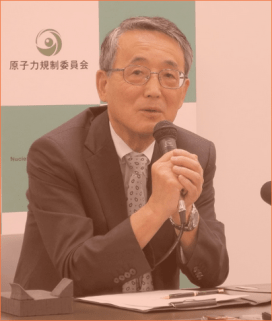
Nuclear Regulation Authority (NRA) Chairman Shunichi Tanaka held his final press conference in Tokyo’s Minato Ward on Sept. 20 before officially stepping down from his role.
Reflecting on his five-year term in office, Tanaka said, “I tried to maintain independence and transparency,” adding that, “I have absolutely no doubt that I’ve made judgments from a scientific and impartial standpoint, and taken actions based on (the NRA’s) philosophies. This is something that I am proud of.”
However, he also stated that, “The distrust of the public who experienced the Fukushima nuclear disaster in 2011 is an issue that cannot be easily rectified.”
Tanaka became the first chairman of the NRA at the same time the organization was established in September 2012, having previously served as the deputy director general of the Japan Atomic Energy Research Institute and acting chairman of the Japan Atomic Energy Commission.
During his time as NRA chairman, he led efforts to draw up new regulatory standards based on the lessons learned from the Tokyo Electric Power Co.’s Fukushima No. 1 Nuclear Power Plant disaster, and carried out nuclear power plant screening.
Originally hailing from Fukushima Prefecture, Tanaka says he is planning to live in the prefectural village of Iitate after stepping down as NRA head. “It would be great if I could contribute to the recovery of Fukushima (using my experience at the NRA),” Tanaka said.
https://mainichi.jp/english/articles/20170921/p2a/00m/0na/004000c
1 This Month
26 September – International Day for the Total Elimination of Nuclear Weapons





PLEASE OPPOSE HR 8255 AND S.3639 – bills would accelerate satellite deployment, with no environmental review or safeguards – https://ncstd5li.quorum.us/campaign/169331/
To see nuclear-related stories in greater depth and intensity – go to https://nuclearinformation.wordpress.com
-
Archives
- September 2026 (291)
- August 2026 (330)
- July 2026 (355)
- June 2026 (287)
- May 2026 (306)
- April 2026 (356)
- March 2026 (251)
- February 2026 (267)
- January 2026 (308)
- December 2025 (358)
- November 2025 (359)
- October 2025 (375)
-
Categories
- 1
- 1 NUCLEAR ISSUES
- business and costs
- climate change
- culture and arts
- ENERGY
- environment
- health
- history
- indigenous issues
- Legal
- marketing of nuclear
- media
- opposition to nuclear
- PERSONAL STORIES
- politics
- politics international
- Religion and ethics
- safety
- secrets,lies and civil liberties
- spinbuster
- technology
- Uranium
- wastes
- weapons and war
- Women
- 2 WORLD
- ACTION
- AFRICA
- Atrocities
- AUSTRALIA
- Christina's notes
- Christina's themes
- culture and arts
- Events
- Fuk 2022
- Fuk 2023
- Fukushima 2017
- Fukushima 2018
- fukushima 2019
- Fukushima 2020
- Fukushima 2021
- general
- global warming
- Humour (God we need it)
- Nuclear
- RARE EARTHS
- Reference
- resources – print
- Resources -audiovicual
- Weekly Newsletter
- World
- World Nuclear
- YouTube
-
RSS
Entries RSS
Comments RSS

