
 Nuclear plants, the Achilles heel in missile tests, remain exposed, By HIROYUKI KAWAI/ The Asahi Shimbun October 24, 2017 North Korea’s missile launches have prompted the government to issue alerts on TV and mobile phones, urging people to take cover in case something goes wrong.
But one puzzling question is why the government has not addressed the risks of keeping nuclear power plants in operation even when missiles are flying over Japan.
North Korea test-fired ballistic missiles 15 times last year and 13 so far this year.
In August, Pyongyang announced plans to fire intercontinental ballistic missiles over the prefectures of Shimane, Hiroshima and Kochi before they splash down in waters around the U.S. territory of Guam.
Instead, North Korea’s latest missile, fired on Aug. 29, flew over Hokkaido, Japan’s northernmost main island, and fell into the western Pacific Ocean………
The Japanese government has issued orders to intercept North Korea’s missiles, citing the need to safeguard people’s lives and assets against projectiles falling on Japanese territory. The government is on alert around the clock to issue such orders.
Evacuation drills have been staged in many regions.
When the J-Alert warning was issued soon after North Korea’s missile launches to urge people to take precautions, subway and Shinkansen bullet train services were suspended in some regions.
However, despite this state of high alert, nuclear power plants remain online.
While stressing the missile threat from North Korea, the government has made no mention of the danger to nuclear power plants.
An attack against a nuclear power plant could bring catastrophic consequences.
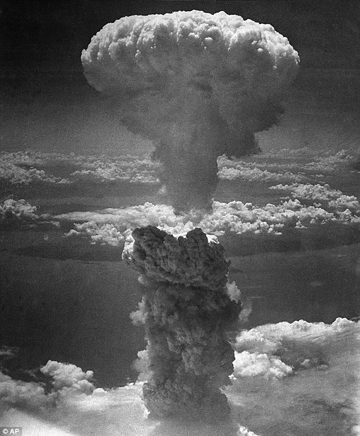
Experts say the operation of a single reactor for one year produces a level of radioactive material equivalent to 1,000 of the atomic bomb dropped on Hiroshima.
The destruction of a nuclear plant in a missile strike could put the nation’s very survival at stake.
That is why nuclear power plants are likened to nuclear warheads for potential adversaries……..
Even if a nuclear reactor completes an emergency shutdown after a missile launch is confirmed, the nuclear facility’s safety is not guaranteed.
The collapse of other nuclear plant components by a missile would present a formidable challenge for plant operators in dealing with decaying heat from nuclear fuel in the reactor. Averting a meltdown would be almost impossible under these circumstances as was demonstrated by the 2011 Fukushima disaster.
If a missile directly hit a nuclear reactor, we would all know what to expect.
The vulnerability of nuclear plants in light of a possible missile attack has been pointed out in a lawsuit demanding the suspension of operations at a nuclear facility.
When the presiding judge asked the utility the reason for not halting the plant, the company could not provide an immediate response.
North Korea is fully aware that Japan’s Achilles heel in national defense is its nuclear power plants…… If there exists even a 1 percent risk of conflict, nuclear power plants should be taken off-line as a safeguard measure. That is about ensuring the nation’s security…. http://www.asahi.com/ajw/articles/AJ201710240001.html
October 25, 2017
Posted by Christina Macpherson |
Japan, safety |
1 Comment
 “The omission of the word ‘any’ implies there could be a case of nuclear weapon use that would not cause inhumane consequences and therefore this type of use might be permitted”
“The Japanese draft resolution looks like one proposed by the United States or any other nuclear weapon states”
Japan waters down text of annual anti-nuclear resolution to imply acceptable use of nukes https://www.japantimes.co.jp/news/2017/10/21/national/politics-diplomacy/u-s-pressure-japan-waters-text-anti-nuclear-resolution/#.We0KUo-CzGg, BY MASAKATSU OTA KYODO Japan’s annual diplomatic effort to demonstrate its anti-nuclear credentials and create momentum for disarmament has run into a major obstacle in the form of its most important ally, as well as an atmosphere of division between states possessing atomic weapons and those without them.
A draft resolution recently proposed by the Abe government to the United Nations General Assembly was dramatically watered down under diplomatic pressure from the United States, government sources have revealed.
Japan, the only nation to have been attacked with atomic weapons, saw the U.S. destroy Hiroshima and Nagasaki with two atomic bombs 72 years ago. it has proposed a series of draft resolutions on nuclear disarmament to the General Assembly since 1994.
Last year, its proposed resolution was adopted at the assembly’s plenary session with support from 167 nations, including the United States, while China, North Korea, Russia and Syria opposed and 16 other nations abstained.
In the middle of October, Japan submitted a resolution titled “United action with renewed determination toward the total elimination of nuclear weapons.”
Close examination of the text has found a few major changes from past resolutions.
Since 2010, Japan has drafted annual resolutions that include the same common sentence, which emphasizes “deep concern at the catastrophic humanitarian consequences of any use of nuclear weapons.”
The phrase, “the catastrophic humanitarian consequences of any use of nuclear weapons,” has been a keyword used by international movements pursuing a denuclearized world in recent years.
In July, this anti-nuclear campaign culminated in the adoption of the Treaty on the Prohibition of Nuclear Weapons at the United Nations — the first international law that prohibits state parties from developing, testing, possessing and using nuclear weapons in any manner, including “threat of use.”
In the most recently proposed resolution, the government deleted the word “any” from the frequently used phrase, rendering it as “deep concern at the catastrophic humanitarian consequences of nuclear weapons use.”
It seems a minor rhetorical change, but the deletion of “any” has raised concerns and sparked severe criticism from nuclear disarmament specialists in Japan.
“The omission of the word ‘any’ implies there could be a case of nuclear weapon use that would not cause inhumane consequences and therefore this type of use might be permitted,” professor Tatsujiro Suzuki, director of the Research Center for Nuclear Weapons Abolition at Nagasaki University, pointed out.
“It can’t be helped if Japan will be regarded (by the international community) as an unfit advocate for the abolition of nuclear weapons,” Suzuki said.
“The Japanese draft resolution looks like one proposed by the United States or any other nuclear weapon states,” said Akira Kawasaki, an International Steering Group member of ICAN, or the International Campaign to Abolish Nuclear Weapons.
ICAN will receive the Nobel Peace Prize at the end of this year in Oslo for its worldwide grass-roots campaign for the adoption of the Treaty on the Prohibition of Nuclear Weapons.
During a recent interview, Kawasaki said “the deletion of ‘any’ is so problematic” that several nations which have supported Japan’s annual resolutions in the past may not become a cosponsor of the resolution this year.
That wold pose a serious setback for Japan, which has taken a leading position in the international disarmament based on its strong credentials.
Governmental sources suggested that the administration of U.S. President Donald Trump opposes including the word “any” in the draft resolution, and that Japan made the concession to get Washington’s support for the document.
Trump has indicated a desire to accelerate the modernization of the U.S. nuclear arsenal in light of North Korea’s nuclear and missile provocations. Prime Minister Shinzo Abe has been deepening security cooperation with the United States and repeatedly requested more U.S. security assurances for Japan, including the “nuclear umbrella.”
Another conspicuous change in the latest Japanese resolution is that it urges only North Korea to sign and ratify the Comprehensive Nuclear Test Ban Treaty without delay, rather than the eight nations it named for the previous resolutions.
Japan is a key advocate of accelerating the CTBT, which requires ratification by eight nations including North Korea, China and the United States. The U.S. Republican Party is widely known as a strong opponent of CTBT.
“Our new draft resolution is the result of policy considerations for creating a common ground between nuclear weapon states and nonnuclear weapons states for furthering a practical approach (toward nuclear abolition),” said one official of the Ministry of Foreign Affairs without specifically explaining why they decided to make the notable changes in the draft resolution.
October 23, 2017
Posted by Christina Macpherson |
Japan, politics international, spinbuster, weapons and war |
Leave a comment
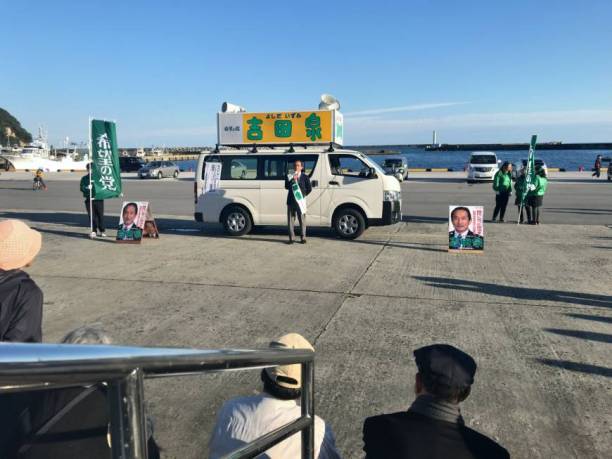
Kibo no To candidate Izumi Yoshida campaigns in the coastal area of Ena in Fukushima Prefecture on Tuesday
NIHONMATSU/IWAKI, FUKUSHIMA PREF. – For Prime Minister Shinzo Abe, the two biggest election-defining issues of Sunday’s Lower House poll are how to spend the additional revenue from the planned consumption tax hike in 2019 and how to deal with North Korea’s nuclear threat. Leaders from other parties see either proposing or preventing revisions to the Constitution as their main priority.
But for residents of Fukushima Prefecture — many of whom are still recovering from the March 2011 Great East Japan Earthquake and ensuing tsunami that triggered a nuclear disaster — the focus is on when their lives will return to some semblance of normalcy.
That sentiment is strongest in the Fukushima No. 5 electoral district, site of the crippled Fukushima No. 1 nuclear power plant, which forced many to evacuate from the no-go zone more than six years ago.
Candidates in the constituency have focused their campaigns on reconstruction and decontamination of the area.
However, campaign strategies are split between the two front-runners — reconstruction minister Masayoshi Yoshino, backed by the ruling Liberal Democratic Party, and Izumi Yoshida, a former vice reconstruction minister who had recently left the Democratic Party to join Kibo no To (Party of Hope), headed by Tokyo Gov. Yuriko Koike.
Yoshino, 69, is taking time to woo voters living in temporary housing and less-populated areas, while Yoshida is campaigning in the more densely populated city of Iwaki.
In pouring rain on Monday, Yoshino’s campaign car appeared at a temporary housing complex in the city of Nihonmatsu, where about 10 residents came out to listen. Although the city is located outside Yoshino’s electoral district, many evacuees from the town of Namie, which is in the district, now reside there.
Evacuation orders for parts of Namie were lifted in March, but only 381 people lived in the town as of the end of last month, while the vast majority of former residents have not returned, according to a town official.
“I’m eager to reconstruct Fukushima. I need your help in order for me to take part in national politics,” Yoshino said in his five-minute speech.
Residents were surprised to see him making the effort to travel out there.
“I don’t think other candidates have come here. I sense that (Yoshino) cares about us,” Jinichiro Tajiri, 76, who lives in nearby reconstruction housing, said after the speech.
Tajiri, who used to live in Namie, has occasionally visited his hometown since March.
“Reconstruction is what I expect the most,” he said.
Tajiri’s wife, Yoshiko, also 76, added, “I want better medical care. A majority of the people here are elderly.”
Yoshino has so far used three days of campaigning to visit evacuees dispersed throughout the prefecture, said Koichi Ito, Yoshino’s election aide.
“While Futaba has 55,000 voters, Iwaki has 370,000. But Yoshino, as a reconstruction minister, has a strong will to continue supporting disaster victims,” Ito said.
Meanwhile, Kibo no To’s Yoshida, 68, who lags behind Yoshino in the media polls, is focusing more on Iwaki.
“Many have already left temporary housing. … Some have built homes in Iwaki. We understand that we must visit (the temporary housing communities), but there aren’t many people living there now,” said Yoshida’s secretary, Toshifumi Sato. “It’s a short battle, so we need to prioritize efficiency.”
On Tuesday, about 300 voters gathered to hear Yoshida’s campaign speech in Ena, the coastal area of Iwaki.
“Revitalization comes from the citizens. We must share our knowledge,” Yoshida said during his speech.
Listening to the speech, Katsuya Kanenari, who heads Ena’s residential group, praised him for his locally focused policies.
“The area used to have a thriving fishing industry, but this was destroyed and ships no longer come. What remains now is the beautiful scenery,” Kanenari said.
“We want public facilities to be built in the area. We want people to visit. Otherwise, the area will remain undeveloped,” he said.
Two other candidates, backed by smaller parties, are also running for the election; Tomo Kumagai, 37, from the Japanese Communist Party and Yoko Endo, 67, backed by the Social Democratic Party.
In line with the parties’ policies, Kumagai and Endo are vowing to eliminate nuclear power plants from Fukushima, unlike Yoshino and Yoshida, who spoke less about that topic.
During a live online debate held Oct. 13 by the Junior Chamber International Japan, Kumagai stressed the need for a government that will rid the prefecture of nuclear power plants.
Endo, on the other hand, said during the same program that the majority of Fukushima residents want the Fukushima No. 1 and No. 2 plants decommissioned, adding that all nuclear power plants in Japan should be phased out.
Few would feel stronger about abolishing nuclear power than the residents who directly faced the fears and damage from the triple meltdown in Fukushima.
“Nuclear power is not something humans can control. (The disaster) is unforgivable,” said Kazuo Akama, 70, a long time resident of Iwaki.
“You must be a victim to understand that. (Nuclear power) is no good. It’s no good,” he said.
October 22, 2017
Posted by dunrenard |
Japan | Economic Priorities, Election Campaign, Fukushima |
Leave a comment
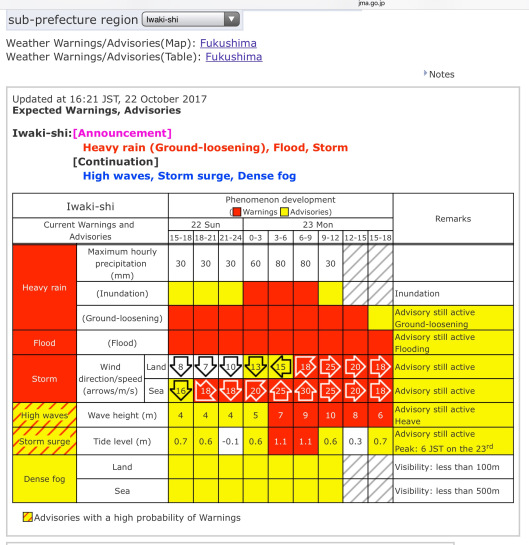
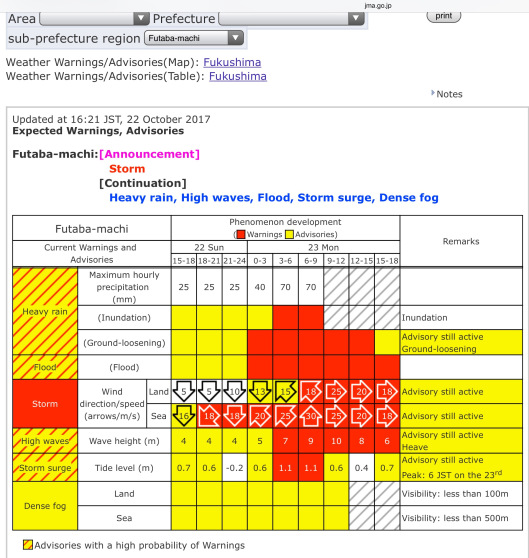
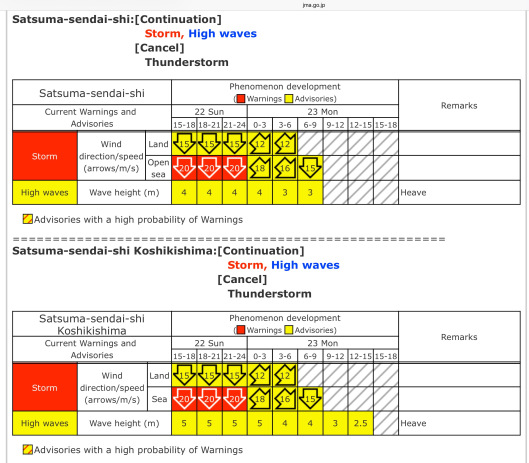
 Typhoon Lan and Japan Nuclear Power Stations.
“Powerful typhoon drenches Japan, soaks voters as they trudge to polls
Posted:Sun, 22 Oct 2017 03:39:46 -0400
Apparently the Fukushima area may get 10 meters (32 ft) waves.
Source: Japan Meteorological Agency website
October 22, 2017
Posted by dunrenard |
Japan | Fukushima Daiichi, Ikata NPP, Sendai NPP, Typhoon |
Leave a comment
The 1985 Royal Commission report into British Nuclear Tests in Australia discussed many of these issues, but never in relation to the proximity and timing of the 1956 Olympic Games. Sixty years later, are we seeing the same denial of known hazards six years after the reactor explosion at Fukushima?
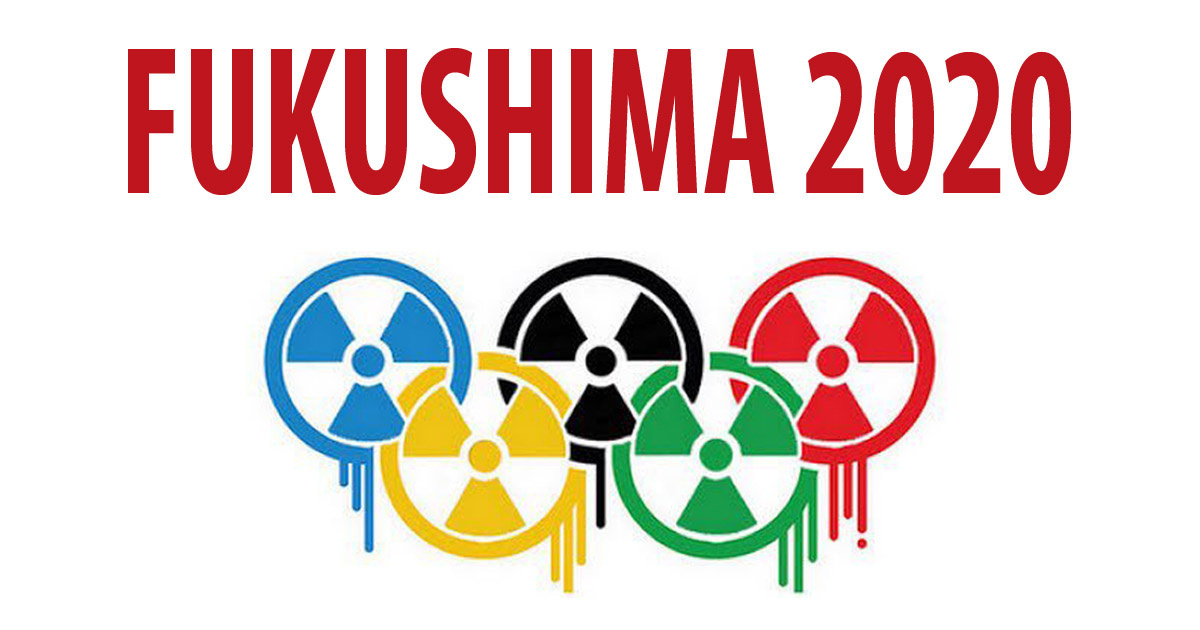
 Australia’s nuclear testing before the 1956 Olympics in Melbourne should be a red flag for Fukushima in 2020, https://theconversation.com/australias-nuclear-testing-before-the-1956-olympics-in-melbourne-should-be-a-red-flag-for-fukushima-in-2020-85787, The Conversation, Susanne Rabbitt Roff. Part time tutor in Medical Education, University of Dundee, 20 Oct 17, The scheduling of Tokyo 2020 Olympic events at Fukushima is being seen as a public relations exercise to dampen fears over continuing radioactivity from the reactor explosion that followed the massive earthquake six years ago.
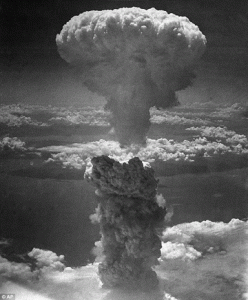 It brings to mind the British atomic bomb tests in Australia that continued until a month before the opening of the 1956 Olympic Games in Melbourne – despite the known dangers of fallout travelling from the testing site at Maralinga to cities in the east. And it reminds us of the collusion between scientists and politicians – British and Australian – to cover up the flawed decision-making that led to continued testing until the eve of the Games.
Australia’s prime minister Robert Menzies agreed to atomic testing in December 1949. Ten months earlier, Melbourne had secured the 1956 Olympics even though the equestrian events would have to be held in Stockholm because of Australia’s strict horse quarantine regimes.
The equestrians were well out of it. Large areas of grazing land – and therefore the food supplies of major cities such as Melbourne – were covered with a light layer of radiation fallout from the six atomic bombs detonated by Britain during the six months prior to the November 1956 opening of the Games. Four of these were conducted in the eight weeks running up to the big event, 1,000 miles due west of Melbourne at Maralinga.
Bombs and games
In the 25 years I have been researching the British atomic tests in Australia, I have found only two mentions of the proximity of the Games to the atomic tests. Not even the Royal Commission into the tests in 1985 addressed the known hazards of radioactive fallout for the athletes and spectators or those who lived in the wide corridor of the radioactive plumes travelling east. Continue reading →
October 20, 2017
Posted by Christina Macpherson |
AUSTRALIA, environment, Japan, weapons and war |
Leave a comment
BBC 18th Oct 2017, Robots have become central to the cleaning-up operation at Japan’s
Fukushima nuclear power plant, six years after the tsunami that triggered
the nuclear meltdown. It is estimated that around 600 tonnes of toxic fuel
may have leaked out of the reactor during the incident. The Tokyo Electric
Power Company is using a variety of robots to explore areas too dangerous
for people to go near. BBC Click was given rare access to the site to see
how the decontamination work was progressing.
http://www.bbc.co.uk/news/av/technology-41584738/fukushima-disaster-the-robots-going-where-no-human-can
October 20, 2017
Posted by Christina Macpherson |
Fukushima continuing |
Leave a comment
 Oi nuclear reactors set to be decommissioned , Japan News , October 17, 2017 Kansai Electric Power Co. intends to decommission the No. 1 and No. 2 reactors at the Oi nuclear power plant in Fukui Prefecture when the plant reaches 40 years of service in 2019, it has been learned.
KEPCO made the decision because the distinctive structure of the reactors’ containment vessels would require massive spending to apply safety measures that would meet the new standards set after the crisis at Tokyo Electric Power Company Holdings Inc.’s Fukushima No. 1 nuclear power plant.
The power company is expected to make an official decision by the end of this year and submit an application to the Nuclear Regulation Authority.
Since the 2011 Great East Japan Earthquake, decisions have been made to decommission six nuclear reactors, not counting those at the Fukushima No. 1 plant. The Oi reactors will be the first large-scale reactors, with a maximum output of over 1 million kilowatts, to be decommissioned……..
The deadline for the Nos. 1 and 2 Oi reactors to apply for an operating period extension is approaching in 2018. With work to improve safety likely being a difficult challenge, KEPCO has no prospect of cutting back on the cost, which is expected to be over ¥100 billion. The company therefore gave up on restarting the reactors.
Tens of billions of yen are expected to be spent over 30 years to complete the decommissioning of the reactors, but that is still much cheaper than restarting them. ….. http://the-japan-news.com/news/article/0004008184
October 18, 2017
Posted by Christina Macpherson |
decommission reactor, Japan |
Leave a comment
The Sun Rises on Japan’s Solar-Powered Smart Communities, Solar Magazine, By Andrew Burger – 16 Oct 17

October 18, 2017
Posted by Christina Macpherson |
decentralised, Japan |
Leave a comment
Chihiro Kamisawa, Masako Sawai, CNIC BY CNIC_ENGLISH · AUGUST 4, 2017 At around 11:15 on June 6, 2017, a plutonium release and exposure accident occurred in an analytical lab (Room 108, a controlled area) at Japan Atomic Energy Agency’s (JAEA) Research and Development Center Fuel Research Building. During work to inspect a storage canister (unopened in 26 years since 1991) containing plutonium and other nuclear fuel materials in laboratory fume hood H-1, the canister lid rose up after four of the six bolts were removed and the instant the remaining two bolts were removed the plastic bags inside the canister burst. The polyethylene container in which the nuclear fuel material was placed was double wrapped in two plastic bags. When these bags burst, the materials in the polyethylene container were abruptly released. The main person carrying out the task stated that he “felt wind pressure on his stomach.” The five persons, who were wearing half-face masks to carry out the task, inspected themselves with an α radiation surface contamination detector, confirming that they had all been contaminated.
While there are many unknowns regarding the accident and its cause, the exposure of the task personnel and other matters, we report here on what has become clear thus far and the problems that the accident poses. The Nuclear Regulation Authority (NRA) is scheduled to release the agency’s “report” about a month after the accident.
Occurrence of the plutonium dust release
Table 1 [on original] shows a timeline of the events based on releases by the JAEA, NRA and news media.
Several black lumps fell onto the floor in Room 108, from which a maximum of 55 Bq/cm2 were detected. The facility management supervisor instructed that a greenhouse (a temporary enclosure to implement detection and decontamination when retreating from the contaminated area) be set up at 11:54, and it is reported that this was completed at 14:29. More than three hours passed between the time of the accident and the time when the five task personnel exited the greenhouse. Concerning the delay in setting up the greenhouse, JAEA explained to NRA that “(The delay occurred because) the main work personnel in the Fuel Research Building were carrying out this work and other staff were engaged in stabilizing procedures for nuclear fuel materials (and could not leave their positions).”
As a result of a nasal smear (to detect contamination in the nostrils) taken inside the greenhouse, contamination of a maximum of 24 Bq (α radiation) was detected in the nostrils of three of the five personnel.
The five task personnel finally exited the controlled area at 18:55. Since α radiation had been detected in their nostrils and there was a strong possibility that the five people had inhaled plutonium, they were transported to the Nuclear Fuel Cycle Engineering Labs in Tokai Village, where measurement of plutonium inside their lungs was carried out using a lung monitor. Lung monitors detect the weak X-rays emitted by plutonium-239 and the gamma radiation emitted from americium-241 inside the lungs from outside the body. However, not only is this detection extremely difficult, it has poor sensitivity. The JAEA measurement results are shown in Table 2. [on original]………
This inappropriate long-term storage problem clearly shows, if one looks back at the historical series of organizations – the Nuclear Safety Commission, the Nuclear and Industrial Safety Agency and the NRA, that for 30 years or more none of these organizations made any public announcements on the issue, or knew what was happening and simply turned a blind eye. The regulatory organizations’ neglect thus far and the defensive awareness that they do not want this to be aired in public has undoubtedly been one of the remote causes of the accident at Oarai. This extremely facile method of dealing with plutonium and nuclear fuel materials is apparent from the notion that, since no serious accident has taken place up to now, it is fine to have the facility operators quickly sweep the problem under the carpet…….
http://www.cnic.jp/english/?p=3910
October 16, 2017
Posted by Christina Macpherson |
incidents, Japan |
Leave a comment
Kobe Steel’s chief executive, Hiroya Kawasaki, at a news conference in Tokyo on Friday. “We are trying to understand how this could possibly happen at so many subsidiaries, including overseas,” he said.
Kobe Steel Scandal Grows to Include Subsidiaries
TOKYO — A scandal about falsified quality data at Kobe Steel expanded on Friday, as the Japanese steel maker said nine subsidiaries, including several outside Japan, had either failed to carry out required product checks or lied about the results.
Including products sold by the subsidiaries, Kobe Steel said it now estimated that it had shipped substandard or potentially substandard materials to 500 customers, up from an initial estimate of 200.
“We are trying to understand how this could possibly happen at so many subsidiaries, including overseas,” Kobe Steel’s chief executive, Hiroya Kawasaki, said at a news conference.
Mr. Kawasaki repeated a promise to complete in two weeks an investigation into potential safety hazards related to the data falsification, and to deliver in a month the results of a broader examination of the company’s failings, which now look systemic and global.
Kobe Steel supplies metal components to industries where safety is vital, including car, train and aircraft producers, and makers of electronics and other equipment. The company says it is working with its customers to determine if any of the affected material, mostly aluminum and copper, poses a safety risk.
The subsidiaries named on Friday were three in China, one each in Thailand and Malaysia and four based in Japan. They make products like copper piping and aluminum and steel wire.
Employees at the companies are supposed to test the products to ensure that they meet design standards specified in customer contracts. Kobe Steel said that in some cases the tests had not been carried out, and that in other cases employees had recorded fake results to make it seem as though the products met customers’ standards when they did not.
Executives said the data manipulation had been deliberate.
Mr. Kawasaki said that Kobe Steel’s international investigation was continuing, and that more cases of data falsification could emerge. The revelations so far have reverberated through supply chains and cast a shadow over Japan’s reputation for precision manufacturing.
Ford Motor said late Thursday that the only use of Kobe Steel aluminum that it had established in its worldwide operations involved a hood for Ford Mondeo sedans produced in China. It said it did not know if the aluminum was substandard, but said it was not being used structurally, so safety was not at issue.
The scandal also touched Japan’s embattled nuclear industry. Tokyo Electric Power, owner of the Fukushima Daiichi nuclear power plant, which experienced meltdowns after a tsunami struck it in 2011, said Friday that it had sourced improperly certified copper piping from Kobe Steel.
Tokyo Electric said the piping, which it bought for use at its Fukushima Daini nuclear power station, near Fukushima Daiichi, had not been checked to ensure it met size requirements. But it said the piping had never been installed, and was in storage, and did not pose a safety threat.
Kobe Steel said on Sunday that employees had altered inspection certificates on aluminum and copper products from September 2016 to this past August, constituting about 4 percent of the company’s output of those items during the period, but that it was examining other possible episodes of data falsification going back 10 years.
On Wednesday, Kobe Steel added two more products to the list of affected materials: powdered steel, which is used to create molded steel products like gears, and “target material,” a specialty mix of metals used to produce DVDs, television screens and other electronics equipment.
A contrite Mr Hiroya Kawasaki, CEO of Kobe Steel, has said the company plans to pay customers’ costs for any affected products
500 firms hit by cheating scandal: Kobe Steel CEO
Crisis ripples through global supply chains, dealing body blow to Japan’s reputation
TOKYO • The cheating crisis engulfing Kobe Steel just got bigger.
Chief executive Hiroya Kawasaki revealed yesterday that about 500 companies had received its falsely certified products, more than double its earlier count, confirming widespread wrongdoing at the steelmaker that has sent a chill throughout global supply chains.
The scale of the misconduct at Japan’s third-largest steelmaker pummelled its shares as investors, worried about the financial impact and legal fallout, wiped about US$1.8 billion (S$2.4 billion) off its market value this week.
As the company revealed tampering of more products, the crisis has rippled through supply chains across the world in a body blow to Japan’s reputation as a high-quality manufacturing destination.
A contrite Mr Kawasaki told a briefing the firm plans to pay customers’ costs for any affected products. “There has been no specific requests, but we are prepared to shoulder such costs after consultations,” he said, adding that products with tampered documentation account for about 4 per cent of the sales in the affected businesses.
Kobe Steel initially said 200 companies were affected when it admitted last weekend that it had falsified data about the quality of aluminium and copper products used in cars, aircraft, space rockets and defence equipment.
Asked if he plans to step down, Mr Kawasaki said: “My biggest task right now is to help our customers make safety checks and to craft prevention measures.”
Boeing has some of the falsely certified products, a source with knowledge of the matter said, while stressing that the world’s biggest maker of passenger jets does not consider the issue a safety problem.
More than 30 non-Japanese customers had been affected by the firm’s data fabrication, the Nikkei newspaper reported yesterday. A Kobe Steel spokesman said the companies received its products but would not confirm they had any of the falsely certified components.
Nuclear power plant parts are the latest to join the list of affected equipment as Fukushima nuclear operator Tokyo Electric Power (Tepco) yesterday said it had taken delivery of pipes from Kobe Steel that were not checked properly.
The pipes were delivered to its Fukushima Daini station, located near the destroyed Fukushima Daiichi plant, but have not been used, Tepco said, adding that it was checking all its facilities.
Faulty parts have also been found in Japan’s famous bullet trains that run at speeds as high as 300kmh and a space rocket that was launched in the country earlier this week. One bullet train operator has already said it will seek compensation from Kobe Steel.
The government has ordered Kobe Steel to address safety concerns within about two weeks and report on how the misconduct occurred in a month. No safety issues have yet been identified in the unfolding imbroglio.
The company’s shares fell nearly 9 per cent yesterday and have fallen more than 40 per cent since the scandal broke.
Kobe Steel, founded in 1905, is a pillar of Japan’s manufacturing sector. Such are its establishment bona fides that Prime Minister Shinzo Abe, scion of a political dynasty, worked at the company decades ago, before entering politics.
But those credentials have now been shattered, a point amplified by Mr Kawasaki who earlier said the credibility of the firm “has plunged to zero”.
October 14, 2017
Posted by dunrenard |
Japan | Fake Inspection Data, Kobe Steel |
Leave a comment
Kobe Steel President and CEO Hiroya Kawasaki speaks during a press conference in Tokyo, Friday.
TOKYO – The scandal over product inspections data faked by Japanese materials and machinery giant Kobe Steel expanded Friday to include products shipped to more than 500 customers.
Kobe Steel’s president, Hiroya Kawasaki, told reporters the company had uncovered nine more types of products whose inspections had been faked or manipulated, including copper alloy pipes and steel wire rods used in vehicle tires and engines.
The problems disclosed by Japan’s third-largest steel maker are just the latest in a slow of product quality, accounting and corruption scandals that have dented Japan’s image of superior manufacturing prowess.
The latest problems were discovered with shipments of more than than 11,000 tons of steel, copper, and aluminum products made by Kobe Steel and its affiliates in Japan, China, Malaysia and Thailand, the company said.
Kawasaki at times appeared close to tears while explaining how it was that the company had chosen not to disclose some of the cases that had been discovered much earlier and discussed at past board meetings.
“I apologize again for the tremendous trouble that we have caused to our customers and consumers,” he said. “We are conducting a thorough analysis of the problem. The analysis will be key,” he said.
Kawasaki said he did not expect any product recalls due to the misconduct.
The exact extent of the problem remains unclear since Kobe Steel has not identified the customers affected. But the company is a major supplier to many manufacturers, including automakers, aircraft manufacturers, semiconductor factories and nuclear power plants.
Other materials it said were affected by bogus inspections or faked data include steel powder, aluminum flat-rolled products and castings, copper strips and tubes and forgings.
Tokyo Electric Power Co said Friday it had bought a backup duct for a heat exchanger for one of four reactors at one of two nuclear power reactors in northeastern Japan’s Fukushima that narrowly survived the 2011 tsunami despite some damage.
TEPCO said in a statement that a Kobe Steel subsidiary, Shinko Metal Products Co., informed it the product came with inappropriate measurement data.
There is no concern over safety because the duct was bought as a backup and was not used.
TEPCO said it has requested further investigations by Kobe Steel of products shipped to the utility and its subsidiaries. TEPCO is also investigating.
October 14, 2017
Posted by dunrenard |
Japan | Fake Inspection Data, Kobe Steel |
Leave a comment
Shimane and Tottori prefectures hold a joint drill in Hoki, Tottori Prefecture, in October 2015 for residents living near nuclear power plants in the prefectures. The government has expanded a state subsidy for cities hosting plants to include municipalities within a 30 km radius.
In an apparent bid to win support for the restart of nuclear power plants, the state has quietly expanded the scope of subsidies for host cities to include local governments within 30 kilometers of the facilities, a charge the government denied Friday.
The change came into force in April with no announcement to the media from the industry ministry, fueling speculation that it was meant to assuage the concerns of municipalities surrounding host cities about plants taken offline in the wake of the 2011 Fukushima nuclear crisis.
A government official, however, denied this speculation.
“We reviewed the system after learning that nuclear power plants also influence surrounding areas,” the official, with the industry ministry’s Agency for Natural Resources and Energy said, adding that the change had been reported on the ministry’s website and that local governments were briefed.
Under the shift, more than 150 local governments are entitled to the subsidy, for which ¥4.5 billion ($40 million) was allocated in the fiscal 2017 budget, the same amount as in fiscal 2016. The ministry has requested a ¥5 billion budget for fiscal 2018.
According to the agency, the program began in fiscal 2016, mainly to promote renewable energy and other measures to revitalize the economies of municipalities hosting nuclear power plants when the facilities are scrapped due to old age.
Utilities face a constant cycle of reactors going online or offline through decommissioning or the suspension of operations. For example, at Chugoku Electric Power Co.’s nuclear plant in Shimane Prefecture, the No. 1 unit is set to be decommissioned as the operator seeks to restart its No. 2 unit.
The change from fiscal 2017 allowed the subsidies to be paid out to towns and villages within 30 km of a nuclear complex, in addition to the host prefectural governments.
To gain approval for restarts, utilities effectively need to obtain consent from prefectural and municipal governments hosting the nuclear complexes, although such efforts are not required by law.
Since the 2011 nuclear disaster, which caused damage to a wide area, surrounding municipalities have stepped up calls for a stronger voice in deciding whether to resume nuclear reactor operations.
But the state and utilities are reluctant to expand the scope of municipalities from which they need to obtain consent, saying that doing so would make restarts exceedingly difficult.
October 14, 2017
Posted by dunrenard |
Japan | nuclear plants, Payouts, Politics |
Leave a comment
Nuclear fuel reprocessing operator violated safety rules: regulator
TOKYO (Kyodo) — Japanese nuclear regulators concluded Wednesday that Japan Nuclear Fuel Ltd. violated legally binding safety rules by failing to conduct necessary checks for over a decade at its uncompleted spent nuclear fuel reprocessing plant in the country’s northeast.
The failure of checks at an underground portion of the plant in the village of Rokkasho in Aomori Prefecture for some 14 years eventually resulted in about 800 liters of rainwater flowing into a building housing an emergency diesel generator in August this year. The generator is a crucial device in times of crisis such as the loss of external power.
Japan Nuclear Fuel President Kenji Kudo said at a Nuclear Regulation Authority’s meeting that he will prioritize inspections of all facilities at the plant and suspend its operations to seek a safety approval on the plant to put it onstream.
The utility plans to check its facilities and some 600,000 devices by the end of this year before requesting the authority to resume its safety assessment for the plant.
The body applied for a safety assessment of the plant in 2014 and aimed to complete it in the first half of fiscal 2018, but the goal is likely to be delayed due to the need for inspections.
The envisioned nuclear fuel reprocessing plant is a key component of the government’s nuclear fuel recycle policy, which aims to reprocess spent uranium fuel and reuse extracted plutonium and uranium as reactor fuel.
But the Rokkasho plant has been riddled with problems, with its completion date postponed 23 times since 1997, its initial target. It also had to meet as new, tougher safety standards made in the wake of the crisis at the Fukushima Daiichi nuclear power complex, triggered by the 2011 deadly earthquake and tsunami.
The authority also said holes and cracks at exhaust pipes discovered at Japan Nuclear Fuel’s uranium enrichment plant in September also violate safety rules. The defects were left undetected for a long time due to a lack of inspection.
A utility compiles safety programs, which need to be assessed and approved by the authority.
If any grave flaws are found, the authority can issue an order to stop the operation of the plants or retract its approval to construct a nuclear plant.
Japan Nuclear Fuel “should have a substantial sense of crisis,” a member of the authority said. “We will take necessary measures if an improvement is not seen in ensuring the safety (in operating the plant).”
Nuclear fuel recycling plant screening suspended
Japan’s nuclear regulator says the operator of a nuclear fuel reprocessing plant in northern Japan has violated safety regulations.
The plant in Rokkasho Village, Aomori Prefecture, is run by Japan Nuclear Fuel Limited.
The Nuclear Regulation Authority said at a meeting on Wednesday that the company violated its in-house safety regulations.
In August, rainwater was found to have flowed from piping in an underground tunnel into a building housing an emergency power generator at the plant. The firm was later found not to have conducted necessary inspections of the tunnel for 14 years.
At Wednesday’s meeting, company president Kenji Kudo pledged to address this and other maintenance problems before submitting documents needed for the regulator to conduct safety screening of the plant.
NRA member Satoru Tanaka pointed out that superficial efforts cannot fix the problems because the matter has to do with business operations. He suggested that the company should have a sense of crisis, and warned of tough measures unless safety improves.
The company aims to confirm the safety of all installations at the plant and draw up a management plan this year. Safety screening is required before the plant can fully operate.
Japan Nuclear Fuel appears to face difficulty in completing work on the plant by the first half of fiscal 2018 as planned. The facility is a pillar of the government’s nuclear fuel recycling program.
October 13, 2017
Posted by dunrenard |
Japan | Rokkasho NPP, Safety Violations |
Leave a comment
(Kyodo) Japan Nuclear Fuel Ltd. violated legally binding safety rules by failing to conduct necessary checks for over a decade at its uncompleted spent nuclear fuel reprocessing plant…
Unfinished nuclear fuel reprocessing plant faked safety records: NRA
The firm that owns an uncompleted nuclear fuel reprocessing plant in Aomori Prefecture failed to conduct necessary checks and falsified safety check records relating to the plant, the Nuclear Regulation Authority (NRA) has reported.
The NRA concluded on Oct. 11 that Japan Nuclear Fuel Ltd. (JNFL) has violated safety measures after it was learned that the firm failed to carry out the required checks and nevertheless continued to write down “no abnormalities” in safety check records. There has been a spate of incidents such as the flow of rainwater into facility buildings at the plant in the Aomori Prefecture village of Rokkasho.
The plant, which is scheduled to reprocess spent nuclear fuel, was on the verge of hosting a final-stage NRA safety inspection, but the checkup is likely to be postponed considerably as JNFL now has to prioritize in-house inspections of all facilities at the plant.
One of the main roles of a nuclear fuel reprocessing plant is the extraction of reusable uranium and plutonium from spent nuclear fuel, making it a key part of the nuclear fuel cycle. However, the Rokkasho plant has been riddled with problems, and its completion date has been postponed 23 times since the initial planned opening date of 1997. Currently, the plant is scheduled to be completed in the first half of fiscal 2018, but this could be difficult.
In August, it came to light that about 800 liters of rainwater had flowed into an emergency electrical power building at the plant. The cause was the leaking of rainwater from an underground facility. This facility, however, has never been checked since its construction in 2003. JNFL nevertheless gave it a false “no abnormalities” appraisal in its daily records. Furthermore, about 110 liters of rainwater also flowed into the underground facility in September.
Apparently, the firm has tried to clarify the issue by saying that, “The (no abnormalities) comment was referring to another underground facility nearby.”
The company plans to complete safety checks at all its Rokkasho plant facilities within the year, and then submit the results to the NRA — with the intention of inviting the NRA to resume safety inspections of the plant.
Japan Nuclear Fuel skipped safety checks at Rokkasho plant for 14 years
Japan Nuclear Fuel Ltd.’s Rokkasho reprocessing plant in Rokkasho Village, Aomori Prefecture, allegedly violated safety rules for over a decade.
Nuclear regulators concluded Wednesday that Japan Nuclear Fuel Ltd. violated legally binding safety rules by failing to conduct necessary checks for over a decade at its uncompleted spent nuclear fuel reprocessing plant in the country’s northeast.
The failure of checks at an underground portion of the plant in the village of Rokkasho in Aomori Prefecture for about 14 years eventually resulted in about 800 liters of rainwater flowing into a building housing an emergency diesel generator in August this year. The generator is a crucial device in times of crisis such as the loss of external power.
Japan Nuclear Fuel President Kenji Kudo said at a Nuclear Regulation Authority’s meeting that he will prioritize inspections of all facilities at the plant and suspend its operations to seek a safety approval on the plant to put it on stream.
The utility plans to check its facilities and some 600,000 devices by the end of this year before requesting the authority to resume its safety assessment for the plant.
The body applied for a safety assessment of the plant in 2014 and aimed to complete it in the first half of fiscal 2018, but the goal is likely to be delayed due to the need for inspections.
The envisioned nuclear fuel reprocessing plant is a key component of the government’s nuclear fuel recycle policy, which aims to reprocess spent uranium and reuse extracted plutonium and uranium as reactor fuel.
But the Rokkasho plant has been inundated with problems, with its completion date postponed 23 times since 1997, its initial target. It also had to meet new, tougher safety standards made in the wake of the crisis at the Fukushima No. 1 nuclear power complex, triggered by the powerful March 2011 earthquake and tsunami that devastated parts of the Tohoku region.
The authority also said holes and cracks at exhaust pipes found at Japan Nuclear Fuel’s uranium enrichment plant in September also violated safety rules. The defects had been undetected due to a lack of inspections.
A utility compiles safety programs, which need to be assessed and approved by the authority.
If any grave flaws are found, the authority can issue an order to stop the operation of the plants or retract its approval to construct a nuclear plant.
Japan Nuclear Fuel “should have a substantial sense of crisis,” a member of the authority said. “We will take necessary measures if an improvement is not seen in ensuring the safety (in operating the plant).”
October 13, 2017
Posted by dunrenard |
Japan | Fuel Reprocessing Plant, Rokkasho NPP, Safety Violations |
Leave a comment

TEPCO, which responded so badly to the Fukushima Dai-Ichi nuclear disaster, has won approval from Japan’s nuclear reactor to crank back up the world’s biggest nuclear power plant.
The word “nuclear” has a lot more power in Japan than it does elsewhere.
Tokyo Electric Power, or TEPCO (TKECY) as it is better known, has just won approval to re-start two reactors at the world’s largest nuclear power plant. Its shares got a jolt of 3% at that announcement.
Nuclear-linked stocks will be worth watching as the company pushes on with that attempt. TEPCO is, after all, the company that responded so badly to the disaster at the Fukushima Dai-Ichi power plant in 2011.
The only country to have been hit by an atom bomb nevertheless embraced the technology behind nuclear power. Around one-fifth of all electricity is intended to be produced that way.
Then came the disaster at Fukushima. The March 2011 earthquake unleashed a tidal wave that ultimately killed 15,894 people, causing ¥21.5 trillion ($191 billion) in damage. Only the nuclear disaster at Chernobyl in Ukraine was worse.
The tsunami deluged the nuclear reactors at Fukushima, and three of them melted down. That shined a spotlight on the inept operations and response of TEPCO, which ran the plant.
The company was terrible at responding to the disaster and even worse at responding to the public. Its executives went into shutdown mode, as Asian companies are wont to do. It denied facts that turned out to be true, downplayed the impact and generally pretended that there’s nothing to see here, we’ve got it all under control, please move along.
So it’s amazing that it’s back in big-time nuclear business. Most recently, Japan’s nuclear regulator, the Nuclear Regulation Authority, has granted TEPCO initial safety approval to restart two reactors, six and seven, at the Kashiwazaki-Kariwa nuclear plant, the world’s largest.
The five NRA commissioners voted unanimously for permission to crank the reactors back up. Formal approval will likely go ahead after a 30-day period for public comment.

The governor of Niigata prefecture, where that plant is based, says he won’t consider allowing the plant to run again until the prefecture conducts its own review of what went on at Fukushima, and that won’t happen until 2020 at the earliest.
Opinion polls show that a majority of the Japanese public now opposes nuclear power and would ultimately like Japan to cease producing it. It’s likely that nuclear power will come up as an issue in the Japanese election, slated for Oct. 22.
Japanese Prime Minister Shinzo Abe believes nuclear power is a viable and stable source of energy. His Liberal Democratic Party wants to see more of Japan’s nuclear reactors put back to work.
Tokyo Governor Yuriko Koike, a former defense minister in the Abe government, has formed a conservative party to rival Abe’s conservative government. Although she says she won’t run for prime minister, her Kibo no To, or Party of Hope, will contest many of the seats up for grabs.
The party is considering an anti-nuclear stance. “We’ll examine how to bring down the reliance to zero by 2030,” Koike told a news conference, according to the Japan Times.
Nuclear power is intended to produce around 22% of Japan’s electricity if all its plants are operating. Government plans call for another 27% to come from liquefied natural gas, around 23% from renewable sources, and only 26% from coal.
All 42 of Japan’s nuclear reactors were ordered to shut down in 2011.
Kyushu Electric Power (KYSEY) was the first company to fire back up a nuclear plant after the 2011 quake, on the island of the same name in the city of Sendai. That’s part of Japan’s industrial heartland.
Kansai Electric Power (KAEPY) was last week granted permission from the mayor of Ohi, in Fukui Prefecture, to re-start two reactors there. The company had applied in August for permission to do so, from Japan’s nuclear regulator, the Nuclear Regulation Authority.
Meanwhile, TEPCO continues the cleanup of the mess at Fukushima. It has delayed the removal of used nuclear rods from fuel pools at the plant. It shifted fuel removal from 2017 to 2018 at the safest of the reactors, and from 2020 to 2023 for another two.
It also has to mop up about 770,000 tons of contaminated water that was pumped into the plant to cool the melted fuel reactors. That’s due to be cleaned out of around 580 tanks where it is stored on site by 2020 – the same year that Tokyo will host the Olympics.
https://www.thestreet.com/story/14332182/1/japan-set-to-restart-worlds-largest-nuclear-plant.html

October 10, 2017
Posted by dunrenard |
Japan | Fault Lines, Kashiwazaki-Kariwa NPP, NRA Approval, Restart, Tepco |
Leave a comment

 Nuclear plants, the Achilles heel in missile tests, remain exposed, By HIROYUKI KAWAI/ The Asahi Shimbun October 24, 2017 North Korea’s missile launches have prompted the government to issue alerts on TV and mobile phones, urging people to take cover in case something goes wrong.

 Australia’s nuclear testing before the 1956 Olympics in Melbourne should be a red flag for Fukushima in 2020, https://theconversation.com/australias-nuclear-testing-before-the-1956-olympics-in-melbourne-should-be-a-red-flag-for-fukushima-in-2020-85787, The Conversation, Part time tutor in Medical Education, University of Dundee, 20 Oct 17, The scheduling of Tokyo 2020 Olympic events at Fukushima is being seen as a public relations exercise to dampen fears over continuing radioactivity from the reactor explosion that followed the massive earthquake six years ago.
 It brings to mind the British atomic bomb tests in Australia that continued until a month before the opening of the 1956 Olympic Games in Melbourne – despite the known dangers of fallout travelling from the testing site at Maralinga to cities in the east. And it reminds us of the collusion between scientists and politicians – British and Australian – to cover up the flawed decision-making that led to continued testing until the eve of the Games.








