USA Mayors’ unanimous call to redirect nuclear weapons spending to social benefit
Mayors unanimously voted to move military spending to domestic needshttp://www.examiner.com/article/mayors-unanimously-voted-to-move-military-spending-to-domestic-needs?CID=examiner_alerts_article JUNE 25, 2013 BY: DEBORAH DUPRE
At the 2013 annual United States Conference of Mayors in Las Vegas Monday, mayors unanimously adopted the Mayors for Peace resolution to end nuclear weapons and redirect military spending to domestic needs, a major step forward for human rights globally……he final resolution with the list of 30 sponsors can be read athttp://wslfweb.org/docs/uscmres2013.PDF.
Mayors for Peace is an international organization of cities, dedicated for the promotion of peace that was established in 1982.
In 2004, 2006 and each year since, the USCM has “adopted increasingly stronger resolutions calling on the president to commence negotiations for the elimination of nuclear weapons by 2020, as urged by Mayors for Peace, an international association headed by the mayors of Hiroshima and Nagasaki,” reports the Baltimore Sun.
“This year’s Mayors for Peace resolution calls on Congress to slash nuclear weapons spending and to redirect those funds to meet the urgent needs of cities,” the Sun says. “The resolution was adopted unanimously, without debate.”
Obama’s offensive first nuclear strike policy
 Obama Prepares to Wage Offensive, First-strike Strategic Nuclear Warfare against Russia, China, Iran, North Korea and Syria http://www.globalresearch.ca/obama-prepares-to-wage-offensive-first-strike-strategic-nuclear-warfare-against-russia-china-iran-north-korea-and-syria/5340299 By Francis A. Boyle Global Research, June 24, 2013 I have now had the chance to read Obama’s recently released Report on Nuclear Employment Strategy of the United States, (June 21, 2013). The critical passage can be found on page 5:
 “The 2010 Nuclear Posture Review established the Administration’s goal to set conditions that would allow the United States to safely adopt a policy of making deterrence of nuclear attack the sole purpose of U.S. nuclear weapons. Although we cannot adopt such a policy today, the new guidance re-iterates the intention to work towards that goal over time.”
In other words, “nuclear deterrence” is not now and has not been the policy of the Obama administration going back to and including their 2010 Nuclear Posture Review as well. Since “nuclear deterrence” is not now and has never been the Obama administration’s nuclear weapons policy from the get-go, then by default this means that offensive first-strike strategic nuclear war fighting is now and has always been the Obama administration’s nuclear weapons policy.
This policy will also be pursued and augmented by means of “integrated non-nuclear strike options.” (Ibid).
Therefore the entire 2013 NPR and Obama’s recent nuclear arms “reduction” proposals must be understood within this context of the United States pursuing an offensive, strategic first-strike nuclear war-fighting capability as augmented by non-nuclear strike forces: Continue reading
Savannah River MOX project should be shut down
the MOX plant has “become from my point of view a pretty meaningless program” that should now be killed.
“The irony of this whole project is that it basically started with a good goal, of eliminating weapons grade material with the idea that it won’t be available for weapons purposes,” “But then it sort of evolved into this program that provides a fairly significant subsidy to the plutonium economy. So in the end, we will end up with more plutonium.”
How a Massive Nuclear Nonproliferation Effort Led to More Proliferation, The Atlantic, More than a decade of negotiations with Russia produced a clear winner, and it was not the United States. DOUGLAS BIRCH AND R. JEFFREY SMITHJUN 24 2013 SAVANNAH RIVER SITE, South Carolina – A half-finished monolith of raw concrete and rebar rises suddenly from slash pine forests as the public tour bus crests a hill at this heavily-secured site south of rural Aiken……..
Dark clouds hover over this ambitious federal project, 17 years in the making and at least six more from completion–if, indeed, it is ever completed. It lies at the center of one of the United States’ most troubled, technically complex, costly, and controversial efforts to secure nuclear explosive materials left stranded by the end of the Cold War.

This plant – and another just like it in Russia — is meant to transform one of these materials, plutonium, into commercial reactor fuel that can be burned to provide electricity for homes, schools and factories, essentially turning nuclear “swords into ploughshares.” The aim of the so-called Mixed Oxide, or MOX, plant is to ensure the material never winds up in the hands of terrorists.
In the right hands, only nine pounds of plutonium — an amount about the size of a baseball — could make a bomb as powerful as the one the U.S. dropped on Hiroshima. The world’s military and civilian nuclear programs have produced about 500 metric tons of pure plutonium, an amount that could fuel tens of thousands of nuclear weapons yet fit into a backyard shed. Countries with nuclear programs continue to add roughly two tons to this inventory every year.
Washington has been spending hundreds of millions of dollars annually to help secure or remove plutonium and weapons-grade uranium in dozens of countries. But the U.S.-Russia plutonium disposition program, which includes the Savannah River plant, is the U.S. government’s single most expensive nonproliferation project now, according to Michelle Cann, senior budget analyst with a nonprofit group called Partnership for Global Security. Continue reading
Huge danger of nuclear terrorism, but small chance of international action to prevent it
a “dirty bomb”, where conventional explosives are used to disperse radiation from a radioactive source, is a “high probability, low consequence act” with more potential to terrorize than cause large loss of life……
next week’s conference in Vienna is open to all members of the 159-nation IAEA, which says it expects officials from some 112 countries as well as 20 organizations
World worried about nuclear terrorism, but little action at talks By Fredrik Dahl VIENNA Jun 24, 2013 (Reuters) – More than 100 states meeting next week will warn of the threat of nuclear terrorism but without deciding on any concrete new steps to counter the danger, a draft ministerial statement showed on Monday.
The document, which member states of the U.N. nuclear agency have been negotiating since March, looked unlikely to satisfy those who advocate stronger international action to ensure that potential nuclear bomb material does not fall into the wrong hands. Continue reading
Pakistan’s 25,000 to protect its nuclear arsenal
 Pakistan deploys 25,000-strong force to protect nuclear arsenal, Times of India PTI Jun 22, 2013, ISLAMABAD: Pakistan has raised a 25,000-strong special force and put in place extensive measures to protect and manage its strategic assets, including its nuclear arsenal, finance minister Ishaq Dar said on Saturday.
“A special security force of 25,000 personnel, who have been specially trained and provided sophisticated weapons, has been deployed to protect (the nuclear assets),” Dar said, while winding up the debate on the 2013-14 budget in the National Assembly or lower house of Parliament……. http://articles.timesofindia.indiatimes.com/2013-06-22/pakistan/40133480_1_security-force-nuclear-arsenal-strategic-plans-division
US Congressmen in the dark about USA’s nuclear weapons tally
 VIDEO How Many Nuclear Weapons Does the US Have? Don’t Ask a Congressman By Chris Good Jun 21, 2013 As it turns out, some members of Congress don’t know how many nuclear weapons the United States has.
Nukes are back in the news this week after President Obama renewed his call to significantly cut the U.S. arsenal, telling a crowd in Berlin Wednesday that he wants to reduce deployed U.S. and Russian nukes by one-third.
Global Zero, a group that promotes eliminating all nuclear weapons, asked a few lawmakers how many nukes are in the U.S. stockpile. Some said they didn’t know; others gave inaccurate numbers.
The above video includes interviews with Republican Reps. Blaine Luetkemeyer of Missouri; Phil Gingrey of Georgia; Morgan Griffith of Virginia; Steve Womack of Arkansas; Rob Wittman of Virginia; Tom McClintock of California; Duncan Hunter of California; Mark Amodei of Nevada; Bill Flores of Texas; Democratic Reps. Donald Payne Jr. of New Jersey and John Garamendi of California; and New Progressive Puerto Rico Resident Commissioner Pedro Pierluisi.
Global Zero says the United States has 7,700 nuclear warheads, citing a Federation of American Scientists report. The Department of Defense disclosed in 2012 that “as of September 30, 2009, the U.S. stockpile of nuclear weapons consisted of 5,113 warheads.”
US President’s new guidance on nuclear weapons strategy
FACT SHEET: Nuclear Weapons Employment Strategy of the United States The White HouseOffice of the Press Secretary, 19 June 13
Today, the President announced new guidance that aligns U.S. nuclear policies to the 21st century security environment. This is the latest in a series of concrete steps the President has made to advance his Prague agenda and the long-term goal of achieving the peace and security of a world without nuclear weapons.
Following the release of the 2010 Nuclear Posture Review (NPR) and ratification of the New START Treaty, the President directed the Department of Defense (DOD), the Department of State, Department of Energy, and the intelligence community, to conduct a detailed analysis of U.S. nuclear deterrence requirements and policy in order to ensure U.S. nuclear posture and plans are aligned to address today’s security environment. This review was based on the principle that a robust assessment of today’s security environment and resulting Presidential guidance must drive nuclear employment planning, force structure, and posture decisions.
The President’s new guidance: Continue reading
The USA’s nuclear triad bombers, ICBMs, and ballistic missile submarines.
Triad And True…Time, By Mark Thompson _ June 21, 2013 How much could be saved by trimming the U.S. nuclear triad…and at what cost to U.S. security? President Obama’s call this week to cut the U.S. and Russian nuclear arsenals by one-third has a certain symmetry to it, given the fact that if war broke out between them, the U.S. would use three different kinds of weapons to rain atomic fire down on the Russians: bombers, land-based missiles, and submarine-launched missiles.
More than 20 years after the Cold War, that’s the way it’s going to stay, according to Defense Secretary Chuck Hagel. “The United States will pursue negotiated reductions with Russia,” Hagel said Wednesday in a speech at the University of Nebraska – his alma mater – in Omaha, also the home of the U.S. Strategic Command, which oversees the nation’s strategic nuclear forces. “As we pursue these reductions, let me emphasize three things — three things that will not change. First, the U.S. will maintain a ready and credible deterrent. Second, we will retain a triad of bombers, ICBMs (intercontinental ballistic missiles), and ballistic missile submarines. Third, we will make sure that our nuclear weapons remain safe, secure, ready and effective.”
We will retain a triad of bombers, ICBMs, and ballistic missile submarines.
Why?
The nuclear triad is a creation of the Cold War, when the U.S. and Soviet Union were busy building nuclear bombs to destroy one another. Each concluded that having three separate systems to deliver those weapons was key to deterrence. It meant that a surprise attack on the other side’s nuclear forces would be complicated to the point of futility.
But the Cold War is over, and debate over the U.S. triad has heated up because all three of its legs need to be modernized: new bombers and submarines costing perhaps $100 billion or more are on the drawing boards, and the Air Force is spending $7 billion to update its Minuteman missiles, with plans to replace them after 2030. And just what potential foe out there has the means – never mind the desire — to wipe out even a single leg of the U.S. nuclear force?
With the Pentagon budget in decline, amputating a leg of the triad would surely save money. But the dollars are tough to nail down, and spread among hundreds of U.S. government accounts. Figuring out precisely how much might be saved is challenging: triad boosters tend to minimize the cost ($10 billion annually to operate!), while those eager to jettison nuclear weapons tend to maximize them (more like $56 billion when you include the cost of replacing the aging systems used to actually deliver them!). It’s a safe bet the truth is somewhere in-between. … http://nation.time.com/2013/06/21/triad-and-true/#ixzz2WyxyT6RD
Britain’s Labour Party snubs atomic test veterans
Labour ‘snub’ for A-bomb veterans The Shields Gazette, 13 June 13 A NUCLEAR test veteran from South Tyneside is “very disappointed” at the response of Labour Party leader Ed Miliband to a call for support. John Taylor wrote to Mr Miliband, on behalf of himself and the 1,000 ex-servicemen, demanding justice after being exposed to radiation during British nuclear weapon tests in the Pacific in the 1950s.
Mr Taylor, 76, of Carnegie Close, South Shields, had a chance meeting with the Labour leader, while he was supporting Emma Lewell-Buck during her successful by-election battle in the town. But although Mr Miliband asked Mr Taylor to write to him about the campaign, the atom bomb veteran was “unhappy” with the Labour leader’s response.
Mr Taylor said: “Basically, everything in the letter was stuff we already knew. There was no pledge to back our campaign. “There is nothing in Ed Miliband’s letter that suggested he was going to support us. I was very disappointed, because I thought Mr Miliband could have taken up our fight in Westminster.
“I think the veterans’ solicitors will be disappointed with his response too. “His letter really suggested that we would have to fight our cases individually, rather than as a concerted campaign.”
Wearing little or no protective clothing, Mr Taylor witnessed three nuclear explosions between July and September 1957, as part of Operation Antler, while serving as a leading aircraftman with the RAF in Maralinga, Australia.
All the vets claim the nuclear tests caused medical problems for themselves and their families……..
Although the veterans saw their case rejected by the Supreme Court in London last year, Mr Taylor and fellow campaigners hope for a more positive hearing later this year at the European Court of Human Rights in Strasbourg, France.http://www.shieldsgazette.com/news/crime/labour-snub-for-a-bomb-veterans-1-5761740
USA’s secret 21 nuclear bombs in Netherlands
 Cold War nuclear bombs remain in the Netherlands : http://www.smh.com.au/world/cold-war-nuclear-bombs-remain-in-the-netherlands-20130611-2o15v.html#ixzz2Vz2EnXos June 11, 2013
BRUSSELS: Twenty-two American nuclear bombs remain housed in underground bunkers at a Dutch airbase, a Cold War legacy described as “pointless”.
Ruud Lubbers, Dutch prime minister from 1982 to 1994, broke a taboo of European politics by confirming the presence of the weapons at Volkel airbase.
“I would never have thought those silly things would still be there in 2013,” Mr Lubbers told De Tijd Vliegt, or Time Flies, a National Geographic television documentary. “They are an absolutely pointless part of a tradition in military thinking.” Continue reading
USA’s B61 bomb – useless and a waste of money
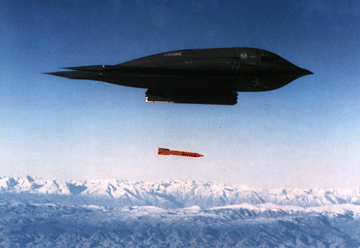 The nuclear bomb we don’t need, L A Times, By Steve Andersen June 6, 2013 The American B61 is a massively expensive investment that provides no real military capability and no real deterrence in today’s Europe………s President Obama prepares to unveil a nuclear weapons policy initiative for his second term, no one is suggesting that the United States should slash defense spending to Russian levels. Defense cuts of that size would be inconsistent with the national interests of America and its allies. But policymakers on both sides of the Atlantic ought to be more inclined than they have been to trim defense programs tailored for a Cold War that has been over for two decades, in particular during an era of sequestration in Washington and austerity in Europe.
Enter the American B61 nuclear bomb …… Throughout the Cold War, thousands of tactical nuclear weapons — short-range nuclear artillery shells, missiles and bombs — were deployed by the United States to deter the Soviets from exploiting their advantages in Europe to mount a lightning attack.
It worked. After the Soviet Union collapsed, President George H. W. Bush ordered the return of almost all U.S. tactical nuclear weapons, leaving only a few hundred air-delivered gravity bombs — the B61 — in European bunkers.
Over the last 20 years, the military rationale for continuing these deployments has evaporated. …..When allocating limited defense resources against real defense priorities, including Afghanistan, Libya, Mali, Syria, nuclear proliferation, terrorism — today’s “guns versus guns” measurements — the B61 simply doesn’t pass muster…… If Americans understood that their government plans to spend about the same amount of money this year, $537 million, on the B61 bomb as it will spend on Alzheimer’s research, while financing nearly three-quarters of NATO’s military spending, the B61 would deservedly become a dead man walking.
So who will make this case? Four American statesmen — George Shultz, William Perry, Henry Kissinger and Sam Nunn — who in a landmark 2007 Op-Ed article called for “eliminating short-range nuclear weapons designed to be forward deployed” — laid the foundation. Since then, a number of European senior statesmen — including defense and foreign secretaries across the political spectrum — have echoed their call.
Obama should connect the dots as part of an initiative to implement the ambitious agenda for nuclear threat reduction he laid out in Prague four years ago, which was endorsed by NATO. Or even better, maybe it will be a European leader who has the iron to seize the initiative and call attention to the obvious: In today’s Europe, tactical nuclear weapons make no sense. http://www.latimes.com/news/opinion/commentary/la-oe-andreasen-nuclear-bomb-20130606,0,4306971.story
America did more nuclear weapons tests than all other countries put together
America Leads the World in Nuclear Tests The Diplomat By Zachary Keck June 6, 2013 The United States has conducted more nuclear weapon tests than the rest of the world combined, according to a new analysis published on Real Clear Science.
Real Clear Science compiled a list counting the number of tests each country that is known have conducted nuclear tests has carried out since the dawn of the nuclear era.
The United States leads the pack with 1,032 nuclear weapons tests, with Russia (including the Soviet Union) coming in at a distant second with 715 tests. France has conducted the third most with 198 tests, while China and the United Kingdom have both carried out 45 of them.
After that the numbers drop off even more substantially with India having carried out three confirmed tests and six claimed ones, North Korea’s three tests since 2009, and Pakistan having carried out two confirmed tests and six claimed ones, according to Real Clear Science. Although not included on the list, Israel is widely believed to have carried out a covert nuclear test off the coast of South Africa in 1979, which was captured by the U.S. Vela satellite.
Counting Israel’s test and India and Pakistan’s confirmed tests, the world excluding U.S. has carried out 1,012 tests. If India and Pakistan’s non-confirmed tests are included, that number rises to 1,019.
Thus the U.S. has carried out either twenty or thirteen more nuclear tests than the rest of the world combined, according to the Real Clear Science data….. http://thediplomat.com/flashpoints-blog/2013/06/06/america-leads-the-world-in-nuclear-tests/
Nuclear weapons countries determined to keep those weapons
Nuclear weapon-possessing states will not give up arsenals: Think tank http://www.presstv.ir/detail/2013/06/03/306894/nuke-states-will-not-give-up-arsenals/ 3 June 13, A Swedish think tank report says the nuclear weapon-possessing states of the US, the UK, France, Russia and China are either modernizing their nuclear weapons or appear determined to keep their nuclear arsenals indefinitely.
Stockholm International Peace Research Institute (SIPRI) published on Monday its latest yearbook, which assesses the current state of international security, armaments and disarmament.
The report said the five states are in the process of deploying new nuclear weapon delivery systems or have announced programs to do so.
“Once again there was little to inspire hope that the nuclear weapon-possessing states are genuinely willing to give up their nuclear arsenals. The long-term modernization programs under way in these states suggest that nuclear weapons are still a marker of international status and power,” said SIPRI Senior Researcher Shannon Kile.
The report also revealed that at the start of 2013, the United States, Russia, the UK, France, China, India, Pakistan and the Israeli regime possessed roughly 4,400 operational nuclear weapons.
When counting all nuclear warheads, these eight states together have nearly 17,300 nuclear weapons. SIPRI estimated that the Israeli regime has about 80 intact nuclear weapons, including 50 Jericho II medium-range ballistic missiles and 30 for gravity bombs carried by aircraft.
In addition, the think tank also believes that the Tel Aviv regime has produced non-strategic nuclear weapons, including artillery shells and atomic demolition munitions.
Separate reports say that the Israeli regime has between 200 and 400 nuclear warheads. Tel Aviv continuously rejects all the regulatory international nuclear agreements, particularly the Non-Proliferation Treaty, and it refuses to allow its nuclear facilities to come under international regulatory inspections.
The Asian nuclear arms race
Asian countries pile up nuclear arms DW, 3 June 13 The arms race in
Asia has increased since 2008 mainly due to growing tensions between
China and Japan, the two Koreas, and India and Pakistan, says the
Stockholm International Peace Research Institute in its report.
The Stockholm International Peace Research Institute (SIPRI) says in
its latest report that China, India and Pakistan have added more
nuclear weapons to their stock in the last few years.
The annual report claims that while China appears to be expanding its
nuclear arsenal, India and Pakistan are increasing both their nuclear
as well as their conventional weapons.
Pakistan is also enhancing its plutonium production at the central
Khushab city, which is home to the Heavy Water and Natural Uranium
Research Reactor – an important component of the Islamic state’s
special weapons program.
SIPRI further says that in 2012 China, India and Pakistan added 10
warheads each to their nuclear storage. China, it says, now has 250
nuclear warheads, whereas Pakistan possesses 100 to 120, and India 90
to 110.
The three Asian countries are home to over 2.7 billion people, which
is nearly 40 percent of the global population…..
http://www.dw.de/asian-countries-pile-up-nuclear-arms/a-16856178
How USA built a forest in order to atomic bomb it
How Do We Know Nuclear Bombs Blow Down Forests? Because we built a forest in Nevada and blew it down. Slate, By Ann Finkbeiner May 31, 2013, “……. Once the United States had built the first atomic bomb in 1945, it then improved it by building the first hydrogen bomb in 1952. It then began working on building more portable bombs, and since the Soviet Union had done the same, the United States also wondered about the bombs’ effects. So in the early 1950s, the government set up models of all the things that bombs could blow up—houses, bridges, cars, pigs, sheep—and exploded bombs near them. The government did this for at least a decade and didn’t stop until it and the rest of the world banned above-ground testing. The tests, many of them at the Nevada Test Site, were called “shots,” and they had names.
The shot called Encore was on May 8, 1953, and among the many effects it tested was what a nuclear bomb would do to a forest. The Nevada Test Site wasn’t replete with forests, so the U.S. Forest Service brought 145 ponderosa pines from a nearby canyon and cemented them into holes lined up in tidy rows in an area called Frenchman Flat, 6,500 feet from ground zero. Then the Department of Defense air-dropped a 27-kiloton bomb that exploded 2,423 feet above the model forest. The heat set fire to the forest, then the blast wave blew down the trees and put out some fires and started others.Here’s the video.
I’m not sure what I make of this. Certainly in the 1950s nobody was controlling nuclear weapons; they were alive, reproducing, and roaming the world. So knowing precisely what damage they cause might help mitigate that damage. And certainly I’m not going to think about the more distant and longer-term effects of those shots, more than 200 of them above ground, except to say that as a 10-year old girl in Illinois, even I wasn’t safe.
I do know I’m impressed by the amount of directed effort, the thoroughness of thought that went into cutting down 145 ponderosa pines, trucking them out of the canyon, digging holes, filling them with concrete, sticking the trees into them, dropping the bomb, and beginning the measurements. And though the United Nations belatedly began negotiating a ban on above-ground tests in 1955, the Limited Test Ban Treaty didn’t get signed until 1963. That was the limited treaty; the comprehensive one banning all tests everywhere took another 40-plus years, and even now the United States hasn’t ratified it.* I’m most impressed by the contrast between the pointed determination of the test shots and the infinite dithering about the (yes, infinitely more complicated) test bans. I might suspect that human nature and its governments have a dark side.
Add this little public service booklet, illustrated with the drawing above and written by the Atomic Energy Commission to the people of Nevada:
“You are in a very real sense active participants in the Nation’s atomic test program. … Some of you have been inconvenienced by our test operations. At times some of you have been exposed to potential risk from flash, blast, or fall-out. You have accepted the inconvenience or the risk without fuss, without alarm, and without panic. Your cooperation has helped achieve an unusual record of safety.”
1 This Month
23-25 October – on Zoom – World BEYOND War’s annual global conferenc


Shut down the radiation-damaged Heysham nuclear reactors now
To see nuclear-related stories in greater depth and intensity – go to https://nuclearinformation.wordpress.com

Say No to NASA’s Reckless Nuclear Reactor on the Moon
Say No to NASA’s Reckless Nuclear Reactor on the Moon

-
Archives
- October 2026 (199)
- September 2026 (339)
- August 2026 (330)
- July 2026 (355)
- June 2026 (287)
- May 2026 (306)
- April 2026 (356)
- March 2026 (251)
- February 2026 (267)
- January 2026 (308)
- December 2025 (358)
- November 2025 (359)
-
Categories
- 1
- 1 NUCLEAR ISSUES
- business and costs
- climate change
- culture and arts
- ENERGY
- environment
- health
- history
- indigenous issues
- Legal
- marketing of nuclear
- media
- opposition to nuclear
- PERSONAL STORIES
- politics
- politics international
- Religion and ethics
- safety
- secrets,lies and civil liberties
- spinbuster
- technology
- Uranium
- wastes
- weapons and war
- Women
- 2 WORLD
- ACTION
- AFRICA
- Atrocities
- AUSTRALIA
- Christina's notes
- Christina's themes
- culture and arts
- Events
- Fuk 2022
- Fuk 2023
- Fukushima 2017
- Fukushima 2018
- fukushima 2019
- Fukushima 2020
- Fukushima 2021
- general
- global warming
- Humour (God we need it)
- Nuclear
- RARE EARTHS
- Reference
- resources – print
- Resources -audiovicual
- Weekly Newsletter
- World
- World Nuclear
- YouTube
-
RSS
Entries RSS
Comments RSS

