As Threat of Militarisation Rises, International Community Races to Set Standards for Responsible Behaviour in Outer Space
Cornelis van Haperen | U. Nottingham School of Law, GB, AUGUST 11, 2022
The past decades have seen a growing interest in, and utilisation of, outer space. Ease of access to space has increased alongside the rise of more affordable and small-scale technologies, and as a consequence space has become a congested and competitive environment. This has resulted in an increase in the number of nations with space ambitions, while the proliferation of commercial space platforms and space exploration has also grown, even leading to Elon Musk’s capabilities to support Ukraine in its defense against Russia’s invasion, and the new phenomenon of space tourism.
No longer is the space domain reserved for the original space-faring nations — the United States, Russia and the emerging global power China. It is also causing the increased militarisation of space (‘arms race’) with a number nations having formed new military commands and armed forces (e.g. Space Command and Space Force: USA, UK, France) and NATO having declared space a war-fighting domain in 2019.
The proliferation of space objects and debris is resulting in a growing risk of collision and damage, while the activities of certain nations (Russia, China) [ed note – h ha – why not include USA?]pose increased threats and risks of conflict. Western Allies have realized that they rely more and more on space for all military activities, including collective defence, crisis response, disaster relief, and counterterrorism, and depend on information delivered from and through space. Militarily tensions seem to have been on the rise too. There are real concerns among the international rule-based nations about the challenging behaviours of Russia and China [ ha ha why not include USA?] wreaking real havoc in space which even resulted in serious endangerment of the lives of American and Russian astronauts at the International Space Station.
This article will shed some legal light on the recent announcement by US Vice-President Kamala Harris that the US would refrain from conducting destructive direct-ascent anti-satellite missile testing (i.e. destroying satellites in space). Whilst this seems to firmly place destructive actions at the centre of recent debates, the growing conduct of non-lethal operations such as jamming and spoofing should not be discarded. This article will therefore concentrate more widely on the international legal framework and military use of space. The main issue that will be addressed is whether the increased militarisation of space requires better norms and rules to ensure the responsible and peaceful use of outer space. There will be a brief reflection on the United Nations organisations that are leading efforts to bring nations together in the development of such norms and rules and where the international community is going next.
Military Use of Space – the Relevant Law?
It seems inherently contradictory to talk about military and weapons in the same breath as outer space. In December 1963, the UN General Assembly unanimously adopted a resolution recognising the common interest of all mankind in the progress, exploration, and use of outer space for peaceful purposes. These words resembled similar aspirations as defined in the Antarctic Treaty a few years earlier. The main difference was that this Treaty also spelled out the prohibition of military activities whereas resolution 1962 did not. It has therefore been unavoidable that two interpretations of the term peaceful have emerged: one arguing a complete ban of all weapons in space, while the prevailing view does not represent such a prohibition.
Let’s place the increased militarisation of space in the appropriate context by defining the international legal framework for outer space and reflect on the legal underpinning of military activities within outer space. The Treaty on Principles Governing the Activities of States in the Exploration and Use of Outer Space, including the Moon and Other Celestial Bodies, 1967, better known as the Outer Space Treaty (OST), and four other key treaties, commonly referred to as the outer space legal regime, together provide a legal foundation for ‘the expanding and increasingly complex tasks aimed at the exploration and use of outer space for peaceful purposes.’
In addition, the UN General Assembly has defined several principles as well as adopted various resolutions. Article I of the OST states that exploration and use of outer space, including the moon and other celestial bodies, is to be for the benefit of all mankind. Importantly, Article II clarifies that they shall not be subject to national appropriation and thus there can be no claims of sovereignty. The OST further states that the use of outer space, including the moon and other celestial bodies, shall be undertaken consistent with international law. This includes the UN Charter and is to conform with the UN’s purposes to maintain peace and security and the promotion of international co-operation. ………………………………………..
Preventing Bad Behaviour: Mitigating Risks of Damage and Threats of Escalation
It is often reported that debris in space is growing exponentially. The logical consequence of the increase in space activities is a growing risk of collisions with space objects, i.e. other satellites, and the creation and proliferation of new debris due to ever more launches. However, whilst some of this risk could arguably be mitigated through more cautious behaviour, there has also been a noticeable growth of capabilities to interfere with systems in outer space or even destroy them, and we have seen an upturn in deliberate malicious acts by actors seeking to affect the space activities of other nations. The most destructive forms are those of kinetic or physical counter-space weapons that directly hit satellites. ……………………………………………………
United Nations and National Leadership
The framework for state action in outer space is now far behind the technological possibilities, developments, and commercialisation of space. Nevertheless, the Proposed Prevention of an Arms Race in Space (PAROS) has been on the United Nations’ disarmament agenda for over four decades. Numerous nations have expressed their concerns about the harmful and damaging effects of this competition for space. While the discussions in the international community have intensified over the past decades these have not yet resulted in binding treaties or measures……………………………………………….. more https://www.jurist.org/features/2022/08/11/explainer-as-threat-of-militarisation-rises-international-community-races-to-set-standards-for-responsible-behaviour-in-outer-space/
MARS ASTRONAUTS WOULD GET HORRIFYING DOSE OF RADIATION, STUDY FINDS

SO… WHAT WAS THAT ABOUT COLONIZING MARS?
MAGGIE HARRISON https://futurism.com/the-byte/mars-astronauts-radiation-study 15 Aug 22
Sorry, Elon
So, uh, there might be a serious wrench in Elon Musk’s plans to colonize Mars.
According to an alarming — though yet-to-be-peer-reviewed — new study, astronauts who underwent a crewed mission to the Red Planet would likely face devastating levels of radiation — even when wearing protective metal shields.
Bad Trip
In order to realistically examine how much cumulative radiation the astronauts would face, the scientists based their research on a 1,000-day crewed mission — 600 days of travel time, 400 days on the Martian surface — to our neighboring planet.
As New Scientist reports, the work was partially inspired by the gender gap in space radiation research. Most studies in the field have focused on male bodies — NASA, in fact, is only sending test dummies with female anatomies into space for the first time this year.
With that in mind, the scientists were sure to include comprehensive virtual models of both male and female anatomies in their study. These models were then mercilessly pelted with simulated cosmic radiation, including that caused by solar flares, and studied using particle-tracking software usually used in particle accelerator research. (It’s also worth noting that the model accounted for exposures with aluminum shielding and without.)
Radiation Station
And regarding whether such missions would be safe or not, the results were unfortunately in favor of “not.”
After surveying the impact of the 1,000-day simulated mission on over 40 of the digitally-modeled body parts and organs, the researchers determined that most of the individual organs examined contained radiation levels over one sievert — as New Scientist reports, most space agencies worldwide stipulate that no astronaut should be exposed to over one sievert of radiation throughout their entire career, while NASA maintains that 0.6 sieverts should be the max.
As the study has yet to be peer reviewed, none of this data is entirely certain. But if it ultimately checks out, humanity definitely has some protective measures to figure out before any astronauts — let alone a whole chunk of humanity — could safely make their way to Earth’s dusty red neighbor.
READ MORE:Mars astronauts would get unsafe radiation doses even with shielding [New Scientist]
Elon Musk’s SpaceX now leaving junk in Australia’s backyard
Independent Australia, By Darren Crawford | 10 August 2022 After a SpaceX capsule crashed onto an Australian farm, we’re left wondering if Elon Musk will clean up his own mess, writes Darren Crawford.
ACCORDING TO the ABC, the Australian Space Agency (ASA) has confirmed that debris found in a sheep paddock in the Snowy Mountains region of New South Wales, Australia, belongs to Elon Musk’s SpaceX Dragon capsule, which was launched in November 2020.
Local authorities were alerted after nearby residents heard a loud bang earlier this year on 9 July. It is now thought the bang was the noise of the capsule re-entering the Earth’s atmosphere. New South Wales Police and the ASA visited one of the sites on Saturday 31 July and confirmed that two of the pieces are from a SpaceX mission.
According to the ABC, the ASA is continuing to engage with its counterparts in the U.S. as well as other parts of the Commonwealth and local authorities.
An ASA spokesperson said:
“The agency is operating under the Australian Government Space Re-entry Debris Plan which outlines roles and responsibilities for key Australian government agencies and committees in supporting the response to space re-entry debris.”
So who is responsible for the clean-up?
According to the ABC report, the space debris will remain in place for now. However, the pieces could eventually be returned to U.S. soil.
Australian National University’s Institute of Space deputy director Dr Cassandra Steer said there was an obligation under international space law to repatriate any debris to the country from where it originated.
Dr Steer went on to confirm that “Any space object, or part thereof, has to be repatriated” and should be sent back to the U.S. However, SpaceX has only confirmed that the debris is theirs and is yet to commit to the costs associated with returning it to the U.S.
Dr Steer added:
“We have clarity in terms of lines of responsibilities. The U.S. is liable for any damage that is caused by this space debris… and Australia could go to the U.S. and seek some form of compensation if there are any costs involved in cleaning it up.”
Elon Musk and SpaceX have a poor environmental record
As reported earlier this year, Elon Musk and fellow billionaires Richard Branson and Jeff Bezos are currently participating in a dick-swinging rocket contest to see who can get to Mars first. Suffering from massive rocket envy, these three men are speeding up the climate change process by increasing the amount of carbon dioxide and other gases in the Earth’s atmosphere with every launch.
The Guardian reports that one rocket launch alone can release up to 300 tons of carbon dioxide into the Earth’s upper atmosphere and it can stay there for years. This is in comparison to a standard long-haul flight which produces three tons of carbon dioxide per passenger/per flight, into the lower atmosphere.
These impacts do not include what happens on the ground during a launch, including the heat and noise pollution in the immediate area, or the impacts on local wildlife.
There appear to be few controls put in place to protect the planet and its inhabitants from falling space junk by Elon Musk and SpaceX. In March 2021, a SpaceX rocket blew up on launch and debris was scattered throughout the protected area. According to a local non-profit environmental group, it took three months to clean up the mess.
According to the report, launch site ditches on SpaceX land and public property in the U.S. have dumped runoff water directly into the tidal flats threatening local fish breeding grounds, and public beaches and roads have been closed for longer than the agreed times.
Finally, at an earlier launch in 2018, a jettisoned SpaceX booster rocket missed its target drone ship a few hundred kilometres out to sea and destroyed itself on impact slamming into the ocean at 500 km/hour.
So, will Elon Musk and SpaceX clean up their mess down under?
This is the great unknown, as Elon Musk’s environmental record in relation to his SpaceX program is extremely poor.
It is also clear, as can be seen by his recently abandoned Twitter purchase, that Elon Musk doesn’t care who he burns, or how hard he burns them, to get his own way.
It is apparent that Elon Musk sees the increasing amount of pollution produced by his SpaceX endeavours as little more than collateral damage and less of a threat to our civilisation. Similarly, he doesn’t care whose backyard he trashes (as long as it’s not his, obviously).
Instead of turning his immense intelligence (and wealth) to solving our current problems, Elon Musk (and his billionaire space mates) seek to exacerbate these problems by polluting the planet further.
It will be interesting to see whether he does the right thing by the Australian Government and its people and pays for the clean-up of his mess.
Update, 10 August 2022:
The ABC is reporting that SpaceX has confirmed that the space debris spread throughout an Australian sheep paddock is indeed remnants of their Dragon Capsule and is sending a team down under to investigate………………………….
What was not stated was whether any ASA or government agencies were aware of or engaged in any of SpaceX’s planning. Space Law Lecturer at UNSW Canberra, Duncan Blake, wondered if they had coordinated with Australian agencies prior to their risk assessment — “If they didn’t, then that seems somewhat arrogant to make a decision that affects Australia without consulting Australians,” he said.
There has been no mention of the cost of removal or the debris, or as to whether Elon Musk and SpaceX will be more honest and open in the future and advise all Australians about the potential damage falling SpaceX junk may cause in their country.
https://independentaustralia.net/environment/environment-display/elon-musks-spacex-now-leaving-junk-in-our-own-backyard,16650
NASA, Russian space agency sign deal to share space station flights – Roscosmos
Yahoo News, Joey Roulette July 15, 2022 (Reuters) -NASA and Russia’s space agency Roscosmos have signed a long-sought agreement to integrate flights to the International Space Station, allowing Russian cosmonauts to fly on U.S.-made spacecraft in exchange for American astronauts being able to ride on Russia’s Soyuz, the agencies said Friday.
NASA and Russia’s space agency Roscosmos have signed a long-sought agreement to integrate flights to the International Space Station, allowing Russian cosmonauts to fly on U.S.-made spacecraft in exchange for American astronauts being able to ride on Russia’s Soyuz, the agencies said Friday.
“The agreement is in the interests of Russia and the United States and will promote the development of cooperation within the framework of the ISS program,” Roscosmos said in a statement, adding it will facilitate the “exploration of outer space for peaceful purposes.”
NASA and Roscosmos, the two-decade-old space station’s core partners, have sought for years to renew routine integrated crewed flights as part of the agencies’ long-standing civil alliance, now one of the last links of cooperation between the United States and Russia as tensions flare over the war in Ukraine.
The first integrated flights under the new agreement will come in September, NASA said, with U.S. astronaut Frank Rubio launching to the space station from the Moscow-leased Baikonur Cosmodrome in Kazakhstan alongside two cosmonauts, Sergey Prokopyev and Dmitry Petelin.
In exchange, cosmonaut Anna Kikina will join two U.S. astronauts and a Japanese astronaut on a SpaceX Crew Dragon flight to the orbital laboratory, launching from NASA’s Kennedy Space Center in Florida.
The two agencies had previously shared astronaut seats on the U.S. shuttle and the Russian Soyuz spacecraft.
After the shuttle’s retirement in 2011, the U.S. relied on Russia’s Soyuz for sending American astronauts to the space station until 2020, when SpaceX’s Crew Dragon capsule revived NASA’s human spaceflight capability and began routine ISS flights from Florida……………………….. more https://www.yahoo.com/news/nasa-russian-space-agency-sign-132725285.html
The Corporatization of Space.

The Corporatization of Just About Everything,
Consortium News, Tom Valovic, July 6, 2022………………………………………… let’s draw on the self-declared wisdom of Time magazine for guidance. (This is a publication that’s now in the Big Tech/Big Media” camp as it’s now owned by the CEO of Salesforce.com). In the same issue, another article gushed over the fact that corporations are poised to dominate the exploration and use of space:“….NASA made it clear that when that clock does toll, the U.S. will be getting out of the space station game, likely for good. Instead, the space agency signed a $415.6 million seed money deal with three companies — Blue Origin, Nanoracks, and Northrop Grumman — to develop their own private space stations, on which NASA and other customers could lease space for professional crews and tourists. The article goes on to point out that, in a press statement, a NASA spokesperson boasted that….
” NASA is once again leading the way to commercialize space activities” and that “we are partnering with U.S. companies to develop the space destinations where people can visit, live, and work.”
It seems abundantly clear that the top-down corporate model of governance is fundamentally anti-democratic by its very nature and the waning power and direction of our democratic institutions worldwide has much to do with this fact.
…. uncontrolled and uncontrollable market forces are no substitute for thoughtful and enlightened public policy and democratic norms. Granted, this is in short supply these days but allowing corporations to fill that void is hardly a solution.
As our glorious planet continues to experience crisis after crisis, it’s sad and troubling that there seems to be no shortage of profiteers looking to make an easy buck off the spoils. It seems abundantly clear that the top-down corporate model of governance is fundamentally anti-democratic by its very nature and the waning power and direction of our democratic institutions worldwide has much to do with this fact……. https://consortiumnews.com/2022/07/06/the-corporatization-of-just-about-everything/
Tom Valovic is a journalist and the author of Digital Mythologies (Rutgers University Press), a series of essays that explored emerging social and political issues raised by the advent of the Internet. He has served as a consultant to the former Congressional Office of Technology Assessment. Tom has written about the effects of technology on society for a variety of publications including Columbia University’s Media Studies Journal, the Boston Globe, and the San Francisco Examiner, among others.
Enthusiastic space travel publicity avoids mentioning radiation danger
We need to talk about radiation in space, Cosmos By Jamie Seidel/1 July 2022,
Escape from it all: go above and beyond in your quest for relaxation. Space hotels promise to capitalise on the ultimate dream. But there’s an elephant in orbit, and nobody’s talking about it.
“We’ve seen a lot of great concept designs for orbital hotels lately,” says Dr Iwan Cornelius. “But none of them seem worried about radiation.”
Cornelius is the managing director of Amentum Scientific, an Australian predictive scientific modelling company that quantifies the risks of radiation exposure for the aviation, transport, mining and space industries.
“I’m guessing being sick in space is not good,” the former radiation worker quips. “It’s a long way to your local GP – and the emergency department.”
Radiation exposure has bothered NASA since the earliest days of its space programs. It’s why the International Space Station (ISS) has a tiny bunker surrounded by water and equipment where astronauts can hunker down.
Space tourism is closer to reality than you think – but a few important things remain to be ironed out.
Escape from it all: go above and beyond in your quest for relaxation. Space hotels promise to capitalise on the ultimate dream. But there’s an elephant in orbit, and nobody’s talking about it.
“We’ve seen a lot of great concept designs for orbital hotels lately,” says Dr Iwan Cornelius. “But none of them seem worried about radiation.”
Cornelius is the managing director of Amentum Scientific, an Australian predictive scientific modelling company that quantifies the risks of radiation exposure for the aviation, transport, mining and space industries.
“I’m guessing being sick in space is not good,” the former radiation worker quips. “It’s a long way to your local GP – and the emergency department.”
Radiation exposure has bothered NASA since the earliest days of its space programs. It’s why the International Space Station (ISS) has a tiny bunker surrounded by water and equipment where astronauts can hunker down.
“One thing you’ll notice with all these concept diagrams for space hotels is there’s not a lot of information about a radiation refuge.”
…………… “If we’re talking about a packed hotel in space, where will they go?” Cornelius asks. “How long will it take to get there? Does everyone get access to a shelter – including staff? I don’t know if this is being thought through”.
And solar events aren’t the only space radiation source…………………………….
Lost in space: Astronauts struggle to regain bone density
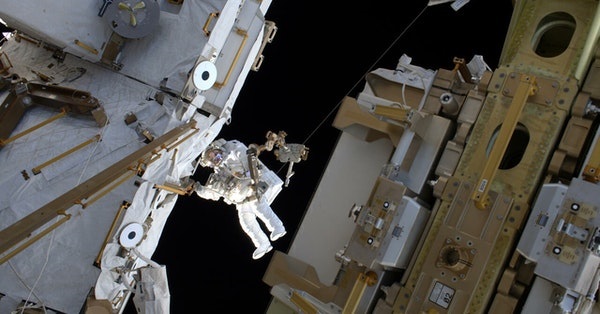
France 24 30/06/2022 Paris (AFP) – Astronauts lose decades’ worth of bone mass in space that many do not recover even after a year back on Earth, researchers said Thursday, warning that it could be a “big concern” for future missions to Mars.
Previous research has shown astronauts lose between one to two percent of bone density for every month spent in space, as the lack of gravity takes the pressure off their legs when it comes to standing and walking.
To find out how astronauts recover once their feet are back on the ground, a new study scanned the wrists and ankles of 17 astronauts before, during and after a stay on the International Space Station.
The bone density lost by astronauts was equivalent to how much they would shed in several decades if they were back on Earth, said study co-author Steven Boyd of Canada’s University of Calgary and director of the McCaig Institute for Bone and Joint Health.
The researchers found that the shinbone density of nine of the astronauts had not fully recovered after a year on Earth — and were still lacking around a decade’s worth of bone mass.
The astronauts who went on the longest missions, which ranged from four to seven months on the ISS, were the slowest to recover.
“The longer you spend in space, the more bone you lose,” Boyd told AFP.
Boyd said it is a “big concern” for planned for future missions to Mars, which could see astronauts spend years in space……………………..
Guillemette Gauquelin-Koch, the head of medicine research at France’s CNES space agency, said that the weightlessness experienced in space is “most drastic physical inactivity there is”.
“Even with two hours of sport a day, it is like you are bedridden for the other 22 hours,” said the doctor, who was not part of the study.
“It will not be easy for the crew to set foot on Martian soil when they arrive — it’s very disabling.”…………………………………. https://www.france24.com/en/live-news/20220630-lost-in-space-astronauts-struggle-to-regain-bone-density—
The impossibility of humans colonising space
Ukraine Is The Most Aggressively Trolled War Of All Time: Notes From The Edge Of The Narrative Matrix, Caitlin’s Newsletter, Caitlin Johnstone 30n June 22
”……………………………………………………………………………..One thing we learned from Covid is that being stuck inside sucks. Space colonization would be like being in permanent lockdown with no windows, no Uber Eats, no birdsong or rain on the roof and no chance of ever going home. Even if it somehow became possible, it’s a dumb idea and I hate it.
And there’s no reason to believe it will ever become possible. Science is nowhere near finished learning about all the countless ways the human organism is inseparably intertwined with Earth. The belief that we can solve our problems with space colonization is unscientific. We’re just going to have to change how we function as a species.

The biggest obstacle remains the fact that science has no idea how to sustain human life in a way that is separate from earth’s ecosystem. We don’t even have any evidence that it’s possible. We’re no closer to being able to do it than we were a thousand years ago; today’s space stations are not independent of Earth’s ecosystem in even the tiniest way. They’re still 100 percent dependent on terrestrial supplies, which is an unsustainable model if you’re talking about actual colonization.
The idea of space colonization appeals to the capitalist mentality because it means we can keep expanding our population and keep expanding the economy and keep harvesting and consuming resources in the way we have been. But there’s literally zero scientific evidence that it’s feasible.
A future of space colonization is a fairy tale we tell ourselves so that we won’t have to change. So we can keep up our egocentric way of functioning without adapting and transcending our self-destructive patterns. We’re like a slacker who refuses to get off their parents’ couch and get their shit together who babbles made-up nonsense about NFT get-rich-quick schemes when asked about their plans for the future.
Collective extinction is easier to imagine than collective ego death. https://caitlinjohnstone.substack.com/p/ukraine-is-the-most-aggressively?utm_source=substack&utm_medium=email
Elon Musk’s satellites for the war in Ukraine
From CNGNN Italy, 29 May 22, Elon Musk, the richest man in the world whose wealth nearly doubled in the two pandemic years, offered $ 44 billion to buy Twitter, which he says would become “the platform for free speech across the country world“. Elon Musk owns SpaceX, an aerospace company based in California.
SpaceX makes rockets and satellites to build Starlink, a broadband Internet system that once is completed will cover the entire world. SpaceX has so far put 2,500 satellites into orbit with rockets carrying 50 satellites at a time and plans to place 42,000 Starlink satellites in low orbit occupying 80% of this space.
Starlink was presented as a commercial satellite system but has fundamental military applications. In fact, satellites in low orbit transmit signals at a much higher speed than those in geosynchronous orbit around the equator. The US Army and Air Force fund and test Starlink to use its military capabilities. For example, last March, the US Air Force reported that conventional and nuclear dual-capacity F-35A fighters had carried out data transmission using Start link satellites at speed 30 times faster than traditional connections.SpaceX’s Starlink satellites are already being used by the Ukrainian military to guide drones, artillery shells, and missiles into Russian positions. This is confirmed by General Dickinson, head of the US Space Command, who declared to the Senate that “Elon Musk’s Starlink demonstrates in Ukraine what the mega-constellations of satellites can do“. Elon Musk’s SpaceX is part of the group of ten largest commercial satellite operators collaborating with US Space Command at the Vandenberg military space base in California.
”Commercial” nuclear power in space? – it’s all about weapons and war.
US military wants to demonstrate new nuclear power systems in space by 2027,By Elizabeth Howell , Space.com , 29 May 22,
That’s just one year after DARPA plans to test out its own nuclear power prototypes.Add the Defense Innovation Unit to a growing list of U.S. government organizations furthering their work in nuclear power in pace.
The organization, which seeks to get the military ready to use emergent commercial products, announced two prototype contracts on May 17 “to demonstrate the next generation of nuclear propulsion and power capability for spacecraft.” The ultimate aim is an orbital flight demonstration in 2027, DIU officials said in a statement(opens in new tab).
The contracts went to two companies, Ultra Safe Nuclear and Avalanche Energy, to demonstrate nuclear propulsion and power capabilities for small spacecraft that would operate in cislunar (Earth-moon) space. (The values of the contracts were not disclosed in the release.)
It’s part of the U.S. military’s pressing focus on cislunar activities to keep an eye on commercial and government activities that will ramp up there in the coming decades, including the international NASA-led Artemis program that seeks to put people on the moon in the 2020s………………………… https://www.space.com/nuclear-power-propulsion-space-defense-innovation-unit-contracts
US military wants nuclear rocket ideas for missions near the moon
The space agency is collaborating on the DRACO project “using non-reimbursable engagement with industry participants
Space.com, By Elizabeth Howell published 1 day ago
The U.S. military hopes to see a flight demonstration in 2026. The U.S. military is ready to take the next step in developing a nuclear rocket to help monitor Earth-moon space, an area it has deemed a high strategic priority.
The Defense Advanced Research Projects Agency (DARPA) announced May 4 that it’s seeking proposals for the second and third phases of a project to design, develop and assemble a nuclear thermal rocket engine for an expected flight demonstration in Earth orbit by 2026.
“These propulsive capabilities will enable the United States to enhance its interests in space and to expand possibilities for NASA’s long-duration human spaceflight missions,” DARPA officials said in a statement.
The proposals will support DARPA’s Demonstration Rocket for Agile Cislunar Operations (DRACO) program, which aims to develop a nuclear thermal propulsion (NTP) system for use in Earth-moon space. DRACO is part of the U.S. military’s larger push to keep an eye on cislunar (Earth-moon) space as government and commercial activities increase in this sector in the coming decade…………
Phase 1 for Draco included awards in April 2021 for General Atomics, Blue Origin and Lockheed Martin. The phase was scheduled to last 18 months across two independent tracks.
Track A, for General Atomics, included the preliminary design of a nuclear thermal propulsion reactor, along with a propulsion subsystem. Track B, pursued by Blue Origin and Lockheed Martin independently, aimed to create an “operational system spacecraft concept” to meet future mission objectives, including a demonstration system.
In September 2020, DARPA also awarded a $14 million task order for DRACO to Gryphon Technologies, a company in Washington, D.C. that provides engineering and technical solutions to national security organizations…………
The space agency is collaborating on the DRACO project “using non-reimbursable engagement with industry participants where technology investments have common interest to both organizations,” NASA officials wrote in the $26 billion budget request for fiscal year 2023, which was released in March. ………. https://www.space.com/darpa-nuclear-rocket-earth-moon-space
NASA Is Sending Artificial Female Bodies to the Moon to Study Radiation Risks.

Gizmodo, Passant Rabie, May 3, 22, Helga and Zohar are headed for a trip around the Moon on an important mission, measuring radiation risks for female astronauts for the first time.
The inanimate pair are manikins modelled after the body of an adult woman. For the Artemis 1 mission, in which an uncrewed Orion capsule will travel to the Moon and back, one of the manikins will be outfitted with a newly developed radiation protection vest. Helga and Zohar, as they’re called, won’t be alone, as they’ll be joined by a third manikin that will collect data about flight accelerations and vibrations. Artemis 1 is scheduled to blast off later this year.
The Artemis program aims to return humans to the Moon for the first time in over 50 years, but this time the space agency has vowed to land the first woman on the dusty lunar surface.
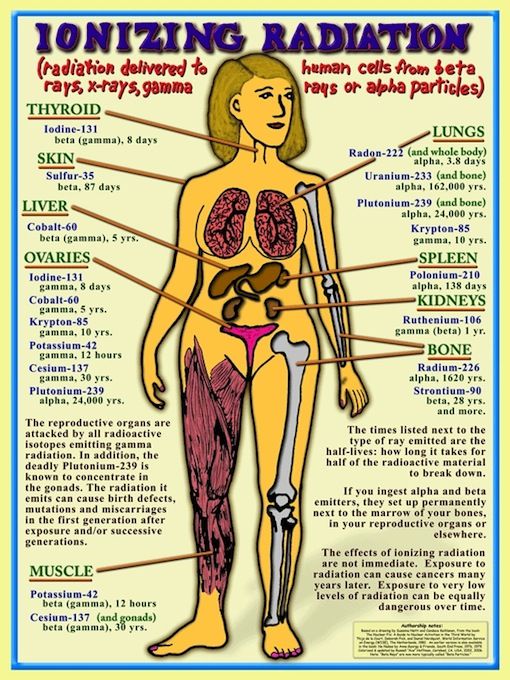
Women appear to be at a greater risk of suffering from the harmful effects of space radiation, so they have different radiation boundary levels than their male colleagues. Studies of radiation exposure for men and women indicate a higher chance of women developing cancer, while other research has found that space radiation is likely to affect female reproductive health…………………………………. https://www.gizmodo.com.au/2022/05/nasa-is-sending-artificial-female-bodies-to-the-moon-to-study-radiation-risks/
Photovoltaics vs. nuclear power on Mars

Photovoltaics vs. nuclear power on Mars https://www.pv-magazine-australia.com/2022/04/29/photovoltaics-vs-nuclear-power-on-mars/
Solar might be more efficient than nuclear energy to supply power for a six-person extended mission to Mars that will involve a 480-day stay on the planet’s surface before returning to Earth, according to new US research.
APRIL 29, 2022 EMILIANO BELLINI Researchers at the University of California, Berkeley, have compared how PV or nuclear energy could power a crewed outpost for an extended period on Mars and have determined that solar offers the best performance.
“Photovoltaic energy generation coupled to certain energy storage configurations in molecular hydrogen outperforms nuclear fusion reactors over 50% of the planet’s surface, mainly within those regions around the equatorial band, which is in fairly sharp contrast to what has been proposed over and over again in the literature, which is that it will be nuclear power,” said UC Berkeley researcher Aaron Berliner, noting that two energy sources were compared for the power supply of a six-person extended mission to Mars involving a 480-day stay on the planet’s surface before returning to Earth.
The US team considered four different scenarios: nuclear power generation with the miniaturised nuclear fission Kilopower system, PV power generation with battery energy storage, PV power generation with compressed hydrogen energy storage produced via electrolysis, and hydrogen generation with compressed hydrogen energy storage (PEC).
In our calculations, we assumed a capacity factor of 75% to account for the solar flux deviation throughout the Martian year and sized energy storage systems to enable 1 full day of operations from reserve power,” the group explained. “We then calculated the carry-along mass requirements for each of the power generation systems considered.”
The scientists found that, of the three PV-based power generation options, only the photovoltaics-plus-electrolyser system outcompetes the nuclear system based on carry-along mass. They also said that the optimal absorber bandgaps for the PV systems depend heavily on the location on the surface of Mars, the total depth of the air column above a given location, gradients in dust and ice concentrations, and orbital geometry effects that cause different effective air column thicknesses for locations near the poles.
Solar beats nuclear at many potential settlement sites on Mars
Thanks to today’s light, flexible solar panels, photovoltaics may be more practical for long stays,
Science Daily April 27, 2022, Source:University of California – BerkeleySummary:While most missions to the moon and other planets rely upon solar power, scientists have assumed that any extended surface mission involving humans would require a more reliable source of energy: nuclear power. Improvements in photovoltaics are upending this calculus. A new study concludes that a solar power system would weigh less than a nuclear system, and would be sufficient to power a colony at sites over nearly half the surface.
The high efficiency, light weight and flexibility of the latest solar cell technology means photovoltaics could provide all the power needed for an extended mission to Mars, or even a permanent settlement there, according to a new analysis by scientists at the University of California, Berkeley……………………………… https://www.sciencedaily.com/releases/2022/04/220427100529.htm
US Planned A Nuclear Explosion On Moon; Information Revealed From Intelligence Documents
https://www.businessworld.in/article/US-Planned-A-Nuclear-Explosion-On-Moon-Information-Revealed-From-Intelligence-Documents/25-04-2022-426503/ Some intelligence documents have revealed that the US wanted to conduct a nuclear explosion on the moon. The purpose of this US mission was to make a tunnel on the moon and dig in its core. Huge expenditure was also spent on this campaign
There has been a big disclosure about America’s Moon Mission. Some intelligence documents have revealed that America’s plan was to conduct a nuclear explosion on the moon. Under the Advanced Aerospace Threat Identification Program (AATIP), the US spent a lot on this mission, but did not get the expected success.
The US was working on such a plan, which is very difficult to believe. Its mission included visibility cloaks, antigravity devices, traversable wormholes, and tunneling to the Moon by detonating nuclear weapons. However, now AATIP is inactive and currently this program is not working.
In the 1600-page document, there have been many revelations about the research being done by AATIP. Documents show that the AATIP was a secret organisation and information about it came to light when its former director Luis Elizondo resigned from the Pentagon in 2017. At that time it was claimed that about USD 22 million had been spent on this Moon mission.
This agency, which plans Nuke Explosion on the Moon, was funded by the US Department of Defense and has also been at the center of discussion about UFOs many times. According to the documents, America wanted to dig in the core of the moon.
The reason for this was the discovery of a metal as strong as steel, but 100,000 times lighter than that. It could be used to build spacecrafts. Scientists associated with the mission had plans to build a tunnel through the lunar crust and mantle with thermonuclear explosives to reach the Moon’s core. However, this plan could not be fully implemented.
1 This Month
19 November – Webinar – The Reality of Reprocessing
Time: 11:00 AM Pacific Time (US & Canada) / 2:00 PM Eastern / 7:00 PM UK / 8:00 PM CET
Register for the Zoom Event Here

Tell Congress: Prevent Nuclear Catastrophe in Iran

Tell Congress: Prevent Nuclear Catastrophe in Iran

Read the Public Inquiry Report, the Commissioners’ report, Surrendering Australia: The AUKUS Deception is available to download for free at aukuspublicinquiry.com. Or just watch the replay of the National Press Club Luncheon.


Shut down the radiation-damaged Heysham nuclear reactors now
To see nuclear-related stories in greater depth and intensity – go to https://nuclearinformation.wordpress.com

Say No to NASA’s Reckless Nuclear Reactor on the Moon
Say No to NASA’s Reckless Nuclear Reactor on the Moon
-
Archives
- November 2026 (156)
- October 2026 (302)
- September 2026 (339)
- August 2026 (330)
- July 2026 (355)
- June 2026 (287)
- May 2026 (306)
- April 2026 (356)
- March 2026 (251)
- February 2026 (267)
- January 2026 (308)
- December 2025 (358)
-
Categories
- 1
- 1 NUCLEAR ISSUES
- business and costs
- climate change
- culture and arts
- ENERGY
- environment
- health
- history
- indigenous issues
- Legal
- marketing of nuclear
- media
- opposition to nuclear
- PERSONAL STORIES
- politics
- politics international
- Religion and ethics
- safety
- secrets,lies and civil liberties
- spinbuster
- technology
- Uranium
- wastes
- weapons and war
- Women
- 2 WORLD
- ACTION
- AFRICA
- Atrocities
- AUSTRALIA
- Christina's notes
- Christina's themes
- culture and arts
- Events
- Fuk 2022
- Fuk 2023
- Fukushima 2017
- Fukushima 2018
- fukushima 2019
- Fukushima 2020
- Fukushima 2021
- general
- global warming
- Humour (God we need it)
- Nuclear
- RARE EARTHS
- Reference
- resources – print
- Resources -audiovicual
- Weekly Newsletter
- World
- World Nuclear
- YouTube
-
RSS
Entries RSS
Comments RSS

