Taxpayers Must Not Be on the Hook for Bailing Out the AI Industry

If AI goes south, we should expect major pressures from the Trump administration for a debt- or taxpayer-funded bailout.
SCHEERPOST, September 3, 2026,By C.J. Polychroniou
Hundreds of billions of dollars are flooding the AI industry. Economist Gerald Epstein says this bubble could burst.
The U.S. economy is heading toward uncharted territory. Artificial Intelligence (AI) is transforming business operations and all areas of finance, the national debt is on an unsustainable fiscal path, and most middle-income Americans cannot keep up with rising costs. Moreover, as hundreds of billions of dollars are flooding into artificial intelligence, there are serious concerns that an AI bubble could trigger another bailout with taxpayer money.
In the interview that follows, leading progressive economist Gerald Epstein, who initiated and directs the Game Changers project at the Political Economy Research Institute at the University of Massachusetts Amherst, talks about AI’s impact on finance and the bailout problem and how a transformative public finance strategy can revive democracy, promote equity and social justice, and build strong and sustainable communities. Epstein is professor of economics and founding co-director of the Political Economy Research Institute.
C.J. Polychroniou: AI is possibly the fastest-growing technology in history and is already reshaping the U.S. economy in innumerable ways as organizations of all kinds are deploying AI tools across every functional area. But there are many public concerns surrounding AI, including whether it is becoming “too big to fail.” If so, taxpayer money may be used yet again to bail out private companies and institutions from collapse. What are the dangers here?
Gerald Epstein: There are indeed many public concerns about the economic and financial implications of AI. But let me focus on AI’s impact on finance as there are legitimate fears that the government may be asked at some point to bail out the AI industry, especially given the close ties of the Trump administration to AI firms.
As Marc Jarsulic and I argue in our Game Changers policy analysis “No More Bailouts,” the AI investment boom is increasing the level of risk for AI-related firms. The reason is that for these investments to be profitable, AI revenue will need to grow substantially. But some financial analysts doubt that the revenue will materialize. For example, in Bain’s Technology Report 2025, it is estimated that capital expenditures of $500 billion per year would be required to cover anticipated AI demand. To fund this investment, annual AI revenue would need to increase to $2 trillion. However, after accounting for likely cost reductions at the AI firms, Bain’s research concluded that their annual revenues would fall $800 billion short of that mark.
In that context, some of the risks of the AI-led investment boom have been shifted to financial markets as the AI boom is relying increasingly on debt. The revenues of the tech monopolies are extraordinary, but they are insufficient to pay all the costs of data centers. In 2025, the capital expenditures of the top five hyperscalers were more than 30 percent of their total revenue. They are projected to rise to more than 40 percent by the end of 2026. This has forced these companies to turn to debt and equity markets for finance. In 2025, major tech hyperscalers alone issued $120 billion in debt, but the figure was pushed toward $175 billion in 2026 and is expected to rise to $300 billion annually in the coming years.
A distorted government response to an AI-bust is in the cards. A rational policy response to an AI bust would not include bailouts of AI-related firms or their creditors. The investment boom, and the debt that helps finance it, have been engineered by sophisticated actors aiming to dominate a potentially lucrative innovation. There is no ex ante (“before the event”) government safety net for financial bets of this kind. Caveat emptor (“let the buyer beware”) applies to the firms playing the AI domination game if it ever applied to anyone. Unfortunately, we cannot count on a rational response from the current administration. Extensive conflicts of interest and cronyism mean that government bailouts for insiders would be on the table. Hyperscalers and other AI-related firms have received extraordinary government support. The Trump administration has taken over 90 federal actions to help the AI industry, including executive orders easing permitting for massive data centers, federal support for AI exports and reducing regulatory barriers for the industry. The Trumpian transactional quid pro quo is apparent. Nvidia and Intel have given the government equity to curry favor. A number of major AI companies contributed several million dollars to Trump’s White House demolition — a.k.a. his “ballroom” — fund. And AI firms continue to finance MAGA. This is business as usual for Trump.
If AI goes south, we should expect major pressures from the Trump administration for a debt- or taxpayer-funded bailout.
Bailout operations are a trademark of neoliberalism. That being said, what is the actual problem with bailouts, and how do we put an end to the bailout problem?………………………………………………………………………………………………………………………………………………………………………………………………………………… https://scheerpost.com/2026/09/03/taxpayers-must-not-be-on-the-hook-for-bailing-out-the-ai-industry/
200-MWe marine microreactors could power ports, desalination and electro-fuel plants.

The nuclear barge could supply power to ports, isolated regions and coastal industries. (Ed – they don’t mention the wastes)
By Atharva Gosavi, Aug 29, 2026, https://interestingengineering.com/energy/200-mwe-marine-reactors-could-power-ports-desalination-and-electro-fuel-plants
A consortium led by advanced reactor developer newcleo has begun studying a floating nuclear power plant designed to supply low-carbon electricity to ports, coastal industrial hubs and isolated regions.
Named n-Floating, the project will examine a non-self-propelled barge housing multiple lead-cooled LFR-AS-200 reactors, each capable of producing 200 MWe.
The initiative has received nearly €1 million through a Bpifrance-managed program supporting the decarbonization of the maritime sector.
Work is underway and will continue for approximately 18 months, with potential industrial deployment targeted by 2036.
Multiple reactors aboard one floating unit
newcleo is working with classification society Bureau Veritas Marine & Offshore and French engineering company ABMI Groupe.
Together, the three companies will assess whether advanced nuclear reactors can be safely and competitively integrated into floating infrastructure.
The initial phase will focus on conceptual studies for the nuclear barge. Researchers will evaluate possible applications, including electricity supply for ports, associated industrial facilities, coastal areas and regions that may face land, grid or infrastructure constraints.
The barge could also support energy-intensive processes such as desalination and the production of low-carbon fuels.
However, the project remains at the study stage, and its technical feasibility, regulatory requirements and commercial prospects still need to be evaluated.
“Maritime deployment of advanced reactors opens a broader and still largely unexplored market for nuclear energy,” said Stefano Buono, CEO of newcleo.
“Floating nuclear offers an opportunity to bring reliable, low-carbon power to applications at sea and in coastal locations,” he added.
Borrowing experience from offshore energy
The concept will draw on established methods used by the maritime, oil and gas industries to design, construct and operate floating facilities for energy production, storage, liquefaction and regasification.
Building and integrating major plant systems inside a controlled shipyard environment could support greater standardization and repeatable construction.
Once completed, the unit could then be transported to its intended operating location rather than being built entirely at the deployment site. Bureau Veritas will contribute expertise in classification, certification and risk assessment.
Its work will help the consortium examine the safety, regulatory and technical questions created by combining a nuclear installation with a floating maritime platform.
ABMI Groupe will contribute engineering and project-delivery experience from complex maritime and nuclear programs.
The consortium will also establish a development roadmap covering the steps required to move from the present conceptual phase toward possible construction and deployment.
Safety and licensing remain central
Floating reactors would need to comply with both nuclear and maritime safety requirements. Licensing, physical security, operations and regulatory oversight will therefore form important parts of any future development program.
The study begins as international discussions around maritime nuclear technology gather pace.
The International Atomic Energy Agency launched its ATLAS initiative on August 26 to encourage dialogue and improve technical understanding of innovative nuclear applications and their safety and regulatory implications.
The consortium ultimately aims to create a standardized floating energy system that can be deployed at scale. Under its current roadmap, the nuclear barge could progress toward industrial deployment by 2036.
Trump’s shipping race with Xi goes nuclear
COMMENT AA BB
Have they factored in the staggeringly huge cost of the multi decades long decomissioning process and disposal of the reactor and nuclear waste? NS Savanna was built 1961, out if service 1972 – the reactor and ship will ‘remain regulated until 2031″ (wikipedia)
Backing from Washington should help address regulatory challenges as well as insurance issues, which represent one of the main hurdles to expanding nuclear propulsion beyond military submarines, aircraft carriers and a handful of Russian icebreakers.

Whereas shipping lines today require coverage for damage to their vessels, the loss of cargoes and injuries to employees, the new ships will need a new level of insurance against nuclear incidents.
US bets uranium-powered British vessels can challenge China’s maritime dominance
Christopher Jasper, Transport industry editor, 29 August 2026
Donald Trump has opened up a new battleground in his trade war with Beijing, and a British start-up building nuclear-powered ships has found itself on the front line.
A US effort to challenge China’s dominance in shipping by building a fleet of nuclear-fuelled vessels is being led by UK-based Core Power.
The start-up, which has 100 employees and moved to London from Singapore in 2020, says it is unique outside Russia and China in having the expertise to integrate reactors with commercial ships, and the White House seems to agree.
Mikal Bøe, the Norwegian founder and chief of Core Power, flew to Washington last week to sign a seven-year pact with the US Maritime Administration…………….
The deal aims to deliver a fleet of zero-emission vessels that travel at 30 knots, or twice the pace of today’s ships, which typically sail slowly to conserve fuel.
They would be assembled in a multibillion-dollar nuclear yard operated by Core Power in the US. Work is slated to commence by 2028, with the first deliveries in 2033.
Trump hopes the plan can revive American shipbuilding and provide a ready market for a nuclear industry.
While China is developing its own maritime nuclear propulsion, the sector is one of the few in which the US is confident it has a major lead.
Onboard reactors heat water to create steam, which generates electricity to drive the engines, providing a permanent source of power and “free speed”, Bøe said…………
The deal aims to deliver a fleet of zero-emission vessels that travel at 30 knots, or twice the pace of today’s ships, which typically sail slowly to conserve fuel.
While the nuclear vessels would cost around $700m (£515m), compared with up to $250m for a large merchant ship, their speed would let them complete far more journeys………………..
Establishing the business case for nuclear power over traditional engines will open up a market to replace 8,000 ships over the next 25 years, Bøe estimates……
Bøe said the Trump administration had been instrumental in accelerating its plans……………
Core Power plans to announce a supplier of nuclear reactors for its ships as early as next month, with BWX Technologies viewed as the frontrunner.
The company is already partnered with BWX – which helped develop the first nuclear submarine in the 1950s – on plans for floating nuclear power plants to supply coastal industrial complexes.
A decision on the location for its nuclear shipyard will follow in the next six months.
A facility capable of producing three vessels a year would have construction costs of about $3bn, increasing to $15bn to churn out ships for the global market………………….
Backing from Washington should help address regulatory challenges as well as insurance issues, which represent one of the main hurdles to expanding nuclear propulsion beyond military submarines, aircraft carriers and a handful of Russian icebreakers.
Whereas shipping lines today require coverage for damage to their vessels, the loss of cargoes and injuries to employees, the new ships will need a new level of insurance against nuclear incidents.
‘The talk of the industry’
Britain’s dominance of the maritime insurance industry could see it play a key role in establishing an insurance regime.
The Technology Prosperity Deal signed by Trump and Sir Keir Starmer last year included a commitment to explore civil nuclear applications at sea and the establishment of a UK-US corridor, which could form the basis of a maritime nuclear insurance zone…………..
Core Power has $200m in financing and will seek to raise a further $600m next year. While existing investors are mostly shipbuilders and owners, the next round will seek to bring in private equity, venture capital and energy companies.
It has also agreed an alliance with authorities in Corpus Christi, Texas, a major US port, to lay out plans for new infrastructure that will be needed for nuclear-propelled tankers.
Mr Bøe said the door was also “wide open” for Britain to become involved in the sector.
Establishing the business case for nuclear power over traditional engines will open up a market to replace 8,000 ships over the next 25 years, Bøe estimates.
He said the first ships could operate on transatlantic routes and that Washington was open to allies – including Britain – becoming involved in the project, although ships were unlikely to be built here.
Bøe said the Trump administration had been instrumental in accelerating its plans.
“The pace at which both nuclear reactors and maritime policy and an action plan to build back shipbuilding capacity have been developed is remarkable,” he said.
“You cannot compete with Beijing on its own terms, we cannot outbid them. But we can put these two things together and establish the world’s first programme for civil maritime nuclear propulsion which creates a whole new adventure and competes with China.”
Core Power plans to announce a supplier of nuclear reactors for its ships as early as next month, with BWX Technologies viewed as the frontrunner.
The company is already partnered with BWX – which helped develop the first nuclear submarine in the 1950s – on plans for floating nuclear power plants to supply coastal industrial complexes.
A decision on the location for its nuclear shipyard will follow in the next six months.
A facility capable of producing three vessels a year would have construction costs of about $3bn, increasing to $15bn to churn out ships for the global market.
The hulls for the ships will be built in Japan or South Korea and floated to the US to be fitted with reactors and engines. The same yard will undertake maintenance and midlife refuelling once supplies of uranium are spent.
Backing from Washington should help address regulatory challenges as well as insurance issues, which represent one of the main hurdles to expanding nuclear propulsion beyond military submarines, aircraft carriers and a handful of Russian icebreakers.
Whereas shipping lines today require coverage for damage to their vessels, the loss of cargoes and injuries to employees, the new ships will need a new level of insurance against nuclear incidents.
US Army to spend $2 bln on nuclear microreactors for bases
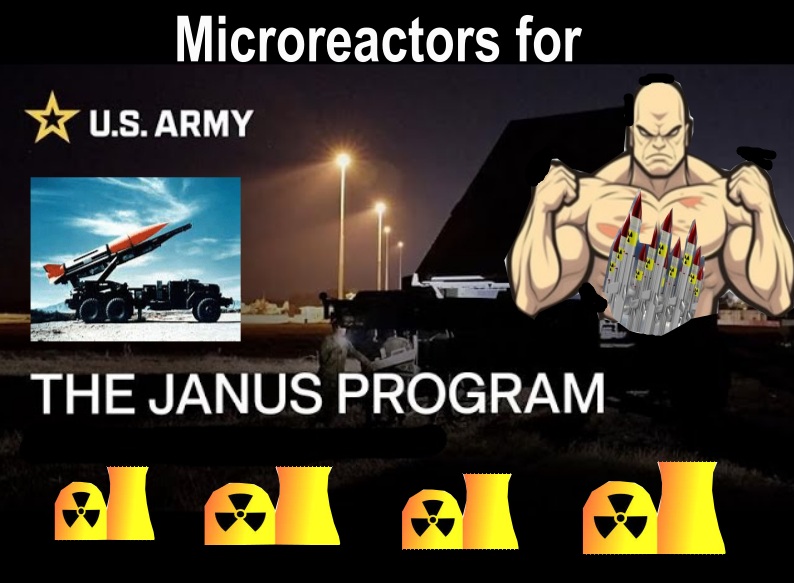
The Army program uses the military’s “deep pockets to provide a hidden subsidy” to nuclear companies that can’t find private-sector customers for their hypothetical and uneconomical reactors
DW Sean Sinico with AP, Reuters, August 27, 2026
The US Army has announced a plan to install what it calls nuclear microreactors at five of its bases across the country. The move would ensure the facilities’ energy independence from the rest of the electric grid.
The United States Army said Wednesday that it will award $2.2 billion (€1.7 billion) in contracts to five companies to build and operate small nuclear reactors on military bases. The program set a goal of deploying the first such reactor by the end of September 2028.
Called microreactors, developers say each of the nuclear plants would be easy to transport and provide up to 20 megawatts of power.
The reactors will adhere to all environmental and safety regulations that apply to commercial reactors, but an Army spokesperson said the reactors will be regulated by the Army rather than the US Nuclear Regulatory Commission, which regulates commercial reactors.
“The whole idea here is that at the back end of this we want a commercial product,” said Jeff Waksman, principal deputy assistant secretary of the Army for Installations, Energy and Environment.
Army Secretary Dan Driscoll said the awards will speed up the military’s ability “to deliver safe, reliable baseload power directly to our installations.”
“We are building the energy resilience necessary to project combat power globally, without relying on potentially vulnerable external grids,” he added………………………………………………………………………
‘Hidden subsidy’ for expensive reactors, critics say
Critics of microreactors say they will be expensive compared to conventional reactors. Safety advocates point out that nuclear technology carries significant risks that other low-carbon energy sources don’t, such as the danger of accidents or targeted attacks.
The Army program uses the military’s “deep pockets to provide a hidden subsidy” to nuclear companies that can’t find private-sector customers for their hypothetical and uneconomical reactors, Alan J. Kuperman, associate professor at the Lyndon B. Johnson School of Public Affairs at the University of Texas at Austin and coordinator of the Nuclear Proliferation Prevention Project, told the AP news agency.
The Army’s Waksman said nobody thinks that microreactors will be lower in cost than conventional plants.
“What we are trying to do here with Janus … is to flesh out how can we get those prices down,” he said.
What will happen with the radioactive waste?
Waksman said the microreactors would safely shut down in case of a failure and that the Army wouldn’t add them to installations without being certain they are safe.
He added that the Army is working on a deal with the Energy Department to remove radioactive waste, and there won’t be any long-term storage on these installations.
Last month, five states offered to accept nuclear waste in exchange for federal support in developing nuclear energy facilities.
Trump pushing nuclear power in US
Executive orders signed by US President Donald Trump in May 2025 aimed to accelerate the development of nuclear power. Trump has called for the US to quadruple its nuclear energy production — just two new large reactors have been built from scratch in the United States in nearly 50 years. Those two reactors were completed years late and at least $17 billion over budget, AP reported.
The nation’s 94 nuclear reactors supply about 19% of U.S. electricity, compared to about 60% for fossil fuels and 21% for renewables, according to the US Energy Information Administration. https://www.dw.com/en/us-army-to-spend-2-billion-on-nuclear-microreactors-for-bases/a-78518374
Three of four reactors at Ontario’s refurbished Darlington nuclear power plant face frequent outages.
MATTHEW MCCLEARN, The Globe and Mail, Aug 28, 2026, https://www.theglobeandmail.com/business/article-ontario-darlington-nuclear-power-plant-three-reactors-out-of/
Three of four reactors at Ontario’s Darlington Nuclear Generating Station are experiencing prolonged outages, data from the Independent Electricity System Operator show, even as the province faces a further large drop in nuclear power generation in just a few weeks’ time.
Ontario Power Generation completed a $12.8-billion, decade-long refurbishment of its station in Clarington, Ont., in March. Although provincial officials have portrayed that overhaul as an unqualified success, Darlington’s units have meandered in and out of service ever since.
The most recently refurbished unit, Unit 4, suddenly stopped generating power on Aug. 1 – its third outage since returning to service. Two days later, Unit 2 abruptly stopped supplying power to the grid. Unit 3 had already been out of service for several months because of long-planned work, leaving Unit 1 as the lone operational unit.
Officials have disclosed little about the causes and implications of the outages at Units 2 and 4, nor when they might return to service. In response to questions from The Globe seeking details of the outages, OPG spokesperson Neal Kelly wrote in a statement that the two units were taken offline “to complete required maintenance.” He added that Unit 2 is expected to restart in September, and Unit 4 will follow in October.
Braeson Holland, a spokesperson for the Canadian Nuclear Safety Commission, wrote in a statement that OPG reported the forced outages of Units 2 and 4 to its staff.
“CNSC inspectors maintain regulatory oversight of the outage work to verify that the appropriate actions are being taken. CNSC staff are satisfied that these events do not present a risk to the health and safety of persons or to the environment,” he wrote.
Representing nearly 900 megawatts of generating capacity each, Darlington’s units are the largest in Ontario. The station boasts a total generating capacity of roughly 3,500 megawatts, making it the province’s second largest, eclipsed only by the eight-reactor Bruce Nuclear Generating Station in Tiverton, Ont., operated by Bruce Power.
Ontario’s third nuclear power plant, OPG’s Pickering Nuclear Generating Station, is just weeks away from shutting down. Its four operational reactors, representing 2,100 megawatts of generating capacity, are scheduled to come offline next month for their own $26.8-billion refurbishment, expected to wrap up in the mid-2030s.
Will soaring electricity rates kill Ontario’s nuclear expansion?
Michael Dodsworth, a spokesperson for the Independent Electricity System Operator, said his organization had no concerns that the outages would affect Ontario’s ability to meet electricity demand in the coming months.
“Ontario’s electricity system has remained reliable this summer thanks to our diverse supply mix, bolstered by recent investments in new generation and energy storage,” he wrote.
In a July filing to the Ontario Energy Board, OPG forecast that there would be 286 outage days at Darlington in 2026 – the most taken in any year since at least 2008. Nonetheless, the forced outages of Units 2 and 4 seem likely to push the actual total higher still.
OPG forecast planned outages totaling 512 days in 2027, including a major outage for work on Unit 2’s steam generators. The entire Darlington station will be out of service next year for nearly 46 days to allow work on its vacuum building, which is designed to suck out and condense steam from a reactor during a major accident.
Since outages of a single reactor can cost a utility $1-million or more a day in lost revenue – and because large, unexpected fluctuations in power generation can stress power grids, utilities invest considerable manpower and resources to avoiding unplanned outages, according to David Novog, a professor of engineering at McMaster University who specializes in nuclear safety and maintenance.
“Of course there’ll be unplanned outages,” he said. “But because of the value that the reactor represents on the grid and the amount of revenue it provides, it is probably one of the most looked-after assets that the government has.”
Ontario’s proposed nuclear plants could cost nearly $300-billion, study finds
However, several of this year’s outages at Darlington have been entirely unexpected. Unit 4 was officially returned to service on March 13 following a refurbishment lasting nearly three years. Since then, it has been taken offline three times with little explanation; OPG has disclosed only that the first outage was taken “to assess an operational matter unrelated to the refurbishment” and that it had completed repairs.
“When you stop and start and stop and start, that’s atypical of how we would typically choose to run the reactors,” Prof. Novog observed.
The Bruce and Darlington plants suffered many unplanned outages in their early years of operation, he added. During the years leading up to refurbishment, however, Darlington’s units were “exceptionally well-run.”
Prof. Novog said OPG should pro-actively publish more information about outages.
“When you’re not upfront with the information, it can lead to speculation and a lack of confidence,” he said.
“Without knowing the details, it’s hard to even tell whether it’s teething pain [at Darlington] or whether it is something else.”
The provincial government has said that Ontario’s nuclear projects were completed ahead of schedule and under budget, which Energy Minister Stephen Lecce repeated Tuesday at a press conference in St. Clair Township.
As the output of Ontario’s nuclear fleet has fallen because of refurbishments and outages, the province has increasingly relied on natural gas-fired plants to supply electricity. On Thursday afternoon, the 11 operational reactors provided 38.5 per cent of the province’s electricity, as compared to 31.5 per cent from gas plants, according to the Gridwatch monitoring web site.
For 2024 and 2025, the nuclear plants provided roughly half of Ontario’s power; gas plants provided less than 20 per cent.
How to get filthy rich via Small Modular Nuclear Reactors.

30 August 2026 Noel Wauchope AIM Extra, https://theaimn.net/how-to-get-filthy-rich-via-small-modular-nuclear-reactors/
Well, I hasten to warn you that you need to be already rich, for this to work. It has already worked for some alert rich investors. What they did was – they noted the soaring share prices of small nuclear reactor companies, a soaring that was accompanied by an awful lot of media hype.
And then they noted some salient facts about those companies – for example:
OKLO – has a market cap of $8 billion, and its shares jumped more than 12% on Aug. 25 Sounds great doesn’t it? BUT:
- OKLO had a net loss of $81.6 million in the second quarter this year.
- It went public through a SPAC (special purpose acquisition company) in 2025.
- It generates no commercial energy income today.
- Its first Small Modular Reactor (SMR), the Aurora Powerhouse, isn’t expected to enter commercial operation for years.
- Oklo is incurring tens of millions in operating losses annually.
- It is $78.6 million in debt, so interest and loan payments eat into its earnings.
- OKLO is still in discussions with the regulator NRC, regarding the fuel, high-assay low-enriched uranium, or HALEU, and other supply chain issues.
Similarly, stocks of both NuScale Power, and Nano Nuclear have soared over the past year. Yet both are making little or no money, and both have suffered operational losses over this year. NuScale is now facing a class action by investors who claim that the company misrepresented the prospects for small nuclear reactors.
So – what have the smart rich investors done? Basically, they’ve gambled on these stocks being over-priced, and soon to go down. Investment strategies are not my strong point, but it seems that short selling is one hedge fund strategy. So these clever investors, noting the unsustainable rise in share prices, borrow shares and soon sell them at the inflated price, and can buy them back later as the price plunges down.
So , it’s estimated that investors made over $2 Billion over the past months by short selling shares in these three small nuclear reactor companies – OKLO, NuScale, and Nano Nuclear.
The rage for investing in SMRs is still on, as the world is gripped by the mania for AI hyperscalers. (AI hyperscalers are companies investing grotesque amounts of money in building data centres world-wide)
Neither the hyperscalers nor the small reactor companies are actually making money at present. But the hype is all-consuming.
This is the prevailing hype –
The AI Boom Is Making Nuclear Power Bankable Again – America’s nuclear power landscape is undergoing a dramatic transformation, driven by the immense energy needs of artificial intelligence. Tech giants like Microsoft, Google, Amazon, and Meta are directly financing nuclear projects, committing billions to secure nearly 10 gigawatts of capacity. ………..
Almost everything tech companies are funding—Meta, Amazon, most of Google’s bets—is small modular reactors: compact designs.
Will AI kickstart a new age of nuclear power? IAEA Director General Manuel Grossi believes that the nuclear industry is destined to be the energy partner of the AI revolution. “Only nuclear energy can meet the five needs of low-carbon power generation, round-the-clock reliability, ultra-high power density, grid stability and true scalability”……………………..the IAEA is working closely with regulators and the industry to make them a viable proposition and we could soon be seeing large numbers of small reactors being deployed to meet the demand.
So- we have the Trumpian process in the USA, of the weakening of radiation and safety regulation of nuclear reactors, and of the government already funding 8 SMR companies.
With the claim that nuclear power combats climate change, with the accepted belief in the necessity for AI hyperscale, governments, academia, the corporate media, and the UN all promote this new marriage of nuclear and Big Tech. So – all the stars are aligned for the rise and rise of small nuclear reactors.

Incidentally, don’t look to the UN, the World Health Organisation (WHO)or anyone like that to cry foul. I think that most people have forgotten, if they ever knew it , but the 1959 agreement between the WHO and the International Atomic Energy Agency (IAEA) effectively prevents the WHO from criticising things nuclear.
One important part – “Whenever either organization proposes to initiate a programme or activity on a subject in which the other organization has or may have a substantial interest, the first party shall consult the other with a view to adjusting the matter by mutual agreement.”

And, in this time of vulnerability of nuclear sites, to war and terrorism, you wonder how Rafael Grossi, Director of the IAEA reconciles his conflicting duties, that of promoting nuclear power and of assuring of its safety.
But I digress. We are talking about money, and how to get rich through investing in small nuclear reactors. Well, that is still a goer. But perhaps you’d better be quick, as investment advisors are now dithering about the share price of commercial SMR companies, even though the Big Tech- SMR teams are apparently still booming.
However, the global nuclear lobby is now turning its attention to military microreactors, so there’s hope for future stock market gains as governments splurge tax-payers money into companies in that area.
This is how we can regulate data centres in Scotland
There’s an increasingly loud uprising happening in Scotland around AI data
centres. Possibly the biggest I’ve seen since the 2016 uproar over shale
gas fracking. Data centre companies are actively lobbying the Scottish
Government as we speak and are basically asking for John Swinney to open
the gates to them to flood Scotland with as many data centres as he’s
willing to make us all swallow.
It’s easy to see what the companies get out
of it. Scotland has plenty of space, a good amount of water and while
electricity prices are high they can often negotiate preferential rates
that we could only dream of. What does Scotland get out of it? Higher
energy prices, higher demand on increasingly scarce water, about
three-and-a-half jobs, and the Scottish Government gets to claim that the
“inwards investment” line goes up? Perhaps I can see why Swinney would
take that deal.
The National 27th Aug 2026,
https://www.thenational.scot/news/26498669.can-regulate-data-centres-scotland/
Army reaches agreement with private industry for nuclear micro-reactors
By U.S. Army Communication and Outreach OfficeAugust 26, 2026, https://www.army.mil/article/294891/army_reaches_agreement_with_private_industry_for_nuclear_micro_reactors
WASHINGTON — The Department of the Army is announcing today that the Janus Program has selected five nuclear energy vendors, and five initial locations.
In partnership with the Department of War Innovation Unit (DIU), the Army is awarding up to a combined $2.2 billion to own, construct, and operate nuclear microreactors on military installations. These vendors will deliver safe, secure, and reliable nuclear power, strengthening the Army’s ability to project power globally, while supporting the revitalization of American industrial capacity and technological leadership. With the private sector funding expected along with these government dollars, the Army expects more than 20 total nuclear microreactors will be built and operated across Department of War installations.
The five selected vendors and installations are as follows:
- Antares Nuclear, Inc. – Fort Bragg, North Carolina
- BWXT Advanced Technologies, LLC – Fort Campbell, Kentucky
- General Atomics Electromagnetic Systems – Fort Hood, Texas
- Radiant Industries, Inc. – Fort Benning, Georgia
- Westinghouse Government Services – Fort Drum, New York
“Since launching the Janus Program, our mandate from President Trump and Secretary Hegseth has been clear: secure the power our warfighters need to train, deploy and win,” said Dan Driscoll, Secretary of the Army. “Awarding these contracts accelerates our ability to deliver safe, reliable baseload power directly to our installations. We are building the energy resilience necessary to project combat power globally, without relying on potentially vulnerable external grids.”
“The Janus Program is grabbing the baton from Project Pele and the [Department of Energy’s] Reactor Pilot Program,” said Dr. Jeff Waksman, principal deputy assistant secretary of the Army for Installations, Energy and Environment. “We are seeking not just reactors capable of turning on for a brief demonstration, but rather systems able to deliver power with high-capacity factors for years of operation. The Janus Program will be a complete success when and only when we have assisted multiple nuclear companies in developing truly reliable and affordable nuclear microreactors which they can sell to other buyers beyond just the military
After gathering technical and operational information from industry via an Area of Interest released by DIU, the Army down-selected potential industry awardees for negotiation of Other Transactions Authority-based agreements. A decision board and panel of top nuclear and technical experts from the Department of Energy, national laboratories and representatives across the services provided deeply rigorous input on the technical risks, financial situation, and management capabilities of the solutions. The close collaboration with technical experts and service representatives ensured selected vendors would provide solutions to enhance energy resilience for specific operational needs at military installations.
“When DOE created an authorization pathway for the demonstration of advanced reactor designs, we quickly began to realize how valuable these technologies could be for fortifying our national defense infrastructure,” said Assistant Secretary of Nuclear Energy Ted Garrish. “We are honored to work in lockstep with the Army to leverage nuclear energy innovation in support of our country’s military operations at home and abroad.”
The alignment of these vendors with Army installations represents the culmination of a year-long effort to evaluate and prioritize installations based on a multitude of factors from energy needs to seismic and hydrological considerations, all with a primary focus on safety. As the Janus Program moves forward, it is intended that these vendors will also site nuclear technologies on other service installations for continued energy resilience across the entire DOW. Additional Army and other Service sites will be announced at a later date. The Army continues to drive towards the September 2028 target outlined in President Trump’s Executive Order 14299 for operation of a first reactor, regulated by the Army, on a military installation.
“The Army is leading the nation in its return to nuclear preeminence via the Janus Program,” said Jason Craft, Janus Program manager. “Our selected industry awardees represent the most viable technologies to achieve this capability, setting conditions for both installation energy resilience and operational energy solutions.”
Using a milestone-based payment model, vendors will receive government funding only after successfully hitting specific technical goals. This investment model brings together approximately $2.2 billion across FY2027-2031 along with significant capital investment from each vendor. This technology development model will speed up the delivery of next-generation energy solutions to the warfighter and promote innovation while ensuring accountability. The prototype reactors will be contractor-owned and operated.
“We need more power. We need it delivered faster and cheaper, and we need it to be more reliable,” said Owen West, director, DIU. “With Janus, DIU is assisting the Army’s micro reactor build — speeding military energy production to protect the nation.”
Collaboration with utility providers is essential to the success of Army’s nuclear power strategy and the Janus Program. The Army will work closely with serving utilities and privatized utility providers on the Janus Program to ensure the best possible outcomes. The Army also invites continued collaboration with utilities both now and in the future on utility-scale, grid-facing power generation opportunities sited on Army installations.
“The Army’s Janus Program has my full support, said Emil Michael, the War Department’s Chief Technology Officer. “The War Department is acting swiftly to implement President Trump’s Executive Order, Deploying Advanced Nuclear Reactor Technologies for National Security, to deploy a nuclear reactor on a military installation by September 2028. We are unleashing America’s domestic nuclear industrial base to ensure a more resilient and secure energy supply for the joint force.”
Reliable energy underpins national defense. The down-selection to these five vendors represents a critical step forward in securing the operational readiness of our forces. The Army is committed to fortifying the defense and strength of the nation now and for future generations.
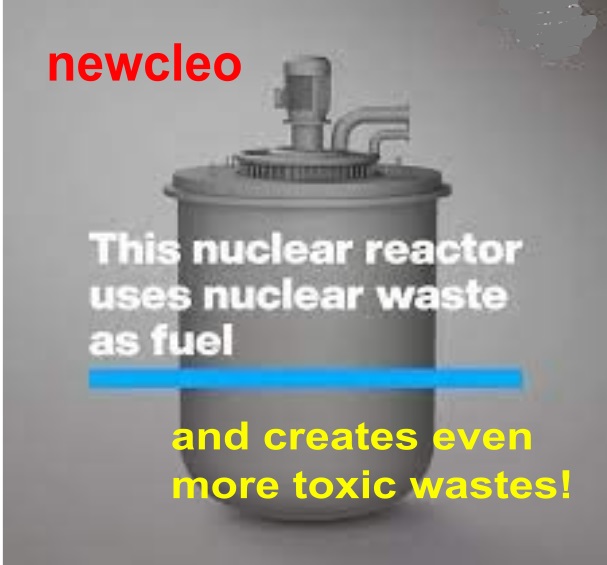
Newcleo-Led Consortium Chosen For French Project On Floating Nuclear Power Plants
By David Dalton, 27 August 2026, https://www.nucnet.org/news/newcleo-led-consortium-chosen-for-french-project-on-floating-nuclear-power-plants-8-4-2026
Maritime sector a ‘largely unexplored opportunity’ for reactor industry
A consortium led by France-based advanced reactor and nuclear fuel company Newcleo has been selected to take part in a project supporting the decarbonisation of the French maritime sector.
The project, managed by France-based investment bank Bpifrance and named “n-Floating”, aims to demonstrate the relevance and technical feasibility of an innovative floating nuclear power solution, consisting of a non-self-propelled floating unit housing multiple Newcleo-developed LFR-AS-200 reactors, each offering an electrical output of 200 MW.
The consortium brings together Newcleo, Bureau Veritas Marine & Offshore, a leading classification society, and ABMI Groupe, a French engineering company with expertise both in maritime and nuclear sectors.
The project has been awarded almost €1m ($1.1m) in funding under the programme.
Work has already begun and is expected to run for approximately 18 months.
“Maritime deployment of advanced reactors opens a broader and still largely unexplored market for nuclear energy” said Newcleo chief executive officer Stefano Buono.
“Floating nuclear offers an opportunity to bring reliable, low-carbon power to applications at sea and in coastal locations.”
Newcleo said the project aims to develop a standardised, deployable and competitive solution for low-carbon energy generation at sea and in coastal locations.
The initial phase of the n-Floating project will focus on conceptual studies for a nuclear barge, assessing its potential to deliver reliable, low-carbon and competitive energy across a range of applications. These include supplying isolated regions, ports and associated industrial hubs, and coastal areas, as well as supporting energy-intensive applications such as desalination and the production of low-carbon fuels.
The project will also define the subsequent development programme and roadmap towards potential industrial deployment by 2036, with the ambition to design and build the solution in France.
Army to spend $2B to build nuclear microreactors at 5 bases as US seeks to ramp up nuclear power
By JENNIFER McDERMOTT and MATTHEW DALY , August 27, 2026
WASHINGTON (AP) — The U.S. Army announced Wednesday that it plans to add nuclear microreactors at five military bases from New York to Texas as a reliable source of energy independent of the commercial electric grid.
The announcement comes as the Trump administration pushes hard to develop the next generation of nuclear power, including billions in loans for large nuclear reactors to meet skyrocketing power demand from data centers and a pilot program to boost advanced reactor designs and projects for military and civilian use. No nuclear microreactors are supplying power to the commercial electric grid in the United States today.
Five companies selected by the Army will be awarded up to $2.2 billion in total over five years to own, construct and operate the microreactors, if they hit set milestones along the way for their performance. The Army expects that more than 20 nuclear microreactors will be built and operated………….. https://apnews.com/article/nuclear-trump-army-microreactors-janus-200edd5fb98b6fe04d029a3c1dba1a4a
Army Selects Vendors, Sites for Nuclear Microreactors
Aug. 27, 2026 | By U.S. Army Communication and Outreach Office , https://www.war.gov/News/News-Stories/Article/Article/4584583/army-selects-vendors-sites-for-nuclear-microreactors/
The Army announced yesterday that the Janus Program selected five nuclear energy vendors and five initial locations to build and operate nuclear microreactors.
In partnership with the War Department’s Defense Innovation Unit, the Army is awarding up to $2.2 billion in total for these microreactors. The project will deliver safe, secure and reliable nuclear power, strengthening the Army’s ability to project power globally, while supporting the revitalization of American industrial capacity and technological leadership.
“Since launching the Janus Program, our mandate from President [Donald J.] Trump and Secretary [Pete] Hegseth has been clear: secure the power our warfighters need to train, deploy and win,” said Dan Driscoll, Army secretary. “Awarding these contracts accelerates our ability to deliver safe, reliable baseload power directly to our installations. We are building the energy resilience necessary to project combat power globally, without relying on potentially vulnerable external grids.”
With private sector funding expected alongside government investment, the Army expects to build and operate more than 20 nuclear microreactors across War Department installations.
The five selected vendors and installations are:
- Antares Nuclear Inc. at Fort Bragg, North Carolina.
- BWXT Advanced Technologies LLC at Fort Campbell, Kentucky.
- General Atomics Electromagnetic Systems at Fort Hood, Texas.
- Radiant Industries Inc. at Fort Benning, Georgia.
- Westinghouse Government Services at Fort Drum, New York.
………………………………………………………………………………………………………………………………………………………………As the Janus Program moves forward, vendors will bring nuclear technologies to other military installations for continued energy resilience across the entire War Department. The Army will announce additional military sites at a later date and continues to drive toward the September 2028 target outlined in Executive Order 14299 for operation of a first reactor.
“The Army is leading the nation in its return to nuclear preeminence,” said Jason Craft, Janus Program manager. “Our selected industry awardees represent the most viable technologies to achieve this capability, setting conditions for both installation energy resilience and operational energy solutions.”
Using a milestone-based payment model, vendors will receive government funding only after successfully hitting specific technical goals. This investment model brings together approximately $2.2 billion across fiscal years 2027-2031, along with significant capital investment from each vendor.
This technology development model will speed up the delivery of next-generation energy solutions to the warfighter and promote innovation while ensuring accountability, Craft said. The prototype reactors will be contractor-owned and operated. Collaboration with utility providers is needed for the success of the Army’s nuclear power strategy and the Janus Program. The Army will work closely with providers on the program to ensure the best possible outcomes, while continuing to collaborate with them now and in the future.
“The Army’s Janus Program has my full support,” said Emil Michael, undersecretary of war for research and engineering and War Department chief technology officer. “The War Department is acting swiftly to implement President Trump’s executive order. … We are unleashing America’s domestic nuclear industrial base to ensure a more resilient and secure energy supply for the joint force.”
Beyond China’s humanoid robots, a quieter machine revolution is unfolding
Laura Bicker, 25 Aug 26,
https://www.bbc.co.uk/news/articles/c62m4zn1q6mo
“I take a nap and the world changes,” says Chen Tianyu.
His world certainly does. The 28-year-old keeps up with the latest technology by spending his spare time in factories that are switching to automation. That way he knows what to prioritise when teaching his class about artificial intelligence (AI) and robotics.
In front of him, around 30 college students are studying code. One of them is typing furiously as his eyes dart from the screen to the robot: “The idea is it will grab that cylindrical piece and move it over there.”
A line of industrial robots are waiting to be programmed, and in another part of the classroom, students are trying to develop robotic medical instruments. As he guides them, Chen declares: “If you are not needed by the world of AI and robotics, then you’ll definitely be among those eliminated”.
For the people in this room, this is a step – or rather a leap – towards a future that China is meticulously building: Xi Jinping’s $20bn (£14.7bn) plan to put his country at the forefront of innovation and in direct competition with the US.
The evidence is all around them. They are in the Hangzhou Technician Institute, one of several huge, purpose-built vocational schools that want to churn out the next generation of tech-savvy engineers. The campus sits on the outskirts of Hangzhou, a former imperial capital whose futuristic skyline is just the first hint of its role as a global tech hub.
Across the country, there are more than two million robots working in China’s factories – which is more than anywhere else – and they are continuing to scale up at extraordinary speed.
It is a commitment that will surely change the world, much like the last time the Chinese economy underwent a massive transformation. It is already shipping its robots across the globe: more than half of the world’s industrial robots are now made in China.
What is less clear is the impact of such sweeping automation in a country that sits at the heart of global manufacturing, trade and innovation. What does this mean for China’s human workforce, for instance? And how would we be able to truly measure the cost of this transformation in a regime that controls information so tightly?
The future of China’s workers is uncertain in the industrial revolution the world has been watching: gleaming solar grids, peak hours made noiseless by electric vehicles, machines that run faster than Usain Bolt. Over the weekend, China hosted the second edition of the World Humanoid Games where robots boxed, sprinted and marched.
What is fuelling this spectacle is another, less visible revolution happening inside factories and classrooms.
The BBC has visited industrial sites where we have been shown robots that do not look human, or dance or leap on stage but weld, paint, lift, assemble and work around the clock without a break or benefits. Some are designed to build more robots. We have also been inside academies where China is training the people who will work alongside its robotic workforce.
This is a front-row seat to what Xi calls China’s “new productive forces” – and how they could reshape the country.
On a factory floor in the southern city of Chengdu, the old and and the new are working side by side.
An assembly line of around 30 middle-aged men and women is screwing, drilling and polishing CRP Technology’s signature product: a robotic arm which performs various industrial tasks. Also in the room are four young engineers crowded around a console, trying to crack the code for a prototype, a new robot that they hope will help build other robots.
One of them, 31-year-old Pang Kai, who is part of the research and development team, pushes the sleek skeleton across the room. Because China’s future workforce is not quite ready to strut out. For now, it can only do simple repetitive movements, such as scan a QR code.
“Maybe in another half year, it can do another task,” Pang says, smiling wistfully. It’s a long road and the team are celebrating every small win.
CRP Technology, which employs around 300 people, has been building robot arms for nine years. Each arm can be tailored to a factory’s needs to help build cars, electronics or wind turbines. The firm says a single arm can be programmed to perform more than 90% of repetitive tasks.
The engineers also wonder if, one day, they can replace the company’s workforce. “We want our new robot to be like human beings. We hope it can think by itself,” says Pang. “We need these kinds of robots because maybe in 10 years, we won’t have enough workers in China.”
A shrinking population and an ageing workforce is another reason Beijing is in a hurry to revolutionise its factories. By 2035, more than a third of China’s population will be over 60, according to official estimates. The country will also lose nearly 60 million people in the next decade – almost equivalent to the population of France – according to some estimates.
The hope is that increased automation will fill this looming gap in the workforce before it starts to affect an already sluggish economy. But the speed of the transition is key. Around 120 million people still work in the manufacturing sector. If China moves too quickly, job losses could follow dealing a catastrophic blow to millions who depend on factory wages.
“In theory, machines can work 24 hours a day, which is certainly an advantage compared with human workers. But machines also require maintenance. Every day we need time for that, and each month the production line also requires inspection and repair,” says Cao Li, vice-president of EV maker Leapmotor.
Increasingly popular in Europe and the UK, the company’s budget-friendly, tech-focused cars come together at the Hangzhou factory with robots aiding the process at every step. At the end of the assembly line, more humans emerge.
The company has more than 25,000 workers and hundreds of them make the final checks as the sparkling new vehicles roll past. Will there be a day when they are no longer needed?
“It’s entirely possible,” Cao says. “And it may come relatively quickly. In workshops, including stamping, welding, and painting, we’ve basically achieved 100% automation.”
China has the edge over the US due to its enormous manufacturing base. Motors, batteries, electronics, gears, sensors – everything needed to build the body of a robot is all at hand.
“China also has an idea. It has a plan. They know where they want to be in five years. They plan at a top level, but they break it down to the regions, to the municipalities,” says Dr Susanne Bieller, General Secretary of the International Federation of Robotics.
“If you want to build a robot in Shenzhen – there’s an entire ecosystem. It takes you less than one hour to source the components you need to make a robot. In Europe it can take you up to a week.”
However, she acknowledges that while China is good at building the body, the US is still leading at building the “brain”, which includes developing the AI to programme robots. And yet Chinese firms, from DeepSeek to Moonshot, have been unveiling new AI models that they say can compete with top US firms.
Driven by an “open-source” approach, where AI start-ups share their code, Chinese innovation has been able to catch up faster than expected, despite US export controls over critical advanced chips. Analysts now believe that the next leg of this race will be determined not by who has the best language model, but who can put this intelligence into millions of machines.
And that is why China is also investing in producing a generation of students learning to imagine what could come next.
At the Hangzhou Technician Institute, for example, children can start from the age of 15. And the scale of what is being taught can feel staggering. There is an entire building dedicated to engines and aeronautics, and a restricted floor for students who will work to keep China at the forefront of processing rare earths – another crucial commodity in the battle with Washington.
Some see this as a solution to China’s stubbornly high youth unemployment rate, with one in five struggling to find a job. “Our students are in demand and can even be pre-booked by companies. They don’t need to worry about employment at all, and we hold competitions as part of their training,” Chen, the young teacher, says.
“It’s better to find your position within the technological wave. In the process of progress, structural changes are bound to occur, and these structural changes are exactly where students’ future employment opportunities lie.”
But China still faces serious economic challenges, from a property crisis that continues to drag on to huge local government debt and persistently low consumption.
Big Oil Is Betting Billions On Nuclear Fusion

Oil Price, By Alex Kimani – Aug 25, 2026,
- Fusion is shifting from research toward commercialization, with private investment hitting a record $4.48 billion in 2025 and commercial plants targeted for the 2030s and 2040s.
- Eni is making one of Big Oil’s biggest fusion bets, backing Commonwealth Fusion Systems, committing $1+ billion to its future electricity and developing critical tritium fuel-cycle technology.
- Chevron, Equinor, Shell and Cenovus are also investing heavily, spreading bets across competing fusion technologies that could eventually transform global power generation.
After decades confined largely to laboratories, nuclear fusion is beginning to attract the kind of money and industrial planning normally reserved for technologies expected to make it onto the grid. Global private investment in fusion hit a record $4.48 billion in 2025, up 69% from a year earlier, while some of the world’s largest energy companies are moving beyond simply backing fusion startups.
Italian energy giant Eni S.p.A. (NYSE:E) now plans to deploy a commercial fusion power plant in Europe by the early 2040s or sooner, building on its investment in Commonwealth Fusion Systems and a more than $1 billion agreement to buy electricity from the startup’s first commercial U.S. plant. Eni is also looking beyond power generation, using decades of experience processing hydrocarbons and hydrogen to build a business around the fuel systems future fusion plants will need to operate.
“Competition is growing in the fusion industry after the technology and expectations had changed significantly in the past 5-6 years,” Francesca Ferrazza Eni’s head of magnetic fusion initiatives, told the Financial Times in an interview. “It was always considered research. Now we are considering it as an industry.”
Commonwealth Fusion Systems raised another $1 billion in July, bringing its total funding to $4 billion as it targets the early 2030s for its first commercial power plant. The planned 400-MW ARC facility in Virginia became the first fusion project to apply for interconnection with PJM earlier this year, while Google has agreed to buy 200 MW of its output. Eni has committed more than $1 billion to buying electricity from the plant.
Eni also wants to build a business supplying the fuel systems necessary to keep commercial fusion reactors running. The company plans to use its experience processing hydrocarbons and hydrogen to recover, purify and recycle deuterium and tritium, the two hydrogen isotopes used as fuel by many fusion reactor designs. To that end, Eni has formed a JV with the UK Atomic Energy Authority to develop and sell those services globally, giving the Italian company a potential source of fusion revenue beyond owning plants or selling electricity.
Tritium is much harder to extract than deuterium. Deuterium is stable and abundant enough to be extracted from seawater, where roughly one in every 6,700 hydrogen atoms is deuterium. Tritium is radioactive, has a half-life of just 12.3 years and exists naturally only in tiny quantities. A 1-GW deuterium-tritium fusion plant could consume roughly 55 kilograms of tritium per year, far beyond what could be supplied from naturally occurring sources.
That means commercial reactors will need to produce much of their own tritium and continuously recover and recycle unused fuel. In turn, that requires closed-loop systems capable of extracting tritium from reactor breeding blankets and exhaust, purifying it and feeding it back into the reactor. Eni is developing a large-scale tritium fuel-cycle facility at the UKAEA Culham Campus in Oxfordshire to test those processes under conditions designed to replicate future fusion plants. The facility is scheduled for completion in 2028.
Fusion’s Other Big Oil Backers
Equinor, Chevron, Shell and Cenovus have spent years building positions across the fusion industry, backing competing reactor technologies before any of them have produced commercial electricity. …………………………….
https://oilprice.com/Alternative-Energy/Nuclear-Power/Big-Oil-Is-Betting-Billions-On-Nuclear-Fusion.html
New nuclear plan could deliver up to 6 GW of power to data centers by 2040

NANO Nuclear and Tillman are planning up to 6 GW of advanced nuclear power for future data-center campuses.
Interesting Engineering. By Neetika Walter, Aug 24, 2026
US-based nuclear technology company NANO Nuclear Energy has signed a non-binding commercial framework with Tillman Global Holdings to explore deploying advanced nuclear reactors across large AI data-center developments in the US.
The companies are targeting at least 2 gigawatts of advanced nuclear capacity by the mid-2030s and 6 GW or more by 2040. The plans remain subject to definitive agreements, customer commitments, financing, regulatory approvals and other project requirements.
The framework identifies NANO Nuclear as Tillman’s anticipated preferred nuclear technology provider for its planned AI industrial zones. Tillman is developing a multi-state pipeline of sites designed around the large power requirements of hyperscale and AI customers.
The companies plan to evaluate potential sites, licensing requirements, customer demand, and project financing as individual developments move forward. The broader strategy is to reserve space for nuclear generation alongside other power sources as data-center campuses expand.
Nuclear enters the data-center mix
NANO Nuclear’s KRONOS MMR Energy System is a 15-megawatt high-temperature gas-cooled reactor designed for modular and phased deployment. The companies say that architecture could allow nuclear capacity to be added in stages as electricity demand grows across large data-center campuses.
The arrangement pairs Tillman’s experience in developing and financing large digital and energy infrastructure with NANO Nuclear’s reactor technology and nuclear licensing capabilities. The proposed model could also allow Tillman or its affiliates to own and finance qualifying power projects while NANO Nuclear supplies reactors and fuel and supports development and operations………………….
Gigawatts planned for AI
The proposed deployment pathway would start with 2 GW or more of advanced nuclear capacity by the mid-2030s before expanding to at least 6 GW by 2040. The companies are also evaluating potential projects in selected international markets where Tillman has digital infrastructure interests.
The framework contemplates a milestone-based equity arrangement as well. Tillman could receive warrants to purchase up to $100 million of NANO Nuclear stock, with most of the warrants tied to future reactor purchase commitments and project-development milestones.
It also includes a proposed $5 million initial restricted stock grant to Tillman, with most of that grant subject to additional milestones. The terms remain subject to definitive agreements.
Tillman Co-President Sachit Ahuja said the company is planning for the long-term electricity requirements of its AI campuses…………
The companies now need to move from the commercial framework to site-specific development, licensing and financing agreements before any reactors can be deployed. https://interestingengineering.com/energy/advanced-nuclear-power-ai-data-centers
Could nuclear fusion become economically viable?
Prototype fusion power plants are under construction. And now scientists
have come up with a measure called “economic Q” to assess their
commercial viability. The idea — published last month in the Journal of
Fusion Energy and taking in such factors as construction costs and energy
price — aligns with growing investor confidence.
Privately held fusion
companies raised $4.5bn over the past year alone, according to the Fusion
Industry 2026 report. There are now more than 50 such companies. Last
month, General Fusion, a Canadian outfit backed by Jeff Bezos, became the
first publicly listed fusion company. These signals hint at an important
shift: fusion energy is gradually being perceived less as a scientific
challenge and more as an economic one. External factors — energy shocks,
geopolitical instability, climate change, energy-intensive AI — have also
cast this perpetually fledgling technology in a flattering light.
FT 25th Aug 2026, https://www.ft.com/content/9a1f39cf-e622-4c68-bb80-0fb93bcec3ec
1 This Month
23-25 October – on Zoom – World BEYOND War’s annual global conferenc


Shut down the radiation-damaged Heysham nuclear reactors now
To see nuclear-related stories in greater depth and intensity – go to https://nuclearinformation.wordpress.com

Say No to NASA’s Reckless Nuclear Reactor on the Moon
Say No to NASA’s Reckless Nuclear Reactor on the Moon

-
Archives
- October 2026 (247)
- September 2026 (339)
- August 2026 (330)
- July 2026 (355)
- June 2026 (287)
- May 2026 (306)
- April 2026 (356)
- March 2026 (251)
- February 2026 (267)
- January 2026 (308)
- December 2025 (358)
- November 2025 (359)
-
Categories
- 1
- 1 NUCLEAR ISSUES
- business and costs
- climate change
- culture and arts
- ENERGY
- environment
- health
- history
- indigenous issues
- Legal
- marketing of nuclear
- media
- opposition to nuclear
- PERSONAL STORIES
- politics
- politics international
- Religion and ethics
- safety
- secrets,lies and civil liberties
- spinbuster
- technology
- Uranium
- wastes
- weapons and war
- Women
- 2 WORLD
- ACTION
- AFRICA
- Atrocities
- AUSTRALIA
- Christina's notes
- Christina's themes
- culture and arts
- Events
- Fuk 2022
- Fuk 2023
- Fukushima 2017
- Fukushima 2018
- fukushima 2019
- Fukushima 2020
- Fukushima 2021
- general
- global warming
- Humour (God we need it)
- Nuclear
- RARE EARTHS
- Reference
- resources – print
- Resources -audiovicual
- Weekly Newsletter
- World
- World Nuclear
- YouTube
-
RSS
Entries RSS
Comments RSS

