UK National Nuclear Laboratory says Thorium nuclear reactors risky
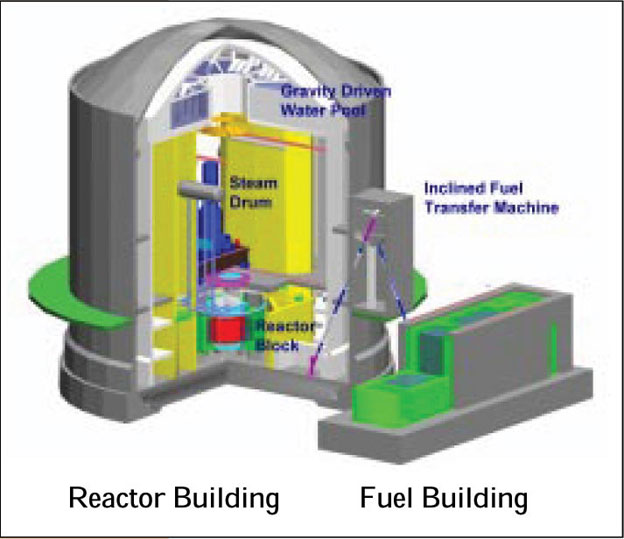 The Thorium Fuel Cycle – Summary An independent assessment by the UK National Nuclear Laboratory Summary NNL believes that the thorium fuel cycle does not currently have a role to play in the UK context, other than its potential application for plutonium management in the medium to long term and depending on the indigenous thorium reserves, is likely to have only a limited role internationally for some years ahead.
The technology is innovative, although technically immature and currently not of interest to the utilities, representing significant financial investment and risk without notable benefits. In many cases, the benefits of the thorium fuel cycle have been over-stated.
http://www.nnl.co.uk/media/27860/nnl__1314092891_thorium_cycle_position_paper.pdf
Danger of MOX nuclear reprocessing: it’s the plutonium, stupid
 From Plutonium to Power, Spiegal Online 09/07/2012 Russia To Produce Electricity with Former Nukes By Kerstin Brandt “…….What makes the new reactor a particularly delicate case, though, is its fuel.
Of all the bequests of the atomic age, the heavy metal that takes its name from Pluto, god of the underworld, is considered the most dangerous. A nuclear chain reaction initiated with six kilograms (13 pounds) of the material over Nagasaki, Japan, on Aug. 9, 1945, immediately killed 80,000 people. Breathing in just a few milligrams of plutonium dust is fatal to humans.
Vast amounts of this element, which almost never occurs naturally, now exist on Earth. Well more than 1,000 tons of the plutonium, which is one component of spent fuel from nuclear reactors, now sits in spent fuel pools and interim storage facilities, awaiting an indeterminate fate.
Then there are a further estimated 250 tons of weapons-grade plutonium, which consists of the fissile isotope Pu-239 at its highest possible concentration. This is a material produced for a single, military purpose: to trigger the most devastating detonations possible, as reliably as possible.
But what meant power during the arms race has since become a curse. Plutonium is enormously expensive to secure — and completely useless for civilian purposes.
For many years, permanent storage facilities for nuclear waste were the solution of choice among experts in the field. Melted down in a glass matrix and mixed with other highly radioactive nuclear waste, plutonium could be made to disappear deep into the Earth, protected from the elements and from the reach of untrustworthy militaries.
These days, though, that method is essentially off the table, because tough disarmament negotiations reach their goals more quickly when the end result is profit rather than unpredictable storage facility costs. The world’s military superpowers have done this once before: In 1993, as part of the “Megatons to Megawatts” nonproliferation program, the US pledged to buy 500 tons of weapons-grade uranium from Russia. Diluted down to a level suitable for use in a nuclear plant, fuel obtained from Soviet nuclear bombs currently generates one tenth of the United States’ electricity……http://www.spiegel.de/international/world/energy-from-the-bomb-russia-to-produce-electricity-with-former-nukes-a-854318.html
MOX nuclear reprocessing: a Russian project leader’s safety fears
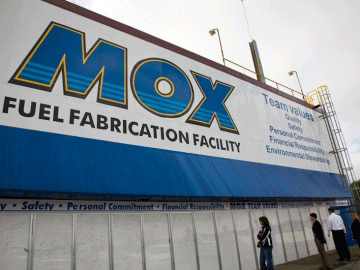 He [ Yevgeny (name changed)] then explains that colleagues and superiors of many years have been leaving the BN-800 project in recent weeks. Their vacated positions, he says, are being given to new employees just starting their careers.
“People who have no experience with the difficulties sodium coolant can cause now head our departments,”… “And you know what? I’m going to leave, too. Or, no, I’m going to run.”
From Plutonium to Power, Spiegal Online 09/07/2012 Russia To Produce Electricity with Former Nukes By Kerstin Brandt “…….. plutonium is not uranium. It’s more toxic and more radioactive, and it’s not easy to dilute.
Yevgeny doesn’t speak English, so he doesn’t understand the disarmament slogan “Global Zero.” Until recently, he was convinced that Russia, alone among world’s countries, had mastered fast reactor technology. He himself worked at Beloyarsk’s fast reactor for many years, after all. But since the plant’s managers assigned him to the construction of the successor model BN-800, Yevgeny has grown doubtful. Continue reading
Dangerous MOX nuclear plant planned, close to highly populated area
About 35,000 people live within 10 miles of the plant. That’s no place for TVA and DOE to be running an experiment with radioactive material in an aging nuclear plant under increased supervision because of major safety problems.
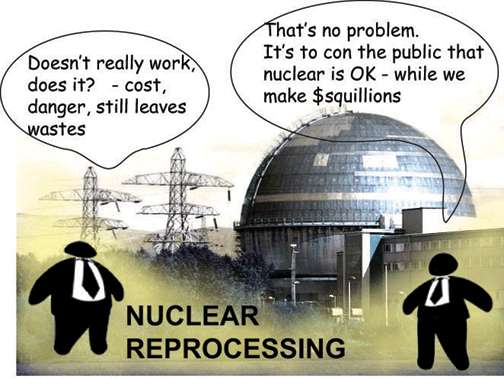
Alabama.com OUR VIEW: Next door, nuclear research, September 09, 2012, By Mike Hollis, The Huntsville Times The Tennessee Valley Authority says it’s willing to consider using a blend of uranium and weapons-grade plutonium as reactor fuel at its Browns Ferry Nuclear Plant near Athens. That’s surprising, given the plant’s safety record.
Part of the problem, critics say, is that this mix of uranium and plutonium oxide fuel, called MOX, makes reactors harder to control, may increase the risk of some types of accidents and raises the threat to public health if an accident results in a major radioactive release. Continue reading
Confusion in Aomori Prefecture about importing radioactive waste
 Aomori Pref. mulling rejecting nuclear waste The Yomiuri Shimbun , 6 Sept 12, AOMORI—The Aomori prefectural government is considering refusing to accept highly radioactive
 waste scheduled to be returned from reprocessing overseas if the central government abolishes its nuclear fuel cycle policy.
The prefectural government was likely prompted to act by recent moves by the central government toward abandoning nuclear power generation.
The village of Rokkasho in the prefecture is home to a spent nuclear fuel reprocessing plant that is considered to be the foundation of the nuclear fuel cycle, in which plutonium and uranium are extracted from spent fuel to be reused.
The plant has yet to begin operating, and spent nuclear fuel from the nation’s nuclear reactors are currently stored at nuclear power plants or at the Rokkasho facility. Some spent nuclear fuel is reprocessed in France and Britain. Vitrified radioactive waste, the highly radioactive waste that is produced in the reprocessing process, has been shipped from Europe to the Vitrified Waste Storage Center at the Rokkasho facility. So far, the plant has received 1,414 containers of vitrified waste, and 28 more are scheduled to be shipped from Britain in October at the earliest. Continue reading
MOX nuclear fuel poses a grave safety threat
DUKE POWERS PLAN TO USE BOMB-PLUTONIUM FUEL CONCEALS HIDDEN DANGERS AND COSTS Steven Dolley Nuclear Control Institute October 18, 2000
“….MOX fuel poses a grave safety threat. Dr. Edwin Lyman, NCI Scientific Director, conducted a MOX fuel safety study using the same computer codes employed by DOE and the Nuclear Regulatory Commission. Dr. Lymans study concluded that, in the event of a severe accident resulting in a large radioactive release, an average of 25% more people would die of cancer if the reactor were using a partial core of plutonium-MOX fuel, as opposed to a full core of conventional uranium fuel. DOE itself has concurred with many of Dr. Lymans findings.
Dr. Lyman also found that the impact of MOX fuel on certain reactor characteristics might also increase the chance that such a severe accident would occur. DOE and Duke dismiss such accidents as extremely improbable—but it must be remembered that the accidents that took place at Three Mile Island, Chernobyl, and the Tokai nuclear-fuel plant in Japan last September all had been similarly dismissed as highly unlikely or even impossible events. Continue reading
What is wrong with thorium nuclear reactors? Well, a lot, really
Thorium: Why We Don’t Want It http://nowarnow.wordpress.com/2012/08/03/thorium-why-we-dont-want-it/ By No War Now / 3 August, 2012
“….. Thorium is just another nuclear industry way of persevering their jobs in an energy production method that does not make sense for our planet. Thorium requires mining rare earth elements. Thorium requires the changing of laws to process monazite, currently categorized as “‘prescribed substance’ and the sole domain of the government” per the Atomic Energy Act (Canada and China work in thorium, http://nextbigfuture.com/2012/08/canada-and-china-work-on-thorium-candu.html).
Thorium continues the predatory practice of extracting public money to support its development and operations. Of course, you won’t learn this from the schills and trolls who want to convince you that thorium is the answer to our energy needs and ought be part of our “clean energy” package. Mining is not, and has never been, a clean energy production practice. Especially when it involves uranium. Continue reading
Don’t be sucked in by ‘spin’ promoting thorium nuclear reactors
 thorium is merely a way of deflecting attention and criticism from the dangers of the uranium fuel cycle and excusing the pumping of more money into the industry….. the nuclear industry itself is also sceptical
‘ these arereally U-233 reactors,’ This isotope is more hazardous than the U-235 used in conventional reactors, he adds, because it produces U-232 as a side effect (half life: 160,000 years), on top of familiar fission by-products
Don’t believe the spin on thorium being a ‘greener’ nuclear option Ecologist, Eifion Rees 23rd June, 2011 It produces less radioactive waste and more power than uranium but the UK would be making a mistake in looking to it as a ’greener’ fuel. The Ecologist reports….. nuclear radiologist Peter Karamoskos, of the International Campaign to Abolish Nuclear Weapons (ICAN), says the world shouldn’t hold its breath.
‘Without exception, [thorium reactors] have never been commercially viable, nor do any of the intended new designs even remotely seem to be viable. Like all nuclear power production they rely on extensive taxpayer subsidies; the only difference is that with thorium and other breeder reactors these are of an order of magnitude greater, which is why no government has ever continued their funding.’ Continue reading
Extracting uranium from oceans: very worrying questions arise
Extracting Uranium from oceans offers a mixed bag of possibilities Examiner, AUGUST 22, 2012 BY: DAVID HERRON Oak Ridge National Labs (ORNL) yesterday announced a new technique for efficiently harvesting uranium from the ocean. This raises the possibility that Uranium supplies will be much deeper and longer lasting than previously thought.
For the environmentally minded it raises a quandary…. there are radiation risks galore…. there is the huge spectre of more nuclear accidents and radiation exposure…..
It would appear this material could be used to target other materials. For example there are concerns over supplies of lithium, or of rare earth metals, or various other minerals, some of which are present in ocean water. Could this material be tailored to target extraction of
those materials from the ocean, providing a source of raw materials that is independent of digging rocks out of the ground? If so it could reduce the amount of hard rock mining operations around the world.
Maybe the material could be used in environmental mitigation, in that there are sites poisoned by releases of toxic metals into the ocean.
But what if corporations so efficiently mine the oceans certain metals that it actually affects the chemical balance of the ocean? The existing chemical balance in the ocean is vital to the food chain, and changing that balance would clearly have some effect on the living things in the ocean. Do “we” even have a clue about the potential impact?…
Thorium reactors (LFTRs) not really supported by the Nuclear Establishment
D. A,. RyanNovember 6th, 2011 at 13:39 The NNL lead scientist Prof. Howarth deals specifically with the LFTR here and pours cold water on it:
A pro-nuclear engineer let slip to me a while ago the real attiude of the nuke industry to Thorium. They see it as hedging their bets in case fusion proves to be harder than they thought and they don’t get commercial grade fusion plants up and running by the 2050′s. If that occurs, then that’s when Thorium (or LFTR’s) will figure. In other words, to them its a blue sky idea to sort out a future energy crisis, not the one facing us right now. This is why you see a vast gulf of a difference between pro-Thorium bloggers and the nuclear industry establishment.
Opposition to USA plan to commercialise plutonium wastes at Savannah
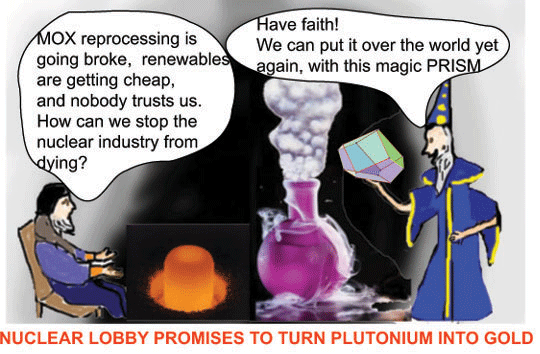 The preferred plan under consideration calls for the shipment of 7.1 metric tons of so-called pits — or cores — of an undisclosed number of nuclear warheads now stored at the Pantex plant in West Texas to Los Alamos National Laboratory in New Mexico and the Savannah River Site for disarmament and processing into fuel for commercial nuclear reactors.
Anti-nuclear activists question plan for shipping plutonium from warheads to New Mexico By Associated Press, August 22 LOS ALAMOS, N.M. — Nuclear watchdogs are fighting a proposal to ship tons of plutonium to New Mexico, including the cores of nuclear warheads that would be dismantled at an aging and structurally questionable lab atop an earthquake fault zone.
Opponents voiced their opposition at a series of public hearings that opened this week on the best way to dispose of the radioactive material as the federal government works to reduce the nation’s nuclear arsenal.
The Department of Energy is studying alternatives for disposing of plutonium in light of federal budget cuts that have derailed plans for new multi-billion-dollar facilities at the Savannah River Site in South Carolina. Continue reading
UK’s dangerous plan to make its piles of nuclear waste a commercial asset
Britain’s previous attempts to convert plutonium into Mox fuel which could then be burned in conventional reactors have proved disastrous, culminating in the premature closure last year of the £1.34bn Sellafield Mox Plant, which was a commercial and technical failure.
 ‘Untested’ nuclear reactors may be used to burn up plutonium waste Feasibility study looks at building revolutionary new facility at Sellafield to dispose of stockpile The Independent, STEVE CONNOR 20 AUGUST 2012 An ambitious plan to rid Britain of its civil plutonium stockpile – the biggest in the world – has come a step closer with the submission of a feasibility study for building revolutionary nuclear reactors to “burn” the waste at Sellafield in Cumbria.
The plan envisages the construction of twin nuclear “fast reactors” at Sellafield that can dispose of the plutonium directly as fuel to generate electricity while ridding the country of a nuclear-waste headache that has dogged governments for half a century. Continue reading
Why molten salt nuclear reactors and thorium nuclear reactors are duds
Thorium: Not ‘green’, not ‘viable’, and not likely Oliver Tickell, April / May 2012. 1. Introduction ”With uranium-based nuclear power continuing its decades-long economicThorium nuclear reactors not all they’re cracked up to be
Thorium: Not ‘green’, not ‘viable’, and not likely
http://www.no2nuclearpower.org.uk/nuclearnews/NuClearNewsNo43.pdf
Journalist, Oliver Tickell, author of the Kyoto2 climate initiative, (1) editor of the Nuclear Pledge website (2) and Green Party candidate for Oxford City Council in three elections, has published a new briefing on Thorium reactors.
A number of commentators have argued that most of the problems associated with nuclear power could be avoided by both, using thorium fuel in place of uranium or plutonium fuels and using ‘molten salt reactors’ (MSRs) in place of conventional solid fuel reactor designs. The combination of these two technologies is known as the Liquid Fluoride Thori um Reactor or LFTR, because the fuel is in form of a molten fluoride salt of thorium and other elements.
The briefing examines the validity of the optimistic claims made for thorium fuel, MSRs and the LFTR in particular, and finds that they do not stand up to critical scrutiny – these technologies have significant drawbacks including: very high costs; marginal benefits for a thorium fuel cycle over uranium; serious nuclear weapons proliferation hazards; the danger of both routine and accidental releases of radiation, mainly from continuous ‘live’ fuel reprocessing in MSRs and the very long lead time for significant deployment of LFTRs of perhaps 50 years – rendering it irrelevant in terms of addressing current or medium term energy supply needs.
The thorium-uranium fuel cycle has some advantages over the dominant uranium-plutonium cycle, in terms for example, of the reduced production of long-lived actinides and somewhat diminished radio -toxicity overall. However, it also creates new hazards of its own. As far as radioactive fission products are concerned, there is little to choose between the two.
Thorium reactors do not produce plutonium. But an LFTR could (by including 238U in the fuel) be adapted to produce plutonium of a high purity well above normal weapons-grade, presenting a major proliferation hazard. Beyond that, the main proliferation hazards arise from the need for fissile material (plutonium or uranium) to initiate the thorium fuel cycle, which could be diverted, and the production of fissile uranium 233U.
LFTRs are theoretically capable of a high fuel burn-up rate, but while this may indeed reduce the volume of waste, the waste is more radioactive due to the higher volume of radioactive fission products. The continuous fuel reprocessing that is characteristic of LFTRs will also produce hazardous chemical and radioactive waste streams, and releases to the environment will be unavoidable. Spent fuel from any LFTR will be intensely radioactive and constitute high level waste. The reactor itself, at the end of its lifetime, will constitute high level waste.
The UK’s National Nuclear Laboratory (NNL) believes that considerable research, development and testing lies ahead before thorium fuels will be ready for operational use. As the NNL states, “Thorium reprocessing and waste management are poorly understood. The thorium fuel cycle cannot be considered to be mature in any area.” It estimates that 10-15 years work is required before thorium fuels will be ready for use in current reactor designs, and that their use in new types of reactor is at least 40 years away. (3)
(1) http://www.kyoto2.org/
(2) http://www.nuclearpledge.com/
(3) Thorium: Not Green, Not Viable and Not Likely, Oliver Tickell, June 2012
http://www.nuclearpledge.com/reports/thorium_briefing_2012.pdf
The very dodgy plans for Small Modular Nuclear Reactors (SMRs)
As SMRs are being promoted for overseas markets, SRS officials will not say what plans are for used reactor vessels or highly radioactive spent fuel which would be taken back to the production site.
“If SRS would become a nuclear waste dumping site due to involvement in SMR programs, this is something that the public in the Aiken area and in South Carolina will soundly reject,”
Documents Reveal Time-line and Plans for “Small Modular Reactors” (SMRs) at the Savannah River Site (SRS) Unrealistic and Promise no Funding http://aikenleader.villagesoup.com/blog/blog/documents-reveal-time-line-and-plans-for-small-modular-reactors-smrs-at-the-savannah-river-site-sr/840884 By Thomas Clements | Jun 19, 2012 One SMR Design being Eyed at SRS for Use of Plutonium Fuel (MOX) and Production of Tritium Gas Used in Nuclear Weapons
Documents obtained under the Freedom of Information Act (FOIA) by the Alliance for Nuclear Accountability (ANA) in Columbia, South Carolina reveal unrealistic plans for pursuit of “small modular reactors” (SMR) at the Department of Energy’s Savannah River Site, located near Aiken, South Carolina. Continue reading
1 This Month



19 November – Webinar – The Reality of Reprocessing
Time: 11:00 AM Pacific Time (US & Canada) / 2:00 PM Eastern / 7:00 PM UK / 8:00 PM CET
Register for the Zoom Event Here



Shut down the radiation-damaged Heysham nuclear reactors now
To see nuclear-related stories in greater depth and intensity – go to https://nuclearinformation.wordpress.com

Say No to NASA’s Reckless Nuclear Reactor on the Moon
Say No to NASA’s Reckless Nuclear Reactor on the Moon
-
Archives
- November 2026 (32)
- October 2026 (302)
- September 2026 (339)
- August 2026 (330)
- July 2026 (355)
- June 2026 (287)
- May 2026 (306)
- April 2026 (356)
- March 2026 (251)
- February 2026 (267)
- January 2026 (308)
- December 2025 (358)
-
Categories
- 1
- 1 NUCLEAR ISSUES
- business and costs
- climate change
- culture and arts
- ENERGY
- environment
- health
- history
- indigenous issues
- Legal
- marketing of nuclear
- media
- opposition to nuclear
- PERSONAL STORIES
- politics
- politics international
- Religion and ethics
- safety
- secrets,lies and civil liberties
- spinbuster
- technology
- Uranium
- wastes
- weapons and war
- Women
- 2 WORLD
- ACTION
- AFRICA
- Atrocities
- AUSTRALIA
- Christina's notes
- Christina's themes
- culture and arts
- Events
- Fuk 2022
- Fuk 2023
- Fukushima 2017
- Fukushima 2018
- fukushima 2019
- Fukushima 2020
- Fukushima 2021
- general
- global warming
- Humour (God we need it)
- Nuclear
- RARE EARTHS
- Reference
- resources – print
- Resources -audiovicual
- Weekly Newsletter
- World
- World Nuclear
- YouTube
-
RSS
Entries RSS
Comments RSS


