Australian government’s brazen duplicity concerning Julian Assange
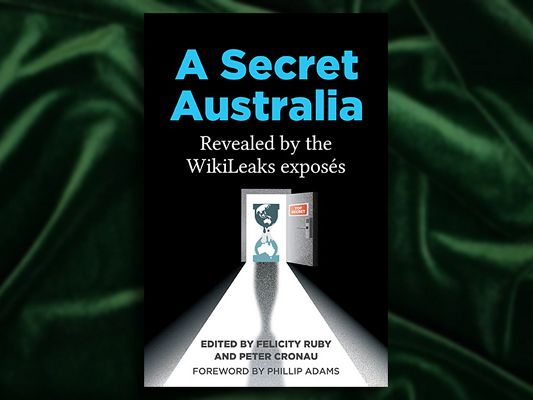
What Assange and WikiLeaks said about Australia, https://www.smh.com.au/culture/books/what-assange-and-wikileaks-said-about-australia-20210129-p56xyo.html, By Jessie Tu, February 4, 2021 He has been called “truth-telling hero”, “evil and perverted traitor”, “heroic, trickster, mythical – reviled”. Robert Manne called him the “most consequential Australian of the present time”. The new US President has called him a “high-tech terrorist”.
The protean narratives of Julian Assange, who will be 50 in July, have been brewing since 2010, when his website published “The Afghan War Diaries”, “Iraq War Logs” and “Collateral Murder”, a video showing the US military killing two Reuters employees in Iraq.
December marked 10 years since Assange has been “arbitrarily detained” in Britain, according to Felicity Ruby and Peter Cronau in their introduction to A Secret Australia – a collection of 18 essays that survey the impact WikiLeaks has had on Australia’s media landscape and the consequences of our government’s attraction towards America’s intelligence and military empire.
The potpourri of authors and thinkers includes Julian Burnside, Antony Loewenstein, Scott Ludlam and Helen Razer, who critique “the powers opposed to openness and transparency” and examine the evidence, “not the likelihoods, the probabilities, the suspicions, and assumptions” around the “subversive, technology-based publishing house”.
WikiLeaks invented a “pioneering model of journalism” – one that embodied the “contemporary spirit of resistance to imperial power”, says Richard Tanter, from the school of political and social sciences at the University of Melbourne. It brought renewed debates on free speech, digital encryption and questions around the management and protection of whistleblowers who risk their lives to expose covert, deceitful actions by governments.
The documents exposed the “brazen duplicity” of the Australian government towards its citizens and presented “off-stage alliance management conversations”, Tanter writes. They invited the layperson into the green room of the performance that is politics and international diplomacy.
WikiLeaks unmasked reports that showed governments recommending media strategies to deceive the public, demonstrating their unethically utilitarian approach to international diplomacy and governance and “enlightened the public on the dark corners of wars”, writes journalist and author Antony Loewenstein.
Assange is still in a cell at London’s Belmarsh Prison, facing an appeal by the United States in its bid to extradite him to face charges for the 2010 publications. He is continuing to be “denied adequate medical care” and “denied emergency bail in light of the COVID-19″, says Lissa Johnson, a clinical psychologist and writer for New Matilda – one of the few Australian publications that have paid genuine attention to the WikiLeaks saga.
In Australia, there’s been a “striking absence of a solid debate on WikiLeaks in the mainstream public discourse”, according to Benedetta Brevini, a journalist and media activist who insists that our concerning “lack of a thorough and sustained debate” is incomprehensible. Loewenstein calls Australia’s lack of journalistic solidarity with Assange “deeply shameful”. He says we have an “anodyne media environment” – perhaps not unsurprising, considering our highly concentrated media market, one of the most severe in the world.
The most useful essay is Rundle’s take on the historical basis for WikiLeaks. He surveys the swirling currents of Australian history that led to its founding, identifying WikiLeaks as a continuation of political activist Albert Langer’s resistance to capital.
“We need a whole new organisation of how recent Australian history is told,” Rundle concludes, seconding Lissa Johnson’s opinion that we demand citizens who “cut across the acquiescence and consent, remove the deadbolt on the torture chamber door, turn down the music and expose what is going on inside”. This collection of polemics, though at times repetitive, takes us closer to a future where these demands no longer seem beyond reality.
Eds., Felicity Ruby & Peter Cronau, Monash University Publishing, $29.95
No apologies from France, over nuclear bomb tests’ pollution in Algeria
The New Arab 12th Feb 2021, President Emmanuel Macron’s recent statement that a “memories and truth” commission will be established to look into the history of the French colonisation of Algeria, has led to much public discussion over this bloody legacy.
And in this context, the absence of apologies or offers of reparations by the French state has not gone unnoticed. One area of particular contention in this process is the ongoing and detrimental effects of France’s nuclear testing in Algeria, conducted throughout the
1960s. France conducted its first nuclear test known as the “Gerboise Bleue” in February 1960 in the Sahara Desert – an atomic bomb that was four times the strength of Hiroshima. A total of 17 tests were carried out, four of them atmospheric detonations, and 13 underground.
https://english.alaraby.co.uk/english/comment/2021/2/12/frances-nuclear-colonial-legacy-in-algeria
Systemic corruption in the American nuclear industry

Big money, nuclear subsidies, and systemic corruption, Bulletin of the Atomic Scientists, By Cassandra Jeffery, M. V. Ramana | February 12, 2021
The “largest bribery, money-laundering scheme ever perpetrated against the people and the state of Ohio” came to light during an unexpected press conference in July 2020 in Columbus. Speaking haltingly and carefully, US Attorney for the Southern District of Ohio David DeVillers announced “the arrest of Larry Householder, Speaker of the House of the state of Ohio and four other defendants for racketeering. The conspiracy was to pass and maintain a $1.5 billion bailout in return for $61 million in dark money.”
Unravelling an intricate web of alleged illegal activities used to launder money, DeVillers broke down the complicated modus operandi of “Company A.” With a gentle smile on his face, he said, “everyone in this room knows who Company A is, but I will not be mentioning the name of Company A because of our regulations and rules. They have not, and no one from that company has as of yet, been charged”.
Company A is FirstEnergy Solutions, a fact most Ohians had been aware of long before the July 2020 press conference. FirstEnergy, now called Energy Harbour, is one of Ohio’s largest utility corporations. For years, the firm lobbied to get a subsidy to continue operating its unprofitable nuclear plants and maintain its revenue flow. When lobbying efforts failed to produce subsidies, it resorted to bribery to gain legislative support for House Bill 6, 2019 legislation that forces state consumers to pay into something called “the Ohio Clean Air Fund.” The green language is a smoke screen for the real purpose: to siphon nearly $150 million annually to FirstEnergy to keep its Perry and Davis-Besse nuclear power plants and two coal-fired power plants operating, while simultaneously gutting Ohio’s renewable energy standards. Also gone were the state’s energy efficiency programs, which had saved consumers and corporations millions of dollars. When citizens tried to organize a referendum to repeal the bill, FirstEnergy indulged in various dirty tactics to thwart this democratic opposition.
Ohio is not alone in its nuclear energy corruption. Also in July 2020, Commonwealth Edison (ComEd), a subsidiary of Exelon, was charged with bribery to “Public Official A” in Illinois. Though not named, the filing makes it clear that “Public Official A” is Illinois House Speaker Michael Madigan, who has denied wrongdoing. ComEd has agreed to pay a $200 million fine to resolve this case. Exelon also finds itself at the centre of another ongoing investigation by the United States Securities and Exchange Commission. The focus of the investigation is reportedly Anne Pramaggiore, a former Exelon CEO who stepped down from the company and from his post chair of the Federal Reserve Bank of Chicago. As in Ohio, the corruption charges relate to lobbying for state subsidies and special treatment of nuclear power plants.
Three other states—New Jersey, Connecticut, and New York—have implemented similar subsidies (although, to date, no allegations of wrongdoing related to them have been made public). Changes in the economics of electricity markets are threatening the profitability of nuclear power plants, a shifting reality driving a demand for these financial bailouts. As the New Jersey-based energy company Public Service Enterprise Group (PSEG) explained in October 2020, across the nation “nuclear plants continue to struggle economically to survive. Since 2018, three nuclear plants have closed in the eastern US, all for economic reasons, and the impact has had a ripple effect.”
Changing economics of electricity generation. These “economic reasons” have to do with an ongoing massive transformation of the energy sector. Over the last decade, the cost of renewables like solar and wind have dropped substantially; these renewables can generate electricity at much lower costs than fossil fuels and, especially, nuclear power. In the United States, unsubsidized wind power costs fell by 71 percent between 2009 and 2020, whereas unsubsidized utility scale solar energy costs declined by 90 percent during the same period. Nuclear energy costs increased by 33 percent between 2009 and 2020. The International Energy Agency has dubbed solar energy “the new king of electricity” and foresees it dominating future deployment in the electricity sector for decades.
The major beneficiaries of the subsidies for nuclear plants are large corporations: PSEG in New Jersey and Dominion in Connecticut, besides Exelon and FirstEnergy. These, and other electrical utility companies in the United States, have historically invested primarily in nuclear reactors and fossil fuel plants. Thanks to the changing economics of electricity, these companies are finding it harder to maintain their profits while operating the older power plants that are now more expensive as sources of electricity.
These companies and various associated organizations have engaged in extensive lobbying and large-scale propaganda campaigns to get governments pass legislation that makes consumers pay more for the electricity they use. In that sense, what has resulted would be better described as corporate welfare than as subsidies. The subsidies have improved these companies’ financial situation, which in turn contributes to their clout in state and national policy making and their ability to fund advocacy efforts—and even to pay politicians tidy sums of money. The larger significance of the political power these large utilities have amassed is their ability to block transition to a fully renewable and more environmentally sustainable energy system.
Financial subsidies. Subsidies take different forms in different states. In New York and Illinois, utility companies are required to purchase a specific amount of zero-emission credits from authorized nuclear generating stations, all of which are owned and operated by Exelon Corporation. Purchasing contracts in both states will be in effect for 10 to 12 years, and utility companies are mandated to tack on the cost to consumer bills. Over in New Jersey, “each electric public utility” is required to purchase “Nuclear Diversity Certificates” from nuclear power plants, with consumers paying for these programs through higher utility bills.
The deal that Dominion Energy struck in Connecticut was different, taking the form of a contract that requires the state’s two electric distribution utilities to purchase about 50 percent of the electricity output of Dominion’s Millstone nuclear generating plant for 10 years. Millstone houses two operational nuclear reactors. In all of these cases, the annual financial benefits to these large corporations run in to the hundreds of millions of dollars.
The modus operandi was developed by multiple stakeholders and publicly released in 2016 in the form of a toolkit by the American Nuclear Society (ANS). Produced by a special committee consisting of senior nuclear officials, the toolkit outlined “a variety of policy pathways to support the current nuclear fleet and prevent early retirement.” The states mentioned above have implemented polices that incorporate one or more of the strategies outlined in the ANS toolkit, including amalgamations of low-carbon portfolio standards and mandated purchase of nuclear energy. The toolkit even went so far as to suggest that state government entities could acquire nuclear power plants or suspend collecting taxes, but these suggestions have not been implemented so far.
Building political support. While the American Nuclear Society led the policy-development charge, the Nuclear Energy Institute (NEI)—the nuclear industry’s lobbying arm—reinforced the advocacy message on the ground. The NEI’s 2017 report outlined specific plans and efforts instituted around the same time as many of these nuclear bailouts were pushed through state legislatures. Substantial resources were funnelled toward lobbying efforts aimed at key political and public actors. NEI’s deliberate intention, as outlined in the 2017 report, was to build political support to “avoid placing additional financial burden on US nuclear plants.”
Large-scale media dissemination, educational campaigns, relationship-building with regulatory bodies, think tanks, and policy institutions, and direct political lobbying are some of the tactics outlined in the report. Not all of the tactics aimed at subsidies; some were aimed at lowering expenses for nuclear companies by finding ways to lessen their environmental obligations. For example, the NEI managed to terminate annual fees charged to nuclear generating plants for hazardous material cleanup, which made taxpayers liable for these costs. The NEI took full credit for this shift: “After targeting the House and Senate Appropriations Committees, NEI successfully prevented reimplementation of a $200 million annual fee placed on the industry.”
The NEI also tried to influence the appointment of officials to oversight bodies, including the Nuclear Regulatory Commission (NRC), declaring that it “shared names of potential candidates with the Trump administration and worked with member companies to urge Congress to communicate with the White House the need to nominate and confirm commissioners.” The NRC is the agency tasked with overseeing safety, and in 2017, the NEI proudly announced that it had “worked with the House Appropriations Committee to again reduce the NRC’s budget.”
The institute took credit for engaging “across the Ohio state government to support enactment of zero-emission nuclear credit legislation,” for convening “meetings with the governor’s staff on the value of nuclear energy,” and for testifying “at legislative hearings on the issue.” Not surprisingly, NEI’s efforts were supported by large cash payments allegedly provided by FirstEnergy.
The power game. Many energy companies are actively involved in local or state-level lobbying. In recent years, Illinois has been a site of intense lobbying by Exelon and its subsidiary, Commonwealth Edison (ComEd), primarily to get more and more subsidies from the state. “At least two dozen former Illinois state lawmakers have lobbied on behalf of ComEd or Exelon since 2000,” according to Illinois Policy, an independent public policy organization. Exelon’s hold on Illinois decision-making has been characterized by David Kraft of the Nuclear Energy Information Service as “nuclear blackmail,” a result of politics that “forced environmentalists wanting to see new legislation pass that would expand renewables, into a reluctant and grudging alliance with Exelon, but on Exelon’s terms.”
The process works as follows. Every so often, Exelon or ComEd would declare that one or more of their nuclear plants are no longer profitable and threaten to shut the plants down within a year. The threats have tended to be successful; lobbyists can argue, with some truth on their side, that a shutdown will lead to job losses and a cut in tax revenue, also leaving Illinois with an energy shortage that may increase reliance on carbon-based sources.
The same strategy was used successfully in New York, Connecticut, and New Jersey, where state officials described the process in colorful terms like “highway robbery” and “ransom.” The nuclear sector has extensively resorted to this kind of power politics, even using it in regard to nuclear plants that eventually shut down, such as the Vermont Yankee Nuclear Power Station.
Money begets money. The effects of enacting laws that favor nuclear energy firms are clear from the financial status of these corporations. Exelon share prices increased from $34.63 on April 1, 2017 to a high of $50.95 exactly two years later, while Dominion’s stock price grew from $64.19 on May 1, 2018 to $83.70, as of November 6, 2020. Similar increases have been recorded by FirstEnergy and PSEG.
Apart from stock owners, the other major beneficiaries from the utility business are, of course, executives in these companies. CEOs like Dominion’s Thomas Farrell and Exelon’s Christopher Crane are among the highest paid executives in the electrical generation and utility industry………..
Dealing with corruption, legal and illegal. The crimes that people like Larry Householder and Michael Madigan are accused of committing are shameful; they are, however, just examples of the apparent systemic corruption that seems to permeate the nuclear industry.
While the actions taken against these individuals have captured headlines, the picture painted in the media still misses the mark on less egregious, everyday forms of political action. Lobbying by deep-pocketed industries and other efforts to capture regulators are pernicious but often go unremarked, in part because under the rules that govern politics in the United States, such actions are often legal. Addressing these problems with the urgency they require will necessarily involve confronting the economic and political system that privileges profits and capital over people and the environment.https://thebulletin.org/2021/02/big-money-nuclear-subsidies-and-systemic-corruption/
Expert panel reports that North Korea is relying on cyberattacks to fund nuclear weapons.
|
North Korea relying on cyberattacks to fund nuclear weapons: experts https://coingeek.com/north-korea-relying-on-cyberattacks-to-fund-nuclear-weapons-experts/ Ed Drake-12 Feb 21,
North Korea has relied on cyberattacks to fund an upgrade to its nuclear weapons and ballistic missiles arsenal, with help with materials and technology from other rogue states such as Iran, according to findings by experts examining the impact of sanctions on the country. A panel of experts at the United Nations, tasked with monitoring the impact and enforcement of sanctions against the country, reported their findings to members of the Security Council this week, suggesting that a “total theft of virtual assets from 2019 to November 2020…valued at approximately $316.4 million.” North Korea is subject to international sanctions designed to prevent the funding of its nuclear and ballistic weapons programs. The UN findings show the role cybercrime has played in funding the illegal development of weapons in North Korea, as well as the risks posed to digital currency users holding their money on cryptocurrency exchanges.
|
|
UK’s Freedom of Information law revealed Israel nuclear link, but now FOI is under threat
|
From duck houses to nuclear weapons: what we know because of Freedom of Information law, Open Democracy, Over the past 20 years, the ‘right to know’ legislation has helped expose many abuses of power, but now it’s under threat, Adam Bychawski11 February 2021 ”………. Since the act passed, politicians have repeatedly threatened to limit its powers. Recently, we revealed that an ‘Orwellian’ Cabinet Office unit has been coordinating Freedom of Information (FOI) responses across government departments, and screening journalists’ requests in ways that experts say could be breaking the law. The unit has blocked the release of files about the contaminated blood scandal that claimed the lives of thousands across Britain and information about high-rise buildings that have potentially lethal aluminium cladding. It’s not just journalists and rights campaigners who should be worried – the public should be too. Many of the biggest abuses of power have come to light only because of Freedom of Information requests. Here are just a few examples of what Freedom of Information requests have revealed over the years…………. Britain’s role in Israel’s nuclear weapons program……While the West has for decades been attempting to rein in Iran’s nuclear ambitions, another Middle Eastern state is believed to have quietly built a covert nuclear bomb. Israel has long had a policy of neither confirming nor denying the existence of its nuclear programme. Despite this, it is thought to have established a clandestine arsenal on par with India and Pakistan. How did Israel achieve this with a minimum of international outcry? Freedom of Information disclosures from the 1960s revealed that Britain was among many countries that secretly made hundreds of shipments of nuclear materials to Israel. The documents showed that the nuclear industry played a key role in securing the transfer of the materials, despite warnings by British intelligence that it might be used to make a bomb. ……… A pandemic might seem like an unusual time to plan a “radical shake-up” of the NHS, but a freedom of information request by openDemocracy revealed that is exactly what the government has been preparing. The disclosure showed that Munira Mirza, the controversial head of Boris Johnson’s policy unit, has been apportioned to oversee the plan. Mirza, who previously worked for Johnson during his time as mayor of London, has no background or policy experience in health. The government initially declined to confirm reforms, it took a freedom of information request to confirm they are happening. In February, a leaked document revealed plans to give the government substantially more control over the NHS, prompting concerns from health works about the timing of the changes. Who’s behind a hardline Brexit pressure group?………The public has a right to know who is trying to influence government policy, so Ministers should not prevent this information from being released because it may be politically awkward,” said Transparency International’s research manager, Steve Goodrich. https://www.opendemocracy.net/en/freedom-of-information/duck-houses-nuclear-weapons-what-we-know-because-freedom-information-law/ |
|
Republican lawmaker reintroduces Bill to repeal Ohio’s corrupt nuclear bailout law
 Ohio Lawmaker Reintroduces Bill To Repeal Nuclear Bailout Ohio Lawmaker Reintroduces Bill To Repeal Nuclear Bailout  Law https://radio.wosu.org/post/ohio-lawmaker-reintroduces-bill-repeal-nuclear-bailout-law#stream/0 Law https://radio.wosu.org/post/ohio-lawmaker-reintroduces-bill-repeal-nuclear-bailout-law#stream/0
By ASSOCIATED PRESS 8 Feb 21, • A bill to repeal a bailout of two aging nuclear power plants at the heart of a federal $60 million bribery probe has been re-introduced in the Ohio House by its Republican sponsor.
State Rep. Laura Lanese (R-Grove City) introduced a repeal bill last week similar to the one she introduced last year. That died after some fellow Republicans in the GOP-controlled House disagreed on whether a repeal was necessary. “A full repeal of House Bill 6 would protect consumers from predatory pricing, restore our renewable energy policy, and instill public confidence in the legislative process,” Lanese said in a statement. The legislation known as HB6 was signed into law by GOP Gov. Mike DeWine in 2019. The Justice Department accused five individuals, including former Republican House Speaker Larry Householder, of shepherding $60 million in energy company money for personal and political use in exchange for passing the law and then derailing an attempt to place a rejection of the bailout on the ballot. Two of those five have pleaded guilty, and a plea deal has also been reached with a nonprofit that authorities believe was used to funnel payments from the scheme. Householder, who pleaded not guilty to the rackteering charges, was removed as Speaker over the summer but won re-election to his House seat in November. |
|
UK universities partnering with Chinese technology companies may be breaching national security rules
affairs committee, to alert Manchester University to the fact that a
Chinese company with which it was collaborating was implicated in
Beijing’s persecution of the Uighurs.
its partner’s role in providing surveillance technology used to spy on
China’s Muslim minority.
universities cut off links with CETC in 2019 after similar warnings. But
what is more troubling is that Manchester appears to be far from alone in
partnering with Chinese companies with defence links on cutting-edge
scientific research. Indeed the Foreign Office is investigating more than a
dozen universities for possible breaches of national security rules.
The complicated politics of removing nuclear subsidies: the crooked Ohio legislation
COLUMBUS, Ohio (AP) — The new owners of two Ohio nuclear power plants have given indications they are no longer interested in receiving as much as $1 billion in subsidies handed out in a tainted energy bill, according to two state lawmakers.
One of the lawmakers, freshman GOP Sen. Jerry Cirino, last week cosponsored Senate Bill 44, legislation that would eradicate subsidies that would have been paid by electric customers across the state for the plants now owned by a privately held company called Energy Harbor.
The plants, one of which is in Cirino’s district, were operated by a wholly owned subsidiary of Akron-based FirstEnergy Corp. when the bill known as HB6 was approved in July 2019 and quickly signed by Republican Gov. Mike DeWine.
Messages were left Friday with Energy Harbor spokespersons seeking comment about the company’s plans.
“I believe there is extremely broad support for Senate Bill 44 in the Legislature and broad external support as well,” said Cirino, who added that recent discussions with Energy Harbor officials lead him to believe they will not find any problems with SB44.
One of the lawmakers, freshman GOP Sen. Jerry Cirino, last week cosponsored Senate Bill 44, legislation that would eradicate subsidies that would have been paid by electric customers across the state for the plants now owned by a privately held company called Energy Harbor.
The plants, one of which is in Cirino’s district, were operated by a wholly owned subsidiary of Akron-based FirstEnergy Corp. when the bill known as HB6 was approved in July 2019 and quickly signed by Republican Gov. Mike DeWine………..
Rep. Bill Seitz, a Cincinnati Republican who was a key player in pushing HB6 through the Legislature, said an Energy Harbor lobbyist told him in December that the company would like the option to decline the subsidies.
Both Seitz and Cirino said Energy Harbor officials were concerned that accepting subsidies would put the company at a disadvantage competing with non-subsidized suppliers, given priority on pricing in the 13-state PJM energy markets where electricity is bought and sold……….
HB6 critics have questioned whether Energy Harbor needs financial help to keep the plants operating after buying back $800 million of company shares last year. Energy Harbor officially took ownership of the plants in February 2020 in a deal struck with a FirstEnergy subsidiary in U.S. Bankruptcy Court.
“It’s quite a turnaround if Energy Harbor is now telling the legislature to repeal its billion-dollar corporate welfare subsidy from Ohioans,” said Ohio Consumers’ Counsel Bruce Weston in a statement. “Questions that come to mind include: Did the two nuclear plants really need the subsidy that they got from Ohioans’ state government? And were the nuclear plants really going to be closed without the subsidy?”
Former PUCO Chair Todd Snitchler, now president and CEO of the Washington-based Electric Supply Association, on Friday called HB6 a “shameful piece of legislation.”
“Ohioans don’t need to pay more only to support struggling plants,” Snitchler said in a statement. “Competitive power markets are delivering reliable power and billions in cost savings to electric customers while significantly reducing emissions and enabling new clean energy build — without subsidies and extra ratepayer charges.”
…………… HB6 has been under intense scrutiny since U.S. Attorney David DeVillers announced on July 21 that then-House Speaker Larry Householder and four others had been arrested for their involvement in a $60 million bribery scheme secretly funded by an unidentified company that clearly was FirstEnergy. Authorities have described it as the biggest bribery scheme in state history.
The five men and a dark money group were subsequently indicted on federal racketeering charges. Householder has pleaded not guilty and awaits trial. Two political operatives have pleaded guilty to charges. The dark money group called Generation Now filed a plea agreement on Friday.
Republicans who control both legislative chambers have not been able to reach a consensus so far on repealing or replacing the measure.
Sponsor testimony on the new bill eliminating the nuclear subsidies begins Tuesday. https://www.usnews.com/news/best-states/ohio/articles/2021-02-07/owners-of-two-ohio-nuclear-plants-may-decline-subsidies
Cyberattack on nuclear unit in Brazil
Brazil’s Eletrobras says nuclear unit hit with cyberattack ,https://finance.yahoo.com/news/brazils-eletrobras-says-nuclear-unit-113223064., PAULO, Feb 4 (Reuters) – A nuclear power subsidiary of Brazil’s Eletrobras suffered a cyberattack but no operations were impacted, the state-controlled power holding company said in a filing late on Wednesday.
The network that was attacked by ransomware is not related to the operational systems of nuclear energy plants Angra 1 and Angra 2, said Centrais Eletricas Brasileiras, as Eletrobras is formally known.
Subsidiary Eletronuclear has suspended use of some of its administrative software to protect its data, the company said in the filing.
It said the incident is under investigation by government entities responsible for nuclear power security. (Reporting by Tatiana Bautzer; editing by Jason Neely)
Rapacious nuclear company Holtec: its dodgy record on safety, finance and lack of transparency

-” ………………There really is no fixed date on a repository,” said Rod McCullum of the Nuclear Energy Institute, an industry trade group. In the absence of a permanent storage place, the conversation has turned to interim storage sites that could save companies money until a final destination is established.Enter Holtec. The company was formed in the 1980s to design spent-fuel storage technology for nuclear plants. By the early 2000s, Holtec had secured contracts to provide specialized dry storage casks for a never-built interim facility on the Skull Valley Goshute reservation in Utah and the Tennessee Valley Authority’s Sequoyah Nuclear and Browns Ferry Nuclear plants. By 2018, Holtec operated branches in seven countries, including Ukraine and Spain.
In 2019, Holtec began acquiring decommissioned nuclear power plants. (Such plants can bring large profits, including whatever decommissioning funds are left over after they’ve been cleaned up.) Holtec purchased New Jersey’s Oyster Creek Generating Station; Massachusetts’ Pilgrim Nuclear Power Station; New York’s Indian Point Energy Center; and Michigan’s Palisades Nuclear Generating Station, as well as spent fuel from the former Big Rock Point Nuclear Power Plant.
But the company’s record was not without concern. Holtec has received an estimated nine violation notices since 2001 for failing to follow NRC quality assurance procedures, including rules meant to ensure that the company’s storage casks — the kind it would be using in New Mexico — consistently met safety standards.
The most recent violation occurred in 2018 when Holtec modified its casks without notifying the NRC, as mandated. The change was only discovered when workers preparing to load a cask at San Onofre Generating Station in California noticed a four-inch pin, meant to hold the fuel basket, loose at the bottom of the cask — an obvious manufacturing flaw. When asked for comment on the incidents, a Holtec spokesman told Searchlight that the company is an industry leader in quality assurance.
Holtec has run into other problems as well. An investigation conducted in 2010 by the Tennessee Valley Authority into suspected overbilling revealed that the company had bribed a TVA employee in order to secure a contract. In 2007, the employee pleaded guilty to concealing more than $54,000 received from Holtec. In the wake of the investigation, the TVA ordered the company to pay a $2 million fine, open its operations to outside monitors and face a largely symbolic 60-day ban from doing federal business — the first debarment in TVA history.
In 2014, Holtec failed to mention that debarment on tax credit application forms. The misrepresentation initially went unnoticed, allowing the company to receive $260 million in tax credits from the New Jersey Economic Development Authority (NJEDA), a story first reported by ProPublica and WNYC.
In 2019, the NJEDA announced it would investigate Holtec’s use of tax credits, prompting the company to sue the agency for withholding money. (The NJEDA declined to answer questions about the investigation’s status, saying it did not comment on matters related to pending litigation.)
Holtec’s use of offshore banking has also come under scrutiny. According to leaked records called the Paradise Papers, Holtec has operated at least one shell corporation in Bermuda between 2005 and 2007. The records, which were obtained by the German daily newspaper Süddeutsche Zeitung and shared with the International Consortium of Investigative Journalists, listed Krishna P. Singh II as an officer: He is the son of Holtec CEO Krishna P. Singh. Several of the CEO’s other family members were also listed as officers, as was Niraj Chaudhary, director of the executive committee for Holtec Asia. An additional offshore company in Bermuda that operated during the same time period, Southampton Technologies Ltd., included nearly identical officers and was listed at the same address.
Holtec did not respond to questions from Searchlight about why the accounts were used and whether the company still keeps bank accounts in tax havens. The leaked records don’t reveal this information, either. But tax havens like Bermuda can allow companies to avoid paying taxes.
“There’s nothing inherently nefarious about [the accounts],” said Jack Blum, a national authority on international tax evasion and money laundering whose anti-corruption work contributed to the establishment of the U.S. Foreign Corrupt Practices Act. However, Blum told Searchlight, Holtec “is a closely held company that has a history of being controlled by its founders, and wherever it goes, it wants to keep its finances as secret as it can and its taxes as low as it can.”
In general, Blum said: “Companies that are dealing in nuclear materials are in a world where there’s very little transparency.”
Holtec did not respond to questions from Searchlight about why the accounts were used and whether the company still keeps bank accounts in tax havens. ……. https://searchlightnm.org/new-mexicos-nuclear-rush/
French parliamentarians nominate Julian Assange for Nobel Peace Prize
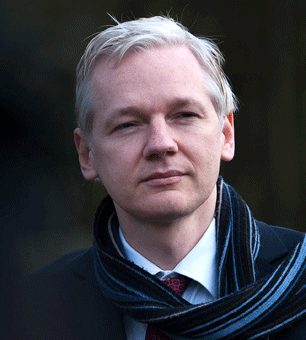 A Nobel Peace Prize for Julian Assange! https://melenchon.fr/2021/01/28/un-prix-nobel-de-la-paix-pour-julien-assange/ Thursday 28 January 2021, I decided to nominate journalist Julian Assange for the Nobel Peace Prize, as I have the power to do as a parliamentarian. Julian Assange is a hero of freedom. The WikiLeaks initiative has raised awareness of war crimes and serious human rights abuses. It is right that the peoples of the world express their gratitude to him.
- Several other rebellious parliamentarians will share this process with me. I thus continue my fight for Assange’s freedom. After going to see him in London in 2012, after having held a videoconference meeting with him in 2013, I asked for political asylum in France in 2019 then 2020. At the time, the Minister of Justice Dupont- Moretti made the same request. Julian Assange served France, including revealing the spying on three Presidents by the United States.
- I call on all French parliamentarians to in turn commit to having the Nobel Peace Prize awarded to Julian Assange.
South Korea considered setting up a nuclear power station with North Korea
South Korea says North Korea nuclear plant documents were ‘just an idea’ SEOUL (Reuters) By Hyonhee Shin 29 Jan 21, – South Korea’s energy ministry said on Sunday that documents about a potential plan to build a nuclear power plant in North Korea were meant to suggest an “idea” but this has never been pursued as an official project.
On Thursday, South Korean broadcaster SBS unveiled a prosecution indictment listing more than a dozen documents from the energy ministry that suggested a previously unknown project to set up a nuclear plant in North Korea.
This raised questions over whether South Korea’s President Moon Jae-in had sought any nuclear energy programme for North Korea as part of his drive to restart inter-Korean economic cooperation.
Many of the files were dated to May 2018, a month after Moon held his first summit with North Korean leader Kim Jong Un.
Shin Hee-dong, spokesman of South Korea’s energy ministry, said the files were “internal documents” that were discussed only among ministry officials after the summit, as an idea to consider in the future when the two Koreas can potentially reopen economic exchanges. ……
The documents were among some 530 that the ministry had deleted to conceal that it had distorted feasibility studies to shut down a reactor in South Korea. Prosecutors last month indicted three officials on charges of violating the Criminal Act by damaging public records.
Some of the files were reportedly titled “A plan to build a nuclear plant in North Korea” and “Tasks for phased cooperation to establish electricity infrastructure in North Korea.”
Reporting by Hyonhee Shin; Editing by Frances Kerry https://www.reuters.com/article/us-southkorea-politics-northkorea/south-korea-says-north-korea-nuclear-plant-documents-were-just-an-idea-idUSKBN2A00CG?il=0
Biden’s USA headed for confrontation with Russia? The troubling appointment of Victoria Nuland
Nuland’s actions helped produce the regime change in Ukraine which led to U.S. arms sales, U.S. sanctions on Russia, even the first Trump impeachment over the matter of anti-tank missile delivery. The coup damaged U.S.-Russian relations
Basic Notes on Victoria (“Fuck the EU!”) Nuland, more https://www.counterpunch.org/2021/01/25/basic-notes-on-victoria-fuck-the-eu-nuland/ BY GARY LEUPP, 25 Jan 21
On January 5 Joe Biden quietly announced the nomination of Victoria (“Fuck the EU!”) Nuland as Deputy Secretary of State for Political Affairs. This announcement may signal the inception of the confrontation with Russia placed on hold during the Trump presidency.
For four years the Democrats have pilloried Trump for “coddling” Putin, although in fact Trump has heaped sanctions on Russia bringing relations to their lowest point since the early Cold War. Now they want some more serious anti-Russian measures. They want their president, Commander-in-Chief of the Exceptional Nation and Leader of the Free World against its adversaries, return us to Clinton-Obama normalcy. That means “getting tougher” with Russia. But what does tougher mean?
Nuland is eminently qualified for the task of making things much worse, even provoking war with the other superpower that while lacking foreign bases, and spending a fraction of what NATO spends on military defense, has over 6000 nuclear weapons. (Remember? The U.S. developed and used nuclear weapons in 1945, the only country to ever do so. The Soviets followed by developing their own bomb in 1949, in self-defense. That’s when Truman established NATO as an anti-Soviet, anti-communist military alliance.)
Moscow feels a mounting resentment over the expansion of a hostile military alliance, formed during the Cold War under conditions no longer pertinent, to surround it. Is this hard to fathom? How would Congress view a gradual expansion of a Russian-led military alliance committed to spending 2% of its members’ GDPs on military spending to embrace Mexico, Cuba, Nicaragua, Venezuela, Panama and maybe Canada next year?
Nuland is a career official, serving under multiple administrations, representing bipartisan imperialism. She was deputy director for “affairs in the former Soviet republics” in the Bill Clinton administration. Her task was to exploit the pain and suffering caused by the implosion of the Soviet Union to assert greater U.S. hegemony over Eurasia, using the traditional mix of covert operations, National Endowment for Democracy meddling, “color revolutions,” aid promises, etc.
During this period Clinton reneged on the U.S. promise to Moscow in 1989 that NATO would not advance “one inch” east after the Soviets accepted German reunification. Instead he drew Poland, Hungary and Czechoslovakia, long members of the dissolved Warsaw Pact, into the anti-Russian military alliance in 1999. It was an extraordinary repudiation of the Bush-Gorbachev agreement, an egregious provocation of a now-friendly country (then headed by the buffoonish Boris Yeltsin), unremarked on by the U.S. press at the time as anything controversial. Since then the expansion of NATO has been treated as no more remarkable than the expansion of UNESCO. Thank Nuland in part for making you think relentless NATO growth is normal, and that it makes sense for North Macedonia and Montenegro to have joined most recently (during the Trump term).
Thank Nuland too, in part, for the “color revolutions” in Serbia (2000), Georgia (2003), Ukraine (2004) and Kyrgyzstan (2005). The (fake) concept of the popular uprising against (Russian-backed) tyranny, backed by an altruistic America that stands for Freedom and Democracy—that’s Nuland’s baby. She surely has plans for Belarus. And she must be deeply alarmed that the State Department did not try to interfere in the last flare-up of violence in Nagarno-Karabakh leaving Russian diplomacy to resolve the situation. (Just because Russia itself extends into the Caucasus and borders Georgia and Azerbaijan doesn’t mean that it should “interfere” in countries that ought by rights to be ruled by the U.S.A.—due to Exceptionalism and all.)
The extremely reactionary chauvinistic Nuland was deputy foreign advisor to Dick Cheney during the Bush-Cheney administration (2003-2005) and then U.S. ambassador to NATO (2005-2008). Under Obama she was Under Secretary of State for Europe and Eurasia, handpicked by Hillary Clinton. She is married to noted neocon warmonger-scholar Robert Kagan. Both were deeply complicit in spreading the Big Lies leading to the Iraq War in 2003. Nuland supported Hillary Clinton’s terroristic regime change efforts in Libya and Syria. But her main mission in life is to expand NATO. Joe Biden shares her passion for this project.
Nuland is perhaps best known for her pithy ejaculation: “Fuck the EU!” in a telephone call with the U.S. ambassador to Ukraine in 2014.
In that year, while Nuland built support for the coup in Kiev (Feb. 18 to 21), she boasted openly that the U.S. had invested $5 billion in supporting “the Ukrainian people’s European aspirations.” (This referred to the support of some Ukrainians for the violent overthrow of the democratically elected president, Viktor Yanukovych, on the basis of his alleged pro-Russian policies and his opposition to European Union affiliation under the conditions the EU was then offering.) To state the matter honestly: the U.S. spent $5 billion to install a government in Kiev that would request NATO membership (ostensibly to protect it from always-aggressive, always expanding Russia) and bind it forever to the U.S. military-industrial complex and “Free World.”
Since NATO membership since the end of the Cold War has invariably been followed by EU membership, it was easy for Nuland to pose as the champion of Ukraine’s EU membership versus the evil Russians (supposedly) opposing that membership. Yanukovych himself had negotiated seriously with the EU but rejected a plan for association due to its austerity provisions. Meanwhile Moscow offered an attractive aid package. This in the world of U.S. propaganda was a choice between Europe and Russia, with Yanukovych siding with America’s adversary.
The Maidan coup occurred just a month after Nuland was recorded discussing the upcoming event with U.S. ambassador to Ukraine, Geoffrey Pyatt. Nuland, who had joined Sen. John McCain and other U.S. politicians in offering cookies to the Maidan protestors, discussed with Pyatt who should serve as prime minister after the coup. Pyatt noted that the EU favored Vitali Klitschko, the ex-boxer.
“Fuck the EU!” replied Nuland, who wanted banker and NATO supporter Arseniy Yatsenyuk to lead the new government. She soon got her way.
Nuland worked with Oleh Tyahnybok, head of the neo-Nazi Svoboda Party (and one of the three leaders Nuland ordered Pyatt to keep in touch with) and the Right Sector militia. Both glorify Stephan Bandera, the Ukrainian fascist leader who aided the Nazis in rounding up Ukrainian Jews during the war. Tyahnybok publicly inveighs against the “Moscow-Jewish mafia ruling Ukraine.”
When Congressman Dana Rohrbacher Nuland in a hearing was asked soon after the coup whether there had been any neo-fascists on the Maidan she refused to answer the question, stating there were “mothers, grandmothers, and veterans…all colors of Ukraine, including ugly colors” on the Maidan. In other words, a diverse anti-Russian crowd. (Notice how she ignored the existence of the 30% of Ukrainians who are ethnic Russians and were a support base for the president targeted for toppling. Just the sort of sensitivity to ethnicity you’d expect from a top U.S. State Department official who’d been comfortable with the slaughter of Iraqis.) Continue reading
Bradwell: UK’s ill-conceived nuclear project, with cronyism and vested interests, will damage environment.
 Bradwell B Action Network 24th Jan 2021, Appeal to Prime Minster, Foreign and Energy Ministers, selected MP’s and Essex County Councillors to Reconsider Chinese State Plans for Essex Nuclear Power Plant by local community. Bradwell B Action Network (BAN), a front-line grass roots campaign organisation, sent a strong message to the Prime Minster and other representatives including the government energy and
foreign ministers and their opposites, pointing out a broad range of concerns and urging them to take immediate action to halt CGN’s plans for the Bradwell B nuclear plant.
State owned CGN are planning to build and operate. The site, at Bradwell on Sea, Essex is also within 30km range of large urban populations to the North, West and South. Despite UK security services raising concerns over the plans, consecutive Conservative governments have chosen to ignore the threats and allow CGN to pursue this ill-conceived project.
Nuclear waste: corruption in a small Australian town

Kimba’s Maree Barford new nuclear community liaison officer, Eyre Peninsula Tribune, Kathrine Catanzariti. AUGUST 24 2017
A Kimba local has been given the job of liaising between the community and government on all things nuclear.
National Radioactive Waste Management Facility Taskforce general manager Bruce McCleary announced on Thursday Maree Barford had been employed as community liaison officer – the first job created as a result of the community consulation on a potential National Radioactive Waste Management Facility at Kimba.
The announcement was made at the opening of a new project office in Kimba.
Mrs Barford moved to Kimba in December 2014 with her husband Shaun after they bought the lease for the Kimba Gateway Hotel.
Her role will be to liaise between the community and the government.
“I’ll be engaging with the community and then letting the government know what is happening in the community and their views,” Mrs Barford said.
She will start her role on Monday, working full-time from the project office.
“I think I can be the voice for the community, being the link between the town and the government.” ……
Barford would provide a permanent, local presence to help keep the community informed and involved in all activities, alongside the project team and other experts who would continue to visit Kimba……..
1 This Month



26 September – International Day for the Total Elimination of Nuclear Weapons


PLEASE OPPOSE HR 8255 AND S.3639 – bills would accelerate satellite deployment, with no environmental review or safeguards – https://ncstd5li.quorum.us/campaign/169331/
To see nuclear-related stories in greater depth and intensity – go to https://nuclearinformation.wordpress.com
-
Archives
- September 2026 (245)
- August 2026 (330)
- July 2026 (355)
- June 2026 (287)
- May 2026 (306)
- April 2026 (356)
- March 2026 (251)
- February 2026 (267)
- January 2026 (308)
- December 2025 (358)
- November 2025 (359)
- October 2025 (375)
-
Categories
- 1
- 1 NUCLEAR ISSUES
- business and costs
- climate change
- culture and arts
- ENERGY
- environment
- health
- history
- indigenous issues
- Legal
- marketing of nuclear
- media
- opposition to nuclear
- PERSONAL STORIES
- politics
- politics international
- Religion and ethics
- safety
- secrets,lies and civil liberties
- spinbuster
- technology
- Uranium
- wastes
- weapons and war
- Women
- 2 WORLD
- ACTION
- AFRICA
- Atrocities
- AUSTRALIA
- Christina's notes
- Christina's themes
- culture and arts
- Events
- Fuk 2022
- Fuk 2023
- Fukushima 2017
- Fukushima 2018
- fukushima 2019
- Fukushima 2020
- Fukushima 2021
- general
- global warming
- Humour (God we need it)
- Nuclear
- RARE EARTHS
- Reference
- resources – print
- Resources -audiovicual
- Weekly Newsletter
- World
- World Nuclear
- YouTube
-
RSS
Entries RSS
Comments RSS
 nuclear-news