With ”regulatory capture” of USA’s Nuclear Regulatory Commission, California’s got nuclear fuel buried 108 feet from the sea

Nuclear Fuel Buried 108 Feet From the Sea https://www.counterpunch.org/2021/03/19/nuclear-fuel-buried-108-feet-from-the-sea/, BY ROBERT HUNZIKER “The most toxic substance on Earth is separated from exposure to society by ½” of steel encased in a canister.” (Blanch)
That eye-opener comes from renowned nuclear expert Paul Blanch in reference to spent fuel rods removed from San Onofre Nuclear Generation Plant buried near the sea on California’s southern coastline 50 miles north of San Diego.
Seventy-three 20-foot tall canisters of highly toxic nuclear spent fuel rods are nestled underground within 108 feet of the Pacific Ocean and not far from Interstate 5 from which passersby catch a glimpse of 73 large rectangular lids poking above ground, thus sealing the most toxic substances on Earth ensconced in ½” dry casks. (Footnote: In contrast, German CASTOR V/19 ductile cast iron casks, with permanent integrated monitoring, are nearly two-feet thick)
What could possibly go wrong on the seashore?
At the outset of San Onofre’s plans for its 73 buried canisters, the Nuclear Regulatory Commission itself admitted: (1) the thin ½” stainless steel canisters could crack within 30 years (2) there’s no current technology to inspect, repair or replace cracked canisters (3) limited monitoring means leaks may not be detected soon enough. (Source: Sanonofresafety.org) It is not believed the foregoing has changed one iota.
Unfortunately, when it comes to nuclear risks, what can go wrong isn’t known until it actually goes wrong. Then, it’s too late. Which explains the contention of a professional group associated with publicwatchdogs.org that discussed issues of credibility and truthfulness of the US Nuclear Regulatory Commission at a public hearing on March 9th, 2021. More on that follows later.
The 73 San Onofre rectangular lids symbolize the final act of decommissioning San Onofre Nuclear Generating Station, remnants of 50 years of nuclear power. Nobody knows with any degree of certainty the consequences of highly toxic spent fuel rods buried within 108 feet of the ocean. Is it risky or not risky? Is it even possible to define the risk?
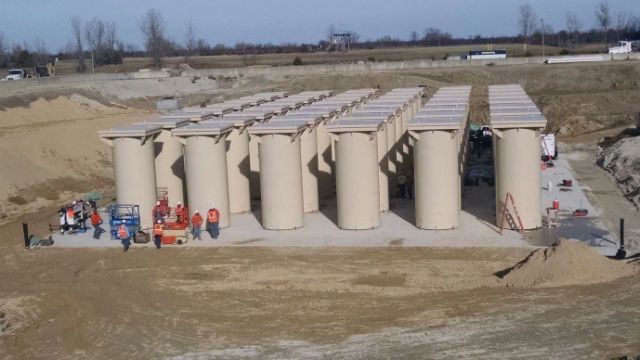
In truth, the risks of nuclear power cannot be adequately defined. Experience shows that the risk factors have no ceiling, no comparisons, no analogies, nothing similar, only disastrous results when things go wrong. More to the point, it’s a grand experiment of juggling the most potent substance on the planet. Like a hot potato, nobody knows what to do with it, other than bury it somewhere somehow that hopefully keeps it secure. Is a beachfront 108 feet off the ocean a good, secure location?
Still, given enough time, nuclear risks are defined via incidents, e.g., Fukushima, which exposed the consequences of failure of identifying nuclear risks. If it were otherwise, Fukushima would’ve been better prepared. They weren’t!
According to Prime Minister Naoto Kan /Japan, 2011: “We did not anticipate such a huge natural disaster could happen.” At the tensest moments, PM Kan was briefed on plans for complete evacuation of Tokyo, a horrific beyond belief event that came far too close for comfort! Nowadays, the former PM is an antinuke protestor.
It’s worth noting that Fukushima houses 10 nuclear reactors and 11 open pools of water containing spent fuel rods. If exposed to open air, spent fuel rods erupt into a sizzling zirconium fire followed by massive radiation bursts of the most toxic material known to humanity. It can upend an entire countryside and force evacuation of major cities, literally begging the impossible question of whether San Onofre’s remnants threaten all of Southern California?
Throughout America nuclear facilities contain open pools of spent fuel rods. According to the widely recognized nuclear expert Paul Blanch: “Continual storage in spent fuel pools is the most unsafe thing you could do.” Some spent fuel rods have been removed and stored in dry casks, but what if the dry casks are buried 108 feet from the Pacific Ocean? And, what of dry casks only ½” thick filled with radioactive spent fuel rods running a 500°F temp inside and 400°F on the canister’s exterior? By all appearances, it is an extremely lively affair!
That goes to the heart of questions posed at a recent Nuclear Regulatory Commission public hearing on March 9th. Thereupon, on behalf of the general public, three professionals drilled down into the procedures of the NRC whilst questioning its credibility. The bios of those three professionals:
Paul Blanch, registered professional engineer, US Navy Reactor Operator & Instructor with 55 years of experience with nuclear engineering and regulatory agencies, widely recognized as one of America’s leading experts on nuclear power.
Stuart H. Scott, founder and Executive Director of Facing Future, best known for bringing Greta Thunberg to the 2018 UN climate negotiations in Poland (COP-24) and for convincing Dr. James Hansen, the 32-year veteran Director of NASA’s Goddard Institute for Space Studies to COP-21, to attend Paris ’15.
Charles Langley, Executive Director of PublicWatchdogs.org, a public advocate with more than 25 years of experience in the field of energy law, energy policy, and utility rate setting.
 According to publicwatchdogs.org, the NRC is a “captive regulator” that accedes to nearly every request for regulatory relief for the nuclear power industry, as well as relaxation of safety rules and enforcement for the industry, in fact, following the command of industry insiders. But, when it comes to the general public, the NRC summarily rejects nearly every public petition aimed at strengthening the rules or following enforcement of existing rules. The petition process at the NRC is a one-sided affair that leaves the public out in the cold. From 1975- 2012 there were 387 petitions filed under provisions of the code, only two granted substantive relief, and one of those was from the nuclear industry. So, over 37 years there were, in actuality, more like a thousand petitions submitted by the public, and only one made it. It should be noted that rejections of petitions cannot be appealed.
On the other hand, when an industry player makes requests, according to Paul Blanch, working for a public utility, asking NRC for “a deviation from the rules” on a phone call got approved within one hour.
As it happens, the field of play with the NRC is lopsided. Industry players can ask any questions of NRC, but the public can only ask “process questions,” which does not lead to adequate answers, if any answers at all. Moreover, according to publicwatchdogs.org: “The NRC is providing inaccurate and false information to the public… At issue is the fact that the NRC is claiming that a flooding event at the SONGS (San Onofre Nuclear Generating Station) Independent Spent Fuel Storage Installation or ISFSI is ‘non-credible’.”
Really? Non-credible? What does that mean?
According to publicwatchdogs.org: “ISFSI is an Orwellian word used by the NRC to describe a toxic beachfront nuclear waste dump containing a spent nuclear fuel depot that is deadly radioactive for 250,000 years. The SONGS “ISFSI” is located 108 feet from the beach, in a tsunami inundation zone next to an earthquake fault line. It contains 73 thin-walled stainless steel cans weighing upwards of 100,000 pounds each. Each 20-foot high canister contains the same amount of Cesium-137 that was released into the atmosphere during the entire Chernobyl event. The cans themselves are only guaranteed to last for 25 years.”
What happens if a king tide, during full moon, or tsunami strikes and triggers a loss of cooling for the containers? Therefore, publicwatchdogs.org demanded the NRC provide a realistic flood analysis, with consequences spelled out. But, according to the petitioners, the NRC has never analyzed a loss of cooling of the 73 buried canisters. That fact alone is beyond comprehension. How could they not? Will they now?
Furthermore, nobody can explain what happens with ruptured casks. The San Onofre casks are filled with helium gas with natural conduction airflow surrounding each individual container, which are thin casks ½” thick.
In all, Public Watchdog’s research found that NRC misrepresented information. At the hearing, petitioners exposed inept Nuclear Regulatory Commission processes, responses, and a lack of credibility, claiming the NRC is merely a rubber stamp for the nuclear industry and not at all responsive to public queries.
The following is a condensed version of the issues brought forth on the virtual meeting with the Nuclear Regulatory Commission:
It should be noted that NRC rejected the group’s Oct 13th petition on the dubious grounds of the term “not credible.” Failure or leakage of the canisters, according to NRC, is “not credible.” But “not credible” is not defined anywhere in NRC documents. Of course, no answers came at the scheduled meeting.
An important pursuit at the hearing was exposure of deficiencies of the Holtec Umax spent fuel storage system at San Onofre, as well as exposing its use at other locations in the US. Not only that but a king tide could wash over the canisters, no tsunami needed. A few feet of water would be disastrous. Meanwhile, there are no contingency plans to remove flooded water from the canisters in an emergency. Which is insidiously irresponsible: “Each canister contains more radioactive cesium than released at Chernobyl, each of 73 canisters, plus there are over 3,000 in this country.” (Blanch)
The Holtec canisters provide a 1/2” to 5/8” barrier between the most toxic material in the world and a Chernobyl-size release of radiation. The canisters must be kept full of helium gas, welded shut, thus they can never be examined on the inside for cracks or leaks, and scandalously, not monitored for temperature, pressure, or radiation. But yet, the NRC says failure is “not credible.”
Was Chernobyl not credible?
Was Fukushima not credible?
Making matters worse, there’s no provision for drainage of water in the underground canisters. A king tidal wave could flood, and as water boils off, nobody would know what to do to save Southern California from some level of mass evacuation. Additionally, there are no provisions to refill the canisters with pressurized helium should pressure drop. These are obvious risks factors, plus: San Onofre is located within an inundation zone for tsunamis. It’s also close to Camp Pendleton, a legitimate enemy target.
“We regard the NRC’s preliminary decision to reject our petition as irresponsible and wrong and it places millions of people in Southern California at risk that is unquantifiable.” (Petitioners)
When NRC receives petitions, they can be rejected by an unspecified number of PRB members and the petitioner does not know if it’s only one member a minority a majority or whatever. No logical reasons are given for rejections of petitions and no supporting documentation.
The San Onofre canisters need to be removed and placed into thick-wall casks and transported to a new repository in New Mexico. “The biggest problem is the NRC failure to admit there is a problem.” (Blanch)
In the final analysis, the NRC abrogates its own mission statement, which is to license and regulate civilian use of radioactive materials to protect public health and safety to promote the common defense and security and protect the environment. Yet, by all appearances, the NRC is more akin to an emotionless Frankenstein monster that belittles detractors via evasion and disdain without any answers for credible questions. What a trip!
Robert Hunziker lives in Los Angeles and can be reached at rlhunziker@gmail.com
Sudden death of defendant in Ohio nuclear corruption case
|
Lobbyist Neil Clark, Defendant In Ohio Nuclear Bailout Case, Found Dead At 67, WOSU
By ANDY CHOW-16 Mar, 21 Neil Clark, a longtime Ohio lobbyist indicted in a sweeping federal bribery investigation into the state’s nuclear bailout law, has been found dead in Florida……
The Naples, Fla. medical examiner says they are conducting an autopsy on the 67-year-old Clark, following a sheriff’s office report of a man found dead with a head wound and a gun on the premises……
Clark was one of several defendants charged with racketeering last year in connection with HB6, Ohio’s nuclear bailout law. Federal prosecutors say the $61 million bribery scheme funneled money from FirstEnergy companies to then-Ohio House Speaker Larry Householder, in exchange for securing a $1 billion bailout benefiting several plants owned by First Energy and its former subsidiaries.
Clark pleaded not guilty in August. Householder has also pleaded not guilty in the case. Two other defendants and the dark money group Generation Now, which prosecutors said was created and operated at Householder’s discretion, have entered guilty pleas….. https://radio.wosu.org/post/lobbyist-neil-clark-defendant-ohio-nuclear-bailout-case-found-dead-67#stream/0 |
The truth about Fukushima today – and the cover-up – Thomas A Bass
 Fukushima today: “I’m glad that I realized my mistake before I died.” Bulletin of the Atomic Scientists, By Thomas A. Bass | March 10, 2021After the nuclear disaster at Fukushima, evacuees were put in what was supposed to be temporary housing built in parking lots and fields on the outskirts of inland towns. These metal structures were measured by the size of Japan’s traditional tatami sleeping mats, typically about 36 by 71 inches.
Takenori and Tomoko Kobayashi lived in an eight-tatami-mat house for the next five years—nuclear refugees inhabiting 132 square feet of living space.
In 2016, Mr. and Mrs. Kobayashi were allowed to return to their former home in Odaka, a village on the edge of Fukushima’s 20-kilometer exclusion zone, where Tomoko is a third-generation innkeeper. Owner of a small ryokan—a traditional Japanese hotel with common baths and a dining room holding a long table for family and guests—she invited volunteers to help her scrub down the inn, plant flowers along the roadside, open a gift shop, and rescue some of the area’s famous “samurai horses,” which are now branded with the white mark that labels radioactive livestock.
The operator of the plant, the Tokyo Electric Power Company, or TEPCO, evacuated its workers from F1 and ordered the site abandoned. The Japanese prime minister, in a dawn visit to TEPCO headquarters in Tokyo, effectively seized the company and demanded that they keep working. As a result, a suicide squad of older workers struggled to contain the disaster. Known as the “Fukushima Fifty” (which actually numbered 69) they tried to cool the reactors with fire trucks brought from Tokyo, 140 miles to the south. The command center for managing the disaster was moved to J-Village.
No one can say with 100-percent certainty the amount of radiation that came from Fukushima, since most of this radiation has been carried eastward into the ocean. At the high end, Fukushima may be worse than Chernobyl in terms of global contamination. At the low end, the Nuclear Energy Institute estimates that Fukushima’s release is one-tenth that of the accident at Chernobyl—which is estimated to have scattered between 50 and 200 million curies of radiation over Russia and Central Europe says Kate Brown, the MIT historian who published a book on Chernobyl in 2019. (One curie equals 37 billion becquerels, the standard unit of measurement for radioactive decays per second.) To give a sense of scale, this amount of radiation is the equivalent of what would have been emitted by at least 400 Hiroshima bombs, according to the International Atomic Energy Agency. As Nobel laureate Kenzaburō Ōe says of the Fukushima disaster, unlike Hiroshima and Nagasaki, this time Japan bombed itself.
Compounding the problem, most of Fukushima’s dosimeters were swept away in the flood or knocked offline. Readings from US military planes flying overhead and ships sailing offshore differed dramatically from those reported by TEPCO. The same is true for spot readings of air and soil samples around the plant………..
F1’s reactors are still radioactively hot. They are lethal to humans who approach them and even the robots sent to explore the melting cores are quickly fried; in 2017, TEPCO lost two robots in two weeks. But some of the nuclear exclusion zone has been re-opened—at least officially—to resettlement, and the Japanese government is paying two million yen (about $20,000) to people who move into the area.
Ouside the core but still in the zone. An army of about 100,000 workers has spent a decade scraping up and bagging radioactively contaminated soil. Consequently, what were once the emerald green rice paddies of Fukushima’s coastal plain are now filled with black plastic garbage bags holding mountains of radioactive dirt…………..
casual attitude toward radiation is widespread. “We found a disregard for global trends and a disregard for public safety,” said the parliamentary report on the Fukushima disaster, known as The Official Report of The Fukushima Nuclear Accident Independent Investigation Commission. “Across the board, the commission found ignorance and arrogance unforgivable for anyone or any organization that deals with nuclear power,” the report’s authors concluded.
They went on to note: “What must be admitted—very painfully—is this was a disaster ‘Made in Japan.’ ”
If Japan covered up the risks involved in building 54 nuclear reactors on its geologically unstable shores, it is now covering up the consequences. A government-sponsored study of radiation exposure in Fukushima prefecture undercounted people’s exposure by two-thirds. Australian physician Tilman Ruff, co-founder of the International Campaign to Abolish Nuclear Weapons (which won the 2017 Nobel Peace Prize), wrote me to say that doctors have left the area because the government refuses to reimburse them when they list radiation sickness as the cause for nose bleeds, spontaneous abortions, and other ailments resulting from ionizing radiation. (The only acceptable diagnoses are so-called “radiophobia,” nervousness, and stress.) The spike in thyroid cancer among children in Fukushima is dismissed as a survey error, produced by examining too many children.
The government has mounted no epidemiological study in Fukushima. It has established no baseline for comparing public health before and after the disaster. Instead, it has greenlighted the use of radioactive ash and soil from Fukushima in construction projects throughout the country, the Japan Times reported.
The generally accepted safety standard for radiation exposure is one milliSievert, or one-thousandth of a Sievert, per year. Different countries have different standards, but in the United States, the Nuclear Regulatory Commission requires that the operators of nuclear power plants limit the amount of their incidental radiation exposure to individual members of the public to 1 milliSievert (1,000 microSieverts) per year above the average annual background radiation, and this figure has become a sort of rough international average benchmark. (For comparison’s sake, the natural level of background radiation usually averages in the range of up to as much as 3 milliSieverts annually.)
But in its haste to deal with the Fukushima emergency in the months after the accident, the Japanese government simply raised the limit of what was considered an acceptable amount of incidental radiation coming from the now-defunct nuclear power plant.
The Japanese government now allows individuals in Fukushima prefecture to be exposed to 20 milliSieverts per year of incidental radiation, above and beyond what was emitted naturally, reported Scientific American. Figures like these are a far cry from that international average benchmark of 1 milliSievert annually.
To give a sense of scale, a figure in the 20 milliSieverts range means that a schoolchild in Fukushima can be exposed to the same amount of radiation as the average adult working full-time in a nuclear power plant.
The limit in the rest of Japan, outside of Fukushima’s environs, remains 1 milliSievert per year.
21st-century versions of hibakusha, or “bomb-affected people”? Anyone objecting to Fukushima’s 20-fold increase in allowable radiation exposure is criticized for promoting “harmful rumors.” After China and 50 other countries banned the importation of food from Fukushima on the grounds that it might be radioactive, the Japanese authorities reacted vehemently, and critics of the Japanese government’s response to the handling of anything related to Fukushima were treated like economic saboteurs. Similarly, refugees from Fukushima are scorned in other parts of Japan, and the Asahi Shimbun reported “widespread bullying and stigmatization of evacuees.” This finding was echoed by the UK newspaper The Independent, which said that “discrimination suffered by evacuee pupils [is] likened to that faced by those who lived through the atom bomb blasts of the Second World War.”
Women from Fukushima are shunned as marriage partners, and a new kind of Fukushima divorce has emerged, with men returning to the area in greater numbers than their wives, who want to keep their children as far away as possible.
“Japan has clamped down on scientific efforts to study the nuclear catastrophe,” said Alex Rosen, a pediatrician who co-chairs the German affiliate of International Physicians for the Prevention of Nuclear War. “There is hardly any literature, any publicized research, on the health effects on humans, and those that are published come from a small group of researchers at Fukushima Medical University, which are centered around the scientist Shunichi Yamashita, who in Japan is called ‘Mr. 100 milliSieverts.’ ” (Yamashita was the spokesman for the Japanese government in the early months of the catastrophe and led the Fukushima health survey for two years, before being forced to resign in 2013. Contradicting his earlier research and instructions to his own staff, Yamashita told the public that 100 milliSieverts of radiation was harmless. He recommended against administering iodine pills to prevent thyroid cancer, and told people that their best protection against radiation poisoning was literally to smile and be happy.)
Four thousand people continue to labor daily to contain the ongoing disaster at F1. They pump cooling water into reactor cores and fuel pools, while struggling to keep the damaged buildings from collapsing. More than a billion liters of contaminated water—the equivalent of 480 Olympic-sized swimming pools—are stored on-site in rusting tanks. Claiming that it has run out of storage room, TEPCO is planning to release this water directly into the ocean. For years, TEPCO maintained that the water stored at F1 had been scrubbed of radioactivity, save for tritium, a water-soluble isotope that is said to be relatively safe. In 2014, TEPCO was forced to admit that its cleaning process had failed, and Fukushima’s cooling water is actually contaminated with high levels of strontium-90 and other radioactive elements.
From the day it opened, Fukushima Daiichi struggled to contain the groundwater that rushed down from the nearby mountains and flowed through the plant. Fukushima today is a swamp of groundwater and cooling water contaminated with strontium, tritium, cesium, and other radioactive particles. Engineers have laced the site with ditches, dams, sump pumps, and drains. In 2014, TEPCO was given $292 million in public funds to ring Fukushima with an underground ice wall—a supposedly impermeable barrier of frozen soil. This, too, has failed, having “limited, if any effect,” Japan’s Nuclear Regulation Authority said.
In 2019, the Japan Institute for Economic Research estimated that the cost of cleaning up the Fukushima disaster could reach $747 billion. But there is actually no such thing as saying that a nuclear disaster has been cleaned up. Lumps of radioactive fuel, concrete, and cladding remain lethal for tens of thousands of years. At Chernobyl, this lava-like mass, called the “Elephant’s Foot,” has been buried under a mountain of concrete and covered again by a second, $1.5 billion shield financed by the European Union, which some have dubbed the “sarcophagus.” Sensitive about looking like a failed nuclear power, Japan has vetoed the building of a similar concrete sarcophagus over Fukushima. Instead, relying upon technology yet to be invented, TEPCO plans to scoop up the fuel in its failed reactors and store the waste in some undisclosed location. In the meantime, Fukushima sits like an open wound on Japan’s eastern shore.
The takeaway? Among the new buildings meant to lure settlers back to Fukushima are two museums. In Tamioka, directly to the south of the power plant, a former energy museum has been converted into something called the Decommissioning Archive Center. Films depict actors replaying scenes from the disaster on one floor of the museum and demonstrate TEPCO’s “Progress of the Work” on another floor.
In the village of Futaba, directly to the north of the reactors, the government has erected a three-story building called The Great East Japan Earthquake and Nuclear Disaster Memorial Museum. A former boomtown filled with workers from the plant, Futaba used to have an archway over its main street, declaring, in bold letters, “Atomic Power: Energy for a bright future.” Yuji Onuma created this slogan for a ninth-grade homework assignment. He received a prize from the mayor.
Now living far from Fukushima and running a business installing solar panels, Onuma returned to Futaba one day a few years after the disaster. A photo from that visit shows him wearing a white Tyvek suit, booties, hat, and facemask. Behind him is Futaba’s main street, filled with crumbling buildings and overgrown with weeds. Above him is the archway that TEPCO financed. Over his head, Onuma holds a placard with red-letter writing on it, so the sign instead reads, “Atomic Power: Energy for a destructive future.”
The archway has since been removed and stored in Futaba’s new museum. Onuma wants it reinstalled, where the irony of having his slogan floating over the ruins of a dead city will remind everyone of their original mistake. At the least, he wants the sign put on display in the museum. “I made the wrong slogan,” he recently told an American interviewer. “But I’m glad that I realized my mistake before I died.” https://thebulletin.org/2021/03/fukushima-today-im-glad-that-i-realized-my-mistake-before-i-died/?utm_source=Newsletter&utm_medium=Email&utm_campaign=ThursdayNewsletter032021&utm_content=NuclearRisk_Bass_03102021
Nuclear disasters? – a calculated gamble , collusion between governments and the nuclear industry

Fukushima Nuclear Disaster Nearly ‘Ended The Japanese State’, Radioactive Waste Specialist Explains, Sputnik News, by Mohamed Elmaazi 12 Mar 21, ”………Sputnik: In what sense was ‘collusion’ between the state and the nuclear industry responsible for the disaster?
Kevin Kamps: [According to the Japanese parliamentary report] Tokyo Electric Power Company and the Japanese national government, specifically its nuclear safety regulatory agency, had plenty of warnings that a large-scale earthquake, and even a tall tsunami, could hit that plant, and other nuclear plants across Japan for that matter. Yet way too little was done about it.
They just hoped it would never happen. But it did. The sea wall they had built was woefully inadequate, for example. It was easily overtopped by the tsunami. All the mistakes that led up to the catastrophic consequences had to do with this collusion. Wink wink, nod nod, between industry lobbyists and executives, safety regulators at all levels, government officials at all levels. Short cuts on safety and security, to save money, that is, boost profits, which pay astronomical executive salaries, even handsome take home pay for nuclear industry workers, kickbacks to local municipalities, revolving doors between industry and government.
And what’s so frightening about that conclusion is that we have such collusion here in the United States, [with] massive campaign contributions to office seekers, and lobbyist expenditures. The media even gets hoodwinked in all this, both in Japan and in the US. In Japan, they call this “the Nuclear Village.” Perhaps, in the US we’d call it the military-industrial-governmental-academic-media-nuclear power complex.
We [in the US] also have a couple three dozen, identical or similar nuclear power plants in design. These are General Electric boiling water reactors of the Mark I or Mark II design. The biggest in the world, for example, just south of Detroit by 25 miles, called Fermi Unit 2. So, I’ve described what happened and the consequences of what happened, where one of the largest releases of hazardous ionizing radioactivity in the environment that has ever occurred, into the ocean, into the air. Japan was hard hit with contamination.
The rest of the Pacific basin was hard hit with contamination, including the west coast of North America and the health implications of that, the genetic implications of that, will unfold for a very long time to come because these radioactive isotopes, which are hazardous caesium and strontium, for example, have at least a 300-year hazardous persistence, tritium 123 years, at least, plutonium, 240,000 years. So, in a sense, nuclear power disasters have beginnings, but they don’t really have endings when you’re talking about centuries or millennia or hundreds of thousands of years of hazard unleashed into the environment.
Sputnik: Could this be considered a freak accident? One that’s unlikely to be repeated?
Kevin Kamps: Unfortunately, not. There have been now several major nuclear power reactor meltdown disasters: Three Mile Island in Pennsylvania USA in 1979, Chernobyl in Ukraine in the Soviet Union in 1986. So many close calls to reactor meltdowns. It’s almost too many to enumerate and there’ve been other nuclear power related and nuclear weapons related disasters over the decades. So, these are actually fairly predictable. And I have colleagues who now refuse to call these accidents because these are foreseeable. This is a calculated gamble. That’s being taken every day at some 400 plus atomic reactors across the world, with more planned…… https://sputniknews.com/interviews/202103111082310108-fukushima-nuclear-disaster-nearly-ended-the-japanese-state-radioactive-waste-specialist-explains/
French report on the unfairness of France’s nuclear history in Algeria

French report grapples with nuclear fallout from Algerian War https://thebulletin.org/2021/03/french-report-grapples-with-nuclear-fallout-from-algerian-war/?utm_source=Newsletter&utm_medium=Email&utm_campaign=ThursdayNewsletter03042021&utm_content=NuclearRisk_AlgerianWar_03042021&__cf_chl_captcha_tk__=32bfe924bf6171eab26d9deb08cd73459b5e69dc-1614896664-0-AWxxiguytXLkG_ERcOpFeDyCqmv7X1FYZmZBNGAnlwY6ZlI8PgWd2By Austin R. Cooper | March 4, 2021 n January, the French historian Benjamin Stora filed a report commissioned by the French President Emmanuel Macron aimed at “reconciliation of memories between France and Algeria,” which France ruled as the jewel of its colonial empire for more than 130 years.
The Stora Report addressed several scars from the Algerian War for Independence (1954–62), a bloody struggle for decolonization that met savage repression by French troops. One of these controversies stems from French use of the Algerian Sahara for nuclear weapons development.
France proved its bomb in the atmosphere above this desert, naming the inaugural blast , or Blue Jerboa, after the local rodent. Between 1960 and 1966, France detonated 17 nuclear devices in the Algerian Sahara: four atmospheric explosions during the Algerian War, and another 13 underground, most of these after Algerian Independence.
French nuclear ambitions became inextricable from the process of Algerian decolonization. The Saharan blasts drew international outrage, stalled ceasefire negotiations, and later threatened an uneasy peace across the Mediterranean.
The Stora Report signaled that radioactive fallout from the Algerian War has remained a thorn between the two nations. But the document comes up short of a clear path toward nuclear reconciliation.
A United Nations dispute. The French bomb collided with the Algerian War before the first mushroom cloud rose above the Sahara. In November 1959, Algerian allies representing independent states in Africa and Asia contested French plans for the desert in the First Committee on Disarmament at the United Nations.
Part of the French strategy at the United Nations was to drive a wedge between the nuclear issue and what French diplomats euphemistically termed the “Question of Algeria.” French obfuscation continued for decades.
France would not, until 1999, call the bloodshed a war, preferring the line that what happened in Algeria, as part of France, amounted to a domestic dispute, rather than UN business. Macron became, in 2018, the first French president to acknowledge “systemic torture” by French troops in Algeria.
The Afro-Asian challenge to Saharan explosions hurdled France’s diplomatic barricades at the United Nations. The French delegation tried to strike references to the Algerian War as irrelevant. But their African and Asian counterparts painted the desert blasts as a violation of African sovereignty.
The concern was not only for contested territory in Algeria, but also for independent states bordering the desert, whose leaders warned that nuclear fallout could cross their national borders. Radiation measurements taken in the wake of Gerboise bleue proved many of them right.
Nuclear weapons represented another piece of French imperialism on the continent.
Secret negotiations resumed in September 1961, with US Ambassador to Tunisia Walter N. Walmsley serving as France’s backchannel. The US State Department worried that French attachment to the test sites might thwart the decolonization process.
Lead Algerian negotiator Krim Belkacem asked Walmsley if prospects for a ceasefire still hinged on France retaining control of the test sites. Krim got his answer when Franco-Algerian talks resumed the following month, at the end of October 1961.
France did not abandon its goal to continue nuclear explosions in the Sahara. But the Algerian position appeared to have softened. So long as further blasts did not impinge on Algeria’s “eventual sovereignty” over the desert, as one archival document put it, a deal looked possible.
The Evian Accords marked a nuclear compromise. Finally signed in March 1962, the landmark treaty granted France a five-year lease to the Saharan test sites but did not specify terms of use.
Going underground. Advice from the French Foreign Ministry played a key role in pushing France’s weapons program beneath Saharan mountains. French diplomats suggested that underground explosions would present, according to one archival document, “significantly less serious” challenges than atmospheric ones for future relations with Algeria and its African neighbors.
This did not stop Algeria’s first president, Ahmed Ben Bella, from winning political capital with the nuclear issue. In public, Ben Bella cast Saharan blasts as an intolerable violation of Algerian sovereignty, as had his allies at the United Nations. In private, however, Ben Bella acquiesced to the Evian terms and reportedly tried to squeeze French financial aid out of the deal.
The Hoggar Massif shook 13 times before France handed over its two Saharan test sites to Algeria in 1967. An accident occurred during one of these underground blasts, dubbed Béryl, when containment measures failed. Several French soldiers and two high-ranking French officials suffered the highest radiation exposures, but roughly 240 members of “nomadic populations” in the region received lower doses.
Meanwhile, France began construction on its Pacific test range in French Polynesia, the site of nearly 200 nuclear explosions between 1966 and 1996. Most took place underground, but France also conducted atmospheric detonations in Polynesia, and these continued into the 1970s. Even though the Limited Test Ban Treaty had gone into effect in 1963—prohibiting nuclear blasts in the atmosphere, underwater, and in outer space—France refused to sign it.
Contamination and compensation. As part of its reconciliation proposal, the Stora Report encouraged Franco-Algerian cooperation on environmental remediation of the Saharan test sites. An expert report from the International Atomic Energy Agency, however, concluded in 2005 that environmental interventions were “not required” unless human traffic near the sites should increase.
The Stora Report briefly mentioned compensation linked to radiation exposure from French nuclear weapons development, but this deserves a closer look. In 2010, the French Parliament passed a law recognizing these victims and establishing funds and procedures to provide compensation for illness and injury. So far, France has earmarked 26 million euros for this purpose, but almost none of that has gone to Algerians.
Decades earlier, France’s nuclear allies turned to compensation programs in an attempt to reconcile with marginalized groups affected by weapons development without disclosure or consent. In 1993, for example, the United Kingdom settled with Australia as redress for indigenous people and personnel involved in UK explosions conducted in the former colony.
Facing similar lawsuits, the United States provided monetary compensation and health benefits to the indigenous people of the Marshall Islands, where US nuclear planners “offshored” their most powerful blasts during the Cold War arms race. Other US programs have made compensation available to communities “downwind” of the Nevada Test Site and surrounded by the uranium mines fueling the US nuclear arsenal, including Tribal Nations in the Four Corners region.
Compensation programs map a global history of colonial empire, racial discrimination, and dispossession of indigenous land, but postcolonial inequalities look particularly stark from the Sahara. Including appeals, France has granted 545 of 1,739 total requests filed by French soldiers and civilian participants in the nuclear detonations, as well as exposed populations in Algeria and Polynesia. Only 1 of 52 Algerian dossiers has proven successful.
French officials responsible for evaluating these files report that the ones from Algeria often arrive incomplete or in a shoddy state, and pin the blame on the Algerian government’s inability or unwillingness to provide the geographical, historical, and biomedical evidence that French assessment procedures demand. Claims must demonstrate that an individual worked or lived in a fixed area surrounding one of the two Saharan test sites, between February 1960 and December 1967, and suffered at least one of 21 types of cancer recognized as radiation-linked by French statute.
A step toward reconciliation. If Macron really wants to tackle France’s nuclear history in Algeria—and its aftermath—his government should start here. The French Parliament opened the door to Algerian compensation in 2010, and important revisions to the evaluation procedures took place in 2017, but there has never been a level playing field. Macron could, for example, require that French diplomats posted in Algeria help Algerians build their cases and locate supporting documents.
Another option: Macron could declassify archival materials documenting the intensity and scope of radioactive fallout generated by French nuclear blasts. Draconian interpretations of French statutes on the reach of military secrecy continue to block access to the vast majority of military, civil, and diplomatic collections on France’s nuclear weapons program—including radiation effects. Foreign archives have provided useful information, but official documentation from the French government would help exposed populations—like those in the Sahara—understand what happened, evaluate the risks, bolster their claims, and likely find these more successful.
The Stora Report did well to acknowledge nuclear fallout from the Algerian War. Giving Algerians a fair shot at compensation should mark France’s first step toward reconciliation.
Israel should come clean about the expansion at its secret nuclear weapons plant
Assange’s partner exposes ongoing denial of his legal and democratic rights,
|
Moris provided a succinct summary of the issues of democratic principle at stake, in the US attempt to prosecute Assange for lawful publishing activities that exposed war crimes, and updated his supporters on the current stage of the legal campaign to secure his freedom. The January 4 verdict, forbidding extradition, had “taken into account” the “extensive medical evidence” presented during last year’s trial, Moris explained. Assange’s dispatch to the US had been blocked on the grounds that it would be “oppressive.” His health issues, including serious depression, and the brutal character of the US prison system, meant there would be a great risk of Assange taking his own life if he were extradited. The US immediately responded, in the final days of the administration of President Donald Trump, by formally signalling an appeal. Trump’s Democratic Party successor, President Joe Biden, in his first weeks in office, rejected calls by civil liberties and press freedom organisations for the US Department of Justice to drop its pursuit of Assange, demonstrating the bipartisan character of the persecution. The High Court will decide after March 29 whether prosecutors, acting on behalf of the US state, will be permitted to proceed with their appeal. Moris stated that the next stage for the defence was to submit a response to the US grounds of appeal. She then reviewed the anti-democratic implications of Judge Vanessa Baraitser’s January 4 ruling. It had denied Assange’s extradition on health grounds, but “did not side with him on the wider public interest arguments.” Baraitser had upheld virtually all of the prosecution’s substantive arguments, effectively green-lighting future attempts by governments to prosecute journalists and publishers for exposing material that they deem to be “classified” and of “national security” significance, regardless of the public interest of what is exposed. Continue reading |

Former SCANA nuclear executive pleads guilty to fraud
 Former SC utility CEO pleads guilty to nuclear plant fraud
The utility executive who spent billions of dollars on two South Carolina nuclear plants that never generated a single watt of power pleaded guilty in two courts, By MICHELLE LIU Associated Press/Report for America, 25 February 2021, COLUMBIA, S.C. — The utility executive who spent billions of dollars on two South Carolina nuclear plants that never generated a single watt of power pleaded guilty to federal conspiracy charges Wednesday.
Former SCANA Corp. CEO Kevin Marsh will likely spend two years in prison and pay $5 million back to ratepayers, per the plea agreement prosecutors presented to U.S. District Judge Mary Geiger Lewis in Columbia.
Marsh’s formal acknowledgement of his role in the conspiracy to commit wire and mail fraud comes more than three years after the project imploded publicly and federal and state agencies began investigating.
Marsh, 65, will be free on bond as he cooperates with federal authorities until he is formally sentenced. He headed to Spartanburg in the afternoon to plead guilty on a state charge tied to the investigation. Officials said he will serve any state sentence he receives concurrently with his federal sentence.
A judge will hand down the final sentence after the investigation concludes. Prosecutors haven’t given indication of when that might be.
Marsh and other executives insisted the project to build the two reactors at the V.C. Summer site north of Columbia was on track ever since it started in 2008. The company hiked rates on customers nine times between 2009 and 2017 to help fund the project.
Prosecutors said that as the project lagged, Marsh lied repeatedly to investors, regulators and the media, claiming the reactors would be making power by a 2020 deadline to get $1.4 billion in federal tax credits needed to keep the $10 billion project from overwhelming SCANA and its subsidiary, South Carolina Electric & Gas.
An independent report commissioned by SCANA in 2015 estimated the reactors would not be finished in 22 years. Executives fought to get the estimate removed from the copy of the report shared with state-owned utility Santee Cooper, which held a 45% stake in the new reactors, prosecutors said.
Santee Cooper ended up $4 billion in debt from the project. Lawmakers are still arguing over whether to sell or reorganize the utility.
Dominion Energy of Virginia bought out SCANA in 2019 after the former Fortune 500 company was crippled by the nuclear debacle.
In December, the Securities and Exchange Commission said both SCANA and its subsidiary agreed to settle a civil lawsuit filed by the SEC in February for $137.5 million, including a $25 million civil penalty.
Former SCANA Executive Vice President Stephen Byrne pleaded guilty to federal charges similar to Marsh’s in July. He is also awaiting sentencing. AT TOPhttps://abcnews.go.com/Technology/wireStory/sc-utility-executive-plead-guilty-courts-76084865
Move in Ohio Senate to repeal nuclear bailout law
|
By ANDY CHOW • 24 Feb 21, A measure to repeal part of Ohio’s controversial nuclear power plant bailout, and stop the increase to monthly electric bills, is gaining momentum in the Ohio Senate.
The Republican-backed bill, SB44, would repeal the nuclear subsidies created through 2019’s HB6. It’s now on its way to a possible full Senate vote after being unanimously passed by the energy and public utilities committee. Investigators say a utility, believed to be FirstEnergy, funneled millions of dollars to a dark money group controlled by Rep. Larry Householder (R-Glenford). They say Householder used those funds to become House Speaker, and in return pass FirstEnergy’s legislative agenda in the form of HB6, which in part subsidized two nuclear plants formerly owned by the company. Most Democrats and several Republicans want a full repeal of HB6, which would also have the effect of reviving green energy standards that the 2019 law eliminated. However, doing away with just the nuclear subsidies seems to be the option with the most traction. The extra charge on electric bills to generate $150 million a year for Ohio’s two nuclear power plants has been stalled through a court injunction, which will remain in place while the federal investigation continues. Three defendants in the bribery case, including the dark money group Generation Now, have plead guilty to racketeering charges. |
|

Lies in Texas, as Republicans blame renewable energy for cold weather traumas
|
Pressenza 19th Feb 2021, Forget Ted Cruz, What’s Really Missing in Texas Is the Green New Deal. While Republican Sen. Ted Cruz of Texas is under fire for fleeing to Cancún for a vacation as his constituents endure devastating power outages as well as food and water shortages due to rare winter weather, climate campaigners are pointing to the compounding crises in the Lone Star state as proof of the need for a Green New Deal.
As dozens of people have died and millions have spent days without electricity, some right-wing news outlets and lawmakers—including GOP Texas Gov. Greg Abbott, who’s facing calls to step down—have lied about the state’s power problems, blaming renewable energy, even though the outages are largely tied to issues with gas, coal, and nuclear facilities. Abbott even claimed Tuesday on Fox News that “this shows how the Green New Deal would be a deadly
deal for the United States of America.” |
Mossad’s high tech murder of Iranian nuclear scientist

Why is this article written in such an extraordinarily boastful style?
|
Truth behind killing of Iran nuclear scientist Mohsen Fakhrizadeh revealed Top nuclear expert was killed by the Mossad, who used a one-ton remote-controlled gun smuggled into Iran piece by piece over eight months, the JC can disclose, JC Jake Wallis Simons, February 13, 2021 The Iranian nuclear scientist who was shot dead near Tehran in November was killed by a one-ton automated gun that was smuggled into the country piece-by-piece by the Mossad, the JC can reveal. The 20-plus spy team, which comprised both Israeli and Iranian nationals, carried out the high-tech hit after eight months of painstaking surveillance, intelligence sources disclosed…….. Mohsen Fakhrizadeh, 59, known as the “father of the bomb”, lost his life in a burst of 13 bullets as he travelled with his wife and 12 bodyguards in Absard, near Tehran, on 27 November last year. When Mohsen Fakhrizadeh, Iran’s “father of the bomb”, perished in a hail of bullets on the outskirts of Tehran in November, the assassination stunned the Iranian regime and made headlines around the world. But three months on, key questions remain unanswered. Nobody even knows how the 59-year-old nuclear scientist was killed. Initial reports suggested he was gunned down by armed men; later, a Revolutionary Guards official blamed a “satellite-operated” gun using artificial intelligence. Quite where such a device had come from, and how it had been set up, remained unexplained. To this day, nobody knows whether the operation was a snap move or had been planned for months. And despite many theories, no one knows exactly why he was killed. Uncertainty also hangs over President Trump’s role in the hit. Some analysts argued that he was making his mark before leaving office, while others denied American involvement. Most importantly of all — despite widespread speculation that Israel was responsible — nobody has pinned down the identity of those behind the killing. Until now. Today, the JC can confirm that the hit was carried out by Mossad, Israel’s feared intelligence service. …… The JC has confirmed that the assassins did indeed use a sophisticated remote-controlled gun, with a small bomb built in to allow it to self-destruct (though contrary to Iranian claims, it was not “satellite operated”)…….. “The machine was quite an impressive thing. There was a team on the ground as well, which made it quite complicated. But it had to be done and it was worth it.”…… Further assassinations were planned for the future, the source said, though nothing on the same scale as Fakhrizadeh or Soleimani. “Yes, the Mossad may have plans for further departures,” the source said……. https://www.thejc.com/news/world/world-exclusive-truth-behind-killing-of-iran-nuclear-scientist-mohsen-fakhrizadeh-revealed-1.511653 |
|
Global nuclear industry – rotten to the core: it’s not just Brazil
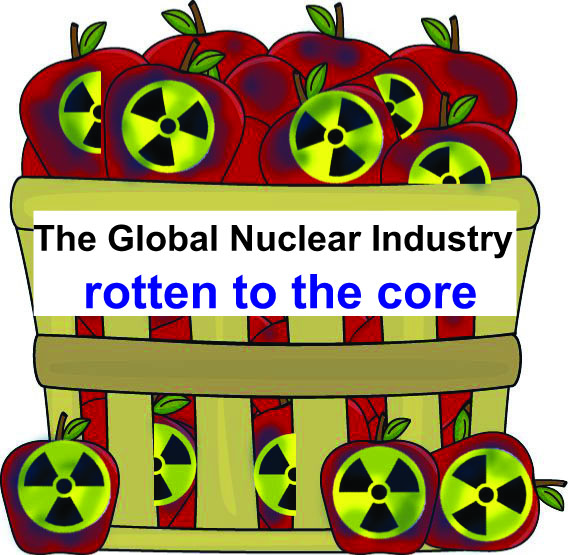
A bad barrel, not just a few bad apples. Additionally, Lava Jato revealed that the type of corruption that took place was not just a matter of a few rotten apples, but rather of systemic factors.
Corruption in the nuclear industry is a known international phenomenon. The recent scandal in Ohio illustrates how the push for subsidies to nuclear plants is not the result of a real commitment to citizens’ energy needs or climate concerns, but a way for energy corporations to maintain overpayments and assure political gains to certain parties. Brazil offers a different model, one that has used new nuclear facilities to generate kickbacks to powerful political and business interests.
|
Brazil’s Angra 3 nuclear reactor: a political undertaking, not a common good https://thebulletin.org/2021/02/brazils-angra-3-nuclear-reactor-a-political-undertaking-not-a-common-good/ By Carolina Basso | February 16, 2021 In 2019 the Brazilian government decided to resume work at Angra 3, a nuclear reactor where construction has been essentially dormant for more than three decades. The work was supposed to restart last year, with the reactor entering commercial service by late 2026, but COVID-19 and the quest for private partners to invest in the project have pushed back the schedule. Brazil currently has two operating nuclear power plants, Angra 1 and 2, that have generated less than three percent of the country’s electricity since their commercial launch. So why does Brazil want to resume construction of a third nuclear reactor? Angra 3 is questionable in economic and energy-related terms. Studies have shown that the country can generate electricity much more cheaply by integrating wind power with Brazil’s considerable hydropower resources. Analysts suggest that this combined system could supply all the electricity the population demands, making any expansion of the nuclear industry sector unnecessary and costly. The decision to resume construction of the third Brazilian reactor was made by President Jair Bolsonaro, who is committed to expanding the nuclear industry. Bolsonaro’s commitment results in part from his close ties to Brazil’s Navy, which has historically shaped the nuclear sector and currently dominates the country’s uranium enrichment and fuel cycle technology. But this factor alone cannot explain the decision. It is imperative to examine who will benefit from the project, particularly through the kinds of corruption that are endemic in Brazil. Seen in that light, the political push for building Angra 3 would seem to have more to do with money and politics than with providing a public good. A web of bribes.The Angra 3 project began in the early 1980s, but a number of administrative and financial problems slowed construction down, and it ceased altogether in 1986. Then-President Luiz Inácio Lula da Silva revived construction in 2010, but it was again interrupted in 2015 due to the detection of contractual frauds. That detection had to do with another important development in Brazilian politics: Operation Car Wash, or Lava Jato, in Portuguese. The Federal Police of Brazil launched the operation in 2014 to investigate an enormous money laundering and embezzlement scheme involving major contractors and several politicians. Amid the whirl of investigations, the police discovered an elaborate web of bribes in Eletronuclear, the state-owned electric subsidiary that operates the Angra nuclear reactors. Most of the payoffs pertained to contracts signed in the early stages of the three reactors. The corruption pattern unveiled by the police demonstrated that the corrupt activity in the nuclear sector was heavily institutionalized and took place out in the open. The actors involved developed a complex mechanism through which government officials worked with private business conglomerates to generate kickbacks worth millions of dollars.
The transactions worked as follows: Brazilian companies like Odebrecht and Camargo Correa paid bribes to politicians associated with state agencies (namely, Eletronuclear) to be hired by them or to form partnerships with international companies such as Techint to increase their profits. Nevertheless, this scheme needed private intermediaries with vast political connections to jump over bureaucratic obstacles. Therefore, part of the profits collected by the construction companies went to pay these brokers for their work and to bribe public officials. Finally, the kickbacks allowed politicians to finance their electoral campaigns and private interests. The anti-corruption probe suspended Angra 3’s construction and canceled all contracts allocated to engineering, construction, and electromechanical-assembly companies associated with the nuclear project. Operation Car Wash’s groundbreaking findings unveiled common tactics employed for decades. The investigations were crucial in exposing “the degree to which some policies make no economic sense but are implemented regardless because doing so is in the interest of a few businesses and political groups,” a lengthy report on nuclear governance in Brazil concluded. The result of that twisted pursuit is uneconomical projects with low regulatory standards for licensing and other policy decisions. A bad barrel, not just a few bad apples. Additionally, Lava Jato revealed that the type of corruption that took place was not just a matter of a few rotten apples, but rather of systemic factors. In other words, replacing individuals will not necessarily change the underlying dynamics generating demand for corruption in the first place. Angra 3 has been and likely will continue to be used as a political tool for money laundering and a vehicle for public authorities to receive tax dollars. Enter candidate Bolsonaro. The majority of his presidential campaign in 2018 capitalized on the anti-corruption wave generated by Operation Car Wash to gain votes from those outraged by the misconduct detected. Bolsonaro even invited Federal Judge Sérgio Moro, one of Lava Jato‘s main prosecutors, to become his Minister of Justice and Public Safety. But the reality of Bolsonaro’s reign as president has not lived up to his campaign promises, and corruption continues. In April 2020, former judge Moro resigned, accusing the president of attempting to interfere in Federal Police investigations. Experts point out that Moro’s departure crowns a process of politicization of government agencies that fight crime, which runs contrary to the values Bolsonaro endorsed during his campaigning. A burden on consumers. It is in light of this enduring corruption in Brazil that readers should consider the decision to resume construction of Angra 3. The combination of high costs, doubtful political intentions, and better energy options make it unreasonable to expand nuclear capabilities in Brazil. If decision-makers were truly concerned about the energy demands of the people, they would have invested in alternative systems that are more economical and sustainable. That they have not done so very likely has something to do with opposition from the lobbies of competing energy industries and the interests of political elites who hope to financially benefit from expensive projects like Angra 3. Corruption in the nuclear industry is a known international phenomenon. The recent scandal in Ohio illustrates how the push for subsidies to nuclear plants is not the result of a real commitment to citizens’ energy needs or climate concerns, but a way for energy corporations to maintain overpayments and assure political gains to certain parties. Brazil offers a different model, one that has used new nuclear facilities to generate kickbacks to powerful political and business interests. Because of this favoring of influence over qualification and fair budgeting, the burden on consumers will continue to grow. Around the world, reactor costs in the nuclear industry tend to be much higher than initially estimated. Angra 3’s estimated price has risen more than $2.7 billion from 2008 to 2018. The expensive investment has resulted in the tariff from the plant doubling from roughly $45 to $90 per megawatt hour. It is past time politicians refrain from overcharging the Brazilian population for their own advantage. |
‘Medical Scientific’ committee, stacked with nuclear executives, promotes nuclear power in space
 “The nuclear industry views space as a new—and wide-open—market for their toxic product that has run its dirty course on Mother Earth.”
“Now it appears that the nuclear industry has also infiltrated the National Academies of Sciences, Engineering, and Medicine that has been studying missions to Mars. ”
It’s going to take enormous grassroots action—and efforts by those in public office who understand the error of the space direction being taken—to stop it.
Nuclear Rockets to Mars?, BY KARL GROSSMAN– CounterPunch, 16 Feb 21,
A report advocating rocket propulsion by nuclear power for U.S. missions to Mars, written by a committee packed with individuals deeply involved in nuclear power, was issued last week by the National Academies of Sciences, Engineering and Medicine.
The 104-page report also lays out “synergies” in space nuclear activities between the National Aeronautics and Space Administration and the U.S. military, something not advanced explicitly since the founding of NASA as a civilian agency supposedly in 1958.
The report states: “Space nuclear propulsion and power systems have the potential to provide the United States with military advantages…NASA could benefit programmatically by working with a DoD [Department of Defense] program having national security objectives.”’
The report was produced “by contract” with NASA, it states.
The National Academy of Sciences, Engineering and Medicine (NAS) describes itself as having been “created to advise the nation” with “independent, objective advice to inform policy.”
The 11 members of the committee that put together the report for the National Academy includes: Jonathan W. Cirtain, president of Advanced Technologies, “a subsidiary of BWX Technologies which is the sole manufacturer of nuclear reactors for the U.S. Navy,” the report states; Roger M. Myers, owner of R. Myers Consulting and who previously at Aerojet Rocketdyne “oversaw programs and strategic planning for next-generation in-space missions [that] included nuclear thermal propulsion and nuclear electric power systems; Shannon M. Bragg-Sitton, the “lead for integrated energy systems in the Nuclear Science and Technology Directorate at the Idaho National Laboratory:” Tabitha Dodson, who at the U.S. government’s Defense Advanced Research Project Agency is chief engineer of a program “that is developing a nuclear thermal propulsion system;” Joseph A. Sholtis, Jr., “owner and principal of Sholtis Engineering & Safety Consulting, providing expert nuclear, aerospace, and systems engineering services to government, national laboratories, industry, and academia since 1993.” And so on.
The NAS report is titled: “Space Nuclear Propulsion for Human Mars Exploration.” It is not classified and is available here.
Bruce Gagnon, coordinator of the Global Network Against Weapons and Nuclear Power in Space, from its offices in Maine in the U.S., declared: “The nuclear industry views space as a new—and wide-open—market for their toxic product that has run its dirty course on Mother Earth.”
“During our campaigns in 1989, 1990, and 1997 to stop NASA’s Galileo, Ulysses and Cassini plutonium-fueled space probe launches, we learned that the nuclear industry positioned its agents inside NASA committees that made the decisions on what kinds of power sources would be placed on those deep space missions,” said Gagnon. “Now it appears that the nuclear industry has also infiltrated the National Academies of Sciences, Engineering, and Medicine that has been studying missions to Mars. The recommendation, not any surprise, is that nuclear reactors are the best way to power a Mars mission.”
“It’s not the best for us Earthlings because the Department of Energy has a bad track record of human and environmental contamination as they fabricate nuclear devices. An accident at launch could have catastrophic consequences.”
Stated Gagnon: “We fought the DoE and NASA on those previous nuclear launches and are entering the battle again. The nuclear industry has its sights set on nuclear-powered mining colonies on an assortment of planetary bodies—all necessitating legions of nuclear devices being produced at DoE and then launched on rockets that blow up from time to time.”
“We urge the public to help us pressure NASA and DoE to say no to nukes in space. We’ve got to protect life here on this planet. We are in the middle of a pandemic and people have lost jobs, homes, health care and even food on their table.”
“Trips to Mars can wait,” said Gagnon.
There have been accidents in the history of the U.S.—and also the former Soviet Union and now Russia—using nuclear power in space……
(Article goes on to explain how solar power can be, and is being used for space travel and research)
The NAS committee, however, was mainly interested in a choice between a “nuclear thermal propulsion” (NTP) or “nuclear electric propulsion” (NEP) for rocket propulsion…….
“Advanced nuclear propulsion systems (along or in combination with chemical propulsion systems) have the potential to substantially reduce trip time” to Mars “compared to fully non-nuclear approaches,” says the report.
An issue: radioactivity from either of the systems affecting human beings on the rockets with nuclear reactors propelling them. Back after World War II with the Cold War beginning, the U.S. began working on bombers propelled by onboard nuclear reactors—even built one. The idea was that such bombers could stay aloft for days ready to drop nuclear weapons on the Soviet Union. No crews would need to be scrambled and bombers then sent aloft.
But, as The Atlantic magazine noted in a 2019 article titled, “Why There Are No Nuclear Airplanes”:
“The problem of shielding pilots from the reactor’s radiation proved even more difficult. What good would a plane be that killed its own pilots? To protect the crew from radioactivity, the reactor needed thick and heavy layers of shielding. But to take off, the plane needed to be as light as possible. Adequate shielding seemed incompatible with flight. Still, engineers theorized that the weight saved from needing no fuel might be enough to offset the reactor and its shielding. The United States spent 16 years tinkering with the idea, to no avail”
The Eisenhower administration concluded that the program was unnecessary, dangerous, and too expensive. On March 28, 1961, the newly inaugurated President John F. Kennedy canceled the program. Proposals for nuclear-powered airplanes have popped up since then, but the fear of radiation and the lack of funding have kept all such ideas down.”……
The “synergies” in space nuclear activities between NASA and the U.S. military advanced in the NAS report mark a change in public acknowledgement. The agency was supposed to have a distinctly civilian orientation, encouraging peaceful applications in space science.
However, throughout the decades there have been numerous reports on its close relationship with the U.S. military—notably during the period of NASA Space Shuttle flights. As a 2018 piece in Smithsonian Magazine noted, “During the heyday of the space shuttle, NASA would routinely ferry classified payloads into orbit for the Department of Deense among other projects the agencies have collaborated on.”
With the formation of a U.S. Space Force by the Trump administration in 2019, the NASA-Pentagon link would appear to be coming out of the shadows, as indicated by the NAS report. The Biden administration is not intending to eliminate the Space Force, despite the landmark Outer Space Treaty of 1967 put together by the U.S., the then Soviet Union and the U.K, setting aside space for peaceful purposes. It is giving the new sixth branch of U.S. armed forces “full support,” according to his spokesperson Jen Psaki.
The NAS report says, “Areas of common interest include (1) fundamental questions about the development and testing of materials (such as reactor fuels and moderators) that can survive NTP conditions and (2) advancing modeling and simulation capabilities that are relevant to NTP.” And, “Additionally, a NASA NTP system could potentially use a scaled-up version of a DoD reactor, depending on the design.”
It declares: “Threats to U.S. space assets are increasing. They include anti-satellite weapons and counter-space activities. Crossing vast distances of space rapidly with a reasonably sized vehicle in response to these threats requires a propulsion system with high Isp [Specific Impulse] and thrust. This could be especially important in a high-tempo military conflict.”
Moreover, on December 19, just before he was to leave office, Trump signed Space Policy Directive-6, titled “National Strategy for Space Nuclear Propulsion.” Its provisions include: “DoD [Department of Defense] and NASA, in cooperation with DOE [Department of Energy}, and with other agencies and private-sector partners, as appropriate, should evaluate technology options and associated key technical challenges for an NTP [Nuclear Thermal Propulsion] system, including reactor designs, power conversion, and thermal management. DoD and NASA should work with their partners to evaluate and use opportunities for commonality with other SNPP [Space Nuclear Power and Propulsion] needs, terrestrial power needs, and reactor demonstration projects planned by agencies and the private sector.”
It continues: “DoD, in coordination with DOE and other agencies, and with private sector partners, as appropriate, should develop reactor and propulsion system technologies that will resolve the key technical challenges in areas such as reactor design and production, propulsion system and spacecraft design, and SNPP system integration.”
It’s going to take enormous grassroots action—and efforts by those in public office who understand the error of the space direction being taken—to stop it.
Karl Grossman, professor of journalism at State University of New York/College at Old Westbury, and is the author of the book, The Wrong Stuff: The Space’s Program’s Nuclear Threat to Our Planet, and the Beyond Nuclear handbook, The U.S. Space Force and the dangers of nuclear power and nuclear war in space. Grossman is an associate of the media watch group Fairness and Accuracy in Reporting (FAIR). He is a contributor to Hopeless: Barack Obama and the Politics of Illusion. more https://www.counterpunch.org/2021/02/16/nuclear-rockets-to-mars/

Iran foiled series of assassinations planned by Israel – says Iranian Intelligence Minister Mahmoud Alavi
Iranian minister: Israel planned series of hits against officials in nuclear program https://www.israelhayom.com/2021/02/15/iranian-minister-israel-planned-series-of-hits-against-officials-in-nuclear-program/– By Neta Bar
Iranian Intelligence Minister Mahmoud Alavi says his officers had “recognized and foiled” several alleged attempts by Israel to eliminate Iranian officials in the wake of last year’s hit on the country’s nuclear mastermind – who he says was killed by a disgruntled co-worker, not Israel.
“After Fakhrizadeh was killed, the Zionists attempted to carry out additional acts of terrorism and evil in the country, including more assassinations. These attempts were recognized and foiled by Iranian intelligence,” he said.
“The man responsible for the assassination of Mohsen Fakhrizadeh was fired from the intelligence service and left the country shortly before it [the hit] actually took place. He is now wanted by Iranian authorities,” the minister said.
He did not elaborate as to whether Iranian authorities think the suspect was working with Israel.
Biden administration presses for Julian Assange to be extradited to USA
Biden administration files appeal pressing for Assange extradition, Yahoo News, Sat, 13 February 2021 The administration of US President Joe Biden has appealed a British judge’s ruling against the extradition of WikiLeaks founder Julian Assange, a Justice Department official said Friday.
A brief filed late Thursday declared Washington’s desire to have Assange stand trial on espionage and hacking-related charges over WikiLeaks’ publication of hundreds of thousands of US military and diplomatic documents beginning in 2009.
The Justice Department had until Friday to register its stance on Judge Vanessa Baraitser’s January 4 ruling that Assange suffered mental health problems that would raise the risk of suicide if he were sent to the United States for trial.
“Yes, we filed an appeal and we are continuing to pursue extradition,” Justice Department spokesman Marc Raimondi told AFP.
After Baraitser’s decision, which did not question the legal grounds for the US extradition request, Donald Trump’s administration moved to appeal.
But Biden’s stance was not clear, and he was pressured by rights groups to drop the case, which raises sensitive transparency and media freedom issues.
After WikiLeaks began publishing US secrets in 2009, then-president Barack Obama, whose vice president was Biden, declined to pursue the case.
Assange said WikiLeaks was no different than other media constitutionally protected to publish such materials.
Prosecuting him, too, could mean also prosecuting powerful US news organizations for publishing similar material — legal fights the government would likely lose.
But under Trump, whose 2016 election was helped by WikiLeaks publishing Russian-stolen materials damaging to his rival Hillary Clinton — the Justice Department built a national security case against Assange.
In 2019 the native Australian was charged under the US Espionage Act and computer crimes laws with multiple counts of conspiring with and directing others, from 2009 to 2019, to illegally obtain and release US secrets……….
Assange has remained under detention by British authorities pending the appeal.
Earlier this week 24 organizations, including Human Rights Watch, Amnesty International USA and Reporters Without Borders, urged Biden to drop the case.
“Journalists at major news publications regularly speak with sources, ask for clarification or more documentation, and receive and publish documents the government considers secret,” they said in an open letter.
“In our view, such a precedent in this case could effectively criminalize these common journalistic practices.”
Assange’s fiancée Stella Moris said in a statement that Baraitser’s January decision that Assange was a high risk for suicide and that US prison facilities were not safe remained a strong reason to deny extradition.
Baraitser “was given clear advice by medical experts that ordering him to stand trial in the US would put his life at risk,” she said.
“Any assurances given by the Department of Justice about trial procedures or the prison regime that Julian might face in the US are not only irrelevant but meaningless because the US has a long history of breaking commitments to extraditing countries,” she said https://au.news.yahoo.com/biden-administration-files-appeal-assange-171637702.html
1 This Month



26 September – International Day for the Total Elimination of Nuclear Weapons


PLEASE OPPOSE HR 8255 AND S.3639 – bills would accelerate satellite deployment, with no environmental review or safeguards – https://ncstd5li.quorum.us/campaign/169331/
To see nuclear-related stories in greater depth and intensity – go to https://nuclearinformation.wordpress.com
-
Archives
- September 2026 (245)
- August 2026 (330)
- July 2026 (355)
- June 2026 (287)
- May 2026 (306)
- April 2026 (356)
- March 2026 (251)
- February 2026 (267)
- January 2026 (308)
- December 2025 (358)
- November 2025 (359)
- October 2025 (375)
-
Categories
- 1
- 1 NUCLEAR ISSUES
- business and costs
- climate change
- culture and arts
- ENERGY
- environment
- health
- history
- indigenous issues
- Legal
- marketing of nuclear
- media
- opposition to nuclear
- PERSONAL STORIES
- politics
- politics international
- Religion and ethics
- safety
- secrets,lies and civil liberties
- spinbuster
- technology
- Uranium
- wastes
- weapons and war
- Women
- 2 WORLD
- ACTION
- AFRICA
- Atrocities
- AUSTRALIA
- Christina's notes
- Christina's themes
- culture and arts
- Events
- Fuk 2022
- Fuk 2023
- Fukushima 2017
- Fukushima 2018
- fukushima 2019
- Fukushima 2020
- Fukushima 2021
- general
- global warming
- Humour (God we need it)
- Nuclear
- RARE EARTHS
- Reference
- resources – print
- Resources -audiovicual
- Weekly Newsletter
- World
- World Nuclear
- YouTube
-
RSS
Entries RSS
Comments RSS
 nuclear-news