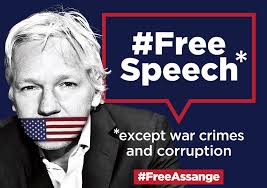
America’s Committee to Defend Australian citizen Julian Assange
|
A project of the Courage Foundation, the Assange Defense Committee is a national coalition fighting to free WikiLeaks founder Julian Assange. Comprising human rights defenders, press freedom advocates, civil liberties lawyers, and supporters across the United States, the Committee organizes public rallies, provides essential resources, and raises awareness about the unprecedented prosecution against Julian Assange and the threat it poses to the freedom of the press around the world. In supporting journalists’ right to publish, the Assange Defense Committee is upholding the public’s right to know what its government is doing in its name. Co-chairsThe Committee calls for Julian Assange’s immediate release, charges to be dropped, safe passage to the secure location of his choosing, and compensation for the psychological torture and arbitrary detention he has endured. Noam Chomsky Alice Walker Daniel Ellsberg Advisory BoardLeading journalists, lawyers, whistleblowers, and human rights defenders advising the Assange Defense Committee. See our supporters page for high-profile individuals and organizations who are standing up for Assange’s right to publish and your right to know………https://assangedefense.org/about/?fbclid=IwAR06__azOpLuMwwwNxlVcH2I3u7ZThlGnLHiVkhGmuX_HO-d4EDCo0N_fb0 |
|
Australia’s environmental scientists intimidated, silenced by threats of job loss
 Australia’s environmental scientists intimidated, silenced by threats of job loss, Michael West Media, by Elizabeth Minter | Jan 17, 2021 The silencing of environmental scientists, as revealed in a study late last year, profoundly damages our democracy, wastes taxpayers’ money, takes a huge personal toll, allows fake news to proliferate and short-changes the public. Elizabeth Minter reports.
“I declared the (action) unsafe. I was overruled and … was told to be silent or never have a job again.”
“We are often forbidden (from) talking about the true impacts of, say, a threatening process […] especially if the government is doing little to mitigate the threat.”
“I was directly intimidated by phone and Twitter by (a senior public servant).”
“… governments allow (industry) to treat data collected as commercial in confidence. This means experts most able to comment on the details of big mining and construction projects are hopelessly conflicted and legally gagged from discussing these projects in public.”
“(Government) staff are rewarded or penalized on the basis of complying with opinions of senior staff regardless of evidence.”
“I proposed an article in The Conversation about the impacts of mining […] The uni I worked at didn’t like the idea as they received funding from (the mining company).”
All in a day’s work
All these comments, straight from the mouths of some of Australia’s most esteemed scientists, highlight the threats faced by ecologists, conservation scientists, conservation policy makers and environmental consultants, whether they are working in government, industry or universities.
The scientists were responding to an online survey as part of a study conducted by academics Don Driscoll, Georgia Garrard, Alexander Kusmanoff, Stephen Dovers, Martine Maron, Noel Preece, Robert Pressey and Euan Ritchie. In an ironic twist, one of the research team’s initial members declined to contribute to the project for fear of losing funding and therefore their job.
As the study’s authors note, scientists self-censor information for fear of damaging their careers, losing funding or being misrepresented in the media. In others, senior managers or ministers’ officers prevented researchers from speaking truthfully on scientific matters.
This means important scientific information about environmental threats often does not reach the public or decision-makers, including government ministers. This information blackout, termed “science suppression”, can hide environmentally damaging practices and policies from public scrutiny.
Survey methodology……….
Ministers not receiving full information
Some 75% of the scientists surveyed reported having refrained from contributing to public discussion when given the opportunity – most commonly in traditional or social media. A small number self-censored conference presentations (9%) and peer-reviewed papers (7%).
For scientists working in government, the main reasons they didn’t comment was because of attitudes of senior management (82%), workplace policy (72%), a minister’s office (63%) and middle management (62%).
Fear of what would happen to their career prospects (49%) and concern about media misrepresentation (49%) also discouraged those working in government from speaking publicly.
Almost 60% of scientists working in government and 36% of scientists in industry reported that internal communications were modified…………
Critical conservation issues suppressed
The most common issue on which information was suppressed was threatened species. About half of industry and government scientists, and 28% of academics, said their commentary was constrained.
Scientists working in government also reported not being able to comment on logging and climate change…………..
The system is broken
Of those scientists who had spoken publicly about their research, 42% had been harassed or criticised for doing so. Of those, 83% believed the harassers were motivated by political or economic interests…….
Change is needed
As witnessed by the past four years of Donald Trump’s presidency, it has never been more important to ensure that the public are exposed to facts and information from trusted sources…….
The study was published late last year in Conservation Letters, a journal of the Society for Conversation Biology. https://www.michaelwest.com.au/australias-environmental-scientists-intimidated-silenced-by-threats-of-job-loss/
Profound questions raised by the employment tribunal case; bullying at Sellafield nuclear site?
 Byline Times 15th Jan 2021, An employment tribunal case that has been running for more than two yearshas started to raise profound questions over management at Europe’s
largest nuclear reprocessing plant, the ability of the employment tribunal
system to defend the rights of whistleblowers, ethical conduct by major law firms, and a conflict of interest at the Equality and Human Rights Commission.
The case of McDermott versus Sellafield, the Nuclear
Decommissioning Authority and former Sellafield HR director Heather Roberts
has been brought under the Public Interest Disclosure Act 1998 – also
known as the Whistleblowers’ Act. Alison McDermott, an HR professional
and diversity specialist, claims that the sudden termination of her
freelance contract in October 2018 by Sellafield was linked to her
protected disclosures containing evidence of systemic bullying, and racist
and sexist incidents at the Sellafield site in Cumbria.
”Small Modular Reactors”’- governments are being sucked in by the ”billionaires’ nuclear club”

SNC-Lavalin Scandal-ridden SNC-Lavalin is playing a major role in the push for SMRs.
Terrestrial Energy….. Terrestrial Energy’s advisory board includes Dr. Ernest Moniz, the former US Secretary of the Dept. of Energy (2013-2017) who provided more than $12 billion in loan guarantees to the nuclear industry. Moniz has been a key advisor to the Biden-Harris transition team, which has come out in favour of SMRs.
The “billionaires’ nuclear club” …“As long as Bill Gates is wasting his own money or that of other billionaires, it is not so much of an issue. The problem is that he is lobbying hard for government investment.”
Going after the public purse
Bill Gates was apparently very busy during the 2015 Paris climate talks. He also went on stage during the talks to announce a collaboration among 24 countries and the EU on something called Mission Innovation – an attempt to “accelerate global clean energy innovation” and “increase government support” for the technologies.
Gates’ PR tactic is effective: provide a bit of capital to create an SMR “bandwagon,” with governments fearing their economies would be left behind unless they massively fund such innovations.
governments “are being suckers. Because if Wall Street and the banks will not finance this, why should it be the role of the government to engage in venture capitalism of this kind?”
It will take a Herculean effort from the public to defeat this NICE Future, but along with the Assembly of First Nations, three political parties – the NDP, the Bloc Quebecois, and the Green Party – have now come out against SMRs.
|
Mini-Nukes, Big Bucks: The Interests Behind the SMR Push https://watershedsentinel.ca/articles/mini-nukes-big-bucks-the-money-behind-small-modular-reactors/
It’s remarkable that only five years ago, the National Energy Board predicted: “No new nuclear units are anticipated to be built in any province” by 2040.So what happened? The answer involves looking at some of the key influencers at work behind the scenes, lobbying for government funding for SMRs. |

An act of love — Beyond Nuclear International

Courts threaten freedom of Russian nature protector
An act of love — Beyond Nuclear International
Lyubov Kudryashova loves nature. Now she may be jailed for defending it
By Jack Cohen-Joppa
In Russian, her name means love. And it’s true. Lyubov Kudryashova loves the broad valley of Russia’s Tobol River, where it meanders out of Kazakhstan into the Kurgan Oblast. Her grandfather is buried there, she was born there, and she’s raised three sons there. As far as she knows, her ancestors have always lived there.
There, below the southern Urals, frigid continental winters give way to spring floods that inundate a landscape of oxbow lakes, wetlands, forests and fields. The waters sustain a large aquifer that Russia recognizes as a strategic reserve of fresh water.
“We, native people of the land, are against a barbaric attitude towards nature,” she says. “But our voices are too low.”
Which is why the passion of this campaigning environmentalist and entrepreneur has been met with fabricated charges of encouraging terrorism via the internet. She’s now on trial in a military court in Yekaterinburg, six hours away from her small town.
But Lyubov Kudryashova will not be spurned. “My ecological activity is going to continue. Well, I guess till the day the unjust court could takes away my freedom.”
In 2017, the government awarded an operating license for borehole leeching of uranium to Dalur, a uranium mining subsidiary of the Russian state nuclear agency Rosatom. The license to tap the Dobrovolnoye deposit around the village of Zverinogolovskoye condemned the very farmland Kudryashova’s father managed when she would accompany him as a child.
Dalur has two other leaky in-situ uranium projects in the Kurgan.
Many Tobol Valley residents feared environmental disaster when they learned that hundreds of exploratory wells would be drilled through the aquifer into the mineral deposit lying beneath it, without any public environmental review. Borehole leeching would eventually involve drilling thousands of wells and the injection of a million tons of sulfuric acid over 20-30 years, then withdrawing the dissolved minerals and chemically extracting the uranium.
Several times, activists tried to start a referendum and demand an independent environmental review, but met only refusals from the local officials.
Last fall, environmentalists surveyed some of Dalur’s other boreholes in Kurgan and documented much higher radiation levels than permitted. Despite the concerns, construction began on an in-situ leaching pilot plant and the huge clay-lined “mud pits” needed to receive the massive volume of toxic, acidified sludge produced in the process.
Beginning in 2017, Kudryashova was involved in the legal case against the Russian Federation over its refusal to conduct an environmental impact assessment before awarding the license to develop the mine.
That year, she also co-founded the Public Monitoring Fund for the Environmental Condition and the Population Welfare with the regional branch of the Communist Party of the Russian Federation. One month later, a judge of the Kurgan Regional Court issued an order giving the Russian Federal Security Service (FSB) authority to wiretap her telephone.
The Fund publishes information on the environmental impact of Dalur’s mining activity. Kudryashova writes, “Shortly after the completion of the case in the Supreme Court of the Russian Federation and the registration of the environmental fund, a hidden judgment of another court was rendered that allowed the FSB to begin wiretapping my phone and, I believe, begin to look for fictitious crimes in order to stop my work.
“I guess money is more important than the radioactive contamination of land,” she observed.
So it was that on January 29, 2019, armed men led by an FSB captain broke into her family’s home and spent the day searching it. That summer the FSB got a local court to involuntarily commit Kudryashova to the Kurgan District Psychiatric Hospital for most of the month of July. She was kept from speaking with family or others outside without permission of the agency.
Then in March 2020, the FSB charged Kudryashova with 12 counts of “public justification of terrorism using the Internet” based on a specious forensic analysis of posts on the social network VKontakte, which, according to Kudryashova, never belonged to her page. The actual source of those posts remains unknown because the protocol and the DVD-R capturing those posts show evidence of fabrication and forgery. And at the most recent session of her trial in late December, a CD-R the defense had presented to the court for evidence was found to have been erased by an FSB operative.
Prosecutors say she advocated for violent overthrow of the constitutional order by re-posting memes with such seditious phrases as, “The fate of Russia is determined by each of us, what you personally or I do, then Russia will. A correct position can only be revolutionary” and “If the nation is convinced that the ruling power in the state is directed not at the development of its cultural, economic and other needs, but, on the contrary, at trampling them, then it is not only the right, but also the duty of the nation to overthrow that power and establish one corresponding to the national interests of the people.”
Kudryashova writes, “Nonviolent ecological activism, in the understanding of the rulers of my country, is a crime. That’s why prisons are full of people who wanted to protect nature, but those who harmed it are free… Ecological crimes against present and future generations are not subject to the judgement of a military court.
“I’m 55 years old and my life is not as important as the preservation of nature. My duty and responsibility are to make a small contribution in a great cause — to stop violence against nature and people. The price of atomic energy is the life of future generations.”
Her trial is in the Central District Military Court of Yekaterinburg, where the next hearing is scheduled for 28-29 January, 2021. Agora International Human Rights Group and the Memorial civil rights society in Russia have provided an attorney and other support for Kudryashova.
Letters in support of Lyubov Kudryashova and seeking dismissal of the charges against her should be addressed to the chair of the court collegium examining the case, Judge Sergei Gladkih, st. Bazhova 85, Yekaterinburg, Russia 62005, or by email to opo.covs.svd@sudrf.ru. Refer to Case №: 2-42/2020, Lyubov Kudryashova.
Jack Cohen-Joppa is the co-editor of The Nuclear Resister, the co-founder of the eponymous organization and co-winner with Felice Cohen-Joppa of the 2020 Nuclear Free Future Award in the category of Education.
Judge’s refusal to extradite Julian Assange is still part of cowardly process to deny freedom of information
The personal conveniently distracts from the political in the Assange story, https://www.theage.com.au/national/the-personal-conveniently-distracts-from-the-political-in-the-assange-story-20210107-p56siu.html
Elizabeth Farrelly Judge Vanessa Baraitser’s refusal to extradite Julian Assange for “mental health” reasons may look humanitarian but is in fact a deft political move. In reducing what should be an argument of law and principle to a test of personality, Baraitser managed at a blow to impugn Assange’s stability, repudiate any suggestion of innocence and open the door for America to prove the comforts of its solitary confinement and thereby win his extradition.
It’s a story of many twists and turns but underlying it throughout is a profound and widespread moral cowardice.
Baraitser’s 132-page ruling found that although the UK-US Extradition Treaty of 2003 specifically prohibits extradition for “political offence”, this provision never became law in the UK and therefore has no effect. In essence, the treaty is worthless.
The court also supported all 18 of the espionage charges against Assange, arguing that WikiLeaks’ hacking and publication “would amount to” offences in English law. Baraitser identified eight charges under the UK Official Secrets Act that would be, she said, equivalent.
Interestingly, this “would have” construction does not apply to the treaty question. Had Assange engaged in the same conduct in America, targeting British government information, he could not have been extradited because America’s “monist” system regards any treaty as law once signed. So it’s ironic that undermining this particular protection is a key US argument.
Anyone who saw the 2019 docudrama Official Secrets, chronicling the leakage by GCHQ analyst-turned-whistleblower Katharine Gun of information on US-UK dirty dealing in drumming up UN support for the Iraq war, will understand just how murky and terrifying such prosecutions can become.
This fear, and the persistent cowardice of yielding to it, is the theme of Assange’s story. I’ve written about Assange several times. I visited him in Ecuador’s embassy. Yet each time, I’ve found myself reluctant.
Seven years ago, when I met him, Assange was ebullient and hopeful, even funny. Now, as Baraitser says, he is “a depressed and sometimes despairing man who is genuinely fearful about his future”. Assange, she said, was at “high risk of serious depression leading to suicide if he were to be extradited and placed in solitary confinement for a long period”.
Baraitser noted the “bleak” conditions of Assange’s likely US confinement would include “severely restrictive detention conditions designed to remove physical contact and reduce social interaction and contact with the outside world to a bare minimum”, with family limited to one supervised 15-minute phone call a month. Detailing Assange’s mental state, she opined that his risk of suicide, in such conditions, was “very high”. This is the loophole she offers the appellant US prosecutor.
Those fears – his of 175 years in solitary (honestly, who wouldn’t top themselves?) and hers of his suicide – underpin her judgment. But there are other, more insidious fears at play here.
Such fears, I see now, feed my reluctance to revisit the Assange story: fear, in particular, of confronting the terrifying truth about our imperial system. Regardless of Assange’s innocence or guilt, the simple facts of what our controlling powers can do to you if you step out of line are terrifying.
But this small, individual fear also operates, very effectively, at nation level.
From the start, the case against Assange has contrived to turn issues of principle into questions of personality. The initial Swedish rape charges, since dropped for lack of evidence as the witness’s recollections after so long were clouded, were extremely personal, spinning off the cancellation of his credit cards upon his arrival in Stockholm, forcing him to accept hospitality; the seductions, the sex – which everyone agrees was consensual – his failure to wear a condom although asked and reluctance to take an STD test. Then the left turned against him because of the Clinton leaks – which one suspects would have been fine, had they been directed at the other side – and perceptions about Assange’s ego. He was vain, it was said, and narcissistic. As if that itself were a crime, reason enough to let him rot in solitary.
The personal and emotive nature of all this – the Swedish prosecutor’s refusal to interview him in London, Britain’s willingness to imprison him for a year on bail charges, America’s determination to prosecute him for exposing their war crimes (in the Iraq War Logs of October 2010 and the film Collateral Murder showing air crew shooting unarmed civilians from a helicopter) and the description of WikiLeaks by US Secretary of State Mike Pompeo as “a hostile non-state intelligence service” – all suggest a bigger picture, and smaller values, than mere truth or justice.
It’s often said that Assange endangered the lives of US informers but, as Baraitser notes, no causality has been shown. Even the Senate Committee on Armed Service said, “the review to date has not revealed any sensitive sources and methods compromised by disclosure”. It is said that Assange, by dumping hacked emails from Hillary Clinton’s campaign, gave us Trump. But if she was engaged in skulduggery as alleged, wasn’t it better for the world to make its own judgment?
When you look coldly at the facts it’s hard not to suspect that Sweden was coerced into the original charges and that Britain and Ecuador have been similarly pressured. Certainly Australia’s persistent refusal to intervene for Assange, an Australian citizen who has broken no Australian law, suggests a similar abject timidity in the face of US might.
That’s the fear that guys like Assange and Edward Snowden make us confront. And it’s why they deserve, at the very least, a fair and open trial.
Government control over nuclear and radiation information; firing of sociologist Christine Fassert

 Le Monde 6th Jan 2021, Nuclear researchers worried after Fukushima specialist fired. The Institute for Radiation Protection and Nuclear Safety (IRSN) firmly denies having fired sociologist Christine Fassert because of the results of her work.
Is the independence of nuclear social science research weakened? After the dismissal of Christine Fassert by the Institute for Radiation Protection and Nuclear Safety (IRSN), a dozen French and foreign researchers are worried about a “resumption of control” over the production of nuclear knowledge, in a column in the World published Wednesday January 6.
Australia’s Prime Minister Scott Morrison could stop the persecution of Australian citizen Julian Assange
|
Rex Patrick, Independent senator, January 5, 2021 A British judge has rejected the US Justice Department’s effort to have Wikileaks publisher Julian Assange extradited to the United States to face espionage charges for obtaining and publishing secret documents that revealed war crimes. The decision of Judge Vanessa Baraitser to deny the extradition request has given Assange an important legal victory in his efforts to avoid extradition for actions many would regard as inherent to media freedom – the right of journalists to obtain and publish information and to protect confidential sources. However, in her ruling Judge Baraitser dismissed the arguments of Assange’s lawyers in relation to these matters, saying she was satisfied that the American authorities made their extradition request in good faith, that the case was not politically driven, and that Assange was not merely acting as a journalist. |
|

Australian government hypocrisy about its small nuclear reactor deal with China
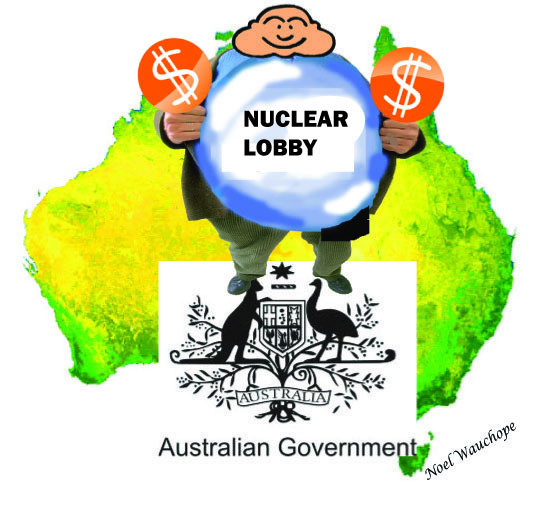
Double standards on research cooperation with China, Independent Australia 4 January 2021, The Government is hypocritical in its approval of Australia’s nuclear research body to work with China on the development of nuclear reactors, writes Noel Wauchope.
PRIME MINISTER Scott Morrison’s Liberal Coalition Government seems to remain in silent approval of the Australian Nuclear Science and Technology Organisation’s (ANSTO) partnership with a Chinese company to develop Generation IV nuclear technologies such as small nuclear reactors.
But it’s a different story when it comes to the Morrison Government’s concern to put a stop to the Victorian Labor Government’s cooperation with China in developing agricultural, communications and medical research.
We hear very little about the Australian Government’s research connections with China, managed under the Australia-China Science and Research Fund (ACSRF), which has the aim of ‘supporting strategic science, technology and innovation collaboration of mutual benefit to Australia and China’.
One remarkable collaboration between Australia and China is in the strategic partnership between ANSTO and the Shanghai Institute of Applied Physics (SINAP) to develop the Thorium Molten Salt Nuclear Reactor (TMSR) and other Generation IV nuclear reactor designs.
In March 2019, Dr Adi Paterson, then CEO of ANSTO, welcomed renewal of this agreement and was reported as stating that it was “consistent with ANSTO and Australia’s interest in and support of Generation IV reactor systems”. This statement was made at a time when Australia’s federal and state laws clearly prohibited the development of nuclear reactors.
The Age quoted anonymous senior Federal Government sources who reveal that the Australian Government may use its powers to tear up a research agreement between the Victorian Government and China’s Jiangsu province. This agreement was signed in 2012 and renewed in 2019……….
The USA partly funds the Australian Strategic Policy Institute, which strongly advises against cooperative research with China. And, of course, Victorian Liberal Opposition leader Michael O’Brien was quick to join in the chorus, condemning the Labor Government for having the deal with China.
All this makes it all the more inexplicable as to why the Australian Government should have an agreement with China to develop nuclear reactors. Under federal law, Australia prohibits establishing nuclear installations. ……..
There has been virtually no media coverage of Dr Adi Paterson’s deal with China, which goes back to 2015. I have previously written about this and the secrecy under which it was conducted.
Indeed, ANSTO’s operations and its funding have been conducted in secrecy, under the comfortable shroud of national security.
Right now, there is a move to corporatise the nuclear medicine facility at Lucas Heights as a separate entity to ANSTO. At the same time, the Government is in an unseemly rush to set up a nuclear waste dump near Kimba in South Australia. In the midst of all this came the sudden unexplained resignation of the CEO, Dr Adi Paterson.
The silence on all this is disturbing. It must be especially so for the small rural community of Kimba and for the Indigenous Title Holders as they wait in limbo for the vexed question of the nuclear waste dump to be solved. For the rest of South Australia, that is a concern, too. Victorians may well wonder why their medical research cooperation with China is seen as so dangerous. Meanwhile, is it okay for Australia’s nuclear research body, ANSTO, to work with China on the development of small nuclear reactors? https://independentaustralia.net/politics/politics-display/double-standards-on-research-cooperation-with-china,14664
Legal case on extradition of Julian Assange an alarming precedent for freedom of speech

|
Assange hearing outcome could set an “alarming precedent” for free speech https://www.indexoncensorship.org/2020/12/assange-hearing-outcome-could-set-an-alarming-precedent-for-free-speech/Benjamin Lynch, 2 Jan 2021, People need to “forget what they think they know” about WikiLeaks founder Julian Assange and recognise that if he is extradited to the USA, it would set a worrying precedent for media freedom. We speak to his partner about the case. Assange’s partner, Stella Moris, is remaining resolute despite his extradition hearing decision being less than a month away and him being held in a prison that has recently had a Covid-19 outbreak.
Speaking over the phone to Index, Moris discusses the hearing’s details and what it could mean for the future of freedom of expression. And she talks about the deep implications it has had for her and her young family. “Obviously it is very difficult. I speak to Julian on a daily basis unless there is a problem. [But] he is in prison. Soon to be for two years. He has been there for longer than many violent prisoners who are serving sentences. All in all, he has been deprived of his liberty for ten years now,” she told Index. She adds: “The kids speak to their father every day; we try to normalise it as much as we can for them. But of course, this is not a normal situation and our lives are on hold. It is inhumane and shouldn’t be happening in the UK.” The current hearing – which will decide whether there are grounds for Assange to stand trial in the USA – should reach a conclusion on 4 January. A trial in the USA (should the decision go against Assange) will have major ramifications for free speech and whistleblower journalism. The WikiLeaks founder is charged with conspiring with US intelligence analyst Chelsea Manning and hackers from groups such as Anonymous and LulzSec to obtain and publish classified information. Each of the 18 charges laid by US authorities, if Assange is extradited and convicted, carry a maximum penalty of 10 years. The allegations brought forward under the 1917 Espionage Act, alongside one other under the Computer Fraud and Abuse Act, mean Assange could face up to 175 years in prison – effectively a life sentence. Manning was initially sentenced to 35 years, but under the Obama administration her sentence was commuted to less than seven years. It is easy to get sidetracked about the current extradition hearing and get into arguments about whether Assange is a journalist, whether he is guilty of other crimes or whether the publication of the documents brought harm to anyone involved. Instead people’s attentions should focus on the precedent that will be set should the case go to trial in the USA. As it stands the case is unprecedented. No publisher has ever been tried under the Espionage Act, which itself was essentially created for spies imparting official secrets either for profit or otherwise. This is perhaps a direct contradiction of rulings of the courts in the UK. In December 2017, the UK’s information tribunal recognised WikiLeaks as a media organisation, in direct contradiction to the view of the US State Department. Australia’s media union, the Media, Arts and Entertainment Alliance, also presented an honorary member card to Assange’s Melbourne-based lawyer. Amidst the noise of the separate matters around the case, Moris insists people need to “forget what they think they know” and assess the issues involved. “There are a lot of assumptions being made over what this case is really about. There are all these sideshows. It is not about people being harmed because the US has admitted it has no evidence to make this argument. It comes down to the fact that the material published was classified. People who care about free speech and press freedom need to forget what they think they know about this case and look at it afresh and understand Julian is in prison for publishing. This is not something that democracies do.” “Are they saying what he published was not in the public interest? They say that is irrelevant. They can’t deny [what he published] wasn’t in the public interest because he was publishing information and evidence of state crimes, of state abuse, torture, of rendition, blacksites and of illegal killings. What they are arguing is that Julian published information that was secret and therefore he can be prosecuted over it.” ournalists publishing secret information is not new (nor is pressure for them not to publish) and can often be key to upholding democracy and ensuring states act properly. The Watergate revelations relied heavily on news organisations pressing on with publication despite attempts by the USA to stop them, including the threat of jail time. It proved a significant victory for free speech. If Assange is extradited and tried the case will impact journalists and the media “for years to come”, says Rebecca Vincent, director of international campaigns at Reporters Without Borders (RSF). “It feels like many in the media do not see the implications of this case as something that will possibly affect them,” she told Index. “This case will have ramifications on the climates for journalism and press freedom internationally for years to come.” “This is the first time we have seen the US government prosecute anybody for publishing leaked information. If they are successful, they will not stop with Assange and WikiLeaks. This could be applied, in theory, to any media outlet.” It’s common for journalists and publishers to cite a public interest defence for disputed documents. It is a centrepiece of a defence case against libel, for instance. “The information published was certainly in the public interest; it served to inform extensive public interest reporting that exposed war crimes and other illegal actions by states,” said Vincent. “The Espionage Act lacks a public interest defence. He cannot use it if he is sent to the United States and tried.” Essentially, what this means is that Assange is being treated as a spy not a publisher. If Assange is extradited and loses his case against the US government, any time classified information is published by a journalist there will be a precedent set that they can be charged and tried as a spy in the same way. “These sorts of cases are really highlighting the need for more robust legislation that cannot be manipulated to be used against journalists, whistleblowers and other sources. Ultimately, it is the public’s right to access information that is being impacted,” Vincent added. “You can see this for what it is; this very much feels like a political prosecution by states that are not meant to engage in this behaviour. The reason our states can get away with this is because of a lack of public pressure. A lack of public sympathy has resulted in a lack of widespread public pressure to hold our governments to account.” |
|
How a Soviet spy helped to avoid nuclear war
|
When a Soviet spy helped avert nuclear war Tim Rowland, HM Media, 2 Jan 2021,
……..December also marked the passing of George Blake, a spy who kept the Soviets abreast of just about everything the West was doing during the hottest years of the Cold War. ……
In Blake, the KGB knew what they had. As a prisoner in North Korea, he later said he was driven into the arms of the Communists after watching American bombers destroy villages and the civilians who lived in them. ………..
……..At a time of high tension, its intelligence showed the West that the Soviets were not interested in launching a first-strike nuclear attack. Blake had showed the Soviets that this aversion to war was shared by the West. It may have been just enough assurance, in times of high tension, to keep everyone’s missiles in their silos. As dysfunctional as the profession at times could seem, the spies had done their job. https://www.heraldmailmedia.com/opinion/tim_rowland/when-a-soviet-spy-helped-avert-nuclear-war/article_4b527a8b-67f3-5d70-9a71-d5e78743853b.html
|
|
Glenn Greenwald: Julian Assange’s Imprisonment Exposes U.S. Myths About Freedom
|
Glenn Greenwald: Julian Assange’s Imprisonment Exposes U.S. Myths About Freedom The real measure of how free is a society is not how its mainstream, well-behaved ruling class servants are treated, but the fate of its actual dissidents. By Glenn Greenwald January 2, 2021
Persecution is not typically doled out to those who recite mainstream pieties, or refrain from posing meaningful threats to those who wield institutional power, or obediently stay within the lines of permissible speech and activism imposed by the ruling class. Those who render themselves acquiescent and harmless that way will — in every society, including the most repressive — usually be free of reprisals. …….. Those who do not seek to meaningfully dissent or subvert power will usually deny — because they do not perceive — that such dissent and subversion are, in fact, rigorously prohibited. They will continue to believe blissfully that the society in which they live guarantees core civic freedoms — of speech, of press, of assembly, of due process — because they have rendered their own speech and activism, if it exists at all, so innocuous that nobody with the capacity to do so would bother to try to curtail it………..
powerful officials in Washington can illegally leak the most sensitive government secrets and will suffer no punishment, or will get the lightest tap on the wrist, provided their aim is to advance mainstream narratives. ……..
those like Julian Assange who publish similar secrets but against the will of those elites, with the goal and outcome of exposing (rather than obscuring) ruling class lies and impeding (rather than advancing) their agenda, will suffer ………..
the ongoing imprisonment of Julian Assange not only a grotesque injustice but also a vital, crystal-clear prism for seeing the fundamental fraud of U.S. narratives about who is free and who is not, about where tyranny reigns and where it does not.
Assange has been imprisoned for almost two years. He was dragged out of the Ecuadorian Embassy in London by British police on April 11, 2019. That was possible only because the U.S., U.K. and Spanish governments coerced Ecuador’s meek President, Lenin Moreno, to withdraw the asylum extended to Assange seven years earlier by his staunch sovereignty-defending predecessor, Rafael Correa. The U.S. and British governments hate Assange because of his revelations that exposed their lies and crimes, ………
Assange is not currently imprisoned because he was convicted of a crime. Two weeks after he was dragged out of the embassy, he was found guilty of the minor offense of “skipping bail” and sentenced to 50 weeks in prison, the maximum penalty allowed by law. He fully served that sentence as of April of this year, and was thus scheduled to be released, facing no more charges. But just weeks before his release date, the U.S. Justice Department unveiled an indictment of Assange arising out of WikiLeaks’ 2010 publication of U.S. State Department diplomatic cables and war logs that revealed massive corruption by numerous governments, Bush and Obama officials, and various corporations around the world. That U.S. indictment and the accompanying request to extradite Assange to the U.S. to stand trial provided, by design, the pretext for the British government to imprison Assange indefinitely.
A judge quickly ruled that Assange could not be released on bail pending his extradition hearing, but instead must stay behind bars while the U.K. courts fully adjudicate the Justice Department’s extradition request. No matter what happens, it will takes years for this extradition process to conclude because whichever side (the DOJ or Assange) loses at each stage (and Assange is highly likely to lose the first round when the lower-court decision on the extradition request is issued next week), they will appeal, and Assange will linger in prison while these appeals wind their way very slowly through the U.K. judicial system. …..
Assange will be locked up for years without any need to prove he is guilty of any crime. He will have been just disappeared: silenced by the very governments whose corruption and crimes he denounced and exposed. Those are the same governments — the U.S. and U.K. — that sanctimoniously condemn their adversaries (but rarely their repressive allies) for violating free speech, free press and due process rights. These are the same governments that succeed — largely due to a limitlessly compliant corporate media that either believes the propaganda or knowingly disseminates it for their own rewards — in convincing large numbers of their citizens that, unlike in the Bad Countries such as Russia and Iran, these civic freedoms are guaranteed and protected in the Good Western Countries.
. (The ample evidence showing that the indictment of Assange is the single gravest threat to press freedoms in years, and that the arguments mounted to justify it are fraudulent, has been repeatedly documented by myself and others, so I will not rehash those discussions here………. https://wordpress.com/read/feeds/34005311/posts/3108045730
|
|
|
Joe Biden must end the cover-up of, and the huge money to, Israel’s nuclear weapons
|
Joe Biden should end the US pretence over Israel’s ‘secret’ nuclear weapons, Guardian, Desmond Tutu, 1 Jan 2021

The cover-up has to stop – and with it, the huge sums in aid for a country with oppressive policies towards Palestinians Desmond Tutu is a Nobel peace laureate and a former archbishop of Cape Town Every recent US administration has performed a perverse ritual as it has come into office. All have agreed to undermine US law by signing secret letters stipulating they will not acknowledge something everyone knows: that Israel has a nuclear weapons arsenal. Part of the reason for this is to stop people focusing on Israel’s capacity to turn dozens of cities to dust. This failure to face up to the threat posed by Israel’s horrific arsenal gives its prime minister, Benjamin Netanyahu, a sense of power and impunity, allowing Israel to dictate terms to others. But one other effect of the US administration’s ostrich approach is that it avoids invoking the US’s own laws, which call for an end to taxpayer largesse for nuclear weapons proliferators. Israel in fact is a multiple nuclear weapons proliferator. There is overwhelming evidence that it offered to sell the apartheid regime in South Africa nuclear weapons in the 1970s and even conducted a joint nuclear test. The US government tried to cover up these facts. Additionally, it has never signed the nuclear non-proliferation treaty. Yet the US and Israeli governments pushed for the invasion of Iraq based on lies about coming mushroom clouds. As Israeli nuclear whistleblower Mordechai Vanunu said: the nuclear weapons were not in Iraq – they are in Israel. Amendments by former Senators Stuart Symington and John Glenn to the Foreign Assistance Act ban US economic and military assistance to nuclear proliferators and countries that acquire nuclear weapons. While president, Jimmy Carter invoked such provisions against India and Pakistan. But no president has done so with regard to Israel. Quite the contrary. There has been an oral agreement since President Richard Nixon to accept Israel’s “nuclear ambiguity” – effectively to allow Israel the power that comes with nuclear weapons without the responsibility. And since President Bill Clinton, according to the New Yorker magazine, there have been these secret letters……… This farce should end. The US government should uphold its laws and cut off funding to Israel because of its acquisition and proliferation of nuclear weapons. The incoming Biden administration should forthrightly acknowledge Israel as a leading state sponsor of nuclear proliferation in the Middle East and properly implement US law. Other governments – in particular South Africa’s – should insist on the rule of law and for meaningful disarmament, and immediately urge the US government in the strongest possible terms to act……… https://www.theguardian.com/commentisfree/2020/dec/31/joe-biden-us-pretence-israel-nuclear-weapons |
|
Cover-up! how consumers will be forced to pay for cost-overruns for Sizewell C nuclear construction
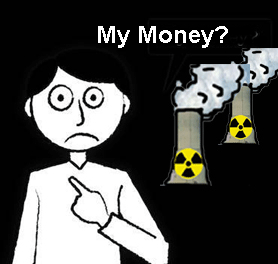 Cover-up! how consumers will be forced to pay for cost-overruns for Sizewell C construction, https://100percentrenewableuk.org/cover-up-how-consumers-will-be-forced-to-pay-for-cost-overruns-for-sizewell-c-construction–by David Toke, 30 Dec 20, In a historic change of policy the Conservatives have announced that consumers, not EDF, will pay for cost overruns in building Sizewell C. The crucial phrase in the Government’s document on the so-called ‘Regulated Asset Base’ (RAB) model is ‘Cost overruns that were not excluded from the RAB would be shared between investors and consumers through suppliers’ (para 47 page 14). Note: ‘consumers’ means electricity consumers who will have to pay twice for Sizewell C; extra on their bills long before any power is generated and for many years after generation begins. Cover-up! how consumers will be forced to pay for cost-overruns for Sizewell C construction, https://100percentrenewableuk.org/cover-up-how-consumers-will-be-forced-to-pay-for-cost-overruns-for-sizewell-c-construction–by David Toke, 30 Dec 20, In a historic change of policy the Conservatives have announced that consumers, not EDF, will pay for cost overruns in building Sizewell C. The crucial phrase in the Government’s document on the so-called ‘Regulated Asset Base’ (RAB) model is ‘Cost overruns that were not excluded from the RAB would be shared between investors and consumers through suppliers’ (para 47 page 14). Note: ‘consumers’ means electricity consumers who will have to pay twice for Sizewell C; extra on their bills long before any power is generated and for many years after generation begins.The RAB document was produced alongside the Government’s new Energy White Paper. This should be compared to the Government position in the 2011 White Paper which stated that ‘new nuclear stations should receive no public support unless similar support is available to other low-carbon technologies’. (page 8) Under the Government’s RAB proposals it is claimed that clear criteria are going to be set for what cost overruns will be payable by the consumer and what by the developer, with the outcomes carefully monitored by a ‘Regulator’. But of course once the construction juggernaut for Sizewell C starts rolling where information, not to mention armies of lawyers and hired consultants of various sorts, will be controlled by EDF, I do not seriously believe that EDF will be stopped from passing on virtually whatever costs it wants to pass on to the consumer. It is not even certain that the ‘Regulator’ will be able to stop costs of building (the still uncompleted) Hinkley C being passed onto the consumer through the books assigned to Sizewell C- that is given that workers are likely to be switched from one operation to the other. In other words, it is a blank cheque for EDF for a power plant that is not only unnecessary but which will actually cause large quantities of renewable energy to be wasted because of nuclear power’s inflexible operation (see our report on this). In effect not just consumers but renewable energy operators will be paying for the cost-overruns of building Sizewell C. Laughingly, in a world where no (at least western) nuclear power plant has been attempted this century without massive construction cost overruns being generated, the RAB document talks about ‘low probability risks such as cost overruns above a certain threshold’ (page 12). In the case of Hinkley C the cost overruns are mounting already. The most charitable explanation for the RAB document is that Treasury officials are allowing themselves to be engaged in an exercise of self-deception in order to launder a policy that if stated plainly would be deemed politically unacceptable. Reading between the lines of the RAB document and the Energy White Paper itself, the only substantial barrier stopping EDF being handed a blank cheque contract is the payment that EDF would receive for electricity generated. The White Paper says ‘We expect the sector to deliver the goal it set for itself in our Nuclear Sector Deal, published in 2018, to reduce the cost of nuclear new build projects by 30 per cent by 2030’ (page 49). So in other words the Treasury wants EDF to accept less than £65 per MWh in 2012 prices. (2012 prices, the year in which Hinkley C’s contract was priced is the funny money basis for electricity contracts these days!). Obviously EDF wants more, but with the RAB mechanism it may not need more. This is because RAB mechanism is a piece of political jelly that will allow any nuclear developer to offer to complete Sizewell C for a low sum when in reality British electricity consumers will pay for what will be called ‘cost overruns’ over and above such a figure. The RAB mechanism is a flexible political device that allows Sizewell C to be built regardless of cost realities. It is an act of public manipulation and mystification worthy of the best traditions of ‘Yes Minister’. But even so these plans are likely to cause mounting opposition when consumers realise they are likely to have to start paying extra on their bills without getting any electricity in return. Then they will have to pay extra again for the power when (evenutally) it does start being generated. Professor Tom Burke, the founding Director of E3G commented: ‘Constructing Sizewell will cost just over £20 billion. If EDF borrow this money it will double the cost to over £40 billion. EDF is negotiating with the government to make consumers pay the construction cost in advance by a levy on everyone’s energy bills. They will then have to pay again for the electricity which will still be more expensive than that from renewables.’ In effect consumers will have to pay twice for the project – first for several years before the plant has generated anything, and then again for up 40 years afterwards.
|
|
|
Avril Haines is unfit for Director of National Intelligence, with her history of coverup of tortures.
|
The Trouble With Avril Haines for Intelligence, December 29, 2020 Biden’s nominee is a drone assassin who played a key role in covering up the U.S. torture program, Consortium News, By Medea Benjamin and Marcy Winograd
World BEYOND War Even before President-Elect Joe Biden sets foot in the White House, the Senate Intelligence Committee may start hearings on his nomination of Avril Haines as director of national Intelligence. President Barack Obama’s top lawyer on the National Security Council from 2010 to 2013 followed by CIA deputy director from 2013 to 2015, Haines is the proverbial wolf in sheep’s clothing. She is the affable assassin who, according to Newsweek, would be summoned in the middle of the night to decide if a citizen of any country, including our own, should be incinerated in a U.S. drone strike in a distant land in the greater Middle East. Haines also played a key role in covering up the U.S. torture program, known euphemistically as “enhanced interrogation techniques,” which included repeated water boarding, sexual humiliation, sleep deprivation, dousing naked prisoners with ice cold water and rectal rehydration. For these reasons, among others, the activist groups CODEPINK, Progressive Democrats of America, World Beyond War and Roots Action have launched a campaign calling on the Senate to reject her confirmation. These same groups ran successful campaigns to dissuade Biden from choosing two other warmongering candidates for critical foreign policy positions: China-hawk Michele Flournoy for secretary of defense and torture apologist Mike Morell for CIA director. By hosting calling parties to senators, launching petitions and publishing open letters from DNC delegates, feminists—including Alice Walker, Jane Fonda and Gloria Steinem—and Guantanamo torture survivors, activists helped derail candidates who were once considered shoo-ins for Biden’s cabinet. Now activists are challenging Avril Haines. In 2015, when Haines was CIA deputy director, CIA agents illegally hacked the computers of the Senate Intelligence Committee to thwart the committee’s investigation into the spy agency’s detention and interrogation program. Haines overruled the CIA’s own inspector general in failing to discipline the CIA agents who violated the U.S. Constitution’s separation of powers. According to former CIA whistleblower John Kiriakou, she not only shielded the hackers from accountability but even awarded them the Career Intelligence Medal. Redacting Role And there’s more. When the exhaustive 6,000-page Senate Intelligence Committee report on torture was finally complete, after five years of investigation and research, Haines took charge of redacting it to deny the public’s right to know its full details, reducing the document to a 500-page, black-ink-smeared summary. This censorship went beyond merely “protecting sources and methods.” It avoided CIA embarrassment, while ensuring her own career advancement. Moreover, Haines supported torture apologist Gina Haspel as Trump’s CIA director. Haspel ran a secret black site prison in Thailand where torture was regularly inflicted. Haspel also drafted the memo ordering the destruction of almost 100 videotapes documenting CIA torture. As David Segal of Demand Progress told CNN, “Haines has an unfortunate record of repeatedly covering up for torture and torturers. Her push for maximalist redactions of the torture report, her refusal to discipline the CIA personnel who hacked the Senate and her vociferous support for Gina Haspel — which was even touted by the Trump White House as Democrats stood in nearly unanimous opposition to the then-nominee to lead the CIA — should be interrogated during the confirmation process.” This sentiment was echoed by Mark Udall, a Democratic senator on the intelligence committee when it finished the torture report…………….. Empty Words on Paper Haines’s policy guidance also states that the U.S. would respect other states’ sovereignty, only undertaking lethal action when other governments “cannot or will not” address a threat to the U.S. This, too, became simply empty words on paper. The U.S. barely even consulted with the governments in whose territory it was dropping bombs and, in the case of Pakistan, openly defied the government. In December 2013, the National Assembly of Pakistan unanimously approved a resolution against U.S. drone strikes in Pakistan, calling them a violation of “the charter of the United Nations, international laws and humanitarian norms” and Pakistan’s former Prime Minister Nawaz Sharif stated: “The use of drones is not only a continual violation of our territorial integrity but also detrimental to our resolve and efforts at eliminating terrorism from our country.” But the U.S. ignored the pleas of Pakistan’s elected government……………. There are many other reasons to reject Haines. She advocates intensifying crippling economic sanctions on North Korea that undermine a negotiated peace, and “regime change”—hypothetically engineered by a U.S. ally — that could leave a collapsed North Korea vulnerable to terrorist theft of its nuclear material; she was a consultant at WestExec Advisors, a firm that exploits insider government connections to help companies secure plum Pentagon contracts; and she was a consultant with Palantir, a data-mining company that facilitated Trump’s mass deportations of immigrants. But Haines’ record on torture and drones, alone, should be enough for senators to reject her nomination. The unassuming spy — who got her start at the White House as a legal adviser in the Bush State Department in 2003, the year the U.S. invaded Iraq—might look and sound more like your favorite college professor than someone who enabled murder by remote control or wielded a thick black pen to cover up CIA torture, but a clear examination of her past should convince the Senate that Haines is unfit for high office in an administration that promises to restore transparency, integrity, and respect for international law……… https://consortiumnews.com/2020/12/29/the-trouble-with-avril-haines-for-intelligence/ |
|
1 This Month



26 September – International Day for the Total Elimination of Nuclear Weapons


PLEASE OPPOSE HR 8255 AND S.3639 – bills would accelerate satellite deployment, with no environmental review or safeguards – https://ncstd5li.quorum.us/campaign/169331/
To see nuclear-related stories in greater depth and intensity – go to https://nuclearinformation.wordpress.com
-
Archives
- September 2026 (245)
- August 2026 (330)
- July 2026 (355)
- June 2026 (287)
- May 2026 (306)
- April 2026 (356)
- March 2026 (251)
- February 2026 (267)
- January 2026 (308)
- December 2025 (358)
- November 2025 (359)
- October 2025 (375)
-
Categories
- 1
- 1 NUCLEAR ISSUES
- business and costs
- climate change
- culture and arts
- ENERGY
- environment
- health
- history
- indigenous issues
- Legal
- marketing of nuclear
- media
- opposition to nuclear
- PERSONAL STORIES
- politics
- politics international
- Religion and ethics
- safety
- secrets,lies and civil liberties
- spinbuster
- technology
- Uranium
- wastes
- weapons and war
- Women
- 2 WORLD
- ACTION
- AFRICA
- Atrocities
- AUSTRALIA
- Christina's notes
- Christina's themes
- culture and arts
- Events
- Fuk 2022
- Fuk 2023
- Fukushima 2017
- Fukushima 2018
- fukushima 2019
- Fukushima 2020
- Fukushima 2021
- general
- global warming
- Humour (God we need it)
- Nuclear
- RARE EARTHS
- Reference
- resources – print
- Resources -audiovicual
- Weekly Newsletter
- World
- World Nuclear
- YouTube
-
RSS
Entries RSS
Comments RSS
 nuclear-news