US Backs Israel’s Land Grab in Syria

The State Department framed Israel’s incursion into Syrian territory as ‘self-defense’
by Dave DeCamp December 9, 2024. https://news.antiwar.com/2024/12/09/us-backs-israels-land-grab-in-syria/
On Monday, the US State Department backed Israel’s seizure of territory in Syria that came after the collapse of the government of former Syrian President Bashar al-Assad, framing it as a defensive action.
Israel seized a buffer zone between the Israeli-occupied Golan Heights and the rest of Syria’s territory that was established in 1974 and also captured several areas beyond the zone. When asked about the land grab, State Department spokesman Matt Miller said it was important to put the situation in “context.”
“First of all, the Syrian army abandoned its positions in the area around the negotiated Israeli-Syrian buffer zone, which potentially creates a vacuum that could have been filled by terrorist organizations that would threaten the state of Israel and would threaten civilians inside Israel. Every country has the right to take action against terrorist organizations,” Miller said.
Miller also insisted the Israeli occupation of the land was temporary. “The second thing that is important is that Israel has said that these actions are temporary to defend its borders. These are not permanent actions,” he said.
Also on Monday, Israeli Prime Minister Benjamin Netanyahu declared the Golan Heights would be Israel’s “forever,” although it’s unclear if he was referring to the recently-captured territory.
Several Arab countries, including Iraq, Saudi Arabia, and Qatar, strongly condemned the Israeli seizure of Syria’s territory. The Qatari Foreign Ministry said it considered the move “a dangerous development and a blatant attack on Syria’s sovereignty and unity as well as a flagrant violation of international law.”
Saudi Arabia said the land grab confirmed “Israel’s continued violation of the rules of international law and its determination to sabotage Syria’s chances of restoring its security, stability and territorial integrity.”
The buffer zone Israel captured is patrolled by a UN peacekeeping force known as UNDOF, and there are signs Israel was looking to make a move in the area before Assad’s collapse.
The Associated Press reported that Israel began construction along the buffer zone in September, citing satellite images. After the report, UNDOF warned that Israel was committing “severe” violations of the deal with Syria that established the buffer zone.
Canada considers financing for Polish nuclear power plant
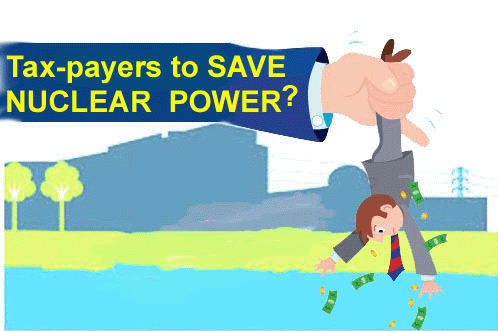
Tuesday, 10 December 2024 https://www.world-nuclear-news.org/articles/canada-considers-financing-for-polish-nuclear-power-plant
Polskie Elektrownie Jądrowe announced it has received a letter of intent from Export Development Canada, for up to CAD2.02 billion (USD1.45 billion) to potentially support Poland’s first nuclear power plant project.
The letter of intent with Export Development Canada (EDC) – a Canadian Crown corporation – is in support of the sale of goods and services by Canadian suppliers. EDC support is subject to the successful completion of its detailed due diligence process and credit approval.
Westinghouse – jointly owned by Canadian firms Brookfield and Cameco – welcomed the signing of the letter of intent, which it said it helped facilitate.
“Not only does this financing agreement underscore the important role Canada will play in helping Europe secure and diversify its energy future, but it will also help prepare the nation’s nuclear supply chain to support the next AP1000 plant in North America,” said Westinghouse Energy Systems President Dan Lipman. “We appreciate the close cooperation of the EDC in helping Westinghouse make AP1000 projects a reality for its customers while bringing home economic benefits to Canada.”
Westinghouse said the announcement demonstrates its “deep commitment to Canada’s economy by securing work for Canadian firms and trade unions supporting Westinghouse’s global fleet of advanced reactors”. For each AP1000 unit that is built outside of Canada, Westinghouse says it could generate almost CAD1 billion in gross domestic product through local suppliers.
Last month, the US International Development Finance Corporation – the USA’s development bank – signed a letter of interest with Polskie Elektrownie Jądrowe (PEJ) to provide more than USD980 million in financing for Poland’s first nuclear power plant. A similar declaration, for the equivalent of about PLN70 billion (USD17.3 billion), was made earlier by the US Export-Import Bank. Westinghouse and Bechtel jointly form a consortium that implements the PEJ investment project in Pomerania.
“We are pleased to see strong interest in our investment project from leading players in the global financial market, with whom we are in constant contact. The letter of intent from Export Development Canada is another confirmation of this fact, and at the same time our next step towards implementation of the strategy for obtaining financing for the entire project,” said PEJ Vice President Piotr Piela.
PEJ said: “Cooperation with export credit agencies is an important part of the strategy for securing financing for the nuclear power plant in Pomerania – it involves continuing discussions with, among others, entities from countries with extensive nuclear supply chains, in order to maximise and optimise financing opportunities for this key investment project for Poland.”
In November 2022, the then Polish government selected the Westinghouse AP1000 reactor technology for construction at the Lubiatowo-Kopalino site in the Choczewo municipality in Pomerania in northern Poland. An agreement setting a plan for the delivery of the plant was signed in May last year by Westinghouse, Bechtel and PEJ – a special-purpose vehicle 100% owned by Poland’s State Treasury. The Ministry of Climate and Environment in July issued a decision-in-principle for PEJ to construct the plant. The aim is for Poland’s first AP1000 reactor to enter commercial operation in 2033.
Under an engineering services signed in September last year, in cooperation with PEJ, Westinghouse and Bechtel will finalise a site-specific design for a plant featuring three AP1000 reactors. The design/engineering documentation includes the main components of the power plant: the nuclear island, the turbine island and the associated installations and auxiliary equipment, as well as administrative buildings and infrastructure related to the safety of the facility. The contract also involves supporting the investment process and bringing it in line with current legal regulations in cooperation with the National Atomic Energy Agency and the Office of Technical Inspection.
In September, the Polish government announced its intention to allocate PLN60 billion to fund the country’s first nuclear power plant.
Why is Biden cheering terrorist takeover of Syria?
Walt Zlotow, West Suburban Peace Coalition, Glen Ellyn IL, 11 Dec 24
President Biden celebrated the ouster of Syrian rular Basha Assad by US designated terrorist organization Hayat Tahir al-Sham (HTS).
Syria remains one of the longest and bloodiest US regime change operations in history. After 13 years and over a half million dead Syrians, supported by in part by US aid to Islamic Jihadist rebels, America achieved his goal of deposing imagined enemy Bashar Assad.
Biden says Assad’s fall is a “Fundamental Act of Justice.” Justice to Biden is cool even if it involves the US getting in bed with folks who cheered on the 911 attacks. Biden did slip in his congratulations when he inadvertently muttered this colossal understatement, “Some of the rebel groups that took down Assad have their own grim record of terrorism and human rights abuses.”
The group that led the offensive, Hayat Tahrir al-Sham (HTS), was formed in 2017 by merging al-Qaeda’s Syrian affiliate al-Nusra Front with other Islamist groups. HTS is a US-designated terrorist organization, and the US had put a $10 million bounty on its leader, Abu Mohammad al-Julani. Now the US mulls removing HTS from its Terrorist List since al-Julani has ascended to power in Damascus.
With the HTS takeover, Syrian minority groups including Alawite, Druze, Circassian, Armenian, Chechen, Assyrian, Christian and Turkoman, protected by Assad, consider heading for safer climes to escape the repressive, violent religious fanatics who have succeeded Assad while America cheers.
To put lipstick on the pig of US regime change, Biden ordered his thousand solider invasion force used to steal Assad’s oil resources, to stay put in eastern Syria to keep watch on the new extremist Syrian rulers. Indeed, he ordered massive bombings of extremist al Qaeda elements with his ancient B’52’s to show HTS who’s really pulling the strings of Syrian rule.
Back in 2011, President Obama caved to the US war party to add Syria’s Assad to America’s ever-growing regime change hit list, regardless Syria posed no threat whatsoever to US national security interests. That policy continued from Trump to Biden, who finally realized the US war party’s cherished dream.
Biden’s Syrian triumph sets the table for Trump’s return to power in 41 days. Who will be Trump’s first regime change target? Iran? Russia? North Korea? China? The way the US war party rolls…maybe all 4.
US, UK consider removing Hayat Tahrir al-Sham (HTS)from terror blacklist to ‘deepen contact’ with Al-Qaeda offshoot
Hayat Tahrir al-Sham toppled the government of Bashar al-Assad on Saturday, accomplishing a long-time goal of US foreign policy
The Cradle, News Desk, DEC 9, 2024
US officials are considering removing Hayat Tahrir al-Sham (HTS) from the US terrorist list after the offshoot of the Islamic State of Iraq (later known as ISIS) helped achieve the long-term US goal of overthrowing the Syrian government led by President Bashar al-Assad, The Washington Post reported on 9 December.
“US officials are in contact with all the groups involved in fighting in Syria, including the main group that ousted Assad, Hayat Tahrir al-Sham (HTS), which was once affiliated with Al-Qaeda and remains on a US terrorist list,” the newspaper wrote.
A US official told The Post that the US government has not ruled out removing the terror designation from HTS to enable deeper US contact and cooperation with the group………………………………………………
The UK government is also considering removing HTS from the list of banned terrorist groups.
………………….“The fall of the Assad regime fulfills a longtime US foreign policy goal, after Russia and Iran supported Assad amid the Obama administration’s efforts to oust him,” The Post added.
The former US special envoy to Syria said in an interview excerpt in March 2021 that HTS was an “asset” to US strategy in Syria. ……………………
………the US has supported ISIS in the past, including providing weapons to the organization to conquer Mosul, Iraq’s second-largest city, in June 2014. ISIS carried out the genocide of Yezidis in the nearby Sinjar district two months later, in August, with help from Iraqi Kurdish leader Masoud Barzani, a close US and Israeli ally………………………more https://thecradle.co/articles/us-uk-consider-removing-hts-from-terror-blacklist-to-deepen-contact-with-al-qaeda-offshoot
Chilling Warnings for Syria: When Foreign Interventions Go Bad
December 10, 2024, Dr Binoy Kampmark, https://theaimn.com/chilling-warnings-for-syria-when-foreign-interventions-go-bad/
The reports through Western presses read rather familiarly. Joyful residents taking selfies on abandoned, sullen tanks. Armed men ebullient and shooting into the sky with adventurist stupidity. The removal of statues and vulgar reminders of a regime. Prisoners freed; torture prisons emptied. The tyrant, deposed.
This is the scene in Syria, a war with more external backers and sponsors than causes. The terrain for some years had been rococo in complexity: Russia, Iran and Shia militants in one bolstering camp; Gulf states and Turkey pushing their own mixture of Sunni cause and disruption in another; and the US throwing in its lot behind the Kurdish backed People’s Protection Units (YPG). Even this schema is simplified.
While there will be an innumerable number of those delighted at the fall of Bashar al-Assad, the end of the Arab socialist Baathist regime provides much rich food for thought. Already, the whitewash and publicity relations teams are doing the rounds, suggesting that we are seeing a sound, balanced group of combatants that will ensure a smooth transition to stable rule. Little thought is given to the motley collection of rebels who might, at any moment, seek retribution or turn on each other, be they members of the Turkish-backed Syrian National Army (SNA), or those from the largest, most noted group, Hayat Tahrir al–Sham (HTS).
There is little mention, for instance, about the blotted resume of the aspiring usurper, Abu Mohammad Al-Jolani, who retains a bounty of US$10 million for information on his whereabouts and capture by US authorities. Human rights activist and former British diplomat Craig Murray helpfully posted a link from the US embassy in Syria from 2017, with the blood red title “Stop This Terrorist”. As he acidly notes, “You might want to retweet this before they delete it.”
When foreign powers meddle, particularly in the Middle East, the result is very often a cure worse than the disease. The billowy rhetoric follows a template: evil dictators, oppressors of their people, finally get their just desserts at the hands of a clearly demarcated, popular insurrection, helped along, naturally, by the world’s freedom lovers and democracy hailers. That those same freedom loving powers tolerated, traded and sponsored those same despots when it was convenient to do so is a matter confined to amnesia and the archives.
A few examples suffice. The scene in Libya in the immediate aftermath of the 2011 NATO intervention that overthrew Muammar al-Gaddafi saw commentary of delight, relief and hope. New prospects were in the offing, especially with the news of his brutal murder. “For four decades the Gaddafi regime ruled the Libyan people with an iron fist,” stated US President Barack Obama. “Basic human rights were denied, innocent civilians were detained, beaten and killed.” At the end of the regime, Obama confidently claimed that the new administration was “consolidating their control over the country and one of the world’s longest serving dictators is no more.”
UK Prime Minister David Cameron struck the same note. “Today is a day to remember all of Colonel Gaddafi’s victims.” Libyans “have an even greater chance, after this news, of building themselves a strong and democratic future.” French President Nicolas Sarkozy chose to see the overthrow of Gaddafi as the result of a unified, uniform resistance from “the Libyan people” who emancipated “themselves from the dictatorial and violent regime imposed on them for more than 40 years.”
What followed was not stability, consolidation and democratic development. Jihadi fundamentalism exploded with paroxysms of zeal. The patchwork of unsupervised and anarchically disposed militia groups, aided by NATO’s intervention, got busy. Killings, torture, enforced disappearances, forced displacement and abductions became common fare. The country was nigh dismembered, fragmenting from 2014 onwards between rival coalitions backed by different foreign powers.
-Advertisement-
The same gruesome pattern could also be seen in the post-Saddam Hussein Iraq of 2003. It began with a US-led invasion based on sham premises: Weapons of Mass Destruction that were never found. It also resulted in the overthrow of another Arab socialist Baathist regime. Statues were toppled. There was much celebration and looting. Even before the invasion inMarch that year, US President George W. Bush was airily declaring that “a new regime in Iraq would serve as a dramatic and inspiring example of freedom for other nations in the region.” In November 2004, Bush would dreamily state that the US and Britain “have shown our determination to help Iraqis achieve their liberty and to defend the security of the world.”
The consequences of the invasion: the effective balkanisation of Iraq aided by the banning of the Baath Party and the disbanding of the Iraqi Army; the murderous split between Sunni and Shia groups long held in check by Saddam with Kurdish rebels also staking their claim; the emergence of Iran as a regional power of significance; the continued thriving of al-Qaeda and the emergence of the caliphate-inspired Islamic State (ISIS/ISIL) group.
Even as the body count was rising in 2006, Britain’s Prime Minister Tony Blair was still fantasising about the political wishes of a country he had been so instrumental in destroying. “This is a child of democracy struggling to be born,” he told a gathering at Georgetown University in May that year with evangelical purpose. “The struggle for Iraqis for democracy should unite them.” The unfolding disasters were mere “setbacks and missteps”. Blair continued to “strongly believe we did and are doing the right thing.”
And so, we see the same pieties, the same reassurances, the same promises, played on a sedating loop regarding Syria’s fate, the promise of democratic healing, the transfiguration of a traumatised society. How long will such prisons as Sednaya remain unfilled? Therein lies the danger, and the pity.
Will Donald Trump kill US-UK-Aussie sub defense deal?

The landmark defense agreement between the U.S, U.K. and Australia could be in jeopardy with the maverick Republican back in the White House.
Politico, December 9, 2024, By Stefan Boscia and Caroline Hug
LONDON — There are few issues on which we do not know Donald Trump’s opinion.
After thousands of hours of interviews and speeches over the past eight years, the president-elect has enlightened us on what he thinks on almost any topic which enters his brain at any given moment.
But in the key area of defense, there are some gaps — and that’s leading global military chiefs to pore over the statements of the president’s allies and appointees to attempt to glean some clues, specifically over the $369 billion trilateral submarine program known as AUKUS he will inherit from Joe Biden.
Trump does not appear to have publicly commented on the AUKUS pact — named for its contingent parts Australia, the United Kingdom and the United States — which would see the U.S. share technology with its partners to allow both countries to build state-of-the-art nuclear submarines by the 2040s.
This uncertainty has left ministers and government officials in London and Canberra scrambling to discover how the Republican is likely to view the Biden-era deal when he returns to the White House in January.
Two defense industry figures told POLITICO there were serious concerns in the British government that Trump might seek to renegotiate the deal or alter the timelines.
This is because the pact likely requires the U.S. to temporarily downsize its own naval fleet as a part of the agreement — something Trump may interpret as an affront to his “America First” ideology.
Looking east
There is hope in Westminster that Trump would be in favor of a military project which is an obvious, if unspoken, challenge to China.
The deal would see American-designed nuclear submarines right on China’s doorstep and would form a part of Australia’s attempts to bolster its military might in the Indo-Pacific.
When former U.K. Prime Minister Boris Johnson said in September 2021 that the deal was not “intended to be adversarial toward China,” President Xi Jinping simply did not believe him.
The Chinese leader said AUKUS would “undermine peace” and accused the Western nations of stoking a Cold War mentality.
Mary Kissel, a former senior adviser to Trump’s ex-Secretary of State Mike Pompeo, said “you can assume Trump two will look a lot like Trump one” when it comes to building alliances with other Western countries against China.
“We revivified the Quad [Australia, India, Japan and the U.S.], got our allies to bolster NATO funding and worked to prevent China from dominating international institutions,” she said.
However, the deal also forces the U.S. government to sell Australia three to five active Virginia attack submarines, the best in the U.S. Navy’s fleet, by the early 2030s as a stopgap until the new AUKUS subs are built.
Is America first?
This coincides with a time where there is a widely recognized crunch on America’s industrial defense capacity.
In layman’s terms, the U.S. is currently struggling to build enough submarines or military equipment for its own needs.
One U.K. defense industry figure, granted anonymity to speak freely, said there was “a lot of queasiness” in the U.K. government and a “huge amount of queasiness in Australia” about whether Trump would allow this to happen.
“There is a world in which the Americans can’t scale up their domestic submarine capacity for their own needs and don’t have spare to meet Australia’s needs,” they said.
“If you started pulling on one thread of the deal, then the rest could easily fall away.”
One U.K. government official played down how much London and Canberra are worried about the future of the deal, however.
They said the U.K. government was confident Trump is positive about the deal and that the U.S. was “well equipped with the number of submarines for their fleet.”………………………………………………………………………………………………………………………………..
‘Everyone’s a winner
This attempted U.K.-China reset will likely be high on the list of talking points when Healey meets with his Australian counterpart Richard Marles next month in London for an “AUKMIN” summit.
The Australian Labor government, after all, has conducted a similar reset with the Chinese government since coming to power in 2022 after relations hit a nadir during COVID.
Also at the top of the agenda will be how to sell the incoming president on the AUKUS deal in a positive way.
A second defense industry insider said the British and Australian governments should try to badge the deal in terms that make it look like Trump has personally won from the deal.
“Everybody is worried about America’s lack of industrial capacity and how it affects AUKUS,” they said.
“He is also instinctively against the idea of America being the world’s police and so he may not see the value in AUKUS at all, but they need to let him own it and make him think he’s won by doing it.”………………………………………………………………………..
Pillar II
While the core nuclear submarine deal will get most of the headlines in the coming months, progress on the lesser-known Pillar II of AUKUS also remains somewhat elusive.
Launched alongside the submarine pact, Pillar II was designed to codevelop a range of military technologies, such as quantum-enabled navigation, artificial intelligence-enhanced artillery, and electronic warfare capabilities.
One Pillar II technology-sharing deal was struck on hypersonic missiles just last month, but expected progress on a range of other areas has not transpired.
Ambitions to admit Japan to the Pillar II partnership this year have also gone unfulfilled……………………………………………………………
https://www.politico.eu/article/donald-trump-aukus-kill-us-uk-aussie-sub-defense-deal/
Starmer to court UAE for British nuclear power investment
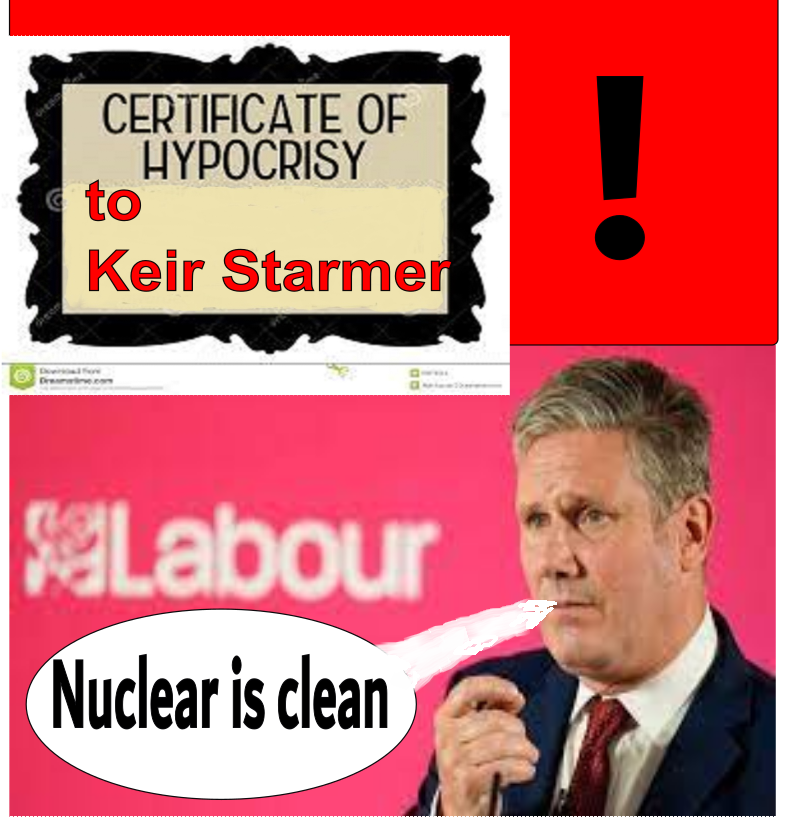
The Prime Minister is expected to tell sovereign wealth fund bosses ‘you can trust us’ on Sizewell C
Matt Oliver, Industry Editor,
https://www.telegraph.co.uk/business/2024/12/07/starmer-to-court-uae-for-sizewell-c-nuclear-investment/
Sir Keir Starmer will court the powerful bosses of United Arab Emirates’ (UAE) sovereign wealth funds this week as he seeks to raise funding for the Sizewell C nuclear project.
On a tour of the Gulf, the Prime Minister is expected to court investment into British infrastructure, including the proposed nuclear power plant on the coast of Suffolk.
His visit will include a meeting with representatives from Mubadala, one of Abu Dhabi’s sovereign wealth funds, sources told The Telegraph.
Those present are expected to include Khaldoon Al Mubarak, Mubadala’s chief executive and the right-hand man to Sheikh Mansour bin Zayed Al Nahyan, the UAE vice president and Manchester City football club owner.
A source said the message would be “you can trust us”, amid concerns about the long-term commitment of successive UK administrations both to nuclear power and major infrastructure schemes.
Downing Street declined to comment. Mubadala was approached for comment.
It comes as the Government seeks to get more investors on board with Sizewell C, after a capital raise process that has dragged on longer than originally anticipated.
Five potential backers are still in the running officially, the boss of Sizewell C confirmed on Thursday.
They are thought to include British Gas owner Centrica, the Emirates Nuclear Energy Corporation (Enec), Schroders Greencoat and Amber Infrastructure Group.
However, sources familiar with the situation said the Government hoped additional investors may contribute cash by teaming up with those already involved in the process.
Mubadala may channel funds into Sizewell via Enec, for example. The UAE companies have teamed up to invest in numerous other global projects in the past, one industry insider said.
Ministers previously hoped to take a final investment decision on Sizewell C by the end of this year but it was confirmed in the Budget that it would not happen until the spring, with the project’s fate now understood to be tied up with Chancellor Rachel Reeves’s spending review.
A key issue ministers are grappling with is the need to put the full cost of the Sizewell project – which could be anything between £20bn and £40bn – on the public balance sheet, despite the Government’s intention to sell a significant portion of shares in the project to outside investors.
Currently, the Government owns more than 80pc of the equity, with the French state nuclear giant EDF owning the rest.
Hinkley dilemma
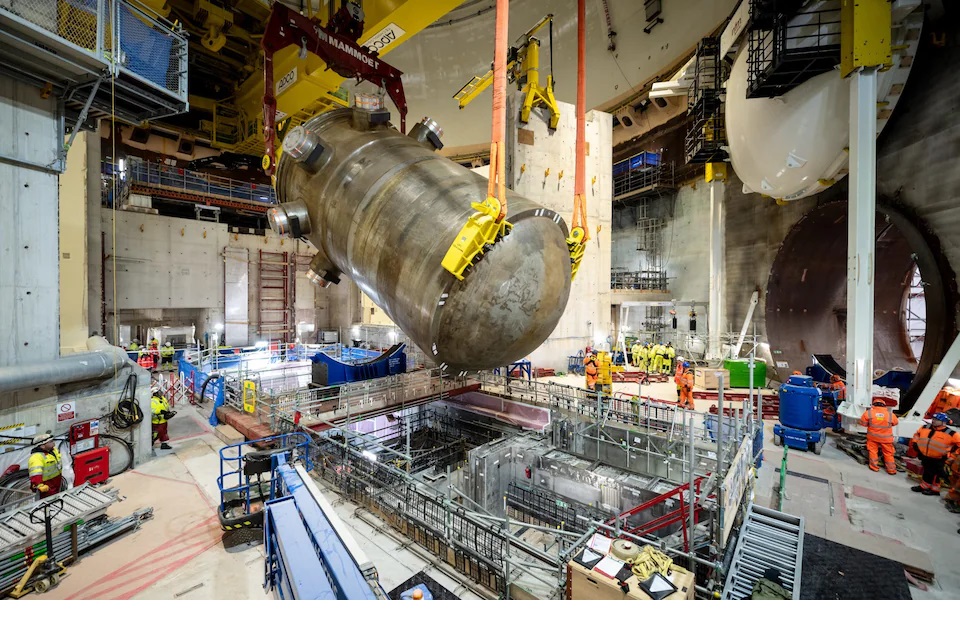
Elsewhere, ministers also face a dilemma over the Hinkley Point C plant in Somerset.
The project, which is majority-owned by EDF, is grappling with a £5bn funding shortfall after co-investor China General Nuclear refused to put in more cash.
That followed the Government’s decision to block Chinese involvement in Sizewell C and other future nuclear projects amid national security concerns.
EDF has called on the UK to step in and help support the project, a suggestion that ministers have so far resisted, with Paris said to be reluctant to put more money into the plant. Hinkley is on course to open years late and cost up to £45bn – far more than planned.
The Telegraph revealed in October that Centrica had emerged as a potential white knight investor in Hinkley, as the electricity supplier looks to replace income generated by other British nuclear plants it owns stakes in as they close.
Assad Is Out, Woke Al-Qaeda Is In
Caitlin Johnstone, Dec 08, 2024
Well it looks like the government of Syrian president Bashar al-Assad is on its way out, likely to be replaced by one or more US puppet regimes depending on whether the nation maintains its current borders or is carved up into separate states. The empire notches another win.
I am not a military analyst, but analysts who are normally supportive and optimistic in favor of Assad like Elijah Magnier and Pepe Escobar are saying this is the end. Assad’s whereabouts are unknown as Turkish-backed fighters and al-Qaeda-linked forces with a history of western backing have swept through the country with alarming speed, and now Russia and Iran have joined with the governments of US-aligned nations like Saudi Arabia, Egypt, Jordan and Turkey in calling for an end to the fighting in favor of a political solution. CNN reports that opposition forces have entered Damascus in search of Assad, and footage reportedly shows Assad forces retreating from the area where the president’s main residence is located.
The US proxy warfare in Lebanon and Ukraine makes a lot more strategic sense now; by tying up Hezbollah and Russia in other conflicts, the path was opened up for another run on Damascus and a chance to further cut off Hezbollah from supplies. Many pundits on my end of the commentary spectrum had been calling those proxy wars self-defeating and framing them as the desperate flailings of a dying empire which will only accelerate its demise, but now here we are watching the empire score a victory it’s been chasing for years, with the western/Israeli stranglehold on the middle east growing tighter than ever.
Meanwhile the press is falling all over itself to support this regime change by promoting the narrative that al-Qaeda is woke now.
CNN just released a coddling softball interview with Abu Mohammed al-Jolani, the former ISIS and al-Qaeda member who leads the Syrian opposition group Hayat Tahrir al-Sham, which is itself a rebranded offshoot of al-Qaeda in Syria. Jolani told CNN that he has reformed from his radical ways of the past, saying, “Sometimes it’s essential to adjust to reality,” adding, “someone who rigidly clings to certain ideas and principles without flexibility cannot effectively lead societies or navigate complex conflicts like the one happening in Syria.”
Now the imperial press are full of headlines like “How Syria’s rebel leader went from radical jihadist to a blazer-wearing ‘revolutionary’” from CNN, “Syria’s rebel leader Golani: From radical jihadist to ostensible pragmatist” from The Times of Israel, and “How Syria’s ‘diversity-friendly’ jihadists plan on building a state” from The Telegraph.
Only a matter of time before we start seeing former ISIS and al-Qaeda members chatting it up on liberal western talk shows with their preferred gender pronouns listed next to their names.
As luck would have it, these “diversity-friendly jihadists” have been telling the Israeli press that they “love Israel” and won’t do anything to harm its interests, so it’s safe to say that this “revolution” has been about as organically grown as a sheet of crystal meth.
One of the many perks of being the world’s dominant superpower is that it gives you the luxury of time. If one regime change operation fails, don’t worry, you can just move some chess pieces around and take another shot at it. If a coup attempt fails in Latin America, relax, there will be other coup attempts. If your efforts to grab Syria fail, you can just smash it with sanctions and occupy its oil fields to impoverish it while overextending its military allies in proxy conflicts elsewhere and grab it later.
A good kickboxer throws many combinations with the understanding that most strikes will miss or be blocked or cause minimal damage, trusting that eventually the one knockout blow will get through.
No empire lasts forever, but there’s no evidence that this one is going away any time in the immediate future. This ugliness could conceivably drag itself out for generations.
Britain’s Energy Secretary Follows Tech Giants In Pursuit Of New Nuclear Power Stations
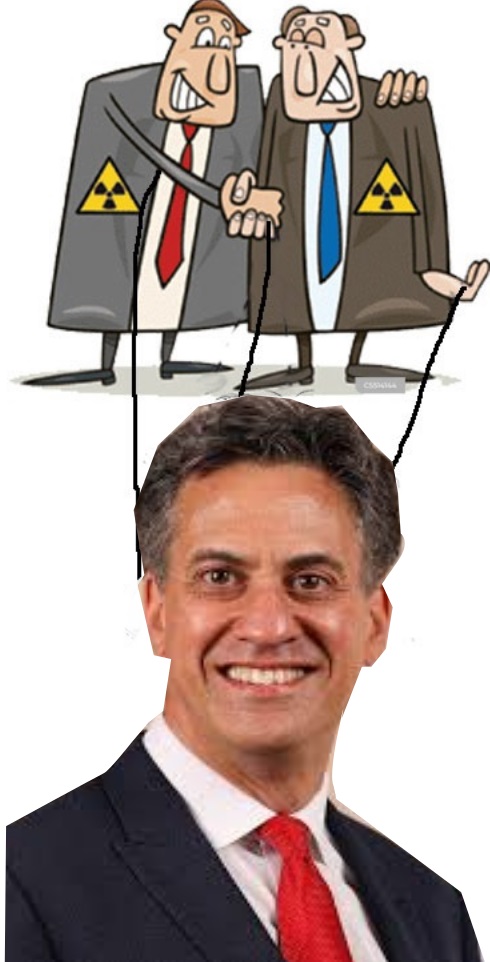
the government is “determined to drive forward” with nuclear power through both public and private investment, despite this being a period of “immense challenge for the public finances.”
Miliband was speaking in London on Thursday at the Nuclear Industry Association’s Nuclear 2024 conference, where he told the audience that their industry has an essential role to play in the U.K.’s pursuit of achieving a [ ?] clean power system by 2030.
Robert Olsen, Forbes 7th Dec 2024
British Energy Secretary Ed Miliband has been watching U.S. tech companies striking deals with operators and developers of nuclear power plants, and now he’s eager to pursue similar projects in the U.K.
“My message is clear: if you want to build a nuclear project in Britain, my door is open,” Miliband said. “My department is listening. We want all your ideas for projects that can work and provide value for money.”
Miliband was speaking in London on Thursday at the Nuclear Industry Association’s Nuclear 2024 conference, where he told the audience that their industry has an essential role to play in the U.K.’s pursuit of achieving a [ ?] clean power system by 2030.
He said the government is “determined to drive forward” with nuclear power through both public and private investment, despite this being a period of “immense challenge for the public finances.”
Great British Nuclear (GBN), the government body tasked with spearheading the development of small modular reactors (SMRs), has started contract negotiations with four companies shortlisted for the U.K.’s small modular reactor program, and final decisions will be made next year.
Britain’s Rolls-Royce is competing with U.S.-based rivals GE Hitachi, Holtec and Westinghouse Electric for contracts to develop SMRs in the U.K. The competition was launched last year, as part of the government’s plan to replenish the country’s dwindling nuclear industry………………………………..https://www.forbes.com/sites/robertolsen-1/2024/12/07/britains-energy-secretary-follows-tech-giants-in-pursuit-of-new-nuclear-power-stations/
Iran’s uranium enrichment ‘worrisome’ – nuclear watchdog
The head of the UN nuclear watchdog has told the BBC Iran’s decision to
begin producing significantly more highly enriched uranium was “very
worrisome”. Rafael Grossi, director general of the International Atomic
Energy Agency (IAEA), said Iran was increasing its stockpile of uranium
enriched to 60%, just below the level of purity needed for a nuclear
weapon.
This will be seen by many in the region as Tehran’s response to its
military and diplomatic setbacks in Syria, Lebanon and Gaza in recent
months. Mr Grossi said it was “no secret” some politicians in Iran were
calling for the development of a nuclear weapon – but after holding talks
in Tehran in recent weeks, he said that “doesn’t seem to be the path of
choice” by the current leadership.
BBC 6th Dec 2024,
https://www.bbc.co.uk/news/articles/c20ee6qylwgo
Niger takes control of French nuclear firm’s uranium mining operations

Morning Star 5th Dec 2024, https://morningstaronline.co.uk/article/niger-takes-control-french-nuclear-firms-uranium-mining-operations
AUTHORITIES in Niger have taken control of the uranium mining operations of a French nuclear firm, it was reported on Wednesday.
After coming to power in July last year, Niger’s military leaders said they intended to seize back the natural resources of the west African country for the benefit of the people rather than Western interests.
The government said they would revamp rules regulating the mining of raw materials by foreign countries and earlier this year withdrew the permit for French nuclear company Oreno to mine one of the world’s largest uranium deposits.
Orano responded by suspending production of uranium in Niger.
Niger accounts for about 5 per cent of global uranium output, making it one of the world’s top 10 producers of uranium vital for the generation of nuclear weapons and the generation of nuclear power.
Last month, Niger’s Minister of Mines, Colonel Abarchi Ousmane said: “The French state, through its head of state, has declared that it does not recognise the current authorities in Niger. Does it seem possible to you that we, the state of Niger, would allow French companies to continue extracting our natural resources?”
Orano said that it intended “to defend its rights,” but also wanted to work with “stakeholders to re-establish a stable and sustainable mode of operation.”
Zelensky Says He’s Willing To Cede Territory in Exchange for NATO Protection

Zelensky’s suggestion is a non-starter for Moscow but reflects a shift in his position on peace talks
by Dave DeCamp , December 1, 2024, https://news.antiwar.com/2024/12/01/zelensky-says-hes-willing-to-cede-territory-in-exchange-for-nato-protection/
On Friday, Ukrainian President Volodymyr Zelensky said he was willing to temporarily cede territory to Russia to bring an end to the war in exchange for NATO protection over Ukraine.
“If we want to stop the hot stage of the war, we should take under [the] NATO umbrella the territory of Ukraine that we have under our control,” Zelensky told Sky News. “That’s what we need to do fast, and then Ukraine can get back the other part of its territory diplomatically.”
Zelensky’s suggestion is almost certainly a non-starter for Russia since the invasion was launched to keep Ukraine out of NATO, but it does reflect a shift in his position. Zelensky previously maintained that his war goals included driving Russia out of all of the territory it has captured since February 2022, as well as Crimea.
In a recent conversation with German Chancellor Olaf Scholz, Russian President Vladimir Putin pointed to a speech he made earlier this year that outlines his conditions for peace, which include a Ukrainian withdrawal from all territory Russia has annexed, Ukrainian neutrality, and the lifting of all Western sanctions on Russia.
Ukrainian neutrality was Russia’s main demand during short-lived negotiations that took place in the early days of the invasion. Ukrainian and Russian officials held talks in March and April of 2022, but the negotiations were discouraged by the US and its allies.
In the interview with Sky News, Zelensky said Ukraine wouldn’t agree to a ceasefire without guarantees of NATO protection. “We need [NATO protection] very much, otherwise [Putin] will come back. Otherwise, how are we going to go to a ceasefire? So for us, it’s very dangerous,” he said.
While Zelensky and Putin’s terms are extremely far apart, the Ukrainian side could be forced to make more concessions if President-elect Donald Trump follows through with his campaign promise to end the war and pressures Zelensky to negotiate.
Biden to Zelensky: ‘Our $210 billion not enough…send 18 year olds to die in our Russian proxy war
Walt Zlotow, West Suburban Peace Coalition, Glen Ellyn IL, 2 Dec 24
In 34 months of Russian war in Ukraine provoked by US NATO expansion, the US has squandered $185 billion of our precious treasure to keep Ukraine men dying by hundreds of thousands in a lost US foreign misadventure.
But as President Biden heads for the White House exits, he’s demanding and will get another $25 billion from Congress, making the total cost pushing a quarter trillion dollars.
Not a single military or administration strategist believes that will make any difference in American’s unwinnable proxy war. Even Biden’s National Security Advisor Jake Sullivan fessed up “Our view has been that there’s not one weapon system that makes a difference in this battle. It’s about manpower, and Ukraine needs to do more, in our view, to firm up its lines in terms of the number of forces it has on the front lines.”
Biden concurred and now demands Zelensky lower the draft age from 25 to 18. Zelensky lowered the draft age last April from 27 to 25, also at US, urging, but it has done nothing to stem the inexorable Russian advancement fueled by overwhelming manpower. Why? Upwards of 200,000 Ukrainian soldiers have deserted. They are voting against senseles war with their feet.
After squandering $185 billion of US treasure and a half million Ukrainian men, Biden wants more, more, more of both.
Biden could toss a trillion dollars and another half million young Ukrainian cannon fodder into the US proxy war without a prayer of victory on America’s terms.
But a worse fate awaits all of us. By allowing Ukraine to fire long range US missiles into Russia, Biden is risking nuclear war. If that occurs, all discussion about a squandered quarter trillion on weapons and another half million dead Ukrainian youth will be moot.
Iran says it could end ban on possessing nuclear weapons if sanctions reimposed
Comments made after nuclear inspectorate board passed motion censuring Iran for building uranium stockpile
Patrick Wintour in Lisbon, Guardian 28th Nov 2024, https://www.theguardian.com/world/2024/nov/28/iran-says-it-could-end-ban-on-possessing-nuclear-weapons-if-sanctions-reimposed
The nuclear debate inside Iran is likely to shift towards the possession of its own weapons if the west goes ahead with a threat to reimpose all UN sanctions, the country’s foreign minister has said.
Seyed Abbas Araghchi said in an interview that Iran already had the capability and knowledge to create nuclear weapons, but said they did not form part of its security strategy. He also said Tehran was prepared to keep supplying arms to Hezbollah in Lebanon.
Western officials will be concerned by Araghchi’s warning over the reimposition of sanctions, which were lifted when Iran signed the 2015 deal intended to limit its nuclear activities.
Araghchi was appointed foreign minister by Iran’s reformist president, Masoud Pezeshkian, who was elected this year on a promise to improve Iran’s economy by pursuing improved relations with the west.
He was speaking in Lisbon before a meeting between Iranian and European negotiators in Geneva on Friday, which he described as a brainstorming session to see if there was a way out of their impasse. He admitted he was pessimistic about the meeting, saying he was not sure Iran was speaking to the right party.
He said he believed European nations – chiefly the UK, Germany and France – were set on confrontation after a board meeting last week of the UN nuclear inspectorate, the International Atomic Energy Agency (IAEA), in which a European-tabled censure motion was passed saying Iran had failed to cooperate with inspectors and was building a uranium stockpile that had no peaceful civilian purpose.
Araghchi claimed the IAEA director general, Rafael Grossi, had promised to forestall the censure motion after Iran offered to cap its uranium enrichment at 60% purity, as well as permit four nuclear inspectors to visit its nuclear sites. “He failed because the Europeans had decided on the course of confrontation,” he said.
The foreign minister said Iran had subsequently “decided to introduce thousands of new, highly advanced machines into the system. And now they have started to feed them with gas. So this is the result of their pressure.”
Araghchi said Iran remained within the confines of the nuclear non-proliferation treaty, however, and still sought cooperation. “We have no intention to go further than 60% for the time being, and this is our determination right now,” he said. “I would like to re-emphasise that we have chosen the line of cooperation in order to come to a dignified resolution of this problem.”
But he suggested that Iranian engagement with the west on its nuclear programme was not guaranteed. “There is a debate right now in Iran that it was perhaps a wrong policy. Why? Because it proved we did whatever they wanted and when it was their turn to lift sanctions, in practice, they didn’t happen. So maybe something is wrong in our policy.
“So I can tell you, quite frankly, that there is this debate going on in Iran, and mostly among the elites – even among the ordinary people – whether we should change this policy or not, whether we should change our nuclear doctrine, as some say, or not, because it has proved insufficient in practice.”
He said if European countries did reimpose sanctions on Iran at the UN security council “then they [will] have convinced everybody in Iran that, yes, your doctrine has been wrong”.
He added: “And this is the result after 10 to 12 years of negotiation, and after 10 years of implementation and homework and all these things, now, Iran is back under chapter seven [of the UN charter], what for?
“If that happens, I think everybody will be convinced that we have gone in the wrong direction, so we have to change direction. So I think if the snapback happens we would have a crisis.”
But he said for the moment the fatwa against the possession of nuclear weapons could only be rescinded by the supreme leader. “Nuclear weapons have no place in our security calculations,” he said.
He also said that Iran had not supplied ballistic missiles to Russia, but that it is legitimate for Tehran to have close military cooperation with Moscow even though Iran supported the territorial integrity of Ukraine.
Aware that Iran’s supply of drones and other equipment to Russia for use in Ukraine has poisoned relations with Europe, Araghchi said: “They are not in any moral or political position to complain about our cooperation with Russia […] when at the same time they are selling themselves weapons, sophisticated weaponry to Israel to kill Palestinians.”
He added that Iran was prepared to continue supplying weapons to Hezbollah in Lebanon if requested by the group, adding Israel had agreed to a ceasefire only because it could not “finish the job”.
Giving his verdict on the outcome of the Lebanon confrontation, which many say has left Iran weakened, he said: “Why is Israel now ready for a ceasefire in Lebanon? Because they couldn’t finish the job, and they are not able to finish the job. Yes, Hezbollah has suffered, but it is mostly on its leadership and high level commanders, but the organisation is intact.”
He also ridiculed claims by the Israeli prime minister, Benjamin Netanyahu, that Israel had agreed to the Lebanon ceasefire partly because Israel wanted to focus its energies on preventing Iran from securing a nuclear weapon.
“A full-scale war with Iran and a ceasefire in Lebanon? It doesn’t sound logical or understandable,” he said.
He said it would be a disaster if Israel launched a full-scale war against Iran. “That doesn’t mean that we want war. Contrary to Israelis, we don’t want war, but we are fully prepared for that, and we are not scared of war. And if they want to try us, they can do that.”
He said it was up to Hezbollah to decide if it wanted to withdraw its weaponry north of the Litani River, as set out in the ceasefire agreement with Israel, and said the group was not an Iranian proxy. “Hezbollah and others are not our proxies,” he said. “We only support them as our friends, so we have never dictated on them or any other resistance group in the region. They decide by themselves, and they implement their decisions by themselves.”
He said he believed it was the right decision by Hezbollah to end its link between the wars in Lebanon and Gaza in accepting the ceasefire, but questioned whether it would be followed by a further ceasefire in Gaza. “Israel cannot go for a ceasefire with Hamas, because a ceasefire with Hamas would be a total defeat for Israelis,” he said. “They went there to destroy Hamas, and now they have to make a deal with Hamas, and that means that they have failed to reach their goals. So a ceasefire in Gaza has become a very complicated question.”
He said that Israel’s intention was “the colonial erasure” of Palestinians, and it was up to the new US administration to decide if they would support this.
Asked if Iran’s foreign policy was causing domestic misery, he accepted that Pezeshkian won the presidential election because he wanted to leave sanctions and engage with the rest of the world but questioned if he had been welcomed by the west. “The morning after his inauguration ceremony, Ismail Haniyeh [the Hamas political bureau leader] was assassinated in Tehran,” he said. “I have spent my first 100 days as foreign minister trying to prevent a full-scale war.”
“Israel Wants Wars”: Gideon Levy on Lebanon Ceasefire, Gaza & Gov’t Sanctions Against Haaretz
Democracy Now, 27 Nov 24
Gideon LevyIsraeli journalist and author. Lina MounzerLebanese writer and editor.
We’re joined by Israeli journalist Gideon Levy as we continue our conversation on the Israeli-Lebanon ceasefire. We take a look at the mood within Israel, where Levy characterizes the Israeli public as “sour” about what is seen as a premature deal. “They would like to see more blood, more destruction in Lebanon,” says Levy. “Israel wants wars.” This retributive stance is still being felt in Lebanon, adds writer Lina Mounzer, who says Lebanese people are “very terrified of the day after” and do not feel that they have been awarded peace, despite the terms of the ceasefire.
Meanwhile, the Israeli government has unanimously voted to sanction the Israeli newspaper Haaretz, claiming that its editorials “have hurt the legitimacy of the state of Israel and its right to self defense.” Haaretz has criticized the move, which comes just months after Israel banned the international media outlet Al Jazeera, as anti-democratic. Levy, a columnist for Haaretz, says the sanction makes it clear that Israelis cannot take the freedom of speech “for granted anymore.”
Media Options
Transcript……………………………………………………………………………………….. more https://www.democracynow.org/2024/11/27/israel_lebanon_ceasefire_haaretz
1 This Month



26 September – International Day for the Total Elimination of Nuclear Weapons


PLEASE OPPOSE HR 8255 AND S.3639 – bills would accelerate satellite deployment, with no environmental review or safeguards – https://ncstd5li.quorum.us/campaign/169331/
To see nuclear-related stories in greater depth and intensity – go to https://nuclearinformation.wordpress.com
-
Archives
- September 2026 (219)
- August 2026 (330)
- July 2026 (355)
- June 2026 (287)
- May 2026 (306)
- April 2026 (356)
- March 2026 (251)
- February 2026 (267)
- January 2026 (308)
- December 2025 (358)
- November 2025 (359)
- October 2025 (375)
-
Categories
- 1
- 1 NUCLEAR ISSUES
- business and costs
- climate change
- culture and arts
- ENERGY
- environment
- health
- history
- indigenous issues
- Legal
- marketing of nuclear
- media
- opposition to nuclear
- PERSONAL STORIES
- politics
- politics international
- Religion and ethics
- safety
- secrets,lies and civil liberties
- spinbuster
- technology
- Uranium
- wastes
- weapons and war
- Women
- 2 WORLD
- ACTION
- AFRICA
- Atrocities
- AUSTRALIA
- Christina's notes
- Christina's themes
- culture and arts
- Events
- Fuk 2022
- Fuk 2023
- Fukushima 2017
- Fukushima 2018
- fukushima 2019
- Fukushima 2020
- Fukushima 2021
- general
- global warming
- Humour (God we need it)
- Nuclear
- RARE EARTHS
- Reference
- resources – print
- Resources -audiovicual
- Weekly Newsletter
- World
- World Nuclear
- YouTube
-
RSS
Entries RSS
Comments RSS
 nuclear-news