Trump’s Cabinet Picks Aren’t Looking Good For Peace In Ukraine
Caitlin Johnstone, Nov 25, 2024, https://www.caitlinjohnst.one/p/trumps-cabinet-picks-arent-looking?utm_source=post-email-title&publication_id=82124&post_id=152120142&utm_campaign=email-post-title&isFreemail=true&r=1ise1&triedRedirect=true&utm_medium=email
Conventional wisdom about the outgoing Biden administration’s reckless escalations in Ukraine these past few days is that things will cool down once Donald Trump takes office, but Trump’s cabinet picks aren’t really selling this idea.
While Trump did campaign on ending the war in Ukraine, the president elect has given multiple cabinet appointments to strategists who say that the way to achieve that peace is to substantially escalate aggressions against Russia. Michael Tracey has been doing a great job compiling footage of Trump’s recent cabinet picks advocating extreme measures which happen to be in perfect alignment with the nuclear brinkmanship of the demented outgoing president and his handlers.
Sebastian Gorka, who Trump has named as his next senior director for counterterrorism, is on record saying that Trump has told him he plans on saying to Putin, “You will negotiate now or the aid that we have given to Ukraine thus far will look like peanuts.”
Mike Waltz, who Trump has selected as his next national security advisor, promotes a similar vision. Waltz says Russia can be pressured to come to the negotiating table via increased energy sanctions combined with “taking the handcuffs off of the long-range weapons we provided Ukraine.” Biden has since removed those very “handcuffs” by authorizing Kyiv to use US-supplied long-range missiles to attack Russia.
If it seems like these remarks from Trump’s incoming administration work very nicely with the actions of the outgoing administration, then you may find it interesting that Waltz just told Fox News Sunday that the two administrations are working “hand in glove” as the presidency changes over.
“Jake Sullivan and I have had discussions, we’ve met,” Waltz said. “For our adversaries out there that think this is a time of opportunity, that they can play one administration off the other — they are wrong. We are hand in glove. We are one team with the United States in this transition.”
This would seem to be an oblique reference to Russia specifically, since that’s the only US adversary with any hope that the incoming administration might be a bit less hawkish toward it than the outgoing one, and since years of mass media coverage went into spinning narratives about Trump being a pawn of Vladimir Putin.
But Trump was never a pawn of Vladimir Putin. Contrary to the narratives of both Democrat-aligned punditry and Republican-aligned punditry while he was in office, Trump spent his entire term ramping up cold war aggressions against Russia which helped pave the way to the war and brinkmanship we are seeing in Ukraine today. Tracey recently shared an audio clip of Gorka on X Spaces back in January 2023 exuberantly boasting about the way Trump ordered the US military to kill hundreds of Russian mercenaries in Syria in 2018. Putin himself cited the Trump administration’s withdrawal from the Intermediate-Range Nuclear Forces treaty in 2019 when defending his decision to hit Ukraine with a new type of intermediate-range missile the other day in response to its use of US- and UK-supplied long-range missiles to strike inside Russia.
Other cabinet appointments who have taken extremely hawkish positions on Russia include secretary of state nominee Marco Rubio, secretary of defense nominee Pete Hegseth, CIA director nominee John Ratcliffe, and National Security Council appointee Doug Burgum. But it’s those comments from Waltz and Gorka which I find most concerning, because they explicitly refer to escalatory strategies that Trump might employ once he takes office.
This all comes out as we get news that US and European officials recently discussed providing nuclear weapons to Ukraine under the gamble that Putin will not escalate against the west before Trump takes office. The more aligned the Trump administration’s posture toward Russia appears to be with that of the Biden administration, the less safe a gamble this appears to be.
It seems likely that the Trump administration will end the Ukraine proxy war at some point down the road in order to reallocate those resources toward preparation for war with Iran and/or China. But it is not at all clear that this will happen soon enough before soaring escalations spin out of control into the single worst-case scenario that could possibly unfold on this planet.
European states vow to arrest Israeli PM
Rt.com 24 Nov 24
The ICC issued warrants for Benjamin Netanyahu and former Defense Minister Yoav Gallant earlier this week.
Several Western states have pledged to execute an arrest warrant for Israeli Prime Minister Benjamin Netanyahu issued by the International Criminal Court (ICC).
The Hague-based court on Thursday issued arrest warrants for Netanyahu along with former Israeli Defense Minister Yoav Gallant and Hamas commander Ibrahim al-Masri. West Jerusalem claims that al-Masri is already dead. The warrants are for alleged war crimes and crimes against humanity linked to the Gaza conflict.
The decision has elicited mixed reactions in the West. Several nations emphasized their respect for the independence of the court, while others voiced support for Israel.
The Netherlands, Switzerland, Ireland, Italy, Sweden, Belgium, and Norway all claimed they would meet their commitments and obligations under the Rome Statute and international law. However, Italian Defense Minister Guido Crosetto stressed that the ICC was “wrong” to put Netanyahu and Gallant on the same level as Hamas. Austria also said that it would obey the decision, but its foreign minister, Alexander Schallenberg, added that the warrant was “utterly incomprehensible.”
Dutch Foreign Minister Caspar Veldkamp assured the country’s parliament that the authorities would act on the warrants and avoid non-essential contacts with those named………………………………….. https://www.rt.com/news/608045-european-states-vow-arrest-netanyahu/
Iran warns West: abandon pressure or face more uranium enrichment
Iran International 23rd Nov 2024
he West still has an opportunity to pursue engagement and abandon pressure, but Tehran is ready to confront any challenges, spokesperson and deputy head of Iran’s Atomic Energy Organization, announced on Saturday.
Addressing Western nations, Behrouz Kamalvandi wrote in a Tehran newspaper, “There is still time for engagement and for setting aside pressure and threats. While Iran has prepared itself to counter threats, it prefers dialogue over confrontation.”
Iranian officials have condemned a censure resolution adopted during the November 21 quarterly meeting of the UN’s International Atomic Energy Agency Board of Governors. While they claim Iran is ready to negotiate over its nuclear commitments, their calls for dialogue come against the backdrop of years of failed diplomatic efforts by the IAEA and Western powers to address concerns over Tehran’s reduced cooperation with the UN watchdog.
The IAEA Board of Governors approved a resolution proposed by four Western powers condemning the expansion of Iran’s nuclear activities and Tehran’s lack of necessary cooperation with the agency. The resolution passed with a majority vote.
This marked the second resolution adopted against the Islamic Republic by the Board of Governors in the past six months.
On Friday, Kamalvandi responded to the IAEA resolution by announcing a “significant increase” in uranium enrichment levels.
Speaking to state media, he said this step was part of Iran’s “compensatory measures in response to the new Board of Governors resolution” and noted that the process had “already begun immediately.”…………………………………………
https://www.iranintl.com/en/202411239657
In 14-1 UN Security Council Vote, Lone US Veto Kills Gaza Cease-Fire Resolution

“Today’s message is clear to the Israeli occupying power—you may continue your genocide… with complete impunity.”
“Today’s message is clear to the Israeli occupying power—you may continue your genocide… with complete impunity.”
The U.S. government, said one human rights lawyer, “proves once again to the world that it is fully committed to the continuation of the genocide in Palestine.”
Jessica Corbett, 22 Nov 24 https://www.commondreams.org/news/us-vetoes-un-security-council
The Biden administration faced fierce criticism on Wednesday after using its veto power at the United Nations Security Council to block a resolution demanding an immediate, unconditional, and permanent cease-fire in Israel’s assault on the Gaza Strip.
The vetoed measure also called for all parties to implement a U.N. Security Council (UNSC) resolution passed in June—which would lead to the release of all hostages—and to enable Gaza civilians’ immediate access to basic services and humanitarian assistance.
Jess Peake, who directs the International and Comparative Law Program at the University of California, Los Angeles, condemned the U.S. decision as “absolutely unforgivable” while Nina Turner, a senior fellow at the Institute on Race, Power, and Political Economy, declared that “this is absurd.”
Mai El-Sadany, executive director of the Tahrir Institute for Middle East Policy in Washington, D.C., called it “yet another shameful abuse of the UNSC veto by the U.S. to perpetuate a war that violates U.S. law and U.S. international legal commitment.
“Today’s message is clear to the Israeli occupying power—you may continue your genocide… with complete impunity.”
Human rights attorney Craig Mokhiber, who last year resigned as the New York director for the Office of the High Commissioner for Human Rights over the United Nations’ response to Gaza, said Wednesday that “the U.S. has just vetoed another cease-fire resolution in the U.N. Security Council, and, in doing so, proves once again to the world that it is fully committed to the continuation of the genocide in Palestine.”
Mokhiber also called for action at the United Nations General Assembly (UNGA), where there is no U.S. veto power.
“Even as we seek accountability for Israeli perpetrators, we must also seek accountability for complicit U.S. actors,” he said. “Israeli/U.S. impunity threatens the entire world. And the U.N. must now move to take concrete action in the UNGA.”
The 14-1 vote at the UNSC marked the fourth time the United States has blocked a Gaza resolution since Israel began its retaliation for the Hamas-led October 7, 2023 attack. All five permanent members of the Security Council—the U.S., the United Kingdom, Russia, France, and China—have veto power. The other seats are filled on a rotating basis and lack that authority.
The 10 nonpermanent members—Algeria, Ecuador, Guyana, Japan, Malta, Mozambique, Sierra Leone, Slovenia, South Korea, and Switzerland—were behind the push to pass this draft resolution. Those who supported it represent “the collective will” of the international community, Algerian Ambassador Amar Bendjama said after the vote, according toU.N. News.
“It is sad day for the Security Council, for the United Nations, and the international community as a whole,” Bendjama said, stressing that it has been “five months since the adoption of Resolution 2735, five months during which the Security Council remained idle—remained hand-tied.”
“Today’s message is clear to the Israeli occupying power—you may continue your genocide… with complete impunity. In this chamber—you enjoy immunity,” he added. “To the Palestinian people, another clear message—while the overwhelming majority of the world stands in solidarity with your plight, others remain indifferent to your suffering.”
Israel faces a South Africa-led genocide case at the International Court of Justice over its assault on Gaza, which as of Wednesday has killed at least 43,985 Palestinians, according to local officials. Another 104,092 people have been wounded, and most of the enclave’s 2.3 million residents have been repeatedly displaced as Israeli forces have devastated civilian infrastructure.
U.S. Ambassador Robert Wood said Wednesday that “we made clear throughout negotiations we could not support an unconditional cease-fire that failed to release the hostages.”
“This resolution abandoned that necessity,” he argued. “For that reason, the United States could not support it.”
The U.S. government has been widely accused of complicity in genocide for arming Israeli forces over the past 13 months—including by progressives in Congress. Sen. Bernie Sanders (I-Vt.) on Wednesday planned to force a vote on resolutions that would block American weapons sales to Israel on the grounds that they violate federal law.
Trump opposes Israel annexation of West Bank, Republican sources say
November 20, 2024, https://www.middleeastmonitor.com/20241120-trump-opposes-israel-annexation-of-west-bank-republican-sources-say/
Newly-elected United States’ President, Donald Trump, is in opposition to Israel’s reported plans to annex the Occupied West Bank, sources from his Republican Party have revealed.
According to Israeli outlet, Ynet News, a senior Republican Senator close to the President-elect has said that “Trump will not approve annexation” of the West Bank.
Such a move is reportedly seen by the new President as one that would be “a mistake for Israel” which would worsen its international standing – already severely damaged after over a year of the Occupation’s bombardment and invasion of the Gaza Strip.
Trump is also apparently primarily concerned that any official annexation could further disrupt and severely derail efforts to finally reach a normalisation between Israel and Saudi Arabia – a key priority for the incoming Trump administration, with Republican Senator, Lindsey Graham, particularly working on that goal.
The reported comments by the unnamed sources follow increased speculation in recent weeks over Trump’s appointments of controversial figures in his incoming administration, with many of the relevant roles being filled by radically pro-Israel figures who favour annexation of the West Bank.
US one shy of becoming an Ace in blocking genocide ceasefire resolutions in UN
Walt Zlotow, West Suburban Peace Coalition, Glen Ellyn IL 22 Nov 24
For the fourth time since the US enabled Israeli genocide in Gaza, the US vetoed a genocide ceasefire resolution in the UN Security Council.
The resolution passed overwhelmingly 14-1 as Uncle Sam enticed no Security Council partners to help him continue the genocide.
But he didn’t need any since the US, as one of 5 permanent members, has veto power to prevent any such resolution from passing.
Algerian Ambassador Amar Bendjama who voted for the ceasefire, blasted the US veto: “Today’s message is clear to the Israeli occupying power: First you may continue your genocide. You may continue your collective punishment of the Palestinian people with complete impunity. In this chamber, you enjoy immunity,”
In aerial combat, a pilot who downs 5 enemy planes is called an Ace of the Air. With America’s fifth soon to occur veto , America can be called an Ace…of Genocide.
Households receive chilling leaflet urging them to prepare for war and grim nuclear attack
Households have all received a booklet on how to properly prepare for war
– as tensions escalate with Russia. Sweden has issued advice to citizens on
what to do if there is a World War Three, with all the grim and scary
details about what a nuclear bomb attack would bring, as well as how best
to protect yourself from any type of attack.
Mirror 21st Nov 2024
https://www.mirror.co.uk/news/households-receive-chilling-leaflet-urging-34158320
On Way Out, Reckless Biden Allows Deep Russia Strikes
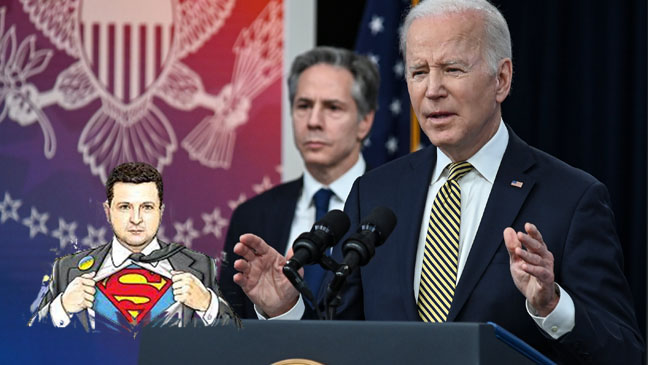
Biden staked his legacy on Ukraine. He was involved in the 2014 coup, in allegedly shady practices there with his son and then in provoking Russia to invade in 2022. He foolishly believed he would prevail in bringing down Putin with an economic, information and proxy ground war. [See: Biden Confirms Why the US Needed This War]
All three are now decisively lost as the U.S. — still under Biden — prepares for the end game. Biden’s only face saver is for Ukraine to get back some of its lost territory by trading for it with Russian territory it seized in Kursk this summer.
November 17, 2024 By Joe Lauria, Consortium News, https://consortiumnews.com/2024/11/17/on-way-out-reckless-biden-allows-deep-russia-strikes/
With his party decisively beat at the polls, the rejected president is gambling with regional security to preserve his ‘legacy’ and to saddle the incoming president, who wants to end the war, with a major new crisis, writes Joe Lauria.
As a parting shot to incoming U.S. President Donald Trump and Russian President Vladimir Putin, the defeated Joe Biden has defied the Pentagon by risking European and U.S. security with his decision announced Sunday to allow Ukraine to fire U.S. long-range missiles into Russian territory.
Just two months ago, in September, Biden had bowed to the realists in the Pentagon to oppose allowing long-range British Storm Shadow missiles from being fired by Ukraine deep into Russia out of fear it would lead to a direct NATO-Russia military confrontation with all that that entails.
Putin warned at the time in that British soldiers on the ground in Ukraine launching the British missiles into Russia with U.S. geostrategic support “will mean that NATO countries — the United States and European countries — are at war with Russia. And if this is the case, then, bearing in mind the change in the essence of the conflict, we will make appropriate decisions in response to the threats that will be posed to us.”
That was a clear warning that British and U.S. targets could be hit. Biden thus wisely backed off.
It was the second time that Biden had sided with the Pentagon against the neocons in his administration when it came to avoiding direct war with Russia.
The first time was in March 2022 when his neocon Secretary of State Antony Blinken stepped out of line to announce that the U.S. would give NATO-member Poland a “green light” to send Mig-29 fighter jets to Ukraine to enforce a no-fly zone against Russian aircraft.
Members of Congress and the media then piled the pressure on Biden to approve it until cooler heads at the U.S. Defense Department, the greatest purveyor of violence in history, stepped in to stop it.
Biden ultimately sided with the Pentagon, and he couldn’t be more explicit why. He opposed a NATO no-fly zone over Ukraine fighting Russian aircraft, he said, because “that’s called World War III, okay? Let’s get it straight here, guys. We will not fight the third world war in Ukraine.”
U.S. Defense Secretary Lloyd Austin at the time backed him up, saying:
“President Biden’s been clear that U.S. troops won’t fight Russia in Ukraine, and if you establish a no-fly zone, certainly in order to enforce that no-fly zone, you’ll have to engage Russian aircraft. And again, that would put us at war with Russia.”
But now Biden has reversed himself on his sensible positions and is defying the Pentagon to roll the dice that Russia’s warnings, repeated on Monday by Putin’s spokesman, won’t lead to nuclear conflict.
While he previously would not even authorize British long-range missile attacks into Russia in September, let alone U.S. ATACMS, on Sunday he authorized the ATACMS, risking Russia taking direct action against U.S. targets.
So what changed Biden’s addled mind?
An Undemocratic Democratic System
First, the undemocratic U.S. electoral system gave Biden the opportunity. His party was voted out of office on Nov. 5, but though the demos rejected Democrats in the White House they get to hang on in power for another 11 weeks, enough time to do considerable mischief to tie up the incoming administration that the people chose. (In a parliamentary system the new prime minister takes office on the next day and names the new cabinet well in advance of the election).
After one-term president George H.W. Bush lost to Bill Clinton in the 1992 election, Bush used those 11 weeks to invade Somalia, saddling Clinton with a foreign policy crisis that would bog him down and distract him from his agenda.
What’s happening now is something similar. Biden wants to undermine Trump’s effort to end the Ukraine war. The incoming vice president has floated the idea of Russia holding on to territory it has won in exchange for peace.
Biden staked his legacy on Ukraine. He was involved in the 2014 coup, in allegedly shady practices there with his son and then in provoking Russia to invade in 2022. He foolishly believed he would prevail in bringing down Putin with an economic, information and proxy ground war. [See: Biden Confirms Why the US Needed This War]
All three are now decisively lost as the U.S. — still under Biden — prepares for the end game. Biden’s only face saver is for Ukraine to get back some of its lost territory by trading for it with Russian territory it seized in Kursk this summer.
So he is authorizing U.S. soldiers to operate ATACMS missiles from Ukraine to beat back a 50,000-man Russian force seeking to take back all of that Russian territory. Part of that force, according to the Pentagon spokesman, is a contingent of at least 10,000 North Korean troops invited by Moscow, thus operating legally on pre-war Russian territory.
Yet the presence of these North Koreans has sent the Biden administration and its allied media into paroxysms of near insanity. The New York Times reported on Sunday:
“Officials said Mr. Biden was persuaded to make the change in part by the sheer audacity of Russia’s decision to throw North Korean troops at Ukrainian lines. He was also swayed, they said, by concerns that the Russian assault force would be able to overwhelm Ukrainian troops in Kursk if they were not allowed to defend themselves with long-range weapons.”
It is not like Biden doesn’t know the potentially grave consequences he is recklessly unleashing. He was already warned about the no-fly zone and said “that’s called World War III, okay?” He was then warned by the Pentagon against allowing the British missiles and acted like a responsible statesman.
But now, when it comes to his precious legacy, he doesn’t appear to give a damn about anything else. He was deprived of a second term (by traitors within his own party he no doubt thinks) and he will risk a NATO-Russia war to avoid the taint of utter defeat in Ukraine.
This is what he’s ignoring, according to the Times:
“Some of Mr. Biden’s advisers had seized on a recent U.S. intelligence assessment that warned that Mr. Putin could respond to the use of long-range ATACMS on Russian soil by directing the Russian military or its spy agencies to retaliate, potentially with lethal force, against the United States and its European allies.
The assessment warned of several possible Russian responses that included stepped-up acts of arson and sabotage targeting facilities in Europe, as well as potentially lethal attacks on U.S. and European military bases.”
Where it goes from there, nobody knows. Thanks, Joe.
What would Iran do: A race to the bomb or a deal with Trump?
A proposed censure of Iran for its lack of cooperation with the UN nuclear watchdog
raises important questions at a critical time after Donald Trump’s
reelection when Tehran faces regional weakness, economic pressure and
Israel.
The planned censure is likely going through despite Tehran offering
to cap its highly enriched uranium stock. France, Britain, Germany, and the
United States will introduce the resolution at Wednesday’s meeting of the
International Atomic Energy Agency (IAEA) Board of Governors despite, Iran
International has learned.
Iran and nuclear experts agree on one thing:
Trump’s return to the White House will have an impact on the Islamic
Republic, but whether and how the incoming administration and the Islamic
Republic may engage on the nuclear issue is up for debate.
Iran International 20th Nov 2024,
https://www.iranintl.com/en/202411203852
Iran has offered to keep uranium below purity levels for a bomb, IAEA confirms
Patrick Wintour Diplomatic editor, mhttps://www.theguardian.com/world/2024/nov/20/iran-has-offered-to-keep-uranium-below-purity-levels-for-a-bomb-iaea-confirms
UN inspectorate chief calls Tehran’s move a ‘concrete step in the right direction’, amid threat of restored sanctions.
Iran has offered to keep its stock of uranium enriched up to 60% – below the purity levels required to make a nuclear bomb – the head of the UN nuclear inspectorate, Rafael Grossi, has confirmed amid the threat of restored European sanctions over Tehran’s nuclear activities.
“I think this is … a concrete step in the right direction. We have a fact which has been verified by us. It is the first time Iran has agreed to take a different path,” Grossi said in Vienna on Tuesday.
The move negotiated by Grossi with Iranian officials, including the president, Masoud Pezeshkian, on a visit to Tehran last week is designed to head off a move at the IAEA board this week by European diplomats to request a comprehensive report on Iranian compliance that could lead to the snapback of UN sanctions. The agreement covering Iran’s nuclear activities formally expires in September, 10 years after it was negotiated in 2015.
A snapback would involve the reimposition of security council sanctions from earlier resolutions on Iran in the event of “significant non-performance” of Iran’s commitments under the nuclear deal.
“I went last week and I got something, and by moving step by step and getting concrete results the trajectory may be less confrontational,” Grossi said.
Iran’s foreign minister, Abbas Araghchi, has however hinted that the Iranian offer of a cap on enrichment might be withdrawn if the European powers – France, Germany and the UK – insist on commissioning the report. Grossi said he had spoken to Araghchi on Tuesday night but there had been no Iranian threat or warning during the conversation.
Araghchi said in a statement: “If the other parties ignore Iran’s goodwill and interactive approach and put non-constructive measures on the agenda at the meeting of the governing council through the issuance of a resolution, Iran will respond appropriately and proportionately.”
He said the offer to freeze the stockpile was a sign of goodwill, but the European powers are likely to regard the Iranian offer to cap the 60% stockpile as less groundbreaking than either Grossi or the Iranians do. Grossi clearly believes it is a sign of constructive progress after nearly two years of impasse.
He added that four new, experienced nuclear inspectors were being allowed into Iran.
European powers are worried both by Iran’s continued refusal to give IAEA inspectors access to its nuclear sites, and also by the steady increase in its stockpile of nearly weapons-grade uranium. The strikes and counter-strikes between Israel and Iran this year has led to a growing debate inside Iran whether it should drop the fatwa on producing a nuclear weapon, with some Iranian officials claiming they had already mastered most of the techniques necessary to do so. Iran has always claimed that its nuclear work is solely for peaceful civilian purposes.
Israel and the US have both said they will not allow Iran to acquire a nuclear weapon, but the incoming Trump administration has so far put the emphasis on tightening economic sanctions against Iran rather than a military attack on Iran’s nuclear sites.
In its latest report to the IAEA board, the IAEA said Iran’s stockpile of 60% enriched uranium had increased by 17.6kg to 182.3kg (402lbs). Assuming no change, that means Trump would enter office in January with Iran having enough nuclear fuel for four atomic bombs. It would take Iran just a few days to convert the 60% material into weapons-grade material.
Australian government gives firm ‘no’ to joining UK-US agreement to advance nuclear technology

The Conversation, November 19, 2024, Michelle Grattan, Professorial Fellow, University of Canberra
The Albanese government has been put on the spot by a new agreement – which it has declined to join – signed by the United Kingdom and the United States to speed up the deployment of “cutting edge” nuclear technology.
The original version of the British government’s press release announcing the agreement said Australia, among a number of other countries, was expected to sign it.
But the reference was removed from the statement.
The UK Energy Secretary Ed Miliband and the US deputy Secretary of Energy David Turk signed the agreement in Baku during COP29…….
A spokesperson for Energy Minister Chris Bowen, who is at the COP meeting, said: “Australia is not signing this agreement as we do not have a nuclear energy industry.
“We recognise that some countries may choose to use nuclear energy, depending on national circumstances.
“Our international partners understand that Australia’s abundance of renewable energy resources makes nuclear power, including nuclear power through small modular reactors, an unviable option for inclusion in our energy mix for decarbonisation efforts.”
Australia would remain as observers to the agreement to continue to support its scientists in other nuclear research fields, the spokesperson said………
In parliament, acting Prime Minister Richard Marles said for Australia to pursue a path of nuclear energy would add $1200 to the bills of each household in this country.
………………………Update: UK government seeks to clear things up
Later The Guardian reportred: “The UK government has conceded it made a mistake in including Australia in a list of countries that has signed up to a US-UK civil nuclear deal”. https://theconversation.com/albanese-government-gives-firm-no-to-joining-uk-us-agreement-to-advance-nuclear-technology-244041
High-Precision, Long-Range NATO Missiles Against Russia: Why Now?

Joe Quinn, Sott.net, Wed, 20 Nov 2024, https://www.sott.net/article/496207-High-Precision-Long-Range-NATO-Missiles-Against-Russia-Why-Now
Russia announced a change to its nuclear doctrine several months ago, where it can now respond with nuclear weapons to a non-nuclear attack on Russia by an enemy, either directly from enemy territory or from the territory of a third party. A notable caveat however is that such a response would only occur in the event that the attack “threatened the very existence of the Russian state”.
The changes were officially signed into law yesterday with the wording relevant to the conflict in Ukraine being “where the aggression creates a critical threat for the sovereignty and/or territorial integrity [of Belarus or the Russian Federation].
In this context, the Russians have also said that the use of nuclear weapons would also be permissible if an enemy attacked Russian forces in the context of the SMO in a way that definitively threatened the achievement of the objectives of the SMO.
In Sept. Putin said that NATO’s plan to allow Ukraine to use longer range Western precision weapons against Russian targets inside Russia would be evidence of direct NATO involvement in a war against Russia. And that Russia would respond appropriately.
Three days ago, “Biden” approved the use of longer range Western precision weapons against Russian targets inside Russia.
Two days ago, Ukraine fired 5 US-made longer range Western precision weapons (supersonic ATACMS ballistic missiles) at a military base 130kms into Southern Russia. According to the Russians, all 5 missiles were shot down, with one falling on the periphery of the missile base, starting a fire but doing no material or personnel damage.
While many have interpreted this attack as fulfilling the requirements for a Russian nuclear response, that is obviously not the case, for four reasons:
1) The attack did not, in any way, threaten the very existence of the Russian state
2) The attack did not, in any way, threaten the achievement of the objectives of the SMO.
3) The Biden admin has less than 2 months left in power.
4) Trump and his incoming team have made no secret of their intention to negotiate a near-future settlement to end the war in Ukraine.
What then, at this late stage, was the point in the ‘Biden’ admin authorizing the use of long range precision weapons against Russia and why do EU leaders continue to make repeated reference to EU citizens needing to prepare for a potential “war with Russia” and sending EU/NATO military forces to Ukraine, if there’s a reasonable chance of a peaceful settlement of the conflict under the Trump admin?
The problem is how any ‘settlement’ would play out.
First (see map) Russia will not settle for anything less than the four regions it has already incorporated into its territory (including the “demilitarization and denazification of Ukraine”). In addition, a demilitarized buffer zone (of some distance) would be necessary extending out from these regions and away from the Russian and Belarusian borders to the North.
NATO and EU nations would, undoubtedly, insist on militarily occupying (“peacekeepers”) the rest of Ukraine beyond these zones, but such a presence would create an uneasy, and potentially dangerous, peace for some time to come. Hence the talk of sending their military forces to Ukraine and possible/eventual ‘war with Russia’.
Of note in this respect is yesterday’s announcement that the ‘Biden’ admin will begin sending anti-personnel landmines to Ukraine to “blunt the advancement of Russian troops”. Interestingly, the mines are said to be “nonpersistent” design, meaning they become inactive within weeks of deployment. Why now? Russian troops have been advancing, in one form or another, for most of the war. Why would NATO/Ukraine want to deploy anti-personnel mines that last for only a few weeks?
Much like the use of precision long-range weapons, the use of “non-persistent” anti-personnel mines now is more likely to be part of a strategy for a negotiation settlement, than to effect any significant change on the current battlefield.
The point of authorizing (and using) both NATO long range precision weapons against Russia and anti-personnel mines now is in preparation for expected negotiations after Jan 6th.
By using these weapons and calling Russia’s ‘nuclear bluff’, (while also being careful not to push too far) NATO expects that Russia will be forced to accept them as a de facto (rather than theoretical) part of Ukraine/NATO’s arsenal against Russia, and thereby provide NATO with a more favorable basis for negotiations.
Biden Ramps Up Nuclear Brinkmanship On His Way Out The Door
Caitlin Johnstone, Nov 18, 2024, https://www.caitlinjohnst.one/p/biden-ramps-up-nuclear-brinkmanship?utm_source=post-email-title&publication_id=82124&post_id=151801494&utm_campaign=email-post-title&isFreemail=true&r=1ise1&triedRedirect=true&utm_medium=email
The New York Times reports that the Biden administration has authorized Ukraine to use US-supplied long-range missiles to strike Russian and North Korean military targets inside Russia — yet another dangerous escalation of nuclear brinkmanship in this horrific proxy war.
The Times correctly notes that authorizing Ukraine to use ATACMS, which have a range of about 190 miles, has long been a contentious issue in the Biden administration for fear of provoking military retaliations against the US from Russia. This reckless escalation has been authorized despite an acknowledgement from the anonymous US officials who spoke to The New York Times that they “do not expect the shift to fundamentally alter the course of the war.”
As Antiwar’s Dave DeCamp notes, Vladimir Putin said back in September that if NATO allows Ukraine to use western-supplied weapons for long-range strikes inside Russian territory, it would mean NATO countries “are at war with Russia.” This is about as unambiguous a threat as you’ll ever see.
NYT reports that Biden’s policy shift “comes two months before President-elect Donald J. Trump takes office, having vowed to limit further support for Ukraine.” And it is here worth noting that last week it was reported by The Telegraph that British PM Keir Starmer and French President Emmanuel Macron had been scheming to thwart any attempt by Trump to scale back US support for Ukraine by pushing Biden to authorize long-range missile strikes in Russian territory.
But it is also true that the day before the US election Mike Waltz, Trump’s next national security advisor, had himself endorsed the idea of authorizing long-range missile strikes into Russia with the goal of pressuring Moscow to end the war. His plan for disentangling the US from the conflict entails ramping up sanctions on Russia and “taking the handcuffs off the long-range weapons we provide Ukraine” in order to pressure Putin into eagerly accepting a peace deal.
So while this is being framed as an administration that’s more hawkish on Russia executing a maneuver that’s designed to hamstring the peacemongering of an incoming administration that’s less favorable to assisting Ukraine, in reality it may just be goal-assisting the next administration in a policy change it had planned on implementing anyway.
Either way, it’s insane. Putin ordered changes to Russia’s nuclear doctrine in September in order to ward off these sorts of escalations by lowering the threshold at which nuclear weapons could be used to defend the Russian Federation, and they’re just barreling right past that bright red line like they barreled over the red lines which led to the invasion of Ukraine. And the fact that they’re adding yet another nuclear-armed state into the mix with North Korea is just more gravy for the nuclear brinkmanship pot roast.
At one point in 2022, US intelligence agencies reportedly assessed that the odds of Russia using a nuclear weapon in Ukraine was as high as fifty percent, but the Biden administration kept pushing forward with this proxy war anyway. These freaks are taking insane risks to advance agendas that stand to yield the slimmest of benefits even by their own assessments.
We are living in dark and dangerous times.
Moscow continues to warn the West about the risk of nuclear escalation
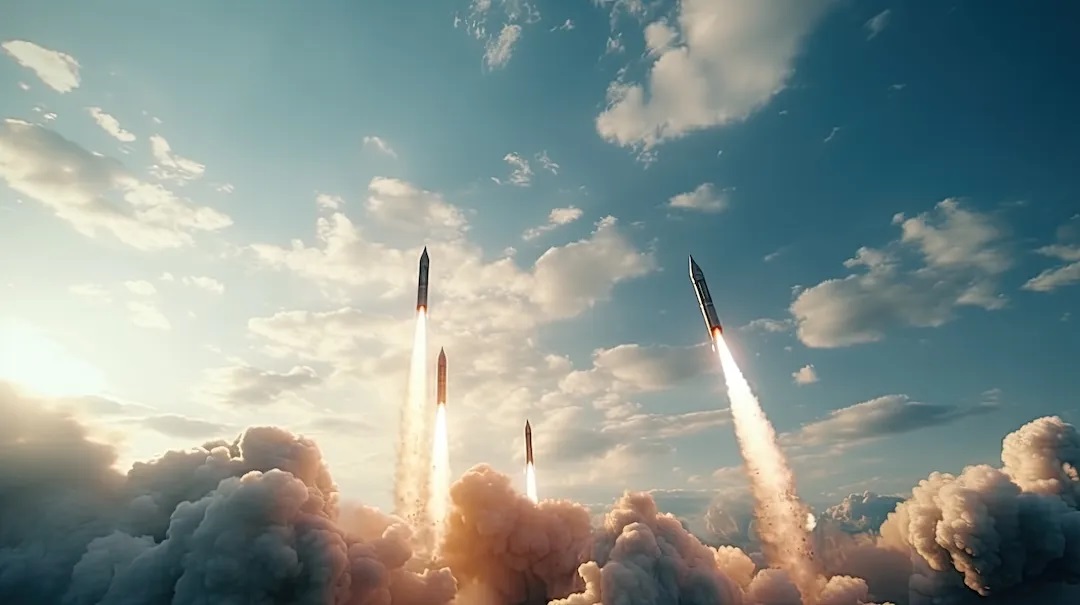
Tensions over the issue of “deep” strikes continue to escalate. Kiev continues to demand permission to strike targets in the Russian Federation’s demilitarized zone, while Moscow continues to make it clear that it will interpret such maneuvers as a declaration of war by NATO. In a recent statement, Maria Zakharova, the spokeswoman for the Russian Foreign Ministry, emphasized how Ukrainians and their partners are “playing with fire” with such threats, promising an “immediate and devastating” response in the event of a long-range strike.
The Russian government has repeatedly stated that the long-range weapons systems supplied by the West to Ukraine cannot be operated without the presence of NATO specialists, who would provide the necessary training and logistical support to the Ukrainians. This is because such weapons are not compatible with the Ukrainian military infrastructure, which depends on continuous intelligence support and strategic guidance provided by the Atlantic alliance. Moscow’s position is clear: authorizing the use of these missiles for strikes outside the official conflict zone, in addition to representing an expansion of Western involvement, would constitute direct NATO intervention in the conflict. Russia would regard any use of these weapons in such circumstances as a direct aggression against its sovereignty by the Western countries themselves, which would require an “immediate and devastating” retaliation.
The discussion about the deployment of Storm Shadow missiles and other advanced weapons systems in “deep” Russian territory is a clear demonstration of the dangerous game the West is playing, ignoring all the limits imposed by Russia. NATO’s role in the war in Ukraine has been a sensitive issue since the beginning of the conflict. Although Western powers insist on their position of supporting Ukraine as a legitimate right to defend it against what they call a Russian “invasion”, many analysts and officials point out that the interventions of the powers of the Atlantic alliance, both in terms of weapons and intelligence, have led to an unnecessary prolongation of the conflict, dragging Ukraine into a proxy war that puts the world on the brink of a nuclear confrontation.
By offering more powerful and sophisticated weapons, the West is not only strengthening Kiev’s military capabilities – which seem to have little strategic relevance at the moment – but also risks turning the local conflict into a war of global proportions. Moscow’s concern is legitimate, considering that the absence of limits on Western involvement in Ukraine could lead to a situation of unrestricted aggression against the Russian people, including even demilitarized cities far from the zone disputed by Kiev.
Indeed, the eventual authorization of the use of long-range missiles against targets deep inside Russia would place Moscow and NATO facing the near inevitability of a nuclear confrontation. As spokeswoman Zakharova has made clear, Russia is on high alert for the use of advanced missiles against its territory. Moscow has repeatedly stated that if such attacks occur, Russia’s response will be strong and decisive. This would not only imply a military escalation, but also a redefinition of relations between Russia and the West, with the possibility of unpredictable consequences for international stability.
The recent changes in Russia’s nuclear doctrine, allowing a nuclear response to deep strikes by non-nuclear powers supported by nuclear states (just like in the Ukraine-NATO case), were a clear attempt by Moscow to de-escalate the current situation through rhetoric and indirect deterrence. At first, the measure seemed sufficient to calm public pressure from some NATO figures for the authorization of the strikes. However, it is difficult to predict what the Democratic “administration” plans to do in its final days in power, and it is possible that Biden and his team will go into “suicide mode” and put the entire global security architecture at risk, despite Russian warnings.
In the end, Western powers need to reconsider their actions before it is too late. The escalation of the conflict and the lack of dialogue only increase the risk of a global catastrophe. Russia, for its part, continues to prepare to defend its people and its sovereignty, knowing that diplomacy, despite difficult, remains the only viable alternative to avoid a total collapse of the international order. However, once diplomatic means have been exhausted, the Russians will take whatever measures are necessary to respond appropriately to the violation of its red lines.
Putin Tells German Leader That Ukraine Peace Deal Possible
Russian President Vladimir Putin spoke with German Chancellor Olaf Scholz for the first time in two years on Friday
by Kyle Anzalone November 15, 2024 https://news.antiwar.com/2024/11/15/putin-tells-german-leader-that-ukraine-peace-deal-possible/
Russian President Vladimir Putin held a phone call with German Chancellor Olaf Scholz and offered to end the war in Ukraine. The Russian leader offered a deal similar to one proposed by Moscow in June.
On Friday, Scholz spoke with Putin for the first time in nearly two years. According to the Kremlin, “The Russian president noted that the Russian side has never refused and remains open to the resumption of the negotiations that were interrupted by the Kiev regime.” Adding, “Russia’s proposals are well known and outlined, in particular, in a June speech at the Russian Foreign Ministry.”
In that speech, Putin said that if Ukrainian forces withdrew from all Russian annexed territory, adopted a position of neutrality between NATO and Russia, agreed to denazification and demilitarization of the country, and the lifting of all Western sanctions on Moscow, then Russia would bring the war to an end.
Scholz’s spokesman said that the German and Russian leaders agreed to remain in contact. The official added that Scholz “condemned the Russian war of aggression against Ukraine and called on President Putin to end it and withdraw his troops.” He also told Putin, Berlin maintains “steadfast determination” to support Ukraine for “as long as is necessary.”
Throughout the Joe Biden administration, the West has refused to talk with Moscow about core national security issues. The refusal to negotiate throughout 2021, led Putin to invade Ukraine in the beginning of 2022. After the initial Russian invasion of Ukraine, a deal was nearly reached, but Kiev has been pushed away from negotiations by its Western backers.
After over two and a half years of war, Kiev is struggling to find the manpower to continue the fight while losing territory to the Russian military. Though NATO countries pledged to give Ukraine everything it needed to win the war, Washington has refused to provide Ukraine with advanced weapons and long-range missiles Kiev says it needs to achieve a victory.
1 This Month



26 September – International Day for the Total Elimination of Nuclear Weapons


PLEASE OPPOSE HR 8255 AND S.3639 – bills would accelerate satellite deployment, with no environmental review or safeguards – https://ncstd5li.quorum.us/campaign/169331/
To see nuclear-related stories in greater depth and intensity – go to https://nuclearinformation.wordpress.com
-
Archives
- September 2026 (219)
- August 2026 (330)
- July 2026 (355)
- June 2026 (287)
- May 2026 (306)
- April 2026 (356)
- March 2026 (251)
- February 2026 (267)
- January 2026 (308)
- December 2025 (358)
- November 2025 (359)
- October 2025 (375)
-
Categories
- 1
- 1 NUCLEAR ISSUES
- business and costs
- climate change
- culture and arts
- ENERGY
- environment
- health
- history
- indigenous issues
- Legal
- marketing of nuclear
- media
- opposition to nuclear
- PERSONAL STORIES
- politics
- politics international
- Religion and ethics
- safety
- secrets,lies and civil liberties
- spinbuster
- technology
- Uranium
- wastes
- weapons and war
- Women
- 2 WORLD
- ACTION
- AFRICA
- Atrocities
- AUSTRALIA
- Christina's notes
- Christina's themes
- culture and arts
- Events
- Fuk 2022
- Fuk 2023
- Fukushima 2017
- Fukushima 2018
- fukushima 2019
- Fukushima 2020
- Fukushima 2021
- general
- global warming
- Humour (God we need it)
- Nuclear
- RARE EARTHS
- Reference
- resources – print
- Resources -audiovicual
- Weekly Newsletter
- World
- World Nuclear
- YouTube
-
RSS
Entries RSS
Comments RSS
 nuclear-news