Perfectly Appropriate: Trump, Infantino and the FIFA Peace Prize
10 December 2025 Dr Binoy Kampmark, https://theaimn.net/perfectly-appropriate-trump-infantino-and-the-fifa-peace-prize/
He craves it, and, to some extent, his desire was satisfied. President Donald Trump did get a peace prize. Not the peace prize picked out by self-important Norwegian non-entities, but the inaugural curiosity of FIFA, an organisation famed for opacity, corruption and graft. What the critics missed in all of this was its sheer appositeness.
In a two-hour ceremony held on December 5 at Washington’s Kennedy Center, which included the World Cup draw for participants at next year’s games, Trump was presented with a prize few FIFA officials seem to know existed. Last month, FIFA president Gianni Infantino announced the award, expressing the view that Trump also deserved that other coveted gong, the Nobel Peace Prize. One senior FIFA official boldly told BBC Sport that the football organisation’s prize deserved serious attention: “Why can’t this be bigger than the Nobel Peace Prize? Football has huge global support, so it’s right that it recognises extraordinary efforts to bring about peace every year.”
That football – grand sport of sublimated aggression, contest and rivalries – is an agent of peace, is one of those shibboleths sporting administrators feed. Go through the records of any famous club rivalry, and peace is found wanting. Violence and politics, however, can be found in abundance. But Infantino did not become FIFA President on his mastery of such details. His formula was simple if hypocritical: athletes should play and shut up about politics, leaving it to the administrative class to do the rest.
With fawning relish, he heaped high praise on the winner. “This is what we want from a leader; a leader who cares about the people. We want to live in a safe world, in a safe environment. We want to unite – that’s what we do here today, that’s what we’ll do at the (FIFA) World Cup, Mr President.” Trump, in deserving the inaugural award, could count on Infantino’s support and that “of the entire football community – or ‘soccer’ community – to help you make peace and make sure the world prospers all over the world.”
Infantino has never been a strict observer of the dusty ethics clause stating that the organisation maintains neutrality “in matters of politics and religion” and that “all persons bound by the code remain politically neutral … in dealings with government institutions.” He has hobnobbed with the leaders of Qatar, Saudi Arabia and Russia, ostensibly pursuing the footballing cause. He was the only sports leader present at the Egyptian “Summit for Peace” held in October, when a clutch of significant figures, marshalled by Trump and Egyptian President Abdel Fatah El-Sisi, agreed to implement the first phase of the Gaza peace plan. (There was much personal gratitude for Trump, praised as “absolutely fundamental and crucial in the [peace] process.) He has gathered a swag of awards and accolades from governments, hardly an affirmation of neutrality in any strict sense.
In keeping with the mood, Trump spoke about everything other than football. He was in the business of saving lives, and peace prizes did not matter much. (You need to get one in orderto dismiss its merits.) For good measure, he had also “saved a lot [of lives], millions even.”
In keeping with the absurd occasion was the furious criticism of the choice, when its absurdity was most apt. Infantino, derided over his stance on not suspending Israel over its military operations in Gaza, was now receiving rebukes for eschewing neutrality. “Not satisfied with two years of FIFA complicity in genocide in Palestine, Infantino and his cronies have now invented a ‘peace prize’ in order to curry favour with Donald Trump,” fumed former UN official Craig Mokhiber and campaigner against Israeli’s membership of FIFA.
Andrea Florence, Executive Director of the Sports & Rights Alliance, acknowledged that the World Cup had been the political plaything of states in rinsing stained human rights records. “But FIFA is now doing the sportswashing itself. Giving this so-called FIFA ‘Peace Prize’ to US President Donald Trump with no clear criteria or process – and despite his administration’s violent detentions of immigrants, crackdowns on freedom of expression, and militarization of US cities – it’s sportswashing on steroids.”
This grumbling was bound to take a more formal shape, and it came in the form of an eight-page letter of complaint from the non-profit advocacy organisation, FairSquare. Unfortunately for the organisation, it was sent to FIFA. In the letter, the organisation demands that the ethics committee (the joke keeps giving) “investigate the circumstances surrounding the decision to introduce and award a FIFA Peace Prize and their conformity with FIFA’s procedural rules.” It makes reference to various remarks of Infantino’s, including those in an Instagram post from Trump’s inauguration on January 20 declaring that, “Together we will make not only America great again, but also the entire world.”
Studiously referencing FIFA statutes – not that this will get them far – the group goes on to state that awarding such a prize “to a sitting political leader is in and of itself a clear breach of Fifa’s duty of neutrality.” Infantino lacked the power to unilaterally determine “the organisation’s mission, strategic direction, policies and values.”
Identity politics books
As with most things relevant to that organisation, the complaint is unlikely to get far. Politics and sport do mix, as they have always done. Infantino, chief of the world’s foremost unchallenged sporting mafia, may claim otherwise, but his tenure shows that he knows that crude reality all too well.
Trump says Ukraine should hold elections
Sometimes, if only by accident, Trump says something sensible
by Julia Manchester – 12/09/25, https://thehill.com/homenews/administration/5640123-trump-says-ukraine-should-hold-elections/
President Trump said in a new interview that Ukraine should hold elections despite being locked in war with Russia.
“They’re using war not to hold an election. I would think the Ukrainian people should have that choice,” Trump told Politico. “They talk about having a democracy but it gets to the point where it’s not a democracy anymore.”
Ukrainian President Volodymyr Zelensky has come under political pressure in recent weeks over a corruption scandal that implicated top Ukrainian officials. After the country’s watchdogs concluded that $100 million had been embezzled from the energy sector through kickbacks paid by contractors, Zelensky fired two top officials and slapped sanctions on close associates.
Zelensky has not been accused of any wrongdoing but his chief of staff, Andriy Yermak, resigned following an anti-corruption raid on his home last month.
Additionally, Zelensky has found himself and Ukraine on defense as Russia seeks to make advances on Ukrainian territory and Trump administration officials struggle to broker a peace deal between the two countries.
Trump aired his frustrations over Zelensky on Sunday, saying the Ukrainian leader had not read the latest version of the peace proposals that came out of talks between U.S. officials and Russian President Vladimir Putin last week.
Zelensky said Ukraine would not budge from its longstanding opposition to ceding land to Russia after he met with European leaders on Monday.
Trump said in the Politico interview published Tuesday that he believes Russia is in a stronger negotiating position than Ukraine.
“[Zelensky] is going to have to get on the ball and start accepting things,” he said, adding that they are “losing.”
The Colby Review, AUKUS and Lopsided Commitments

9 December 2025 Dr Binoy Kampmark, https://theaimn.net/the-colby-review-aukus-and-lopsided-commitments/
In one of his many cutting observations about the fallibility of politicians, H. L. Mencken had this to say about the practical sort: “It is his business to convince the mob (a) that it is confronted by some grave danger, some dreadful menace to its peace and security, and (b) that he can save it.” Regarding Australia’s often provincial politicians, that grave danger remains the Yellow Peril, albeit it one garbed in communist party colours, while the quackery they continue to practise involves the notion the United States will act as shield bearer and saviour in any future conflict.
The AUKUS trilateral security pact between Australia, the United Kingdom and the United States has turned the first of these countries into an expectant vassal state, mindful of security guarantees it does not need from a power that can, and would at a moment’s notice, abandon it. But more dangerously, the expectation here is that Canberra, awaiting Virginia Class (SSN-774) nuclear-powered submarines from the US, will offer unconditional succour, resources and promises to the projection of Washington’s power in the Indo-Pacific. Without any guarantee of such submarines, Australian money is underwriting US submarine production, which remains consistently tardy. (Currently, 1.3 boats are being produced annually, when 2.3 are needed.)
The 2023 National Defense Authorization Act makes it irrefutably clear that Congress shall be notified that any transfer of boats “will not degrade the United States underseas capabilities.” Pursuing AUKUS still entailed “sufficient submarine production and maintenance investments” on the part of the US to meet undersea capabilities, with Australia advancing “appropriate funds and support for the additional capacity required to meet the requirements” along with Canberra’s “capability to host and fully operate the vessels authorized to be transferred.”
This true steal for US diplomacy, and sad tribute to Homo boobiens on the part of the Australians, has continued with the review of AUKUS conducted by Undersecretary of Defense Policy Eldridge Colby. The review is not available for public eyes, but Colby had previously released smoke signals that the AUKUS pact would only “lead to more submarines collectively in 10, 15, 20 years, which is way beyond the window of maximum danger, which is really this decade.”

The Australian Defence Minister Richard Marles told reporters on December 4 that the review had been received. “We’re working through the AUKUS review, and we very much thank the United States for providing it to us.” (Surely that’s the least they could have done.) He had identified unwavering support for the pact. Pentagon spokesman Sean Parnell also released a statement to the media expressing enthusiasm. “Consistent with President Trump’s guidance that AUKUS should move ‘full steam ahead,’ the review identified opportunities to put AUKUS on the strongest possible footing.” No doubt opportunities have been identified, but these are likely to be consistent with the lopsided arrangements Australia has had with the US to date.
Australia has so far provided A$1.6 billion in funding to the US submarine base, with the promise of more. What remains unclear is how much of this is also going into training Australian personnel to operate and maintain the vessels. “There’s a schedule of payments to be made,” explained Australian Prime Minister Anthony Albanese in July. “We have an agreement with the United States as well as with the United Kingdom. It is about increasing their capacity, their industrial capacity.” As part of such arrangements, “we have Australians on the ground, learning those skills.”
The joint fact sheet on the 2025 Australia-US Ministerial Consultations (AUSMIN), held between US Secretary of State Marco Rubio, US Secretary of War Pete Hegseth and their Australian counterparts Penny Wong and Marles in Washington, makes one reference to AUKUS and nothing in terms of substance to Colby’s recommendations. There is, however, this bit of unpardonable gibberish: “In line with President Trump and Prime Minister Albanese’s direction to move ‘full steam ahead’ on AUKUS, the [ministers] recognised the work underway to deliver priority infrastructure works and workforce uplift plan in support of an enhanced trilateral submarine industrial base.”
Given such statements, it is hard to see what opportunities identified in the Colby report could possibly be advantageous to Australia, a mere annexure of the US imperium. There is bound to be continued pressure on Australia to increase its defence spending. There are also unaddressed concerns about how sovereign the SSNs in Australian hands are going to be when and if they ever make it across the Pacific. In a conflict involving the United States, notably in the Indo-Pacific, Canberra will be expected to rush in with that mindless enthusiasm that has seen Australian soldiers die in theatres they would struggle to name for causes they could barely articulate.
Even the confident opinion of Joe Courtney, a Democrat member of the House Armed Services Committee and representative of Groton, Connecticut (the “Submarine Capital of the World”), should be viewed warily. “The statutory authority enacted by Congress in 2023 will remain intact, including the sale of three Virginia-class submarines starting in 2032,”comes his beaming assessment. The Colby review “correctly determined that there are critical deadlines that all three countries have to meet. Therefore, maintaining disciplined adherence to schedule is paramount.” That degree of discipline and adherence to schedules is unlikely to be an equal one. It is bound to favour, first and foremost, Washington’s own single perspective.
Trump scores an own goal for FIFA
By Kate Zarb | 8 December 2025, https://independentaustralia.net/politics/politics-display/trump-scores-an-own-goal-for-fifa,20463
FIFA invents a “Peace Prize” to flatter Donald Trump, proving once again that football’s governing body never misses an open goal for global embarrassment, writes Kate Zarb.
WE WEREN’T SURPRISED when we saw it play out, but the punchline we’ve been bracing ourselves for has finally happened. On Saturday 6 December, FIFA awarded its inaugural Peace Prize – a prize no one had ever heard of before Saturday – to none other than Donald Trump.
Clearly, FIFA has decided the respect of six billion people isn’t worth having. It’s sucking up to the giant man-baby with a made-up prize and a trophy big enough (and ugly enough) to be used as a security bollard.
Or has it?
FIFA, like the rest of the world, has been watching in horror at the way everything is spiralling under Trump’s oppressive presence. He is at once a laughing stock and an existential threat to millions of people, such is his malice — and FIFA knows this.
With football still only a minor sport in the USA, I’m sure FIFA was hoping to profit from a successful Men’s World Cup, in 2026 and for many years to come.
But I think FIFA has seen the writing on the wall. It knows the 2026 World Cup won’t be remembered for an astonishing goal, but for the players turned away at the border. It knows there will be no heroism on the football pitch if the locker rooms, team hotels and public streets become a hunting ground for Immigration and Customs Enforcement (I.C.E.) agents hell-bent on deporting anyone darker than an Antebellum plantation owner.
Like many of you, I try to stay away from news from the USA. I realise I am privileged to be able to do so. But my boycott isn’t a complete one. I’ve seen the videos of I.C.E. agents terrorising people, violating the Constitution, confident in their impunity. The Project 2025 regime has recruited the cruellest and most ignorant people in the country and given them a gun and a badge. And not just a gun, but an arsenal. And not just a badge, but a government prepared to look the other way when laws are broken by White men in uniforms.
FIFA can’t be sure that players will have safe passage when travelling to the USA next year. There will be even less protection for the fans, which may keep many of them away. As well as the ticket revenue, FIFA risks embarrassment if the powerhouses from South America, Europe and Asia attract smaller crowds than a local Under 6’s match.
The USA will cement its reputation as the most contemptible nation on Earth, that much is certain, but FIFA risks humiliation as well. Teams like Brazil, Spain and England are used to a certain level of celebrity. Empty stadiums would draw the ire of every football-loving nation on Earth (which, at last count, was all of them) and who knows what that could mean for FIFA’s future?
I think FIFA has taken lessons from the stories of Coppola, Scorsese and David Chase and decided their only hope for “protection” is to pay off the local gangster boss. And like Tony Soprano before him, the only currency Trump accepts is sycophancy.
Will FIFA’s global humiliation pay off? Only time will tell. Just days after Silicon Valley billionaires, including Tim Cook, Mark Zuckerberg and Sam Altman, dined with Trump, each taking turns to heap praise on the tangerine tyrant, Trump added a new $100,000 fee to the H-1B visa that these tech bosses rely on to keep their empires running.
And yes, it was as cringe-inducing as it sounds. America’s richest men spent an evening awkwardly reverse-roasting the President – “blowing smoke up his arse,” as Australians would say – only to forget them and his “deals” with them after a few days.
I recently saw a meme that compared Trump to all four of the bad Willy Wonka kids. This is the core of Trump, so evil that even fictitious villains have to be amalgamated before they approach his level of depravity.
This is the man that FIFA is wooing.
Of course, we all know the “Peace Prize” has been conjured up, but, hopefully, Trump won’t. Even if he has any nagging doubts, FIFA is a global organisation and it wouldn’t take much for Trump to be convinced that FIFA is far more respected than the Nobel Committee. If he keeps believing that this made-up prize is the greatest honour ever bestowed on a man, it just might have some sway with him.
We can only hope it works.
Kate Zarb is an exhausted Gen X woman who just wants the world to be a better place. She has worked in everything from hospitality to politics, using each chapter as an opportunity to learn about the world we live in. You can follow Kate on Bluesky @kathoftarragon.bsky.social.
Von der Leyen pushes ahead with reparations loan for Ukraine as Belgium maintains its opposition.
Euro News, By Jorge Liboreiro, 03/12/2025
Ursula von der Leyen has offered sweeping guarantees for Belgium to agree to an unprecedented reparations loan for Ukraine. Belgian authorities say risks could be fatal. EU leaders will gather on 18 December to make a final decision. If no deal is found, the EU will resort to joint debt.
The European Commission will provide Belgium with sweeping guarantees to unblock a controversial reparations loan for Ukraine, Ursula von der Leyen has said, forging ahead with the plan despite risks deemed “disastrous” by Belgian authorities.
The guarantees, outlined in legal texts presented on Wednesday, consist of bilateral contributions by member states, a backstop by the EU budget, legal safeguards against retaliation and a new prohibition on transferring sovereign assets back to Russia.
It is the boldest and most comprehensive attempt by the Commission to overcome Belgium’s resistance before a crucial EU summit on 18 December. Ukraine has said it would need a fresh injection of foreign funding as early as spring next year…………………………………………..
An untested scheme
The reparations loan is von der Leyen’s preferred option to cover Ukraine’s financial and military needs for the next two years, estimated at €135 billion. The EU is meant to contribute at least €90 billion, with the rest backed by other Western allies, which do not include the United States, as it no longer provides external support.
Under the untested scheme, the Commission would channel the immobilised assets of the Russian Central Bank into a zero-interest line of credit for Ukraine.
Kyiv would be asked to repay the loan only after Moscow agreed to compensate for the damages caused by its war of aggression – a virtually unthinkable scenario.
The bulk of the assets, about €185 billion, are held at Euroclear, a central securities depository in Brussels. There are €25 billion in other locations across the bloc.
This means Belgium holds the cardinal vote in negotiations.
Since the start of discussions in September, Belgium has firmly demanded bulletproof and all-encompassing guarantees from other member states to shield itself against Moscow’s scorched-earth retaliation and prevent multi-billion-euro losses.
Another key worry is that the sanctions behind the assets, which are subject to renewal by unanimity, might be derailed by a single country’s veto. A premature lifting of the restrictions would release the Russian funds and precipitate the collapse of the loan.
The European Central Bank has declined to provide an emergency liquidity backstop to help governments raise the necessary cash to protect Euroclear.
Belgium’s unwavering resistance
Even before von der Leyen took the stage, Belgium dug its heels in.
Earlier on Wednesday, Belgian Foreign Minister Maxime Prévot said the reparations loan was “the worst” of the three available financial options to support Ukraine.
“Our door has always remained open and still is. However, we have the frustrating feeling of not having been heard. Our concerns are being downplayed,” Prévot said before heading into a ministerial meeting of NATO.
The Commission’s proposals “do not address our concerns in a satisfactory manner. It is not acceptable to use the money and leave us alone facing the risks,” he added, suggesting that he was aware of the content of the legal documents before they were made public by the head of the Commission.
Prévot said that for the loan to move ahead, his country would require guarantees that “go beyond” Euroclear and Belgium, easily exceeding €185 billion of the assets.
“We are not seeking to antagonise our partners or Ukraine,” he said. “We are simply seeking to avoid potentially disastrous consequences for a member state that is being asked to show solidarity without being offered the same solidarity in return.”
In her presentation, von der Leyen sought to address the Belgian reservations with broader guarantees – backed by both member states and the EU budget – that Euroclear will have liquidity at all times to honour the claim of the Russian Central Bank.
The guarantees will also cover any potential awards from arbitration and be complemented by safeguards to nullify retaliation against European property.
Additionally, the EU will introduce a novel measure to prohibit the return of sovereign assets to Russia. The law will be based on Article 122 of the treaties, which has been used only for economic emergencies, and approved by a qualified majority. In practice, it will defang individual vetoes and prevent a sudden removal of sanctions.
In yet another overture to Belgium, von der Leyen opened the door to using the entire pool of €210 billion in Russian sovereign assets across the bloc and invited other G7 allies, like Canada, the UK and Japan, to mimic the instrument.
However, it is unclear if the offering will be enough to convince Belgium.
However, it is unclear if the offering will be enough to convince Belgium.
Last week, Belgian Prime Minister Bart De Wever said that prolonging the sanctions by a qualified majority would “enhance the practical appearance that sanctions are open-ended, effectively permanent and thus expropriatory in character”.
“These risks are unfortunately not academic but real,” De Wever said.
If no deal is found on the reparations loan, the EU will resort to joint borrowing, as it did during the COVID-19 pandemic, von der Leyen said on Wednesday.
The issuance would amount to about €45 billion for 2026 alone.
The option of common debt, advocated by Belgium, would leave the Russian assets untouched and avoid any legal pitfalls. But the idea is opposed by the vast majority of member states because of the immediate impact it would have on national treasuries……………………………………………
In his scathing letter to von der Leyen, De Wever warned that moving forward with the reparations loan at this stage “would have, as collateral damage, that we, as the EU, are effectively preventing reaching an eventual peace deal”…………………….
Ambassadors will begin discussions on the legal texts later on Wednesday, following von der Leyen’s anticipated presentation. The goal is to have a deal when EU leaders meet in mid-December for a make-or-break summit, which means a very tight timeframe.
Adding to the pressure is an $8.1 billion programme that the International Monetary Fund (IMF) is meant to grant Ukraine. For the IMF to make a final decision, it will need firm commitments by European allies to ensure Kyiv’s macro-economic stability.
Strictly speaking, the main text of the reparations loan can be approved by a qualified majority, which means that, in theory, Belgium could be overruled. But officials and diplomats admit that such a scenario would be politically untenable.https://www.euronews.com/my-europe/2025/12/03/von-der-leyen-pushes-ahead-with-reparations-loan-for-ukraine-as-belgium-maintains-its-oppo
Theft of Russian wealth is tying the entire EU bloc to a sinking ship, or worse, all-out war.
Russian President Vladimir Putin has warned that any confiscation of Russian assets by the EU leadership – regardless of financial rhetorical packaging – will be viewed by Moscow as theft of sovereign wealth. Russia has vowed it will respond robustly with legal challenges under existing treaties to exact compensation. This is what Belgium is fearful of and why it is resisting von der Leyen’s loan reparation scheme.
In trying to get Belgium onboard, von der Leyen has written legal guarantees that all EU members will share any legal and financial repercussions.
The criminal, irresponsible Euro elites like von der Leyen, Kallas, Merz, Macron, and NATO’s Rutte, are lashing the EU financially to a sinking ship.
European Commission President Ursula von der Leyen is pushing ahead with a reckless plan to confiscate over €200 billion in Russia’s sovereign wealth for the purpose of propping up the corrupt NeoNazi Kiev regime and prolonging a futile proxy war.
It is hard to imagine a more crass course of action. Yet the so-called European leadership around Von der Leyen is zealously steering towards disaster. At least the hapless captain of the Titanic tried to avert collision with an iceberg. The Euro captains are heading full steam ahead.
Von der Leyen’s proposed scheme is fancifully called a “reparations loan” and pretends, through legalistic rhetoric, not to be a confiscation of Russia’s assets. But it boils down to theft. Theft to continue the bloodiest war in Europe since the Second World War, which marked the defeat of Nazi Germany.
Von der Leyen, a former German defense minister, is supported by other obsessively Russophobic Euro elites. The EU’s foreign minister Kaja Kallas, a former Estonian prime minister, asserts that the seizure of Russian money and pumping it into the Kiev regime is aimed at forcing Moscow to negotiate a peaceful end to the nearly four-year conflict. Such twisted logic is an Orwellian distortion of reality.
Belgium and other European states are extremely wary of the unprecedented and audacious move. Belgium, which holds the majority of frozen Russian wealth – some €185 bn – in its Euroclear depository, is anxious that it will be financially ruined if Moscow holds the EU liable for illegal seizure of wealth. Other EU members, like Hungary and Slovakia, are concerned that the Russophobic leadership is undermining any diplomatic initiatives by the U.S. Trump administration and the Kremlin to negotiate a peace settlement.
Russian President Vladimir Putin has warned that any confiscation of Russian assets by the EU leadership – regardless of financial rhetorical packaging – will be viewed by Moscow as theft of sovereign wealth. Russia has vowed it will respond robustly with legal challenges under existing treaties to exact compensation. This is what Belgium is fearful of and why it is resisting von der Leyen’s loan reparation scheme.
The European leaders are to hold a summit on December 18-19 to decide on the proposal. So desperate are the Russophobic elites that they have been assiduously piling political pressure on the Belgian government to relent in its opposition to go along with the scheme. In trying to get Belgium onboard, von der Leyen has written legal guarantees that all EU members will share any legal and financial repercussions. Thus, the unelected European Commission president is taking it upon herself to write a suicide note for the whole of Europe.
Essentially, the proposed loan reparation scheme is based on using Russian immobilized investments in EU banks as a guarantee to give €140 bn in an interest-free hand-out to Ukraine. The financial life-line is necessary because Ukraine is bankrupt after four years of fighting a proxy war on behalf of NATO against Russia.
Ukraine and its NATO sponsors have lost this conflict as Russian forces gather momentum with superior military force. But rather than meeting Russia’s terms for peace, the Euro elites want to keep on “fighting to the last Ukrainian”. To sue for peace would be an admission of complicity in a proxy war and would be politically disastrous for the European warmongers. In covering up their criminal enterprise and lies, they are compelled to keep the “defense of Ukraine” charade going.
Given the rampant graft and embezzlement at the core of the Kiev regime as indicated by the recent firing of top ministers and aides, it is certain that much of the next EU loan will end up in offshore bank accounts, foreign properties and being snorted up the noses of the corrupt regime.
Von der Leyen’s artful deception of theft claims that the Russian assets are not confiscated permanently but rather will be released when Moscow eventually pays “war damages” to Ukraine. In other words, the scheme is a blackmail operation, one that Russia will never comply with because it is premised on Russia as a guilty aggressor, rather than, as Moscow and many others see it, as acting in self-defense to years of NATO fueled hostility culminating in the CIA coup in Kiev in 2014 and weaponizing of a NeoNazi regime to provoke Russia. Therefore, under von der Leyen’s scheme, Russia’s frozen funds will, in effect, never be returned and, to add insult to injury, will have been routed through to the benefit of Kiev mafia.
Such a criminal move is highly provocative and dangerous. It could be interpreted by Moscow as an act of war given the huge scale of plunder of the Russian nation. At the very least, Russia will pursue compensation under international treaties and laws that could end up destroying Belgium and other EU states from financial liabilities. How absurd is that? Von der Leyen and her Russophobic ilk are setting up Europe for bankruptcy by stealing Russia’s wealth for propping up a corrupt NeoNazi regime that has already sacrificed millions of Ukrainian military casualties?
Alternatively, if the EU leadership does not get away with its madcap robbery scheme at the summit on December 18-19, the “Plan B” is for the EU 27 members to take out a joint debt from international markets to carry the Kiev regime through another two years of attritional war.
The insanity of the EU leaders is unfathomable. It is driven by ideological, futile obsession to “subjugate” Russia. Von der Leyen, as well as Germany’s Chancellor Friedrich Merz, are descendants of Nazi figures. For these people, there is an atavistic quest to defeat Russia and assert European “greatness”.
They lost their proxy war in Ukraine with much blood on their hands. But instead of desisting from their destructive obsession, they are desperately trying to find new ways to keep it going.
The criminal, irresponsible Euro elites like von der Leyen, Kallas, Merz, Macron, and NATO’s Rutte, are lashing the EU financially to a sinking ship. They are bringing the entire European bloc down with them, splintering as they go.
What these elites are doing is destroying the European Union as we know it, and they profess to uphold. Ironically, it is they, not Russia, that is the biggest enemy to democracy and peace in Europe.
What’s behind the peace negotiations for Ukraine?

(President Macron) had indeed pompously signed documents for the sale of 100 Rafale fighter jets, SAMP/T air defense systems, modern air defense radars, air-to-air missiles, and guided bombs to Ukraine. In reality, these were not contracts, but “declarations of intent.” The financing for these extravagant sales was not guaranteed, and their manufacture by Dassault Aviation could not begin for five to ten years.
We don’t know what was said in Washington, but we can assume that the United States took a firm stance toward Ukraine, even if it didn’t want to risk destroying Atlantic solidarity. Thierry Meyssan presents here what transpired during this tumultuous week.
by Thierry Meyssan, Voltaire Network | Paris (France) | 5 December 2025, https://www.voltairenet.org/article223293.html
To understand the week of peace negotiations in Ukraine, it is essential to first dispel the misinformation disseminated by the mainstream press: contrary to what they implied, the Europeans were never allowed to join the Geneva talks.
It is also worth recalling what I explained last week [1]: European governments have no interest in peace; they even fear it: it would undoubtedly bring about their own downfall.
It is therefore no coincidence that the German, British, and French press claimed that the Geneva peace plan was a European document. They asserted this so strongly that we ourselves repeated this falsehood before correcting it.
With that established, let us review the sequence of events:
When the peace plan, drafted by the United States and Russia in Florida, became public [2], the subservient commentators presented it as “outrageously pro-Russian.”
The Geneva Negotiations
The Ukrainians requested to draft a counter-proposal with the United States. Talks were held in Geneva on November 23 and 24.
However, on November 22, EU leaders, along with the British, Norwegians, and Japanese, all attending the G20 summit of heads of state and government in Johannesburg, issued a joint statement. It reads:
“We are ready to commit to ensuring that future peace is lasting. We are clear on the principle that borders must not be changed by force. We are also concerned about the proposed restrictions on the Ukrainian armed forces, which would leave Ukraine vulnerable to future attack.
We reiterate that the implementation of elements relating to the European Union and those relating to NATO would require the consent of the respective EU and NATO members.”
Germany, France, and the United Kingdom therefore sent diplomats—uninvited—to the Intercontinental Hotel where the US and Ukrainian delegations were staying. They were able to speak with both sides but were not admitted to the negotiations.
The document, released after the talks, reiterates only the Ukrainian arguments [3].
It no longer mentions the denazification of Ukraine, the country’s neutrality, or EU participation in its reconstruction. It is therefore unacceptable from a Russian perspective.
Presenting his work to the press, State Secretary Marco Rubio simply stated that things were progressing very well. This is probably because Ukraine had renounced the reconquest of territories occupied/liberated by Russia and accepted their international recognition as Russian.
The “Coalition of the Willing”
On November 25, the Coalition of the Willing, established on March 1, 2025, by General Petr Pavel, Czech President and former Chairman of NATO’s Military Committee, and by Keir Starmer, British Prime Minister, met via videoconference.
Continue readingIran reiterates demand for US accountability for its role in Israeli aggression in June.

The US joined the 12-day long Israeli aggression against Iran in June, targeting three of its nuclear sites in Fordow, Natanz, and Isfahan
November 29, 2025 by Abdul Rahman, https://peoplesdispatch.org/2025/11/29/iran-reiterates-demand-for-us-accountability-for-its-role-in-israeli-aggression-in-june/
Iran’s permanent representative to the United Nations, Amir Saeid Iravani, on Thursday November 27, wrote a letter to the UN Security Council announcing Iran’s intentions to seek US accountability for its role in Israeli aggression on Iran in June this year.
“The Islamic Republic of Iran once again reiterates its call on the UN Secretary General and the Security Council to take appropriate measures, consistent with their responsibility for the maintenance of international peace and security, to ensure accountability of both the US and the Israeli regime for” their grave violations of international laws, the letter reportedly says.
Iran has already written two such letters to the UN secretary general and the UN Security Council in the past as well. Thursday’s letter follows public recognition by the US Air Force on Wednesday of their role in Israeli aggression on Iran in June.
On June 22, during the 12-day Israeli war against Iran, US fighter jets accompanied B-2 bombers in the so-called Operation Midnight Hammer and bombed three Iranian nuclear sites of Fordow, Natanz and Isfahan.
Though the US claimed the attack damaged Iran’s nuclear capacities, it was widely reported that the attack failed to achieve its real objective.
Iran has denied it ever wants to develop nuclear weapons. However, it asserts its right to have nuclear enrichment as a signatory of the Nuclear non-Proliferation Treaty (NPT).
The US-Israeli attacks were in complete violation of Iranian sovereignty under the provisions of the UN Charter, International humanitarian law, International Atomic Energy Agency (IAEA) protocols and the NPT, Iran has claimed.
The Israeli and US acts of aggression were “directed against the sovereignty and territorial integrity of the Islamic Republic of Iran, in blatant violation of article 2 (4) of the UN Charter. This aggression included deliberate attacks against civilians and civilian objects” Iran claims and demands accountability and compensation for the same.
“The US is under an obligation to make full reparation for the injuries caused by the said violations against Iran and its citizens, including any material moral damage. This includes an obligation to make restitution and compensate for the damage caused thereby, under established international law,” Iravani’s letter says.
June war
Apart from financial compensation Iran has also sought “individual criminal responsibility of any US officials and individuals in grave breaches of international humanitarian law, including for the crime of aggression,” during the June war.
On June 13, Israel began a bombing campaign against several Iranian cities and nuclear facilities accusing it of developing nuclear weapons. The Israeli strikes which went on for 12 days, killed over a thousand people including some of the country’s prominent scientists and top military officials.
Iran denied Israeli allegations and retaliated to its aggression with long range missiles causing damage in Tel Aviv and several other cities. Scores of Israelis were also killed in Iranian retaliations.
The US joined the Israeli bombings in Iran. On June 22, its B-2 bombers targeted three of Iran’s nuclear sites in an attempt to destroy its alleged capacity to build nuclear bombs.
In a discussion in the Security Council on June 22, the US defended its attacks on Iranian nuclear sites claiming it was part of its “mutual security arrangements” with Israel.
However, Iran rejected the US claims calling the attacks a violation of its territorial integrity and US obligations under the UN Charter and other international law. It announced its right to retaliate against and seek remuneration from the US.
Iran retaliated to the US strikes by launching strikes on its military base in Qatar a day after.
A ceasefire was announced by the president Donald Trump on Monday, June 23, and officially agreed upon on June 24, which marked the end of military hostilities.
On several occasions since June, Iran has criticized the UN Security Council for its selective criticisms and its failure to uphold its basic duty to maintain world peace and security.
Iran has noted how when it comes to Israel and the US, the UN fails to hold them accountable for their repeated violations of its charter and other international laws.
Trump’s Peace With NATO Reinforces Its Purpose: US-Led Global Hegemony
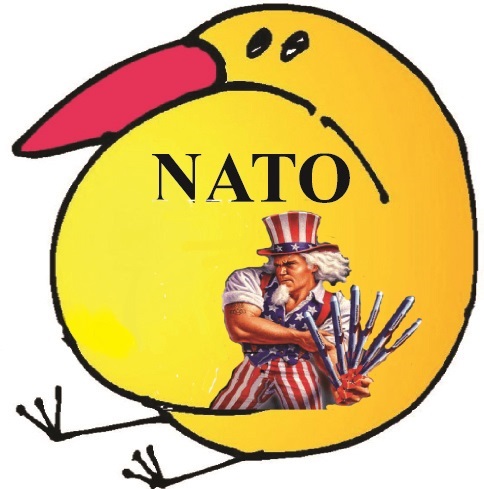
Trump’s hardball tactics have extorted greater allied cooperation and reasserted US domination over the organization.
By Jonathan Ng , Truthout. November 29, 2025, https://truthout.org/articles/trumps-peace-with-nato-reinforces-its-purpose-us-led-global-hegemony/?utm_source=Truthout&utm_campaign=d2f1ccd0ed-EMAIL_CAMPAIGN_2025_11_29_05_59&utm_medium=email&utm_term=0_bbb541a1db-d2f1ccd0ed-650192793
This October, Secretary of War Pete Hegseth dominated the NATO ministerial meeting in Brussels, while pressuring Europeans to assume an even heavier share of the defense burden. Referring to his peers as “ministers of war,” Hegseth demanded that member states purchase additional U.S. arms for Ukraine. “All countries need to translate goals into guns,” he hammered home. “That’s all that matters: hard power.”
Following Hegseth’s lead, NATO Secretary General Mark Rutte is now directing a campaign to secure arms purchase commitments. Rutte emphasizes that he is “proud” of the alliance’s ongoing assistance to Ukraine, noting that Russia has “lost 1 million people — dead or seriously wounded.”
Hegseth’s strongarm tactics and fundraising drive showcase the power dynamics that underlie NATO policymaking. In recent years, the organization has portrayed itself as an alliance of democracies confronting unprovoked aggression in Ukraine and China’s meteoric rise. Yet fundamentally, NATO is a U.S.-dominated forum, rather than a symposium of equals — a reality that Rutte’s relentlessly patient handling of the Trump administration makes clear.
Since 1949, members have exploited the alliance to solidify American global leadership, coordinate interventionism, and contain rivals that challenge Western influence. Rather than promote peace, NATO continues to pose one of the greatest threats to international stability by fueling armed conflicts in Ukraine and across the world.
NATO’s Fascists
NATO often portrays itself as a principled alliance of democracies confronting authoritarian rivals. But historically, the organization has collaborated with far-right intellectuals and statesmen, in order to maintain its military-industrial edge and geopolitical power. Following World War II, U.S. officials protected Wernher von Braun and around 1,500 other Nazi scientists from prosecution, while integrating them into the alliance’s scientific establishment. Eventually, the German General Adolf Heusinger, whose men butchered Jews and tossed children into wells, became a senior NATO commander.
For decades, Spain’s fascist strongman, Francisco Franco, was also an essential alliance partner. Between 1951 and 1953, the United States negotiated the Pact of Madrid, securing access to Spanish military bases and turning the country into a staging ground for NATO operations.
During negotiations, Washington appeared outwardly critical of Franco, while assuring his blood-soaked regime that it prioritized cooperation — a balancing act that insiders labeled a “comedy.” Privately, the U.S. embassy dismissed moral reservations, suggesting that officials approach relations “from a practical, even selfish, point of view,” since collaboration “could pay dividends in our own interest.” After concluding the pact, U.S. authorities praised Spain, a country studded with mass graves, for its “defense of the free world.” And Spanish bases became NATO launchpads in the escalating Cold War.
That came at a cost. In 1966, one of the U.S. Strategic Air Command’s B-52 bombers crashed above Palomares, releasing four hydrogen bombs over the seaside town. Residents remember a scalding wind and enormous fireball bursting over the horizon. “We thought that it was the end of the world,” one explained. The U.S. government promised to clean up the radioactive waste, but instead left the region riddled with plutonium particles. For the Spanish left, Palomares was the victim of NATO, an organization increasingly inseparable from the Franco dictatorship.
Continue readingThe architecture of a vassal: how US bases in Australia project power, not protection.

2 December 2025 Andrew Klein, https://theaimn.net/the-architecture-of-a-vassal-how-us-bases-in-australia-project-power-not-protection/
The strategic placement of key US and joint military facilities across Australia reveals a pattern not of national defence, but of integration into a global, offensively-oriented network for force projection and intelligence gathering. An analysis of their locations and functions demonstrates that these bases are designed to serve the strategic interests of a superpower, often at the expense of Australian sovereignty and security.
The Official Rationale: A Volatile Region and the Strategy of Denial
According to official Australian government assessments, the strategic environment is increasingly volatile, characterised by falling international cooperation, rising competition, and uncertainty about US reliability. In response, Australia’s National Defence Strategy: 2024 has adopted a “strategy of denial,” emphasising deterrence as its primary objective. This policy shift is used to justify initiatives such as:
- Acquiring nuclear-powered submarines through AUKUS.
- Upgrading and expanding northern military bases.
- Acquiring new long-range strike capabilities.
The public-facing logic is that longer-range weapons have overturned Australia’s geographic advantage, making the “sea-air gap” to the north a vulnerability. However, a closer examination of the specific facilities tells a different story.
Pine Gap: The Beating Heart of Global Surveillance
The Joint Defence Facility Pine Gap, near Alice Springs, is the most prominent example. Ostensibly a joint facility, it is a critical node in US global intelligence. Its functions extend far beyond any defensive mandate for Australia.
- Global Signals Intelligence: Pine Gap acts as a ground control and processing station for US geosynchronous signals intelligence (SIGINT) satellites. These satellites monitor a vast swath of the Eastern Hemisphere, collecting data including missile telemetry, anti-aircraft radar signals, and communications from mobile phones and microwave transmissions.
- Warfighting and Targeted Killing: Information from Pine Gap is not merely for analysis. It is used to geolocate targets for military action. The base has played a direct role in US drone strikes and has provided intelligence in conflicts from Vietnam and the Gulf War to the ongoing wars in Gaza. Experts testify that data downlinked at Pine Gap is passed to the US National Security Agency and then to allies like the Israel Defense Forces, potentially implicating Australia in international conflicts without public knowledge or parliamentary oversight.
- A History of Secrecy and Sovereignty Betrayed: The base’s history is marked by breaches of Australian sovereignty. During the 1973 Yom Kippur War, the US government placed Pine Gap on nuclear alert (DEFCON 3) without informing Australian Prime Minister Gough Whitlam. Whitlam’s subsequent consideration of closing the base was followed by his dramatic dismissal in 1975, an event that former CIA officers have linked to US fears over losing access to the facility.
Northern Bases: Launchpads for Power Projection
The network of bases across Australia’s north forms an arc designed for forward operations, not homeland defence.
- RAAF Base Tindal: This base in the Northern Territory is undergoing upgrades to host US B-52 strategic bombers. This transformation turns Australian territory into a forward operating location for long-range strike missions deep into Asia, fundamentally changing the nation’s role from a sovereign state to a launching pad for another power’s offensive operations.
- Marine Rotational Force – Darwin: The stationing of up to 2,500 US Marines in Darwin functions as a persistent force projection and logistics hub, enhancing the US ability to rapidly deploy forces into the Southeast Asian region.
- NW Cape (Harold E. Holt): The facility in Exmouth, Western Australia, hosts advanced space radar and telescopes for “space situational awareness.” This contributes to US space warfare and communications capabilities, a global mission with little direct relation to the defence of Australia’s population centres.
The True Cost: Compromised Sovereignty and Incurred Risk
This integration into a superpower’s military apparatus comes with severe, often unacknowledged, costs.
- The Loss of Sovereign Control: The operational control of these critical facilities is often ceded to the United States. At Pine Gap, the chief of the facility is a senior CIA officer, and certain sections, such as the NSA’s cryptology room, are off-limits to Australian personnel. This creates a situation where activities conducted on Australian soil are not fully known or controlled by the Australian government.
- Becoming a Nuclear Target: The critical importance of bases like Pine Gap to US global military dominance makes them high-priority targets in the event of a major conflict. By hosting these facilities, Australia voluntarily assumes the risk of being drawn into a nuclear exchange, a strategic decision made without public debate.
- Complicity in International Conflicts: As the protests and legal actions surrounding Pine Gap’s role in Gaza highlight, Australia faces legal and moral accusations of complicity in actions that may constitute war crimes or genocide. This places the nation in direct opposition to international law and global public opinion, all for the sake of an alliance that often prioritises US interests.
Conclusion: From Independent Ally to Integrated Base
The evidence is clear: the strategic network of US-linked bases in Australia is not primarily for the nation’s defence. It is the architecture of a vassal state, designed to service the global force projection and intelligence-gathering needs of a superpower. From the satellite surveillance of Pine Gap to the bomber forward deployment at Tindal, these facilities entangle Australia in conflicts far beyond its shores, compromise its sovereignty, and incur immense strategic risks. Until this fundamental reality is confronted, Australian defence policy will continue to serve an empire’s interests, not its own.
References…………………
US Regime Change Interventionism Is Reliably Disastrous, And Other Notes
Caitlin Johnstone, Dec 01, 2025
Trump has bizarrely announced that the airspace over Venezuela is “closed”, posting the following on Truth Social on Saturday:
“To all Airlines, Pilots, Drug Dealers, and Human Traffickers, please consider THE AIRSPACE ABOVE AND SURROUNDING VENEZUELA TO BE CLOSED IN ITS ENTIRETY.”
It isn’t even clear what precisely the president means by this. Are they about to start shooting down Venezuelan aircraft like they’ve been blowing up boats? Are they preparing for a ground invasion? Whatever it is, things are looking ugly.
Washington is banging the war drums trying to justify regime change interventionism in Venezuela under the ridiculous claim that it’s about fighting drug trafficking just as Trump announces that he will pardon former president of Honduras Juan Orlando Hernández, who the US convicted of drug trafficking charges just last year.
Drugs come into the United States from numerous nations in Latin America, and it sure is an awfully interesting coincidence that the one they’re focused on regime changing to stop the drug flow just so happens to be the socialist country with the largest proven oil reserves on the entire planet.
Americans who’ve been rejecting the propaganda for wars in the middle east but now fully buy into it for regime change in Venezuela are the weirdest. That’s like managing to pull your head out of your ass, taking a deep breath, and then shoving it right back in there.
US regime change interventionism is reliably disastrous, and is always justified based on lies. This would be true even if Venezuela really was a major drug trafficking threat and even if Maduro really was the world’s most evil dictator, neither of which are the case. Only idiots and sociopaths are clapping along with the war drums………………………………………………………………………………………………………………………………………………………………. https://www.caitlinjohnst.one/p/us-regime-change-interventionism?utm_source=post-email-title&publication_id=82124&post_id=180313733&utm_campaign=email-post-title&isFreemail=true&r=1ise1&triedRedirect=true&utm_medium=email
The Neocon-Realist Armageddon Over Ukraine
Rubio was in Geneva last Sunday with the Ukrainians and Europeans to undermine Trump’s 28-point plan, trying to replace it with one of just 19 points that unrealistically gives an advantage to Ukraine. Unrealistic because this war has already ended on the battlefield and Trump has virtually acknowledged it.
By Ray McGovern, Consortium News, https://consortiumnews.com/2025/11/28/ray-mcgovern-the-neocon-realist-armageddon-over-ukraine/
Donald Trump made some revealing remarks to the media as he flew to Florida for Thanksgiving on Wednesday. Asked if he thought Ukraine is being asked to give too much land to Russia in his proposal to end the war, Trump responded:
“It’s clearly up to the Russians. It’s moving in one direction. … That’s land that over the next couple of months might be gotten by Russia anyway. So, do you want to fight and loose another 50,000 or 60,000 people? Or do something now? They are negotiating; they are trying to get it done.”
That’s the same realistic approach Trump’s new special envoy to Ukraine, U.S. Army Secretary Daniel Driscoll, took with the Ukrainians and Europe’s so-called “coalition of the willing” during a visit to Kiev earlier this week.
Driscoll reportedly threw in yet one more reason for Ukraine to end the war – the fact that the Russians have ever-growing stockpiles of missiles they can deploy.
In other words, the undeniable Russian advances all along the contact line in Ukraine are no longer deniable to anyone tuned into reality.
But not everyone is tuned in. U.S. Gen. Keith Kellogg, who unrealistically claimed that Ukraine could still win, has been removed as special envoy to Ukraine, but there are other neocons lurking near the White House, for instance, Secretary of State Marco Rubio who also as national security adviser can control the flow of intelligence and policy proposals to the president.
Rubio was in Geneva last Sunday with the Ukrainians and Europeans to undermine Trump’s 28-point plan, trying to replace it with one of just 19 points that unrealistically gives an advantage to Ukraine. Unrealistic because this war has already ended on the battlefield and Trump has virtually acknowledged it.
What’s next is an official agreement, endorsed, ideally by the United Nations Security Council, where France or Britain, however, could veto it, as the Europeans continue their efforts to thwart such a peace agreement.
Britain, France and Germany, for example, are still pushing the fantasy that Russia is poised to attack Europe.
So we are at the threshold on Ukraine, at the beginning of a consequential battle between the neo-cons and Europeans on one side, and Donald Trump and the realists on the other. Will Trump show the fortitude to see this through and overcome his secretary of state?
For now you can dismiss the idea that the so-called “Peace Plan” is “dead on delivery.” It hasn’t even officially been delivered to Russia yet.
Russian President Vladimir Putin awaits hand delivery from U.S. envoy Steve Witkoff probably on Monday – Washington’s recent unorthodox conduct of diplomacy notwithstanding.
My sense is that Witkoff, like Driscoll, will dis the Europeans and go to Moscow with the 28-point draft plan for discussion and that it will adhere to one of the main provisions of Anchorage — namely that Trump will not let Zelinski sabotage movement toward an agreement. Putin told Hungarian President Viktor Orban today in Moscow that he remained open to meeting Trump in Budapest at a future date.
For his part, Putin seems ready to do business. An important backdrop is his priority objective of preventing relations with the U.S. from falling into a state of complete disrepair. As for Ukraine, Putin has reiterated that the 28-point Trump plan could form the basis for future agreements.
Taking questions from the press yesterday in Bishkek, Kyrgyzstan, Putin gave clarity to a number of key issues. He said there was “no ‘draft agreement’ per se,” but rather “a set of issues proposed for discussion and finalization.”
Putin went on:
“We discussed this with American negotiators, and subsequently, a list of 28 potential points for an agreement was formulated.
Thereafter, negotiations were held in Geneva between the American and Ukrainian delegations. They decided among themselves that all these 28 points should be divided into four separate components. All of this was passed on to us.
In general, we agree that this could form the basis for future agreements. However, it would be inappropriate for me to speak now of any final versions, as these do not exist.”
Putin noted that the U.S. — this would be Trump, not Rubio — is “taking our position into account – the position that was discussed before Anchorage and after Alaska. We are certainly prepared for this serious discussion.”
On the question of land, Putin made certain that Russia will not be denied. He said, “I think it will be clear at once what it is all about. When the Ukrainian troops leave the territories they occupy, then the hostilities will cease. If they do not leave, we will achieve it militarily. That’s that.”
Of course, in 2022 Russia entered the Ukrainian civil war that had begun after the 2014 U.S.-backed coup that lead to the U.S.-installed government attacking the ethnic Russian Donbass region, which had rejected the unconstitutional change of government and declared independence.
After eight years of indirectly aiding Donbass, Russia intervened directly after the Minsk agreements to end the civil war were sabotaged by Ukraine and the Europeans. Russia’s war demands have remained demilitarizing and denazifying a neutral Ukraine. In the course of its intervention it has absorbed four Ukrainian oblasts into the Russian Federation, which remains non-negotiable to Moscow.
“Those in the West who understand what [recent Ukrainian defeats on the battlefield] could lead to are pushing for an end to the fighting as soon as possible,” Putin said, referring to the realists in Washington.
“They understand that if the front lines are drawn back in certain areas, the Ukrainian armed forces will lose their combat effectiveness and their most combat-ready units,” he said. “‘Enough is enough, preserve the core of your armed forces and your statehood, that’s what you need to focus on,’ say those who hold this view.”
But he said “others,” referring to the Europeans and neocons, “insist on continuing the hostilities until the last Ukrainian. That’s the difference in approaches.”
Putin tried to put to rest the fear-mongering in Europe about a planned Russian attack on the continent. “Russia does not intend to attack Europe. To us, that sounds ridiculous, does it not?” he said. “We never had any such intentions. But if they want to have it formalised, let’s do it, no problem.”
Putin also reiterated that Russia could only sign a peace agreement with a legitimate government in Ukraine after a new election, another obstacle to overcome.
“I believe that the Ukrainian leadership made a fundamental, strategic mistake when it was afraid to hold presidential elections, and as a result, the president lost his legitimate status,” Putin said. “As soon as any kind of peace agreement is reached, the fighting will stop, and the state of emergency will be lifted, elections will be announced.”
Which is another incentive for Zelensky and those who back him inside and outside of Ukraine to keep on fighting.
“So, basically, we want to reach an agreement with Ukraine in the end, but it’s almost impossible right now, legally impossible. We need our decisions to be internationally recognized by the major international players. That’s it,” said Putin.
He added:
“And so, of course, we need recognition, but not from Ukraine today. I hope that in the future we will be able to come to an agreement with Ukraine: there are many healthy people there who want to build relations with Russia for a long-term historical perspective.”
Peace then will require the complete negation of the neocons and the Europeans and a new government in Kiev — a tall order indeed.
It comes down to whether Trump can finally stand up to them — people whom he appointed, like Rubio, and whom he golfs with, like Sen. Lindsey Graham. He seems to have less respect for the Europeans, who practically sat at his feet around the Oval Office desk earlier this year pleading their case on Ukraine.
Trump may be motivated in part by the vain desire to end the war to win the Nobel Peace Prize. But he can get it done. Trump can ignore the Europeans and be serious this time about cutting off military aid and intelligence to Ukraine as he threatened to do if Zelensky did not accept his 28 points by Thanksgiving.
When it comes to Ukraine, Trump really does hold the cards. Will he play them?
Fighting for Peace and Fighting for War in Ukraine

More importantly, Kiev also rejected Russia’s key demand, thus maintaining the root, main cause of the war: NATO’s and Kiev’s attempts to have Ukraine become a NATO member
Russian and Eurasian Politics, by Gordonhahn, November 26, 2025, https://gordonhahn.com/2025/11/26/fighting-for-peace-and-fighting-for-war-in-ukraine/
We are witnessing another failed effort by U.S. President Donald Trump to make peace in Ukraine. Europe, perhaps along with the Deep State, has helped Kiev reject yet another Trump diplomatic effort. This leaves in place the threat of a Europe-wide war with Russia. Europe very possibly will spark a larger war with Russia.
The effort for peace spawned by the 28-point plan drafted by Steve Witkoff in consultation with Moscow has failed because Kiev again has refused to accept Russia’s key demands: Ukrainian neutrality, territorial concessions, and demilitarization. Denazification appears to a less key demand for Moscow or at least Kiev is willing to make concessions on this point.
Rather than accepting its imminent defeat the Ukrainians joined with their European allies in once again drafting an alternative, completely countervaling and counter-productive peace proposal, which Moscow immediately rejected, having already accepted the Trump document, as „a basis for a future agreement,“ as Russian President Vladimir Putin put it.
This could have led to the beginning of a three-way give and take, but Kiev rejected abandoning the 20 percent of Donetsk Oblast territory its forces still hold and demands an 800,000-man army. More importantly, it also rejected Russia’s key demand, thus maintaining the root, main cause of the war: NATO’s and Kiev’s attempts to have Ukraine become a NATO member, despite the objective threat this poses to Russian national security and Moscow’s opposition to NATO expansion spanning three decades.
Europe immediately declared its opposition to the plan and raced to draft the alternative, Kievan plan to undercut the Trump plan, repeating an exercise they undertook in summer when another Trump diplomatic effort seemed might make some headway. Furthermore, it appears that the Deep State and/or MI6 have helped to spearhead the Eurpean effort to derail the Trump peace train.
The bugging and leak to Bloomberg of a less than compromising conversation between Steven Witkoff and Russian President’s chief foreign policy advisor Yurii Ushakov has been used as was intended: to discredit the peace plan, which neocon propagandists like Michael Weiss have claimed was a purely Russian creation that Trump and other ‚Putin agents‘ dutifully pushed on tot he agenda, doing the Kremlin’s bidding.
Trump’s only hope of acheiving an agreement is to force one by pulling out all the stops in order to pressure Kiev to accede to Moscow’s demands, which are backed up strongly by Russia’s mounting advance across eastern Ukraine towards the Dnieper River.
Only depriving Kiev of all US assistance has a chance of forcing Ukrainian leader Volodomyr Zelenskiy to agree to a neutrality, a small army, and territorial losses. But Trump does not want to be blamed for helping Russia to achieve its war goals and to be able to claim a military victory over both Ukraine and NATO. Trump cannot abode a semi-credible propaganda campaign tot he effect that it was he is a loser, that he lost the NATO-Russia Ukrainian War, imagined by most in the West as ‚Putin’s full-scale, unprovoked war against Ukraine.‘ This is the stalement – one between Trump’s political needs and personal weaknesses, European and Kievan elites political-survival needs requiring Russia’s defeat, and Russia’s realistic perceptions of its national security’s min imal requirements – there is no stalement on the battlefield.
Only two outcomes are possible immediately – that is, during Trump’s presidency: (1) Russia takes all of Ukraine east of the Dniester or (2) a European-wide war begins when some Europeans deploy forces to western Ukraine and they are attacked by Russia and/or when Ukraine or its Western partners orchestrate some false flag operation to justify an escalation. These two outcomes both can occur sequentially.
The first outcome is already underway prompting panic and desparate steps in global neocon circles from Washington to Stanford to London and Paris. Russian forces are taking Kupyansk in the north on their way to Kharkov. After Kharkov, the road is open to western Kiev. Russian troops are finishing the capture of the important conglomeration and hub of Pokrovsk and Myrnograd, which opens the way to the last significant Ukrainian strong point of Pavlograd, located a mere 15 miles from the major industrial city of Dnipro on the Dnieper.
Further to the south, Russian forces have already entered Guliapole after having finished up sweeping through several small towns in the wake of capturing Vugledar 13 months ago. The southern city of Zaporozhia on the Dnieper also is now in site. Gulaipole is halfway from Vugledar to Zaporozhia, with Russian forces moving twice as fast as they were moving immediately after taking Vugledar. In addition to these forces marching west, other Russian forces are fighting towards the city from the south. That is the Russia will be at the Dnieper in force along a broad front in a matter of months, with Dnipro and Zaporozhia likely to fall in 1-3 months. There is no stopping the Russian army now. Its manpower, weapons superiority, and morale are increasing, while those of Kiev are in persistent decline.
The second outcome, which becomes more possible, as European and Kievan elites scramble to avoid political, professional and even personal disaster for themselves, is a European provocation of a larger European war. The French are making more and more insistent noises about sending troops to Odessa and elsewhere in Ukraine. And the voices calling for the deployment of European troops to Ukraine are becoming increasingly shrill.
Most recently, Gen. Fabien Mandon, French army’s new chief-of-staff, told a congress of mayors that France’s must muster will to fight:
“We have the know-how, and we have the economic and demographic strength to dissuade the regime in Moscow.”
“What we are lacking – and this is where you [the mayors] have a role to play – is the spirit. The spirit which accepts that we will have to suffer if we are to protect what we are.
“If our country wavers because it is not ready to lose its children … or to suffer economically because the priority has to be military production, then we are indeed at risk.
“You must speak of this in your towns and villages” (www.nytimes.com/2025/11/24/world/europe/france-voluntary-military-service.html).
Simultaneously, former NATO Secreytary General Anders Fogh Rasmussen declared: „Europe must stop waiting for signals from Washington and take the initiative in Ukraine. Paper guarantees mean nothing to Putin. Only concrete commitments matter. That’s why I now call for Europe to deploy up to 20,000 troops behind Ukraine’s front lines, establish an air shield with around 150 combat aircraft, and unlock frozen Russian assets. Europe earns its seat at the table by bringing real capability, not by asking for permission“ (https://x.com/AndersFoghR/status/1993221555166310410?s=20).
Europe’s ruling neocon-neoliberal elite are ‚simulacrats‘; they believe they can create reality on the basis of an the old world long dead and a new world it imagines, attempts to construct, make real by way of propaganda and the fear and hate it can induce. The old war of different glorious national pasts is mixed with the fictional new world of a Europe with perfect, pure democracies, histories, cultures, motives, and policies facing a putrid, barbarian Russia driven by an inexhaustible thirst for domination, power, and violence. Reality can be instantly reconfigured. First, Russia is a weak authoritarian regime with clay feet of oil and terror and an army that captures an uninhabited Ukrainian village or two per month. Then it is capable of conquering Europe, being at your front door virtually any day now.
The choice between war and peace should be an easy one. To be sure, Mr. Putin seems to have chosen war back in February 2022. However, there was good cause, and he softened the blow by conducting not the full-fledged massive invasion of Western mythology but a limited invasion force of some 100,000 troops and using little of Russia’s monumental air power. Moreover, he immediately contacted Kiev for peace talks, seeking an end to NATO expansion in Ukraine and the massive military buildup there equipped and trained by NATO. Mr. Zelenskiy immediately agreed to talk, and the ensuing Istanbul process yielded a treaty initialed by both sides in late March.
But the West chose a more serious war. The Bucha false flag ‘Russian massacre‘ was organized and Washington sent its British minion, then PM Boris Johnson to inform Kiev that the West would not provide the security guarantees, upon which much of Kiev’s agreement to the treaty rested and promised military and other assistance ‘for as long as it takes.‘ Putin’s short war for Russian nationals security became Ukraine’s long war for NATO. Now it is one for the survival of the Maidan regime and perhaps of NATO and the EU.
Some in the West have changed the nature of its assistance, struggling to build an offramp from destruction for Kiev, but others appear ready to offer in full the Ukrainian sacrificial lamb on the altar of NATO expansion ‘for as long as it takes‘ for Trump to leave the Oval Office and a new proponent of war for dying, democratic Ukraine‘ takes his place.
What? Peace in Our Time in Ukraine?
Whad’ya mean we don’t get to dictate a settlement just because we’re the losers?
This, in a single sentence, is the position shared across the West and in Kiev. Trump’s latest sin — and this plan counts as another in many quarters — is that what he and his people now propose favors simple realities over elaborate illusions.
The Trump regime’s 28–point Ukraine peace plan accepts Moscow’s core concerns as legitimate. That’s essential for any possible settlement of the war, or the broader crisis between Russia and the West.
by Patrick Lawrence, Consortium News, November 26, 2025, https://consortiumnews.com/2025/11/24/patrick-lawrence-what-peace-in-our-time/
There are any number of reasons you may not like, or may even condemn, the 28–point peace plan the Trump regime has drafted to advance toward a settlement of the war in Ukraine.
You may be among those many all across the Western capitals who simply cannot accept defeat on the reasoning — is this my word? — that the West never loses anything, and it certainly cannot lose anything to “Putin’s Russia.”
You may think that President Donald Trump and those who produced this interesting document, which leaked out in the course of some days last week, have once again “caved” to the Kremlin.
The outstanding contribution in this line comes from the ever-mixed-up Tom Friedman, who argued in last Sunday’s editions of The New York Times that Trump is to be compared with Neville Chamberlain and Trump’s plan with the much-reviled British prime minister’s “appeasement” of Hitler via the Munich Agreement of September 1938.
I cannot think of a klutzier interpretation of history or a more useless comparison, given it sheds not one sliver of light on what the document to hand is about.
Or you may stand on principle and attempt the well-worn case that Ukraine is a liberal democracy — let me write that phrase again just for fun — Ukraine is a liberal democracy, altogether “just like us,” and must be defended at all costs in the name of freedom, the rights of the individual, free markets, etc.
Or you may think this is no time for the United States and its European clients to relent in their unceasing effort to destabilize the Russian Federation. Those of this persuasion cannot, of course, acknowledge that Ukraine is nothing more than a battering ram in this dreadful cause, at this point much-bloodied. This dodge tends to swell the ranks of those professing the defense of democracy against autocracy as their creed.
Anyone paying attention to the reactions to the Trump plan among the trans–Atlantic policy cliques and the media that serve them has heard all of this and more these past few days. I find it all somewhere between pitiful and amusing.
Pitiful because those who so wildly overinvested in the corrupt, Nazi-infested regime in Kiev prove incapable of acknowledging that Ukraine lost its war with Russia long ago, and this attempt to subvert Russia now proves a bust.
Amusing because those who so wildly over-invested in the corrupt, Nazi-infested regime in Kiev now squirm at the thought that the victor will have more to say about the terms of peace than the vanquished.
Whad’ya mean we don’t get to dictate a settlement just because we’re the losers?
This, in a single sentence, is the position shared across the West and in Kiev. Trump’s latest sin — and this plan counts as another in many quarters — is that what he and his people now propose favors simple realities over elaborate illusions.
Those asserting that the Trump plan caters to the Kremlin are not altogether wrong, to put this point another way. They are merely wrong in their objections. These 28 points, with many elaborations —No. 12 is followed by 12a, 12b, 12c and so on — indeed give Russia a lot — but not all — of what it has spent years attempting to negotiate.
The missed point is plainly stated: It is a very wise and fine thing finally to recognize the legitimacy of Russia’s perspective. At this point what will serve Russia’s interests will also serve Ukraine’s and the interests of anyone who thinks an orderly world is a good idea.
couple of things to note before briefly considering the contents of the Trump plan. I am working from a copy of the text apparently leaked to the Financial Times last Thursday.
One, it is a working document, nothing more. Trump’s people, notably Marco Rubio, Trump’s secretary of state, and Steve Witkoff, the New York property investor now serving as Trump’s special envoy, had extensive negotiations with Ukrainian and European delegations in Geneva over the weekend. These are to continue.
Trump earlier gave the Kiev regime until Thanksgiving, this Thursday, to accept or reject its terms, and he has not since said anything differently. But the Trumpster has already stated that if things are going well this deadline can be superseded. All is subjective.
Two, Rubio and Witkoff take credit for drafting this plan, reportedly in consultation with Kirill Dmitriev, the chief executive of Russia’s sovereign wealth fund, who seems sometimes to serve as a diplomat close to the Kremlin. But it has Trump’s name on it, and anything with the Trumpster’s name on it is subject to radical and unpredictable revision or withdrawal at any time.
Promise of Enduring Settlement
Setting these matters aside:
There are numerous on-the-ground provisions among its 28 clauses. No. 19 specifies that the Zaporizhzhia nuclear power plant along the Dnieper River, controlled by Russian forces since March 2022, less than a month into the war, will be restarted under the authority of the International Atomic Energy Agency, and the electricity it generates will go equally to Russia and Ukraine. Russia is to allow Ukrainians to use the Dnieper “for commercial activities” (No. 23).
There is to be a prisoner swap (No. 24a) and, a family reunion program (24c). A general amnesty will extend to “all parties involved in the conflict” (No. 26). “Measures will be taken,” No. 24d states, “to alleviate the suffering of victims of the conflict.”
These clauses, boilerplate humanitarian provisions and low-hanging fruit, are worthy enough, but read to me as greeting-card niceties next to the weightier items in this plan.
There is the much-discussed, much-disputed question of territory. Crimea and the Donbas — Luhansk and Donetsk — will be recognized as Russian territory, but de facto as against de jure. Why this distinction, the Russians would be perfectly right to ask.
The land from which Ukrainian forces will be required to withdraw will be designated a demilitarized zone that belongs to Russia, but the Russians will not be permitted to enter it. Again, what is this all about? As to Kherson and Zaporizhzhia, the southerly provinces Russia and Ukraine each partially control, they are to be divided and fixed at the current line of contact.
No. 22: “After agreeing on future territorial arrangements, the Russian Federation and Ukraine undertake not to change these arrangements by force.”
It is hard to say how either side will view these proposed divisions of territory. They award Moscow much of what it has demanded for some time, but in qualified fashion, and take away from Kiev much of what it has long said it will never surrender. So: Not enough for the Russians? Too much for the Ukrainians?
In my read the drafters’ intent here is to set down working language on the territory question as the basis of a lot of horse-trading. If I am correct, the U.S. side is not saying Kiev must accept or reject these terms as written so much as Kiev must agree finally to stop striking poses and do serious business at the mahogany table.
To be noted in this connection: It is long past time to dismiss all the rubbish of the past three years to the effect that Moscow’s intent has been to seize and occupy all of Ukraine. It is as ridiculous as the Europeans’ preposterous assertions — more cynical than paranoiac —that if the Russians are not stopped in Ukraine they will soon be in London and Lisbon.
Rubio Neo-Conned Trump’s Ukraine Peace Plan.
This time, by golly, Trump was finally going to step up and end a conflict nearly a year after he promised to end it 24 hours.
And then Rubio walked in.
Rubio jetted off to Geneva to help lick the wounds of the European “leaders” who are dedicated to fighting the Russians down to the last Ukrainian.
” By the end of the weekend, Rubio had taken the reins because the conversations became more flexible, the official said.”
Daniel McAdams Ron Paul Institute for Consortium News, https://scheerpost.com/2025/11/26/rubio-neo-conned-trumps-ukraine-peace-plan/
So goes President Trump’s 28 point peace plan to end the Russia/Ukraine war. Revealed at the end of last week, the plan initially received a cautious but cautiously optimistic reception in Moscow.
It was hardly a dramatic tilt toward the Russian position. Many of the plan’s points ranged from the implausible to the bizarre.
For example, the idea that President Donald Trump would be crowned some sort of “peace czar” overseeing the deal, and that Russia would agree to use its seized assets to rebuild Ukraine.
Then there is the one that Russia should accept a demilitarized “buffer” zone taking up a good chunk of Donetsk (which itself would be “de facto” part of Russia but not de jure – and thereby subject to the vicissitudes of Western electoral politics).
And of course, there was the part where the U.S. would share the “profits” from Russia’s paid reconstruction of Ukraine.
Very Trumpian, very weird.
Nevertheless, the flawed plan (in terms of Russian acceptance) dropped like an atom bomb on the U.S. neocons and their European counterparts. Trump’s peace plan was “entirely dictated by Putin,” the U.K. Independent breathlessly tells us.
Yes, that is how propagandistic the western mainstream media really is. And suddenly we are back to Russiagate and accusations the Trump is acting as Putin’s puppet – or at least stenographer.o goes President Trump’s 28 point peace plan to end the Russia/Ukraine war. Revealed at the end of last week, the plan initially received a cautious but cautiously optimistic reception in Moscow.
It was hardly a dramatic tilt toward the Russian position. Many of the plan’s points ranged from the implausible to the bizarre.
For example, the idea that President Donald Trump would be crowned some sort of “peace czar” overseeing the deal, and that Russia would agree to use its seized assets to rebuild Ukraine.
Then there is the one that Russia should accept a demilitarized “buffer” zone taking up a good chunk of Donetsk (which itself would be “de facto” part of Russia but not de jure – and thereby subject to the vicissitudes of Western electoral politics).
At the political level, E.U. foreign affairs chief Kaja Kallas pretty well summed up the level of delusion among the European elite: “We have not heard of any concessions from Russia. If Russia really wanted peace, it could have agreed to an unconditional ceasefire a long time ago.’”
Yes, Kaja “Sun Tzu” Kallas. Military history teaches us that every army making rapid gains on the battlefield periodically pauses to make concessions to the losing side. Otherwise, it wouldn’t be fair, and not everyone would get a trophy.
President Trump’s demand that Ukraine’s acting president, Zelensky, accept the terms by Thanksgiving or face a cut-off in U.S. military and intelligence assistance put the Europeans and U.S. hawks in panic mode.
It appeared Trump was finally tired of playing Hamlet after the framework he presented in Alaska in August was agreed upon by Russia and then abandoned by Trump himself after receiving an earful from said Europeans and U.S. neocons.
This time, by golly, Trump was finally going to step up and end a conflict nearly a year after he promised to end it 24 hours.
And then Rubio walked in.
The one lesson Trump 2.0 did not learn from Trump 1.0 is that the personnel is the policy, particularly with a president who appears uninterested in details and disengaged from complex processes. Trump 1.0 was dragged down by neocon albatrosses John Bolton and Mike Pompeo, among others.
Even a Col. Douglas Macgregor brought in in the 4th quarter at the two minute warning to throw a “Hail Mary” pass to get us out of Afghanistan was tackled behind the line of scrimmage by Robert O’Brien, Trump’s final National Security Advisor and neocon dead-ender.
Neocons are wreckers. That’s the one thing they are good at.
The inclusion of new blood in the person of Vice President Vance ally, Army Secretary Dan Driscoll – who supplanted terminally clueless Trump envoy Keith Kellogg – offered the promise that finally the realist faction in the shadows of the Trump Administration would have their shot.
Then the rug was pulled. Again.
Rubio jetted off to Geneva to help lick the wounds of the European “leaders” who are dedicated to fighting the Russians down to the last Ukrainian.
Politico lets us in on what happened next, in a piece titled, “Rubio changes the tack of Trump’s Ukraine negotiations after week of chaos.”
“Before Rubio showed up in Switzerland, it largely felt like Vice President JD Vance, via his close friend Driscoll, was leading the process. By the end of the weekend, Rubio had taken the reins because the conversations became more flexible, the official said.”
“Flexibility” means that we are back to square one, with a reversion to the Kellogg/Euro view that the side winning a war should unilaterally freeze military operations in favor of the losing side.
Politico continued:
“Rubio’s participation in the talks produced much more American flexibility, the four people familiar with the discussions said. Rubio told reporters on Sunday night that the aim is simply to finalize discussions ‘as soon as possible,’ rather than by Thanksgiving.”
That loss of momentum and destruction of the sense of urgency means we have returned to the endless bickering of the eternally deluded voices who even in the face of rapid recent Russian advances believe that Ukraine is winning – or could win with a few hundred billion more dollars – the war against Russia.
Never mind the golden toilets. Suddenly that’s out of the news.
At the end of the day, all the drama changes little. As President Putin himself said while meeting with his own national security council (h/t MoA):
“Either Kiev’s leadership lacks objective reporting about the developments on the front, or, even if they receive such information, they are unable to assess it objectively. If Kiev refuses to discuss President Trump’s proposals and declines to engage in dialogue, then both they and their European instigators must understand that what happened in Kupyansk will inevitably occur in other key areas of the front. Perhaps not as quickly as we would prefer, but inevitably.
And overall, this development suits us, as it leads to achieving the goals of the special military operation by force, through armed confrontation.”
In other words, Russia is happy to achieve its objectives through negotiation, which would save lives and infrastructure especially in Ukraine. But it is also willing to continue its accelerating push to achieve those objectives militarily. And no fever dreams of war with Russia from the likes of former NATO chief Anders Fogh Rasmussen is going to change that.
Marco Rubio is a pretty bad Kissinger, and Kissinger was bad enough. At some point – and that point may have now passed – the Russians are going to rightly conclude that they have no negotiating partner in a U.S. still dominated by people like the former Senator from Florida whose first love is regime change in Venezuela and Cuba.
Whatever the case, Trump should be pretty miffed that Marco threw a spanner in what would have been a world record, unprecedented, universally-praised, like-nothing-the-world-has-ever-seen, solving of NINE wars in just his first year in office!
1 This Month


Shut down the radiation-damaged Heysham nuclear reactors now
To see nuclear-related stories in greater depth and intensity – go to https://nuclearinformation.wordpress.com

Say No to NASA’s Reckless Nuclear Reactor on the Moon
Say No to NASA’s Reckless Nuclear Reactor on the Moon
-
Archives
- October 2026 (256)
- September 2026 (339)
- August 2026 (330)
- July 2026 (355)
- June 2026 (287)
- May 2026 (306)
- April 2026 (356)
- March 2026 (251)
- February 2026 (267)
- January 2026 (308)
- December 2025 (358)
- November 2025 (359)
-
Categories
- 1
- 1 NUCLEAR ISSUES
- business and costs
- climate change
- culture and arts
- ENERGY
- environment
- health
- history
- indigenous issues
- Legal
- marketing of nuclear
- media
- opposition to nuclear
- PERSONAL STORIES
- politics
- politics international
- Religion and ethics
- safety
- secrets,lies and civil liberties
- spinbuster
- technology
- Uranium
- wastes
- weapons and war
- Women
- 2 WORLD
- ACTION
- AFRICA
- Atrocities
- AUSTRALIA
- Christina's notes
- Christina's themes
- culture and arts
- Events
- Fuk 2022
- Fuk 2023
- Fukushima 2017
- Fukushima 2018
- fukushima 2019
- Fukushima 2020
- Fukushima 2021
- general
- global warming
- Humour (God we need it)
- Nuclear
- RARE EARTHS
- Reference
- resources – print
- Resources -audiovicual
- Weekly Newsletter
- World
- World Nuclear
- YouTube
-
RSS
Entries RSS
Comments RSS

