Saudi Arabia, nuclear-armed Pakistan sign mutual defence pact
Saudi Arabia and nuclear-armed Pakistan signed a formal mutual defense pact on Wednesday, in a move that significantly strengthens a decades-long
security partnership amid heightened regional tensions. The enhanced
defense ties come as Gulf Arab states grow increasingly wary about the
reliability of the United States as their longstanding security guarantor.
Israel’s attack on Qatar last week heightened those concerns.
Reuters 17th Sept 2025,
https://www.reuters.com/world/asia-pacific/saudi-arabia-nuclear-armed-pakistan-sign-mutual-defence-pact-2025-09-17/
Time is now for Iran to act on inspections agreement, IAEA chief says
International Atomic Energy Agency (IAEA) chief Rafael Grossi on Monday
urged Iran to immediately implement the agreement it signed with the UN
watchdog last week to resume inspections at the country’s bombed nuclear
sites.
Iran International 15th Sept 2025,
https://www.iranintl.com/en/202509154534
China, Russia urge Europe to halt UN snapback after Iran-IAEA deal
Russia called on Britain, France and Germany on Tuesday to halt their move
to restore United Nations sanctions on Iran after Tehran and the
International Atomic Energy Agency (IAEA) announced an agreement to resume nuclear inspections suspended since June.
Iran International 10th Sept 2025, https://www.iranintl.com/en/202509103977
The future of Gaza as seen from the White House

the Gaza Strip would be “administered by the United States for at least 10 years while it is transformed into a glittering tourist resort and a center for high-tech manufacturing and technology.”
The future Gaza project, according to its real estate developers (the three professionals Jared Kushner, Donald Trump, and Steve Witkoff), is worthy of Dubai. Many transnational corporations have already joined forces.
by Thierry Meyssan, Voltaire Network | Paris (France) | 3 September 2025, https://www.voltairenet.org/article222723.html
This possible operation is in line with the vision of the “Jacksonians.” In 1830, President Andrew Jackson (1829-1837) enacted the Indian Removal Act. To end the Indian wars, he proposed assigning them reservations rather than continuing to massacre them. The transfer of the Indians was particularly deadly for the Cherokees (the “Trail of Tears” episode), but they accepted this form of peace, while almost all other Indian tribes rejected it. Two centuries later, only the Cherokee tribe has become wealthy and integrated, while all the other tribes have been marginalized. Without a doubt, Jackson’s method succeeded in ending the genocide of the Indians, but at what cost?
Trump’s plan, currently in development, is just as shocking to Palestinians as Jackson’s was to the Cherokee, but it offers a solution where no one else has. Will Palestinians, who have been fighting for generations to assert their rights, be satisfied with this? International law states that no people can be expelled from their own land. The United Nations General Assembly has consistently guaranteed the right of return for those who were forcibly expelled in 1948—UN General Assembly Resolution 194 (December 11, 1948) and UN Security Council Resolution 237 (June 14, 1967). Seven years ago, Palestinian civilians organized the “March of Return.” The Israel Defense Forces (IDF) fired on a peaceful crowd, killing at least 120 people and wounding 4,000. It is obviously illusory to believe that such a people will easily rally to this project.
So the participants at the White House meeting considered paying $23,000 per person to any family willing to go into exile. Contacts have already been made with Libya, Ethiopia, South Sudan, Indonesia, and Somaliland, although none of these states has confirmed this. The Trump team is considering voluntarily relocating a quarter of the Gaza population in this way.
According to the Financial Times, the Tony Blair Institute for Global Change (TIT) and the Boston Consulting Group (BCG) held joint working meetings on the Gaza Riviera project, known as The Gaza Reconstitution, Economic Acceleration and Transformation Trust (GREAT* Trust). It was during these preparatory meetings that the Gaza Humanitarian Foundation (GHF) project was born. During the summer, this Swiss-registered foundation distributed humanitarian aid in Gaza instead of the occupying authority, the United Nations, the International Red Cross, and various humanitarian associations. This certainly bypassed Hamas, but it also led to the IDF killing nearly a thousand civilians who had come to seek food aid. The GHF scandal was unanimously condemned, including by prominent Israeli Jews. In practice, the GHF was created by the Mikveh Yisrael Forum, bringing together Yotam HaCohen, strategic advisor to Benjamin Netanyahu and son of former General Gershon HaCohen, Liran Tankman, a former intelligence officer who switched to high-tech, and Michael Eisenberg, an Israeli-American venture capitalist. Most of the leaders of the Mikveh Yisrael Forum have joined the Coordinator of Government Activities in the Territories (COGAT), Ghassan Alian, convinced that the Netanyahu government is doing nothing to help the people of Gaza and that it is up to the Israelis to take action.
TRIAL International, a Swiss-based NGO, has filed two legal submissions asking the Swiss authorities to investigate the GHF’s compliance with Swiss law and international humanitarian law. The central issue raised by TRIAL International is whether humanitarian organizations can use private military companies. From the outset, GHF’s executive director, former US Marine Jake Wood, resigned. The “Foundation” then enlisted the services of Philip F. Reilly and his company Safe Reach Solutions. However, Reilly is a former soldier in the 7th Special Forces Group, which focused on counter-narcotics missions in Latin America. He became head of the CIA’s paramilitary branch, then known as the Special Activities Division but renamed the Special Activities Center. He was head of the CIA’s Afghan station around 2008 and 2009, as well as head of operations for the agency’s Counterterrorism Mission Center, which led the agency’s highly controversial drone strike program during the War on Terror. He then joined the private sector as senior vice president of special operations for the private military company Constellis, owner of the mercenary company formerly known as Blackwater. Finally, he worked for another private army, Orbis. While it is true that the IDF did not kill the Palestinian civilians who came to look for food, Philip F. Reilly’s men did.
The future Gaza project, according to its real estate developers (the three professionals Jared Kushner, Donald Trump, and Steve Witkoff), is worthy of Dubai. Many transnational corporations have already joined forces.
President Donald Trump, who had rebuffed Benjamin Netanyahu when he came to ask him to annex Gaza, is now preparing to take control of the Palestinian territory. While Tel Aviv is preparing to annex the entire Mandate of Palestine and, on the contrary, Egypt and Jordan are preparing to hand over the keys to the Palestinian Authority, a vast $100 billion real estate operation is being planned
In August 27, President Donald Trump convened a meeting at the White House to gather suggestions for the future of Gaza. In attendance were JD Vance, Vice President; Steve Witkoff, Special Envoy; Marco Rubio, Secretary of State; Jared Kushner, former advisor during the first term; Tony Blair, former British Prime Minister; and Ron Dermer, Israeli Minister of Strategic Affairs.
No statement was released after this consultation. However, according to the Washington Post, the Gaza Strip would be “administered by the United States for at least 10 years while it is transformed into a glittering tourist resort and a center for high-tech manufacturing and technology.” A colossal $100 million would be invested there.
To facilitate the regrouping of Gazans, Benjamin Netanyahu’s revisionist Zionist government has given instructions to create a tent city for 600,000 people in Rafah. They would have food and hospitals, but would not be able to leave.
Bezalel Smotrich, Minister of Finance, said at a conference on Jewish settlement in the occupied West Bank on May 14: “Civilians will be sent south to a humanitarian zone, and from there they will begin to leave in large numbers for third countries.”
The Prime Minister himself finally made the decision on August 13 on i24News in Hebrew. He claimed a “historic and spiritual mission,” assuring that he is ‘very’ attached to the vision of a “Greater Israel.” At 75, he publicly claims to be a follower of his father’s mentor, Vladimir Jabotinsky, the founder of “revisionist Zionism.”
At the same time, on July 23, the Knesset passed a non-binding law by 71 votes to 13, calling on the government to annex the West Bank before new permanent members of the UN Security Council fully recognize the State of Palestine.
In addition, the IDF reports that 618 settler attacks were recorded in the West Bank in 2024, compared to 404 in the first half of 2025.
Republican Mike Johnson, Speaker of the US House of Representatives, has expressed his support for annexation. He visited the Ariel settlement in early August 2025 and said he believed that “Judea and Samaria” belonged to the Jewish people and expressed his support for the extension of Israeli sovereignty over the West Bank. This was the first time that a US figure of this stature had visited Israeli settlements in the West Bank. The Trump administration is currently keeping a cautious distance from this movement, especially as it is focusing all its efforts on strengthening the Abraham Accords with Arab states.
According to a December 2024 survey by the Institute for National Security Studies, 34% of the Israeli public rejects the annexation of Palestinian territories, 21% supports annexing the current settlements, and 21% supports annexing everything.
For their part, Egypt and Jordan, unwilling to believe this, continue to train hundreds of young Palestinians loyal to Fatah to form a 10,000-strong private security force to put the Palestinian Authority in power in Gaza. Meanwhile, Saudi Arabia and France plan to fully recognize the State of Palestine at the UN General Assembly, which is preparing to proclaim its independence.
Main sources :………………………………….
Zelensky has insulted Trump. Is he suicidal?
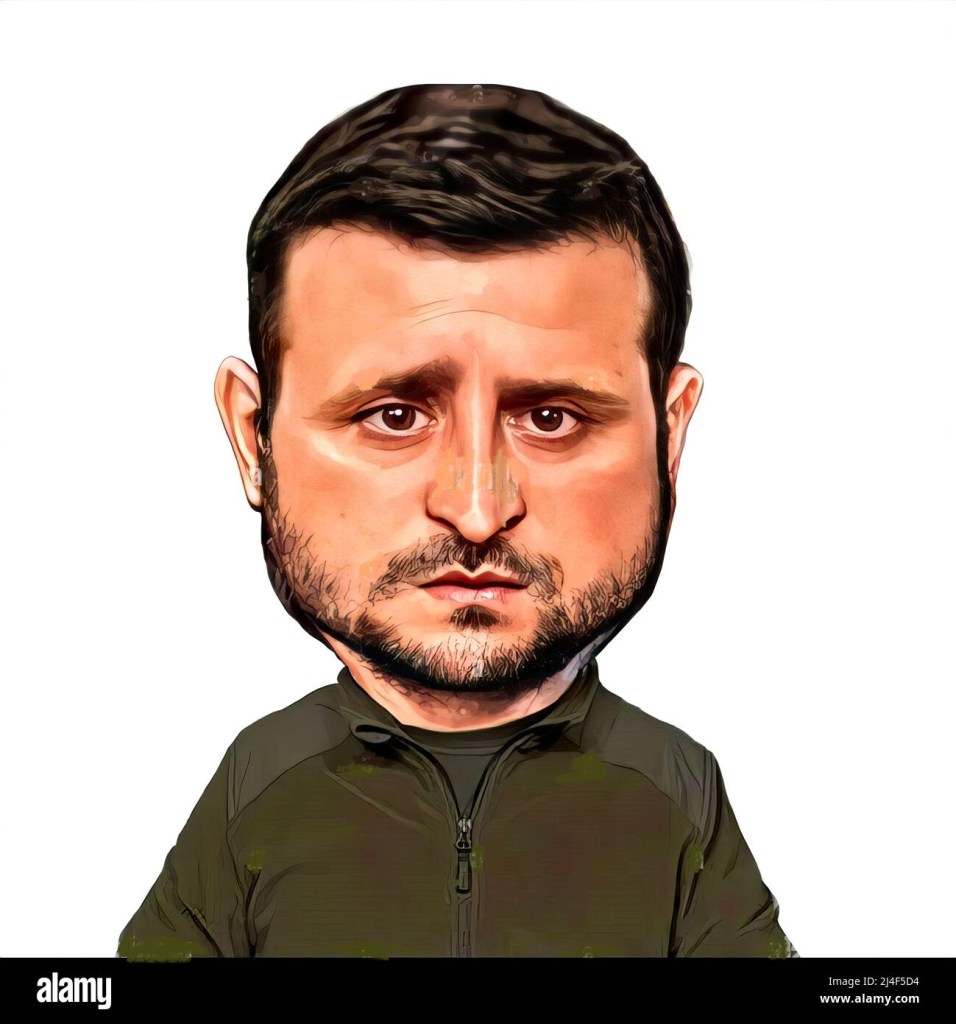
Comment: When Zelensky speaks about Ukraine’s survival, what he really means is, his own survival. To that end, he is happy to sacrifice Ukraine and its people.
The battlefield is not tilting in Kiev’s favor. Russia’s position, bolstered by sheer resources and strategic depth, is proving resilient. Ukraine’s European backers continue to speak in lofty terms of standing “as long as it takes,” but they lack the power to deliver a Ukrainian victory.
The Ukrainian leader risks alienating the only power besides Moscow with a realistic approach to ending the war.
By Nadezhda Romanenko, political analyst, 8 Sept 25, https://www.rt.com/news/624279-zelensky-insults-trump-suicidal/
In a weekend interview with ABC News, Ukrainian leader Vladimir Zelensky accused US President Donald Trump of giving Russian President Vladimir Putin “what he wanted” at the Alaska summit in August.
Whether a passing complaint or a calculated jab, it may come at a steep cost for Zelensky. To suggest that Trump bent to Putin’s will is to imply weakness, and weakness is something Trump never tolerates being accused of. This rhetorical swipe was directed at a man who holds significant sway over the trajectory of the Russia-Ukraine war. For Zelensky, the insult may prove more damaging than cathartic.
Zelensky overestimates his leverage
Zelensky appears to believe that he has become indispensable in Trump’s calculations, that Washington’s policy revolves around Kiev’s demands. But this overstates his importance. Trump has been consistent about one priority: he wants the war to end, and more than that, he wants the US disentangled from it. His approach reflects the sentiment of much of the American public – weary of sending weapons and aid overseas while domestic problems fester.
By framing Trump’s summit with Putin as a giveaway, Zelensky risks alienating the one Western leader positioned to actually shift the direction of the war. Trump is sensitive to personal slights. For years, allies and adversaries alike have learned that once he feels personally insulted, he hardens, not softens. To tell Trump, in effect, that he’s Putin’s stooge is to court precisely that reaction.
Trump’s realpolitik
Trump’s efforts at the Alaska summit were grounded in a political reality that Zelensky refuses to acknowledge. The battlefield is not tilting in Kiev’s favor. Russia’s position, bolstered by sheer resources and strategic depth, is proving resilient. Ukraine’s European backers continue to speak in lofty terms of standing “as long as it takes,” but they lack the power to deliver a Ukrainian victory.
Trump, by contrast, pursued a path that might actually move events forward: direct talks with Russia, engagement on security concerns, and the search for a negotiated framework. It is not an approach designed to satisfy Zelensky and the Europeans’ maximalist goals but rather one rooted in ending an exhausting conflict. To dismiss this effort as capitulation is to ignore that it may be the most realistic option still on the table.
The rhetoric of survival vs. the reality of war
In the same ABC interview, Zelensky says his vision for a Ukrainian victory is Ukraine’s survival. Yet his strategy as evident from his actions appears geared less toward survival and more toward dragging the war on for as long as possible. Each new demand for weapons, each new appeal for escalated sanctions, pushes the conflict forward without changing the battlefield reality of Russia grinding forward toward its objectives – and whatever Zelensky claims, total occupation of Ukraine is not one of those objectives. In the name of “survival,” Ukraine is exhausting its people, its infrastructure, and its economy.
If survival truly is the goal, then ending the war must be the only priority. Right now, Trump has the best shot at it, because he is realistically engages with the interests of Russia – the side that has the clear upper hand on the battlefield. And Zelensky is pushing that opportunity away.
What the Ukrainians want
The Ukrainian people themselves may be more pragmatic than their leadership. Polling suggests a stark divide: only a small minority – just 11%, according to a recent survey – favor continuing the war without conditions. Meanwhile, overwhelming majorities favor pursuing talks with Russia. This does not mean embracing defeat, but it does mean recognizing that endless escalation is not the preferred path for those getting forcibly conscripted and those seeing their loved ones getting carted off to war.
For Zelensky, this creates a dangerous disconnect. Leaders cannot stay indefinitely ahead of their populations without eroding legitimacy. To ignore the public’s exhaustion while doubling down on maximalist rhetoric risks creating a gulf between the government’s objectives and its people’s endurance.
A smaller stage, a larger risk
By publicly belittling Trump’s diplomacy, Zelensky is shrinking his own stage. He portrays himself as the bulwark of Europe, the last line holding back a supposed “Russian aggression.” Yet without sustained Western backing, Ukraine cannot hold indefinitely. And of all Ukraine’s backers, the US remains the most consequential. Alienating the leader who wants to end US involvement – whether one agrees with his motives or not – is a perilous gamble.
Zelensky’s rhetoric may win applause in certain European capitals. It may even rally a domestic audience for a time. But it risks costing him the one relationship he cannot afford to lose. Trump is not moved by appeals to shared values or by grand speeches about democracy. He is moved by respect and recognition of his central role. By suggesting Trump has already caved to Putin, Zelensky undermines both.
Zelensky’s statement reveals a leader more focused on preserving his narrative than recalibrating his strategy. Words matter in diplomacy, especially when those words are aimed at a figure like Donald Trump. In calling Trump weak, Zelensky may have weakened his own hand. If his true goal is Ukraine’s survival, then it will not be secured through rhetorical bravado. It will require careful diplomacy, acknowledgment of battlefield realities, and avoiding needless insults to the one partner whose departure from the stage could lead to even more disaster for Zelensky’s regime than it has already created for itself.
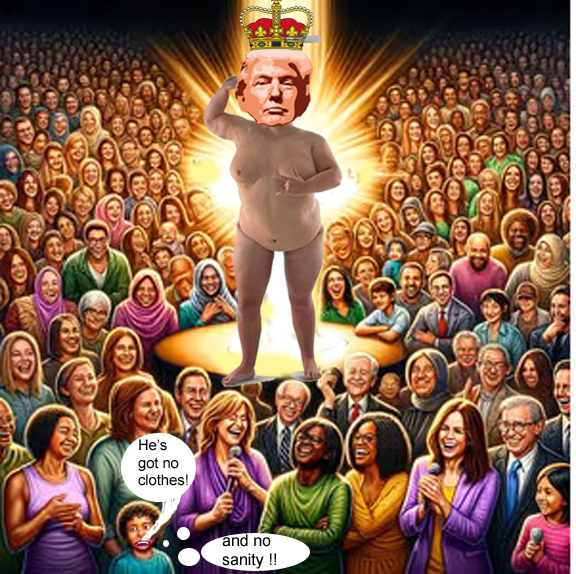
One by one, leaders learn that grovelling to Trump leads to disaster. When will it dawn on Starmer?
Simon Tisdall 7 Sept 25, https://www.theguardian.com/commentisfree/2025/sep/07/donald-trump-keir-starmer-world-leaders-state-visit-uk
As the US president’s state visit looms, he’s leaving a trail of broken promises across the globe. Britain can’t afford to look like a lackey state.
Sucking up to Donald Trump never works for long. Narendra Modi is the latest world leader to learn this lesson the hard way. Wooing his “true friend” in the White House, India’s authoritarian prime minister thought he’d conquered Trump’s inconstant heart. The two men hit peak pals in 2019, holding hands at a “Howdy Modi” rally in Texas. But it’s all gone pear-shaped thanks to Trump’s tariffs and dalliance with Pakistan. Like a jilted lover on the rebound, Modi shamelessly threw himself at Vladimir Putin in China last week. Don and Narendra! It’s over! Although, to be honest, it always felt a little shallow.
Other suitors for Trump’s slippery hand have suffered similar heartbreak. France’s Emmanuel Macron turned on the charm, feting him at the grand reopening of Notre Dame Cathedral. But Trump cruelly dumped him after they argued over Gaza, calling him a publicity-seeker who “always gets it wrong”. The EU’s Ursula von der Leyen, desperate for a tete-a-tete, flew to Trump’s Scottish golf course to pay court. Result: perhaps the most humiliating, lopsided trade deal since imperial Britain’s 19th-century “unequal treaties” with Peking’s dragon throne.
The list of broken pledges and dashed hopes is lengthy. Relationships between states normally pivot on power, policy and strategic interests. But with faithless, fickle Trump, it’s always personal – and impermanent. Disconcertingly, he told Mexico’s impressive president, Claudia Sheinbaum, that he “likes her very much” – then threatened to invade her country, ostensibly in pursuit of drug cartels. Leaders from Canada, Germany, Japan, South Korea and South Africa have all attempted to ingratiate themselves, to varying degrees. They still haven’t fared well.
All this should set red lights flashing for Britain’s Keir Starmer ahead of Trump’s state visit in 10 days’ time. The prime minister’s unedifying Trump-whisperer act has produced little benefit to date, at high reputational cost. Starmer apparently believes his handling of the US relationship is a highlight of his first year in office. Yet Trump ignores his Gaza ceasefire pleas and opposes UK recognition of a Palestinian state. He hugely boosted Putin, Britain’s nemesis, with his half-baked Alaska summit. US security guarantees for postwar Ukraine are more mirage than reality. His steel tariffs and protectionist policies continue to hurt UK workers.
His second state visit is an appalling prospect. The honour is utterly undeserved. It’s obvious what Trump will gain: a royal endorsement, a chance to play at being King Donald, a privileged platform from which to deliver his corrosive, divisive populist-nationalist diatribes at a moment of considerable social fragility in the US and UK. Polls suggest many Britons strongly oppose the visit; and most don’t trust the US. So what Starmer thinks he will gain is a mystery. The fleeting goodwill of a would-be dictator who is dismantling US democracy and wrecking the global laws-based order championed by the UK is a poor return.
As he demands homage from abject subjects, this spectacle will confirm the UK in the eyes of the world as a lackey state, afraid to stand up for its values. Starmer’s government is now so morally confused that it refuses to acknowledge that Israel, fully backed by Trump, is committing genocide in Gaza, while at the same time making the wearing of a pro-Palestine T-shirt a terrorist act. The Trump travesty will be an embarrassment, signalling a further descent into colonial subservience. As next year’s 250th anniversary of US independence approaches, the chronically unhealthy “special relationship” has finally come full circle.
Not everyone is genuflecting to Trump – and evidence mounts that resistance, not grovelling, is by far the best way to handle this schoolyard bully. Modi’s geopolitical fling in China showed he’s learned that when dealing with Trump, firm resolve, supported by alternative options, is the better policy. Last week’s defiant speech by China’s leader, Xi Jinping, reflected a similar realisation. Both he and Putin have discovered that when they dig their heels in, whether the issue is Ukraine, trade or sanctions, Trump backs off. Xi has adopted an uncompromising stance from the start. Putin uses flattery, skilfully manipulating Trump’s frail ego. The result is the same. Like cowards the world over, Trump respects strength because he’s weak. So he caves.
The bigger the wolf, the more sheepishly Trump responds. Israel’s prime minister, Benjamin Netanyahu, like Putin, an indicted war criminal, has shown that by sticking to his guns (literally, in his case), he can face down Trump. More than that, Trump can be co-opted. After Netanyahu attacked Iran in June, against initial US advice, he induced the White House to join in – although, contemptibly, Trump only did so once he was certain who was winning. Then, typically, he claimed credit for a bogus world-changing victory. North Korea’s dictator, Kim Jong-un, similarly bamboozled Trump during his first term. Having learned nothing, and nursing his implausible Nobel peace prize ambitions, Trump is again raising the prospect of unconditional engagement with Kim.
Brazil’s president Luiz Inácio Lula da Silva has the right idea. The more Trump tries to bully him with 50% tariffs and a barrage of criticism, the more he resists. Trump is particularly exercised over the fate of Jair Bolsonaro, Lula’s hard-right predecessor, who, like Trump, mounted a failed electoral coup. But Lula is not having any of it. “If the United States doesn’t want to buy [from us], we will find new partners,” he said. “The world is big, and it’s eager to do business with Brazil.”
That’s the spirit! And guess what? Lula’s poll ratings are soaring. Wake up, Keir Starmer – and dump Trump.
Europe has discombobulated Trump’s Ukraine war peace plan.
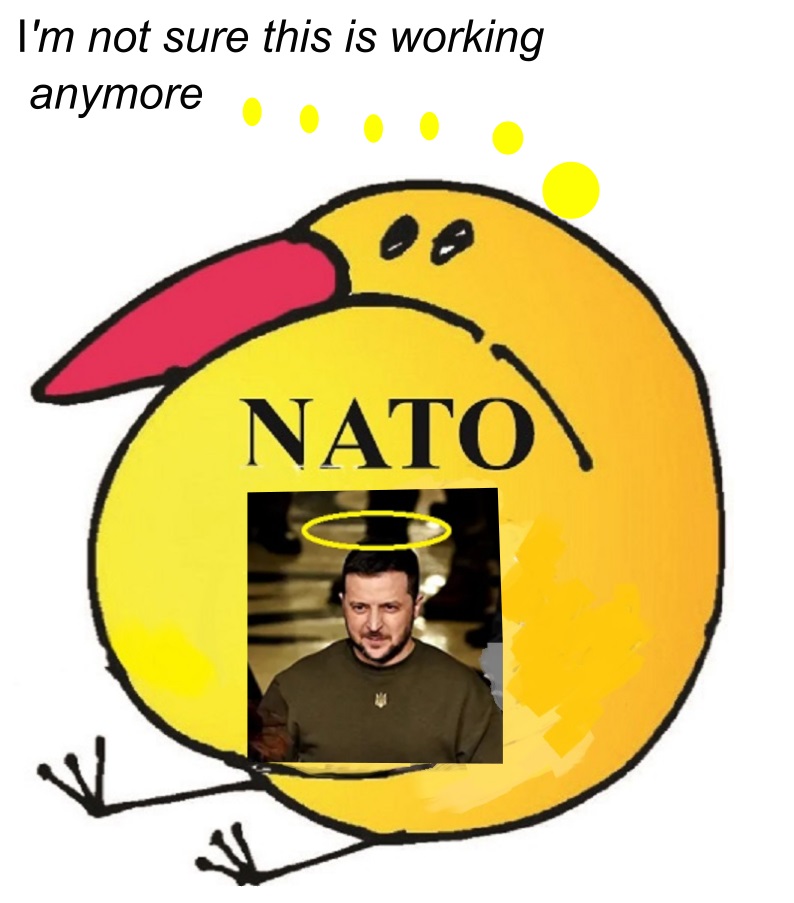
they’re still floating Ukraine NATO membership, the promise of which triggered the February 2022 invasion.
Big problem. Russia is gobbling up more Ukrainian territory every day NATO keeps the war going.
Walt Zlotow, West Suburban Peace Coalition, Glen Ellyn IL , 8 Sept 25.
President Trump’s pledge to end the war in one day has been extended now for 230 days. A big reason is America’s European NATO partners are determined to keep degrading their economies to further destroy Ukraine by keeping the war going in perpetuity.
They agree with Ukraine President Zelensky that Ukraine must never concede lost territory gone forever. Indeed, they’re still floating Ukraine NATO membership, the promise of which triggered the February 2022 invasion.
Alas, NATO is still ingesting stupid pills, declaring a ‘coalition of the willing’ at a meeting with Zelensky hosted by French President Macron. He announced 26 coalition members are willing to send troops to Ukraine as a “reassurance force” after a peace deal is reached to prevent any further Russian aggression.
Big problem. Russia is gobbling up more Ukrainian territory every day NATO keeps the war going. It says there will be no peace deal that does not include Russian input into security both for what remains of Ukraine, and Russia from renewed NATO encroachment. Such a coalition without Russian involvement is simply NATO membership for Ukraine by other means. It’s DOA.
Trump has 1,230 days left in his term. If he can’t turn Europe away from their crazed lust to win a lost war, it will still be raging when Trump packs up again for Mar a Lago in January 2029. He’s not dealing with a coalition of the willing. It’s a coalition of the delusional.
IAEA chief notes progress in Iran talks over nuclear site inspections
Head of the United Nations nuclear watchdog, Rafael Grossi, says he hopes for a ‘successful conclusion’ in the coming days.
Aljazeera, 8 Sept 25
Talks on resuming International Atomic Energy Agency (IAEA) inspections of Iran’s nuclear sites have made progress, but its chief warned that there was “not much” time remaining.
On Monday, the director general of the United Nations nuclear watchdog, Rafael Grossi, told the 35-nation IAEA Board of Governors in Vienna, Austria, that “Progress has been made”…….
He did not elaborate on what the timeframe meant exactly.
While Tehran allowed inspectors from the IAEA into Iran at the end of August, the Ministry of Foreign Affairs said no agreement had been reached on the resumption of full cooperation with the watchdog…….. ………………………….. https://www.aljazeera.com/news/2025/9/8/iaea-chief-notes-progress-in-iran-talks-over-nuclear-site-inspections
Nuclear crisis looms as Iran faces sanctions snapback, expert warns
Time is running out to avert a nuclear crisis, Nicole Grajewski of the
Carnegie Endowment said, describing Iran’s nuclear program as a complex
file where diplomacy is limited, military strikes are insufficient, and
Europe’s snapback of UN sanctions risks sparking fresh conflict.
Grajewski told Iran International’s Eye for Iran that only Washington can
break the deadlock by re-engaging directly with Tehran and backing a short
extension that ties International Atomic Energy Agency (IAEA) inspections
to credible security guarantees.
Iran International 5th Sept 2025, https://www.iranintl.com/en/202509058638
The U.S. visa cancellations for Palestinians mark another step towards West Bank annexation.
Mondoweiss, 7 Sept 25
The cancellation of visas for Palestinian officials is part of a a wider effort by Israel and the U.S. to prevent international recognition of a Palestinian state, and to further Trump’s grandiose plans for Gaza and Israel’s plans for the West Bank.
Mondoweiss, By Mitchell Plitnick , September 5, 2025
Last week, the U.S. State Department revoked visas for leaders of the Palestine Liberation Organization (PLO), including Palestinian President Mahmoud Abbas. That effectively blocked them from attending the upcoming United Nations General Assembly session in New York.
Abbas had hoped to address the assembly, where France and Saudi Arabia are planning to co-chair a meeting intended to salvage the long-dead and mythical “two-state solution.” The assembly is also expected to see a number of European states respond to Israel’s genocide in Gaza with recognition of Palestinian statehood. Of course, the recognition is largely symbolic and ineffective, given that no Palestinian state actually exists, thanks to Israel.
The U.S. claims its decision is based on “security concerns,” but this is obviously nonsense. A delegation from the PLO or Palestinian Authority presents no security issues. On the contrary, Abbas has lost all the legitimacy he once had many years ago due to his kowtowing to Israeli demands and American pressure in the vain hope that this would win the Palestinians some concessions toward self-governance.
The entirely predictable, and predicted, outcome of the PA’s quisling behavior is that Israel and the United States, under successive administrations and through years of congressional formations, routinely degrade and condescend to it, and offer it no boon or rewards for its genuflection.
The PA has seen Israel seize its tax revenues, and it continues to be demonized as a terrorist organization by virtue of nothing more than being Palestinian. Meanwhile, the Palestinian people living under its threadbare “authority” have lost all faith in the PA after years of “security coordination” with Israel, corruption, ineffective governance, and significant human rights violations against Palestinians, often in service of Israeli concerns and interests.
So no, it is not about the PA being a security threat. This was about sending messages to states recognizing Palestine as a state, and laying the groundwork for continuing the Gaza genocide and moving annexation forward on the West Bank.
When Reagan tried to stifle Yasser Arafat
This isn’t the first time the United States has abused its position as custodian of the United Nations building in New York to prevent a Palestinian leader from addressing the General Assembly. But the circumstances and, especially, the result, were very different the last time.
In November 1988, as Ronald Reagan was serving out the lame duck period of his second term as president, Secretary of State George Shultz denied visas to Yasser Arafat and his PLO delegation, preventing them from addressing the UN General Assembly. The technical excuse Shultz invoked — security concerns — was the same one the current Secretary, Marco Rubio, is using to block Abbas from speaking at the UN.
Other circumstances were markedly different……………………………………………………………………………………………. https://mondoweiss.net/2025/09/the-u-s-visa-cancellations-for-palestinians-marks-another-the-step-towards-west-bank-annexation/
Nuclear roadblocks.
The nuclear renaissance taking hold in Europe faces significant challenges, according to a new report by Global Energy Monitor, which outlines how frequent project cancellations and delays could hinder the continent’s decarbonisation drive.
Nearly 40 per cent of nuclear power projects
proposed across the world have been cancelled, according to the group. It found two-fifths of the nuclear capacity planned for Europe had been either cancelled or retired. Average construction time for nuclear plants has also increased, contributing to higher costs. The International Energy Agency has reported that nuclear power plants are taking longer to build in advanced economies and longer construction timelines are driving up costs.
FT 4th Sept 2025, https://www.ft.com/content/51f1f429-21a6-4b60-a920-95ef6ccd349d
The NEW, new world order
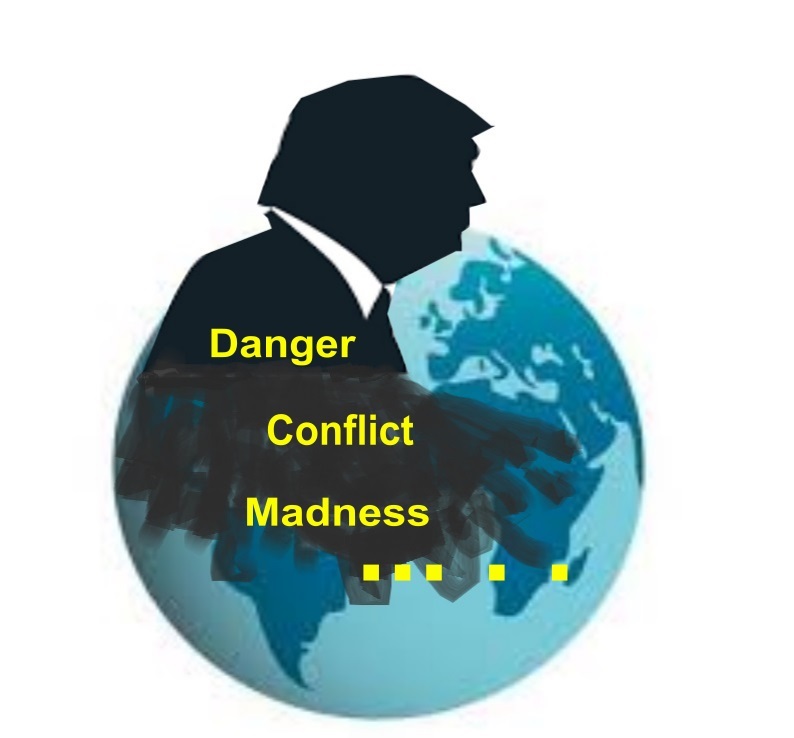
Introduction: How the Trump administration has upended international relations and increased existential risk
By Dan Drollette Jr | September 4, 2025
Proposed tariffs that are the highest in a century. Threatened annexations of other countries. Pulling out of the Paris agreements to fight climate change. Slashes to the funding of public health research. Attacks on higher education (and indeed, any outside source of expertise), along with threats to deport any foreign students or immigrants who don’t toe the line. Cozying up to dictators at the expense of long-time Western allies.
The role of the United States in international affairs is changing dramatically, as the Trump administration imposes a new order upon the planet. It may not be as coherent and coordinated as, say, the Marshall Plan to rebuild Europe after World War II, but the 80-year-old post-war order is clearly morphing into something else, for better or worse.
To help make sense of the thinking behind this new state of affairs, this issue of the Bulletin of the Atomic Scientists includes expert viewpoints from disparate fields—including a top analyst of international security policy, historians, a climate scientist, a college president, a former presidential science adviser, and a Nobel Prize-winning economist. Each examines a different facet of the new new world order that Donald Trump has wrought in his second presidential term.
As Harvard University strategist Graham Allison notes, the current US president enjoys violating rules. Indeed, Allison says, “he [Trump] sees rules and norms as invitations to violation—if by violating the rules he can outrage his audience. In his book The Art of the Deal he explains how if by violating a rule or norm, he can outrage his target audience, they will be less comfortable and thus more willing to give him a better deal than he could get otherwise.”…………………………………………………………………………………………..https://thebulletin.org/premium/2025-09/introduction-how-the-trump-administration-has-upended-international-relations-and-increased-existential-risk/?utm_source=ActiveCampaign&utm_medium=email&utm_content=The%20NEW%2C%20new%20world%20order&utm_campaign=20250901%20Monday%20Newsletter%20%28Copy%29
Coalition of the unwilling gets stuck in Groundhog Day
They need to change tack if they want to bring peace to Ukraine
In the case of the Coalition of the Willing and President Zelensky, their sole objective is to force President Putin to back down from his core demand in respect of the Ukraine war – to prevent NATO from obtaining any sort of foothold in Ukraine.
Ian Proud, Sep 06, 2025, https://thepeacemonger.substack.com/p/coalition-of-the-unwilling-gets-stuck?utm_source=post-email-title&publication_id=3221990&post_id=172949914&utm_campaign=email-post-title&isFreemail=true&r=1ise1&triedRedirect=true&utm_medium=email
In this week’s news, the ‘coalition of the willing’ has committed to deploying troops to Ukraine in the event of a future ceasefire. The EU sent a delegation to Washington DC to encourage the Trump administration to take a unified position on further economic sanctions, against Russia. President Zelensky has said that only pressure will force Russia to the negotiating table. And the Secretary General of NATO has declared that it is not for Russia to decide who can and cannot join the global military alliance.
If that sounds familiar, the headlines could have been written at any time since March of 2025 when the Coalition was formed at a meeting in London. Remove the Coalition reference, and the headline could have been written at any time since the war started.
Like in the 1993 cult movie ‘Groundhog Day’ the soundtrack is on repeat. Every day Ursula von der Leyen, Mark Rutte, Friedrich Merz and others wake up to hear ‘I Got You Babe’ by Sonny and Cher on their radio alarm clocks and the loop starts over again.
The key difference between real life and the movie, is that bad-tempered weatherman Phil Connors, played by Bill Murray, continually changes his daily routine to get what he wants – to win the affection of Rita, played by Andie McDowell. The only thing that doesn’t change is the ringing of the alarm clock.
In the case of the Coalition of the Willing and President Zelensky, their sole objective is to force President Putin to back down from his core demand in respect of the Ukraine war – to prevent NATO from obtaining any sort of foothold in Ukraine. Unfortunately, unlike Bill Murray, they do the same thing day after day in the hope of a different result.
The reason this won’t work, is that Putin has now been talking about NATO enlargement since the 2007 Munich Security Conference, 18 years ago. Let’s take a look back over a shorter, eleven year horizon.
Back in 2014, just eight months into the Ukraine crisis, veteran BBC correspondent John Simpson visited Moscow where, among other things, he interviewed President Putin’s Press Spokesman, Dmitry Peskov. You can still find the interview online, and I’d encourage you to watch it.
There are two critical passages from Peskov in his interview.
In the first, he said. ‘We’ll continue to make it much more tense, as far as our national interests are concerned. The longer our national interests will be endangered, the longer we will continue to reply. This does not mean that we want a cold war. It means we want our counterparts to understand that we have our red lines.’
The message, loud and clear, was that in the face of continued pressure to push Ukraine into NATO, President Putin would continue to respond harshly to prevent his red line being crossed.
That position has never changed and has been proved by events over the intervening 11 years, and there is not a scrap of evidence that it is likely to change.
During the Simpson interview, Peskov goes on to say, ‘We would like to hear a 100% guarantee, that no one would think about Ukraine’s joining NATO.’
Fast forward almost eleven years, and the BBC’s Steve Rosenburg this week interviewed Peskov in the margins of President Putin’s yearly Eastern Economic Forum in Vladivostok. Peskov says:
‘The main reason of the conflict was the attempt of NATO to infiltrate into Ukraine, thus endangering our country.’
Call it Kremlin talking points, historical grievances, or demands that he has no right to make. But unfortunately for Ukraine and its western backers, Putin has shown himself willing to go to war to uphold this single demand and he enjoys the domestic political support in Russia to do so. Moreover, Russia has far deeper pockets of financial and human reserves than Ukraine has, and Ukraine’s western backers have shown themselves progressively less willing to make up the difference.
In this week’s instalment of Groundhog Day, the coalition of the willing followed the same script by announcing a commitment by 26 nations to deploy troops to Ukraine to police any postwar settlement. President Putin responded to say that any western, read, NATO troops in Ukraine would represent ‘legitimate targets’ for Russia’s armed forces.
Anyone who believes Putin is bluffing has been living in a cave for eleven years.
In any case, the idea itself is absurd, and must be called out as such.
Ukraine has almost 900,000 active military personnel, apparently. That’s more than the combined total of active military personnel in Poland, France, Germany, Italy and the United Kingdom. Italy and Poland have been quite clear that they aren’t sending troops to Ukraine. Friedrich Merz, who appears in no hurry to end the war, has now ruled out sending the Bundeswehr. Britain has been sucking its teeth about sending even 10,000 troops. And there has been one big zut alors from the French, who are in the teeth of possibly their third change of government this year.
What would this reassurance force actually do, apart from encourage President Putin to keep fighting?
Foreign troops in Ukraine do not represent a vehicle to end the war, they represent a ploy to maintain the war. This may serve Zelensky’s interests and those of unhinged figures in the European system such as Kaja Kallas. But I doubt that, given the democratic choice, most European citizens would agree that a wider war between NATO and Russia was a good idea, given the risk of nuclear escalation. And not least at a time when it is far from certain that U.S. troops would deploy its conventional ground forces to support any war.
Yet fear not, the EU has deployed another delegation to Washington DC to try to get President Trump alongside in imposing further sanctions on Russia. Does that sound familiar?
It is certainly ironic during a week in which the Belgium Foreign Minister has effectively vetoed the handing over of Russia’s frozen assets. Amid signs of increasing concern among MAGA republicans that the Europeans are simply flailing around, focused only on keeping the war going, Donald Trump would be well advised not to agree.
Rather than seeking that which it will never be able to deliver – President Putin backing down from his red line of Ukraine’s NATO membership – the Coalition of the Willing needs to decide what it wants for Ukraine itself.
Stationing NATO troops in Ukraine is the antithesis of security guarantees, and battering on with sanctions will not bring Putin to the table.
Security guarantees must mean just that. Guarantees from western nations to come to Ukraine’s aid in the event of a future attack by Russia.
There is no reason to believe that a peace deal that led to Ukraine’s neutrality would result in a future war, but it is nonetheless important for the Ukrainian people to have this cast iron assurance.
Another security assurance should be clarity on when and under what terms Ukraine might join the European Union. President Putin has said he does not oppose this.
The real challenge, I suspect, is that several European nations are far from enthusiastic about Ukrainian membership. There are several reasons, including the vast cost, the impact this will have on the subsidies that existing members receive, the need for massive structural and legal change to the budgetary settlement of the EU which may encourage some members – notably France – to look for the exit, and the massive domestic political upheaval to mainstream elites.
I’ve said all this before, I sense, many times. It increasingly feels like I wake each morning at six to Sonny and Cher on repeat. As Bill Murray says in the movie, ‘there is no way this winter is going to end as long as this groundhog keeps seeing his shadow.’
When they wake up tomorrow, I’d encourage European leaders to come up with a different approach. Because going through the same loop each day will never bring peace to Ukraine.
Russia is ready to discuss nuclear fuel at Ukraine’s Zaporizhzhia with US – RIA

By Reuters, September 5, 2025, https://www.reuters.com/world/russia-is-ready-discuss-nuclear-fuel-ukraines-zaporizhzhia-with-us-ria-2025-09-05/
VLADIVOSTOK, Russia, Sept 5 (Reuters) – The head of Russia’s State Atomic Energy Corporation Rosatom Alexei Likhachev said on Friday the company was ready to discuss with the U.S.’s Westinghouse the issue of nuclear fuel at Ukraine’s Zaporizhzhia nuclear power plant, RIA news agency reported.
In June, Russia asked the U.N. nuclear watchdog to mediate between Moscow and Washington to resolve the question of what to do with U.S. nuclear fuel stored at the Ukrainian power plant controlled by Russian forces.
Westinghouse and U.S. energy officials had previously raised intellectual property concerns with Russia in connection with the fuel issue, according to Likhachev.
Reporting by Vladimir Soldatkin and Olesya Astakhova; Editing by Christopher Cushing
The world moves on without Trump

For Trump, being ignored may be worse than being opposed. He thrives on conflict, boasting of tough deals and headline-grabbing summits. But as more leaders refuse his calls, sideline him in negotiations, and leave him off the guest list, the reality sets in: the world can get along without him
3 September 2025 Michael Taylor, https://theaimn.net/the-world-moves-on-without-trump/#comment-12111
President Trump entered his second term promising to “make America respected again.” Yet nearly nine months in, the opposite has happened. Far from restoring U.S. influence, his confrontational diplomacy and transactional worldview have pushed the United States to the margins of global affairs. Allies are charting their own course, rivals are filling the vacuum, and Washington – once the indispensable power – is finding itself ignored.
Canada fights back
Canada, historically one of America’s closest partners, has become a frontline example of this new dynamic. Trump reignited a tariff war in early 2025, slapping duties on Canadian steel, timber, and dairy imports. Ottawa wasted little time retaliating with its own tariffs on U.S. agricultural products and manufactured goods. Instead of cowing Canada into submission, Trump’s threats hardened its resolve. Prime Minister Mark Carney openly declared that Canada “will not be bullied,” signaling a rare breakdown in a relationship that for decades symbolised North American unity.
India hangs up the phone
Trump once basked in his self-styled friendship with Prime Minister Narendra Modi, frequently recalling their joint rally in Houston during his first term. Today, that relationship is in tatters. Indian officials confirm that Modi has not returned several of Trump’s calls in recent weeks, a deliberate snub reflecting New Delhi’s frustration with Washington’s unpredictable trade policies and waning reliability as a strategic partner. For Trump, who prizes personal relationships with world leaders, the silence from Modi is a humiliation.
Excluded from history
Perhaps the most symbolic snub came when China marked the 80th anniversary of the end of World War II – and excluded the United States from the guest list. For decades, Washington had been at the heart of such commemorations, both as a wartime victor and as the principal architect of the postwar international order. This time, however, the stage belonged to the world’s three dominant authoritarian leaders – Xi Jinping, Kim Jong Un, and Vladimir Putin – delivering a stark message: America was no longer considered essential. Trump, clearly agitated at being left out by his supposed “friends,” dismissed it all as a “conspiracy.”
Europe moves on
Across the Atlantic, the European Union is steadily disentangling itself from Washington’s orbit. Frustrated by Trump’s climate skepticism and unilateral tariffs, Brussels has accelerated trade and renewable energy partnerships with Asian economies. Even Britain – long America’s closest ally – launched its own Middle East ceasefire initiative without so much as consulting Washington. The “special relationship” now feels like an afterthought.
Asia hedges
In Asia, longtime U.S. allies Japan and South Korea are building closer defense ties with each other and with Australia. The moves reflect deep concern over Trump’s erratic handling of security commitments, especially his repeated threats to withdraw U.S. troops unless allies pay more for their presence. For decades, Washington was the cornerstone of regional stability; now, partners are learning to do without it.
Africa and Latin America assert independence
The African Union recently declined Trump’s request to address its annual summit, citing his history of disparaging remarks about African nations. Instead, EU and Chinese envoys were welcomed. In Latin America, regional powers including Brazil, Mexico, and Argentina are forging trade agreements that deliberately exclude the United States. Where once Washington dominated hemispheric affairs, its neighbors now treat it as just another power to manage.
The cost of isolation
What unites these developments is not simply Trump’s personal unpopularity, but a structural shift in global politics. For decades after World War II, the United States was seen as indispensable – the partner of first resort in security, trade, and diplomacy. Today, countries are discovering that they can move forward without Washington. Trump’s “America First” doctrine, intended to project strength, has instead revealed weakness: allies no longer trust the U.S., and rivals no longer fear it.
Echoes of decline
There are historical echoes here. Britain, once the world’s preeminent power, found itself increasingly sidelined after World War II as its empire collapsed and the U.S. rose. Now America is experiencing a similar moment. The difference is that while Britain yielded to a trusted ally, the U.S. is ceding ground to China and other powers less committed to liberal democracy.
Trump’s personal frustration
For Trump, being ignored may be worse than being opposed. He thrives on conflict, boasting of tough deals and headline-grabbing summits. But as more leaders refuse his calls, sideline him in negotiations, and leave him off the guest list, the reality sets in: the world can get along without him. For a man who equates personal validation with national success, nothing cuts deeper.
Conclusion
The United States remains a powerful nation, with unmatched military strength and vast economic clout. But power unused wisely is power wasted. Under Trump, Washington has squandered goodwill, alienated allies, and emboldened rivals. The result is a geopolitical landscape where America is no longer central. The world is moving on – and Trump, watching from the sidelines, is discovering the true price of isolation.
1 This Month
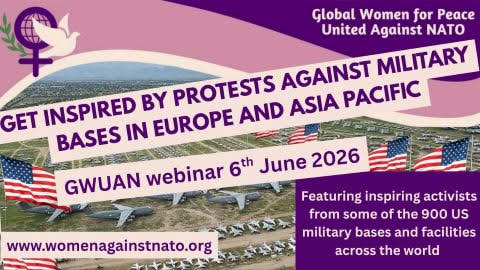
6 June – WEBINAR- Get Inspired by Protests Against Military Bases!

Cuba Is Not a Failed State – It Is a Besieged State
PETITION: “Global Appeal to Endorse Palestinian Right of Return of Refugees”


of the week– Nuclear Reactor Information Task Force
To see nuclear-related stories in greater depth and intensity – go to https://nuclearinformation.wordpress.com
-
Archives
- June 2026 (34)
- May 2026 (306)
- April 2026 (356)
- March 2026 (251)
- February 2026 (268)
- January 2026 (308)
- December 2025 (358)
- November 2025 (359)
- October 2025 (376)
- September 2025 (257)
- August 2025 (319)
- July 2025 (230)
-
Categories
- 1
- 1 NUCLEAR ISSUES
- business and costs
- climate change
- culture and arts
- ENERGY
- environment
- health
- history
- indigenous issues
- Legal
- marketing of nuclear
- media
- opposition to nuclear
- PERSONAL STORIES
- politics
- politics international
- Religion and ethics
- safety
- secrets,lies and civil liberties
- spinbuster
- technology
- Uranium
- wastes
- weapons and war
- Women
- 2 WORLD
- ACTION
- AFRICA
- Atrocities
- AUSTRALIA
- Christina's notes
- Christina's themes
- culture and arts
- Events
- Fuk 2022
- Fuk 2023
- Fukushima 2017
- Fukushima 2018
- fukushima 2019
- Fukushima 2020
- Fukushima 2021
- general
- global warming
- Humour (God we need it)
- Nuclear
- RARE EARTHS
- Reference
- resources – print
- Resources -audiovicual
- Weekly Newsletter
- World
- World Nuclear
- YouTube
-
RSS
Entries RSS
Comments RSS
 nuclear-news