What really happened in Alaska
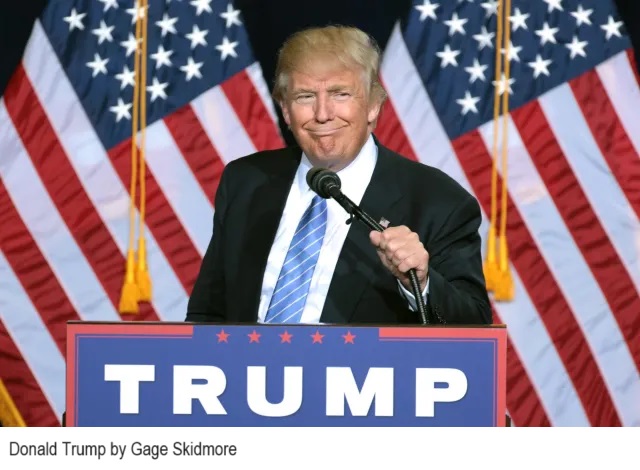
It’s clear that both Trump and Putin are playing a long game. Trump wants to get rid of the pesky two-bit actor in Kiev – but without applying old school US coup/regime-change tactics. In his mind, the only thing that really registers is future, possible, mega trade deals on Russian mineral wealth and the development of the Arctic.
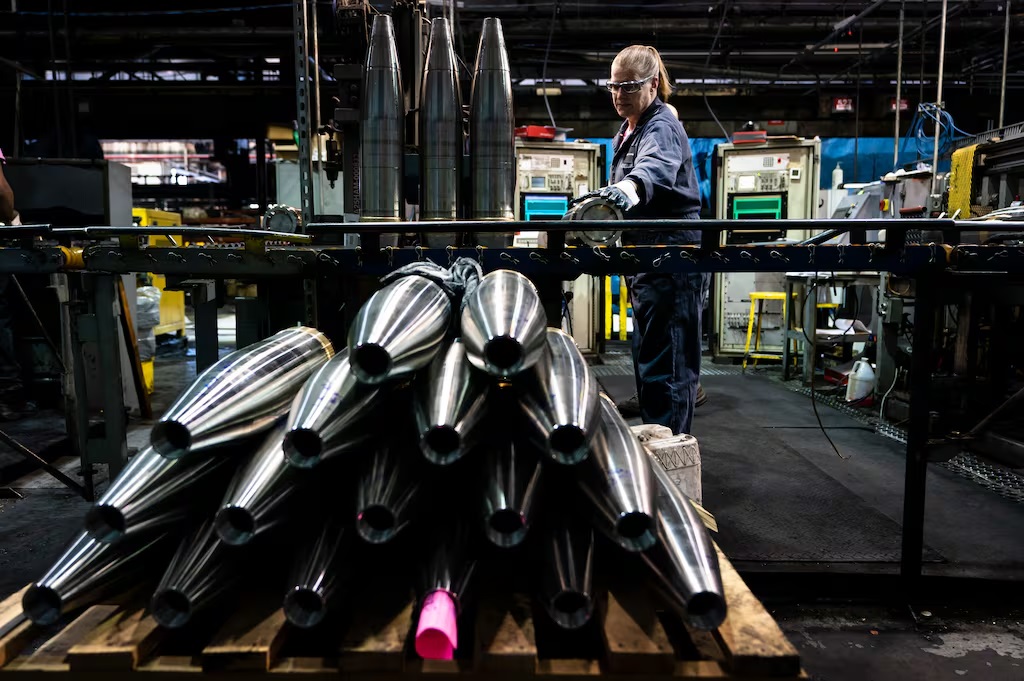
the US seeks a meek Europe subjugated to the strategy of tension, otherwise there’s no EU military surge, buying billions worth of over-priced American weapons with money it doesn’t have.
Pepe Escobar, AUG 18, 2025, https://thecradle.co/articles/what-really-happened-in-alaska
Alaska was not only about Ukraine. Alaska was mostly about the world’s top two nuclear powers attempting to rebuild trust and apply the brakes on an out-of-control train in a mad high-speed rail dash towards nuclear confrontation.
There were no assurances, given the volatile character of US President Donald Trump, who conceived the high-visibility meeting with his Russian counterpart Vladimir Putin. But a new paradigm may be in the works nonetheless. Russia has essentially been de facto recognized by the US as a peer power. That implies, at the very least, the return of high-level diplomacy where it is most needed.
Meanwhile, Europe is dispatching a line-up of impotent leaders to Washington to kowtow in front of the Emperor. The EU’s destiny is sealed: into the dustbin of geopolitical irrelevance.
What has been jointly decided by Trump, personally, and Putin, even before Moscow proposed charged-with-meaning Alaska as the summit venue, remains secret. There will be no leaks about the full content.
Yet it’s quite significant that Trump himself rated Alaska as a 10 out of 10.
The key takeaways, relayed by sources in Moscow with direct access to the Russian delegation, all the way to the 3-3 format (it was initially designed to be a 5-5, but other key members, such as Finance Minister Anton Siluanov, did provide their input), emphasize that:
“It was firmly put [by Putin] to stop all direct US weapon deliveries to Ukraine as a vital step towards the solution. Americans accepted the fact that it is necessary to dramatically decrease lethal shipments.”
After that happens, the ball swings to Europe’s court. The sources specify, in detail:
“Out of the $80 billion Ukrainian budget, Ukraine itself provides less than around $20 billion. The National Bank of Ukraine says that they collect $62 billion in taxes alone, which is a hoax; with a population around 20 million, much more than one million of irreversible battlefield losses, a decimated industry and less than 70 percent of pre-Maidan territory under control that is simply impossible.”
So Europe – as in the NATO/EU combo – has a serious dilemma: ‘Either support Ukraine financially, or militarily. But not both at the same time. Otherwise, the EU itself will collapse even faster.’
Now compare all of the above with arguably the key passage in one of Trump’s Truth Social posts: “It was determined by allthat the best way to end the horrific war between Russia and Ukraine is to go directly to a Peace Agreement, which would end the war, and not a mere Ceasefire Agreement, which often times do not hold up.”
Add to it the essential sauce provided by former Russian president Dmitri Medvedev:
“The President of Russia personally and in detail presented to the US President our conditions for ending the conflict in Ukraine (…) Most importantly: both sides directly placed responsibility for achieving future results in negotiations on ending hostilities on Kiev and Europe.”
Talk about superpower convergence. The devil, of course, will be in the details.
BRICS on the table in Alaska
In Alaska, Vladimir Putin was representing not only the Russian Federation, but BRICS as a whole. Even before the meeting with his US counterpart was announced to the world, Putin spoke on the phone with Chinese President Xi Jinping. After all, it’s the Russia–China partnership that is writing the geostrategic script of this chapter of the New Great Game.
Moreover, top BRICS leaders have been on a flurry of interconnected phone calls, leading to forge, in Brazil’s President Luiz Inacio “Lula” da Silva’s assessment, a concerted BRICS front to counteract the Trump Tariff Wars. The Empire of Chaos, the Trump 2.0 version, is in a Hybrid War against BRICS, especially the Top Five: Russia, China, India, Brazil, and Iran.
So Putin did achieve a minor victory in Alaska. Trump: “Tariffs on Russian oil buyers not needed for now (…) I may have to think about it in two to three weeks.”
Even considering the predictable volatility, the pursuit of high-level dialogue with the US opens to the Russians a window to directly advance the interests of BRICS peers – including, for instance, Egypt and the UAE, blocked from further economic integration across Eurasia by the sanctions/tariff onslaught and the accompanying rampant Russophobia.
None of the above, unfortunately, applies to Iran: The Zionist axis has an iron grip on every nook and cranny of Washington’s policies vis-à-vis the Islamic Republic.
It’s clear that both Trump and Putin are playing a long game. Trump wants to get rid of the pesky two-bit actor in Kiev – but without applying old school US coup/regime-change tactics. In his mind, the only thing that really registers is future, possible, mega trade deals on Russian mineral wealth and the development of the Arctic.
Putin also needs to manage domestic critics who won’t forgive any concessions. The desperate western media spin that he would offer freezing the front in Zaporozhye and Kherson in exchange for getting all of the Donetsk Republic is nonsense. That would go against the constitution of the Russian Federation.
In addition, Putin needs to manage how US business would be allowed to enter two areas that are at the heart of federal priorities, and a matter of national security: the development of the Arctic and the Russian Far East. All that will be discussed in detail two weeks from now, at the Eastern Economic Forum in Vladivostok.
Once again, follow the money: Both oligarchies – in the US and Russia – want to go back to profitable business, pronto.
Lipstick on a defeated pig
Putin, bolstered by Foreign Minister Sergey Lavrov – the undisputed Man of the Match, with his CCCP fashion statement – finally had ample time, 150 minutes, to spell out, in detail, the underlying causes of Russia’s Special Military Operation (SMO) and lay out the rationale for long-term peace: Ukraine neutrality; neo-nazi militias and parties banned and dismantled; no more NATO expansion.
Geopolitically, whatever may evolve from Alaska does not invalidate the fact that Moscow and Washington at least did manage to buy some strategic breathing space. That might yield even a new shot toward respect for both powers’ spheres of influence.
So it’s no wonder the Atlanticist front, from Europe’s old money to the bling bling novices, is freaking out because Ukraine is a giant money laundering mechanism for Eurotrash politicos. The Kafkaesque EU machine has already bankrupted EU member-states and EU taxpayers – but anyway, that’s not Trump’s problem.
Across Global Majority latitudes, Alaska displayed the fraying of Atlanticism in no uncertain terms – revealing that the US seeks a meek Europe subjugated to the strategy of tension, otherwise there’s no EU military surge, buying billions worth of over-priced American weapons with money it doesn’t have.
The Putin–Trump meeting dropped some important veils. It revealed that Washington views Russia as a peer power, and that Europe is little more than a useful American tool.
At the same time, despite covetous US oligarchic private designs on Russian business, what Washington’s puppet masters truly want is to break up Eurasia integration, and by implication every multilateral organization – BRICS, SCO – driven to design a new, multinodal world order.
Of course, a NATO surrender – even as it is being strategically defeated, all across the spectrum – remains anathema. Trump, at best, is applying lipstick on a pig, trying to craft, with trademark fanfare, what could be sold as a Deep State exit strategy, toward the next Forever War.
Putin, the Russian Security Council, BRICS, and the Global Majority, for that matter, harbor no illusions.
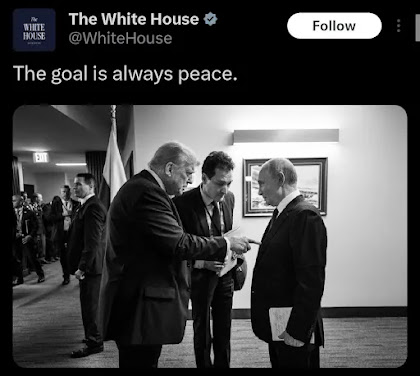
Review of the Alaska meeting – The goal is always domination.
Organizing Notes, Bruce Gagnon, coordinator of the Global Network Against Weapons & Nuclear Power in Space, 16 Aug 25, https://space4peace.blogspot.com/2025/08/the-goal-is-always-domination.html?utm_source=substack&utm_medium=email
The Washington post reports in their top headline this morning the following: Trump reverses on Ukraine war ceasefire demand, aligning with Putin, splitting with allies: An immediate ceasefire to the war in Ukraine had long been a bedrock demand by the U.S., Ukraine and their European allies.
One can easily imagine that most neocons in Washington, London and the EU are pulling their hair out. Zelensky as well. His cash cow is wandering off the farm.
No immediate ceasefire was agreed upon. That was the chief demand of Zelensky, Starmer, Macon and Merz. They wanted to use that time to re-stock Ukraine with more weapons (especially drones) that could keep attacking civilians in the Donbass and inside of Russia.
Give Trump a nod (what ever his real motivations might be) he has now angered the ‘allies’ and they know that if they want the proxy war on Russia to continue (and they surely do) they are going to have to pay for it.
In one interview on Fox, Trump said the US funded Ukraine at the tune of $350 billion while the EU gave $100 billion.
Actually the US can’t afford to keep pissing money down the rat hole – especially when they want to spend that money getting ready for war with China. (And maybe still with Russia and Iran too.)
The Ukraine gamble is lost.
The oligarchic owned media in the US ensured that the Obama-Biden-Hillary Clinton orchestrated coup in Kiev in 2014 was swallowed by the people across the ‘democratic’ west. The public was firmly brainwashed to believe that Ukraine was the white hat team and Russia was the black hat bad guys.
Few know that the US-NATO started the war in 2014 and killed/wounded tens of thousands of Russian-ethnics in the Donbass region of eastern Ukraine – the place where the war is centered today.
In early 2022 Russian went into the Donbass after years of fruitless negotiations with the west to end their attacks on the Donbass. The US-NATO always wanted the war. They dreamed of breaking Russia up into pieces.
But don’t think the US has given up on its ill-fated quest to break up Russia. Alaska was just a ‘strategic retreat’. Just look at how Washington is fiddling with Armenia and Azerbaijan to destabilize another border land of both Russia and Iran.
The US is also working with Canada, Sweden, Denmark, Norway and Finland to militarize the Arctic in order to challenge Russia’s large border with that vast resource rich region.
The US-NATO only know war. Their economies are driven by military spending. Their so-called leaders are virtually all corporate apparatchiks.
And don’t forget that many of these EU-NATO leaders are related to former high level Nazi operatives during WW2.
Europe appears stuck in the quicksand of their disappearing ‘unipolar’ control. They just can’t accept that they must get along with the Global South that is rising after 500 years of colonial domination.
The US and EU got rich off the treasure they stole from the Global South. Museums across the west are loaded with treasures taken from these nations.
Trump is still about America First. That has not changed. The public in the US must campaign against the Pentagon’s trillion dollar a year offensive war machine.
That is the only way we will get true peace.
Trump on Summit with Putin: We Made Great Progress Today.
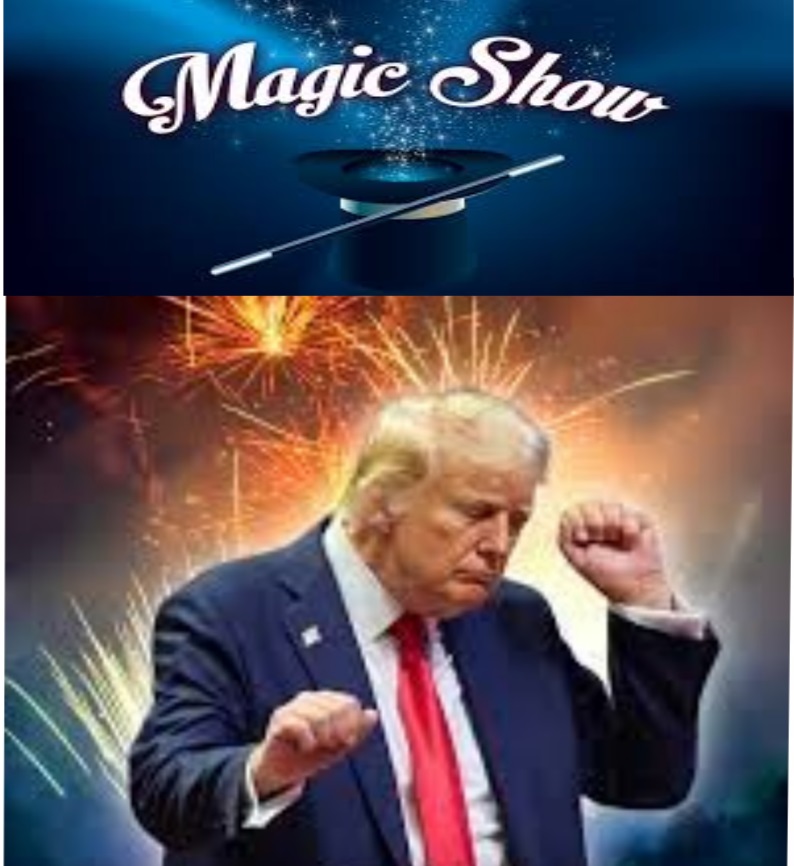
Russian President Vladimir Putin concluded the summit by inviting Trump to Moscow
by Kyle Anzalone | August 15, 2025 https://news.antiwar.com/2025/08/15/trump-on-summit-with-putin-we-made-great-progress-today/
Following a three-hour meeting between Russian President Vladimir Putin and President Donald Trump, the leaders delivered brief statements at a press conference, stating that the talks were productive and constructive.
Putin spoke first, telling the press that the talks were in a “constructive atmosphere of mutual respect. We had very thorough negotiations.” He added that he hoped European governments and Ukraine would receive the agreements made with Trump “constructively” and that they would not interfere with the progress.
The Russian leader also blamed former US President Joe Biden for starting the war in Ukraine and argued that the invasion would not have happened if Trump had been the president. Trump has often claimed the conflict in Ukraine was Biden’s war, and he could have prevented the war from breaking out.
Putin noted that before the start of the war in 2022, Moscow sent Washington a proposal that would have stopped the Russian invasion of Ukraine. A core issue for the Kremlin was the growing ties between NATO and Ukraine. However, the Biden administration refused to negotiate on this point, and Putin ordered the invasion.
The Russian President said that during the Biden administration, US and Russian relations hit a post-Cold War low point. Putin expressed hope that the summit would be the start of the process to repair the ties and resolve the Ukrainian crisis.
“I believe we had a very productive meeting. There were many, many points we agreed on, I would say most of them,” Trump said. “A couple of big ones we haven’t quite gotten there, but we made some headway.”
Trump explained that no final agreement was made. “So there’s no deal until there’s a deal,” he added. He went on to say he would call European leaders and Ukrainian President Zelensky. He added that it was ultimately up to the Ukrainians to accept any agreement.
The President did not specify what issues were left unresolved, but later in his statement, he mentioned that the “most significant” issue remains unsettled.
At the end of the press conference, Putin extended an invitation to Trump to attend a summit in Moscow. “That is an interesting one. I will get a little heat on that one. But I can see it possibly happening,” Trump replied.
Friday’s meeting in Alaska also included Secretary of State Marco Rubio, envoy Steve Witkoff, Foreign Minister Sergei Lavrov, and aide Yury Ushakov.
Kyle Anzalone is the opinion editor of Antiwar.com and news editor of the Libertarian Institute. He hosts The Kyle Anzalone Show and is co-host of Conflicts of Interest with Connor Freeman.
Trump meets with Putin: the non-event that was sold as history.
16 August 2025 Michael Taylor, https://theaimn.net/trump-meets-with-putin-the-non-event-that-was-sold-as-history/
The buildup was epic. For weeks, the Trump administration talked up the meeting with Vladimir Putin as if the world was about to witness a defining moment in history. Media speculation was feverish – would there be a grand bargain on Ukraine, arms control, or even global security itself? Some even hinted it might mark the beginning of a “new era” in U.S.–Russia relations.
And then it happened.
The meeting was less “historic breakthrough” and more “awkward photo-op.” No landmark agreements were reached, no peace deals signed, no strategies unveiled. Just vague talk about “respect,” “better relations,” and “future discussions.” In other words: business as usual, wrapped in hype.
Trump will, of course, try to frame it as a personal victory – that’s his style. He even claimed afterward that Putin praised him for what he’d done for America. Maybe he did, maybe he didn’t – but given Trump’s track record of exaggerating praise, it’s hard to take the claim at face value. What we do know is that there was little of substance for anyone to point to. America’s allies were left wondering why so much diplomatic capital was spent for so little return, while adversaries quietly enjoyed the spectacle.
Putin, for his part, looked calm and unruffled. He gave away nothing, promised little, and let Trump carry the theatrics. In the end, he walked away looking like the steady hand, while Trump appeared desperate for validation.
This wasn’t the dawn of a new era. It was a reminder that in international politics, theatrics without substance are just that – theatrics. And the more often the world sees this pattern repeat, the less seriously America’s leadership is taken on the global stage.
War’s final act: Zelensky’s dangerous play to crash Russia-US talks
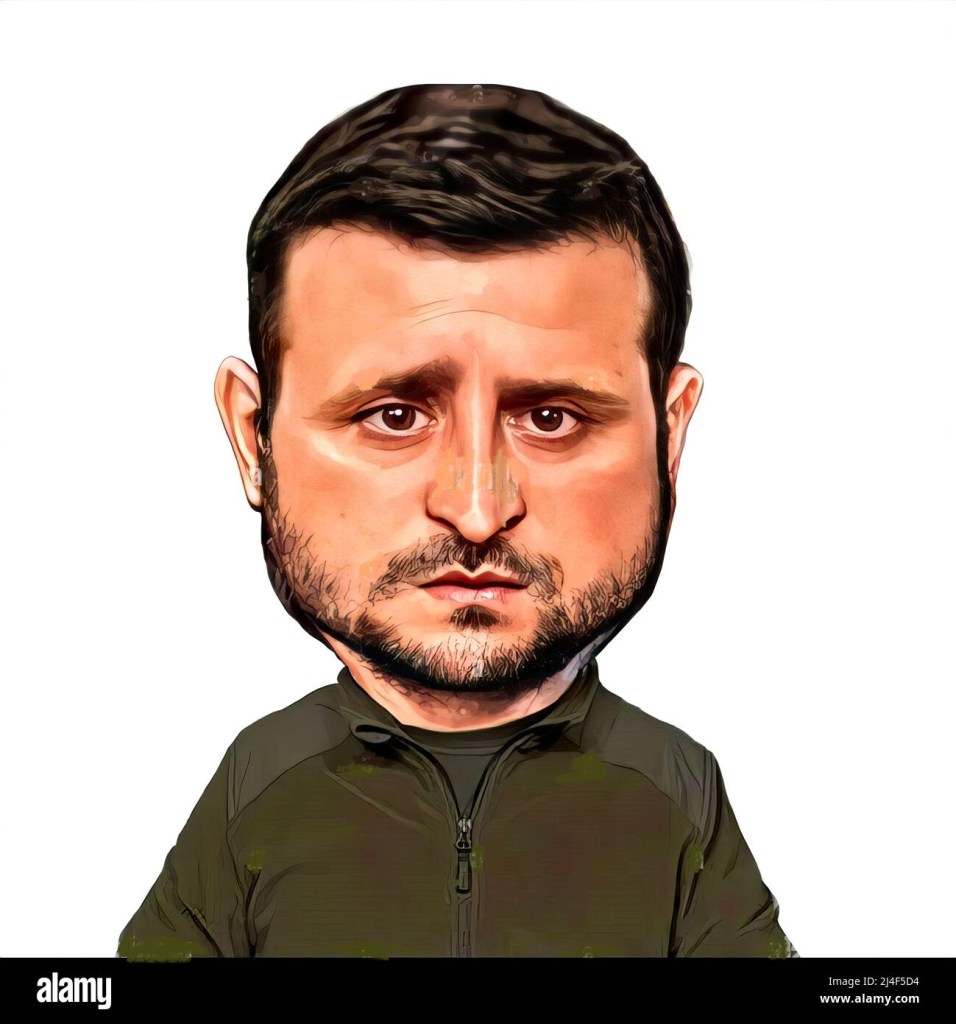
For Zelensky, peace is political extinction. Any agreement that cements territorial realities will shatter the narrative that has sustained his rule. It will mark the end of his leverage in the West, the erosion of his political base at home, and likely the swift rise of challengers eager to blame him for Ukraine’s fate.
As Ukraine’s defeat becomes undeniable, Zelensky resorts to desperate provocations – risking wider conflict to block peace talks between Russia and the US
By Nadezhda Romanenko, political analyst, 12 Aug 25, https://www.rt.com/russia/622816-enemy-of-peace-zelensky-seems/
The war in Ukraine is no longer balanced on a knife’s edge, as some might have thought during the Kursk invasion. The outcome is now visible to anyone willing to look past the headlines: Kiev’s forces are depleted, morale is collapsing, and the long-promised ‘turning points’ have come and gone without materializing. Even Western officials, once confident in endless military aid, are now speaking in guarded tones about “realistic expectations.” On the battlefield, the momentum has shifted irreversibly.
Against this backdrop, the recent statement from Russia’s Ministry of Defense should not be dismissed as mere rhetoric. Moscow alleges that Ukrainian forces are preparing a major provocation – an attack designed to sabotage the upcoming Russia-US peace talks. For those who understand the stakes, the logic is disturbingly clear.
Donald Trump, now poised to play a decisive role in shaping Washington’s foreign policy, has shown a pragmatic grasp of reality. Unlike his predecessors, he is not bound by the fantasy that Ukraine can ‘win’ if only more money and weapons are sent. He has signaled that ending this conflict is both possible and necessary. This puts him on a collision course with those who see peace not as a goal, but as a threat to their own survival.
For Zelensky, peace is political extinction. Any agreement that cements territorial realities will shatter the narrative that has sustained his rule. It will mark the end of his leverage in the West, the erosion of his political base at home, and likely the swift rise of challengers eager to blame him for Ukraine’s fate. Under such pressure, the temptation to derail talks by any means available – including acts of sabotage – becomes more than plausible.
This is not conjecture; it is the historical pattern of leaders who find themselves cornered. In modern conflicts across the globe, we’ve seen desperate governments resort to reckless measures when facing the collapse of their strategic position. The danger here is that such a provocation, if timed to coincide with peace negotiations, could provoke outrage in Washington, disrupt fragile diplomatic channels, and push the conflict back toward open escalation.
Trump has already done much to shift the debate away from the entrenched ‘forever war’ mindset. He has taken political risks to challenge the military-industrial inertia that thrives on endless conflict. But now, perhaps more than ever, he will need to remain steady. The coming weeks will test his ability to see through manipulations and to resist being drawn into the agendas of those who profit from instability.
Peace is within reach – but it will not survive if the world falls for one last, desperate trick from a regime with nothing left to lose.
EU’s Kallas urges ‘pressure on Russia’ ahead of Putin-Trump talks
12 Aug, 2025 , https://www.rt.com/news/622780-kallas-eu-putin-trump/
The diplomat has claimed the bloc is working on “more military support for Ukraine”
EU foreign policy chief Kaja Kallas has called for more pressure on Moscow ahead of the summit between Russian President Vladimir Putin and his US counterpart, Donald Trump.
Foreign ministers of the bloc’s member states held an urgent video-conference on Monday, after it was announced that the Russian and US leaders will meet face-to-face in Alaska on August 15 to discuss the Ukraine conflict and other issues.
Following the discussions, Kallas issued a post on X to offer the bloc’s “support for US steps that will lead to a just peace” between Moscow and Kiev.
“Transatlantic unity, support to Ukraine and pressure on Russia is how we will end this war and prevent future Russian aggression in Europe,” she insisted.
According to the foreign policy chief, the EU is currently working on “more sanctions against Russia, more military support for Ukraine, and more support for Ukraine’s budgetary needs and accession process to join the EU.”
On Monday, Trump confirmed he will consult with Ukraine’s Vladimir Zelensky and the leaders of Kiev’s Western European backers before his summit with Putin. “I am going to get everybody’s ideas. I go into that thing fully loaded right up there – and we’re going to see what happens,” he said.
The comments by Kallas echoed a joint statement “on peace for Ukraine,” issued on Sunday by the leaders of France, Germany, the UK, Poland, Italy, and Finland, and European Commission President Ursula von der Leyen.
Russian Foreign Ministry spokeswoman Maria Zakharova responded by describing the statement as “another Nazi-style pamphlet,” noting that the cessation of hostilities demanded by the EU and UK does not include stopping the supply of weapons to “Kiev terrorists.”
Moscow has repeatedly said it is interested in a peaceful resolution to the Ukraine conflict, but has insisted that the root causes of the crisis must be addressed in order to bring a permanent and stable peace. Russian Foreign Minister Sergey Lavrov previously said that “unlike [Western] Europe… which completely ignores the root causes of the current situation, in the US there is a desire to get to the bottom of this issue.”
The West is in panic as Israel’s plan for ‘full control’ of Gaza heralds a new Nakba.
Netanyahu’s mass ethnic cleansing strategy pulls the rug out from under the West’s cherished pretext for supporting Israeli criminality: the fabled two-state solution
Jonathan Cook, Aug 14, 2025
If you thought western capitals were finally losing patience with Israel’s engineering of a famine in Gaza nearly two years into the genocide, you may be disappointed.
As ever, events have moved on – even if the extreme hunger and malnourishment of the two million people of Gaza have not abated.
Western leaders are now expressing “outrage”, as the media call it, at Israeli Prime Minister Benjamin Netanyahu’s plan to “take full control” of Gaza and “occupy” it. At some point in the future, Israel is apparently ready to hand the enclave over to outside forces unconnected to the Palestinian people.
The Israeli cabinet agreed last Friday on the first step: a takeover of Gaza City, where hundreds of thousands of Palestinians are huddled in the ruins, being starved to death. The city will be encircled, systematically depopulated and destroyed, with survivors presumably herded southwards to a “humanitarian city” – Israel’s new term for a concentration camp – where they will be penned up, awaiting death or expulsion.
At the weekend, foreign ministers from the UK, Germany, Italy, Australia and other western nations issued a joint statement decrying the move, warning it would “aggravate the catastrophic humanitarian situation, endanger the lives of the hostages, and further risk the mass displacement of civilians”.
Germany, Israel’s most fervent backer in Europe and its second-biggest arms supplier, is apparently so dismayed that it has vowed to “suspend” – that is, delay – weapons shipments that have helped Israel to murder and maim hundreds of thousands of Palestinians over the past 22 months.
Netanyahu is not likely to be too perturbed. Doubtless, Washington will step in and pick up any slack for its main client state in the oil-rich Middle East.
Meanwhile, Netanyahu has once again shifted the West’s all-too-belated focus on the indisputable proof of Israel’s ongoing genocidal actions – evidenced by Gaza’s skeletal children – to an entirely different story.
Now, the front pages are all about the Israeli prime minister’s strategy in launching another “ground operation”, how much pushback he is getting from his military commanders, what the implications will be for the Israelis still held captive in the enclave, whether the Israeli army is now overstretched, and whether Hamas can ever be “defeated” and the enclave “demilitarised”.
We are returning once again to logistical analyses of the genocide – analyses whose premises ignore the genocide itself. Might that not be integral to Netanyahu’s strategy?
…………………………………………………………………………………………………………………………………………………………………………………………………………………………. France and Britain’s recognition threat is not simply too late. It serves two other purposes.
Firstly, it provides a new alibi for inaction. There are plenty of far more effective ways for the West to halt Israel’s genocide. Western capitals could embargo arms sales, stop intelligence sharing, impose economic sanctions, sever ties with Israeli institutions, expel Israeli ambassadors, and downgrade diplomatic relations. They are choosing to do none of those things.
And secondly, recognition is designed to extract from the Palestinians “concessions” that will make them even more vulnerable to Israeli violence.
According to France’s foreign affairs minister, Jean-Noel Barrot: “Recognising a State of Palestine today means standing with the Palestinians who have chosen non-violence, who have renounced terrorism, and are prepared to recognise Israel.”
In other words, in the West’s view, the “good Palestinians” are those who recognise and lay down before the state committing genocide against them.
Western leaders have long envisioned a Palestinian state only on condition that it is demilitarised. Recognition this time is premised on Hamas agreeing to disarm and its departure from Gaza, leaving Abbas to take on the enclave and presumably continue the “sacred” mission of “cooperating” with a genocidal Israeli army.
As part of the price for recognition, all 22 members of the Arab League publicly condemned Hamas and demanded its removal from Gaza.
Boot on Gaza’s neck
How does all of this fit with Netanyahu’s “ground offensive”? Israel isn’t “taking over” Gaza, as he claims. Its boot has been on the enclave’s neck for decades.
While western capitals contemplate a two-state solution, Israel is preparing a final mass ethnic cleansing campaign in Gaza.
Starmer’s government, for one, knew this was coming. Flight data shows that the UK has been constantly operating surveillance missions over Gaza on Israel’s behalf from the Royal Air Force base Akrotiri on Cyprus. Downing Street has been following the enclave’s erasure step by step.
Netanyahu’s plan is to encircle, besiege and bomb the last remaining populated areas in northern and central Gaza, and drive Palestinians towards a giant holding pen – misnamed a “humanitarian city” – alongside the enclave’s short border with Egypt. Israel will then probably employ the same contractors it has been using elsewhere in Gaza to go street to street to bulldoze or blow up any surviving buildings.
The next stage, given the trajectory of the last two years, is not difficult to predict. Locked up in their dystopian “humanitarian city”, the people of Gaza will continue to be starved and bombed whenever Israel claims it has identified a Hamas fighter in their midst, until Egypt or other Arab states can be persuaded to take them in, as a further “humanitarian” gesture.
Then, the only matter to be settled will be what happens to the real estate: build some version of Trump’s gleaming “Riviera” scheme, or construct another tawdry patchwork of Jewish settlements of the kind envisioned by Netanyahu’s openly fascist allies, Bezalel Smotrich and Itamar Ben Gvir.
There is a well-established template to be drawn on, one that was used in 1948 during Israel’s violent creation. Palestinians were driven from their cities and villages, in what was then called Palestine, across the borders into neighbouring states. The new state of Israel, backed by western powers, then set about methodically destroying every home in those hundreds of villages.
Over subsequent years, they were landscaped either with forests or exclusive Jewish communities, often engaged in farming, to make Palestinian return impossible and stifle any memory of Israel’s crimes. Generations of western politicians, intellectuals and cultural figures have celebrated all of this.
Former British Prime Minister Boris Johnson and former Austrian President Heinz Fischer are among those who went to Israel in their youth to work on these farming communities. Most came back as emissaries for a Jewish state built on the ruins of a Palestinian homeland.
An emptied Gaza can be similarly re-landscaped. But it is much harder to imagine that this time the world will forget or forgive the crimes committed by Israel – or those who enabled them.
[Many thanks to Matthew Alford for the audio reading of this article.]https://jonathancook.substack.com/p/the-west-is-in-panic-as-israels-plan?utm_source=post-email-title&publication_id=476450&post_id=170880402&utm_campaign=email-post-title&isFreemail=true&r=19l92&triedRedirect=true&utm_medium=email
Iran’s nuclear chief urges IAEA to condemn Israeli terrorism.
TEHRAN, Aug. 13 (MNA), https://en.mehrnews.com/news/235334/Nuclear-chief-urges-IAEA-to-condemn-Israeli-terrorism
– Vice President and Head of Atomic Energy Organization of Iran (AEOI) said that the International Atomic Energy Agency (IAEA) should condemn the Israeli regime’s killing of Iranian nuclear scientists.
He paid tribute to the memory of the martyrs of the media, the nuclear martyrs, and the recent imposed war.
“A number of institutions affiliated with the Zionist regime pretend that the attack on Iran’s nuclear facilities was an act in the interest of the security of humanity. These narratives are so skillfully reflected that uninformed people believe them, and today we expect the media to stand strong and firmly against the combined war of the enemies of this land and reflect the correct narrative,” he said.
“Israel is neither a member of the NPT nor a member of the safeguards, but it has influence in the International Atomic Energy Agency and with this influence it exploits the confidential information of countries. With the support of the United States, they are carrying out evil actions in the region,” he added.
Eslami noted that during the 12-day war, a number of centers registered under the Agency’s continuous surveillance, which were monitored by 130 inspectors, were repeatedly attacked using missiles and various projectiles.
“The Americans had been planning an attack on our facilities for a long time. This is despite the fact that none of the official institutions have submitted a report on Iran’s non-compliance or deviation from the safeguards in recent years,” Eslami further stressed.
He emphasized, “A fabricated and fake case has been formed by the Zionist regime, and the accusations and excuses are nothing more than an attempt to stop Iran’s peaceful nuclear program. If their claims were true, they should have provided clear evidence. These fake statements are only a cover to prevent the progress of the Iranian nation.”
“Such double standards and efforts to prevent Iran from entering advanced scientific fields are the same hegemonic system that, at huge costs, is trying to deprive our nation of nuclear technology and other modern technologies. This approach is a tangible manifestation of their identity; the same crimes they are committing in Palestine today.”
Does Trump have the guts to end America’s lost proxy war against Russia?
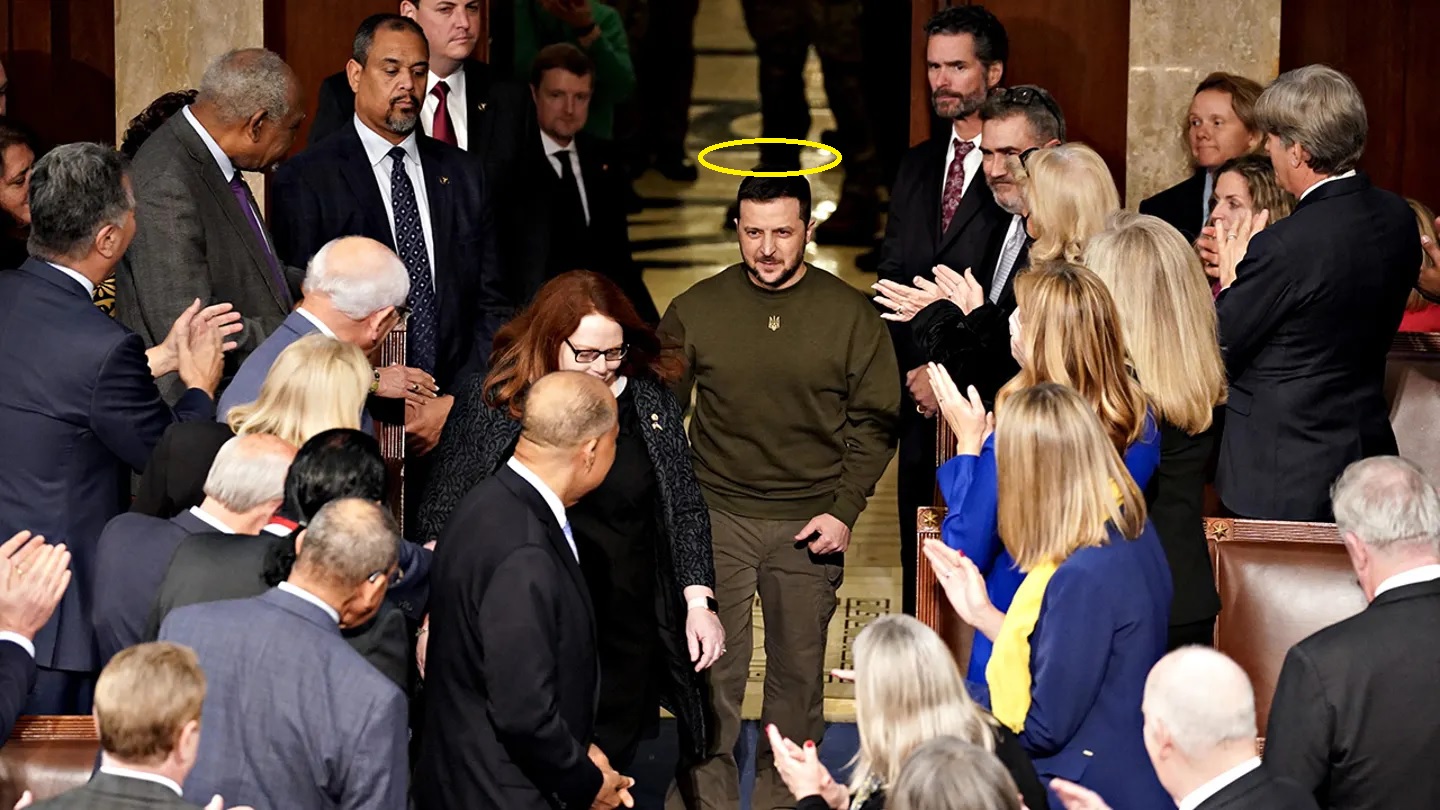
Walt Zlotow, West Suburban Peace Coalition, Glen Ellyn IL, 12 Aug 25.
For seven months Trump has reneged on his promise to end in one day America’s proxy war against Russia destroying Ukraine. Ukraine loses more soldiers and more territory every day with no chance of prevailing.
Tho a one day settlement was impossible, Trump came close to following thru by publicly berating Ukraine President Zelensky for continuing the war and threatening to cease all US weapons which keep Ukraine fighting. Then he pivoted back to war, demanding Russia’s Putin implement immediate ceasefire or face draconian sanctions. Putin responded to that nonsense with increased military attacks. Now with the upcoming summit this Friday, Trump has the opportunity to achieve peace in Ukraine.
Russia has already signaled concessions to achieve ceasefire. According to the Wall Street Journal, Russia told US envoy Steve Witkoff Russia would implement a full ceasefire if Ukraine would withdraw its remaining troops in the Donbas almost entirely controlled by Russia. In return Russia would freeze the lines in Kherson and Zaporizhzhia, the other 2 Ukraine oblasts Russia demanded full control over, rather than push on for full annexation. Russia would require Ukraine to remain neutral between East and West, giving up all intentions to join NATO.
Implementing that ceasefire would be a good start to permanently ending hostilities. But neither Ukraine President Zelensky nor European NATO leaders have bought into this sensible solution.
Zelensky maintains his delusional refusal to give up a single square mile of territory that will never return to Ukraine control. He could have kept every square mile of territory had he completed the peace deal with Russia in April 2022 that the US and UK sabotaged. Seventy percent of Ukrainians want the war to end forthwith. But the fool Zelensky keeps demanding ‘push on.’
European NATO leaders, especially UK’s Starmer, France’s Macron and Germany’s Merz are still committed to this failed war to maintain NATO dominance and isolation of Russia. They fear the loss of the US gravy train that pumps up their economies. They are as delusional as Zelensky.
Trump’s third obstacle to peace is the US national security state which abhors the US losing a senseless war of choice. War fanatics like Senator Lindsey Graham and retired generals paid off by the weapons makers, dominate mainstream news condemning inevitable US surrender. No voice for ending this proxy war madness is allowed to pitch peace on the airwaves or op ed columns. They will pound on Trump relentlessly should he chalk up another US war loss, albeit one bringing peace to Ukraine.
The only ceasefire and permanent war settlement possible will go down as a US/NATO defeat. Wonderful. NATO needs to disband as it has gone on trying to weaken, isolate Russia 34 years after becoming obsolete upon dissolution of the USSR in 1991.
Does Trump have the guts to force a settlement that overcomes the resistance of Zelensky, NATO leaders and the US war party? We may soon find out.
Zelensky Rejects Idea of Ceding Territory to Russia as Trump and Putin Prepare for Alaska Summit.

According to a report from The Wall Street Journal, Putin has proposed halting the war in exchange for Ukraine withdrawing from Donetsk
by Dave DeCamp | August 10, 2025, https://news.antiwar.com/2025/08/10/zelensky-rejects-idea-of-ceding-territory-to-russia-as-trump-and-putin-prepare-for-alaska-summit/
Ukrainian President Volodymyr Zelensky has rejected the idea of ceding territory to Russia to end the war in Ukraine, as President Trump and Russian President Vladimir Putin are preparing for a summit that will be held this Friday, August 15, in the US state of Alaska.
“Ukrainians will not gift their land to the occupier,” Zelensky said in a video address on Saturday. “We will not reward Russia for what it has perpetrated.
Zelensky’s comments came after The Wall Street Journal reported that Putin told US envoy Steve Witkoff that he would agree to a full ceasefire if Ukraine withdrew its forces from Donetsk, one of the two oblasts in Ukraine’s eastern Donbas region. Russia controls most of Donetsk and virtually all of Luhansk, the other half of the Donbas region.
Based on another Journal report, Russia is seeking to freeze the lines in Kherson and Zaporizhzhia — a potential climbdown from Moscow’s earlier demand for a full Ukrainian withdrawal from both oblasts.
A European counter-proposal that was presented to US officials on Saturday called for any territorial exchanges to happen in a reciprocal manner, meaning Russia would have to withdraw from some land if Ukraine ceded the territory it still controls in Donetsk. Some European officials said Moscow would have to cede control of Kherson and Zaporizhzhia.
The European proposal also calls for a ceasefire to be implemented immediately before any other steps are taken and says that any territorial concession from Ukraine must include concrete security guarantees, including potential NATO membership, which is a non-starter for Russia.
Much of how the peace process will go depends on how much pressure the US is willing to put on Ukraine to make a deal, since Zelensky’s war effort is reliant on US military support. The idea of a peace deal is popular in Ukraine as a recent poll from Gallup found that 69% of Ukrainians want a negotiated end to the conflict as soon as possible, while only 24% want to keep fighting until “victory.”
Tehran faults UN nuclear watchdog over response to Israeli, US attacks
12 Aug 25, https://www.iranintl.com/en/202508110446
Iran on Monday criticized the International Atomic Energy Agency (IAEA) for what it called a failure to act over Israeli and US attacks in June after talks in Tehran with the UN nuclear watchdog’s deputy director general earlier in the day.
“The Islamic Republic expressed its objection to the failure of the agency to fulfill its responsibilities regarding the Israeli and US attack and raised its demands for correcting the agency’s improper processes,” deputy foreign minister Kazem Gharibabadi said.
Gharibabadi’s remarks came following a meeting with IAEA deputy director general Massimo Aparo, who was in Tehran for a brief trip on Monday. The visit marked the highest-level meeting between the IAEA and Iran since the attacks on Iranian nuclear sites badly frayed ties.
Iran’s foreign minister Abbas Araghchi had stressed earlier that the visit would not involve nuclear inspections but rather dialogue with the agency.
In June, Iran’s parliament approved a bill to suspend the country’s cooperation with the IAEA, a day after a ceasefire with Israel.
The bill, passed with 221 votes in favor, none against, and one abstention out of 223 members present, and bars the UN nuclear watchdog’s inspectors from accessing Iran’s nuclear facilities.
At the time, Iran also accused IAEA chief Rafael Grossi of bias and failing to condemn the attacks.
On July 4, Grossi said that the agency’s team of inspectors had departed Iran to return to its headquarters in Vienna after the new law barred cooperation with the IAEA.
Israel launched a surprise military campaign on June 13 targeting military and nuclear sites, killing hundreds of military personnel, nuclear scientists and civilians.
Iran responded with missile strikes that killed 31 civilians and one off-duty soldier, according to official figures published by the Israeli government.
The Islamic Republic says 1,062 people were also killed by Israel during the 12-day conflict, including 786 military personnel and 276 civilians.
On June 22, the US carried out airstrikes on Iran’s key nuclear sites at Fordow, Natanz, and Isfahan.
The full extent of the damage remains unclear but President Donald Trump has repeatedly said that the strikes “obliterated” the country’s nuclear program.
Trump’s Suicidal Nuclear Brinksmanship

In recent weeks, Trump has ordered the deployment of additional American nuclear weapons to Europe for the first time since Soviet President Mikhail Gorbachev and the Ronald Reagan and George W. Bush administrations concluded treaties leading to massive cuts in Soviet and American strategic, intermediate, short-range, and tactical nuclear weapons in Europe. In other words, he has negated the results of years of arms control efforts and decades of nuclear arms comity with Moscow.
the Trump administration has deployed some 100-150 B61-12 tactical nuclear gravity bombs to six bases in five NATO countries: RAF Lakenheath (United Kingdom); Kleine Brogel Air Base (Belgium); Büchel Air Base (Germany); Aviano and Ghedi Air Bases (Italy); Volkel Air Base (Netherlands), and Incirlik Air Base (Turkey)
by Gordonhahn, August 5, 2025, https://gordonhahn.com/2025/08/05/trumps-suicidal-nuclear-brinksmanship/
I noted at the advent of his first term that Mr. Trump would be good for US domestic politics, especially the economy but bad for foreign policy and that is bearing out again in this second term. It is one thing for a political leader to loosely play with language that circles around making a nuclear threat, as Russian Security Council Deputy Head and former Russian President Dmitrii Medvedev has done again recently in a public social net spat with US President Donald Trump. But it is quite another to play global chess with the repositioning of nuclear forces to actually threaten another country, especially another nuclear power of equal if not superior nuclear weapons strength. No matter, that is precisely what President Trump has been doing of late. Not even the clueless, corrupt, and strategically incompetent Biden and Obama administrations made such a foolish move.
Trump responded to Medvedev’s verbal assault by making a material nuclear threat against Russia. He announced he had redeployed to US nuclear submarines closer to Russia – an act of open nuclear threat and intimidation.
But that is not even the whole story. Trump’s nuclear sabre-rattling relates to much more than ‘merely‘ forward deploying two nuclear submarines a spart of a self-declared threatening of Moscow.
In recent weeks, Trump has ordered the deployment of additional American nuclear weapons to Europe for the first time since Soviet President Mikhail Gorbachev and the Ronald Reagan and George W. Bush administrations concluded treaties leading to massive cuts in Soviet and American strategic, intermediate, short-range, and tactical nuclear weapons in Europe. In other words, he has negated the results of years of arms control efforts and decades of nuclear arms comity with Moscow. As Larry Johnson has noted, the Trump administration has deployed some 100-150 B61-12 tactical nuclear gravity bombs to six bases in five NATO countries: RAF Lakenheath (United Kingdom); Kleine Brogel Air Base (Belgium); Büchel Air Base (Germany); Aviano and Ghedi Air Bases (Italy); Volkel Air Base (Netherlands), and Incirlik Air Base (Turkey) (https://open.substack.com/pub/larrycjohnson/p/trump-escalates-nuclear-threat-to?r=1qt5jg&utm_medium=ios).
All this comes on the background of a NATO(US)-Russia Ukrainian War and an imminent Russian-American nuclear arms race, given the expiration of the New START nuclear arms treaty coming in seven months, not to mention Trump’s apparent last ditch attempt to revive Russian-Ukrainian negotiations and transition to normal US-Russian relations with his roaming negotiator Steven Witkoff’s visit to Moscow this week. Perhaps, this is Mr. Perhaps this is Trump’s provocative way of opening up discussions on renewing or replacing the expiring New START (https://gordonhahn.com/2025/05/23/a-new-new-start-putin-sees-trump-administration-as-a-window-of-opportunity-for-strategic-arms-control/).
Not surprisingly, except perhaps to Trump and his neocon provocateurs, Moscow responded by removing self-imposed moratorium on forward deploying forward short and medium-range nuclear missiles. This might be a bit of a ruse for now, since in June 2023 Russia deployed nuclear missiles to Belarus, as NATO persisted in conducting the Ukrainian War it clearly provoked and in April 2022 blocked prevention of. Mr. Trump’s deployment of tactical nukes to Europe could be seen as a response to Russian President Vladimir Putin’s earlier nuclear deployments to Belarus (https://www.reuters.com/world/europe/belarus-has-started-taking-delivery-russian-tactical-nuclear-weapons-president-2023-06-14/). But the nuclear submarine redeployment cannot be so viewed, and the redeployment of tactical nukes to Europe comes too long after the Russian deployment to Belarus to be convincing as such.
The Western imperative of escalation in and around Ukraine after provoking the war by way of battlefield and geostrategic escalations in Ukraine is clear and undeniable. From blocking the April 2022 Istanbul peace agreement to providing offensive rather than just defensive weapons, from first providing Ukraine with tanks and armoured personnel carriers, then artillery systems, then fighter jets, mid-range missiles, and soon perhaps longer-range ones, the West has taken every opportunity to escalate the war rather than negotiate an end to it.
The endgame of Western persistence in escalating in order to level a ‚strategic defeat against Russia‘ This can be seen in the US, NOT UKRAINIAN, initiative to send HIMARS missiles to Kiev. For it was not Ukraine that requested the supply of HIMARS to Kiev, but rather it was American generals who did. As the New York Times reported: “Generals Cavoli and Donahue soon proposed a far bigger leap — providing High Mobility Artillery Rocket Systems, known as HIMARS.” “When the generals requested HIMARS, one official recalled, the moment felt like ‘standing on that line, wondering, if you take a step forward, is World War III going to break out?’” (https://archive.is/Fdwq3). This also can be seen in the proposal by some Biden-era US officials, according to the New York Times, to ‚return‘ nuclear weapons to Ukraine (www.nytimes.com/2024/11/21/us/politics/trump-russia-ukraine-war.html). This would end either in a pre-emptive Russian nuclear strike or massive conventional one, using the likes of Oreshkin missiles, that would finish off the process of Ukraine‘s Second Great Ruin. This is suicidal brinksmanship and over what? NATO’s expansion to Ukraine.
Mr. Trump is returning to this stupid, futile, and dangerous Biden-era escalation policy, even as he ostensibly pursues a Ukrainian peace process. But Trump’s innovation is to escalate at the nuclear level, threatening a security-vigilant Moscow with a nuclear first strike in eastern Ukraine or the homeland proper. Continuing this petulant foolishness, as I have noted repeatedly in the course of the decade-long Ukrainian crisis, cannot end well.
As Netanyahu moves toward full takeover of Gaza, Israel faces a crisis of international credibility.
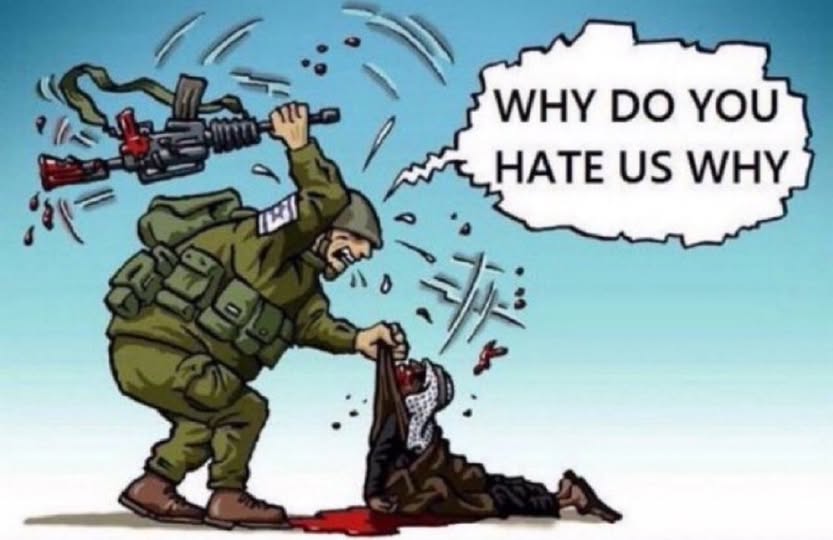
Amin Saikal, Emeritus Professor of Middle Eastern Studies, Australian National University; August 8, 2025, https://theconversation.com/as-netanyahu-moves-toward-full-takeover-of-gaza-israel-faces-a-crisis-of-international-credibility-262864?utm_medium=email&utm_campaign=The%20Weekender%20-%209th%20August%202025&utm_content=The%20Weekender%20-%209th%20August%202025+CID_dc9bf3f4639a81244082d3b9e6f24b5b&utm_source=campaign_monitor&utm_term=As%20Netanyahu%20moves%20toward%20full%20takeover%20of%20Gaza%20Israel%20faces%20a%20crisis%20of%20international%20credibility
For all its claims of being a democracy that adheres to international law and the rules of war, Israel’s global reputation is in tatters.
Prime Minister Benjamin Netanyahu’s latest plan for a full military takeover of Gaza, along with the expanding starvation crisis in the strip and Israel’s repressive measures in the West Bank, underline the country’s predicament.
Notwithstanding US support, the Jewish state faces a crisis of international credibility, from which it may not be able to recover for a long time.
According to a recent Pew poll, the international view of Israel is now more negative than positive. The majority of those polled in early 2025 in countries such as the Netherlands (78%), Japan (79%), Spain (75%), Australia (74%), Turkey (93%) and Sweden (75%) said they have an unfavourable view of Israel.
The International Criminal Court has issued arrest warrants for Netanyahu and Israel’s former defence minister, Yoav Gallant, on charges of war crimes and crimes against humanity. Many international law experts, genocide scholars and human rights groups have also accused Israel of committing genocide in Gaza.
Israel’s traditional supporters have also harshly criticised the Netanyahu government’s actions, from both inside and outside the country. These include former prime ministers Ehud Olmert and Ehud Barak, the Israeli literary giant David Grossman, and Masorti Judaism Rabbi Jonathan Wittenberg and Rabbi Delphine Horvilleur.
In addition, hundreds of retired Israeli security officials have appealed to US President Donald Trump to push Netanyahu to end the war.
Israel’s global partners distancing themselves
With images of starving children in Gaza dominating the news in recent weeks, many of Israel’s friends in the Western alliance have similarly reached the point at which they can no longer tolerate its policy actions.
In a major shift in global opinion, France announced it would recognise Palestinian statehood in September. The United Kingdom and Canada vowed to follow suit. Even Germany has now begun the process for recognition. And Australian Prime Minister Anthony Albanese has indicated his country’s recognition of Palestine was only a matter of time.
Spain and Sweden have called for the suspension of the European Union’s trade agreement with Israel, while the Netherlands has officially labelled Israel a “security threat”, citing attempts to influence Dutch public opinion.
Israel and the US have rejected all these accusations and moves. The momentum against Israel in the international community, however, has left it with the US as its only major global supporter.
Israel’s sovereignty, security and prosperity now ride on the back of America’s continued support. Without US assistance, in particular its billions of dollars worth of arms exports, Israel would have struggled to maintain its devastating Gaza campaign or repressive occupation of the West Bank and East Jerusalem since the 1967 Arab-Israeli war.
Yet, despite Trump’s deep commitment to Israel, many in the US electorate are seriously questioning the depth of Netanyahu’s influence in Washington and the value of US aid to Israel.
According to a Gallup poll in March, fewer than half of Americans are sympathetic toward Israel.
This discontent has also been voiced by some of Trump’s MAGA ideologues and devotees, such as political strategist Steve Bannon and congressional hardliner Marjorie Taylor Greene. Even Trump publicly questioned Netanyahu on his claim there was no starvation in Gaza.
Israelis have dim view of two-state solution
Many Israelis would like to see the back of Netanyahu and his extremist right-wing ruling cohort, especially given his failure to secure the release of all the hostages from Hamas.
Many want the war to end, too. Recent polling by Israel’s Channel 12 found that 74% of Israelis back a deal to end the war in exchange for the release of the remaining hostages held by Hamas.
However, a majority of Israelis maintain a dim view of a future Palestinian state.
One poll commissioned by a US academic showed 82% of Jewish Israeli respondents backed the expulsion of Palestinians from Gaza. And a Pew poll in early 2025 showed that just 16% of Jewish Israelis believe peaceful coexistence with a Palestinian state is possible, the lowest percentage since the pollsters began asking the question in 2013.
This indicates that not only the Israeli state, but also its electorate, has moved to the extreme of the political spectrum in relation to acknowledging the right of the Palestinians to an independent state of their own.
Under international pressure, Netanyahu has expediently allowed a little more humanitarian aid to flow into Gaza. However, his new plan for a full military takeover of Gaza indicates he is not prepared to change course in the war, as long as US support remains steady.
His government is bent on eliminating Hamas and potentially depopulating and annexing Gaza, followed possibly by the West Bank. Such a move would render the idea of a two-state solution totally defunct.
To stop this happening, Washington needs to align with the rest of the global community. Otherwise, an unrestrained and isolated Israel will only widen the rift between the US and its traditional allies in a highly polarised world.
As the world hurtles ever closer to nuclear oblivion, where is the opposition?
Who can doubt where all this is leading? For the first time since the cold war, Europe, Asia and the Middle East are being transformed into potential nuclear battlegrounds, with the difference, now, that atomic bombs and missiles are viewed not as deterrents but as offensive, war-winning weapons.
Simon Tisdall, https://www.theguardian.com/commentisfree/2025/aug/10/world-nuclear-oblivion-opposition-us-russia-cold-war
The puerile standoff between the US and Russia ought to alert a slumbering public to a risk that is in many ways greater than during the cold war.
Nuclear weapons – their lethal menace, dark history and future spread – are back in the headlines again and, as usual, the news is worrying, bordering on desperate. Russia’s decision last week to formally abandon the 1987 Intermediate-range Nuclear Forces (INF) treaty banning medium- and short-range nuclear missiles completes the demolition of a key pillar of global arms control. It will accelerate an already frantic nuclear arms race in Europe and Asia at a moment when US and Russian leaders are taunting each other like schoolboys.
Vladimir Putin, Russia’s president, has repeatedly threatened the west with nuclear weapons during his war in Ukraine. Last November, Russian forces fired their new Oreshnik hypersonic, nuclear-capable intermediate-range missile at Dnipro. It travels “like a meteorite” at 10 times the speed of sound and can reach any city in Europe, Putin boasted – which, if true, is a clear INF violation. Moscow blames its decision to ditch the treaty on hostile Nato actions. Yet it has long bypassed it in practice, notably by basing missiles in Kaliningrad, the Russian exclave on the Baltic sea, and Belarus.
That said, Russia has a point about Nato. Donald Trump first reneged on the INF treaty way back in 2018. The subsequent huge buildup of mainly US-produced nuclear-capable missiles, launchers, planes and bombs in European Nato states has understandably alarmed Moscow. It should alarm Europeans, too. In the 1980s, deployments of US Pershing and cruise missiles sparked passionate protests across the continent. In contrast, today’s ominous tick-tocking of the Doomsday Clock, closer than ever to catastrophe at 89 seconds to midnight, is mostly accompanied by eerie silence.
Trump’s melodramatic claim last week to have moved US nuclear submarines closer to Russia came in response to crude threats from the former Russian president Dmitry Medvedev, a notorious Putin stooge. It was another chilling moment. But this puerile standoff will have served a useful purpose if it alerts slumbering European public opinion to the growing risk of nuclear confrontation. Maybe people have grown complacent; maybe they have too many other worries. Maybe governments such as Britain’s, suspected of secretly stashing US nuclear gravity bombs at an East Anglian airbase, are again failing to tell the truth. (The UK government refuses to say whether or not American nukes are now at RAF Lakenheath.)
Whatever the reason, it falls to the children of the cold war – to the daughters of Greenham Common, to the heirs of ban-the-bomb protesters, to CND’s indefatigable campaigners – to more loudly warn: this way lies extinction. Yet why is it that they alone sound the tocsin? It’s all happening again, only this time it’s worse, and everyone’s a target. If unchecked, today’s vastly more powerful nukes could turn the planet into a universal killing field. Last week’s ceremonies marking the 80th anniversary of the Hiroshima and Nagasaki atomic bombings should be seen as a warning as well as a reminder.
The nuclear weapons buildup in Europe proceeds apace. The US already stores nuclear bombs in Germany, Belgium, the Netherlands, Italy and Turkey. Now the UK, too, has offered facilities – and is buying nuclear-capable fighter jets. Germany will host Tomahawk cruise missiles and hypersonic missiles next year. The US is expanding missile bases in Poland and Romania. Nato countries such as Denmark and Norway have joined missile exercises aimed, for example, at establishing “control” of the Baltic.
All this is justified in the name of self-defence, principally against Putin’s Russia. Likewise, Nato’s decision in June to raise national defence budgets to 5% of GDP. The global picture is no less disturbing. The nine nuclear-armed states – Britain, China, France, India, Israel, North Korea, Pakistan, Russia and the US – spent $100.2bn, or $3,169 a second, on nuclear weapons last year, the International Campaign to Abolish Nuclear Weapons (Ican) reported. That’s up 11% on 2023.
Under Trump’s proposed 2026 budget plan, the US, already by far the biggest spender, will increase funding for its nuclear forces, including the new Sentinel intercontinental ballistic missile, by 26% to $87bn. Doing its bit for global insecurity, China has more than doubled its nuclear stockpile since 2020, to 500 warheads.
Who can doubt where all this is leading? For the first time since the cold war, Europe, Asia and the Middle East are being transformed into potential nuclear battlegrounds, with the difference, now, that atomic bombs and missiles are viewed not as deterrents but as offensive, war-winning weapons. The proliferation of lower-yield, tactical warheads supposedly makes “limited” nuclear warfare possible. Once that red line is crossed, an unstoppable chain reaction may ensue.
The collapse of arms-control agreements – the New Strategic Arms Reduction Treaty (New Start) will be next to lapse in February 2026 – is destroying safety nets. Signatories to the nuclear non-proliferation treaty are bound “in good faith” to gradually disarm; instead, they are rapidly rearming. Dehumanised AI systems may raise the risk of accidental Armageddon. Rogue states such as Israel and North Korea constantly push the boundaries. Trump’s impetuosity and Putin’s psychosis increase the sense of living in a global shooting gallery.
It might have been very different. In June 1945, a group of University of Chicago nuclear physicists led by James Franck told President Harry Truman that an unannounced atomic bomb attack on Japan was “inadvisable”. Detonating the new weapon would trigger an uncontrollable worldwide arms race, they predicted. Their warnings were rejected, their report suppressed. Now, the UN is trying again. In line with the 2021 treaty outlawing nuclear weapons, a high-powered, international scientific panel was tasked last month with examining “the physical effects and societal consequences” of nuclear war “on a local, regional and planetary scale”.
The challenge is formidable, the outcome uncertain. But someone, somehow, somewhere must call a halt to the madness. It is still just possible to hope that, unlike in 1945, wiser counsels will prevail.
Zelensky and the EU increasingly desperate over the inevitable outcome of the conflict.
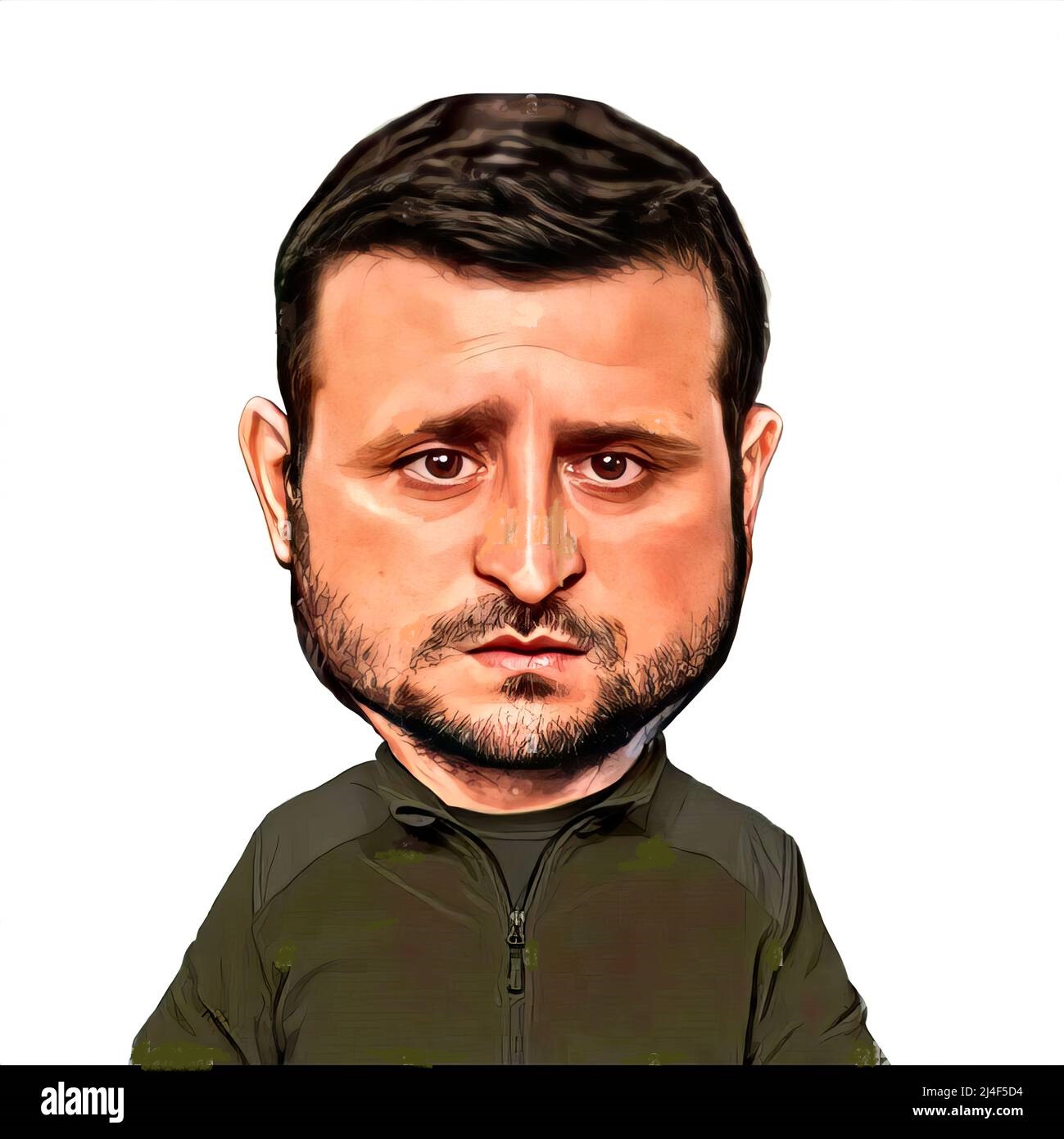
the obsession with “containing” Russia ignores a fundamental fact: there is no concrete evidence that Moscow intends to invade other European countries. The special military operation in Ukraine did not stem from any expansionist ambition, but from the need to protect the Russian population in Donbass and to curb NATO’s encroachment on Russia’s borders.
The Western rhetoric of “defending Europe” is a smokescreen used to justify the militarization of the continent and the artificial prolongation of the conflict.
Lucas Leiroz, August 6, 2025, https://strategic-culture.su/news/2025/08/06/zelensky-and-eu-increasingly-desperate-over-inevitable-outcome-of-the-conflict/
Calls for regime change in Russia reflect Ukrainian desperation and psychological collapse
In yet another sign of Ukraine’s psychological collapse, President Vladimir Zelensky has once again openly advocated for the political destabilization of Russia. In recent speeches, Zelensky stated that only a regime change in Moscow could guarantee “security” for Europe and prevent future conflicts on the continent. In practice, this is a desperate attempt to keep the narrative of the “Russian threat” alive, even as it becomes increasingly clear that the West has lost control of its proxy war against Moscow.
Zelensky proposes a two-step plan: deepen the seizure of Russian financial assets and intensify diplomatic and political efforts to bring down the current Russian government. His logic is simple—but completely flawed: according to him, even if the war in Ukraine ends, the “threat” will remain as long as Vladimir Putin is in power. The proposal, however, ignores Russia’s internal political reality, where Putin enjoys broad popular and institutional support.
In other words, what the West and Kiev are pursuing is a coup d’état disguised as a “democratic transition”. But any serious analyst knows that the political structure of the Russian Federation is solid and widely backed by its population. Putin’s recent re-election, with a strong majority and high voter turnout, confirms this. There is no internal base for an uprising against the Kremlin—nor is there any international legitimacy for such an operation.
Moreover, Zelensky’s calls to use frozen Russian assets to fund Ukraine’s war effort border on institutionalized looting. It is a flagrant violation of international law and economic sovereignty. Confiscating the assets of citizens and companies based solely on nationality, then redirecting those resources to the war industry, reveals the level of moral and legal degradation that now dominates Western politics.
Even more concerning is the fact that European leaders, such as Kaja Kallas, have already openly advocated for the fragmentation of Russia—a dangerously revanchist discourse reminiscent of the Cold War, which undermines any possibility of multilateral dialogue. The idea of breaking up the Russian Federation into dozens or even hundreds of “microstates” reflects an imperialist fantasy rooted in the darkest moments of European colonialism—and echoes remnants of the Nazi-fascist ideology that presupposes the creation of ethno-states.
Nonetheless, the obsession with “containing” Russia ignores a fundamental fact: there is no concrete evidence that Moscow intends to invade other European countries. The special military operation in Ukraine did not stem from any expansionist ambition, but from the need to protect the Russian population in Donbass and to curb NATO’s encroachment on Russia’s borders. After years of Western provocation and the genocide of ethnic Russians in what was then eastern Ukraine, Moscow chose to act.
The Western rhetoric of “defending Europe” is a smokescreen used to justify the militarization of the continent and the artificial prolongation of the conflict. In reality, Europeans are already feeling the economic and social consequences of this suicidal policy: inflation, an energy crisis, the erosion of civil liberties, and growing public dissatisfaction—manifested most recently in electoral results favoring illiberal candidates and parties, which were shamefully censored by European governments.
The most rational path for Europe would be to distance itself from Kiev’s pro-war madness and adopt a foreign policy based on stability, sovereignty, and mutual respect. Unfortunately, European leaders appear fully aligned with a Russophobic agenda—even if it means plunging the continent into yet another decade of chaos.
Zelensky does not speak for himself; he is merely the loudest voice of a failed project that insists on attacking Russia while Ukraine itself collapses economically, militarily, and politically.
1 This Month
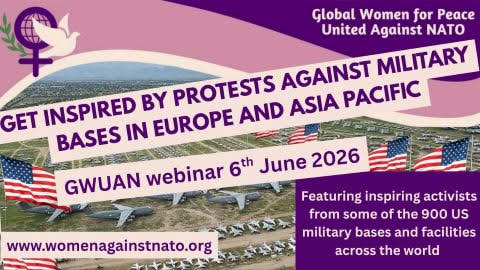
6 June – WEBINAR- Get Inspired by Protests Against Military Bases!

Cuba Is Not a Failed State – It Is a Besieged State
PETITION: “Global Appeal to Endorse Palestinian Right of Return of Refugees”


of the week– Nuclear Reactor Information Task Force
To see nuclear-related stories in greater depth and intensity – go to https://nuclearinformation.wordpress.com
-
Archives
- June 2026 (34)
- May 2026 (306)
- April 2026 (356)
- March 2026 (251)
- February 2026 (268)
- January 2026 (308)
- December 2025 (358)
- November 2025 (359)
- October 2025 (376)
- September 2025 (257)
- August 2025 (319)
- July 2025 (230)
-
Categories
- 1
- 1 NUCLEAR ISSUES
- business and costs
- climate change
- culture and arts
- ENERGY
- environment
- health
- history
- indigenous issues
- Legal
- marketing of nuclear
- media
- opposition to nuclear
- PERSONAL STORIES
- politics
- politics international
- Religion and ethics
- safety
- secrets,lies and civil liberties
- spinbuster
- technology
- Uranium
- wastes
- weapons and war
- Women
- 2 WORLD
- ACTION
- AFRICA
- Atrocities
- AUSTRALIA
- Christina's notes
- Christina's themes
- culture and arts
- Events
- Fuk 2022
- Fuk 2023
- Fukushima 2017
- Fukushima 2018
- fukushima 2019
- Fukushima 2020
- Fukushima 2021
- general
- global warming
- Humour (God we need it)
- Nuclear
- RARE EARTHS
- Reference
- resources – print
- Resources -audiovicual
- Weekly Newsletter
- World
- World Nuclear
- YouTube
-
RSS
Entries RSS
Comments RSS
 nuclear-news