Putin Still Selling U.S. Nearly $1 Billion in Nuclear Fuel
NewsWeek, BY ANNA SKINNER ON 5/11/23
The United States has done a thorough job of sanctioning Russia, but it still relies on the nation for one key resource.
The U.S. and other Western nations were quick to sanction Russia after Russian President Vladimir Putin ordered an invasion of Ukraine in February 2022. Western allies joined forces in sanctioning resources like Russian oil and gas to deprive the Kremlin of financial gain amid funneling money into its war against Ukraine. International companies located in Russia also were quick to leave, further damaging the Russian economy, but Russia still maintains a firm grasp on a horde of something that many other countries want: nuclear fuel.
Nuclear energy, which generates power through a process of splitting uranium atoms, has evaded sanctions more than a year into the war. Enriching uranium is a highly specialized process that can only be done in certain countries, such as Russia. Russia has some of the world’s largest uranium supplies, and it also excels in the necessary process of converting it to enriched uranium, which then can be used as nuclear fuel. Commercial plants converting uranium operate in Russia, Canada, China and France, with Russia having the most infrastructure needed for the conversion……………..
Because of this, Rosatom State Nuclear Energy Corporation—Russia’s collection of nuclear suppliers—provides a quarter of the U.S.’s nuclear fuel, and the United States continues to pay for the resource, spending a collective $1 billion last year, according to a report by the Wall Street Journal.
………………. In March, the U.S.’s first nuclear reactor in seven years started nuclear reactions in Georgia. CNBC reported that including the new reactor, there are 93 reactors throughout the United States providing a fifth of the nation’s energy. A quarter of the nuclear resources needed to power that energy is sourced from Rosatom.
U.S. companies are paying steeply for the resources needed to power its reactors, which means it is funding both Russia and Ukraine during the war….. https://www.newsweek.com/putin-selling-us-nearly-billion-dollars-nuclear-fuel-1799788
Germany’s Nuclear Energy Phase-Out, Explained

NIRS, May 8, 2023
On April 15, 2023 utilities in Germany shut down the country’s three
last remaining nuclear power plants. These closures mark the successful
planned phase-out of German nuclear energy from the nation’s grid. What does this mean for Germany? What lessons should the U.S. take away from the
German energy transition?
Germany’s Energiewende (“energytransition”) is an overarching policy commitment to achieve a low-carbon, nuclear-free economy and transition to renewable energy. While the recently completed phase-out of nuclear power is a major milestone for Germany’s energy transition, it was by no means a perfect process nor is the current
energy system in Germany a perfect example to follow.
But, Germany’s transition shows that an energy policy grounded in environmental values works – and the earlier climate policy is implemented, the sooner the
climate policy goals can be realized. Above all, the German energy
transition shows the tremendous power of active citizenry, organized social
movements, and activism to transform policy and successfully demand change.
more https://www.nirs.org/germanys-nuclear-energy-phase-out-explained/
Nuclear Free Local Authorities issue appeal to King over Lincolnshire Nuke Dump

Save our sceptred isle: NFLAs issue appeal to King over Lincolnshire Nuke Dump. https://www.nuclearpolicy.info/news/save-our-sceptred-isle-nflas-issue-appeal-to-king-over-lincolnshire-nuke-dump/ 11 May 23
Just days after the Coronation, the English Nuclear Free Local Authorities (NFLAs) have written to the nation’s new Sovereign to ask His Majesty King Charles III to intercede over the plan to locate a nuclear waste dump in East Lincolnshire right next to the first Royal nature reserve.
The East Lincolnshire coast has been selected as the first of the ‘King’s Series of National Nature Reserves’ to mark the commencement of His Majesty’s Reign. A formal announcement by Natural England is expected in the summer.
The ‘Lincolnshire Coronation Coast Nature Reserve’ will cover some 21 square miles, centred upon existing protected areas at Theddlethorpe and Saltfleetby comprising mud flats, salt- and freshwater marshes and sand dunes, which support a diverse variety of wintering and breeding birds, natter jack toads, insects, and plants. The establishment of the reserve would enhance the area’s existing offer to visitors, many of whom flock to adjoining Mablethorpe to enjoy the beautiful Blue Flag award winning beaches.
So it was with regret that Councillor David Blackburn, Chair of the English Forum of the NFLAs had to sound a note of caution in his letter to His Majesty that Nuclear Waste Services has plans to locate a Geological Disposal Facility, a nuclear waste dump, right next to the reserve.
This would be the destination for Britain’s high-level, heat emitting radioactive waste, including its huge stockpile of plutonium. This waste has either already been generated through the UK’s military and civil nuclear programmes over the last 70 years or will be generated in the future through their continuance.
The GDF would comprise a surface facility approximately 1 square KM, which would most likely be located on the site of the former Conoco gas terminal in Theddlethorpe. This would be the railhead receiving regular shipments of nuclear waste. This waste would be transported below ground and out through tunnels beneath the North Sea. As nuclear waste is transported by rail, and there is no current infrastructure in place, there would be a necessity to construct a new rail line to serve the location.
The process of selecting a site for this facility could take between 15 and 20 years after which the construction and operation of such a facility would last more than 100 years.
In his letter, Councillor Blackburn contends that the project is ‘of such an immense size and in (such) a wholly inappropriate location’ that it would be ‘massively disruptive and harmful’ to the flora and fauna of the local environment, including that of the Royal Reserve, and to local people, as well as ‘massively ruinous’ to the local tourist and agrarian economy. Councillor Blackburn ends by appealing to the King on behalf of ‘His Majesty’s many loyal and anxious subjects in the affected area to intercede with relevant Ministers of the Crown to end this folly ‘.
Commenting Cllr Blackburn said: “The creation of this Royal Reserve is a wonderful idea and wholly in keeping with His Majesty the King’s known love for the natural environment. I can only hope that by drawing the Sovereign’s attention to the government’s lunatic plan to locate a nuclear waste dump next to the reserve that the King might be able to intervene to end the threat of it.”
Pentagon wants authority to start work on new technologies without Congressional approval
Jared Serbu @jserbuWFED, May 8, 2023
Over the last several years, Congress has passed several pieces of legislation meant to speed up the Defense Department’s acquisition system. Now, DoD officials have an idea of their own: they’re asking for new authorities that would let the military services begin early work on critical new programs without lawmakers’ explicit permission, arguing the current approval process takes too long and risks putting the U.S. military at a technological disadvantage.
………………………………….. If Congress agrees to the proposal as part of next year’s Defense authorization bill, DoD would be able to spend up to $300 million on new programs without getting Congressional approval: lawmakers would only be notified about a new start after a decision has been made………………………. https://federalnewsnetwork.com/defense-news/2023/05/pentagon-wants-authority-to-start-work-on-new-technologies-without-congressional-approval/
French nuclear group Orano (previously Areva) evacuates foreign workers to Niger capital following security threat
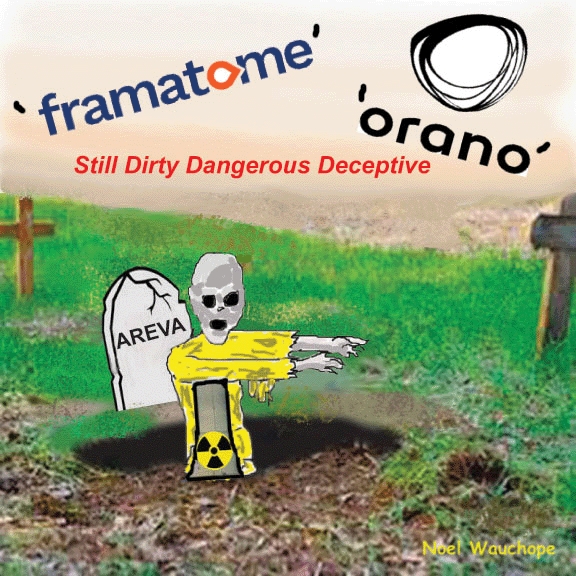
NIAMEY, May 12 (Reuters) – French nuclear group Orano has evacuated 18 expatriate workers from a uranium mining site in Arlit, northern Niger, to the capital Niamey on Friday, following a security threat, a spokesperson for the company said in statement to Reuters.
Orano ceased exploiting uranium at the mine in 2021 due to the depletion of reserves, but plans to operate in the country to retrain workers and remediate the mining site for at least a decade.
The spokesperson did not give details about the security threat but said it occurred in a village halfway between the border with Mali and Arlit, which lies some 800 km (500 miles) to the northeast of the capital.
Sowing Seeds of Plunder: A Lose-Lose Situation in Ukraine

President Zelenskyy put the land reform into law in 2020 against the will of the vast majority of the population who feared it would exacerbate corruption and reinforce control by powerful interests in the agricultural sector.
The largest landholders are a mix of Ukrainian oligarchs and foreign interests — mostly European and North American as well as the sovereign fund of Saudi Arabia.
Ed note: The irony of it! Ukrainians hold the hated memory of Soviet Russia starving Ukraine, as it sent their grain to Russia. Now we have the Western world helping themselves to Ukraine’s agriculture – with increasing farming for export, – pushing out the livelihood’s of Ukrainian small farmers. Zelensky – seen as a hero/saviour for now – – but how will this clown be remembered?
y Colin Todhunter, 10 May 23 https://www.globalresearch.ca/sowing-seeds-plunder-lose-lose-situation-ukraine/5818851
It’s a lose-lose situation for Ukrainians. While they are dying to defend their land, financial institutions are insidiously supporting the consolidation of farmland by oligarchs and Western financial interests.
So says Frédéric Mousseau, Policy Director of the Oakland Institute, an independent think tank.
Depending on which sources to believe, between 100,000 and 300,000 Ukrainian soldiers (possibly more) have died during the conflict with Russia. That figure, of course, does not include civilian casualties.
The mainstream narrative in the West is that Russia grabbed Crimea and then invaded Ukraine. Russia is portrayed as the outright aggressor which wants to restore its control over large swathes of Europe.
The expansion of NATO towards the east, the US-backed coup in 2014 – followed by eight years of the shelling of the ethnic Russian eastern parts of the country by the regime in Kyiv resulting in around 14,000 deaths – led up to the military intervention by Russia, which regards the expansionism and militarism as an existential threat.
It is not the purpose of this article to explore these issues. Much has already been written on this elsewhere. But billions of dollars’ worth of military hardware has been sent to Ukraine by the NATO countries and hundreds of thousands of young Ukrainians have died.
They died in the belief that they were protecting their nation – their land. A land that is among the most fertile in the world.
Professor Olena Borodina of the National Academy of Sciences of Ukraine says:
“Today, thousands of rural boys and girls, farmers, are fighting and dying in the war. They have lost everything. The processes of free land sale and purchase are increasingly liberalised and advertised. This really threatens the rights of Ukrainians to their land, for which they give their lives.”
Borodina is quoted in the February 2023 report by the Oakland Institute War and Theft: The Takeover of Ukraine’s Agricultural Land, which reveals how oligarchs and financial interests are expanding control over Ukraine’s agricultural land with help and financing from Western financial institutions.
Aid provided to Ukraine in recent years has been tied to a drastic structural adjustment programme requiring the creation of a land market through a law that leads to greater concentration of land in the hands of powerful interests. The programme also includes austerity measures, cuts in social safety nets and the privatisation of key sectors of the economy.
Frédéric Mousseau, co-author of the report, says:
“Despite being at the centre of news cycle and international policy, little attention has gone to the core of the conflict — who controls the agricultural land in the country known as the breadbasket of Europe. [The] Answer to this question is paramount to understanding the major stakes in the war.”
The report shows the total amount of land controlled by oligarchs, corrupt individuals and large agribusinesses is over nine million hectares — exceeding 28% of Ukraine’s arable land (the rest is used by over eight million Ukrainian farmers).
Amidst Chaos of War, a New Report Exposes the Stealth Take-over of Ukrainian Agricultural Land
The largest landholders are a mix of Ukrainian oligarchs and foreign interests — mostly European and North American as well as the sovereign fund of Saudi Arabia. A number of large US pension funds, foundations and university endowments are also invested in Ukrainian land through NCH Capital – a US-based private equity fund, which is the fifth largest landholder in the country.
President Zelenskyy put the land reform into law in 2020 against the will of the vast majority of the population who feared it would exacerbate corruption and reinforce control by powerful interests in the agricultural sector.
The Oakland Institute notes that, while large landholders are securing massive financing from Western financial institutions, Ukrainian farmers — essential for ensuring domestic food supply — receive virtually no support. With the land market in place, amid high economic stress and war, this difference of treatment will lead to more land consolidation by large agribusinesses.
All but one of the ten largest landholding firms are registered overseas, mainly in tax havens such as Cyprus or Luxembourg. The report identifies many prominent investors, including Vanguard Group, Kopernik Global Investors, BNP Asset Management Holding, Goldman Sachs-owned NN Investment Partners Holdings, and Norges Bank Investment Management, which manages Norway’s sovereign wealth fund.
Most of the agribusiness firms are substantially indebted to Western financial institutions, in particular the European Bank for Reconstruction and Development, the European Investment Bank, and the International Finance Corporation – the private sector arm of the World Bank.
Together, these institutions have been major lenders to Ukrainian agribusinesses, with close to US$1.7 billion lent to just six of Ukraine’s largest landholding firms in recent years. Other key lenders are a mix of mainly European and North American financial institutions, both public and private.
The report notes that this gives creditors financial stakes in the operation of the agribusinesses and confers significant leverage over them. Meanwhile, Ukrainian farmers have had to operate with limited amounts of land and financing, and many are now on the verge of poverty.
International financial institutions are in effect subsidising the concentration of land and a destructive industrial model of agriculture based on the intensive use of synthetic inputs, fossil fuels and large-scale monocropping.
Much of what is happening in Ukraine is part of a wider trend: private equity funds being injected into agriculture throughout the world and used to lease or buy up farms on the cheap and aggregate them into large-scale, industrial grain and soybean concerns. These funds use pension funds, sovereign wealth funds, endowment funds and investments from governments, banks, insurance companies and high net worth individuals (see the 2020 report ‘Barbarians at the Barn‘ by Grain.org).
Financialising agriculture this way shifts power to people with no connection to farming. In the words of BlackRock’s Larry Fink: “Go long agriculture and water and go to the beach.”
Funds tend to invest for between 10 and 15 years, resulting in good returns for investors but can leave a trail of long-term environmental and social devastation and serve to undermine local and regional food insecurity.
By contrast, according to the Oakland Institute, small-scale farmers in Ukraine demonstrate resilience and enormous potential for leading the expansion of a different production model based on agroecology and producing healthy food. Whereas large agribusinesses are geared towards export markets, it is Ukraine’s small and medium-sized farmers who guarantee the country’s food security.
This is underlined by the State Statistics Service of Ukraine in its report ‘Main agricultural characteristics of households in rural areas in 2011’, which showed that smallholder farmers in Ukraine operate 16% of agricultural land, but provide 55% of agricultural output, including 97% of potatoes, 97% of honey, 88% of vegetables, 83% of fruits and berries and 80% of milk.
In June 2020, the IMF approved an 18-month, strings-attached $5 billion loan programme with Ukraine. Also that year, the World Bank incorporated measures relating to the sale of public agricultural land as conditions in a $350 million Development Policy Loan (COVID ‘relief package’) to Ukraine. This included a required ‘prior action’ to “enable the sale of agricultural land and the use of land as collateral.”
According to the Oakland Institute:
“Ukraine is now the world’s third-largest debtor to the International Monetary Fund and its crippling debt burden will likely result in additional pressure from its creditors, bondholders and international financial institutions on how post-war reconstruction – estimated to cost US$750 billion – should happen.”
Financial institutions are leveraging Ukraine’s crippling debt to drive further privatisation and liberalisation – backing the country into a corner to make it an offer it can’t refuse.
Since the war began, the Ukrainian flag has been raised outside parliament buildings in the West and iconic landmarks have been lit up in its colours. An image bite used to conjure up feelings of solidarity and support for that nation while serving to distract from the harsh machinations of geopolitics and modern-day economic plunder that is unhindered by national borders and has scant regard for the plight of ordinary citizens.
Zaporizhzhia nuclear plant facing ‘catastrophic’ staff shortage amid Russian evacuation
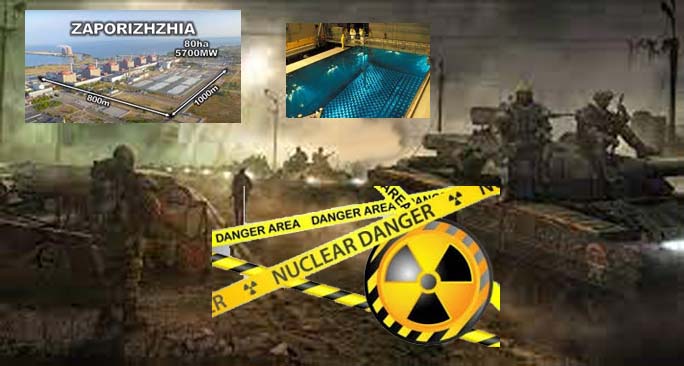
Russia plans to relocate thousands of staff from nuclear plant, atomic energy company claims, warning of ‘catastrophic lack of qualified personnel’
Associated Press, 11 May 23
Russia plans to relocate about 2,700 Ukrainian staff from Europe’s largest nuclear plant, Ukraine’s atomic energy company has claimed, warning of a potential “catastrophic lack of qualified personnel” at the Zaporizhzhia facility in Russian-occupied southern Ukraine.
Workers who signed employment contracts with Russia’s nuclear agency Rosatom following Moscow’s capture of the Zaporizhzhia plant early in the war are set to be taken to Russia along with their families, Energoatom said in a Telegram post on Wednesday.
The company did not specify whether the employees would be forcibly moved out of the plant, nor was it immediately possible to verify Energoatom’s claims about Moscow’s plan.
Removing staff would “exacerbate the already extremely urgent issue” of staff shortages, Energoatom said.
The Moscow-installed governor of the region ordered civilian evacuations from the area last Saturday, including from the nearby city of Enerhodar where most plant workers live. The full scope of the evacuation order was not clear.
Russian forces seized the Zaporizhzhia plant days after Russian president, Vladimir Putin, ordered the invasion of Ukraine in February 2022. Russian occupiers left the Ukrainian staff in place to keep the plant running but the exact number of workers currently at the plant is not known.
Fighting near the plant has fuelled fears of a potential catastrophic incident like the one at Chornobyl, in northern Ukraine, where a reactor exploded in 1986 and contaminated a vast area in the world’s worst nuclear accident.
Zaporizhzhia is one of the 10 biggest nuclear plants in the world. While its six reactors have been shut down for months, it still needs power and qualified staff to operate crucial cooling systems and other safety features…………………. more https://www.theguardian.com/world/2023/may/11/zaporizhzhia-nuclear-plant-facing-catastrophic-staff-shortage-amid-russian-evacuation
Regulator issues permit for New Mexico nuclear waste facility against wishes of local, state, and federal leaders
By Simon Druker, https://www.upi.com/Top_News/US/2023/05/09/3631683671382/
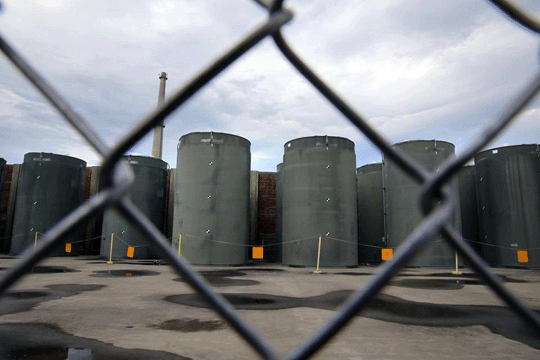
May 9 (UPI) — The agency that governs nuclear power in the United States issued a permit Tuesday to build a facility to store nuclear waste in New Mexico.
The Nuclear Regulatory Commission permit goes against the wishes of both state and federal elected officials.
“I have been strongly opposed to the interim storage of spent nuclear fuel and high-level waste in New Mexico, which would pose serious risks to our communities. But today’s announcement paves the way for New Mexico to be home for indefinite storage of spent nuclear fuel,” Sen. Ben Ray Lujan D-N.M., told The Hill in a statement.
“This approach — over the objections of many local, state, and federal leaders — is unacceptable,” he said.
Gov. Michelle Lujan Grisham, D-N.M., in March signed legislation prohibiting the facility from being built by Florida-based Holtec International.
It’s not clear what effect her law would have on the NRC’s federal permit.
Lujan Grisham called on President Joe Biden to intervene.
The NRC permit grants Holtec the right to build the consolidated interim storage facility for spent nuclear fuel in the state’s Lea County. The company can store 500 canisters, or approximately 8,680 metric tons, of spent nuclear fuel for 40 years.
Holtec said it plans to eventually apply for amended licenses in order to eventually store up to 10,000 canisters or approximately 173,600 metric tons over an additional 19 phases.
The company was founded in 1986 in New Jersey and specializes in manufacturing parts for nuclear reactors. It also offers existing nuclear waste storage services.
Despite having the permit, Holtec is not fully committed to moving ahead with the project.
“We’re still working with our partners and the key stakeholders to understand what our paths are … what our potential options are. Then we’re going to head forward from that,” the company’s director of government affairs and communications Patrick O’Brien told the Albuquerque Journal in an interview Tuesday.
Robert Kennedy Jr: America needs a revolution
The 2024 outsider on Biden, Ukraine and Covid misinformation, more https://unherd.com/thepost/robert-kennedy-jr-america-needs-a-revolution/ 4 May 23
For decades, as a scion of the Kennedy family and environmental litigator, Robert F. Kennedy Jr was considered an establishment hero. In recent years, however, his rhetoric against Covid lockdowns and vaccines sealed his reputation among most commentators as irresponsible and potentially dangerous. So, since he announced that he was running for president two weeks ago, challenging Joe Biden for the Democratic nomination, he has presented the establishment media with something of a conundrum. He is already polling at 20% — should he be ignored or interrogated?
UnHerd‘s Freddie Sayers invited RFK Jr. to the studio to discuss his campaign promises and get behind the controversies.
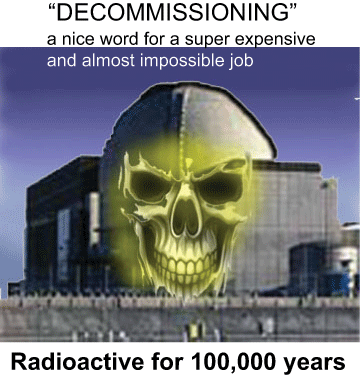
Canada’s radioactive waste and decommissioning policy is a failure
by Ole HendricksonMay 8, 2023 https://rabble.ca/columnists/canadas-radioactive-waste-and-decommissioning-policy-is-a-failure/
Ole Hendrickson argues Canada’s new radioactive waste and decommissioning policy ignores Indigenous rights, public input and international safety standards.
Natural Resources Canada (NRCan) issued a news release on March 27 headlined “Now Live: Government of Canada’s Modernized Policy for Radioactive Waste and Decommissioning for Canada.”
NRCan then waited five more days before making the policy available on its website.
Why the delay?
If a government agency knows that information will generate a negative reaction from the public, it posts it quietly on a Friday to minimize media attention.
The Canadian Environmental Law Association (CELA) gave the policy a failing grade, saying, “There is no provision for independent management of nuclear waste.”
Nor does the policy acknowledge Article 29(2) of the U.N. Declaration on the Rights of Indigenous Peoples.
“States shall take effective measures to ensure that no storage or disposal of hazardous materials shall take place in the lands or territories of indigenous peoples without their free, prior and informed consent,” the Article reads.
After NRCan released a draft of the policy a year earlier, the Council of Canadians sent out an action alert that triggered 7,400 emails demanding “an independent oversight body free from industry influence to regulate our radioactive waste.”
Nuclear Waste Watch submitted An Alternative Policy for Canada on Radioactive Waste Management and Decommissioning based on International Atomic Energy Agency safety standards and requirements for decommissioning, waste storage, and waste disposal.
Why does Canada’s new radioactive waste and decommissioning policy ignore Indigenous rights, public input and international safety standards? Is this a desperate attempt to revive a fading nuclear industry by allowing it to ignore its waste problem?
The new policy illustrates the conflict of interest facing NRCan Minister Jonathan Wilkinson, charged with promoting nuclear energy under the Nuclear Energy Act.
When Budget 2023 was tabled, John Gorman, president of the Canadian Nuclear Association, wrote in a LinkedIn post, “I am personally grateful to Minister Wilkinson in particular, and his team of dedicated staff at NRCan (including but not limited to Mollie Johnson, Claire Seaborn, John Hannaford, and Debbie Scharf), who have championed the role of nuclear in Canada.”
As NDP deputy leader Alexander Boulerice noted at a recent press conference, NRCan has been infiltrated by pro-nuclear proponents.
“They don’t have to knock on the door to get into the house because they own the house,” Boulerice said.
In other OECD countries, multiple competent regulatory authorities are involved in radioactive waste management and decommissioning. Nearly all have a national oversight body. France also has a national financial evaluation commission to assess the funding of costs of dismantling nuclear installations and of managing spent fuel and other radioactive waste.
In contrast, Canada suffers from a nuclear waste governance void. Canada’s benign nuclear regulator, the Canadian Nuclear Safety Commission (CNSC), allows the nuclear industry to propose its own waste disposal projects with limited technical oversight and no financial oversight. The Nuclear Waste Management Organization is a private organization run by the nuclear utilities that produce the waste.
Canada also now has a weak, hands-off, industry-friendly policy.
Nuclear non-proliferation experts have warned Canada that extracting plutonium from high-level fuel waste risks weapons proliferation. The policy shirks responsibility for the oversight of plutonium extraction (or “reprocessing”), even as the government has given $50.5 million to a start-up company, Moltex Energy, to develop this technology.
The new policy will allow current projects for abandonment of federal nuclear waste to continue. In 2015, Atomic Energy of Canada Limited contracted private companies to manage its $16 billion waste liability.
Without prior consultation with local First Nations, these companies (Texas-based Fluor and Jacobs, and SNC-Lavalin), through their Canadian Nuclear Laboratories subsidiary, quickly announced plans to create new permanent waste disposal facilities next to the Ottawa and Winnipeg Rivers.
Their hastily conceived projects are now dragging through licensing and environmental assessment processes, opposed by municipal governments and citizens’ groups.
Parliament is responsible for scrutinizing public spending and ensuring proper accountability of expenses. The lack of cost-benefit analysis of disposal projects for the federal government’s own waste is irresponsible. The private companies behind these projects would be happy to receive waste management funds in perpetuity.
The old policy stated clearly that waste owners are responsible for funding waste management facilities “in accordance with the ‘polluter pays’ principle”. The new policy merely calls upon the industry to develop “conceptual approaches” and to update on “funding plans.” This opens the door to federal subsidies for non-federal waste owners.
The new policy acknowledges for the first time ever that Canada’s nuclear industry is importing waste in the form of radioactive “sealed sources” not of Canadian origin. These waste imports and other industrial radioactive wastes eventually end up in Canada’s only licensed commercial waste storage facility at AECL’s Chalk River Laboratories, potentially increasing the federal nuclear liability.
The new policy is silent on small modular reactor (SMR) fuel waste. According to a 2022 study in the prestigious journal Proceedings of the National Academy of Sciences, SMRs would produce up to 30 times more waste per unit electricity generated, and novel SMR waste types would pose serious disposal challenges.
Rather than requiring transparency in the form of credible cost estimates and technical analyses of safety for disposal facilities in its new policy, the federal government is subsidizing new reactors that will create additional wastes, impose financial burdens on future Canadians, and create risks of nuclear weapons proliferation.
Canada’s new radioactive waste and decommissioning policy is a failure.
Ole Hendrickson is an ecologist, a former federal research scientist, and chair of the Sierra Club Canada Foundation’s national conservation committee.
Profitable industry in trying to clean up dead nuclear reactors
Magnox is ready to start a major decommissioning project to clean-up and
demolish four ‘blower house’ superstructures that surround Berkeley
site’s two reactor buildings. Altrad has bagged a £31m contract for the
design, asbestos removal, deplant, demolition and construction works in and
around the blower houses.
The firm will also be supported by Veolia KDC
Decommissioning Services, NSG Environmental, OBR Construction, Mammoet, and
Cavendish Nuclear. Ross McAllister, Magnox programme delivery director
said: “This is one of the largest decommissioning projects that Berkeley
site has seen for several years.
“It was originally planned for the
2070’s so it is fantastic to bring that forward by five decades in our aim
to deliver our mission better, faster and even safer. “The blower houses
circulated gas through the reactors to transfer heat into 310 tonne boilers
to create steam to turn the turbines and generate electricity. The last of
the 15 gigantic metal boilers was transported to Sweden for cleaning,
smelting and recycling in 2013. “The buildings will be emptied of the
residual metallic low-level waste and undergo a full asbestos clean before
being demolished.
Construction Enquirer 10th May 2023
US nuclear companies urge Congress for $billions, as Russia’s nuclear industry profits from both sides of the Ukraine war

U.S. companies collectively sent almost $1 billion last year to Rosatom.
“That’s money that’s going right into the defense complex in Russia,”
“We’re funding both sides of the war.”
The West Needs Russia to Power Its Nuclear Comeback. WSJ 10 May 23
U.S., Europe add reactors but still heavily dependent on Moscow for crucial ingredients to produce fuel
Nuclear power in the West is having a long-awaited revival, with new reactors opening in the U.S. and Europe and fresh momentum toward building more soon.
A gaping hole in the plan: The West doesn’t have enough nuclear fuel—and lacks the capacity to swiftly ramp up production. Even more vexing, the biggest source of critical ingredients is Russia and its state monopoly, Rosatom, which is implicated in supporting the war in Ukraine………….
Nuclear power supplies nearly 20% of U.S. electricity, and roughly 25% of European electricity, but in recent decades has struggled to gain traction in most of the West as a green alternative to fossil fuels, for reasons ranging from cost to waste disposal and an erosion of expertise in building reactors.
Pockets of stiff resistance remain: Germany closed its last reactors in April, in a phaseout that began more than a decade ago………………………….
A recent Gallup poll found that Americans are more supportive of the technology than at any point in the past decade…………………………………..
Westinghouse, a storied pioneer of electric power, has struggled in the nuclear sector and repeatedly changed hands amid market swings and tighter industry regulation after the reactor accidents at Three Mile Island, Chernobyl and Fukushima.
A group including private-equity firm Brookfield Asset Management bought Westinghouse for almost $8 billion in October, in a move billed as a bet on nuclear power’s resurgence.
Westinghouse said this month that it next plans to launch a line of smaller reactors that could cost as little as $1 billion each.
Despite the industry’s progress, the dependence on Russian enriched uranium for nuclear fuel has proven intractable.
Nuclear fuel is one of the few Russian energy sources not banned by the West as a result of the war in Ukraine. The reason is rooted in a program from the early 1990s, soon after the Cold War ended, aimed at shrinking the threat of Soviet nuclear warheads falling into the wrong hands.
Under the 1993 deal, the brainchild of a Massachusetts Institute of Technology researcher named Thomas Neff and dubbed Megatons to Megawatts, the U.S. bought 500 metric tons of highly enriched uranium, enough for 20,000 warheads, and had it converted into reactor fuel.
Arms-control advocates hailed it as a win-win: Moscow got urgently needed cash, Washington reduced its proliferation headache and U.S. utilities got inexpensive fuel. It remains one of the world’s most successful nuclear-disarmament programs.
The deal “did what was promised,” Dr. Neff said in an interview. “We have many fewer nuclear weapons and stuff to make them out of than we did.”
The problem, critics said, was that the deal delivered Russian nuclear fuel so cheaply that rival suppliers struggled to compete. Before long, U.S. and European companies were scaling back and Russia was the world’s biggest supplier of enriched uranium, with nearly half of global capacity.
Before the deal ended in 2013, Russian suppliers, now organized as Rosatom, signed a new contract with the U.S. private sector to provide commercial fuel beyond the government-to-government program. Rosatom still supplies as much as one-fourth of U.S. nuclear fuel.
U.S. companies collectively sent almost $1 billion last year to Rosatom, according to a recent analysis from Darya Dolzikova at the Royal United Services Institute in London.
“That’s money that’s going right into the defense complex in Russia,” said Scott Melbye, executive vice president of uranium miner Uranium Energy and president of the Uranium Producers of America, an industry group. “We’re funding both sides of the war.”
Rosatom was formed by Russian President Vladimir Putin in 2007 from various parts of the country’s nuclear-power industry and is closely controlled by the Kremlin. Its top managers have been deeply involved in running Ukraine’s Zaporizhzhia nuclear-power plant, Europe’s largest………………….
A proposed new generation of reactors, which proponents and investors including Microsoft founder Bill Gates are touting as less risky and more environmentally friendly than current reactor designs, requires a special type of fuel that is the nuclear equivalent of high-octane gasoline.
The only source of that fuel today is Rosatom.
……………………….. The multinational Urenco owns one of only two uranium-processing facilities in the U.S., in Eunice, N.M., just across the Texas border. The company says it is spending roughly $200 million on new capacity and can invest much more if Russian uranium is sanctioned.
The catch: It wants government guarantees on quantities allowed in the market.
Urenco’s fear, said Kirk Schnoebelen, head of U.S. sales, is that in several years low-price Russian enriched uranium might swamp world markets, tanking prices……….
But because of the Megatons deal, “the business case for that project was utterly destroyed,” Today that history “absolutely” informs the U.S. nuclear industry’s thinking and makes corporate boards reluctant to invest the necessary billions…..
Westinghouse’s Mr. Fragman said the legislation is long overdue……… https://www.wsj.com/articles/nuclear-power-makes-a-comeback-underpinned-by-russian-uranium-24ed8e12
Microsoft just made a huge, far-from-certain bet on nuclear fusion

Microsoft just made a huge, far-from-certain bet on nuclear fusion, The Verge 10 May 23,
Microsoft just signed a jaw-dropping agreement to purchase electricity from a nuclear fusion generator. Nuclear fusion, often called the Holy Grail of energy, is a potentially limitless source of clean energy that scientists have been chasing for the better part of a century.
A company called Helion Energy thinks it can deliver that Holy Grail to Microsoft by 2028. It announced a power purchase agreement with Microsoft this morning that would see it plug in the world’s first commercial fusion generator to a power grid in Washington. The goal is to generate at least 50 megawatts of power — a small but significant amount and more than the 42MW that the US’s first two offshore wind farms have the capacity to generate today.
To say that’s a tall order would be the understatement of the year. “I would say it’s the most audacious thing I’ve ever heard,” says University of Chicago theoretical physicist Robert Rosner. “In these kinds of issues, I will never say never. But it would be astonishing if they succeed.”
Experts’ optimistic estimates for when the world might see its first nuclear fusion power plant have ranged from the end of the decade to several decades from now.
Helion’s success depends on achieving remarkable breakthroughs in an incredibly short span of time and then commercializing its technology to make it cost-competitive with other energy sources. Nevertheless, Helion is unfazed.
“This is a binding agreement that has financial penalties if we can’t build a fusion system,” Helion founder and CEO David Kirtley tells The Verge. “We’ve committed to be able to build a system and sell it commercially to [Microsoft].”……………………………………
The most advanced attempts at generating electricity through nuclear fusion involve shooting powerful laser beams at a tiny target or relying on magnetic fields to confine superheated matter called plasma with a machine called a tokamak.
Helion uses neither of those methods. The company is developing a 40-foot device called a plasma accelerator that heats fuel to 100 million degrees Celsius. It heats deuterium (an isotope of hydrogen) and helium-3 into a plasma and then uses pulsed magnetic fields to compress the plasma until fusion happens. (The company has a Youtube video that illustrates the process in much more detail.
Helion claims that the machine should eventually be able to recapture the electricity used to trigger the reaction, which can be used to recharge the device’s magnets.
Figuring out how to be energy efficient is crucial to make fusion power a reality. After all, you need extreme heat and pressure to force atoms to fuse together. ………………
Assuming Helion can pull this all off, it still has to ensure that it can do so in an affordable way. The cost of the electricity it generates for consumers would need to be comparable to or cheaper than today’s power plants, solar, and wind farms. The company isn’t sharing what price it agreed to in its power purchase agreement with Microsoft, but Kirtley says the company’s goal is to one day get costs down to a cent a kilowatt hour.
……………………as has been the case with dreams of nuclear fusion for decades — we’ll have to wait and see. https://www.theverge.com/2023/5/10/23717332/microsoft-nuclear-fusion-power-plant-helion-purchase-agreement
New Mexico State law and multiple federal court challenges may yet block the Holtec nuclear waste project.

State Laws Could Block CISF Projects
Multiple lawsuits in federal appeals courts and state laws opposing storage and disposal of irradiated nuclear fuel in both New Mexico and Texas could upend both nuclear waste CISF schemes.
Beyond Nuclear , LEA COUNTY, NEW MEXICO and WASHINGTON, D.C., May 9, 2023 —
Today, the Nuclear Regulatory Commission (NRC) announced it approved licensing for Holtec International’s controversial consolidated interim storage facility (CISF) in southeastern New Mexico’s Lea County, not far from the Texas border. The facility is designed to store high-level radioactive waste from nuclear power plants across the U.S. But NRC approval notwithstanding, a recently enacted New Mexico State law and multiple federal court challenges may yet block the project
…………….. Holtec now seeks to branch out into consolidated storage and its associated high-level radioactive waste transportation. On the New Mexico CISF scheme it partnered with the Eddy-Lea Energy Alliance (ELEA), a quasi-governmental entity comprised of Eddy and Lea Counties (which border one another), as well as their county seats of Carlsbad and Hobbs, New Mexico. ELEA owns the targeted nuclear waste CISF site’s land surface, and would take a large cut of the proceeds.
Giant Capacity May Signal Storing Foreign and Military Nuclear Waste
The Holtec-ELEA nuclear waste CISF would store up to 173,600 metric tons of highly radioactive irradiated fuel (often euphemistically called “spent” nuclear fuel or SNF, despite the fact it is highly radioactive and lethal), as well as Greater-Than-Class-C (GTCC) radioactive waste from commercial nuclear reactors. The facility would hold up to 10,000 canisters of nuclear waste, inserted into pits in a platform which sits on the surface. Part of the canisters would stay above the natural land surface.
“If opened, the site could become home to the biggest concentration of radioactive waste in the world,” reported Diane D’Arrigo, Radioactive Waste Project Director at Nuclear Information and Resource Service.
The Holtec-ELEA CISF’s nuclear waste storage capacity would be in addition to another planned CISF some 40 miles to the east in Andrews County, Texas. If built, it would be able to store 40,000 metric tons of irradiated fuel and GTCC in above-ground dry casks. The Texas facility, proposed by Interim Storage Partners, LLC (ISP), was granted construction and operation license approval by the Nuclear Regulatory Commission on September 13, 2021.
Since the entire SNF inventory at U.S. commercial reactors is just over 90,000 metric tons, experts have questioned why the Texas and New Mexico facilities would need a combined capacity of 213,600 metric tons, and whether the projects may be aiming to store nuclear waste from abroad and/or from the military.
There is precedent for shipping irradiated fuel from other countries to the U.S. for storage at Idaho National Labs. And in 2018, a test shipment of a mock SNF cask was transported from Europe to Colorado. Lead ISP partner Orano (formerly Areva) of France services the largest nuclear power reactor fleet of any single company in the western world. It lacks facilities in France to permanently dispose of the country’s own waste.
The consortium backing the ISP facility includes Waste Control Specialists, LLC (WCS), a national dump for so-called “low-level” radioactive waste, located immediately adjacent to (and upstream of) the New Mexico border. WCS loudly proclaims its ties to the U.S. military, which needs to dispose of its own highly radioactive wastes.
Nuclear Waste Transport Dangers
Opening a CISF in the U.S. would trigger many thousands of shipments of domestic irradiated fuel across many of the Lower 48 states, through a large percentage of U.S. congressional districts. SNF canisters and transport casks are subject to so-called “routine” radiation emissions, as well as leakage and other failures, which would pose threats to thousands of communities along the transportation routes.
“Transporting highly radioactive waste is inherently high-risk,” said Kevin Kamps, Radioactive Waste Specialist with Beyond Nuclear. “Fully loaded irradiated nuclear fuel containers would be among the very heaviest loads on the roads, rails, and waterways. They would test the structural integrity of badly degraded rails, for example, risking derailments. Even if our nation’s infrastructure gets renovated someday, the shipping containers themselves will remain vulnerable to severe accidents and terrorist attacks.
They could release catastrophic amounts of hazardous radioactivity, possibly in densely populated urban areas.”
“Even so-called ‘incident-free’ shipments are like mobile X-ray machines that can’t be turned off, in terms of the hazardous emissions of gamma and neutron radiation, dosing innocent passersby, as well as transport workers,” Kamps added.
Kamps’ February 24 letter to U.S. Transportation Secretary Pete Buttigieg, cc’d to governors and state Attorneys General across the U.S., warned of the dangers of transporting high-level radioactive waste. “The recent train wreck at East Palestine, Ohio demonstrates the urgency of the problem and the potential for a serious radiological accident from nuclear waste transport,” he wrote. “Environmental toxicologists have expressed deep concern that detection and response to release of hazardous chemicals in East Palestine were ineffective and untransparent and failed to protect public health and safety. But if the train that derailed had been carrying SNF or other highly radioactive wastes, the consequences would have been much worse.”
The Nuclear Waste Technical Review Board has recommended spending a minimum of a decade to develop better irradiated nuclear fuel cask and canister designs before attempting to transport highly radioactive wastes. Yet Holtec and ISP expect their nuclear waste CISFs to open and start accepting shipments in just the next few years.
State Laws Could Block CISF Projects
Multiple lawsuits in federal appeals courts and state laws opposing storage and disposal of irradiated nuclear fuel in both New Mexico and Texas could upend both nuclear waste CISF schemes.
Siting nuclear facilities is supposed to be consent-based, but both Texas and New Mexico have made it abundantly clear they do not consent. In advance of the NRC licensing the ISP facility in September 2021, the Texas legislature overwhelmingly approved a bill banning storage or disposal of high-level radioactive waste including SNF in the state, and directing the Texas Commission on Environmental Quality to deny state permits the ISP project needs. The measure passed the Texas Senate unanimously, and passed the Texas House 119-3. Texas Governor Greg Abbott then signed the bill into law.
“This kind of bipartisan vote is very rare”, said Karen Hadden, Executive Director of the Sustainable Energy and Economic Development (SEED) Coalition based in Austin, TX. “The message should be loud and clear: Texas doesn’t want the nation’s deadliest nuclear waste and does not consent to being a dumping ground.”
In the runup to the Legislature passing the law, opposition to the ISP project in Texas was widespread and vocal. Abbott and a bipartisan group of U.S. Congressional Representatives from Texas wrote strong letters to the NRC opposing the project. Andrews County, five other counties and three cities, representing a total of 5.4 million
Texans, passed resolutions opposing importing nuclear waste from other states to Texas. School districts, the Midland Chamber of Commerce and oil and gas companies joined environmental and faith-based groups in opposing the ISP project. The City of Fort Worth, Texas submitted a Friend of the Court brief supporting appeals against ISP in the U.S. Court of Appeals for the District of Columbia Circuit.
Strenuous opposition to nuclear waste CISFs is also widespread in New Mexico. The state recently enacted Senate Bill 53 (SB53) barring storage and disposal of highly radioactive wastes in New Mexico without its explicit consent. New Mexico Governor Michelle Lujan Grisham signed SB53 into law on March 17, 2023, immediately after it had passed both houses of the State Legislature. Grisham has strongly objected to both nuclear waste CISFs on either side of New Mexico’s southeastern border since before she became governor in 2019.
“I am thankful that the New Mexico Legislature voted to stop this dangerous nuclear waste from coming to our state, and for Governor Grisham for signing it into law,” said Rose Gardner of Eunice, New Mexico, co-founder of the environmental justice watchdog group Alliance for Environmental Strategies. Gardner’s hometown is very close to the ISP project site in Texas, as well as to the Waste Control Specialists, LLC (WCS) national dump for hazardous and so-called “low-level” radioactive waste. Every single one of thousands of rail shipments of highly radioactive waste bound for the ISP CISF would pass through Eunice.
These lawsuits argue that nuclear waste CISFs violate federal law. Consolidated interim storage facilities are predicated on the assumption that the U.S. Department of Energy (DOE) will enable SNF transportation by taking title to commercial reactor waste as it leaves the reactor sites, thus relieving the licensees of their liability for it. But transferring responsibility for highly radioactive nuclear waste from private businesses to the federal government is specifically prohibited by the Nuclear Waste Policy Act of 1982, as Amended (NWPA) — unless and until a geologic repository is open and operating. By DOE’s own admission, an operating geologic repository remains at least 25 years away.
The prohibition against DOE taking title to commercial reactor waste was included in the NWPA precisely to guard against “interim” storage sites becoming de facto permanent surface dumps for nuclear waste. But the Nuclear Regulatory Commission’s CISF licensing process was pushed ahead anyway in defiance of the law, on the theory the law will be changed by Congress and the President.
Participants in the legal challenge to the Holtec CISF include the Non-Governmental Organizations (NGOs) Beyond Nuclear, Sierra Club, and Don’t Waste Michigan, et al., a national grassroots coalition of watchdog groups, including the New Mexico-based anti-nuclear collective formerly called Nuclear Issues Study Group (recently renamed DNA, short for Demand Nuclear Abolition). Additional coalition members include: Citizens for Alternatives to Chemical Contamination (MI); Citizens’ Environmental Coalition (NY); Nuclear Energy Information Service (IL); and San Luis Obispo Mothers for Peace (CA). Federal appeals before the D.C. circuit court have also been filed by
Fasken Land and Minerals, Ltd., and Permian Basin Land and Royalty Owners, which advocate for ranching and mineral rights.
“The grand illusion that the nuclear power industry will figure out what to do with the lethal nuclear waste later, is now revealed,” said Michael J. Keegan of Don’t Waste Michigan, one of the lead intervenors in the lawsuits. “There is nowhere to put the waste. No community consents to accept nuclear waste — not Texas, not New Mexico, not Michigan, or anywhere on this planet. We have to stop making it. No more weapons of mass deception!”
US to Provide Ukraine $1.2 Billion in Long-Term Security Aid

Military.com 8 May 2023, Associated Press | By Lolita C. Baldor and Matthew Lee
WASHINGTON — The U.S. will provide $1.2 billion more in long-term military aid to Ukraine to further bolster its air defenses as Russia continues to pound Ukraine with drones, rockets and surface-to-air missiles, U.S. officials said Monday.
The aid package is expected to be announced on Tuesday and the money will be provided under the Ukraine Security Assistance Initiative. Unlike the U.S. equipment, weapons and ammunition that are more frequently sent to Ukraine from Pentagon stocks — so they can be delivered quickly — this money is to be spent over the coming months or even years to ensure Ukraine’s future security needs.
The assistance initiative will fund HAWK air-defense systems, air-defense munitions and drones for air defense. It will also buy artillery, rockets, satellite imagery assistance, and funding for ongoing maintenance and spare parts for a variety of systems, according to the officials. They spoke on condition of anonymity because the aid package has not yet been formally announced.
The assistance initiative will fund HAWK air-defense systems, air-defense munitions and drones for air defense. It will also buy artillery, rockets, satellite imagery assistance, and funding for ongoing maintenance and spare parts for a variety of systems, according to the officials. They spoke on condition of anonymity because the aid package has not yet been formally announced……………………………………………. https://www.military.com/daily-news/2023/05/08/us-provide-ukraine-12-billion-long-term-security-aid.html
1 This Month



19 November – Webinar – The Reality of Reprocessing
Time: 11:00 AM Pacific Time (US & Canada) / 2:00 PM Eastern / 7:00 PM UK / 8:00 PM CET
Register for the Zoom Event Here



Shut down the radiation-damaged Heysham nuclear reactors now
To see nuclear-related stories in greater depth and intensity – go to https://nuclearinformation.wordpress.com

Say No to NASA’s Reckless Nuclear Reactor on the Moon
Say No to NASA’s Reckless Nuclear Reactor on the Moon
-
Archives
- November 2026 (84)
- October 2026 (302)
- September 2026 (339)
- August 2026 (330)
- July 2026 (355)
- June 2026 (287)
- May 2026 (306)
- April 2026 (356)
- March 2026 (251)
- February 2026 (267)
- January 2026 (308)
- December 2025 (358)
-
Categories
- 1
- 1 NUCLEAR ISSUES
- business and costs
- climate change
- culture and arts
- ENERGY
- environment
- health
- history
- indigenous issues
- Legal
- marketing of nuclear
- media
- opposition to nuclear
- PERSONAL STORIES
- politics
- politics international
- Religion and ethics
- safety
- secrets,lies and civil liberties
- spinbuster
- technology
- Uranium
- wastes
- weapons and war
- Women
- 2 WORLD
- ACTION
- AFRICA
- Atrocities
- AUSTRALIA
- Christina's notes
- Christina's themes
- culture and arts
- Events
- Fuk 2022
- Fuk 2023
- Fukushima 2017
- Fukushima 2018
- fukushima 2019
- Fukushima 2020
- Fukushima 2021
- general
- global warming
- Humour (God we need it)
- Nuclear
- RARE EARTHS
- Reference
- resources – print
- Resources -audiovicual
- Weekly Newsletter
- World
- World Nuclear
- YouTube
-
RSS
Entries RSS
Comments RSS

