NATO Weapons Go Boom, British Missiles Strike Russia – Ukraine War Escalates
The NATO vs Russia proxy war in Ukraine recently escalated a notch or two, with simultaneous ‘Ukrainian’ airstrikes downing two modern Russian fighter jets and two helicopters… well inside ‘Russia proper’. This came the day after British-supplied, longer-range, cruise missiles struck the city of Lugansk, and hours after Russian airstrikes obliterated another huge store of NATO supplies for Ukraine’s much-vaunted ‘counter-offensive’.
This week on NewsReal, Joe & Niall discuss the latest deceptions in ‘the Ukraine war…. more https://www.sott.net/article/480219-NewsReal-NATO-Weapons-Go-Boom-British-Missiles-Strike-Russia-Ukraine-War-Escalates#
Missteps deliver Alexandria Ocasio-Cortez into the hands of the pro-nuclear propagandists – REPROCESSING IS NOT RECYCLING.
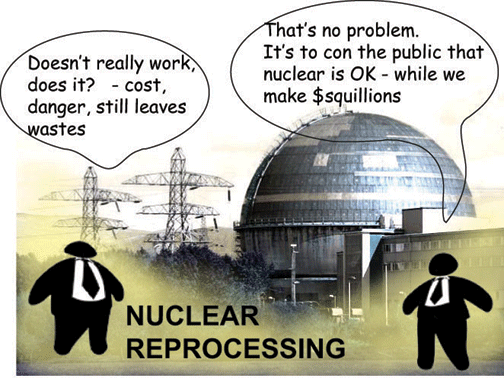
In fact, reprocessing irradiated fuel increases the volume of radioactive waste, while reducing only the level of radioactivity. This results in enormous discharges of so-called low- and intermediate-level but still highly radioactive wastes in the form of gases and liquids into the air and the English Channel. It is this that makes reprocessing arguably the dirtiest and most carcinogenic phase of the entire nuclear industry
.
Congresswoman talked nuclear nonsense, but does that mean she supports it?
Dear AOC, reprocessing is not recycling — Beyond Nuclear International
“………..the nuclear power propagandists, heralding her as the latest defector from the “Left” to the pro-nuclear power cause…………. But her errors are costly — to her credibility, as well as to the climate cause.
By Linda Pentz Gunter – from Ralph Nader’s new newspaper, the Capitol Hill Citizen, April 23
The progressive Democratic congresswoman, Alexandria Ocasio-Cortez, has 8.6 million followers on her Instagram account, a number identical to the online readership of the New York Times.
With her rock star-like AOC moniker and plenty of adoring fans, what the U.S. representative from Queens, New York writes or says has an impact. And it needs to be accurate. Presumably that is why Members of Congress deploy a slew of aides, tasked with delivering the details on a likely sometimes overwhelming array of topics.
When it comes to nuclear power, however, the Congresswoman from New York appears to be flying solo. Either that, or her aides are failing to do their homework. AOC’s stance on nuclear power was as confusing — and arguably as confused — during the introduction of the short-lived Green New Deal four years ago as her latest venture on Instagram after her February 2023 trip to Japan.
In 2019, after a February 7 joint press conference to roll out the blueprint for a Green New Deal alongside fellow Democrat, Senator Ed Markey, AOC’s office published details of the plan with nuclear power explicitly excluded. There was an immediate backlash, after which the reference to nuclear power’s exclusion was abruptly deleted. Asked to explain the switch, AOC told reporters that the Green New Deal “leaves the door open on nuclear so we can have that conversation” and that she herself did not “take a strong anti- or pro-position on it.”
From Japan earlier this year, AOC delivered a series of bubbly Instagram updates, mostly expressing her delight with Japan’s bullet trains. After her visit to the stricken Fukushima Daiichi nuclear power plant, site of the devastating March 2011 explosions and triple meltdowns, she put up a series of informational posts, then stumbled badly on the final question, which asked: “France uses nuclear power. How do they manage it differently? They don’t have earthquakes….”
For reasons that remain unclear, other than the French connection, AOC used this opportunity to launch what sounded unmistakably like praise for the end phase of nuclear power production — reprocessing. Only she called it “recycling”, a deliberately misleading industry term that masks the highly polluting operations involved in reprocessing, which takes irradiated reactor fuel and separates the plutonium from uranium in a chemical bath.
She then made a series of points, all of which were either factually or scientifically inaccurate, or both. We reached out to AOC’s press office for a response, but as of press time there was none.
These missteps begged the question as to the source of the Congresswoman’s information. Her use of the term “recycling” suggests that she, like most of her colleagues on the Hill, defers to the nuclear industry itself to sell her a highly sanitized version of its activities.
This is particularly frustrating coming from an elected official whose raison d’être is to serve as the people’s champion. Had her staff instead opened the door to eminently qualified academics on the subject, such as Princeton physicist, Frank von Hippel, never mind independent experts from the NGO world, they could have saved their boss considerable embarrassment.
Instead, AOC posted that “France recycles their nuclear waste,” even embedding the recycling logo in her text. But reprocessing does nothing of the kind.
Of that irradiated reactor fuel reprocessed at the La Hague nuclear center on France’s Normandy coast, 95% of it contains uranium products too contaminated for further use. This is trucked south for conversion and storage at the Pierrelatte/Tricastin enrichment facility, although for a time, some was shipped to Siberia. Of the remaining 5%, 4% of it is vitrified into glass logs and stored at La Hague. So is almost all of the separated plutonium, 1% of what’s left, now amounting to more than 80 tonnes.
A tiny fraction of that plutonium is “recycled” into something called Mixed-Oxide Fuel (MOX), used in 24 French reactors licensed to carry a 30% MOX fuel load. After fissioning, during which plutonium is once again produced, that waste is again shipped back to La Hague for storage.
AOC went on to explain that France’s “recycling” of nuclear waste had increased “the efficiency of their system.” It is not clear what this vague allusion means, but there is no debate about the extra costs incurred by France in choosing the reprocessing route. As a May 2007 analysis prepared for Public Citizen concluded: “The cumulative cost difference between full reprocessing and no reprocessing amounts to about $25 billion.”
AOC then wrote that French nuclear waste “recycling” was responsible for “reducing the overall amount of radioactive waste to deal with.” In fact, reprocessing irradiated fuel increases the volume of radioactive waste, while reducing only the level of radioactivity. This results in enormous discharges of so-called low- and intermediate-level but still highly radioactive wastes in the form of gases and liquids into the air and the English Channel. It is this that makes reprocessing arguably the dirtiest and most carcinogenic phase of the entire nuclear industry.
AOC also noted that “Japan sends its waste to France and the UK for recycling”. This practice was suspended some years ago, but when it was happening, it comprised more than 160 ship transports of at least 7,000 tons of lethal radioactive cargo, including plutonium, the trigger component for nuclear bombs, an inviting target for terrorists. Most of the reprocessed fuel was then returned to Japan, either in vitrified form or as MOX.
Surely none of this qualifies as recycling?
Needless to say, the pro-nuclear lobby seized on these pronouncements, turning AOC into the latest enviro-convert to the pro-nuclear side. She even garnered headlines in the French press, including in the conservative daily, Le Figaro, where a columnist exhorted French environmentalists to take inspiration from AOC’s epiphany and “abandon their anti-nuclear ideology”.
Newsweek characterized AOC’s Instagram posts as indicative of “The Left’s Changing Position on Nuclear Energy,” in its headline and suggested that “her appraisal of the fuel that provides 19 percent of Americans’ electricity seemed almost warm.”
All of this attention, whether invited or unwanted, prompted yet another ambiguous statement from AOC’s communications director, Lauren Hitt, who told Newsweek “We don’t have any changes in the Congresswoman’s policy posture re[garding] nuclear to announce as of now.”
But what exactly is Rep. Acasio-Cortez’s policy posture on nuclear power? That remains exasperatingly unclear.
Chris Hedges: Julian Assange – A Fight We Must Not Lose

BY TYLER DURDEN, FRIDAY, MAY 12, 2023,
https://www.zerohedge.com/geopolitical/chris-hedges-julian-assange-fight-we-must-not-lose—
Authored by Chris Hedges via ScheerPost.com, (emphasis ours)
This is a talk Chris Hedges gave in New York City at rally calling for the immediate release of Julian Assange on World Press Freedom Day.
The detention and persecution of Julian Assange eviscerates all pretense of the rule of law and the rights of a free press. The illegalities, embraced by the Ecuadorian, British, Swedish and U.S. governments are ominous. They presage a world where the internal workings, abuses, corruption, lies and crimes, especially war crimes, carried out by corporate states and the global ruling elite, will be masked from the public. They presage a world where those with the courage and integrity to expose the misuse of power will be hunted down, tortured, subjected to sham trials and given lifetime prison terms in solitary confinement. They presage an Orwellian dystopia where news is replaced with propaganda, trivia and entertainment. The legal lynching of Julian, I fear, marks the official beginning of the corporate totalitarianism that will define our lives.
Under what law did Ecuadorian President Lenin Moreno capriciously terminate Julian’s rights of asylum as a political refugee? Under what law did Moreno authorize British police to enter the Ecuadorian Embassy — diplomatically sanctioned sovereign territory — to arrest a naturalized citizen of Ecuador? Under what law did Donald Trump criminalize journalism and demand the extradition of Julian, who is not a U.S. citizen and whose news organization is not based in the United States? Under what law did the CIA violate attorney-client privilege, surveil and record all of Julian’s conversations both digital and verbal with his lawyers and plot to kidnap him from the Embassy and assassinate him?
The corporate state eviscerates enshrined rights by judicial fiat. This is how we have the right to privacy, with no privacy. This is how we have “free” elections funded by corporate money, covered by a compliant corporate media and under iron corporate control. This is how we have a legislative process in which corporate lobbyists write the legislation and corporate-indentured politicians vote it into law. This is how we have the right to due process with no due process. . This is how we have a government — whose fundamental responsibility is to protect citizens — that orders and carries out the assassination of its own citizens, such as the Muslim cleric Anwar al-Awlaki and his 16-year-old son. This is how we have a press which is legally permitted to publish classified information and our generation’s most important publisher sitting in solitary confinement in a high security prison awaiting extradition to the United States.
The psychological torture of Julian — documented by the United Nations special rapporteur on torture, Nils Melzer — mirrors the breaking of the dissident Winston Smith in George Orwell’s novel “1984.” The Gestapo broke bones. The East German Stasi broke souls. We, too, have refined the cruder forms of torture to destroy souls as well as bodies. It is more effective. This is what they are doing to Julian, steadily degrading his physical and psychological health. It is a slow-motion execution. This is by design. Julian has spent much of his time in isolation, is often heavily sedated and has been denied medical treatment for a variety of physical ailments. He is routinely denied access to his lawyers. He has lost a lot of weight, suffered a minor stroke, spent time in the prison hospital wing — which prisoners call the hell wing — because he is suicidal, been placed in prolonged solitary confinement, observed banging his head against the wall and hallucinating. Our version of Orwell’s dreaded Room 101.
The psychological torture of Julian — documented by the United Nations special rapporteur on torture, Nils Melzer — mirrors the breaking of the dissident Winston Smith in George Orwell’s novel “1984.” The Gestapo broke bones. The East German Stasi broke souls. We, too, have refined the cruder forms of torture to destroy souls as well as bodies. It is more effective. This is what they are doing to Julian, steadily degrading his physical and psychological health. It is a slow-motion execution. This is by design. Julian has spent much of his time in isolation, is often heavily sedated and has been denied medical treatment for a variety of physical ailments. He is routinely denied access to his lawyers. He has lost a lot of weight, suffered a minor stroke, spent time in the prison hospital wing — which prisoners call the hell wing — because he is suicidal, been placed in prolonged solitary confinement, observed banging his head against the wall and hallucinating. Our version of Orwell’s dreaded Room 101.
All these crimes, especially after the attacks of 9/11, have returned with a vengeance. The CIA has its own armed units and drone program, death squads and a vast archipelago of global black sites where kidnapped victims are tortured and disappeared.
The U.S. allocates a secret black budget of about $50 billion a year to hide multiple types of clandestine projects carried out by the National Security Agency, the CIA and other intelligence agencies, usually beyond the scrutiny of Congress. The CIA has a well-oiled apparatus, which is why, since it had already set up a system of 24-hour video surveillance of Julian in the Ecuadorian embassy in London, it quite naturally discussed kidnapping and assassinating Julian. That is its business. Sen. Frank Church — after examining the heavily redacted CIA documents released to his committee — defined the CIA’s “covert activity” as “a semantic disguise for murder, coercion, blackmail, bribery, the spreading of lies and consorting with known torturers and international terrorists.”
Fear the puppet masters, not the puppets. They are the enemy within.
This is a fight for Julian, who I know and admire. It is a fight for his family, who are working tirelessly for his release. It is a fight for the rule of law. It is a fight for the freedom of the press. It is a fight to save what is left of our diminishing democracy. And it is a fight we must not lose.
As Donetsk civilians live in constant fear of Ukrainian shelling, from on the ground, I detail the terror
May 11, 2023, -Eva Karene Bartlett https://www.patreon.com/posts/as-donetsk-live-82857680?utm_medium=post_notification_email&utm_campaign=patron_engagement&utm_source=post_link
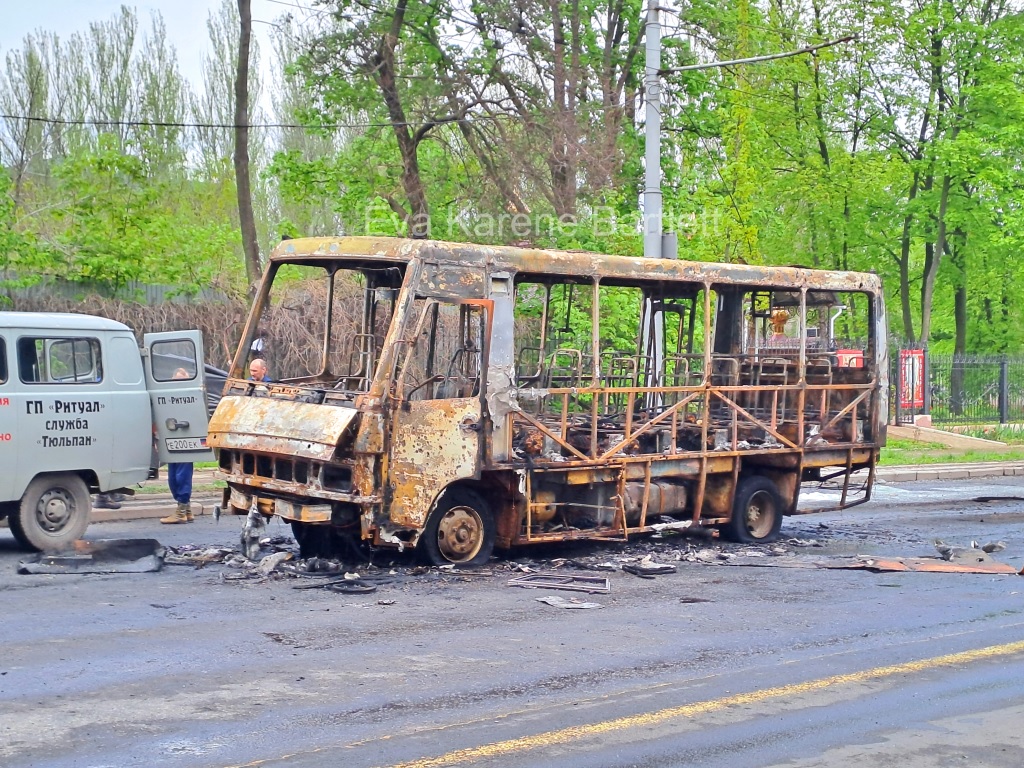
Heavy Ukrainian shelling of central Donetsk on April 28 killed nine civilians – including an eight-year-old girl and her grandmother – and injured at least 16 more. The victims were burned alive when the minibus they were in was hit by a shell.
The attack also targeted a major hospital, apartment buildings, houses, parks, streets, and sidewalks. All civilian areas – not military targets.
According to the Donetsk People’s Republic’s (DPR) Representative Office in the JCCC (Joint Monitoring and Co-ordination Center on Ukraine’s War Crimes), Kiev’s forces fired high-explosive fragmentation missiles “produced in Slovakia and transferred to Ukraine by NATO countries.” Regarding an earlier shelling on the same day, the JCCC noted that US-made HIMARS systems were used, targeting “exclusively in the residential, central quarter of the city.”
I was outside of Donetsk interviewing refugees from Artyomovsk (also known as Bakhmut) when both rounds of intense shelling occurred, the first starting just after 11am. I returned to see a catastrophic scene, with a burnt-out bus – still smoking – and some of its passengers’ charred bodies melted onto the frame. This tragic picture was sadly not a one-off event.
Elsewhere, city workers were already removing debris and had begun repaving damaged sections of the roads. I’ve seen this following Ukrainian shelling many times, including on January 1 this year, when Ukraine fired 25 Grads into the city centre. Similarly, in July 2022, Ukrainian shelling downtown killed four civilians, including two in a vehicle likewise gutted by flames. When I arrived at the scene about an hour later, workers were repaving the affected section of the street.
The damage to the Republican Trauma Center hospital was quickly cleaned up, but videos shared on Telegram immediately after the shelling show a gaping hole in one of the walls. The room concerned contained what was, apparently, Donetsk’s sole MRI machine.
Along Artyoma street, the central Donetsk boulevard targeted countless times by Ukrainian attacks, the destruction was evident: Two cars caught up in the bombing, residents of an apartment building boarding up shattered windows and doors, the all-too-familiar sound of glass and debris being swept away. In the residential area, the first to be targeted that day, in a massive crater behind one house, the walls and roof of another home were intermixed with rocket fragments.
Another year of Ukrainian war crimes
In April 2022, following strikes on a large market area in Kirovsky district, in western Donetsk, which killed five civilians and injured 23, I went there to document the aftermath, not expecting to see two of the five dead still lying in nearby lanes. This shelling was just before noon, a busy time of day in the area. Bombing at such periods is an insidious tactic to ensure more civilians are maimed or killed.
Double and triple striking the same areas is another method used by Ukrainian forces. In an interview last year, the director of the Department of Fire and Rescue Forces of the DPR Ministry of Emergency Situations, Sergey Neka, told me, “Our units arrive at the scene and Ukraine begins to shell it. A lot of equipment has been damaged and destroyed.”
Andrey Levchenko, chief of the emergency department for the Kievsky district of Donetsk, also hit by Ukrainian attacks, said: “They wait for 30 minutes for us to arrive. We arrive there, start assisting people, and the shelling resumes. They wait again, our guys hide in the shelters, as soon as we go out, put out the fire, help people, then shelling resumes.”
I was here in Donetsk in mid-June, during a day of particularly intense Ukrainian shelling of the very centre of the city, which killed at least five civilians. The DPR authorities reported that “within two hours, almost 300 MLRS rockets and artillery shells were fired.” One Grad rocket hit a maternity hospital, tearing through the roof.
The following month, Ukraine fired rockets containing internationally-banned ‘petal’ mines. The streets of central Donetsk, as well as the western and northern districts and other cities, were littered with the hard-to-spot mines designed to grotesquely maim, but not necessarily kill, anyone stepping on them. These mines keep claiming new victims to this day – when I last wrote about them here, 104 civilians had been maimed, including this 14-year-old boy. Three had died of their injuries. Since then, the number of victims has risen to 112.
In August, heavy Ukrainian shelling of the centre of Donetsk hit directly next to the hotel I was staying in, along with dozens of other journalists and cameramen. Six civilians were killed that day, including one woman outside the hotel, as well as a child. She been a talented ballerina due to leave to study in Russia soon, and along with her grandmother, her ballet teacher was also killed that day, herself a world-famous former ballerina.
Three bouts of Ukrainian shelling of the city centre in a span of just five days in September killed 26 civilians. Four were killed on September 17, among them two people burned alive inside a vehicle on the same central Artyoma Street. Two days later, 16 civilians were killed, the remains of their bodies strewn along the street or in unrecognizable piles of flesh. Three days later, Ukraine struck next to the central market, killing six civilians, two in a minibus, the rest on the street.
In my subsequent visits to Donetsk and surrounding cities in November and December, I filmed the aftermath of more Ukrainian shelling (using HIMARS) of civilian areas of Donetsk and the settlement of Gorlovka to the north. The November 7 shelling of central Donetsk could have killed the toddler of the young mother I interviewed. Fortunately, after hearing the first rockets hit, she ran with her son to the bathroom. When calm returned, she found shrapnel on his bed.
The November 12 shelling of Gorlovka damaged a beautiful historic cultural building, destroying parts of the roof and the theatre hall within. According to the centre’s director, it was one of the best movie theatres in Donetsk Region, one of the oldest, most beautiful, and most beloved buildings in the city. He noted that the HIMARS system is a very precise weapon, so the attack was not accidental.
The shelling goes on
Early morning during Easter Mass on April 16, the Ukrainian army fired 20 rockets near the Cathedral of the Holy Transfiguration in the centre of Donetsk, French journalist Christelle Neant reported, noting that one civilian was killed and seven injured. The shelling extended to the central market just behind the cathedral. Just over a week prior, on April 7, another shelling of that market killed one civilian and injured 13, also considerably damaging the market itself.
Ukraine continues to shell the western and northern districts of Donetsk, also pounding Gorlovka, as well as Yasinovatya just north of Donetsk (killing two civilians some days ago).
On April 23, shelling in Petrovsky, a hard-hit western Donetsk district, killed one man and injured five more. The same day, in a village northeast of Donetsk, a rocket killed two women in their 30s. Security camera footage shows the moment when the women attempted to take cover. The munition that killed them hit directly next to where they huddled.
A few days later, on my way to interview refugees from Artyomovsk sheltering in another city, I passed along the tiny village where those women were killed. It’s a road I’ve driven a dozen times or more, a quiet, calm, scenic region of rolling hills, a lovely river, a beautiful church. It’s far from any front line. The murder of these two women was another Ukrainian war crime.
The people here are constantly terrorized by Ukrainian shelling or the threat of it, and have been since Kiev started its war on the Donbass in 2014.
Risks too high at Zaporizhzhia
May 10, 2023 https://beyondnuclear.org/risks-too-high-at-zaporizhzhia/
Beyond Nuclear has put out a press statement warning that the risks of a nuclear catastrophe at Ukraine’s six-reactor Zaporizhzhia nuclear power plant are too high, with rumors of a Ukrainian offensive reportedly prompting mass evacuations of civilians living near the plant. Only an immediate ceasefire — or, better still, a negotiated end to a likely unwinnable war — can protect us from a potentially catastrophic nuclear incident at the plant, which has already endured shelling, missile attacks, and frequent loss of connection to the electrical grid.
The press release begins:
Fears of an imminent Ukrainian offensive that could put the country’s six-reactor Zaporizhzhia nuclear power plant in even greater danger, should prompt immediate efforts to negotiate a ceasefire, if not an end to the Russian war against Ukraine, urged safe energy group, Beyond Nuclear today.
News reports that civilians around the Zaporizhzhia nuclear power plant are being evacuated suggest that the conflict already consuming the southwestern region of Ukraine could be about to escalate, potentially engulfing the nuclear plant.
The Zaporizhzhia nuclear power plant has already escaped close calls, the target of shelling and missile attacks on at least one occasion and with frequent losses of offsite power that, if not restored promptly, could lead to a meltdown.
The plant has been occupied by Russian forces since March 4, 2022. Rumors abound that a severely depleted workforce is laboring under stressful and even violent conditions, while other staff have fled or have disappeared.
As a precaution, all six Zaporizhzhia reactors are currently shut down, but that does not mean they are out of danger.
“The fuel in the reactor core still requires electricity to power cooling, as do the pumps that supply cooling water to the fuel pools,” warned Beyond Nuclear international specialist, Linda Pentz Gunter. “A meltdown is still possible. Putting the reactors in what is termed ‘cold shutdown’ just buys workers more time to restore power, but a reliable supply of electricity to the site is still essential to avoid disaster.
“The consequences not only for the people of Ukraine and neighboring Russia, but for all of Europe, should any or all of these reactors melt down or suffer a fuel pool fire are unimaginably dire,” Pentz Gunter said.
Biden is selling weapons to the majority of the world’s autocracies

Despite the White House’s rhetoric about supporting global democracy, the U.S. sold weapons in 2022 to 57 percent of the world’s authoritarian regimes.
Stephen Semler, May 11 2023, The Intercept
SINCE PRESIDENT JOE BIDEN came into office in 2021, he hasdescribed a “battle between democracies and autocracies” in which the U.S. and other democracies strive to create a peaceful world. The reality, however, is that the Biden administration has helped increase the military power of a large number of authoritarian countries. According to an Intercept review of recently released government data, the U.S. sold weapons to at least 57 percent of the world’s autocratic countries in 2022.
Since the end of the Cold War, the United States has been the world’s biggest weapons dealer, accounting for about 40 percent of all arms exports in a given year. In general, these exports are funded through grants or sales. There are two pathways for the latter category: foreign military sales and direct commercial sales.
The U.S. government acts as an intermediary for FMS acquisitions: It buys the materiel from a company first and then delivers the goods to the foreign recipient. DCS acquisitions are more straightforward: They’re the result of an agreement between a U.S. company and a foreign government. Both categories of sales require the government’s approval.
Country-level data for last year’s DCS authorizations was released in late April through the State Department’s Directorate of Defense Trade Controls. FMS figures for fiscal year 2022 were released earlier this year through the Pentagon’s Defense Security Cooperation Agency. According to their data, a total of 142 countries and territories bought weapons from the U.S. in 2022, for a total of $85 billion in bilateral sales.
How many of those countries were democracies, and how many were autocracies? That question can be answered by comparing the new U.S. arms sales data to political regime data from the Varieties of Democracy project at the University of Gothenburg in Sweden, which uses a classification system that’s called Regimes of the World.
The system classifies regimes into four categories: closed autocracy, electoral autocracy, electoral democracy, and liberal democracy. For a country to be classified as a democracy, it must have multiparty elections and political freedoms that make those elections meaningful. According to this methodology, the dividing line between democracies and autocracies is whether a country’s leaders are accountable to their citizens through free and fair elections.
Of the 84 countries codified as autocracies under the Regimes of the World system in 2022, the United States sold weapons to at least 48, or 57 percent, of them. The “at least” qualifier is necessary because several factors frustrate the accurate tracking of U.S. weapons sales. The State Department’s report of commercial arms sales during the fiscal year makes prodigious use of “various” in its recipients category; as a result, the specific recipients for nearly $11 billion in weapons sales are not disclosed………………………… https://theintercept.com/2023/05/11/united-states-foreign-weapons-sales/
Experts urge G7 leaders to discuss nuclear security
NNK News, , May 12, 23
Amid Russia’s invasion of Ukraine, the threat of nuclear weapons use continues to grow but nuclear security is also endangered in the region. Experts from the US and Japan called for the G7 leaders to address these issues at next week’s summit in Hiroshima.
Rafael Grossi, head of the International Atomic Energy Agency, warned on Saturday that the situation around Russian-held Zaporizhzhia nuclear power plant is unpredictable and potentially dangerous.
He also expressed concern about the stressful conditions for people working there as military activity increases in the region.
Experts gathered in Tokyo on Thursday to discuss how countries can protect their nuclear facilities from being targeted by other nations. They condemned Russia’s actions, saying they could result in a devastating situation.
Nuclear Threat Initiative’s Scott Roecker said, “The most significant risk we’re worried about is not a nuclear detonation — it’s not a nuclear explosion with a mushroom cloud. It is the risk of significant radiation release associated with an attack on Zaporizhzhia nuclear power plant.”
The nuclear issue is one of the important topics that will be discussed at the G7 Summit. Ukrainian President Volodymyr Zelenskyy is scheduled to attend online. He is expected to call for discussions on nuclear security.
Roecker said, “The G7 leaders have a unique opportunity in Hiroshima to talk about what’s happening from a nuclear standpoint in Ukraine. There needs to be more done to strengthen the international legal framework and the international norms around nuclear facilities in times of conflict that need to be better protected. And they should not be a target during military conflict.”….. https://www3.nhk.or.jp/nhkworld/en/news/20230512_05/
Counting the rising costs of Scotland’s nuclear testing facility

Alan Laird, 12 May 23
https://www.thenational.scot/community/23516945.counting-rising-costs-scotlands-nuclear-testing-facility/
HOW magnanimous of Andrew Bowie, Westminster’s Nuclear Minister, not to “impose nuclear power on Scotland” (The National, May 4), although he’s a bit late with that assurance. But never mind democracy, let’s look at the cost.
Dounreay was commissioned as a test facility in 1955 on our north coast – in other words, “let’s put it waaaay up there in case something goes wrong”.
The initial research reactor “went critical” – a not very reassuring term for “started working” – in 1958.
The Dounreay Fast Reactor started up in 1959 and shut down in 1977 after 15 years of operation. Its maximum output of 14MW was negligible.
A Fast-Breeder Reactor, now an abandoned technology, began supplying 250MW from 1975 till 1995, enough for about 48,000 homes. Its cooling was by liquid sodium – 1500 tons of the stuff – which explodes instantly in contact with air. Cool.
Then there is the military site, HMS Vulcan, for development and testing the reactors of nuclear-powered submarines. From 1963 to 2015, five generations of small reactors have been tested here, routinely run at greater than operational stress to find out any faults before installation in the subs. How reassuring. As with MoD sites on the Clyde, full disclosure of breaches of health and safety are not disclosed. The site is due for decommissioning next year. Estimates of the costs are not available.
In 1998, following safety and pollution concerns, Norway, Sweden and the Irish Republic demanded the immediate closure of the site. PM Tony Blair was advised it would take £1 billion and 100 years to complete the work. By 2006, 25 years and £2.7bn was the estimate, then in 2007 it was 17 years and £2.6bn. In 2019 contracts worth £400m were awarded to continue the clean-up, with a new estimate of £4.3bn and 60 years. I guess no-one actually knows.
The site also took in foreign spent nuclear fuel for reprocessing. Unsurprisingly, many foreign customers refused to take their nuclear waste back. It’s mostly still there, along with Dounreay’s own.
The expected date of the return of the site to brownfield use is 2330. Yes, that’s more than 300 years from now. Uncountable billions of pounds and nearly 400 years of an unusable bit of Scotland is an astounding price to pay for powering 48,000 homes.
The arguments for nuclear power put forward by the industry and their UK Government lackeys are contradictory, disingenuous and downright dishonest.
Dounreay’s installation is a mere toy compared to Hunterston (both reactors now decommissioned) and Torness (the nuclear regulator thinks it should close by 2024). First estimates for decommissioning these sites is £132 billion and 120 years. I wonder when that estimate will be revised upward?
Just as a footnote, all of the UK’s uranium has to be imported. Much of it from Russia. The real reason the UK Government wants to continue with this outrageous waste of money is for the steady supply of enriched uranium for making atomic bombs. That’s worth it to them at any cost.
Pacific leaders remain steadfast against nuclear waste disposal
National Indigenous Times, Gorethy Kenneth (PNG Post Courier) – May 11, 2023
Pacific has a combined voice on “no nuclear waste” in the Pacific, Prime Minister James Marape told reporters in Port Moresby on Tuesday.
He was asked by reporters if the country would support Japan on its nuclear waste issue.
Mr Marape said that he would release a statement at a later date on the latter.
Japan allegedly reported that it was due to start dumping one million tonnes of nuclear waste from the damaged Fukushima Daiichi nuclear power plant into the Pacific ocean in only a few months.
And according to Japan’s government, the waste water was to be treated by an Advanced Liquid Processing System, which would remove nuclides from the water.
However, the Pacific island leaders united and demanded that Japan share pivotal information about the plan.
Japan, however, assured the Pacific leaders that there was no such threat, and instead defended that the country and their government had no plans to dump more than one million tonnes of radioactive waste water into the Pacific ocean……….. https://nit.com.au/11-05-2023/5922/pacific-leaders-remain-steadfast-against-nuclear-waste-disposal-png23
75 active wildfires rage in Alberta, Canada
Much of Canada and parts of the US are blanketed by smoke as wildfires in
the province of Alberta continue to rage. As of Thursday, there are 75
active wildfires in Alberta, 23 of which are considered out of control.
Early May is typically the start of wildfire season in the region, but
experts have said that this level activity is unusual.
BBC 12th May 2023
Rolls-Royce falls 6% as update lacks oomph and news on small nuclear business
Oliver Haill, 11 May 23, Proactive Investor 11th May 2023
Rolls-Royce Holdings PLC’s (LSE:RR.) shares fell 6% to a month’s low after its trading update contained nothing new, analysts said, with some concern about the lack of updates about its small nuclear reactor business…………
Weatherwatch: concerns over climate impact on UK nuclear power sites
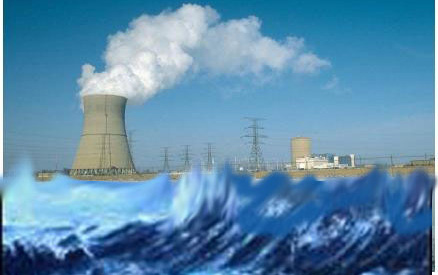
Ex-adviser worries ministers have not taken into account sea level rise and storms in selecting sites
Paul Brown https://www.theguardian.com/news/2023/may/12/weatherwatch-concerns-over-climate-impact-on-uk-nuclear-power-sites
Successive governments since the 1980s have had plans for new generations of nuclear power stations sited around the coasts of the United Kingdom. Although the main reason for building them, according to politicians, is to provide a low-carbon form of electricity to combat the climate crisis, no thought seems to have gone into what the climate crisis might do to the nuclear power stations.
Prof Andy Blowers, a former government adviser on nuclear waste, points out in the Town and Country Planning Association Journal that the eight sites identified in 2011 as suitable for new stations are the same as those identified half a century earlier, on which the first generation of nuclear power stations were built.
The reason the sites were originally chosen was their remoteness, for safety, and their proximity to the sea, for cooling purposes. The latest reasoning is that they would have a better chance of public acceptance because two generations of local people have worked in the industry. The new installations are planned to operate for 60 years and will need another century after closure to cool sufficiently to remove the waste.
Blowers, an opponent of the government plans, worries that ministers seem to have taken no account of sea level rise, intense storms and the prospect of flooding at these sites.
Campaigners against UK nuclear waste dump plan claim victory in local elections
Nuclear storage dump campaigners claim victory in local elections
Call for government to honour wishes
By Daniel Jaines Local Democracy Reporter, The Lincolnite, 11 May 23
Anti-nuclear campaigners have claimed victory in Theddlethorpe after last week’s district and parish council elections.
Opposition councillors, including independent Trais Hesketh, gained a majority of seats with a high voter turnout.
The campaign’s success saw voters “overwhelmingly reject” Nuclear Waste Service’s proposal to build a Geological Disposal Facility beneath the former Conoco gas terminal.
Prior to the election, anti-dump candidates were elected unopposed for eight of the ten available seats on Theddlethorpe Parish Council.
The Guardians of the East Coast campaigners have also claimed support from neighbouring towns such as Mablethorpe, Sutton on Sea, and Trusthorpe.
Ken Smith, chairperson for GOTEC, praised the residents for protesting through the ballot box.
“We now call upon Lincolnshire County Council and East Linsey District Council to honour the people’s decision by withdrawing from the so-called community partnership,” he said.
The Nuclear Free Local Authorities group has also backed the campaigners. Councillor David Blackburn said, “When it comes to a GDF, Mablethorpe, Theddlethorpe, and Sutton on Sea do not represent the ‘willing community’ that the government and nuclear industry say they are looking for to host the dump – instead voters there have clearly said ‘No’.”
………….An NWS spokesperson stated that the GDF would only be built where there was the consent of a willing community.
………………………………………………….. Concerns raised around seismic blasting
There have recently been concerns over the impact of seismic blasting in other areas of the UK as part of exploratory works carried out by NWS ahead of geophysical survey works.
The Lakes Against Nuclear Dump/Radiation Free Lakeland groups fear marine deaths in the Irish Sea and Allerdale’s Solway Firth area as part of Copeland exploration were a result of the seismic tests and have called for them to halt while investigations take place……… https://thelincolnite.co.uk/2023/05/nuclear-storage-dump-campaigners-claim-victory-in-local-elections
Helion and Microsoft Lead World Down Nuclear Fusion Rabbit Hole

manufacturing the lasers used at Livermore and creating other inputs to set up the fusion process require much more energy than is accounted for in the final equation.
there’s so much money in the system, and so much desire to have this technological solution, people are very excited — and totally ignoring the fact that there is no result that has any energy output to it.”
Gizmodo, Molly Taft, May 12, 2023
Are we closer to the “Holy Grail” of clean energy? Silicon Valley wants you to believe.
This week, nuclear fusion startup Helion announced that it had inked a first-of-its-kind deal with Microsoft to provide 50 megawatts of power from a yet-to-be built power plant, all within the next five years. Unlike nuclear fission, the process that powers all the nuclear power plants existing today, nuclear fusion could create potentially unlimited energy. It’s a dream that scientists and engineers have been chasing for decades, with little luck.
The announcement from Helion and Microsoft is historic — and raises a lot of thorny questions about fusion, the role of tech in promoting new energy sources, and whether all this talk about fusion is even doing any good for the planet.
What is nuclear fusion, and why has it been so difficult to achieve?
Nuclear fusion is, simply put, the same process that powers the Sun. The Sun turns matter into energy through the enormous pressures and high temperatures at its core.
“If you smash atoms together hard enough and in a hot enough and dense enough environment, you can get essentially free energy,” said Charles Seife, a journalism professor at NYU’s Arthur L. Carter Journalism Institute and the author of Sun in a Bottle: The Strange History of Fusion and the Science of Wishful Thinking. “It’s enormous amounts of energy from very little fuel,” he told Earther.
Physicists have been chasing the dream of replicating the fusion process since the 1940s, when research into building nuclear reactors began. It quickly became clear that the problem was not replicating fusion itself but rather creating conditions in which the process produces more energy than it takes in. Fusion needs an enormous amount of energy, and almost all of the demonstrations of fusion scientists have accomplished thus far have not been able to reach the point where the energy output is greater than the input.
Seife said that the Livermore announcement is significant but pointed out that manufacturing the lasers used at Livermore and creating other inputs to set up the fusion process require much more energy than is accounted for in the final equation. He’s less impressed by the numerous nuclear fusion startups that have cropped up in Silicon Valley and elsewhere in recent years.
“I think there’s been something of a hype cycle” around fusion recently, he said. “There’s been a lot of venture capital flowing, and people have gotten better and better at leveraging dumb money into hype. You’ve got a lot of startups blooming everywhere that are replicating stuff that we were able to do in the 1960s in small labs, and putting their own spin on it. Because there’s so much money in the system, and so much desire to have this technological solution, people are very excited — and totally ignoring the fact that there is no result that has any energy output to it.”
What is Helion, and what is it promising?
Speaking of startups: enter Helion. Helion was founded in 2013 and was helped along by an infusion of cash from startup accelerator Y Combinator in 2014. That year, its CEO claimed that Helion could get a fusion reactor up and running in three years; two years ago, he said that the company would be able to generate fusion power and “go after commercially installed power generation” by 2024.
Despite the repeated misses on the timeline, Helion broke ground on its first reactor site in 2021, thanks in part to a $US375 million investment from Silicon Valley entrepreneur Sam Altman. It has now become the first fusion company to ink an actual power purchasing agreement for its services, and says that it will start supplying power to Microsoft in 2028 — more than 10 years after it initially said its reactor would be built.
Earther reached out to Helion to ask about its confidence in the timeline given its past misses. The recent results of its sixth prototype of a fusion reactor, a spokesperson wrote in an email, “give us great confidence that our timeline is realistic and that we can build the first fusion power plant by 2028.”
Can they actually do it?
Despite the company’s cheery outlook, there’s a lot of scepticism from experts around the Helion and Microsoft announcement, particularly the truncated timeline — including from Seife, who nevertheless says that he understands the hype.
“It’s so beautiful on paper,” Seife said. “That’s the appeal of it.”
Beyond Helion’s ability to perfect a process in five years that decades of research hasn’t yet gotten us to, there’s also a marked difference between advancing the science of fusion itself — which would alone be an incredible feat — and harnessing fusion for energy. A lot of the funding behind nuclear fusion in recent years in the U.S. has focused on achieving ignition, without an additional focus on creating usable energy from fusion; it’s a whole separate ballgame to actually put energy on the grid with the process. (Building a power plant alone is already a big infrastructure project that can take a couple years at best.)
“The classic joke is, ok, if you can produce energy, make me a cup of tea,” Seife said. “Once you make me a cup of tea, I will consider paying you money to do something, but first, make me a goddamn cup of tea.”
Is banking on fusion good for the planet?
A spokesperson for Helion told Earther in an email that the details of its power purchasing agreement with Microsoft won’t be made public. “That said, this is a real PPA, with commitments and obligations as well as penalties for failing to meet them,” the spokesperson said.
There are many questions left unanswered — has Microsoft paid Helion any money up-front? What are those commitments, obligations, and penalties, specifically? And, perhaps most importantly from a climate perspective, how much is Microsoft banking on this carbon-free fusion power?
………………………….. we don’t have much time to make the big changes we need. Creating plans that rely on technologies that haven’t been fully tested — and listening to Silicon Valley technocrats who keep making big promises and aren’t held to account when they don’t deliver — wastes valuable time, energy, and money that we could be spending on the clean energy technologies that we have today or are much nearer to deployment…… https://www.gizmodo.com.au/2023/05/helion-and-microsoft-lead-world-down-nuclear-fusion-rabbit-hole/
The Quiet Warrior: Russell Jim’s Struggle Against Nuclear Colonialism

CounterPunch, MAY 12, 2023, BY JOSHUA FRANK
The following is an excerpt from the award-winning Atomic Days: The Untold Story of the Most Toxic Place in America (Haymarket Books, 2022).
He was the catalyst in my belief that Indian tribes should be treated as full, equal participants in the process.
— James Asselstine
There are not a lot of heroes out here. Few in recent memory have risen to the daunting challenge, immersing themselves in Hanford’s scientific complexities and its historic and cultural implications. If there are any champions of the cause, Russell Jim (Kii’ahł) was certainly one of them. The “Quiet Warrior,” Jim was a lifelong advocate for the Yakama Nation. The “conscience of the cleanup,” Jim was considered by many to be the spiritual leader of the Hanford resistance. Jim served as the head of the Confederated Tribes and Bands of the Yakama Indian Nation’s Environmental Restoration and Waste Management Program (ERWM), a position he essentially created. In 2018, Jim passed away after battling heart trouble and pneumonia after a long bout of cancer, which he believed was a direct result of the time he spent in and around Hanford’s radioactive haze.
“I think he’s been a major player in the Hanford cleanup and he’s been one of the sharpest critics of the process and a very constructive one,” said John Bassett, president of Heritage University, when Jim was awarded an honorary doctorate in 2017.
By all accounts, Jim had an unwavering moral compass and was the rare advocate who possessed the ability to peer through the layers of Hanford’s bureaucratic stratum. He was able to envision its future while never losing sight of the past and the gainful lives that the region provided his people over many centuries. The Yakama Nation, in defiance of their forced relocation, refused compensation from the federal government. They have never stopped fighting back against the settler colonialism that has destroyed their Native lands…………………………………………………………………………
For those keeping tabs on Hanford throughout the 1980s, like the Yakama, the situation was ominous. By 1985, four decades after Hanford began producing plutonium, not a single independent study looked at the cumulative damage the site had unleashed on nearby communities or Native tribes. DOE officials blew off calls for such an inquiry and contended that it would be unworthy of the department’s time. They argued that radioactivity was all but nonexistent outside of Hanford’s boundaries. Citizen activists noted an uptick in certain cancers in their communities and believed a longitudinal study on the human population was the only way to get a handle on Hanford’s long-term impacts………………………………
Terry R. Strong, who served as head of the Radiation Control Section of the Washington Department of Social and Health Services in 1985, strongly disagreed with the DOE’s lack of monitoring and openly criticized the state of Washington for allocating a meager $87,000 a year to keep an eye on Hanford’s environmental impact. The threat was so grave, Strong believed, that the state should have been spending at least $2.5 million. Others, including British physician Dr. Alice M. Stewart, who helped author a study of Hanford workers during the early 1980s, argued the government was also far too lenient with its radiation safety levels.
The study found a connection between low radiation doses and cancer deaths—particularly multiple myeloma—among workers. Hanford employees, the study reported, experienced at least a 5 percent higher risk of developing cancer than the general population. “If they stick to present safety levels,” warned Dr. Stewart, “they will have more trouble than they think they are going to have.”
A Challenging Adversary
Russell Jim knew there was a major problem at Hanford and the government was planning to make it worse. By the late 1970s, Hanford and Yucca Mountain were the two prime contenders to become depots for spent nuclear fuel. While the Western Shoshone stood their ground and tried to fight the use of Yucca as a repository, they ultimately lost. Jim, representing Yakama Nation, took the lead on keeping the stuff out of Hanford. The waste was to sit in man-made tombs for the next ten thousand years. Flabbergasted at the thought of such an idiotic undertaking, Jim took his fight to the United States Senate. Testifying before a Senate subcommittee on nuclear regulation in 1980, Jim made an impassioned plea to the senators about his peoples’ connection to the land, hoping they’d consider viewing the Hanford issue from his point of view: “There is something you need to understand that is unique between my people and yours. Yakama Indian people do not get most of their food supply from the local A&P or Safeway store,” said Jim. ………….
Jim not only intimately understood the science behind the nuclear mess at Hanford, he also was well-versed in the laws and the rights of his people. The time he spent in Washington speaking at various hearings and meeting personally with numerous Senators and staffers was beginning to pay off. When the Nuclear Waste Policy Act of 1982 was passed, it included specific language that recognized Indian sovereignty. It was powerful language. As a result of Jim’s efforts, tribes like the Yakama, along with states, could veto their lands from becoming nuclear waste depositories. And it would take a majority of both houses of Congress to overturn such vetoes……………………
Jim’s activism during this time forced the federal government to drop their insidious idea of using Hanford as a nuclear dumping zone. He had won. His people had won, and so had the environment that had sustained them for generations. While others had joined the cause, without Jim’s tenacious work, Native voices would have been ignored, as many senators admitted they believed the states would speak up in Natives’ interest. Jim, of course, straightened them out, making it clear they were more than capable of speaking for themselves………………
Jim’s activism during this time forced the federal government to drop their insidious idea of using Hanford as a nuclear dumping zone. He had won. His people had won, and so had the environment that had sustained them for generations. While others had joined the cause, without Jim’s tenacious work, Native voices would have been ignored, as many senators admitted they believed the states would speak up in Natives’ interest. Jim, of course, straightened them out, making it clear they were more than capable of speaking for themselves……
………………….. Abnormally high incidence[s] of thyroid tumors and cancers have been observed in populations living downwind from Hanford,” reported Dr. Helen Caldicott, a scientist and anti-nuclear activist. “Strontium-90, Cesium-137, and Plutonium-239 have been [atmospherically] released in large quantities, as was, between 1952 and 1967, Ruthenium-106. People in adjacent neighborhoods were kept uninformed about these releases—before, during, and after—and none were warned that they were at risk for subsequent development of cancer.”
Jim knew the toll on the Yakama was great, not only to cultural heritage, but to their health. No big decision was made at Hanford without input from Jim, and while it didn’t always go his way, he never backed down. He was prescient and brave. He was able to articulate the lunacy of the Hanford project and the government’s continued ignorance and outright deception. His quest for information and knowledge about what was actually taking place at Hanford forced an immeasurable amount of transparency, which remains all too important if the DOE and its contractors are to ever be held accountable. Up until his death in April 2018 at the age of eighty-two, Jim was working hard to fight the federal government’s effort to declassify Hanford’s nuclear waste, which would allow the radioactive leftovers to be more freely transported and dumped, with obviously grave implications………………………………………………….. https://www.counterpunch.org/2023/05/12/the-quiet-warrior-russell-jims-struggle-against-nuclear-colonialism/
1 This Month



19 November – Webinar – The Reality of Reprocessing
Time: 11:00 AM Pacific Time (US & Canada) / 2:00 PM Eastern / 7:00 PM UK / 8:00 PM CET
Register for the Zoom Event Here



Shut down the radiation-damaged Heysham nuclear reactors now
To see nuclear-related stories in greater depth and intensity – go to https://nuclearinformation.wordpress.com

Say No to NASA’s Reckless Nuclear Reactor on the Moon
Say No to NASA’s Reckless Nuclear Reactor on the Moon
-
Archives
- November 2026 (84)
- October 2026 (302)
- September 2026 (339)
- August 2026 (330)
- July 2026 (355)
- June 2026 (287)
- May 2026 (306)
- April 2026 (356)
- March 2026 (251)
- February 2026 (267)
- January 2026 (308)
- December 2025 (358)
-
Categories
- 1
- 1 NUCLEAR ISSUES
- business and costs
- climate change
- culture and arts
- ENERGY
- environment
- health
- history
- indigenous issues
- Legal
- marketing of nuclear
- media
- opposition to nuclear
- PERSONAL STORIES
- politics
- politics international
- Religion and ethics
- safety
- secrets,lies and civil liberties
- spinbuster
- technology
- Uranium
- wastes
- weapons and war
- Women
- 2 WORLD
- ACTION
- AFRICA
- Atrocities
- AUSTRALIA
- Christina's notes
- Christina's themes
- culture and arts
- Events
- Fuk 2022
- Fuk 2023
- Fukushima 2017
- Fukushima 2018
- fukushima 2019
- Fukushima 2020
- Fukushima 2021
- general
- global warming
- Humour (God we need it)
- Nuclear
- RARE EARTHS
- Reference
- resources – print
- Resources -audiovicual
- Weekly Newsletter
- World
- World Nuclear
- YouTube
-
RSS
Entries RSS
Comments RSS

