Israel Is Erasing Entire Gaza Families From The Civil Registry
July 25, 2026,SCHEERPOST, Nora Barrows-Friedman The Electronic Intifada
The following is from the news roundup during the 23 July livestream. Watch the entire episode here.
Israel has carried out massacres on multiple families this week in Gaza, killing Palestinian children, men and women, as the army encroaches on more land and squeezes Palestinians into smaller and smaller areas.
On Wednesday, an Israeli drone strike on a tent sheltering displaced people killed a Palestinian and injured several others west of the Nuseirat refugee camp in central Gaza, according to medical sources.
Thirteen Palestinians were killed in a series of Israeli attacks on Tuesday, including a strike on a home in the pre-dawn hours that killed six members of a family in Gaza City.
The Cradle reports that Feras al-Masri, his wife Salsabil, and their four children – Naim, 13 years old, Feryal, 11, Salma, 9, and Amira, 6 – were killed while they were sleeping. The Israeli drone strike engulfed the entire home in flames, and rescue crews say they found the bodies so completely burned that identification efforts were extremely difficult.
The explosion also forced residents in surrounding areas to flee in search of safety, while shrapnel reportedly reached nearby displacement camps, piercing tents housing displaced Palestinians, The Cradle added.
Palestinian Civil Defense spokesperson Mahmoud Basal reported from the wreckage of the home, holding a piece of the loitering munition, a so-called “suicide drone,” that hit the building.
He said the residents were burned alive, and added that rescuers could hear them screaming and begging to be pulled out, but all attempts had failed.
The Civil Defense has warned repeatedly that Israel’s deliberate targeting of its vehicles and equipment, along with the scarce amount of fuel and lack of spare parts to repair damaged or worn-out vehicles has made rescue efforts like these nearly impossible.
Videos circulated on social media show Civil Defense crews pulling the charred remains of bodies, some of them small, out of the building in the aftermath of the strike.
Four Palestinians were killed in a separate strike on Tuesday, also in Gaza City, when an Israeli missile targeted the entrance to the Muslim Young Women’s Association building……………………………………………………………………………………………………………………………………………………………………………………………………………………………………….
Gaza’s stolen landscape
In addition to the massacres, airstrikes and sniper attacks on people across Gaza this week, the Israeli army continues to carry out heavy demolitions of entire neighborhoods on the eastern side of the so-called yellow line.
The United Nations high commissioner for human rights’ office said this week that more than nine months after the announcement of a so-called ceasefire, “still, nowhere is safe for Palestinians in Gaza.”…………………………………………………………………………………………………………………………………………………………………………………………………………………………………..
Israeli army, settlers kill Palestinians in West Bank
Turning to the occupied West Bank, Israeli soldiers and settlers shot and killed two Palestinians during a raid on the village of Deir Jarir near Ramallah on the night of 19 July.
The Palestinian health ministry said that Awda Farakhna, 53, and Ahmed Abdul Abu Mukh, 26, were killed and several others were injured in the attack.
Local sources told the Wafa news agency that Israeli occupation forces also opened fire at an ambulance transporting one of the injured Palestinians to the hospital.
The Guardian newspaper reports that Israeli settlers from a nearby colony outpost arrived after 9 pm, “claiming that they were searching for stolen livestock. Israeli soldiers and police soon joined them, protecting them as they sought to take several villagers’ sheep by force.”
But when people in the village “raised the alarm and a crowd gathered, soldiers shot two men, beginning a night of three successive raids by settlers from nearby outposts and Israeli soldiers that lasted until after 2 am, according to Palestinian residents of Deir Jarir.”
In interviews with The Guardian, as they buried their relatives, “family and friends of the dead Palestinian men described several attacks each month in which they said settlers, backed by Israeli forces, arrived in houses on the outskirts of the village and then stole livestock.”
“It’s a partnership between the army and the settlers,” Adel Rashid, the father of the younger victim, Ahmed Abu Mukh, told the newspaper……………………………………………………………………………………………………………………………………………………………………………………………………………https://scheerpost.com/2026/07/25/israel-is-erasing-entire-gaza-families-from-the-civil-registry/
Government gives Canadian Strategic Missions Corporation (CSMC) $4.5M for Micro-Nuclear Technology in Canada’s Arctic

COMMENT CSMC are very adept at getting government funding (no private investors) for an idea. The company CEO has a background in real estate and “making deals.” They already had at least $3.1 million in public funds before this latest grant, which leaves them about …. $1 billion or so short of building a reactor, if indeed they know how to do that.
CSMC awarded $4.5 million through the Government of Canada to accelerate micro-nuclear technology for Canada’s Arctic
Canadian Strategic Missions Corporation (CSMC) is honoured to announce that it is receiving a $4.5 million Government of Canada investment through the Federal Economic Development Agency for Southern Ontario (FedDev Ontario) to advance Canadian-made energy solutions that will secure the North.
This investment is a major milestone that will accelerate the development of CSMC’s micro-nuclear reactor towards detailed design and a fueled demonstration, readying the technology for deployment in Canada’s Arctic. This project represents a critical step toward ensuring Canada can meet its energy and defence needs with sovereign, made-in-Canada solutions.
Daniel Sax, CEO and Founder of CSMC said -“As private industry continues to drive innovation within the nuclear sector CSMC is proud to partner with the Canadian government to accelerate the R&D process. Our goal is to bring promising new technology online faster – in line with peer markets – to ensure that our nation can reinforce its defence capabilities, including in the North.”………………………. https://canadiandefencereview.com/csmc-awarded-4-5m-for-micro-nuclear-technology-in-canadas-arctic/
UK’s New Defence Minister Called Israel ‘Rogue State’
July 24, 2026, Dania Akkad Declassified UK, https://scheerpost.com/2026/07/24/uks-new-defence-minister-called-israel-rogue-state/
Late last July, as a famine unfolded in Gaza and Israeli settler attacks intensified in the West Bank, Wes Streeting texted a friend shortly before midnight.
“Israel is committing war crimes before our eyes,” the then health secretary told Peter Mandelson over WhatsApp.
“Their government talks the languages of ethnic cleansing and I have met with our own medics out there who describe the most chilling and distressing scenes of calculated brutality against women and children.”
In messages that Streeting released earlier this year, he went on to tell Peter Mandelson, then U.K. ambassador to the U.S., that Israel was exhibiting “rogue state behaviour” in the West Bank where it was pushing ahead with annexation.
“Let them pay the price as pariahs with sanctions applied to the state, not just a few ministers,” he said.
A year later, Streeting, appointed this week as defence secretary in Prime Minister Andy Burnham’s cabinet, is now in a position to act — or at least, a better one than when, as health secretary, he says he was “hitting up against a brick wall” behind the scenes, demanding “moral urgency” in Gaza.
Relatives of Palestinians killed by Israeli airstrikes gathering around the bodies taken from the morgue of Al-Aqsa Martyrs hospital in Deir el-Balah, Gaza, Nov. 6, 2023. (Ashraf Amra / UNRWA /Wikimedia Commons/ CC BY-SA 3.0 igo)
But will he? Less than 24 hours in, the question was already being asked.
Columnist Owen Jones wrote on Tuesday:
“He must now be asked whether he stands by that judgement — and whether he will abide by the legal obligations that logically follow from it.”
Green MP Ellie Chowns wrote to Streeting, demanding answers about how he planned “to end the U.K.’s complicity in the genocide in Gaza”.
“We now have a Secretary of State in the UK Government who has made public their view that the Israeli government has committed war crimes during the genocide in Gaza.”
Zena Agha, interim director of the British Palestinian Committee, told Declassified that Streeting had “said the quiet part out loud” and now the question is what he will do about it.
“Will the doublespeak of the status quo require him to disavow what he knows to be true — as other ministers have before him?” Agha asked.
“Or will he respect international law and hold the perpetrators of war crimes to account?”
Burning Issues
Two major questions will face Streeting with regard to Israel.
—First is the U.K.-Israel military cooperation agreement and whether he plans to suspend it.
The agreement, signed in December 2020 without any publicity from the U.K. government, is said to incorporate a range of defence engagement activity between the two countries.
It has not been made public, with officials saying it is under wraps because it is being kept at a high level security classification.
But a Freedom of Information request showed that, as of last October, the agreement had been in place throughout the Gaza genocide without any modifications.
As the war on Gaza has continued, the agreement has come under sustained attack from MPs calling for it to be suspended. When asked about its status, ministers have repeatedly said the agreement is being reviewed, but as recently as April, it was “extant.”
—The second question is whether Streeting will release RAF surveillance footage captured over Gaza.
Since December 2023, the RAF and, more recently, an American company Sierra Nevada Corporation, contracted by the MoD, have flown hundreds of spy flights over the enclave.
Surveillance aircraft were operating above Gaza during the World Central Kitchen convoy attack in April 2024 that killed three British nationals.
Their families have repeatedly asked for the release of the footage, but the government has refused.
World Central Kitchen car after IDF strike, April 3, 2024. (Tasnim News Agency/ Wikimedia Commons /CC BY 4.0)
Asked what he planned to do, Streeting’s office directed Declassified UK to the Ministry of Defence which did not respond.
Despite his recent openness about his private positions on Israel, Streeting acknowledged in the WhatsApps to Mandelson that he has also “never been a shrinking violent [sic]” about the country.
“I’ve supported [Labour Friends of Israel] for over 20 years,” Streeting texted.
Agha called on Streeting, as an immediate first step, to release RAF footage after a massacre of 15 Palestinian aid workers in southern Gaza on March 23, 2025.
“This is just one case of blatant war crimes committed by Israeli forces – countless others that have yet to be told,” Agha said.
She added:
“His actions at the start of his tenure will set the tone for what is to come and offer decisive proof that this new administration will not repeat the mistakes of its predecessor.”
Trump Administration Eyes Offshore Nuclear to Power AI Boom
By Irina Slav – Jul 23, 2026,
https://oilprice.com/Alternative-Energy/Nuclear-Power/Trump-Administration-Eyes-Offshore-Nuclear-to-Power-AI-Boom.html
- The Trump administration is exploring offshore nuclear power as part of its plan to expand U.S. nuclear capacity.
- Floating nuclear projects are gaining momentum globally, with Russia already operating one plant while U.S., South Korean and Chinese firms develop commercial offshore reactor technologies.
- Despite growing interest, offshore nuclear faces regulatory, national security and environmental hurdles before large-scale deployment becomes a reality.
The Trump administration is studying the deployment of offshore nuclear power generation, with the Marine Minerals Administration and the Nuclear Regulatory Commission agreeing this week to coordinate on any future developments. The announcement comes amid surging electricity demand driven by Big Tech.
“Submerged reactor systems have been safely deployed in naval applications for decades, demonstrating their potential as a reliable source of energy in demanding marine environments. While no commercial deployment on the Outer Continental Shelf is planned or approved at this time, it could greatly strengthen America’s energy security in the future,” the acting director of the Marine Mineral Administration, Matt Giacona, said.
The new partnership is part of a broader push to boost the share of nuclear power in the U.S. energy mix, with Reuters recalling in a report that President Trump wants to increase nuclear capacity in the country fourfold by 2050. Indeed, nuclear, which previously fell out of favor because of the high upfront costs and a perception of high risk, has recently been regaining
That last fact has really tipped the scales in favor of nuclear as Big Tech emerges as the main driver of global electricity demand growth because of its focus on artificial intelligence development and application. The industry—just like every other, and households—needs a reliable power supply, and that means either baseload from hydrocarbons or nuclear, or wind and solar plus batteries, with battery technology still not advanced enough to secure the 24/7 uninterrupted supply necessary for data center operators.
Nuclear is making a return, but floating nuclear generation specifically is not really a popular technology globally, yet. There is only one offshore nuclear power station in operation, and that is Russia’s Akademik Lomonosov, which was built to power the Far Eastern Chukotka Peninsula and Yakutia regions. The station began commercial operation in 2020 and was recently reported to have generated its first billion kilowatt-hours.
The facility works with reactors similar to those used in Russian nuclear-powered icebreakers, and Rosatom, which built the station, plans to build four more and export the technology, offering plant capacity of 100 Mwe and a service life of 60 years.
China is also working on floating nuclear power generation. One company recently unveiled plans to build a nuclear-powered offshore logistics hub that would produce zero emissions, including through using nuclear fuel for powering ships.
It seems interest in offshore nuclear is growing, with two recent news reports about companies working on the technology. One of these is a U.S. startup by the name of Bluecore Energy, which is developing small modular reactors that can be deployed on floating barges and supply electricity to ports and other infrastructure, Baird Maritime reported this week.
Nuclearelectrica’s proposal to review SMR options rejected by Romania ministry


Thursday, 23 July 2026,
https://www.world-nuclear-news.org/articles/nuclearelectricas-proposal-to-review-smr-options-rejected-by-ministry
Romania’s state-owned nuclear company had asked shareholders to approve “the initiation of steps to reassess the initial development strategy for small modular reactors by expanding the analysis to include other SMR technologies and broadening the list of potential sites (in the event of a decision to scale up
In a statement after the proposal was voted against by shareholders, including the majority shareholder, the Ministry of Energy, Nuclearelectrica (SNN) said: “The company’s intention was for our shareholders to approve the conduct of a technology benchmarking study and multiple scenarios, based on recent technological developments, to serve as the foundation for an informed decision-making process leading to the most advantageous solution for Romania, given that a number of conditions associated with the Final Investment Decision for the Doicești Project could not be met for reasons beyond the control of both Nuclearelectrica and the project company RoPower Nuclear SA.”
As the vote was against the proposal, Nuclearelectrica says it “will continue, in accordance with the shareholders’ approval from February 2026, their efforts to reach a commercial consensus with NuScale regarding the terms for the acquisition of the SMR modules and the Framework Agreement, in parallel with discussions with representatives of the Romanian government regarding the feasibility of fulfilling the other conditions, some of which were requested by the majority shareholder, the Ministry of Energy, itself”.
A Final Investment Decision was taken by Nuclearelectrica shareholders in February for the small modular reactor (SMR) project, which is aiming for 462 MWe installed capacity, using NuScale technology with eventually six modules at the former coal plant site at Doicești – about 90 kilometres northwest of Bucharest – each with an installed capacity of 77 MWe.
The company said in its statement – issued on the day of the meeting on 15 July – that discussions were continuing with the Ministry of Energy regarding conditions relating to the Final Investment Decision and financial support. It also stressed that a first-of-a-kind project “by its very nature, entails a higher degree of technical, operational, and financial complexity than in the case of replicated projects”.
In a press statement the following day, the Energy Secretary Cristian Bușoi said: “The proposal submitted for approval did not concern an actual strategy nor the concrete update of the Small Modular Reactors Project Implementation Strategy, but exclusively the initiation of steps to assess the opportunity for a possible update. Under these circumstances, in the absence of sufficient data, analysis and substantiation, we considered that the request addressed to the … [shareholders meeting] is not justified and not addressed appropriately. The documentation, substantiation and initiation of such an approach falls under the responsibility of the Company’s executive management, which is obliged to take all necessary steps to assess the situation and protect the interests of the Company and its shareholders.
“As Secretary of State responsible for international relations and the implementation of nuclear projects, I am in permanent dialogue with the SNN (Nuclearelectrica) leadership, but also with American partners, through bimonthly videoconference working meetings with the responsible team from the US Department of Energy, to assess the most appropriate decision regarding the continuation of the SMR project, including by examining the opportunity to use other American SMR technologies.”
In a statement to World Nuclear News, NuScale said: “NuScale continues to work with SNN and RoPower to satisfy the conditions that were attached to the shareholders’ approval of the Financial Investment Decision.”
The background
The partnership between the USA and Romania on SMRs began in March 2019 with a memorandum of understanding between state-owned nuclear power corporation Nuclearelectrica and NuScale to study potential developments. In 2021, NuScale and Nuclearelectrica signed a teaming agreement to deploy a NuScale VOYGR-6 power plant in Romania by the end of the decade. In June 2022, the two companies signed a memorandum of understanding to begin conducting engineering studies, technical reviews, and licensing and permitting activities for the project.
NuScale Power and RoPower Nuclear – owned jointly by Nuclearelectrica and Nova Power & Gas – completed Phase 1 of a Front-End Engineering and Design (FEED) study in late 2023, which analysed the preferred site of the first VOYGR-6 SMR power plant. The FEED 2 study has also been completed – this saw Fluor Corporation provide RoPower Nuclear with the design and engineering services required for the implementation of the project, including an updated cost estimate and schedule as well as the safety and security analyses needed for the final investment decision.
The US Export-Import (Exim) Bank approved in 2024 a USD98 million loan for pre-project services, and the US International Development Finance Corporation (DFC) and Exim also issued Letters of Interest for potential support of up to USD1 billion and USD3 billion, respectively, for project deployment.
Trump’s Phantom Enemies

The Trump administration is laying the groundwork for blacklisting and criminalizing all left-wing, progressive, anti-war and anti-imperialist dissent.
Chris Hedges ScheerPost, July 23, 2026, https://scheerpost.com/2026/07/23/trumps-phantom-enemies/
The State Department’s 100-page report on Cuba’s “campaign of subversion against the United States,” along with Donald Trump’s assertion that “Americans were blatantly lied to about the security of our election infrastructure,” lays the groundwork for dictatorship.
Elections will be sabotaged in the name of “national security.” Left-wing dissent will be criminalized in the name of “combating terrorism.” Democracy will be snuffed out in the name of protecting “freedom.”
Trump, who has lately taken to issuing warnings about a communist plot to take over America, posits that an island of 9.6 million people — nearly 90 percent of whom live in extreme poverty amid extended blackouts due to decades of U.S. economic warfare — is an existential threat.
These accusations are not meant to be rational. They, like the charge that our elections are manipulated, are transparent excuses to go after institutions and individuals that are seen as threatening Trump and the Republican Party’s absolute grip on power. While Cuba has supposedly “carried out one of the most durable and damaging foreign intelligence penetrations in American history” Russia, China, Iran and North Korea, as well as non-state groups, “have the capability to compromise U.S. election infrastructure.”
Under the heading “Front Groups and Fellow Travelers,” the report assembles a disparate collection of organizations belonging to Cuba’s“ideological network.”
For example, the Interreligious Foundation for Community Organization (IFCO), founded as an ecumenical social justice organization by the Presbyterian Church, is described as part of a Cuba “solidarity network” which “facilitates radical agitation within the United States.”
I am an ordained Presbyterian minister. I can assure you the Presbyterian Church is not facilitating “radical agitation.”
The report lists a wide variety of organizations on whose behalf IFCO has acted as an intermediary — perfectly legally — facilitating tax-exempt donations and handling grant management, compliance and reporting. These include The Jericho Movement, Equality for Flatbush, Claudia Jones School, Haitian Women for Haitian Refugees, changingFrequencies, Viva Palestina US, and The People’s Forum, which the report describes as “a major activist group in Cuba’s U.S. ideological network.”
The National Lawyers Guild (NLG) and Democratic Socialists of America (DSA) are castigated in the same chapter. The NLG “is one of the most persistently relevant — and insidious — organizations in Cuba’s U.S. network.”
The report continues:
“The association of extreme-left lawyers and radical street activists has played a key role in a disproportionate share of the far-left terror and violence that has plagued the United States from the 1960s up to today. Throughout its history, it has maintained intimate ties to Cuba and other communist regimes and has explicitly sought to advance the causes of the international far left, including by working to defend and facilitate terrorism and extremist violence — from the Weather Underground of the 1970s to the violent BLM militants and Antifa terror cells of today.”
The NLG is labeled a foreign influence operation because it provides assistance to activists, whose right to legal representation is constitutionally enshrined.
In 2025, the Trump administration conditioned federal funding to Harvard University on defunding and dissolving the law school’s chapter of the National Lawyers Guild (HLS NLG), which provided legal assistance to individuals and student groups that opposed the genocide.
A subsection in the report is dedicated to the anti-war activists at CODEPINK and their co-founders Medea Benjamin and Jodie Evans. It notes Evans’ marriage to the wealthy software entrepreneur Neville Roy Singham was attended by a “Who’s Who’ of progressivism” including co-host of Democracy Now! Amy Goodman; Ben & Jerry’s co-founder Ben Cohen and the playwright V (formerly known as Eve Ensler) who wrote “The Vagina Monologues.”
Naming guests at a wedding is one of the more bizarre passages.
The report grossly exaggerates the influence of Singham’s support for left-wing organizations — described as “far-left” — while ignoring the massive sums supplied by U.S. corporations, millionaires and billionaires, as well as the Israel lobby, to both major political parties, super PACs, think tanks and advocacy networks.
Israel has a far more insidious influence on U.S. politics and foreign policy than Cuba, Russia and China combined.
The State Department attacks the co-founders of The People’s Forum, Manolo De Los Santos and Claudia De la Cruz.
It draws on documents that are often decades old and infused with Cold War paranoia. These include a 1966 Senate report claiming there is “overwhelming evidence that the machinery of the Cuban Government has been progressively organized over the years, to carry out its number one task — the export of Communist subversion.”
It ignores more thoughtful assessments, including a 1981 CIA estimate that acknowledged “[m]uch of the turmoil around the world is rooted in regional and local disputes of a political, social, or religious nature and has nothing to do with Communism.”
In a chapter titled “Revolutionary Tourism,” the Venceremos (“We Shall Overcome”) Brigade is characterized as one of the most “extensive and dangerous infiltration operations ever undertaken by a foreign power against the United States.” This assertion libels thousands of individuals and organizations as Cuban assets, offering nothing more than innuendo.
It lists “the founder of Mother Jones,” — although there were four founders —– along with “several other [unnamed] notable magazine editors, leaders of powerful labor unions and advocacy groups, think tank executives, and a suite of professors at top U.S. universities” as Brigade “alumni.”
Transporting humanitarian goods to Cuba is not a crime. Although the Justice Department’s extradition request from Spain of philanthropist Fergie Chambers, who provided funds to humanitarian organizations in Gaza, may see the criminalization of any person or any group that assists those suffering under sanctions and a blockade.
The report attacks members of the March 2026 “Nuestra América Convoy” which transported goods to Cuba “in defiance of U.S. sanctions.” It notes that 120 organizations “from across 33 countries joined the caravan” with “a suite of influential progressives,” including Isra Hirsi — daughter of U.S. Rep. Ilhan Omar, video game live streamer and commentator Hasan Piker — with whom I discussed my book “A Genocide Foretold” last year — former U.K. Labour Party leader Jeremy Corbyn and “several other current and former members of European Parliament.” Even the Gaza flotilla activist Thiago Avila — who I interviewed last month after he was tortured by Israeli soldiers — gets a mention.
Those listed in the report did not become “radicals” because of Cuban indoctrination. Their politics are homegrown, formed in opposition to racism, genocide, police violence, the terrorizing and killing of immigrants and U.S. citizens by Immigration and Customs Enforcement (ICE) thugs and neoliberalism, along with the crimes of U.S. imperialism and militarism.
The report makes passing reference to a wide range of people on grounds so tenuous that it has to be read to be believed.
New York City Mayor Zohran Mamdani is mentioned for refusing “to denounce” a “tribute to [Assata] Shakur,” who was almost certainly framed for murder and who fled to Cuba after escaping from a U.S. prison in 1979.
It dedicates two paragraphs to Los Angeles Mayor Karen Bass for her “friendliness towards the communist regime.” The evidence provided is her participation in a congressional delegation that joined then President Barack Obama on a visit to the island.
Cuban agents, it charges, “maintain a foothold in hundreds of front groups, activist organizations, solidarity centers, and ideological NGO and nonprofit networks. These groups collectively represent one of the single largest, most sophisticated and dangerous vectors for hostile foreign influence in modern American history.” Cuba has allegedly “infiltrated the highest reaches of the U.S. government, recruited and cultivated generations of American activists [and] backed an unprecedented wave of leftwing terrorism [my emphasis] on American soil.”
Note the word terrorism. Note that it makes these individuals and organizations terrorists. Note that it makes them subject to draconian terrorism laws. And note that the Trump administration has committed itself to hunting down and rooting out the “radical left.”
The report charges that Cuba and its allies are mounting “a revolution against western civilization itself — waged, in part, via the novel and insidious method of persuading the children of the West to turn against their own inheritance.” It accuses Havana of “gleeful support of the George Floyd uprisings.” It asserts that “the rise of antifa” and “the explosion of pro-terrorist activism on American college campuses,” can be “linked, in some way, shape, or form, to Cuban influence.”
It characterizes the DSA as serving “as a particularly potent illustration of the ideological victory of Cuba’s effort to position itself as the spiritual capital of Third Worldist radicalism.” It claims the organization maintains a “fierce, almost religious commitment to the cause of the Cuban regime.” It alleges Cuba has built a “sprawling revolutionary network” that has “shaped America’s most famous and influential extremist movements” including the Black Panthers, the Weather Underground and antifa. These networks include “powerful leftist nonprofits, anti-ICE collectives, socialist groups, and Marxist militant organizations” in the U.S.
Cuba, the report concludes, “has sought to undermine, degrade and destabilize America with spies and soldiers, but also with students and intellectuals; with terrorist cells, but also with solidarity committees and nonprofit networks with intelligence officers operating under diplomatic cover.”
The broadside is chilling. It is worse than McCarthyism. It presages a savage purging of American society.
Those named in the report are condemned without evidence. They are denied due process. That the assertions in the report are distorted at best, and often fictitious, is irrelevant. Fascist propaganda is not rooted in truth. It is rooted in a hatred for liberal values, democracy and the left. It is rooted in the belief that once those condemned as human contaminants are removed, there will be a moral, spiritual and economic renaissance.
We have seen this fascist dance before. We know what comes next. It is not good.
Saudi Arabia, the Khashoggi murder case: the nuclear connections with Terra Power, Bill Gates, Breakthrough etc.

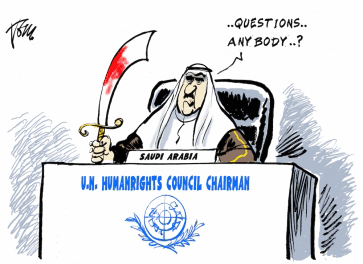 US Nuclear Energy Policy & Khashoggi Murder: Appeasement Or Threat? Clean Technica, December 12th, 2018 by Tina Casey “…………..The Nuclear Energy Connection
Either way, that brings us around to the idea that the corporate world needs to step up and press for meaningful action on the Khashoggi case, since the White House is falling down on the job.
In particular, the tech sector is feeling the pressure not only because of its financial ties to Saudi Arabia, but also because of the high profile of its biggest players.
That brings us right back around to the nuclear energy angle, where the US nuclear company TerraPower has been making waves.
TerraPower was formed back in 2006 and crossed the CleanTechnica radar during COP 2015, when it popped up in relation to a newly launched investor umbrella organization called the Breakthrough Energy Coalition.
Breakthrough is a tech incubator with a focus on clean energy and rapid decarbonization, and nuclear energy makes the cut.
As a global organization, Breakthrough can provide TerraPower with a platform for pitching its technology overseas — a key consideration, given the morbid state of demand for new nuclear power plants here in the US.
So far TerraPower has been focusing on foreign markets, particularly China, for its new technology.
If all of this is beginning to ring some bells, that’s where the tech and Silicon Valley connections kick in.
Microsoft’s Bill Gates is financial backer of TerraPower and chairman of its board.
Gates is also the chair of the Breakthrough Coalition’s Breakthrough Energy Ventures, where you’ll find a host of other familiar top-dollar investors with an interest in decarbonization including Jeff Bezos, Richard Branson, Vinod Khosla, and Michael Bloomberg.
Saudi Arabia is represented among Breakthrough members through Prince Alwaleed bin Talal, who is Chairman of Alwaleed Philanthropies and a supporter of Gates’s “giving pledge.”
Saudi Arabia is also represented among the 24 countries (including the EU) that support the Mission Innovation clean energy initiative, which is in turn receives considerable support from Breakthrough, so there’s that.

Not for nothing, but as of last August the Department of Energy has supported a TerraPower molten salt reactor project with $28 million in cost-shared funds.
When Will The Silicon Valley Crickets Stop Chirping And Start Acting?
All this is by way of saying that when it comes to the Saudi government, the Khashoggi murder, and the cash flow, all roads lead back to Silicon Valley and the US tech sector.
The New York Times raised a red flag on Saudi financial ties to Silicon Valley last year. Among other developments since then, Tesla has been ramping up its profile in the country, and Google has expressed interest in building data centers there.
Perhaps it’s not fair for the tech sector to take all the heat, but on the other hand these are the guys who promised to make life better for millions if not billions of people all over the world. More is expected of them than, say, the CEO of a local pest control company.
The Trump family’s financial ties with Saudi Arabia seem to be the driving force behind Trump’s response to the Khashoggi murder, and now it seems those same ties have silenced the US tech sector.
The fact is that the Khashoggi murder is not going away. New details about the murder are emerging on a regular basis, and even Trump’s Republican allies have finally stirred into action.
In the latest development, today the US Senate is reportedly set to debate cutting off US support for the Saudi-lead war in Yemen. The measure has been linked directly to outrage over the country’s role in the Khashoggi killing.
Meanwhile, CleanTechnica is reaching out to TerraPower for comment, so stay tuned for more on that.
Follow me on Twitter. https://cleantechnica.com/2018/12/12/us-nuclear-energy-policy-khashoggi-murder-appeasement-or-threat/
A nuclear deal for the Saudis, media blackout for Kushner’s corruption
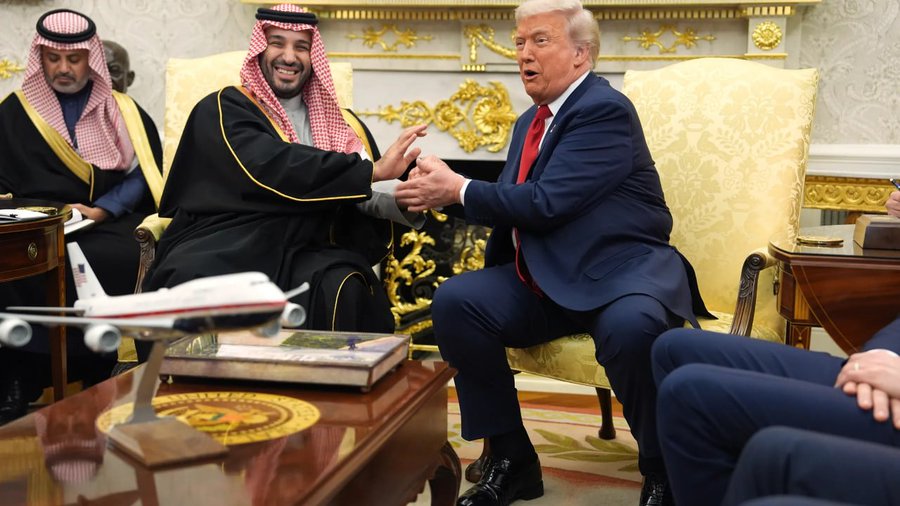
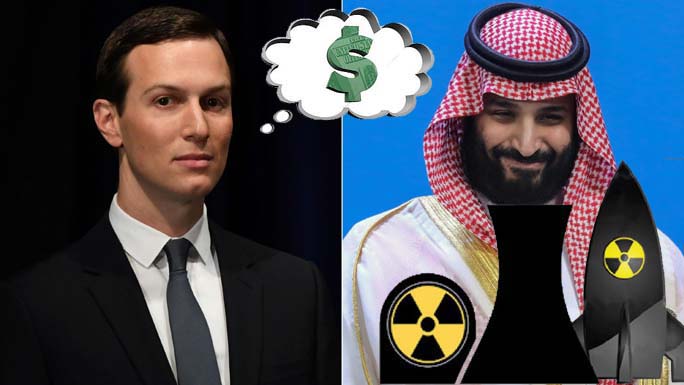
Judd Legum, Rebecca Crosby, and Noel Sims, Jul 23, 2026,
On Wednesday, the Trump administration signed a 30-year nuclear agreement with Saudi Arabia that paves the way for the kingdom to enrich its own uranium. The Saudi government has been aggressively seeking such a deal for years, eager to gain an edge over regional rivals. The agreement lacks safeguards that previous administrations, and many independent foreign policy analysts, viewed as essential to prevent nuclear proliferation.
The deal comes after the Saudi government’s Public Investment Fund (PIF) invested $2 billion in Jared Kushner’s private equity fund, Affinity Partners. Since 2021, Kushner, President Trump’s son-in-law, has collected over $110 million from the Saudi government in management fees. In March, Kushner was seeking billions more from the Saudis. (After Kushner’s fundraising was exposed, his efforts were purportedly put on hold.)
Kushner also has a close personal relationship with Saudi Crown Prince Mohammed bin Salman (MBS) — the pair are known to communicate regularly over WhatsApp. In 2021, when the PIF committee originally recommended rejecting Kushner’s proposal due to the high price and Kushner’s inexperience, MBS overruled the recommendation.
As he continues to collect fees from the Saudi government, Kushner has resumed his role as a top foreign policy aide to Trump. He has played a key role in virtually every significant foreign policy negotiation since Trump returned to the White House.
.Kushner’s specific involvement in the nuclear pact, if any, has not been disclosed. But the fact that one of the president’s top foreign policy advisors is receiving large, ongoing financial payments from the Saudi government is unquestionably relevant to the story.
Not Even Israelis Are Willing To Die For Israel
And Other Notes
Caitlin Johnstone, Jul 22, 2026, https://www.caitlinjohnst.one/p/not-even-israelis-are-willing-to?utm_source=post-email-title&publication_id=82124&post_id=207992457&utm_campaign=email-post-title&isFreemail=true&r=1ise1&triedRedirect=true&utm_medium=email
Israeli Finance Minister Bezalel Smotrich said during a conference on Tuesday that Israel “has no interest” in participating in the ongoing military exchanges between the US and Iran, asserting that “the current situation is the best one for us.”
While Smotrich is certainly correct that it is to Israel’s benefit to stand aside and let the Americans do all the fighting and dying in this conflict, this is a noteworthy admission about a war that the US State Department says the White House ordered “at the request of and in the collective self-defense of its Israeli ally.”
There are three groups of people who consistently say “I’m not fucking dying for Israel”:
1. US soldiers,
2. Americans at risk of being drafted into a large-scale war, and
3. Israelis.
You see this all the time. Back in March when the US was contemplating a ground invasion of Iran, the Israeli press were churning out reports assuring their audiences that government officials said the IDF would not be participating in any such operations. Israelis are happy for Americans to die for Israel, but they are unwilling to put their own lives on the line for the Zionist project.
You know who would lay down their lives for their homeland? The Palestinians.
The Palestinians have made it clear that they are willing to die for Palestine, while the Israelis have made it clear that they are unwilling to die for Israel. For the Israelis, Israel is merely a nice-to-have which they would happily give up if it became too dangerous.
For the Palestinians, that land is home.
The New Yorker has an article out titled “How Biden Enabled Israel’s Aggression Toward Gaza — and Iran,” with the subtitle “Top officials from the previous Administration now express regret over their failure to rein in Netanyahu.” It quotes Jake Sullivan saying “I will say straightforwardly — we should have put more pressure on Israel to take a different approach” on Gaza.
And to that I can only say, fuck you. Seriously, FUCK you.
You don’t get to do this now. You don’t get to turn around and go “Oopsie poopsie, we made a mistake!” This was YOUR genocide, motherfuckers. YOURS. You chose it. You own it. Forever. The stench of the rotting corpses in Gaza will sully your names for all time.
They always planned to do this. They backed a genocide knowing they could always try to spin it as a regrettable error in hindsight, and let their sad feelings of contrition wash their hands of their sins.
Fuck that bullshit. That’s not happening. We’ll never let them forget what they did and what they are.
That same New Yorker article says Benjamin Netanyahu asked the Biden administration to keep secret any small concessions he made in allowing aid into Gaza, saying the Israeli prime minister “feared a domestic backlash for not starving Gaza’s women, children, and other civilians.”
Think about how fucked up a society has to be for its politicians to fear domestic backlash for not starving civilians.
❖
The other day Fox News host Jesse Watters joked and laughed about how the US military’s new testosterone testing policy is going to lead to soldiers with overloaded testosterone levels sexually assaulting women.
“Yeah, I want these guys on it, but you know what’s gonna happen? The guys that don’t need it are gonna take it, to triple boost,” Watters said Thursday, chuckling. “And then they’re gonna get out there, and women on base, you guys better be careful. Port calls, women in Asia, you better be careful, because these guys are gonna be wild animals and you better watch out.”
Ho ho, ha ha, watch out ladies you’re gonna get raped by US soldiers just like untold millions of other women around the world throughout history, ha ha, wocka wocka, comedy laugh laugh.
The Murdoch press is cancer.
I saw a tweet from Zionist pundit Joe Walsh saying “If you hate the state of Israel, you hate Jews. If you are pledged to the destruction of the state of Israel, you hate Jews. If you do not believe the state of Israel has a right to exist, you hate Jews.”
If you keep feeding the public the lie that they need to choose between supporting genocide and hating Jews, people are going pick hate Jews, because they don’t want to support genocide. When that happens, the blame will rest on all these pricks who circulated this lie.
You don’t get to just pretend all this fretting about “antisemitism” is happening separately from the agenda to stomp out all criticism of Israel and its abuses. You don’t get to demand that I treat them as separate things. They’re inseparable agendas. I wish they weren’t, but they are.
If you come up to me babbling about how Jews are afraid and mistreated, then I’m going to automatically treat this as apologia for a genocidal apartheid state, because that’s the primary agenda that this rhetoric is being used to promote today. It’s not my fault that this is how I respond to allegations of antisemitism. It’s the fault of the people who have weaponized such allegations to promote genocide, apartheid, war, and tyranny.
If you want me to take allegations of “antisemitism” seriously, then you must first bring to an end the campaign to use that term as a cudgel to shut down pro-Palestine protests and silence Israel’s critics. That is what you’ll need to do before I will give you the benefit of the doubt and listen to you like you’re a good-faith actor. The information ecosystem is currently far too full of genocidal Zionists lying about their experiences, their feelings, their intentions, and what has happened to them for me to listen credulously to stories about discrimination against Jews in the year 2026.
It’s so surreal how we are still expected in mainstream western society to listen to concern trolling about “antisemitism” without immediately thinking about things like Israel, Palestine, Lebanon, Iran, war, and genocide. We’re expected to listen patiently to stories about how western Jews feel unsafe without ever looking at all those elephants in the room. It’s insulting. It’s degrading.
If the main reason antisemitism gets mentioned these days is because of opposition to Israel’s mass atrocities, then obviously I’m going to assume that’s the driving motivator behind your words when you mention it. Of course that’s going to be my default assumption. Obviously. Duh.
Demolition of Germany’s Stade reactor building progresses
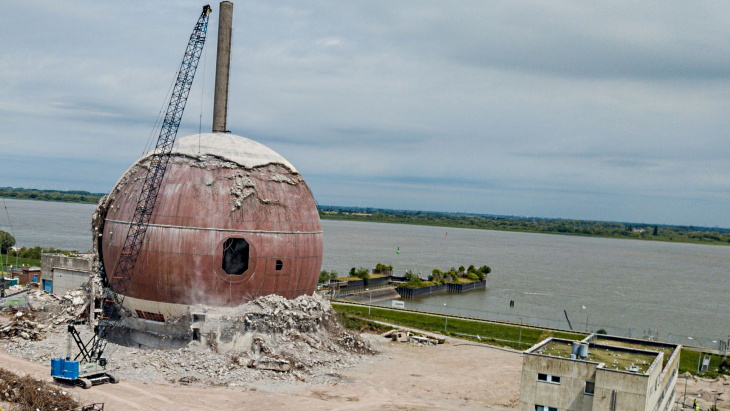
Thursday, 23 July 2026, https://www.world-nuclear-news.org/articles/in-pictures-demolition-of-stade-reactor-building-progresses
The demolition of the reactor building at the decommissioned Stade nuclear power plant in Lower Saxony, Germany, has been under way since the end of March this year and is expected to be completed by the end of the year.
Stade was the first power plant in Germany to be decommissioned after the country announced a nuclear phase-out policy in 2003. The 640 MWe pressurised water reactor began operating in 1972. The plant operated at a reduced capacity from 2003 until the end of 2005, prior to its shutdown. Dismantling of the power plant began in October 2005. Conventional demolition of individual buildings on the power plant site started in 2023.
The first phase of the building dismantling was completed in spring 2024. It involved the demolition of 17 buildings with a total volume of about 177,000 cubic metres – including the administration building, the workshop and operations building, the emergency diesel generator building, the switchgear building, and finally the engine house. This work laid the foundation for the dismantling of the remaining central building complex. Aspects such as safety, environmental protection, and sustainability through material recycling were given top priority.
The demolition of the reactor building is part of Phase II of the conventional dismantling process and simultaneously marks the beginning of the crucial final phase of the overall project.
On 31 March this year, the demolition of the reactor building began. To weaken the material, a steel ball weighing about four tonnes was first be used to strike the approximately 80-centimetre-thick concrete shell. Following this, the auxiliary buildings were completely demolished before the further demolition of the reactor building began at the beginning of June. This involved the use of, among other things, a 16-tonne hydraulic shear and a 180-tonne cable excavator. The plan is to completely dismantle the reactor building by the end of this year.
In preparation for the demolition, extensive hazardous material remediation of the auxiliary building began in May 2025. This was followed in December by the remediation of the reactor building and the containment vessel within it. For this, the necessary infrastructure was first established both inside and outside the reactor building. This included, in particular, the erection of a complex facade scaffold with stair towers and elevators. As the first externally visible measure immediately before the impending demolition of the reactor building, the external lifting platform, which previously also served for the removal of CASTOR used fuel storage casks and steam generators, was demolished on 6 March.
“With the start of demolition work on the reactor building, we have reached the final technical milestone we have been working towards for a long time,” plant manager Marco Albers said in March. “The entire team has put enormous care into preparing the necessary documentation, and I am very pleased that the review by the independent expert and the approval of the Lower Saxony Ministry for the Environment have now been granted. Now, with the help of our partner, the Freimuth company, we can implement what is probably the most demanding step in the conventional demolition of the Stade plant in a technically sound and safe manner.”
Phases II (involving five building complexes) and III (ten building complexes) have been running in parallel since 2023. The site is scheduled to be released from nuclear regulatory oversight in autumn 2027. This will make the Stade nuclear power plant the first commercially operated pressurised water reactor in Germany to be completely dismantled.
Germany’s nuclear phase-out
Following the accident at the Fukushima Daiichi plant in Japan in March 2011, the government of Chancellor Angela Merkel decided it would phase out its use of nuclear power by the end of 2022 at the latest. Prior to the accident, Germany was obtaining around one-quarter of its electricity from nuclear power.
In August 2011, the 13th amendment of the Nuclear Power Act came into effect, which underlined the political will to phase out nuclear power in Germany. As a result, eight units were closed down immediately: Biblis A and B, Brunsbüttel, Isar 1, Krümmel, Neckarwestheim 1, Phillipsburg 1 and Unterweser.
The Brokdorf, Grohnde and Gundremmingen C plants were permanently shut down at the end of December 2021. The country’s final three units – Emsland, Isar 2 and Neckarwestheim 2 – shut down in April 2023. All the units are now at various stages of decommissioning.
Trump threat to hit Pickaxe renews calls in Iran for nuclear bomb, NPT exit
Official position remains unchanged
Before Ali Khamenei’s death, Iranian officials and nuclear negotiators consistently maintained that his fatwa was a permanent religious ruling rather than a temporary political decision.
According to their interpretation, not only the production and use of nuclear weapons but even their possession solely for deterrence is forbidden under Islamic law. They argued that Iran’s deterrence should instead rest on missile capabilities, technological advances and human capital.
Maryam Sinaiee, Iran International, Jul 23, 2026, https://www.iranintl.com/en/202607237263
President Donald Trump’s threat to strike Iran’s Pickaxe Mountain nuclear-linked facility has intensified hardline calls for Tehran to withdraw from the Nuclear Non-Proliferation Treaty and develop a nuclear weapon.
The debate gained fresh momentum after Trump warned Tuesday that the United States would target the deeply buried facility, known in Persian as Mount Kolang Gaz La, if Iran sought to restore its nuclear program there.
Advocates of this view argue that the recent wars demonstrated that conventional military capabilities alone no longer provide sufficient deterrence, making a nuclear option increasingly necessary. Others stop short of openly advocating nuclear weapons but argue that Iran should at least leave the NPT in response to growing US threats.
The arguments echo comments made by Fereydoun Abbasi, the former head of the Atomic Energy Organization of Iran and a politician closely associated with Saeed Jalili’s hardline camp, months before he was killed in Israeli strikes during the 12-day war in June 2025.
In January 2025, Abbasi argued that under the new security environment, “the dangers of not building a bomb and lacking strong deterrence are far greater than the costs of acquiring it,” warning that weak deterrence would only encourage direct aggression.
Abbasi also maintained that Iran had long ago crossed the scientific and technical threshold required to build a nuclear weapon, arguing that the remaining obstacle was no longer technical but rather “a strategic decision.”
In his view, when threats from Israel and its allies become existential, missile deterrence and reliance on regional allies are no longer sufficient, leaving the country increasingly vulnerable without a nuclear deterrent.
Social media campaign targets negotiating officials
Many hardline social media users now argue that Iran should build a nuclear bomb as quickly as possible. They have also criticized officials they describe as “eager for negotiations”—including President Masoud Pezeshkian, Parliament Speaker Mohammad-Bagher Ghalibaf and Foreign Minister Abbas Araghchi—for failing to put withdrawal from the NPT on the government’s agenda.
One X user writing under the name Ayyar reacted to Foreign Ministry spokesman Esmaeil Baghaei’s statement that Iran remained committed to the NPT.
“Just hours after Baghaei declared that Iran is still a member of the NPT, Trump threatened to bomb the Pickaxe Mountain nuclear facility,” the user wrote. “They killed the country’s leader along with thousands of Iranians and repeatedly struck our nuclear facilities. What exactly must the enemy do before we leave the NPT? Are you asleep?”
Another user, writing under the name Sam, argued: “Why are we afraid of leaving the NPT? Afraid of a global consensus against Iran? Staying in the treaty hasn’t prevented that. We have no choice but to build nuclear weapons for comprehensive deterrence. Nuclear weapons could be the final answer.”
Another account, Seyed Mehrdad, wrote: “The answer to a nuclear threat is not threatening regional infrastructure. Deterrence lies in leaving the NPT and conducting a live nuclear test.”
Other users argued that Iran should not remain without nuclear weapons if countries such as Turkey or Saudi Arabia eventually acquire them, insisting that “missile power alone cannot guarantee deterrence.”
Another post claimed that nuclear-capable bombers would not threaten Iran if the country already possessed nuclear weapons, reflecting a broader argument among hardliners that only an atomic arsenal could prevent further US or Israeli attacks.
Debate spreads beyond social media
The discussion has also spread into conservative media. On June 28, the IRGC-affiliated Fars News Agency published an opinion piece titled “There Is No Alternative but to Build an Atomic Bomb,” arguing that Iran required nuclear deterrence to secure the “peace of mind” necessary to resolve other disputes through negotiations.
Fars later clarified that the article had appeared in its interactive opinion section and did not represent the agency’s official editorial position.
Other conservative outlets, including Kayhan, and hardline members of parliament have generally avoided explicitly endorsing nuclear weapons. They have, however, increasingly referred to concepts such as “redefining deterrence,” “reviewing nuclear commitments” and “revising the country’s defense doctrine.”
Calls for NPT withdrawal intensify
Trump’s latest warning against Pickaxe Mountain has also prompted some conservative figures to publicly raise the possibility of leaving the NPT.
Political analyst Mohammad Hossein Khoshvaght, who has close ties to the late supreme leader’s family, questioned whether conventional responses to US attacks would simply encourage further aggression, asking whether such a cycle could continue “until Iran is brought down.”
Former senior Revolutionary Guards commander Ghorbanali Salavatian urged Iranian authorities to formally notify international organizations that Iran would withdraw from the NPT if the United States attacked Pickaxe Mountain.
He added that such a withdrawal should occur “without delay” if an attack took place.
Khamenei’s fatwa returns to focus
The debate has also reopened questions surrounding the religious prohibition on nuclear weapons issued by the late Supreme Leader Ali Khamenei.
Following Khamenei’s death, some social media users argued that Mojtaba Khamenei, as the new supreme leader, should revoke or revise his father’s fatwa declaring nuclear weapons religiously forbidden in light of the changed security environment.
One user wrote in March that because Ali Khamenei was no longer a living source of emulation, his fatwa was no longer binding. The user described the pursuit of nuclear deterrence as “a national demand and the right of the Iranian people.”
The issue had already surfaced in September 2025, when 70 members of parliament argued that Khamenei’s previous ruling should be changed or reinterpreted and demanded authorization for the development and possession of an atomic bomb to establish “nuclear deterrence.”
The lawmakers argued that while the use of nuclear weapons could remain religiously forbidden, producing and possessing them solely for deterrence should be treated differently.
Official position remains unchanged
Before Ali Khamenei’s death, Iranian officials and nuclear negotiators consistently maintained that his fatwa was a permanent religious ruling rather than a temporary political decision.
According to their interpretation, not only the production and use of nuclear weapons but even their possession solely for deterrence is forbidden under Islamic law. They argued that Iran’s deterrence should instead rest on missile capabilities, technological advances and human capital.
Under Shiite jurisprudence, however, a new marja, or source of emulation, may issue rulings that differ from those of his predecessors.
Araghchi acknowledged this possibility in an interview with Al Jazeera in April, saying any change to the nuclear fatwa would depend on the position adopted by Iran’s new supreme leader.
For now, the government’s formal position remains unchanged. Baghaei said Monday that Iran remained a member of the NPT and recognized its obligations under the treaty, although he added that Tehran continually reviewed its foreign policy and national security options.
Baghaei also said Wednesday that no nuclear activity was taking place at Pickaxe Mountain, accusing Washington of using the site as a “fabricated pretext” for further attacks and sabotage.
Innovative geotechnical sub-alliance formed for Sizewell C construction
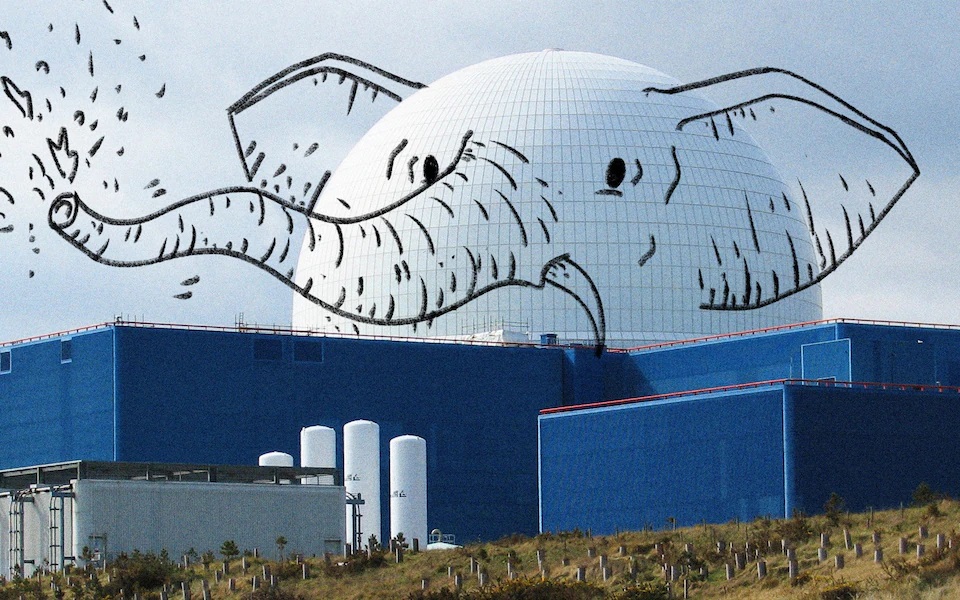
“the chances of Sizewell C being delivered on schedule are slim to none, and the new prime minister and energy secretary would be better off cancelling it now.”
22 Jul, 2026 By Tom Pashby, https://www.newcivilengineer.com/latest/innovative-geotechnical-sub-alliance-formed-for-sizewell-c-construction-22-07-2026/
Balfour Beatty Ground Engineering (BBGE), VSL Systems (UK) Ltd (VSL), and Bachy Soletanche (BSL) have formed the Geotechnical Sub-Alliance (GSA) at Sizewell C, believed to be the first of its kind.
The three firms have come together to form the GSA which sits within the wider Civil Works Alliance (CWA), which includes Sizewell C, Balfour Beatty, Laing O’Rourke, and Bouygues Travaux.
The alliance is responsible for delivering the project’s main civil engineering works.
In an announcement on 17 July, Sizewell C said the GSA “is thought to be the first geotechnical sub-alliance of its kind in the UK” and will “deliver a range of specialist ground engineering solutions – including piling, soil mixing, diaphragm walls and plastic cut-off walls”.
The GSA was “created to maximise operational safety, capability, quality, and delivery”, and it “will create a stable and watertight platform capable of supporting the immense loads associated with the construction of the new nuclear power station”, Sizewell C said.
GSA alliance manager Vincent Leblois said: “We bring together a wealth of global capability, sector expertise and experience to the Sizewell C project.
“We are working very much as one team delivering one outcome on a ‘best for project’ basis through joint decision-making, strong delivery and using the best people for the job.
You are here:Latest
Innovative geotechnical sub-alliance formed for Sizewell C construction
22 Jul, 2026 By Tom Pashby
Balfour Beatty Ground Engineering (BBGE), VSL Systems (UK) Ltd (VSL), and Bachy Soletanche (BSL) have formed the Geotechnical Sub-Alliance (GSA) at Sizewell C, believed to be the first of its kind.
The three firms have come together to form the GSA which sits within the wider Civil Works Alliance (CWA), which includes Sizewell C, Balfour Beatty, Laing O’Rourke, and Bouygues Travaux.
The alliance is responsible for delivering the project’s main civil engineering works.
In an announcement on 17 July, Sizewell C said the GSA “is thought to be the first geotechnical sub-alliance of its kind in the UK” and will “deliver a range of specialist ground engineering solutions – including piling, soil mixing, diaphragm walls and plastic cut-off walls”.
The GSA was “created to maximise operational safety, capability, quality, and delivery”, and it “will create a stable and watertight platform capable of supporting the immense loads associated with the construction of the new nuclear power station”, Sizewell C said.
GSA alliance manager Vincent Leblois said: “We bring together a wealth of global capability, sector expertise and experience to the Sizewell C project.
“We are working very much as one team delivering one outcome on a ‘best for project’ basis through joint decision-making, strong delivery and using the best people for the job.
“Together and as part of the CWA at Sizewell C, we are creating the foundations to power our future, excited to be contributing to the build and completion of this vital investment in new infrastructure for Britain.”
Balfour Beatty Ground Engineering managing director Jane Towse-Laval said: “Sizewell C represents one of the most significant infrastructure projects in the UK, and we are proud to bring our specialist geotechnical expertise to this pioneering sub-alliance.
“By working collaboratively, we will combine innovation, technical excellence and our collective expertise, laying the essential foundations for the safe and efficient delivery of this nationally significant energy asset.”
Sizewell C CEO Nigel Cann said: “This unique alliance reflects what our project is all about – true partnerships bringing together world-leading expertise, delivering big gains in innovation and productivity.”
Separately, Sizewell C’s latest annual report has provided further insight into the project. Published on 6 July, it is titled Sizewell C: Annual Report & Accounts FY25/26.
On 15 July, Department for Energy Security and Net Zero (DESNZ) minister of state Michael Shanks issued a written statement about Sizewell C.
“The [report] provides a comprehensive account of the company’s activities during 2025-26, recording a year of major milestones for the project, including the expansion of construction activity on site, growth in the workforce, and continued development of the project’s delivery arrangements.
You are here:Latest
Innovative geotechnical sub-alliance formed for Sizewell C construction
22 Jul, 2026 By Tom Pashby
Balfour Beatty Ground Engineering (BBGE), VSL Systems (UK) Ltd (VSL), and Bachy Soletanche (BSL) have formed the Geotechnical Sub-Alliance (GSA) at Sizewell C, believed to be the first of its kind.
The three firms have come together to form the GSA which sits within the wider Civil Works Alliance (CWA), which includes Sizewell C, Balfour Beatty, Laing O’Rourke, and Bouygues Travaux.
The alliance is responsible for delivering the project’s main civil engineering works.
In an announcement on 17 July, Sizewell C said the GSA “is thought to be the first geotechnical sub-alliance of its kind in the UK” and will “deliver a range of specialist ground engineering solutions – including piling, soil mixing, diaphragm walls and plastic cut-off walls”.
The GSA was “created to maximise operational safety, capability, quality, and delivery”, and it “will create a stable and watertight platform capable of supporting the immense loads associated with the construction of the new nuclear power station”, Sizewell C said.
GSA alliance manager Vincent Leblois said: “We bring together a wealth of global capability, sector expertise and experience to the Sizewell C project.
“We are working very much as one team delivering one outcome on a ‘best for project’ basis through joint decision-making, strong delivery and using the best people for the job.
Related questions you can explore with Ask NCE, our new AI search engine.
- Can major infrastructure projects effectively utilize regional talent hubs?
- How does Sizewell C support local communities beyond construction?
- How does modular construction improve nuclear power plant productivity?
If you would like to ask your own question you just need to login, register or subscribe.
“Together and as part of the CWA at Sizewell C, we are creating the foundations to power our future, excited to be contributing to the build and completion of this vital investment in new infrastructure for Britain.”
Balfour Beatty Ground Engineering managing director Jane Towse-Laval said: “Sizewell C represents one of the most significant infrastructure projects in the UK, and we are proud to bring our specialist geotechnical expertise to this pioneering sub-alliance.
“By working collaboratively, we will combine innovation, technical excellence and our collective expertise, laying the essential foundations for the safe and efficient delivery of this nationally significant energy asset.”
Related Articles
Why and how the Civil Works Alliance changed Sizewell C tunnel designs from Hinkley Point C
UK ‘most expensive’ in the world for nuclear projects due to complex regulation, taskforce finds
Sizewell C challenged on cost overruns transparency and provides infrastructure update
Sizewell C reaches financial close by securing £5bn loan and signs power contract
Sizewell C has awarded almost £1bn in local contracts at two-year mark of construction
Sizewell C’s financing places more risks on public purse ‘than other electricity projects’
Sizewell C CEO Nigel Cann said: “This unique alliance reflects what our project is all about – true partnerships bringing together world-leading expertise, delivering big gains in innovation and productivity.”
Separately, Sizewell C’s latest annual report has provided further insight into the project. Published on 6 July, it is titled Sizewell C: Annual Report & Accounts FY25/26.
On 15 July, Department for Energy Security and Net Zero (DESNZ) minister of state Michael Shanks issued a written statement about Sizewell C.
“The [report] provides a comprehensive account of the company’s activities during 2025-26, recording a year of major milestones for the project, including the expansion of construction activity on site, growth in the workforce, and continued development of the project’s delivery arrangements.
“It also provides updates on the project’s strategic priorities looking ahead, project finances, governance arrangements, and its approach to managing delivery risks and opportunities.”
The also report includes a diagram showing “key milestones in the Sizewell C power station life”, which says the project is currently between “financial Close and Revenue Commencement – Regulated Asset Base (RAB) model and financing arrangements in place”, which happened in November 2025, and in future “main earthworks” which includes site preparation, excavation and groundworks, scheduled to take approximately three years.
The report does not specify when the main earthworks will begin.
After reviewing the report, a Stop Sizewell C spokesperson told NCE: “Sizewell C’s Annual Report broadly complies with Ministers’ obdurate refusal to give any useful information about how long Sizewell C will take to build, which, considering that taxpayers and householders are stumping up vast quantities of cash, is unjustifiable and disrespectful to struggling local communities.
“The only reveal is that “J-zero” is expected sometime in 2029. Given the complex site de-watering, cut-off wall construction and platform raising, it is little wonder that it will be at least five years since works formally began, in January 2024, before Sizewell C can even begin above-ground construction.
“We maintain that the chances of Sizewell C being delivered on schedule are slim to none, and the new prime minister and energy secretary would be better off cancelling it now.”
University of Greenwich emeritus professor of energy policy and Energy Policy editor-in-chief Steve Thomas told NCE that the construction timeline in the report shows “how hollow all the Fingleton nonsense was, that it takes five years of site prep to get to construction start. Not because of regulation or planning.”
The Nuclear Regulatory Taskforce published the Nuclear Regulatory Review 2025 in November 2025, which was also called the Fingleton Review. It found that regulations including the planning system were to blame for the delays and cost overruns faced by nuclear projects.
Proposed US-Saudi nuclear energy deal: What we know so far
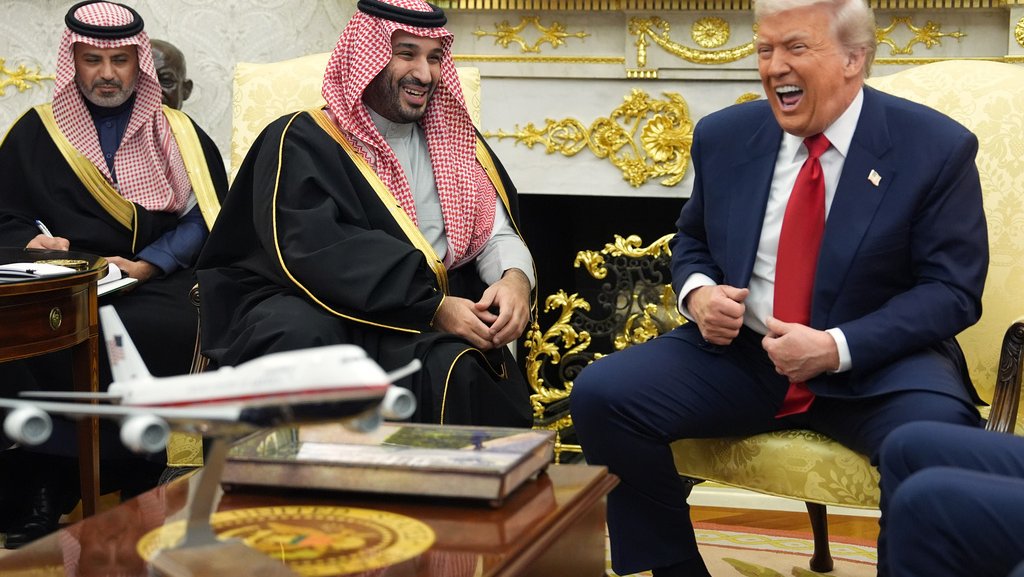
Reports suggest the Trump administration backs a pact with Saudi Arabia allowing it to enrich uranium.
22 Jul 2026, https://www.aljazeera.com/news/2026/7/22/proposed-us-saudi-nuclear-energy-deal-what-we-know-so-far
United States President Donald Trump has approved an agreement that would allow Saudi Arabia to develop a civilian nuclear programme with the potential to enrich uranium on its own soil, marking a significant shift in longstanding US non-proliferation policy, according to media reports.
Citing people familiar with the discussions, the Wall Street Journal and The New York Times reported on Tuesday that Trump is expected to ask Congress to approve the agreement, which could pave the way for US companies to help build Saudi Arabia’s nuclear industry.
The timing is likely to prove controversial, with the US saying one of the objectives of its military campaign against Iran is to prevent it from acquiring the ability to build a nuclear weapon. Critics say that allowing Saudi Arabia to enrich uranium could weaken that message, even if the programme is intended for civilian use, while other commentators fear that raising nuclear enrichment levels could be misused.
Here’s what we know.
Why is this significant?
Saudi Arabia has long sought a civilian nuclear programme as part of plans to diversify its economy and reduce its dependence on oil.
Negotiations over US nuclear cooperation have stretched across multiple administrations. Under former President Joe Biden, talks were tied to a broader package that included Saudi recognition of Israel, according to The Times.
Those negotiations stalled after Israel’s genocidal war on Gaza, but the Trump administration revived discussions, removing the normalisation requirement.
During Saudi Crown Prince Mohammed bin Salman’s visit to the US last year, the two countries announced a framework for civilian nuclear cooperation, laying the groundwork for what they described as a long-term partnership built on non-proliferation standards.
What does the reported agreement say?
According to the reports, the agreement would last for 30 years and allow US companies, including Westinghouse, a Pittsburgh-based nuclear energy giant, to help develop Saudi Arabia’s civilian nuclear sector.
One of its most significant provisions would permit Saudi Arabia to pursue domestic uranium enrichment following a joint US-Saudi study.
Enriching uranium is not illegal and is used to produce fuel for nuclear power plants. However, the same technology can also produce highly enriched uranium suitable for nuclear weapons if enrichment continues to much higher levels.
Saudi Arabia has previously said it would seek a nuclear weapon if Iran were ever to acquire one, although Tehran insists its nuclear programme is peaceful.
Why are some experts concerned?
The reported agreement is expected to fall short of the standards accepted by some other US partners.
In 2009, the United Arab Emirates signed a so-called “123 Agreement” with Washington before opening its Barakah nuclear power plant, agreeing not to enrich uranium or reprocess spent nuclear fuel – a model that non-proliferation experts have often described as the “gold standard”.
Reports suggest the Saudi agreement would instead allow enrichment and may not require the International Atomic Energy Agency’s (IAEA) Additional Protocol, which gives inspectors broader powers to verify that nuclear material is not being diverted for military purposes.
Michael Horowitz, a geopolitical analyst, said the Saudi agreement would be “very consequential” for a number of reasons.
“The US reportedly agreed to a deal that falls both below the gold standard and doesn’t include the Additional Protocol – both of which are made to ensure a civilian programme doesn’t turn into a military one,” he said.
“This isn’t a detail: If Riyadh had wanted to just have US backing for a civilian programme, it would have done so years ago – with Washington’s blessing. In other words, the goal is to get US support for a deal that doesn’t fully exclude a pathway to a nuclear programme,” he added.
“That’s not to say that there aren’t guarantees. But guarantees are purely bilateral, and that means they will be entirely dependent” on the state of US-Saudi relations, said Horowitz.
Why would the US agree?
Supporters argue the agreement would strengthen US influence in the Gulf.
In a report submitted to Congress earlier this year, the Trump administration argued that expanding civilian nuclear cooperation would help maintain US leadership in the global nuclear industry while preventing strategic competitors from gaining influence in the kingdom.
The administration has also argued that Saudi Arabia’s growing electricity demand makes nuclear energy an increasingly important part of its long-term energy strategy, despite its vast oil resources and climate well suited for solar power.
Will Congress approve it?
Any civilian nuclear cooperation agreement must be submitted to Congress, which has the power to review and block so-called “123 agreements”.
Congress would need a two-thirds majority to block the proposed agreement and override any presidential veto.
The proposal is expected to face scrutiny from lawmakers in both parties over the safeguards governing Saudi uranium enrichment.
Some members of Congress and Israeli officials have said that permitting enrichment could leave open a future pathway to a Saudi nuclear weapons capability, even if the programme begins for civilian purposes.
Andrea Stricker, deputy director of the Foundation for Defense of Democracies’ Nonproliferation Program, urged Congress to “block” the proposed agreement.
“If it does not, one hopes the policy will be reversed by a subsequent administration before too much damage is done in terms of watering down safeguards, setting negative precedents for other states, and failing to contain the spread of enrichment,” said Stricker.
War Criminal Pete Hegseth Disrupted
July 23, 2026, https://scheerpost.com/2026/07/23/war-criminal-pete-hegseth-disrupted/
CODEPINK Disrupts Secretary of War Crimes Pete Hegseth During Senate Appropriations Hearing.
Washington, DC – On Tuesday afternoon, activists from CODEPINK, Vets About Face DMV, and the National Iranian American Council disrupted Secretary of War Crimes Pete Hegseth during his testimony before the U.S. Senate Committee on Appropriations, demanding an immediate end to the disastrous U.S. war on Iran and condemning the administration’s request for additional funding.
Four people managed to disrupt Hegseth; of the four, two were Iranian-Americans, one U.S. veteran, and one nurse. They were each removed from the hearing and arrested.
Today’s action comes as the administration escalates its unprovoked war, where, notably, on the first day of attacks, the U.S. bombed a grade school, killing 73 boys, 47 girls, and 26 female teachers. Since then, the U.S. has targeted Iran’s civilian infrastructure, including water plants, airports, bridges, universities, sports facilities, and the electric grid. The World Health Organization reports that the U.S. war has killed or injured over 35,000 civilians.
“Pete Hegseth and this administration will be remembered for the killing of innocent civilians and children. They have protected neither the American people nor our security, only the interests that have lined their pockets,” said Bella of the National Iranian American Council, who joined the protest. “While Americans struggle to afford their lives, this government always finds billions to bomb our families in Iran, Palestine, Lebanon, and elsewhere. This is a repugnant betrayal of humanity. It is illegal, and the American people will hold them accountable.”
More and more people in the U.S. are now rejecting additional military spending and would rather the government redirect resources to domestic needs. A recent Reuters/Ipsos poll found only 37% of Americans back new U.S. strikes on Iran, while half believe the conflict has not been worth its cost. The war has also taken a significant economic toll, as65% of Americans want a deal to end the war as soon as possible. Despite this, Hegseth appeared before the committee to request additional funding for a war that has already cost over $132 billion.
CODEPINK will continue to work towards a reinvestment of the $1.5 trillion proposed war budget into real security for people in the form of healthcare, housing, and climate justice.
The Chris Hedges Report: Is Iran Becoming Another ‘Forever War’?
July 22, 2026, https://chrishedges.substack.com/p/is-iran-becoming-another-forever
The Trump administration has embroiled the United States in another quagmire, similar to the Vietnam War and recent wars in the Middle East, by going to war against Iran. Now that the June 17th Memorandum of Understanding (MOU) with Iran is dead, the US and Iran seem to be stuck in a tit for tat war where the US bombs Iran and Iran retaliates against US and allies’ in the region. As Gulf States that are being targeted by Iran mount pressure on President Trump to stop the attacks, and a global economic crisis looms, the US is running out of options and time.
For a greater understanding of the balance of power in the region, the US’ military capacity and possible outcomes of the US-Iran War, Chris Hedges speaks with Professor John Mearsheimer in this episode of The Chris Hedges Report. Mearsheimer argues that what happens in the coming week is crucial in determining whether there can be a peaceful resolution to the conflict. At present, Iran has the upper hand, and the United States lacks the capacity to follow through on President Trump’s threats to escalate if Iran doesn’t acquiesce to Trump’s demand that it concede. If the US does escalate, then there is a real risk that in addition to a renewed closure of the Strait of Hormuz, Yemen may close the Bab-el-Mandeb Strait, cutting off oil flows as strategic reserves around the world dwindle, which could trigger a global depression.
Hedges and Mearsheimer discuss the similarities between the war on Iran and the Vietnam War. Leadership in the United States knew early on that they could not win in Vietnam, but they continued escalating anyway. It is likely that the Trump administration knows that they have failed in Iran, but they refuse to give in even though they lack an exit strategy. Mearsheimer frames the June 17th MOU as the first concession by the US and says, “The idea that we have a newfound advantage over the Iranians now that we didn’t have when we signed the June 17th MOU agreement makes no sense at all.”
Hedges summarizes the potential paths available to the United States: “One, if the United States does continue to attack infrastructure, we are headed for a humanitarian disaster in the Gulf. If it doesn’t, then it leaves open the possibility of some kind of a negotiated settlement that is even more advantageous to Iran than the memorandum of understanding.” A glimmer of hope, Mearsheimer offers, is that President Trump halted further attacks on Iranian infrastructure this week, but what happens next is uncertain.
1 This Month



26 September – International Day for the Total Elimination of Nuclear Weapons


PLEASE OPPOSE HR 8255 AND S.3639 – bills would accelerate satellite deployment, with no environmental review or safeguards – https://ncstd5li.quorum.us/campaign/169331/
To see nuclear-related stories in greater depth and intensity – go to https://nuclearinformation.wordpress.com
-
Archives
- September 2026 (219)
- August 2026 (330)
- July 2026 (355)
- June 2026 (287)
- May 2026 (306)
- April 2026 (356)
- March 2026 (251)
- February 2026 (267)
- January 2026 (308)
- December 2025 (358)
- November 2025 (359)
- October 2025 (375)
-
Categories
- 1
- 1 NUCLEAR ISSUES
- business and costs
- climate change
- culture and arts
- ENERGY
- environment
- health
- history
- indigenous issues
- Legal
- marketing of nuclear
- media
- opposition to nuclear
- PERSONAL STORIES
- politics
- politics international
- Religion and ethics
- safety
- secrets,lies and civil liberties
- spinbuster
- technology
- Uranium
- wastes
- weapons and war
- Women
- 2 WORLD
- ACTION
- AFRICA
- Atrocities
- AUSTRALIA
- Christina's notes
- Christina's themes
- culture and arts
- Events
- Fuk 2022
- Fuk 2023
- Fukushima 2017
- Fukushima 2018
- fukushima 2019
- Fukushima 2020
- Fukushima 2021
- general
- global warming
- Humour (God we need it)
- Nuclear
- RARE EARTHS
- Reference
- resources – print
- Resources -audiovicual
- Weekly Newsletter
- World
- World Nuclear
- YouTube
-
RSS
Entries RSS
Comments RSS
 nuclear-news

