Pressure on U.S. Congress to reinstate research on links between nuclear stations and cancer

Activists push Congress to revive probe into links between nuclear plants and cancer
Nuclear Regulatory Commission killed study in 2015 after spending five years and $1.5 million on the effort, Orange County Register, By TERI SFORZA | tsforza@scng.com | October 5, 2020 Scientists and activists were stunned back in 2015 when the Nuclear Regulatory Commission pulled the plug on what was designed to be the best study of cancer near nuclear power plants ever done.
Last week, a petition with some 1,200 signatures demanding that the study resume went to members of Congress representing Southern and Central California.
“This is a scientific endeavor which will improve our understanding of cancer, the leading cause of death in California,” the petition states. “It is especially important for women, children, and the human fetus who are much more vulnerable to the biological effects of harmful ionizing radiation.”
No one knows threat
The retired San Onofre and Diablo nuclear power plants, both shut down in 2013, have been discharging low-level radioactivity into the ocean and atmosphere for decades, the petition continues, and no one knows for sure whether that poses a threat to nearby residents………
More modern studies in Europe have found that children living within 3 miles of nuclear power plants had double the risk of developing acute leukemia as those living farther away, with the peak impact on children ages 2-4.
Bart Ziegler, president of the Samuel Lawrence Foundation, said the inquiry is long overdue and must begin right away. https://www.ocregister.com/2020/10/05/activists-push-congress-to-revive-probe-into-links-between-nuclear-plants-and-cancer/
Ionising radiation – the tragedy of the ”radium girls”.

They weren’t just making paints, they were doing the painting, too. According to NPR, US Radium hired scores of girls and young women — as young as just 11-years-old — to paint watch dials with the glow-in-the-dark, radium-based paint. As if just working with the paint wasn’t bad enough, they were also encouraged to put the brush between their lips and twirl it into a point. It was the best way to get truly precise numbers and brush strokes, but with each lick of the brush, they were swallowing radium.
the human body isn’t great at telling the difference between radium and calcium. Radium gets absorbed into the bones just like calcium does, and when that happens, the rot starts.
Writer and historian Kate Moore documented the cases of the Radium Girls (via The Spectator) and found that there were a whole host of symptoms. Some started suffering from chronic exhaustion. For many, it started with their teeth — one by one, those teeth would start to decay and rot. When they were removed, their gums wouldn’t heal. In some cases, the jaw would just simply disintegrate at the dentist’s touch. Bad breath was common. Skin became so delicate that the slightest touch would tear open wounds. Ulcers formed for some, and those that were pregnant bore stillborn babies.
THE RADIUM GIRLS HAD TO BE BURIED IN LEAD-LINED COFFINS
The Radium Girls weren’t just sick, they were very literally radioactive. Mollie Maggia was exhumed in 1927, in the hopes that her bones would give still-living Radium Girls the evidence they needed to win in court. According to Popular Science, her coffin was lifted out of the ground, and her body? It glowed. That wasn’t entirely surprising, considering her bones were found to be highly radioactive — and considering radium’s half-life is 1,600 years, they’re not going to stop glowing any time soon.
Eventually, 16 separate sites around Ottawa would be classified as Superfund sites.
NPR Illinois says that many have been cleaned up, but as of 2018, there was at least one site — a 17-acre plot of land on the Fox River — that still remained a highly radioactive and terrifying legacy of the Radium Girls.
THE MESSED UP TRUTH ABOUT THE RADIUM GIRLS https://www.grunge.com/181092/the-messed-up-truth-about-the-radium-girls/ BY DEBRA KELLY/DEC. JULY 14, 2020
History is filled with episodes that prove mankind is just sort of making everything up as it goes. There’s no shortage of things that can kill us or do horrible, terrible things to our soft and squishy bodies, and every time we think we know about them all, it turns out there’s something else lurking around the corner.
And sometimes, it’s disguised as something awesome. Need proof? Look no further than the Radium Girls.
Yes, that radium. Today, the Royal Society of Chemistry says there’s really only one use for radium — targeted cancer treatments, because it’s so good at killing cells. It was first discovered in 1898 by Marie and Pierre Curie, after they extracted a single milligram from ten tons of a uranium ore called pitchblende. And it was pretty darn cool. It glowed, and seriously, how exciting is that? Unfortunately, it was also deadly — as the so-called Radium Girls would find out.
From 38 million English-language articles, study shows Trump as world’s biggest driver of coronavirus misinformation
 Donald Trump has been the world’s biggest driver of coronavirus misinformation, study finds, SBS News 1 Oct 20, The study from Cornell University looked some 38 million English language articles in traditional media outlets around the world in the first half of this year.
US President Donald Trump has been the world’s biggest driver of COVID-19 misinformation during the pandemic, a study from Cornell University said Thursday.
A team from the Cornell Alliance for Science evaluated 38 million articles published by English-language, traditional media worldwide between 1 January and 26 May of this year.
The database they used aggregates coverage from countries such as the United States, Britain, India, Ireland, Australia, New Zealand and other African and Asian nations.
The authors found that comments by Mr Trump drove major spikes in the “miracle cures” topic, led by his 24 April press briefing where he mused on the possibility of using disinfectants inside the body to cure the coronavirus.
Similar spikes were seen when he promoted unproven treatments like hydroxychloroquine.
“We conclude therefore that the president of the United States was likely the largest driver of the COVID-19 misinformation ‘infodemic’,” the team wrote.
Sarah Evanega, who led the study and is director of the Cornell Alliance for Science, said: “If people are misled by unscientific and unsubstantiated claims about the disease, they may be less likely to observe official guidance and thus risk spreading the virus…….. They identified 522,472 news articles that reproduced or amplified misinformation related to the coronavirus pandemic, or what the World Health Organization has called the “infodemic.”….. https://www.sbs.com.au/news/donald-trump-has-been-the-world-s-biggest-driver-of-coronavirus-misinformation-study-finds
Congenital abnormalities. Thorium and uranium, in infants and children living near an active U.S. military base in Iraq
|
“Our study has established the presence of uranium and of thorium, a direct depleted-uranium decay-product, in Nasiriyah children.” Environmental Pollution, 30 Sept 20 Living near an active U.S. military base in Iraq is associated with significantly higher hair thorium and increased likelihood of congenital abnormalities https://www.rnanews.eu/our-study-has-established-the-presence-of-uranium-and-of-thorium-a-direct-depleted-uranium-decay-pr-45757.html?fbclid=IwAR3whvvnZqhwLVq30Rme1Vo6SnRIhpGdpfzs0e99Y4qYSb2ZCWgYaGcGizU M.Savabieasfahani F.Basher Ahamadani A.Mahdavi Damghani Highlights
• We also report on an association between residential proximity to a US army base,Tallil Air Base, and the risk of congenital anomaly. • We show that such proximity is associated with higher levels of uranium and thorium in the biological samples of the study participants. At the same time, we found an increased risk of congenital anomalies associated with higher hair levels of these metals. In Iraq, war contamination is the result of dispensed bombs, bullets, detonation of chemical and conventional weapons, and burn-pit emissions by US bases. Increases in congenital anomalies were reported from Iraqi cities post-2003. These cities were heavily bombed and encircled by US bases with burn-pits. Thorium is a radioactive compound and a direct depleted-uranium decay-product. Radioactive materials, including depleted uranium, are routinely stored in US bases and they have been shown to leak into the environment. We conducted a case-control study to investigate associations of residential proximity to Tallil Air Base, a US military base near Nasiriyah, as well as levels of uranium and thorium in hair and deciduous teeth with congenital anomalies. The study was based on a sample of 19 cases and 10 controls who were recruited during late Summer and early Fall of 2016. We developed mixed effects logistic regression models with village as the random effect, congenital anomaly as the outcome and distance to the US base and hair metal levels (one at a time) as the predictor variable, controlling for child’s age, sex and paternal education. We also explored the mediation of the association between proximity to the base and congenital anomalies by hair metal levels. We found an inverse association between distance to Tallil Air Base and risk of congenital anomalies and hair levels of thorium and uranium. The results of our mediation analyses were less conclusive. Larger studies are necessary to understand the scope of war contamination and its impact on congenital anomalies in Iraq. |
On the moon ”normal” humans (i.e males) will get 200 Times the Radiation Experienced on Earth, (what about females?)

Christina Macpherson’s websites & blogs
It is amazing that in all this propaganda for putting a woman on the moon, – no mention is ever made, of the fact that women are much more susceptible to the effects of ionising radiation, meaning that their risk of developing cancer and other illnesses is greater than it is for men. Apparently the space enthusiasts are still buying into that traditional view that the ”normal” human being is male.
The 12 human beings who have walked on the moon were all bombarded by radiation roughly 200 times what we experience here on Earth, reports Adam Mann for Science. That’s two to three times what astronauts experience aboard the International Space Station, explains Marcia Dunn for the Associated Press (AP), suggesting that any long term human presence on the moon will require shelters with thick walls capable of blocking the radiation.
Despite the fact that the measurements, which come courtesy of China’s Chang’e-4 lunar lander, are quite high compared to what we experience on Earth, the data is quite useful for protecting future moonwalkers. According to Science, the levels of radiation at the lunar surface wouldn’t be expected to increase the risk of NASA astronauts developing cancer by more than 3 percent—a risk threshold the agency is legally required to keep its astronauts’ activities safely below.
Despite the fact that the measurements, which come courtesy of China’s Chang’e-4 lunar lander, are quite high compared to what we experience on Earth, the data is quite useful for protecting future moonwalkers. According to Science, the levels of radiation at the lunar surface wouldn’t be expected to increase the risk of NASA astronauts developing cancer by more than 3 percent—a risk threshold the agency is legally required to keep its astronauts’ activities safely below……
Some forms of radiation, which is electromagnetic energy emitted in forms like heat, visible light, X-rays and radio waves, can mess with the cells inside the human body by breaking up the atoms and molecules they’re made of. On Earth, most people are familiar with ultraviolet radiation’s harmful effects on our skin, but in space, astronauts are also subjected to galactic cosmic rays, accelerated solar particles, neutrons and gamma rays, according to the research published this week in the journal Science Advances. This material can damage our DNA and lead to increased incidences of cancer or contribute to other health problems such as cataracts and degenerative diseases of the central nervous system or other organ systems.
Humanity measured the radiation astronauts on the Apollo missions experienced on their journeys to the moon, but those measurements were cumulative for each astronaut’s entire journey, per Science. To figure out the daily dose of radiation exclusively on the surface of the moon, the robotic Chang’e-4 lander used a stack of ten silicon solid-state detectors.
The renewed interest in collecting such measurements is partly because NASA has plans to send more people to the moon. The Artemis moon mission, scheduled for 2024, will feature the first woman ever to walk on the moon as well as a week-long expedition to the lunar surface and a minimum of two moonwalks, reports Katie Hunt for CNN.
Berger tells the AP that these new findings suggest the shelters needed to protect Artemis’ astronauts during such a long stay on the moon should have walls made of moon dirt that are some two and a half feet thick. Science notes that the shelter would also need an even more heavily shielded inner sanctum to protect astronauts in the event of a solar storm. Adequate shielding for this inner chamber would be roughly 30 feet of water, and would also need to be reachable within 30 minutes—the current limit of satellites’ abilities to provide astronauts with advanced warning of such hazards.
The findings aren’t exactly suprising: they are in line with calculations made using existing measurements. But they’re a crucial step towards putting people on the surface of the moon for extended periods of time. According to Science, the results confirm that with proper shielding astronauts could spend as long as six months on the moon. https://www.smithsonianmag.com/smart-news/moonwalking-humans-get-blasted-200-times-radiation-experienced-earth-180975926/
Lunar base woud have to be underground, due to the danger of high radiation on the moon
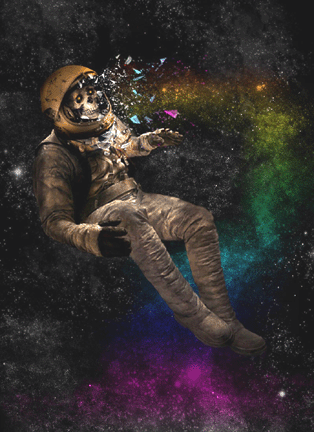 After measuring radiation on the moon for the first time, scientists say a lunar base should be built underground to protect astronauts, Business Insider, AYLIN WOODWARD, SEP 30, 2020,
- NASA recently unveiled the plan for its Artemis program, a series of missions that would return astronauts to the moon.
- A new study found how much radiation astronauts are exposed to on the lunar surface: a daily dose about 200 times as great as on Earth.
- NASA wants to build a base on the moon, but the new data suggests it’d be safest to bury such a base under 2.5 feet of moon dirt to protect astronauts from radiation.
But a new study found that any astronauts who go there would face levels of radiation nearly three times as high as what the astronauts on the space station deal with. Long-term exposure to enough of this cosmic radiation poses significant health risks, including cataracts, cancer, and diseases of the central nervous system.
The new research, published last week in the journal Science, calculated for the first time what a moonwalker’s daily dose of radiation would be.
“If you think about people staying on the moon for extended periods of time — say, on a scientific research station for a year or two — then these levels start getting problematic,” Robert Wimmer-Schweingruber, an author of the new study, told Business Insider.
The solution, he said, would be to build any lunar base beneath the moon’s surface.
The first study to calculate radiation on the moon
Apollo astronauts carried radiation-measuring instruments on their missions in the 1960s and ’70s, but those dosimeters could tell scientists only the total amount of radiation the astronauts were exposed to throughout their time in space, from blasting off to landing, not just on the moon.
Astronauts on the moon, meanwhile, face a daily radiation level five to 10 times as high as transatlantic fliers, since the moon doesn’t have the shield that Earth does.
When looking at impact of coronavirus, we can’t forget the long-term health effects
 the emergence of symptoms down the track is a reminder of why it’s important to take precautions
ABC Health & Wellbeing, By health reporter Olivia Willis-28 Sept 20, It can be tempting to think of COVID-19 patients as falling into one of two categories.
Category 1: young, otherwise healthy individuals who experience mild symptoms and recover at home.
Category 2: older people and people with pre-existing health conditions who become seriously ill and go to hospital.
While it’s true that there is a spectrum of risk when it comes to severity of disease, it’s become increasingly clear that not everyone fits neatly into one of these categories.
For many people, the labels of “mild” or “severe”, “sick” or “recovered” are blurred by their experience of ongoing, sometimes debilitating symptoms weeks or months after they first were infected.
Both anecdotal reports and a growing body of research suggest persistent fatigue, breathlessness, “brain fog” and muscle aches, among other symptoms, are plaguing people some time after their infection has cleared.
So what do we know about the lingering health effects of coronavirus, and how concerned should we be?
Health effects can linger for months
It is difficult to say what proportion of people with COVID-19 face medium- to long-term health impacts given how new the virus still is, said Kirsty Short, a virologist at the University of Queensland.
“It’s definitely happening, I just don’t think we have a grip on how common it is,” Dr Short said.
In July, researchers in Italy found almost 90 per cent of patients with acute infections were still experiencing symptoms two months later.
Research from the US and UK, following a much broader group of people affected by COVID-19, suggests symptoms persist in about 10 to 15 per cent of cases.
In the same way the virus can sometimes cause serious illness in young, otherwise healthy individuals, lingering symptoms appear to affect people of all ages, including those with no underlying health conditions.
Lasting effects are also not restricted to those who experience severe illness when they’re first infected.
People who are asymptomatic or have a mild case of COVID-19 can also face prolonged illness. Sometimes, these symptoms take weeks or months to appear.
The virus affects multiple organs
SARS-CoV-2 is primarily thought of as a respiratory virus, but the damage caused by COVID-19 is not always restricted to the lungs.
The virus binds to the body’s ACE2 receptors, which are found in large numbers in the respiratory tract, but also in the heart, blood vessels, kidneys, liver and gastrointestinal tract.
In some cases, it may be that the virus itself is causing damage to the body’s organs.
But researchers suspect it’s high levels of inflammation in the body — triggered by the immune system trying to get rid of the virus — that’s wreaking havoc, even after the infection has cleared.
“Most likely, they’ve had this overwhelming inflammatory response — which we know happens in COVID-19 patients — and then that’s had knock-on effects.”
COVID-19 can damage multiple organ systems, including:
- Lungs: Lungs can be damaged when the virus enters the cells of the airways. It can cause scarred, stiff tissue that makes it difficult for the lungs to do their job of oxygenating the blood — leaving people breathless.
- Heart: The virus can cause inflammation of the heart muscle or heart failure when the organ doesn’t pump blood as well as it should. The heart can also fail from lack of oxygen.
- Brain: If the virus enters the brain, it can cause a sudden and severe infection. Neurological symptoms may also be a result of inflammation in the brain or strokes caused by blood clots……………..
A timely reminder
There are multiple studies now underway to investigate whether COVID-19 leaves a lasting health impact, and if so, to what extent.
Dr Short said without long-term studies, it’s difficult to know how concerned we should be about COVID-19 in contrast to other existing viral infections.
“The question is: If you took a virus of similar severity and similar duration, would you also see long-term complications?” she said.
“It’s very possible that we’re just seeing this with SARS-COV-2 because of the sheer numbers of people being infected.”
Even still, the emergence of symptoms down the track is a reminder of why it’s important to take precautions………. https://www.abc.net.au/news/health/2020-09-26/coronavirus-covid-health-effects-can-linger/12705022
Radiation exposure on the moon is nearly three times that on the International Space Station
 Radiation exposure on the moon is nearly three times that on the ISS, 25 September 2020
By Layal Liverpool Astronauts on the moon would face nearly three times more radiation exposure than those aboard the International Space Station, which could make long-term missions riskier than thought.
“Once you’ve survived being on the moon and come back to Earth, radiation damage is what stays with you for the rest of your life and that’s why this is a critical measurement,” says Robert Wimmer-Schweingruber at the University of Kiel in Germany.
Wimmer-Schweingruber and his team analysed several weeks of data acquired by China’s Chang’e … (subscribers only) https://www.newscientist.com/article/2255545-radiation-exposure-on-the-moon-is-nearly-three-times-that-on-the-iss/#ixzz6Z61souv7
Medical experts testify to court on Julian Assange’s precarious mental health
Medical evidence was produced in Julian Assange’s extradition hearing yesterday detailing the terrible harm done to the heroic journalist by a decade of state-orchestrated persecution.
The day was given over to the examination of Professor Michael Kopelman who testified to Assange’s mental health. Kopelman is a psychiatrist and Emeritus Professor of Neuropsychiatry at Kings College London. He has given expert evidence in multiple extradition cases on behalf of both the defence and the prosecution. In assessing Assange, he conducted seventeen visits in 2019 and additional visits in 2020, constructed a “full family history” and a “full personal psychiatric history,” and carried out “interviews with his family and lifelong friends.”
His findings constitute a clear bar to Assange’s extradition to the United States. Under Section 91 of the UK Extradition Act (2003), extradition is prohibited if “the physical or mental condition of the person is such that it would be unjust or oppressive to extradite him.”
Under Section 87, extradition is prohibited if it is incompatible with the European Convention on Human Rights (ECHR). Article 3 of the ECHR states, “No one shall be subjected to torture or to inhuman or degrading treatment or punishment.”
Medical evidence speaking to these bars has played a critical role in previous US-UK extradition hearings, for example in the case of Lauri Love. The risk of notoriously poor conditions in US prisons exacerbating mental illness is an important factor.
Assange’s case meets these criteria. The details in today’s WSWS coverage are being reported consistent with the “sensitivity” called for by defence lawyer Edward Fitzgerald QC, on behalf of his client. Nonetheless they make overwhelmingly clear the “unjust and oppressive” treatment to which Assange has already been subjected.
Assange, Kopelman told the court, has experienced periods of serious mental illness in his earlier life. Since being confined to the Ecuadorian Embassy and then Belmarsh maximum security prison, these issues have resurfaced and worsened. Assange has suffered symptoms of severe and recurrent depression. Those symptoms have included “loss of sleep, loss of weight, a sense of pre-occupation and helplessness” and auditory hallucinations which Kopelman summarised as “derogatory and persecutory.”
They have also included “suicidal preoccupations.” Kopelman told the court, “There are… an abundance of known risk factors in Mr Assange’s case” and that Assange has “made various plans and undergone various preparations.” He gave his opinion that there was a “very high risk of suicide.”
These symptoms and risks, Kopelman explained, are exacerbated by an anxiety disorder and Post Traumatic Stress Disorder (PTSD) and by a diagnosis of Asperger’s syndrome. Kopelman cited a paper by world-leading autism expert Dr Simon Baron-Cohen which found that the lifetime experience of suicidal thoughts in those with Asperger’s “was more than nine times higher than in the general population in England.”
Explaining the impact of the US government’s persecution, Kopelman said, “The risk of suicide arises out of the clinical factors of depression and the other diagnoses, but it is the imminence of extradition and/or an actual extradition that will trigger the attempt, in my opinion.”
If Assange were to be incarcerated in the US and segregated from other prisoners, Kopelman gave his opinion that the WikiLeaks founder would “deteriorate substantially” and see an “exacerbation” of his “suicidal ideas.” This would “amount to psychological harm and severe psychological suffering.”
Kopelman’s evidence confirms the warnings made since November 2019 by Doctors for Assange, representing hundreds of medical professionals from around the world, that Assange is suffering “psychological torture” and “could die in prison.” It underlines in distressing detail UN Special Rapporteur on Torture Nils Melzer’s comment regarding Assange’s treatment that “psychological torture is not torture-lite. Psychological torture aims to wreck and destroy the person’s personality and identity… to make them break.”
Assange’s year-and-a-half long incarceration at Belmarsh has been designed to achieve this objective. It has profoundly undermined, in numerous ways, his legal right to prepare his defence against extradition. Kopelman reported yesterday that Assange has repeatedly complained that the medication taken for his mental health has caused him “difficulty in thinking, in memorising [and] in concentration.”
During the morning’s cross examination, Kopelman forcefully rebuffed prosecution lawyer James Lewis QC’s challenge to his credentials. He said solicitors had called him several times in recent years saying that Lewis himself was “keen to have your services” in an extradition case.
In the afternoon, cross-examination continued, with Lewis challenging the veracity of Kopelman’s diagnosis, and claiming that Assange’s appearance was “wholly inconsistent with someone who is severely or moderately-severely depressed and with psychotic symptoms.”
Kopelman replied, “Could we go back a step?” Having seen Assange between May 30 and December [2019], “I thought he was severely depressed, suicidal and was experiencing hallucinations.”………….. https://www.wsws.org/en/articles/2020/09/23/assa-s23.html
Compensation for some nuclear workers with mesothelioma .
|
Mesothelioma Compensation Center Urges the Family of a Navy or Civilian Nuclear Power Worker with Mesothelioma to Call Attorney Erik Karst of Karst von Oiste – Compensation Might Be in Excess of a Million Dollars, https://www.prnewswire.com/news-releases/mesothelioma-compensation-center-urges-the-family-of-a-navy-or-civilian-nuclear-power-worker-with-mesothelioma-to-call-attorney-erik-karst-of-karst-von-oiste—compensation-might-be-in-excess-of-a-million-dollars-301136249.html NEWS PROVIDED BY
Mesothelioma Compensation Center , Sep 23, 2020, HOUSTON, Sept. 23, 2020 /PRNewswire/ — The Mesothelioma Compensation Center is urging the immediate family of a Navy Veteran or civilian nuclear power worker who has just been diagnosed with mesothelioma to please call attorney Erik Karst of the law firm of Karst von Oiste at 800-714-0303. Compensation for a Navy Veteran or civilian nuclear power plant worker with mesothelioma could top the list when it comes to a financial compensation claim. Because many civilian nuclear power plant workers learned their craft on a nuclear-powered navy ship or submarine their asbestos exposure might have spanned decades. Financial compensation for a Navy Veteran or civilian nuclear power worker might exceed a million dollars.“We have endorsed, and we strongly recommend attorney Erik Karst because he and his amazing team at Karst von Oiste will work overtime for their clients. What Erik Karst and his team at Karst von Oiste do is ‘work a case’ which means they work overtime to answer the questions related to how, where and when the person with mesothelioma was exposed to asbestos. It is this vital information that becomes the basis for a mesothelioma compensation claim-and it is vitally important.”Do not let the Coronavirus stop a person with mesothelioma from pursing their financial compensation. Attorney Erik Karst and his colleagues now have the capabilities to work around the Coronavirus with conference calls and video conferences to make it easier on their client-and their client’s family. Erik Karst and his colleagues at the law firm of Karst von Oiste want their clients to receive the best possible financial compensation. For direct access to attorney Erik Karst of the law firm of Karst von Oiste please call 800-714-0303 anytime.” www.karstvonoiste.com/Some of the largest nuclear power plants in the US include:
For a list of all operating nuclear power plants in the United States please refer to the following website: https://www.nrc.gov/reactors/operating/list-power-reactor-units.html. The Mesothelioma Compensation Center specializes in assisting specific types of people who have been diagnosed with mesothelioma. The Center’s top priority is assisting US Navy Veterans, shipyard workers, oil refinery workers, public-utility workers, chemical plant workers, manufacturing workers, power plant workers, plumbers, welders, electricians, millwrights, pipefitters, boiler technicians, machinists, nuclear power plant workers, hydro-electric workers or oil and gas field production workers who have been diagnosed with this rare cancer caused by asbestos exposure. In most instances a diagnosed person with mesothelioma was exposed to asbestos in the 1950’s, 1960’s, 1970’s, or 1980’s. https://MesotheliomaCompensationCenter.Com According to the CDC the states indicated with the highest incidence of mesothelioma include Maine, Massachusetts, Connecticut, Maryland, New Jersey, Pennsylvania, Ohio, West Virginia, Virginia, Michigan, Illinois, Minnesota, Louisiana, Washington, and Oregon. However, a Nuclear Navy Veteran or a nuclear power worker with mesothelioma could live in any state including California, New York, Florida, Texas, Illinois, Kentucky, Tennessee, Mississippi, Georgia, Alabama, Wyoming, Colorado, New Mexico, Nevada, Utah, Arizona, Idaho, or Alaska. www.karstvonoiste.com/ For more information about mesothelioma please refer to the National Institutes of Health’s web site related to this rare form of cancer: Contact: |
|
Grief in Western America, as inequities, wildfires, and climate change collide
Climate change is making wildfires bigger, fiercer, and deadlier, fueling a new kind of despair on the West Coast—and beyond. Wired 16 Sept 20, GRIEF HAS SETTLED over the western US, along with the thick haze of smoke pouring from dozens of massive wildfires up and down California, Oregon, Colorado, and Washington. It’s grief over the thousands of structures and at least 33 lives lost so far; grief over another villain conspiring with Covid-19 to lock people indoors; grief that the orange-hued dystopia of Blade Runner is now a reality in smoky San Francisco; grief over losing any sense of normalcy, or indeed a clear future.Enveloping all of those emotions—packaging them into an overwhelming feeling of doom—is climate grief, as psychologists call it, the dread that humans have thoroughly corrupted the planet, and that the planet is now exacting its revenge. Wildfires were around before human-made climate change, but by pulling a variety of strings, it’s made them bigger, fiercer, and ultimately deadlier, creating what fire historian Steve Pyne has dubbed the Pyrocene, an Age of Flames.
By burning fossil fuels, we’ve primed the landscape to burn explosively, and by pushing human communities deeper and deeper into what was once wilderness, we’re provided plenty of opportunities for ignition—and plenty of opportunities for grief as these forces catastrophically combine.
“So much is out of our control,” says Adrienne Heinz, a research psychologist at the Stanford University School of Medicine, who studies the effects of disasters like wildfires and the Covid-19 pandemic. “We lose our sense of personal agency over how we will live—the decisions are made for us.”
It shifts from grief over what’s happening with our climate—can we feel safe in our own communities?—to despair, the differentiator being that you don’t feel like tomorrow is going to be any better than today,” Heinz adds. “That’s where it gets really dark.”
For the people of Northern California, an exhausting parade of massive wildfires have marched across the landscape over the past several autumns, with many people having to evacuate several years in a row. Last October, the Kincade Fire burned 120 square miles. The November before, the Camp Fire destroyed the town of Paradise and killed 86 people. And in October 2017, the Tubbs Fire obliterated 5,600 structures and killed 22.
“The catchphrase—kind of with a bitterness around here—is, ‘This is the new normal,’” says Barbara Young, a licensed marriage and family therapist in Healdsburg, north of San Francisco, who had to evacuate last month. “And so with that, I think it’s implied that this isn’t going away—our climate is changing. These aren’t flukes, this is the trend. And I think everyone is very clear that this is not a one-off. This is every year now.” ……………
Thus inequities, wildfires, and climate change collide. Each massive problem on its own is difficult for the human mind to parse, much less all three together. “I am doing a lot of work with people on really increasing psychological self-care, spiritual self-care, physical self-care, and to help that fatigue,” says Young, the therapist in Healdsburg. “And I do think that is connected with climate grief. Finally, maybe we are forced to see how interconnected everything is.” https://www.wired.com/story/climate-grief-is-burning-across-the-american-west/
In tropical areas, increasing heat and humidity will make life almost unbearable
 Climate explained: will the tropics eventually become uninhabitable? https://theconversation.com/climate-explained-will-the-tropics-eventually-become-uninhabitable-145174 James Shulmeister– 16 Sept 20, Professor, School of Earth and Environmental Sciences, University of Canterbury What is the impact of temperature increases in the tropics? How likely is it that regions along the Equator will be uninhabitable due to high wet bulb temperatures such as 35℃ and more in places like Singapore? Do we have models that suggest how likely this is and at what time frames?More than 3.3 billion people live in the tropics, representing about 40% of the world’s population. Despite some areas of affluence, such as Singapore, the tropics are also home to about 85% of the world’s poorest people and are therefore particularly susceptible to the impacts of climate change. Climate explained: will the tropics eventually become uninhabitable? https://theconversation.com/climate-explained-will-the-tropics-eventually-become-uninhabitable-145174 James Shulmeister– 16 Sept 20, Professor, School of Earth and Environmental Sciences, University of Canterbury What is the impact of temperature increases in the tropics? How likely is it that regions along the Equator will be uninhabitable due to high wet bulb temperatures such as 35℃ and more in places like Singapore? Do we have models that suggest how likely this is and at what time frames?More than 3.3 billion people live in the tropics, representing about 40% of the world’s population. Despite some areas of affluence, such as Singapore, the tropics are also home to about 85% of the world’s poorest people and are therefore particularly susceptible to the impacts of climate change.
The tropics are expected to experience rising temperatures and changes to rainfall, and the question is whether this could make this region uninhabitable. How would this happen? Heat stressHumans regulate their body temperature in warm conditions through sweating. The sweat evaporates and cools the skin. But if conditions are humid, sweating and evaporation are much less effective. Humans can survive and function in quite high temperatures if humidity is low, but as humidity increases our ability to function decreases rapidly. This effect is measured by a heat stress index which shows the apparent temperature you feel under different relative humidity conditions. From a human health point of view, the wet bulb temperature is critical. This is the temperature a thermometer covered in a wet cloth would measure, and it reflects the maximum amount of cooling that can be achieved by evaporation. High wet bulb temperatures are more problematic to human health than high absolute temperatures. Wet bulb temperatures above 35℃ are life-threatening because they cause hyperthermia, which means the body cannot cool down and the internal body temperature exceeds 40℃. Climate modelling predictions used by the Intergovernmental Panel on Climate Change (IPCC) for the period from 2080-2100 suggest warming in the tropics of about 1.6℃ under mid-range emissions scenarios and up to 3.3℃ under high emissions scenarios, with error margins of about 0.5℃ on both predictions. Different parts of the world respond in different ways to warming from greenhouse gas emissions. The projected warming in the tropics represents about 40% of the expected temperature rise in the Arctic. High-latitude regions – far north or south of the Equator – warm more rapidly than the global average because excess heat in the tropics creates a temperature and pressure gradient. This drives heat up to higher elevations and higher latitudes through an atmospheric circulation called the Hadley cell. The stronger the gradient, the more heat is exported. Hot in the cityThere is one additional factor: urbanisation. Singapore is a good place to look at actual climate change in the tropics. Records from Singapore indicate temperatures have increased by 1.1℃ over 42 years to 2014. This is nearly twice the average global rate of warming over recent decades and is opposite to expectations. The difference appears to be due to a heat island effect caused by the city itself. This is important because changes in land use amplify background global climate change and put tropical cities at greater risk of extreme heat. As populations are concentrated in cities, this increases the risk to human health. The mean average temperature for Singapore is about 27℃, whereas Jakarta in Indonesia is slightly warmer. At the scale of predicted mean annual temperature change, neither of these cities would become uninhabitable. But even a small temperature increase would make life more challenging. This is made worse in at least some parts of the tropics, because total rainfall is increasing, suggesting a long-term rise in humidity. For example, average rainfall in Singapore increased by more than 500mm from 2,192mm in 1980 to 2,727mm in 2014. Deadly heatPeople working outdoors are at higher risk, as are vulnerable populations, including the elderly. Under the IPCC’s high-emission trajectory, heat-related deaths in Jakarta in August are expected to rise from about 1,800 in 2010 to nearly 27,000 in 2050. Even allowing for a significant increase in elderly people as the Indonesian population ages, this means about 15,000 excess deaths in this month. Estimates under high-emission predictions for the tropics and mid-latitudes suggest about a 40% decline in the ability to undertake manual work during the warmest month by 2050. These impacts will be stronger in the seasonally wet tropics (such as the Northern Territory of Australia), where more extreme warming is expected than in the equatorial zone. Predictions for Darwin, in northern Australia, suggest an increase in days with temperatures above 35℃ from 11 days a year in 2015 to an average of 43 days under the mid-range emission scenario (IPCC’s RCP4.5 scenario) by 2030 and an average of 111 (range 54-211) days by 2090. Under the higher emission scenario (IPCC’s RCP8.5), an average of 265 days above 35℃ could be reached by 2090. In summary, while absolute temperatures are expected to rise more slowly in the tropics when compared with higher latitudes and polar regions, the combination of heat and rising humidity will make life challenging, but not impossible. |
|
The coronavirus pandemic and the increased safety risks for nuclear reactors

Nuclear Alert: NRC & Nuke Safety In the Time of COVID-19 https://www.fairewinds.org/demystify/nuclear-alert-nrc-amp-nuke-safety-in-the-time-of-covid-19 September 14, 2020 By The Fairewinds Crew
First off, we would like to preface this by saying that the world simply cannot afford a meltdown or nuclear disaster on top of the already traumatic times wrought by Pandemic 2020.
Did you know that nuclear plants close for scheduled refueling every 18-months, meaning that 1/3 of the operating reactors are off-line each spring and fall? For the record, more than three dozen reactors had planned to do so in Spring 2020. The Nuclear Regulatory Commission (NRC) defines this rather temporary closing as an outage. During these outages, used-up nuclear fuel is replaced, and critical safety inspections are performed.
You may remember, that in early May, Maggie wrote extensively about the numerous safety risks to all of us if the nuclear industry continued operating these reactors during the COVID-19 Pandemic without implementing critical safety protocols and procedures. Along with 86 other organizations from all over the U.S., Fairewinds Energy Education nonprofit cosigned a letter to Vice President Pence and the COVID-19 Task Force detailing significant safety risks that must be addressed. You can read more about that letter and the increased safety hazards here. To date, we have received no response!
When the COVID-19 Pandemic began in late February, atomic reactor operators and owner corporations begged the NRC for special exemptions from regulatory requirements to implement critical safety and security inspections for up to two years! And, in an extreme example of regulatory capture, the NRC has approved all the corporate requested safety inspection delays, handing them out like candy to eager Trick-or-Treaters on Halloween! We know you have heard this before from the Crew at Fairewinds Energy Education, however, let us emphasize again that the federal laws [called statutes] that authorize the NRC, chartered it to protect ‘public health and safety’. Letting the industry continue to ignore critical safety inspections risks public health and safety!
During the past decade, the success in the growth of renewables has caused the nuclear industry to fight tooth and nail to keep operating even though nuclear power plants are much more expensive to operate than sustainable energy sources, and nukes charge much higher rates to consumers. Additionally, the risk of a disaster or other calamity has increased dramatically due to the old age of all current U.S. operating reactors. Instead of moving to solar and wind and shutting down these decrepit reactors, the energy and utility corporations are trying to reduce their higher operating costs by laying off employees and pushing the people remaining to work harder to save money and continue stockholder profit earnings.
Rather than slowing down these Spring refueling outages and allowing more time for inspections and repairs due to the extra burden the COVID-19 Pandemic has put on their employees and contractors, America’s nuclear monopoly has decided to risk ‘public health and safety’ – you remember what the federal law states – by reducing the amount of safety inspections the staff at each reactor was scheduled to perform. We agree that squeezing three or more people into a confined space for an inspection could be a recipe for COVID-19 transmission. However, slowing the inspection down and using fewer people at a time means having the reactor offline [shutdown] for a longer amount of time. In other words, the truth is that any operating schedule delay reduces each corporation’s profits.
Most atomic power reactors earn $1Million dollars in revenue every day. In addition, vice presidents, plant managers, and other corporate functionaries are on special bonus plans equivalent to between 40 and 70% of their salaries in a special year-end bonus. Such huge sums create a unique incentive for nuclear corporate executives to keep the outages as short as possible. When a vice president earns about $500,000, they will receive a $350,000 year-end bonus for meeting corporate goals, especially a short outage. We tend to notice that bonuses of that size cloud one’s judgment. Furthermore, we are reminded of Upton Sinclair when he so aptly said, “it is difficult to get a man to understand something, when his salary depends on his not understanding it.”
Is the risk of a disaster and a major radiation release to the surrounding community worth the extra millions of dollars earned by the corporate owner for starting these reactors up too soon? We don’t believe so.
Despite there being an abundance of available electricity without even using the atomic chain-reaction, the nuclear power operators and their corporate owners as well as the nuclear industry lobby are claiming that delayed testing will not cause a disaster and no nearby communities will be damaged or deal with the radioactive exposure to its residents.
Safety risks obviously increase because critical inspections are being delayed.
Fukushima’s citizen radiation testers still on the job.
Fukushima Has Turned These Grandparents Into Avid Radiation Testers, NPR, Kat Lonsdorf (@lilkat_bigworld) September 11, 2020 Takenori Kobayashi lugs a garbage bag full of soil across a parking lot to an unmarked office. His wife, Tomoko, holds the door to a tiny work space with lab equipment and computers set up. On the edge of Fukushima’s former nuclear exclusion zone, this is the place the couple likes to call their “grandma and grandpa lab.”
A handful of other residents help run the lab, and throughout the years, experts from nearby universities have come to teach them all about the different equipment and radiation science.
“All the grandparents here are radiation professionals now,” Takenori, 71, says with a smile……..
1 This Month



4 August – WEBINAR – Hiroshima & Nagasaki: Nuclear Bombs Never Again
Tuesday, Aug. 4 at 5 pm PT / 8 pm ET.
Aug 5, 2026 10:00 AM in Australia/Melbourne
Join the Nuclear Bombs Never Again webinar on August 4th at 5pm Pacific Time / 8pm Eastern Time / 9am Japan Standard Time.
Cross generational voices at the intersection of Japan-Korea-US policy and militarization will share their lived experiences, nuclear impacts in these contexts, anti-war strategies, and actions you can take to advocate for a world with Nuclear Bombs Never Again. This 75-minute event is co-hosted by WILPF US and Korea Peace Now.
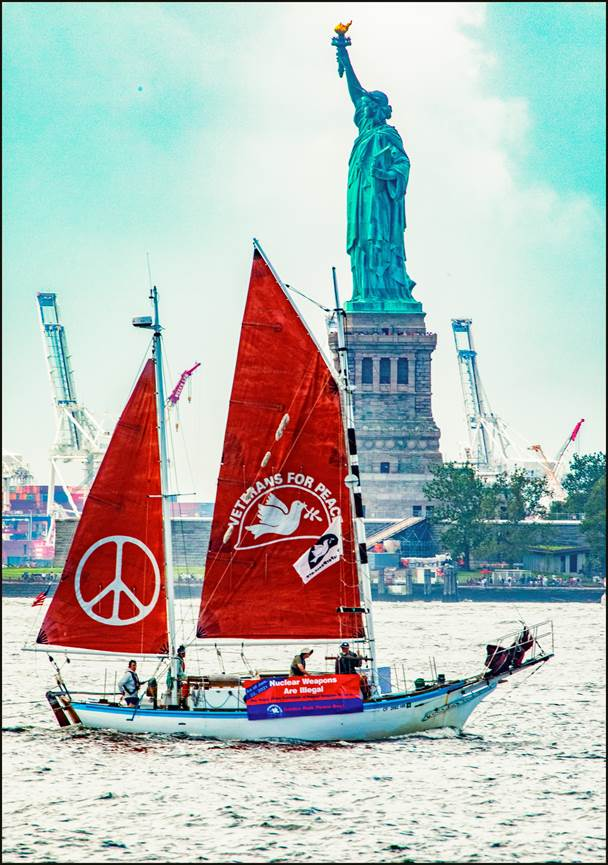
22,000+ miles voyaging for nuclear disarmament
and a radiation-free environment https://vfpgoldenruleproject.org/
To see nuclear-related stories in greater depth and intensity – go to https://nuclearinformation.wordpress.com
-
Archives
- July 2026 (276)
- June 2026 (287)
- May 2026 (306)
- April 2026 (356)
- March 2026 (251)
- February 2026 (267)
- January 2026 (308)
- December 2025 (358)
- November 2025 (359)
- October 2025 (375)
- September 2025 (257)
- August 2025 (319)
-
Categories
- 1
- 1 NUCLEAR ISSUES
- business and costs
- climate change
- culture and arts
- ENERGY
- environment
- health
- history
- indigenous issues
- Legal
- marketing of nuclear
- media
- opposition to nuclear
- PERSONAL STORIES
- politics
- politics international
- Religion and ethics
- safety
- secrets,lies and civil liberties
- spinbuster
- technology
- Uranium
- wastes
- weapons and war
- Women
- 2 WORLD
- ACTION
- AFRICA
- Atrocities
- AUSTRALIA
- Christina's notes
- Christina's themes
- culture and arts
- Events
- Fuk 2022
- Fuk 2023
- Fukushima 2017
- Fukushima 2018
- fukushima 2019
- Fukushima 2020
- Fukushima 2021
- general
- global warming
- Humour (God we need it)
- Nuclear
- RARE EARTHS
- Reference
- resources – print
- Resources -audiovicual
- Weekly Newsletter
- World
- World Nuclear
- YouTube
-
RSS
Entries RSS
Comments RSS
 nuclear-news