Why climate change has the potential to cause more pandemics
 Why climate change has the potential to cause more pandemics, AFR, Tom McIlroy, Political reporter,
  Sep 9, 2020,
Biosecurity leaders and Nobel prize winner Peter Doherty are lobbying the federal government to reduce the risk of animal-borne diseases caused by environmental degradation and climate change.
A group of former chief veterinary officers and senior government advisers have asked for renewed action to limit greenhouse gas emissions and have warned that a repeat of the COVID-19 pandemic could come about from the damage to natural ecosystems and increased contact between humans and animals carrying potentially deadly pathogens….. (subscribers only) https://www.afr.com/politics/federal/why-climate-change-has-the-potential-to-cause-more-pandemics-20200908-p55t
Central Asia’s toxic nuclear legacy
 According to Kyrgyz official data, the gamma radiation on tailings pit surfaces are within 17-60 mR/hr; however, in the damaged areas, radiation levels reach 400-500 mR/hr. An exposure to 100 mSv a year (a millisievert, mSv, is equal to 100 milliroentgens, mR) or 10,000 mR is the point where an increase in cancer is clearly evident. At 400-500 mR/hr this would be achieved in 20-25 hours, or just one day. Radionuclides and heavy metals from these tailing pits and dumps are seeping into the surface and groundwater, polluting water and farmland and increasing the risk of cancer for local people.
Birth anomalies are an additional indicator of environmental radioactive contamination. A study by the Institute of Medical Problems showed that the incidence of birth defects in Mailuu-Suu was three times higher than in the country’s second largest city of Osh. Studies have correlated birth defects to the distance of the parents’ residences from radioactive waste sites. Polluted water is the major factor causing the development of congenital malformations, according to research by the Institute of Medical Problems.
Mailuu-Suu: Cleaning up Central Asia’s toxic uranium legacy https://www.thethirdpole.net/2020/09/02/mailuu-suu-cleaning-up-central-asias-toxic-uranium-legacy/
Countries must set aside territorial disputes and work together to clean up radioactive waste seeping into rivers and farmland in the Ferghana Valley – causing an environmental and health catastrophe for people living in the region Janyl Madykova, September 2, 2020 Political tensions between countries in Central Asia have intensified since the collapse of the Soviet Union. Along with border conflicts and water disputes, problems have arisen from residual radioactive waste located in the Kyrgyz town of Mailuu-Suu in the Ferghana Valley, which has caused widespread pollution of river and farmland, and led to major impacts on the health and economy of people in Kyrgyzstan and Uzbekistan.
Industrial-scale uranium mining began in Mailuu-Suu during the Soviet era in 1946 and lasted until 1968. Uranium ore from Europe and China was also processed in Mailuu-Suu during this time.
As a result, the small town of 24,000 people is now surrounded by about 3 million cubic metres of uranium waste left in 23 tailings pits and 13 dumps. These sites have contaminated the Mailuu-Suu river, a major tributary of the Syr Darya which flows through Kyrgyzstan and into Uzbekistan, carrying radioactive waste into the densely populated Ferghana Valley.
The biggest problem is that earthquakes, landslides and heavy rainfall events have intensified in recent years, destroying uranium tailing storage sites along the river and mountain slopes, contaminating surrounding areas. A number of international organisations have worked to prevent further disasters in Mailuu-Suu. The World Bank has allocated more than USD 11 million to clean up uranium tailings. The European Commission launched an initiative in 2015 to remediate the most dangerous sites in Kyrgyzstan, Tajikistan and Uzbekistan.
However, the pollution remains, and Central Asian countries must cooperate to prevent further environmental disasters in the Ferghana Valley, as well as mitigate economic damage and resolve political issues.
A town built on radioactive waste
According to the state surveys there are 92 radioactive and toxic storage facilities across Kyrgyzstan today. The most dangerous of these are the Mailuu-Suu uranium sites, because of numerous hazards threatening the tailing pits. Were these tailing pits destabilised, they would have potentially catastrophic environmental consequences for Kyrgyzstan and the neighbouring countries of Uzbekistan and Kazakhstan, with the radioactive waste contaminating the river as well as the soil and irrigated farmland surrounding it.
Uranium was first discovered in the region in 1933, and within 20 years 10,000 tonnes of uranium oxide was extracted in Mailuu-Suu. Residual radioactive waste in southern Kyrgyzstan currently poses a major environmental threat to the densely populated parts of the Ferghana Valley, home to about 14 million people.
Landslides are the major risk. There are more than 200 landslide-prone locations around Mailuu-Suu. There was little such threat in the 1940s, but landslide activity has intensified since 1954 due to increased rainfall. Landslides in Mailuu-Suu occurred several times in 1988, 1992 and 2002, damaging infrastructure and altering water flow. The most dangerous landslide is Koi-Tash, which happened in 2017 and could block the riverbed and spread radioactive contamination down the river.
The 1950s saw one of the most salient examples of the danger posed by vulnerable waste dumps. In April 1958, as a result of rainfall and high seismic activity, an alluvial dam collapsed into tailings pit #7 in Mailuu-Suu, pushing more than 400,000 cubic metres of radioactive waste into the Mailuu-Suu river, which then spread 30-40 km downstream in irrigated farmland in Uzbekistan. The effects of this disaster have lasted to this day, with the radioactive contamination of the river and surrounding soil and vegetation causing major health problems and fatalities. Such disasters also heighten tensions between the regional states. Continue reading
Workers and families sue U.S. Department of Energy contractors over illnesses from work at Piketon-area nuclear plant

 Former employees, families sue companies working on Piketon-area nuclear plant, https://www.dispatch.com/news/20200906/former-employees-families-sue-companies-working-on-piketon-area-nuclear-plant By Beth Burger
The Columbus DispatchThe lawsuit, filed last week, alleges workers and their families became ill due to the actions of U.S. Department of Energy contractors. The suit seeks a medical monitoring program to evaluate the multi-generational impact of radioactive contamination.
A lawsuit filed on behalf of former nuclear employees and their families accuses U.S. Department of Energy contractors of “poisoning workers and the people, land, air and water for miles” around the former Portsmouth Gaseous Diffusion Plant that was in southern Ohio.
The actions of DOE’s contractors released radioactive isotopes that “have created a situation akin to a creeping Chernobyl” and resulted in “injuries, sickness, disease, including cancers, damage to DNA, death, loss of and damages to property, and reduction in property values,” according to the lawsuit filed Thursday in U.S. District Court in Columbus.
The contamination likely spread in Pike, Scioto, Lawrence, Vinton and Adams counties in Ohio, according to the lawsuit.
Though the DOE is not named as a defendant in the case, its contractors are, including: Centrus Energy Corp., the United States Enrichment Corp., Lockheed Martin Corp., Uranium Disposition Services, BWXT Conversion Services, Mid-America Conversion Services, Bechtel Jacobs Co., Lata/Parallax Portsmouth LLC, FLUOR-BWXT Portsmouth LLC, Goodyear Tire and Rubber Co. and Martin Marietta Inc.
DOE spokeswoman Jessica Szymanski said Friday that the department does not comment on pending litigation.
The lawsuit is requesting a medical monitoring program that would evaluate the multi-generational impact of radioactive contamination.
“That is a major component of our request for relief,” said Nathan Hunter, one of the attorneys representing the plaintiffs, who noted that DNA damage could be transferred through generations.
There’s a workers’ compensation fund for nuclear workers, but that has failed the plaintiffs because of a host of issues, including falsified records, Hunter said.
The accusations are serious, and allege that DOE and the companies “actively deceived workers, the general public and regulators,” by suppressing critical information, including the release and spreading of nuclear poison, safety violations, arson, workplace exposures, and illegally transporting highly radioactive materials, as well as conspiring to destroy and falsify records.
Jeff Walburn worked in security at the plant for 31 years, and was hospitalized in 1994 because of damage to his lungs. He’s listed as a plaintiff.
“My life and family have been decimated by the nuclear scourge unleashed into the environment by these companies. These radioactive isotopes go into our bodies, creating cancers and genetic defects for generations,” he said in a released statement.
Charles “Chick” Lawson, a resident of Lucasville who was employed for 15 years in security and was the union safety representative and OHSHA investigator at the Portsmouth Gaseous Diffusion Plant, also is a plaintiff.
We are filing this lawsuit to expose the heinous actions and extensive cover-up by companies paid over a billion dollars to protect us,” he said in a released statement.
The lawsuit says that cancer rates in some affected areas are 700% greater than the national average. Scioto, Pike, Lawrence Vinton and Adams counties have the highest cancer rates in the state of Ohio, according to the lawsuit.
Pike County’s cancer rate was the second-highest in Ohio in 2019, according to the Ohio Department of Health. Vinton County had the highest rate of cancer, records show.
The lawsuit filed Thursday is the latest filed in connection to health issues associated with the former plant.
The dangerous and deadly toll of uranium mining, on Indian communities

Child with cerebral palsy, in uraniummining region Dungridih village. Jaduguda, photo by Subhrajit Sen.
[Photos] Suffering in the town powering India’s nuclear dreams. Mongabay, BY SUBHRAJIT SEN ON 4 SEPTEMBER 2020
- Uranium is a vital mineral for India’s ambitious nuclear power programme. Out of the seven states with uranium reserves, Jharkhand and Andhra Pradesh have currently operating mines.
- In Jharkhand’s Jaduguda region, which has India’s oldest uranium mines, local communities narrate stories of suffering due to degrading health and the environment. The government, however, denies any ill-impact of uranium mining on people.
- The Indian government is aiming to increase uranium exploration and mining.
- This photo essay features images taken between 2016-2019 of residents of villages around uranium mines in Jharkhand. Some of these photos contain sensitive content.
Anamika Oraom, 16, of village Dungridih, around a kilometre away from Narwa Pahar uranium mine in Jharkhand, wants to study. But she cannot, owing to severe headaches that come up periodically, triggered by a malignant tumour on her face. Sanjay Gope, 18, cannot walk and is confined to his wheelchair. Haradhan Gope, 20, can study, walk, talk, but owing to a physical deformity, his head is much smaller in proportion to his body.
There are many more, young and old, in the village Bango, adjacent to Jaduguda uranium mine in Jharkhand, whose lives and death highlight the ill-effects of uranium mining, say the villagers.
Uranium is a naturally occurring radioactive mineral and is vital to India’s nuclear power programme. At present (till August 31, 2020), India’s installed nuclear power capacity is 6780 megawatts (MW). The country aims to produce 40,000 MW of nuclear power by 2030.
The Uranium Corporation of India Limited (UCIL) is involved in the mining and processing uranium ore in the country. According to the UCIL, mining operations at Jaduguda began in 1967, and it is India’s first uranium mine.
In the 25-kilometre radius of Jaduguda, there are other uranium deposits at Bhatin, Narwa Pahar, Turamdih, Banduhurang, Mohuldih, and Bagjata. While UCIL claims that Jaduguda mine has created a large skill base for uranium mining and the mining industry, local communities point out that their lives and land have changed irreversibly.
The villagers complain that the hills surrounding Jaduguda, dug up to create ‘tailing ponds,’ have proven to be a severe health hazard. A tailing pond is an area where leftover material is stored after the excavated ore is treated to extract uranium. Communities argue that these ponds have led to groundwater and river contamination.
Namita Soren of village Dungridih said, “This radioactive element has become a part of our daily life.”
“Children are born with physical disabilities or people with cancer. But our sorrow doesn’t end there,” said Soren who had three miscarriages before giving birth to a child born with physical deformities.
Ghanshyam Birulee, the co-founder of the Jharkhandi Organisation Against Radiation (JOAR), said that villagers earlier marked certain forest areas as ‘cursed’ – a woman passing through the area was believed be affected by an evil gaze and suffer a miscarriage or people would feel dizzy. These areas coincided with the forest spaces around tailing ponds. In cultural translation, the regions surrounding tailing ponds became infested with ‘evil spirits.’ But as the people became more aware, they connected their misery to the mining operations.
A 2003 study by Tata Institute of Social Sciences emphasised that 18 percent of women in the region suffered miscarriages/stillbirth between 1998 and 2003, 30 percent reported some sort of problem in conception, and most women complained of fatigue and weakness.
When asked the reason for opposing the UCIL’s mining project, Birulee said, “Before mining started, people never used to have diseases like these – children were not handicapped, women were not suffering from miscarriages, people didn’t have tuberculosis or cancer. People had ordinary illnesses, cold and cough, that got cured by traditional medicines. But today, even the doctors are not able to diagnose diseases. It all emerged after uranium mining started.”
India has uranium reserves in Rajasthan, Jharkhand, Chhattisgarh, Meghalaya, Telangana, Andhra Pradesh, and Karnataka. It is currently operating mines in Jharkhand and Andhra Pradesh. The country has a detailed plan to become self-sufficient in uranium production by achieving a nearly ten-fold rise by 2031-32, including expansion from existing mines and opening new mines. However, to augment supply until then, it has signed a long-term contract with Uzbekistan (in 2019) to supply 1,100 metric tons of natural uranium ore concentrates during 2022 -2026. Similar agreements have been signed with overseas suppliers from various other countries like Canada, Kazakhstan, and France to supply uranium ore.
No help from the government or politicians
Birulee feels that the political class is aware of the problem but that has not translated into safeguarding villagers’ lives. “Whoever is elected from here – legislator or parliamentarian – has never raised our issue about radiation either in the state legislature or parliament. If they raise our issue, I am sure the government will take some action to resolve people’s issues,” said Birulee.
In March 2020, Bharatiya Janata Party leader Rajiv Pratap Rudy asked Prime Minister Narendra Modi in Lok Sabha about public health hazards due to India’s uranium mines.
Rudy asked whether the central government has reports of hazardous activities like radioactive slurry being stored in the open, causing health hazards to people residing in adjacent areas of uranium mines in the country, and, if so, the action taken on it.
While replying to the question, Minister of State for Personnel, Public Grievances and Pensions and Prime Minister’s Office, Jitendra Singh, refuted any such impact. ………..
Birulee reflects on the opposing conditions that he has witnessed. For him, it is impossible to leave behind his land, livelihood, and traditions. But for people close to the mines and tailing ponds, “the only solution is that from this region – from this radiation zone – people should be rehabilitated to a safer place. Else they’ll be surrounded by the same problems.”
Local livelihood options impacted
The people note that displacement and then deforestation for uranium mining robbed them of their land and livelihood, and later cursed them with health impacts.
Though the company and those in power deny any ill-impact on local ecology and livelihood, locals alleged that small-scale production of bidis is also hampered due to the low quality of tendu leaves. They suspect that the trees have been exposed to contaminated groundwater.
Villagers said that with expansion of mining large tracts of sal, sarjom, and teak trees are being wiped out. The trees are essential for the communities’ sacred rituals and traditional activities.
Ashish Birulee, photojournalist and member of JOAR, said that the route for transporting uranium ore is the same used by the public. He says the resulting pollution from the dust has a long-term impact on health and ecology.
Ashish adds that the mining company cannot ignore the most significant factor – the experience of people living in this area. “The experience of people is nothing less than any study or research. It can’t be denied. UCIL is not ready to admit that there are problems. It is because if it admits it would have to compensate people. Peoples’ experience shows that before 1967 there were no such issues, but it started after mining took off. If you look at the population of Jaduguda, there are a lot of people with disabilities. But if you go about 15 kilometres away, there are no such problems.”
“As far as a solution is concerned, once you start mining at any place, there is no solution. The company will mine here till the uranium ore exists. It has a lease for 45-50 years and after mining is over here, it will move to a new mine and extract resources. But the mining waste will be left here,” said Ashish. …… https://india.mongabay.com/2020/09/photos-suffering-in-the-town-powering-indias-nuclear-dreams/
Over 800 coronavirus cases among workers at Vogtle nuclear project, may increase costs and delays

|
Georgia nuclear project reports more than 800 COVID-19 cases to date, https://www.ajc.com/ajcjobs/georgia-nuclear-project-
 reports-more-than-800-covid-19-cases-to-date/P4BXNDI5ONHX7BSPCPTJYZNWYE/ By Matt Kempner, 20 Sept 20, The Atlanta Journal-Constitution, Georgia Power’s massive nuclear expansion project has had more than 800 workers who have tested positive for COVID-19 since the coronavirus pandemic began. reports-more-than-800-covid-19-cases-to-date/P4BXNDI5ONHX7BSPCPTJYZNWYE/ By Matt Kempner, 20 Sept 20, The Atlanta Journal-Constitution, Georgia Power’s massive nuclear expansion project has had more than 800 workers who have tested positive for COVID-19 since the coronavirus pandemic began.
In a new filing with the state, Georgia’s largest electric provider said it has weathered another wave of cases at the Plant Vogtle project underway south of Augusta, but that the number of new cases is receding again. Georgia Power said more than 700 of the workers who tested positive are now eligible to return to work, and that there were 109 active confirmed cases as of Friday. A spokesman declined to disclose if any workers have been hospitalized or died, citing privacy laws. About 7,000 workers are stationed on site after 2,000 were sent home in April in hopes of reducing the virus’ spread and dealing with growing absenteeism. The virus has been blamed for further slowing the project, which is already years behind schedule and billions of dollars over budget. Independent monitors for the Georgia Public Service Commission warned in June that even without considering the impact of COVID-19, Vogtle’s costs will rise by another $1 billion and the project is “highly unlikely” to have its two new reactors in service by November 2021 and November 2022, respectively. In a filing made public Monday, the company said it continues to plan for the scheduled operation dates. But Georgia Power said it recognizes “that the project may continue to experience challenges and that unanticipated events, or failure to meet the current plan, may require further revision to the site work plan, capital cost forecast, and/or project schedule.” In a July filing, the company said costs for its share of the project are expected to be $149 million over current forecasts and that it later may ask state regulators to charge customers for the increase. After coronavirus cases rose early in the pandemic, the project went several weeks without any new confirmed cases on the site, according to the company’s latest filing. But the confirmed cases grew again. Then, in recent weeks, “the site has followed the general trend in the region with a decline in the number of active cases.” |
|
|
Viruses could be harder to kill after adapting to warm environments
Viruses could be harder to kill after adapting to warm environments, https://www.eurekalert.org/pub_releases/2020-09/acs-vcb082820.php AMERICAN CHEMICAL SOCIETY 2 Sept 20, Enteroviruses and other pathogenic viruses that make their way into surface waters can be inactivated by heat, sunshine and other microbes, thereby reducing their ability to spread disease. But researchers report in ACS’ Environmental Science & Technology that global warming could cause viruses to evolve, rendering them less susceptible to these and other disinfectants, such as chlorine.Enteroviruses can cause infections as benign as a cold or as dangerous as polio. Found in feces, they are released into the environment from sewage and other sources. Their subsequent survival depends on their ability to withstand the environmental conditions they encounter. Because globalization and climate change are expected to alter those conditions, Anna Carratalà, Tamar Kohn and colleagues wanted to find out how viruses might adapt to such shifts and how this would affect their disinfection resistance.
The team created four different populations of a human enterovirus by incubating samples in lake water in flasks at 50 F or 86 F, with or without simulated sunlight. The researchers then exposed the viruses to heat, simulated sunlight or microbial “grazing” and found that warm-water-adapted viruses were more resistant to heat inactivation than cold-water-adapted ones. Little or no difference was observed among the four strains in terms of their inactivation when exposed to either more simulated sunlight or other microbes. When transplanted to cool water, warm-water-adapted viruses also remained active longer than the cool-water strains. In addition, they withstood chlorine exposure better. In sum, adaptation to warm conditions decreased viral susceptibility to inactivation, so viruses in the tropics or in regions affected by global warming could become tougher to eliminate by chlorination or heating, the researchers say. They also say that this greater hardiness could increase the length of time heat-adapted viruses would be infectious enough to sicken someone who comes in contact with contaminated water.
Low Dose Ionizing Radiation Shown to Cause Cancer in Review of 26 Studies
These results contradict the claims of the Japanese authorities who keep repeating that there is no impact observed below a dose of 100 mSv.
The US National Cancer Institute has dedicated an entire volume of its scientific journal, Journal of the National Cancer Institute Monographs, to the impact of low doses of radiation on cancers. The articles are open access.
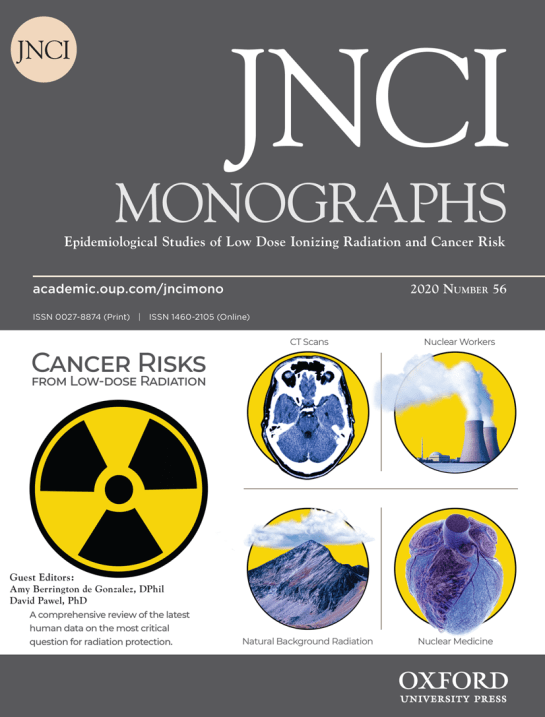
July 13, 2020
An international team of experts in the study of cancer risks associated with low-dose ionizing radiation published the monograph, “Epidemiological studies of low-dose ionizing radiation and cancer: Summary bias assessment and meta-analysis,” in the Journal of the National Cancer Institute on July 13, 2020.
It is well established that ionizing radiation causes cancer through direct DNA damage. The general public are exposed to low doses of ionizing radiation from medical exposures like computed tomography (CT) scans, naturally occurring radiation (emitted from bedrock with the earth’s crust and cosmic rays emitted by the sun), and occupational exposures to medical, aircrew and nuclear workers. A key question for low-dose exposures is how much of the damage can be repaired and whether other mechanisms, including inflammation, also play a role. This critical question has been long debated for radiation protection standards.
After combing data from 26 epidemiological studies the authors found clear evidence of excess cancer risk from low dose ionizing radiation: 17 of 22 studies showed risk for solid cancers and 17 of 20 studies showed risk for leukemia. The summary risk estimates were statistically significant and the magnitude of risk (per unit dose) was consistent with studies of populations exposed to higher doses.
A novel feature of the research effort was the investigators’ use of epidemiological and statistical techniques to identify and evaluate possible sources of bias in the observational data, for example confounding, errors in doses, and misclassification of outcomes. After a thorough and systematic review, they concluded that most did not suffer from major biases.
The authors concluded that although for the most part, absolute risk of cancer will be small, the data reinforce the radiation safety principle to ensure that doses are “as low as reasonably achievable” (ALARA).
Additional research is needed to explore risks for cardiovascular disease (CVD) at low doses. Because CVD is a very common disease, even small risks at low doses could have important implications for radiation protection and public health.
The 26 epidemiological studies were published between 2006 and 2017 and included a total of 91,000 solid cancers and 13,000 leukemias. Studies were eligible if the mean dose was <100 mGy. The study populations had environmental radiation exposure from accidents, like Chernobyl, and natural background radiation, medical radiation exposure like CT scans and occupational exposure including nuclear workers and medical radiation workers.
Reference:
“Epidemiological studies of low-dose ionizing radiation and cancer: Summary bias assessment and meta-analysisExit Disclaimer,” JNCI Monographs. Volume 2020. Issue 56. July 2020.
https://academic.oup.com/jncimono/issue/2020/56
https://dceg.cancer.gov/news-events/news/2020/low-dose-monograph
Nuclear nations have handled COVID-19 the worst
The most useless of arsenals – Nuclear nations have handled COVID-19 the worst https://beyondnuclearinternational.org/2020/08/30/the-most-useless-of-arsenals/, By Tilman Ruff, August 30, 2020 by beyondnuclearinternational
The Covid-19 pandemic has demonstrated that massive arsenals are useless in a pandemic. The countries that have spent obscene sums on nuclear weapons have failed to provide the most basic of protective equipment against the coronavirus, putting their citizens in danger every day.
New pathogens will continue to evolve, spread and disrupt our world. Indeed as we deplete habitats for other species, wreak climate havoc, and grow food industrially, we can expect new infectious diseases more often.
COVID-19 is just the latest; it will certainly not be the last. Bad enough it is, but far from the worst we could expect.
Exposing vulnerability
COVID-19 has caught even the wealthiest nations unprepared; their massive armaments useless against a small, mindless aggregation of single stranded RNA, a few proteins and a thin lipid envelope about 120 nm across.
Nations investing obscene sums in nuclear weapons that must never be used have been unable to provide the most basic of protective equipment – gowns, gloves, and facemasks for their frontline health professionals putting themselves in danger every day.
The best funded public health organization in the world, the Centers for Disease Control and Prevention of the United States, went from recommending N95 respirators for doctors and nurses at risk to recommending improvised bandanas in the face of severe shortages of the most basic protection costing a fraction of a dollar.
The US government rejected international assistance with test kits and was then left with woefully inadequate numbers of its own faulty kits.
Learning from the pandemic
This coronavirus can teach us a lot if we are willing to learn.
It shows where the real threats to our security lie, for which massive military arsenals and the most powerful WMD are not only useless, but get in the way.
It shows our interconnected vulnerabilities and capacities, that globalized problems respect no borders, are shared and demand cooperative solutions.
It has shown how quickly the exceptional hubris of arrogant leaders serving their own and narrow vested interests can enable great harm to occur; evil measured in monumental failures of leadership, causing tens of thousands of deaths that could readily have been prevented.
It has shown the uselessness of ideological baggage in confronting big challenges.
It has laid bare that respect for truth, evidence and science; and listening to the expert custodians of that evidence, are crucial.
It has demonstrated that changes once deemed unthinkable can be made, and made fast.
It has shown that female leaders are often more sensible and reliable in a crisis, and that we need more of them.
It has shown the great ingenuity, resourcefulness and kindness that people everywhere are capable of.
It has shown that what the science and experts tell us – that new pandemics will occur and that we are woefully prepared to deal with them – will occur if warnings are not heeded.
Choosing to listen
We can prevent some new pandemics from occurring. We can always respond better if we listen to the evidence and prepare well for what can be expected.
If we do not listen to or choose to see the overwhelming evidence of accelerating climate disruption, and quickly and drastically reduce greenhouse gas emissions, catastrophe will bear down on us in our lifetimes and the world our children and grandchildren live in will be much more violent, difficult and impoverished.
If we ignore the reality of what nuclear weapons do, and the growing dangers of their use, then what may be a small risk on any given day, over time will become inevitable.
A final epidemic
This COVID pandemic will abate. However after a nuclear war there will be no re-building, no coming back. It would be the final epidemic. There will not be a health care system in overloaded crisis; there will be no health system and no one able to staff it. We can prepare for a pandemic; for nuclear war there is only prevention.
That is why we have to act now to protect our Earth from rampant heating and the abrupt ice age that would follow the radioactive incineration of nuclear war; as if our lives depended on it, because they do.
We can’t stop all new epidemics. And we don’t yet know if we can eradicate the COVID-19 virus.
But we can and must end nuclear weapons before they end us. The Treaty on the Prohibition of Nuclear Weapons provides the best available path forward. We should heed the lessons of COVID and take that path while we still can.
Tilman Ruff is Associate professor at the Nossal Institute for Global Health, School of Population and Global Health, University of Melbourne, Co-President, International Physicians for the Prevention of Nuclear War (Nobel Peace Prize 1985) and Co-founder of the International Campaign to Abolish Nuclear Weapons (ICAN, Nobel Peace Prize 2017)
This article first appeared on Croakey and is republished with kind permission of the author.
Global coronavirus update – India’s huge jump in infections, but USA still leads in cases
|
Meanwhile, far-right protesters and others have stormed the German parliament building following a protest against the country’s pandemic restrictions. This story will be regularly updated throughout Monday. India records world’s biggest single-day jump in virus casesThe Health Ministry on Sunday local time also reported 948 deaths in the past 24 hours, taking total fatalities to 63,498. India has now reported more than 75,000 infections for four straight days. The surge has raised the country’s total virus tally to over 3.5 million and comes at a time when India is reopening its subway networks and allowing sports and religious events in a limited manner from next month as part of efforts to revive the economy. Even as eight Indian states remain among the worst-hit regions and contribute nearly 73 per cent of the total infections, the virus is now spreading fast in the vast hinterlands, with experts warning that the month of September could be the most challenging. Global cases reach 25 millionThe number of confirmed coronavirus cases globally has topped 25 million, according to a tally kept by Johns Hopkins University. The United States leads the count with 5.9 million cases, followed by Brazil with 3.8 million and India with 3.5 million. The real number of people infected by the virus around the world is believed to be much higher — perhaps 10 times higher in the US, according to the Centres for Disease Control and Prevention — given testing limitations and the many mild cases that have gone unreported or unrecognised. Global deaths from COVID-19 stand at over 842,000, with the US having the highest number with 182,779, followed by Brazil with 120,262 and Mexico with 63,819. Far-right pandemic restriction protesters attempt to storm German parliament Senior German officials have condemned attempts by far-right protesters and others to storm the parliament building following a protest against the country’s pandemic restrictions. Hundreds of people, some waving the flag of the German Reich of 1871-1918 and other far-right banners, breached a security barrier outside the Reichstag late on Saturday local time but were intercepted by police and forcibly removed……… https://www.abc.net.au/news/2020-08-31/coronavirus-update-covid19/12610940 |
|
|
24 million have now been infected with coronavirus, but WHO says pandemic is slowing
 WHO says pandemic is slowing – but 24 million have now been infected https://inqld.com.au/news/2020/08/26/who-says-pandemic-is-slowing-but-24-million-have-been-infected/The COVID-19 pandemic is still expanding, but the rise in cases and deaths has slowed globally, except for southeast Asia and the eastern Mediterranean regions the World Health Organisation (WHO) says. WHO says pandemic is slowing – but 24 million have now been infected https://inqld.com.au/news/2020/08/26/who-says-pandemic-is-slowing-but-24-million-have-been-infected/The COVID-19 pandemic is still expanding, but the rise in cases and deaths has slowed globally, except for southeast Asia and the eastern Mediterranean regions the World Health Organisation (WHO) says.
In its latest epidemiological update, issued on Monday night, it said that the Americas remains the hardest-hit region, accounting for half of newly reported cases and 62 per cent of the 39,240 deaths worldwide in the past week. More than 23.65 million people have been reported to be infected by the coronavirus globally and 811,895 have died, according to a Reuters tally on Tuesday. Over 1.7 million new COVID-19 cases and 39,000 new deaths were reported to WHO for the week ending 23 August, a 4 per cent decrease in the number of cases and a 12 per cent decrease in the number of deaths compared to the previous week, the WHO said. Over 1.7 million new COVID-19 cases and 39,000 new deaths were reported to WHO for the week ending 23 August, a 4 per cent decrease in the number of cases and a 12 per cent decrease in the number of deaths compared to the previous week, the WHO said. In WHO’s eastern Mediterranean region, the number of reported cases rose by 4 per cent, but the number of reported deaths has consistently dropped over the last six weeks, the WHO said. Lebanon, Tunisia and Jordan reported the highest increase in cases compared to the previous week. The number of cases and deaths reported across Africa decreased by 8 per cent and 11 per cent respectively in the past week, “primarily due to a decrease in cases reported in Algeria, Kenya, Ghana, Senegal and South Africa”, it said. “In the European region, the number of cases reported has consistently increased over the last three weeks,” it said. “However, only a slight decrease (1 per cent) was reported in the most recent week, and the number of deaths have continued to decrease across the region.” In WHO’s western Pacific region, the number of new cases dropped by 5 per cent, driven by less spread in Japan, Australia, Singapore, China and Vietnam. South Korea reported an 180 per cent jump in cases, “mainly due to an increase in cases associated with religious gatherings”. |
|
Radiation hazard at Dead Horse Bay, Brooklyn
|
Scavengers Unearth Buried History — and Maybe Radiation — at Dead Horse Bay“It’s the closest you can come to time travel.” Cured, New York, By Caroline Spivack Aug 25, 2020, “It’s pretty devastating,” said Vanessa Dudley of the radiation recently discovered at Dead Horse Bay, a cove in southeastern Brooklyn that was once, many years ago, home to a landfill. For decades, the bay and its surrounding area have been burping up intriguing early-20th-century detritus onto the beach. Dudley, an administrator at Weill Cornell Medicine, is one of many treasure hunters and artists who regularly visited the beach to pick through mud-flecked glass bottles, ceramic shards, and rusted bits of metal. “You can see the lives of people through these objects. It’s like their memory lives on through them.”
But earlier this month, the three footpaths that snake from Flatbush Avenue through thick brush to the beach were marked with canary-yellow signs warning: “Danger Area Closed. Potential Hazardous Material.” Authorities had closed the southern half of the bay (near Floyd Bennett Field) following the discovery of radioactive material on the beach and near one of the paths. The radiation was first noticed during an environmental survey in 2019, when the National Park Service (which manages the bay as part of the Gateway National Recreation Area) discovered 31 locations along the shore and nearby trails with excessive levels of gamma radiation. At two of those sites, the culprits turned out to be old deck markers — small, glowing disks that were once used on Navy ships — that were leaking radium-226. These were recently removed, and the possibility of a more extensive cleanup is now being considered…….. In 1926, after many of the factories had moved elsewhere, Barren Island was connected via landfill to the mainland. In the 1950s, Robert Moses further expanded the area’s land mass by building landfills. Moses flooded the area with the city’s garbage — much of which was likely the rubble of other neighborhoods Moses himself destroyed as he reshaped New York — and then covered it with a layer of topsoil. Erosion has since released much of that debris, which collects at the bay’s eastern shore, providing New Yorkers with an eclectic compendium of 20th-century trash. But in light of new knowledge about the radiation there, exploring that garbage — and discovering the clues it holds about the city’s history — comes at a risk. ……… https://ny.curbed.com/2020/8/25/21398976/dead-horse-bay-beach-brooklyn-radiation-scavengers |
|
Analysing the evidence on effects of ionising radiation on wildlife
Nature 21st Aug 2020, Tim Mousseau et al: We re-analyzed field data concerning potential effects
of ionizing radiation on the abundance of mammals collected in the
Chernobyl Exclusion Zone (CEZ) to interpret these findings from current
knowledge of radiological dose–response relationships, here mammal
response in terms of abundance.
In line with recent work at Fukushima, and
exploiting a census conducted in February 2009 in the CEZ, we reconstructed
the radiological dose for 12 species of mammals observed at 161 sites. We
used this new information rather than the measured ambient dose rate (from
0.0146 to 225 µGy h−1) to statistically analyze the variation in
abundance for all observed species as established from tracks in the snow
in previous field studies.
All available knowledge related to relevant
confounding factors was considered in this re-analysis. This more realistic
approach led us to establish a correlation between changes in mammal
abundance with both the time elapsed since the last snowfall and the dose
rate to which they were exposed. This relationship was also observed when
distinguishing prey from predators.
The dose rates resulting from our
re-analysis are in agreement with exposure levels reported in the
literature as likely to induce physiological disorders in mammals that
could explain the decrease in their abundance in the CEZ. Our results
contribute to informing the Weight of Evidence approach to demonstrate
effects on wildlife resulting from its field exposure to ionizing
radiation.
World battles new cases, but coronavirus could be over, in two years

World Health Organisation hopes coronavirus crisis can be over in two years, https://www.sbs.com.au/news/world-health-organisation-hopes-coronavirus-crisis-can-be-over-in-two-years [Good graphs] 22 Aug 20 The head of the World Health Organisation hopes the coronavirus pandemic will be shorter than the 1918 Spanish flu and last less than two years.
The world should be able to rein in the coronavirus pandemic in less than two years, the World Health Organisation (WHO) said, as European nations battled rising numbers of new cases.
Western Europe has been enduring the kind of infection levels not seen in many months, particularly in Germany, France, Spain and Italy – sparking fears of a full-fledged second wave.
In the Spanish capital Madrid, officials recommended people in the most affected areas stay at home to help curb the spread as the country registered more than 8,000 new cases in 24 hours.
France also reported a second consecutive day of more than 4,000 new cases – numbers not seen since May – with metropolitan areas accounting for most of those infections.
But WHO chief Tedros Adhanom Ghebreyesus sought to draw favourable comparisons with the notorious flu pandemic of 1918.
“We have a disadvantage of globalisation, closeness, connectedness, but an advantage of better technology, so we hope to finish this pandemic before less than two years,” he told reporters.
By “utilising the available tools to the maximum and hoping that we can have additional tools like vaccines, I think we can finish it in a shorter time than the 1918 flu”, he said.
The WHO also recommended children over 12 years old now use masks in the same situations as adults as the use of face coverings increases to stop the virus spread.
With no usable vaccine yet available, the most prominent tool governments have at their disposal is to confine their populations or enforce social distancing.
Lebanon is the latest country to reintroduce severe restrictions, beginning two weeks of measures on Friday including night time curfews to tamp down a rise in infections, which comes as the country is still dealing with the shock from a huge explosion in the capital Beirut that killed dozens earlier this month.
“What now? On top of this disaster, a coronavirus catastrophe?” said 55-year-old Roxane Moukarzel in Beirut.
Officials fear Lebanon’s fragile health system would struggle to cope with a further spike in COVID-19 cases, especially after some hospitals near the port were damaged in the explosion.
‘We lead the world in deaths’
The Americas have borne the brunt of the virus in health terms, accounting for more than half of the world’s fatalities.
“We lead the world in deaths,” said Joe Biden while accepting the Democratic nomination for the US presidential election late on Thursday.
He said he would implement a national plan to fight the pandemic on his first day in office if elected in November.
“We’ll take the muzzle off our experts so the public gets the information they need and deserve – honest, unvarnished truth,” he said.
Still, new daily cases of the coronavirus have been dropping sharply in the United States for weeks – but experts are unsure if Americans will have the discipline to bring the epidemic under control.
After exceeding 70,000 confirmed infections per day in July, the country recorded 43,000 cases on Thursday.
Further south, Latin American countries were counting the wider costs of the pandemic — the region not only suffering the most deaths, but also an expansion of criminal activity and rising poverty.
Without an effective political reaction, “at a regional level we can talk about a regression of up to 10 years in the levels of multidimensional poverty”, Luis Felipe Lopez-Calva of the UN Development Programme told AFP.
But the WHO said the coronavirus pandemic appeared to be stabilising in Brazil – one of the world’s worst hit countries – and any reversal of its rampant spread in the vast country would be “a success for the world”.
Economic fallout
Economies around the globe have been ravaged by the pandemic, which has infected more than 22 million and killed nearly 800,000 since it emerged in China late last year.
New financial figures laid bear the huge cost of the pandemic in Britain, where government debt soared past AUD $3.7 million for the first time in the UK after a massive programme of state borrowing for furlough schemes and other measures designed to prop up the economy.
“Without that support things would have been far worse,” Finance Minister Rishi Sunak said.
Even Germany, famed for its financial prudence, was waking up to a new reality with Finance Minister Olaf Scholz conceding his country would need to continue borrowing at a high level next year to deal with the virus fallout.
Western European politicians are also beginning to ramp up restrictions to tackle infections that are rising to levels not seen for months.
While Spain has responded with confinement measures and Germany with updated travel guidelines, putting Brussels on its list of risk zones, the UK is now watching clusters in northern England and suggesting some towns could soon face lockdown.
“To prevent a second peak and keep Covid-19 under control, we need robust, targeted intervention where we see a spike in cases,” health secretary Matt Hancock said.
Ohio school all too close to Portsmouth Gaseous Diffusion Plant – nuclear radiation dangers

Ohio school still shuttered among radiation fears, Akron Beacon Journal, By Beth Burger
The Columbus Dispatch, Aug 22, 2020 PIKETON — Monday would have been Layton Cuckler’s first day at Zahn’s Corner Middle School.
Instead, Layton, 11, and about 300 of his peers will be divided between Jasper Elementary School and Piketon High School in the midst of the COVID-19 pandemic. As a fourth grader, he’ll have to stay at the elementary school another year.
He might not be happy about missing out on the rite of passage that his older brother, Gavin, 13, and others have experienced, but his parents, Mike and Teresa Cuckler, are relieved.
The change means Layton won’t risk being exposed to radioactive isotopes downwind from the former U.S. Department of Energy Portsmouth Gaseous Diffusion Plant. The isotopes have been found in the air, soil, water, vegetation and wildlife in the area, according to federal environmental reports……….
A nuclear waste-disposal cell is being built to bury radioactive debris as the 3,000-acre complex is dismantled.
Concerned neighbors Residents have asked for those efforts to be paused because they’re concerned about exposure to radioactive materials. Contamination has been detected there since the work began in 2017, according to the Scioto Valley Local School District.
The DOE waited two years before informing the school district that the air monitor across from the middle school had picked up radioactive elements: americium in 2018 and neptunium-237 in 2019.
The district closed the school last year after traces of uranium were detected in ceiling tiles and air ducts. The district has asked the state to build a new middle school.
History of school
Zahn’s Corner Middle School was built in 1955. One year earlier, before the school was opened, the enrichment plant came online for defense purposes and operated until 2001. The facility then transitioned to enriching uranium for nuclear power plants.
“Why is there a school on the downwind side of a site like this? That doesn’t make a lot of sense to me,” said David C. Ingram, chairman of the physics and astronomy department at Ohio University.
It’s unclear why the DOE chose that site, less than 2 miles from the school, and did not warn the district……..
When Gavin Cuckler was at the middle school, he would sometimes come home with dirt on his clothes from playing outside, Teresa Cuckler said. ……..
The Cucklers and others worry about cancer and other health risks tied to the plant.
“You think about the size of the air monitor [across from the school]. It wasn’t just one or two more elements floating through the air landing in that air monitor. How much was actually released? What’s the data on site show of where they were sampling at different release points?” said Jennifer Chandler, a former DOE employee who worked as an environmental scientist and who is now a Piketon village council member……..
Residents say the emissions are worrisome.
“They know it’s going to Zahn’s Corner because they put an air monitor there. It makes it to our school property. Our kids are out there,” Chandler said. “The danger comes in the toxicity of the inhalation or ingestion of that molecule, which is there. It’s there. So they want to pivot and talk only about radioactivity, which we are concerned about, obviously, but we’re more concerned with the toxicity of having these things in and on our school property.”
Neptunium, plutonium and americium are considered “bone seekers,″ according to the National Library of Medicine. That means that, if ingested, they will lodge in the body, possibly in bones, lungs, muscles and the liver, according to the Centers for Disease Control and Prevention.
“It’s going to irradiate from you for the rest of your life. It’s the toxicity of that. And what is the safe level of neptunium? … Zero. There is no such thing. There is no safe level of these elements,” Chandler said. …….. https://www.beaconjournal.com/news/20200822/ohio-school-still-shuttered-among-radiation-fears
Cumulative exposure to ionising radiation from diagnostic imaging tests
|
Cumulative exposure to ionising radiation from diagnostic imaging tests: a 12-year follow-up population-based analysis in Spain. https://www.docwirenews.com/abstracts/cumulative-exposure-to-ionising-radiation-from-diagnostic-imaging-tests-a-12-year-follow-up-population-based-analysis-in-spain/ August 22, 2020 Cumulative exposure to ionising radiation from diagnostic imaging tests: a 12-year follow-up population-based analysis in Spain.BMJ Open. 2019 09 18;9(9):e030905
Authors: Lumbreras B, Salinas JM, Gonzalez-Alvarez I Abstract |
|
1 This Month



4 August – WEBINAR – Hiroshima & Nagasaki: Nuclear Bombs Never Again
Tuesday, Aug. 4 at 5 pm PT / 8 pm ET.
Aug 5, 2026 10:00 AM in Australia/Melbourne
Join the Nuclear Bombs Never Again webinar on August 4th at 5pm Pacific Time / 8pm Eastern Time / 9am Japan Standard Time.
Cross generational voices at the intersection of Japan-Korea-US policy and militarization will share their lived experiences, nuclear impacts in these contexts, anti-war strategies, and actions you can take to advocate for a world with Nuclear Bombs Never Again. This 75-minute event is co-hosted by WILPF US and Korea Peace Now.

22,000+ miles voyaging for nuclear disarmament
and a radiation-free environment https://vfpgoldenruleproject.org/
To see nuclear-related stories in greater depth and intensity – go to https://nuclearinformation.wordpress.com
-
Archives
- July 2026 (277)
- June 2026 (287)
- May 2026 (306)
- April 2026 (356)
- March 2026 (251)
- February 2026 (267)
- January 2026 (308)
- December 2025 (358)
- November 2025 (359)
- October 2025 (375)
- September 2025 (257)
- August 2025 (319)
-
Categories
- 1
- 1 NUCLEAR ISSUES
- business and costs
- climate change
- culture and arts
- ENERGY
- environment
- health
- history
- indigenous issues
- Legal
- marketing of nuclear
- media
- opposition to nuclear
- PERSONAL STORIES
- politics
- politics international
- Religion and ethics
- safety
- secrets,lies and civil liberties
- spinbuster
- technology
- Uranium
- wastes
- weapons and war
- Women
- 2 WORLD
- ACTION
- AFRICA
- Atrocities
- AUSTRALIA
- Christina's notes
- Christina's themes
- culture and arts
- Events
- Fuk 2022
- Fuk 2023
- Fukushima 2017
- Fukushima 2018
- fukushima 2019
- Fukushima 2020
- Fukushima 2021
- general
- global warming
- Humour (God we need it)
- Nuclear
- RARE EARTHS
- Reference
- resources – print
- Resources -audiovicual
- Weekly Newsletter
- World
- World Nuclear
- YouTube
-
RSS
Entries RSS
Comments RSS
 nuclear-news