Study finds that bees are harmed by quite low levels of ionising radiation

 Current Chernobyl-level radiation harmful to bees: study https://www.thehindu.com/sci-tech/energy-and-environment/current-chernobyl-level-radiation-harmful-to-bees-study/article32908484.eceAFP
PARIS, FRANCE, OCTOBER 21, 2020
Researchers exposed bee colonies in a laboratory setting to a range of radiation levels found in areas of the exclusion zone around the ruined Chernobyl site
Bumblebees exposed to levels of radiation found within the Chernobyl exclusion zone suffered a “significant” drop in reproduction, in new research published Wednesday that scientists say should prompt a rethink of international calculations of nuclear environmental risk.
The study, published in the journal Proceedings of the Royal Society B, set out to discover how ionising radiation affects insects, which are often thought to be more resilient than other species.
“We found that at radiation levels detectable in Chernobyl, the number of new queen bees produced from the colony was significantly reduced and colony growth was delayed — meaning colonies reached their peak weight at a week later,” said the paper’s lead author Katherine Raines.
The lecturer in environmental pollution at the University of Stirling told AFP by email that researchers “anticipate that this may have an effect on pollination/ecosystem services in contaminated areas”.
The authors said they chose bumblebees both because of a lack of lab-based research into bees and because of their crucial role in pollination.
Ionising radiation can occur either from nuclear sites or medical procedures, although the levels tested were higher than those that would likely be found in the environment from normal releases, Raines said.
But she added that the researchers were “very surprised that we could detect effects as low as we did”.
“Our research suggests insects living in the most contaminated areas at Chernobyl may suffer adverse effects, with subsequent consequences for ecosystem services such as pollination,” she added.
The authors said if their findings could be generalised “they suggest insects suffer significant negative consequences at dose rates previously thought safe” and called revisions to the international framework for radiological protection of the environment.
People are not allowed to live near the Chernobyl power station and the abandoned settlements within the exclusion zone are surrounded by forests hosting birds, wolves, elks and lynxes. A giant protective dome was put in place over the destroyed fourth reactor in 2016.
USA spends taxpayers’ money on weapons, endless wars, not health – coronavirus chaos is the result
 The US Chose Endless War Over Pandemic Preparedness. Now We See the Effects. C.J. The US Chose Endless War Over Pandemic Preparedness. Now We See the Effects. C.J. 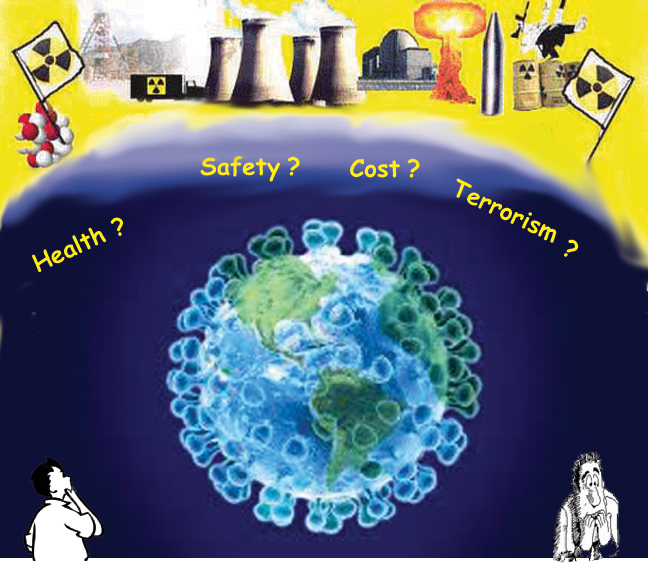 Polychroniou, Truthout, October 18, 2020 Polychroniou, Truthout, October 18, 2020 United States has the longest record of war-fighting in modern history. Why that is the case is not a question that has an easy answer; suffice to say, however, that militarism and violence run like a red thread throughout U.S. political history, with enormous costs both for the domestic economy and the world at large, as a recently published book by David Vine makes plainly clear. In fact, the militarist mentality is strongly reinforced by the Trump administration in spite of the fact that the current president claims to have an aversion to “endless wars.” In this exclusive Truthout interview, Vine, a professor of anthropology at American University in Washington, D.C., addresses critical questions about U.S. war culture and Trump’s own contribution to the violence that has always been foundational to U.S. culture. C.J. Polychroniou: Your latest book, The United States of War: A Global History of America’s Endless Conflicts, from Columbus to the Islamic State, is a detailed survey of the U.S.’s obsession with militarism and war. Have you come to a definite conclusion or explanation as to why the United States has been at war for about 225 of the 243 years since its independence?
David Vine: There is, of course, no simple answer to this incredibly important question. According to my research, the U.S. military has been at war or engaged in other combat in all but 11 years of U.S. history — 95 percent of the years the United States has existed. My book shows how the huge collection of U.S. military bases abroad provides a key — or a kind of lens — to help understand why the United States has been fighting almost without pause since 1776. . Bases abroad, bases beyond U.S. borders show how U.S. political, economic and military leaders — shaped by the forces of history, capitalism, racism, patriarchy, nationalism and religion — have used taxpayer money to build a self-perpetuating system of permanent, imperialist war revolving around an often-expanding collection of extraterritorial military bases. These bases have expanded the boundaries of the United States, while keeping the country locked in a state of nearly continuous war that has largely served the economic and political interests of elites and left tens of millions dead, wounded and displaced. To be clear, my argument is not that U.S. bases abroad are the singular cause of this near-endless fighting. Indeed, my book shows how the answer to why the U.S. government has fought so constantly lies in the capitalist profit-making desires of businesses and elites, in the electoral interests of politicians, and in the forces of racism, militarized masculinity, nationalism and missionary Christianity, among other dynamics. U.S. bases abroad, however, have played a key and long overlooked role in the pattern of near-constant U.S. fighting: that is, since independence, bases that U.S. leaders have built beyond the borders of the United States not only have enabled wars but also have made offensive imperialist wars more likely. While U.S. leaders often portray bases abroad as defensive in nature, the opposite is generally the case: bases built on the territory of other peoples have tended to be offensive in nature, providing a launchpad for yet more wars. This has tended to create a pattern in which bases abroad have led to wars that have led to the construction of new bases abroad that have led to new wars that have led to new bases and so on. Can you offer us a quick assessment of the overall costs of the “global war on terror?” It’s impossible to capture the immensity of the catastrophe that the so-called “global war on terror” has inflicted……….. Alongside the human damage, the financial costs of the so-called war on terror are so large, they’re nearly incomprehensible. As of October 2020, the U.S. government has spent or obligated a minimum of $6.4 trillion on the post-2001 wars, including the costs of future veterans’ benefits and interest payments on the money borrowed to pay for the wars. The actual costs are likely to run hundreds of billions or trillions more, depending on when we force our politicians to bring these seemingly endless wars to an end. While it’s incredibly hard to fathom $6.4 trillion in taxpayer funds vanished, the catastrophe is compounded when we consider how else the U.S. government could have spent such incredible sums of money. What could these trillions have done to provide universal health care, to rebuild public schools, to build affordable housing, to end homelessness and hunger, to rebuild crumbling civilian infrastructure, to prepare for pandemics? In addition to the 3-4 million who have likely died in the wars the U.S. government has fought since 2001, how many more have died because of the investments the U.S. government did not make? These are questions that, I have to say, should make us weep……….. Clearly there is a deep connection between the war machine and the U.S. government’s failure to protect the country against COVID. ………….. President Eisenhower was exactly right when he called this kind of diversion of funds a “theft.” He said, “Every gun that is made, every warship launched, every rocket fired signifies, in the final sense, a theft from those who hunger and are not fed, those who are cold and are not clothed.” Today, every gun that is made signifies a theft from those with COVID, from those who might contract COVID, from all of us……… https://truthout.org/articles/the-us-chose-endless-war-over-pandemic-preparedness-now-we-see-the-effects/?eType=EmailBlastContent&eId=89a28ac1-0d1a-4b33-ab5b-4666e96877f5 |
|
35 crew on secretive HMS Vigilant £3billion nuclear submarine tested positive for Covid
 Quarter of crew on £3billion nuclear submarine dubbed ‘HMS sex and cocaine’ test positive for coronavirus after defying orders and going drinking at bars and strip clubs near US naval base
- 35 crew on secretive HMS Vigilant tested positive for Covid, source revealed
- Among those who tested positive were a doctor and an executive officer
- Nuclear weapons codes are known by that executive officer and 1 other person
- Sailors defied orders while docked at the Kings Bay US Navy base in Georgia
Daily Mail By JEMMA CARR FOR MAILONLINE 14 October 2020 A £3billion nuclear submarine dubbed ‘HMS Sex and Cocaine’ has seen a coronavirus outbreak among its rule-breaking crew.
Highly-secretive HMS Vigilant saw more than 35 crew members test positive after several left the Kings Bay US Navy base in Georgia, a source has revealed.
Among those who tested positive – a quarter of the vessels team – was a doctor and an executive officer.
The codes to deploy the nuclear weapons stored on the submarine are known only by that executive officer and one other person, reports suggest.
Sailors defied orders to go to strip clubs, bars and restaurants in Georgia – which has seen 318,000 coronavirus cases and 7,282 deaths.
One trip saw them travel 200 miles away to a beach in Florida, an insider said…….. https://www.dailymail.co.uk/news/article-8837335/Quarter-crew-3billion-nuclear-submarine-dubbed-test-positive-coronavirus.html
Donald Trump’s erratic behaviour revives the debate on the President’s unchecked nuclear authority
 Trump’s Virus Treatment Revives Questions About Unchecked Nuclear Authority
Even before the president was given mood-altering drugs, there was a movement to end the commander in chief’s sole authority to launch nuclear weapons. NYT, 12 Oct 20, By David E. Sanger and William J. Broad,
President Trump’s long rants and seemingly erratic behavior last week — which some doctors believe might have been fueled by his use of dexamethasone, a steroid, to treat Covid-19 — renewed a long-simmering debate among national security experts about whether it is time to retire one of the early inventions of the Cold War: the unchecked authority of the president to launch nuclear weapons.
Mr. Trump has publicly threatened the use of those weapons only once in his presidency, during his first collision with North Korea in 2017. But it was his decision not to invoke the 25th Amendment and turn control over to Vice President Mike Pence last week that has prompted concern inside and outside the government.
Among those who have long argued for the need to rethink presidents’ “sole authority” powers are former Defense Secretary William J. Perry, considered the dean of American nuclear strategists, who has cited the fragility of a nuclear-weapons control chain and the fear that it can be subject to errors of judgment or failure to ask the right questions under the pressure of a warning of an incoming attack.
Mr. Trump’s critics have long questioned whether his unpredictable statements and contradictions pose a nuclear danger. But the concerns raised last week were somewhat different: whether a president taking mood-altering drugs could determine whether a nuclear alert was a false alarm.
That question is a new one. The military’s Strategic Command often conducts drills that simulate actual but inconclusive evidence that the United States may be under nuclear attack. Such simulations drive home the reality that even a president asking all the right questions could make a mistake. But they rarely simulate what would happen if the president’s judgment was impaired.
“A nuclear crisis can happen at any time,” Tom Z. Collina, the policy director at the Ploughshares Fund, a private group that seeks to defuse nuclear threats, noted last week in an opinion piece. “If such a crisis takes place when a president’s thinking is compromised for any reason,” he added, “the results could be catastrophic.”
Traditionally, presidents have temporarily conveyed authority — including nuclear launch authority — to the vice president when they anticipated being under anesthesia. Ronald Reagan took that step in 1985, and George W. Bush did so in 2002 and 2007. There was no indication that Mr. Trump was unconscious, but there was reason to be concerned that the cocktail of drugs he was given could impair his judgment to make the most critical decisions entrusted to a president.
Last week in telephone interviews with Fox News and Fox Business Network, Mr. Trump said he was no longer taking experimental medications but was still on dexamethasone, which doctors say can produce euphoria, bursts of energy and even a sense of invulnerability. On Friday, he told Fox News he was off the drug, which he appears to have taken for less than a week.
But during that week, his prolific Twitter activity and rambling interviews led many to question whether the drugs had accentuated his erratic tendencies. His doctors’ refusal to describe with any specificity his condition or treatment only played up the concern.
“The history of obfuscating the medical condition of presidents is as old as the Republic,” said Vipin Narang, a professor at the Massachusetts Institute of Technology who has studied the nuclear command-and-control chain. “The issue here is that the dex” — shorthand for dexamethasone — “can make you paranoid and delusional.”
“We don’t know how much he was given,” Mr. Narang said. “And if he gives an order in the middle of the night, and no one is there to stop him, we are dependent on his military aide not to transmit the order or the duty officer at the national military command center to stop it.”………….
The “sole authority” tradition is unusual among the world’s nine nuclear powers; even Russia requires two out of three designated officials to sign off on a nuclear launch. While the Constitution says that only Congress can declare war, the speed of bombers and missiles made clear during the Cold War that there would be no time to convene Congress or mount a defense. As a result, Congress began delegating to the president all powers to use nuclear weapons during Harry S. Truman’s administration. He is the only president who has ordered a nuclear strike……..
“The last finger I would want on the nuclear button,” said Hans M. Kristensen, the director of the Nuclear Information Project at the Federation of American Scientists, a private group in Washington, “is that of a president on drugs.”……… https://www.nytimes.com/2020/10/11/us/politics/trump-nuclear-weapons-coronavirus.html
Trump’s COVID infection shows why it’s time to retire the nuclear football
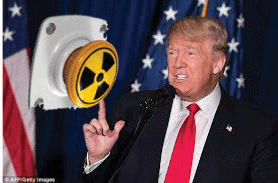 Trump’s COVID infection shows why it’s time to retire the nuclear football, Bulletin of the Atomic Scientists , By Tom Z. Collina, October 6, 2020 President John Kennedy took powerful pain medications. President Richard Nixon was a heavy drinker. President Ronald Reagan had dementia. And now President Donald Trump has the coronavirus. These conditions can significantly impair one’s ability to think clearly. And yet, as president, each had—or, in Trump’s case, still has–the unilateral authority to launch US nuclear weapons within minutes.
President Trump is followed 24/7 by a military aide that carries the “football,” the briefcase that holds all he would need to order the immediate launch of up to 1,000 nuclear weapons, more than enough megatonnage to blow the world back into the stone age. He does not need the approval of Congress or the secretary of defense. Shockingly, there are no checks and balances on this ultimate executive power.
President Trump took the nuclear football with him to Walter Reed Medical Center, where he received treatment for COVID-19. According to Trump’s doctor, the president’s blood oxygen levels had dipped. And this, according to independent health experts, can impair decision-making ability. He is taking dexamethasone, which can cause mood swings and “frank psychotic manifestations.” Yet as far as we know, at no point did the president transfer his powers to the vice president, as allowed under the 25th Amendment.
To state the obvious, we should not entrust nuclear launch authority to someone who is not fully lucid. (Reagan transferred authority temporarily before planned surgery, as did President George W. Bush before a medical procedure that required his sedation.) A nuclear crisis can happen at any time, including at the worst possible time. If such a crisis takes place when a president’s thinking is compromised for any reason, the results could be catastrophic. ……..
If the president or his advisors have reason to believe that Trump’s thinking may be compromised, nuclear launch authority should be transferred to the vice president, Mike Pence. If Pence also gets COVID, the football could then be passed to House Speaker Nancy Pelosi, President Pro Tempore of the Senate Chuck Grassley, and the secretaries of State, Treasury and Defense, in that order.
But kicking the football down the line does not solve the problem—and in fact shows why the system is broken. Does anyone really believe that the president pro tem of the Senate or the Treasury Secretary has spent much time preparing for nuclear war? And even if they had prepared, the central dilemma remains: All humans are imperfect, and we should not trust the fate of the world to any one person.
The whole concept of giving the president unilateral nuclear authority is built on the false assumption that Russia might launch a surprise first strike. In fact, Russia has never seriously considered a first strike against the United States for a simple reason: It would be national suicide. Both sides have to assume that an attack would provoke an unacceptable nuclear retaliation. Both nations, and much of the rest of the globe, would be obliterated. Starting such a war would be insanity………
It is time to retire the nuclear football. The only thing standing between us and nuclear holocaust is one man with COVID on heavy meds. That is the plan? Ending sole authority is better than entrusting it to any individual. In a vibrant democracy, no one person should have the unchecked power to destroy the world. https://thebulletin.org/2020/10/trumps-covid-infection-shows-why-its-time-to-retire-the-nuclear-football/
Pressure on U.S. Congress to reinstate research on links between nuclear stations and cancer

Activists push Congress to revive probe into links between nuclear plants and cancer
Nuclear Regulatory Commission killed study in 2015 after spending five years and $1.5 million on the effort, Orange County Register, By TERI SFORZA | tsforza@scng.com | October 5, 2020 Scientists and activists were stunned back in 2015 when the Nuclear Regulatory Commission pulled the plug on what was designed to be the best study of cancer near nuclear power plants ever done.
Last week, a petition with some 1,200 signatures demanding that the study resume went to members of Congress representing Southern and Central California.
“This is a scientific endeavor which will improve our understanding of cancer, the leading cause of death in California,” the petition states. “It is especially important for women, children, and the human fetus who are much more vulnerable to the biological effects of harmful ionizing radiation.”
No one knows threat
The retired San Onofre and Diablo nuclear power plants, both shut down in 2013, have been discharging low-level radioactivity into the ocean and atmosphere for decades, the petition continues, and no one knows for sure whether that poses a threat to nearby residents………
More modern studies in Europe have found that children living within 3 miles of nuclear power plants had double the risk of developing acute leukemia as those living farther away, with the peak impact on children ages 2-4.
Bart Ziegler, president of the Samuel Lawrence Foundation, said the inquiry is long overdue and must begin right away. https://www.ocregister.com/2020/10/05/activists-push-congress-to-revive-probe-into-links-between-nuclear-plants-and-cancer/
Ionising radiation – the tragedy of the ”radium girls”.

They weren’t just making paints, they were doing the painting, too. According to NPR, US Radium hired scores of girls and young women — as young as just 11-years-old — to paint watch dials with the glow-in-the-dark, radium-based paint. As if just working with the paint wasn’t bad enough, they were also encouraged to put the brush between their lips and twirl it into a point. It was the best way to get truly precise numbers and brush strokes, but with each lick of the brush, they were swallowing radium.
the human body isn’t great at telling the difference between radium and calcium. Radium gets absorbed into the bones just like calcium does, and when that happens, the rot starts.
Writer and historian Kate Moore documented the cases of the Radium Girls (via The Spectator) and found that there were a whole host of symptoms. Some started suffering from chronic exhaustion. For many, it started with their teeth — one by one, those teeth would start to decay and rot. When they were removed, their gums wouldn’t heal. In some cases, the jaw would just simply disintegrate at the dentist’s touch. Bad breath was common. Skin became so delicate that the slightest touch would tear open wounds. Ulcers formed for some, and those that were pregnant bore stillborn babies.
THE RADIUM GIRLS HAD TO BE BURIED IN LEAD-LINED COFFINS
The Radium Girls weren’t just sick, they were very literally radioactive. Mollie Maggia was exhumed in 1927, in the hopes that her bones would give still-living Radium Girls the evidence they needed to win in court. According to Popular Science, her coffin was lifted out of the ground, and her body? It glowed. That wasn’t entirely surprising, considering her bones were found to be highly radioactive — and considering radium’s half-life is 1,600 years, they’re not going to stop glowing any time soon.
Eventually, 16 separate sites around Ottawa would be classified as Superfund sites.
NPR Illinois says that many have been cleaned up, but as of 2018, there was at least one site — a 17-acre plot of land on the Fox River — that still remained a highly radioactive and terrifying legacy of the Radium Girls.
THE MESSED UP TRUTH ABOUT THE RADIUM GIRLS https://www.grunge.com/181092/the-messed-up-truth-about-the-radium-girls/ BY DEBRA KELLY/DEC. JULY 14, 2020
History is filled with episodes that prove mankind is just sort of making everything up as it goes. There’s no shortage of things that can kill us or do horrible, terrible things to our soft and squishy bodies, and every time we think we know about them all, it turns out there’s something else lurking around the corner.
And sometimes, it’s disguised as something awesome. Need proof? Look no further than the Radium Girls.
Yes, that radium. Today, the Royal Society of Chemistry says there’s really only one use for radium — targeted cancer treatments, because it’s so good at killing cells. It was first discovered in 1898 by Marie and Pierre Curie, after they extracted a single milligram from ten tons of a uranium ore called pitchblende. And it was pretty darn cool. It glowed, and seriously, how exciting is that? Unfortunately, it was also deadly — as the so-called Radium Girls would find out.
From 38 million English-language articles, study shows Trump as world’s biggest driver of coronavirus misinformation
 Donald Trump has been the world’s biggest driver of coronavirus misinformation, study finds, SBS News 1 Oct 20, The study from Cornell University looked some 38 million English language articles in traditional media outlets around the world in the first half of this year.
US President Donald Trump has been the world’s biggest driver of COVID-19 misinformation during the pandemic, a study from Cornell University said Thursday.
A team from the Cornell Alliance for Science evaluated 38 million articles published by English-language, traditional media worldwide between 1 January and 26 May of this year.
The database they used aggregates coverage from countries such as the United States, Britain, India, Ireland, Australia, New Zealand and other African and Asian nations.
The authors found that comments by Mr Trump drove major spikes in the “miracle cures” topic, led by his 24 April press briefing where he mused on the possibility of using disinfectants inside the body to cure the coronavirus.
Similar spikes were seen when he promoted unproven treatments like hydroxychloroquine.
“We conclude therefore that the president of the United States was likely the largest driver of the COVID-19 misinformation ‘infodemic’,” the team wrote.
Sarah Evanega, who led the study and is director of the Cornell Alliance for Science, said: “If people are misled by unscientific and unsubstantiated claims about the disease, they may be less likely to observe official guidance and thus risk spreading the virus…….. They identified 522,472 news articles that reproduced or amplified misinformation related to the coronavirus pandemic, or what the World Health Organization has called the “infodemic.”….. https://www.sbs.com.au/news/donald-trump-has-been-the-world-s-biggest-driver-of-coronavirus-misinformation-study-finds
Congenital abnormalities. Thorium and uranium, in infants and children living near an active U.S. military base in Iraq
|
“Our study has established the presence of uranium and of thorium, a direct depleted-uranium decay-product, in Nasiriyah children.” Environmental Pollution, 30 Sept 20 Living near an active U.S. military base in Iraq is associated with significantly higher hair thorium and increased likelihood of congenital abnormalities https://www.rnanews.eu/our-study-has-established-the-presence-of-uranium-and-of-thorium-a-direct-depleted-uranium-decay-pr-45757.html?fbclid=IwAR3whvvnZqhwLVq30Rme1Vo6SnRIhpGdpfzs0e99Y4qYSb2ZCWgYaGcGizU M.Savabieasfahani F.Basher Ahamadani A.Mahdavi Damghani Highlights
• We also report on an association between residential proximity to a US army base,Tallil Air Base, and the risk of congenital anomaly. • We show that such proximity is associated with higher levels of uranium and thorium in the biological samples of the study participants. At the same time, we found an increased risk of congenital anomalies associated with higher hair levels of these metals. In Iraq, war contamination is the result of dispensed bombs, bullets, detonation of chemical and conventional weapons, and burn-pit emissions by US bases. Increases in congenital anomalies were reported from Iraqi cities post-2003. These cities were heavily bombed and encircled by US bases with burn-pits. Thorium is a radioactive compound and a direct depleted-uranium decay-product. Radioactive materials, including depleted uranium, are routinely stored in US bases and they have been shown to leak into the environment. We conducted a case-control study to investigate associations of residential proximity to Tallil Air Base, a US military base near Nasiriyah, as well as levels of uranium and thorium in hair and deciduous teeth with congenital anomalies. The study was based on a sample of 19 cases and 10 controls who were recruited during late Summer and early Fall of 2016. We developed mixed effects logistic regression models with village as the random effect, congenital anomaly as the outcome and distance to the US base and hair metal levels (one at a time) as the predictor variable, controlling for child’s age, sex and paternal education. We also explored the mediation of the association between proximity to the base and congenital anomalies by hair metal levels. We found an inverse association between distance to Tallil Air Base and risk of congenital anomalies and hair levels of thorium and uranium. The results of our mediation analyses were less conclusive. Larger studies are necessary to understand the scope of war contamination and its impact on congenital anomalies in Iraq. |
On the moon ”normal” humans (i.e males) will get 200 Times the Radiation Experienced on Earth, (what about females?)

Christina Macpherson’s websites & blogs
It is amazing that in all this propaganda for putting a woman on the moon, – no mention is ever made, of the fact that women are much more susceptible to the effects of ionising radiation, meaning that their risk of developing cancer and other illnesses is greater than it is for men. Apparently the space enthusiasts are still buying into that traditional view that the ”normal” human being is male.
The 12 human beings who have walked on the moon were all bombarded by radiation roughly 200 times what we experience here on Earth, reports Adam Mann for Science. That’s two to three times what astronauts experience aboard the International Space Station, explains Marcia Dunn for the Associated Press (AP), suggesting that any long term human presence on the moon will require shelters with thick walls capable of blocking the radiation.
Despite the fact that the measurements, which come courtesy of China’s Chang’e-4 lunar lander, are quite high compared to what we experience on Earth, the data is quite useful for protecting future moonwalkers. According to Science, the levels of radiation at the lunar surface wouldn’t be expected to increase the risk of NASA astronauts developing cancer by more than 3 percent—a risk threshold the agency is legally required to keep its astronauts’ activities safely below.
Despite the fact that the measurements, which come courtesy of China’s Chang’e-4 lunar lander, are quite high compared to what we experience on Earth, the data is quite useful for protecting future moonwalkers. According to Science, the levels of radiation at the lunar surface wouldn’t be expected to increase the risk of NASA astronauts developing cancer by more than 3 percent—a risk threshold the agency is legally required to keep its astronauts’ activities safely below……
Some forms of radiation, which is electromagnetic energy emitted in forms like heat, visible light, X-rays and radio waves, can mess with the cells inside the human body by breaking up the atoms and molecules they’re made of. On Earth, most people are familiar with ultraviolet radiation’s harmful effects on our skin, but in space, astronauts are also subjected to galactic cosmic rays, accelerated solar particles, neutrons and gamma rays, according to the research published this week in the journal Science Advances. This material can damage our DNA and lead to increased incidences of cancer or contribute to other health problems such as cataracts and degenerative diseases of the central nervous system or other organ systems.
Humanity measured the radiation astronauts on the Apollo missions experienced on their journeys to the moon, but those measurements were cumulative for each astronaut’s entire journey, per Science. To figure out the daily dose of radiation exclusively on the surface of the moon, the robotic Chang’e-4 lander used a stack of ten silicon solid-state detectors.
The renewed interest in collecting such measurements is partly because NASA has plans to send more people to the moon. The Artemis moon mission, scheduled for 2024, will feature the first woman ever to walk on the moon as well as a week-long expedition to the lunar surface and a minimum of two moonwalks, reports Katie Hunt for CNN.
Berger tells the AP that these new findings suggest the shelters needed to protect Artemis’ astronauts during such a long stay on the moon should have walls made of moon dirt that are some two and a half feet thick. Science notes that the shelter would also need an even more heavily shielded inner sanctum to protect astronauts in the event of a solar storm. Adequate shielding for this inner chamber would be roughly 30 feet of water, and would also need to be reachable within 30 minutes—the current limit of satellites’ abilities to provide astronauts with advanced warning of such hazards.
The findings aren’t exactly suprising: they are in line with calculations made using existing measurements. But they’re a crucial step towards putting people on the surface of the moon for extended periods of time. According to Science, the results confirm that with proper shielding astronauts could spend as long as six months on the moon. https://www.smithsonianmag.com/smart-news/moonwalking-humans-get-blasted-200-times-radiation-experienced-earth-180975926/
Lunar base woud have to be underground, due to the danger of high radiation on the moon
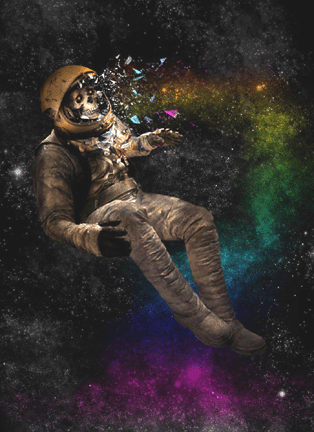 After measuring radiation on the moon for the first time, scientists say a lunar base should be built underground to protect astronauts, Business Insider, AYLIN WOODWARD, SEP 30, 2020,
- NASA recently unveiled the plan for its Artemis program, a series of missions that would return astronauts to the moon.
- A new study found how much radiation astronauts are exposed to on the lunar surface: a daily dose about 200 times as great as on Earth.
- NASA wants to build a base on the moon, but the new data suggests it’d be safest to bury such a base under 2.5 feet of moon dirt to protect astronauts from radiation.
But a new study found that any astronauts who go there would face levels of radiation nearly three times as high as what the astronauts on the space station deal with. Long-term exposure to enough of this cosmic radiation poses significant health risks, including cataracts, cancer, and diseases of the central nervous system.
The new research, published last week in the journal Science, calculated for the first time what a moonwalker’s daily dose of radiation would be.
“If you think about people staying on the moon for extended periods of time — say, on a scientific research station for a year or two — then these levels start getting problematic,” Robert Wimmer-Schweingruber, an author of the new study, told Business Insider.
The solution, he said, would be to build any lunar base beneath the moon’s surface.
The first study to calculate radiation on the moon
Apollo astronauts carried radiation-measuring instruments on their missions in the 1960s and ’70s, but those dosimeters could tell scientists only the total amount of radiation the astronauts were exposed to throughout their time in space, from blasting off to landing, not just on the moon.
Astronauts on the moon, meanwhile, face a daily radiation level five to 10 times as high as transatlantic fliers, since the moon doesn’t have the shield that Earth does.
When looking at impact of coronavirus, we can’t forget the long-term health effects
 the emergence of symptoms down the track is a reminder of why it’s important to take precautions
ABC Health & Wellbeing, By health reporter Olivia Willis-28 Sept 20, It can be tempting to think of COVID-19 patients as falling into one of two categories.
Category 1: young, otherwise healthy individuals who experience mild symptoms and recover at home.
Category 2: older people and people with pre-existing health conditions who become seriously ill and go to hospital.
While it’s true that there is a spectrum of risk when it comes to severity of disease, it’s become increasingly clear that not everyone fits neatly into one of these categories.
For many people, the labels of “mild” or “severe”, “sick” or “recovered” are blurred by their experience of ongoing, sometimes debilitating symptoms weeks or months after they first were infected.
Both anecdotal reports and a growing body of research suggest persistent fatigue, breathlessness, “brain fog” and muscle aches, among other symptoms, are plaguing people some time after their infection has cleared.
So what do we know about the lingering health effects of coronavirus, and how concerned should we be?
Health effects can linger for months
It is difficult to say what proportion of people with COVID-19 face medium- to long-term health impacts given how new the virus still is, said Kirsty Short, a virologist at the University of Queensland.
“It’s definitely happening, I just don’t think we have a grip on how common it is,” Dr Short said.
In July, researchers in Italy found almost 90 per cent of patients with acute infections were still experiencing symptoms two months later.
Research from the US and UK, following a much broader group of people affected by COVID-19, suggests symptoms persist in about 10 to 15 per cent of cases.
In the same way the virus can sometimes cause serious illness in young, otherwise healthy individuals, lingering symptoms appear to affect people of all ages, including those with no underlying health conditions.
Lasting effects are also not restricted to those who experience severe illness when they’re first infected.
People who are asymptomatic or have a mild case of COVID-19 can also face prolonged illness. Sometimes, these symptoms take weeks or months to appear.
The virus affects multiple organs
SARS-CoV-2 is primarily thought of as a respiratory virus, but the damage caused by COVID-19 is not always restricted to the lungs.
The virus binds to the body’s ACE2 receptors, which are found in large numbers in the respiratory tract, but also in the heart, blood vessels, kidneys, liver and gastrointestinal tract.
In some cases, it may be that the virus itself is causing damage to the body’s organs.
But researchers suspect it’s high levels of inflammation in the body — triggered by the immune system trying to get rid of the virus — that’s wreaking havoc, even after the infection has cleared.
“Most likely, they’ve had this overwhelming inflammatory response — which we know happens in COVID-19 patients — and then that’s had knock-on effects.”
COVID-19 can damage multiple organ systems, including:
- Lungs: Lungs can be damaged when the virus enters the cells of the airways. It can cause scarred, stiff tissue that makes it difficult for the lungs to do their job of oxygenating the blood — leaving people breathless.
- Heart: The virus can cause inflammation of the heart muscle or heart failure when the organ doesn’t pump blood as well as it should. The heart can also fail from lack of oxygen.
- Brain: If the virus enters the brain, it can cause a sudden and severe infection. Neurological symptoms may also be a result of inflammation in the brain or strokes caused by blood clots……………..
A timely reminder
There are multiple studies now underway to investigate whether COVID-19 leaves a lasting health impact, and if so, to what extent.
Dr Short said without long-term studies, it’s difficult to know how concerned we should be about COVID-19 in contrast to other existing viral infections.
“The question is: If you took a virus of similar severity and similar duration, would you also see long-term complications?” she said.
“It’s very possible that we’re just seeing this with SARS-COV-2 because of the sheer numbers of people being infected.”
Even still, the emergence of symptoms down the track is a reminder of why it’s important to take precautions………. https://www.abc.net.au/news/health/2020-09-26/coronavirus-covid-health-effects-can-linger/12705022
Radiation exposure on the moon is nearly three times that on the International Space Station
Radiation exposure on the moon is nearly three times that on the ISS, 25 September 2020
By Layal Liverpool Astronauts on the moon would face nearly three times more radiation exposure than those aboard the International Space Station, which could make long-term missions riskier than thought.
“Once you’ve survived being on the moon and come back to Earth, radiation damage is what stays with you for the rest of your life and that’s why this is a critical measurement,” says Robert Wimmer-Schweingruber at the University of Kiel in Germany.
Wimmer-Schweingruber and his team analysed several weeks of data acquired by China’s Chang’e … (subscribers only) https://www.newscientist.com/article/2255545-radiation-exposure-on-the-moon-is-nearly-three-times-that-on-the-iss/#ixzz6Z61souv7
Medical experts testify to court on Julian Assange’s precarious mental health
Medical evidence was produced in Julian Assange’s extradition hearing yesterday detailing the terrible harm done to the heroic journalist by a decade of state-orchestrated persecution.
The day was given over to the examination of Professor Michael Kopelman who testified to Assange’s mental health. Kopelman is a psychiatrist and Emeritus Professor of Neuropsychiatry at Kings College London. He has given expert evidence in multiple extradition cases on behalf of both the defence and the prosecution. In assessing Assange, he conducted seventeen visits in 2019 and additional visits in 2020, constructed a “full family history” and a “full personal psychiatric history,” and carried out “interviews with his family and lifelong friends.”
His findings constitute a clear bar to Assange’s extradition to the United States. Under Section 91 of the UK Extradition Act (2003), extradition is prohibited if “the physical or mental condition of the person is such that it would be unjust or oppressive to extradite him.”
Under Section 87, extradition is prohibited if it is incompatible with the European Convention on Human Rights (ECHR). Article 3 of the ECHR states, “No one shall be subjected to torture or to inhuman or degrading treatment or punishment.”
Medical evidence speaking to these bars has played a critical role in previous US-UK extradition hearings, for example in the case of Lauri Love. The risk of notoriously poor conditions in US prisons exacerbating mental illness is an important factor.
Assange’s case meets these criteria. The details in today’s WSWS coverage are being reported consistent with the “sensitivity” called for by defence lawyer Edward Fitzgerald QC, on behalf of his client. Nonetheless they make overwhelmingly clear the “unjust and oppressive” treatment to which Assange has already been subjected.
Assange, Kopelman told the court, has experienced periods of serious mental illness in his earlier life. Since being confined to the Ecuadorian Embassy and then Belmarsh maximum security prison, these issues have resurfaced and worsened. Assange has suffered symptoms of severe and recurrent depression. Those symptoms have included “loss of sleep, loss of weight, a sense of pre-occupation and helplessness” and auditory hallucinations which Kopelman summarised as “derogatory and persecutory.”
They have also included “suicidal preoccupations.” Kopelman told the court, “There are… an abundance of known risk factors in Mr Assange’s case” and that Assange has “made various plans and undergone various preparations.” He gave his opinion that there was a “very high risk of suicide.”
These symptoms and risks, Kopelman explained, are exacerbated by an anxiety disorder and Post Traumatic Stress Disorder (PTSD) and by a diagnosis of Asperger’s syndrome. Kopelman cited a paper by world-leading autism expert Dr Simon Baron-Cohen which found that the lifetime experience of suicidal thoughts in those with Asperger’s “was more than nine times higher than in the general population in England.”
Explaining the impact of the US government’s persecution, Kopelman said, “The risk of suicide arises out of the clinical factors of depression and the other diagnoses, but it is the imminence of extradition and/or an actual extradition that will trigger the attempt, in my opinion.”
If Assange were to be incarcerated in the US and segregated from other prisoners, Kopelman gave his opinion that the WikiLeaks founder would “deteriorate substantially” and see an “exacerbation” of his “suicidal ideas.” This would “amount to psychological harm and severe psychological suffering.”
Kopelman’s evidence confirms the warnings made since November 2019 by Doctors for Assange, representing hundreds of medical professionals from around the world, that Assange is suffering “psychological torture” and “could die in prison.” It underlines in distressing detail UN Special Rapporteur on Torture Nils Melzer’s comment regarding Assange’s treatment that “psychological torture is not torture-lite. Psychological torture aims to wreck and destroy the person’s personality and identity… to make them break.”
Assange’s year-and-a-half long incarceration at Belmarsh has been designed to achieve this objective. It has profoundly undermined, in numerous ways, his legal right to prepare his defence against extradition. Kopelman reported yesterday that Assange has repeatedly complained that the medication taken for his mental health has caused him “difficulty in thinking, in memorising [and] in concentration.”
During the morning’s cross examination, Kopelman forcefully rebuffed prosecution lawyer James Lewis QC’s challenge to his credentials. He said solicitors had called him several times in recent years saying that Lewis himself was “keen to have your services” in an extradition case.
In the afternoon, cross-examination continued, with Lewis challenging the veracity of Kopelman’s diagnosis, and claiming that Assange’s appearance was “wholly inconsistent with someone who is severely or moderately-severely depressed and with psychotic symptoms.”
Kopelman replied, “Could we go back a step?” Having seen Assange between May 30 and December [2019], “I thought he was severely depressed, suicidal and was experiencing hallucinations.”………….. https://www.wsws.org/en/articles/2020/09/23/assa-s23.html
Compensation for some nuclear workers with mesothelioma .
|
Mesothelioma Compensation Center Urges the Family of a Navy or Civilian Nuclear Power Worker with Mesothelioma to Call Attorney Erik Karst of Karst von Oiste – Compensation Might Be in Excess of a Million Dollars, https://www.prnewswire.com/news-releases/mesothelioma-compensation-center-urges-the-family-of-a-navy-or-civilian-nuclear-power-worker-with-mesothelioma-to-call-attorney-erik-karst-of-karst-von-oiste—compensation-might-be-in-excess-of-a-million-dollars-301136249.html NEWS PROVIDED BY
Mesothelioma Compensation Center , Sep 23, 2020, HOUSTON, Sept. 23, 2020 /PRNewswire/ — The Mesothelioma Compensation Center is urging the immediate family of a Navy Veteran or civilian nuclear power worker who has just been diagnosed with mesothelioma to please call attorney Erik Karst of the law firm of Karst von Oiste at 800-714-0303. Compensation for a Navy Veteran or civilian nuclear power plant worker with mesothelioma could top the list when it comes to a financial compensation claim. Because many civilian nuclear power plant workers learned their craft on a nuclear-powered navy ship or submarine their asbestos exposure might have spanned decades. Financial compensation for a Navy Veteran or civilian nuclear power worker might exceed a million dollars.“We have endorsed, and we strongly recommend attorney Erik Karst because he and his amazing team at Karst von Oiste will work overtime for their clients. What Erik Karst and his team at Karst von Oiste do is ‘work a case’ which means they work overtime to answer the questions related to how, where and when the person with mesothelioma was exposed to asbestos. It is this vital information that becomes the basis for a mesothelioma compensation claim-and it is vitally important.”Do not let the Coronavirus stop a person with mesothelioma from pursing their financial compensation. Attorney Erik Karst and his colleagues now have the capabilities to work around the Coronavirus with conference calls and video conferences to make it easier on their client-and their client’s family. Erik Karst and his colleagues at the law firm of Karst von Oiste want their clients to receive the best possible financial compensation. For direct access to attorney Erik Karst of the law firm of Karst von Oiste please call 800-714-0303 anytime.” www.karstvonoiste.com/Some of the largest nuclear power plants in the US include:
For a list of all operating nuclear power plants in the United States please refer to the following website: https://www.nrc.gov/reactors/operating/list-power-reactor-units.html. The Mesothelioma Compensation Center specializes in assisting specific types of people who have been diagnosed with mesothelioma. The Center’s top priority is assisting US Navy Veterans, shipyard workers, oil refinery workers, public-utility workers, chemical plant workers, manufacturing workers, power plant workers, plumbers, welders, electricians, millwrights, pipefitters, boiler technicians, machinists, nuclear power plant workers, hydro-electric workers or oil and gas field production workers who have been diagnosed with this rare cancer caused by asbestos exposure. In most instances a diagnosed person with mesothelioma was exposed to asbestos in the 1950’s, 1960’s, 1970’s, or 1980’s. https://MesotheliomaCompensationCenter.Com According to the CDC the states indicated with the highest incidence of mesothelioma include Maine, Massachusetts, Connecticut, Maryland, New Jersey, Pennsylvania, Ohio, West Virginia, Virginia, Michigan, Illinois, Minnesota, Louisiana, Washington, and Oregon. However, a Nuclear Navy Veteran or a nuclear power worker with mesothelioma could live in any state including California, New York, Florida, Texas, Illinois, Kentucky, Tennessee, Mississippi, Georgia, Alabama, Wyoming, Colorado, New Mexico, Nevada, Utah, Arizona, Idaho, or Alaska. www.karstvonoiste.com/ For more information about mesothelioma please refer to the National Institutes of Health’s web site related to this rare form of cancer: Contact: |
|
1 This Month
6 June – WEBINAR- Get Inspired by Protests Against Military Bases!


Cuba Is Not a Failed State – It Is a Besieged State
PETITION: “Global Appeal to Endorse Palestinian Right of Return of Refugees”


of the week– Nuclear Reactor Information Task Force
To see nuclear-related stories in greater depth and intensity – go to https://nuclearinformation.wordpress.com
-
Archives
- June 2026 (34)
- May 2026 (306)
- April 2026 (356)
- March 2026 (251)
- February 2026 (268)
- January 2026 (308)
- December 2025 (358)
- November 2025 (359)
- October 2025 (376)
- September 2025 (257)
- August 2025 (319)
- July 2025 (230)
-
Categories
- 1
- 1 NUCLEAR ISSUES
- business and costs
- climate change
- culture and arts
- ENERGY
- environment
- health
- history
- indigenous issues
- Legal
- marketing of nuclear
- media
- opposition to nuclear
- PERSONAL STORIES
- politics
- politics international
- Religion and ethics
- safety
- secrets,lies and civil liberties
- spinbuster
- technology
- Uranium
- wastes
- weapons and war
- Women
- 2 WORLD
- ACTION
- AFRICA
- Atrocities
- AUSTRALIA
- Christina's notes
- Christina's themes
- culture and arts
- Events
- Fuk 2022
- Fuk 2023
- Fukushima 2017
- Fukushima 2018
- fukushima 2019
- Fukushima 2020
- Fukushima 2021
- general
- global warming
- Humour (God we need it)
- Nuclear
- RARE EARTHS
- Reference
- resources – print
- Resources -audiovicual
- Weekly Newsletter
- World
- World Nuclear
- YouTube
-
RSS
Entries RSS
Comments RSS
 nuclear-news