Nuclear energy for Colorado? The cost is one very big obstacle
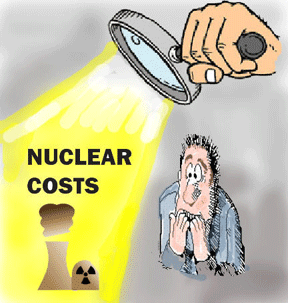
Post Independent, Allen Best 6 Aug 22, A nuclear reactor might be a nice addition to the economy of Craig, the community in northwestern Colorado. But can Colorado afford nuclear power?
……………….Sen. Bob Rankin in the last legislative session tried to get fellow legislators to appropriate $500,000 (amended to $250,000) to study the potential for nuclear.
…………Conspicuously absent was support from the administration of Gov. Jared Polis. The bill failed 3-2 on a party-line vote.
Nuclear has a nagging problem, though. It’s expensive. Advocates rarely mention this. Costs of Georgia’s Plant Vogtle, the only U.S. nuclear power plant under construction, have ballooned from $14 billion to now $30 billion-plus. In South Carolina, investors pulled the plug on a nuclear power plant after spending $9 billion. It has become among the very costliest of energy sources, only slightly less than rooftop solar, according to Lazard, the financial analyst.
Modular nuclear reactors have been promoted as a way to shave costs. Specific projects have been conceived in both Idaho and Wyoming. Bill Gates is an investor in the latter. Maybe they will overcome this cost problem. We won’t really know for another 10, maybe 15 years.
State Sen. Chris Hansen remains skeptical. He has expertise unsurpassed among legislators. He set out to become a nuclear engineer after first laying eyes on a reactor when a high school junior from the farm country of Kansas. He got his degree but had already turned his attention to economics. He went on to earn degrees from the Massachusetts Institute of Technology and, from Oxford, a Ph.D. in resource economics.
Nuclear, he told a county commissioner from Sterling in 2019, when I first heard him answer this question, simply does not compete in cost. Last week, when we talked, he offered more detail.
“I think those technologies will have to prove themselves,” he said of modular nuclear reactors. “Right now, in the best-case scenario it looks like they will deliver electricity at $60 to $70 per megawatt-hour. Wind and solar are coming in at less than $20.”
……….. Hansen suggests that reliability [of rennewables] may more economically be provided by less expensive alternatives. For example, he has pushed transmission and passed legislation to create organized markets that will allow electricity to be moved across broader geographic areas in response to consumer demands. Colorado is currently an island with limited bridges to other areas………… https://www.postindependent.com/opinion/allen-best-nuclear-energy-has-obstacles-too/
Nuclear reactors: Engie’s demands are prerequisites to any further extension of nuclear power in Belgium.
https://www.brusselstimes.com/belgium-news/264186/nuclear-reactors-engies-demands-are-prerequisites-to-any-further-extension,30 July 2022 By Lukas Taylor
Having agreed to extend their nuclear reactors by 10 years, Engie has confirmed that the Federal Government will meet the French energy company’s conditions.
On 21 July, the Federal Government and Engie reached an ‘agreement in principle‘ to extend two nuclear reactors until 2035. In reality, this agreement is a letter of intent upon which further negotiations will be held.
In a press statement announcing that their profits had more than doubled in the last six months, Engie maintained that the terms outlined in the letter are ‘intrinsic’ to the extension.
Nuclear conditioning
Engie set three prerequisites for extending Doel 4 and Tihange 3 reactors. Firstly, that the extension will begin within five years of the agreement’s signature.
They then stated that they want a shareholding company to be founded with a 50/50 involvement of the Belgian State and Electrabel, so that the government can play a role in strategic matters concerning the extension.
Finally, the letter of intent set a cap on Engie’s expenses of decommissioning the reactors, as well as the management of fissile materials and radioactive waste. This will come in the form of a fixed amount to be determined by the Nuclear Provisions Commission and the National Organisation for Radioactive Waste and Fissile Materials (Ondraf).
High anxiety as Japan takes another step toward releasing wastewater from crippled Fukushima nuclear plant into sea.
China, South Korea, Taiwan, Hong Kong and Macau) still have import bans in place.
concern about whether the discharge of enormous amounts of wastewater could set a bad precedent for dealing with future nuclear accidents.
CBS News BY LUCY CRAFT, 25 July 22, Tokyo — The fishing industry around Japan’s Fukushima coast expressed disappointment and resignation over the weekend as long-expected plans to start releasing treated wastewater into the ocean from the crippled Fukushima Daiichi nuclear power plant moved one step closer to reality. The drastic measure has been adopted as the only practical way out of a dilemma that’s plagued the damaged plant for more than a decade……………………..
The unprecedented, controversial disposal operation is likely to take decades.
Since the massive 2011 earthquake and tsunami triggered meltdowns in three of the plant’s reactors, operator Tepco has struggled to manage the vast amount of contaminated water — a combination of reactor cooling water, rainwater and groundwater, all irradiated as it flows through the highly-radioactive melted reactor cores – accumulating at the facility.
As a stopgap, the grounds surrounding the damaged reactors have been converted into a giant tank farm, with more than 1,000 storage vessels holding 1,310,000 tons of wastewater.
Tepco has long warned that it will run out of storage space as soon as spring 2023, and that the structures are hampering the technologically challenging work of decommissioning the plant. The temporary storage solution is also highly vulnerable to any future natural disasters……………
Before construction of the undersea tunnel can even begin, however, Tepco’s proposal must win backing from the regional government in Fukushima Prefecture and the two affected towns of Okuma and Futaba. A Fukushima fish processing company representative told the Asahi newspaper, “to be honest, even if we oppose this, I don’t feel like we have any chance of overturning the decision.”
After years of painstaking efforts to convince the Japanese public and the rest of the world that their seafood is safe, the local fishing industry fears the ocean release will tarnish their brand anew. Tokyo has promised to buy catches if the industry suffers reputational damage.
Of the 55 countries and regions that imposed restrictions on imported Japanese food after the Fukushima Daiichi catastrophe — including the U.S. — five (China, South Korea, Taiwan, Hong Kong and Macau) still have import bans in place.
Regulators solicited public comment and said they had received more than 1,200 responses, including people voicing concern over whether the undersea tunnel would be earthquake-safe, and what was being done to protect workers.
Tokyo has said levels of tritium — the one isotope that can’t be filtered out — will be diluted to below 1/40th of the allowable level for discharge in Japan, and 1/7th the WHO ceiling for drinking water.
Still, some experts have called for greater transparency, fearing unintended consequences of the operation. There is also concern about whether the discharge of enormous amounts of wastewater could set a bad precedent for dealing with future nuclear accidents. https://www.cbsnews.com/news/japan-fukushima-daiichi-nuclear-plant-wastewater-release-into-sea-approved/
Nuclear giant EDF and waste company Veolia continue to do business with Russia – the nuclear industry gets uranium from Russia, and sends wastes there.
Two utility giants raking in billions from British customers are STILL doing business with Russia — five months after Vladimir Putin ‘s forces invaded Ukraine.
Energy supplier EDF and waste firm Veolia have been accused of indirectly funding the war. Despite the death of 5,000 civilians, EDF Group’s contracts include a deal to source uranium from state-run nuclear power giant Rosatom. And Veolia – like EDF, French-owned – has a number of lucrative heating and waste supply contracts. Both firms insist they comply with international sanctions and that their activities are to provide essential public services.
But critics believe they should cut all ties immediately. Lib Dem energy spokesperson Wera Hobhouse said: “EDF should do the right thing by ending their business with brutal dictator Putin.”
Mirror 23rd July 2022
https://www.mirror.co.uk/news/uk-news/two-energy-firms-earning-billions-27560187
MidAmerican shouldn’t waste money studying small nuclear reactors
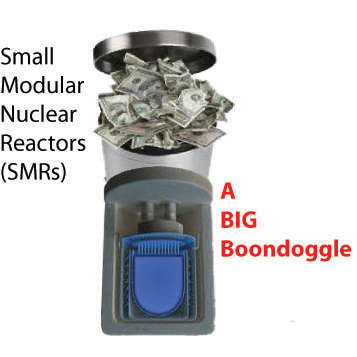
Small modular reactors and nuclear power represent a dangerous distraction from the changes needed to deal with global warming. https://www.desmoinesregister.com/story/opinion/columnists/iowa-view/2022/07/24/midamerican-energy-small-nuclear-reactors-uneconomical/10104142002/ Dr. Maureen McCue and Dr. M.V. Ramana, Yet again, MidAmerican Energy has expressed an interest in studying nuclear reactors for Iowa. Earlier, between 2010 and 2013, MidAmerican studied the feasibility of nuclear power for Iowa and concluded that it didn’t make sense. This time around, MidAmerican does not even have to embark on the study. We know already that the newest offerings from the nuclear industry, Small Modular Reactors, or SMRs, carry the same economic and environmental risks as their larger predecessors and make no sense for Iowa, or anywhere else for that matter.
In 2013, the Wall Street firm Lazard estimated that the cost of generating electricity at a new nuclear plant in the United States will be between $86 and $122 per megawatt-hour. Last November, Lazard estimated that the corresponding cost will be between $131 and $204 per megawatt-hour. During the same eight years, renewables have plummeted in cost, and the 2021 estimates of electricity from newly constructed utility-scale solar and wind plants range between $26 and $50 per megawatt-hour. Nuclear power is simply not economically competitive.
SMRs will be even less competitive. Building and operating SMRs will cost more than large reactors for each unit (megawatt) of generation capacity. A reactor that generates five times as much power will not require five times as much concrete or five times as many workers. This makes electricity from small reactors more expensive; many small reactors built in the United States were financially uncompetitive and shut down early.
The estimated cost of constructing a plant with 600 megawatts of electricity from NuScale SMRs, arguably the design closest to deployment in the United States, increased from about $3 billion in 2014 to $6.1 billion in 2020. The cost was so high that at least ten members of Utah Associated Municipal Power Systems canceled their contracts. NuScale then changed its proposed plant configuration to fewer reactors that produce only 462 megawatts at a cost of $5.32 billion. For each kilowatt of electrical generation capacity, that estimate is around 80% more than the per-kilowatt cost of the Vogtle project in Georgia — before its cost exploded from $14 billion to over $30 billion. Based on the historical experience with nuclear reactor construction, SMRs are very likely to cost much more than initially expected.
And they will be delayed. In 2008, officials announced that “a NuScale plant could be producing electricity by 2015-16.” Currently, the Utah project is projected to start operating in 2029-30. All this before the inevitable setbacks that will occur once construction starts.
Time is critical to dealing with global warming. According to the Intergovernmental Panel on Climate Change, emissions have to be reduced drastically by 2030 to stop irreversible damage from climate change.
Small reactors also are associated with all of the usual problems with nuclear power: severe accidents, the production of radioactive waste, and the potential for nuclear weapons proliferation. Indeed, some of these problems could be worse. For each unit of electricity generated, SMRs will actually produce more nuclear waste than large reactors. Whether generated by a large or small plant, nuclear waste remains radioactive and dangerous for hundreds of thousands of years. There is no demonstrated solution to permanently isolate this lethal waste, for both technical and social reasons.

Most new nuclear reactor designs will rely on water sources for cooling. Nuclear plants have some of the highest water withdrawal requirements; in the United States, the median value for water withdrawal was calculated as 44,350 gallons per megawatt-hour of electricity generated, roughly four times the corresponding figure for a combined cycle natural gas plant. Renewables require little or no water because there is no heat production. Iowa’s lakes and rivers are already challenged by the warming climate, existing power plants, and polluting industries.
In medicine, a basic principle used to guide our decisions is “first, do no harm.” That principle will be violated if Iowa embarks on building SMRs. Small modular reactors and nuclear power represent a dangerous distraction from the changes needed to deal with global warming. Investing in these technologies will divert money away from more sustainable and rapidly constructed solutions, including wind and solar energy, microgrids, batteries and other forms of energy storage, and energy-efficient devices.
Money Pit: Zelensky govt signals intent to default on tens of billions in foreign debts
Despite countless billions flooding into Ukraine, Kiev can’t pay its debts.
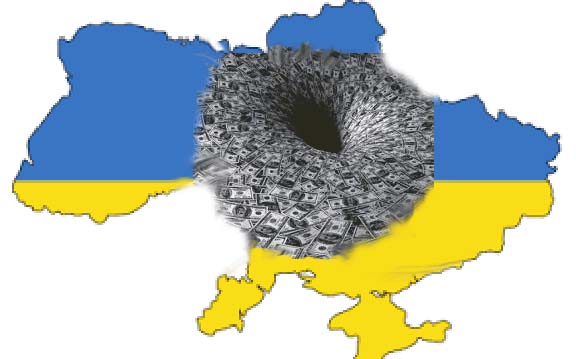
Jordan Schachtel Jul 21, 22, The Dossier, Western governments have allocated well over $100 billion to prop up Ukraine in its war against Russia, with countless billions more flooding into the country at an increasing pace. Yet as each day passes, it’s becoming more and more clear that all of the money awarded and assigned to Ukraine continues to dissolve into a black hole of secrecy, corruption, deceit, and now, default.
On Wednesday, Ukraine finance ministry asked foreign creditors to accept a delay in its debt repayments, requesting a two year freeze on billions of dollars in Eurobonds. Per the Financial Times, “a rescheduling would amount to a Ukrainian default” on Kiev’s tens of billions in foreign debt.
Financial Times @FinancialTimes: Although western financial support has increased since May, Kyiv is still counting on Ukraine’s central bank to buy its debt by selling foreign reserves or printing money, at the risk of setting off an inflationary spiral.
….. Despite all of the money coming in from around the world, Ukraine’s budget deficit has spiraled out of control. Zelensky’s office now claims to have a $9 billion monthly budget deficit, up 80% from just last month.
……………………. In addition to the government as a whole, Ukraine’s state-owned infrastructure and national energy companies have also announced their intent to default on international bonds. Earlier this week, Kiev announced that it has sold some $12+ billion in gold reserves since the start of the war.
The Western government creditors of Ukraine released a joint statement in support of Ukraine’s debt freeze, adding that they “will continue to closely coordinate and assess the situation with the support of the IMF and the World Bank.”
Translation: Western governments will continue to print huge amounts of cash and launch it in the direction of the Ukraine operation. ……. https://dossier.substack.com/p/money-pit-zelensky-govt-signals-intent
EDF worried that its delays in building Hinkley Point C nuclear station might lessen the huge subsidies it gets from the UK government
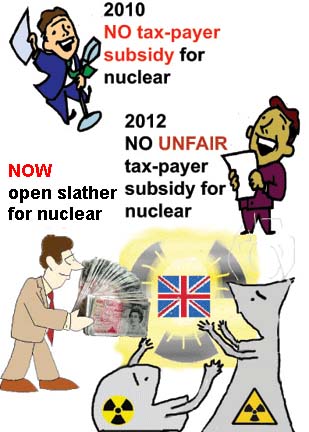
EDF pushes UK government to alter Hinkley Point C penalty clauses. EDF is trying to alter a key subsidy contract to avoid missing out on trillions of pounds in guaranteed revenue after the Covid-19 pandemic caused further delays to Hinkley Point C, the first new nuclear power station under construction in the UK in almost 30 years.
The French utility is in negotiations with the British government over penalty clauses in a
controversial agreement struck in 2013 to finance the building of the plant in Somerset.
EDF started work on the 3.2 gigawatt plant in 2016 but has repeatedly pushed back its completion date while costs have spiraled. In the latest setback, EDF warned in May that the first of Hinkley’s two reactors would not be completed until June 2027, 18 months behind schedule. It attributed 12 months of the delay to Covid-related problems, when it had to reduce staff on site from 5,000 to 1,500.
But the company cautioned that there was the possibility of a further 15-month delay to September 2028,
adding that date could slip again if there was another wave of pandemic or there were knock-on effects from the war in Ukraine.
Penalty clauses in the subsidy agreement — which guarantees a price that is more than double
those offered to developers of rival technologies such as offshore wind — would reduce the 35-year term if Hinkley is not generating electricity by May 2029.
EDF would lose one year of guaranteed payments for every year of delay up to 2033. If the delays extended beyond that date the government has the option to terminate the subsidy contract. EDF has already pushed the construction budget of Hinkley up several times with the revision in May raising the total cost by a further £3bn to as much as £26bn in 2015 prices, compared to an estimate of £18bn in 2016. Crooks said about a third of May’s revision to the budget was Covid-related. About £500mn was down to performance being “less than we would expect”, he added. The other cost overruns were due to issues such as completion of some of the outstanding design work and a failure to accurately estimate the quantities of materials, such as the number of bolts needed, to complete the build.
FT 21st July 2022
https://www.ft.com/content/cb715de2-1c95-4a13-8b48-33717b1dcc44
US Military Analyst: West Can’t Afford Ukraine Spending, Will Run Out of Ammo to Send to Kiev

Sputnik News 22 July 22…………………….What goals are the US and EU pursuing by pouring more money into the Ukrainian military?
Scott Ritter: The hope is to transform the conflict that is ongoing in Ukraine as a result of the Russian special military operation into a protracted conflict that can lead to a stalemate that would result in significant Russian costs, both in terms of manpower and military equipment, but also financial costs, and thereby weaken Russia. Ultimately what they are visualizing would be a Ukraine strong enough to evict Russia from its borders.
It’s not possible, this is fantasy in the extreme, but it’s politically inspired fantasy, meaning that the United States and its European allies have invested so much political capital into propping up the Ukrainian military and the Ukrainian government and the Ukrainian economy that even though most sound analysts understand that not only is Ukraine losing the conflict, but they can never win the conflict. Politically, Western politicians cannot divorce themselves from these policies. So in order to maintain a public perception at home of the chance of a Ukrainian victory, they will continue to squander the wealth of their respective nations.
Why are Western states prolonging the hostilities despite the growing discontent of their populations with economic problems?
Scott Ritter: There’s an old saying in the United States that I believe translates into most politics: “when you’re explaining, you’re losing.” And right now, these politicians would have to explain to their constituents why they were wrong about Ukraine, why they were wrong about Russia. And especially here in the United States, we’re dealing with the lead-up to very critical midterm elections. No politician wants to be explaining anything to anybody. They want to be shaping perceptions that build upon past performances. This is all about domestic politics. This has nothing to do with reality.
Why are Western states prolonging the hostilities despite the growing discontent of their populations with economic problems?
Scott Ritter: There’s an old saying in the United States that I believe translates into most politics: “when you’re explaining, you’re losing.” And right now, these politicians would have to explain to their constituents why they were wrong about Ukraine, why they were wrong about Russia. And especially here in the United States, we’re dealing with the lead-up to very critical midterm elections. No politician wants to be explaining anything to anybody. They want to be shaping perceptions that build upon past performances. This is all about domestic politics. This has nothing to do with reality. So it sounds good for a politician to be telling his or her constituents that we are providing the Ukrainians with the best equipment possible to include the top of the line fighter aircraft. What they really should be saying is we are guaranteeing that every Ukrainian pilot we train will die at the hands of the Russian Air Force, because that’s what the ultimate outcome will be.
The thing about, especially American, generals is that they are political animals. They didn’t get that fourth star necessarily because of their military competence. They got it because they impressed a politician with their political acumen. And so what we have is a general playing politics, a general who is saying what the politicians want to hear. And that’s not what his role is. His role is to provide sound military assessment, military advice to the politicians.
But if an American military officer did that today, they couldn’t agree with anything that the Biden administration or the US Congress was seeking to do in Ukraine, and therefore they would never get promoted. They would never get a good job. I don’t like to denigrate serving military officers, but this is a political decision, not a military decision, even though the man making it wears a military uniform.
Can the West collectively really afford such spending now, at a time of harsh polarization and soaring prices?
Scott Ritter: No, they can’t afford it. And we have some nations that are starting to realize this. The German defense minister, who is very hawkish against Russia, has acknowledged that Germany simply has no more weapons to give and they’re not in a position to build new weapons. They’re worrying about other economic realities. The same holds true with the United States.
At some point time in time, we are going to run out of materiel to give to Ukraine. I read somewhere that with all the HIMARS multiple launch rocket systems we’re providing to Ukraine, we’re also providing Ukraine with one third of the ammunition stockpiles for the HIMARS, meaning that we, the United States, only have two thirds of our ammunition stores available if we had to go to war, which means we will run out of ammunition.
This is insane, literally insane to be sacrificing the national security of the United States or of a European nation so that politicians can look and sound good for the next couple of weeks. But it will not change the equation on the battlefield in Ukraine. The Ukrainian Army is in an impossible situation. They literally cannot recover from the debacle that has befallen them.
The sad thing is that Ukrainian leaders are buying into the fiction provided by the West of if they just get more weapons, they can successfully defend against Russia. This means that more Ukrainian soldiers are going to die, more Russian soldiers are going to die, and tragically, more Ukrainian civilians are going to suffer.
Leaders of the Group of Seven recently pledged to stand with Ukraine “for as long as it takes.” How feasible is this pledge?
Scott Ritter: When the Group of Seven made that, one of the leaders was a guy named Boris Johnson. He’s not the leader anymore. The other guy was a gentleman whose last name was Draghi. He’s not the leader anymore. I think as the summer and the winter come along, more and more of these leaders are going to be removed from office because it’s an unsustainable policy. Politicians have a proclivity for saying things that have no basis in reality. It’s very inexpensive for a politician to say “we are going to support you forever.”
Forever in what sense? Boris Johnson is not supporting them forever – he’s out of power. Draghi is not supporting them forever – he’s out of power. And just about everybody who was on that stage at the G7 meeting will be out of power. Suddenly, we have a whole new definition of what “forever” means. It means “not now, not anymore.” https://sputniknews.com/20220721/us-military-analyst-west-cant-afford-ukraine-spending-will-run-out-of-ammo-to-send-to-kiev-1097671398.html
France’s costly nationalisation of the nuclear industry
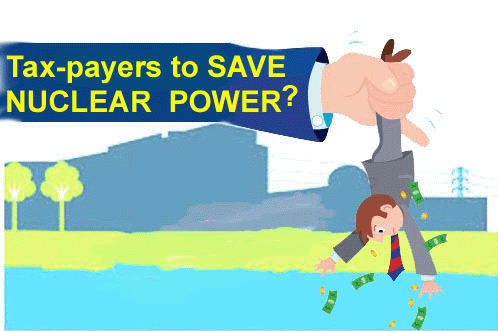
The French government is poised to pay nearly €10bn (£8.5bn) to fully
nationalise EDF as ministers attempt to tackle the European energy crisis.
The French finance ministry said on Tuesday it had offered €9.7bn or
€12 a share to buy the 16% of debt-laden EDF it does not already own. The
government of the French prime minister, Elisabeth Borne, government is
trying to shore up domestic energy supplies amid concerns over the finances
of the energy company, which is also building the Hinkley Point C nuclear
power station in Somerset.
Guardian 19th July 2022
https://www.theguardian.com/business/2022/jul/19/france-to-pay-nearly-10bn-to-fully-nationalise-edf
Employee shareholders to sue EDF over France nationising nuclear industry
An association of EDF employee shareholders announced on Sunday their plan
to sue the French state regarding its nationalisation of the power giant.
“Today the state needs to explain itself for the management as
ultra-majority stakeholder of the company,” the association “Energie en
actions” said in a statement.
The association holds that the government’s
decision goes against the interest of the company and the minority
shareholders, the statement added. The government will announce details of
its plan to fully nationalise the EDF, which runs the nation’s nuclear
power plants, by July 19.
Reuters 17th July 2022
Greencoat Capital Investing might be turning yellow – swallowing the climate lies of the nuclear industry.
One of Europe’s largest renewable energy investors is considering
creating a nuclear investment fund to take a stake in three of EDF’s
nuclear plants, it has been reported. Greencoat Capital, which currently
has more than £6bn under management and plans to grow over the coming
years, is considering taking a stake in the proposed Sizewell C plant in
Suffolk, according to The Times. The fund could also be invested in the
ongoing Hinkley Point C build in Somerset and the existing Sizewell B
plant.
Construction News 18th July 2022 https://www.constructionnews.co.uk/buildings/sizewell-c-major-fund-mulls-investment-18-07-2022/
Nationalisation of EDF seen as ‘inevitable’ to carry out France’s nuclear plans

EDF’s market capitalisation has collapsed in the past few years, going from €150 billion in 2007 to less than €40 billion today.
A debt estimated at more than €43 billion, fuelled by delays in constructing its new fourth-generation reactors, also puts the company in a difficult spot.
https://www.euractiv.com/section/energy/news/nationalisation-of-edf-seen-as-inevitable-to-carry-out-frances-nuclear-plans/ By Paul Messad | EURACTIV.fr | translated by Daniel Eck 18 July 22
The government’s decision to nationalise Electricité de France, announced on 6 July, provoked mixed reactions in the French Parliament.
Yet, according to Jean-Michel Gauthier, director of the Energy & Finance Chair at HEC Paris, the decision was “inevitable” because of the regulatory constraints faced by the company.
Under French law, EDF must sell part of its nuclear electricity to the competition at a set price (€42/MWh) and buy it back on the market like any other supplier.
But because of the pandemic and the war in Ukraine, the current market price stands above €200/MWh, according to France’s electricity transmission system operator RTE.
This means EDF is selling at a loss to feed the competition, something unions and many observers have decried as a “plundering” of the French company.
On top of that, the state has also asked EDF to dish out €8 billion for the so-called “tariff shield” to limit gas prices in times of crisis.
EDF’s market capitalisation has collapsed in the past few years, going from €150 billion in 2007 to less than €40 billion today.
A debt estimated at more than €43 billion, fuelled by delays in constructing its new fourth-generation reactors, also puts the company in a difficult spot.
But according to Professor Gauthier, the company’s debt “is not at all the subject”. It is even “irrelevant, with regard to the major subjects of energy and industrial policy in France,” he told EURACTIV.
According to Gauthier, the main challenges lie in the company’s vast nuclear programme. First, EDF will have to spend more than €50 billion by 2030 to extend the life of existing nuclear power plants.
As announced by President Emmanuel Macron in February, the French energy giant must also adopt measures to build six new fourth-generation EPR-type reactors. According to the latest estimates, that effort will cost €50-60 billion.
Going under full state ownership will offer EDF a debt guarantee, as well as lower rates to raise additional debt, Gauthier says.
More worrying, according to him, is the number of key points the state has dropped from its nuclear industrial policy in recent years.
“These are the major issues: what is to be done with the EPR 2, the third generation reactors, the ASTRID project and the small modular reactors (SMR),” he said.
The professor also questioned the state’s means to meet its pledged energy ambitions.
Renewables in all this?
However, these multi-billion euro projects only deal with nuclear without addressing EDF’s capacity to deploy renewable energies – another major priority of the government.
“Today, given the bubble around green finance, there is no reason for the state to own solar or wind power capacity,” explained Gauthier.
“We can therefore imagine [that we] go back to square one […], i.e. that the State puts the portfolio of EDF Renewables, a subsidiary wholly owned by EDF, on the market,” he added. This project could revive divisions between the state and the unions if green-lighted.
For the time being, it is necessary “to keep a single EDF”, the company’s CEO Jean-Bernard Lévy told broadcaster BFM TV on Monday (11 July).
EDF without renewables would be a dark “utopia”, he also said.
When it comes to energy-related decisions, the state must be the “only pilot” on board and the “only decision-maker”, Gauthier concluded.
Greencoat Capital UK to greenwash nuclear power?
Greencoat Capital is considering creating a nuclear investment fund to take
a stake in EDF’s proposed Sizewell C plant in Suffolk. The renewables
investment manager is eyeing a move into nuclear that could lead to the
fund investing in Hinkley Point C, under construction in Somerset, and the
existing Sizewell B plant. Bankers working for EDF and the UK government
are seeking investors to join them in funding the construction of Sizewell
C, which could power 6 million homes and is expected to cost at least £20
billion. Richard Nourse, Greencoat Capital’s founder, said: “My feeling
is that there’s a huge amount of money required. When you need a huge
amount of money, you normally have to price it to go, and therefore it will
be potentially an interesting investment. Given nuclear will be a
fearsomely complex and technically demanding area for UK pension funds to
evaluate risk, we see an opportunity for Greencoat to be a trusted adviser
and manager of funds.”
Times 16th July 2022
https://www.thetimes.co.uk/article/investment-firm-readies-nuclear-fund-j7xtbdqxl
BOEING’s executives rake $billions from tax-payers to spread weapons around the world

Taxpayers within the U.S. gave Boeing $21.33 billion through government contracts in 2020 alone.
While companies like Boeing continue to rake in billions from producing and selling weapons, there is a pathway for more communities to organize, to resist public dollars lining the pockets of war profiteers instead of going toward the public good.
”……………………………………………………………………Bush-Era Legislation Paves the Way for Corporate Exploitation,
Making commercial airplanes, what Boeing is most commonly known for, accounts for less than 30 percent of the company’s annual revenue. Boeing is primarily in the business of profiting from war and militarism, not airplanes. As the world’s third-largest profiter of weapons sales, the company rakes in billions in profit from arming the war on Yemen, Israel’s occupation of Palestine, and India’s ethnic cleansing of Kashmir.
Fifty-five percent of Boeing’s profits come from weapons sales, amounting to more than $32 billion in 2020, to both the U.S. government and 21 countries around the world. Taxpayers within the U.S. gave Boeing $21.33 billion through government contracts in 2020 alone. Chicago’s tax breaks for Boeing happened in the context of the company already reaping huge profit from public resources via U.S. government spending on things like military weapons, border surveillance and the creation of missile systems.
Boeing is in the business of selling weapons to governments that are used to wage war and enact state violence. In this case, a challenge to corporate tax incentives became a challenge to the whole business model of a war profiteer and a challenge to the idea that the public funds can or should subsidize militarism and profit.
Twenty years ago, Boeing’s move to Chicago was on the early edge of what has become a pattern of corporations relocating to places where they stand to benefit from tax incentives and mega-deals. Local governments compete to offer the best deals for the companies, which are often the worst deals for the public in terms of dollar-for-dollar outcomes.
This pattern was then codified and accelerated by President George W. Bush signing the “Job Creation & Worker Assistance Act” into law just months later in March 2002. Making way for corporations to pocket $300 billion over 10 years, this piece of legislation was a corporate tax break branded as a way to create jobs for everyday people. This narrative about corporations paying fewer taxes is rooted in the free market idea that relieving the “burden” of things like regulation and taxation allows corporations and the market to create economic growth, jobs and prosperity. However, what we see to actually be true is that corporations are driven by profit, something that is maximized via exploitation and extraction from our natural environment or, in this case, from public funds.
Then known as a Seattle-based company that makes airplanes, Boeing’s move in late 2001 exemplified a desire to separate their executives from their weapons manufacturing hubs and establish proximity to more global business leaders in a “world-class” city. In exchange for housing its headquarters in a downtown skyscraper and promising to maintain only 500 jobs to the city, Boeing would receive annual tax reimbursement checks from the City of Chicago, in addition to further tax breaks from the state. Even with an impressively low bar, Boeing repeatedly fell short and is now leaving the city after having taken in tens of millions of public dollars without consequence for its failure to deliver for Chicagoans or for the harm the company’s weapons have caused around the world.
Corporate Tax Incentives Benefit Executives, Not Residents or Workers
Corporations lured to cities and states by tax incentives consistently under-deliver and often are not held to whether they hold up their end of the bargain when it comes to providing jobs and economic growth in exchange for tax cuts. In 2017, then-Wisconsin Gov. Scott Walker brokered what was one of the largest corporate tax incentive deals ever approved. Electronics company Foxconn would receive more than $4 billion in state and local tax incentives on the premise of building a massive new factory that was to create 13,000 jobs.
Two years after the original deal was reached, plans for building a massive factory had been scaled back, and only 178 jobs were created. By 2021, the proposed factory and corresponding deal that former President Donald Trump lauded as being the “eighth wonder of the world” had shrunk dramatically in scope, and the contract was renegotiated after Governor Walker left office. Foxconn never delivered on visions of thousands of jobs created by a huge factory campus despite benefiting from more than a billion public dollars in forgone investment.
Despite the public narrative pushed by right-wingers, centrist Democrats and corporate elites — a narrative claiming that relieving taxes on corporations creates economic growth — those who stand to benefit most from these types of deals are high-level corporate executives, not workers or local residents. A recent study analyzing the effects of two specific corporate tax breaks showed that for every dollar a company benefits from certain tax breaks, the pay of the company’s top five executives increased by 17 percent to 25 percent.
Evidence does not support the idea that tax breaks actually result in higher wages or better jobs for workers. And a report published by the Action Center on Race and the Economy showed that in the case of Boeing specifically, “The creation of additional jobs and income as spending from the Boeing headquarters rippled through the economy was not significant.” This is despite the city and state giving $63 million in tax incentives to bring 500 jobs, which equate to about $126,000 per job per year financed by the city, most of which already existed before the move.
Imagine those funds invested in the public sector, in high-paying union jobs, dedicated to the programs and services that working communities are constantly seeking such as health care, education and needed social programs — we could create real jobs programs instead of lining the pockets of executives such as Boeing CEO David Calhoun, who recently bought a $2.7 million condominium in downtown Chicago………………………………….
Let’s Divert Resources From Militarized Violence to Community Investment
Not only does Boeing take resources away from other needed public goods and services by pulling in tax breaks and government contracts, it also profits from the production and sale of deadly weapons used to wage militarized violence around the world. Boeing earned over $62.29 billion in revenue in 2021.
Its fighter jets and helicopters were used in an attack that killed 256 Palestinians in May of last year. In the Saudi-led war on Yemen, the single largest weapon killing civilians has been guided missiles, of which Boeing had sold Saudi Arabia more than 6,000 guided bombs by 2019. In the 2016 bombing of a market in the Yemeni village of Mastaba, which killed 97 people (including 25 children), destroyed infrastructure and left massive destruction, Boeing weapons guidance kits were used to ensure the missile hit its target.
Boeing doesn’t limit its use of militarized technologies to violence abroad, however. Boeing is heavily involved in the lucrative business of militarizing the U.S.-Mexico border……………………………………..
While companies like Boeing continue to rake in billions from producing and selling weapons, there is a pathway for more communities to organize, to resist public dollars lining the pockets of war profiteers instead of going toward the public good. While Boeing leaving Chicago and taking its headquarters to Virginia may not be a standalone win, blocking the company from its last paycheck from the city and the precedent it sets certainly is. As local groups calling out Boeing emerge in more and more cities across the country, from the Washington, D.C., area to Seattle to St. Louis the company should expect and deserves heat wherever it goes.
Everyday people, like the young Black and Brown organizers resisting Boeing in Chicago, have the power to make it no longer politically acceptable to funnel public dollars toward the profits of a weapons-maker in any city. Wielding that power to make an impact requires us to be organized. It requires us to grow social movements that connect the dots between issues like militarized violence and corporate greed in order to paint a fuller picture of both what is wrong in the world and what is possible………………… https://truthout.org/articles/lets-replicate-chicagos-antiwar-organizing-victory-against-boeing/?eType=EmailBlastContent&eId=a0819f3e-09e9-4774-9b4a-fd30ff368bb3
France’s nationalisation of nuclear energy corporation EDF raises more questions than it answers
Just as Europe attempts to move away from its dependence on Russian gas and grapples with soaring power prices, problems at some of EDF’s existing 56 reactors in France have caused shutdowns and sent its energy output to multi-decade lows.
At the site of France’s first new nuclear reactor in more than 20 years, robots are whirring away fixing faulty welding as developer EDF races to open the plant after a decade of delays that have damaged its reputation.
Ahead of it lies a challenge of a different order of magnitude: a construction program to build six more, just as the French government, which owns 84 per cent of the business already, plans to take full control.
The full nationalization of EDF, which was announced earlier this month, comes as a series of crises pile pressure on the group’s finances.
In theory this will provide it with some relief away from the glare of public markets. So far, however, the state buyout has raised more questions than it has answered, including how the government thinks it might do a better job at fixing long-running industrial problems that have plagued projects at EDF, some of them as basic as a lack of experienced welders. “It’s not because the government will now have 100 percent that it’s going to suddenly take three years less to build a reactor,” one person close to the company said. “Right now, we’re in symbolic territory with this nationalization. It does not resolve any of the main problems we know the group is facing – will it allow EDF to bolster the skills it needs?” said Cécile Maisonneuve, a senior adviser at the center for energy and climate at French think thank IFRI. “None of the industrial or regulatory issues were linked to its capital structure.”
Just as Europe attempts to move away from its dependence on Russian gas and grapples with soaring power prices, problems at some of EDF’s existing 56 reactors in France have caused shutdowns and sent its energy output to multi-decade lows.
FT 17th July 2022
https://www.ft.com/content/7d7225ad-dd3b-4b95-95a6-c270a0089277
1 This Month



26 September – International Day for the Total Elimination of Nuclear Weapons


PLEASE OPPOSE HR 8255 AND S.3639 – bills would accelerate satellite deployment, with no environmental review or safeguards – https://ncstd5li.quorum.us/campaign/169331/
To see nuclear-related stories in greater depth and intensity – go to https://nuclearinformation.wordpress.com
-
Archives
- September 2026 (233)
- August 2026 (330)
- July 2026 (355)
- June 2026 (287)
- May 2026 (306)
- April 2026 (356)
- March 2026 (251)
- February 2026 (267)
- January 2026 (308)
- December 2025 (358)
- November 2025 (359)
- October 2025 (375)
-
Categories
- 1
- 1 NUCLEAR ISSUES
- business and costs
- climate change
- culture and arts
- ENERGY
- environment
- health
- history
- indigenous issues
- Legal
- marketing of nuclear
- media
- opposition to nuclear
- PERSONAL STORIES
- politics
- politics international
- Religion and ethics
- safety
- secrets,lies and civil liberties
- spinbuster
- technology
- Uranium
- wastes
- weapons and war
- Women
- 2 WORLD
- ACTION
- AFRICA
- Atrocities
- AUSTRALIA
- Christina's notes
- Christina's themes
- culture and arts
- Events
- Fuk 2022
- Fuk 2023
- Fukushima 2017
- Fukushima 2018
- fukushima 2019
- Fukushima 2020
- Fukushima 2021
- general
- global warming
- Humour (God we need it)
- Nuclear
- RARE EARTHS
- Reference
- resources – print
- Resources -audiovicual
- Weekly Newsletter
- World
- World Nuclear
- YouTube
-
RSS
Entries RSS
Comments RSS
 nuclear-news