Increasingly economical renewables mean now’s no time for South Korea to cling to nuclear power
In these changing times, it is unfortunate that Korea is choosing to cling to the nuclear industry, the marketability of which is becoming increasingly unclear.
https://english.hani.co.kr/arti/english_edition/english_editorials/1051124.html Jul.15,2022
The new administration’s nuclear power advocacy runs counter to global trends toward renewables.
A new report released by the International Renewable Energy Agency (IRENA) has revealed that global solar and wind power generation costs are down 13%-15% compared to one year ago.
According to IRENA’s “Renewable Power Generation Costs in 2021” report released on Wednesday, the global weighted average levelized cost of electricity (LCOE) of new onshore wind projects added in 2021 fell by 15% year on year while that of new utility-scale solar PV and offshore wind both declined by 13%.
The report explains that the LCOE of a given technology is the ratio of lifetime costs to lifetime electricity generation; it is used as a measure to compare the economic feasibility of the various methods of generating electricity.
In 2021, renewables’ share of total power generation capacity growth reached 81%. It seems that these figures continue to improve as the economy gets stronger.
In Korea, however, the perception that nuclear power equals cheap energy is still strong. This is despite the fact that globally, renewable energy dominates nuclear power in terms of economic feasibility.
According to a report released by Lazard, a global asset management company, in October of last year, the average cost of electricity per megawatt-hour (MWh) of solar power fell by 90%, from $359 in 2009 to $36 last year. Wind power also fell 72% from $135 to $38.
Comparatively, nuclear power saw a 36% increase in cost from $123 to $167 during the same period. In fact, nuclear power has already become 4.5 times more expensive than renewable energy.
This is because, while technology is developing day by day as investment into renewable energy increases in step with the global trend of transitioning to cleaner energy sources, construction costs for nuclear power plants are increasing as safety regulations are strengthened after the Fukushima incident.
Advanced economies, particularly those in Europe, are scrambling to come up with energy policies centered on renewable energy. To this end, the EU announced in May that it would increase the share of renewable energy from the current 22% to 45% by 2030. This is an upward revision of the 40% target set a year ago.
The change is reportedly aimed at quickly getting rid of Europe’s dependency on Russian energy. In other words, Europe seems to be choosing to expand its use of renewable energy as a solution to its current energy crisis.
South Korea, however, is running counter to this trend by advocating to become a leader in the nuclear power field. By 2030, the proportion of Korea’s energy mix derived from nuclear power will increase to more than 30% while the proportion of renewable energy will reportedly be adjusted to a “reasonable” level.
The plan is to lower the existing renewable energy target, which stands at 30.2% by 2030, because it is perceived as being too high.
In the near future, whether or not companies use renewable energy is likely to act as a new trade barrier. In these changing times, it is unfortunate that Korea is choosing to cling to the nuclear industry, the marketability of which is becoming increasingly unclear.
Problem maintenance outage at Lepreau nuclear plant adds to N.B. Power money troubles

Costly spring shutdown of Point Lepreau nears day 100
Robert Jones · CBC News Jul 15, 2022
A troubled maintenance outage at the Point Lepreau nuclear generating station that began back in April has dragged on a month longer than planned and is adding to the financially challenged utility’s money troubles by the day.
N.B. Power expects Lepreau will be back in service sometime next week after what has turned into a 100-day outage, but with key work left unfinished. This work will require additional downtime next spring to fully complete…………………………
Point Lepreau is N.B. Power’s most important generating station, but its reliability has been a frustration since it emerged from a 4½-year, $2.4-billion refurbishment in late 2012.
In its annual reports, N.B. Power claims unscheduled outages at the nuclear plant cost the utility’s bottom line between $28,500 and $45,700 per hour depending on the time of year and market conditions, plus the cost of required repairs.
According to filings with the New Brunswick Energy and Utilities Board, Lepreau has experienced 8,000 more hours of downtime than projected since 2012, not including the current outage.
That has been a major factor in N.B. Power missing corporate profit targets for the last six years in a row and failing to execute on plans to reduce its debt load
In a third-quarter financial update released in February, N.B. Power reported its net debt hit $4.97 billion on December 31, 2021. That’s $40 million higher than last year and $810 million above levels it had projected for itself just six years ago………………………………………
more https://www.cbc.ca/news/canada/new-brunswick/nb-power-lepreau-maintenance-1.6520978—
Uranium is losing the new energy market battle.
Uranium is losing the new energy market battle. Uranium is being bypassed
in the rush to embrace renewable wind and solar energy sources, leaving
nuclear power floundering well short of its once anticipated potential.
Mining Journal 14th July 2022
No end to nuclear costs for UK taxpayers
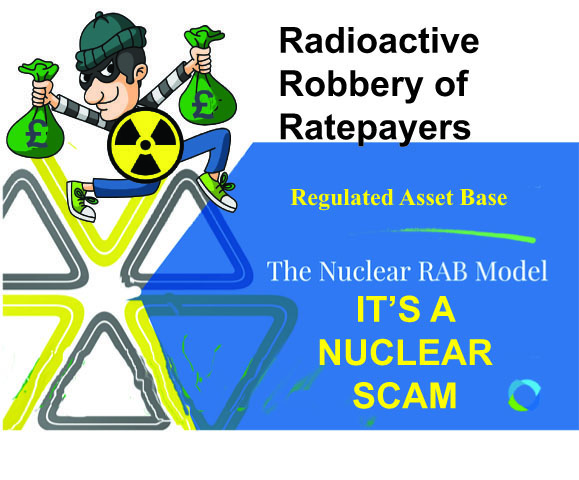
Varrie Blowers unpacks the impacts of the Nuclear Industry (Financing) Act
2022 in BANNG’s Regional Life column for June 2022.
Heard the fantasy about constructing an airport in the Thames estuary? And the one about
constructing a bridge from Scotland to Northern Ireland?
Well, there is a new fantasy going the rounds: that eight new nuclear power stations will be
constructed in the UK in the next decade. And where is the Government proposing to obtain the huge sums required for construction? From your pocket, of course! Under the Nuclear Industry (Financing) Act, 2022, it is intended that in order to attract investors a levy will be added to consumers’ energy bills to pay the upfront costs. Energy Minister, Kwasi Kwarteng, thinks this will be ‘a small amount’ but at this time of
soaring energy bills seems unable to reveal the actual figure. And, on top of this, taxpayers will be paying £1.7bn to enable a large-scale nuclear
plant to achieve a final investment decision in this Parliament.
BANNG 13th June 2022
EDF the first company to take advantage of the European Union’s taxonomy classification of nuclear power as ”green”
EDF has become the first issuer to harness last week’s hard-fought
inclusion of nuclear power in the European Union’s taxonomy of
sustainable activities and will use a new green financing framework to
support nearly €8bn of annual nuclear spending.
IFR 12th July 2022
https://www.ifre.com/story/3439095/edf-galvanises-nuclear-green-bonds-d6zm8jhtf5
France and the big nuclear energy mistake

The French government wants to expand nuclear production in France and it also wants EDF to spend big money on the rehabilitation of numerous nuclear power generating stations. It has put pressure on EDF to embrace those policies and we suspect that it could force the issue as the majority shareholder.
France plans to renationalize EDF, its giant utility. That doesn’t sound like a big deal because the government already owns 84% of EDF’s outstanding shares.
But here is how we read the story.
The French government wants to expand nuclear production in France and it also wants EDF to spend big money on the rehabilitation of numerous nuclear power generating stations. It has put pressure on EDF to embrace those policies and we suspect that it could force the issue as the majority shareholder.
But a board of directors, with a fiduciary responsibility to shareholders and other providers of capital, would have a hard time approving a strategy that looked too risky or economically uncompetitive. EDF is, after all, not a division of the ministry of defense, but rather a somewhat privatized company with the government as its biggest and controlling shareholder. At least that is the appearance it would want to give to its shareholders. If France requires more nuclear power for geopolitical or strategic reasons,
despite its seeming cost disadvantage in the marketplace, we have no quarrel with that decision.
Our issue is with the current policy—to require some non-governmental shareholders to bear national security burdens and take financial risks that really belong uniquely to the government. The French have approached the matter with admirable clarity.
Oil Price 8th July 2022
https://oilprice.com/Energy/Energy-General/Europes-Big-And-Expensive-Energy-Mistake.html
Nationalisation of French energy giant EDF means it is unlikely to spearhead future nuclear power projects in UK, according to top industry insider
By FRANCESCA WASHTELL, FINANCIAL MAIL ON SUNDAY,
The nationalisation of French energy giant EDF means it is unlikely to spearhead future nuclear power projects in the UK, according to a top industry insider.
The Hinkley Point C developer will instead focus investment on reactors in France, the source said.
French Prime Minister Elisabeth Borne announced last week that the state would buy the 16 per cent of shares in EDF it does not already own.
EDF, one of Britain’s big household energy suppliers, will continue work on Hinkley in Somerset, as well as Sizewell C in Suffolk, which is still being approved by the UK Government.
But the source said EDF would now shift its focus to France as it battles the energy crisis sweeping Europe, adding: ‘The odds of it putting money into another UK plant are incredibly small.
‘This has been a long time coming because being fully nationalised means it can put more money into French projects without having to worry about state aid.’ ……………………………… https://www.thisismoney.co.uk/money/markets/article-10998301/Nationalised-EDF-wont-build-new-nuclear-sites-UK.html
France’s government working out how to take full control of indebted nuclear company EDF
Banks line up for French state buyout of EDF. The French government is
working with Goldman Sachs and Société Générale as it explores taking
full control of utility EDF, with a tender offer to minority shareholders
the preferred option, according to people familiar with the matter. The
government announced this week it would take back the 16 per cent of EDF it
does not already own, saying the move would bolster the energy group’s
finances as it prepares for more investment in expensive nuclear reactors
and allow France to gain even greater control on its electricity production
as Europe is rocked by an energy crisis. The government has yet to detail
how it will take full ownership of the indebted company. A public offer to
EDF shareholders, rather than trying to push a nationalization bill through
parliament, appears to be the quickest and most feasible plan, according to
three people familiar with the matter.
FT 8th July 2022
https://www.ft.com/content/96336649-eff5-44af-850b-8996d4bde19c
America’s $1.4 Trillion So-Called “National Security” Budget Makes Us Less Safe—Not More
America and the world would be far safer places if this outrageous spending was drastically cut and those funds redirected to “moral” investments in people, society, and planetary health—not war and weapons.
Common Dreams WILLIAM HARTUNG, July 7, 2022 by TomDispatch
This March, when the Biden administration presented a staggering $813 billion proposal for “national defense,” it was hard to imagine a budget that could go significantly higher or be more generous to the denizens of the military-industrial complex. After all, that request represented far more than peak spending in the Korean or Vietnam War years, and well over $100 billion more than at the height of the Cold War.
It was, in fact, an astonishing figure by any measure — more than two-and-a-half times what China spends; more, in fact, than (and hold your hats for this one!) the national security budgets of the next nine countries, including China and Russia, combined. And yet the weapons industry and hawks in Congress are now demanding that even more be spent.
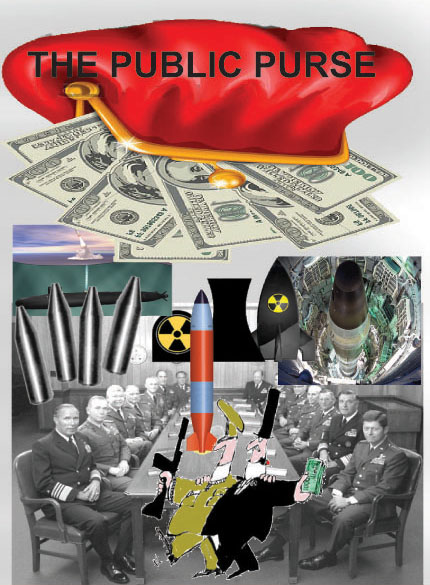
In recent National Defense Authorization Act proposals, which always set a marker for what Congress is willing to fork over to the Pentagon, the Senate and House Armed Services Committees both voted to increase the 2023 budget yet again — by $45 billion in the case of the Senate and $37 billion for the House. The final figure won’t be determined until later this year, but Congress is likely to add tens of billions of dollars more than even the Biden administration wanted to what will most likely be a record for the Pentagon’s already bloated budget.
This lust for yet more weapons spending is especially misguided at a time when a never-ending pandemic, growing heat waves and other depredations of climate change, and racial and economic injustice are devastating the lives of millions of Americans. Make no mistake about it: the greatest risks to our safety and our future are non-military in nature, with the exception, of course, of the threat of nuclear war, which could increase if the current budget goes through as planned.
But as TomDispatch readers know, the Pentagon is just one element in an ever more costly American national security state. Adding other military, intelligence, and internal-security expenditures to the Pentagon’s budget brings the total upcoming “national security” budget to a mind-boggling $1.4 trillion. And note that, in June 2021, the last time my colleague Mandy Smithberger and I added up such costs to the taxpayer, that figure was almost $1.3 trillion, so the trend is obvious.
To understand how these vast sums are spent year after year, let’s take a quick tour of America’s national security budget, top to bottom.
The Pentagon’s proposed “base” budget, which includes all of its routine expenses from personnel to weapons to the costs of operating and maintaining a 1.3 million member military force, came in at $773 billion for 2023, more than $30 billion above that of 2022. Such an increase alone is three times the discretionary budget of the Centers for Disease Control and Prevention and more than three times the total allocation for the Environmental Protection Agency.
In all, the Pentagon consumes nearly half of the discretionary budget of the whole federal government, a figure that’s come down slightly in recent years thanks to the Biden administration’s increased investment in civilian activities. That still means, however, that almost anything the government wants to do other than preparing for or waging war involves a scramble for funding, while the Department of Defense gets virtually unlimited financial support.

And keep in mind that the proposed Biden increase in Pentagon spending comes despite the ending of 20 years of U.S. military involvement in Afghanistan, a move that should have meant significant reductions in the department’s budget. Perhaps you won’t be surprised to learn, however, that, in the wake of the Afghan disaster, the military establishment and hawks in Congress quickly shifted gears to touting — and exaggerating — challenges posed by China, Russia, and inflation as reasons for absorbing the potential savings from the Afghan War and pressing the Pentagon budget ever higher.
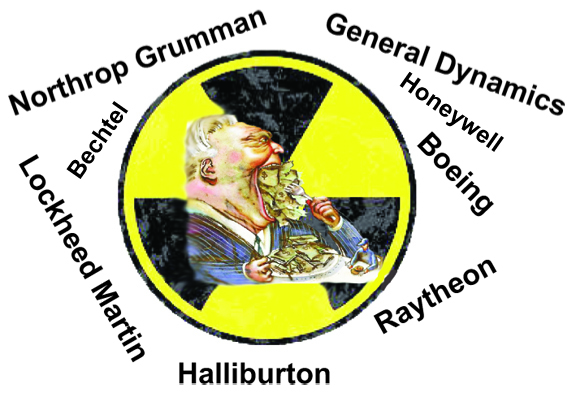
It’s worth looking at what America stands to receive for its $773 billion — or about $2,000 per taxpayer, according to an analysis by the National Priorities Project at the Institute for Policy Studies. More than half of that amount goes to giant weapons contractors like Raytheon and Lockheed Martin, along with thousands of smaller arms-making firms.
The most concerning part of the new budget proposal, however, may be the administration’s support for a three-decades long, $1.7-trillion plan to build a new generation of nuclear-armed missiles (as well, of course, as new warheads to go with them), bombers, and submarines. As the organization Global Zero has pointed out, the United States could dissuade any country from launching an atomic attack against it with far fewer weapons than are contained in its current nuclear arsenal. There’s simply no need for a costly — and risky — nuclear weapons “modernization” plan. Sadly, it’s guaranteed to help fuel a continuing global nuclear arms race, while entrenching nuclear weapons as a mainstay of national security policy for decades to come. (Wouldn’t those decades be so much better spent working to eliminate nuclear weapons altogether?)
The riskiest weapon in that nuclear plan is a new land-based, intercontinental ballistic missile (ICBM). As former Secretary of Defense William Perry once explained, ICBMs are among “the most dangerous weapons in the world” because a president warned of a nuclear attack would have only a matter of minutes to decide whether to launch them, increasing the risk of an accidental nuclear war based on a false alarm. Not only is a new ICBM unnecessary, but the existing ones should be retired as well, as a way of reducing the potential for a world-ending nuclear conflagration……………………..
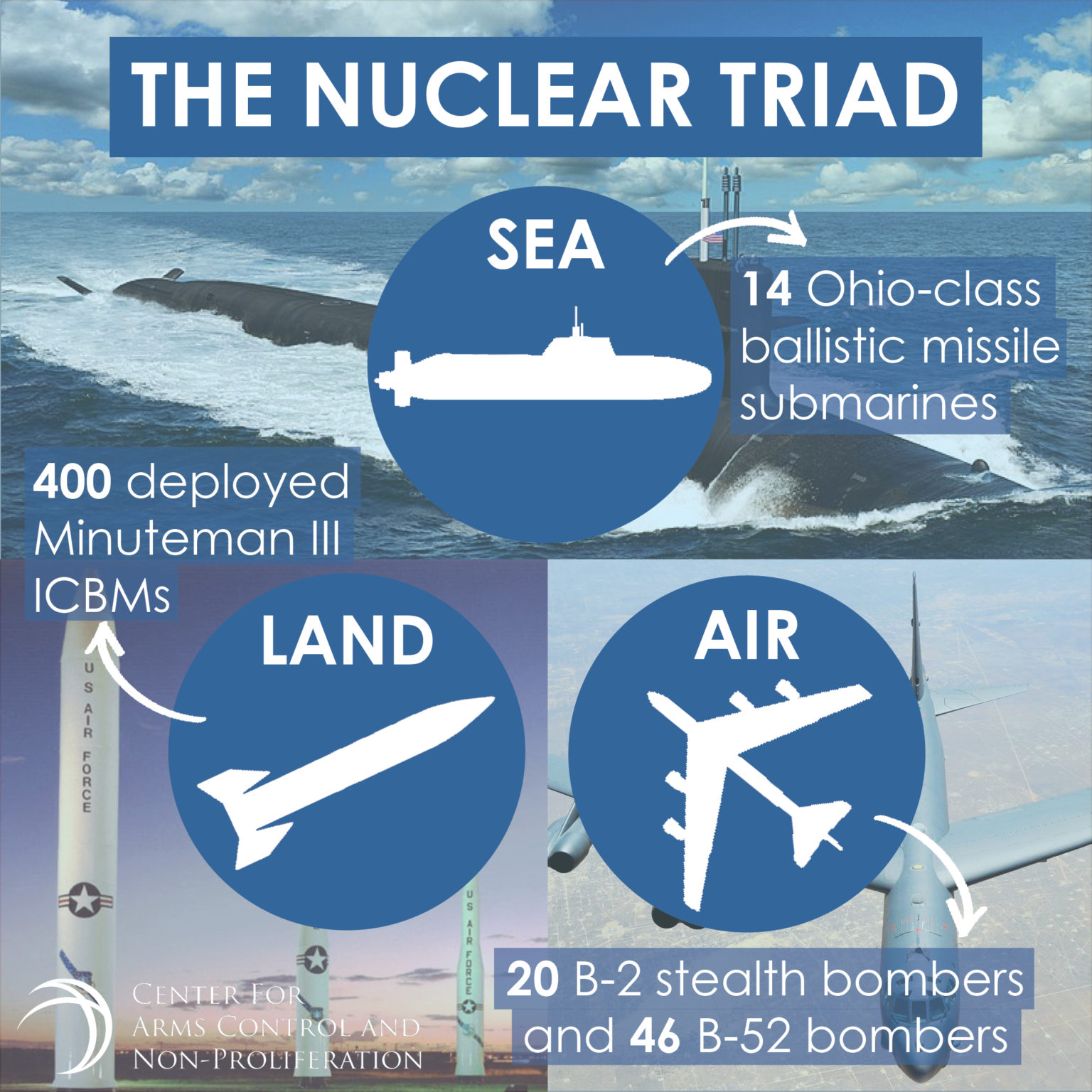
The Nuclear Budget
The average taxpayer no doubt assumes that a government agency called the Department of Energy (DOE) would be primarily concerned with developing new sources of energy, including ones that would reduce America’s dependence on fossil fuels to help rein in the ravages of climate change. Unfortunately, that assumption couldn’t be less true.
Instead of spending the bulk of its time and money on energy research and development, more than 40% of the Department of Energy’s budget for 2023 is slated to support the National Nuclear Security Administration (NNSA), which manages the country’s nuclear weapons program, principally by maintaining and developing nuclear warheads. Work on other military activities like reactors for nuclear submarines pushes the defense share of the DOE budget even higher. The NNSA spreads its work across the country, with major locations in California, Missouri, Nevada, New Mexico, South Carolina, Tennessee, and Texas. Its proposed 2023 budget for nuclear-weapons activities is $16.5 billion, part of a budget for defense-related projects of $29.8 billion……………………………
Our Misguided Security Budget
Spending $1.4 trillion to address a narrowly defined concept of national security should be considered budgetary malpractice on a scale so grand as to be almost unimaginable — especially at a time when the greatest risks to the safety of Americans and the rest of the world are not military in nature. After all, the Covid pandemic has already taken the lives of more than one million Americans, while the fires, floods, and heat waves caused by climate change have impacted tens of millions more.
Yet the administration’s proposed allocation of $45 billion to address climate change in the 2023 budget would be less than 6% of the Pentagon’s proposed budget of $773 billion……………………………….. https://www.commondreams.org/views/2022/07/07/americas-14-trillion-so-called-national-security-budget-makes-us-less-safe-not-more
The Corporatization of Space.

The Corporatization of Just About Everything,
Consortium News, Tom Valovic, July 6, 2022………………………………………… let’s draw on the self-declared wisdom of Time magazine for guidance. (This is a publication that’s now in the Big Tech/Big Media” camp as it’s now owned by the CEO of Salesforce.com). In the same issue, another article gushed over the fact that corporations are poised to dominate the exploration and use of space:“….NASA made it clear that when that clock does toll, the U.S. will be getting out of the space station game, likely for good. Instead, the space agency signed a $415.6 million seed money deal with three companies — Blue Origin, Nanoracks, and Northrop Grumman — to develop their own private space stations, on which NASA and other customers could lease space for professional crews and tourists. The article goes on to point out that, in a press statement, a NASA spokesperson boasted that….
” NASA is once again leading the way to commercialize space activities” and that “we are partnering with U.S. companies to develop the space destinations where people can visit, live, and work.”
It seems abundantly clear that the top-down corporate model of governance is fundamentally anti-democratic by its very nature and the waning power and direction of our democratic institutions worldwide has much to do with this fact.
…. uncontrolled and uncontrollable market forces are no substitute for thoughtful and enlightened public policy and democratic norms. Granted, this is in short supply these days but allowing corporations to fill that void is hardly a solution.
As our glorious planet continues to experience crisis after crisis, it’s sad and troubling that there seems to be no shortage of profiteers looking to make an easy buck off the spoils. It seems abundantly clear that the top-down corporate model of governance is fundamentally anti-democratic by its very nature and the waning power and direction of our democratic institutions worldwide has much to do with this fact……. https://consortiumnews.com/2022/07/06/the-corporatization-of-just-about-everything/
Tom Valovic is a journalist and the author of Digital Mythologies (Rutgers University Press), a series of essays that explored emerging social and political issues raised by the advent of the Internet. He has served as a consultant to the former Congressional Office of Technology Assessment. Tom has written about the effects of technology on society for a variety of publications including Columbia University’s Media Studies Journal, the Boston Globe, and the San Francisco Examiner, among others.
Why would anybody invest in Sizewell C nuclear plant? – An unlikely proposition?
Why would anybody invest in Sizewell C nuclear plant? – An unlikely
proposition? The Government has tasked Barclays Bank with finding investors
for the proposed Sizewell C (SZC) plant.
Reports surfaced in the Mail on
Sunday that Centrica is planning on taking a stake in the company. Perhaps
the fact that the report emerged in the Mail on Sunday rather than the
Financial Times is a sign that the decision is still subject to vagaries.
This report has me scratching my head so hard it hurts!
Why would Centrica,
which in 2016 abandoned plans to invest in Hinkley C partly because of
‘the lengthening time frame for a return on the capital invested in a
project of this scale‘ now opt for an investment in SZC? After all the
doubt about return on investments in SZC may be viewed as, if anything,
even more threadbare, to that of Hinkley C.
100% Renewables 7th July 2022
Rolls Royce lacking investment for its planned small nuclear reactors
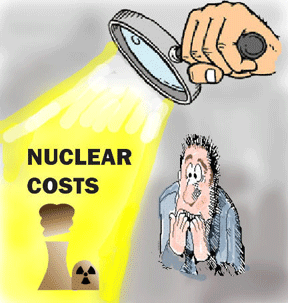
Nuclear: Rolls-Royce lacking investment for its SMRs. The manufacturer
presented its short-list of British sites to launch the manufacture of its
small modular reactors. But the technology is far from ready.
L’Opinion 6th July 2022
https://www.lopinion.fr/international/nucleaire-rolls-royce-en-manque-dinvestissement-pour-ses-smr
Nuclear energy consumption hit new low in ‘21, EIA says
By ExchangeMonitor
United States consumption of electricity produced by nuclear power plants last year hit its lowest point in nearly a decade, the government’s independent energy auditor said last week. According to a report published Friday by the U.S. Energy Information Administration…… [subscribers only] https://news.wisc.edu/nuclear-war-would-turn-oceans-upside-down-crash-food-web/
While Biden Gives Ukrainian Army “The Most Lethal Weapon,” War Profiteer BAE Systems Stock Soars

During the 2020 U.S. election campaign, BAE Systems donated $569,202 to Democratic Party candidates, and $452,594 to Republicans, according to opensecrets.org.
Joe Biden received $102,591 compared to $94,966 for Donald Trump.
This amounts to chump change for the company: Shares in BAE Systems have reached an all-time high since the Russian invasion of Ukraine, rising by 28 percent over ten weeks to give BAE a stock market value of £24 billion and putting it among the largest 25 companies in the Financial Times Stock Exchange.
CovertAction Magazine. By Jeremy Kuzmarov, June 27, 2022
Sending Ukraine a $300 million shipment of powerful M-777 howitzers is a lobbying triumph for BAE Systems, one of the many war industry corporations fattening on the death and destruction of the Ukraine war
n June 15, the Biden administration announced that it was providing an additional $1 billion in military aid to Ukraine in a package that includes shipments of M-777 howitzers, ammunition and coastal defense systems.
While that announcement was being made, the Ukrainian army was shelling Donetsk, the capital of the Donetsk People’s Republic, with the U.S.-supplied howitzers along with French guns, according to The Donbass Insider, killing five civilians and wounding seven firefighters.
The attacks were being carried out from Ukrainian positions in Peski, a village not far from Donetsk airport.
According to a video produced by journalist Patrick Lancaster, a U.S. naval veteran who has reported on the war in eastern Ukraine over the last eight years, there were no military targets in the areas shelled by the Ukrainian army, only civilians.
Bringing Ukraine Closer to Victory?
Consistent with a society that used military technologies to subdue the native populations, most Americans subscribe to the belief that new superweapons can deliver salvation in wars.[1]
They ignore the dictum of German theorist Karl von Clausewitz that war is “politics by other means,” meaning that victory can only be achieved by aligning with the right side—which does not appear to be the case for Ukraine.
The New York Times characterized the M-777 howitzer—which made its debut in Afghanistan in 2005—as “the most lethal weapon the West has provided [to Ukraine] so far.”
Highly portable by land, air and sea, it can fire as far as 40 kilometers away or 25 miles—further than Russia’s primary artillery system—and is capable of striking within 10 meters of a target when coupled with the M982 Excalibur precision guided munition, which Canada has sent to Ukraine.[2]…………..
The American Legion reported that the United States had already sent 108 M-777 howitzers to Ukraine before the most recent aid package was signed by President Biden.
The Pentagon claimed that the howitzers had an immediate impact upon their arrival on May 8, enabling the Ukrainians to “go on the counter-offensive in the Donbas” and “take back some towns the Russians had taken in the past.”
Colonel Roman Kachur, commander of Ukraine’s 55th Artillery Brigade, told The New York Times that “this weapon [the howitzer] brings us closer to victory. With every modern weapon, every precise weapon, we get closer to victory.”
However, The New York Times reported on June 20 that Russian forces “appeared poised to tighten the noose around thousands of Ukrainian troops near two strategically important cities in the Donbas,” mounting an “assault on Ukrainian front lines.”[3]
So a Ukrainian victory appears far off.
The Russian Interior Ministry reported that it had destroyed U.S.-made howitzers through use of attack drones.
Former UN weapons inspector Scott Ritter wrote that Ukrainian dependence on Western artillery they were unfamiliar with resulted in a ten-fold disparity in firepower with Russia which was destroying Ukrainian defensive positions with minimal risk to its troops.
NATO Secretary-General Jens Stoltenberg warned that the Ukraine War could “last for years,” meaning we are looking at another Vietnam.
Merchants of Death
The M-777 howitzer is made by the U.S. division of BAE Systems, the largest arms manufacturer in Europe, which has supplied Ukraine with 400,000 rounds of munitions, anti-tank guided missiles and armored vehicles equipped with anti-aircraft missiles.
Former CIA Director Gina Haspel, who observed waterboarding at a CIA black site, sits on the company’s Board of Directors.
In March, BAE Systems ironically bankrolled an arms fair in Riyadh, Saudi Arabia, where sanctioned Russian weapons makers showed off some of the weapons they were using in Ukraine, including tanks, helicopters and drones.
During the 2020 U.S. election campaign, BAE Systems donated $569,202 to Democratic Party candidates, and $452,594 to Republicans, according to opensecrets.org.
Joe Biden received $102,591 compared to $94,966 for Donald Trump.
Additional recipients of BAE’s largesse included such anti-Russia hawks as House Speaker Nancy Pelosi (D-CA—$7,373); Steny Hoyer (D-MD—$10,000), Chuck Schumer (D-NY—$5,605); Liz Cheney (R-WY—$3,259 and another $5,500 in 2022); Jamie Raskin (D-MD—$4,089); Adam Schiff (D-CA—$8,036); Mitch McConnell (R-KY—$9, 289), James Inhofe (R-OK-$13,300) and Lindsey Graham (R-SC-$11,383).[4]
So far this year, BAE Systems has spent $940,000 on lobbying Congress; in 2021, it spent $3.63 million.[5]
This amounts to chump change for the company: Shares in BAE Systems have reached an all-time high since the Russian invasion of Ukraine, rising by 28 percent over ten weeks to give BAE a stock market value of £24 billion and putting it among the largest 25 companies in the Financial Times Stock Exchange.
In a blatant conflict of interest, a number of Tories in England’s Upper House of Parliament—notably Lord Glendonbrook, Viscount Eccles and Lord Sassoon, and unaffiliated peers Lord Lupton and Lord Gadhia—each own shares of at least £50,000 in BAE Systems.[6]
Samuel Perlo-Freeman, research coordinator for the campaign against the arms trade, said that BAE Systems “like other major world arms companies, are seeing their share prices soar in response to the war on Ukraine, as European countries prepare to massively rearm, doubling down on the very militarism that has created so much death and suffering in Ukraine, Yemen and elsewhere.”[7]
In May, BAE Systems’ CEO, Dr. Charles Woodburn, told investors: “We see opportunities to further enhance the medium-term outlook as our customers address the elevated threat environment.”
Which really means that, by antagonizing the Russians, great profits can be made in the Ukraine War and any compromise or diplomatic solution that might end the war should be rejected.
References: ………………………………………….. https://covertactionmagazine.com/2022/06/27/while-biden-gives-ukrainian-army-the-most-lethal-weapon-war-profiteer-bae-systems-stock-soars/1
USA now desperately trying to flog off NuScam’s small nuclear reactors to Europe, starting with Romania
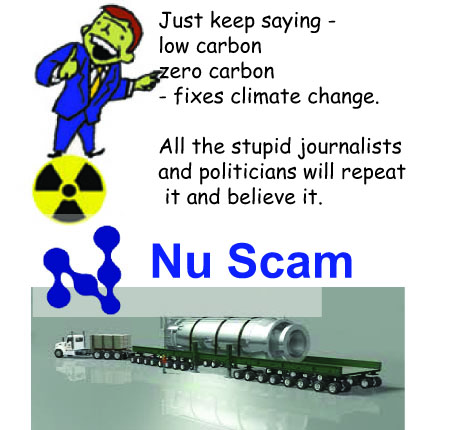
U.S. funds study for NuScale SMR deployment in Romania, https://www.power-eng.com/nuclear/u-s-funds-study-for-nuscale-smr-deployment-in-romania/
By Kevin Clark 6.27.2022 The United States will commit $14 million toward a front-end engineering and design (FEED) study for the basis of deploying NuScale’s small modular reactor (SMR) in Romania.
President Biden made the announcement June 26 at the G7 Leaders’ Summit in Germany. The funding is part of the administration’s Partnership for Global Infrastructure and Investment (PGII), aimed at narrowing infrastructure gaps around the world, including through clean energy deployments.
NuScale and Romania’s state nuclear power corporation S.N. Nuclearelectrica S.A. (Nuclearelectrica) plan to conduct engineering studies, technical reviews, and licensing and permitting activities at a site in Doicesti, Romania, the preferred location for the deployment of the first NuScale VOYGR power plant. The partners signed an MOU in May 2022.
The 8-month effort, expected to cost $28 million in total and including contributions from Nuclearelectrica and NuScale, will provide Romania with key site-specific data – cost, construction, schedule, and licensing details – necessary for the deployment of a NuScale’s 462 MWe VOYGR-6 SMR nuclear power plant.
The aim of the project is to show the ability of advanced nuclear reactors to replace coal generation, while creating thousands of jobs. NuScale President John Hopkins recently spoke with Power Engineering about how the company’s SMR plants are ideal for coal replacement.
NuScale believes Romania has the potential to accommodate the first SMR deployment in Europe and become a catalyst for SMRs in the overall region.
“Nuclear energy, including small modular reactors, represent a critical tool in the fight against climate change, and can also enhance energy security and boost economic prosperity,” said U.S. Special Presidential Envoy for Climate John Kerry.
The PGII initiative is funding projects in four major categories: clean energy, health systems, gender equality and information and communications technology.
1 This Month



26 September – International Day for the Total Elimination of Nuclear Weapons


PLEASE OPPOSE HR 8255 AND S.3639 – bills would accelerate satellite deployment, with no environmental review or safeguards – https://ncstd5li.quorum.us/campaign/169331/
To see nuclear-related stories in greater depth and intensity – go to https://nuclearinformation.wordpress.com
-
Archives
- September 2026 (233)
- August 2026 (330)
- July 2026 (355)
- June 2026 (287)
- May 2026 (306)
- April 2026 (356)
- March 2026 (251)
- February 2026 (267)
- January 2026 (308)
- December 2025 (358)
- November 2025 (359)
- October 2025 (375)
-
Categories
- 1
- 1 NUCLEAR ISSUES
- business and costs
- climate change
- culture and arts
- ENERGY
- environment
- health
- history
- indigenous issues
- Legal
- marketing of nuclear
- media
- opposition to nuclear
- PERSONAL STORIES
- politics
- politics international
- Religion and ethics
- safety
- secrets,lies and civil liberties
- spinbuster
- technology
- Uranium
- wastes
- weapons and war
- Women
- 2 WORLD
- ACTION
- AFRICA
- Atrocities
- AUSTRALIA
- Christina's notes
- Christina's themes
- culture and arts
- Events
- Fuk 2022
- Fuk 2023
- Fukushima 2017
- Fukushima 2018
- fukushima 2019
- Fukushima 2020
- Fukushima 2021
- general
- global warming
- Humour (God we need it)
- Nuclear
- RARE EARTHS
- Reference
- resources – print
- Resources -audiovicual
- Weekly Newsletter
- World
- World Nuclear
- YouTube
-
RSS
Entries RSS
Comments RSS
 nuclear-news