South Korea looks for a stake in building UK’s Moorside Nuclear Power Station
 Carlisle News and Star 30th Nov 2017, The British and Korean governments have agreed to greater collaboration onnuclear developments, fuelling speculation that a Korean company is about
to invest in West Cumbria’s Moorside power station.
Greg Clark, the secretary of state for business, energy and industrial strategy, and Paik
Un-gyu, South Korean minister of trade, industry and energy, signed a
Memorandum of Understanding on Monday in London. It promises greater
collaboration in both the construction and decommissioning of nuclear power
stations.
The signing appears to have only been reported by World Nuclear
News and Business Korea websites. State-run Korea Electric Power
Corporation (Kepco) has revealed it is in “working-level” talks to buy
a stake in NuGen – which plans to build three new reactions in West
Cumbria to provide seven per cent of the UK’s electricity needs.
Toshiba, NuGen’s current owner, has been exploring a range of options to fund the
project after its then subsidiary Westinghouse Electric – due to supply
three AP1000 reactors to Moorside – filed for Chapter 11 bankruptcy
protection in the US having overpaid by several billion dollars for another
nuclear construction and services business….http://www.newsandstar.co.uk/news/business/International-agreement-fuels-Korean-interest-in-Moorside-2cefe362-b678-4e12-9214-ad75be6a1933-ds
France joins the rush to market nuclear power to Saudi Arabia
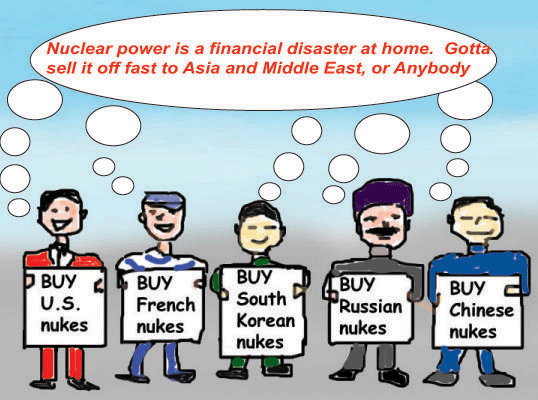 Reuters 29th Nov 2017, French state-controlled utility EDF intends to take part in a tender to
build two nuclear reactors in Saudi Arabia, two sources familiar with the
situation told Reuters.
Saudi Arabia, which wants to reduce domestic oil
consumption, is considering building 17.6 gigawatts of nuclear-fuelled
power generation capacity by 2032 and has sent a request for information to
international suppliers to build two reactors
With answers to the request due by the end 2017 or early 2018, a formal tender could be launched by
mid-2018, but more likely toward the end of 2018 or early 2019, industry
specialists say. https://www.reuters.com/article/saudi-nuclear-edf/update-1-frances-edf-plans-to-bid-in-saudi-arabia-nuclear-tender-sources-idUSL8N1NZ1YN
Earthquake risks making Diablo Canyon nuclear reactors money losers?
Earthquake Risk Keeps Heat on Vulnerable Nuclear Reactors, https://www.commondreams.org/views/2017/11/26/earthquake-risk-keeps-heat-vulnerable-nuclear-reactors A proposal by a California administrative law judge has given safe energy advocates new hope by Harvey Wasserman,
The huge reactors—California’s last—sit on a bluff above the Pacific, west of San Luis Obispo, among a dozen earthquake faults. They operate just 45 miles from the San Andreas. That’s half the distance from the fault that destroyed four reactors in Fukushima, Japan, in 2011. Diablo’s wind-blown emissions could irradiate the Los Angeles megalopolis in less than six hours if an earthquake destroyed the plant.
The death toll could be in the millions, the property damage in the trillions of dollars. The owner of the plant, Pacific Gas & Electric (PG&E), would not be legally liable.
Last year, a deal to shut down Diablo’s two reactors in 2024 and 2025 was struck by the state, PG&E, surrounding communities and some environmental groups. Diablo’s federal licenses expire in those years, and PG&E agreed not to seek renewals. The power, it said, could be replaced with wind turbines and solar panels.
But the $1.7 billion in rate hikes stipulated in the deal still must be approved by California’s Public Utilities Commission (PUC). A proposed decision by administrative law Judge Peter Allen would limit them to less than $200 million.
The PUC must now factor Allen’s decision into how much it allows PG&E to charge. If it honors Allen’s opinion, the company must then decide whether it will continue to operate the reactors, which increasingly look like money losers.
The company’s standing is not exactly sterling. Massive fires that swept through Northern California in October killed at least 43 people, turning some 5,700 structures and whole forests, rural communities and parts of Santa Rosa into smoldering ash (the Trump administration has just omitted from its latest budget any federal aid to the region).
The San Jose Mercury News has speculated that PG&E may have been responsible for the conflagration by failing to maintain power lines that were blown over in a windstorm. Local fire departments were already complaining that trees and underbrush were being sparked by poles and wires PG&E had failed to maintain, though maintenance is required by law.
PG&E now faces a firestorm of lawsuits that could soar well into the billions. Criminal prosecution is also possible.
In 2010, a fire killed eight people and torched an upscale San Bruno neighborhood. The cause was badly maintained gas lines—for which PG&E had been cited repeatedly. Fines exceeded $1.4 billion, but criminal prosecution remains unresolved.
Other costly lapses have plagued PG&E through the years. Some involve Diablo itself, which opened in the mid-1980s amid America’s biggest “No Nukes” civil disobedience campaign, involving thousands of arrests.
Linda Seeley of San Luis Obispo’s Mothers for Peace says the company faces impossible hurdles in dealing with its thousands of tons of radioactive waste. In addition, she notes, “Many very expensive components in the two reactors must be replaced far before the proposed 2024-5 shutdown dates. Our concern is that PG&E may try to sneak through without paying to maintain the reactors even at basic safety levels.”
Michael Peck, a former Nuclear Regulatory Commission in-house inspector at Diablo, has warned that the reactors cannot survive a major earthquake and should close immediately. He has since been transferred to Chattanooga, Tenn.
“Diablo may no longer be profitable,” Seeley has said on my “California Solartopia” show on radio station KPFK. “The cost of wind and solar has dropped so fast it may not pay PG&E to run those plants anymore, even without doing the basic maintenance.”
Because much of Diablo’s aging workforce is retiring or looking elsewhere for job security, PG&E wants subsidies to retain skilled staff to run the place. Judge Allen specifically rejected much of the rate hike designed to meet that crisis.
California’s State Lands Commission is being sued by the World Business Academy, a Santa Barbara think tank, over key leases granted in the 1970s. The commission granted PG&E a waiver on conducting legally required environmental impact statements (gubernatorial candidate Gavin Newsom was among those who voted in favor). Should the business academy win its suit, or should the PUC honor Allen’s decision, and PG&E alter its timetable, those leases might be revisited. Without them, Diablo would almost certainly be forced to shut.
Challenges have also been raised over approval by the California Coastal Commission of Diablo’s cooling system.
Seeley and other activists have asked the public to pressure the PUC, state agencies and politicians like Newsom to shut Diablo sooner rather than later.
“Until they can specify the exact date and time the San Andreas and those other faults will go off,” Seeley said in a recent phone interview, “nobody should feel safe.”
Harvey Wasserman‘s latest book, America at the Brink of Rebirth: The Organic Spiral of US History, will be published in 2016. His Solartopia Green Power & Wellness Show is at www.progressiveradionetwork.com, and he edits www.nukefree.org.
America’s “overkill” with nuclear weapons – but Trump still wants more
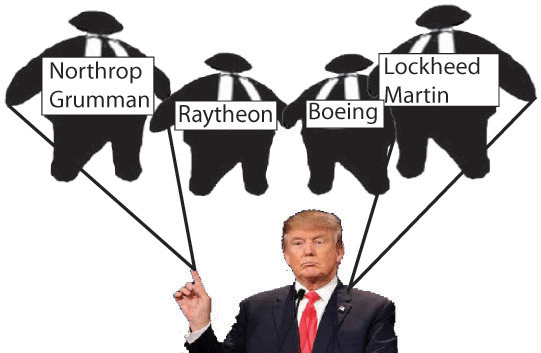 The Sway of the Nuclear Arms Industry Over Donald Trump and Congress Is Terrifying
Without the development of such weapons, that complex simply would not exist in its present form. The Manhattan Project, the vast endeavor that produced the first workable nukes during World War II, was one of the largest government-funded research and manufacturing projects in history. Today’s nuclear warhead complex is still largely built around facilities and locations dating back to that time…….
Eisenhower couldn’t have been more clear-eyed about all of this. He saw the missile gap for the fiction it was or, as he put it, a “useful piece of political demagoguery” for his opponents. “Munitions makers,” he insisted, “are making tremendous efforts towards getting more contracts and in fact seem to be exerting undue influence over the senators.”
The techniques that the arms lobby and its allies in government used more than half a century ago to promote sky-high nuclear weapons spending continue to be wielded to this day. The 21st-century arms complex employs tools of influence that Kennedy and his compatriots would have found familiar indeed—including millions of dollars in campaign contributions that flow to members of Congress and the continual employment of 700 to 1,000 lobbyists to influence them; that’s nearly two arms lobbyists for every member of Congress. Much of this sort of activity remains focused on ensuring that nuclear weapons of all types are amply financed and that the funding for the new generations of the bombers, submarines, and missiles that will deliver them stays on track.
When traditional lobbying methods don’t get the job done, the industry’s argument of last resort is jobs—in particular, jobs in the states and districts of key members of Congress. This process is aided by the fact that nuclear weapons facilities are spread remarkably widely across the country. There are labs in California and New Mexico; a testing and research site in Nevada; a warhead assembly and disassembly plant in Texas; a factory in Kansas City, Missouri, that builds nonnuclear parts for such weapons; and a plant in Oak Ridge, Tennessee, that produces weapon-grade uranium. There are factories or bases for ICBMs, bombers, and ballistic missile submarines in Connecticut, Georgia, Washington State, California, Ohio, Massachusetts, Louisiana, North Dakota, and Wyoming. Such a nuclear geography ensures that a striking number of congressional representatives will automatically favor more spending on nuclear weapons.
In reality, the jobs argument is deeply flawed. As the experts know, virtually any other activity into which such funding flowed would create significantly more jobs than Pentagon spending. A study by economists at the University of Massachusetts, for example, found infrastructure investment would create one and one-half times as many jobs as Pentagon funding and education spending twice as many.
In most cases it hasn’t seemed to matter that the jobs claims for weapons spending are grotesquely exaggerated and better alternatives litter the landscape. The argument remains remarkably potent in states and communities that are particularly dependent on the Pentagon. Perhaps unsurprisingly, members of Congress from such areas are disproportionately represented on the committees that decide how much will be spent on nuclear and conventional weaponry………. http://www.motherjones.com/politics/2017/11/devastation-very-important-nuclear-weapons-industry-donald-trump-1/
Japan Atomic Power in trouble: diverted its decommissioning funds to build new reactors
 Japan Atomic Power in dire straits after diverting funds, Asahi Shimbun, By TSUNEO SASAI/ Staff Writer, November 17, 2017
Japan Atomic Power Co. has diverted so much of its decommissioning funds to build new reactors that it now lacks enough cash to scrap its aging units or even resume operations of existing ones. The problem-plagued company is banking on a decision by the Nuclear Regulation Authority, but even that might not be sufficient to save it financially.
The Ministry of Economy, Trade and Industry requires nuclear power plant operators to accumulate decommissioning funds every year based on their estimated costs to scrap reactors.
The ministry’s guidelines, however, do not prohibit the companies from temporarily using the accumulated money for other purposes.
According to calculations, Japan Atomic Power should have saved around 180 billion yen ($1.6 billion) to decommission its four nuclear reactors. The company declined to give details about how much of decommissioning fund was used for other purposes. However, a person familiar with the situation said the operator “diverted the majority.”
That leaves Japan Atomic Power without the necessary funds to carry out its plans to decommission its one-reactor Tokai nuclear plant in Ibaraki Prefecture, and the No. 1 reactor at its Tsuruga nuclear plant in Fukui Prefecture.
The company’s two other reactors–the reactor at the Tokai No. 2 nuclear plant and the No. 2 reactor at the Tsuruga plant–are off-line. To survive the financial crunch, Japan Atomic Power will soon apply to the NRA to extend the operating life of the idled Tokai No. 2 nuclear plant reactor. That reactor will reach its 40th year of operation in November 2018. Even if the NRA approves the 20-year extension, the company does not have the 174 billion yen needed to improve safety measures at the reactor to bring it online.
An active geological fault line was found running directly beneath the No. 2 reactor building at the Tsuruga nuclear plant, meaning a resumption of reactor operations there is nowhere in sight.
Japan Atomic Power decided to use decommissioning funds to cover costs to build the Tsuruga No. 3 and No. 4 reactors in a bid to curb borrowing from financial institutions, according to several sources.
However, that decision was made before disaster struck at the Fukushima No. 1 nuclear power plant in March 2011.
After the triple meltdown at the Fukushima plant, all reactors in the nation, including those of Japan Atomic Power, were suspended…….. http://www.asahi.com/ajw/articles/AJ201711170054.html
More nuclear reactors in more countries increase proliferation risks
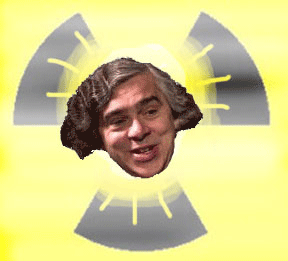 Bulletin of Atomic Scientists 16th Nov 2017, In an August 2017 report, former Energy Secretary Ernest Moniz argues for federal subsidies to prop up the US nuclear power industry on the novel
grounds that the industry is vital to our national security.
One of his principal conclusions is that to have an effective nonproliferation policy
we need to be selling lots of reactors internationally. The conclusion is
dead wrong but, unfortunately, it’s also influential.
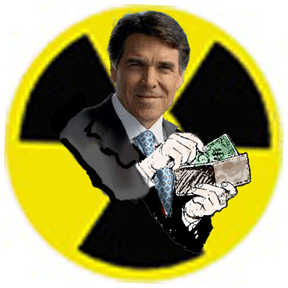 The current energy secretary, Rick Perry, picked up the argument. In October 12 testimony, he
told Congress that “we have to support this industry,” because, among other
things, it is important to the success of our nonproliferation policy.
What kind of reactor exports might this entail? The Energy Department’s acting
assistant secretary for nuclear energy, Edward McGinnis, told an
International Atomic Energy Agency (IAEA) conference in Abu Dhabi on
November 1 that the United States wants “to spur exports of nuclear energy
plants and equipment, including to the conference’s host nation UAE and Saudi Arabia.”
That, after all, is where the export opportunities are—in
the Middle East, Asia, and Africa, among countries taking their first steps
into nuclear energy. Most don’t have the required financial resources and
would need massive loans.
Some, like Saudi Arabia, or perhaps Turkey,
appear to have more on their mind than electricity generation. The trouble
is that power programs based on the most common type of nuclear power
plant, the light water reactor, give a country a large leg up on creating a
nuclear weapons option if that is what it wants. As a result, more nuclear
reactors in more countries increase proliferation risks. Whatever the
advantages of this technology, nonproliferation is not one of them.
https://thebulletin.org/exporting-power-reactors-no-way-fight-proliferation11282
South Carolina Electric & Gas Company (SCE&G) has new proposal for solar and gas generation
SCE&G proposes gas, solar for Summer replacement , WNN, 17 November 2017
South Carolina Electric & Gas Company (SCE&G) has unveiled a proposal that would see some of the capacity that should have been provided by the VC Summer nuclear power plant project replaced with gas and solar generation. The company’s shareholders would absorb the net construction costs of the abandoned nuclear project.
The proposal issued yesterday by the Scana Corporation subsidiary provides about $4.8 billion in benefits to SCE&G customers, and will require approval from South Carolina’s Public Service Commission (PSC).
SCE&G proposes acquiring a 540 MWe gas-fired power plant to replace “more than” 40% of the power that was projected to be provided from the two-unit Summer plant. The $180 million purchase price of the gas-fired plant will be borne by Scana shareholders, who will also forego any shareholder return over the life of the plant. The company said it will also add about 100 MWe of large-scale solar capacity to its system.
Electric rates for SCE&G’s customers – commercial, industrial and residential – will roll back to where they would have been in March 2015, which represents a reduction of about 3.5%. Scana shareholders will absorb the net nuclear construction costs through lower earnings over 50 years, which the company says will account for about $2.9 billion of the total $4.8 billion.
SCE&G owns 55% of the Summer project, with the remainder owned by Santee Cooper…… http://www.world-nuclear-news.org/C-Gas-solar-proposed-by-SCEG-for-Summer-replacement-1711178.html
New report says that South Africa should ditch nuclear plan, to save Eskom from ruin
This comes as an Eskom report seen by Fin24 and EE Publishers shows that the power utility is projecting a R3.55bn loss by the end of its current financial year. It also shows the power utility’s poor governance has left it teetering on the edge of insolvency, with only R1.2bn of liquidity reserves expected to be in hand at the end of the month.
Amidst Eskom’s governance and financial crisis, President Jacob Zuma has repeatedly said that South Africa is committed to developing new nuclear power stations at a pace and scale it can afford. Critics, who believe it could cost over R1trn and that would threaten the country’s fiscal framework policy, want the nuclear policy scrapped altogether.
Now, the new research report, which was published on Thursday by Meridian Economics, shows that Eskom should decommission its older coal-fired power stations and consider curtailing the Kusile construction programme in order to save costs.
These interventions can be achieved without affecting security of supply, it shows.
The study also shows that South Africa does not need a nuclear, coal or gas power procurement or construction programme. Instead, it should accelerate its transition to cleaner, cheaper, and more sustainable renewable energy when further capacity is required.
“Stagnant demand and Eskom’s large power station construction programme has resulted in a growing surplus of expensive generation capacity,” Meridian Economics managing director Dr Grové Steyn said in a statement on Thursday.
“At the same time, the operating costs of Eskom’s coal-fired power stations have consistently increased. This has forced Eskom to implement the highest tariff increases in recorded history, and has led to a growing solvency and – at the time of writing – a liquidity crisis.
“If the system can meet demand over the same period by using alternative resources such as other existing coal stations, wind and solar – but at a lower cost than the cost of electricity from a particular coal-fired power station – it makes economic sense to decommission that station early, or not to complete it.”
A system analysis undertaken by the Council for Scientific and Industrial Research Energy Centre found that new coal and nuclear plants are simply no longer competitive against the falling costs of renewables and associated technologies, the report said.
For the foreseeable future no gas fired power stations are required (peaking gas turbines can run on liquid fuel).
“This means that South Africa does not need a nuclear, coal or gas power procurement or construction programme.”
Eskom shows no commitment to decommission older plants
Despite Eskom’s dire financial circumstances, it nonetheless has not yet committed to decommission any of its older plants, even as they approach the end of their lives and the costs of running the older stations increase, Meridian Economics explained.
“With Eskom’s on-going governance crisis, it appears that government and Eskom are partially paralysed, and could struggle to take the right decisions in the public interest. It is therefore critical that the National Energy Regulator (Nersa) ensures that these issues are investigated and addressed, and that Eskom is only allowed to recover efficient costs in its tariffs,” Meridian Economics said.
“If Eskom’s financial crisis continues to worsen, as we suspect it might, more drastic steps must be considered in light of the systemic risk to the state and the entire economy,” said Steyn.
“If the options of substantial tariff increases and further government bailouts are exhausted, Eskom will have to urgently find other ways to maintain its solvency and avoid a liquidity crisis…….. https://www.fin24.com/Economy/Eskom/to-save-eskom-from-ruin-sa-should-ditch-nuclear-plan-and-cut-coal-power-study-20171116
South Carolina Electric and Gas Co (SCE and G) tries to placate electricity customers after failed nuclear project
SCE&G to cut electricity rates after failed nuclear project http://www.nasdaq.com/article/sceg-to-cut-electricity-rates-after-failed-nuclear-project-20171116-00969 Nov 16 (Reuters) – South Carolina Electric & Gas Co (SCE&G), the main subsidiary of Scana Corp, said it will cut electricity rates to placate customers angered at having to bear the cost of the company’s abandoned V.C. Summer nuclear project.
SCE&G will rollback residential rates to where they would have been in March 2015, resulting in an immediate annual reduction to rates by about $90 million, or 3.5 percent, the company said.
It said there would be $2.9 billion in reduced shareholder earnings over 50 years as they absorb the nuclear construction amortization costs. The company also said it would write off $810 million. “This proposal gives customers additional power generation while also lowering rates for customers,” he said.
SCE&G said it will add a 540-megawatt natural gas-fired power plant to its system, replacing more than 40 percent of the projected power that was to be provided from the V.C. Summer nuclear construction project.
The company also said it will add about 100 megawatts of large-scale solar energy to its system.
V.C. Summer, which was majority-owned by Scana, was ditched in July after estimated costs to build two nuclear reactors spiraled to as much as $24 billion.
Analysts have said the failure of the Summer project and the bankruptcy in March of its designer and contractor, Westinghouse Electric, will likely result in no new nuclear reactors being built in the United States for many years, if ever.
In October, Scana announced the resignation of its chief executive, Kevin Marsh, as the utility company grappled with billions of dollars in cost overruns tied to the abandoned nuclear project.
Summer was one of only two new nuclear power plants under construction in the United States. The other is at Southern Co’s Vogtle plant in Georgia, which is still being built. The two
Vogtle reactors are expected to be completed in 2021 and 2022.
How it happens that taxpayer $trillions are spent on nuclear weapons – Follow the money.
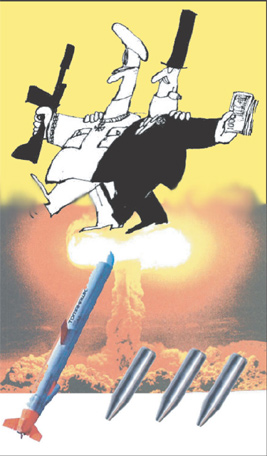 Who’s Really Driving Nuclear-Weapons Production? Follow the money. By William D. Hartung [This piece has been updated and adapted from William D. Hartung’s “Nuclear Politics” in Sleepwalking to Armageddon: The Threat of Nuclear Annihilation, edited by Helen Caldicott and just published by the New Press.] 14 Nov 17
“………..BUILDING A NUCLEAR COMPLEX
Why the desire for so many nukes? There is, in fact, a dirty little secret behind the massive US arsenal: It has more to do with the power and profits of this country’s major weapons makers than it does with any imaginable strategic considerations.
It may not surprise you to learn that there’s nothing new about the influence the nuclear weapons lobby has over Pentagon spending priorities. The successful machinations of the makers of strategic bombers and intercontinental ballistic missiles, intended to keep taxpayer dollars flowing their way, date back to the dawn of the nuclear age and are the primary reason President Dwight D. Eisenhower coined the term “military-industrial complex” and warned of its dangers in his 1961 farewell address.
Without the development of such weapons, that complex simply would not exist in the form it does today. The Manhattan Project, the vast scientific-industrial endeavor that produced the first such weaponry during World War II, was one of the largest government-funded research and manufacturing projects in history. Today’s nuclear warhead complex is still largely built around facilities and locations that date back to that time.
The Manhattan Project was the first building block of the permanent arms establishment that came to rule Washington. In addition, the nuclear arms race against that other superpower of the era, the Soviet Union, was crucial to the rationale for a permanent war state. In those years, it was the key to sustaining the building, funding, and institutionalizing of the arms establishment.
As Eisenhower noted in that farewell address of his, “a permanent arms industry of vast proportions” had developed for a simple enough reason. In a nuclear age, America had to be ready ahead of time. As he put it, “We can no longer risk emergency improvisation of national defense.” And that was for a simple enough reason: In an era of potential nuclear war, any society could be destroyed in a matter of hours. There would be no time, as in the past, to mobilize or prepare after the fact.
In addition, there were some very specific ways in which the quest for more nuclear weapons and delivery vehicles drove Eisenhower to give that farewell address. One of his biggest fights was over whether to build a new nuclear bomber. The Air Force and the arms industry were desperate to do so. Eisenhower thought it a waste of money, given all the other nuclear delivery vehicles the United States was building at the time. He even cancelled the bomber, only to find himself forced to revive it under immense pressure from the arms lobby. In the process, he lost the larger struggle to rein in the nation’s nuclear buildup and corral the burgeoning military-industrial complex.
At the same time, there were rumblings in the intelligence community, the military establishment, the media, and Congress about a “missile gap” with the Soviet Union. The notion was that Moscow had somehow jumped ahead of the United States in developing and building intercontinental ballistic missiles (ICBMs). There was no definitive intelligence to substantiate the claim (and it was later proved to be false). However, a wave of worst-case scenarios leaked by or promoted by intelligence analysts and eagerly backed by industry propaganda made that missile gap part of the everyday news of the time.
Such fears were then exaggerated further, thanks to hawkish journalists of the era like Joseph Alsop and prominent Democratic senators like John F. Kennedy and Lyndon Johnson, as well as Stuart Symington, who just happened to be a friend and former colleague of an executive at the aircraft manufacturing company Convair, which, in turn, just happened to make ICBMs. As a result, he lobbied hard on behalf of a Pentagon plan to build more of that corporation’s Atlas ballistic missiles, while Kennedy would famously make the nonexistent missile gap a central theme of his successful 1960 campaign for the presidency.
Eisenhower couldn’t have been more clear-eyed about all of this. He saw the missile gap for the fiction it was or, as he put it, a “useful piece of political demagoguery” for his opponents. “Munitions makers,” he insisted, “are making tremendous efforts towards getting more contracts and in fact seem to be exerting undue influence over the Senators.”
Once Kennedy took office, it became all too apparent that there was no missile gap, but by then it hardly mattered. The damage had been done. Billions of dollars more were flowing into the nuclear-industrial complex to build up an American arsenal of ICBMs already unmatched on the planet.
The techniques that the arms lobby and its allies in government used more than half a century ago to promote sky-high nuclear weapons spending continue to be wielded to this day. The twenty-first-century arms complex employs tools of influence that Kennedy and his compatriots would have found familiar indeed—including millions of dollars in campaign contributions that flow to members of Congress and the continual employmentof 700 to 1,000 lobbyists to influence them. At certain moments, in other words, there have been nearly two arms lobbyists for every member of Congress. Much of this sort of activity remains focused on ensuring that nuclear weapons of all types are amply financed and that the funding for the new generations of the bombers, submarines, and missiles that will deliver them stays on track.
When traditional lobbying methods don’t get the job done, the industry’s argument of last resort is jobs—in particular, jobs in the states and districts of key members of Congress. This process is aided by the fact that nuclear weapons facilities are spread remarkably widely across the country. There are nuclear weapons labs in California and New Mexico; a nuclear weapons testing and research site in Nevada; a nuclear warhead assembly and disassembly plant in Texas; a factory in Kansas City, Missouri, that builds nonnuclear parts for such weapons; and a plant in Oak Ridge, Tennessee, that enriches uranium for those same weapons. There are factories or bases for ICBMs, bombers, and ballistic missile submarines in Connecticut, Georgia, Washington State, California, Ohio, Massachusetts, Louisiana, North Dakota, and Wyoming. Such a nuclear geography ensures that a striking number of congressional representatives will automatically favor more spending on nuclear weapons.
In reality, the jobs argument is deeply flawed. As the experts know, virtually any other activity into which such funding flowed would create significantly more jobs than Pentagon spending. A study by economists at the University of Massachusetts, for example, found infrastructure investment would create one and one-half times as many jobs as Pentagon funding and education spending twice as many.
In most cases it hasn’t seemed to matter that the jobs claims for weapons spending are grotesquely exaggerated and better alternatives litter the landscape. The argument remains remarkably potent in states and communities that are particularly dependent on the Pentagon. Perhaps unsurprisingly, members of Congress from such areas are disproportionately represented on the committees that decide how much will be spent on nuclear and conventional weaponry…….. https://www.thenation.com/article/whos-really-driving-nuclear-weapons-production/
A FIELD GUIDE TO INFLUENCING NUCLEAR THINKING IN WASHINGTON
Who’s Really Driving Nuclear-Weapons Production? Follow the money. By William D. Hartung [This piece has been updated and adapted from William D. Hartung’s “Nuclear Politics” inSleepwalking to Armageddon: The Threat of Nuclear Annihilation, edited by Helen Caldicott and just published by the New Press.] 14 Nov 17
“…………A FIELD GUIDE TO INFLUENCING NUCLEAR THINKING IN WASHINGTON
 Another way the nuclear weapons industry (like the rest of the military-industrial complex) tries to control and focus public debate is by funding hawkish, right-wing think tanks. The advantage to weapons makers is that those institutions and their associated “experts” can serve as front groups for the complex, while posing as objective policy analysts. Think of it as an intellectual version of money laundering.
One of the most effective industry-funded think tanks in terms of promoting costly, ill-advised policies has undoubtedly been Frank Gaffney’s Center for Security Policy. In 1983, when President Ronald Reagan first announced his Strategic Defense Initiative (which soon gained the nickname “Star Wars”), the high-tech space weapons system that was either meant to defend the country against a future Soviet first strike or—depending on how you looked at it—free the country to use its nuclear weapons without fear of being attacked, Gaffney was its biggest booster. More recently, he has become a prominent purveyor of Islamophobia, but the impact of his promotional work for Star Wars continues to be felt in contracts for future weaponry to this day.
He had served in the Reagan-era Pentagon, but left because even that administration wasn’t anti-Soviet enough for his tastes, once the president and his advisers began to discuss things like reducing nuclear weapons in Europe. It didn’t take him long to set uphis center with funding from Boeing, Lockheed, and other defense contractors.
Another key industry-backed think tank in the nuclear policy field is the National Institute for Public Policy (NIPP). It released a report on nuclear weapons policy just as George W. Bush was entering the White House that would be adopted almost wholesale by his administration for its first key nuclear posture review. It advocated such things as increasing the number of countries targeted by the country’s nuclear arsenal and building a new, more “usable,” bunker-busting nuke. At that time, NIPP had an executive from Boeing on its board and its director was Keith Payne. He would become infamous in the annals of nuclear policy for co-authoring a 1980 article at Foreign Policy entitled “Victory Is Possible,” suggesting that the United States could actually win a nuclear war, while “only” losing 30 million to 40 million people. This is the kind of expert the nuclear weapons complex chose to fund to promulgate its views.
Then there is the Lexington Institute, the think tank that never met a weapons system it didn’t like. Their key front man, Loren Thompson, is frequently quoted in news stories on defense issues. It is rarely pointed out that he is funded by Lockheed Martin, Northrop Grumman, and other nuclear weapons contractors.
And these are just a small sampling of Washington’s research and advocacy groups that take money from weapons contractors, ranging from organizations on the right like the Heritage Foundation to Democratic-leaning outfits like the Center for a New American Security, co-founded by former Obama administration Under Secretary of Defense for Policy Michèle Flournoy (who was believed to have the inside track on being appointed secretary of defense had Hillary Clinton won the 2016 election).
And you may not be surprised to learn that Donald Trump is no piker when it comes to colluding with the weapons industry. His strong preference for populating his administration with former arms industry executives is so blatant that Senator John McCain recently pledged to oppose any new nominees with industry ties. Examples of Trump’s industry-heavy administration include Secretary of Defense James Mattis, a former board member at General Dynamics; White House Chief of Staff John Kelly, who worked for a number of defense firms and was an adviser to DynCorp, a private security firm that has done everything from (poorly) training the Iraqi police to contracting with the Department of Homeland Security; former Boeing executive and now Deputy Secretary of Defense Patrick Shanahan; former Lockheed Martin executive John Rood, nominated as undersecretary of defense for policy; former Raytheon vice president Mark Esper, newly confirmed as secretary of the Army; Heather Wilson, a former consultant to Lockheed Martin, who is secretary of the Air Force; Ellen Lord, a former CEO for the aerospace company Textron, who is undersecretary of defense for acquisition; and National Security Council Chief of Staff Keith Kellogg, a former employee of the major defense and intelligence contractor CACI, where he dealt with “ground combat systems” among other things. And keep in mind that these high-profile industry figures are just the tip of the iceberg when it comes to the corporate revolving door that has for decades been installed in the Pentagon (as documented by Lee Fang of The Intercept in a story from early in Trump’s tenure).
Given the composition of his national security team and Trump’s love of all things nuclear, what can we expect from his administration on the nuclear weapons front? As noted, he has already signed on to the Pentagon’s budget-busting $1.7 trillion nuclear build-up and his impending nuclear posture review seems to include proposals for dangerous new weapons like a “low-yield,” purportedly more usable nuclear warhead. He’s spoken privately with his national security team about expanding the American nuclear arsenal in a staggering fashion, the equivalent of a ten-fold increase. He’s wholeheartedly embraced missile defense spending, pledging to put billions of dollars more into that already overfunded, under-producing set of programs. And of course, he is assiduously trying to undermine the Iran nuclear deal, one of the most effective arms control agreements of recent times, and so threatening to open the door to a new nuclear arms race in the Middle East.
Unless the nuclear spending spree long in the making and now being pushed by President Trump as the best thing since the invention of golf is stopped thanks to public opposition, the rise of an antinuclear movement, or Congressional action, we’re in trouble. And of course, the nuclear weapons lobby will once again have won the day, just as it did almost 60 years ago, despite the opposition of a popular president and decorated war hero. And needless to say, Donald Trump, “bone spurs” and all, is no Dwight D. Eisenhower. https://www.thenation.com/article/whos-really-driving-nuclear-weapons-production/
Even the International Atomic Energy Agency admits that the nuclear industry is failing
 International Atomic Energy Agency forecasts

The International Atomic Energy Agency (IAEA) has released the 2017 edition of its International Status and Prospects for Nuclear Power report series.
Pro-nuclear assessments present low and high forecasts and readers might reasonably assume that the most likely outcome will lie somewhere in the middle. But the IAEA has assessed its past performance and found that even its low-growth forecasts tend to be too high (see p56 in this IAEA report and see this analysis).
So if the forecasts of pro-nuclear organisations like the IAEA are of any value, only the low-growth forecast need be considered. In its latest report, the IAEA’s low-growth forecast is a decline of global nuclear power capacity by 12 per cent in 2030 and 15 per cent in 2040 ‒ from 392 GW in 2016, to 345 GW in 2030 and 332 GW in 2040).
The IAEA has sharply reduced its forecasts since the Fukushima disaster ‒ partly because of the political fallout of that disaster, and partly because nuclear power is the only energy source that is becoming more expensive over time (a negative learning curve).
| IAEA ESTIMATES | 2010 | 2017 | CHANGE |
| Low estimate of nuclear capacity in 2030 (GW) | 546 | 345 | ‒37 per cent‒ 201 GW |
| High estimate of nuclear capacity in 2030 (GW) | 803 | 554 | ‒31 per cent‒ 249 GW |
Note that the current high estimate for nuclear capacity in 2030 (554 GW) is only slightly higher than the pre-Fukushima low estimate (546 GW).
The IAEA’s long-term low-growth forecast is that nuclear capacity will rebound after falling to 332 GW in 2040 and will be close to the current capacity of 392 GW in 2050. The report notes that achieving that underwhelming outcome ‒ stagnation over the next one-third of a century ‒ would require 320 GW of new build to replace retired reactors. In other words, 10 new reactors will need to come online each year until 2050 just to maintain current nuclear capacity.
Comparison with renewables
The recent IAEA report states that the share of nuclear power in total global electricity generation has decreased for 10 years in a row, to under 11 per cent in 2015, yet “this still corresponds to nearly a third of the world’s low carbon electricity production”. In other words, renewables (24.5 per cent) generate more than twice as much electricity as nuclear power (10.5 per cent) and the gap is growing rapidly.
Five years from now, renewables will likely be generating three times as much electricity as nuclear reactors. The International Energy Agency (IEA ‒ not to be confused with the IAEA) recently released a five-year forecast for renewables, predicting capacity growth of 43 per cent (920 GW) by 2022. The latest forecast is a “significant upwards revision” from last year’s forecast, the IEA states, largely driven by expected solar power growth in China and India.
The IEA forecasts that the share of renewables in power generation will reach 30 per cent in 2022, up from 24 per cent in 2016. By 2022, nuclear’s share will be around 10 per cent and renewables will be out-generating nuclear by a factor of three. Non-hydro renewable electricity generation has grown eight-fold over the past decade and will probably surpass nuclear by 2022, or shortly thereafter, then leave nuclear power in its wake as renewables expand and the ageing nuclear fleet atrophies.
A longer version of this article was originally published in the Nuclear Monitor newsletter. https://newmatilda.com/2017/11/12/nuclear-powers-existential-crisis/
Nuclear Weapons industry relies on Nuclear Power industry, which obviously subsidises it.
 The Real Nuclear Triad: Energy, Weapons and Waste NOVEMBER 7, 2017 Clear and Present Danger
Never before has the unbreakable connection between nuclear energy, weapons and waste been so blatantly obvious to the public eye…yet, with so little notice.
Although President Trump has threatened to obliterate North Korea and its 25 million people ‘with fire and fury the like of which the world has never seen,’ the NYT is reporting that America’s Asian allies doubt Washington’s ‘resolve’ to defend them with nuclear weapons and they want their own – an idea recently also floated by Trump himself.
In a new twist on the last century’s discredited ‘Atoms for Peace’ meme, the new nuclear delusion seems to be that the more countries that have nuclear weapons (Iran and North Korea excepted), the more ‘secure’ the world will become.
Speaking recently at Minot Air Force Base in North Dakota, Trump’s VP Mike Pence, a self-declared devout Christian who ‘gave my life to Jesus,’ declared “… there’s no greater force for peace in the world than the United States nuclear arsenal.”
Implication: every country should feel safer if they have a nuclear arsenal of their own. That seems precisely Kim Jong-Un’s own calculus, given his country’s previous horrific carpet-bombing experience with the US – “we… eventually burned down every town in North Korea,” Gen. Curtis LeMay told Congress – not to mention the recent history of Iraq, Libya and Syria.
Nuclear Circular Firing Squad
As agitation reportedly builds in South Korea and Japan for building their own nuclear arsenals, the Times reveals that, as a result of the radioactive waste output of their already existing nuclear energy reactor fleets, each of these tiny countries has accumulated enough weapons-grade plutonium to produce – respectively – 4,600 and 6,000 nuclear bombs.
How about that? Nations without their own ‘commercial power’ nukes must certainly take note.
Never mind the fact that such a triangle of nuclear-armed, mutually hostile, neighboring states would be like, say, New York, New Jersey and Connecticut each having their own nuclear arsenals, all pointing at each other. Talk about a circular firing squad. It’s the very definition of an ‘everybody loses’ situation.
Nuclear Triplets Joined at the Hip
But, while this is clearly an illustration of a new epidemic of nuclear crackpot madness spreading around the world, it is also the latest of several clear illustrations – and blatant, though veiled, public admissions – that the DNA-destroying nuclear triplets of energy, weapons and radioactive waste are inseparably joined-at-the-hip.
In the UK:
“Military Nuclear Industry to be Supported by Payments from Electricity Consumers”
In Britian, reports the Guardian, “The government is using the “extremely expensive” Hinkley Point C nuclear power station to cross-subsidize Britain’s nuclear weapon arsenal, according to senior scientists.”
The Guardian story continues,
In evidence submitted to the influential public accounts committee (PAC), which is currently investigating the nuclear plant deal, scientists from Sussex University state that the costs of the Trident programme could be “unsupportable” without “an effective subsidy from electricity consumers to military nuclear infrastructure.”
Prof Andy Stirling and Dr Phil Johnstone from the Science Policy Research Unit at the university write that the £19.6bn Hinkley Point project will “maintain a large-scale national base of nuclear-specific skills” without which there is concern “that the costs of UK nuclear submarine capabilities could be insupportable.”
Their evidence suggests that changes in the government’s policy on nuclear power in recent years will effectively allow Britain’s military nuclear industry to be supported by payments from electricity consumers…….https://www.counterpunch.org/2017/11/07/the-real-nuclear-triad-energy-weapons-and-waste/
What It’s Like for Informal Labour Employed in Nuclear Power Stations in Japan
Informal Labour, Local Citizens and the Tokyo Electric Fukushima Daiichi Nuclear Crisis: Responses to Neoliberal Disaster Management, ANU, Adam Broinowski, 7 Nov 17,
Sworn to secrecy,12 after a superficial safety education drill, they are sent into highly contaminated, hot and wet labyrinthine areas.
Irregular workers’ oral contracts with tehaishi are often illegal or dangerous, and are sometimes imposed on workers through threats or use of force.
Over the past 40 years, poor monitoring and record-keeping has meant that many former nuclear workers who develop leukaemia and other illnesses have been denied government compensation due to their lawyers’ inability to prove the etiological link between their disease and employment.
Informal Labour, Local Citizens and the Tokyo Electric Fukushima Daiichi Nuclear Crisis: Responses to Neoliberal Disaster Management, ANU, Adam Broinowski, 7 Nov 17, “…
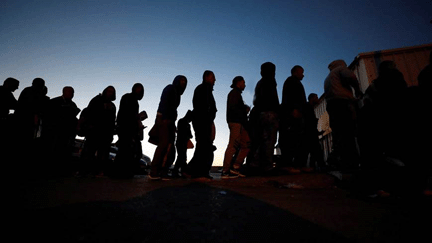 Conditions for Informal Labour Employed in Nuclear Power Stations The phenomenon of assembling and recruiting a relatively unskilled labour pool at the cheapest rate possible is typical in nearly all of Japan’s large-scale modern industrial projects in the 20th century. As early as the late 19th century, however, non-criminal homeless men were recruited for such projects, whether forced, coerced or voluntarily from the major day-labourer (hiyatoi rōdōsha 日雇い労働者) sites (yoseba) established in Sanya (Tokyo), Kotobuki (Yokohama), Kamagasaki (Osaka) and Sasashima (Nagoya). In pre–World War II and wartime Japan, yakuza tehaishi (手配師 labour recruiters) operated forced labour camps known as takobeya (たこ部屋 octopus rooms) for Korean and Chinese labourers who had been transported to work mainly in coal mines and on construction sites.6………
The rapid build of nuclear power stations was planned in the 1960s by a consortium of major investment banks, electric utilities and construction companies and/or industry manufacturers (Mitsubishi, Tōshiba, Hitachi, Sumitomo, etc.), and was carried out in the 1970s, with increased momentum in response to the oil crisis of 1974–76. Through an intensive ‘regional development’ program of rural industrialisation from the early 1970s, politically disempowered communities were targeted as potential cheap labour as their environs were designated as sites for nuclear projects by investment capital. In a combination of regulatory capture and economic dependency, utilities moved in to provide employment opportunities to communities while the same communities steadily lost control over their resources and subsistence economies. In the process, they lost political agency as their political representatives often received corporate and state inducements for these projects. As TEPCO owns the electricity distribution system in Fukushima Prefecture, which includes hydroelectric and thermal power stations as well as nuclear, and is a major employer and investor in Fukushima Prefecture,10 it has considerable sway in the political process as well as over electricity bills.
By the early 1980s, irregular workers came to comprise nearly 90 per cent of all nuclear workers.11 As nuclear reactors grow increasingly contaminated and corroded by radiation over time, informal labour became fodder for regular maintenance, cleaning, repairing and/or venting and refuelling of these nuclear reactors to reduce exposures to permanent company employees such as scientists and engineers. As the power station must be halted during the maintenance period, this period equates to a lack of production and profitability and is kept to a bare minimum by the operators, an approach that led to a litany of safety oversights and accidents.
Although provided less training, informal nuclear workers are paid higher over a shorter employment period than regular workers, whose insurance is taken out of their wage. Sworn to secrecy,12 after a superficial safety education drill, they are sent into highly contaminated, hot and wet labyrinthine areas. Their work includes scrubbing contaminated areas, installing shields to reduce exposure for skilled workers, decontaminating and repairing pipes and tanks, welding, transporting contaminated materials and waste, washing contaminated uniforms and tools, removing filters and clearing garbage, inspecting gauges in high-level areas, dispersing chemicals over nuclear waste piles, pouring high-level liquid waste into drums and mopping up waste water. Although radioprotection regulations have been tightened in the last decade, working conditions for irregular workers have not necessarily improved and, without sufficient information about radiation danger, they can still be exposed to over 1 millisievert (mSv) of external radiation within minutes in high concentration areas and accumulate large amounts of internal radiation.13
Since 3.11, invoking the International Commission on Radiological Protection’s (ICRPs) often-used ALARA (as low as reasonably allowable) principle to justify this regulatory contingency, the state also raised nuclear workers’ limits from no more than 50 mSv per year (mSv/y) and 100 mSv/5 years to 250 mSv/y to deal with emergency conditions, and determined that there would be no follow-up health treatment for those exposed to doses below 50 mSv/y, while TEPCO decided to not record radiation levels below 2 mSv/y in the misplaced justification that the effects would be negligible. In December 2011, ‘cold shutdown’ was (erroneously) declared and the workers’ limit was returned to 100 mSv/5 years. It will likely be raised again as the government expedites decommissioning to meet its estimated completion by 2030–2050.14 Although very few regular workers’ cumulative doses exceeded 20 mSv/y in any year prior to 3.11, by June 2015 the official number rose to 6,64215 with doses of irregular nuclear workers often un(der)counted.
In a fast-track 40-year plan to decommission Fukushima Daiichi (i.e. removing the cores and dismantling the plant), as of August 2015 roughly 45,000 irregular workers (‘front-line’ workers, or ‘nuclear gypsies’) had been assembled at the J-Village Iwaki-Naraha soccer stadium before entering the sites. As well as jobs at the power stations, they work on decontamination and construction sites throughout the prefecture, which include those designated for the 2020 Olympics, a new school in Futaba (the town nearest to FDNPS), a large centre for radiation monitoring, a large research and training institute for reactor decommissioning, and a giant sea wall for tsunami prevention (see also Chapter Five). Yakuza-linked labour brokers (tehaishi/ninpu-dashi), eager to profit from the post-3.11 decommissioning budget (conservatively estimated at $150 billion), use social media and oral contracts to recruit these workers from the most vulnerable populations for ‘clean up’ work.16 In this customary cascade of diluted responsibility, their original wage and conditions are skimmed or cut away (pinhane sareta ピンハネされた) by contractors (roughly 733 companies) so that some irregular workers receive as little as 6,000 yen per day and only a very small fraction of the 10,000 yen per day in danger money promised by the Ministry of the Environment (MoE) and TEPCO.17
Irregular workers’ oral contracts with tehaishi are often illegal or dangerous, and are sometimes imposed on workers through threats or use of force.18 In addition, the day labourer may become indebted to tehaishi for housing and/or loans for lifestyle dependencies (i.e. gambling, drugs, prostitution). As products of structural discrimination, itinerant and/or irregular workers who are already socially isolated may find it difficult to build support networks, whether through marriage, family or solid friendships. Obligated within a semi-legal economy and stripped of rights and protections, each worker is pitted against the other, young and old, stronger and weaker, individual and family man, for basic survival.
Over the past 40 years, poor monitoring and record-keeping has meant that many former nuclear workers who develop leukaemia and other illnesses have been denied government compensation due to their lawyers’ inability to prove the etiological link between their disease and employment. For example, the death of Yoshida Masao (58), the Fukushima Daiichi manager who was among the ‘Fukushima 50’ who remained at the plant to manage the nuclear meltdowns in their critical phase and who developed oesophagal cancer in 2013, was not recognised by TEPCO as related to radiation exposure from Fukushima Daiichi as the cancer was deemed to have developed too quickly after the initial accident.
Irregular nuclear workers have commonly relied on permanent employees to monitor, record and calibrate their doses. Denied sufficient information about radiation exposure risks, and preferring not to jeopardise their contracts and provoke physical intimidation if they complain about their conditions, many collude with company officers (who record their accumulated doses) to camouflage and underestimate their dose rates (particularly for internal doses). This allows them to extend their time and contracts at nuclear plants before they are deemed to have reached (or exceeded) the maximum annual dose limit (50 mSv/y).19 When a nuclear worker is diagnosed with abnormalities in a routine check-up, some subcontractors may falsify nuclear workers’ passbooks.20 Despite the long lives of internalised radionuclides, it has been customary either not to measure this properly and/or to simply reset the dose record at the end of each financial year.
While protective clothing and procedures have grown more stringent for nuclear workers, especially after some workers died and fell ill from heat-related causes, irregular workers remain far less protected.22 At Fukushima Daiichi, where crews are overworked and understaffed, irregular workers often commit errors leading to cases of serious injury and large leaks of radioactive materials into the environment. This is further compounded by the lack of understanding or recognition of chronic illnesses in either permanent or irregular nuclear workers. This has sometimes led to poorly explained deaths of nuclear workers.23
In October 2015, a welder in his late 30s and father of three from Kita-Kyushu became the first worker in four years to be awarded workers’ insurance payments (medical costs and loss of income for temporary disability) while three more cases remained undecided. He was diagnosed with acute myelogenous leukaemia after having accumulated 19.8 mSv/y from exposure to a radiation leak and one year’s work at Fukushima Daiichi (Reactors 3 and 4) and the Genkai nuclear plant (Kyushu) (both of which use MOX fuel).24 While compensation was recognised under nuclear workers’ compensation insurance legislation (1976), the Health Ministry maintained that a causal link between illness and employment remains to be scientifically proven. After the delayed report by TEPCO of 1,973 workers exposed to over 100 mSv/y by mid-2013, by August 2015 21,000 of the 45,000 irregular workers had been exposed to over 5 mSv/y and 9,000 workers to over 20 mSv/y.25 TEPCO and the central government would certainly be worried about a spike in compensation claims.
Without a proper health regime, the permanent damage incurred by irregular nuclear workers far outweighs the value of their cheap labour power. With their use as filters as they move to each plant, as nuclear workers grow older and sicker they become less able to commodify their labour and are unlikely to receive proper treatment and/or compensation (due to insufficient data and high radiation safety limits among other things). Although the endless production of labour willing to take on this dangerous work and the devolution of responsibility and ambiguity around radiation health effects are used to justify the continuation of these practices, if workers are knowingly placed in harmful conditions the employer is in breach of a duty of care under the Labour Standards Law. As byproducts of a discriminatory industrial labour system, these irregular nuclear workers and their families, like many elsewhere, are deprived of basic rights to health and well-being. As one labourer stated in relation to Fukushima Daiichi: ‘TEPCO is God. The main contractors are kings, and we are slaves’.26 In short, Fukushima Daiichi clearly illustrates the social reproduction, exploitation and disposability of informal labour, in the state protection of capital, corporations and their assets….http://press-files.anu.edu.au/downloads/press/n2335/html/ch06.xhtml?referer=2335&page=11
Lobbyists scramble to market nuclear submarines to India
India Wants Second Nuclear Submarine From Russia. Lies By Lobbyists Erupt
Russian news portal Kommersant reported that the Indian Navy allowed a US technical crew into top secret compartments of India’s existing Russian-built nuclear submarine, the INS Chakra NDTV All India by Vishnu Som : November 10, 2017 NEW DELHI:
According to Kommersant, which referred to this as “an unprecedented scandal,” the incident “threatens to seriously complicate the negotiations both on the lease of the second nuclear submarine, and on other projects in the field of military-technical cooperation.”
The Chakra, an Akula-2 class submarine, widely considered among the world’s most sophisticated, has been leased by India for 10 years but all ownership rights reside with Russia.
Today, another Russian news portal, NEWS.ru, has debunked the account of the Kommersant and states that French lobbyists have an ulterior role in spreading misinformation to further their own chances of selling a nuclear-powered attack submarine to India. NEWS.ru quotes a source stating “there is complete confidence that the throw-in is organised by the lobbyists of France, and it’s pretty high quality.” According to this source, “In addition to the contract for the construction of non-nuclear boats such the Scorpene [now being inducted by the Indian Navy,] the French have a great desire to enter the Indian nuclear fleet.”
France, the article states, is also aggressively trying to participate in India’s programme to construct a second home-grown aircraft carrier. The first indigenous carrier, INS Vikrant is being built in Kochi using technology from a host of countries including Russia……..
At the time, the French newspaper Le Monde, quoting multiple sources had said that the leak of this data was driven by competition between the French designer of the Scorpene Class submarine and a German firm as they compete to win international orders. https://www.ndtv.com/india-news/not-true-that-us-officers-allowed-on-russian-submarine-in-vizag-sources-1773761
1 This Month
26 September – International Day for the Total Elimination of Nuclear Weapons





PLEASE OPPOSE HR 8255 AND S.3639 – bills would accelerate satellite deployment, with no environmental review or safeguards – https://ncstd5li.quorum.us/campaign/169331/
To see nuclear-related stories in greater depth and intensity – go to https://nuclearinformation.wordpress.com
-
Archives
- September 2026 (305)
- August 2026 (330)
- July 2026 (355)
- June 2026 (287)
- May 2026 (306)
- April 2026 (356)
- March 2026 (251)
- February 2026 (267)
- January 2026 (308)
- December 2025 (358)
- November 2025 (359)
- October 2025 (375)
-
Categories
- 1
- 1 NUCLEAR ISSUES
- business and costs
- climate change
- culture and arts
- ENERGY
- environment
- health
- history
- indigenous issues
- Legal
- marketing of nuclear
- media
- opposition to nuclear
- PERSONAL STORIES
- politics
- politics international
- Religion and ethics
- safety
- secrets,lies and civil liberties
- spinbuster
- technology
- Uranium
- wastes
- weapons and war
- Women
- 2 WORLD
- ACTION
- AFRICA
- Atrocities
- AUSTRALIA
- Christina's notes
- Christina's themes
- culture and arts
- Events
- Fuk 2022
- Fuk 2023
- Fukushima 2017
- Fukushima 2018
- fukushima 2019
- Fukushima 2020
- Fukushima 2021
- general
- global warming
- Humour (God we need it)
- Nuclear
- RARE EARTHS
- Reference
- resources – print
- Resources -audiovicual
- Weekly Newsletter
- World
- World Nuclear
- YouTube
-
RSS
Entries RSS
Comments RSS

