Tokyo ‘Recovery Olympics’ offer scant solace to displaced victims of Fukushima nuclear disaster
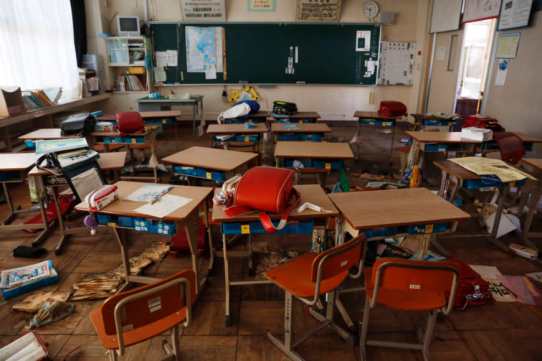
Toshiba warns it may not continue as ‘going concern‘

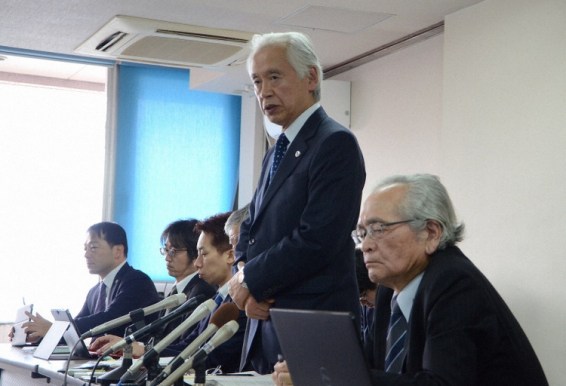
Japan Gov’t liability denied for nukes damages, Tepco to pay minimal damages to evacuees
J-Village still contaminated – major uncertainties over decontamination and Olympic torch route
$4000 Settlement for Fukushima Daiichi Evacuees
$4000 settlement for all their losses and 9 years of misery…
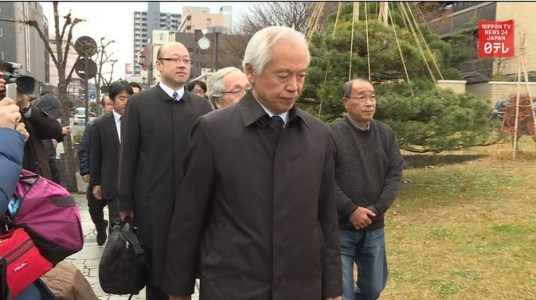
Dec 17, 2019
The Yamagata District Court awards a group of Fukushima evacuees a minor settlement in a suit seeking damages from the government and TEPCO for suffering caused by 2011’s Fukushima Daiichi nuclear disaster.
[© Nippon TV News 24 Japan]
https://www.nippon.com/en/news/ntv20191217002/$4000-settlement-for-fukushima-daiichi-evacuees.html
Fukushima Unit 3 Spent Fuel Damage Identified
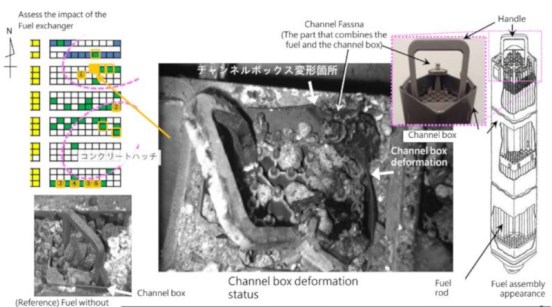
Fukushima Liquidators Are Real
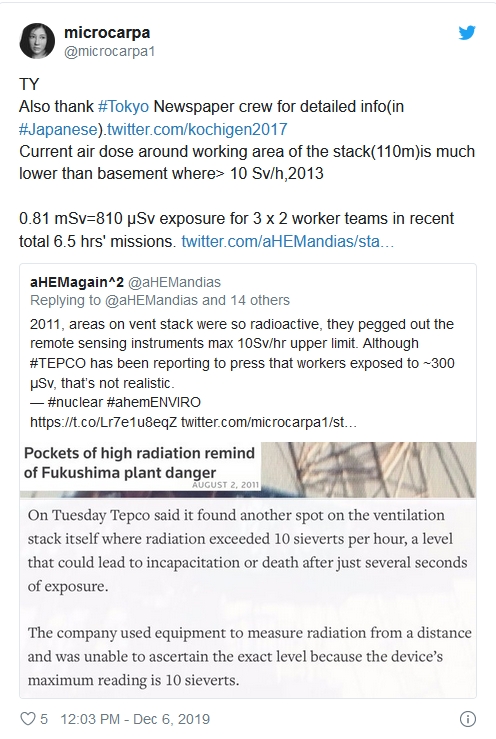
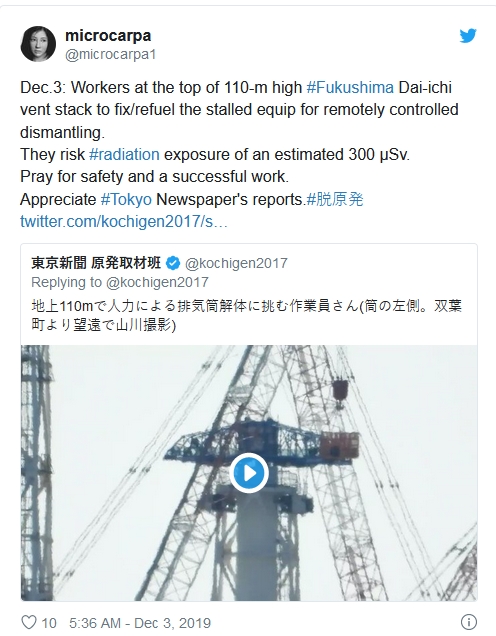
 Fukushima: Tepco sends workers to repair where robots failed. High radiation.
Some weird stuff is happening at the TEPCO’s Fukushima Daiichi Nuclear Power Plant right now. While Japan has decided to drop radioactive water in the ocean, Tepco sent humans to repair where robots failed.
On December 3, workers were sent to the top of the exhaust stack (about 110 meters high) standing beside the Unit 1 and 2 buildings to finish cutting a cylinder body with an electric tool after the robotic infrastructure failed.

TEPCO delays Fukushima chimney demolition

December 16, 2019
The operator of the crippled Fukushima Daiichi nuclear plant says it is having difficulties reducing the height of a damaged exhaust chimney and will extend the deadline to finish the work.
The 120-meter tall exhaust stack shared by the No.1 and No.2 reactors was heavily contaminated by radioactive substances in the 2011 accident. Its steel framework was damaged by the accident.
Tokyo Electric Power Company has been working since August to halve the chimney’s height to around 60 meters to reduce the risk of collapse, but has so far only cut about nine meters.
The company says a cutter developed for the project has run into a series of problems. It says the blade of the remotely-controlled device has worn down faster than expected and become stuck.
TEPCO has suspended the demolition, and is reviewing its cutting methods and procedures. The utility says it will submit an improved plan to the Nuclear Regulation Authority.
The firm says it hopes to restart the work by the end of this month and will reschedule completion of the project from the end of March next year to mid-May.
Japan ponders recycling Fukushima soil for public parks & green areas

December 15, 2019
Japan ponders recycling Fukushima soil for public parks & green areas Soil from the Fukushima prefecture may be used as landfill for the creation of “green areas” in Japan, a government panel has proposed, facing potential public backlash over fears of exposure to residual radiation from the decontaminated earth. Trends
The advisory panel of the Environment Ministry on Monday proposed reusing soil that was contaminated during the Fukushima nuclear meltdown of 2011 as part of future landfills designated for public use, Kyodo news .
In its proposal, the environmental panel avoided openly using the word “park” and instead said “green space,” apparently to avoid a premature public outcry, Mainichi Shimbun reported.
Following an from the news outlet, the Ministry of the Environment clarified that “parks are included in the green space.”
In addition to decontaminating and recycling the tainted earth for new parks, the ministry also stressed the need to create a new organization that will be tasked with gaining public trust about the prospects of such modes of recycling.
To calm immediate public concerns, the panel said the decontaminated soil will be used away from residential areas and will be covered with a separate level of vegetation to meet government guidelines approved last year.
In June last year, the Ministry of the Environment decided to reuse contaminated soil with radioactive cesium concentration between 5,000 to 8,000 becquerels per kilogram for public works such as nationwide roads and tidal banks.
Under these guidelines, which can now be extended to be used for the parks, the tainted soil shall be covered with clean earth, concrete or other materials.
Such a landfill, the government said at the time, will not cause harm to nearby residents as they will suffer exposure less than 0.01 mSv a year after the construction is completed.
The Fukushima Daiichi nuclear power plant suffered a blackout and subsequent failure of its cooling systems in March 2011, when it was hit by an earthquake and a killer tsunami that knocked out the facility, spewing radiation and forcing 160,000 people to flee their homes. Three of the plant‘s six reactors were hit by meltdowns, making the Fukushima nuclear disaster the worst since the Chernobyl catastrophe in 1986.
https://stockdailydish.com/japan-ponders-recycling-fukushima-soil-for-public-parks-green-areas/

Olympics no relief for devastated city
 Weeds grow in an abandoned apartment complex Tuesday in Futaba, Japan. Government officials say it’s the “recovery Olympics” for the disaster-hit areas and residents. But the town of Futaba, home to the tsunami-wrecked nuclear plant, is still largely frozen in time for nearly nine years since the disaster, with thousands of its former residents still unable to return.
December 14, 2019
FUTABA, Japan — The torch relay for the Tokyo Olympics will kick off in Fukushima, the northern prefecture devastated almost nine years ago by an earthquake, tsunami and the subsequent meltdown of three nuclear reactors.
They’ll also play Olympic baseball and softball next year in one part of Fukushima, allowing Tokyo organizers and the Japanese government to label these games the “Recovery Olympics.” The symbolism recalls the 1964 Tokyo Olympics, which showcased Japan’s reemergence just 19 years after World War II.
But tens of thousands still haven’t recovered in Fukushima, displaced by nuclear radiation and unable to return to deserted places like Futaba.
Time stopped in the town of 7,100 when disaster struck on March 11, 2011.
Laundry still hangs from the second floor of one house. Vermin gnaw away at once intimate family spaces, exposed through shattered windows and mangled doors. The desolation is deepened by Japanese tidiness with shoes waiting in doorways for absent owners.
“This recovery Olympics is in name only,” Toshihide Yoshida told The Associated Press. He was forced to abandon Futaba and ended up living near Tokyo. “The amount of money spent on the Olympics should have been used for real reconstruction.”
Olympic organizers say they are spending $12.6 billion on the Olympics, about 60% public money. However, an audit report by the national governments said overall spending is about twice that much.
The Olympic torch relay will start in March in J-Village, a soccer stadium used as an emergency response hub for Fukushima plant workers. The relay goes to 11 towns hit by the disaster, but bypasses Futaba, a part of Fukushima that Olympic visitors will never see.
“I would like the Olympic torch to pass Futaba to show the rest of the world the reality of our hometown,” Yoshida said. “Futaba is far from recovery.”
The radiation that spewed from the plant at one point displaced more than 160,000 people. Futaba is the only one of 12 radiation-hit towns that remains a virtual no-go zone. Only daytime visits are allowed for decontamination and reconstruction work, or for former residents to check their abandoned homes.
The town has been largely decontaminated and visitors can go almost anywhere without putting on hazmat suits, though they must carry personal dosimeters — which measure radiation absorbed by the body — and surgical masks are recommended. The main train station is set to reopen in March, but residents won’t be allowed to return until 2022.
A main-street shopping arcade in Futaba is lined by collapsing store fronts and sits about 4 kilometers (2.5 miles) from the nuclear plant, and 250 kilometers (150 miles) north of Tokyo. One shop missing its front doors advertises Shiseido beauty products with price tags still hanging on merchandise. Gift packages litter the ground.
“Let us know if you start feeling unwell,” Muneshige Osumi, a former town spokesman told visitors, apologizing for the musty smell and the presence of rats.
About 20,000 people in Japan’s northern coastal prefectures died in the magnitude 9.0 earthquake and resulting tsunami. Waves that reached 16 meters (50 feet) killed 21 people around Futaba, shredding a seaside pine forest popular for picnics and bracing swims.
A clock is frozen at 3:37 p.m. atop a white beach house that survived.
Nobody perished from the immediate impact of radiation in Fukushima, but more than 40 elderly patients died after they were forced to travel long hours on buses to out-of-town evacuation centers. Their representatives filed criminal complaints and eventually sent former Tokyo Electric Power Company executives to court. They were acquitted.
When Tokyo was awarded the Olympics in 2013, Prime Minister Shinzo Abe assured International Olympic Committee members that the nuclear disaster was “under control.” However, critics say the government’s approach to recovery has divided and silenced many people in the disaster-hit zones.
Under a development plan, Futaba hopes to have 2,000 people — including former residents and newcomers such as construction workers and researchers — eventually living in a 550-hectare (1,360-acre) site.
Standing outside the Futaba station, Mayor Shirou Izawa described plans to rebuild a new town. It will be friendly to the elderly, and a place that might become a major hub for research in decommissioning and renewable energy. The hope is that those who come to help in Fukushima’s reconstruction may stay and be part of a new Futaba.
“The word Fukushima has become globally known, but regrettably the situation in Futaba or (neighboring) Okuma is hardly known,” Izawa said, noting Futaba’s recovery won’t be ready by the Olympics.
To showcase the recovery, government officials say J-Village — where the torch relays begins — and the Azuma baseball stadium were decontaminated and cleaned. However, problems keeping popping up at J-Village with radiation “hot spots” being reported, raising questions about safety heading into the Olympics.
The baseball stadium is located about 70 kilometers (45 miles) west of Futaba, J-Village is closer, about 20 kilometers (12 miles) away along the coastal area.
The radioactive waste from decontamination surrounding the plant, and from across Fukushima, is kept in thousands of storage bags stacked up in temporary areas in Futaba and Okuma.
“Who wants to come to live in a place like that? Would senior officials in Kasumigaseki government headquarters go and live there?” Yoshida asked, referring to the high-end area in Tokyo that houses many government ministries.
“I don’t think they would,” Yoshida said. “But we have ancestral graves, and we love Futaba, and we don’t want Futaba to be lost. The good old Futaba that we remember will be lost forever, but we’ll cope.”
https://www.nwaonline.com/news/2019/dec/14/olympics-no-relief-for-devastated-city-/
Fukushima: Japan court finds government liable for nuclear disaster

December 13, 2019
A Japanese court has ruled for the first time that the government bears partial responsibility for the 2011 Fukushima nuclear disaster.
The court was responding to a case brought by a group of evacuees who had been forced to flee their homes.
It ruled that the disaster could have been averted if government regulators had ordered plant operator Tepco to take preventive safety measures.
The government and Tepco were both ordered to compensate the evacuees.
Around 80,000 people were forced to flee their homes when three reactors failed at the plant after a tsunami that struck six years ago.
It was the world‘s most serious nuclear accident since Chernobyl in 1986.
The district court in Maebashi, north of Tokyo, ruled in favour of 137 evacuees seeking damages for the emotional distress of fleeing their homes.
The parties were told to pay a total 38.6m yen ($341,000, £275,000) in compensation, far below the 1.5bn yen the group had sought.
A number of legal cases have already been filed against Tepco (Tokyo Electric Power) relating to the disaster, but this is the first time a court has recognised that the government was liable for negligence.
Chief Cabinet Secretary Yoshihide Suga, the government‘s top spokesman, declined to comment but said the ruling would have no impact on the country‘s nuclear power policies.
Anti-nuclear sentiment runs high in Japan, but the government has been resolute in restarting reactors that were closed in the aftermath of the disaster.
https://stockdailydish.com/fukushima-japan-court-finds-government-liable-for-nuclear-disaster/
Tohoku reactor restart: What is the state of Japan’s nuclear policy?
Their contempt for the Japanese’ public’s will and the health and well being of people, animals, plants, oceans, rivers, lakes, genetic pools and the economies of the northern hemisphere is appalling. Abe, LDP, nuke industry, anyone that’s pro-nuke.’
 Members of the government’s expert panel inspect Tohoku Electric Power Co.’s Onagawa nuclear power plant in Miyagi Prefecture in April.
Dec 9, 2019
OSAKA – In late November, the Nuclear Regulation Authority (NRA) gave the green light for restarting the No. 2 reactor at Tohoku Electric Power Co.’s Onagawa plant in Miyagi Prefecture, which had been damaged in the March 11, 2011, earthquake and tsunami. The announcement once again put the spotlight on the country’s nuclear power policy, not only in Tohoku but nationwide.
Why did the Onagawa restart attract so much attention?
While the Onagawa plant is actually the second damaged on 3/11, after the Tokai No. 2 power station in Ibaraki Prefecture, to pass the NRA’s new safety regulations for nuclear power plants prepared after the disaster, it happens to be the nuclear plant closest to the epicenter of the magnitude 9 quake that struck off the Tohoku coast that day.
The Onagawa facility is located near Ishinomaki, which received extensive damage and much domestic and international media attention after the tsunami claimed the lives of 74 Okawa Elementary School students.
In addition, the Onagawa reactor, which was flooded on 3/11, is the first boiling water reactor to have its restart application approved by the NRA.
There are three kinds of nuclear reactors in operation in Japan: 14 pressured water reactors (PWRs), four advanced boiling water reactors (ABWRs) and 13 boiling water reactors (BWRs), which are the same kind as those at the Fukushima No. 1 plant destroyed by the 3/11 quake and tsunami. The PWRs are considered more technologically stable than the other kinds, and have a better ability to contain radiation.
Now that the NRA has greenlighted Onagawa’s restart, does that mean it will happen anytime soon?
That depends on a number of factors. The Onagawa plant is not ready to be fired up tomorrow. It must first complete the installation of various anti-disaster measures, including a 29-meter-high, 800-meter-long seawall along the Pacific coast to guard against tsunami as high as 23.1 meters. That will not be completed until sometime in fiscal 2020, which begins April 1.
Furthermore, various local governments, including Ishinomaki and Miyagi Prefecture, will have to give their consent to the restart. That could involve long, drawn out negotiations between the utility and local residents and politicians. It’s also probable that lawyers and local citizens opposed to a restart will seek a court injunction to halt the move based on safety concerns. If a court approves an injunction, that will create further delays.
How many other nuclear power plants are there and what are their statuses?
As of this month, there are nine reactors officially in operation. Four belong to Kansai Electric Power Co. (Kepco), which provides electricity mainly to Kyoto, Osaka, Nara, Hyogo, Shiga and Wakayama prefectures. Another four belong to Kyushu Electric Power Co. One of Shikoku Electric Power Co.’s reactors at its Ikata plant is also operating.
Another six reactors have made improvements to meet the new, post-3/11 quake safety standards and have received NRA approval to restart. These include two reactors at Tokyo Electric Power Company Holdings’ Kashiwazaki-Kariwa plant in Niigata Prefecture, two of the four reactors at Kepco’s Takahama plant (the other two are in operation) in Fukui Prefecture, one reactor at Kepco’s Mihama plant (the other two have been decommissioned), also in Fukui Prefecture, and one reactor at Japan Atomic Power Co.’s Tokai No. 2 plant in Ibaraki Prefecture. The other reactor at the facility has been decommissioned.
Nearly a dozen reactors are now in the process of undergoing safety reviews and will have to upgrade their facilities to meet tougher NRA standards for disaster preparedness, and then, if they receive approval to restart, will go through the process of obtaining local consent.
These include reactors in Hokkaido, Aomori, Shizuoka, Ishikawa, Fukui and Shimane prefectures.
Finally, another nine reactors have not applied to be restarted under the new regulations, and 24 reactors, including all six Fukushima No. 1 plant reactors and all four Fukushima No. 2 plant reactors, as well as four of Kepco’s 11 reactors in Fukui Prefecture, are being decommissioned.
How much electricity does nuclear power provide?
Figures vary, sometimes greatly, depending on how many plants in operation were shut down for inspection during a particular year. The latest figures from the Ministry of Economy, Trade and Industry’s Agency for Natural Resources show that in 2017, nuclear power provided 3.1 percent of Japan’s electricity. The Institute for Sustainable Energy Policies, a nonprofit research institute, estimates that based on its own surveys of utilities, nuclear provided 4.7 percent of Japan’s electricity last year.
What about the future for nuclear power in Japan?
The government’s long-term energy policy for 2030 calls for nuclear power to make up around 20 to 22 percent of the nation’s energy mix, and it is pushing hard for the restart of as many idled reactors as possible. By then, the plan calls for renewable energy to account for 22 to 24 percent of the mix, LNG to make up 27 percent, coal 26 percent and oil 3 percent.
But the obstacles to restarting, or continuing to operate, nuclear plants in the coming years are vast. In addition to local opposition that could delay restarts for months or years, costing the utilities money, they include such issues as the economics of running reactors past 40 years, for which the utilities must first spend money to upgrade their facilities in order to meet new NRA standards regarding reactors older than four decades.
While Kepco has secured permission to operate three reactors already over 40 years old for another two decades at the most, other utilities with reactors currently more than 30 years old — such as Tepco’s Kashiwazaki-Kariwa No. 1 reactor (34 years old) — will have to decide within a few years whether it’s worth the investment of money and time to apply for a two-decade extension or whether it’s cheaper to decommission.
A second problem has to do with spent nuclear fuel generated by the restarted reactors.
Tokyo is making efforts to find local governments able and willing to have a midterm spent fuel storage facility built in their backyard, and has agreed to offer financial incentives for anyone willing to accept a facility. No luck so far. Meanwhile, in Fukui Prefecture, which has the largest concentration of reactors (13 commercial reactors plus the Monju experimental fast-breeder reactor) in the nation, Gov. Tatsuji Sugimoto is insisting that such storage facilities be built outside the prefecture. His position could lead to other prefectures hosting nuclear power plants to take a firmer stance with utilities and the central government over what to do with spent nuclear fuel when they come seeking local consent for their own restart plans.
Radiation levels in one Fukushima reactor high enough to kill a human in two minutes
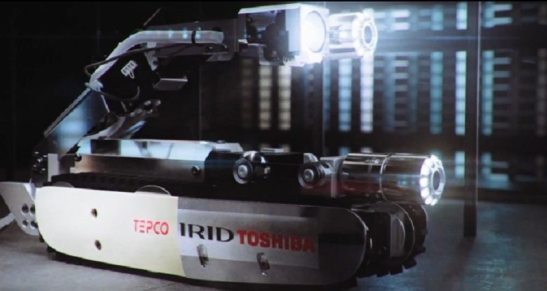
The radiation levels in ‘s unit two reactor are so high they could kill a human in two minutes, according to data collected by a robot.
Tokyo Electric Power, the company which operates the nuclear plant in Fukushima, carried out a robotic survey of the area around the core that melted six years ago, following the earthquake and tsunami that triggered the .
But the scorpion robot Sasori got stuck inside the reactor after its crawling functions failed while climbing over highly radioactive debris and had to be abandoned inside the reactor.
It recorded radiation measures in the area of 210 sieverts per hour, which are lethal enough to kill a human within two minutes.
This is not the first time a robot has become inoperable after entering the reactor.
During a previous survey, another robot designed to clean the debris for Sasori’s passage had to return halfway through when two of its cameras failed after being exposed for two hours to radiation and reaching its maximum tolerance of 1,000 sievert. Such an exposure to can kill a human within seconds.
Despite the dangerously high levels of radiation, company officials said it was not leaking outside the reactor.
The high radiation and inadequate cleaning of the reactors could also limit the scope of future investigations and the company may have to develop more radiation-resistant cameras and equipment.
The probe was specially developed for surveying the interior of the crippled reactor and collect data that will assist in removing the melted fuel.
But the level of radiation and the presence of debris seem to have brought the decommissioning project to a standstill.
Fukushima Radiation Hotspots Raise Concerns Ahead of Tokyo Olympics
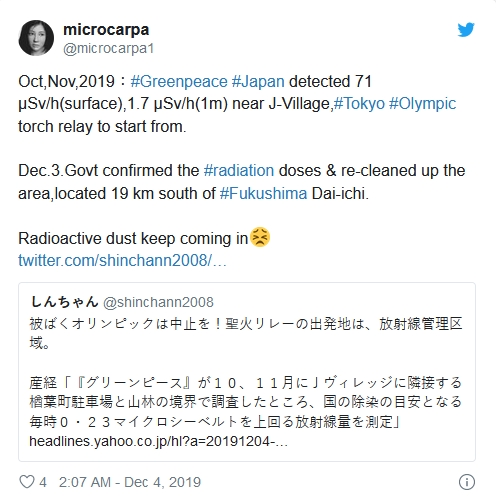
“According to Greenpeace, the figure of 71 microsieverts per hour is “1,775 times higher than the 0.04 microsieverts per hour prior to the Fukushima Daiichi triple reactor meltdown”.
After the accident, the Japanese government took the controversial decision to raise the maximum exposure threshold for civilians in Fukushima from 1 millisievert (=1,000 microsieverts) per year, the figure recommended by the World Health Organization and the International Atomic Energy Agency, to 20 millisieverts per year.
Even on this basis, the annualized equivalent of 71 microsieverts per hour amounts to nearly 622 millisieverts, a figure 31 times higher.”
 Area of radioactive hot spots found by Greenpeace survey team in J-Village, Fukushima prefecture, 26 October 2019.
December 8, 2019
“This is one of the most shocking discoveries I’ve made in decades of radiation surveys.”
The troubling discovery was supposed to remain under wraps, until Greenpeace Japan determined on December 4 that it had no choice but to publish a press release entitled “High-level radiation hot spots found at J-Village, the starting point of Tokyo 2020 torch relay.”
The story remains largely unnoticed in Japan, but it raises serious questions about public health, transparency and accountability that transcend the country’s borders all the way to Switzerland and Argentina. It also deals a heavy blow to the Japanese government’s narrative that “all is well in Fukushima,” a region forever tainted by the triple meltdown at the eponymous nuclear plant, as Tokyo gears up to host the 2020 Olympics.
On a deeper level, the sequence of events sheds light on an apparent cover-up that would result in a public relations fiasco — that is, if the media covering the issue were asking the right questions, connecting the dots and delivering the full picture.
“This is one of the most shocking discoveries I’ve made in decades of radiation surveys,” says Shaun Burnie, a senior nuclear specialist at Greenpeace who has been the environmental NGO’s point man in Fukushima since the triple meltdown of March 2011. “One of the reasons is that the Tokyo Olympics torch relay is set to kick off from this very location on March 26.”
A Symbol of Fukushima’s Cleanup
The location where the radiation hotspots were discovered, J-Village, is highly symbolic for Japan. Tens of millions of people first heard of it at the peak of the Fukushima nuclear crisis, when Japanese Self-Defense Force troops dispatched in a last-ditch effort to bring the situation under control turned the sports complex into a forward operating base. The location of J-Village, approximately 20 kilometers (12 miles) south of the Fukushima Daiichi nuclear plant, was ideal because it was right at the edge of the mandatory evacuation perimeter imposed by the government — often referred to as the exclusion zone.
Over the years that followed, J-Village became a logistics center for the decontamination of areas tainted by radioactive fallout from the nuclear plant. And in April 2019, the reopening of a completely renovated J-Village National Training Center became the cornerstone of a major public relations campaign to signal that the cleanup of Fukushima was finally complete.
It’s no surprise, therefore, that the administration of Prime Minister Shinzo Abe chose J-Village as the “grand” starting point, on March 26, 2020, of the torch relay that will see the Olympic flame travel across all of Japan’s 47 prefectures — the equivalent of U.S. States — over 121 days.
The Tokyo Games themselves are seen by many in Japan as a once-in-a-lifetime opportunity to shine on the world stage. And in the same way that the Tokyo 1964 Summer Olympics marked the country’s rise from the ashes of war, the 2020 edition is being marketed, especially on the domestic front, as the “Reconstruction Olympics” in reference to the triple disaster of March 2011.
An Unexpected Discovery
On October 26, a team of radiation experts from Greenpeace, which has been carrying out annual surveys across Fukushima since the 2011 nuclear accident, detected abnormally high levels of radiation at several points around the sports complex. The survey was part of an annual study covering the main contaminated areas of Fukushima, which involves taking tens of thousands of measurements with high-precision sensors mounted on drones, vehicles and handheld devices.
The highest reading, 71 microsieverts per hour at ground level, was discovered in a parking area. “I was standing less than one meter from the hotspot and two meters from a parked car from which a woman had just come out,” recalls team leader Shaun Burnie. “Just 30 to 40 meters away, soccer players were sitting on the tarmac eating their lunch. There were also sports fans, family members and coaches.”
 Youth soccer game, J-Village Stadium, Hirono, Fukushima. 9 August 2010.
According to Greenpeace, the figure of 71 microsieverts per hour is “1,775 times higher than the 0.04 microsieverts per hour prior to the Fukushima Daiichi triple reactor meltdown”. After the accident, the Japanese government took the controversial decision to raise the maximum exposure threshold for civilians in Fukushima from 1 millisievert (=1,000 microsieverts) per year, the figure recommended by the World Health Organization and the International Atomic Energy Agency, to 20 millisieverts per year. Even on this basis, the annualized equivalent of 71 microsieverts per hour amounts to nearly 622 millisieverts, a figure 31 times higher.
“Obviously no one is going to stand over a hotspot for a year, but it indicates that there is a problem with contamination,” says Burnie. “The much more serious hazard is inhaling cesium-rich microparticles. The long-term risks remain a big unknown.”
[Note: The health risks associated with external exposure to such levels of radiation are a highly complex and contentious issue that goes beyond the scope of this article. It is partly addressed in this Scientific American article on the return of Fukushima residents displaced by the nuclear crisis.]
Weighing Options
The Greenpeace team spent only about two hours on location, but it quickly identified six hotspots within approximately 100 meters of each other. “Finding such high levels, especially in areas open to the public, was an unexpected situation to say the least,” says Burnie.
The team immediately discussed and considered three options: 1) an immediate release of the information; 2) informing authorities and urging them to take action; and 3) holding onto the information, compiling the data from the entire Fukushima survey — a process that takes between one and two months — and publishing the annual report as planned sometime at the end of February or early March (see for example Greenpeace Japan’s March 2019 report).
“We immediately ruled out the third option because of the high radiation levels,” says Burnie. “The first option was very tempting, but we wanted to give the authorities of J-Village, Fukushima Prefecture and the government an opportunity to take action immediately.” Greenpeace settled for option two, in the form of a letter to Environment Minister Shinjiro Koizumi.
Copies of the letter were sent separately to the Governor of Fukushima Prefecture (who also presides over J-Village), the president of the Japanese Olympic and Paralympic Committee, the president of the International Paralympic Committee, and last but not least, the President of the powerful International Olympic Committee (IOC) in Lausanne.
Birth of a Public Relations Fiasco
On November 18, Greenpeace entrusted the letter to an official from the Environment Ministry’s PR department. The copies were all sent on the same day via registered mail. In the letter, the NGO raised “urgent concerns,” presented the survey’s methodology and findings, and recommended an “immediate and extensive” survey of the public area in and around J-Village.
What followed was two weeks of complete radio silence, despite regular follow-up inquiries by telephone to the Environment Ministry and J-Village’s PR departments. Until, on Monday, Dec. 2, Greenpeace Japan received a phone call from a reporter with the Sankei Shimbun, a daily newspaper on the (arguably hard) right of the political spectrum. The journalist sought confirmation about the survey, which a Greenpeace spokesperson refused to confirm or deny.
On Tuesday, the same journalist called again, this time with the precise figure of 71 microsieverts per hour. The cat was out of the bag, and the Sankei article set to go to print on Wednesday. That is what prompted Greenpeace to go public on Dec. 4 with a full-fledged press release.
 Screenshot of Greenpeace Japan’s website.
The NGO’s original plan, according to Senior Energy Campaigner Kazue Suzuki, had been to wait until mid-December for a proper response from the government and J-Village. At the time of writing (Dec. 8), the only reaction Greenpeace had received from the Environment Ministry’s PR department, according to Suzuki, was a verbal commitment to “work towards being able to reply by Dec.19.”
At this point in time, it would have been reasonable to believe that authorities were simply dragging their feet, all the more so because Greenpeace Japan is not exactly popular in government circles due to its campaigns against Japan’s whaling programs, and the NGO’s highly critical stance on the issue of nuclear decontamination. But the Sankei’s Dec. 4 article also carried revelations that raise a whole new set of questions.
A Discreet Bombshell
The Sankei article, entitled “Starting Point of Olympic Torch Relay Re-Decontaminated,” cited “multiple government sources” confirming Greenpeace’s survey findings, including the maximum figure of 71 microsieverts per hour. It also revealed for the first time to the public the existence of a letter “requesting action from the Environment Ministry, the Japanese Olympic Committee and the IOC“ — but stopped short of mentioning that the letter had been sent 2 weeks earlier.
“The government takes survey results seriously due to possible safety concerns among countries participating in the Olympics”, noted the article, before delivering this crucial nugget: “On December 2, representatives from the Environment Ministry, local authorities, Tokyo Electric Power Company (Tepco) and J-Village held a meeting, and on Dec. 3, Tepco removed [contaminated] soil from the surrounding area.”
More importantly, the Sankei article suddenly made it clear, albeit between the lines, that neither the government nor Fukushima Prefecture or Tepco — entities that have repeatedly pledged greater transparency over radioactive contamination — had deemed it necessary to inform the public about the hotspots or their decision to decontaminate those areas.
Also puzzling is the silence of Fukushima Governor Masao Uchibori, who as President of J-Village was a direct recipient of the Greenpeace letter. If this matter came to the attention of his constituents, his administration would most likely have to field questions from angry parents whose children attended summer camps at the facility, among other concerned citizens.
What’s more, there is no sign of any intention on the part of authorities to conduct an immediate and comprehensive survey of the entire J-Village complex, as urged by Greenpeace Japan. “If this were a nuclear facility,” says Burnie, “the matter would have to be reported as an incident and the area closed off immediately.”
Low-Key Media Coverage
Unlike what one would expect in nuclear-powered countries such as France or the United States, none of Japan’s mainstream media have deemed this story worthy of high-profile coverage.
Sankei’s short article was buried on page 26, which explains perhaps why few other Japanese media such as the Mainichi Shimbun picked up the story, all in a similar, low-key fashion. The headlines didn’t read anything close to “Government Occults Radiation Hotspots at J-Village,” nor did the articles raise questions about transparency or accountability.
More often than not, even Greenpeace’s name was replaced with “an environmental protection group,” despite its conspicuous role as the whistleblower that initially brought this matter to the government’s attention.
Bloomberg and AFP were among the few non-Japanese media to pick up the story, but neither offered details about the timeline of events or its wider implications.
Did authorities know of any hotspots at or near the facility before receiving the Greenpeace letter? If not, why did they fail to spot them? Why did they choose to remain silent after determining that radiation levels warranted an intervention? Are they in a position to guarantee that J-Village will remain clean until the Olympic torch relay? Is it reasonable to hold sports training sessions and competitions involving children at the facility?
All of these questions have yet to be addressed, and it’s unclear if they ever will be.
This is not the first time that news related to the nuclear accident at Fukushima Daiichi remained, intentionally or not, under the radar of Japanese media. Nor is it the first time that the government has opted not to disclose matters directly relevant to public health or safety.
 Author comparing the readings of handheld geiger counter with official monitoring post in Iitate, Fukushima Prefecture. 31 August 2013.
Notable examples include the Japanese media’s reticence to use the word “meltdown” for 6 weeks after the nuclear accident, opting instead to relay the government and Tepco’s less frightening “partial damage to fuel rods” wording; the general absence in media reports of testimonies from nuclear evacuees openly expressing their distrust of data from the government’s radiation monitoring posts (some claimed to have seen workers regularly decontaminating the area immediately around the sensors, presumably to make sure the readings remained low); and the revelation in February 2012 that the Japanese government, in its darkest hour, had contemplated evacuating Tokyo.
Outside Japan: the Argentina Angle and the IOC
On the international front, the issue that appears to worry the Japanese government the most, as underlined by the Sankei article, is how countries participating in the Tokyo 2020 Olympics might react. But there are other dots that no Japanese or foreign media seem to have connected so far: J-Village was also an important facility during the Rugby World Cup hosted by Japan this year, and served as a training ground for Argentina’s national team less than 6 weeks before the hotspots were discovered.
According to a reporter from Argentina’s leading newspaper La Nacion, who covered the team during the tournament, Los Pumas (as the squad is known) spent at least one week training and sleeping at J-Village in mid-September. Would they have done so if there had been any suspicions about radiation levels in the area?
Neither Argentina’s national squad nor the Argentina Rugby Union could be reached for comment at the time of writing. Details about this story and an offer to collaborate on it were extended to La Nacion’s reporter as early as December 4, but they have yet to elicit a formal response.
The other angle that needs to be pursued is in Switzerland, namely at the headquarters of the Grand Master of Ceremonies itself, the International Olympic Committee in Lausanne.
The IOC is on the list of institutions that received the registered letter from Greenpeace Japan. And just like its Japanese counterparts, it has yet to respond to the NGO — let alone inform the public about the findings. Among the questions that come to mind are: what is the IOC’s position on the matter of radioactive hotspots? And how does it feel about hosting a large-scale public event such as the launch of the torch relay at J-Village, without a comprehensive survey being conducted first?
Here again, a Swiss newspaper, La Liberté, was contacted directly and provided with detailed information about the story, particularly on the IOC angle, but its editors chose not to follow through.
Author’s Analysis
It’s unusual for a journalist to include personal thoughts as part of a news story. But in the spirit of Citizen Truth’s belief “in the power of regular people sharing their news, thoughts and experiences,” this reporter — who, like any journalist, is also an ordinary citizen — would like to switch to the first person to share a few considerations with the readers, while keeping them separate from the story itself.
I spent several years covering the Fukushima nuclear accident as a reporter for Nuclear Intelligence Weekly, and more episodically for other non-Japanese media, including Time, the Independent and Canada’s CBC. I interviewed evacuees, spent the equivalent of one week with a farmer inside the exclusion zone, walked around with an industrial-grade Geiger counter, wrote a long critical assessment of decontamination efforts in Fukushima for the Asia-Pacific Journal, and even participated as an observer in a survey at sea off Fukushima Daiichi aboard a research vessel operated by the Tokyo University of Marine Science and Technology.
What are my takeaways? To name just a few related to this article: Japanese media are notoriously reluctant to disclose any negative information that hasn’t been confirmed by the government or other official sources; understanding radiation figures and what they mean takes a lot of time and effort, and there are still significant doubts about the government’s willingness to be transparent and forthcoming with the numbers, especially when they don’t fit with the narrative that all is well in Fukushima.
Despite the Japanese government’s constant assurances, the consequences of the Fukushima nuclear crisis are not going to go away anytime soon, nor are the radionuclides that have been scattered across large areas of the prefecture. You only have to look at a map to see that 70 to 80 percent of the land most affected by radioactive fallout consists of mountains and forests that can by definition not be “decontaminated” without causing tremendous damage to the environment. The direct consequence is that radioactive particles continue to be scattered across areas designated as “safe to return to,” and although background radiation levels are receding, they will remain above normal even in the reopened parts of Fukushima for decades to come.
To me, it’s no surprise that this story appears to have been nipped in the bud, or at least neutralized for now. The only scenario I can think of that would prompt Japan’s mainstream media to revisit it would be if an official protest were lodged by another country or institution, for example, Argentina’s Rugby Union. Only time will tell.
‘Scorpion‘ robot mission inside Fukushima reactor aborted
December 8, 2019
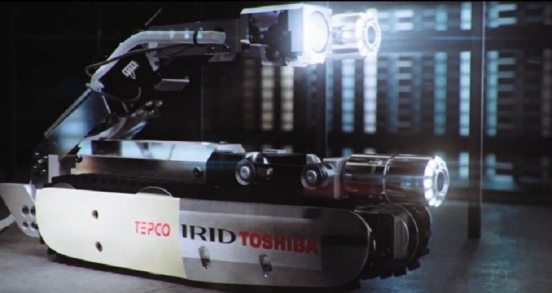
A “scorpion” robot sent into a Japanese nuclear reactor to learn about the damage suffered in a tsunami-induced meltdown had its mission aborted after the probe ran into trouble, Tokyo Electric Power company said Thursday.
TEPCO, the operator of the Fukushima nuclear plant, sent the remote-controlled device into the No. 2 reactor where radiation levels have recently hit record highs.
The “scorpion” robot, so-called because it can lift up its camera-mounted tail to achieve better viewing angles, is also designed to crawl over rubble inside the damaged facility.
But it could not reach its target destination beneath a pressure vessel through which nuclear fuel is believed to have melted because the robot had difficulty moving, a company spokeswoman said.
“It‘s not immediately clear if that‘s because of radiation or obstacles,” she said, adding that TEPCO is checking what data the robot was able to obtain, including images.
A massive undersea earthquake on March 11, 2011 sent a huge tsunami barrelling into Japan‘s northeast coast, leaving more than 18,000 people dead or missing, and sending three reactors into meltdown at the plant in the worst such accident since Chernobyl in 1986.
The Japanese government said in December that it expects the total costs — including compensation, decommissioning and decontamination — to reach 21.5 trillion yen ($189 billion) in a process likely to take decades as high radiation levels slow operations.
The robot, 60 centimetres (24 inches) long, is made by Toshiba and equipped with two cameras and sensors to gauge radiation levels and temperatures.
“Scorpion‘s mission is to take images of the situation and collect data inside the containment vessel,” TEPCO spokesman Shinichi Nakakuki said earlier.
“Challenges include enduring high levels of radiation and moving on the rough surface,” he said.
Radiation levels inside the reactor were estimated last week at 650 sieverts per hour at one spot, which can effectively shut down robots in hours.
But the probe — designed to withstand up to 1,000 sieverts of radiation in total — would not sustain severe damage because it was unlikely to remain for too long at a single point, Nakakuki said.
https://livingstonledger.com/scorpion-robot-mission-inside-fukushima-reactor-aborted/
1 This Month

of the week – Shut Down Drone Warfare!


Tell the Ukrainian Government to Drop Prosecution of Peace Activist Yurii Sheliazhenko

Petition to revoke the licensing of the Near Surface Nuclear Disposal Facility (NSDF) at Chalk River. https://www.ourcommons.ca/petitions/en/Petition/Details?Petition=e-7247
To see nuclear-related stories in greater depth and intensity – go to https://nuclearinformation.wordpress.com
-
Archives
- April 2026 (79)
- March 2026 (251)
- February 2026 (268)
- January 2026 (308)
- December 2025 (358)
- November 2025 (359)
- October 2025 (376)
- September 2025 (257)
- August 2025 (319)
- July 2025 (230)
- June 2025 (348)
- May 2025 (261)
-
Categories
- 1
- 1 NUCLEAR ISSUES
- business and costs
- climate change
- culture and arts
- ENERGY
- environment
- health
- history
- indigenous issues
- Legal
- marketing of nuclear
- media
- opposition to nuclear
- PERSONAL STORIES
- politics
- politics international
- Religion and ethics
- safety
- secrets,lies and civil liberties
- spinbuster
- technology
- Uranium
- wastes
- weapons and war
- Women
- 2 WORLD
- ACTION
- AFRICA
- Atrocities
- AUSTRALIA
- Christina's notes
- Christina's themes
- culture and arts
- Events
- Fuk 2022
- Fuk 2023
- Fukushima 2017
- Fukushima 2018
- fukushima 2019
- Fukushima 2020
- Fukushima 2021
- general
- global warming
- Humour (God we need it)
- Nuclear
- RARE EARTHS
- Reference
- resources – print
- Resources -audiovicual
- Weekly Newsletter
- World
- World Nuclear
- YouTube
-
RSS
Entries RSS
Comments RSS
 nuclear-news