Residents of Namie-cho voiced their concerns at a briefing session

Residents (foreground, left) speak out against Namie Town and the national government’s decision to lift the restrictions on the lifting of the restrictions, questioning the resumption of their farming operations.
January 31, 2023
On March 30, Namie Town, Fukushima Prefecture, held explanatory meetings for local residents in Fukushima and Sendai cities in preparation for the lifting of the evacuation order for the specific reconstruction and revitalization center (reconstruction base) located in the difficult-to-return zone. In response to the government’s claim that the requirements for lifting the evacuation order have been met, participants raised questions about the continued high radiation levels and the resumption of farming operations.
According to Namie Town’s plan for reconstruction centers, decontamination and infrastructure development will be completed in March of this year. Therefore, the evacuation order for the base is expected to be lifted by the end of March.
The lifting of the evacuation order requires three conditions: (1) a decrease in radiation levels, (2) decontamination and infrastructure improvement, and (3) sufficient consultation with local residents. Briefing sessions for residents were held at seven locations until February 5, and consultations have only just begun, but on February 30, the government decided that “the requirements for lifting the evacuation have been met as a result of a comprehensive assessment of the efforts made to restore the area.
Mayor Eiki Yoshida said, “There are 80% of the town’s land outside of the base, which is called ‘white land. We will strive for the lifting of the restrictions on the outside areas while keeping a close eye on the lifting of the restrictions at the end of March.
There are 302 households and 818 residents who can live in the recovery centers. As of March 25, there are 9 households and 18 people who have applied for accommodation in preparation for the lifting of the restrictions. The number of demolitions of houses and other structures has reached 310, and many people are worried that they do not have a home to return to, even if they want to stay in preparation or return home.
Akio Kanno, 71, who evacuated to Hyogo Prefecture and attended the Sendai meeting, said, “It is not reconstruction if there are almost no residents returning and no buildings. What are we going to do with the original community?
At a briefing in Fukushima City, many participants expressed concern about radiation exposure.
The government and the town explained that the radiation dose was below the evacuation standard of 20 millisieverts per year and that the results of demonstration cultivation showed that six crops, including spinach, komatsuna, and cabbage, were below safe standards.
However, Motoharu Shiga, 75, the head of a ward in the Suemori area, one of the reconstruction sites, and an evacuee to Fukushima City, said, “Root vegetables that were not subject to the demonstration cultivation are still highly radioactive. After returning home, we will not be able to eat only foods that are below the standard,” he pointed out. (Editorial board member Noriyoshi Otsuki)
https://www.asahi.com/articles/ASR1Z7K7QR1ZUGTB004.html?iref=pc_photo_gallery_bottom
Takahama nuclear reactor in Fukui halted after alert goes off

The No. 4 reactor at Kansai Electric Power Co.’s Takahama nuclear power plant in Takahama, Fukui Prefecture
Jan 30, 2023
Fukui – A reactor at Kansai Electric Power Co.’s Takahama nuclear power station in Fukui Prefecture was automatically halted Monday after an alert went off warning of a rapid decrease in the number of neutrons within the unit, the complex’s regulator and operator said.
The No. 4 reactor was halted at 3:21 p.m., the Osaka-based utility said, adding that there has been no indication of the incident causing environmental contamination. The reactor’s cooling function is normal, according to the Nuclear Regulation Authority.
The No. 4 reactor restarted in November after being shut down for routine inspections.
The seaside plant has four reactors and faces the Sea of Japan.
https://www.japantimes.co.jp/news/2023/01/30/national/takahama-nuclear-plant-halt/
Inside Fukushima Daiichi Unit 5 Nuclear Reactor – “It’s so small, can you fit a robot inside?” 50μSv exposure in 3 hours of coverage
January 29, 2023
On March 11, 2023, it will soon be 12 years since the world’s worst accident at TEPCO’s Fukushima Daiichi Nuclear Power Plant (Okuma and Futaba, Fukushima Prefecture), which caused the meltdown of Units 1 through 3. There is still no word on when the nuclear fuel (debris) that has melted down inside the containment vessels will be removed. On March 27, a team of reporters from this newspaper went inside Unit 5, which is almost the same type as Units 1-3 where the accident occurred, but was spared from the accident. The team was confronted with the difficulty of working inside the reactor to bring the accident under control. (Kenta Onozawa, photo by Takeshi Yamakawa)
Unit 5 was not in operation at the time of the accident at the nuclear power plant in 2011, as it was undergoing routine inspection.
Wearing protective clothing that covered his entire body, he tried to enter the work space for equipment maintenance, located directly under the “pressure vessel” that contained the nuclear fuel, and hit his head. Above his head hung a device for moving the control rods that are inserted into the nuclear fuel, and he had to crouch down to enter the space. The circular work space is about four meters in diameter. It was so narrow that it was difficult to move.

The workspace is located directly below the pressure vessel of Unit 5, which is almost the same type as Units 1-3. The control rod drive unit and other equipment looms overhead in this narrow space of about 4 meters in diameter at TEPCO’s Fukushima Daiichi Nuclear Power Plant.
Once down at the bottom of the containment vessel, one cannot walk straight due to the complex arrangement of various piping and equipment above one’s head and under one’s feet.
In Unit 1, this thick wall of concrete had been removed, leaving the reinforcing steel inside exposed.

TEPCO plans to put a robot inside the opening after March to examine the overall damage to the wall. However, we wondered whether the robot could really enter the narrow space, which is believed to contain much debris and collapsed equipment. A TEPCO spokesperson minced no words, saying, “Without actually checking the damage to the wall with the robot, we cannot determine whether the earthquake resistance has been maintained.
Meanwhile, on the seaward side of the Unit 5 reactor, work was steadily progressing on a water tank to temporarily store water diluted with a large amount of seawater in preparation for the discharge of contaminated water into the ocean after purification. The government expects to begin discharging the water “in spring or summer,” but it is unclear how to gain the “understanding” of fishermen, which is a prerequisite for such a release.

Workers constructing a water tank to temporarily store treated water before it is discharged into the ocean. A lifeline is attached to the workers at the TEPCO’s Fukushima Daiichi Nuclear Power Plant on March 27.
The reporter was exposed to about 50 microsieverts (μSv) in about three hours of reporting. This is one twentieth of the annual exposure limit for the general public, and this is calculated to have occurred in only a short period of time. The debris removal, which is the main task of restoring order after the accident, is still in the preparation stage, and the situation inside the reactor is still not fully understood. We were reminded once again of the magnitude of the remaining problems.
https://www.tokyo-np.co.jp/article/227984?fbclid=IwAR0nrlcpJu_IblZRCxVL7slBttIfS7TGnp7lBMsXWQ6h7EJyPA-c-ofdnpk
Plaintiffs’ Opinion Statement: “Recurrence is always in the back of my mind,” Defense Objects to Estimation of Radiation Exposure

Defense lawyers make an appeal in front of the Tokyo District Court before the opening of the trial.
January 26, 2023
On January 25, the fourth oral argument was held at the Tokyo District Court in a lawsuit filed by seven men and women aged 18-28 who lived in Fukushima Prefecture at the time of the accident, claiming that they developed thyroid cancer as a result of the accident at TEPCO’s Fukushima Daiichi Nuclear Power Plant. Two of the plaintiffs, a man and a woman, made statements, claiming that the recurrence of the accident was always on their minds.
The plaintiffs, a man in his 20s who was a junior high school student and a woman in her 20s who was an elementary school student at the time of the accident, made statements on the day. The man has repeatedly suffered recurrences of cancer and has undergone a total of four surgeries and isotope therapy, in which radioactive iodine is administered internally to destroy cancerous tissue when the cancer spreads.
After the second surgery, in which her thyroid gland was completely removed, she lost her voice and became anxious, even thinking that it might be easier to just die. He confessed that he had made up his mind to “value my own will from now on. I am prepared for a recurrence of cancer, but I want to look only forward. I want to see if my illness is recognized as an effect of radiation exposure.
Two years ago, a health survey conducted by the Fukushima prefectural government found that she had thyroid cancer, and she underwent surgery. After the surgery, she became emotionally unstable, and she was “on the edge mentally” as she raised her voice to her family. If this continues, I will end up in a state of ambiguity for a long time. Why were we forced to stand (in court)? I hope you will understand at least that much.
TEPCO claims that the plaintiffs were exposed to an estimated 10 millisieverts or less of radiation to the thyroid gland based on a report issued by a United Nations scientific panel, and that since the risk of developing thyroid cancer does not increase below 100 millisieverts, their cancer was not caused by the nuclear accident.
In response, the defense submitted a written opinion by Professor Emeritus Shinichi Kurokawa of the High Energy Accelerator Research Organization (KEK), who analyzed data from monitoring posts in Fukushima City from March 15 to 16, 2011, and found that the thyroid exposure of a one-year-old child was approximately 60 millisieverts from breathing alone. He claimed that the Science Commission’s radiation exposure estimate was “a drastic underestimate and irrational.
The next argument date is set for March 15. Two more plaintiffs are scheduled to present their opinions. (Tetsuya Kasai)
https://www.asahi.com/articles/ASR1T6SGFR1TUGTB001.html?iref=pc_photo_gallery_bottom
Japan’s decision to dump Fukushima water is based on biased data, argue scientists
A panel of global experts is urging Japan to halt its plans to dump the radioactive water
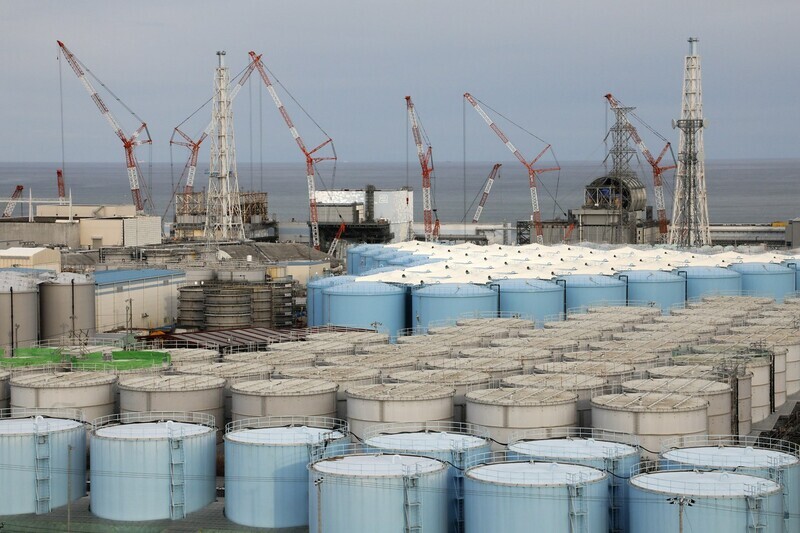
Numerous tanks currently store contaminated water at the Fukushima nuclear power plant.
Jan.27,2023
A panel of scientists is arguing that the Japanese government’s decision to discharge radioactive water from the Fukushima nuclear plant into the ocean is based on incomplete and biased data.
The experts contend that Tokyo Electric Power Company (TEPCO), the operator of the nuclear plant, concluded that the contaminated water was safe without properly measuring a significant number of radioactive materials (nuclides). The discharge of the wastewater from the Fukushima plant could begin as soon as this coming spring.
This latest analysis comes from a panel of scientists organized by the Pacific Islands Forum (PIF), an intergovernmental organization made up of 18 Pacific Island countries including New Zealand and Fiji.
These scientists are recommending the Japanese government cease its plans to release the wastewater from the nuclear plant into the ocean and instead seek alternative options.
At a debate held at Korea’s National Assembly on Thursday, the scientists stressed that TEPCO’s contaminated water measurement data cannot function as the basis for deciding on the release of the wastewater into the ocean.
The panel of scientists, including five experts in nuclear energy and oceanography, was formed last March by the PIF. As parties with a direct stake in the consequences of the potential discharge of Fukushima wastewater, the PIF requested relevant information and data from Japan regarding this issue.
On Jan. 13, the Japanese government decided to dilute 1.3 million tons of contaminated water stored in over 1,000 tanks at the Fukushima plant with water and then to release it into the ocean either this coming spring or summer.
“The data provided by Japan to the forum is incomplete, inadequate, inconsistent, and biased, making it unsuitable for making any decisions,” said Dr. Ferenc Dalnoki-Veress, an adjunct professor at the Middlebury Institute of International Studies and head of the panel of scientists.
“Since wastewater is not being released into nature in a planned or controlled way from a normally functioning power plant, in this case the word ‘dumping’ should be used instead of the ‘release’ of wastewater,” Dalnoki-Veress said.
The reason the panel believes the data provided by TEPCO is biased is that TEPCO is focusing only on nine materials, including strontium and cesium, among a total of 64 radioactive materials. The remaining 55, which were not measured, are presumed to be always present with the same effect.
The panel of scientists also pointed out that it is not enough to gauge the actual composition and concentration levels of the wastewater as the measurement of materials was performed on a 30-liter sample just before the water in the storage tanks to be treated with the Advanced Liquid Processing System (ALPS) were full.
In a report published by the panel on this issue, the scientists raised fundamental questions about the reliability of the Japanese data, saying there are “many abnormal and suspicious measurement values in TEPCO’s measurement data.
” For example, the panel pointed out that measurements for tellurium (Te)-127, a radionuclide with a half-life of only 9.4 hours, ranged from hundreds of thousands to nearly tens of billions of becquerels (Bq) per liter. This is because, if it had been released during the Fukushima accident, it would have broken down a long time ago in terms of its half-life.
“Unless the core is intermittently in a dangerous state of meltdown, these measurements indicate problems with TEPCO’s measurement and data quality control procedures,” the report stated.
The panel also pointed out the major problem that issues such as how tritium present in the wastewater is changed into organic-bonded tritium in the sea, which will affect the marine ecosystem, or the effects of strontium-90’s bioconcentration, are not being properly examined.
“The assumption that dilution is the solution to pollution is scientifically outdated and ecologically inadequate,” the panel said. “The [wastewater] dumping measures are an issue that transcends generations and borders and require much greater contemplation,” they added.
As an alternative to releasing the polluted water into the ocean, the scientists recommended the wastewater be stored for a long time to reduce its radioactivity levels until the polluting elements can be removed using biological methods such as employing animals, plants and fungi. After this, the treated water could be used in the process of making concrete in places with as little human contact as possible.
https://english.hani.co.kr/arti/english_edition/e_international/1077249.html
Judge to be Changed Just Before Tokai Daini Nuclear Power Plant Appeals Court; Plaintiffs See Problems with His Past Representation of the State
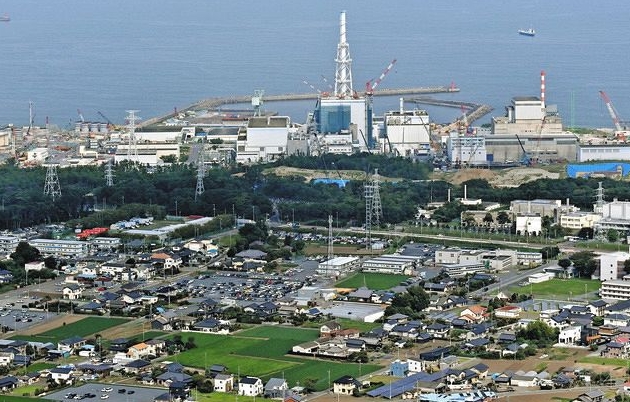
Tokai Daini Nuclear Power Plant is under construction for restart, from the Oozuru helicopter in Tokai-mura, Ibaraki Prefecture, in August 2021.
January 25, 2023
The Tokyo High Court, which is in charge of the lawsuit against Japan Atomic Power Company’s Tokai No. 2 Nuclear Power Plant (Tokai-mura, Ibaraki Prefecture), is expected to move to a different division in the appeal trial of the injunction lawsuit against the plant’s operation. The plaintiffs’ lawyers had asked the presiding judge to voluntarily withdraw from the case, citing problems with the fact that he had represented the national government in past administrative lawsuits related to nuclear power plants. The first date of the appeal hearing, which was scheduled for March 31, has been canceled. (Mayumi Kojima)
Defense team “appreciates the decision.
According to the defense team, the chief judge in charge of the case, Norio Nagatani, worked for many years in the Litigation Division of the Ministry of Justice, which is in charge of proving the government’s case in administrative lawsuits. In addition to representing the government in several nuclear power plant-related lawsuits, he was also a councilor in charge of litigation and in a position to direct the administrative lawsuit (later withdrawn) that sought an injunction against the operation of Tokai No. 2 from the government.
Last September, Nagatani was transferred from the head of the Hiroshima District Court to the Tokyo High Court, where he became the presiding judge for the appeal of the injunction lawsuit. In December, the defense lawyers asked Nagatani to voluntarily withdraw from the case on the grounds that a fair trial would not be conducted.
According to attorney Yuichi Kaito of the defense team, on the 25th of this month, Mr. Nagatani explained to them that “in view of various circumstances, the case will be reassigned. A new department is expected to take over the proceedings.
At a press conference held in Tokyo on March 25, attorney Hiroyuki Kawai said, “Mr. Nagatani said he would be fair and neutral regardless of his background, but objectively speaking, there is an inference that he is siding with the administration. (I commend him for making the decision to change the case. Mr. Kaito said, “You should not be both the representative of the government and the presiding judge in administrative lawsuits. (The exchange of judges (between judges and prosecutors) was banned by the DPJ administration, and the exchange of judges with representatives of the state in administrative lawsuits should also have been banned,” he noted.
◆Although the motion was filed… “It is highly unusual for a judge to actually be replaced.”
The appeal of the injunction lawsuit against the Tokai No. 2 nuclear power plant by Japan Atomic Power Company (JAPC), which resulted in the unusual prospect of a change in the trial division in charge of the case, was heard by the court. It is rare for judges to be replaced under the same circumstances, and an expert pointed out that “the very fact that he tried to preside over the case in the first place shows a lack of common sense.
According to the plaintiffs’ lawyers in the Tokai No. 2 lawsuit, a Supreme Court judge avoided participating in the hearing of the Hyakuri Air Base (Ibaraki Prefecture) lawsuit, in which the constitutionality of the Self Defense Forces was disputed and the Supreme Court rejected the appeal in 1989, because he had been involved in the government’s substantiation activities in the past. In 1991, a judge at the Odawara Branch of the Yokohama District Court was replaced after the plaintiffs alleged that he had conducted the case in a way that favored the defendants.
In 2018, the Kanazawa Branch of the Nagoya High Court rejected a motion by the plaintiffs to replace a judge at the first instance court that had vacated an injunction on KEPCO’s Nos. 3 and 4 reactors at the Ooi Nuclear Power Plant in Fukui Prefecture. The Kanazawa District Court also rejected the plaintiffs’ motion for an injunction against Hokuriku Electric Power Co.’s Shiga Nuclear Power Plant (Ishikawa Prefecture), which is currently under litigation.
Former judge Hajime Tada, attorney-at-law, commented on the replacement motion, “It is often a kind of a warning shot to the court. It is extremely unusual for a judge to actually be replaced. In the case of Tokai Daini, he pointed out, “It cannot be said that the court can make a neutral decision, and it is quite natural for the court to change the trial division. He criticized the change, saying, “It shows that the court is leaning toward the administration and disrespects the independence of the judiciary. (Kenta Onozawa)
Plaintiffs’ Residents Welcome the Decision
The plaintiff residents living near the Tokai Daini Nuclear Power Plant voiced their surprise and welcome. Hiroko Kawano, 80, whose home is 1.7 km from the plant, said, “It was too badly done, so I am glad. I think the plaintiffs’ petition was approved,” she said happily.
She learned of Judge Norio Nagatani’s background at a rally held by the plaintiffs’ group in Tokyo on April 22. I thought the government was doing an amazing job,” he said. Although there is supposed to be separation of powers, it looks as if the government has intervened in the appointment of the court.
Kiyoko Aizawa, 81, of Tokai-mura, said, “I thought the government would continue to forcefully proceed. The news reports have been covering the situation, so perhaps they couldn’t just ignore it. Tokai No. 2 is decrepit, and there are many people living around it. I don’t know who the next presiding judge will be, but I definitely want to win.
A 74-year-old man living in Hitachi City, a neighbor to the north of Tokai Village, said, “The court effectively accepted our side of the story, and I think they really meant to hit us where it hurts. I don’t think the government’s major policy of wanting to overturn the first trial at any cost has changed. I don’t think the government has changed its major policy of wanting to overturn the first trial at any cost, and I think they may try some more tricks.
On the other hand, Japan Atomic Power Company (JAPC) responded to an interview with this newspaper, saying, “We do not know the details of the case, so we will refrain from commenting. (Nagasaki High School and University)
https://www.tokyo-np.co.jp/article/227401?fbclid=IwAR2M8pe0zQeUjHI6qABHn-U-W6rBcrAcd5A5jElo-qNPkMf9RmUGhNtz5w4
Case blaming TEPCO ex-execs for 2011 nuclear accident goes to Supreme Court

Jan. 24, 2023
An appeal was filed with Japan’s Supreme Court on Tuesday over a high court ruling that acquitted three former power utility executives over the 2011 nuclear accident at the Fukushima Daiichi plant.
Former Tokyo Electric Power Company Chairman Katsumata Tsunehisa and former vice presidents Takekuro Ichiro and Muto Sakae were indicted in 2016 on charges of professional negligence resulting in death and injury. The indictment was based on a decision by a prosecution inquest panel composed of randomly chosen citizens.
Patients at a hospital in the northeastern prefecture of Fukushima and others died during evacuations prompted by nuclear meltdowns at the plant after the March 2011 earthquake and tsunami.
The former executives, who are in their 70s and 80s, are accused of being responsible for 44 of those deaths.
The Tokyo High Court found the three men not guilty last Wednesday, following a similar ruling by the Tokyo District Court in 2019.
In handing down its ruling, the high court deemed that the defendants were not required to suspend the plant’s operation to avoid accidents as there was no way to predict the giant tsunami.
Court-appointed lawyers acting as prosecutors in the case said after the ruling that the decision is tantamount to denying the need to take measures against earthquakes and tsunami that remain scientifically unpredictable.
TEPCO declined to make comments on the appeal, but said it apologizes for causing worries and troubles to many people.
Lawyers condemn acquittal of Fukushima ex-execs
Lawyers supporting the victims of the 2011 Fukushima nuclear disaster criticised a Japanese court’s ruling on Wednesday that absolved Tokyo Electric Power Company (TEPCO) of responsibility for the disaster.
Three former executives of TEPCO were found not guilty of negligence over the nuclear meltdowns and the subsequent deaths of more than 40 elderly residents during their forced evacuation.
Prosecution lawyer Shozaburo Ishida described the verdicts as “absolutely unacceptable.”
The Tokyo High Court ruling upheld a 2019 lower court decision that also acquitted the three former top TEPCO officials, noting that a tsunami of that magnitude was unforeseeable.
The court said ex-TEPCO Chairman Tsunehisa Katsumata, 82, and two other former executives were also not guilty of causing the deaths of 44 elderly patients whose already waning health deteriorated during or after forced evacuations from a local hospital and a nursing home.
The executives were accused of failing to anticipate the massive tsunami that struck the Fukushima Daiichi nuclear plant on March 11, 2011, following a magnitude 9 earthquake, and of failing to take measures that might have saved the plant.
Appeal Filed against 3 Ex-TEPCO Execs over Nuclear Crisis

Tokyo, Jan. 24 (Jiji Press)–Lawyers acting as prosecutors Tuesday appealed to the Supreme Court against a not guilty verdict for three former executives of Tokyo Electric Power Company Holdings Inc. over the 2011 nuclear crisis.
The lawyers took the action after Tokyo High Court dismissed their appeal against a Tokyo District Court ruling that acquitted the three–former Chairman Tsunehisa Katsumata, 82, and former Executive Vice Presidents Ichiro Takekuro, 76, and Sakae Muto, 72–of charges of business negligence resulting in death and injury.
Last week, the high court said it was “reasonable” for the district court to conclude that the three were not able to foresee a tsunami big enough to require a suspension of TEPCO’s Fukushima No. 1 plant at the center of the crisis.
The plant in northeastern Japan had an unprecedented triple meltdown after being struck by the March 2011 massive earthquake and tsunami.
The high court said the former executives could not have predicted the huge tsunami because a long-term evaluation by a government body was not reliable, upholding the lower court’s ruling.
Don’t dump on us
Posted on by beyondnuclearinternationa
Pacific Islanders, marine scientists, urge Japan not to dump Fukushima radioactive water into ocean
By Linda Pentz Gunter
The nuclear power industry has a long history of disproportionately impacting people of color, Indigenous communities and those living in the Global South. As Japan prepares to dump more than 1 million tonnes of radioactive water from its stricken Fukushima-Daiichi nuclear power plant site into the Pacific Ocean some time this year, history is about to repeat itself.
To remind us of that — and to warn against this reckless and entirely unnecessary action (Japan could and should expand the cask storage pad on site and keep storing the radioactive water there) — the leader of the Pacific Islands Forum (PIF) has spoken out.
In a recent column in the UK daily newspaper, The Guardian, Henry Puna wrote that “continuing with ocean discharge plans at this time is simply inconceivable”, given how directly it once again discriminates against — and will likely seriously harm the health of — the peoples of the Pacific. Puna took care to remind readers “that the majority of our Pacific peoples are coastal peoples, and that the ocean continues to be an integral part of their subsistence living.”
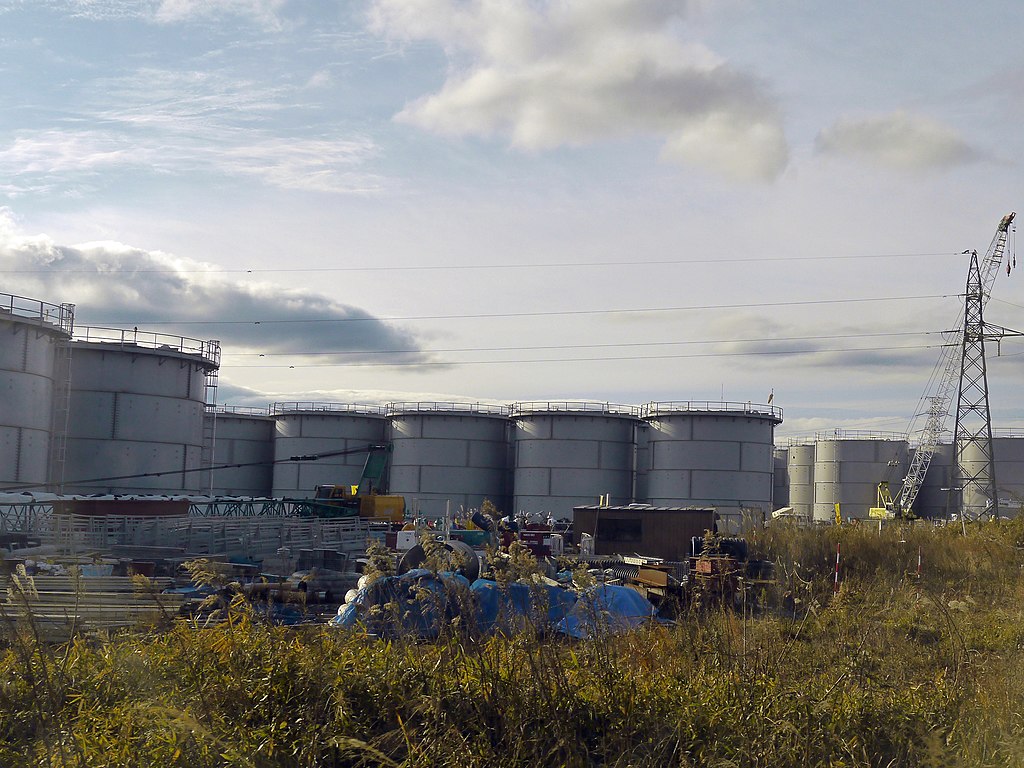
Japan is once again declaring its intention to dump the radioactive water stored in tanks at the Fukushima-Daiichi nuclear site into the Pacific Ocean, against widespread opposition.
Going forward with the dump without further study and serious consideration of viable alternatives, would, Puna said, mean that “the region will once again be headed towards a major nuclear contamination disaster at the hands of others.” Victims of years of atomic testing, Pacific Islanders are rightly not ready to be dumped on yet again.
Tepco and the lapdog Japanese government announced last May that they would release around 1.3 million tonnes of radioactive waste water from the Fukushima site next spring. Recently, authorities suggested the dump could be delayed until the summer but seem undeterred by the loud chorus of opposition from multiple quarters.
The plant produces 100 cubic metres of contaminated water daily, a combination of groundwater, seawater and water used to keep the reactors cool. The water is theoretically filtered to remove most harmful isotopes, other than tritium, which is radioactive hydrogen and cannot be separated from water. It is then stored in casks on site where authorities claim they are running out of space. However, independent watchdogs are not convinced that the filter system has successfully removed other dangerous radioactive isotopes from the waste water.
Most recently, the 100-member American group, the National Association of Marine Laboratories (NAML), expressed its fervent opposition in a strongly worded position paper released last month. Their opposition, they wrote, “is based on the fact that there is a lack of adequate and accurate scientific data supporting Japan’s assertion of safety. Furthermore, there is an abundance of data demonstrating serious concerns about releasing radioactively contaminated water.”
The report went on: “The proposed release of this contaminated water is a transboundary and transgenerational issue of concern for the health of marine ecosystems and those whose lives and livelihoods depend on them. We are concerned about the absence of critical data on the radionuclide content of each tank, the Advanced Liquid Processing System (ALPS), which is used to remove radionuclides, and the assumption that upon the release of the contaminated wastewater, ‘dilution is the solution to pollution.’”
The scientists accused Japan of ignoring the inevitable processes of bioaccumulation and bioconcentration, which contradict the dilution contention. The Association also called out what it saw as shoddy or incorrect science conducted by Tepco and the Japanese government, including “flaws in sampling protocols, statistical design, sample analyses, and assumptions, which in turn lead to flaws in the conclusion of safety and prevent a more thorough evaluation of better alternative approaches to disposal.”
Japan has consistently rejected on-going onsite storage — presumably due to the expense, given the land space is there and more casks could be provided. In the view of some, the eagerness to dump the water— largely contaminated with tritium (a form of radioactive hydrogen that cannot be separated from water) and likely other undeclared radionuclides — is a public relations exercise to make the problem “go away” and restore normal optics to the site. The site cannot also be fully decommissioned so long as the tanks are there.
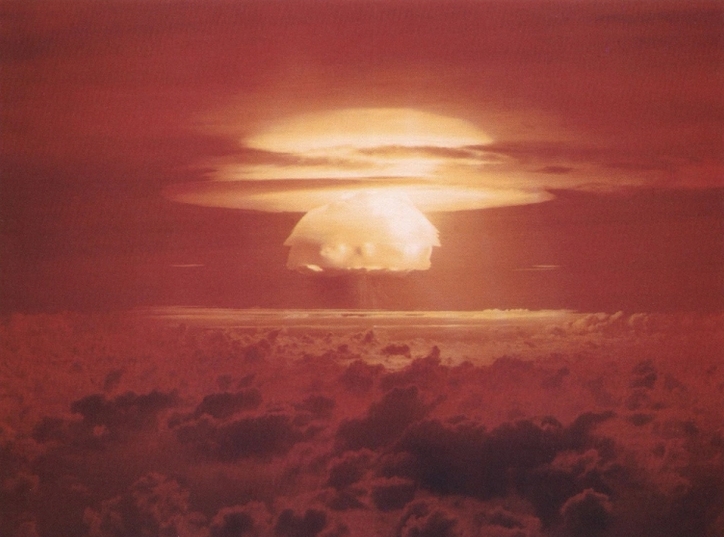
Castle Bravo was just the largest of the 67 atomic tests conducted by the US in the Marshall Islands, contaminating the landscape and sickening its population for generations .
Japan has also benefited from the (inevitable) support of the (nuclear power-promoting) International Atomic Energy Agency, an organization that never met a nuclear danger it couldn’t downplay. The agency has described the proposed discharges as “far below the Japanese regulatory limits,” in a statement last April.
After sending in a task force and several earlier reports, the IAEA released a new report in December in which it said “the IAEA will conduct its own independent checks of the radiological contents of the water stored in the tanks and how it will analyse environmental samples (for example seawater and fish) from the surrounding environment.” However, the IAEA has not expressed opposition to the dumping of the radioactive water even now and instead indicates that its safety reviews will continue “before, during, and after the discharges of ALPS treated water.”
Japan has faced down opposition from fishermen and environmentalists, particularly from those in the Marshall Islands who have suffered decades of horrific health issues, especially birth defects, after enduring 67 US atomic tests there. A Pacific region collective advocacy group, Youngsolwara Pacific, expressed dismay that the Japanese, of all people, would not empathize with them and condemn the Fukushima water dump.
“How can the Japanese government, who has experienced the same brutal experiences of nuclear weapons in both Hiroshima and Nagasaki, wish to further pollute our Pacific with nuclear waste?” they asked in a statement quoted in a New York Times article in December. “To us, this irresponsible act of trans-boundary harm is just the same as waging nuclear war on us as Pacific peoples and our islands.”
Pacific Islanders are naturally suspicious, having been lied to before. It took two days before the by then radiologically contaminated people of Rongelap were evacuated subsequent to the massive Castle Bravo atomic test, America’s biggest bomb that devastated Bikini Atoll. Marshall Islanders were treated as guinea pigs in the aftermath of the tests there, as the US government examined the impact on people living in a radiologically contaminated environment — even as the true dangers were hidden from them. Consequently, claims by the Japanese government that their Advanced Liquid Processing System had removed the worst of the radionuclides from the waste water to be dumped, have been met with skepticism at best.
Now, their concerns are supported by marine scientists.
“The effectiveness of the Advanced Liquid Processing System in almost completely removing the over 60 different radionuclides present in the affected wastewater—some of which have an affinity to target specific tissues, glands, organs, and metabolic pathways in living organisms, including people—remains a serious concern due to the absence of critical data,” said the statement from NAML.

Those are precisely some of the agonizing health effects already endured by the bombed peoples of the Marshall Islands and elsewhere in the Pacific. They are not ready to be dosed again.
“You feel this deep sorrow,” Bedi Racule, President of the Marshall Islands Students Association, told the New York Times. “Why were we not good enough to be treated like human beings?”
In an August 2022 statement on the Youngsolwara Pacific homepage, Racule added: “The impact of the nuclear testing legacy in the Pacific continues to affect our islands and people, and we cannot afford another scenario such as Fukushima’s dumping plan. Scientists are already warning that the impact of long-term, low-dose exposure to not only tritium but also other isotopes on the environment and humans is still unknown and that release of the wastewater is premature.”
Now NAML, the PIF and a vociferous alliance of Japanese fishermen and anti-nuclear activists, are raising their voices a little louder in what might be a last ditch attempt to prevent the Pacific Ocean from becoming, once again, a nuclear dustbin.
Linda Pentz Gunter is the international specialist at Beyond Nuclear and writes for and curates Beyond Nuclear International.
Source: https://beyondnuclearinternational.org/2023/01/24/dont-dump-on-us/#like-17588
Trial for compulsory prosecution of TEPCO’s former management team: Appeal by designated attorney acting as prosecutor

January 24, 2023
On January 24, a designated attorney acting as a prosecutor appealed to the Supreme Court against the decision of the second trial court, which handed down an acquittal following the first trial, in the trial of three former TEPCO executives who were forcibly indicted on charges of manslaughter over the Fukushima Daiichi nuclear power plant accident.

Tsunehisa Katsumata, 82, then chairman of TEPCO, and Ichiro Takekuro, 76, and Sakae Mutoh, 72, then vice presidents of TEPCO, were forcibly indicted on charges of manslaughter by the prosecutors’ panel for causing the deaths of 44 people, including hospital patients in Fukushima Prefecture, during evacuation from the nuclear accident.
The first trial court acquitted the three, and the Tokyo High Court, the court of second instance, in a ruling on the 18th of this month, followed the first trial court in acquitting all three, ruling that “it was impossible to predict the arrival of a huge tsunami and that there was not enough duty to stop the operation of the plant to avoid the accident.
Dissatisfied with this decision, the designated lawyer acting as the prosecutor appealed to the Supreme Court on March 24.
At a press conference held after the High Court ruling, the designated attorneys criticized the ruling, saying, “The ruling is tantamount to saying that there is no need to take measures against unknown earthquakes and tsunamis that have not been scientifically elucidated.
Nearly 12 years after the nuclear accident, the trial will now move to the Supreme Court.
TEPCO apologizes once again for the inconvenience and concern it has caused to so many people. We will refrain from commenting on the appeal.https://www3.nhk.or.jp/news/html/20230124/k10013958641000.html?fbclid=IwAR3ebtAUDnJuFnc8mBMvvqwmCfi0my9AzZqv0hbTO8W34RF4uc6VDUxXuK 8
Fukushima’s Toxic Dumping Flashpoint

January 20, 2023
“We must remind Japan that if the radioactive nuclear wastewater is safe, just dump it in Tokyo, test it in Paris and store it in Washington, but keep our Pacific nuclear-free.” (Vanuatu’s celebrated former ‘Turaga Chief’ Motarilavoa Hilda Lini)
In the face of considerable worldwide criticism, TEPCO is moving ahead with its well-advertised plans to dump contaminated water from storage tanks at the Fukushima-Daiichi Nuclear Power Plant disaster zone into the Pacific Ocean. They are running out of storage space and the Pacific Ocean is conveniently right next door.
The Japanese government is courting trouble, as a contracting party to: (1) the United Nations Convention on the Law of the Sea (2) the Convention on Early Notification of a Nuclear Accident, and (3) the Convention on Nuclear Safety, Japan has knowingly violated all three conventions by making the decision to dump contaminated water into the Pacific Ocean.
TEPCO’s toxic dumping scheme is opposed by some scientists as well as some of the world’s most highly regarded marine laboratories, e.g., the U.S. National Association of Marine Laboratories, with over 100 member laboratories, has issued a position paper strongly opposing the toxic dumping because of a lack of adequate and accurate scientific data in support of Japan’s assertions of safety.
The position paper: “We urge the government of Japan to stop pursing their planned and precedent-setting release of the radioactively contaminated water into the Pacific Ocean and to work with the broader scientific community to pursue other approaches that protect ocean life; human health; and those communities who depend on ecologically, economically, and culturally valuable marine resources.” (Source: U.S. Marine Labs Call for Stop to Fukushima Dumping Plans for Pacific, Pacific Island Times, Dec. 20, 2022)
Furthermore, Marine Laboratories agrees with the Pacific Island Forum’s suggestion that TEPCO look at options other than discharge. The toxic dumping plan has already put Japan at risk of losing its status as a Pacific Islands Forum Dialogue Partner. There are 21 partners, including the US, China, the UK, France, and the EU. According to Secretary General Henry Puna, the Forum has persistently requested Japan to share pivotal data, which has not been forthcoming: “In fact, we are very serious, and we will take all options to get Japan to at least cooperate with us by releasing the information that our technical experts are asking of them.” (Source: Pacific Island Forum Could Sideline Japan Over Nuclear Waste Plan, RNZ Pacific, January 12, 2023)
Japan’s Nuclear Regulation Authority has endorsed the dumping plan. No surprise there. Also unsurprisingly, the International Atomic Energy Agency (IAEA), the marketing arm for nuclear power, claims the dumping proposal is safe. Effective December 29, 2022, IAEA released an extensive report that details how the process will be monitored by independent entities, not to worry, uh-uh.
TEPCO generates 100 cubic metres of contaminated water per day, a mixture of groundwater, seawater, and water that cools the reactors. It is filtered for “the most radioactive isotopes” and stored in above-ground water tanks, but authorities admit that the level of tritium is above standards. It is almost impossible to remove tritium from water. TEPCO claims it is “only harmful to humans in large doses.” But who’s measuring?
According to TEPCO: “After treatment the levels of most radioactive particles meet the national standard.” However, the statement that most radioactive particles meet the national standard is not reassuring. And furthermore, why should anybody anywhere in the world be permitted to discharge large quantities of contaminated water that’s been filtered for ‘most radioactive particles’ directly from a broken-down nuclear power plant into the ocean under any circumstances?
But storage space is running out and the ocean is readily available as a very convenient garbage dump. Well, yes, but maybe find more storage space… on land… in Japan!
According to a Japanese anti-nuclear campaign group, the contaminated water dumping scheme violates the Convention on the Prevention of Marine Pollution as well as the UN Convention on the Law of the Seas. Their opposition is endorsed by the National Fisheries Cooperative Federation of Japan. In September 2022, 42,000 people signed a joint petition delivered to TEPCO and Japan’s Ministry of Economy demanding other solutions to the toxic water dumping plans. According to national broadcasting firm NHK, 51% of Japanese respondents oppose the dumping plan. And a survey by Asahi Shimbun claims 55% of the public opposes the dumping.
A Greenpeace East Asia press release d/d April 28, 2021, says; “According to the latest report by the Japanese government, there are 62 radioactive isotopes found in the existing nuclear water tanks in Fukushima, among which concentration of a radionuclide called tritium reached about 860 TBq (terabecquerel) – an alarming level that far exceeds the acceptable norm.”
China’s Xinhua News Agency claims: “TEPCO believes that tritium normally remains in the wastewater at ordinary nuclear power stations, therefore it is safe to discharge tritium-contaminated water. Experts say TEPCO is trying to confuse the concept of the wastewater that meets international standards during normal operation of nuclear power plants with that of the complex nuclear-contaminated water produced after the core meltdowns at the wrecked Fukushima power plant. The actual results of ALPS (Advanced Liquid Processing System) are not as ideal as TEPCO claims. Japanese media have found that in addition to tritium, there are a variety of radioactive substances in the Fukushima nuclear wastewater that exceed the standard. TEPCO has also admitted that about 70 percent of the water treated by ALPS contains radionuclides other than tritium at the concentration which exceeds legally required standards and requires filtration again.” (Source: World Insights: Japan Extremely Selfish to insist on Discharging Nuclear Wastewater into Sea, Xinhua, August 10, 2022)
According to Hiroyuki Uchida, mayor of Iwaki, Fukushima Prefecture, despite strengthened information about the toxic dumping by TEPCO and the government of Japan, the discharge plan has not gained “full understanding of citizens and fishery stakeholders.” (Source: Japanese Public Opposes Plan to Dump Radioactive Water into Sea, Asia & Pacific by Xinhau, January 15, 2023)
Rhea Moss-Christian, executive director of the Western and Central Pacific Fisheries Commission, aka: the Pacific Tuna Commission said: “It’s a real concern and I just wish they would take a bit of time to think more carefully about this… this is a massive release and a big, big potential disaster if it’s not handled properly… There are a number of outstanding questions that have yet to be fully answered. They have focused a lot on one radionuclide and not very much on others that are also present in the wastewater.” (Source: Hiroshima Survivor Pleads for Halt of Radioactive Waste Dump in Pacific Ocean, INA Pacific News Service, December 20, 2022)
Greenpeace/Japan on TEPCO dumping: “The Japanese government has once again failed the people of Fukushima. The government has taken the wholly unjustified decision to deliberately contaminate the Pacific Ocean with radioactive wastes. It has discounted the radiation risks and turned its back on the clear evidence that sufficient storage capacity is available on the nuclear site as well as in surrounding districts.[2] Rather than using the best available technology to minimize radiation hazards by storing and processing the water over the long term, they have opted for the cheapest option [3], dumping the water into the Pacific Ocean… Since 2012, Greenpeace has proactively campaigned against plans to discharge Fukushima contaminated water – submitting technical analysis to UN agencies, holding seminars with local residents of Fukushima with other NGOs, and petitioning against the discharges and submitted to relevant Japanese government bodies.” (Source: Greenpeace Press Release, April 13, 2021)
Addressing the U.N. General Assembly on September 22nd, 2022, President David Panuelo of Micronesia stated: “We cannot close our eyes to the unimaginable threats of nuclear contamination, marine pollution, and eventual destruction of the Blue Pacific Continent. The impacts of this decision are both transboundary and intergenerational in nature.”
In April 2021 Japan’s Deputy Prime Minister (serving from 2012-to-2021) Tarō Asō publicly stated that the treated and diluted water “will be safe to drink.” In response to Deputy PM Asō, Chinese Foreign Minister Lijian Zhao replied: “The ocean is not Japan’s trashcan” and furthermore, since Japan claims it’s safe to drink, “then drink it!” (Source: China to Japan: If Treated Radioactive Water from Fukushima is Safe, ‘Please Drink It’ Washington Post, April 15, 2021)
Mr. Zhao may have stumbled upon the best solution to international concerns about TEPCO (Tokyo Electric Power Company) dumping contaminated water into the Pacific Ocean. Instead, TEPCO should remove it from the storage tanks at Fukushima Daiichi Nuclear Power Station and deliver it to Japan’s water reservoirs. After all, they publicly claimed it’s “safe to drink.” Japan has approximately 100,000 dams of which roughly 3,000 are reservoirs over 15 meters (50’) height. For example, one of the largest drinking water reservoirs in Japan is Ogouchi Reservoir, which holds 189 million tons of drinking water for Tokyo.
Source: https://www.counterpunch.org/2023/01/20/fukushimas-toxic-dumping-flashpoint/
Many errors in TEPCO’s nuclear power plant examination documents at Kashiwazaki Kariwa Unit 3

January 19, 2023
On January 19, TEPCO Holdings revealed that 149 errors were found in the examination documents for the Kashiwazaki Kariwa Unit 3 nuclear power plant in Niigata Prefecture, which is under review by the Nuclear Regulation Authority before its 30th year of operation. 131 of the errors were made using information from Unit 2, which has already been examined.
TEPCO apologized at the review meeting on the same day, saying, “We should reflect on this. The Regulatory Commission said, “This is a matter that concerns the reliability of the documents, and we hope you will take it seriously,” and demanded that a recurrence of the problem be prevented.
According to TEPCO, because they did not know the names of the materials required for the documents, they used those of the Unit 2 reactor of the same type. The same document contained an error due to a programming error, which was discovered when the company checked for similar errors.
Kashiwazaki Kariwa Unit 3, which began operation in August 1993, is currently shut down and has not yet applied for an inspection to restart operations. Nuclear power plants are required to undergo an examination to check the management of their facilities before they reach 30 years of operation. Kyodo News
https://www.nikkei.com/article/DGXZQOUA19CCU0Z10C23A1000000/?fbclid=IwAR339KW18B9GAITAh2AdBAorc1cA-7vkU_OoWvyCT7G1ECB-RI8xeldvadc
Pacific islands urge Japan to delay release of Fukushima waste over contamination fears
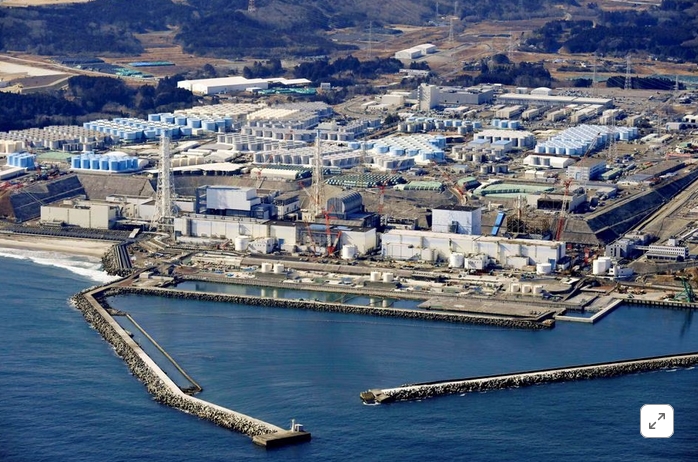
January 18, 2023
SYDNEY, Jan 18 (Reuters) – Pacific island nations are urging Japan to delay the release of water from the destroyed Fukushima nuclear power plant over fears fisheries will be contaminated, the Pacific Island Forum (PIF) said on Wednesday.
The Japanese government said last week that water from the destroyed Fukushima nuclear power plant could be released into the sea “around this spring or summer,” raising concerns from island nations still grappling with the legacy of nuclear testing decades ago.
Japan had approved the future release of more than 1 million tonnes of water from the site into the ocean after treatment in April 2021.
The PIF, a regional bloc of 17 island nations, argues the release of the water could have a major impact on fishing grounds that island economies rely on, and where up to half of the world’s tuna is sourced.
“Our region is steadfast that there be no discharge until all parties verify it is safe,” PIF Secretary General Henry Puna said on Wednesday at a livestreamed public meeting in Suva, Fiji.
“We must prevent action that will lead or mislead us towards another major nuclear contamination disaster at the hands of others,” he added, saying Pacific islanders continued to endure the long-term impacts of the nuclear testing legacy on a daily basis.
The United States conducted nuclear testing in the Pacific islands in the 1940s and 1950s and the Marshall Islands continues to campaign for more compensation from Washington over lasting health and environmental effects.
France conducted atomic testing between 1966 and 1996 at Mururoa Atoll in French Polynesia in the southern Pacific Ocean.
Ken Buesseler, a scientist with the Woods Hole Oceanographic Institution, told the forum on Wednesday that a PIF scientific expert panel was urging Japan to reconsider the waste release because it was not supported by data and more information was needed.
Radioactivity moves across the ocean with currents and tides and risks contaminating fish, he said.
A spokesperson for the U.S. State Department said Japan had examined several options to address “a unique and challenging situation.” “Japan has weighed the options and effects, has been transparent about its decision, and appears to have adopted an approach in accordance with globally accepted nuclear safety standards,” the spokesperson said.
“We look forward to the Government of Japan’s continued coordination with the IAEA as it monitors the effectiveness of this approach,” the official added, referring to the International Atomic Energy Agency.
Japan’s foreign ministry has previously said that regulators deemed it safe to release the water, which would be filtered to remove most isotopes but would still contain traces of tritium, an isotope of hydrogen hard to separate from water.
1 This Month

of the week – Shut Down Drone Warfare!


Tell the Ukrainian Government to Drop Prosecution of Peace Activist Yurii Sheliazhenko

Petition to revoke the licensing of the Near Surface Nuclear Disposal Facility (NSDF) at Chalk River. https://www.ourcommons.ca/petitions/en/Petition/Details?Petition=e-7247
To see nuclear-related stories in greater depth and intensity – go to https://nuclearinformation.wordpress.com
-
Archives
- April 2026 (79)
- March 2026 (251)
- February 2026 (268)
- January 2026 (308)
- December 2025 (358)
- November 2025 (359)
- October 2025 (376)
- September 2025 (257)
- August 2025 (319)
- July 2025 (230)
- June 2025 (348)
- May 2025 (261)
-
Categories
- 1
- 1 NUCLEAR ISSUES
- business and costs
- climate change
- culture and arts
- ENERGY
- environment
- health
- history
- indigenous issues
- Legal
- marketing of nuclear
- media
- opposition to nuclear
- PERSONAL STORIES
- politics
- politics international
- Religion and ethics
- safety
- secrets,lies and civil liberties
- spinbuster
- technology
- Uranium
- wastes
- weapons and war
- Women
- 2 WORLD
- ACTION
- AFRICA
- Atrocities
- AUSTRALIA
- Christina's notes
- Christina's themes
- culture and arts
- Events
- Fuk 2022
- Fuk 2023
- Fukushima 2017
- Fukushima 2018
- fukushima 2019
- Fukushima 2020
- Fukushima 2021
- general
- global warming
- Humour (God we need it)
- Nuclear
- RARE EARTHS
- Reference
- resources – print
- Resources -audiovicual
- Weekly Newsletter
- World
- World Nuclear
- YouTube
-
RSS
Entries RSS
Comments RSS
 nuclear-news