Ruling pressures Japan to set proper damages for Fukushima nuclear disaster

March 19, 2022 (Mainichi Japan)
The amount of compensation has been finalized in a series of class-action lawsuits brought by people affected by the disaster at the Fukushima Daiichi Nuclear Power Station managed by Tokyo Electric Power Co. Holdings (TEPCO). The Supreme Court rejected appeals filed by TEPCO in six cases.
It is a message from the judiciary that relief for victims of the unprecedented nuclear disaster is insufficient. In each of the cases, the amounts awarded exceeded the compensation standards set by the Japanese government. The administration should seriously take the judicial decision to heart, and the standards should be revised immediately.
According to the government’s standards, people who lived in what are now called “difficult-to-return” zones are entitled to 14.5 million yen (about $121,600) in compensation, while those who evacuated voluntarily are entitled to damages of 80,000 yen (about $670). The amount was determined with reference to liability insurance for traffic accidents.
However, those who were forced to evacuate or otherwise relocate were deprived of their lives in their hometowns and local community ties. And people who continued to live in those areas were unable to engage in agriculture, fishing or other such lines of work.
In six high court cases, the courts increased the amounts of compensation to several million yen above the government’s standards and expanded the areas eligible for compensation, among other measures. They judged that the government standards did not set compensation high enough for people who had lost the basis for their livelihoods and had seen their hometowns utterly transformed.
In particular, in a ruling on one case with about 3,600 plaintiffs, the court set compensation amounts by evacuation zone and area. There is accordingly room for those who did not take part in the suit to file for compensation in the future.
To advance relief in line with the actual situations of victims, there is an urgent need to raise the government’s standards and expand the areas eligible for redress. Local bodies in affected areas are also calling for reviews.
Meanwhile, TEPCO’s response is being questioned anew.
In court, TEPCO maintained that it could not accept compensation that exceeded the standards. It even went as far as to claim that the current standards were too high.
The nuclear disaster compensation system is not premised on a presumption of negligence by TEPCO. Yet there have been rulings pointing out inadequate safety measures. The company’s responsibility is extremely heavy.
TEPCO’s three pledges for compensation are: 1) Be sure every eligible person receives payment; 2) Be sure that compensation is given promptly and accurately; 3) Defer to the proposals of mediators on settlements. It should faithfully carry these pledges out.
Eleven years have passed since the outbreak of the nuclear disaster, and many people still have no option but to stay where they have evacuated to. A significant number have decided to relocate permanently to other areas. The government and TEPCO have a responsibility to compensate the people who suffered damage in good faith.
https://mainichi.jp/english/articles/20220319/p2a/00m/0op/007000c
Radioactive iodine levels in primary cooling water at the Ikata Nuclear Power Plant Unit 3 increase threefold.

2022/3/18
Shikoku Electric Power Co. and Ehime Prefecture announced on April 18 that the concentration of radioactive iodine in the primary cooling water passing through the reactor at the No. 3 reactor of the Ikata Nuclear Power Plant (Ikata-cho, Ehime Prefecture) had risen to about three times the normal level. There is no external radiation impact, and the plant will continue to operate under enhanced monitoring. There is a possibility that a small hole has been made in the fuel rods and radioactive material is leaking out.
According to the prefectural government, at around 5:45 p.m. on the 18th, the iodine concentration rose to 0.25 becquerels per cubic centimeter, up from the normal level of 0.09 becquerels per cubic centimeter. This is less than 1/120,000 of the operational limit (32,000 becquerels per cubic centimeter). Shikoku Electric Power Co. has increased the number of inspections from three times a week to once every three to four hours and will continue to monitor the situation.
https://mainichi.jp/articles/20220318/k00/00m/040/392000c?fbclid=IwAR1HC9IruRF-sg9P-EfgXgq1uzN50-xW5dPzw3FPGE2BgNBO0ArZnMEBu94
Containers toppled over, tanks shifted sideways Increasing radioactive waste poses risk due to earthquake at TEPCO’s Fukushima Daiichi Nuclear Power Plant
March 18, 2022
The water level in the spent nuclear fuel pool in Unit 2 of TEPCO’s Fukushima Daiichi Nuclear Power Plant (Okuma and Futaba, Fukushima Prefecture) dropped on March 17 after an earthquake measuring 6 on the Japanese seismic scale struck off the coast of Fukushima Prefecture, causing TEPCO to temporarily halt cooling of the pool. The number of waste materials continues to increase, and there is a risk that these materials could interfere with the work in the event of an earthquake.

According to TEPCO, 615 pieces of nuclear fuel are stored in the Unit 2 pool.
In the Unit 5 pool, where 1,542 pieces of nuclear fuel are stored, cooling automatically stopped and was restored in four and a half hours. Fire alarms were activated at three locations on the second floor of the turbine building of the same unit, but no abnormalities were found.
In Unit 4, a steel frame (approximately 5.6 meters long and weighing approximately 200 kg), believed to be part of a beam, fell from a large cover placed over the top of the building to remove spent nuclear fuel. No one was injured, but a bolt securing the steel frame was broken.
Of the approximately 1,000 tanks that store treated water, 85 were found to have shifted sideways, and some of them contained water in the process of purification, which has a relatively high level of radioactivity. The tanks are not secured to the ground to prevent damage, and while the displacement is to be expected, there is a risk of leakage if the piping connecting the tanks is damaged. Many of the tanks shifted during the earthquake in February of last year, and leaks were found at several locations this time.
Containers containing radioactive waste stacked in the open on the site also toppled over one after another. At least six of them toppled over, exposing used protective clothing and scrap iron. There are approximately 85,000 containers, many of which were stacked without a plan. The workers were also exposed to radiation during inspections of these containers and the recovery of their contents.
In Unit 1, a remote-controlled robot has entered the containment vessel to inspect the condition of debris, including melted-down nuclear fuel. The concentration of radioactive materials in the reactor buildings temporarily increased after the earthquake. Although the level did not reach the level that would have set off an alarm, the investigation was suspended.
Work was also halted on removing highly contaminated pipes between Units 1 and 2. The site was the highest radiation level outdoors and inaccessible to humans. The crane that hoists the remote-controlled cutting device weighs 800 tons and reaches a height of more than 100 meters. There are a total of three such cranes in the vicinity. Although the effects of the earthquake have not been confirmed, heavy machinery and temporary structures are crammed into the harsh environment under high radiation doses, and if they were to collapse, they would cause extensive damage.
The earthquake also caused the cooling of the pool at the decommissioned Onagawa Unit 1 of Tohoku Electric Power Company’s Onagawa Nuclear Power Plant (Miyagi Prefecture) to stop, but it was restored around midnight on March 17. No abnormalities were found at Tohoku Electric’s Higashidori Nuclear Power Plant (Aomori Prefecture) and the Tokai No. 2 Nuclear Power Plant of the Japan Atomic Power Company (Ibaraki Prefecture), both of which are not in operation. (Kenta Onozawa)
Fukushima’s Earthquakes Show That Risk Is Inevitable
Beware: This article has a pro-nuclear spin! Preparedness has nothing to do with it, with nuclear you can never expect the expected to happen.
By accepting risk and planning for failure, communities are more likely to survive catastrophes.

March 16, 2022
About the author: Juliette Kayyem, a former assistant secretary for homeland security under President Barack Obama, is the faculty chair of the homeland-security program at Harvard’s Kennedy School of Government. She is the author of the forthcoming book The Devil Never Sleeps: Learning to Live in an Age of Disasters.
Two hundred feet up in the foothills that surround Aneyoshi, a tiny coastal village in Japan, warnings are engraved into the rocks. Most of the messages come from 19th-century survivors of large tsunamis that terrorized people along the coast. “High dwellings are the peace and harmony of our descendants,” one inscription declares. “Remember the calamity of the great tsunamis. Do not build any homes below this point.”
But more recent residents of coastal Japan did build below that point. Homes at first, but eventually nuclear facilities, which were built where they could be cooled by nearby ocean waters. On March 11, 2011, a massive undersea earthquake occurred east of Oshika Peninsula. The quake, which lasted six minutes and remains the fourth-most powerful ever recorded in the world, triggered tsunami waves that reached up to 130 feet above sea level. The rushing water ultimately led to a meltdown at the Fukushima Daiichi nuclear facility, where a loss of power shut off the cooling system, resulting in hydrogen-gas accumulation. As surprised workers tried to cool the facility manually—using water from fire trucks—a gas buildup led to the expulsion of radioactive material into the atmosphere and groundwater. Part of Fukushima prefecture is still uninhabitable.
After the nuclear disasters at Three Mile Island in 1979 and Chernobyl in 1986, investigators blamed a combination of mechanical failure and operator error. The conventional narrative of Fukushima Daiichi’s demise has been somewhat more forgiving of the people running the plant that day. The earthquake and tsunami could not be blamed on them. The most fundamental error, news stories intimated, was putting a nuclear reactor in a location so obviously vulnerable to natural disaster. Previous generations had literally carved warnings in stone: Never again. Because TEPCO, the plant’s operator, had ignored them and built in a risky spot, tragedy was all but inevitable.
This made a tidy story, except for one thing: The Onagawa nuclear-power plant also sits below the rock warnings, but it withstood the earthquake and tsunami. Onagawa was about 30 miles closer to the epicenter of the earthquake than the Daiichi facility was. It experienced the strongest ground shaking of any of the nuclear facilities in the area—or indeed of any nuclear facility in recorded history. Operated by the Tohoku Electric Power Company, the Onagawa reactor did not melt down. It suffered no serious damage. The differing fates of Fukushima Daiichi and Onagawa cannot be explained by the movement of the Earth, because neither plant heeded the century-old warnings.
Never again is a common refrain after traumatic disasters, but it’s also a hard promise to keep. Memories fade over time. But more important, societies change, and so do their risk calculations. Accepting risk is not itself a form of negligence; Japan needed domestic energy sources to power its economy in the decades after World War II, and nuclear-power plants near the coast became essential to the country’s growth. The problem at Fukushima—unlike at Onagawa—was that its designers and managers did not acknowledge or make provision for the risk they had undertaken, so the plant was unprepared when disaster struck.
This was a dangerous omission. Events that threaten human life and safety do not strike at random, nor are they particularly rare. Indeed, an earthquake off the coast of Fukushima today left millions of people in Japan without power—and put residents on alert once again for potential tsunamis. All modern societies face environmental hazards; rely on complex, and in some cases dangerous, technologies; and link up to global trade and transportation networks that move pathogens as well as people.
Onagawa’s strength was simple: The nuclear plant’s operators understood that failure was possible, perhaps even inevitable, so they committed themselves to failing safely. Like Fukushima Daiichi, Onagawa was located near the coast. But its designers had studied past tsunamis and built at an elevation several meters higher than that of its ill-fated counterpart. Long before the earthquake, Tohoku Electric had also required extensive emergency training and scenario planning, including for a massive tsunami, so Onagawa’s employees were ready to shut it down. Departing from the hierarchical norms of Japanese corporate culture, headquarters had delegated authority to the plant managers to react in the moment. Simply put, Onagawa’s employees had their act together. Fukushima’s owners had done far less to create a safety culture, and during the meltdown required leadership’s approval for every crisis decision. That doesn’t work in real time.
For most of my career, I have studied disasters, managed government responses to them, and advised elected leaders and business executives about how to plan for them. I have come to think that the very word disaster wrongly excuses us from the obligation to plan for failure. The word’s original meaning, from Middle French and Old Italian, comes from the prefix dis-, signifying a negative force, and astro, for star—implying that disruptive events occur only because the stars were aligned against us, not because of anything we did or didn’t do. The word catastrophe,derived from a Greek word meaning “sudden turn,” has a similar connotation: It’s just bad luck, befalling a passive population with no capacity to manage destruction that nobody could have foreseen.
But we should not be surprised by natural catastrophes, viral variants, sneak attacks, or other tragedies. The devil never sleeps, I argue in my forthcoming book. The good news is that the means to minimize the resulting harm from sudden shocks are always the same: making sure the risk is communicated and widely understood; preparing individuals to respond to a range of scenarios; ensuring redundancies in safety systems, so that none becomes the last line of defense; testing those systems; challenging the fallacy that a near miss implies immunity from a future calamity; and making adjustments after past mistakes.
People in my field describe the event precipitating a crisis—an earthquake, a hurricane, the emergence of a new virus—as the “boom,” and we divide time and human activity into two phases: “left of boom” and “right of boom.” The former includes the steps we take to prevent the boom from happening in the first place; the latter is what we do in the moments after, and then the weeks and months following, to minimize the harm. But we would be better prepared if we no longer viewed disasters as a surprise moment in time. A society that studiously prepares to fail safer—that makes preparation for what will happen right of boom—is a stronger one than a society that focuses a majority of its efforts on avoiding the failure itself.
Fukushima Daiichi’s operator, I should note, didn’t do enough of either. After the 1945 bombings of Hiroshima and Nagasaki, many in Japan were deeply apprehensive about using nuclear energy to address the country’s needs. TEPCO, Japan’s leading nuclear-power operator, managed to convince itself that it had essentially eliminated any risk. According to Akihisa Shiozaki, a lawyer who organized an independent investigation of the Fukushima disaster, the country was sold a myth: “the absolute safeness” of nuclear power. A later government report blamed an industry mindset that ignored the possibility that even in a nuclear disaster, preparedness could go far in “limiting the consequential damage.” Instead, local opposition had to be managed as more nuclear reactors were built, which in many cases meant not talking about the potential for a worst-case scenario.
Not planning for the right of boom makes sudden shocks of all kinds—including the extreme weather events exacerbated by climate change—far more deadly than they might otherwise be. In 2017, Hurricane Maria struck Puerto Rico. To this day, we still do not know how many people died there. One reason death estimates varied so widely is that most of the deaths were not a direct result of the hurricane itself but downstream consequences of power outages. The losses cascaded: Without electricity, deprivations of water, food, and medicines left people vulnerable. Damage to power infrastructure is a predictable outcome of a hurricane. A faster restoration of the grid—in the absence of preparations that would have made it more resistant to failure in the first place—would have saved many lives.
This logic does not only apply after natural disasters. Before the wars in Afghanistan and Iraq, the military had not adapted its battlefield-medicine rules for an age of urban warfare and improvised explosive devices. Existing rules prioritized carrying injured soldiers away from enemy lines to a medic tent or back to base. But those enemy lines were not always clearly defined in America’s post-9/11 conflicts, and many of the wounded bled to death before they could receive proper care. To prevent injuries to American soldiers, the Pentagon made massive investments in armor design and mine-resistant, ambush-protected light tactical vehicles to protect U.S. troops from harm. But those improvements were not enough. Right-of-boom protocols needed to evolve too: So the military began training field soldiers, most of whom were not medics, to use tourniquets right away to save the life of team members wounded in IED attacks. These efforts—which have since spawned a civilian public-awareness campaign called “Stop the Bleed”—were a way to minimize harm even after a life-threatening event had already occurred.
Planning to fail safely is different from trying to eliminate all risk—which is usually impossible. At this point two years into a global pandemic, for example, even stringent lockdowns are unlikely to prevent all transmission of the coronavirus. When the CDC recently decided to use rates of death and hospitalization, rather than overall infection, as its primary metrics for the severity of the problem, the agency implicitly chose to minimize the negative consequences of the virus rather than try to suppress it altogether. Furthermore, attempts to banish one kind of risk may make others worse. After the Fukushima disaster, Germany began phasing out nuclear power altogether—a decision that has left it more dependent on fossil fuel from Russia.
Deliberately accepting some risks, and then being prepared when disaster strikes, will serve human societies better than pretending we can achieve perfect safety. We cannot prevent an earthquake or a tsunami, but we have control over how much death and destruction it causes.
What happened at Fukushima wasn’t just bad fortune; Onagawa didn’t get lucky. Most people outside Japan have never heard of Onagawa because it was ready to fail under the same conditions that proved cataclysmic at Fukushima. And in disaster management, anonymity—not fame—is a sign of success.
Powerful Japan earthquake strikes off coast of Fukushima, killing four
Tsunami warning cancelled after quake cut power to 2m homes and damaged some buildings

March 17, 2022
A powerful 7.4 magnitude earthquake struck off the coast of Fukushima in north-east Japan on Wednesday evening, leaving four dead, and plunging more than 2m homes in the Tokyo area into darkness.
The region was devastated by a deadly 9.0 quake and tsunami 11 years ago that also triggered nuclear plant meltdowns, spewing massive radiation that still makes some parts uninhabitable.
The Japan Meteorological Agency later lifted its low risk tsunami advisory issued along the coasts of Fukushima and Miyagi early Thursday. Tsunami waves of 30cm (11in) reached shore in Ishinomaki, which lies about 390km (242 miles) north-east of Tokyo. The agency upgraded the magnitude of the quake to 7.4 from the initial 7.3.
Japan’s prime minister, Fumio Kishida, said four people had died and that the government would be on high alert for the possibility of further strong tremors over the next two to three days.
At least 107 people were reported injured, several of them seriously, with 4,300 households still without water by mid-morning. Residents of one Fukushima city formed a long queue in a car park to fill up plastic tanks with water for use at home.

NHK footage showed broken walls of a department store building fell to the ground and shards of windows scattered on the street near the main train station in Fukushima city, about 60km (36 miles) from the coastline. Roads were cracked and water poured out from pipes underground. Footage also showed furniture and appliances smashed to the floor at apartments in Fukushima.
The Tokyo Electric Power Company Holdings, which operates the Fukushima Daiichi nuclear plant where the cooling systems failed after the 2011 disaster, said workers found no abnormalities at the site, which was in the process of being decommissioned.
Japan’s Nuclear Regulation Authority said a fire alarm went off at the turbine building of No 5 reactors at the Fukushima Daiichi but there was no actual fire. Water pumps for the spent fuel cooling pool at two of the four reactors at Fukushima Daini briefly stopped, but later resumed operation. Fukushima Daini, which survived the 2011 tsunami, is also set for decommissioning.
Manufacturers, including global chipmaker Renesas Electronics and automaker Toyota, said they were trying to gauge the potential damage to their facilities in the region.
The Japan Meteorological Agency said the quake hit at 11.36pm at a depth of 60km (36 miles) below the sea.
Japan’s Air Self-Defence Force said it sent fighter jets from the Hyakuri base in Ibaraki prefecture, just south of Fukushima, for information gathering and damage assessment.
More than 2.2m homes were temporarily without electricity in 14 prefectures, including the Tokyo region, but power was restored at most places by the morning, except for some homes in the hardest hit Fukushima and Miyagi prefectures, according to the Tohoku Electric Power Co which services the region.
The quake shook large parts of eastern Japan, including Tokyo, where buildings swayed violently.
Advertisement
East Japan Railway Co said most of its train services were suspended for safety checks. Some local trains later resumed service.
Many people formed long lines outside of major stations while waiting for trains to resume operation late Wednesday, but trains in Tokyo operated normally Thursday morning.
A Tohoku Shinkansen express train partially derailed between Fukushima and Miyagi due to the quake, but nobody was injured, Kishida said.
He told reporters that the government was assessing the extent of damage and promised to do its utmost for rescue and relief operations.
Chief cabinet secretary Hirokazu Matsuno said authorities were scrambling to assess damage. “We are doing our utmost in rescue operations and putting people’s lives first,” he said.
Contaminated soil piles up in vast Fukushima cleanup project

March 18, 2022
More than a decade of decontamination efforts around the crippled Fukushima Daiichi Nuclear Power Plant has allowed thousands of evacuees to return home. But there are still some areas off limits due to the radiation levels. And as contaminated soil piles up, former residents are wondering when, or if, they will go back.
The cleanup work started soon after the nuclear accident in March 2011. The nuclear disaster discharged radioactive particles across Fukushima and neighboring prefectures. More than 70 percent of Fukushima’s municipalities were registering radiation levels above the national safety standard. Decontamination was key to making the region safe again and reviving local industries.
Workers have been removing radioactive topsoil, grass, trees, and building materials. The scale and expense of the project is vast. The Japanese government has already spent more than $43 billion on decontamination efforts.

Storage facility worries residents
The contaminated soil and waste was piling up in residential areas and hindering reconstruction efforts, so the government decided to build temporary storage facilities on land stretching across the towns of Futaba and Okuma which host the nuclear plant. It occupies a 1,600-hectare site—nearly five times the size of New York’s Central Park.

Since 2015, about 1,000 trucks have been arriving daily and dumping around 7,000 bags of soil. The Environment Ministry says workers have moved almost 13 million cubic meters of it so far.
The government introduced a law requiring the soil to be moved out of Fukushima Prefecture by 2045. But the people of Fukushima, especially those who used to live near the site, are worried it will become a permanent fixture.
“There is concern that this will become a final disposal site, but I understand that it’s inevitable that people will have to accept it,” says an 84-year-old man who once lived on the site. “I don’t think I will be alive in 30 years, but I want them to put my land back the way it was.”
Promising research
In a bid to reduce the overall amount of waste, crews are sorting the material at the facility to separate what can be burned. It is hoped that some of the soil can be reused.

The Environment Ministry is looking at whether it can use the soil to grow vegetables or build roads. Research on food cultivation in the area has found radiation levels below official standards.
So far, the research has been limited to one district of Fukushima. The Environment Ministry is planning to commission further studies aim to help people understand what’s possible and, most importantly, what’s safe.
A final disposal site
The biggest challenge for the national government is to find suitable land outside of Fukushima for final disposal. Officials have been running a public awareness campaign to try to find support for a location. So far, no municipality has volunteered to be the host.
Despite the lack of progress, the government is adamant it remains committed to its deadline.
“We have promised the local government we will dispose of the waste outside the prefecture by March 2045,” says Environment Ministry official Hattori Hiroshi. “Since it is required by law, we will fulfill the promise. Of course, we are fully aware of the voices of concern from local people.”
High radiation zones remain
Officials say the project to transfer contaminated soil to an interim storage site will be largely completed by the end of this month, but in parts of Fukushima—including the towns of Futaba and Okuma—the radiation levels are relatively high and full-scale decontamination work has not yet begun. And more than 30,000 people still are not able to return their homes.

Not one of the former residents of Futaba has returned to live there full-time. Local officials are hoping to allow some back in June for the first time. But an official survey found that more than 60 percent of the former residents have no intention of returning. Only about one in ten said they want to return. Almost a quarter of respondents say they haven’t made their minds up yet.
Many of the evacuees have already restarted their lives elsewhere. The central and local governments are hoping they can attract new residents to the area and are offering $17,000 to anyone who makes the move.
But for those former residents undecided about returning, safety concerns are paramount. They want to know if the decontamination work will be completed and the soil will be moved. They also want more clarity about the decommissioning work at the crippled plant. The government has promised that will be completed by 2051 at the latest, but details are scant.
Tsunami advisory lifted for northeastern Japan

March 16, 2022,
Japan’s meteorological agency has lifted a tsunami advisory it issued for the northeastern parts of the country following an earthquake off the Pacific coast.
The magnitude 7.4 earthquake struck at around 11:30 p.m. on Wednesday.
It had a maximum intensity of 6-plus on Japan’s seismic scale of zero to 7. The depth of the focus was estimated at 57 kilometers. Tremors were felt across much of eastern Japan.
Waves up to 30 centimeters were reported at Ishinomaki Port in Miyagi Prefecture.
Hundreds of people living along the coast in Fukushima and Miyagi evacuated to shelters.
Two deaths were reported, and more than 120 people were injured across the affected area.
There were also reports of structural damage and fires. The quake triggered blackouts for more than 2 million households and disrupted train services.
East Japan Railway says a Tohoku Shinkansen bullet train derailed between Fukushima and Shiroishizao stations.
None of the 75 passengers and three crewmembers aboard were injured. The company says 16 of the 17 cars are off the track.
Tokyo Electric Power Company says there have been no major problems or abnormalities at the Fukushima Daiichi nuclear power plant, which was crippled by the 2011 disaster.
The utility says water pumps in spent fuel storage pools at two reactor buildings at the Fukushima Daini plant temporarily stopped working. No change was reported in radiation levels.
Contaminated soil from nuclear power plant, destination yet to be determined…

March 12, 2022
Seven years have passed since the operation of the interim storage facilities that surround TEPCO’s Fukushima Daiichi Nuclear Power Plant began. The delivery of contaminated soil from the decontamination of the nuclear accident is expected to be almost completed by the end of this month, except for that from the difficult-to-return zone. Although Fukushima Prefecture has legislated that the contaminated soil must be removed from the prefecture by 2045, the destination of the soil has yet to be decided.
After the nuclear accident, more than 17 million cubic meters of contaminated soil and waste from decontamination in Fukushima Prefecture have been generated. Because it is unrealistic to dispose of such a large amount of waste, the government hopes to reuse the contaminated soil, which has a relatively low concentration of radioactive materials, as a “resource” for public works projects and agricultural land. The target is soil with a level of 8,000 becquerels per kilogram or less, which currently accounts for three-fourths of the total. Furthermore, it is estimated that up to 97% of the material will be reusable by the year 45 due to natural attenuation and other factors.
However, at this point, only a little less than 1 million cubic meters will be used for a demonstration project in Iitate Village, Iitate Prefecture, to demonstrate the use of agricultural land. It would be nice if it could be used for large-scale public works projects such as port reclamation, but in this day and age, there is no need,” said a Ministry of the Environment official.
Eleven years after the earthquake, there is not even a clear destination for the contaminated soil. Residents are expected to protest if attempts are made to reuse the soil, and zero governors have responded that they would be willing to accept it. In municipalities that do not have interim storage facilities, the contaminated soil is “stored on-site” and can be found in residential areas in the Tokyo metropolitan area.
Survey of 46 prefectural governors: Zero governors responded that they were “willing to accept” the waste.
It is not easy to gain the understanding of residents. In 2006, the Japanese government planned to use the contaminated soil for a demonstration project to widen an expressway in Minamisoma City. However, local residents protested one after another, saying that it was the same as final disposal and that their crops would be damaged by harmful rumors, and in March of last year, the government informed the residents of its decision to abandon the project.
The residents of the area were not happy with the decision.
https://www.asahi.com/articles/ASQ3C5DZTQ33UGTB00X.html?fbclid=IwAR1ro_tQJZMsG_kr6rXgKCqXHdvix-WmRG5uwcEaEYzuPRFkji3w7PAfJxo
Man who shot famed tsunami video turned lens on Fukushima’s future

March 15, 2022
NAMIE, Fukushima — The schoolyard of an elementary school is empty of children, with only rusted playground equipment left on the barren soil. An elderly man looks wistfully around the shrine with cherry blossoms in full bloom.
“During cherry blossom season, children used to come here on field trips,” he says.
It is a scene from a 2016 documentary that chronicled the lives of people in Fukushima Prefecture affected by the March 2011 disaster in the context of the cherry blossom viewing season.
Titled “Fukushima Sakura Kiko” (Fukushima cherry blossom travel story), it was filmed in the spring of 2015 in the Odaka district of Minami-Soma, Fukushima Prefecture, by Takashi Hokoi, a former NHK news cameraman who currently is pursuing a career as an artist based in Fukushima.
The Odaka district, about 15 kilometers north of Tokyo Electric Power Company Holdings, Inc.’s Fukushima No. 1 nuclear power plant, was still under an evacuation order at the time.
Seven years have passed since Hokoi, now 37, shot the documentary.
“I can hear the sound of a lawn mower,” Hokoi said with a slight smile when he revisited the district earlier this month.
With the evacuation order lifted, there are signs of life again, such as windows with open curtains. He knows that many people have not yet returned, but it is a welcome change.
The documentary was widely shown when it was released. However, Hokoi has a much more well-known video to his name, one that was circulated all over the world.
It was also one of the reasons that Hokoi left the world of journalism.
A foaming tsunami wave powers upstream in a river and floods the Sendai Plain. Houses and cars are instantly swallowed up by the wall of water.
The scene was broadcast live from an NHK helicopter at about 3:50 p.m. on March 11, 2011. Recording the destruction was Hokoi, who was in his first year as a cameraman.
Hokoi was working for the NHK Fukushima broadcasting station. He was at Sendai Airport on the day of the disaster. From an NHK helicopter, he was dumbstruck by the scene below and aimed his camera to the ground.
Tsunami waves crashed over main roads and swirled around, and houses were washed away or on fire. As he tried to come to grips with the reality-defying scene, one thought pervaded his mind: There must be people in those houses, in those cars.
The shocking video was given an award by the Japan Newspaper Publishers and Editors Association in September 2011. But Hokoi felt guilty receiving such praise. “All I did was escape to a safe place and film what I was told to,” he thought.
In 2013, NHK spoke to him about a transfer. But he decided to resign, and remained in Fukushima. He had a sense of guilt about leaving the disaster-hit area just two years after shooting such scenes and seeing its future as somebody else’s problem.
After leaving NHK, the idea for the documentary featuring cherry blossoms and people in Fukushima Prefecture came to him, all because of one person he had known.
Yuichi Harada was the third-generation owner of a clock shop and chairman of a local chamber of commerce and industry in the town of Namie, Fukushima Prefecture. In 2014, while Hokoi was planning to create a video about the disaster at the request of his university, Harada guided him around the town, which was still under evacuation orders.
Harada, now 72, had evacuated to the city of Nihonmatsu to the west, where he organized a community of displaced Namie residents and negotiated with TEPCO over compensation. All the while, he also continued tending to cherry trees along a river in Namie with other volunteers.
“If someone returns to the town and the cherry trees in bloom bring back memories, it might change how they feel,” Harada said.
That really hit home for Hokoi, that someone who had lost their beloved hometown could be so optimistic, believing that one day it would return.
Hokoi decided to depict present-day Fukushima through cherry blossoms, the symbol of spring and hope.
Since this spring, Hokoi has been working on a sequel to “Sakura Kiko.” He is motivated because, while interest in Fukushima Prefecture may be fading, the situation there is now more complicated.
Harada continues to look after the cherry trees today. As people could not return to Namie, he was never able to restart his business, and his store was torn down about six years ago.
The evacuation order for his hometown has since been lifted, but Harada has given up on ever returning to Namie. He thinks about moving to Ibaraki Prefecture, where his eldest daughter lives, but his mother, now in her 90s, wants him to stay in Nihonmatsu.
“Life is hard, isn’t it?” Harada said with a sad smile as he gazed at the cherry trees with Hokoi.
The strength of our desires does not necessarily make them come true. That is the harsh reality of disasters. “I want to continue following the lives of people in Fukushima Prefecture and try to find what reconstruction really means,” Hokoi said.
He will continue to face the disaster head-on.
■ Evacuation orders
Soon after the nuclear accident at the Fukushima No.1 nuclear power plant, the government designated an area within a 20-kilometer radius as a “warning zones” (evacuation order zones).
Areas outside that zone experiencing high levels of radiation were designated as “planned evacuation zones,” and the government demanded that residents in both zones evacuate.
The range of evacuation orders as of April 2012 extended to all or part of 11 municipalities, but that number has since decreased to the present-day seven.
Within those seven municipalities are areas designated as “difficult-to-return zones,” some of which are being developed as key reconstruction bases to provide a foothold for returning residents.
Years without forestry education as Fukushima decontamination falls short
Mar 14, 2022
The March 2011 meltdown at the Fukushima No. 1 nuclear power plant caused serious damage to forests in the surrounding areas. Even now, 11 years after the accident, little has been done to decontaminate them.
In some areas, projects are underway to restore the satoyama, areas of mountain forest maintained by residents of adjacent communities, but the airborne radiation levels in those areas are still not low enough that children can safely enter, according to a local community leader.
One such area is the Yamakiya district in the town of Kawamata, Fukushima Prefecture. Walking trails in the Daini Oyako no Mori forest are covered by snow, and sunny slopes are lined with zelkova trees.
Yellow and pink vinyl wrapped around the trees indicates the year they were planted by local elementary school students. At the end of March, it will be five years since the evacuation order for the Yamakiya district was lifted. But even now, the voices of children have not returned to the mountains.
In 2016, satoyama restoration projects were launched in the prefecture to improve the forest environment. Decontamination, reforestation and radiation monitoring were carried out in an integrated manner in the mountain and forest areas that had been used by residents.
The projects have been carried out based on the comprehensive forest restoration policy for Fukushima Prefecture, which was compiled jointly by the Reconstruction Agency, the Agriculture, Forestry and Fisheries Ministry and the Environment Ministry. A total of approximately 800 hectares in 14 municipalities were selected as model areas, including forest parks and walking trails, where fallen leaves and other sediment was removed and thinned.

In the past, the forestry club of Yamakiya Elementary School was active in Daini Oyako no Mori. But since the nuclear accident, the forest had not been cared for and was in a dilapidated state — with thickets growing over the planted zelkova trees.
The town and the local residents chose Daini Oyako no Mori as a site for the project in order to revive the area as a site where children could study forestry. The project was launched in December 2016, prior to the planned lifting of the evacuation order for Yamakiya district at the end of March 2017.
The project covers an area of about 2 hectares. In fiscal years 2016 and 2017, planted cedar and zelkova trees were thinned and cleared, and trees that had fallen due to snow were removed. Logs were spread on slopes as a measure to control topsoil runoff.
Decontamination work was conducted in fiscal 2018. Leaves and branches that had fallen to the ground and other accumulated organic matter were removed in areas covering 5,595 square meters of the forest, including an open square and walking trails. The zelkova trees could die if their surfaces were stripped, so the work focused on clearing the grass and thickets.
Comparing the radiation levels in September 2018, before the decontamination work, and in November the same year, after the work, the average radiation level in the open square had been reduced by 22%, to 0.69 microsievert per hour. Based on the result, the central government concluded that “the decontamination work contributed to creating an environment ready for the resumption of forest study activities.”
However, even after the decontamination process, the airborne radiation levels were far from the central government’s long-term target of 0.23 microsieverts per hour. At some monitoring points, radiation levels exceeded 1 microsievert per hour.
“The area is not ready for children to go back,” said Toshio Hirono, 71, leader of the Yamakiya Elementary School’s forestry club.
Residents are demanding that the forest, where children once enjoyed the greenery, be restored to its original state.
The forestry club, which did its main work in Daini Oyako no Mori, was known both within and outside of the prefecture for its progressive activities that took advantage of the abundant natural resources. At the entrance of the forest, a signboard notes a commemorative tree planting by the group to mark a national commendation they received.
Children belonged to the group in the fourth through sixth grade, and their activities were diverse. They processed thinned cedar trees to create a walking path in their school’s front yard, built bridges over a river and moat in nearby mountains and made a mallet by hand for pounding rice cakes. They learned about the importance of nature by collecting mushrooms and tara buds, and eating rice cakes kneaded with burdock leaves.
These activities came to a halt after the nuclear accident at Tokyo Electric Power Company Holdings Inc.’s Fukushima No. 1 plant. Before the accident, Yamakiya Elementary School had 30 to 40 children. But the number of children decreased due to the establishment of an evacuation zone, and the school has been closed since fiscal 2019.
“If it hadn’t been for the nuclear accident, there would have been so much more I wanted to do,” said Hirono.
Hirono has been serving as the third leader of the group for about 20 years, without a chance to pass on his position to a successor due to the suspension of its activities. He feels that although Daini Oyako no Mori has been decontaminated, the level of radiation has not gone down enough.
“If there is even a slight concern, we cannot allow our children to go into the mountains,” he said with a sigh.
Even after the model project ended, Hirono continues to voluntarily clear the undergrowth along the walking trails every fall. He understands that decontaminating all the forests in the town will not be easy, but believes that unless the radiation levels in the surrounding areas of Daini Oyako no Mori are lowered, residents will not be reassured.
“It is the central government’s responsibility to decontaminate until the residents are satisfied,” he said.
https://www.japantimes.co.jp/news/2022/03/14/national/fukushima-forest-decontamination/
Ukraine war triggers debate on Japan’s nuclear option
In a new and volatile strategic environment, a decades-old commitment on non-proliferation is up for discussion.

14 Mar 2022
In the wake of the Ukraine conflict, Shinzo Abe, Japan’s former prime minister and now head of the largest faction of the ruling Liberal Democratic Party (LDP), has suggested that Japan consider hosting US nuclear weapons facilities on Japanese soil, similar to some European nations, such as Germany, which have nuclear sharing arrangements with the United States.
Abe’s suggestion was made in the context of Ukraine having renounced nuclear weapons in 1994, leaving itself vulnerable today. The announcement also comes on top of deepening concerns about China’s growing military assertiveness around Japan’s maritime space and beyond, and the dangerous situation on the Korean peninsula with threats from the nuclear-capable rocket-launching North Korea.
Debates over whether Japan should host nuclear weapons or even go fully nuclear are not new. In the mid-1970s, a book-length study by John Endicott considered the nuclear option. In the early 2000s, then Chief Cabinet Secretary Yasuo Fukuda and Deputy Chief Cabinet Secretary Shinzo Abe (both of whom later served as prime minister) again raised this prospect. It was quickly put to rest by Japan’s security analysts. Discussion has since continued among political and scholarly communities as to whether Japan should go nuclear, opt for a nuclear sharing arrangement with the United States by hosting nuclear weapons, or maintain its current non-nuclear weapons status.
Some smaller conservative opposition parties want to include nuclear options in policy discussions while considering Japan’s strategic objectives.
This latest eruption though is in a different context. This time, chairman of the General Council of the LDP Tatsuo Fukuda, who like his father Yasuo Fukuda before him holds an influential ruling party post and is touted as a future prime minister, has suggested that “we must not shy away from any debate whatsoever”. Last year’s LDP party presidential candidate and current LDP policy chief Sanae Takaichi also favours a debate. Some smaller conservative opposition parties want to include nuclear options in policy discussions while considering Japan’s strategic objectives. The main opposition parties have, however, strongly resisted any such prospects, arguing in favour of Japan’s non-nuclear status.
Abe’s suggestion was promptly and solidly rejected by Prime Minister Fumio Kishida, as well as by the leader of the Komeito, the junior coalition partner of the ruling LDP. Even Defence Minister Nobuo Kishi, Abe’s younger brother, adopted into the Kishi family, also dismissed the idea of hosting nuclear weapons on Japanese shores. Kishi may have expressed this view in order to align with his boss, Prime Minister Kishida, rather than reflecting his true thinking on the matter, given his political pedigree.
ishida quickly confirmed that Japan firmly adheres to the three non-nuclear principles adopted in 1967, to not possess, produce or permit the introduction of nuclear weapons into Japan’s territory. These principles remain sacrosanct, even though Japan has made substantial departures in defence and security matters in the past decade.
Abe’s comments can be understood in this context, which emanates from a rapidly evolving strategic environment, regionally as well as globally. As prime minister, Abe had introduced several policy initiatives that were unthinkable in previous decades, such as removing bans on defence-related exports, allowing Japan to work with allies and partners in collective self-defence, establishing Japan’s first National Security Council (NSC), and issuing the first-ever National Security Strategy (NSS).
Not only has the Kishida government announced an intended update to the NSS, first issued in 2013, it has also promised to revise the National Defence Program Guidelines and Mid-Term Defence Program issued in 2013 and 2018. All these updates and revisions are undertaken in view of a rapid transformation in the strategic environment.
The Kishida government is likely to go even further and consider acquiring strike capabilities to ensure Japan’s territorial integrity and the safety of its people as well as protect US military assets in Japan, including some 50,000 US defence personnel.
The long-time self-imposed constraints on Japan’s defence spending, keeping it to less than one per cent of GDP, are also likely to be breached soon. The LDP under Kishida’s leadership has promoted for the first time the idea of spending two per cent of GDP in its policy documents just before the last general election in October 2021. Although such a change seems unlikely any time soon due to Japan’s poor fiscal health and significant public opposition, defence spending will definitely increase, as it has over the past decade.
Japan, along with Germany, has often been recognised as an example of a “civilian state”. Germany currently hosts US nuclear weapons facilities and, in view of the Ukraine conflict, has announced a significant increase to its defence budget. Calls are now being made to urge Japan to follow suit.
The postwar US-Japan Treaty of Mutual Cooperation and Security has ensured that Japan has lived happily under US extended deterrence, including the nuclear umbrella. This arrangement is unlikely to change, barring an existential threat to Japan’s territory and sovereignty. But what seemed to be taboo in terms of Japan’s strategic policy – that is, breaching one per cent of GDP on defence spending and developing strike capabilities – is now being discussed seriously. No policy in international relations is eternal, it must change as a nation’s interests change.
https://www.lowyinstitute.org/the-interpreter/ukraine-war-triggers-debate-japan-s-nuclear-option
Radiation still hitting flora, fauna in forests in Fukushima

March 11, 2022
SENDAI—On a chilly night in early February, Masatoshi Suzuki hauled a black plastic bag containing four macaque carcasses into his lab at Tohoku University.
The monkeys were killed as agricultural pests, but for researchers like Suzuki, the animals are invaluable specimens to determine the effects of radiation from the Fukushima nuclear disaster.
Nearly 11 years after the triple meltdown at the Fukushima No. 1 nuclear plant, questions remain over the extent of damage to animals and plants caused by the radioactive substances released in the accident.
Suzuki, who specializes in radiobiology, hopes his studies will provide clues on the possible impact of the radiation on humans.
He and his colleagues have studied 709 macaques in Fukushima Prefecture since 2012. Of all the wild species available for study in the contaminated areas, macaques are most similar to humans.

The four dead macaques were given to Suzuki by farmers who destroyed the animals several hours earlier in Namie, a town that lies about 4 kilometers from the crippled nuclear plant. Parts of Namie are still off-limit due to high radiation levels.
Other primates used in the studies have come from off-limit areas in Minami-Soma, a city north of the nuclear plant, and elsewhere in the prefecture.
The researchers dissect the carcasses to determine if the livers, lungs, thyroid glands and muscle tissues were affected by radiation from the nuclear accident.
Deformations in plant lice and fir trees have been reported since the nuclear disaster started.
But Suzuki said he has seen no credible reports of such physical abnormalities in wild animals, including macaques, as well as domestic livestock.
However, damage might be occurring at the cellular level in the animals.
Background radiation levels in most of the mountain forests in Fukushima and neighboring prefectures are higher than those in residential areas, which have undergone decontamination procedures.
In the nature-filled areas that have not been decontaminated, macaques continue to be exposed to radioactive materials while feeding on polluted fruits and other food sources.
According to Suzuki’s studies, the muscles showed the highest concentration of radioactive cesium among all of the macaques’ organs.
The average radioactivity level in the thigh muscles was about 40,000 becquerels per macaque captured in Namie in fiscal 2013.
In fiscal 2018, the figure was down to about 20,000 becquerels per macaque.
The researchers found that macaques exposed to higher radiation doses had slightly fewer blood-producing cells in bone marrow compared with the animals with lower exposure readings. The nuclear accident may have compromised some macaques’ ability to make blood.
The researchers used the density of radioactive cesium in the macaques’ muscles and in soil at areas where they were captured to calculate the level of radiation doses the animals were exposed to both internally and externally.
Suzuki also said they detected chromosomal abnormalities resulting from radiation damage to genes.
He said radiation exposure can increase the stress level in one organ, but the same dose could have the opposite effect in a different organ. One possible reason for this is that the animal’s defense system was galvanized to curb stress levels following exposure.
Suzuki emphasized the need to continue monitoring macaques and other animals to determine the impact from prolonged radiation exposure.
“So far, we have discovered no significant health hazards in the individual macaques studied,” he said. “But they continue to display changes in their cells and organs, albeit minor ones. We do not know what these changes will translate into in the long run.”
CESIUM PASSED THROUGH FOOD CHAIN
A study by other scientists showed that radioactive cesium from the nuclear accident could be traveling through food chains in the environment.
“If we can track down the movement of radioactive cesium in the food chain, the findings would show us its cycling mechanism in the ecosystem,” said Sota Tanaka, a researcher of radioecology at Akita Prefectural University.
He believes that studying the cycling mechanism of cesium will help to predict its long-term movement and lead to improved use of resources in mountain forests and the rebuilding of agriculture in contaminated areas.
Joint research by Tanaka and Taro Adachi, professor of applied entomology at the Tokyo University of Agriculture, found that radioactivity levels have decreased year after year in rice-field grasshoppers in Iitate, a village west of the stricken nuclear plant that still has some off-limit areas.
In 2016, all of the grasshoppers monitored had radioactivity readings below 100 becquerels per kilogram.
But garden web spiders in Iitate showed a wide range of readings from one year to the next. Their radioactivity levels were actually higher in 2015 than in 2014.
In 2016, one spider had a reading of more than 300 becquerels per kilogram.
Radioactive cesium remains on the ground even after rainfalls.
Plants rarely absorb cesium through their roots, but can become contaminated by falling cesium particles. And the researchers believe the cesium levels in grasshoppers have dropped steadily because they feed on the leaves of living plants.
As for the spiders, they are eating bugs that have high cesium levels because they feed on contaminated dead leaves mixed with contaminated soil, according to Tanaka.
That may be why the eight-legged predators are showing higher radioactivity readings than the grasshoppers, he said.
Their study also found that earthworms had radioactivity levels higher than those for the grasshoppers and spiders, likely because they are eating contaminated soil and withered leaves.
Japan to finish radioactive soil transfer to interim storage site
“Finished” is only government propaganda, reality differs!
With radioactive waste being kept “temporarily” at 830 locations in six municipalities in Fukushima Prefecture, stuck in limbo with no early prospect of being shipped to interim storage facilities ahead of a government-set deadline. The volume of contaminated soil and other radioactive materials awaiting shipment totals 8,460 cubic meters.

Mar 13, 2022
Fukushima – The government is set to complete by March 31 work on transferring radioactive soil collected from areas polluted by the 2011 nuclear disaster in Fukushima Prefecture to an interim storage facility as part of the decontamination effort.
The facility, straddling the Fukushima towns of Futaba and Okuma, surrounds Tokyo Electric Power Company Holdings Inc.’s Fukushima No. 1 nuclear power plant, the site of the triple meltdown that followed a massive earthquake and tsunami 11 years ago.
Under the law, such soil will be transferred to a permanent disposal site outside the prefecture by 2045. The final site has yet to be decided, however.
Since the amount of soil is massive, the Environment Ministry is planning to use some of it for public works and other projects across the country.
“We’ll reach a major juncture” by completing the transfer, a senior ministry official said. “From now on, we’d like to foster people’s understanding on the reuse (of the soil).”
The 1,600-hectare interim storage site, about the same size as Tokyo’s Shibuya Ward, is slated to hold about 14 million cubic meters of soil collected through decontamination work.
Since 2015, such soil collected from around Fukushima has been taken to the site after being stored at temporary storage facilities.
Over 1,800 local landowners, including residents of the towns, cooperated with the central government to secure land to establish the storage facility, mainly by selling their properties to the state.
Many landowners “made tough decisions to give up their properties for the sake of reconstruction,” Okuma Mayor Jun Yoshida said. “Many were my acquaintances, including friends from school, the person who arranged my marriage and workers at the town office,” Yoshida added.
The ministry plans to use only soil with relatively low levels of radioactive concentrations for public works, farmland and other purposes. It hopes that three-fourths of the total will be reused.
A demonstration project to grow flowers and vegetables on farmland using such soil has already started in the Nagadoro district in the Fukushima village of Iitate.
Meanwhile, projects to utilize the soil for road construction have been scrapped due to opposition from local residents in the cities of Nihonmatsu and Minamisoma, both in Fukushima Prefecture.
In May last year, the ministry started holding meetings to discuss the recycling of such soil with the general public to win wider understanding. Such events took place in Tokyo and the city of Nagoya.
The next session is scheduled to be held in the city of Fukuoka this month.
Futaba Mayor Shiro Izawa stressed that electricity generated by the Fukushima No. 1 plant had been consumed in the greater Tokyo area. Reuse of soil collected through decontamination work “will not proceed unless people who benefited (from the Fukushima plant) understand that fact,” he said.
“It is difficult for people living far from Fukushima to empathize” with those having to deal with tainted soil, said Hiroshi Kainuma, associate professor at the University of Tokyo’s Graduate School of Interdisciplinary Information Studies.
Kainuma said the government should proceed while checking constantly whether its communication with the public on the issue is appropriate.
Fate of Fukushima reactor cleanup uncertain after 11 years

March 13, 2022
OKUMA, Japan—Eleven years after the Fukushima Daiichi nuclear power plant was ravaged by a meltdown following a massive earthquake and tsunami, the plant now looks like a sprawling construction site. Most of the radioactive debris blasted by the hydrogen explosions has been cleared and the torn buildings have been fixed.
During a recent visit by journalists from The Associated Press to see firsthand the cleanup of one of the world’s worst nuclear meltdowns, helmeted men wore regular work clothes and surgical masks, instead of previously required hazmat coveralls and full-face masks, as they dug near a recently reinforced oceanside seawall.
Workers were preparing for the planned construction of an Olympic pool-sized shaft for use in a highly controversial plan set to begin in the spring of 2023 to gradually get rid of treated radioactive water—now exceeding 1.3 million tons stored in 1,000 tanks—so officials can make room for other facilities needed for the plant‘s decommissioning.
Despite the progress, massive amounts of radioactive melted fuel remain inside of the reactors. There‘s worry about the fuel because so much about its condition is still unknown, even to officials in charge of the cleanup.
Nearly 900 tons of melted nuclear fuel remain inside the three damaged reactors, and its removal is an unprecedented challenge involving 10 times the amount of damaged fuel removed in the Three Mile Island cleanup following its 1979 partial core melt.
The government has set a decommissioning roadmap aiming for completion in 29 years.
The challenge of removing melted fuel from the reactors is so daunting that some experts now say that setting a completion target is impossible, especially as officials still don‘t have any idea about where to store the waste.
Nuclear Regulation Authority Chairman Toyoshi Fuketa said recently that extra time would be needed to determine where and how the highly radioactive waste removed from the reactors should be stored.
Japan has no final storage plans even for the highly radioactive waste that comes out of normal reactors.
Twenty-four of the country‘s 60 reactors are designated for decommissioning, mostly because of the high cost needed to meet safety standards set up in the wake of the Fukushima disaster.
On March 11, 2011, a magnitude 9.0 earthquake caused a tsunami 17 meters (56 feet) high that slammed into the coastal plant, destroying its power supply and cooling systems, causing reactors No. 1, 2 and 3 to melt and spewing massive amounts of radiation.
Three other reactors were offline and survived, though a fourth building suffered hydrogen explosions.
The spreading radiation caused some 160,000 residents to evacuate. Parts of the surrounding neighborhood are still uninhabitable.
The melted cores in Units 1, 2 and 3 largely fell to the bottom of their primary containment vessels, together with control rods and other equipment, some possibly penetrating or mixing with the concrete foundation, making the cleanup extremely difficult.
Probes of the melted fuel must rely on remote-controlled robots carrying equipment such as cameras and dosimeters—which measure radiation—because radiation levels in those areas are still fatally high for humans.
In February, a remote-operated submersible robot entered the Unit 1 primary containment vessel, its first internal probe since a failed 2017 attempt. It captured limited images of what are believed to be mounds of melted fuel rising from the concrete floor.
Probes have moved ahead at Unit 2, where Tokyo Electric Power Co. (Tepco) plans to send in an extendable robotic arm later this year to collect melted fuel samples.
Tepco Chief Decommissioning Officer Akira Ono said in a recent online interview that robotic probes at Unit 1 and 2 this year are a major “step forward” in the decades-long cleanup.
Fukushima Workers Tell The Harrowing Story Of How They Tamed One Of The World’s Worst Nuclear Disasters
When the Fukushima Daiichi Nuclear Power Plant overheated in March 2011, these heroic workers stepped in. To this day, most people are unaware of their achievements.
03/12/2022
This story, by Fukushima Central Television, Co., Ltd., was published in partnership with HuffPost Japan and is translated from the original Japanese footage.
In 2011, three nuclear reactors melted down, provoking a series of hydrogen explosions and resulting in the world’s most severe nuclear accident. It happened in Japan, which had been long celebrated as a technology powerhouse.
At the time of the accident, the site became a veritable death trap, with extremely high levels of radioactivity and chunks of concrete from the explosion raining down on workers. And yet, there were some who remained on the ground to try and bring the overheating nuclear power plant to a halt.
“I just couldn’t run away when my country was about to sink,” one of the workers said. If this story can be told at all, it is precisely thanks to those who faced one of the world’s worst nuclear disasters out of a sense of pride in their country’s technology, attachment to the community and loyalty to their jobs.
The magnitude 9 Great East Japan Earthquake struck at 2:46 p.m. local time on March 11, 2011. Soon after, a large tsunami hit the ground level of the Fukushima Daiichi Nuclear Power Plant, which consisted of six nuclear reactors.
Satoru Umematsu, a veteran electrical engineer who had taken part in building the ground floor, was there when it happened. Umematsu was 60 at the time, and fast approaching retirement age.
When the nuclear power plant’s power transmission tower was knocked down by the force of the earthquake, causing the loss of external power supply, emergency generators kicked in, ensuring that cooling pumps could continue to function.
When the tsunami struck, however, the emergency generators of reactors 1 through 4, located about 33 feet (10 meters) above sea level, were flooded and stopped working.
When Umematsu rushed to the plant’s earthquake-proof building, about 115 feet (35 meters) above sea level, where the emergency response room was set up, it was packed with people. Inside, ashen-faced power plant executives were bustling around in a frenzy.
A Strategy Forms
As Umematsu and the others realized that the reactors could no longer be cooled down, they moved to secure a vehicle-mounted generator and power cables in order to generate electricity and restore the power supply.
“It was unimaginable that a nuclear power plant would lose all power. So, when it did actually happen, we were overcome by a tremendous sense of urgency,” he said.
For Umematsu, who had experienced all kinds of situations at different job sites in the course of his career, this crisis was an absolute first.
After graduating from junior high school and acquiring engineering skills at a vocational training center, Umematsu had accumulated over 40 years of experience in electrical construction sites, including power generation dams and nuclear power plants. He was familiar with most electrical systems in nuclear power plants. He was proud of the technological capabilities Japan had acquired after World War II and would proudly tell his relatives of his work at the nuclear power plant. He was relied upon by subordinates and colleagues, who respectfully referred to him as “Ume-san.”
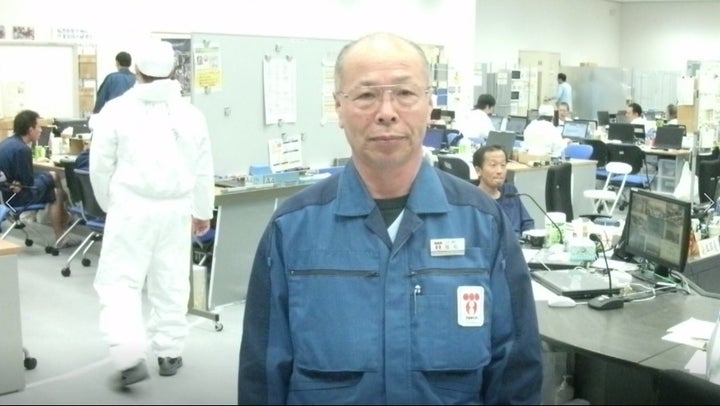
In order to complete their task in the shortest possible time, Umematsu and his crew devised a simple strategy. To restore the power supply, they would park the vehicle-mounted generator next to the reactor building and link it to the nuclear power plant by connecting the power cables.
Opening A Path For The Truck-Mounted Generator
However, even the task of moving the truck-mounted generator closer to the reactor building was a daunting one. All kinds of debris and rubble brought by the tsunami littered the area around the reactor building, obstructing the passage of vehicles.
It wasn’t the power plant staff, the Self-Defense Forces, the fire department, nor the police who tackled this problem — it was a local resident.
Yoshishige Tochimoto was the managing director of a local company with about 10 employees. He was 51 at the time. When the earthquake struck, he witnessed the destruction of the nuclear power plant’s critical equipment.

“When the power transmission tower on the slope was brought down by the earthquake, it generated huge sparks. They were pink in color. Between 10 to 20 meters in length,” he said.

Tochimoto was on the premises as a subcontractor, doing seismic retrofitting work on the nuclear power plant. As he felt the ground shaking, he said he was unable to stand on his feet.
His own car was washed away by the tsunami that followed the earthquake. Luckily, his company’s excavator had suffered virtually no damage and only the caterpillar tracks had been submerged.
Wary of being exposed to radiation, Tochimoto had not actively sought out nuclear-related work in the past. But now he accidentally found himself on the scene of a nuclear disaster.
“This could be really bad, I thought,” he said.
‘I Won’t Be Gone For Long’
Workers from Tochimoto’s business and other local companies assembled in the parking lot in front of the earthquake-proof building.
They took a roll call to ensure everyone was safe. Then, the prime contractor company instructed them to “disband,” as it was feared that some of the workers would have lost some family members, or their homes would have been damaged. Tochimoto remembered what the other workers were talking about at the time.
“There was talk of opening a vent hole to prevent a hydrogen explosion,” he said.
A hydrogen explosion. He was unfamiliar with that word. The matter, however, seemed completely unrelated to him.

Worried about his wife and children, he decided to go back to his home, approximately 8 miles (13 kilometers) away. Since his car at the nuclear power plant had been washed away by the tsunami, he asked an acquaintance for a ride home.
What would normally be a 30-minute ride ended up taking them two hours, as the road was heavily congested with people evacuating. After getting home and making sure that everyone in his family was safe, he got a call from the prime contractor company.
“Will you help us fix the nuclear power plant?”

The roads inside the nuclear power plant were impassable by vehicles as they were covered in rubble and fissures in the asphalt had caused uneven gaps. Tochimoto thought that, if it was only a matter of fixing the road, it would not take long and he would be back home soon.
“I won’t be gone for long,” he told his family as he headed toward the Daiichi power plant. The time was around 7:30 pm.
Restoring Power, Fighting Against Fear
It took until nighttime to prepare the equipment needed to restore power. With preparations over, Umematsu gathered some young workers from the power plant and explained to them how to handle the power cables and how to route them.
The cables in question were special high-voltage cables called “Triplex,” which could suffer damage if dragged over the ground. The workers would have to connect the heavy cables, each 1-meter section weighing about 13 pounds (6 kilograms), from the truck-mounted generator parked outside the building to the power panel inside. Due to the building’s complex structure, they would have to lay the cable over a distance of about 130 meters. Many of the team’s members had no previous experience in handling that kind of equipment.
“As graduates of Japan’s most prestigious universities, they knew the theory, but had never actually connected a high-voltage cable. I was the only one who could tell them how to go about it.”

TEPCO employees recording data in the central control room of Fukushima Daiichi Nuclear Power Station Units 1 and 2 (provided by NISA)
However, at around 11:00 p.m., radiation levels several tens of times higher than usual were detected inside the building of the Unit 1 reactor. The pressure on the steel “containment vessel” enclosing the reactor holding the nuclear fuel was about to exceed the permissible values. The director of the power plant immediately forbade anyone from entering the Unit 1 building. The signs were unmistakable that the feared meltdown had begun.
If the workers did not complete the operation swiftly, they too could have been exposed to lethal doses of radiation. If only the power supply could be restored, the looming crisis could be averted. It was up to Umematsu to make it possible.
“I’m pretty sure we were all scared. Extremely scared,” he said. “But being scared is different from being hesitant. Some were actually hesitant and did not want to go. We were certainly scared. Incredibly scared. After all, we were going to an unknown site. However, while being scared, we behaved normally.”

Since Umematsu was not a regular power plant employee, normally he would have been advised to go home. Instead, the power plant managers, relying on his skills, asked him to stay. Umematsu could have walked away while he still did not know how much radiation he would be exposed to. Instead, he chose to listen to his heart.
“I knew my skills were about to be put to the test,” he said. “I was glad my know-how could be of help in such a situation. When your country is as likely to stay afloat as it is to sink, you can’t quit just because you’re scared or because radiation levels are high.”
At that point, he still hadn’t been able to contact his wife and children. Nonetheless, as an engineer, he decided to throw himself into the task and went to work near the reactor building.
An Unsung Achievement
The truck-mounted generator, however, was still a long way away from being able to approach the reactor building. The road had yet to be repaired in order to make that possible. Fissures in the road caused height differences as much as a meter high. Tochimoto’s team studied the situation and considered what to do.
A proposal was made to bring in gravel from a nearby quarry to fill in the gaps, but was abandoned because it would have taken too long. Tochimoto thought that, as long as vehicles could pass, anything would do.
When he tried to turn the key to his company’s excavator, the engine came to life. Using the tip of the excavator’s bucket, he began to strip the asphalt coating in the parts of the road where the gaps were. He then proceeded to remove the gravel from under the paved surface and to press the surface down so as to create a gently sloping incline, at which point it looked as if a car might just be able to go through.

“While I was trying to open a road with the excavator, most of the people were actually watching me,” he said.
It seems that it was only thanks to Tochimoto and his excavator that the road was fixed. In just three hours, working by himself, he managed to repair the road inside the nuclear power plant so that vehicles could reach the reactor building.
Had Tochimoto not been there, it wouldn’t have been possible for the truck-mounted generator to approach the building to restore power, nor for fire engines to reach the same building and try to cool down the reactor.
To this day, most people are unaware of his achievement.
Because the road was fixed quickly, vehicles were able to reach the area around the reactor building by midnight. In the following hours, Tochimoto joined forces with workers from other companies to remove the rubble scattered around the reactor building.
A week after the accident, when a Hyper Rescue Team from the Tokyo Fire Department entered the area to cool off the fuel, one of its leaders said: “We were utterly surprised to see how the area surrounding the power plant had been cleared of debris to the point that not a single stone was visible, and our vehicles were able to approach without a hitch.”

The Real Risky Work Begins
Around midnight, a movable generator and a truck loaded with high-voltage cables smashed the nuclear protection gate and headed toward the reactor building.
Directing operations was Umematsu, the veteran engineer. He was hoping that, by connecting the movable generator to the power supply point near the Unit 1 reactor building, power could be restored, and the cooling pumps could start functioning once again.
The power cable was laid out near the reactor building, where radiation levels kept rising. The riskiest part of the work was about to begin.

Their efforts, however, had to be repeatedly interrupted as magnitude 4 and 5 aftershocks followed one after another. After a tsunami of such enormity, it was only natural that the area would have to be evacuated every time a tremor hit. Umematsu was getting impatient.
“We could have restored the power supply in five or six hours. However, we had to stop working and leave every time an aftershock struck, so things hardly moved at all. We went at it all night long, but most of the time we were sitting on our hands,” he said.
Radiation Levels 30,000 Times Higher Than Normal
A few hours have passed. At a press conference at 3 a.m. on March 12, Yukio Edano, chief cabinet secretary at the time, announced that he instructed workers to open a vent to release the pressure accumulated inside the Unit 1 reactor. Unless internal pressure is lowered in the reactor, he explained, the entire steel pressure vessel enclosing the nuclear fuel will explode. If that were to happen, huge amounts of radioactive material would be scattered across the surrounding area.
However, opening the required valve to ventilate the reactor building was an extremely difficult operation. The power plant operators assembled a “suicide squad” that rushed to where the valve was located, but radiation levels were so high that they had to turn back.

Around 6 a.m., just outside the building, Umematsu’s crew began full-scale operations to connect the power cable. Umematsu used a phone to report on progress to the emergency response office. As reception was poor, he kept moving around looking for a place where it would be easier to talk.
Without realizing it, he ended up nearby the exhaust tower through which steam exited the vent. At exactly the same time, efforts to open the valve from the outside finally succeeded.
Steam containing huge amounts of radioactive particles instantly rushed out of the exhaust tower, thoroughly irradiating Umematsu. “When I was near the exhaust tower, the dosimeter, which had been unresponsive for a while, suddenly came back to life with a loud BEEEEP. While cursing my luck, I had no choice but to continue working,” he said.
Japanese law sets maximum exposure levels for the general public at less than 1 millisievert per year (approximately 0.0027 millisieverts per day). Umematsu, on the other hand, was exposed to over 80 millisieverts in just one day.
Just As The Cable Was Connected …
The release vent is believed to have been successfully opened around 2:30 p.m. on March 12. Immediately after, efforts to connect the power cables, which had continued throughout the night, came to a successful completion.
It was now simply a matter of turning on the movable generator to restore power. Umematsu’s crew, in order to exchange places with the group that would operate the movable generator, had to leave the area and temporarily adjourn to the emergency response office in the earthquake-proof building.
“I believe it’s the same in power plants everywhere. Before moving on to the next job, you must let everyone know and get permission. You can’t proceed solely on your own judgment,” he said. “I would always let machine operators know that I finished this task, that I performed that check, and so on, then I would clear things with my superior, and only then would I proceed to the next task.”

It all happened exactly at moment Umematsu and his crew arrived at the emergency response office.
“It wasn’t a ‘whump,’ or a ‘thud,’ it was more like a popping sound,” he said.
At 3:36 p.m. on March 12, a hydrogen explosion shook the Unit 1 reactor.
For an unknown reason, the hydrogen that had filled the reactor building suddenly caught on fire and exploded. Concrete chunks from the gutted building flew across the entire area of the nuclear reactor at tremendous speeds.
“Find an empty car!”
Umematsu was shouting at the nearby workers at the top of his lungs. Radioactive rubble and insulation material was falling from the sky. He sensed that he would be exposed to considerable amounts of radiation just by touching it.

A fire engine happened to be parked nearby. The workers squeezed into the front and back seats one after another. Over 10 people crammed into a space normally meant for six. They kept the door closed for about 10 minutes. Holding their breath, they waited for the pollutants to pass by.
“‘There’s no going back now. The unthinkable has happened,’ I thought to myself. At that point I felt courage sweep over me. If you are on the scene of a Chernobyl-like disaster, it makes no difference anymore whether you’re inside or outside the reactor,” Umematsu said.
The hydrogen explosion shredded the power cables.
The surrounding area was once again littered with rubble. The repair work being carried out at reactors 2 and 3 had to start anew, which led to the following crisis.
The hydrogen explosion in the Unit 1 reactor could have been averted if only power could have been immediately supplied through the cable Umematsu’s crew had connected … The future could have been different. The expression on Umematsu’s face as his thoughts wandered back to those days, betrayed a deep anguish.
“Back then, if someone could have been with me at the site to issue instructions, if someone had said to me, ‘Leave things with me here and get ready to run power through the cables the instant they are connected,’ we could have done it,” he said.

“I immensely regret that we all went up to the office, even though the cables had been connected and we were ready to go. Looking back now, I feel we may have been too complacent,” he said.
Umematsu continued to work to connect the power supply into the following day, but from March 14, his radiation exposure had been so high that he was no longer allowed to work on-site. On the 15th, he had to evacuate the area and move outside of the nuclear power plant site.
It was then that, for the first time since the earthquake, he was finally able to talk on the phone to his eldest son.
Umematsu said: “We’re really in a dire situation, but we’re not panicking yet, so don’t worry!”
One week later, Umematsu returned to the Daiichi power plant.

While he was not allowed to work on-site, he could still help out by preparing food and drinks for those working on-site in a contaminated environment.
“If it hadn’t been for them, the emergency wouldn’t be over, you know.”
Stronger Than Fear, An Obligation To Help
At the time of the Unit 1 reactor explosion, Tochimoto, who had been working on repairing the road and removing rubble, was taking a break in the earthquake-proof building.
“‘What the hell is this!’ I thought. It came as a huge shock,” he said.
He waited for a few minutes and when he went outside, concrete and heat-insulating materials were scattered everywhere. Realizing that unless the area was again cleared of debris, vehicles wouldn’t be able to pass, he resumed working next to the reactor building.
“There was definitely radioactivity in the air, but I hadn’t been given a dosimeter so I had no way to tell,” he said.

Around him, some workers were scared of going to the work area, fearing that another explosion might follow. After all, who wouldn’t be afraid of working at a site rife with radiation as chunks of concrete rained down?
As for Tochimoto, however, another thought had begun to take hold in him. “Stronger than fear was the awareness that I had to do something about it. I felt I had to do everything in my power to help with the situation, even more so since I was a local,” he said.
Tochimoto was born and raised in Fukushima’s Futaba district, where the Daiichi power plant is located. Up until the time the nuclear power plant was built, the area was jokingly referred to as “the Fukushima boondocks,” because of how poor it was.
During the off-season for farmers, Tochimoto’s father would go look for work in big cities like Tokyo. In order to make ends meet and put food on the table, that’s what a lot of families had to do. As his father would only come home once a month, and sometimes not even then, Tochimoto says they never really had time together as a family.
After years of working hard away from home, his father learned how to operate a dump truck and eventually established the family’s heavy machinery company.

In the following years, the building of the nuclear power plant brought jobs and employment to the area, and the Tochimotos had a family life for the first time. They lived a quiet life, and the sight of his father playing with his grandchildren brought a smile to Tochimoto’s face.
“After things calmed down, my dad used to play a lot with his grandchildren. He would give them rides on his machines and play in many different ways with them. They were so cute,” he said.
The daily lives of local families, the foundation for which had been laid by his father’s generation, had prospered and continued to this day. Tochimoto recounted that while he faced extreme danger at the plant, as a local man, these memories were very strong in his mind.
To Leave Or To Go Back To The Nuclear Power Plant?
Tochimoto was once again opening a road through the rubble so vehicles could pass through. Unaware of how radioactive the scattered debris really was, he worked in close proximity to them, removing them one by one with the excavator.
At some point, the power plant’s female employees tried to evacuate from the area by minibus.
“They were already in the bus, but they couldn’t find a driver. When they asked if anybody could drive them, everyone fell quiet. Knowing that someone had to volunteer, I told them I’d do it. I felt I had to help in any way I could,” he said.

Driving the evacuation bus meant he would have to drive it back to the nuclear power plant so that more people could be evacuated again. Those being evacuated, on the other hand, would not return to the plant. He got at the wheel of the bus carrying the evacuees and headed to a junior high school outside the nuclear power plant premises. The thought of joining the evacuees himself crossed Tochimoto’s mind.
But eventually he made his way back to the nuclear power plant.
“A part of me didn’t want to go back, but there were still people working at the nuclear power plant. I headed back to the Fukushima Daiichi Nuclear Power Plant while thinking all the time I really should be heading home,” he said.
A ‘Local Guy’ Fighting Alongside Special Forces
After returning to the nuclear power plant, Tochimoto, in addition to removing rubble, also took part in efforts to secure water to cool the reactor. They would go around the site in search of water accumulated in the facilities and transport it to the fire engine.
The system for directly cooling down the reactor was out of order at the time. They were therefore trying to cool it by connecting the fire hoses to pipes that would directly inject water into the reactor.

On March 14, the Ground Self-Defense Forces arrived at the site where Tochimoto was working. It was the Central Nuclear Biological Chemical Weapon Defense Unit, which was qualified to deal with chemical weapons, including radioactive materials.
After filling the water truck of the Self-Defense Forces with water from the pressure filter tank near the reactor building, six people, including Colonel Shinji Iwakuma, who led the unit, headed to the Unit 3 Reactor. Tochimoto and his crew were also busy pouring water from the same tank into a sprinkler truck.
“I heard a ‘BOOM!’ I looked up and I saw what resembled a mushroom cloud,” he said.
At 11:01 a.m. on March 14, a hydrogen explosion occurred in the Unit 3 reactor.
Once again, countless chunks of concrete fell down from the sky. The members of the Self-Defense Forces were directly below. Four out of six were seriously injured. One of them was bleeding and had to be urgently transported to a specialized medical center by helicopter due to the risk of internal radiation exposure. Tochimoto immediately jumped into a car and left the scene

Fukushima Central Television/TEPCO
Tochimoto’s crew, in spite of witnessing two hydrogen explosions, resumed their work of removing the scattered rubble shortly after.
“I was told they were having problems at the power plant, so I was asked to help out. I couldn’t just say no. I thought I had no choice but work together with them. We had to assume we could turn things around,” he said.
Radiation levels within the nuclear power plant suddenly soared, and on the night of the 14th, Tochimoto too was finally ordered to evacuate. “Take it from here,” he said to the power plant staff, handing them the excavator’s key.
In spite of never having been closely associated with the nuclear power plant, he fought at the risk of his life until the very the last minute.
Like Umematsu, Tochimoto would later return to the Daiichi power plant. During the two weeks he was away, he learned how to remotely operate a concrete pump for injecting water into the reactor’s spent fuel pool and remained at the forefront of the efforts to resolve the emergency.
Eleven Years Later, ‘One Step At A Time, I Think Progress Is Being Made’
Following the successive meltdowns and hydrogen explosions, during a brief period of comparative calm, a system for cooling the reactor and the nuclear power plant began to be put in place. While Umematsu and Tochimoto were away, the Self-Defense Forces, the National Police Agency, the Tokyo Fire Department and the power plant’s own response team entered the site and began to work to restore power.
Thanks to them, it was finally possible to bring the overheating nuclear power plant to a halt at the last minute.
The worst-case scenario envisioned by the Japanese government, in which half of Japan would be destroyed and Tokyo itself would become uninhabitable, was thus averted by efforts on all sides.
The power plan at the center of this disaster continues to pose great risks. The nuclear fuel debris resulting from the meltdowns remains underground inside the plant. It is estimated to total about 880 tons and it continues to emit lethal doses of radiation, making it impossible for workers to approach it.
The Japanese government has joined forces with the power plant and Japanese companies like Toshiba, Hitachi and many others to tackle the removal of the debris, a difficult project and the world’s first of this kind. The only way to remove the debris is by remotely operated robots.
Eleven years after the accident, veteran engineer Umematsu returned to the site for an inspection.
He wanted to see once again the scene of the nuclear accident that had shattered Japan’s pride in the technological capabilities that had supported its postwar reconstruction, and which may still yield the opportunity for regaining that pride.
Robots small enough to navigate even the narrowest spaces inside this highly radioactive area were removing the rubble from inside the nuclear power plant piece by piece, while sending back images. All the workers operating the robots were young and are allowed to work only after months of training and simulations.
“Even a single piece of rubble is highly radioactive and dangerous. Even the smallest mistake can cause a huge accident, so we cannot afford to make any mistakes,” an engineer said.
Umematsu stared in silence at the young engineer who had said these words. And standing, for the first time since that day, at the site where he had supervised efforts to restore power, he said: “I really think we gave our very best at that time, and yet we didn’t succeed. Power was not restored. But I don’t think it was all in vain.”
“Oftentimes you must suffer multiple failures in order to attain a single result,” he added. “That’s how you move forward. From the perspective of removing the nuclear debris, I think advances are almost insignificant. And yet, one step at a time, I think progress is being made.”
Even though 11 years have passed since the accident, the removal of fuel debris has yet to start. Nonetheless, Umematsu thinks that “nothing is ever in vain.” And the simple fact that he can say these words is proof that the biggest problems have been overcome.
https://www.huffpost.com/entry/fukushima-daiichi-nuclear-disaster-workers_n_62261510e4b012a2628e2128
1 This Month

of the week – Shut Down Drone Warfare!


Tell the Ukrainian Government to Drop Prosecution of Peace Activist Yurii Sheliazhenko

Petition to revoke the licensing of the Near Surface Nuclear Disposal Facility (NSDF) at Chalk River. https://www.ourcommons.ca/petitions/en/Petition/Details?Petition=e-7247
To see nuclear-related stories in greater depth and intensity – go to https://nuclearinformation.wordpress.com
-
Archives
- March 2026 (237)
- February 2026 (268)
- January 2026 (308)
- December 2025 (358)
- November 2025 (359)
- October 2025 (376)
- September 2025 (257)
- August 2025 (319)
- July 2025 (230)
- June 2025 (348)
- May 2025 (261)
- April 2025 (305)
-
Categories
- 1
- 1 NUCLEAR ISSUES
- business and costs
- climate change
- culture and arts
- ENERGY
- environment
- health
- history
- indigenous issues
- Legal
- marketing of nuclear
- media
- opposition to nuclear
- PERSONAL STORIES
- politics
- politics international
- Religion and ethics
- safety
- secrets,lies and civil liberties
- spinbuster
- technology
- Uranium
- wastes
- weapons and war
- Women
- 2 WORLD
- ACTION
- AFRICA
- Atrocities
- AUSTRALIA
- Christina's notes
- Christina's themes
- culture and arts
- Events
- Fuk 2022
- Fuk 2023
- Fukushima 2017
- Fukushima 2018
- fukushima 2019
- Fukushima 2020
- Fukushima 2021
- general
- global warming
- Humour (God we need it)
- Nuclear
- RARE EARTHS
- Reference
- resources – print
- Resources -audiovicual
- Weekly Newsletter
- World
- World Nuclear
- YouTube
-
RSS
Entries RSS
Comments RSS
 nuclear-news