Japan’s nuclear regulator to okay release of treated water from Fukushima plant

April 15, 2022
Japan’s nuclear regulator has largely approved a plan to release treated water from the crippled Fukushima Daiichi nuclear power plant into the ocean.
The plant suffered triple meltdowns in the March 2011 earthquake and tsunami disaster. Water is used to cool molten nuclear fuel. It mixes with rain and groundwater that flows into damaged reactor buildings.
The water is treated to remove most of the radioactive materials, but still contains radioactive tritium.
The Japanese government plans to dilute treated water that continues to accumulate at the plant to levels below national regulations and start releasing it from around spring 2023.
The Nuclear Regulation Authority has been inspecting the plan drawn up by plant operator Tokyo Electric Power Company.
In 13 meetings since December, the NRA discussed the safety of the new facility to be built for the water release and the maximum concentration of radioactive tritium when it is released. It also considered how to respond in natural disasters and other emergencies, and the effect of radiation exposure on the surrounding environment and people.
At Friday’s meeting, an official of the NRA secretariat said there are no issues left that have not been discussed enough.
The NRA plans to put together a draft inspection document as early as next month that effectively indicates the plan’s approval.
TEPCO plans to start construction on a facility for diluting treated water and an undersea tunnel once the NRA approves the plan and the utility obtains consent from Fukushima Prefecture and local communities. TEPCO aims to complete the construction work by mid-April next year.
TEPCO has yet to convince and gain understanding from local fishers who are concerned about reputational damage from the release of treated water into the sea.
Japan severely breaches obligations under international law by persisting in discharge of nuclear-contaminated water into ocean

April 15, 2022
Japan is being extremely selfish and irresponsible by willfully clinging to its decision to release nuclear-contaminated water into the ocean in disregard of the strong opposition of the international community.
Its despicable act constitutes gross infringement of the legitimate rights and interests of its neighboring countries, severe breach of international justice and its obligations under international law, and major threat to the marine environment and the right to health of people around the world.
On April 13, 2021, the Japanese government unilaterally decided to dump a massive amount of nuclear-contaminated water from the crippled Fukushima Daiichi Nuclear Power Plant operated by Tokyo Electric Power Company (TEPCO) into the ocean despite doubts and opposition from home and abroad.
One year has passed since Japan announced the erroneous decision and the country still hasn’t realized how terrible a mistake it is. According to a plan recently released by TEPCO for the disposal of nuclear-contaminated water generated by Fukushima Daiichi Nuclear Power Plant, the country will soon begin official preparations for the release of the contaminated water and plans to begin long-term discharge of radioactive water into the Pacific Ocean in the spring of 2023.
While Japan opted for the discharge of the contaminated water into the ocean, an option with the least economic cost to itself, it posed the biggest environmental health and safety risk to the world. What an act of selfish calculation!
Data from TEPCO showed that the contaminated water from the Fukushima nuclear accident still contains many kinds of radionuclides with a long half-life even after secondary treatment.
Japan plans to release more than one million tons of nuclear-contaminated water over a period of 30 years. The amount it intends to discharge, the duration of the release, the sea area covered, and potential risks that can be generated by the activity are all unprecedented.
The decision has aroused deep concerns and strong opposition from all sectors of society even at home. About 180,000 people in Japan recently signed a petition against the decision to dump nuclear-contaminated water into the ocean. Several organizations in Japan, including the National Federation of Fisheries Cooperative Associations, have reiterated their opposition to the decision.
According to an article published on Fukushima Minpo, a newspaper based in Fukushima prefecture of Japan, the Japanese government should respect the opinions of its citizens, listen to the voices of local residents, and terminate the plan to discharge nuclear-contaminated water into the ocean.
As a signatory to the United Nations Convention on the Law of the Sea, the Convention on Early Notification of a Nuclear Accident, the Convention on Nuclear Safety, and the Joint Convention on the Safety of Spent Fuel Management and the Safety of Radioactive Waste Management, Japan has knowingly breached its obligations under international law.
It didn’t conduct full consultation with its neighboring countries and other stakeholders before announcing its decision to discharge nuclear-contaminated water into the ocean. After its announcement of the decision, many countries, including China, South Korea, Russia, and the Philippines, as well as relevant international institutions, have expressed concerns over the issue and raised doubts and concerns with the Japanese side over the legitimacy of the discharge of the nuclear-contaminated water into the ocean, the rationality of the discharge plan, the credibility of data about the nuclear contaminated water and the reliability of the equipment to purify the nuclear-contaminated water.
However, to this day, Japan has yet to give a full and credible explanation for its decision and serious responses to relevant doubts and concerns.
People in Japan’s neighboring countries and countries on the Pacific Rim have rights to health and life as well as the environment. Japan, on the other hand, wants to make short-term money at the expense of these rights.
The United Nations (UN) Human Rights Council released a report urging that the Japanese government should face up to its responsibility for the disposal of nuclear-contaminated water.
In a joint statement, U.N. human rights experts said that Japan’s decision to release contaminated water from the destroyed Fukushima nuclear plant into the ocean is “particularly disappointing” and “very concerning”.
“The release of one million tons of contaminated water into the marine environment imposes considerable risks to the full enjoyment of human rights of concerned populations in and beyond the borders of Japan,” they said in the joint statement.
The international community has frequently expressed voices of justice, such as “The Pacific is not a dumping ground for radioactive waste water” and “keep our Pacific nuclear-free”. However, Japan has turned a deaf ear to all of them.
In this February, a technical working group of the International Atomic Energy Agency (IAEA) visited Japan for the first time and raised many questions to the Japanese side about its controversial plan to release radioactive water into the Pacific Ocean. Evaluation of the disposal of the nuclear-contaminated water at the Fukushima nuclear power plant is still in progress.
Surprisingly, Japan has not only ignored the concerns of various parties over the discharge of its nuclear-contaminated wastewater, but preset results for the evaluation conducted by the IAEA technical working group. The country repeatedly concealed information and covered up the truth.
When doubts about its decision to dump radioactive water into the ocean poured in, the country made no attempt to reflect on the legitimacy of the decision and correct its mistake, but blamed those who doubted its decision for damaging its reputation.
The Japanese side should know that no matter what it does to whitewash the plan to release the nuclear-contaminated water into the ocean, it would only increase the international community’s concerns.
The disposal of the nuclear-contaminated water is never Japan’s private matter. Instead, it bears on the marine environment and public health of the whole world.
Japan should pay careful attention to and respond to the concerns of its neighboring countries and other members of the international community, stop pushing forward with preparations for the discharge of the nuclear-contaminated water into the ocean, and withdraw its erroneous decision, so as to avoid further damage to its credibility.
(Zhong Sheng is a pen name often used by People’s Daily to express its views on foreign policy and international affairs.)
Japan’s planned release of radioactive wastewater draws concern.
April 14, 2022
It’s been exactly one year since the Japanese government announced its decision to continuously release Fukushima’s radioactive wastewater into the Pacific Ocean. Concerns and protests were heard in #Japan and beyond. #nuclear#environment
Protests in various locations demanding withdrawal of ocean discharge of treated water from TEPCO’s Fukushima Daiichi Nuclear Power Plant.

April 13, 2022
On the 13th, one year after the government decided to discharge treated water from TEPCO’s Fukushima Daiichi Nuclear Power Plant (Okuma and Futaba, Fukushima Prefecture) into the ocean, protests were held in various locations, with participants calling for the withdrawal of the policy.
In front of the House of Representatives building in Nagata-cho, Tokyo, about 40 people participated in response to a call from the “Sayonara NPP 10 Million People Action Executive Committee” and other groups. Holding up banners, they shouted “Don’t pollute the sea in Fukushima” and “Listen to the voices of the people of Fukushima.
The participants made speeches in turn toward the Diet building. Taeko Fujimura, 67, a member of the National Trade Union Liaison Council, criticized the government and TEPCO, saying, “The government and TEPCO promised the Fukushima Prefectural Fisheries Federation that they would not discharge the waste into the ocean without their understanding, but they unilaterally decided on the policy and have not explained it in good faith to the public. No matter how much we dilute it with seawater, it is inevitable that a large amount of radioactive materials will spread into the ocean. There must be something more that can be done, such as finding a way to continue storing the radioactive materials instead of discharging them.
Toshihiro Inoue, 63, a member of the executive committee secretariat, said, “The government has forcibly decided on this policy, and even after a year, it has not withdrawn it in spite of opposition. The global environment must not be further destroyed by radioactive pollution. Let’s continue to raise our voices in opposition.
The executive committee held protests at more than 10 locations in Tokyo and eight prefectures in Saitama, Yamagata, Aichi, Osaka, Okayama, Fukuoka, and Kagoshima.
The environmental group FoE Japan also held an online press conference on the same day, calling for storage of the treated water in large tanks and solidification with cement. Don’t pollute the sea any more!” Chiyo Oda, co-chairperson of the “Citizens’ Council,” said, “Once released, it is irreversible. Artificially spreading radioactive materials will spread the effects of the accident and must not be tolerated. (Kenta Onozawa)
https://www.tokyo-np.co.jp/article/171455?rct=national&fbclid=IwAR3yz25OB-5W85giS7pp3nPYRVtzYjdQOFoIhsB92n7co9wkYzDe0nM8WoQ
Don’t discharge contaminated water into the sea! Nationwide simultaneous standing in Iwaki

April 13, 2022
On April 13, 2021, one year after the government decided on the disposal of contaminated water stored in tanks from the Fukushima Daiichi Nuclear Power Plant accident, in violation of its promise to the fishing industry that no disposal would take place without the understanding of all concerned parties, and ignoring the opposition and cautious opinions of 70% of the local government councils in Fukushima Prefecture and the opposition of many Fukushima residents One year has passed.
On April 13, “April 13 National Simultaneous Standing in Iwaki Against Discharge of Contaminated Water from Nuclear Power Plants into the Sea” was held near the entrance intersection of Aquamarine Fukushima at Onahama Port in Iwaki City.
Since last June, we have been calling for a monthly standing on the 13th of every month, “Don’t pollute the sea any more! Citizens’ Council”, which has been calling for standing on the 13th every month since June last year, started the event after noon with the slogan “Protect our hometown oceans! Protect our fisheries! Protect our children!” From 12:30 p.m., about 20 participants spoke against the discharge of contaminated water into the ocean from their respective standpoints.
Mr. Oda, the co-chairperson of the event, said, “One year has passed since the government’s decision on April 13 to discharge contaminated water into the ocean, so let’s not pollute the sea any more! He reported on the release of the “Appeal” and the citizens’ groups’ online joint press conference, and appealed, “We will continue to raise our voices to protect our precious daily lives. Mr. Yoneyama of the Citizens’ Council also spoke with the Citizens’ Circle to Monitor Nuclear Regulations, FoE Japan, an international environmental NGO, and Don’t Pollute the Sea Anymore! The report was based on the “Submission of a written request and negotiations with TEPCO and the government demanding the cessation of the discharge of contaminated water from the Fukushima Daiichi Nuclear Power Plant” held on March 29 by four organizations: the Citizens’ Council of Japan, the Kansai Liaison Conference for the Evacuation Plan, and the Kansai Liaison Conference for the Evacuation Plan. The speaker appealed to the audience. Prefectural Councilor Furuichi also reported on how the Fukushima Prefectural Assembly continued to review the “petition for a cautious response to the application for prior consent regarding the ALPS process water discharge facility” submitted to the assembly, and stressed the significance of citizens’ continued opposition activities. Mr. Yuzuru Suzuki, professor emeritus at the University of Tokyo and former director of the Fisheries Experiment Station, also spoke about what would happen to fish if tritium and other contaminated water were to be released, saying that they are currently in the process of collecting data before the release of water. He expressed his determination that even if the release of contaminated water were to be forced, he would continue marine research to clarify the effects of radiation and force the cancellation of the project. After this, citizens continued to demonstrate their will by making one appeal after another.
The public comment on the draft review report will be held once the review meeting for the “Application for Approval of Changes to the Implementation Plan” for the basic design of the “ALPS process water” dilution and discharge system and related facilities, which TEPCO applied to the Nuclear Regulation Authority at the end of last year, is completed on March 15. After that, if Fukushima Prefecture, Okuma Town, and Futaba Town give their approval to the “Request for Prior Approval,” construction will begin in June.
The oceans of our hometown, the oceans of Japan, and the oceans of the world must not be further polluted by radiation.
Let’s not allow the construction of the discharge facility to start in June, and let’s spread our voices of opposition and our standing circle across the country and the world like a ripple to a giant wave in order to stop the discharge of radioactive materials one year later.
On May 13, together with standing, we will prepare and call for an action to demand the halt of the start of construction of the discharge facility.
Let us all protect the oceans of our hometown, the oceans of Japan, and the oceans of the world.
One year after the decision to discharge contaminated water into the ocean: Three videos on contaminated water from ALPS treatment released
April 13, 2022
On April 13, 2021, the government decided to release ALPS-treated contaminated water into the ocean.
The water stored in the tanks, once treated by ALPS, contains not only tritium but also residual radioactive materials such as cesium-134, cesium-137, strontium-90, iodine-129, and plutonium, exceeding the standard in about 70% of the cases. TEPCO has stated that it will conduct secondary treatment, but has not clarified which radioactive materials will ultimately remain and how much.
In August 2015, the government and TEPCO promised the Fukushima Prefectural Fisheries Federation that they would not carry out any disposal without the understanding of all concerned. After the decision to discharge the waste into the ocean, TEPCO President Kobayakawa stated, “We have no intention of reneging on our promise. However, despite the opposition of fishermen, consumers, and a wide range of citizens in and outside of Fukushima Prefecture, procedures are steadily underway to release the waste into the ocean.
Against this backdrop, FoE Japan has created a series of short videos to get people to think about the issue of discharging contaminated water from the ALPS process into the ocean. The videos pick up on various issues surrounding ALPS-treated contaminated water. What is contaminated water? What’s in it?” , “What is tritium?” , “What are the alternatives?” and “What do the people have to say?” (to be released) (each is less than 2 minutes and 20 seconds). Please take a look.
1 What is contaminated water? What is contained?
2 What is tritium?
3 What is the alternative?
Fukushima Thyroid Examination October 2021: 221 Surgically Confirmed as Thyroid Cancer Among 266 Cytology Suspected Cases
Overview
On October 15, 2021, the 43rd session of the Oversight Committee for the Fukushima Health Management Survey (FHMS) convened online and in Fukushima City, releasing a new set of results (data up to June 30, 2021) from the fourth and fifth rounds of the Thyroid Ultrasound Examination (TUE). The fifth-round data reported this time includes the confirmatory examination results. In addition, a corrected version of the results was released for the Age 25 Milestone Screening originally reported in July 2021.
The 43rd session was the first session of a new two-year term (August 2021-July 2023) for 18 committee members, including 6 new members. (Regrettably, a long-time committee member Fumiko Kasuga, who steadfastly advocated for release of more clinical information as well as inclusion of feedbacks from participants and their families, is no longer included.) A roster for the Thyroid Examination Evaluation Subcommittee was also released, but there was no change. It was revealed that there was no target date for the release of an interim summary for the third round.
At this time, an official English translation is available up to the 40th session of the Oversight Committee on the website for the Radiation Medical Science Center of the Fukushima Health Management Survey (RMSC/FHMS). The final results of the third round, released at the 39th session in August 2020, is finally available in English on pages 2-20 of this report.
Highlights
- The fourth round: 3 new cases diagnosed as suspicious or malignant, and 2 new surgical cases.
- The fifth round: 3 new cases diagnosed as suspicious or malignant, and 1 new surgical case
- Total number of suspected/confirmed thyroid cancer has increased by 6 to 266: 116 in the first round (including a single case of benign tumor), 71 in the second round, 31 in the third round, 36 in the fourth round, 3 in the fifth round, and 9 in Age 25 Milestone Screening.
- Total number of surgically confirmed thyroid cancer cases has increased by 3 to 221 (101 in the first round, 55 in the second round, 29 in the third round, 29 in the fourth round, 1 in the fifth round, and 6 in Age 25 Milestone Screening,
The latest overall results including the “unreported” and cancer registry cases
Please refer to the previous post regarding details of “unreported” cases and cancer registry data.
Official count, as reported in the summary document shown in the next section, is 266 suspected/confirmed and 221 surgically confirmed thyroid cancer cases. An addition of more recent “unreported” cases as well as “outside” cases discovered in cancer registry makes the count a little more complete with 325 cytologically suspected/confirmed and 264 surgically confirmed cancer cases. It should be noted that the actual number of cases is likely more than these as no exhaustive investigation has been and will be conducted by FMU to fully report all the cancer cases discovered outside the framework of the FHMS-TUE.

Summary on the current status of the TUE
A six-page summary of the first through fifth rounds as well as the Age 25 Milestone Screening, “The Status of the Thyroid Ultrasound Examination Results,” lists key findings from the primary and confirmatory examinations as well as the surgical information.
Below is an unofficial translation of this summary which is not officially translated.
#43 Status of the Thyroid Ultrasound Examination Results (October 15, 2021) by Yuri Hiranuma on Scribd
Is contaminated soil from the nuclear accident waste? A valuable resource? Ask the Experts

April 8, 2022
Fukushima: The delivery of contaminated soil from the decontamination process following the accident at TEPCO’s Fukushima Daiichi Nuclear Power Plant to an interim storage facility was largely completed last month. The law stipulates that the final disposal of the contaminated soil must be outside the prefecture, but no one has yet found a place to accept the soil. We asked Tsunehide Chino, an associate professor at Shinshu University and an expert on radioactive waste administration, about the legal status of the facility and how the contaminated soil should be “recycled.
◇ ◇Associate Professor Tsunehide Chino of Shinshu University
–The delivery of contaminated soil to the interim storage facility was largely completed at the end of March.
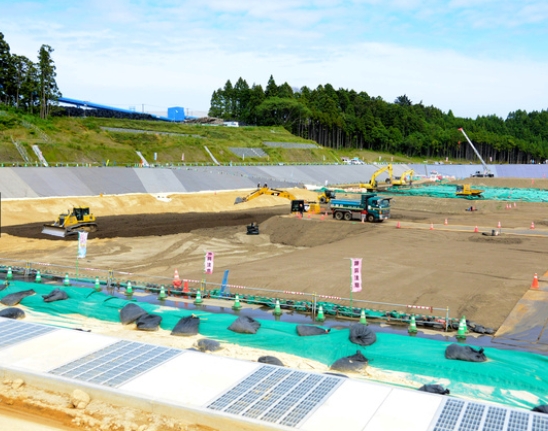
The law states that “necessary measures shall be taken for final disposal outside the prefecture by 2045. That is quite a delicate phrase.”
–prefectures can argue that the promise to remove the materials out of the prefecture should be honored.
The problem has taken on another dimension since the law clearly states this. For example, the government signed a ‘letter of commitment’ with the governor of Aomori Prefecture regarding the final disposal of high-level radioactive waste from Rokkasho Village in Aomori Prefecture outside the prefecture. It is not a law.”
The law is not wrong, and neither the prefectural governor nor the heads of local governments have any choice but to talk about their positions, even if they don’t believe that the cargo will be removed in 45 years. It has become difficult for them to express their true feelings.”
–The national government has a policy of recycling contaminated soil with radiation levels below 8,000 becquerels per kilogram, as final disposal of the entire amount of contaminated soil is difficult.
There is no legal basis for recycling. If the prefectural governor and others say that the contaminated soil in the interim storage facility will be taken out of the prefecture because it is clearly stated in the law, then it makes sense to discuss and make the recycling of contaminated soil into a law.
–How was the standard for recycling (8,000 becquerels) determined?
In 2005, the government established a clearance system that allows radioactive waste to be disposed of as normal waste, and set the standard at 0.01 millisievert per year as a level of radiation that has negligible effects on the human body when it is recycled or landfilled. This is equivalent to 100 becquerels of radiation per kilogram. After the nuclear accident, however, the government relaxed the standard for disposal to 1 millisievert per year. The amount of radiation that we calculated backwards from that is 8,000 becquerels per kilogram.
–So you want to apply this to soil that is to be reclaimed?
The government has positioned reclamation as part of the disposal process. The government has taken the liberty of changing the rules to say that although it is disposal, it only needs to meet the 1 millisievert per year requirement.
If it’s disposal, it has to meet clearance standards. The repository has been operated in accordance with these standards. But, for example, it is estimated that it would take 160 years of natural attenuation for contaminated soil with a level of 5,000 becquerels per kilogram to meet the criteria for disposal. It is unlikely that the facilities where the soil will be recycled will be maintained and managed for that long. The government’s policy is irresponsible.”
–The government says that the soil to be reclaimed is a “precious resource.
The Basic Policy for Fukushima Reconstruction and Revitalization approved by the cabinet in July 2012 clearly states that contaminated soil in the prefecture will be finally disposed of outside the prefecture 30 years after interim storage begins, and the idea that soil is a resource was written into law in December 2002.
In waste administration, waste is anything that is no longer needed. If it can be used or sold, it is a resource. So we ask the Ministry of the Environment, ‘So you give away soil for public works projects for a fee? We tell them that there is no such thing as “reverse compensation,” in which we pay for the soil when we give it to them. But they are not very understanding.
–The legalities regarding the handling of contaminated soil are unclear, and the standards are difficult to understand. How do you plan to resolve the situation where residents have no say in the matter?
The situation cannot be solved by creating a law. The first step is for the government and TEPCO to explain firmly that it will be more difficult than expected to return the living environment in the hard-to-return zones and other areas to the state it was in before the nuclear accident. The best way to restore the trust that has been lost over the past decade is for both sides to understand the bitter reality.
◇ ◇ ◇
Tsunehide Chino was born in 1978 in Tokyo. D. (Policy Science) from Hosei University’s Graduate School of Social Sciences. associate professor at Shinshu University’s Faculty of Humanities since 2014. has been researching issues such as radioactive waste for nearly 20 years, mainly in Rokkasho Village, Aomori Prefecture. He is also the coordinator of the Nuclear Waste Subcommittee of the Citizens Commission on Atomic Energy.
https://www.asahi.com/articles/ASQ476QGRQ1DUGTB001.html?fbclid=IwAR2vajn4ZWVmJU2VZd3Er_NwclfBJYHiB02ZsPpSqyuCJD_8QKgofwdCDGI
Government to phase out insurance fee exemption for Fukushima evacuees

Apr 8, 2022
The government said Friday it will start phasing out from as early as fiscal 2023 medical insurance fee exemptions for evacuees affected by the Fukushima nuclear disaster, a move that will increase the financial burdens on such people.
The phase-out affects evacuees who are now able to return or have already returned to the areas of their former residency following the lifting of evacuation orders.
The government aims to completely end the exemptions of health and nursing care insurance fees about 10 years after the evacuation orders were lifted in principle, with the 10-year period calculated as starting from April in the year after the lifting.
Reconstruction minister Kosaburo Nishime said the phase-out specifically took into account when evacuation orders were lifted to “avoid sharply increasing the burden” on the evacuees.
As for the 10-year timeframe, Nishime told a news conference the government believes that by then, the former residents would have returned to their hometowns and made some progress in rebuilding their livelihoods.
As for steps for former residents of zones still designated as off-limits in the Fukushima Prefecture towns of Okuma and Futaba, which host the Fukushima No. 1 plant crippled by the 2011 quake and tsunami disaster, the government will hold further discussions.
Many low-income people evacuated due to the nuclear crisis have so far been completely exempted from paying insurance fees as well as from a proportion of charges for the medical and nursing care services they receive.
As of late March, more than 32,000 people who evacuated after the nuclear disaster remain in other areas within Fukushima or outside the prefecture, according to government data.
The immediate target of the phase-out policy will be those who lived in areas where evacuations orders were lifted by 2014, such as the town of Hirono.
At first, the evacuees will be requested to shoulder half the amount of insurance fees before preferential treatment is scrapped completely in fiscal 2024.
Former residents of areas where the evacuation orders were lifted between 2015 and 2017 will see the phase-out policy begin in the period of fiscal 2024 to 2026, with the exemption ending entirely in two years.
The Fukushima No. 1 plant spewed out a massive amount of radioactive materials after the tsunami triggered by a magnitude 9.0 earthquake flooded the facility, causing multiple meltdowns and hydrogen blasts at the complex and forcing some 160,000 people to flee at one point.
https://www.japantimes.co.jp/news/2022/04/08/national/fukushima-medical-insurance/
Fisheries opposed to Fukushima water discharge, trade group tells PM

April 5, 2022
TOKYO (Kyodo) — A major fisheries group in Japan told Prime Minister Fumio Kishida Tuesday it remains firmly opposed to the planned discharge of treated water from the crippled Fukushima nuclear power plant into the sea due to concern over negative impact on the industry.
“I told (Kishida) our position to oppose (the discharge) remains exactly the same,” Hiroshi Kishi, head of the national fisheries cooperatives, told reporters after visiting the prime minister’s office.
It was the first meeting between the head of the national fisheries cooperatives and Japan’s prime minister since April last year when the decision was made to release treated low-level radioactive water into the sea from around the spring of 2023.
Then Prime Minister Yoshihide Suga announced the policy without gaining consent from the fisheries group.
Kishida said the government will be fully responsible for the impact of the discharged treated water and vowed to support fishermen, according to Kishi and officials who attended the meeting.
“Steady progress in the decommissioning (of the Fukushima plant) is a prerequisite for reconstruction (of the affected areas), and we cannot avoid the issue of how to dispose of treated water,” Kishida said. “We will continue to exchange opinions and will make all-out efforts to tackle harmful rumors.”
Earlier in the day, Kishi conveyed similar concern to industry minister Koichi Hagiuda. “We just hope people in the fisheries industry will be able to continue fishing with peace of mind,” he told reporters after seeing Hagiuda in the federation’s office in Tokyo.
During the meeting, Hagiuda handed the group answers in writing to five requests it had submitted.
The government pledged in the document to ensure the safety of treated water as well as take appropriate measures to prevent and tackle reputational damage to food products, among others.
Hagiuda also told the federation it will stick to its promise to the fishermen that the Fukushima plant will not release the water into the sea without their understanding.
The minister told reporters that Kishi “understands the recovery of Fukushima will not complete without disposal of treated water” and expressed hope that the government will “clear anxiety of fishermen by taking appropriate measures.”
The government has already set up a 30 billion yen ($245 million) fund to support the fisheries industry and pledged to buy seafood when demand falls due to harmful rumors.
In the meantime, more than 1 million tons of treated water has accumulated on the premises of the plant operated by Tokyo Electric Power Company Holdings Inc. after a massive earthquake and tsunami triggered a triple meltdown at the Fukushima Daiichi plant in March 2011.
The water, which was contaminated after being pumped in to cool melted reactor fuel, is treated through an advanced liquid processing system that removes radionuclides except for tritium.
Before discharge, it will be diluted with seawater below one 40th of the current regulations, according to the government. It will also be lower than the World Health Organization’s tritium limit in drinking water.
Earlier this year, the International Atomic Energy Agency evaluated the safety of the release of treated water by sending a task force to the Fukushima plant to enhance transparency of the discharge plan and gain international understanding.
In addition to Japan’s local fishing communities, neighboring China and South Korea have also expressed their worries over the water discharge plan.
Construction projects surge at Fukushima nuclear plant despite decommissioning progress

April 4, 2022
OKUMA, Fukushima — The site of the Fukushima Daiichi Nuclear Power Station continues to host new construction projects some 11 years after the disaster triggered by the 2011 Great East Japan Earthquake and tsunamis.
This Mainichi Shimbun reporter had the opportunity to visit the plant for the first time in seven and a half years, and reflect on why new facilities continue to appear even as the plant moves toward decommissioning.
The last time I visited the Fukushima Nuclear Power Station, high radiation levels relegated me to observing the site from inside a bus, but on my Feb. 26 visit I was able to enter the outdoor area near the reactor buildings of Units 1 to 4, where the incidents occurred. Progress has been made toward decontaminating radioactive materials scattered in the meltdown, and 96% of the premises can reportedly now be walked around in normal work clothes.
While decommissioning seems to be advancing, various facilities have been newly constructed, and the issue of water remains. A rising number of tanks store treated water contaminated after it was pumped to cool fuel debris that melted down in the accident, as well as groundwater and rainwater that flowed into the buildings. Inside the tanks, the contaminated water is made to reach a radioactive concentration below regulation levels.
On the seventh floor of a building located near the site’s entrance, a Tokyo Electric Power Co. Holdings Inc. (TEPCO) representative gave me an outline of the entire facility. I could see two large cranes on the ocean side around Units 1 to 4, and another large crane and framework structure on the mountain side. When I asked about it, the representative told me the frame was being assembled in a remote location to reduce worker radiation exposure. But it wasn’t a facility being dismantled; it’s a cover measuring 66 meters long, 56 meters wide, and 68 meters high that will wrap around Unit 1.
The hydrogen explosion in Unit 1 blew the building’s roof off, and 392 pieces of nuclear fuel remain in its spent fuel pool near the ceiling. Their removal is scheduled to start in fiscal 2027 to 2028. For this to happen, the surrounding debris must be removed, and the cover’s installation will help prevent the work dispersing radioactive dust.
Ground improvements works were progressing on the neighboring Unit 2’s south side. There, a working platform to remove 615 pieces of nuclear fuel from Unit 2 will be built, with its start slated for fiscal 2024 to 2026.
The buildings for Units 1 through 4 were damaged and contaminated, so different structures, such as platforms and covers, had to be built to remove nuclear fuel from the pools. Particularly conspicuous was the thick steel frame of the Unit 4 facility, from which fuel was completely removed in 2014. Although 53 meters high, it surprisingly uses about the same amount of steel as the 333-meter-high Tokyo Tower. Since the nuclear fuel is being removed in order, new construction work continues in reactor buildings’ vicinities.
The Japanese government decided in April 2021 to release into the ocean treated water stored in at least 1,000 tanks. The decision is not unrelated to the boom in construction.
At the Nuclear Regulation Authority’s March 1 review meeting on treated water discharge, TEPCO explained the offshore release was needed “to safely and steadily remove fuel debris and spent nuclear fuel.” The company listed at least 10 facilities earmarked for future construction. Put another way, the tanks need to be removed to provide land for these facilities.
Related construction work had already started at the seashore, where workers dug vertical holes to contain treated water before its release. After the implementation plan’s approval, undersea tunnel construction and other necessary work to release the water 1 km offshore will also begin.
Meanwhile, some broken cranes and damaged buildings have been left on site without being dismantled. The representative told the Mainichi Shimbun this was partly due to them trying to keep the solid waste processing volume low.
Also underway is construction of facilities to handle ever-increasing solid waste amounts. The representative said a white building I spotted in the site’s northwest side was the volume reduction facility, and that building work is going ahead for a solid waste storage facility in front of it.
The volume reduction facility scheduled for completion in March 2023 will use crushing and other methods to reduce concrete and metal debris volumes. Although nine storage buildings already exist, a 10th will soon be constructed. Nearby was also a new incineration facility for burning logged trees. TEPCO estimates solid waste generated will reach a volume of 794,000 cubic meters by March 2033, and that there will continue to be more related facilities.
Fuel debris removal will begin at the end of 2022. In the future, facilities to hold fuel debris and to store and reduce volumes of solid waste with high doses of radiation generated by the work will also be needed.
Each year creates new tasks that generate more waste, and the facilities to accommodate it. These buildings are also destined to eventually become solid waste. While this cycle continues, a final disposal method for the waste is undetermined. The government’s and TEPCO’s timetable says 20 to 30 years of plant decommissioning remain. But on site, where new construction projects continue to appear, a clear picture of when decommissioning will finish has yet to emerge.
(Japanese original by Takuya Yoshida, Science & Environment News Department)
TEPCO to grow fish at nuclear plant to show water safety
No, it is not for April Fools’ Day only, for Tepco it is Fool’s Day everyday
April 1, 2022
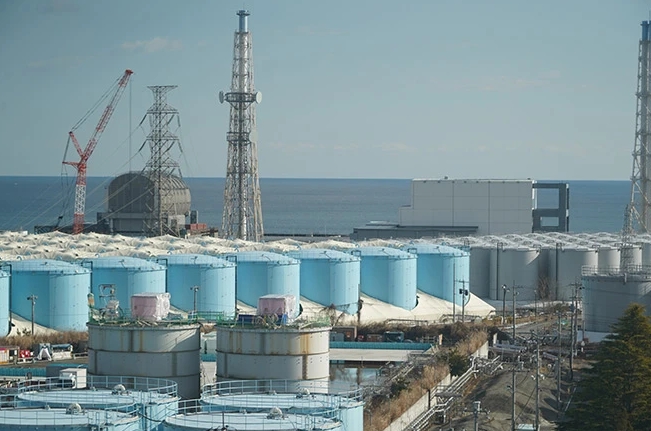
Tokyo Electric Power Co. will raise seafood at its stricken Fukushima No. 1 nuclear power plant in a bid to ease concerns about its plan to release treated radioactive water stored there into the ocean.
“We want to contribute to dispelling the public’s anxiety and reassuring people,” a TEPCO representative said.
The government and TEPCO last year announced the plan to treat and then discharge contaminated water accumulating at the nuclear plant into the ocean starting as early as spring 2023. More than 1 million tons of water have already been stored.
Local residents and fisheries industry officials, worried about reputational damage to marine products caused by the water release, asked the utility to demonstrate the safety of the water that will be discharged instead of just spouting off technical terms.
They suggested that TEPCO keep fish at the plant to show that the processed water will pose no health risk.
The water treatment process removes most radioactive substances, but not tritium. The water will be diluted with seawater to reduce the tritium concentration to less than 1,500 becquerels per liter, one-40th the legal standard.
On experts’ advice, TEPCO decided to culture flatfish and abalone on a trial basis because both species can be caught off Fukushima Prefecture and grown easily.
Preliminary farming started in March in seawater at the plant to gain expertise.
Around September, the utility will begin growing 600 flatfish and 600 abalone. Some will be raised in ordinary seawater while others will be in treated and diluted water containing tritium at the same level of the water that will be discharged.
The concentration of tritium and other substances in the creatures’ bodies will be analyzed, as will their growth rates in the two sets of tanks.
A continuing video of the experiment will be made available on the internet.
TEPCO said it expects the raised fish to have tritium readings similar to those in the water of their farming tanks. So the figure for flatfish raised in the processed water will likely be higher than their seawater-cultivated counterparts.
“We hope to counter negative publicity by showing that fish can grow healthily (in the treated water),” a TEPCO official said.
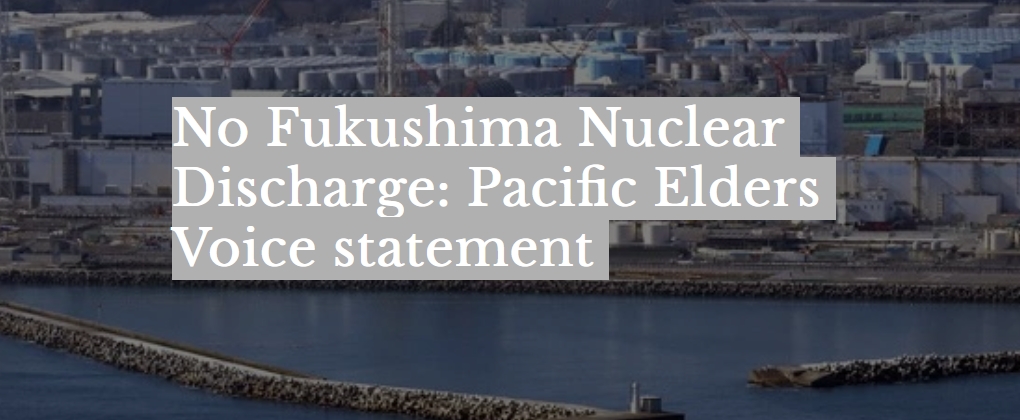
No Fukushima Nuclear Discharge: Pacific Elders Voice statement
30 March 2022
Pacific Elders oppose the discharge of Fukushima wastewater into the Pacific Ocean saying it is unacceptable and contravenes international and regional agreements
We note, with deep concern, Japan’s decision to release treated radioactive water from the destroyed Fukushima nuclear plant into the Pacific Ocean.
According to reports, the release of more than a million tonnes of water, which has been filtered to reduce radioactivity, could start in 2023.
We reiterate the observation by Secretary-General Henry Puna: “Our ultimate goal is to safeguard the Blue Pacific – our ocean, our environment, and our peoples- from any further nuclear contamination. This is the legacy we must leave for our children”.
Pollution of our ocean, and especially radioactive pollution, is unacceptable and contravenes international and regional agreements including the London Convention on the Prevention of Marine Pollution by Dumping of Wastes and Other Matter, and the South Pacific Nuclear-Free Zone Treaty of Rarotonga.
A principal objective of the London Convention is to protect the marine environment from pollution, including man-made radioactivity. Under the Treaty of Rarotonga, States Parties are obligated to prevent the stationing of any nuclear explosive device; to prevent the testing of any nuclear explosive device; not to dump radioactive wastes and other radioactive matter at sea, anywhere within the South Pacific Nuclear Free Zone, and to prevent the dumping of radioactive wastes and other radioactive matter by anyone in the territorial sea of the States Parties.
We see many strong reasons to oppose the discharge of Fukushima wastewater into the Pacific Ocean. The climate and biodiversity emergencies we currently face are already presenting severe threats to our waters, and so a decision by any government to deliberately contaminate the Pacific with radioactivity because it is the most cost-effective option seems perverse.
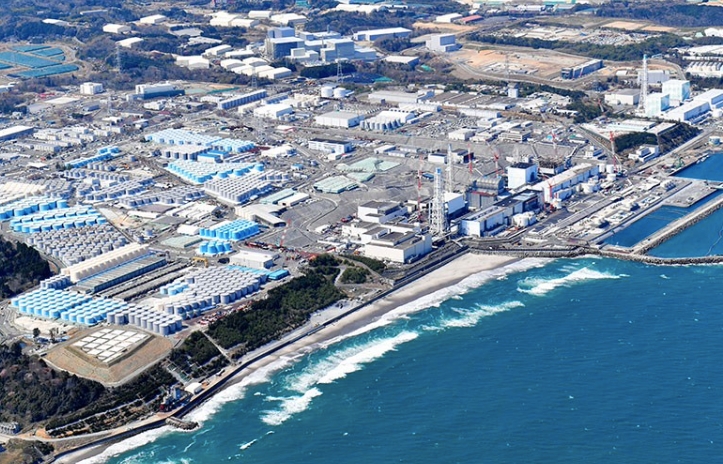
Japan has failed to consult with affected coastal countries, especially northern the Pacific Island States and no environmental impact assessment has been conducted. Furthermore, Japan has obligations not to allow pollution from their own waters to pollute international waters or the waters of other countries. When Pacific Islands Forum Leaders met with Japanese Prime Minister Yoshihide at the 9th PALM Meeting in July 2021, they highlighted the priority of ‘ensuring international consultation, international law, and independent and verifiable scientific assessments with regards to Japan’s announcement’.
We feel this constitutes a disregard for the human rights of both Japanese citizens, as well as those in the wider Asia Pacific region, including indigenous peoples, and it is justifiably being challenged, not least by UN Human Rights Special Rapporteurs.
Japan is under an international legal obligation to take all measures possible to avoid transboundary pollution from radioactivity, and develop alternatives to dumping in the Pacific by continued storage and treating the water to remove radioactive, including carbon- 14 and tritium.
We observe that the International Atomic Energy Agency has stated that the discharges will be done safely and in line with international practice. It continues to play the same historical role as set down in its 1957 statute of supporting and promoting the interests of the nuclear industry, not protecting the environment or public health. Radioactivity discharged from a pipeline poses potentially a greater coastal threat to the marine environment than deep-sea dumping from a ship.
We welcome the recent appointment of an independent panel of global experts2 on nuclear issues to support Pacific nations. Their technical advice, based on scientific evidence, will help inform consultations with Japan over its intentions to discharge treated nuclear wastewater.
This story was originally published at Pacific Elders’ Voice on 30 March 2022, reposted via PACNEWS.
No Fukushima Nuclear Discharge: Pacific Elders Voice statement
Container containing radioactive waste collapses, Fukushima Daiichi Nuclear Power Plant, storage method issues come to light
March 20, 2022
A series of radioactive waste containers stored outdoors at TEPCO’s Fukushima Daiichi Nuclear Power Plant were toppled and tilted by an earthquake late at night on March 16. Similar damage occurred during the Fukushima earthquake in February of last year, highlighting once again the challenges of storage methods. TEPCO is continuing to take stopgap measures until the waste is transferred to an indoor storage facility, but the Nuclear Regulation Authority is ready to request that more aggressive measures be taken.

Four units damaged, contents outside
As of January 19, there were a total of eight 1 meter square containers known to have toppled over. Four of them were damaged and their contents were exposed. All of them contained low-dose used protective clothing. Several other containers in two other groups of containers covered with sheets also toppled over.
Seventy-seven containers were tilted by the earthquake last February, and a total of 12 units toppled over at two locations. Some of the containers were four-tiered, and the shaking of the earthquake broke the connecting fittings, etc. Although the containers were re-stacked two or three-tiered and the bottom foundations were reinforced, the damage could not be prevented this time either.
In March of last year, one corroded waste container leaked a high dose of radioactive material onto the ground, which flowed into the port through a drainage channel. In July of the same year, rainwater that had entered a container for contaminated soil overflowed from inside the container.
A total of 85,500 outdoor waste containers are now in use. TEPCO inspected a total of 5,338 containers with a certain amount of surface radiation, and found that a total of 646 containers had corrosion or damage. Damage was found and emergency repairs were made. The risks associated with emergency evacuation-like waste management after the accident have become apparent.

Reduce risk outside the building.
The Regulatory Commission is becoming increasingly aware of the problem. At a regular meeting on February 2, Chairman Toyoshi Sarada mentioned the option of temporarily storing outdoor waste underground by covering it with soil. He stated that it would be difficult to gain the understanding of the local community, but considering the risk of leakage, it would be undesirable to leave the waste above ground.
TEPCO has announced a policy to remove all the contents of the containers to the storage facility by FY2028 to eliminate the outdoor storage, but there is no guarantee that an earthquake, typhoon, or other large-scale natural disaster will occur before the work is completed. There is no guarantee that this will not happen. If trouble occurs, it will lead to reputational damage to the local community.
Shinsuke Yamanaka, a member of the Regulatory Commission who inspected a group of containers at the No. 1 nuclear power plant on March 17, touched on the issue of outdoor waste in an interview after the visit and stressed, “It is important to talk about the inside of the reactor buildings, but right now I want you to prioritize risk reduction outside the buildings. He also expressed his desire to ask TEPCO to come up with concrete measures.


Fukushima Daiichi Nuclear Power Plant, risk of earthquakes revealed… Failure of seismometers, building deterioration, tanks shifting….
March 20, 2021
The earthquake that struck the Tohoku and Kanto regions on the evening of February 13, 2011, which had a maximum intensity of 6 on the Japanese seismic scale, revealed that seismometers at TEPCO’s Fukushima Daiichi plant had been removed more than four months earlier, highlighting the dangers posed by the plant, which was damaged in an accident 10 years ago, and the sloppy system in place at TEPCO. The earthquake was strong. With high radiation levels in the buildings making normal maintenance and inspections impossible, how can we ensure the safety of the ongoing work toward the “decommissioning” of the reactors, which has no end in sight?

◆Still removed after failure
Akira Ono, chief executive officer of the Fukushima Daiichi Decommissioning Promotion Company, was forced to apologize at a press conference on February 25 because a seismograph that was supposed to have been installed in the Unit 3 reactor building had failed and had been removed.
One of the two seismometers installed in the reactor building failed in July of last year when it got stuck in a pool of water, and three months later the other seismometer was out of commission. The top management was unaware of this fact for seven and a half months.
The seismometers originally installed in Units 1 through 4 to determine the emergency shutdown of the reactors were rendered unusable by the tsunami and accident 10 years ago. In April of last year, TEPCO installed two of the earlier seismometers to monitor the shaking of the Unit 3 reactor building, which had been damaged by a hydrogen explosion, but in the end, none of the “valuable data” that Ono emphasizes was obtained.
After the February earthquake, the water level in the containment vessels of Units 1 and 3, where melted-down nuclear fuel (debris) remains, dropped. It is believed that the damaged areas created during the accident have spread. The positions of 53 tanks that store contaminated water and other materials in the process of being cleaned up have also shifted by up to 19 centimeters. If the pipes connecting the tanks were to come loose, a large amount of contaminated water could leak out.
The extent of the damage is unknown.
Making earthquake preparedness difficult is the high level of radiation in the building. One worker said, “I can’t see inside, so I don’t know how the damage is spreading.
Katsumi Takiguchi, a professor emeritus at Tokyo Institute of Technology who specializes in reinforced concrete buildings, compiled a performance assessment of the Fukushima Daiichi Nuclear Power Plant buildings at a subcommittee of the Atomic Energy Society of Japan in 2019. He said, “Reactor buildings have walls that are 1.5 or 2 meters thick,” and pointed out that there is little fear of collapse.
What concerns Takiguchi is the localized deterioration of the buildings. If the reinforcing steel in the walls rusts and swells, exposing the concrete, the rusting will accelerate, so cracks and other abnormalities must be noticed quickly. Although seismograph observations are valuable in detecting deterioration trends, he asserts, “They are not a substitute for visual inspections.

◆ “TEPCO is losing its nerve.
According to TEPCO, the exterior of the Unit 1-3 buildings has been visually inspected about once a year since FY19. Little is known about the inside of the buildings beyond a robotic survey conducted immediately after the accident. The company aims to conduct inspections with people inside the buildings after April of this year, which, if realized, will help strengthen countermeasures.
However, it is essential to minimize the radiation exposure of the workers, and the method and frequency of inspections are still under consideration. Inspections of the reactor equipment in Units 1 through 3, where debris remains and the tops of the containment vessels are contaminated with extremely high concentrations of radioactive materials, will be extremely difficult.
The safety of the site is also a top priority for the removal of spent nuclear fuel and debris from the pools. The number of veteran employees with knowledge of the accident has been reduced, and some workers are heard to say, “TEPCO is losing its sense of urgency. Mr. Ono, who is in charge of decommissioning the plant, said, “I think the plant was highly sensitive to the tsunami. We also have to think about earthquakes,” he stresses, “but will we be prepared in time? The next earthquake could come at any time.
https://www.tokyo-np.co.jp/article/92694?fbclid=IwAR3Y8kYYXRoDAh8DPDAodsD6p5itoAJufNvcRDJoK_jiSux5HrPv5f-rd98
1 This Month

of the week – Shut Down Drone Warfare!


Tell the Ukrainian Government to Drop Prosecution of Peace Activist Yurii Sheliazhenko

Petition to revoke the licensing of the Near Surface Nuclear Disposal Facility (NSDF) at Chalk River. https://www.ourcommons.ca/petitions/en/Petition/Details?Petition=e-7247
To see nuclear-related stories in greater depth and intensity – go to https://nuclearinformation.wordpress.com
-
Archives
- March 2026 (237)
- February 2026 (268)
- January 2026 (308)
- December 2025 (358)
- November 2025 (359)
- October 2025 (376)
- September 2025 (257)
- August 2025 (319)
- July 2025 (230)
- June 2025 (348)
- May 2025 (261)
- April 2025 (305)
-
Categories
- 1
- 1 NUCLEAR ISSUES
- business and costs
- climate change
- culture and arts
- ENERGY
- environment
- health
- history
- indigenous issues
- Legal
- marketing of nuclear
- media
- opposition to nuclear
- PERSONAL STORIES
- politics
- politics international
- Religion and ethics
- safety
- secrets,lies and civil liberties
- spinbuster
- technology
- Uranium
- wastes
- weapons and war
- Women
- 2 WORLD
- ACTION
- AFRICA
- Atrocities
- AUSTRALIA
- Christina's notes
- Christina's themes
- culture and arts
- Events
- Fuk 2022
- Fuk 2023
- Fukushima 2017
- Fukushima 2018
- fukushima 2019
- Fukushima 2020
- Fukushima 2021
- general
- global warming
- Humour (God we need it)
- Nuclear
- RARE EARTHS
- Reference
- resources – print
- Resources -audiovicual
- Weekly Newsletter
- World
- World Nuclear
- YouTube
-
RSS
Entries RSS
Comments RSS
 nuclear-news