February 22, 2023 It will be one year on the 24th since the Russian invasion of Ukraine. During this period, attacks on nuclear power plants shocked the world. When considering preparedness in Japan, the handling of spent nuclear fuel becomes important. Once it finishes its role in the reactor, it is mainly stored in storage pools, but that group and those politicians see the vulnerability of the pools as a problem. If they are left as they are now, they will become a “weak spot” in the event of an attack on a nuclear power plant, which could result in extensive damage. The Kishida administration should not focus its efforts only on nuclear power plant operation. (Naoaki Nishida and Yuichiro Yamada)
◆Russia targeted nuclear power plants immediately after the invasion. On the 18th, the Institute for the Study of War, a U.S. think tank, expressed the following opinion: “The Russian media is advocating an attack on Ukraine’s nuclear facilities in order to cut off the power supply to the plants. The next day, the 19th. The following day, on the 19th, the Ministry of Foreign Affairs of Ukraine issued a statement regarding the Zaporozhye nuclear power plant in Ukraine, which has been occupied by Russian troops and turned into a military base. It accused Russia of refusing to replace the International Atomic Energy Agency (IAEA) experts stationed there to ensure safety. Attacks on the plant were feared early on. As early as last January, Sergiy Korsunsky, Ukraine’s ambassador to Japan, expressed concern. The bad predictions were right on target, and nuclear power plants were targeted immediately after the Russian invasion. The attack continued, and a bomb landed near a spent nuclear fuel storage facility. The Russians claimed that they had been attacked from the Ukrainian side and that the greatest risk from the attack was not the reactor but the spent fuel storage facility. Spent nuclear fuel, which can cause extensive damage, is made from uranium. It is used in nuclear reactors for four to five years and then removed. According to Chihiro Uesawa of the Nuclear Data and Information Center, the amount of heat generated and radiation levels remain high even under these conditions. In Japan, the heat value is mainly stored in a storage pool inside the reactor building, and water is circulated to lower the heat value and other parameters. Storage pools are not the only storage method. There is also a type of cask called a “dry cask,” which is cooled for five to six years in a pool and then placed in a metal container and cooled by air circulation. The sturdier casks are several steps ahead of the dry casks in terms of safety, but due to cost considerations, the use of dry casks is still on the road to widespread use. Compared to Europe, dry casks have lagged behind.
◆“Vulnerable to external attacks,” points out… After the invasion of Ukraine, Yuki Kobayashi, a researcher at the Sasakawa Peace Foundation, has been raising the issue of the vulnerability of storage pools. On the foundation’s website, he wrote, “The reactors are made of steel and are protected by a containment vessel, which has a certain degree of robustness against external attacks,” but he also pointed out that the spent fuel storage “often does not have a multiple protection system,” “is vulnerable to external attacks,” and “if the spent fuel is exposed to the atmosphere (e.g., because the water runs out), it will be exposed to high concentrations of radiation over a wide area. If the spent fuel is exposed to the atmosphere (e.g., when the water runs out), high concentrations of radiation will be emitted over a wide area. When the hydrogen explosion occurred in the Unit 4 reactor of TEPCO’s Fukushima Daiichi Nuclear Power Plant, the possibility of an anomaly occurring in the spent nuclear fuel storage pool was discussed. When interviewed, Kobayashi said, “Even after the Fukushima accident, Japan had not decided what measures to take. It can be said that we were somewhat naive in our understanding of the situation. The late Ryoichi Sasakawa was honorary chairman of the Sasakawa Peace Foundation. Shunichi Yamashita, vice president of Fukushima Medical University, is a trustee of the Sasakawa Health Foundation, another organization that is a descendant of the Sasakawa Peace Foundation. In a lecture after the Fukushima nuclear accident, he expressed his optimism, saying, “The effects of radiation will not come as long as you are smiling and laughing. The Sasakawa Peace Foundation also warned of the vulnerability of the storage pools. Uesawa, mentioned above, also spoke of the vulnerability of the storage pool, saying, “If the storage pool and other facilities are destroyed in an emergency, the buildings will be inaccessible. This would cause an irreversible situation.
◆Taro Kono, who was a member of the opposition party, also called it “a potential weak point. In the past, some have pointed out the fragility of the storage pools for spent nuclear fuel. The vulnerability of the spent fuel pools became clear after 3.11.” “How will the security system be changed?” The speaker was Taro Kono, the current digital minister. He is the current digital minister. In November 2011, a little more than six months after the accident at TEPCO’s Fukushima Daiichi Nuclear Power Station, he asked these questions at a meeting of the House of Representatives’ Committee on Monitoring the Settlement of Accounts. This was when he was a member of the opposition party. In September 2012, he wrote on his blog, “Nuclear reactors and spent fuel pools are potential weak points that could be targeted by terrorists or missiles. Does he think the same way now as he did then? We asked him through his office, but had not received an answer by the evening of September 21. So how is the Kishida administration handling the situation? At a Lower House Budget Committee meeting last October, Katsuya Okada, secretary general of the Democratic Party of Japan’s Constitutional Democratic Party, asked, “Spent nuclear fuel in the pool is a real nuisance,” and “What would happen if a missile hit us? He asked that the spent fuel be removed from the storage pool and transferred to a dry cask in a metal container to increase protection. In response, Yasutoshi Nishimura, Minister of Economy, Trade and Industry, said, “The Nuclear Regulation Authority is in charge of this issue centrally” and “METI would like to refrain from doing so.
◆The Nuclear Regulation Authority “is virtually unable to do so. In March of last year, immediately after the invasion of Ukraine, Toyoshi Sarada, then chairman of the Regulatory Commission, said at a press conference that “we have no plan to discuss a facility that is robust against armed attack, and it is virtually impossible. He then went on to say that, in general terms, “dry casks are more defensible than spent fuel pools. Shinsuke Yamanaka, the current chairman of the committee, echoes this view. A spokesperson for the Regulatory Commission said, “There is no change in our view that the Nuclear Reactor Regulation Law does not assume an armed attack. There is no indication that the Regulatory Commission has given a new directive to switch to dry casks as a counterterrorism measure,” he clarified. Masashi Goto, a former nuclear power plant design engineer, said, “The power companies are planning to move to casks, but the fuel must be cooled in a pool after use before being moved. This takes a considerable amount of time,” he said, pointing out that as long as nuclear power plants continue to operate, storage in storage pools is an unavoidable problem. He resents the Kishida administration’s bluntness, saying, “There are major risks, such as accidents and terrorism. Despite the existence of major risks, such as accidents and terrorism, the government has deemed the probability of their occurrence to be low and has failed to take effective countermeasures.
◆The nuclear fuel cycle is failing, but the government is moving forward with its utilization. The amount of spent nuclear fuel stored at nuclear power plants in Japan is enormous. The amount of spent fuel stored at nuclear power plants in Japan is enormous, amounting to about 20,000 tons, most of which is kept in storage pools. The government has been pushing for the reuse of this fuel under the banner of the “nuclear fuel cycle,” but the completion of a reprocessing plant under construction in Rokkasho Village, Aomori Prefecture, has been postponed for some time. Even if the government wants to reduce the amount of nuclear fuel used for reuse, it has been unable to do so because the key facilities are not functioning. The Kishida administration, however, is pushing forward with the use of nuclear power plants. It has taken the lead in allowing the operation of nuclear power plants for more than 60 years and in permitting the rebuilding of next-generation nuclear power plants. The amount of spent fuel stored in vulnerable pools will continue to increase, which will require more time and effort to protect. The government is treating the spent fuel cycle as if it were still running, and is avoiding confronting the problem,” said Teru Honma, a professor at Aoyama Gakuin University. The government is treating it as if it is going around and avoiding facing the problem,” said Terumitsu Honma, Professor Emeritus of Nuclear Damage Compensation System at Aoyama Gakuin University. The nuclear accident at Fukushima and the invasion of Ukraine have exposed the huge risks involved in operating nuclear power plants,” he continued. We have not taken responsibility for the unmanageable risks and costs. If we are going to make a decision to operate nuclear power plants, at the very least, we should take steps to address counterterrorism and safety measures that are a prerequisite.
◆Desk Memo It is easy to imagine the fear of nuclear power plants becoming targets of spent fuel storage pools. It is also easy to imagine the damage to civilians that would result in the event of an attack. Despite this, discussions on preparedness have stalled. In contrast, the Self-Defense Forces are even discussing the possibility of moving their headquarters underground as a protective measure. Abandoning someone and protecting someone else. Is this the kind of country we are supposed to love? (Sakaki)
Hideki Toshima (center) was reelected unopposed as mayor of Mihama Town, Fukui Prefecture, on the afternoon of September 21.
February 21, 2023 Mihama Town in Fukui Prefecture, where Kansai Electric Power Co.’s Mihama Unit 3, the only nuclear power plant in Japan operating for more than 40 years, is located, announced the election of a new mayor on January 21.
There were no other candidates other than incumbent Hideki Toshima, 65, a pro-nuclear power plant advocate recommended by the Liberal Democratic Party, and he was reelected unopposed following the previous election in 2019.
Mr. Tojima said, “Sustainable use of nuclear energy is necessary for the future. We will promote the development of a town that coexists with nuclear power on the basic premise of ensuring safety and security,” he said. He answered questions from reporters in the town.
In June 2009, Mihama Unit 3 became the first nuclear power plant in Japan to be restarted after 40 years of operation, under the rule that in principle the plant should be in operation for 40 years, with a maximum extension of 20 years. https://www.tokyo-np.co.jp/article/232442?rct=politics
Beside the dangerosity of various radionuclides on our environment, our food chain and our health, we must also consider the fact that TEPCO is not trustworthy for its “transparency”, it has lied repeatedly numerous times during the past 12 years, and that the IAEA itself being for the nuclear industry it has shown well its tendency if not its policy to minimize the radiation risks if not to cover things up.
22 Feb, 2023
Outrage is growing over an “unjust” plan to dump more than a million tonnes of contaminated wastewater on Australia’s doorstep – within months.
In 2011, Japan was rocked by the Fukushima nuclear disaster – the worst of its kind since Chernobyl in 1986.
Responders scrambled to stop damaged reactors at Fukushima’s Daiichi nuclear plant from overheating by pumping massive amounts of water through them, with the contaminated water then being stored in massive tanks at the site.
But now, Japan has run out of space, and in 2021, announced plans to dump 1.3 million tonnes of the contaminated wastewater into the Pacific Ocean.
The water would be treated before being released over a period of several decades, with Prime Minister Yoshihide Suga saying at the time it was “a realistic solution”.
“We will do our utmost to keep the water far above safety standards,” he vowed.
In the almost two years since, Japan has been working out the finer details of the release, which is now due to begin as soon as the northern hemisphere’s spring or summer – Australia’s autumn or winter.
Countries across the Pacific are furious.
‘Catastrophic harm’
Writing for The Guardian soon after the plan was first announced, youth advocates from the region Joey Tau and Talei Luscia Mangioni described it as an “unjust act”.
“To Pacific peoples, who have carried the disproportionate human cost of nuclearism in our region, this is yet another act of catastrophic and irreversible trans-boundary harm that our region has not consented to,” they wrote.
They were referring to the long history of the Pacific being used as the world’s nuclear waste dumping ground, with hundreds of nuclear tests being carried out across the region in the decades since World War II.
High-profile individuals and groups from across the Pacific – including from Vanuatu, Fiji, the Marshall Islands and French Polynesia – have also spoken out against Japan’s plan for months on end.
“If it is safe, dump it in Tokyo, test it in Paris, and store it in Washington, but keep our Pacific nuclear-free,” Vanuatu stateswoman and veteran activist of the Nuclear Free and Independent Pacific (NFIP) movement Motarilavoa Hilda Lini said soon after Japan’s plan was unveiled.
“We are people of the ocean, we must stand up and protect it.”
In another moving statement released last year, environmental advocacy group Youngsolwara Pacific likened the release to “nuclear war”.
“How can the Japanese government, who has experienced the same brutal experiences of nuclear weapons in both Hiroshima and Nagasaki, wish to further pollute our Pacific with nuclear waste? To us, this irresponsible act of trans-boundary harm is just the same as waging nuclear war on us as Pacific peoples and our islands.”
But their pleas have fallen on deaf ears – and a string of experts have even voiced support for Japan’s controversial move.
‘Best option’
Writing for The Conversation recently, Jim Smith, professor of environmental science at the University of Portsmouth, said releasing the wastewater was the “best option”.
Prof Smith – who has worked on the impacts of radioactive pollutants in the environment for more than three decades – explained that before the water is stored in the first place, “the wastewater produced at Fukushima is treated to remove almost all of the radioactive elements”.
“These include cobalt 60, strontium 90 and caesium 137. But tritium – a radioactive form of hydrogen – is left behind,” he explained.
“When one of the hydrogen atoms in water is replaced by tritium, it forms radioactive tritiated water. Tritiated water is chemically identical to normal water, which makes separating it from wastewater expensive, energy intensive and time consuming. A review of tritium separation technologies in 2020 found that they are unable to process the huge volumes of water required.
“But as radioactive elements go, tritium is relatively benign and its existence as tritiated water reduces its environmental impact. Chemically identical to normal water, tritiated water passes through organisms like water does and so does not strongly accumulate in the bodies of living things.”
Meanwhile, a South Korean government study released this month also found the release of the wastewater would have little impact on South Korean waters.
“That change would be too small to detect,” an official at the Korea Institute of Ocean Science and Technology said, according to Reuters.
And the nation of Micronesia has also recently dropped its opposition to the release of the water, with president David Panuelo telling reporters he was no longer worried.
But for many critics of the plan, plenty of concerns remain.
“We must prevent actions that will lead or mislead us towards another major nuclear contamination disaster at the hands of others,” the former prime minister of the Cook Islands Henry Puna said just last month, as the deadline for the release looms. –
Japan’s nuclear regulation authority tentatively confirmed plans Wednesday to narrow the scope of radioactive elements to be monitored in the radiation-contaminated water from quake-stricken Japan’s Fukushima Daiichi nuclear power plant, the South Korean Prime Minister’s Office said in a statement Wednesday.
The types of nuclides under the monitoring has been reduced from 64 to 30, according to Prime Minister Han Duck-soo’s office.
The Seoul government pledged to place the Korean people’s safety as the priority and ensure that the wastewater is treated according to international standards. Moreover, the government will continue to be engaged in the scientific and technological review of Tokyo Electric Power Co.’s plan, as well as the International Atomic Energy Agency’s wastewater analysis.
This came after the Ministry of Foreign Affairs raised the possibility of the narrowing down of the scope of radioactive elements earlier this month. A spokesperson at the Foreign Ministry said on Feb. 10 that such a decision came upon the request of the IAEA.
Tokyo unveiled plans to release the wastewater by as early as this spring.
Japan has claimed that the contaminated water was treated by its own nuclide removal system called Advanced Liquid Processing System. The IAEA has endorsed Japan’s claims that the release meets international standards.
Some 1.3 million tons of wastewater — enough to fill about 500 Olympic-size swimming pools — was used to cool down the quake-hit nuclear reactors, and is being stored at the site. Tokyo announced plans to release the water in 2021.
Recent research jointly conducted by the Korea Institute of Ocean Science and Technology and the Korea Atomic Energy Research Institute indicated some of the nuclides, in particular tritium, could potentially reach South Korean waters within the next four or five years. The impact of it, however, could be “hard to detect,” with about 0.001 becquerel per cubic meter 10 years after the release, research results indicated. A becquerel is a unit of measurement for radioactivity, with even one full becquerel being a tiny amount as relates to human health.
The deadly tsunami in 2011 broke down the nuclear reactor cooling system and melted down three reactors in the Fukushima nuclear power plant in eastern Japan.
Tokyo Electric Power Company shows a bottle of radioactive water from Fukushima Daiichi Nuclear Power Plant in Japan which has been filtered by ALPS, Feb. 18. The filtering measure is, however, drawing criticism from experts in different countries as its radioactivity-cleansing feature has not been fully verified.
2023-02-23
Seoul urged to respond firmly to Tokyo’s move
By Ko Dong-hwan
Korean environmental activists condemned Thursday, the Japanese government’s latest move to discard radioactive water from their own soil which is now stored at the tsunami-hit nuclear power plant in Fukushima.
Filtered and planned for discharge into the Pacific Ocean this year, the water, according to the Japanese government, has been tested for concentration levels of radioactive nuclides that would pollute the maritime environment.
What concerns the activists is that the Japanese government recently reduced the list of radioactive nuclides to measure and verify their safety levels from 64 to 30.
The list has been shortened to more than half because the Japanese government believes some radioactive nuclides have half-lives that are so short that their radioactivity would thin out to a concentration level minuscule enough to be almost unmeasurable and non-influential to the environment.
But the activists said the move is only an additional problem to the Japanese government’s “doubtful” actions in dealing with the water, largely due to the questionable veracity of the data shared by the government with the world.
“Some radioactive nuclides have very short half-lives, like iodine-131 which has only eight days. Cesium-134, which has a half-life of two years, will also be watered down almost flat in a couple of years,” Choi Kyoung-sook, the coordinator from Korea Radiation Watch, a Seoul-based civic environmental activist group, told The Korea Times.
“But the biggest problem with Japan’s discharge plan is that the water’s potential biological effect on maritime species in the ocean hasn’t been fully tested yet. The Japanese government just got started with that experiment earlier this year, putting halibuts and other fish in an aquarium containing 1 becquerel of cesium to see what happens to the creatures.”
Choi said the Japanese government’s explanation advocating the safety of the discharge is only based on its own belief that the water “appears clean enough” after being filtered by the advanced liquid processing system (ALPS) that the Japanese government claims it has used to treat the water before its discharge planned this spring.
Kim Kyoung-ok from the Korea Institute of Ocean Science and Technology explains the result of a simulation carried out by his institute which demonstrates how discharged radioactive water from the Fukushima nuclear power plant in Japan could affect Korean waters, at Ramada Plaza Jeju Hotel, Feb. 16.
“It’s like they pour one liter of milk into 1,000 tons of water and say, ‘Hey, the water doesn’t look opaque at all,'” Choi said. “ALPS cannot filter out tritium. Carbon-14 has a half-life of 5,000 years. Who can possibly be so sure that radioactive water containing those radioactive particles is safe enough to discharge into the ocean?”
The Korean government has not been as critical of Japan as it should be, Choi said. She said the authority appears to be neglecting to demand sufficient scientific proof from its neighboring country that ensures the safety of the discharge.
“There isn’t any reliable scientific proof whatsoever to what the Japanese government has released to argue the discharge is safe,” Choi said. “Our government should make sure with Japan that there is no harmful biological effect from the discharge and the environmental assessment claimed done by Japan was based on reliable data.”
Choi, alongside other experts concerned with the discharge, proposed the radioactive water be stored for a longer period of time in Japan until it is diluted enough to be safely discharged.
It was found that Japan’s Nuclear Regulation Agency, earlier this year, approved the latest shortlist of radioactive nuclides to be tested, which was proposed by Tokyo Electric Power Company. The list removed 39 types from the original list and added five new ones.
The agency claimed the removed nuclides have half-lives short enough to be dissolved clean into sea waters to the level of not causing any harmful effect on humans and thus do not need to be tested further.
The Japanese authorities have been arguing that their decision-making adhered to the guidelines of the International Atomic Energy Agency, which has been supporting the country’s discharge of the water.
The Korea Institute of Ocean Science and Technology and the Korea Atomic Energy Research Institute last week released the results of a simulation of the discharge they had been studying.
The simulation, designed specifically to track tritium after the water is discharged, showed the water, after circling the Pacific for two years and reaching Korean waters, is expected to have only a negligible amount of the nuclide left. The Ministry of Oceans and Fishery, however, said the simulation was only carried out during a preliminary stage of the study and further simulations are required.
February 20, 2023 At the Fukushima Daiichi Nuclear Power Plant, buildings around the reactor buildings will be dismantled in preparation for the removal of fuel debris.
TEPCO has released an estimate of 450,000 cubic meters of radioactive waste to be generated as a result of this work.
In addition to this, 805,000 cubic meters of radioactive waste is expected to be generated during the decommissioning work over the next 10 years.
Twelve years after the nuclear disaster caused by a massive earthquake and tsunami, workers at the Fukushima Daiichi nuclear power plant in Japan are preparing to release treated waste water into the sea despite opposition from locals. The plant’s operator, Tokyo Electric Power Company, said the water had been filtered to remove most of the radioactive elements, adding that the release was “safe and necessary”.
The Japanese government is seeking Group of Seven support for its contentious plans on dealing with water and soil contaminated from the triple meltdown at the Fukushima No. 1 nuclear power plant.
Japan will host the G-7 summit in Hiroshima in May, as well as a series of G-7 meetings of ministers overseeing different policy areas.
One meeting planned for April in Sapporo will bring together G-7 ministers overseeing climate, energy and the environment.
At a working-level meeting in Tokyo on Feb. 1-3, Japanese officials explained their draft of a joint statement called “Building Blocks” that could be issued after the Sapporo meeting.
It said the ministers welcomed “the transparent process toward discharge” of “treated water without any harm to humans and environment” from the grounds of the Fukushima No. 1 plant, as well as the progress made to “recycling of removed soil.”
Both measures have faced stiff opposition in Japan from those directly affected by the plans, such as fishermen who operate off the coast of Fukushima Prefecture.
A government source said, “We could play up the safety of those measures if the G-7 members come together.”
However, some nations may feel uncomfortable about including issues unique to Japan in a joint statement.
Another government source said a consensus had not been reached among the seven nations to include such wording in the statement.
No past G-7 joint statement has ever mentioned the two measures in a positive light.
Water contaminated by the crippled Fukushima reactors has been treated and stored in tanks on the nuclear plant grounds. But groundwater continues to be polluted in the heavily damaged buildings.
Plant operator Tokyo Electric Power Co. said all available tanks would be filled with water between summer and autumn this year.
The utility is using the Advanced Liquid Processing System (ALPS) to lower the levels of 62 radioactive substances to government safety standards. But ALPS cannot remove tritium, a radioactive isotope of hydrogen, so the plan is to dilute it to under one-40th of the statutory standards before the water is discharged.
The plan to release the water about 1 kilometer off the coast of the Fukushima plant is scheduled to begin as early as spring.
In addition to Fukushima fishermen, China, South Korea, Russia and the Pacific Islands Forum, made up of 15 nations and two regions, have raised concerns about the plan.
The International Atomic Energy Agency is scheduled to release its report about the measure between April and June before the start of the water-discharge plan.
The government plans to reuse decontaminated soil to reduce the volume to be placed in final storage. The soil will be treated to a level below 8,000 becquerels per kilogram, the threshold set by the government.
Plans to reuse the soil in two municipalities in Fukushima Prefecture have stalled because of opposition from local residents.
And people in Tokorozawa, Saitama Prefecture, have also raised objections to the plan to reuse the Fukushima soil in their community.
February 22, 2023 The Japanese government has released a draft of the joint statement that will be compiled by Japan, the chairing country of the G7 climate, energy, and environment ministers, at their meeting in Sapporo in April. Japan is coordinating with other countries to include a statement that “welcomes the transparent process for the release” of treated water from the TEPCO’s Fukushima Daiichi Nuclear Power Plant and “welcomes the progress” of a plan to reuse decontaminated soil. Both of these statements are considered to be aimed at gaining the support of major countries, despite the fact that there is a strong sense of caution in Japan regarding these issues.
The contents of these plans were explained to representatives of each country at working-level meetings held in Tokyo from January 1 to 3. A government official said, “If we can unite in the G7, we can appeal the safety of the G7. However, there are doubts about including issues specific to Japan in the joint statement, and some countries, such as Germany, are cautious about nuclear power, so another official said, “It remains to be seen if we can go so far as to include a ‘welcome’ message. So far, the G7 joint statement has never included language encouraging the release of treated water or the reuse of decontaminated soil.
Contaminated water at the Fukushima Daiichi Nuclear Power Plant is generated in the process of cooling melted-down nuclear fuel. The water is being purified and stored in tanks on the plant grounds, but according to TEPCO, the tanks are expected to be full by this summer or fall. TEPCO is using a multinuclide removal system (ALPS) to reduce the concentration of 62 types of radioactive materials to below the national standard, and tritium, which cannot be removed by ALPS, will be diluted to less than 1/40th of the legal standard. The company plans to discharge the treated water one kilometer offshore from the plant, and plans to begin the discharge around spring or summer of this year. https://www.asahi.com/articles/ASR2P6222R28ULBH005.html?iref=pc_photo_gallery_bottom
Washington and Tokyo are in the midst of a transition from “alliance protection” of their partnership to “alliance projection” into the Indo-Pacific, US Ambassador to Japan Rahm Emanuel said at a recent press conference in Tokyo.
Now many believe such an alliance takes on a much clearer form of “alliance pollution,” as the two are ganging up to endanger the Pacific and the wider global ecosystem.
At an open debate on the impact of sea-level rise on international peace and security held Tuesday by the United Nations Security Council, representatives of multiple countries criticized Tokyo over its accelerated push to discharge contaminated water from Fukushima Daiichi Nuclear Power Plant.
They argued that Japan’s discharge plan, defying concerns of neighboring countries, will seriously endanger the global marine environment, ecosystems, and the health and safety of people along the Pacific coast.
Presumably, the United States, with a Pacific coastline, would also fall victim to the health hazards posed by the contaminated water once it reaches the west coast along with the ocean currents.
Washington, however, again glossed over the risks. US State Department spokesperson Ned Price has recently claimed that the United States “welcomes Japan’s continued openness,” saying the plan is “in line with the internationally accepted nuclear safety standards.”
Such a response makes sense, considering the government’s handling of a recent hazmat train derailment in Ohio, the environmental fallout of which could be massive. Both the US government and media were indifferent to it at first.
Quite tacitly, across the Pacific, Tokyo and Japanese media have also been reticent on this incident, in stark contrast with their fault-finding on some developing countries regarding environment protection.
Behind their collective, selective silence is a toxic US-Japan collusion on nuke wastewater, which is now tainting the Japanese soil.
In 2022, high levels of cancer-causing perfluoro organic compounds were detected in areas around US military bases in Okinawa prefecture, with the bases’ firefighting foam being the suspected source, local media reported.
Of the 46 sites sampled surrounding the US military installations as part of a biannual groundwater survey, 32 exceeded Japan’s provisional safe drinking water standard.
Outside Okinawa, concentration levels of perfluoro organic compounds sampled at 81 sites in 13 Japanese prefectures exceeded standards, including groundwater and tap water in many parts of Tokyo’s Tama area near the US air base in Yokota.
As the Japanese government denied access to investigation inside the US bases, some local residents chose to swallow anger while some investigated the source of contamination on their own.
“I dare not drink tap water here, so I usually consume bottled water,” a resident from the Tama area told Xinhua, offering a glimpse into the misery and humiliation experienced by locals at the “US occupied land.”
While Emanuel is sparing no effort to urge the US-Japan alliance to draw the sword, the US and Japanese people are suffering from profound pollution problems, with the Pacific Ocean environment and the health of coastal residents under potential threat.
However Washington and Tokyo try to justify each other’s environmental wrongdoings, they can never be exempted in the face of overwhelming facts.
The foul of the US-Japan alliance lies not only in its disregard for the global environment and double standards, but also in its absurd values of prioritizing hegemony over public health.
Vitrified radioactive waste in the storage facility at Rokkasho, Aomori Prefecture
February 20, 2023
The Kishida administration has unveiled a policy initiative to deal with high-level radioactive waste from nuclear power plants through “united government-wide” efforts.
The government plans to step up its efforts to find a local government willing to host a final disposal site for nuclear waste. The government should naturally assume the responsibility of dealing with this problem, but it should not pressure local governments to host a disposal facility.
According to the draft revision to the basic policy for tackling the problem, which was announced earlier in February, the government will set up a “council for discussions” with interested local governments to discuss the challenges and possible policy responses.
Based on these talks, the national government will propose in stages to local administrations to accept a survey for a disposal site.
Under the current basic policy, the Ministry of Economy, Trade and Industry published in 2017 a map of the nation showing potential areas for locating a deep geological disposal site. At this site, spent fuel would be buried in engineered facilities 300 or more meters below ground level.
The initial phase of assessing two municipalities in Hokkaido for their suitability to host such a disposal facility began three years ago. The first stage of the process, called “bunken chosa” (literature survey), involves reviews of geological maps and research papers concerning local volcanic and seismic hazards and other related factors.
No other municipalities have yet to volunteer for undertaking this process.
High-level radioactive waste from spent nuclear fuel, however, is not the only kind of nuclear waste that must be disposed of. Other types of nuclear waste include materials from decommissioned reactors and melted “fuel debris” from the stricken Fukushima No. 1 nuclear power plant, which has been left untreated.
One inconvenient fact for supporters of nuclear power generation is that no solution has been found as to where all these kinds of nuclear waste should be disposed of.
At nuclear power plants across the nation, growing amounts of spent nuclear fuel are fast filling up the spent fuel pools within the premises, with not much room left. Operating nuclear plants will eventually start generating spent fuel that cannot be stored anywhere.
The government’s move to accelerate its program to build a final disposal site is aimed at defusing criticism about its policy shift toward expanding nuclear power generation by signaling a willingness to tackle these policy challenges.
Since there is already a large amount of spent nuclear fuel, a disposal site is clearly necessary. A broad consensus on the issue should be built through debate involving the entire nation, including citizens of major cities who consume huge amounts of electricity.
It would be better for such a debate to be held at an independent organization that is separated from the industry ministry, which promotes the use of atomic energy. The law for regulating measures related to the final disposal of radioactive waste should be reviewed for necessary revisions.
Since Article 1 of the law refers to the “proper use of nuclear power,” the construction of a final disposal facility could justify the long-term use of nuclear power.
That would mean nuclear plants will keep producing spent fuel for decades to come. This prospect will make local communities that may host the disposal facility concerned about the possibility that radioactive waste may be brought to the site without end.
The law is based on the assumption that a nuclear fuel reprocessing system to recover plutonium and uranium from spent nuclear fuel to be reused in reactors will be established.
Northern Europe and many other countries with an advanced program to deal with radioactive waste have adopted the approach known as direct disposal, a management strategy where used nuclear fuel is disposed of in a deep underground repository, without any recycling.
Instead of adhering to the now unworkable program to establish a fuel recycling system, the government should designate direct disposal as a realistic option.
This is the time to fundamentally rethink the law, which was enacted more than two decades ago without much serious debate, taking into consideration the experiences of the Fukushima nuclear disaster.
Japan’s plan to discharge more than 1,000 tanks of nuclear wastewater into the Pacific has incensed island nations.
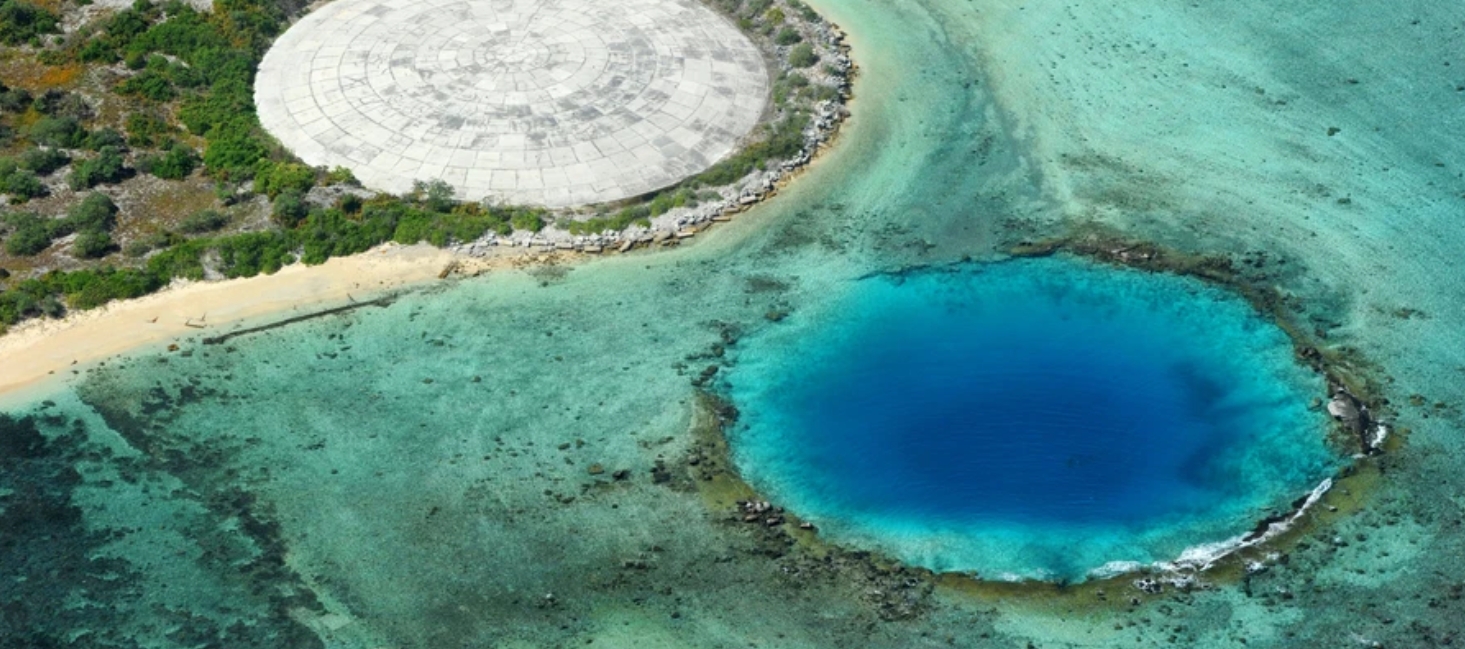
The Runit Dome, a concrete dome located in the Marshall Islands that houses tons of radioactive waste from nuclear testing in the 40’s and 50’s.
February 17, 2023
TOKYO — In the middle of the Pacific Ocean, a group of tropical islands has never seen winter. But one morning 70 years ago, a loud bang followed by a flash of light made it “snow” for the first time.
Fluttery and white, the powdery material sank into the Marshall Islands’ deep blue lagoons. It lightly covered the palm trees that lined Rongelap Atoll, astounding those who came out of their thatched homes to watch it settle on roofs. Children played with it, scooping the dust into their mouths.
But within hours, the atoll’s residents mysteriously began falling ill. Hair fell out in clumps. Skin burned. People vomited. They were evacuated two days later, but the damage was already done. Years later, the Rongelapese would suffer heightened cases of cancer, miscarriages, and birth deformities.
This was the fallout of Castle Bravo, the U.S.’ largest-ever thermonuclear bomb test that sprinkled radioactive debris on that warm March day. Now, residents of the island nations that include Fiji, the Marshall Islands, and French Polynesia invoke the nuclear accident and its subsequent contamination to oppose Japan’s plan to release its nuclear wastewater into the Pacific.
“We have a legacy of being the dumping ground when it comes to the issue of nuclear waste,” James Bhagwan, a Fijian anti-nuclear activist and secretary-general of the Pacific Conference of Churches, told VICE World News.
“Pacific Islanders have a spiritual bond with both land and ocean. So this again speaks to the issue of poisoning a part of us, our family,” he said.
The comparison Bhagwan drew between the controlled release of treated wastewater and an atmospheric nuclear test gone wrong may sound like a stretch. But it speaks to how much Pacific Island nations fear Japan’s planned discharge in the coming months of more than 1.3 million metric tons of contaminated water into the world’s largest ocean.
The nuclear waste sits in over 1,000 water tanks in Japan’s northeastern prefecture of Fukushima, the product of the meltdown of the Daiichi nuclear reactors there in 2011.
That year, a tsunami triggered by a 9.0-magnitude earthquake inundated the power plant and knocked out its cooling systems. Since then, officials have been trying to cool the destroyed reactors by pumping over a hundred tons of water through them every day.
But now Japan is running out of space to store this contaminated water, and is looking to release the treated liquid into the ocean this spring or summer.
Like Bhagwan, Pacific Island leaders have protested Japan’s plan.
If it is safe, dump it in Tokyo, test it in Paris, and store it in Washington, but keep our Pacific nuclear-free.
“We must prevent actions that will lead or mislead us towards another major nuclear contamination disaster at the hands of others,” said Henry Puna at a public seminar last month. He’s the former prime minister of the Cook Islands and current secretary-general of the Pacific Islands Forum—a regional bloc of 17 island nations.
In objecting to the release, Motarilavoa Hilda Lini, a Vanuatu stateswoman, has cited the slogan of the Nuclear Free and Independent Pacific movement: “If it is safe, dump it in Tokyo, test it in Paris, and store it in Washington, but keep our Pacific nuclear-free.”
Scientists disagree over the extent to which the release of Fukushima’s treated wastewater could affect the Pacific Islands. Some claim that nuclear waste could enter human food chains and contaminate fish eaten by communities outside Japan. Other experts argue that the distance between Japan and the Pacific Islands, ocean current patterns, and marine behavior will make the risk of nuclear contamination for the Pacific Islands highly unlikely. The water will get released into the Pacific through an undersea tunnel, built one kilometer off the coast near the Daiichi plant.
Japan has insisted that the wastewater is safe to release following treatment by a system called ALPS, Advanced Liquid Processing System. The process is designed to remove all radioactive material found in the water with two exceptions: The radioactive isotopes of hydrogen and carbon, tritium and carbon-14, are almost impossible to filter out and will instead be released after the liquid is diluted to one-hundredth of its concentration with seawater.
Tokyo Electric Power (TEPCO)—which ran the collapsed Daiichi plant—said it would test the waste before, during, and after the wastewater’s release into the Pacific through an undersea tunnel over the span of 30 years.
Scientists who spoke with VICE World News and who are referenced in this article said that the amount of tritium Japan plans to release won’t be harmful to humans or the environment because of the small doses. And though ALPS can’t remove carbon-14, TEPCO told VICE World News that the radioactive isotope’s concentrations are well below the regulatory limit.
But despite the general consensus that low doses of tritium, which is found also in rain and seawater, have negligible effects on health, some scientists questioned whether the wastewater to be released truly meets the level of safety promised by Japan.
Ken Buesseler, a marine radiochemist and one of five experts on the Pacific Islands Forum’s panel of independent scientists, questioned TEPCO’s ability to sufficiently remove radioactive material from the liquid. He cited how, in 2020, the company had to retreat about 70 percent of the stored wastewater because it was found to contain amounts of radioactive substances exceeding standards.
“That doesn’t give me a lot of confidence,” he told VICE World News. Monitoring the wastewater after it was released into the ocean would be too late, Buesseler added, as once it’s in the ocean, TEPCO can’t get it back.
He also faulted the company for analyzing only about a quarter of the 1,061 tanks and providing testing results on just seven radioactive substances out of the dozens TEPCO said it would monitor. This, he said, ignored the possibility that there would be variation among the tanks, potentially overlooking harmful levels of more radioactive substances such as cesium-137 and strontium-90.
In a written statement to VICE World News, TEPCO said potential variations among the tanks have been accounted for and that each tank will eventually be tested before they’re discharged. Not all tanks have been tested yet because 70 percent of them currently do not meet TEPCO’s standard for discharge and will be retreated. TEPCO also said it would sample the water for 69 different radionuclides before it is released and that the test results would be audited by third-party agencies it appointed and Japan’s nuclear regulator.
Despite these measures, critics say that TEPCO has had a spotty record when it comes to communicating with the public. In 2018, Kyodo News reported that the treated water still contained radioactive substances above the legal limit after it had gone through ALPS. And it wasn’t until 2020 that the power company first acknowledged that the water contained carbon-14, which can’t be removed using ALPS.
“I saw this as an opportunity for Japan to build up trust, to take care of their waste, clean it up and demonstrate independently to the world that they’ve done that,” Buesseler said. “It’s a lot of trust, is what it really boils down to. And we’re saying, show us.”
Brent Heuser, a nuclear engineering professor at the University of Illinois in the U.S., told VICE World News he’s confident that, even if the tanks storing wastewater in Fukushima have higher levels of radioactive substances than is reported, dilution of the liquid is enough to ensure their safety. He noted that the company will discharge the water gradually over 30 years to sufficiently thin out the wastewater.
Paul Dickman, a radiochemist who has visited Fukushima multiple times over the past decade to advise Japanese regulators on nuclear waste cleanup, supports the safe release of the treated water, although he acknowledged that the debate also hinges on trust.
“Let’s face it. I think the central government lost trust and trust is very hard to rebuild,” Dickman, a former senior official of the U.S. Nuclear Regulatory Commission and current chairman of the American Nuclear Society’s external affairs committee, told VICE World News.
The International Atomic Energy Agency, an intergovernmental organization within the UN system that advocates for the peaceful use of nuclear energy, has tested the wastewater and found the plan to release it in line with global practices.
But scientists who support the discharge say worrying about the treated wastewater was ignoring the more pressing concern: what TEPCO will do with the fuel debris in the reactor vessels.
When the 2011 tsunami hit Fukushima’s three reactors, power sources and equipment used to cool the fuel inside shut down. This allowed the fuel to overheat, melting the core and other parts of the reactor. Once it cooled and solidified, it became highly radioactive material known as “fuel debris.” At the moment, it sits at the bottom of the three reactor vessels and needs to be cleaned out before the plant can be decommissioned—making it a far greater issue than what’s in the tanks, Dickman said.
“It’s like, if you’re worrying about the air freshener in your car and you’re not worrying about the tires, then you’re not paying attention,” Dickman said.
Though the deadline for Japan’s release of the treated wastewater is fast approaching, the country is yet to fully convince Pacific Island nations that its plan won’t be harmful. The tanks fill up day by day, swelling to their 1.3 million ton limit.
Now, the Pacific Islands are running out of time to defend their oceans, the environmentalist Bhagwan said, warning Japan of the consequences that could lay ahead.
“The culture of shame will be laid upon the Japanese government and the people of Japan in years to come. Do they want that to be part of their legacy?” he said.
The new Japanese series is expected to land on June 1st, 2023.
Netflix has released its first teaser for its upcoming drama series on the Fukushima disaster called The Days. We’re hearing the series is set to be released globally in June 2023.
First announced back in September 2022. The series is comparable to HBO and Sky’s groundbreaking limited series Chernobyl which has quickly become one of the most celebrated limited series of all time. If The Days is half as good as Chernobyl then Netflix subscribers will be in for a treat.
Warner Bros Film and Lyonesse are behind the production for Netflix, with Nakata Hideo and Nishiura Masaki sharing directing duties.
A teaser was released by Netflix (exclusively on Netflix Japan’s YouTube channel) on February 16th, 2023. The teaser is sadly only available in Japanese on YouTube, although you can find a subtitled teaser embedded within the Netflix page for the show (you can also set a reminder there).
When is The Days Netflix release date?
Through Netflix’s official channels, it has only been confirmed that The Days will be released sometime in 2023. However, we’re hearing the project is currently set for a June 1st, 2023 global release date.Until confirmed officially by Netflix all release dates are subject to change.
What is the plot of The Days?
The synopsis for The Days is the following:
Depicts the Fukushima Daiichi Nuclear Power Plant accident that occurred in 2011 over a period of 7 days. From the three perspectives of the government, corporate organizations, and those who put their lives on the line. It will approach what really happened on that day and in that place.
What is The Fukushima Nuclear Disaster?
The Fukushima Nuclear Disaster was a nuclear accident that took place in Ōkuma, Fukushima, Japan on March 11th, 2011. The event was caused by the Tōhoku earthquake and its resulting tsunami.On the afternoon of March 11th, 2011, a 9.0 magnitude earthquake rocked Japan, with the epicenter only 45 miles east off the coast of the Tōhoku region. The earthquake triggered an extremely powerful tsunami, with waves recorded as high as 14 meters hitting the Japanese coastline.
These 14-meter waves rolled over the man-made defenses in place to protect the power plant, causing a devasting amount of damage in the process. The flooding of units 1-4 in the lower parts of the reactor buildings caused not only a loss in power, but the emergency generators also failed. Thanks to the loss of power, the pumps used to cool down the reactor cores stopped working.
With the reactors unable to be cooled, three nuclear meltdowns took place, with three hydrogen explosions and shockingly large amounts of radioactive contamination released into three of the four units.
The radiation that was released into the atmosphere forced the Japanese government to increase the evacuation area to a 12-mile radius. Not to mention there was an unapparelled amount of radioactive isotopes that were released into the Pacific Ocean, which in the long term will have a massive and devasting impact upon the world’s largest ocean.
Could the disaster have been prevented?
Had the correct measures taken place, then there was definitely a chance that the damage from the disaster would have been reduced.
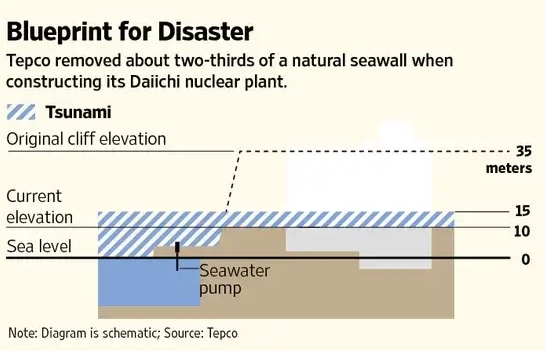
Key factors such as the power plants’ height to sea level played a huge role in the disaster. At only 10 meters above sea level, the 14-meter Tsunami waves rolled over the defenses easily, however, in 1967 when it was first being built, the original plan would have seen the plant sit 30 meters above sea level. The reduction in height was a result of TEPCO leveling the sea coast in order to make it easier to bring in the equipment to build the plant.
Over the years the concern over earthquakes was raised several times, in particular after the backup generator of Reactor 1 was flooded in 1991, and tsunamis of 2000 and 2008.
We can’t definitively say for certain that the disaster will have been averted but had concerns been taken more seriously, and stronger measures implemented, at the very least the damage caused by the tsunamis may have been reduced.
Who are the cast members of The Days?
None of the following cast members have been given named roles, however, we can confirm their involvement in the series.
Yakusho Koji has been cast in the main role. He has yet to star in a leading role for Netflix but is most famous for his work on the Japanese NHK drama Tokugawa Ieyasu in the role of Oda Nobunaga.
Takenouchi Yutaka has been cast in a supporting role. He has yet to star in a Netflix Original, but some may recognize him for his role as Akasaka Hideki in Shin Godzilla.
Kohinata Fumiyo has also been confirmed for a supporting role, but like his fellow co-star has yet to star in a Netflix original movie or drama.
Kobayashi Kaoru, Musaka Naomasa, and Satoi Kenta have also been cast in supporting roles.
The strong Kuroshio Current is expected to lead the water to the West Coast of the US and then continue to spread throughout the northern parts of the Pacific Ocean, according to the simulation
Feb.17,2023
A simulation by South Korean government research institutes has found that if Japan dumps contaminated water from the Fukushima nuclear reactor into the ocean, a radioactive isotope of hydrogen in the contaminated water will begin entering the waters off Jeju Island within four or five years. The same analysis also found that a low concentration of radiation (less than one-millionth of the current background concentration in Korean waters) could temporarily be brought into the area by ocean currents two years after the contaminated water is released.
On Thursday, a joint research team including researchers from the Korea Institute of Ocean Science and Technology (KIOST) and the Korea Atomic Energy Research Institute (KAERI) presented their results of a simulation studying the effects of the diffusion of tritium, a radioactive isotope of hydrogen present in the Fukushima wastewater.
The results of the simulation were presented at an academic conference held by the Korean Society of Hazard Mitigation in Jeju.
The reason for concern is that tritium can decay to helium-3 and affect DNA, which could result in adverse effects on the human body including cell death or deterioration in reproductive function.
This is the first time that the results of a joint simulation conducted by national research institutes on the domestic impact of the release of Fukushima wastewater have been released.
Ever since Japan announced its decision in April 2021 to release the contaminated water, both the previous Moon Jae-in government and the current Yoon Suk-yeol administration have recognized the need to conduct studies, saying that domestic institutes would further advance analysis models and then conduct related studies.
The results of this study were obtained using an analysis model that had been upgraded by late last year.
According to the research results, the tritium present in the wastewater poised to be discharged off the coast of Fukushima, which is located in eastern Japan, would move in an eastward direction due to the strong Kuroshio Current. This would lead the water to the West Coast of the US and then continue to spread throughout the northern parts of the Pacific Ocean.
On the other hand, the inflow of this water to the Korean Peninsula would be slower given the weak ocean currents.
A diagram showing the simulated tritium concentrations in the ocean two years following release. (Source: KAERI-KIOST simulation)
The analysis predicts that around four to five years will pass after the release of the wastewater before tritium begins flowing in Jeju waters.
Even though the Korean Peninsula is situated geographically close to Japan, it is expected to be affected by the wastewater at a later time than, for example, the Pacific Coast of the US, because the seawater flows eastward from Japan due to the influence of ocean currents.
Since the Korean Peninsula is located to the west of Japan, the water will first spread to the Pacific Ocean and then begin making its way to Korean waters.
The research team predicted that the concentration of tritium flowing into Jeju waters would reach around 0.001 becquerels (Bq) per cubic meter of water 10 years after the release of the Fukushima wastewater. A becquerel is a unit of radioactivity.
This concentration is one-100,000th of the average tritium concentration (background concentration) of the 172 Bq/m3 in domestic seawater analyzed by the Korea Institute of Nuclear Safety.
“This concentration is a concentration [level] that is difficult to detect with an analysis device,” the research team explained.
However, the study also found that the timing of wastewater inflow into Korean waters could change every year depending on specific characteristics of the ocean currents.
In fact, the joint simulation showed a temporary inflow of wastewater into Korean waters due to the influence of sea currents just two years after its release, albeit at a low concentration of 0.0001 Bq/m3.
“Ocean currents do not flow steadily, but change from season to season,” says Kim Kyeong-ok, a senior researcher at KIOST who helped carry out this simulation.
“The reason for the temporary influx of tritium two years after the [wastewater] release is because the ocean current is strong at this time,” Kim explained.
The simulation results from Korean researchers are not very different from what previous studies conducted in China concluded.
In 2021, a simulation conducted by an international research team led by researchers from the First Institute of Oceanography of China’s Ministry of Natural Resources found that tritium reached South Korean waters at a concentration of about 0.001 Bq/m3 five years after the initial release of the wastewater.
Last year, another simulation conducted by a research team at Tsinghua University in China predicted that tritium would reach Korean waters after 10 years at a concentration level of one-hundredth the levels present in the Pacific Ocean east of Japan.
“Tritium released off the coast of Fukushima was found to spread throughout the entire northern part of the Pacific Ocean 10 years later. These are similar results to China’s simulation study on the spread of the wastewater,” the KOIST and KAERI joint research team said.
This simulation was based on the assumption that Japan would release 22 trillion Bq of tritium annually for 10 years from next month into the ocean located about 1 kilometer from the Fukushima nuclear power plant.
The figure of 22 trillion Bq is the maximum amount Japan plans to release annually.
However, this simulation was only focused on the diffusion of tritium, meaning that the spread of other radioactive nuclides throughout the food chain or the effects of their accumulation in water was not taken into consideration.
Therefore, this analysis does not represent the full environmental impact that the discharge of the wastewater would actually have. In reality, besides tritium, the wastewater Japan plans to release into the ocean contains many more radioactive materials as well.
A diagram showing the simulated tritium concentrations in the ocean two years following release. (Source: KAERI-KIOST simulation)
While Japan’s Tokyo Electric Power Company (TEPCO) announced plans to begin the release of the wastewater this spring, this schedule could be delayed if reviews related to wastewater monitoring plans currently underway by the Japan Atomic Energy Commission and the International Atomic Energy Agency are prolonged.
Regarding the results of this simulation, both environmental groups and opposition parties in Korea remain unconvinced, arguing that it is too hasty to conclude that the impact on Korea from the Fukushima wastewater will be negligible based solely on this simulation.
The reasoning behind this stance is the argument that the Japanese data used to conduct this study is unreliable and that the concentration levels of other radioactive materials were not considered.
“Many experts, including the US National Association of Marine Laboratories, which is affiliated with more than 100 marine research institutes, don’t trust the Japanese government’s data and plans based on the lack of important data regarding the amount of radionuclides in each tank where contaminated water is stored and the lack of efficiency of the ALPS (Advanced Liquid Processing System),” the Korea Federation for Environmental Movements said in a statement.
“The safety of discharging the wastewater into the ocean should not be evaluated solely by [measuring] the concentration levels of radioactive materials in seawater,” KFEM added.
In addition, the Democratic Party’s response team aimed at stopping the discharge of the Fukushima wastewater also spoke out after the simulation results were published, saying, “The priority should be verifying Japan’s false data.”
“It is difficult to expect reliability because these results are based on Japan’s false data and claims,” the team said in a statement.
“What we need to do now is to request verifiable and transparent data regarding the Fukushima wastewater from the Japanese government and to prepare for international legal responses, such as provisional measures, to stop the release of the Fukushima wastewater,” the team argued.
A new study estimated that the density of tritium in South Korean waters will rise by around one-100-thousandth the previous level in the event Japan releases contaminated water from its crippled Fukushima nuclear power plant for ten years starting from March.
Researchers at the Korea Institute of Ocean Science and Technology and Korea Atomic Energy Research Institute published the assessment on Thursday as part of the the results of their simulation of the planned discharge during a conference of the Korean Society of Hazard Mitigation in Jeju.
The researchers conducted the latest study on the premise that Japan will, for ten years, release the treated contaminated water from the failed Fukushima plant that includes up to 22 terabecquerel.
The researchers assessed that the concentration of tritium, which is the radioactive isotope of hydrogen, in South Korean waters will reach around zero-point-001 becquerel per cubic meter in ten years, or one-100-thousandth of the average of 172 becquerels per cubic meter of tritium currently found in Korean waters.
According to the researchers, the amount of tritium is difficult to detect with current analysis systems.









 nuclear-news