Fukushima evacuation order to be lifted in July

TOKYO — The Japanese government decided Friday to lift an evacuation order put in place after the March 2011 disaster at the Fukushima Daiichi nuclear power plant.
The order covering part of the nearby city of Minamisoma will now expire July 12, allowing over 10,000 people to return to their homes. The central government, the city and Fukushima Prefecture all approved the measure, the scale of which would be one of the largest of its kind in Japan.
“We have met our objectives concerning decontamination and critical infrastructure construction, fulfilling the conditions needed to cancel the order,” said Yosuke Takagi, who heads the government’s on-site nuclear disaster response headquarters.
“After considering resident arguments for and against the cancellation, we have decided that lifting the restrictions is necessary given that there are people who wish to quickly move forward on the road to recovery,” said Minamisoma Mayor Katsunobu Sakurai.
The Silencing of Japan’s Free Press
Under the heavy hand of Prime Minister Shinzo Abe, Japan’s media is being forced to toe the government line. Or else.

TOKYO — As the leaders of the G-7 liberal democracies convened in the Japanese shrine town of Ise-Shima this week, host Prime Minister Shinzo Abe used the event to showcase his nation as a regional beacon of democratic values and a counterweight to authoritarian China. However, recent events have raised doubts about his commitment to at least one of those values — freedom of the press.
There have been alarming signs of deteriorating media freedoms in Japan. In March, three of the country’s most outspoken television anchors were removed almost simultaneously by three different networks. While the networks were acting on their own, the dismissals were widely seen as orchestrated by the Abe government: The three were some of the last high-profile media critics of its agenda, which includes restarting Japan’s nuclear power industry and rolling back its postwar pacifism. The sacked anchors joined a growing list of critical media voices that have been muted since Abe took office in December 2012. And their ouster came just weeks after the country’s communications minister, Sanae Takaichi, declared in Japan’s parliament, the Diet, that the government had the legal power to shut down TV broadcasters that it deemed to be politically biased. That announcement capped a difficult year-and-a-half for independent media that saw the largest liberal newspaper, the Asahi Shimbun, subdued and other critical commentators removed from the airwaves.
The taming of Japan’s media watchdogs has attracted growing attention from overseas. On April 19, David Kaye, the U.N. special rapporteur on freedom of expression, wrapped up a weeklong fact-finding mission to Japan by expressing “deep and genuine concern” about declining media independence in Asia’s richest democracy. The following day, the Paris-based media advocacy group Reporters Without Borders lowered Japan’s place in its annual ranking of world press freedom to 72nd out of 180 nations, between Tanzania and Lesotho — down from 61st the previous year. “The Abe administration’s threats to media independence, the turnover in media personnel in recent months and the increase in self-censorship within leading media outlets are endangering the underpinnings of democracy in Japan,” the group said.
According to one Japanese news source, the Abe government’s efforts to suppress critics may have taken a more ominous turn. In its June edition, Facta, a monthly business magazine noted for its scoops, reported that the administration had used Japan’s spy agency, the Cabinet Intelligence and Research Office, to keep tabs on a Japanese lawyer who helped Kaye during his visit. (On her blog, the lawyer, Kazuko Ito, proclaimed she would never yield even if the government monitored her.) The allegations of surveillance conjured the same heavy-handed tactics that Reporters Without Borders and other international media watchdogs have warned might follow Japan’s passage in late 2013 of a new state secrecy law. They say the vagueness of the law, and the draconian prison terms of up to 10 years for revealing secrets, will put a damper on journalists, as well as the whistleblowers within government who may try to help them.
Japan’s mainstream media have never been noted for hard-hitting, independent coverage, instead emphasizing cozy relations with power and a brand of access journalism that can seem extreme even by the standards of the Washington press corps. The Japanese press’s symbiotic relationship with the government is institutionalized in the so-called press clubs, monopolistic arrangements that give reporters from the big national newspapers and broadcasters privileged access to officials, whose perspectives they end up sharing.
But press watchers now warn that Japan is losing even that limited press independence. Consider the case of the Asahi Shimbun, the world’s second-largest newspaper with a daily circulation of 6.8 million. The Asahi, the intellectual flagship of Japan’s political left, had been endeavoring to beef up its investigative coverage following the 2011 Fukushima nuclear disaster, when it and other Japanese mainstream media lost public trust for dutifully repeating the official line that all were safe — even as reactor buildings exploded. What it lacked in investigative prowess, the liberal Asahi had tried to make up for in editorial spunk, opposing the revisionist right’s efforts to whitewash sordid aspects of Japan’s World War II-era history like the “comfort women” forced to work in military brothels.
But in August 2014, the Asahi pulled back from both its comfort women coverage and its investigations into Fukushima following harsh right-wing attacks, led by Abe himself, on missteps in some of its articles. On Oct. 3, 2014, Abe attacked the Asahi for damaging Japan’s reputation after the newspaper belatedly admitted that more than a dozen stories published a quarter-century ago about comfort women had been based on the sourcing of a discredited Japanese army veteran. “It is a fact that its misreporting has caused numerous people to feel hurt, sorrow, suffering, and outrage,” Abe told the lower house budget committee. “It has caused great damage to Japan’s image.”
Japanese government officials and other journalists have pushed back against the criticism of Japan’s press freedoms, calling the pessimistic assessments unfairly harsh. In an April 27 article on Yahoo Japan, journalist Shoko Egawa said “it didn’t make sense” for Reporters Without Borders to rank Japan below places like Hong Kong and South Korea, where there are much more real pressures on journalists. “While it is okay to take as a reference the evaluation of a foreign NGO, there is no need to get all worked up about the low ranking,” she wrote.
There are also few in Japan who believe Takaichi would ever actually try to close down broadcasters. Takaichi raised alarms on Feb. 8, when she told the Diet that the 1950 Broadcast Law, which regulates the nation’s airwaves, allowed the government to shut down broadcasters that fail to remain “politically neutral” by highlighting “only one aspect of a polarizing political issue.” However, when questioned by legislators a day later, she seemed to back down a bit. “I don’t think I would resort to such measures myself,” she said, “but there is no guarantee that future [communications] ministers won’t.”
Japanese and foreign media observers agree that the pressures visibly placed on journalists in Japan can seem quite tepid by international standards. After all, there have been no arrests of journalists or forced closures of media outlets. Nor has the new secrecy law been used to pursue journalists, as the George W. Bush and Obama administrations have done by subpoenaing investigative reporter James Risen of the New York Times in an attempt to force him to reveal his sources of classified information.
What has been worrying, however, is the willingness of major Japanese media to silence themselves in response to a level of behind-the-scenes chiding by Abe administration officials that most U.S. journalists would probably just laugh off. A dramatic example of this was exposed in March 2015, when one of Japan’s biggest networks, TV Asahi, removed Shigeaki Koga, an ex-Trade Ministry official turned sharp-tongued TV commentator, from its Hodo Station evening news program.
Koga drew the administration’s ire when he protested its ineffective handling of a hostage crisis in Syria on air by holding up a placard in January 2015 that read “I’m not Abe.” Before the Abe era, such antics would not have raised eyebrows on Hodo Station, which was known for its feisty commentary. However, the government’s top media handler, Chief Cabinet Secretary Yoshihide Suga, told reporters at a background briefing how unhappy he was with the “completely mistaken” comments of an unnamed commentator at an unspecified network, according to an internal memo of the conversation recorded by a TV Asahi reporter who was present.
That internal memo was passed back to network executives. Koga says this was enough to convince TV Asahi to remove both himself and a highly regarded producer on the show, Fumie Matsubara. Their departure was followed a year later by TV Asahi’s decision in March to remove the host of Hodo Station, Ichiro Furutachi, who was one of the three anchors ousted this spring.
Other journalists relay similar stories, saying that TV executives quickly take the hint to avoid an actual confrontation with the administration. “It’s not that the media have cowered in the face of some obvious pressure, but this all takes place out of sight, until you suddenly notice that they have retreated,” Shuntaro Torigoe, a veteran TV newscaster, said at a March 2016 press conference at the Foreign Correspondents’ Club of Japan, where he and four other top TV journalists warned of growing efforts to intimidate the press. “The administration’s will is passed along to the media executives, becoming part of the atmosphere inside the newsroom that leads to self-censorship and restrained coverage.”
According to Torigoe, the result has been a form of self-censorship that Japanese journalists call sontaku, a term with no exact English translation but that refers to a Japanese social strategy of trying to please others, usually superiors, by preemptively acting in accordance with their perceived whims. Journalists say that while conformity has always been prevalent within Japan’s homogeneous society, the feeling has grown more intense recently as anxieties about the rise of neighboring China have increased the pressure to toe the line.
This conformity has been enforced by the verbal attacks and intimidation from the so-called Net Right, a loose-knit community of shrilly nationalistic netizens whom some members of the Abe government have openly embraced. “Recently, I feel a growing pressure for conformity,” Hiroko Kuniya, another of the three TV anchors ousted in late March, wrote in the May edition of the magazine Sekai, a highly regarded liberal opinion magazine. “This is a pressure that says you must conform to the majority without resisting, that such conformity is normal and expected. It seems even the media have become a party in exerting this pressure.”
Besides the Sekai article, Kuniya has said nothing else about her removal after 23 years at the helm of Close-Up Gendai, the prime-time showcase for investigative journalism on national broadcaster NHK. (She has also declined interview requests.) However, other NHK reporters say they have come under blatant pressure to tamp down criticism of the administration from the broadcaster’s president, Katsuto Momii, a conservative businessman whom Abe installed at the helm in December 2013. Momii has made no secret of his desire for NHK to toe the government line. After April’s deadly earthquake in the southern city of Kumamoto, when there were concerns about damage at a nearby nuclear plant, Momii told his journalists that their coverage must be “based on official government announcements,” not independent reporting.
At private broadcasters, where the government cannot just appoint executives, the administration has found other means of pressure, say journalists and media scholars. They say it has done this by skillfully exploiting structural weaknesses in the media. One of the biggest weaknesses is the extreme emphasis on access to inside information via the press clubs. This results in an intense competition for scoops, in which news agencies vie to be the first to report on the future intentions of government officials or agencies. Reporters’ careers can be made or broken based on their ability to curry enough favor with officials to be tipped off ahead of rival journalists.
Toshio Hara, a former reporter with the Japanese wire service Kyodo News who now writes on media issues, says the Abe administration has manipulated this exaggerated version of access journalism by limiting the prime minister’s press conferences and group interactions with the press gaggle in favor of exclusive interviews. These are bestowed upon only cooperative reporters, who are also favored with advanced leaks about future actions by the administration. News organizations deemed critical are excluded and cut off from the flow of scoops given to other journalists. This preferential access can also take the form of private dinners with the prime minister himself: The Tokyo Shimbun newspaper reported that Abe dined with top political journalists and media executives more than 40 times during his first two years in office alone.
Hara says the administration has made an unprecedented use of access to reward friendly journalists and punish critics. He notes that this has been part of an aggressive push to control media messages — a lesson of Abe’s first stint as prime minister in 2007, when he resigned after only 12 months following intense criticism from the press regarding scandals in his administration. “The power relationship between the prime minister’s office press corps and the prime minister has been completely changed,” Hara wrote in the 2015 book How Ready Is Journalism for the Abe Government? “With a few exceptions, the media have become supplicants.”
Selective granting of access has also allowed the administration to pursue a divide-and-conquer strategy, in which media organizations try to stay in Abe’s good graces by turning on each other. This is what happened to the Asahi, which lost the will to fight after finding that every other major media outlet had ganged up against it, say journalists in the newspaper. “We found ourselves standing all alone,” said Ryuichi Kitano, a senior Asahi reporter. “The administration didn’t even have to criticize us because the media did it for them.”
Shigetada Kishii, another of the three anchors removed this year, says media infighting prevented them from presenting a united front against the threat by Takaichi. The outspokenly liberal Kishii left the TBS network’s News 23, a highly regarded nightly news program, after crossing the Abe government by criticizing the 2015 passage of new laws to expand the role of Japan’s military. “There is something structural in the Japanese media, when it comes to why they couldn’t object as a group” to Takaichi’s comments, said Kishii, who also spoke at the Foreign Correspondents’ Club press conference in March. “Rivalry between newspapers and TV stations prevents them from even thinking about coordinating.”
Lack of solidarity among news companies was also one of the factors cited by Kaye, the U.N. special rapporteur, to explain the Japanese media’s apparent inability to resist political pressure. He linked this to a broader lack of shared professional identity among Japanese journalists, who spend entire careers at the same newspaper or broadcaster, unlike their more peripatetic Western counterparts.
This made them more loyal to company than profession, preventing them from taking a united stand, or forming some sort of effective union or lobby group to defend their interests. Kaye also faulted Tokyo for failing to create a political environment that tolerates the expression of diverse opinions, including dissenting ones. This was all too apparent in his own visit to Japan, which ran into problems created by an administration that appears overly thin-skinned to criticism regardless of its high approval ratings.
Originally scheduled for December, Kaye’s trip to Japan was abruptly canceled just weeks before when Tokyo said it was “unable to arrange meetings.” Even after he managed to make the visit in April, Kaye received a cold shoulder from the Abe government. Despite repeated requests, Takaichi refused to meet him, as did other top officials and media executives — including NHK’s Momii. The highest-ranking member of the administration who agreed to talk with him was a vice minister of communications, who gave him just 15 minutes. Kaye said the vice minister just repeated what Takaichi had said — without elaborating or even trying to explain her comments.
Political experts say that such undiplomatic behavior only further damages Japan’s credibility as a purveyor of democratic values. “Japan’s slide down the global rankings for press freedom and its skewering by the U.N. rapporteur on his recent visit are a black eye for Abe and the nation,” said Jeff Kingston, the director of Asian studies at Temple University in Tokyo. “They undermine Japan’s democratic identity and its constitutional freedoms.” Kingston and others say that Japan needs a vigorous democracy, including robust media freedoms, to compete for influence with a larger and richer China. But with the press either suppressed or in submission, one wonders whether that important warning is even reaching Abe — or likely to appear on the nightly news anytime soon.
http://foreignpolicy.com/2016/05/27/the-silencing-of-japans-free-press-shinzo-abe-media/
‘I Do Not Want Any Children to Develop Cancer Like Me’, a Fukushima Resident Says
Independent filmmaker Ian Thomas Ash has uploaded to YouTube a four-part interview with a young woman from Fukushima Prefecture who has been diagnosed with thyroid cancer. Now 20, the interviewee was 15 years old when, following the March 2011 earthquake and tsunami, the Fukushima Daiichi nuclear power complex lost power and the ability to cool fuel in the reactors. The lack of cooling caused a series of hydrogen explosions that severely damaged four of the six reactors at the Daiichi complex.
As a result of the explosions and subsequent fires, nuclear contamination was spread over a large part of Japan’s northeast. The young woman interviewed in the documentary, who wishes to remain unidentified, is one of 166 Fukushima residents who were 18 or younger at the time of the nuclear disaster who have been diagnosed with or suspected of having thyroid cancer (as of February 2016).
While some attribute the rise in cases of thyroid cancer to more rigorous screening, Ash notes that 74.5% of young people aged 18-21 as of April 1, 2014 who were living in Fukushima at the time of the nuclear accident have not yet taken part in the official thyroid ultrasound examination.
“This young woman’s reason for speaking out is to motivate the families of children who have not yet received the thyroid ultrasound examination to have their children tested,” Ash says in his introduction to the interview.
The interview has been uploaded to YouTube in four parts: part 1, part 2, part 3, part 4
The woman says according to her doctors, her cancer was caught at the right moment. Had she waited any longer, they told her, the cancer could have spread. As a result of the illness, she had part of her thyroid removed.
She will begin working in a nursery school this year, and is pained to think of any other children going through what she has endured:
I would hate if any children I taught developed cancer. To tell the truth, I do not want any children to develop cancer like me.
Ash, based in Tokyo, makes short documentaries about life in Japan after the March 11, 2011 earthquake, tsunami and nuclear disaster.

In Fukushima, even robots can’t survive nuclear mayhem
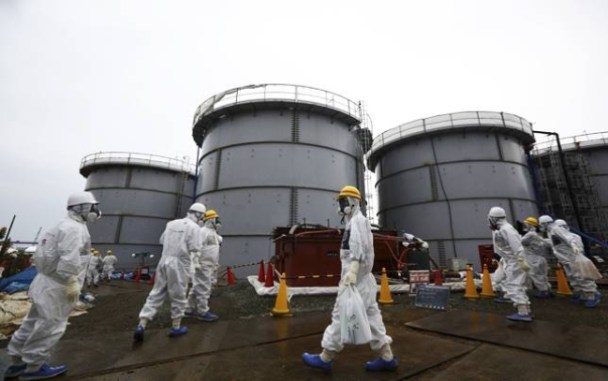
The company that runs the Fukushima plant sent 5 robots to ground zero and not a single one survived. Incredibly high radiations in the block causes heat levels to rise and this melts the robots’ wiring.
A tsunami, triggered by an earthquake on March 11, 2011, initiated the Fukushima Daaiichi nuclear disaster in Japan which led to the evacuation of over 200,000 people.
Even after 5 years, there is still a tremendous amount of cleanup work left at ground zero. The Tokyo Electric Power Co. (TEPCO) which runs the plant has managed to clean up one building but is still struggling to do the same with other buildings which has burnt fuel rods. These fuel rods are nothing but chunks of radioactive waste weighing hundreds of metric tonnes.
It took 2 years for TEPCO to design the robots for the job of extracting melted fuel rods and according to TEPCO’s head of decommissioning, Naohiro Masuda, the heat levels due to radiation are so extreme that it simply melts the robot’s wiring.
Japan had been trying out various methods to stop the radiations from damaging the area further. One such method was building “ice walls” to keep groundwater from reaching the reactors. A refrigerant chemical that forms an ice wall to block Fukushima’s fallout water and stop the ground water intrusion into the plant.

A million metric tonnes of irradiated water is being stored on the site and is pumped in to cool down the reactors. Disposing the radioactive water is still a challenge for TEPCO as storage tanks have already leaked some of the material into the ocean.
After TEPCO’s robots not surviving the heat levels of the radiations, it’s a place for no man or machine. Toshiba has developed new robots for picking up the fuel rods and to clean up the scene which previous robots failed to.
The entire cleanup process is expected to take around 30 to 40 years, but TEPCO is being blamed for its lukewarm response to the incident and is facing flak from the Japanese government and the people alike.
Let Them Drown The Violence of Othering in a Warming World
An impressive joining-the-dots article by Naomi Klein, connecting Palestine, climate change, fracking, the refugee crisis and “othering”. Worth reading all of this long essay, but here are some highlights for those without the time: We often hear climate change blamed on ‘human nature’, on the inherent greed and short-sightedness of our species. Or we are told we have altered the earth so much and on such a planetary scale that we are now living in the Anthropocene – the age of humans.
These ways of explaining our current circumstances have a very specific, if unspoken meaning: that humans are a single type, that human nature can be essentialised to the traits that created this crisis. In this way, the systems that certain humans created, and other humans powerfully resisted, are completely let off the hook. Capitalism, colonialism, patriarchy – those sorts of system. Diagnoses like this erase the very existence of human systems that organised life differently: systems that insist that humans must think seven generations in the future; must be not only good citizens but also good ancestors; must take no more than they need and give back to the land in order to protect and augment the cycles of regeneration.
These systems existed and still exist, but they are erased every time we say that the climate crisis is a crisis of ‘human nature’ and that we are living in the ‘age of man’. … We are running out of cheap and easy ways to get at fossil fuels, which is why we have seen the rise of fracking and tar sands extraction in the first place. This, in turn, is starting to challenge the original Faustian pact of the industrial age: that the heaviest risks would be outsourced, offloaded, onto the other – the periphery abroad and inside our own nations. It’s something that is becoming less and less possible. Fracking is threatening some of the most picturesque parts of Britain as the sacrifice zone expands, swallowing up all kinds of places that imagined themselves safe. So this isn’t just about gasping at how ugly the tar sands are. It’s about acknowledging that there is no clean, safe, non-toxic way to run an economy powered by fossil fuels. There never was. … The trouble is structural. Fossil fuels, unlike renewable forms of energy such as wind and solar, are not widely distributed but highly concentrated in very specific locations, and those locations have a bad habit of being in other people’s countries. Particularly that most potent and precious of fossil fuels: oil.
This is why the project of Orientalism, of othering Arab and Muslim people, has been the silent partner of our oil dependence from the start – and inextricable, therefore, from the blowback that is climate change. If nations and peoples are regarded as other – exotic, primitive, bloodthirsty, as [Edward] Said documented in the 1970s – it is far easier to wage wars and stage coups when they get the crazy idea that they should control their own oil in their own interests. In 1953 it was the British-US collaboration to overthrow the democratically elected government of Muhammad Mossadegh after he nationalised the Anglo-Iranian Oil Company (now BP). In 2003, exactly fifty years later, it was another UK-US co-production – the illegal invasion and occupation of Iraq. The reverberations from each intervention continue to jolt our world, as do the reverberations from the successful burning of all that oil. The Middle East is now squeezed in the pincer of violence caused by fossil fuels, on the one hand, and the impact of burning those fossil fuels on the other.
In his latest book, The Conflict Shoreline, the Israeli architect Eyal Weizman has a groundbreaking take on how these forces are intersecting. The main way we’ve understood the border of the desert in the Middle East and North Africa, he explains, is the so-called ‘aridity line’, areas where there is on average 200 millimetres of rainfall a year, which has been considered the minimum for growing cereal crops on a large scale without irrigation. These meteorological boundaries aren’t fixed: they have fluctuated for various reasons, whether it was Israel’s attempts to ‘green the desert’ pushing them in one direction or cyclical drought expanding the desert in the other. And now, with climate change, intensifying drought can have all kinds of impacts along this line. Weizman points out that the Syrian border city of Daraa falls directly on the aridity line. Daraa is where Syria’s deepest drought on record brought huge numbers of displaced farmers in the years leading up to the outbreak of Syria’s civil war, and it’s where the Syrian uprising broke out in 2011. Drought wasn’t the only factor in bringing tensions to a head. But the fact that 1.5 million people were internally displaced in Syria as a result of the drought clearly played a role. The connection between water and heat stress and conflict is a recurring, intensifying pattern all along the aridity line: all along it you see places marked by drought, water scarcity, scorching temperatures and military conflict – from Libya to Palestine, to some of the bloodiest battlefields in Afghanistan and Pakistan. But Weizman also discovered what he calls an ‘astounding coincidence’. When you map the targets of Western drone strikes onto the region, you see that ‘many of these attacks – from South Waziristan through northern Yemen, Somalia, Mali, Iraq, Gaza and Libya – are directly on or close to the 200 mm aridity line.’ The red dots on the map above represent some of the areas where strikes have been concentrated. To me this is the most striking attempt yet to visualise the brutal landscape of the climate crisis.
All this was foreshadowed a decade ago in a US military report. ‘The Middle East,’ it observed, ‘has always been associated with two natural resources, oil (because of its abundance) and water (because of its scarcity).’ True enough. And now certain patterns have become quite clear: first, Western fighter jets followed that abundance of oil; now, Western drones are closely shadowing the lack of water, as drought exacerbates conflict. Just as bombs follow oil, and drones follow drought, so boats follow both: boats filled with refugees fleeing homes on the aridity line ravaged by war and drought. And the same capacity for dehumanising the other that justified the bombs and drones is now being trained on these migrants, casting their need for security as a threat to ours, their desperate flight as some sort of invading army. Tactics refined on the West Bank and in other occupation zones are now making their way to North America and Europe. … A culture that places so little value on black and brown lives that it is willing to let human beings disappear beneath the waves, or set themselves on fire in detention centres, will also be willing to let the countries where black and brown people live disappear beneath the waves, or desiccate in the arid heat. When that happens, theories of human hierarchy – that we must take care of our own first – will be marshalled to rationalise these monstrous decisions. We are making this rationalisation already, if only implicitly. …
The most important lesson to take from all this is that there is no way to confront the climate crisis as a technocratic problem, in isolation. It must be seen in the context of austerity and privatisation, of colonialism and militarism, and of the various systems of othering needed to sustain them all. … Overcoming these disconnections – strengthening the threads tying together our various issues and movements – is, I would argue, the most pressing task of anyone concerned with social and economic justice. It is the only way to build a counterpower sufficiently robust to win against the forces protecting the highly profitable but increasingly untenable status quo.

London Review of Books Vol. 38 No. 11 · 2 June 2016 pages 11-14 | 5422 words
Let Them Drown : The Violence of Othering in a Warming World By Naomi Klein
Edward Said was no tree-hugger. Descended from traders, artisans and professionals, he once described himself as ‘an extreme case of an urban Palestinian whose relationship to the land is basically metaphorical’.* In After the Last Sky, his meditation on the photographs of Jean Mohr, he explored the most intimate aspects of Palestinian lives, from hospitality to sports to home décor. The tiniest detail – the placing of a picture frame, the defiant posture of a child – provoked a torrent of insight from Said. Yet when confronted with images of Palestinian farmers – tending their flocks, working the fields – the specificity suddenly evaporated. Which crops were being cultivated? What was the state of the soil? The availability of water? Nothing was forthcoming. ‘I continue to perceive a population of poor, suffering, occasionally colourful peasants, unchanging and collective,’ Said confessed. This perception was ‘mythic’, he acknowledged – yet it remained.
If farming was another world for Said, those who devoted their lives to matters like air and water pollution appear to have inhabited another planet. Speaking to his colleague Rob Nixon, he once described environmentalism as ‘the indulgence of spoiled tree-huggers who lack a proper cause’. But the environmental challenges of the Middle East are impossible to ignore for anyone immersed, as Said was, in its geopolitics. This is a region intensely vulnerable to heat and water stress, to sea-level rise and to desertification. A recent paper in Nature Climate Change predicts that, unless we radically lower emissions and lower them fast, large parts of the Middle East will likely ‘experience temperature levels that are intolerable to humans’ by the end of this century. And that’s about as blunt as climate scientists get. Yet environmental issues in the region still tend to be treated as afterthoughts, or luxury causes. The reason is not ignorance, or indifference. It’s just bandwidth. Climate change is a grave threat but the most frightening impacts are in the medium term. And in the short term, there are always far more pressing threats to contend with: military occupation, air assault, systemic discrimination, embargo. Nothing can compete with that – nor should it attempt to try.
There are other reasons why environmentalism might have looked like a bourgeois playground to Said. The Israeli state has long coated its nation-building project in a green veneer – it was a key part of the Zionist ‘back to the land’ pioneer ethos. And in this context trees, specifically, have been among the most potent weapons of land grabbing and occupation. It’s not only the countless olive and pistachio trees that have been uprooted to make way for settlements and Israeli-only roads. It’s also the sprawling pine and eucalyptus forests that have been planted over those orchards, as well as over Palestinian villages, most notoriously by the Jewish National Fund, which, under its slogan ‘Turning the Desert Green’, boasts of having planted 250 million trees in Israel since 1901, many of them non-native to the region. In publicity materials, the JNF bills itself as just another green NGO, concerned with forest and water management, parks and recreation. It also happens to be the largest private landowner in the state of Israel, and despite a number of complicated legal challenges, it still refuses to lease or sell land to non-Jews.
I grew up in a Jewish community where every occasion – births and deaths, Mother’s Day, bar mitzvahs – was marked with the proud purchase of a JNF tree in the person’s honour. It wasn’t until adulthood that I began to understand that those feel-good faraway conifers, certificates for which papered the walls of my Montreal elementary school, were not benign – not just something to plant and later hug. In fact these trees are among the most glaring symbols of Israel’s system of official discrimination – the one that must be dismantled if peaceful co-existence is to become possible.
The JNF is an extreme and recent example of what some call ‘green colonialism’. But the phenomenon is hardly new, nor is it unique to Israel. There is a long and painful history in the Americas of beautiful pieces of wilderness being turned into conservation parks – and then that designation being used to prevent Indigenous people from accessing their ancestral territories to hunt and fish, or simply to live. It has happened again and again. A contemporary version of this phenomenon is the carbon offset. Indigenous people from Brazil to Uganda are finding that some of the most aggressive land grabbing is being done by conservation organisations. A forest is suddenly rebranded a carbon offset and is put off-limits to its traditional inhabitants. As a result, the carbon offset market has created a whole new class of ‘green’ human rights abuses, with farmers and Indigenous people being physically attacked by park rangers or private security when they try to access these lands. Said’s comment about tree-huggers should be seen in this context.
And there is more. In the last year of Said’s life, Israel’s so-called ‘separation barrier’ was going up, seizing huge swathes of the West Bank, cutting Palestinian workers off from their jobs, farmers from their fields, patients from hospitals – and brutally dividing families. There was no shortage of reasons to oppose the wall on human rights grounds. Yet at the time, some of the loudest dissenting voices among Israeli Jews were not focused on any of that. Yehudit Naot, Israel’s then environment minister, was more worried about a report informing her that ‘The separation fence … is harmful to the landscape, the flora and fauna, the ecological corridors and the drainage of the creeks.’ ‘I certainly don’t want to stop or delay the building of the fence,’ she said, but ‘I am disturbed by the environmental damage involved.’ As the Palestinian activist Omar Barghouti later observed, Naot’s ‘ministry and the National Parks Protection Authority mounted diligent rescue efforts to save an affected reserve of irises by moving it to an alternative reserve. They’ve also created tiny passages [through the wall] for animals.’
Perhaps this puts the cynicism about the green movement in context. People do tend to get cynical when their lives are treated as less important than flowers and reptiles. And yet there is so much of Said’s intellectual legacy that both illuminates and clarifies the underlying causes of the global ecological crisis, so much that points to ways we might respond that are far more inclusive than current campaign models: ways that don’t ask suffering people to shelve their concerns about war, poverty and systemic racism and first ‘save the world’ – but instead demonstrate how all these crises are interconnected, and how the solutions could be too. In short, Said may have had no time for tree-huggers, but tree-huggers must urgently make time for Said – and for a great many other anti-imperialist, postcolonial thinkers – because without that knowledge, there is no way to understand how we ended up in this dangerous place, or to grasp the transformations required to get us out. So what follows are some thoughts – by no means complete – about what we can learn from reading Said in a warming world.*
He was and remains among our most achingly eloquent theorists of exile and homesickness – but Said’s homesickness, he always made clear, was for a home that had been so radically altered that it no longer really existed. His position was complex: he fiercely defended the right to return, but never claimed that home was fixed. What mattered was the principle of respect for all human rights equally and the need for restorative justice to inform our actions and policies. This perspective is deeply relevant in our time of eroding coastlines, of nations disappearing beneath rising seas, of the coral reefs that sustain entire cultures being bleached white, of a balmy Arctic. This is because the state of longing for a radically altered homeland – a home that may not even exist any longer – is something that is being rapidly, and tragically, globalised. In March, two major peer-reviewed studies warned that sea-level rise could happen significantly faster than previously believed. One of the authors of the first study was James Hansen – perhaps the most respected climate scientist in the world. He warned that, on our current emissions trajectory, we face the ‘loss of all coastal cities, most of the world’s large cities and all their history’ – and not in thousands of years from now but as soon as this century. If we don’t demand radical change we are headed for a whole world of people searching for a home that no longer exists.
Said helps us imagine what that might look like as well. He helped to popularise the Arabic word sumud (‘to stay put, to hold on’): that steadfast refusal to leave one’s land despite the most desperate eviction attempts and even when surrounded by continuous danger. It’s a word most associated with places like Hebron and Gaza, but it could be applied equally today to residents of coastal Louisiana who have raised their homes up on stilts so that they don’t have to evacuate, or to Pacific Islanders whose slogan is ‘We are not drowning. We are fighting.’ In countries like the Marshall Islands and Fiji and Tuvalu, they know that so much sea-level rise is inevitable that their countries likely have no future. But they refuse just to concern themselves with the logistics of relocation, and wouldn’t even if there were safer countries willing to open their borders – a very big if, since climate refugees aren’t currently recognised under international law. Instead they are actively resisting: blockading Australian coal ships with traditional outrigger canoes, disrupting international climate negotiations with their inconvenient presence, demanding far more aggressive climate action. If there is anything worth celebrating in the Paris Agreement signed in April – and sadly, there isn’t enough – it has come about because of this kind of principled action: climate sumud.
But this only scratches of the surface of what we can learn from reading Said in a warming world. He was, of course, a giant in the study of ‘othering’ – what is described in Orientalism as ‘disregarding, essentialising, denuding the humanity of another culture, people or geographical region’. And once the other has been firmly established, the ground is softened for any transgression: violent expulsion, land theft, occupation, invasion. Because the whole point of othering is that the other doesn’t have the same rights, the same humanity, as those making the distinction. What does this have to do with climate change? Perhaps everything.
We have dangerously warmed our world already, and our governments still refuse to take the actions necessary to halt the trend. There was a time when many had the right to claim ignorance. But for the past three decades, since the Intergovernmental Panel on Climate Change was created and climate negotiations began, this refusal to lower emissions has been accompanied with full awareness of the dangers. And this kind of recklessness would have been functionally impossible without institutional racism, even if only latent. It would have been impossible without Orientalism, without all the potent tools on offer that allow the powerful to discount the lives of the less powerful. These tools – of ranking the relative value of humans – are what allow the writing off of entire nations and ancient cultures. And they are what allowed for the digging up of all that carbon to begin with.*
Fossil fuels aren’t the sole driver of climate change – there is industrial agriculture, and deforestation – but they are the biggest. And the thing about fossil fuels is that they are so inherently dirty and toxic that they require sacrificial people and places: people whose lungs and bodies can be sacrificed to work in the coal mines, people whose lands and water can be sacrificed to open-pit mining and oil spills. As recently as the 1970s, scientists advising the US government openly referred to certain parts of the country being designated ‘national sacrifice areas’. Think of the mountains of Appalachia, blasted off for coal mining – because so-called ‘mountain top removal’ coal mining is cheaper than digging holes underground. There must be theories of othering to justify sacrificing an entire geography – theories about the people who lived there being so poor and backward that their lives and culture don’t deserve protection. After all, if you are a ‘hillbilly’, who cares about your hills? Turning all that coal into electricity required another layer of othering too: this time for the urban neighbourhoods next door to the power plants and refineries. In North America, these are overwhelmingly communities of colour, black and Latino, forced to carry the toxic burden of our collective addiction to fossil fuels, with markedly higher rates of respiratory illnesses and cancers. It was in fights against this kind of ‘environmental racism’ that the climate justice movement was born.
Fossil fuel sacrifice zones dot the globe. Take the Niger Delta, poisoned with an Exxon Valdez-worth of spilled oil every year, a process Ken Saro-Wiwa, before he was murdered by his government, called ‘ecological genocide’. The executions of community leaders, he said, were ‘all for Shell’. In my country, Canada, the decision to dig up the Alberta tar sands – a particularly heavy form of oil – has required the shredding of treaties with First Nations, treaties signed with the British Crown that guaranteed Indigenous peoples the right to continue to hunt, fish and live traditionally on their ancestral lands. It required it because these rights are meaningless when the land is desecrated, when the rivers are polluted and the moose and fish are riddled with tumours. And it gets worse: Fort McMurray – the town at the centre of the tar sands boom, where many of the workers live and where much of the money is spent – is currently in an infernal blaze. It’s that hot and that dry. And this has something to do with what is being mined there.
Even without such dramatic events, this kind of resource extraction is a form of violence, because it does so much damage to the land and water that it brings about the end of a way of life, a death of cultures that are inseparable from the land. Severing Indigenous people’s connection to their culture used to be state policy in Canada – imposed through the forcible removal of Indigenous children from their families to boarding schools where their language and cultural practices were banned, and where physical and sexual abuse were rampant. A recent truth and reconciliation report called it ‘cultural genocide’. The trauma associated with these layers of forced separation – from land, from culture, from family – is directly linked to the epidemic of despair ravaging so many First Nations communities today. On a single Saturday night in April, in the community of Attawapiskat – population 2000 – 11 people tried to take their own lives. Meanwhile, DeBeers runs a diamond mine on the community’s traditional territory; like all extractive projects, it had promised hope and opportunity. ‘Why don’t the people just leave?’, the politicians and pundits ask. But many do. And that departure is linked, in part, to the thousands of Indigenous women in Canada who have been murdered or gone missing, often in big cities. Press reports rarely make the connection between violence against women and violence against the land – often to extract fossil fuels – but it exists. Every new government comes to power promising a new era of respect for Indigenous rights. They don’t deliver, because Indigenous rights, as defined by the United Nations Declaration on the Rights of Indigenous People, include the right to refuse extractive projects – even when those projects fuel national economic growth. And that’s a problem because growth is our religion, our way of life. So even Canada’s hunky and charming new prime minister is bound and determined to build new tar sands pipelines, against the express wishes of Indigenous communities who don’t want to risk their water, or participate in the further destabilising of the climate.
Fossil fuels require sacrifice zones: they always have. And you can’t have a system built on sacrificial places and sacrificial people unless intellectual theories that justify their sacrifice exist and persist: from Manifest Destiny to Terra Nullius to Orientalism, from backward hillbillies to backward Indians. We often hear climate change blamed on ‘human nature’, on the inherent greed and short-sightedness of our species. Or we are told we have altered the earth so much and on such a planetary scale that we are now living in the Anthropocene – the age of humans. These ways of explaining our current circumstances have a very specific, if unspoken meaning: that humans are a single type, that human nature can be essentialised to the traits that created this crisis. In this way, the systems that certain humans created, and other humans powerfully resisted, are completely let off the hook. Capitalism, colonialism, patriarchy – those sorts of system. Diagnoses like this erase the very existence of human systems that organised life differently: systems that insist that humans must think seven generations in the future; must be not only good citizens but also good ancestors; must take no more than they need and give back to the land in order to protect and augment the cycles of regeneration. These systems existed and still exist, but they are erased every time we say that the climate crisis is a crisis of ‘human nature’ and that we are living in the ‘age of man’. And they come under very real attack when megaprojects are built, like the Gualcarque hydroelectric dams in Honduras, a project which, among other things, took the life of the land defender Berta Cáceres, who was assassinated in March.*
Some people insist that it doesn’t have to be this bad. We can clean up resource extraction, we don’t need to do it the way it’s been done in Honduras and the Niger Delta and the Alberta tar sands. Except that we are running out of cheap and easy ways to get at fossil fuels, which is why we have seen the rise of fracking and tar sands extraction in the first place. This, in turn, is starting to challenge the original Faustian pact of the industrial age: that the heaviest risks would be outsourced, offloaded, onto the other – the periphery abroad and inside our own nations. It’s something that is becoming less and less possible. Fracking is threatening some of the most picturesque parts of Britain as the sacrifice zone expands, swallowing up all kinds of places that imagined themselves safe. So this isn’t just about gasping at how ugly the tar sands are. It’s about acknowledging that there is no clean, safe, non-toxic way to run an economy powered by fossil fuels. There never was.
There is an avalanche of evidence that there is no peaceful way either. The trouble is structural. Fossil fuels, unlike renewable forms of energy such as wind and solar, are not widely distributed but highly concentrated in very specific locations, and those locations have a bad habit of being in other people’s countries. Particularly that most potent and precious of fossil fuels: oil. This is why the project of Orientalism, of othering Arab and Muslim people, has been the silent partner of our oil dependence from the start – and inextricable, therefore, from the blowback that is climate change. If nations and peoples are regarded as other – exotic, primitive, bloodthirsty, as Said documented in the 1970s – it is far easier to wage wars and stage coups when they get the crazy idea that they should control their own oil in their own interests. In 1953 it was the British-US collaboration to overthrow the democratically elected government of Muhammad Mossadegh after he nationalised the Anglo-Iranian Oil Company (now BP). In 2003, exactly fifty years later, it was another UK-US co-production – the illegal invasion and occupation of Iraq. The reverberations from each intervention continue to jolt our world, as do the reverberations from the successful burning of all that oil. The Middle East is now squeezed in the pincer of violence caused by fossil fuels, on the one hand, and the impact of burning those fossil fuels on the other.
In his latest book, The Conflict Shoreline, the Israeli architect Eyal Weizman has a groundbreaking take on how these forces are intersecting.† The main way we’ve understood the border of the desert in the Middle East and North Africa, he explains, is the so-called ‘aridity line’, areas where there is on average 200 millimetres of rainfall a year, which has been considered the minimum for growing cereal crops on a large scale without irrigation. These meteorological boundaries aren’t fixed: they have fluctuated for various reasons, whether it was Israel’s attempts to ‘green the desert’ pushing them in one direction or cyclical drought expanding the desert in the other. And now, with climate change, intensifying drought can have all kinds of impacts along this line. Weizman points out that the Syrian border city of Daraa falls directly on the aridity line. Daraa is where Syria’s deepest drought on record brought huge numbers of displaced farmers in the years leading up to the outbreak of Syria’s civil war, and it’s where the Syrian uprising broke out in 2011. Drought wasn’t the only factor in bringing tensions to a head. But the fact that 1.5 million people were internally displaced in Syria as a result of the drought clearly played a role. The connection between water and heat stress and conflict is a recurring, intensifying pattern all along the aridity line: all along it you see places marked by drought, water scarcity, scorching temperatures and military conflict – from Libya to Palestine, to some of the bloodiest battlefields in Afghanistan and Pakistan.
But Weizman also discovered what he calls an ‘astounding coincidence’. When you map the targets of Western drone strikes onto the region, you see that ‘many of these attacks – from South Waziristan through northern Yemen, Somalia, Mali, Iraq, Gaza and Libya – are directly on or close to the 200 mm aridity line.’ The red dots on the map above represent some of the areas where strikes have been concentrated. To me this is the most striking attempt yet to visualise the brutal landscape of the climate crisis. All this was foreshadowed a decade ago in a US military report. ‘The Middle East,’ it observed, ‘has always been associated with two natural resources, oil (because of its abundance) and water (because of its scarcity).’ True enough. And now certain patterns have become quite clear: first, Western fighter jets followed that abundance of oil; now, Western drones are closely shadowing the lack of water, as drought exacerbates conflict.
Just as bombs follow oil, and drones follow drought, so boats follow both: boats filled with refugees fleeing homes on the aridity line ravaged by war and drought. And the same capacity for dehumanising the other that justified the bombs and drones is now being trained on these migrants, casting their need for security as a threat to ours, their desperate flight as some sort of invading army. Tactics refined on the West Bank and in other occupation zones are now making their way to North America and Europe. In selling his wall on the border with Mexico, Donald Trump likes to say: ‘Ask Israel, the wall works.’
Camps are bulldozed in Calais, thousands of people drown in the Mediterranean, and the Australian government detains survivors of wars and despotic regimes in camps on the remote islands of Nauru and Manus. Conditions are so desperate on Nauru that last month an Iranian migrant died after setting himself on fire to try to draw the world’s attention. Another migrant – a 21-year-old woman from Somalia – set herself on fire a few days later. Malcolm Turnbull, the prime minister, warns that Australians ‘cannot be misty-eyed about this’ and ‘have to be very clear and determined in our national purpose’. It’s worth bearing Nauru in mind the next time a columnist in a Murdoch paper declares, as Katie Hopkins did last year, that it’s time for Britain ‘to get Australian. Bring on the gunships, force migrants back to their shores and burn the boats.’ In another bit of symbolism Nauru is one of the Pacific Islands very vulnerable to sea-level rise. Its residents, after seeing their homes turned into prisons for others, will very possibly have to migrate themselves. Tomorrow’s climate refugees have been recruited into service as today’s prison guards.
We need to understand that what is happening on Nauru, and what is happening to it, are expressions of the same logic. A culture that places so little value on black and brown lives that it is willing to let human beings disappear beneath the waves, or set themselves on fire in detention centres, will also be willing to let the countries where black and brown people live disappear beneath the waves, or desiccate in the arid heat. When that happens, theories of human hierarchy – that we must take care of our own first – will be marshalled to rationalise these monstrous decisions. We are making this rationalisation already, if only implicitly. Although climate change will ultimately be an existential threat to all of humanity, in the short term we know that it does discriminate, hitting the poor first and worst, whether they are abandoned on the rooftops of New Orleans during Hurricane Katrina or whether they are among the 36 million who according to the UN are facing hunger due to drought in Southern and East Africa.*
This is an emergency, a present emergency, not a future one, but we aren’t acting like it. The Paris Agreement commits to keeping warming below 2°c. It’s a target that is beyond reckless. When it was unveiled in Copenhagen in 2009, the African delegates called it ‘a death sentence’. The slogan of several low-lying island nations is ‘1.5 to stay alive’. At the last minute, a clause was added to the Paris Agreement that says countries will pursue ‘efforts to limit the temperature increase to 1.5°c’. Not only is this non-binding but it is a lie: we are making no such efforts. The governments that made this promise are now pushing for more fracking and more tar sands development – which are utterly incompatible with 2°c, let alone 1.5°c. This is happening because the wealthiest people in the wealthiest countries in the world think they are going to be OK, that someone else is going to eat the biggest risks, that even when climate change turns up on their doorstep, they will be taken care of.
When they’re wrong things get even uglier. We had a vivid glimpse into that future when the floodwaters rose in England last December and January, inundating 16,000 homes. These communities weren’t only dealing with the wettest December on record. They were also coping with the fact that the government has waged a relentless attack on the public agencies, and the local councils, that are on the front lines of flood defence. So understandably, there were many who wanted to change the subject away from that failure. Why, they asked, is Britain spending so much money on refugees and foreign aid when it should be taking care of its own? ‘Never mind foreign aid,’ we read in the Daily Mail. ‘What about national aid?’ ‘Why,’ a Telegraph editorial demanded, ‘should British taxpayers continue to pay for flood defences abroad when the money is needed here?’ I don’t know – maybe because Britain invented the coal-burning steam engine and has been burning fossil fuels on an industrial scale longer than any nation on Earth? But I digress. The point is that this could have been a moment to understand that we are all affected by climate change, and must take action together and in solidarity with one another. It wasn’t, because climate change isn’t just about things getting hotter and wetter: under our current economic and political model, it’s about things getting meaner and uglier.
The most important lesson to take from all this is that there is no way to confront the climate crisis as a technocratic problem, in isolation. It must be seen in the context of austerity and privatisation, of colonialism and militarism, and of the various systems of othering needed to sustain them all. The connections and intersections between them are glaring, and yet so often resistance to them is highly compartmentalised. The anti-austerity people rarely talk about climate change, the climate change people rarely talk about war or occupation. We rarely make the connection between the guns that take black lives on the streets of US cities and in police custody and the much larger forces that annihilate so many black lives on arid land and in precarious boats around the world.
Overcoming these disconnections – strengthening the threads tying together our various issues and movements – is, I would argue, the most pressing task of anyone concerned with social and economic justice. It is the only way to build a counterpower sufficiently robust to win against the forces protecting the highly profitable but increasingly untenable status quo. Climate change acts as an accelerant to many of our social ills – inequality, wars, racism – but it can also be an accelerant for the opposite, for the forces working for economic and social justice and against militarism. Indeed the climate crisis – by presenting our species with an existential threat and putting us on a firm and unyielding science-based deadline – might just be the catalyst we need to knit together a great many powerful movements, bound together by a belief in the inherent worth and value of all people and united by a rejection of the sacrifice zone mentality, whether it applies to peoples or places. We face so many overlapping and intersecting crises that we can’t afford to fix them one at a time. We need integrated solutions, solutions that radically bring down emissions, while creating huge numbers of good, unionised jobs and delivering meaningful justice to those who have been most abused and excluded under the current extractive economy.
Said died the year Iraq was invaded, living to see its libraries and museums looted, its oil ministry faithfully guarded. Amid these outrages, he found hope in the global anti-war movement, as well as in new forms of grassroots communication opened up by technology; he noted ‘the existence of alternative communities across the globe, informed by alternative news sources, and keenly aware of the environmental, human rights and libertarian impulses that bind us together in this tiny planet’. His vision even had a place for tree-huggers. I was reminded of those words recently while I was reading up on England’s floods. Amid all the scapegoating and finger-pointing, I came across a post by a man called Liam Cox. He was upset by the way some in the media were using the disaster to rev up anti-foreigner sentiment, and he said so:
I live in Hebden Bridge, Yorkshire, one of the worst affected areas hit by the floods. It’s shit, everything has gotten really wet. However … I’m alive. I’m safe. My family are safe. We don’t live in fear. I’m free. There aren’t bullets flying about. There aren’t bombs going off. I’m not being forced to flee my home and I’m not being shunned by the richest country in the world or criticised by its residents.All you morons vomiting your xenophobia … about how money should only be spent ‘on our own’ need to look at yourselves closely in the mirror. I request you ask yourselves a very important question … Am I a decent and honourable human being? Because home isn’t just the UK, home is everywhere on this planet. I think that makes for a very fine last word.
http://www.lrb.co.uk/v38/n11/naomi-…
10% of TEPCO’s frozen soil wall at Fukushima site not working

The solid frozen soil wall that Tokyo Electric Power Co. is trying to create at its stricken Fukushima No. 1 nuclear power plant is falling short of expectations.
TEPCO said May 25 its attempt to freeze the soil around the crippled reactors to decrease contaminated groundwater has hit an unexpected glitch.
The utility said it has been unable to freeze the soil at about 10 percent of points it surveyed even though more than one-and-a-half months have passed since the program started.
This is due to the fact that soil temperatures have failed to drop sufficiently. In places where the temperature remains especially high, there is a possibility the soil will never freeze.
TEPCO reported the situation to the Nuclear Regulation Authority, the nation’s nuclear watchdog, saying it plans to implement additional work, such as injecting cement or other materials into the soil.
The project involved the construction of a 1,500-meter-long circular frozen soil wall around the No. 1 to No. 4 reactor buildings. The utility inserted 1,568 pipes to a depth of 30 meters and 1 meter apart. The idea was that each pipe would then freeze the soil around it once liquid of minus 30 degrees circulated inside the cylinders.
The project is aimed to stop flow of groundwater into reactor buildings, where melted nuclear fuel has accumulated in the basements, and, as a result, reduce the volume of highly contaminated water.
To date, around 34.5 billion yen ($315 million) has been spent on the project.
TEPCO started to freeze the soil in late March, with the goal of first creating an 820-meter-long portion, mainly along the side of the plant facing the sea.
According to TEPCO, the temperature of soil around pipes was lower than zero in only 88 percent of 5,800 or so sites it surveyed as of May 17. In the remaining 12 percent, temperatures were as high as 10 degrees in places.
In spots where temperatures fell short, the soil wall was riddled with holes. TEPCO plans to fill them in by injecting cement or other agents.
On the site of the plant facing a mountain, the utility has been freezing the soil in phases. Although it had planned to double the number of frozen soil sites as early as mid-May, that has not materialized.
“If the effects of the frozen soil wall fall short of what we have expected, we will hold talks with TECPO about additional steps,” said an NRA official in charge of the issue.
A-bomb survivors’ leader says Japan shares blame, too

Terumi Tanaka, secretary general of Japan Confederation of A-and H-bomb Sufferers Organizations, speaks during an interview in Tokyo on May 11.
The debate over whether U.S. President Barack Obama should apologize to Japanese survivors of America’s atomic bombings in World War II made Terumi Tanaka think: What about his own government?
Tanaka, secretary-general of Japan Confederation of A-and H-bomb Sufferers Organizations, was 13 when the United States dropped its second atomic bomb on Nagasaki city on Aug. 9, 1945, three days after the first on Hiroshima.
He was at home on a mountainside and survived, but lost five relatives in the blast. His family lived in an anti-firebombing shelter until Japan surrendered six days later.
“To be honest, I think Mr. Obama should apologize to the survivors,” said Tanaka, 84, a retired engineering professor. “I’ve seen my relatives die in front of my eyes, which I never forget.”
He added, though, that Japan also should take some of the blame.
“Japan started the war and kept dragging it on,” he said. “The government should fully take responsibility for our suffering.”
The Japanese government offered little help for survivors until the confederation he now leads was established in 1956 to demand support. A year later, a national medical compensation law was enacted, but because of stringent standards, dozens of survivors are still fighting in court to get recognized as victims.
Referring to the White House stressing that Obama’s visit Friday is not to revisit history, and Prime Minister Shinzo Abe’s push for future-oriented relations with the rest of Asia, Tanaka said: “You can see the future and move on only when you squarely face the past and come to terms with it.”
Excerpts of video interviews with Tanaka, another Japanese atomic bomb survivor and U.S. veterans are available at http://apne.ws/243ZLSD.
Low-level nuclear waste to be buried 70 meters underground: NRA
Japanese Nuclear Regulatory Authority pretends it will exist for 100,000 years!
A portion of low-level nuclear waste generated by nuclear reactors is to be buried at a depth of 70 meters underground until it is nearly no longer radioactive some 100,000 years from now, the Nuclear Regulation Authority (NRA) said on May 25.
NRA officials announced the strategy as forming the organization’s key policy with respect to its regulatory standards.
The low-level nuclear waste materials to be buried are those with a high degree of contamination, including parts inside the reactor that are located close to the fuel rods.
According to the policy, reactor operators will be expected to oversee the waste for a total of 300 to 400 years after it is buried — at which time they will be expected to conduct regular inspections on potential leaks of radioactive materials into the groundwater.
In order to ensure that human beings do not come anywhere near the radioactive waste materials, the government also plans to implement policies restricting nearby excavations, as well as advising that the nuclear waste not be buried near spots that have the potential for large-scale damage — including volcanoes and active faults — for at least the next 100,000 years.
The NRA will begin soliciting opinions on May 26 for a period of around one month as it aims to formulate concrete regulatory standards in this regard.
http://mainichi.jp/english/articles/20160526/p2a/00m/0na/015000c
Genetic radiation risks: a neglected topic in the low dose debate.
From Chris Busby:
“This is the final version and the abstract in pubmed is new: I had to re-write it. It is far more poisonous to the nuclear industry than the previous web version. There was significant pressure on the journal from NIH to pull the paper, to remove it. I had to write to say that the paper was critical evidence in the High Court action and if they de-submitted it the issue would be a major media one and would be raised in the veterans case. Just read the new Abstract on PUBMED. Says it all.”
Abstract
OBJECTIVES:
To investigate the accuracy and scientific validity of the current very low risk factor for hereditary diseases in humans following exposures to ionizing radiation adopted by the United Nations Scientific Committee on the Effects of Atomic Radiation and the International Commission on Radiological Protection. The value is based on experiments on mice due to reportedly absent effects in the Japanese atomic bomb (Abomb) survivors.
METHODS:
To review the published evidence for heritable effects after ionising radiation exposures particularly, but not restricted to, populations exposed to contamination from the Chernobyl accident and from atmospheric nuclear test fallout. To make a compilation of findings about early deaths, congenital malformations, Down’s syndrome, cancer and other genetic effects observed in humans after the exposure of the parents. To also examine more closely the evidence from the Japanese A-bomb epidemiology and discuss its scientific validity.
RESULTS:
Nearly all types of hereditary defects were found at doses as low as one to 10 mSv. We discuss the clash between the current risk model and these observations on the basis of biological mechanism and assumptions about linear relationships between dose and effect in neonatal and foetal epidemiology. The evidence supports a dose response relationship which is non-linear and is either biphasic or supralinear (hogs-back) and largely either saturates or falls above 10 mSv.
CONCLUSIONS:
We conclude that the current risk model for heritable effects of radiation is unsafe. The dose response relationship is non-linear with the greatest effects at the lowest doses. Using Chernobyl data we derive an excess relative risk for all malformations of 1.0 per 10 mSv cumulative dose. The safety of the Japanese A-bomb epidemiology is argued to be both scientifically and philosophically questionable owing to errors in the choice of control groups, omission of internal exposure effects and assumptions about linear dose response.
KEYWORDS:
Congenital malformation; Down´s syndrome; Environmental radioactivity; Internal radiation; Low level effects; Sex-ratio; Still birth
Free full text: http://e-eht.org/journal/view.php?doi=10.5620/eht.e2016001
Tokyo Accused of Cooking Fukushima Radiation Data

Radiation readings conducted by private activists, 40 km from the crippled Fukushima Daiichi nuclear power facility are about eight to ten times higher than those published by authorities, said Yoichi Tao who majored in physics. Research by Toshihide Tsuda, professor of environmental epidemiology at Okayama University, showing that the rate of children suffering from thyroid cancer in Fukushima Prefecture was as much as 20 to 50 times higher than the national average as of 2014 is being dismissed as based on “over diagnosing”.
Japanese grassroots activists and independent journalists continue to accuse Tokyo of cooking the data about the impact of the 2011 disaster at the Fukushima Daiichi nuclear power facility (NPP).
Local government authorities in Iiate village in Japan’s Fukushima prefecture have recently been reporting the radiation levels at 0.38 microsieverts per hour. The village is located some 40 kilometers from the crippled nuclear power facility where cleanup operators struggle with not even knowing where the molten corium from three meltdowns went. It is “assumed” that it has molten its way into the ground underneath the crippled reactors. Some 300 tons of radioactive contaminated water per day continue to leak out into the Pacific Ocean.
The population is growing increasingly suspicious of the reliability of official data. For one, Tokyo adopted legislation that threatens citizens, including journalists, with up to ten years prison for releasing “unauthorized information” about the ongoing disaster.
The administration, in part pressured by Japan’s banking and finance industry, plans to re-start NPPs despite known, extreme earthquake risks. Data about adverse health impacts on clean-up workers and especially on children are suppressed. Funds for evacuated populations are cut for those who refuse to move back to so-called de-contaminated areas. De-contamination consists of removing the top soil in an approximately 100 meter wide zone around roads, residential areas and homes.
Yoichi Tao, who majored in physics, is one of the activists who is braving the central and local governments. Tao said that readings conducted by grassroots organizations show that the radiation levels are about 8 – 10 times higher than those that are being reported by official sources. Tao added that the government dispatched the military to de-contaminate isolated patches to the figures “look good”. “That’s how they do it”, he added.
Toshihide Tsuda, professor of environmental epidemiology at Okayama University, discovered that the rate of children suffering from thyroid cancer in Fukushima Prefecture was as much as 20 to 50 times higher than the national average as of 2014, three years after the Fukushima nuclear disaster. His finding, however, did not arouse concern from the Japanese and local governments. It was rejected by the Fukushima prefectural government, attributing the phenomenon to a surge of “over diagnosis.” The local government insisted the cancer incidents and nuclear radiation were not related.
Other experts, like Dr. Christopher Busby, warned that the distribution of the top soil from contaminated areas throughout Japan will make it even more difficult to extrapolate the statistical data that are required to assess the impact of the nuclear disaster. D. Busby suggests that this could be a deliberate policy.
The official narrative touted by the administration of prime Minister Shinzo Abe is that Japan has the situation “totally under control”. The administration also rejects that there should be any issues with holding the 2020 Olympic Games in Tokyo.
In November 2015 the former Japanese Ambassador to Switzerland, Mitshei Murata, called on the President of the International Olympic Committee to move the 2020 Olympics from Tokyo or to cancel the games over the situation at the crippled Fukushima Daiichi Nuclear Power Plant. Murata wrote:
Not only do we have a continued contamination of the groundwater and the Pacific Ocean by the unstable plant, but the brittle structure of the damaged plant represents itself a serious threat, in particular in our earthquake prone region. Given the relative proximity of Tokyo, just some 200km South of Fukushima, represents in my view an ongoing risk for our largest city, for its citizens and all visitors. You might agree that one more alarming development as the recent earthquake of magnitude 8.1 just some weeks ago might indeed increase the pressure to stop the planning process of the 2020 games all together.
Murata urged IOC President Dr. Thomas Bach to discuss sending independent experts to Japan to assess the current and future risk situation emanating from the damaged nuclear plant. Murata added:
Personally I believe, that the IOC cannot and should not take on the responsibility to plan for the Olympic games in a region where daily 7000 workers are attempting to clean up a contaminated nuclear reactor. The meltdown of three of the four reactor cores in Fukushima, where the contamination is clearly not under control and where a natural disaster as an earthquake quickly could increase the danger, in my opinion should strongly advocate restraint.
Mitshei Murata offered that he would gladly cooperate with the IOC President and could help finding independent scientists and experts, who could assist the IOC assessing the current situation and the future risks. Mitshei Murata concluded his letter, stating that he had copied the letter to Physician friends of his who are part of the International Physicians for the Prevention of Nuclear War IPPNW (Peace Nobel Prize 1985) and with others who have repeatedly issued critical statements on the poor management of the serious nuclear power plant accident in Fukushima.
http://nsnbc.me/2016/05/23/tokyo-accused-of-cooking-fukushima-radiation-data/
Fukushima victims still suffer five years on
TOKYO, May 25 (Xinhua) — Iidate Village, about 40 kilometers from Japan‘s Fukushima Daiichi nuclear power plant, is now almost a ghost town.
Few human traces can be spotted, weeds are spreading, dirty water flows everywhere, and no living sounds can be heard except for a few raven’s croaks.
Japanese photographer Hida Shinsyuu has visited the nuclear contaminated zone more than 30 times. Looking through his camera, he often cannot hold back his tears.
Even more so, when he sees “nuclear refugees” suffering from diseases such as thyroid cancer yet having no one to turn to, he feels a lot of anger.
“In Fukushima, families who have thyroid cancer sufferers are experiencing loneliness and pain, as they are unwilling to reveal the “scars” to their relatives or friends, nor do they want to tell their children about the nuclear radiation,” said Shinsyuu.
In June 2015, Shinsyuu met a girl in Fukushima who had thyroid cancer. When the Fukushima nuclear accident broke out, the girl was at her junior high graduation ceremony.
The following year, she was diagnosed as thyroid cancer, and had surgery to remove the right part of her thyroid. In her third year of senior high part of her lymph nodes were removed.
However, the thyroid cancer returned after she entered college, and she had to quit school to remove her whole thyroid.
The girl told Shinsyuu that she had a dream of becoming a designer one day. Quitting school has made that dream distant.
Her parents are angry. No one has claimed responsibility for their child’s suffering. They were told her sickness had nothing to do with Fukushima.
The girl is just one of 166 teenagers who has been diagnosed with or suspected of having thyroid cancer, among whom 116 have undergone surgeries.
Five years following the nuclear crisis, the parents of children diagnosed with thyroid cancer in Fukushima have formed a group demanding the government provide convincing evidence that their children’s suffering is not related to the nuclear accident.
Sato Satiko, a mother living in Fukushima, complained about a governmental press conference to Spanish newspaper El Mundo in February.”Fukushima mothers were not allowed to ask even one question, all questioners were asked by pro-government press. The Japanese government and media are neglecting and humiliating us on purpose.”
Toshihide Tsuda, a professor of environmental epidemiology at Japan’s Okayama University, found that the incidence of thyroid cancer among children in Fukushima Prefecture was 20 to 50 times higher than the national average in 2014, three years after the disaster hit.
His findings, however, have fallen on deaf ears. The Fukushima prefectural government insists that the incidents of cancer and nuclear radiation are not related.
“The Japanese government hasn’t given any countermeasures against the children’s health problems in Fukushima,” said Tsuda. He says the government should learn from Chelnobyl and deal with the aftermath of the nuclear disaster seriously.
Nursing facilities to help reduce residual nuclear radiation are also lacking, according to Korobe Shinichi, a pediatrician and consultant for the Chernobyl Children’s Foundation.
“After getting treatment at the nursing facility for only four weeks, 30 percent of residual radioactive cesium in human bodies will be reduced,” said Shinichi.
However, such sanitariums set up after the accident are far less than those established after Chernobyl.
Based on the Japanese government’s approach, the long-term harm will probably be more serious than Chernobyl, Shinichi said.
He also pointed out that some families affected by the accident have become broken. Single mothers are suffering great mental stress and in urgent need of help.
Kanna Mitsuta, director of Japanese environmental protection organization “the Friend of the Earth Japan,” feels distressed about the Japanese government’s new policy of expediting the return of displaced Fukushima nuclear refugees.
The move actually means abandoning nuclear refugees in the name of reconstruction. Furthermore, the cause of the nuclear disaster has not been clarified and radioactive risks remain high in the refugees’ hometown, said Mitsuta.
A joint opinion poll conducted by national daily The Asahi Shimbun and the Fukushima local press in 2015 showed that over 70 percent of Fukushima residents were unsatisfied with the government’s countermeasures in the aftermath of the nuclear disaster. But for a government bent on putting the issue to rest, public opinion matters little.
http://news.xinhuanet.com/english/2016-05/25/c_135387620.htm
TEPCO to Halt Most Work at Fukushima N-Plant for G-7 Summit
Tokyo, May 24 (Jiji Press)–Tokyo Electric Power Company Holdings Inc. will suspend most work at its stricken Fukushima No. 1 nuclear power plant for three days from Wednesday as Japan will host the Group of Seven summit this week.
During the three days, TEPCO will continue minimum necessary work, including operations for cooling the No. 1 to No. 3 reactors, which suffered meltdowns, and running a system to process radioactive water at the plant, which was damaged in the March 2011 earthquake and tsunami, according to the company.
But the company will halt the construction of tanks for storing radioactive water and preparations for removing nuclear fuel from the No. 3 reactor pool, along with other work.
TEPCO has been carrying out those operations as part of the decommissioning processes.
A TEPCO official said the company will suspend the work at the plant out of a sense of caution, while noting that the company is always ready to detect any problem at the plant quickly.
Interview: Japan should learn lessons from Chernobyl — Russian expert
MOSCOW, May 24 (Xinhua) — The improper handling of the Fukushima aftermath by the Japanese government has had grave consequences and that’s partly attributed to the fact that Japan didn’t learn lessons from the Chernobyl tragedy, a Russian radiation expert has said.
For starters, Japan followed the suit of the former Soviet Union in playing down the disastrous consequences, said Valery Stepanenko, a leading specialist in medical and environmental dosimetry and radiation safety, said in a recent interview with Xinhua.
In stead of timely reporting complete information to the public, the Japanese government attempted to hide the truth in the beginning, wasting precious time for evacuation of more people from the polluted area, the expert said.
After the disaster, lies and contradictive information emerged, making it impossible to decide the level of exposure to radioactive iodine of pregnant women and children using tap water.
“There have been many reports about the necessity to develop international standards for providing timely information during such accidents, but there has been no progress so far, probably, due to the complexity of elaboration of such standards,” said Stepanenko.
He also called for immediate data of radiation levels after the accident, especially the internal exposure of residents who drunk polluted water in the affected area, because such exposure poses threat to the thyroid gland.
At the first stage of the Fukushima accident, “a very limited number of practical estimates of radiation levels in the population was made,” said Stepanenko.
“Subsequently, Japan started carrying out very detailed checks of children and adolescents who had radiation exposure, but data of internal exposure were still left out,” he said.
“Radiation suffered by children at that time remain unknown, but they are very important for proper follow-up treatment,” the Russian expert said.
The consequence is dire. Till now, more than 160 teenagers in Fukushima Prefecture have been diagnosed with thyroid cancer, including suspect cases, according to a report by the local healthy authority.
However, the Fukushima government rebutted the link between the disease and the nuclear accident in March, 2011. Some Japanese experts claimed that no evidence can prove the relationship between thyroid cancer and radiation.
Stepanenko said he has tried to pursue why there was no retrospective analysis of the radiation levels received by the population, but he has come empty handed after all these years.
The Fukushima crisis suggested that, according to Stepanenko, nuclear plants should not be built in areas of high seismic activity and those built in such areas should be shut down.
A number of nuclear plants in Japan are built on the coast, where an earthquake and tsunami, or a combination of both, is expected at any moment.
“Indeed, you can build a wall to resist a tsunami. The Fukushima had a six-meter wall to protect the nuclear plant, but the waves reaching a height of 12-13 meters destroyed the plant after all,” said Stepanenko.
After Fukushima accident, the Japanese started to realize their mistakes and started to revive their nuclear power network, taking into account the new, post-Fukushima safety requirements, the expert said.
But perhaps Japan should be the last region to build any nuclear plants under the current technological basis given its location in risky earthquake zone, he added.
The leaking radiation is still polluting the underground water of Fukushima which flows to the Pacific in uncountable amounts. Consumers in Japan’s neighboring countries are widely cautious about consuming the imported food from near Fukushima.
Three decades ago, the radiation dust threatened a considerable area of Europe after the Chernobyl accident. Likewise, the affected population of the Fukushima crisis is not only the Japanese people.
Given the fact that the United Stated registered elevated levels of radiation on the Pacific coast, Japan’s neighbors should be thankful to the wind blowing eastwards following the Fukushima disaster, said Stepanenko.
“Who knows how the wind will blow next time when another nuclear accident happens in such a country with high earthquake risks?” asked Stepanenko.
http://news.xinhuanet.com/english/2016-05/24/c_135383778.htm
Japan Radiation Map

This map show ca 4,500 up-to-date radiation measurements, collected from various official sources. On roll-over information is provided for that particular location – radiation levels are visualized by the colored square’s size. Locations marked with the + sign reveal more locations on zoom-in. Logging since march 2011, the accumulated data contains now 100,000,000+ records, available for research. Click here for more details

Fukushima clean-up chief still hunting for 600 tonnes of melted radioactive fuel
The operator of the stricken Fukushima nuclear plant has revealed that 600 tonnes of reactor fuel melted during the disaster, and that the exact location of the highly radioactive blobs remains a mystery.
In an exclusive interview with Foreign Correspondent, the Tokyo Electric Power Company’s chief of decommissioning at Fukushima, Naohiro Masuda, said the company hoped to pinpoint the position of the fuel and begin removing it from 2021.
But he admitted the technology needed to remove the fuel has to be invented.
“Once we can find out the condition of the melted fuel and identify its location, I believe we can develop the necessary tools to retrieve it,” Mr Masuda said.
“So it’s important to find it as soon as possible.”
Clean-up to take decades, cost tens of billions of dollars
Reactors 1, 2 and 3 at the Fukushima Dai-ichi nuclear plant suffered catastrophic meltdowns in the hours and days after a giant tsunami swamped the facility on 11 March, 2011.
Thousands of workers are braving elevated radiation levels to stabilise and decommission the plant.
TEPCO says the process will take 30 to 40 years and tens of billions of dollars.
“In Reactor 1, all of the fuel has melted down from inside the pressure vessel,” Mr Masuda said.
“In reactors 2 and 3, about 30 per cent to 50 per cent remains in the pressure vessel and the rest has melted down. But unfortunately, we don’t know exactly where [the fuel] is.”
The head of the United States Nuclear Regulatory Commission (NRC) at the time of the meltdowns at Fukushima doubts the fuel can be retrieved, saying such an operation has never been done before.
“Nobody really knows where the fuel is at this point and this fuel is still very radioactive and will be for a long time,” said Gregory Jaczko in an interview with Foreign Correspondent in Washington.
“It may be possible that we’re never able to remove the fuel. You may just have to wind up leaving it there and somehow entomb it as it is.”
Radiation killing search robots inside reactor
For the first time, TEPCO has revealed just how much of the mostly uranium fuel melted down after the tsunami swamped the plant.
“It’s estimated that approximately 200 tonnes of debris lies within each unit,” said TEPCO’s Naohiro Masuda.
“So in total, about 600 tonnes of melted debris fuel and a mixture of concrete and other metals are likely to be there.”
TEPCO has attempted to use custom-built robots to access high-dose radiation parts of the reactor buildings where humans cannot go.
“All the robots have been disabled, the instrumentation, the camera … have been disabled because of the high radiation fields,” former NRC boss Gregory Jaczko said.
Appointed to head the US nuclear watchdog by President Barack Obama in 2009, Dr Jaczko resigned a year after the Fukushima disaster.
A particle physicist, he now questions the safety of nuclear power.
“You have to now accept that in all nuclear power plants, wherever they are in the world … that you can have this kind of a very catastrophic accident and you can release a significant amount of radiation and have a decade long clean-up effort on your hands,” he said.
10 million bags of contaminated soil in gigantic waste dumps
Another supporter turned opponent of nuclear power is Naoto Kan, who was the Japanese prime minister at the time of the Fukushima meltdowns.
He says those who argue that nuclear power is a safe, cheap source of energy are misguided.
“So far, the government is paying $70 billion to support TEPCO,” Mr Kan said.
“But that is not enough. It will probably cost more than $240 billion. I think 40 years [to decommission the plant] is an optimistic view.”
More than 100,000 Japanese are still unable to return home because their communities lie in elevated radiation zones.
Some people have returned to their towns and villages since the completion of decontamination work, which often involves the removal of up to 15 centimetres of topsoil from fields and from around homes.
More than 10 million large bags of contaminated soil and waste have so far been collected. The bags are now stored in thousands of sites around Fukushima, with some of the piles several storeys high.
“In order for people to come back, we need to show that the Fukushima plant is in a stable condition,” Naohiro Masuda said.
“We need to make that the situation … we’re working on something [for] which there is no textbook.”
-
Archives
- October 2026 (104)
- September 2026 (339)
- August 2026 (330)
- July 2026 (355)
- June 2026 (287)
- May 2026 (306)
- April 2026 (356)
- March 2026 (251)
- February 2026 (267)
- January 2026 (308)
- December 2025 (358)
- November 2025 (359)
-
Categories
- 1
- 1 NUCLEAR ISSUES
- business and costs
- climate change
- culture and arts
- ENERGY
- environment
- health
- history
- indigenous issues
- Legal
- marketing of nuclear
- media
- opposition to nuclear
- PERSONAL STORIES
- politics
- politics international
- Religion and ethics
- safety
- secrets,lies and civil liberties
- spinbuster
- technology
- Uranium
- wastes
- weapons and war
- Women
- 2 WORLD
- ACTION
- AFRICA
- Atrocities
- AUSTRALIA
- Christina's notes
- Christina's themes
- culture and arts
- Events
- Fuk 2022
- Fuk 2023
- Fukushima 2017
- Fukushima 2018
- fukushima 2019
- Fukushima 2020
- Fukushima 2021
- general
- global warming
- Humour (God we need it)
- Nuclear
- RARE EARTHS
- Reference
- resources – print
- Resources -audiovicual
- Weekly Newsletter
- World
- World Nuclear
- YouTube
-
RSS
Entries RSS
Comments RSS

