Nuclear-free society advocate set to win Kagoshima governor race
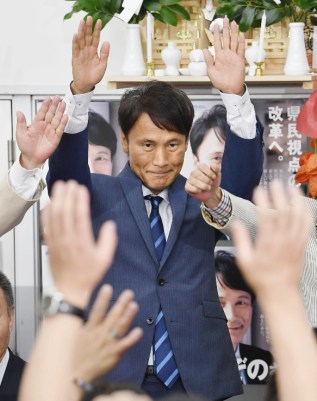
KAGOSHIMA – Anti-nuclear advocate Satoshi Mitazono was heading for victory in the Kagoshima gubernatorial race Sunday, beating incumbent Yuichiro Ito, who agreed to the resumption of reactors at a power plant in the prefecture, a projection showed.
The 58-year-old Mitazono is a former TV Asahi Corp. commentator. He ran as an independent backed by the main opposition Democratic Party and the Social Democratic Party as well as some conservatives who typically support the ruling Liberal Democratic Party but were opposed to the incumbent.
Ito, 68, with the support of the LDP and its junior coalition partner Komeito, was seeking his fourth four-year term.
One of the contentious issues in the race was the fate of Kyushu Electric Power Co.’s Sendai nuclear power plant in the prefecture.
The Sendai plant’s No. 1 and No. 2 units are the only reactors operating in the country after the government imposed tougher safety rules following the 2011 earthquake and tsunami that triggered meltdowns at the Fukushima No. 1 nuclear power plant.
Mitazono demanded that plant operations be temporarily suspended for safety checks in the wake of a series of strong earthquakes that hit central Kyushu in April, while Ito argued that the plant’s safety had been secured.
“We will not activate any reactors the safety of which is not guaranteed,” he told reporters on Sunday.
Fukushima Myth: Pacific Genocide
The latest video from Goddard
I have always been opposed to the minimalist lies of the pro-nuke spinners aiming to trivialize the Fukushima ongoing catastrophe but I have always been opposed also to the exaggerated claims of the sensationalists feeding their fear hungry gullible fans with much nonsense.
Like the sharp edge of a razor is that path, so the wise say—hard to tread and difficult to cross.
I always also said that the sensationalists with their exaggerated claims provide the fodder to be later used against us anti-nukers to suppress our rightful concerns in the eyes of the general public.
I have always been opposed to the sensationalization of Fukushima, the “Pacific is dying from Fukushima”, high-pitched drama on internet played by some websites, bloggers, Youtubers, the same ones that Goddard is now quoting in this video: Enenews, Natural News, Info Wars, Kevin Blanch and others.
There are many things causing the North American Pacific coastline ecocide at the same time, it is a convergence of many factors. These pre-date Fukushima.
That said I do believe that there should be wide scale fish testing, not just due to Fukushima but to the long term radioactive contamination of the Pacific. But having that happen, having it done properly and without it being hijacked by vested interests is extremely difficult. Why there should be wide scale fish testing is to determine the range of contamination among fish and where the high readings pop up to try to better understand where and what species are showing up with high readings and also what are the real averages being seen. Again, a big undertaking that can easily be hijacked making it meaningless.
The main danger is for the people living in eastern Japan, which has been contaminated at various degrees depending on the locations. The contaminated food, which when constantly consumed, even at a low level of contamination, will certainly have mid-term and long-term harmful consequences on the health of the people.
Another danger is the danger of radiation contaminated food products exported from Japan oversea to other countries with more lax radiation control and regulations, where people will buy them and consume them unknowingly of their contamination. As an example, in 2013 some tuna fish imported from the Philippines which was radiation contaminated was found sold in a supermarket in Switzerland. Of course that Philippines tuna had been contaminated by radioactive nanoparticles coming from Fukushima Daiichi in nearby Japan, and not from Diablo Canyon in far-away California.
To expose the false exaggerated claims, the sensationalism and the sensationalists, still does not change nor remove the fact that Fukushima contamination is spreading slowly but surely into our environment, and therefore there should be more measures and controls made to protect the people from possibly present radioactive contamination. As our governments are more busy protecting the financial interests than the people health, concerned citizens should organize themselves in local radwatch groups, to learn and to practice radiation measuring, in their surrounding environment and in their food, so as to protect themselves.
To resume: the Pacific ocean is not dying from Fukushima, but Fukushima radioactive contamination is slowly but surely, continously spreading into our environment, to slowly bioaccumulate and to affect the food chain.
That said, the biggest risks are still for the Fukushima people who are being left on location to live everyday with omnipresent radiation and contamination.
As I See It: Has nothing been learned from TEPCO’s ‘meltdown’ cover-up?

The March 14, 2011 press conference at the Tokyo Electric Power Co. (TEPCO) head office in Tokyo in which then TEPCO vice president Sakae Muto (second from right) was reportedly told by then company president Masataka Shimizu not to use the expression “core meltdown.”
A third-party panel set up by Tokyo Electric Power Co. (TEPCO) to investigate the company’s cover-up of the core meltdowns that occurred at its Fukushima No. 1 Nuclear Power Plant following the March 11, 2011 Great East Japan Earthquake and tsunami revealed in a report last month that then TEPCO president Masataka Shimizu had ordered the company not to use the term “meltdown” to describe what had occurred. The report also stated that the organizational cover-up took place against a backdrop of “what is presumed to be a request that came from the prime minister’s office.”
Then Chief Cabinet Secretary Yukio Edano has objected to the report, saying that the very people who were involved, himself included, were not consulted by the panel before it drew its conclusion. Edano also said that he sent a letter of protest to TEPCO seeking an apology and a retraction of the report.
There are many missing pieces to the investigative report, but without a doubt, TEPCO acted irresponsibly toward local residents. A meltdown refers to a severe incident in which nuclear fuel melts and leeches out. If the facts had been revealed to the public, they could have fled further and avoided going outdoors. TEPCO bears a heavy responsibility for exposing local residents to risks more dangerous than they would have been otherwise.
On March 14, 2011, three days after the nuclear crisis broke out, then TEPCO vice president Sakae Muto was in the midst of a press conference when a company PR official passed him a handwritten note indicating that a core meltdown had taken place, and whispered into his ear that “the prime minister’s office has instructed that this expression not be used.” The third-party investigative panel concluded that this message was from then TEPCO president Shimizu. In accordance with the instructions, Muto and TEPCO used the term “core damage,” a word with a less serious connotation than core meltdown, making the incident seem less severe than it actually was.
The residents of the Fukushima Prefecture town of Namie — the northerly neighbor of the town of Futaba, one of the two towns that the stricken nuclear plant straddles — were forced to evacuate without crucial information. According to the Namie Municipal Government, some 8,000 of the town’s 21,000 or so residents evacuated on March 12, 2011, to the town’s Tsushima district, further northwest of the nuclear plant. At the time, however, the wind had been blowing in that direction, putting the residents directly in the path of radioactive materials being emitted in massive amounts from the crippled nuclear plant.
Local resident Hidezo Sato, 71, evacuated from the town center and stayed at a community center in Tsushima until March 15. “There were other evacuees who said we should be fleeing farther away, but I didn’t think the situation was that grave,” he recalls. “If we’d known there’d been a core meltdown, it would’ve determined how we evacuated.” The community center where he was taking refuge was overflowing with people. Not knowing that he was downwind from the troubled nuclear plant, Sato sat by a fire outdoors. He also saw children going into grassy areas, where radioactive materials are known to collect.
“I would’ve avoided going outdoors had I known there’d been a meltdown,” says Yoko Hashimoto, 64, who also evacuated to the Tsushima district. “Five years have passed since the disaster broke out, and I’m worried that I’ll start seeing the health effects of radiation exposure. Why wasn’t the meltdown announced right away?” It is only natural for residents whose safety was all but ignored by TEPCO to feel anger toward the utility. The power company had always emphasized the happy coexistence of its nuclear plants and local communities. Yet when a serious incident took place, the local residents were neglected. This more than explains why the residents are distrustful and angry.
It wasn’t until at least two months later that TEPCO admitted that core meltdowns had occurred. And even then, it was only because the then Nuclear and Industrial Safety Agency, which has since been disbanded, demanded an overall report on the disaster. Moreover, it wasn’t until February of this year that TEPCO announced that it had discovered an internal company manual stipulating that damage to 5 percent or more of nuclear fuel be defined as a nuclear meltdown. Until then, the utility had cited the fact that it didn’t have any standards by which to define nuclear meltdowns as its excuse for delaying the announcement that such a phenomenon had occurred. But indeed, according to the manual, then vice president Muto could have said at the press conference on March 14, 2011, that a nuclear meltdown had taken place.
Hirotada Hirose, professor emeritus at Tokyo Woman’s Christian University and an expert in disaster risk studies, says that while local residents may have been thrown into confusion if information about the core meltdown had been made public, the merits of them evacuating farther away and reducing their exposure to radiation would have outweighed the possible risks of panic. “The physical and psychological damage that residents have suffered because information was not provided to them are far greater.” He adds, “Regardless of whether or not TEPCO actually received instructions from the prime minister’s office (not to use the expression ‘core meltdown’), it should have decided on its own to release accurate information. TEPCO lacks awareness and responsibility as the operator of nuclear plants that are at risk of creating serious crises.”
There is still much more room for improvement in TEPCO’s attitude toward its responsibilities. After the report on the meltdown cover-up was released, TEPCO President Naomi Hirose was asked at a press conference how the utility expected to work with the prime minister’s office if another serious incident were to occur. He refused to respond in clear-cut terms, instead stating, “That’s a difficult question to answer in general terms.”
On the one hand, the third-party investigative panel should be praised for digging up the fact that then TEPCO president Shimizu instructed the cover-up. On the other hand, however, the probe into the utility’s relationship with the prime minister’s office is insufficient. Residents harbor distrust toward not just TEPCO, but the government as well. Local residents will remain unconvinced unless further investigation into the extent and the manner in which the government interfered with the nuclear crisis is conducted.
Core meltdowns are not a problem specific to TEPCO. Whenever there’s a problem surrounding a nuclear plant, it often turns out that similar things are taking place at other plants run by other utilities. Can we say that TEPCO’s latest case is an isolated event? There’s a fear that when a nuclear accident takes place, we won’t be able to trust the power companies involved to provide us with appropriate information that respects and reflects the needs of affected residents. If utilities are going to restart halted nuclear reactors and extend the number of years its aging reactors are allowed to operate, they must take away important lessons from the Fukushima crisis and be prepared to disseminate information to the public from their standpoint. (By Mirai Nagira, Science and Environment News Department)
http://mainichi.jp/english/articles/20160706/p2a/00m/0na/008000c
Former Japanese Leader Starts Fund for US Vets Who Helped Fukushima

Former Japanese Prime Minister Junichiro Koizumi has started a fund for U.S. veterans who say they were sickened by radioactive fallout from the 2011 disaster at the Fukushima Dai-ichi nuclear power plant.
YOKOTA AIR BASE, Japan — A former Japanese prime minister is calling on his countrymen to donate to a fund for U.S. veterans who say they were sickened by radioactive fallout from the 2011 disaster at the Fukushima Dai-ichi nuclear power plant.
“They went so far to do their utmost to help Japan,” Junichiro Koizumi told a news conference Tuesday in Tokyo alongside fellow former Prime Minister Morihiro Hosokawa, according to Asahi Shimbun. “It is not the kind of issue we can dismiss with just sympathy.”
Hundreds of veterans, claiming a host of medical conditions they say are related to radiation exposure after participating in Operation Tomodachi relief efforts, have filed suit against the nuclear plant’s operator, the Tokyo Electric Power Co. A massive earthquake caused a tsunami that swamped a large stretch of northeastern Japan and inundated the power plant. Experts are still dealing with continuing leaks from the reactors.
The suit asserts that TEPCO lied, coaxing the Navy closer to the plant even though it knew the situation was dire. General Electric, EBASCO, Toshiba Corp. and Hitachi were later added as defendants for allegations of faulty parts for the reactors.
Illnesses listed in the lawsuit, which is making its way through the courts, include genetic immune system diseases, headaches, difficulty concentrating, thyroid problems, bloody noses, rectal and gynecological bleeding, weakness in sides of the body accompanied by the shrinking of muscle mass, memory loss, leukemia, testicular cancer, problems with vision, high-pitch ringing in the ears and anxiety.
People can donate to the fund, called the Operation Tomodachi Victims Foundation, at Japanese credit union Jonan Shinyo Kinko, Eigyobu honten branch, account No. 844688.
Donations, accepted through March 31, 2017, will be transferred to a U.S. bank and used, under the management of a judge, to support the veterans, according to a news release from the credit union.
The power of a vote can affect Japan’s nuclear energy policy
With brutal heat forecast for this summer, the government is not calling for power-saving efforts this year. This is a break from tradition that started in summer 2011 after the disastrous accident at the Fukushima No. 1 nuclear power plant, operated by Tokyo Electric Power Co., in March that year.
Only two nuclear reactors are currently running in Japan, both at the Sendai nuclear plant operated by Kyushu Electric Co. But the government determined that the nation’s power supply will not fall short this summer, largely because energy-saving practices have become well-established in private homes and businesses over the last five years, including the widespread use of energy-efficient LED lighting.
Japan appears to have become less dependent on nuclear power generation since the Fukushima disaster. Nowadays, the subject is debated less frequently, and anti-nuclear demonstrators have shrunk in number.
In the campaign for the July 10 Upper House election, too, the nation’s nuclear policy is hardly a hot topic of debate for the ruling and opposition parties.
But we need to re-examine whether the government is moving toward maintaining or abolishing its current nuclear policy.
Looking 20 to 30 years ahead, The Asahi Shimbun has consistently advocated a “zero nuclear power generation society” in its editorials. Our basic thinking is to approve the restart of offline reactors for the time being when urgent power needs exist. But at the same time, high-risk and antiquated reactors should be decommissioned, starting with the oldest and the most dangerous.
Abe administration’s piecemeal restart of reactors
Since the current Abe administration was inaugurated in December 2012, its track record has made the direction of its nuclear policy quite clear.
The administration initially stressed a “decrease in reliance on nuclear power generation.” But within less than six months, it put the Nuclear Regulation Authority (NRA) in the forefront to justify a switch to the policy of “restarting nuclear reactors once their safety has been confirmed.”
In the Basic Energy Plan of 2014, nuclear power is positioned as “an important base load power source.” One year later, the administration announced its decision to formulate a policy that would make nuclear energy account for 20 to 22 percent of the nation’s power supply in fiscal 2030. This target cannot be attained unless more than 30 nuclear reactors, out of the 54 that existed before the Fukushima disaster, are brought into operation.
In fact, starting with the Sendai reactors last summer, the government has been proceeding, bit by bit, with the restart of idle reactors. So far, four units have gone back on line. This month, the No. 3 reactor at the Ikata nuclear plant operated by Shikoku Electric Power Co. is scheduled to resume operations. Twenty reactors are currently under inspection.
Furthermore, the NRA has approved the extension of operations of the 40-plus-year-old No. 1 and No. 2 reactors at the Takahama nuclear plant, operated by Kansai Electric Power Co. Put plainly, even the “40-year rule,” set for averting disasters by decommissioning old reactors, is about to lose teeth.
Abe stresses nuclear power as “a low-cost and stable energy source.” But as deregulation in the power industry eliminates regional monopolies while electricity charges become less subject to rigid rate structures, nuclear power generation could actually become a burden to operators for the huge costs needed to maintain safety and dismantle old reactors.
For this reason, the government is coming up with what may be called new initiatives to protect the nuclear power industry.
The Ministry of Economy, Trade and Industry is working on a policy under which the government will buy electricity generated at nuclear power stations at a set price to encourage sustained investment in nuclear power generation.
Another plan under consideration is to decrease the financial responsibility of nuclear power plant operators for accident compensation and increase the government’s responsibility instead. This goes in the opposite direction from industry deregulation.
Parties need to clarify positions on nuclear power
Many Upper House election candidates running on the ruling coalition ticket are keeping their opinions on nuclear power generation to themselves, leaving all policy decisions to the government. But some of the same candidates are also starting to call for the construction of new, safer reactors to counter the argument of people opposed to extended operations of old reactors.
Should the ruling coalition win the Upper House election, there is no doubt that it will add momentum to the Abe administration’s move to return to nuclear power generation.
The opposition camp, with some minor exceptions, is united in opposing nuclear power generation. The Democratic Party and three other parties share the policy of “realizing a society that does not depend on nuclear power generation.”
However, the parties differ in the method and speed with which they propose to reduce the nation’s dependence on nuclear energy. While the parties are sharply focused on issues related to Abenomics, the national security legislation and constitutional revision, nuclear power generation tends to remain less discussed.
Will Japan keep relying on nuclear power? Or does it aim to eventually end this reliance by switching aggressively to sustainable energy development?
Because the answer spells a fundamental difference in the future of the nation’s energy policy, every party owes it to the voting public to explain its position clearly and engage in serious debate.
In disaster-affected areas of Fukushima Prefecture, the government’s evacuation orders are being lifted one by one, but there is a long way to go before the affected citizens can rebuild their lives. For them, the March 2011 disaster is still a dire reality they must face very day.
Looking at the future
For voters not directly affected by the nuclear disaster, five years may be enough time for their interest to wane.
But electricity is indispensable to everyone’s daily life and work. An immediate and crucial political issue is how to secure the necessary infrastructure, and at what cost.
Since April, it has become possible for private households to choose their electricity supplier, giving people a greater chance to exercise their free will. Still, every ballot cast carries weight. The outcome of the Upper House election can either accelerate or put the brakes on the Abe administration’s nuclear energy policy.
We need to look at 10 years and 20 years down the road, not just today and tomorrow, when we think about the nation’s energy policy, especially regarding nuclear power.
TEPCO to reuse tanks holding radioactively contaminated water at Fukushima plant

Tokyo Electric Power Co. (TEPCO) will reuse highly contaminated tanks at the crippled Fukushima No. 1 Nuclear Power Plant to store radioactively contaminated water after treatment, company sources said.
The company will return contaminated water to flange-type tanks that had held such water after removing radioactive materials from the water using the Advanced Liquid Processing System (ALPS). This is because TEPCO has failed to prevent contaminated water from being generated on the premises of the plant or to secure enough storage tanks to hold treated water.
TEPCO had submitted the reuse plan to the Nuclear Regulation Authority, which approved it on July 6 or earlier. TEPCO is set to begin reusing contaminated tanks as early as this month.
Flange-type tanks are assembled by tightening multiple steel plates with bolts. Since such tanks have higher risks of leaking contaminated water, TEPCO is gradually replacing them with tanks assembled by welding steel plates together.
TEPCO is trying to freeze underground soil to surround reactor buildings at the Fukushima power plant to prevent underground water from flowing beneath them and becoming contaminated with radioactive materials.
However, as the efforts have proven ineffective, the utility has decided to reuse flange-type tanks, which it had initially planned to dismantle.
Massive amounts of water are flowing onto the premises of reactor buildings at the atomic power station, generating some 400 tons of radioactively contaminated water a day. TEPCO uses ALPS to purify contaminated water, but the system cannot remove radioactive tritium.
The power company has stored the treated water mainly in welded-type tanks. There are already 1,000 water tanks on the premises of the power station.
http://mainichi.jp/english/articles/20160707/p2a/00m/0na/003000c
Showdown in apathetic Fukushima finds justice minister scrambling for survival

Justice Minister Mitsuhide Iwaki of the Liberal Democratic Party (left) campaigns in Iwaki, Fukushima Prefecture, on June 3. Right: Democratic Party candidate Teruhiko Mashiko speaks in Fukushima on June 6.
FUKUSHIMA – Justice Minister Mitsuhide Iwaki is feeling threatened.
With his electoral district in Fukushima Prefecture reduced to one seat from two for Sunday’s Upper House election, he needs to beat Democratic Party rival Teruhiko Mashiko, something he failed to pull off the last time around.
If the Cabinet minister loses, it will end his career and deal a humiliating blow to the administration of Prime Minister Shinzo Abe. And with Mashiko enjoying joint backing from opposition parties including the DP, the Fukushima race represents a showdown between the Liberal Democratic Party-Komeito ruling bloc and the opposition.
Addressing supporters last Sunday, Mashiko couldn’t have described the dynamics more succinctly.
“My opponent is no longer the justice minister. It’s Prime Minister Abe,” he said. “He’s really desperate. He’s been doing everything he can to unseat me. What an honor.”
Abe, for his part, has bent over backward to help Iwaki, joining him on the campaign trail right after the Diet closed for the summer on June 1 and sending a string of big-name politicians to Fukushima to campaign for him.
Failed strategy
Abe is said to have appointed the third-term Upper House lawmaker as justice minister in October to ensure re-election. He apparently felt he couldn’t afford to lose LDP influence in the sensitive constituency that was heavily damaged by three reactor meltdowns in March 2011.
But past election results show that Iwaki is facing an uphill battle on Sunday — the first since Fukushima became a single-seat constituency in 2013.
Not once in the past three Upper House elections has Iwaki defeated his main challenger, always finishing second. The last time he and Mashiko competed was in 2010, when Fukushima was a two-seat constituency. Mashiko won by 3,000 votes.
To make things worse, Iwaki’s appointment as justice minister appears to have backfired.
Earlier this year in the Diet, he was repeatedly driven into a corner as opposition lawmakers blitzed him with highly technical legal questions. His struggle to respond was televised nationwide. He majored in law at Sophia University.
“We all share the understanding that Iwaki, as a member of the current administration, cannot lose. If he does, the damage to the Abe administration will be immense,” his secretary, Izuru Onodera, said.
Lingering nuclear woes
While the election is being played as a vote on Abenomics, the two candidates in Fukushima are localizing the agenda.
In recent campaign trips in the prefecture, most of their speeches have focused on how they would steer Fukushima’s recovery. Five years into the worst nuclear disaster since Chernobyl, about 100,000 residents still remain displaced within and outside the prefecture.
While Iwaki trumpets the LDP’s decisiveness and legislative advantage, Mashiko is vowing to decommission all 10 reactors in the prefecture.
Standing before a crowd of supporters in Koriyama on Monday, Iwaki stressed that the LDP is the party that can steer Fukushima toward recovery and accused the DP of engaging in an “irresponsible tie-up” with the radical Japanese Communist Party.
“We cannot entrust the future of Fukushima to a mishmash opposition coalition fraught with ideological differences,” Iwaki said. “As a Cabinet member, I have the responsibility to facilitate government efforts to reconstruct Fukushima.”
Mashiko, meanwhile, reaffirmed his pledge to decommission the 10 reactors and denounced Iwaki’s ambiguous stance on the matter. Although the LDP’s Fukushima chapter has vowed to dismantle the reactors, Iwaki is apparently refusing to back that pledge publicly to avoid contradicting Abe’s pro-nuclear central government.
During campaigning activities Monday, Iwaki told The Japan Times that he will “respect” the Fukushima chapter’s stance on the reactors, before speeding off in a van.
Voter apathy
Neither candidate appears to have made much of an impression with voters.
Fukushima resident Yuriko, 54, who only wished to be identified by her first name, said she will vote but might cast a blank ballot in protest.
“I feel it will make no difference no matter who wins,” the company employee said when approached on a street in Koriyama. She said she doesn’t even know who is running.
A 25-year-old man who also requested anonymity said he only cares about one topic — employment. Even the issue of Fukushima’s recovery hardly struck a nerve.
“Everyone was affected by the disaster to a different degree and I wasn’t much of a victim. As a Fukushima resident, I’m mildly curious about how the reconstruction effort proceeds, but that topic doesn’t motivate me into any sort of action,” he said.
Expectations are even dimmer among those whose lives were upended by the calamity.
On a recent visit to a remote temporary housing unit in Nihonmatsu, evacuees from the town of Namie near the crippled Fukushima No. 1 power plant were downright apathetic about the election.
They are too preoccupied with their uncertain future, not to mention the daily inconveniences of the evacuation, to even think about the poll, they said. Not a single supermarket or hospital exists near the housing unit, forcing them to drive long distances to complete even the smallest part of their daily routine.
Nobuhiro Fujita, 68, a former farmer and carpenter, said he wasn’t interested in Sunday’s election.
“All I can think about is my own life. I don’t know what is going to happen to my house in Namie. I don’t have time to wonder about the election,” he said.
Although he wants to go home, Fujita, who suffers from numbness in his leg, said he is stuck in limbo.
“I do want to return to Namie, but even if I do, my rice field has been left unattended for too long and is now ruined. With my bad leg, I can’t do any carpentry work, either.”
A 48-year-old company employee and father who asked to be identified only by his surname of Yoshida, also took a dim view of the historic race.
“After being left like this for five years and counting, I can’t really trust the candidates to put their words into action, no matter what they say they will do for us,” he said.
“I’m resigned.”
Don’t Say Meltdown: Japan’s Coverup and US’ ‘Radioactive Russian Roulette’

Japan finds itself in the midst of a fresh scandal, as the president of the Tokyo Electric Power Company (TEPCO) has publicly admitted that the company staged a cover-up during the disastrous Fukushima nuclear meltdown in March of 2011.
Radio Sputnik’s Loud & Clear spoke with Kevin Kamps, from Beyond Nuclear, about the coverup and its possible implications for the US.
Kamps documented how TEPCO knew about the meltdown from the beginning, and understated the true extent of the damage. “They clearly did conceal the three meltdowns for two months,” he said. “They [TEPCO] knew really within the first day or two that they had a meltdown, and they simply covered it up for as long as they could.”
Kamps pointed out a recent report in which the company attempted to dodge responsibility for their duplicity. “What’s interesting now is this panel report is trying to shift the blame from Tokyo Electric to the serving government at the time, which was the Democratic Party of Japan. They’re trying to blame Prime Minister [Naoto] Kan and his chief spokesman Yukio Edano, both of whom have really come out swinging against this report, saying it’s preposterous [and that] they made no order to TEPCO to not use the word ‘meltdown,’ but that’s what TEPCO’s trying to say, that’s it’s the government’s fault.”
Kamps explained that, at first, TEPCO spokespeople described the meltdown as “‘core damage,’ in that the solid nuclear fuel, the fuel rods in the core of these three reactors, had suffered damage, had released some of their radioactive activity out into the environment.”
“But a meltdown indicates that you’ve lost complete control of the integrity of the nuclear fuel cores, they have literally melted down because of the hellish thermal heat levels and have formed a molten mass that can then burn its way through the reactor pressure vessel and even the containment structures, into the earth. And they knew, by their own regulations and their own instruction manuals, that 5% or more core damage equals a meltdown, and they knew that, in unit 1, they had 55% core damage, they knew in unit 3 they had 25% damage, they knew this within a couple days.”
Loud & Clear host Brian Becker asked Kamps if TEPCO is aware of what happened to the cores. Kamps replied, “They still don’t know where the cores are. Tokyo Electric optimistically assumes that they are still located within containment structures, which are obviously damaged or even destroyed, because of the levels of radioactivity that have escaped and is still escaping. They don’t know for sure.”
Kamps noted the drastic impact that nuclear reactor meltdowns have on the environment in contaminating soil and groundwater, and that similar incidents are possible in the US because the same technology is still being used. “We have 22 reactors in the United States that are of the same design of Fukushima-Daiichi,” he said. “We have another eight that are closely related, so that’s 30 of these radioactive Russian-roulette games going on in the United States.”
http://sputniknews.com/asia/20160706/1042496696/japanese-company-covers-up-meltodown.html
Writing History and the Legacy of the Fukushima Daiichi Nuclear Accident
Official histories are always full of omissions and strategic ambiguities. History is, after all, written by those in power.
Howard Zinn, among many others, taught us (i.e., the governed or the “people”) the importance of documenting alternative histories that reflect the perspectives and empirical realities experienced by everyday people and by marginalized authorities whose unwillingness to parrot official narratives leads to their censure.
The official Fukushima narrative is predicated upon four assumptions, all of which I call false:
1. The plant is officially in cold shutdown and radiation contamination is contained
2. No one died from the disaster and long term deaths are likely to be trivial
3. Fukushima produced less environmental contamination than Chernobyl
4. The indisputable ocean contamination produced by Fukushima is now gone
Assumptions 2 and 4 are evident in this article published by the Japan Times declaring that the Pacific Ocean is back to “normal”:
Pacific Ocean radiation back near normal after Fukushima: study. AFP-JIJI Jul 4, 2016 http://www.japantimes.co.jp/news/2016/07/04/national/science-health/pacific-ocean-radiation-back-near-normal-after-fukushima-study/#.V3vWMKKYK5o
SYDNEY – Radiation levels across the Pacific Ocean are rapidly returning to normal five years after the crisis at the Fukushima No. 1 nuclear plant spewed gases and liquids into the sea, according to a study released Monday….
…Although no one is recorded as having died as a direct result of the nuclear accident, tens of thousands of people were uprooted, with many still unable to return home because of persistent contamination. Much could be said about this article but in this post I will focus on the assumption that levels of radioactivity in ocean water are returning to normal.
That statement can be both true and not-true simultaneously. The radionuclides may no longer be suspended in tested waters but that doesn’t mean they are gone and that the Pacific ocean eco-system has returned to “normal.”
In fact, it is empirically and logically impossible for most of the radionuclides from Fukushima in the ocean to have disappeared.
Radionuclides have a known decay pattern. Iodine-131 has an approximately 8 day half-life while Cesium-137 has an approximately 30 year half-life. Americium-241 has a 432 year half life.
While the Iodine-131 is probably gone, the Iodine-129 (with a 15.7 million half-life) is still there and contributing to radioactive contamination already present from dumping, atmospheric testing and nuclear accidents. As Wikipedia explains, “Most 129I derived radioactivity on Earth is man-made, an unwanted long-lived byproduct of early nuclear tests and nuclear fission accidents.” https://en.wikipedia.org/wiki/Isotopes_of_iodine
Radionuclides with long half-lives contaminating the ocean are STILL THERE, still in the ocean, but perhaps they are no longer suspended in surface waters but rather have been absorbed by biological life or are suspended at lower levels in the water column.
BIOACCUMULATION
Official authorities can make the claim that the water has returned to “normal” (whatever that is after decades of dumping of waste and the effects of testing and accidents) because they are not examining how radionuclides have been sequestered in biological life.
In 2014, I conducted a historical search for bioaccumulation using the JSTOR index, focusing on the radionuclides known to present the majority sources of radiation derived from nuclear fallout: 241Am, 90Sr, 137Cs, 238Pu, 239Pu, and 240Pu (DOE, 1997, http://www.atsdr.cdc.gov/toxprofiles/tp156-c6.pdf).
Search results from the JSTOR index indicate that bioaccumulation was first studied in the late 1950s by scientists looking at the dispersion of radionuclides in the environment. They tended to be funded by government: for example, Oak Ridge National Laboratory funded research on bioaccumulation of radionuclides in “the marine environment.”
The research cited below finds clear evidence of bioaccumulation of a wide range of radionuclides by aquatic life: Marine organisms concentrate cesium 3-30 times over the levels in the surrounding water, although concentration can be much higher, by two or three orders of magnitude (Polikarpov 1966; Wolfe, 1971), especially in animals situated at the top of the food chain, as modeled by Alva and Gobas for killer whales (Hat Tip Enenews poster but forgot source [sorry]):
Alva, Juan & Gobas, Frank (2011, October 4). Modeling the Bioaccumulation Potential of Cesium-137 in a Marine Food Web of the Northwest Pacific, Canada[9080]. Paper presented at SETAC North America 32nd Annual Meeting in Session 498: Environmental Radiation: What Do We Know and What Should We Know for Assessing Risks http://www.researchgate.net/publication/233869698_Modeling_the_Bioaccumulation_Potential_of_Cesium_137_in_a_Marine_Food_Web_of_the_Northwest_Pacific_Canada
Other highly chemically and radiologically genotoxic radionuclides, such as Americium and Plutonium, are highly BIO-AVAILABLE. For example, research conducted by Fisher, Bjerregaard and Fowler (1983) found that Plutonium, Americium, and Californium concentrate readily in marine plankton:
Nicholas S. Fisher, Poul Bjerregaard and Scott W. Fowler (1983). Interactions of Marine Plankton with Transuranic Elements. 1. Biokinetics of Neptunium, Plutonium, Americium, and Californium in Phytoplankton. Limnology and Oceanography, 28(3) (May, 1983), pp. 432-447 Published by: American Society of Limnology and Oceanography. Stable URL: http://www.jstor.org/stable/2835825
“The results suggest that Pu, Cf, and Am would associate with marine particles which could transport them vertically, transfer them into the marine food web, or both”Page 445; Our results are consistent with the hypothesis that the reactive transuranic elements (e.g. Pu, Am, Co are likely to reach an equilibrium between surfaces of suspended particles and ambient seawater and that the adsorptive properties of particles scavenging these (and other) metals are governed by organic coatings (Balistrieri et al. 1981).
Phytoplankton particles with associated transuranics may sink slowly, transporting these elements to deeper waters and sediments (Bowen et al. 1980; Santschi et al. 1980), or they may be ingested by herbivores in surface waters. Once ingested, radionuclides may be assimilated into food chains (Lowman et al. 1971; Koide et al. 1981) or defecated in the form of fast-sinking fecal pellets (Higgo et al. 1977).
It is interesting that radionuclides such as Cesium and Americium bioaccumulate in different areas of organisms, and at different concentrations with Americium levels higher than Cesium, as illustrated by this study:
Metian, Marc, Warnau, Michel, Teyssie, Jean-Louis, Bustamante, Paco (2011) Characterization of Am-241 and Cs-134 bioaccumulation in the king scallop Pecten maximus: investigation via three exposure pathways. Journal of Environmental Radioactivity, 102(6), 543-550 DOI: 10.1016/j.jenvrad.2011.02.008
[Abstract] In order to understand the bioaccumulation of Am-241 and Cs-134 in scallops living in sediments, the uptake and depuration kinetics of these two elements were investigated in the king scallop Pecten maximus exposed via seawater, food, or sediment under laboratory conditions. Generally, Am-241 accumulation was higher and its retention was stronger than Cs-134.
This was especially obvious when considering whole animals exposed through seawater with whole-body concentration factors (CF7d) of 62 vs. 1, absorption efficiencies (A(0l)) of 78 vs. 45 for seawater and biological half-lives (T-b1/2l) of 892 d vs. 22 d for Am-241 and Cs-134, respectively. In contrast, following a single feeding with radiolabelled phytoplankton, the assimilation efficiency (AE) and T-b1/2l of Cs-134 were higher than those of Am-241 (AE: 28% vs. 20%; T-b1/2l: 14 d vs. 9 d).
Among scallop tissues, the shells always contained the higher proportion of the total body burden of Am-241 whatever the exposure pathway. In contrast, the whole soft parts presented the major fraction of whole-body burden of Cs-134, which was generally associated with muscular tissues. Our results showed that the two radionuclides have contrasting behaviors in scallops, in relation to their physico-chemical properties.
Through absorption and adsorption radionuclides in the water column are readily assimilated by phytoplankton, whereupon they are either consumed – resulting in biomagnification – or fall towards the bottom of the ocean. A significant percentage (estimated at about a 1/2 of cellular load) of Pu and Am accumulated by plankton fall to intermediate depths, where they remain suspended, resulting in the “enrichment of waters of intermediate depth with Pu or Am lost from sinking algal cells” (Fisher et al, 1983).
In other words, the radioactive and chemically toxic radionuclides are still present but are not suspended in surface waters. They are interred in biological life!
FUKUSHMA IS A CONTAMINATED-WATER PRODUCING MACHINE AND IT AINT’ OVER YET
TEPCO has been dumping radioactive water deliberately for years. I have documented this claim in my 2013 and 2016 monographs (see Nadesan Fukushim and the Privatization of Risk 2013 AND Crisis Communication, Liberal Democracy, and Ecological Sustainability 2016).
Moreover, Fukushima is STILL leaking contaminated water into the ocean. That water is highly radioactive, as evidenced by rising ground water contamination at the plant. That is why TEPCO built the ice-wall, which has not been successful according to company officials.
You can see documentation of rising ground water contamination here:
http://majiasblog.blogspot.com/2015/03/ground-water-contamination-rising-at.html
There exists good evidence that part of the reactor fuel from units 1-3 is located in the underground river that empties into the Pacific Ocean:

This scenario will result in endless contamination of the ocean with rising levels of Strontium contamination, according to the German Risk Studies.
The “German Risk Study, Phase B” found that a core meltdown accident could result in complete failures of all structural containment, causing melted fuel to exit the reactor foundation within five days (cited in Bayer, Tromm, & Al-Omari 1989).
Moreover, the study found that even in the event of an intact building foundation, passing groundwater would be in direct contact with fuel, causing leaching of fission products. Strontium leaches slower than cesium. A follow-up German study, “Dispersion of Radionuclides and Radiation Exposure after Leaching by Groundwater of a Solidified Core-Concrete Melt,” predicted that strontium contamination levels would rise exponentially years after a full melt-through located adjacent to a river (Bayer, Tromm, & Al-Omari, 1989).
The study’s experimental conditions are roughly similar to Daiichi’s site conditions, including groundwater emptying into an adjacent river, whereas Daiichi is physically situated above an underground river emptying into the sea.
The study predicted concentrations of Strontium-90 in river water would spike relatively suddenly, but maintain extraordinarily high levels of contamination for years: “The highest radionuclide concentration of approx. 1010 Bq/m3 is reached by Sr-90 after some 5000 days.”
CONCLUSIONS
The alternative narrative I have written here is precisely that, alternative. I am a peon. I have no authority to speak as a “social scientist,” as I have been reminded by trolls and certain polemical scientists over the last 5 years.
However, my lack of official expertise does not mean I am wrong.
The contradictions and elisions marring the official narrative will become more glaring with time, as Pacific life continues its inexorable collapse, offering fodder for those like myself who persist in challenging the genocidal authority of the nuclear-security state with alternative narratives, which lack official legitimacy but are no less true because of that deficiency.
REFERENCES
Bayer, A., Al-Omari, I., & Tromm, W. (1989). Dispersion of radionuclides and radiation exposure after leaching by groundwater of a solidified core-concrete (No. KFK-4512). Available http://www.irpa.net/irpa8/cdrom/VOL.1/M1_97.PDF
Gesellschaft fur Reaktorsicherheit (GRS) Deutsche Risikikostudie Kernkraftwerke, Phase B Report GRS-89 cited in Bayer, A., Al-Omari, I., & Tromm, W. (1989). Dispersion of radionuclides and radiation exposure after leaching by groundwater of a solidified core-concrete (No. KFK-4512). Available http://www.irpa.net/irpa8/cdrom/VOL.1/M1_97.PDF
“TEPCO Announced Record Cesium Level Found in Groundwater Beneath Fukushima Levee” The Asahi Shimbun (February 14, 2014): http://ajw.asahi.com/article/0311disaster/fukushima/AJ201402140041). The article said that cesium found in groundwater under a coastal levee near unit 1 spiked from 76,000 Becquerels per liter on February 12, 2014 to 130,000 Becquerels per liter on February 13, reaching the highest level of cesium ever detected at that location
Record strontium-90 level in Fukushima groundwater sample last July. (2014, February 7). The Japan Times. Available http://www.japantimes.co.jp/news/2014/02/07/national/record-strontium-90-level-in-fukushima-groundwater-sample-last-july/#.U2XIw17K3yh
Source : Majia’s Blog
https://majiasblog.blogspot.fr/2016/07/writing-history-and-legacy-of-fukushima.html
A Massive Campaign of Disinformation to Trivialize Fukushima Health Risks

I am being nice, I did not add a 4th monkey to this picture, to represent the selling-out “scientists”….
5 years have past, we are now submerged by a massive campaign of lies, spinned propaganda, that everything is now fine about Fukushima. Some articles spreading plain nonsense, lies without any fear to be accused to be lying. Some our friends even sharing those B.S. articles on their FB pages or FB group without even having the intelligence to write an introduction to those articles, exposing the lies of those articles.
As an example, this article “Scientists Find New Kind Of Fukushima Fallout” where they say: ““He cautions that any internal radiation from particles containing cesium-137 would be much less than the doses people got from external radiation, which would come from cesium-137 and other radioactive elements in the soil or the environment around them.”
http://www.forbes.com/sites/samlemonick/2016/06/30/scientists-find-new-kind-of-fukushima-fallout/#636c0d6a4126
Which is absolute bullshit, nonsense, a lie, It completely ignores what science and multiple studies have already well established, that internal radiation is 100 times more harmful than external radiation.
Also the recently released report from the conclusions of a major 5 year review, with multi-international authors who are all working together as part of a Scientific Committee on Oceanic Research (SCOR) Working Group. The report is being presented at the Goldschmidt geochemistry conference in Japan.
http://phys.org/news/2016-06-fukushima-oceans-years.html#jCp
Which says: ” Uptake by marine life. In 2011, around half the fish samples in coastal waters off Fukushima had radiocesium levels above the Japanese 100Bq/kg limit, but by 2015 this had dropped to less than 1% above the limit. High levels are still found in fish around the FDNPP port. High levels of 131I were measured in fish in April 2011, but as this has a short radioactive half-life, it is now below detection levels. Generally, with the exception of species close to the FDNPP, there seem to be little long-term measurable effects on marine life.”
It takes 12 years for the TRITIUM to lose half of its radioactivity and 120 years for it to lose it all, And 30 years and 300 years for CESIUM, and tens of thousands of years to the PLUTONIUM etc But according to their report the Pacific is now clean just after 5 years.
That report also says: “Risk to Humans. The radiation risk to human life is comparatively modest in comparison to the 15,000 lives were lost as a result to the Tohoku earthquake and tsunami. So far, there have been no direct radiation deaths. The most exposed FDNPP evacuees received a total dose of 70 mSv, which (if they are representative of the general population) would increase their lifetime fatal cancer risk from 24% to 24.4%. However, there are still over 100,000 evacuees from the Fukushima area, and many industries such as fishing and tourism have been badly hit.”
Thus that report is completely ignoring the well proven harmful effects of a constant low dose radiation on human life, and of course completely omitting to talk about the dangers of internal exposure by contaminated food and liquid for the Fukushima population.
When I shared this report on my blog, I wrote an introduction saying: “This report raises certainly a lot of questions about today’s scientific community unbiasedness and independance from governmental and corporated powers.”
A marine biologist came to argue with me on Twitter, reproaching me to not accept science. I answered to him that I do respect science but I won’t stand for bias, for that “science” which is being influenced, bought, twisted or silenced by financial and political interests.
Reuse of radioactive soil feared to trigger illegal dumping

Piles of black bags containing radioactive soil are seen at a temporary storage site in Minamisoma, Fukushima Prefecture, on June 11, 2016. The Environment Ministry is set to conduct a demonstration experiment there possibly later this year, in which radiation doses will be measured on mounds using soil generated from decontamination work.
Reuse of radioactive soil feared to trigger illegal dumping
An Environment Ministry decision to allow reuse of radioactively contaminated soil emanating from the Fukushima nuclear disaster in public works projects has prompted experts to warn against possible dumping of such soil under fake recycling.
The ministry formally decided on June 30 to allow limited use of soil generated from decontamination work after the Fukushima No. 1 nuclear power plant disaster in mounds under road pavements and other public works projects, as long as the soil contains no more than 8,000 becquerels per kilogram of radioactive cesium. The decision was made despite questions raised during a closed meeting of the ministry over incompatibility with the decontamination criteria for farmland soil.
The Act on the Regulation of Nuclear Source Material, Nuclear Fuel Material and Reactors sets the safety criteria for recycling metals and other materials generated from the decommissioning of nuclear reactors at no more than 100 becquerels per kilogram, and requires materials whose radiation levels exceed that level to be buried underground as “radioactive waste.” The figure of 100 becquerels is derived from the International Commission on Radiological Protection’s standards that annual radiation exposure of up to 0.01 millisieverts poses negligible health risks.
However, the Fukushima disaster has disseminated radioactive materials outside the crippled nuclear plant across far wider areas than expected. Under the special measures law on decontamination of radioactive materials, which was fully put into force in January 2012, waste whose radiation levels top 8,000 becquerels per kilogram is called “designated waste” and must be treated by the government, while waste with radiation levels of 8,000 becquerels or lower can be treated in the same way as regular waste. The figure of 8,000 becquerels comes from the upper limit of annual radiation exposure doses for ordinary citizens under the reactor regulation law, which is set at 1 millisievert. Regarding the double safety standards of 100 becquerels and 8,000 becquerels, the Environment Ministry had earlier explained that the former is for “reuse” and the latter for “waste disposal.”
However, the recent Environment Ministry decision to allow the reuse of contaminated soil in public works projects runs counter to its earlier explanation. The ministry is trying to reconcile that difference by insisting that the radiation levels of tainted soil could be kept under 100 becquerels if mounds using such soil were covered with concrete and other materials to shield radiation. During a closed meeting of the ministry that discussed the matter, some attendants raised questions over inconsistencies with the decontamination criteria for farmland soil.
In April 2011, in the aftermath of the Fukushima meltdowns, the Ministry of Agriculture, Forestry and Fisheries restricted rice planting in paddies whose radiation levels topped 5,000 becquerels per kilogram of soil. While the restriction was effective for just one year, the same criteria has been in place for ensuing decontamination, where surface soil of more than 5,000 becquerels is removed and surface soil under that level is replaced with deeper layers.
It is inconsistent to strip away soil of more than 5,000 becquerels while recycling soil with the same level of radiation. However, attendants of the closed meeting never discussed the matter in detail, nor did the issue come up for discussion at an open meeting.
The radioactivity concentration of contaminated soil is higher than that of earthquake debris, whose treatment caused friction across the country on the heels of the Fukushima crisis. Therefore, officials attending an open meeting of the ministry discussed the introduction of incentives for users of tainted soil, with one saying, “Unless there are motives for using such soil, regular soil would be used instead.”
Kazuki Kumamoto, professor at Meiji Gakuin University specializing in environmental policy, criticized the ministry’s move, saying, “There is a high risk for inverse onerous contracts, in which dealers take on contaminated soil in exchange for financial benefits.” There have been a series of incidents involving such contracts, in which waste was pressed upon dealers under the guise of “recycled materials,” such as backfill material called ferrosilt and slag generated from iron refining.
“If contaminated soil was handed over under inverse onerous contracts, there is a risk that such soil could be illegally dumped later. Reuse of tainted soil would lead to dispersing contamination,” Kumamoto said.
http://mainichi.jp/english/articles/20160705/p2a/00m/0na/012000c
How about a bit of Fukushima sake?

Cups of sake are distributed to visitors at a tourism facility in Fukushima on May 18, after Fukushima Prefecture won the most awards at the Annual Japan Sake Awards.
Nuclear disaster a ‘springboard’ for Fukushima sake brewers
FUKUSHIMA–After a change in preference among the nation’s imbibers, Fukushima Prefecture rapidly gained ground as the top sake-producing area in Japan.
And then the nuclear disaster struck in March 2011.
But the triple meltdown that forced entire towns to flee and scared consumers off Fukushima products ended up fueling the rise of sake brewers in the prefecture.
Using its traditional system of public-private cooperation, Fukushima Prefecture not only took over the sake-brewing crown from Niigata Prefecture, the northeastern prefecture has also widened its lead.
Any sympathy that sake brewers had for their Fukushima rivals after the nuclear disaster has now been replaced by competitive words in the field.
Inokichi Shinjo, 65, chairman of the Fukushima Prefecture Sake Brewers Cooperative, could not hide his delight on May 18 while seeing the results of the Annual Japan Sake Awards.
“This achievement will help establish Fukushima’s reputation as the best sake-producing area in the country,” Shinjo said.
In the contest, in which the quality of young sake is judged, 18 products from Fukushima Prefecture were among the 227 brands that won the gold prize for having exceptionally good quality.
It was the fourth straight year for Fukushima to be the top prefecture in terms of number of gold prize-winning products in the competition.
The Annual Japan Sake Awards started in the Meiji Era (1868-1912), and sake from Hiroshima and Hyogo prefectures, as well as other traditional sake-producing areas, dominated the competition until the 1980s.
In the 1990s, more consumers turned to “tanrei karakuchi” (clean and dry) sake. Niigata Prefecture, known for its tanrei karakuchi products, placed first for four consecutive years starting in 1998.
Most of the sake entered in the contest are specially brewed for the occasion. But Fukushima Prefecture has overwhelmed Niigata Prefecture in the Sake Competition, where commercially available sake are evaluated.
Last year, 20 breweries in Fukushima Prefecture entered the Sake Competition.
The prefecture topped the list, with 18 brands from Fukushima, including Aizu Chujo, Nagurayama, Sharaku, Aizu Homare and Hiroki, among the 103 products selected as winners. None of the products from the 13 breweries from Niigata Prefecture were chosen.
HOW DID FUKUSHIMA TOP NIIGATA?
Fukushima-brewed sake rose in popularity after drinkers switched to “hojun amakuchi” (mellow and sweet) sake, noted for a natural flavor of rice, from tanrei karakuchi.
The turning point came in 1994, when the Juyondai sake brewed in Yamagata Prefecture, north of Fukushima Prefecture, was marketed and introduced in a magazine. The sake immediately won high praise, and prompted many brewers to produce hojun amakuchi sake, particularly in other parts of the Tohoku region.
The “Fukushima-style” system, in which citizens and public officials work together, was established to improve the quality of sake through the effective use of advanced brewing technologies.
The characteristics of rice for sake change each year, depending on the climate.
Under the system, the Aizu-Wakamatsu technical assistance office of the prefecture-run Fukushima Technology Center analyzes the year’s rice in advance and advises each brewer on the best way to produce sake.
“The mechanism enabled breweries to produce high quality sake unlike in the past,” said Kenji Suzuki, 54, head of the office’s brewing and food division.
Kenji Hiroki, 49, president of the Hiroki Shuzo Honten brewing company in Aizu-Bange, which makes Hiroki, one of the most famous sake brands in Fukushima Prefecture, said the system has also helped to prevent a trend that has hampered other traditional businesses: a lack of successors.
“Young people in their 20s and 30s have returned to local breweries to take over their parents’ businesses,” Hiroki said.
He also noted that many sake products brewed in Fukushima used to be traded at very low prices.
“The trend encouraged brewers to share their techniques to improve their circumstances together,” Hiroki said. “Even the (2011) nuclear crisis worked as a springboard for us.”
NUCLEAR DISASTER EFFECT
After the March 2011 Great East Japan Earthquake and tsunami triggered the disaster at the Fukushima No. 1 nuclear plant, companies in the prefecture had difficulty selling products because of persistent fears of radiation contamination.
The prefecture’s sake brewers cooperative has been emphasizing the safety of Fukushima-made sake, saying “both rice for sake and water are carefully examined according to strict standards.”
Such thorough checks also helped to ensure the rice and water were top quality.
Noted Fukushima breweries started joint advertising campaigns to sell their products in Tokyo. The publicity not only helped to increase sales but also spread the word about high quality of Fukushima Prefecture’s sake.
Rivals in other parts of Japan have been inspired by the efforts of Fukushima sake makers.
“Brewers from Fukushima Prefecture always point out each other’s problems when they meet, and it provides me with a good stimulus,” said Tadayoshi Onishi, 41, president of the Kiyasho Shuzo brewery in Mie Prefecture, which produces the popular Jikon brand.
Although sake production has generally declined around Japan, Fukushima brewers’ production is 10 percent higher than the level before the nuclear accident.
Shuichi Mizuma, 66, representative director of the Niigata Sake Brewers Association, expressed confidence that his prefecture would reclaim the title of “the kingdom of sake.”
“The tide often changes,” he said.
Koichi Hasegawa, 60, president of Hasegawasaketen Inc., a major sake retailer in Tokyo, said Fukushima Prefecture’s top position is not secure.
“People will soon be fed up with hojun amakuchi sake,” he said. “Shochu recently made waves as well. And Japanese consumers are frighteningly swayed by the latest trends.”
http://www.asahi.com/ajw/articles/AJ201607050001.html

Mayor opposes reactor restarts in Saga; utility pushes ahead

Imari Mayor Yoshikazu Tsukabe
Mayor opposes reactor restarts in Saga; utility pushes ahead
IMARI, Saga Prefecture–The mayor of Imari expressed opposition to Kyushu Electric Power Co.’s plan to restart a nearby nuclear power plant, but the city in southern Japan has no legal authority to keep the reactors offline.
“I was worried about the ramifications on the local economy and the livelihoods of local residents when the Genkai nuclear plant suspended operations (after the Fukushima nuclear disaster),” Mayor Yoshikazu Tsukabe said at a news conference on July 4. “Five years on, there have been no large disruptions. The prevailing sentiment in this city is that the plant does not need to go back online.”
Tsukabe’s comments came after Michiaki Uriu, president of Kyushu Electric, told a June 28 news conference that the utility is keen to restart two reactors at the Genkai plant.
“We are aiming to reactivate them by the end of the current fiscal year,” he said.
Imari, a city of 57,000 people, lies within a 30-kilometer radius of the plant in the town of Genkai, Saga Prefecture.
That means Imari is required, under central government standards compiled after the 2011 Fukushima nuclear accident, to prepare an evacuation plan for a possible nuclear disaster at the plant.
However, the utility does not need the city’s permission to restart the reactors.
Kyushu Electric, a regional monopoly, has a nonbinding “safety agreement” with the Saga prefectural government and the Genkai town government, requiring their consent before the plant can be restarted.
The company must also obtain prior approval from the two governments for any change in its business plan under the pact.
Imari, which does not host the plant, has no such agreement with Kyushu Electric.
After long negotiations, Kyushu Electric in February did agree to provide Imari with full explanations about plans for the Genkai plant in advance and give due regard to the city’s stance on resuming reactor operations.
Imari also exchanged a memorandum with the prefectural government that said Saga Prefecture will give full consideration to Imari’s opinion in terms of carrying out the safety agreement with Kyushu Electric.
However, the prefectural government’s stance is that the memorandum does not cover reactor restarts.
Masahiko Ishibashi, an official in charge of prefecture’s department overseeing industry and labor, stopped short of taking a clear position on Mayor Tsukabe’s opposition to the resumption of the Genkai plant’s operations.
“We take it as an opinion,” Ishibashi said.
Tsukabe said he sees no reason for his city to actively cooperate with Kyushu Electric in its business plan.
“Imari residents do not need to bottle up their anxieties about the plant restart for the sake of a portion of Genkai’s economy,” he said.
Regardless of Imari’s opposition, Kyushu Electric will continue its preparations to restart the reactors at the Genkai plant, which is close to the final stage of safety screening by the Nuclear Regulation Authority.
The utility also operates the Sendai plant in Kagoshima Prefecture, the only nuclear power plant currently in service in the nation.
http://www.asahi.com/ajw/articles/AJ201607050064.html
Local mayor vows not to approve restart of Genkai nuke plant
IMARI, Saga — Imari Mayor Yoshikazu Tsukabe said on July 4 that he had no intention of approving a plan to restart the Genkai Nuclear Power Plant in Saga Prefecture.
The Saga Prefecture city of Imari falls within 30 kilometers from Kyushu Electric Power Co.’s Genkai nuclear power station. Imari Mayor Tsukabe said at a regular news conference, “I have no intention of giving consent to restarting (the nuclear plant).”
It is the first time for the head of a municipal government among eight municipalities in three prefectures of Saga, Fukuoka and Nagasaki that are within 30 kilometers from the Genkai nuclear plant to voice such opposition.
Tsukabe said, “If a nuclear accident occurs, we can’t recover from it,” adding, “I will state my opposition (if I am questioned by the prefectural government).”
http://mainichi.jp/english/articles/20160705/p2a/00m/0na/004000c
Japanese photojournalist documents nuclear crises in Chernobyl, Fukushima

Ryuichi Hirokawa, a Japanese photojournalist, has documented the world’s two worst nuclear crises — in Chernobyl three decades ago, and the 2011 meltdown at the Fukushima No. 1 power plant.
With this year marking the 30th anniversary of the Chernobyl disaster, Hirokawa, 72, has released a photo book titled “Chernobyl and Fukushima” compiling his reports on the lives of victims of the catastrophes.
After years of reporting on the two disasters, Hirokawa said he has concluded that nuclear power “is not something human beings can handle or control.”
Born in 1943 in a Japanese community in Tianjin, China, Hirokawa was the first non-Soviet journalist to enter the Exclusion Zone following the accident at the Chernobyl Nuclear Power Plant in April 1986.
He has since visited the area more than 50 times and established in April 1991 a foundation for children suffering from leukemia, thyroid cancer and other diseases caused by exposure to a high level of radiation, in response to requests from their mothers.
The foundation has provided these children with medicine and medical equipment and also built recuperation facilities in Ukraine and Belarus.
One of the photos from Hirokawa’s book shows a 14-year-old Ukrainian girl named Tanya lying on a bed at her home. She was 4 years old and lived in a town close to the Chernobyl plant when the disaster occurred.
A decade later, she suddenly felt agonizing pain all over her body. Her thyroid cancer had spread, including to her brain.
“I could do nothing for the girl. All I could do was watch her die,” Hirokawa said. “It was that feeling of helplessness that drove me to support sick children there.”
A quarter of a century later, another devastating nuclear disaster occurred at Tokyo Electric Power Co. Holdings’ Fukushima No. 1 plant.
When Hirokawa rushed to the scene shortly after the calamity started, the needle of his radiation detector went off the scale in surrounding areas, including in the town of Futaba and the village of Iitate.
“It was shocking because it never happened even in Chernobyl,” he said.
Maps comparing radiation levels in Chernobyl and Fukushima, which he attached at the end of his book, show that radiation levels detected in still inhabited areas in Fukushima are almost the same as those in ruined Chernobyl villages.
“I can’t tolerate the Japanese government’s policy of allowing children to stay in areas contaminated by such high levels of radiation,” he said.
He has also worked to halt operations of the Sendai nuclear plant in Satsumasendai, Kagoshima Prefecture, in the wake of a series of strong earthquakes in Kyushu in April.
Hirokawa sent a petition to Kyushu Electric Power Co. calling on the utility to immediately halt the Sendai plant, which is the only nuclear plant operating in Japan.
Tepco admits molten nuclear fuel is transferred in multiple places of Reactor 2

Tepco admitted the molten fuel is transferred to multiple places in Reactor 2 by 6/30/2016.
Tepco had been implementing the muon scanning investigation with KEK (High Energy Accelerator Research Organization).
Tepco describes the research result as it is highly likely that major part of the molten nuclear fuel remains in the bottom of the reactor with structures of the inside of the reactor. They also detected a part of the molten fuel on the wall of the reactor. This means the molten fuel was separated and remaining in different locations. Tepco did not mention the percentage of the detected fuel.
Tepco did not identify the location either so it is not clear if the fuel remains inside of the Reactor Pressure Vessel or its outer structure, Primary Containment Vessel.
http://nstimes.com/archives/64086.html
-
Archives
- October 2026 (92)
- September 2026 (339)
- August 2026 (330)
- July 2026 (355)
- June 2026 (287)
- May 2026 (306)
- April 2026 (356)
- March 2026 (251)
- February 2026 (267)
- January 2026 (308)
- December 2025 (358)
- November 2025 (359)
-
Categories
- 1
- 1 NUCLEAR ISSUES
- business and costs
- climate change
- culture and arts
- ENERGY
- environment
- health
- history
- indigenous issues
- Legal
- marketing of nuclear
- media
- opposition to nuclear
- PERSONAL STORIES
- politics
- politics international
- Religion and ethics
- safety
- secrets,lies and civil liberties
- spinbuster
- technology
- Uranium
- wastes
- weapons and war
- Women
- 2 WORLD
- ACTION
- AFRICA
- Atrocities
- AUSTRALIA
- Christina's notes
- Christina's themes
- culture and arts
- Events
- Fuk 2022
- Fuk 2023
- Fukushima 2017
- Fukushima 2018
- fukushima 2019
- Fukushima 2020
- Fukushima 2021
- general
- global warming
- Humour (God we need it)
- Nuclear
- RARE EARTHS
- Reference
- resources – print
- Resources -audiovicual
- Weekly Newsletter
- World
- World Nuclear
- YouTube
-
RSS
Entries RSS
Comments RSS

