East Japan Soil Measurement Project of Minna no Data Site

About This Project
It’s time to cooperate
When we started up MDS (Minna no Data Site, Everyone’s Data Site) we constructed inclusive and shared system on measuring data of food as the first stage, as there were many people who were concerned about food intake.
However, we planned to launch the measuring data of soil as a second stage after intensively equipped the system on food.
In autumn 2014, after one year from opening of MDS, we start up to platform soil measurement data. We, as citizens, try to start to map the status of soil contamination spread over East Japan.
The following is the reason why we stand up to start the East Japan Soil Becquerel Measurement Project. Objectives, outline and methodology of the project is explained.
Outline
In the Project, the method of collection is standardized in order to make comparison of data from multiple measurement laboratories. The Manual for Collection is developed by considering the easiest method of measurement within the limits of keeping accuracy, because many citizens conduct collection and measurement by themselves.
Collected soil is measured by the participating measuring laboratories of MDS. The result becomes open to the public and the report is sent to the collector.
Objectives
Radioactivity contamination by the accident of Tepko Fukushima Nuclear Power Plant is long term lasting.
The soil contamination map of broader areas is needed to understand contamination of neighborhood by measurement and comparison of data.
Though central and local governments conduct soil researches, those researches are insufficient because the value is lower by measuring deep place, or they measure only air dose.
As they decide the spot of measurement by mesh, the data what citizens want to know is lacking.
In our Project, we aim to grasp status of contamination where citizens make living every day. For example, place where children frequently play, where people pick wild grass, or where farmers work is being measured.
The Project aims that people can access necessary information as much as possible by utilizing data and database and by accumulating information which one can find at a glance and can search at ease.
We hope the result would be used as a tool for action for everyone.
Methodology
■ The depth of collection is from 0 to 5 cm, because most of cesium stays within 5 cm from surface of the earth.
Collection of soil should be conducted when it does not rain for several days, in order to avoid weight error caused by water. Less than 10 percent of moisture content is desirable.
■ Spot for collection is set at higher dose spot by measuring rate of air dose (1m、5cm).
The extreme high spot such as micro hot spots and concentrated environment are excluded.
■ Collection is made by a method to compare results of each place.
■ Samples are measured at the participating laboratories of MDS.
・Measurement accuracy of those laboratories is ensured by the MDS original examination.
・The results are accumulated in the common database.
■ The result sof measurement are open to public on MDS. MDS has Japanese and English site.
■ Mapping of data is planned after gathering enough results.
■ Trial calculation of amount of radioactivity by a square meter is planned to be conducted. (Becquerel/ Kg →Becquerel /square meter)
Target areas:17prefectures in east-Japan
Tohoku : Aomori Iwate Akita Miyagi Yamagata Fukushima
Kanto : Ibaragi Tochigi Gunma Saitama Chiba Tokyo Kanagawa
Chubu : Yamanashi Nagano Shizuoka Nigata
* In Iwate, the Soil Project Iwate had implemented measurement at more than 300 spots in 2012 and 2013.
The project activity will be made starting from requested districts. Individuals, groups and any organization such as school and daycare can participate in measurement of proposed spots. Proposing more than 5 spots are desirable.
The measurement spots will be decided after consultation basically in the same municipality.
★ How to support us:
Collection of samples, payment of 2,000yen for measurement of one sample, payment of actual postage for samples.
★ How to feed back :
Sending result of measurement of the spots including spectrum, Reading and downloading data at MDS.
Support our site and project!
To those of you who are viewing this site from overseas, Thank you for visiting ”Minna no Data Site” (Combined Database of Independent Radioactivity Measurement Labs) .
MDS has stacked the data measured by the independent radioactivity measurement laboratories in response to the Fukushima Daiichi nuclear power plant accident, As of September 2014, the number of the food data became nearly 10,000.
For the benefit of those who worry about radioactive contamination of Japan from overseas, we opened the English site. We have started “East Japan soil measurement project” since October 2014 in addition to the food data.
From the fact that government has not done the adequate soil contamination survey for the citizens, this project promotes measuring soils of the places like parks, vacant lots, and educational facilities which are closely related to children’s daily life.
This project is based on the method of “Iwate soil measurement project “(2012- 2013) by citizens of Iwate Prefecture. If the method for collecting the soil is different, the results of monitoring vary greatly.
By using an easy-to-understand manual of the standardized method, you are able to compare, review and analysis the data from different locations. We will publish the measurement results of soil on this site.
We record the status of the radioactive contamination of Japan carefully from the standpoint of citizens, and hope that it will help people who are living with anxiety. For the people overseas, we are preparing the English version of data to show where and how much radioactively contaminated.
To run this project, big budget for measurement cost and update cost of web systems are required. There are 300 locations in each 17 prefectures in Eastern Japan, and each place costs about 4,000 yen.
Although it is planned to reduce costs and to ask for volunteers as much as possible, still the costs such as measurement costs, project management costs and Web systems costs are expected to some extent also.
It is a project of the scale that no one even challenged yet. We rely on your generosity to help funding for this project. We would appreciate your support from abroad. Thank you for your cooperation and support.
The information page of “East Japan soil measurement project” is currently in preparation. It will be published shortly.
◎Donate by the bank transfer
Postal Transfer:
Postal Transfer Account : 10090-85754261
Account Name: Minna no data site Unei Iinkai
Bank Account
Yuucho Bank Branch : Zero Zero Eight (Branch 008):
Interim : 8575426
Account Name: Minna no data site Unei Iinkai
Remittances in either USD or EUR can be made from overseas banks,.
Please note that remittances to Japan cannot be made from certain financial institutions.
For details, please ask your local bank.
http://en.minnanods.net/#mds_indx_srch
http://en.minnanods.net/soil/soil_support.html
High levels of radioactive cesium pooling at dams near Fukushima nuke plant
Once radionuclides enter the eco-system, they move around carried by wind and water. They can’t “go away.” They can’t be “decontaminated.” They can only be moved, the biggest force moving them is nature, not clean up crews.
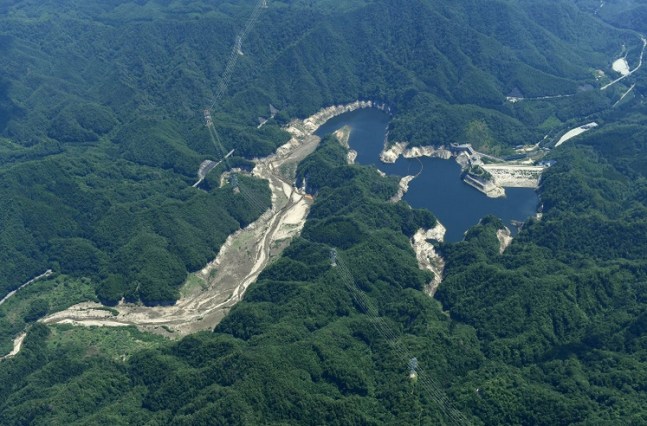
Ogaki Dam in Namie, Fukushima Prefecture, as seen from a Mainichi Shimbun helicopter in July 2016, contains high concentrations of radioactive cesium exceeding the limit set for designated waste.
High levels of radioactive cesium pooling at dams near Fukushima nuke plant
High concentrations of radioactive cesium have been accumulating at the bottom of 10 major dams within a 50-kilometer radius from the disaster-stricken Fukushima No. 1 Nuclear Power Plant, a survey by the Environment Ministry has found.
Radioactive cesium emanating from the 2011 nuclear disaster is pooling at those dams, which are used to hold drinking water and for agricultural use, after the substances flew into there from mountains, forests and rivers. The radiation levels at the bottom of those dams top those set for designated waste at over 8,000 becquerels per kilogram.
While the Environment Ministry plans to monitor the situation without decontaminating the dams on the grounds that radiation levels in dam water is not high enough to affect human health, experts are calling for the ministry to look into measures to counter any future risks.
The ministry began a monitoring survey on those dams and rivers downstream in September 2011 to grasp the moves of radioactive substances flowing into them from mountains and forests that are not subject to decontamination work. The survey samples water at 73 dams in Tokyo, Iwate and seven other prefectures about once every several months.
Among them, there were 10 dams in Fukushima Prefecture where the average concentration of cesium in the surface layer of bottom soil measured between fiscal 2011 and 2015 topped the regulated levels for designated waste. Those dams include Ganbe Dam in the village of Iitate with 64,439 becquerels per kilogram of cesium, Yokokawa Dam in the city of Minamisoma with 27,533 becquerels, and Mano Dam in Iitate with 26,859 becquerels.
Meanwhile, the surface water at those 10 dams contained 1-2 becquerels per liter of cesium, which is below the drinking water criteria at 10 becquerels.
While the total amount of cesium deposited at the bottom of those dams is unknown from the environment ministry’s survey, a separate study conducted at Ogaki Dam in the town of Namie by the Ministry of Agriculture, Forestry and Fisheries’ Tohoku Regional Agricultural Administration Office estimated in December 2013 that there was a combined 8 trillion becquerels of cesium 134 and cesium 137 at the dam. The figure came about after estimating the amount of accumulated cesium every 10-meter-square area based on cesium levels in sedimentary soil sampled at 110 locations at the bottom of the dam, which is for agricultural use.
The National Institute for Environmental Studies in Tsukuba, Ibaraki Prefecture, will shortly begin a full-scale survey on cesium concentrations at several dams.
“At the moment, it is best to contain cesium at those dams. If we dredge it, the substance could curl up and could contaminate rivers downstream,” said an Environment Ministry official.
http://mainichi.jp/english/articles/20160926/p2a/00m/0na/007000c
Anxiety soars as cesium builds up in Fukushima dams
Dams surrounding the stricken Fukushima No. 1 Nuclear Power Plant operated by Tokyo Electric Power Co. (TEPCO) have become de facto storage facilities for high concentrations of radioactive cesium as the element continues to accumulate.
With no effective countermeasures in sight, the government insists that water from the dams is safe, but to local residents, the government’s stance comes across as the shelving of a crucial problem.
“It’s best to leave it as it is,” an official from the Ministry of the Environment says, with the knowledge that in 10 dams in Fukushima Prefecture, there is soil containing concentrations of cesium over the limit set for designated waste — or over 8,000 becquerels per kilogram.
According to monitoring procedures carried out by the ministry, the levels of radioactive cesium detected in the dams’ waters, at 1 to 2 becquerels per liter, are well below the maximum amount permitted in drinking water, which is 10 becquerels per liter. The air radiation doses in the dams’ surrounding areas are at a maximum 2 microsieverts per hour, which the ministry says “does not immediately affect humans, if they avoid going near the dams.” This information is the main basis behind the central government’s wait-and-see stance. For the time being, the cesium appears to have attached itself to soil and is collected at the bottom of the dams, with the water above it blocking radiation from reaching and affecting the surrounding areas.
In a basic policy based on a special law, passed in August 2011, on measures for dealing with radioactive material following the onset of the Fukushima nuclear disaster, the Environment Ministry stipulates the decontamination of areas necessary from “the standpoint of protecting human health.” The ministry argues that as long as high concentrations of cesium at the bottom of multiple dams in Fukushima Prefecture do not pose imminent danger to human health, there are no legal problems in the ministry refraining from taking action.
“If the dams dry up due to water shortages, we just have to keep people from getting close to them,” the aforementioned ministry official says. “If we were to try to decontaminate the dams, how would we secure water sources while the work is in progress? The impact of trying to decontaminate the dams under the current state of affairs would be greater than not doing anything.”
This stance taken by the central government has drawn protests from local residents.
“The Environment Ministry only says that it will monitor the dams’ water and the surrounding areas. They say, ‘We’ll deal with anything that comes up,’ but when asked what they plan to do if the dams break, they have no answers. It’s painful to us that we can only give town residents the answers that the Environment Ministry gives us,” says an official with the revitalization division of the Namie Municipal Government. The central government is set to lift evacuation orders for a part of the Fukushima Prefecture town of Namie in spring of 2017.
According to a Ministry of Agriculture, Forestry and Fisheries survey, Ogaki Dam, an agricultural dam in Namie, was estimated to have sediment totaling approximately 8 trillion becquerels of cesium as of December 2013. The agriculture ministry plans to re-survey the dam’s accumulated cesium amounts and water safety before the water is used for agricultural purposes. Agricultural and fishery products from Fukushima Prefecture are tested to ensure that radioactive substances that they contain are below the maximum permissible amounts stipulated by law before they are shipped for distribution.
Still, one town official worries how revelations of high levels of radioactive material in local dams will affect consumers. “No matter how much they are told that the water is safe, will consumers buy agricultural products from Namie, knowing that there is cesium at the bottom of local dams?”
A 57-year-old vegetable farmer from Namie who has been evacuated to the Fukushima Prefecture city of Iwaki says, “The central government keeps on emphasizing that the dams are safe, but doesn’t seem to be considering any fundamental solutions to the problem. If this state of affairs persists, we won’t be able to return to Namie with peace of mind, nor will it be easy to resume farming.”
http://mainichi.jp/english/articles/20160926/p2a/00m/0na/011000c
Records of Diet’s Fukushima investigation still under wraps
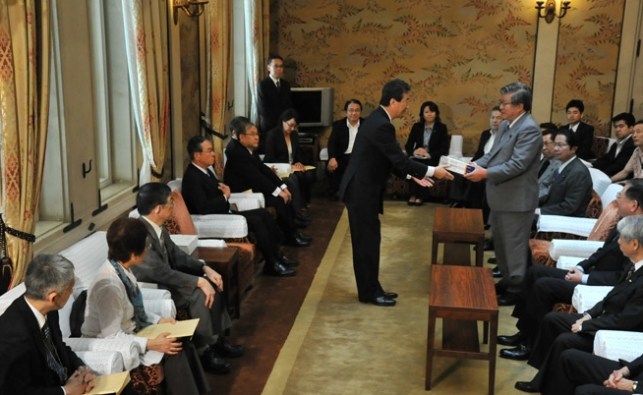
Kiyoshi Kurokawa, chairman of the Fukushima Nuclear Accident Independent Investigation Commission, presents the final report to Lower House Speaker Takahiro Yokomichi, right, in July 2012.
Five years after the accident at the Fukushima No. 1 nuclear power plant, the Diet is still sitting on a trove of raw documents and testimonies of more than 1,100 individuals who were on the front lines during the crisis.
The cache was compiled by the Fukushima Nuclear Accident Independent Investigation Commission, which released a report of its findings that totaled about 600 pages in July 2012.
The documents collected by that commission, including the testimonies of 1,167 individuals, have still not been released to the public more than four years after its disbandment.
Yasunori Sone, a political science professor at Tokyo’s Keio University, said the documents should, in principle, be released to the public because the investigation was conducted by the Diet on behalf of the people.
“The Fukushima Nuclear Accident Independent Investigation Commission was the first established in the Diet with the authority to carry out a thorough investigation,” Sone said. “Disclosure rules should be decided on quickly because it will serve as a precedent for future commissions.”
However, the documents submitted to the commission by the central government as well as Tokyo Electric Power Co., operator of the Fukushima plant, remain in storage at the National Diet Library, along with more than 900 hours of questioning of the 1,167 individuals, many of whom worked to bring the accident under control.
Some of the testimony was given on condition that it would not be released.
For that reason, after the commission disbanded, the rules and administration committees of the two chambers of the Diet were to have established rules for disclosing the commission records.
The commission had left behind a record of its investigation as well as the source of the documents it had accumulated because it felt that it would be helpful when the documents were eventually released.
“It will be possible to learn about the background to the nuclear accident from new reports or books that are written based on the documents,” said Kiyoshi Kurokawa, a professor emeritus at the University of Tokyo, who chaired the commission. “A fundamental point to not repeating mistakes is to learn from one’s past errors.”
Discussions within the rules and administration committees were disrupted when then Prime Minister Yoshihiko Noda dissolved the Lower House in November 2012 and called a snap election.
The December election brought the Liberal Democratic Party and its junior coalition partner, Komeito, back in control of government.
A multiparty group of lawmakers who were seeking to end dependence on nuclear energy asked that the rules and administration committees resume work on establishing disclosure rules. However, a subcommittee held one session that focused on presenting the opinions of members.
“Both the ruling and opposition parties are hesitant about releasing the documents because there is the possibility that they contain contents that are disadvantageous to the LDP, which had pushed nuclear energy, and the then Democratic Party of Japan, which had to deal with the nuclear accident,” said a member of that multiparty group.
The disclosure of the documents is not the only area in which the Diet has been less than aggressive.
In its report, the commission included seven recommendations, including the establishment of a new independent investigation committee, made up mainly of experts from the private sector, to conduct further studies into unanswered questions about the accident.
However, the rules and administration committees have yet to discuss the possibility of establishing such an investigative committee.
The commission also recommended the establishment of special committees in both chambers of the Diet to oversee the nuclear regulatory structure.
In 2013, a Special Committee for Investigation of Nuclear Power Issues was established separately in the two chambers.
However, those special committees have been turned into venues to promote nuclear energy. For example, committee members who were originally from labor unions of the electric power companies or who represented districts where nuclear plants were based criticized the Nuclear Regulation Authority for its strict standards regarding the resumption of operations at nuclear plants.
In a similar manner, the special committees also asked for a review of the rule that limited nuclear plants to a maximum 40-year operating life.
Tomoko Abe, a Democratic Party member who serves as secretary-general of the multiparty group seeking zero nuclear power generation, said, “Although there are some issues regarding the nuclear accident that have become clearer with the passage of time, the arena for looking into those issues has been closed off. It is the responsibility of the legislative branch to set up a structure that will continue to examine the nuclear accident.”
Fukushima Children Fund
Some people ask me how they can help the Fukushima victims, and especially the children not evacuated and condemned to live in highly contaminated environment.
You may help with a donation the Fukushima Children’s Fund.
Fukushima Children’s Fund has promoted the movement of collecting donations and of donating food radiation measuring instruments and whole-body radiation detectors (whole-body counters).
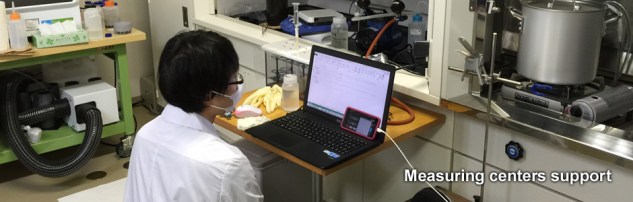
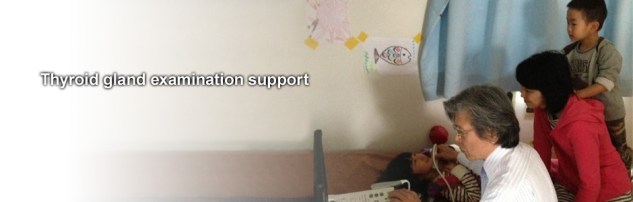
F.C.F. has also undertaken a recuperation project for the children living in radioactive contamination areas. We hope this recuperation in a radiation-free place will help the children to decrease their internal radiation exposure and strengthen their immune system.
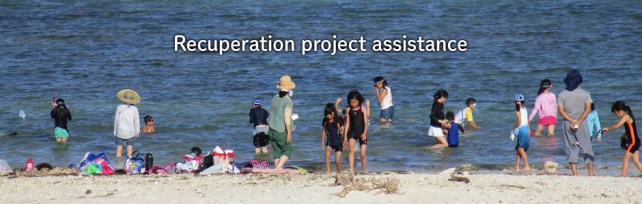
Any amount will be greatly appreciated.
About Fukushima Children’s Fund
F.C.F. was established in June in 2011 about three months after the outset of the Fukushima nuclear incident.
For the Fukushima nuclear incident victims, F.C.F. as a sister group of the Chernobyl Children’s Fund, Japan is now trying to make the most of its twenty years of experience with the Chernobyl nuclear incident victims.
| Chief Secretary | Shin’ichi Kurobe (a pediatrician / a medical adviser of the C.C.F.J.) |
| Organizers | Yukiko Mukai (an organizer of the C.C.F.J.) and others |
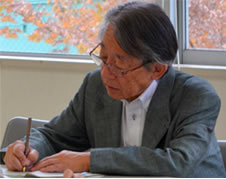
The Profile of Shin’ichi Kurobe
Mr. Kurobe, born in Tokyo in 1941, graduated with a degree in medicine from Keio University. He worked as a pediatrician at Saitama National Hospital, at Fukiage Kyoritsu Clinic, and at Horinouchi Clinic. Since 2012 he has worked as the director of the Suzushiro Clinic.
He started the movement of reducing medical radiation exposure and achieved one of his goals, the abolition of chest x-ray exams at elementary and junior-high schools in Japan. It was because he saw many people who unnecessary exposed to radiation as a result of careless x-ray exams. Hearing about his achievement, C.C.F.J. asked him to be its adviser.
After the March 2011 nuclear incident, he became the head of Fukushima Children’s Fund in order to support the Japanese children.
Recovery Project in Southern Japan, in Kumi-no-sato, Kumejima Island, Okinawa
“Voices from mothers”
We have become healthy both physically and mentally, and I have realized the splendor of Kumi-no-sato. I felt as if I gradually got out of my shell which I had shut myself up in since the Fukushima nuclear incident. Kumi-no-sato is a sacred place of healing. I now realize that we are so lucky to receive loving kindness from everyone.
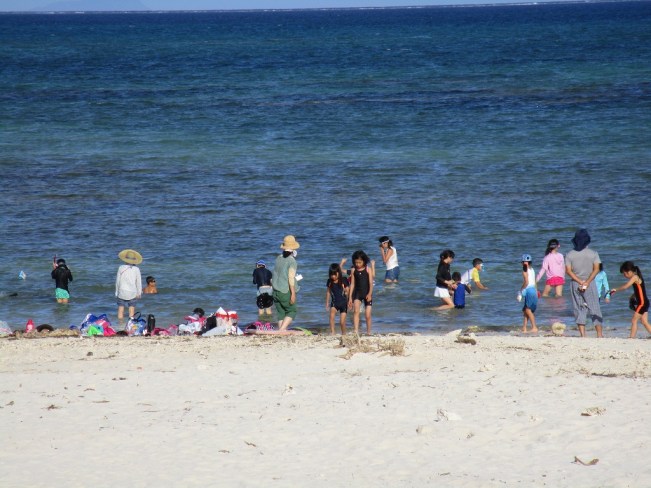
In Fukushima prefecture, people under the age of 18 started receiving medical care for free, the development of hospitals and inpatient facilities is underway after the nuclear power incident. Even more important than that, I am convinced in order to protect the children from diseases, facilities such as Kumi-no-Sato are necessary.
Since the nuclear power incident, I live in constant fear and I feel that I cannot overcome such fear. Last year my children often fell ill as well; my eldest son has recently complained about chest pain. I am concerned about the influence of long-term low-dose exposure on the children’s health. We took part in this activity because I wanted to allow my children to maintain their health, away from contaminated areas.
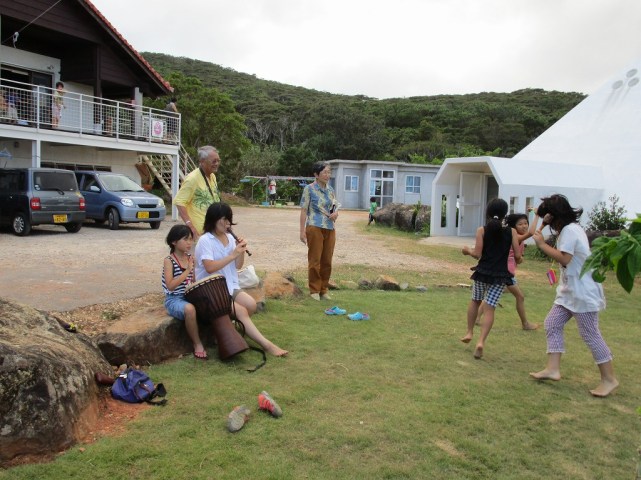
Warm climate, blue sky, the beautiful sea — my heart was uplifted from the moment of our arrival at Kumejima Airport. I was impressed so much by the welcoming faces of volunteer workers. Great people got together for us and we were treated very well.
During our days in Kumi-no-Sato, mothers from the area prepared our meals with love and care, helping us to feel that we were getting better. The children happily played outside, taking walks, picking up stones and leaves, and they ran barefoot in the grass; we mothers were happy to hang laundry outside. I felt more than ever the gratitude of having clean air, earth and water. What bliss to watch the children play with joy! It was a happy time.
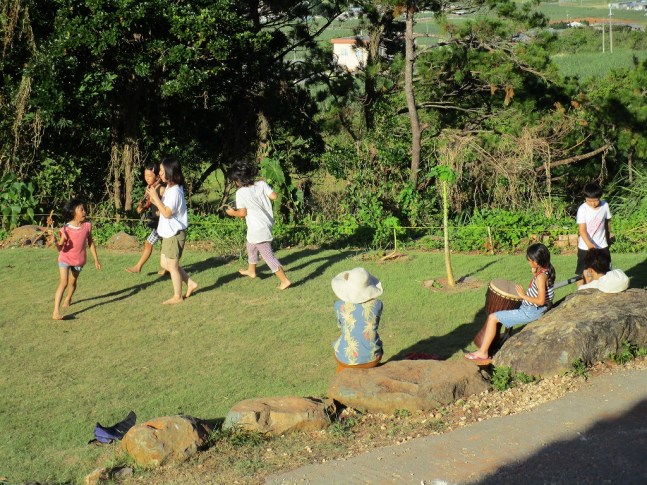
At Kumi-no-sato Mr. Hirokawa, a photo journalist/the founder of this initiative, talked to us about episodes based on his experiences. His story eerily rang exactly true in my mind. I was moved by his strength of dedication, trying to “protect children”. I felt that sharing the truth and accepting the truth is important.
At the thyroid screening during our stay, I was at first told for my own part that my thyroid was perfect. Then my 3-year-old and 6-year-old sons were diagnosed with many cysts.” I unwillingly acknowledged it as true, being painfully aware of the harshness of reality.
One day I was asked by my second son “Am I going to die soon?”
It is not just a matter of thyroid problem; there are various concerns and health hazards.
I want to leave Fukushima if possible, but my husband has no intention of ending his business that he inherited from his grandfather. If it comes to evacuation, it will be only the children and me. I cannot decide to leave because it would tear my family apart. I have often asked myself if it is really safe for us to keep living in Fukushima Pref. though.
Already I feel as if Kumi-no-sato is a second home for us. I would like to thank the people of Kumejima for their generosity and hospitality. We hope a lot of children from Fukushima can visit Kumi-no-Sato and become healthy in those lovely surroundings. We would like to ideally visit once every six months to maintain our health.
We need the continued support of everyone and even more people in the future. I hope you will cooperate with us and support us. I am thinking of starting a fundraising campaign of my own. Without having to sacrifice our children’s bright futures, I want to be creative in the process of doing this. Thank you very much.
Abe Emi (Iwaki City, Fukushima Pref.)
We’d at least like to take our kids to recuperate regularly
I can’t thank you enough for your hospitality. I was able to take my children who have been having health problems such as asthma since last year to recuperate, and I would like to thank those who supported us.

In an environment where we didn’t have to worry about playing, touching, and eating, we never imagined being so happy in our ordinary lives.
It’s been more than a month since we came back from Kumi-no-sato. Now in Fukushima Pref., I go out with a Geiger counter (dosimeter) in my hand and check where the food comes from. I was getting used to it, but then remembered that it’s not normal to live this way.
In Iwaki City where I live, there are the mountains and the sea. We used to go on a picnic in spring, swimming in the sea and the river and catching insects in summer, gathering acorns/chestnuts and harvesting potatoes in fall…, but because of the nuclear incident, we can’t do that anymore. Every spring, we used to look forward to harvesting strawberries and bamboo shoots in our garden. However, nowadays we should limit the time with a portable Geiger counter in hand even when playing in the park.
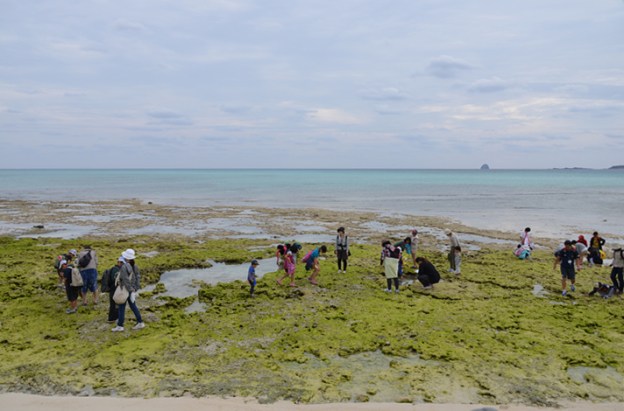
In Kumejima, we spent time outdoors, without checking the clock from morning until evening, swimming in the sea, lying in the grass, and touching all manner of living things. The children were all so happy throughout our stay there, and I felt so satisfied to raise my kids in nature.
I am glad to have met and talked to the volunteer workers of Kumi-no-sato, as well as the mothers from Fukushima, whom I still keep in touch with. In particular, the meeting with Mr. Hirokawa was very important to learn the facts. Hardly ever has the truth been revealed neither on TV nor in the newspapers, and I wasn’t sure how much to believe on the internet. But after talking to Mr. Hirokawa, I felt more at ease with myself.
I often think of seeking refuge somewhere. If we were to evacuate, it would be for 15 years until our kids turn 20. Families who are split and living in two different places may have difficult lives. Then, with my husband, starting a new life in a new place may involve some big risks. Most probably we both would have to work to make ends meet. In an area with no relatives close by, we are not sure if we can both keep working. For many different reasons, there are many families who can’t leave Fukushima. For those reasons, we would at least like to take our kids to recuperate regularly.
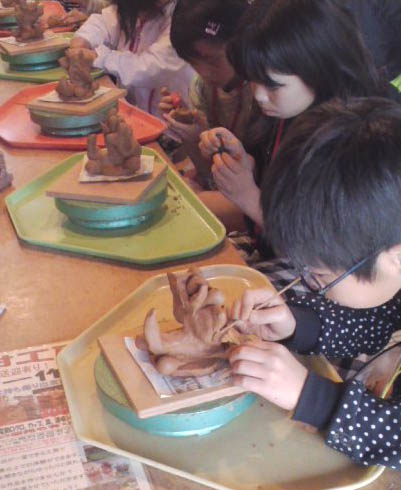
I am worried that the nuclear incident in Fukushima will be forgotten. But I get encouraged from people all over Japan who support and think of Fukushima’s children. I strongly wish more and more people will look at this problem.
K. H. (Iwaki City, Fukushima Pref.)
- 10,000 yen for special members
- 3,000 yen for regular members
- 2,000 yen for student members
- BENEFICIARY’S BANK/ACCOUNTBANK :
- THE BANK OF TOKYO-MITSUBISHI UFJ, LTD
- 3-7, KAGURAZAKA, SHINJYUKU-ku, TOKYO 162-0825, JAPAN
- BENEFICIARY’S BRANCH:
- KAGURAZAKA BRANCH
- SWIFT/BIC:
- BOTKJPJT
- ACCOUNT NAME:
- Fukushima Children’s Fund
- c/o Mukai residence Tate 2-3-4 409 Shiki City Saitama Pref. 353-0006, JAPAN
- ACCOUNT NUMBER:
- 052 - 0064011
- Official name: Fukushima Children’s Fund(Mirai-no Fukushima Kodomo Kikin)
- Purpose: Publicity and fund-raising for Fukushima nuclear victims
- Membership fees: 10,000 yen for special members, 3,000 yen for regular members, 2,000 yen for student members *
- Executives: F.C.F. has a chief secretary and several organizers. An accountant and an auditor are chosen amongst organizers.
- Each member is to promote their activities independently and creatively.
- Our activities are announced through publicity such as printing, emails, internet.
- The general meeting is held once a year to report about our activity and give the annual financial report.
-
- Office:
- c/o Mukai residence Tate 2-3-4-409 Shiki City, Saitama Pref. 353-0006, Japan
- How to make inquiry:
- E-Mail fromcherno0311@ yahoo.co.jp
- History: F.C.F. was established on June 1st, 2011. (the fiscal year starts on June 1st and ends on May 31st.)
How does the Monju fast-breeder nuclear reactor work?

The Japanese government is moving toward decommissioning the Monju prototype fast-breeder nuclear reactor in Tsuruga, Fukui Prefecture. The Mainichi answers common questions readers may have about what kind of reactor Monju is, and the state of international research on other fast-breeder reactors.
Question: The Monju reactor is supposedly a power generating device, but how does it work?
Answer: The reactor uses one of three high-speed neutrons that are released when plutonium-239 undergoes nuclear fission, causing more plutonium-239 to undergo nuclear fission and creating heat. The other two neutrons are collided with uranium-238 — which is not usable by normal nuclear reactors — to create more plutonium-239. The reactor is called a “fast-breeder” because it uses “fast” neutrons to “breed” more nuclear fuel.
Q: What were the original research objectives at Monju?
A: Generally, the development process of fast-breeder reactors is to create an experimental reactor followed by a prototype reactor, a testing reactor and then a practical-use reactor. Monju is at the second of these stages. Its research objectives included improving nuclear safety and reducing nuclear waste.
Q: What are other countries’ fast-breeder reactor programs like?
A: There are few countries that are actively involved in this kind of research. One example is Russia, which has been running its prototype reactor “BN-600” since 1980 and in 2015 it began power production at a testing reactor called “BN-800.” Russia aims to have a practical-use reactor by around 2030. Meanwhile, since 2011, China has been generating power at its testing reactor “CEFR,” and it is also aiming for a practical-use reactor by around 2030. India also planned to start a prototype reactor this year, but its plan has fallen behind schedule.
Q: What about in developed countries?
A: France is planning to begin running a reactor called ASTRID around the year 2030. However, rather than producing nuclear fuel, this reactor is primarily aimed at shortening the radioactive life of nuclear waste products, recovering resources and otherwise dealing with the issue of nuclear waste. France is aiming for commercial operation of the reactor in the 2040s.
On the other hand, the United States, after putting its prototype reactor development plans on indefinite hold in 1977 due to concerns about costs and nuclear proliferation, canceled its fast-breeder reactor plans. In 1991, Germany canceled its construction of a prototype reactor, partially due to financial difficulties. In 1994, the United Kingdom shut down its prototype reactor as well.
Fast-breeder reactors use sodium for cooling, which reacts violently when exposed to water or air, making it difficult to handle, and accidents have occurred. Another point against fast-breeder reactors is that for the time being there is little concern that uranium used for fuel at nuclear plants will run out, reducing the need for creating more nuclear fuel. (Answers by Shuichi Abe, Science & Environment News Department)
http://mainichi.jp/english/articles/20160924/p2a/00m/0na/023000c
Fukushima Possibly Turning into Another “Exotic” Tourist Destination
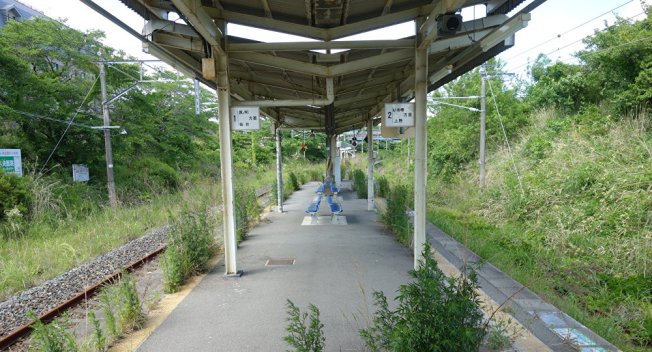
Just like Chernobyl before it, the radioactive exclusion zone surrounding the crippled Fukushima nuclear plant is starting to attract tourists, possibly turning into another of the world’s “exotic” tourist destinations.
Unlike the Chernobyl nuclear disaster which happened over 30 years ago, the Fukushima Daiichi nuclear plant catastrophe is practically a recent event. On March 11, 2011 a tsunami that followed the Tohoku earthquake smashed into the plant, causing several meltdowns and the release of radioactive material resulting in the second nuclear disaster in history to be given the Level 7 event classification of the International Nuclear Event Scale.
Yet even though the scars left by this disaster are still fresh, it seems that there are already people who consider the radioactive zone surrounding the Fukushima nuclear plant a tourist attraction.
The first project aimed at transforming the crippled Fukushima nuclear plant into a tourist attraction was presented to the Japanese authorities in 2012, only a year after the disaster, by philosopher Hiroki Azuma, the author of the Chernobyl Dark Tourism Guide, and his group of fellow enthusiasts.
According to Azuma’s vision, people should’ve been allowed to visit the area and see the process of the Fukushima plant’s decontamination with their own eyes; and by 2036 visitors should be able to approach the plant without the need to wear protective suits
Unfortunately, the prefectural administration torpedoed the idea, arguing that the word ‘tourism’ should never be applied to the catastrophe site.
But even though Azuma’s project was not to be, there are already plenty of companies organizing tours in the disaster area.
Hiroshi Miura, head of one such enterprise called NPO Nomado, told Sputnik that he first started working as a tour guide for people visiting his home city of Minamisoma, located 16 miles north of the Fukushima nuclear plant, back in 2012.
“In October 2012 I established a non-commercial organization Nomada and continued my business by creating a ’20 Kilometers Away From Fukushima-1′ tour. By 2014, just by myself, I had over 5,000 clients. In 2015 other guides and volunteers started working with me, and over 10,000 people participated in our tours,” he said.
Miura also added that the current situation at the nuclear plant is barely discussed by the media, except for the local prefectural outlets, and that the place where he used to live, located only 12 kilometers away from Fukushima Daiichi, remains in the same state as it was right after the tsunami, as no decontamination or recovery operations were conducted there.
Yuta Hirai, another tour guide working in Fukushima, also told Sputnik that there are people from all walks of life interested in visiting the site of the tragedy: scientists, students, former residents, and a considerable number of foreign tourists.
He also believes that tourism could play an important role in helping the Fukushima prefecture to recover from the ordeal of 2011.
“I believe it is important for the prefecture residents to understand that people from without are paying attention to them. They have mixed feelings about the incident, like ‘I want to forget but I don’t want to be forgotten.’ If we learn our lesson from what happened, if we understand that it must not happen again, then it could help the people of Fukushima to believe in themselves. There’s a tendency to pay greater attention to opinions from without rather than to opinions from within. So if more people from other prefectures see the situation with their own eyes, feel it and talk about it, then perhaps the current depressing situation in Fukushima may change for the better,” he said.
Ministries spar as Japan focuses on fast reactor project in France
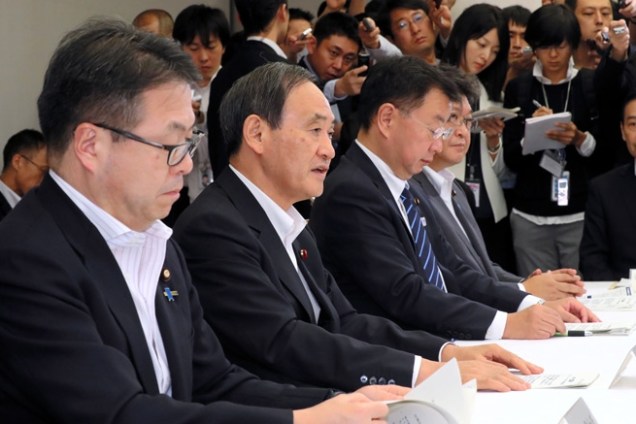
The industry and science ministries were at odds over Japan’s shift toward France for nuclear fuel recycling efforts after Tokyo decided to scrap a “made-in-Japan” pillar of its energy policy.
The industry and science ministries were at odds over Japan’s shift toward France for nuclear fuel recycling efforts after Tokyo decided to scrap a “made-in-Japan” pillar of its energy policy.
Hiroshige Seko, minister of economy, trade and industry, stressed the significance of working with France, a global leader in fast reactor technology, after a Sept. 21 meeting of Cabinet members agreed to terminate the problem-stricken Monju prototype fast-breeder reactor project.
Seko told reporters that his ministry, which is in charge of the nation’ s energy policy, is pinning its hopes on joint research, including France’s ASTRID (Advanced Sodium Technological Reactor for Industrial Demonstration) fast reactor.
“ASTRID is a crucial project for both Japan and France,” Seko said. “Japan has already participated in the project and has obtained various insights.”
The Monju fast-breeder reactor and the ASTRID fast reactor use similar technologies but are different.
Monju was designed to use plutonium as fuel for electricity generation and to produce more plutonium in the process.
ASTRID is centered on generating energy by consuming plutonium.
In addition, ASTRID is at a more advanced development stage than Monju.
There are four stages in the development of a nuclear reactor: experimental, prototype, demonstration and commercial.
ASTRID is in the demonstration stage while Monju is a prototype reactor.
Japan and France are already cooperating in the field of nuclear energy.
Prime Minister Shinzo Abe agreed that Japan would cooperate with France on preparations for a fast reactor project when he met with French President Francois Hollande in June 2013.
The two countries also concluded a tie-up in technological development and cooperation for fast reactors, including ASTRID, in May 2014.
“Prospects are brighter than Monju, and France is a reliable partner,” said an industry ministry official.
But the science ministry, which has clashed with the industry ministry over the fate of Monju, is skeptical.
It says the France-led project does not necessarily promise success, citing Super-Phenix, France’s demonstrator fast-breeder reactor that was forced to shut down after a series of accidents, including a sodium leak, like Monju.
The science ministry has oversight in the first two stages of reactor development, while the industry ministry takes over for the two more advanced stages.
ASTRID is expected to go into operation in the 2030s, but the science ministry said that schedule could face delays.
Sources familiar with the project also say ASTRID will likely cost more than initially expected.
“Japan could end up serving as a cash cow,” a senior science ministry official said.
However, the industry ministry is not budging on its stance.
“What matters is that Japan keeps alive its research on a fast reactor,” a high-ranking ministry official said. “Japan should not dwell on a home-grown project.”
Japan mulls legislation requiring local government approval for restarting Fukushima No. 2 nuclear plant
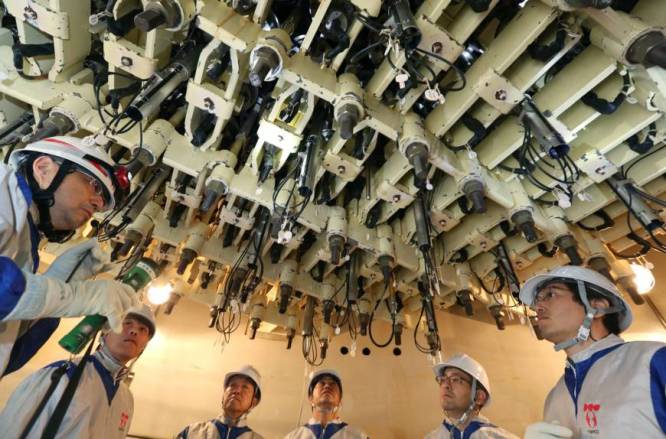
The underside of the No. 3 reactor pressure vessel at Tokyo Electric Power Co.’s Fukushima No. 2 nuclear power plant in Tomioka, Fukushima Prefecture, is seen in January 2014.
The Japanese government is considering legislation to oblige Tokyo Electric Power Company Holdings Inc. to obtain approval from local governments if it applies for restarting its Fukushima No. 2 nuclear power station, Jiji Press learned Friday.
The legislation is also expected to stipulate that the plant be decommissioned if Tepco fails to win such approval and is unable to submit an application for its restart within three years after the law takes effect, sources said.
It will be a special measure under the nuclear reactor regulation law, which does not require local government approval for restarting reactors.
The government aims to submit the legislation to the extraordinary session of the Diet that will be convened on Monday, the sources said.
All the No. 1 to No. 4 reactors at the Fukushima No. 2 plant have been offline since the March 2011 earthquake and tsunami led to a triple meltdown at the Fukushima No. 1 nuclear power station.
Although three of the four reactors at the No. 2 plant lost cooling functions temporarily in the 2011 disaster, they avoided severe accidents such as a core meltdown.
Tepco has not clarified what to do with the No. 2 plant. It is working on decommissioning the stricken No. 1 plant.
The Fukushima prefectural government and its assembly have been calling for scrapping the No. 2 plant.
The legislation could force Tepco to decommission the No. 2 plant because it raises further hurdles for resuming operations.
The government has yet to decide on details of the legislation, including the scope of local governments whose approval would be necessary for reactor restarts, the sources said.
The government allows the restart of nuclear reactors that pass the Nuclear Regulation Authority’s screening based on the stricter safety standards introduced after the accident at the Fukushima No. 1 plant.
But the government sees a need for taking special measures for the No. 2 plant because it is located near the No. 1 plant, which caused severe damage to Fukushima Prefecture, the sources said
Canada activist found guilty of harassing scientists over Fukushima fallout
Dana Dunford has sensationalized on Youtube for lucrative reasons the Pacific ocean contamination from Fukushima to the American public, having found that making the buzz was quite a good mean to raise donations from people .
He did threaten those scientists with physical violence on his Youtube videos, calling his fans to carry out “justice”.
Though those scientists studies and research depending on funding from government and corporations may be subjected to their influence, I do not believe that threats of violence are proper nor acceptable.
I personally believe that exaggeration, sensationalism, to not talk about insult and personal threat are absolutely counterproductive to our antinuclear cause.
Only truth will set us free from nuclear. Only stating facts with solid reliable proofs will help us to inform adequately the people to become able to get this dangerous, harmful, obsolete industry stopped. Furthermore, any wild exaggeration can be later used by the nuclear lobby to discredit our antinuclear cause, such as in this present occurence.

Canada activist found guilty of harassing scientists over Fukushima fallout
A Canadian environmental activist who waged a sustained online campaign against two prominent marine scientists was found guilty of criminal harassment by a court in Victoria, British Columbia, on Thursday.
The court heard that Dana Durnford, 54, threatened violence against Jay Cullen, of the University of Victoria, and Ken Buesseler, of Woods Hole Oceanographic Institution in Massachusetts, and accused them of underplaying the extent of damage to Pacific ecosystems from the 2011 Fukushima disaster.
Durnford was sentenced to three years’ probation.
“I expected and was pleased with the judge’s ruling,” Cullen said after the verdict. “Mr. Durnford, on many occasions, threatened physical violence against scientists and others who have focused their attention and expertise to better understand how the Fukushima nuclear disaster has affected the marine environment and human health. Such behavior is criminal.”
Buesseler also welcomed the ruling. Threatening violence is “never an appropriate response to scientific findings you might disagree with,” he said.
Durnford, a former professional diver, has a large online presence.
His unscripted videos, recorded in a mock television studio, present what he purports to be research that contradicts mainstream scientific findings.
He alleges collusion between the global scientific establishment and the nuclear industry over the dangers presented by the nuclear industry and, in particular, the Fukushima debacle.
Durnford, of Powell River, British Columbia, did not respond to phone calls and an email for comment on Friday.
In a video apparently recorded shortly before the trial began this week, he alluded to trouble meeting court-related costs.
“They bankrupted us in these court proceedings in order to silence us,” he told viewers.
Cows in Fukushima Radiation Zone Find New Purpose: Science

NAMIE, Japan — In an abandoned Japanese village, cows grazing in lush green plains begin to gather when they hear the familiar rumble of the ranch owner’s mini-pickup. This isn’t feeding time, though.
Instead, the animals are about to be measured for how they’re affected by living in radiation — radioactivity that is 15 times the safe benchmark. For these cows’ pasture sits near Fukushima, a name now synonymous with nuclear disaster.
The area was once a haven for agriculture with more than 3,500 cattle and other livestock. Ranchers who refused a government order to kill their cows continue to feed and tend about 200 of them. The herds won’t be used as food; now science is their mission.
Researchers visit every three months to test livestock living within a 20-kilometer (12-mile) radius of the Fukushima plant, where three reactors had core meltdowns after the facility was swamped by a tsunami in 2011. It is the first-ever study of the impact on large mammals of extended exposure to low-level radiation.
The ranchers are breeders, as opposed to those raising cattle to sell for beef, and tend to be attached to their animals. They treat them almost as if they were children, even giving them names. The research gives them a reason to keep their beloved cows alive, and to hope that someday ranching might safely return here.
Under a drizzling rain, doctors and volunteers wearing blue Tyvek protective suits draw the cows into a handmade pen of aluminum pipes. Five to six cows line up in the cage and are tied with a rope around their head and through their nose ring for solid support, so they won’t be hurt when the needle draws blood from their neck.
The gentle beasts moo from discomfort. The doctors work swiftly, drawing blood, collecting urine and checking for lumps or swollen lymph nodes. The check-up takes five minutes or less per cow.
Namie, 11 kilometers (7 miles) northwest of the plant, is a ghost town with no prospect of being habitable for years. But 57-year-old Fumikazu Watanabe comes every day to a ranch to feed 30 to 40 cows owned by seven farmers.
“What is the meaning of slaughtering the cows?” Watanabe said at a worn-out barn where healthy cows used to spend the night tending to their calves. The bones of animals that have died litter the ground outside.
“Keeping the cows alive for research purposes means that we can pass on the study to our next generation instead of simply leaving a negative legacy,” he said.
The research team, made up of veterinary and radiation experts from Iwate University, Tokai University and Kitasato University, was established a year after the meltdowns. They formed a nonprofit group called Society for Animal Refugee & Environment post Nuclear Disaster. Members volunteer to take the blood and urine samples and test them.
In 2012, the Japanese government ordered all livestock in the restricted area killed for fear that the breeding cows would continue to reproduce, and that cows exposed to radiation would have no sale value.
Keiji Okada, associate professor of veterinary medicine and agriculture at Iwate University, said the government considered it pointless to study the animals, since it couldn’t determine how much radiation they were exposed to immediately after the disaster.
Okada disagrees. He said the data will help researchers learn whether farmers can eventually work in affected zones.
“There are no precedent studies of animals being exposed to low-dose radiation, and we have no idea what results we are going to get,” he said. “That is exactly why it needs to be monitored.”
So far, the animals’ internal organs and reproductive functions have shown no significant abnormality particularly linked to radiation exposure, Okada said, but it’s too early to draw conclusions about thyroid cancer and leukemia.
Radiation could cause leukemia, but so could mosquitoes, which have infected cattle around the world with bovine leukemia virus.
“Even if we detect leukemia in the cows, we don’t know whether it’s caused by radiation or if it’s a bovine leukemia from a virus,” Okada said. “It is this year’s objective to be able to differentiate the two.”
Many cows have died during the study period, but food shortages have played a role, making it all the more difficult the doctors to determine causes. The dead cows are dissected and the radiation dosage in their organs is measured.
Is radiation killing the cows, or making them sick? Okada said the research team is working toward reaching a conclusion by March. The team worries that the study results could spark overly broad fears that the region will no longer be habitable or fit for agriculture.
Ultimately, Okada said, the team believes that further monitoring of the animals will show under what conditions it is safe to raise livestock exposed to low-level radiation, and how best to deal with such a leak should it happen again.
Yukio Yamamoto, owner of the large Yamamoto Ranch surrounded by a mountain, a river and a vast plain, travels three hours roundtrip from his temporary home to feed his remaining cows.
Yamamoto initially followed government orders to kill his cattle. He watched a mother cow being killed while a calf was still suckling on its milk, and then the calf following that.
“The cows are my family. How do I dare kill them?” Yamamoto said. “If there is a God, I’m sure some day we would be rewarded for the sacrifice we are making.”
He hopes one day to see his barn come to life again, filled with a hundred cows and calves cared for by his children and grandchildren.
http://www.nytimes.com/aponline/2016/09/22/world/asia/ap-as-japan-fukushima-cows.html?_r=0
6.4 quake hits Japan southeast of Tokyo

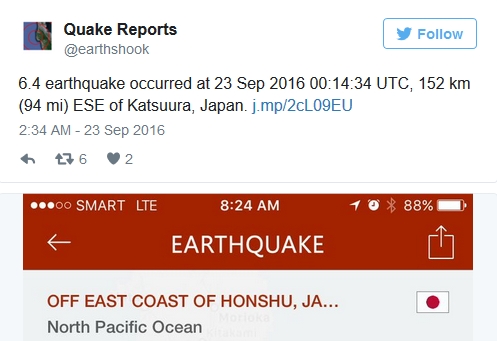

Japan’s Meteorological Agency reported that the earthquake “has caused no damage to Japan,” while adding that “slight sea-level changes in coastal regions” may be observed.
No immediate tsunami warning has been issued.
Small tremors were reportedly felt in nine Japanese prefectures, including in Fukushima and Tokyo.
Japan is located in a seismically active region at the juncture of three major tectonic plates: North American, Pacific and Philippine Sea.
https://www.rt.com/news/360331-tokyo-southeast-quake-reaction/#.V-R_nRi_Fis.facebook
http://www.jma.go.jp/en/quake/20160921012819495-210122.html
http://www.jma.go.jp/en/quake/20160923092111495-230914.html
A whole lot of shallow quakes in the trench
http://www.japanquakemap.com/week
Radioactivity Measuring From Hirono to Okuma, Fukushima Prefecture
As a result of the measurement of radioactivity from the town of Hirono to the town of Okuma.
Measurements and vido from Tarachine Medical Center, a citizen organized radiation measuring center located in Iwaki city, Fukushima Prefecture.
Credit to tarachine Medical Center
Radiocontamination of Tokyo
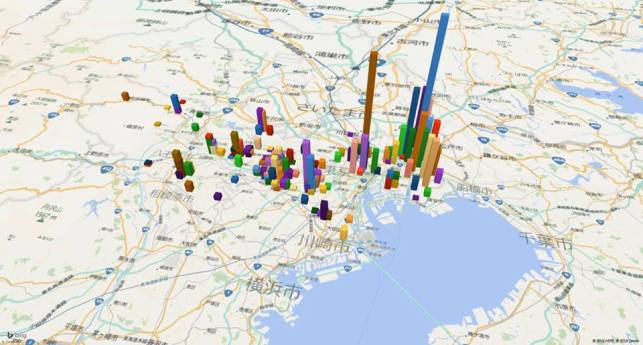
Based on the data released by everyone to the Minna-san data website, a map of the soil contamination of Tokyo by radioactivity was put together.
This data is the result of measurements from 2013 to now 2016.
You can see that the radioactive contamination spread over a wide range of Tokyo.
Particularly, Katsushika district, Edogawa district, Shinjuku district, Setagaya district and Bunkyō district.
Radioactive contamination of both radioactive cesium 134 and 137 exceeding 500Bq / kg has been confirmed.
Among other locations: Inagi city/ Katsushi district / Edogawa district / Eto district / Arakawa district / Kokubunji city / Kokuritsu City / Komae City / Mitaka City / Kodaira city/ Shinjuku district / Suginami district/ Setagaya district / Nishitama gun / Ome city / Chiyoda district / Ota District/ Oshima-cho / Machida city / Chofu city / Higashi Kurume City / Higashimurayama city / Hachioji city / Fuchu city / Musashino City / Fukuo city/ Bunkyo district / Toshima district/ Kita district / Tachikawa city.
Read more at: (in Japanese)
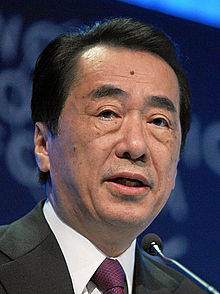
Reassessing the 3.11 Disaster and the Future of Nuclear Power in Japan: An Interview with Former Prime Minister Kan Naoto
Interview by Vincenzo Capodici, Introduction by Shaun Burnie, Translation by Richard Minear
Introduction
For more than two decades, the global nuclear industry has attempted to frame the debate on nuclear power within the context of climate change: nuclear power is better than any of the alternatives. So the argument went. Ambitious nuclear expansion plans inthe United States and Japan, two of the largest existing markets, and the growth of nuclear power in China appeared to show—superficially at least—that the technology had a future. At least in terms of political rhetoric and media perception, it appeared to be a winning argument. Then came March 11, 2011. Those most determined to promote nuclear power even cited the Fukushima Daiichi accident as a reason for expanding nuclear power: impacts were low, no one died, radiation levels are not a risk. So claimeda handful of commentators in the international (particularly English-language) media.
However,from the start of the accident at Fukushima Daiichi on March 11 2011,the harsh reality of nuclear power was exposed to billions of people across the planet, and in particular to the population of Japan, including the more than 160,000 people displaced by the disaster, many of whom are still unable to return to their homes, and scores of millions more threatened had worst case scenarios occurred. One authoritative voice that has been central to exposing the myth-making of the nuclear industry and its supporters has been that of KanNaoto, Prime Minister in 2011. His conversion from promoter to stern critic may be simple to understand, but it is no less commendable for its bravery. When the survival of half the society you are elected to serve and protect is threatened by a technology that is essentially an expensive way to boil water, then something is clearly wrong. Japan avoided societal destruction thanks in large part to the dedication of workers at the crippled nuclear plant, but also to the intervention of Kan and his staff, and to luck. Had it not been for a leaking pipe into the cooling pool of Unit 4 that maintained sufficient water levels, the highly irradiated spent fuel in the pool, including the entire core only recently removed from the reactor core, would have been exposed, releasing an amount of radioactivity far in excess of that released from the other three reactors. The cascade of subsequent events would have meant total loss of control of the other reactors, including their spent fuel pools and requiring massive evacuation extending throughout metropolitan Tokyo, as Prime Minister Kan feared. That three former Prime Ministers of Japan are not just opposed to nuclear power but actively campaigning against it is unprecedented in global politics and is evidence of the scale of the threat that Fukushima posed to tens of millions ofJapanese.
The reality is thatin terms of electricity share and relative to renewable energy,nuclear power has been in decline globally for two decades.Since the FukushimaDaiichiaccident, this decline has only increased in pace. The nuclear industry knew full well that nuclear power could not be scaled up to the level required to make a serious impact on global emissions. But that was never the point. The industry adopted the climate-change argument as a survival strategy: to ensure extending the life of existing aging reactors and make possible the addition of some new nuclear capacity in the coming decades—sufficient at least to allow a core nuclear industrial infrastructure to survive to mid-century.The dream was to survive to mid-century, when limitless energy would be realized by the deployment of commercial plutonium fast-breeder reactors and other generation IV designs. It was always a myth, but it had a commercial and strategic rationale for the power companies, nuclear suppliers and their political allies.
The basis for the Fukushima Daiichi accident began long before March 11th 2011, when decisions were made to build and operate reactors in a nation almost uniquely vulnerable to major seismic events. More than five years on, the accident continues with a legacy that will stretch over the decades. Preventing the next catastrophic accident in Japan is now a passion of the former Prime Minister, joining as he has the majority of the people of Japan determined to transition to a society based on renewable energy. He is surely correct that the end of nuclear power in Japan is possible. The utilities remain in crisis, with only three reactors operating, and legal challenges have been launched across the nation. No matter what policy the government chooses, the basis for Japan’s entire nuclear fuel cycle policy, which is based on plutonium separation at Rokkasho-mura and its use in the Monju reactor and its fantasy successor reactors, is in a worse state than ever before. But as KanNaotoknows better than most, this is an industry entrenched within the establishment and still wields enormous influence. Its end is not guaranteed. Determination and dedication will be needed to defeat it. Fortunately, the Japanese people have these in abundance. SB
The Interview
Q: What is your central message?
Kan: Up until the accident at the Fukushima reactor, I too was confident that since Japanese technology is of high quality, no Chernobyl-like event was possible.
But in fact when I came face to face with Fukushima, I learned I was completely mistaken. I learned first and foremost that we stood on the brink of disaster: had the incident spread only slightly, half the territory of Japan, half the area of metropolitan Tokyo would have been irradiated and 50,000,000 people would have had to evacuate.
Half one’s country would be irradiated, nearly half of the population would have to flee: to the extent it’s conceivable, only defeat in major war is comparable.
That the risk was so enormous: that is what in the first place I want all of you, all the Japanese, all the world’s people to realize.
Q: You yourself are a physicist, yet you don’t believe in the first analysis that people can handle nuclear power? Don’t you believe that there are technical advances and that in the end it will be safe to use?
Kan: As a rule, all technologies involve risk. For example, automobiles have accidents; airplanes, too. But the scale of the risk if an accident happens affects the question whether or not to use that technology. You compare the plus of using it and on the other hand the minus of not using it. We learned that with nuclear reactors, the Fukushima nuclear reactors, the risk was such that 50,000,000 people nearly had to evacuate. Moreover, if we had not used nuclear reactors—in fact, after the incident, there was a period of about two years when we didn’t use nuclear power and there was no great impact on the public welfare, nor any economic impact either. So when you take these factors as a whole into account, in a broad sense there is no plus to using nuclear power. That is my judgment.
One more thing. In the matter of the difference between nuclear power and other technologies, controlling the radiation is in the final analysis extremely difficult.
For example, plutonium emits radiation for a long time. Its half-life is 24,000 years, so because nuclear waste contains plutonium—in its disposal, even if you let it sit and don’t use it—its half-life is 24,000 years, in effect forever. So it’s a very difficult technology to use—an additional point I want to make.
Q: It figured a bit ago in the lecture by Professor Prasser, that in third-generation reactors, risk can be avoided. What is your response?
Kan: It’s as Professor Khwostowa said: we’ve said that even with many nuclear reactors, an event inside a reactor like the Fukushima nuclear accident or a Chernobyl-sized event would occur only once in a million years; but in fact, in the past sixty years, we’ve had Three Mile Island, Chernobyl, Fukushima. Professor Prasser says it’s getting gradually safer, but in fact accidents have happened with greater frequency and on a larger scale than was foreseen. So partial improvements are possible, as Professor Prasser says, but saying that doesn’t mean that accidents won’t happen. Equipment causes accidents, but so do humans.
Q: Today it’s five years after Fukushima. What is the situation in Japan today? We hear that there are plans beginning in 2018 to return the refugees to their homes. To what extent is the clean-up complete?
Kan: Let me describe conditions on site at Fukushima. Reactors #1, #2, #3 melted down, and the melted nuclear fuel still sits in the containment vessel; every day they introduce water to cool it. Radioactivity in the vessel of #2, they say, is 70 sieverts—not microsieverts or millisieverts, 70 sieverts. If humans approach a site that is radiating 70 sieverts, they die within five minutes. That situation has held ever since: that’s the current situation.
Moreover, the water they introduce leaves the containment vessel and is said to be recirculated, but in fact it mixes with groundwater, and some flows into the ocean. Prime Minister Abe used the words “under control,” but Japanese experts, including me, consider it not under control if part is flowing into the ocean. All the experts see it this way.
As for the area outside the site, more than 100,000 people have fled the Fukushima area.
So now the government is pushing residential decontamination and beyond that the decontamination of agricultural land.
Even if you decontaminate the soil, it’s only a temporary or partial reduction in radioactivity; in very many cases cesium comes down from the mountains, it returns.
The Fukushima prefectural government and the government say that certain of the areas where decontamination has been completed are habitable, so people have until 2018 to return; moreover, beyond that date, they won’t give aid to the people who have fled. But I and others think there’s still danger and that the support should be continued at the same level for people who conclude on their own that it’s still dangerous—that’s what we’re saying.
Given the conditions on site and the conditions of those who have fled, you simply can’t say that the clean-up is complete.
Q: Since the Fukushima accident, you have become a strong advocate of getting rid of nuclear reactors; yet in the end, the Abe regime came to power, and it is going in the opposite direction: three reactors are now in operation. As you see this happening, are you angry?
Kan: Clearly what Prime Minister Abe is trying to do—his nuclear reactor policy or energy policy—is mistaken. I am strongly opposed to current policy.
But are things moving steadily backward? Three reactors are indeed in operation. However, phrase it differently: only three are in operation. Why only three? Most—more than half the people—are still resisting strongly. From now on, if it should come to new nuclear plants, say, or to extending the licenses of existing nuclear plants, popular opposition is extremely strong, so that won’t be at all easy. In that sense, Japan’s situation today is a very harsh opposition—a tug of war—between the Abe government, intent on retrogression, and the people, who are heading toward abolishing nuclear reactors.
Two of Prime Minister Abe’s closest advisors are opposed to his policy on nuclear power.
One is his wife. The other is former Prime Minister Koizumi, who promoted him.
Q: Last question: please talk about the possibility that within ten years Japan will do away with nuclear power.
Kan: In the long run, it will disappear gradually. But if you ask whether it will disappear in the next ten years, I can’t say. For example, even in my own party opinion is divided; some hope to do away with it in the 2030s. So I can’t say whether it will disappear completely in the next ten years, but taking the long view, it will surely be gone, for example, by the year 2050 or 2070. The most important reason is economic. It has become clear that compared with other forms of energy, the cost of nuclear energy is high.
Q: Thank you.
TEPCO: Groundwater Surfaced and Possibly Leaked at Fukushima Plant During Typhoon
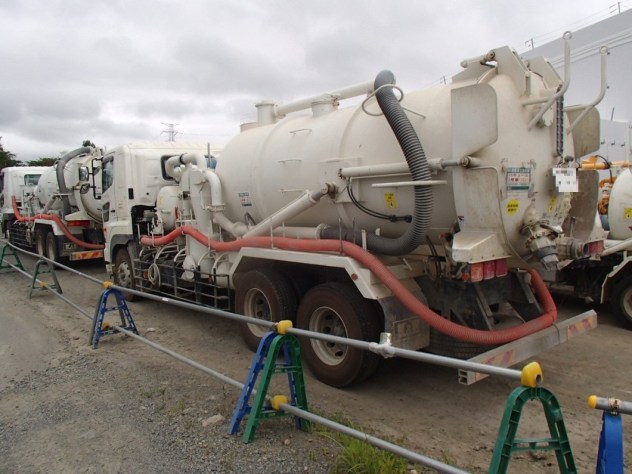
Fukushima Daiichi Floods, Show Lack of Preparedness
News reports indicated that groundwater at Fukushima Daiichi had risen so high it broke the surface and flowed into the port as a recent typhoon passed through the area. As TEPCO prepared to close the steel sea wall and freeze the underground frozen wall, NRA stopped the process for a review of the potential for flooding within the reactor building area.
The conclusion was that TEPCO thought they could sufficiently remove excess groundwater with the sump pump subdrain system near the reactor buildings. There were also concerns of the groundwater dropping too low, allowing contaminated water to flow out of the reactor building basements.
With all this review, nobody conceived a need for more water removal capacity. TEPCO ended up employing some sort of makeshift pumps and also using septic tank trucks to pump up water. This lack of anywhere for rainwater to go may have contributed to the water flowing out into the port as it built up on the surface.
Without some major changes at Daiichi this problem of groundwater rising to the surface and flowing into the port or the sea will continue to happen when significant rainfall takes place.
http://www.fukuleaks.org/web/?p=15765
Typhoon rain raises tainted Fukushima plant groundwater to surface
Heavy rain brought by Typhoon Malakas caused contaminated groundwater to rise to ground level at the radiation-hit Fukushima No. 1 nuclear plant Tuesday night, raising fears of tainted water flooding out to the plant’s port area, its operator said.
Tokyo Electric Power Company Holdings Inc. said in a press release that plant workers are doing their utmost to pump up tainted groundwater at the Fukushima compound, while trying to measure the level of radioactive substances contained in the water.
Under normal circumstances, groundwater taken from wells around the damaged reactor buildings at the Fukushima plant is filtered and stored in numerous tanks built on the compound.
Shortly before 10 p.m. Tuesday, groundwater reached the surface level at an observation well near the seawall at the power plant’s port, and at 11:30 p.m. Tuesday, groundwater stood at 3 cm above the surface level, Tepco said.
The well has a far higher wall and the ground around it is paved, the company said, playing down the possibility that any water flowed out of the well.
By 9 a.m. Wednesday, the water level had dropped to 3 cm below the surface.
Meanwhile, some rainwater may have flowed directly into the port before seeping underground, according to the company.
Tepco will continue pumping groundwater around the seawall, located near the damaged No. 1 to No. 4 reactors, and carry out close examinations of water inside the port, the company said.
In order to curb the flow of groundwater into the sea, the company has covered the seawall with water shields and carries out groundwater pumping operations.
Typhoon Malakas itself was downgraded to an extratropical depression at around 9 p.m. Tuesday as it moved along the coast of the Tokai region and swayed toward the Pacific. It was initially forecast to hit the Kanto region in the early hours of Wednesday.
The previous typhoon, Lionrock, earlier this month killed at least 17 people. Before Lionrock, two typhoons had claimed at least two lives in the northeast.
TEPCO: Possible water leak at Fukushima plant during typhoon
Tokyo Electric Power Co. said Sept. 21 it will check for radiation contamination in seawater near its crippled Fukushima nuclear plant after heavy rain from Typhoon No. 16 brought tainted groundwater to the surface.
The water reached the top of wells at the Fukushima No. 1 nuclear power plant, and there is a possibility that some of it spilled into the sea.
“We will analyze the seawater because we cannot determine whether groundwater containing radioactive materials has actually leaked,” a TEPCO official said.
The official added that the company believes most of the water that may have poured into the sea was rainwater that had not seeped into the ground.
The utility constantly monitors groundwater levels in wells around the reactor buildings at the plant to prevent overflows.
TEPCO said groundwater in wells on the seaside area of the nuclear complex reached the surface around 10 p.m. on Sept. 20 amid the heavy rain brought by the approaching typhoon. The water kept rising despite workers’ efforts to lower the level using makeshift pumps and septic tank trucks.
The groundwater level remained the same as of 7 a.m. on Sept. 21 before it finally dropped to about 3 centimeters from the surface two hours later, the company said.
According to TEPCO, about 575 millimeters of rain fell in the area of the nuclear plant from Aug. 1 to Sept. 20.
http://www.asahi.com/ajw/articles/AJ201609210047.html
1 This Month





PLEASE OPPOSE HR 8255 AND S.3639 – bills would accelerate satellite deployment, with no environmental review or safeguards – https://ncstd5li.quorum.us/campaign/169331/
To see nuclear-related stories in greater depth and intensity – go to https://nuclearinformation.wordpress.com
-
Archives
- October 2026 (81)
- September 2026 (339)
- August 2026 (330)
- July 2026 (355)
- June 2026 (287)
- May 2026 (306)
- April 2026 (356)
- March 2026 (251)
- February 2026 (267)
- January 2026 (308)
- December 2025 (358)
- November 2025 (359)
-
Categories
- 1
- 1 NUCLEAR ISSUES
- business and costs
- climate change
- culture and arts
- ENERGY
- environment
- health
- history
- indigenous issues
- Legal
- marketing of nuclear
- media
- opposition to nuclear
- PERSONAL STORIES
- politics
- politics international
- Religion and ethics
- safety
- secrets,lies and civil liberties
- spinbuster
- technology
- Uranium
- wastes
- weapons and war
- Women
- 2 WORLD
- ACTION
- AFRICA
- Atrocities
- AUSTRALIA
- Christina's notes
- Christina's themes
- culture and arts
- Events
- Fuk 2022
- Fuk 2023
- Fukushima 2017
- Fukushima 2018
- fukushima 2019
- Fukushima 2020
- Fukushima 2021
- general
- global warming
- Humour (God we need it)
- Nuclear
- RARE EARTHS
- Reference
- resources – print
- Resources -audiovicual
- Weekly Newsletter
- World
- World Nuclear
- YouTube
-
RSS
Entries RSS
Comments RSS

