
49% of Fukushima nuke disaster evacuees returning home to live are elderly: survey

Nearly half of people currently living in nuclear disaster-hit areas in Fukushima Prefecture where evacuation orders have been lifted are aged 65 or over, a survey conducted by the Mainichi Shimbun has found.
The population aging rate — the ratio of people in this age group to the population — in these areas is nearly twice the figure before the outbreak of the Fukushima No. 1 nuclear power plant disaster in March 2011, as many younger evacuees have not come back to their hometowns for fear of being exposed to radiation or have settled down in areas where they took shelter.
The regional communities in these areas could be endangered because their current population is less than 10 percent of the pre-disaster figure and households in these areas consist of smaller member numbers.
The Mainichi Shimbun surveyed nine cities, towns and villages in Fukushima Prefecture about the situations of areas where evacuation orders had been lifted by this past spring
As of July and August, 5,951 people in 2,970 households have returned to or newly moved into these areas. Of these people, 2,929, or 49.2 percent, are aged at least 65.
According to a national census conducted in 2010 — before the March 2011 disaster — the rate was 27.4 percent in all areas of these nine municipalities.
The latest figure is above the anticipated population aging rate in Japan for 2065, which the National Institute of Population and Social Security Research put at 38.4 percent.
Of all the nine municipalities, the population aging rate in the village of Kawauchi is the highest at 71.3 percent. The town of Naraha has the lowest figure, but it still stands at 37 percent.
The figures in Kawauchi and two other municipalities among these nine are higher than the 60.5 percent in the village of Nanmoku, Gunma Prefecture, which had the highest population aging rate of all municipalities in Japan in the 2015 census.
The number of people who currently live in the areas where evacuation orders have been lifted is less than 10 percent the number of people registered as residents just before the disaster, which was slightly above 60,000.
Members of a growing number of households in these areas are living separately. The average number of members per household is two, almost equal to the figure in Tokyo at 2.02 in the 2015 census, which is the smallest number among all 47 prefectures. In the 2010 pre-disaster census, the average figure in the nine municipalities had been 3.04.
An official of the city of Minamisoma, one of the nine municipalities, expressed concerns about the aging of its population. “There’ll be a growing number of cases where people living by themselves die alone and where an elderly family member has to look after another elderly member,” the official said.
In Minamisoma, only a limited number of medical institutions and nursing care facilities have reopened. “There’s a serious workforce shortage,” the official lamented.
Only about five of 94 members of volunteer firefighters in the village of Katsurao have returned home since the evacuation order was lifted.
An official of the Katsurao Municipal Government voiced fears about the shortage of volunteer firefighters. “We are worried that it will be difficult to mobilize these volunteers if a fire breaks out in the village. As long as there are not enough young people, it’ll be difficult to maintain the fire brigade in the village,” the official said.
Ritsumeikan University associate professor Fuminori Tanba, who was involved in the compilation of restoration plans in municipalities where evacuation orders were issued, noted, “The situation of areas affected by the nuclear crisis heralds the future situation of Japan where the birthrate is declining and the population is aging. Local governments need to join hands across broad areas in addressing challenges that cannot be tackled by a single municipality, such as nursing care and disaster management,” he said.
https://mainichi.jp/english/articles/20170909/p2a/00m/0na/004000c
Radiation Detected in Fukushima Daiichi Worker’s Nasal Cavities

The Fukushima No. 1 nuclear power plant is shown on Feb. 22, 2016. A worker at the plant was found to have been exposed to a small amount of radiation during a routine safety check on Friday.
TEPCO: Worker exposed to small radiation dose at Fukushima
A worker dismantling tanks at Japan’s wrecked Fukushima No. 1 nuclear power plant was found to have been exposed to a small amount of radiation during a routine safety check on Friday, plant operator Tokyo Electric Power Co. (TEPCO) said.
Radiation was detected in nasal cavities of the worker, an unidentified man in his 30s, a TEPCO spokesman said on Friday. The company estimated the amount of radiation at up to 0.010 millisieverts–less than a typical chest X-ray of 0.05 millisieverts–and said it did not pose an immediate health risk.
Reported radiation exposure incidents have been rare during work to clean up the plant, devastated by the March 11, 2011, magnitude 9 earthquake and tsunami that left nearly 16,000 people confirmed dead, with more than 2,000 officially unaccounted for.
The TEPCO spokesman said the last Fukushima No. 1 radiation exposure incident in official records was for a worker exposed to at least 2 millisieverts in January 2012.
http://www.asahi.com/ajw/articles/AJ201709080046.html
Fukushima worker exposed to small amount of radiation, Tepco says
A worker dismantling tanks at the wrecked Fukushima No. 1 nuclear plant was found to have been exposed to a small amount of radiation during a routine safety check on Friday, plant operator Tokyo Electric said.
Radiation was detected in the nasal cavities of the worker, an unidentified man in his 30s, a spokesman for Tokyo Electric Power Company Holdings Inc. said on Friday.
The company estimated the amount of radiation at up to 0.010 millisieverts — less than a typical 0.05-millisievert chest X-ray — and said it did not pose an immediate health risk.
Reported radiation exposure incidents have been rare during work to clean up the plant, which was devastated by a magnitude-9 earthquake and tsunami on March 11, 2011, that left nearly 16,000 people confirmed dead and more than 2,000 officially unaccounted for.
The Tepco spokesman said the last Fukushima No. 1 radiation exposure incident in official records was for a worker who was exposed to at least 2 millisieverts in January 2012.
Thyroid Cancer Detection by Ultrasound Among Residents Ages 18 Years and Younger in Fukushima, Japan: 2011 to 2014
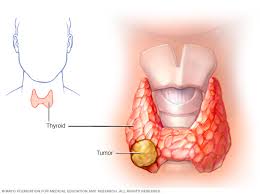
Background: After the Great East Japan Earthquake and Tsunami in March 2011, radioactive elements were released from the Fukushima Daiichi Nuclear Power Plant. Based on prior knowledge, concern emerged about whether an increased incidence of thyroid cancer among exposed residents would occur as a result.
Methods: After the release, Fukushima Prefecture performed ultrasound thyroid screening on all residents ages ≤18 years. The first round of screening included 298,577 examinees, and a second round began in April 2014. We analyzed the prefecture results from the first and second round up to December 31, 2014, in comparison with the Japanese annual incidence and the incidence within a reference area in Fukushima Prefecture.
Results: The highest incidence rate ratio, using a latency period of 4 years, was observed in the central middle district of the prefecture compared with the Japanese annual incidence (incidence rate ratio = 50; 95% confidence interval [CI] = 25, 90). The prevalence of thyroid cancer was 605 per million examinees (95% CI = 302, 1,082) and the prevalence odds ratio compared with the reference district in Fukushima Prefecture was 2.6 (95% CI = 0.99, 7.0). In the second screening round, even under the assumption that the rest of examinees were disease free, an incidence rate ratio of 12 has already been observed (95% CI = 5.1, 23).
Conclusions: An excess of thyroid cancer has been detected by ultrasound among children and adolescents in Fukushima Prefecture within 4 years of the release, and is unlikely to be explained by a screening surge.
High Risk of Inhaling Cesium Contained in Shower Near Tokyo
Via Kurumi Sugita

The result of analysis of a cartridge filter of shower water using essentially zeolite. The user lives in Funabashi city in Chiba (near Tokyo).
The period of use is from Feb 2017 to August 2017.
The volume of water used is about 52500L.
Cesium fixed in cartridge is 1128.96 Bq/kg
While taking a shower, one is exposed to a high risk of inhaling cesium contained in the steam.

Japan’s Nuclear Regulator Not Agreeing to Tepco’s Kashiwazaki-Kariwa NPP Reactor Restart Plans
Nuclear regulator does dizzying U-turn on TEPCO reactor restart plans
 From left, the No. 5, 6 and 7 reactors at Tokyo Electric Power Co.’s Kashiwazaki-Kariwa nuclear power plant are seen in Kashiwazaki, Niigata Prefecture, in this April 21, 2016 file photo.
Tokyo Electric Power Co. (TEPCO), the utility responsible for the Fukushima No. 1 nuclear plant and its March 2011 triple meltdown, is aiming to get the reactors at its other power plants back on line.
The Nuclear Regulation Authority (NRA), which must approve any restarts, had been holding to a very strict line on TEPCO applications. However, on Sept. 6 the NRA abruptly changed track, taking a more sympathetic attitude and indicating that the No. 6 and 7 reactors at the utility’s Kashiwazaki-Kariwa nuclear plant in Niigata Prefecture would likely pass their safety inspections — a prerequisite for restart approval.
Despite the NRA’s suddenly sunny attitude, the prefectural government has not budged from its more cautious position. And TEPCO, which has made the Kashiwazaki-Kariwa plant a chief pillar of its business recovery plans, cannot flip the reactors’ “on” switch without the prefecture’s imprimatur, meaning the plant still has no clear restart schedule.
When the NRA summoned TEPCO President Tomoaki Kobayakawa and other top managers on July 10 this year to testify on the utility’s competence to keep running nuclear plants, authority chairman Shunichi Tanaka was unequivocal and unforgiving.

Nuclear Regulation Authority Chairman Shunichi Tanaka speaks to the Mainichi Shimbun during an Aug. 29, 2017 interview. (Mainichi)
“If TEPCO is unwilling or unable to finalize the decommissioning of the Fukushima (No. 1 station) reactors, it is simply not qualified to restart the Kashiwazaki-Kariwa plant,” Tanaka told the executives, adding, “I don’t see TEPCO showing any independent initiative whatsoever.”
The NRA chairman was referring to the longstanding problems with contaminated water and radioactive waste disposal plaguing TEPCO’s Fukushima plant decommissioning efforts. The utility tends to focus too much on trying to read the government’s mind on any and all Fukushima issues — an attitude that has long drawn NRA criticism.
When the NRA inspected the Kashiwazaki-Kariwa plant’s No. 6 and 7 reactors, it added a new evaluation category to the usual technological checklist, though it was not part of the new safety standards: “eligibility.” That is, TEPCO’s eligibility to run a nuclear power plant at all. After all, it was one of TEPCO’s plants that had succumbed to the worst nuclear disaster since Chernobyl. “TEPCO is different from other (power) companies,” Tanaka had said.
TEPCO President Kobayakawa and Chairman Takashi Kawamura are also a source of NRA concern. The two had no role in the utility’s response to the 2011 meltdowns, and Kobayakawa replaced a much more experienced hand in Naomi Hirose, a TEPCO managing director when the disaster struck. After his NRA dressing-down in July, Kobayakawa apparently visited the Fukushima disaster zone seven times.
However, there has been an apparent U-turn in Tanaka’s stance. A document submitted on Aug. 25 to the NRA under Kobayakawa’s name was sewn with phrases like, “We will carry the (Fukushima) reactor decommissioning through to the end,” and other terms suggesting a determined TEPCO attitude. At the same time, the document was bereft of details on specific preparedness measures or progress benchmarks for the decommissioning work.
Nevertheless, when Kobayakawa again appeared before the NRA on Aug. 30, the body indicated its acceptance of TEPCO’s position. Taking the contaminated water problem “as one example,” Tanaka stated that he recognized TEPCO’s lack of concrete countermeasure planning couldn’t be helped under the circumstances. One NRA executive revealed to the Mainichi Shimbun, “We avoided demanding a detailed (disposal measures) plan because we don’t legally have that authority, and doing so could pose legal risks.”
Pro-TEPCO sentiment was on conspicuous display when the NRA met again on Sept. 6, including acting Chairman Toyoshi Fuketa’s declaration that he “felt TEPCO’s drive to pass on the lessons of the (Fukushima nuclear) accident.”
Committee member Nobuhiko Ban stated that while the document the utility had submitted in the summer was a “declaration of intent,” he was “concerned over whether this alone can constitute eligibility” to run a nuclear plant. However, Tanaka wrapped up discussion by saying that “circumstances are not such that we can deny (TEPCO’s) eligibility.”
Tanaka will leave his NRA post on Sept. 18 after completing his five-year term in the chairmanship, and at a post-meeting news conference he was asked if he had wanted to bring the TEPCO issue to a close while in office.
“I can’t say that I’ve never felt that way,” Tanaka replied.
http://mainichi.jp/english/articles/20170907/p2a/00m/0na/019000c
NRA doubts TEPCO’s safety vow in Niigata, plans legal move
 Tokyo Electric Power Co. wants to restart the No. 6 and No. 7 reactors, shown in the forefront, at its Kashiwazaki-Kariwa nuclear plant in Niigata Prefecture.
The Nuclear Regulation Authority, skeptical of Tokyo Electric Power Co.’s promise to put safety ahead of profits, plans to gain legal assurances before allowing the embattled utility to start operating nuclear reactors again.
TEPCO has applied to restart two reactors at its Kashiwazaki-Kariwa plant in Niigata Prefecture, which would be the first run by the company since the disaster unfolded at its Fukushima No. 1 nuclear plant in March 2011.
Although NRA members agreed that the No. 6 and No. 7 reactors at the Kashiwazaki-Kariwa plant passed new regulations on technological aspects, they could not agree on whether the company has learned its lessons about safety management since the triple meltdown at the Fukushima plant.
To ensure TEPCO will put safety at the forefront of its operations, the NRA is considering holding the utility legally responsible for completing the entire decommissioning process of the Fukushima No. 1 nuclear plant.
The regulator expects to draft a checklist to verify the Kashiwazaki-Kariwa plant’s safety and other steps before it makes a final decision on whether to allow TEPCO to restart the reactors. The next meeting is scheduled for Sept. 13.
The NRA had previously determined that 12 reactors at six nuclear plants met new nuclear reactor regulations shortly after completion of their technological examinations.
The NRA also finished its technological examinations of the No. 6 and No. 7 reactors, the newest ones at the Kashiwazaki-Kariwa plant.
The plant has seven reactors, making it one of the largest nuclear power stations in the world. The two reactors that TEPCO wants to put online each has a capacity of 1.36 gigawatts.
TEPCO has said the resumption of the reactors are needed to turn around its business fortunes.
But NRA commissioners are reluctant to allow TEPCO to bring the plant online based solely on the results of the technological screening.
After the chairman and president of the utility were replaced in June, the NRA summoned the new top executives in July.
The watchdog demanded that they give a written response to the regulator’s position that TEPCO “is not qualified to operate the Kashiwazaki-Kariwa plant, given the seeming lack of determination and spotty track record to take the initiative in decommissioning (the Fukushima No. 1 plant).”
In August, the company submitted a paper to the NRA promising to “take the initiative in addressing the problem of victims of the nuclear disaster and to fulfill the task to decommission the plant.”
The paper also said the company “has no intention whatsoever to place economic performance over safety at the (Kashiwazaki-Kariwa) plant.”
Tomoaki Kobayakawa, the new president of TEPCO, called the paper a “promise to the public.”
Although the NRA commissioners on Sept. 6 recognized TEPCO’s commitment to safety to a certain degree, doubts remained.
Nobuhiko Ban, an NRA member who is a specialist on radiological protection, called for a system that would keep TEPCO committed to safety management in the future.
“Is it all right for us to take TEPCO’s vow at face value?” he said.
The NRA then decided to consider legal ways to hold TEPCO accountable for safety issues.
New study says Minami-soma as safe as Western Japan cities – do they really expect us to believe this?
On September 5, 2017, Minami-soma city made a statement on the city’s radiation levels compared to 3 cities in West Japan, which has been reported in several newspapers. It’s important to comment on this study because the statement is intended to persuade the population to return to live there.
We are publishing comments on the articles below after having discussed with M. Ozawa of the citizen’s measurement group named the “Fukuichi Area Environmental Radiation Monitoring Project“. For English speaking readers, please refer to the article of Asahi Shimbun in English. For our arguments we refer to other articles published in other newspapers – Fukushima Minyu and Fukushima Minpo – which are only in Japanese.
Here are the locations of Minami-soma and the 3 other cities.

Here is the article of the Asahi Shimbun
Fukushima city shows radiation level is same as in west Japan
By SHINTARO EGAWA/ Staff Writer
September 5, 2017 at 18:10 JST
MINAMI-SOMA, Fukushima Prefecture–Radiation readings here on the Pacific coast north of the crippled Fukushima No. 1 nuclear power plant are almost identical to those of sample cities on the other side of Japan.
The Minami-Soma government initiated the survey and hopes the results of the dosimeter readings, released Sept. 4, will encourage more evacuees to return to their home areas after they fled in the aftermath of the 2011 nuclear disaster.
A total of 100 portable dosimeters were handed out to 25 city employees from each of four cities–Minami-Soma, Tajimi in Gifu Prefecture, Fukuyama in Hiroshima Prefecture and Nanto in Toyama Prefecture. They were asked to take them wherever they went from May 29 through June 11.
The staff members were evenly dispersed with their homes in all corners of the cities they represented.
In addition, only those living in wooden houses were selected as different materials, concrete walls, for example, are more effective in blocking radiation.
In July 2016, evacuation orders for most parts of Minami-Soma were lifted, but not many residents have so far returned.
The city’s committee for health measures against radiation, which is made up of medical experts, analyzed the data.
The median value of the external radiation dosage of the 25 staff of Minami-Soma was 0.80 millisieverts per annum, while the average value was 0.82 mSv per annum, according to Masaharu Tsubokura, the head of the committee and a physician at Minami-Soma general hospital.
No significant difference was found in the three western cities.
Both figures were adjusted to include the natural radiation dose, and are below the 1-mSv per annum mark set by the national government as the acceptable amount of long-term additional radiation dosage, which is apart from natural radiation and medical radiation dosages.
The radiation doses in all cities were at levels that would not cause any health problems, according to Tsubokura.
“Making comparisons with other municipalities is important,” Tsubokura said. “I am intending to leave the survey results as an academic paper.”
Our comments
1) The difference of life style between city employees and local agricultural population
As we see in the article, portable dosimeters were handed out to city employees. They spend most of their day time in an office protected by concrete walls which are efficient for blocking radiation as stated in the article. However, in Minami-soma, most of the population spends more time outside, very often working in the fields. Their life style is different and therefore the external radiation dose cannot be similar to those of city employees. The result of the comparison between the external radiation dose of city employees cannot be used as an argument to say that it is safe for the local population to live in Minami-soma.
2) In the article of Fukushima Minyu, it is stated that in Minami-soma the radiation dose has a wider range than in the other three cities. This means that there are hotspots, which leads to higher risks of internal irradiation.
3) The radiation dose expressed in terms of Sieverts is relevant for radioprotection when the source of radiation is fixed and identified. This is the case for most of the nuclear workers. However, in the case of Fukushima after the nuclear accident where the whole environment is radio-contaminated and the radioactive substances are dispersed widely everywhere, it is not a relevant reference for radioprotection. It is important in this case to measure surface contamination density, especially of soil.
4) 6 years and 6 months since the accident, cesium has sunk in the soil. It is thought to be between 6 and 10 cm from the surface. This means the top layer of soil from 0 to 5 cm is blocking the radiation, reducing the measures of the effective dose. However, this does not mean that the population is protected from internal irradiation, since cesium can be re-scattered by many means, by digging or by flooding, for example.
5) The reliability of individual portable dosimeters has already been raised many times. This device is not adequate to capture the full 360° exposure in radio-contaminated environments as described in point 3 above.
6) In the article, it is stated that background radiation is included in the compared values, but it does not mention the actual background radiation measurements in the 4 cities.
The Table of Fukushima Minyu
Radiation dose of the 4 cities
 Values include the background radiation dose
To summarize, the sample study group does not represent the overall population. The study doesn’t include the risks of internal radiation, for which the measurement of contaminated soil is indispensible. The dosimeters are not adequate to measure the full load of radio-contaminated environments. So, the research method is not adequate to draw the conclusion to say that it is safe for the population to return to live in Minami-soma.
MEPs to raise alarm on Fukushima food imports

Members of the European Parliament’s food safety committee will vote on a text on Thursday (7 September), raising the alarm over a European Commission proposal to partly relax controls on food imports from Fukushima, Japan, which suffered a nuclear disaster in 2011.
The draft resolution, seen by EUobserver, said “there are sufficient reasons to believe that this proposal could lead to an increase in exposure to radioactive contaminated food with a corresponding impact on human health”.
The MEPs’ text highlighted that, under the commission’s proposal, rice and derived products from the Fukushima prefecture would no longer be subject to emergency inspections. It stressed that one of those products is “rice used in baby food and food for young children”.
The text criticised that the commission’s proposal did not justify why some foodstuffs were taken off the list.
However, the MEPs’ concerns may already be outdated.
Cautious
Danish centre-left MEP Christel Schaldemose, one of the text’s sponsors, spoke to EUobserver on Tuesday over the phone.
“We are completely relying on data from the Japanese side. … We need to be cautious,” she said.
“I wouldn’t say we can’t trust them, but it is worth checking ourselves,” said Schaldemose.
The resolution is an initiative by French Green MEP Michele Rivasi, who has been working on the text since June 2017.
In parallel, Rivasi and two of her Greens colleagues, also asked the commission for an explanation through a written question, on 14 July.
On 22 August, EU commissioner for food safety Vytenis Andriukaitis answered, telling MEPs that the proposed changes are based on publicly available data from the Japanese government.
Andriukaitis included a link to the raw data in a footnote, and said that if MEPs wanted to have a “detailed justification for the proposed changes”, they can get them “by separate mail, upon request”.
According to a commission source, Rivasi will receive this justification after having requested it.
Meanwhile, however, work on the resolution continued, and is now on the agenda for a vote on Thursday.
It received the support from five other MEPs, including two from the two largest political groups in the EU parliament.
Free trade agreement
The parliament’s text, which is non-binding, also mentioned that Japanese exports of rice could increase under the EU-Japan free trade agreement (FTA), which the commission is expected to wrap up this year.
In a briefing which Green MEP Rivasi gave to journalists last July, according to a summary provided by her office, the French politician implied that the proposal on Fukushima was a bargaining chip in the negotiations for the FTA, and called it a “scandal”.
The left-wing Greens are generally critical of FTAs.
Rivasi referred to a remark commission chief Jean-Claude Juncker made following an EU-Japan summit on 6 July.
“I would like to congratulate prime minister Abe on the remarkable progress Japan has made on making products from the Fukushima region safe, following the 2011 accident,” Juncker had said.
“I am confident and I will work into that direction that we will have after the summer break a further lifting of import measures,” he added.
A commission spokeswoman told EUobserver, however, that the proposed changes are based on a thorough analysis.
“The requirement for pre-testing before export is lifted only for food and feed from a prefecture where sufficient data demonstrate that food and feed is compliant in the last growing season with the strict maximum levels applicable in Japan,” she said.
The emergency restrictions were put in place two weeks after the accident happened, and have already been amended five times.
The decision is taken by a so-called implementing act, which only involves the commission and member states, but not the EU parliament.
https://euobserver.com/environment/138902
Contaminated Fukushima Forests: 4µSv/h measured at 1 meter above ground
Measurement date September 6, 2017: Date City, Fukushima Prefecture
Radioactive Contamination from Fukushima Nuclear Disaster: Did You Know that Tokyo Metropolitan Area is Widely Contaminated Too?
We are “GO WEST & COME WEST!!! 3.11 Evacuees from Tokyo area”.
Etsuji Watanabe, one of the members of Association for Citizens and Scientists Concerned about Internal Radiation Exposures (ACSIR), estimates that each year at most 180,000 people may develop cancer and 90,000 will be killed by cancer or some other causes.
Radiation Levels in Tokyo Metropolitan Area (Year 2013~2015: µSv/hour)

Estimation of the risk for 10 million people in Tokyo Metropolitan area exposed by radiation (2.4mSv/year).
Data provided by Mr. Kirishima.

* Risk occurrence: 10,000 person-Sv
** According to a book ‘Chernobyl: Consequences of the Catastrophe for People and the Environment’ by Alexey V. Yablokov, ratio of death caused by cancer and not by cancer is 1 to 1.
Fukushima Radiation is Now Spreading to Tokyo and Eastern Japan
The child thyroid cancer which were commonly seen after Chernobyl accident is being found even around Tokyo area after several years from 3.11 Fukushima accident in 2011.
Severe illness such as various cancers, leukemia, and cardiac infarction are increasing too at alarming rate. For some people, immune system has also weakened due to radiation effects, and the conditions of their chronic disease or common cold are worsening.
Therefore some people from Tokyo have evacuated to safer places.
However Japanese government (and main media) continue to ignore the effects of Fukushima radiation even though the radiation level is still dangerously high. The government have recently lifted evacuation orders for the restricted residence areas and cut housing subsidies for evacuees, forcing them to believe it is safe to return.
Therefore some people think it is nonsense to evacuate from Tokyo area and believe the evacuees are over-reacting. Many of the evacuees are feeling very isolated and are living in poverty after moving to safer locations, forcing some to return to the contaminated area against their will.
About 45 million people still remain in contaminated metropolitan area in Tokyo. But many people are started feeling very ill one after another. In fact many of my friends living in Tokyo or Eastern Japan have collapsed from numerous illnesses over these years.
It has proven that an increase of serious illness was seen four-to-five years after 1986 Chernobyl meltdown and hundreds of thousands of people lost their lives.
Now we are facing the same situation in Tokyo and eastern Japan.
Fukushima radiation problem permits no delay. We need to encourage people in Tokyo and Eastern Japan to evacuate to safer places to protect their lives.
In order to fight against the inhumanity of the Japanese government toward lives of people and uncover the fact of radiation effect in Japan, it is urgently needed to spread the information like this to the public.
http://www.gowest-comewest.net/statement/20170825english.html
Two reactors at Tepco’s giant Niigata plant close to being restarted
NRA eager to clear Kashiwazaki-Kariya plant
 Tokyo Electric Power Company Holdings Inc. employees take part in a drill in the simulator of the central control room for a reactor inside the seismic isolation building at the company’s Kashiwazaki-Kariwa nuclear power station in Kashiwazaki, Niigata Prefecture, in February 2015.
Two Tokyo Electric reactors at the massive Kashiwazaki-Kariwa power station in Niigata Prefecture are expected to clear the initial safety hurdle for restarts soon, sources said Friday.
According to the sources, the Nuclear Regulation Authority will start talks on the issue on Wednesday, with a view to compiling a document that will certify the two units passed the new safety requirements introduced after the Fukushima nuclear crisis.
Tokyo Electric Power Company Holdings Inc. has been struggling to recover ever since the triple core meltdown in March 2011 because the seven-reactor Niigata plant is a crucial money maker. The utility has spent years trying to restart the plant, which is the only nuclear complex it runs aside from the disaster-hit Fukushima No. 1 plant in Fukushima Prefecture.
It filed for safety assessments for reactor Nos. 6 and 7 in September 2013.
The NRA wants to reach a conclusion on the issue before Chairman Shunichi Tanaka’s five-year term expires on Sept. 18, the sources said. But the move may trigger public criticism because Tepco still has a long way to go to scrap the ruined reactors at Fukushima No. 1, which was engulfed by quake-triggered tsunami and lost all power.
The Kashiwazaki-Kariwa complex is one of the world’s largest nuclear power plants and has an output capacity of 8.2 million kilowatts. Units 6 and 7 are boiling water reactors — the same type as the ones at Fukushima No. 1 — and the newest of the seven sitting along the Sea of Japan coast.
The governments hosting the Kashiwazaki-Kariwa plant are also cautious about restarting the units, with Niigata Gov. Ryuichi Yoneyama saying it will take “around three to four years” for the utility to win local consent on the matter.
Tepco, which is facing massive compensation payments and other costs from dealing with the world’s worst nuclear crises since Chernobyl, has been desperate to restart the idled reactors so it can reduce spending on costly fossil fuel imports needed to run the thermal power plants making up for the nationwide nuclear shutdowns.
Some reactors at other utilities have already resumed operations, but Tepco has been under constant scrutiny to determine whether it is qualified to once again operate a nuclear power plant.
Some inside the NRA have been reluctant to move ahead with the safety review at Kashiwazaki-Kariwa. But Tanaka strongly wants to set a course on the issue before he leaves his position at the NRA, and this was one of the factors that led to the latest development in Niigata, the sources said.
Dying Navy Sailors Push for Trial on Fukushima Meltdown

SAN DIEGO (CN) – Representing cancer-ridden Navy service members who say they were exposed to radiation on a humanitarian mission in Fukushima, former Sen. John Edwards urged a federal judge Thursday to set a date for trial.
Over a decade after serving as John Kerry’s running mate in the 2004 presidential election, Edwards now represents hundreds of Navy sailors who were aboard the USS Ronald Reagan as part of a humanitarian mission trip to Fukushima, Japan — bringing food and supplies to the city in March 2011 after it was devastated by an earthquake and ensuing tsunami.
“We have all these sailors whose case is now five years old, who have died or are in the process of dying right now,” said Edwards, whose firm Edwards Kirby is based in North Carolina.
Edwards noted that some of his other clients have seen their children born with birth defects. He said he made the trip from Raleigh to San Diego to “try to get this thing moving.”
Japan’s earthquake triggered a nuclear meltdown at the power plant run by Tokyo Electric Power Co., and Edwards’ clients say the radiation exposure has caused them to develop cancer and other illnesses.
The suit is one of two pending against TEPCo and General Electric in the Southern District of California — the first filed in 2012 and an additional lawsuit naming more than 150 sailors filed last month.
Thursday’s hearing before U.S. District Judge Janis Sammartino came after the Ninth Circuit ruled in June that the lawsuit could proceed in federal court, rejecting an effort to have the case sent to Japan.
Edwards urged Sammartino to bypass the procedural hurdles, “so we know there’s a deadline over there.”
“Instead of just staying still and going with the pleadings and the motions to dismiss, is there a way to get us a trial date and a structure,” Edwards asked.
“I hate to see these sailors and say we filed motions, went to the Ninth Circuit, went to Washington, and I hate to say I don’t know when [we’ll get our day in court],” Edwards said.
He asked for a May 2019 trial date.
TEPCo attorney Gregory Stone said the Japanese utility accepts responsibility for the radiation released but maintains the amount Navy service members were exposed to was negligible.
He thanked the service members present at the hearing for their efforts, but said that radiation exposure is not necessarily the cause of 300 to 400 sailors out of 70,000 on the humanitarian trip getting sick.
“It only indicates what epidemiologists tell us: people get sick at different times of their lives for different reasons,” Stone said.
“We don’t think the exposure was at a level sufficient to cause the injuries,” Stone continued, amid muttered comments from the audience. “They don’t agree with us and are probably talking about it now.”
GE attorney Michael Schissel said the length of the case and trial will be significantly impacted if GE remains a defendant in the case. Unlike TEPCo, GE is not admitting liability over the failure of its Boiling Water Reactors. Schissel said this would then require a liability phase at trial, significantly lengthening the process.
Sammartino called the case a “moving target” as the attorneys threw out different ideas for how best to approach setting deadlines and moving forward. She said she would issue an order setting dates.
In an interview with Courthouse News following the hearing, Edwards said they are pleased the case will be tried in America. If the case were in Japan, Edwards said there was a concern that the possibility of traveling across the world would cause his clients to lose hope.
“From the perspective of a lawyer, it’s a wonderful cause,” Edwards said. “Here are these completely innocent people whose lives have been taken away from some of them and they were there trying to help the Japanese people. It was such a just and righteous cause that they were there for and they’ve had their lives changed forever as a result of what happened.”
More sailors are coming forward every week, Edwards added, saying they expect the numbers to continue to go up as the word gets out about the lawsuits.
He said they want to make sure “the truth comes out” and that the “word gets out about the dangers and risks that exist not just in Japan, but in other parts of the world.”
https://www.courthousenews.com/dying-navy-sailors-push-trial-fukushima-meltdown/
Battling nuclear demons: Mental health issues haunt those who were the first line of defense after 3/11
 Workers from Tokyo Electric Power Co. travel by bus toward the power plant in April 2011.
Ryuta Idogawa traces the onset of his battle with mental illness to a moment not long after his parents had been relocated to Saitama from their hometown of Futaba, Fukushima Prefecture, in the spring of 2011.
Idogawa recalls with almost claustrophobic clarity how, as he boarded a train to travel to Tokyo, a sense of panic set in when the carriage walls seemed to close in and fellow passengers in the rush-hour squash started to stare — piercing, even accusatory stares, he thought.
“I was sweating, but I felt really cold and my heart was racing, faster and faster,” says Idogawa, 33. “I could hardly breathe. I thought, ‘Oh My God! I’m going to die.’”
Today, Idogawa continues to suffer from such panic attacks, although their frequency has decreased. To mitigate the problem, he has found a job near to his apartment and avoids trains whenever possible. On occasions when rail travel is unavoidable, he steers clear of express trains, as there are fewer opportunities to “escape” should panic set in, he explains. Medication, too, has sometimes helped.
One likely cause of this continuing condition, he believes, is guilt — guilt that in the aftermath of the March 11, 2011, disasters that struck northeastern Japan and claimed 18,455 lives (including 2,561 still listed as missing), he was powerless to prevent the accident that occurred at his place of work, the Fukushima No. 1 nuclear power plant.
“At the beginning I wasn’t even aware of my condition, or I felt somehow separate from it and from what was happening,” says Idogawa, a former employee at plant operator Tokyo Electric Power Co. “Looking back, maybe I was hiding it or hiding from it.”
Such mental afflictions are not unusual among Tepco’s Fukushima plant workers, especially in the aftermath of the disasters, experts say. According to a study of some 1,500 workers compiled by Jun Shigemura and others, all had experienced a variety of stressors (see table on page 12) relating to their direct experiences of the disasters, losses of loved ones and the backlash from a disgruntled public, in particular the 160,000 Fukushima residents who were evacuated due to the contamination of their homes and land that resulted from the multiple reactor meltdowns at Fukushima No. 1.
Jun Shigemura, an associate professor at the National Defense Medical College’s department of psychiatry, sits at his office in Tokorozawa, Saitama Prefecture, on Aug. 15.

According to lead researcher Shigemura, 29.5 percent of workers at the plant subsequently displayed symptoms of high post-traumatic stress responses (PTSR), including flashbacks and avoidance of reminders of the terrifying events they went through.
Around 1 in 5 Tepco workers at neighboring Fukushima No. 2 plant also showed similarly high levels of PSTR, even though there was no serious damage to the four reactors there.
Continued surveys of the workers by Shigemura, an associate professor at the National Defense Medical University’s Department of Psychiatry, and other experts say that while the overall influence of disaster-related experiences on PTSR of workers had decreased since 2011, it remains high.
“For some workers, this is going to continue for a long time, probably years and decades,” says Shigemura, who specializes in the mental health of disaster workers.
This is consistent with previous findings following the Chernobyl nuclear accident in 1986, he says. While scientists then had assumed that cancers and other malignant disorders would be the biggest health risk, mental health issues turned out to be far more prevalent, he says.
Indeed, studies have shown that mental health problems, including post-traumatic stress disorder (PTSD), depression and suicide ideation, were still high and remained the most prevalent problem for the Chernobyl cleanup workers even 20 years after the disaster, Shigemura says. “So I think we can say with some confidence that the Fukushima workers also carry a very high risk of developing long-term mental health issues.”
Furthermore, while PTSD is often thought of as the main persisting illness in such disasters, Shigemura says factors such as depression, anxiety and alcohol abuse are also likely to linger for some time.
More than 6½ years on from the Fukushima disasters, former Tepco employee Idogawa knows all about these problems, although how he got there was a gradual, but nonetheless alarming, process.
A graduate of Toden Gakuen, Tepco’s now-defunct training academy, Idogawa had lived and breathed the utility’s doctrine since he was just 15 years old. It centered as much around technical excellence as it did corporate group identity and loyalty, and those who followed it were rewarded with the kind of mouthwatering salaries that placed them very much among the elite of their communities.
 Ryuta Idogawa believes that guilt over the nuclear accident that occurred at the Fukushima No. 1 power plant on March 11, 2011, has been a contributor to his continuing struggles with mental illness.
On the day of the disasters, Idogawa was on leave, having worked a night shift the previous day. Even before the Earth’s violent convulsions had subsided, however, he was heading toward the plant from his nearby home, arriving there just before the black waves of the 15-meter mega-tsunami engulfed the facility.
As one of the plant’s operators, his day-to-day duties took place inside the central control room for reactors 1 and 2, where he was charged with scrutinizing the instruments that monitored the plant’s oldest reactor, the outmoded unit 1. By the time he joined the on-duty team of 14 operators, the tsunami had extinguished all available power sources, plunging the control room into complete darkness and disarray.
With monitoring apparatus also dependent on power, there was no way of knowing for certain if coolants were still reaching the reactor cores. Believing that this was unlikely, by midnight Idogawa calculated that the first reactor, and probably the second, were already in meltdown.
This was supported by readings on portable monitoring devices that showed radiation levels inside the control room were climbing. Idogawa joined all the other operators on the reactor 2 side of the windowless room, only venturing over toward the opposite first reactor side, where radiation levels were considerably higher, to make occasional, but futile, checks of the lifeless instruments.
Over the next two days, he remained inside the control room, still in the dark about the safety of his family and friends as meltdowns and explosions began to take their toll.
On March 14, he was ordered aboard a company bus bound for the Fukushima No. 2 nuclear power plant, which had fared far better than its older neighbor and had been designated an off-duty recuperation and medical center for workers at Fukushima No. 1. It was during that 10-kilometer journey that his focus slowly shifted to the outside world, which had a distinctly fishbowl appearance through his full-face mask.
“At one point, just past the entrance to Fukushima No. 1 plant, I looked out of the window and saw a man walking his dog like it was just another ordinary day,” Idogawa says. The scene seemed all the more bizarre because while most workers aboard the bus were wearing masks, the man went about his morning stroll completely unprotected. “I wondered, ‘What is he doing out there’ and wanted to shout out to him to get inside away from the high radiation.”
At the Fukushima No. 2 plant there was a noticeably subdued air. There was little food, no cigarettes and no heat to stay warm amid the snowy, wintery cold.
Idogawa had originally tried to make the trip to the Fukushima No. 2 plant via his own car, which was parked near the newly built quake-proof center at Fukushima No. 1 and was highly contaminated, but he couldn’t get it started.
“I wanted to take the car to give me an escape should things get worse. That’s what I was expecting,” he says. “I actually think that’s what (plant chief Masao) Yoshida was thinking, too — that everyone, himself included, should get out of there and go to the Fukushima No. 2 plant.”
Over the following months, the cumulation of these events began to take their toll. Idogawa became part of a team that the foreign media nicknamed the “Fukushima 50,” groups of workers on rotating shifts that split their time between battling the reactor meltdowns and recuperating at the Fukushima No. 2 plant, or at residences to which they had been evacuated.
With his home now off limits inside the 20-kilometer no-go zone, Idogawa had evacuated to an apartment in Koriyama, where time proved to be anything but a healer. With nothing to do but await his next shift, his mind wandered, among other things, to the man walking his dog and the tens of thousands of residents like him who had been forced to flee their homes as invisible radioactive substances fell on their land.
He began to suffer stomach cramps, chronic insomnia and depression, and turned to the only thing he could think of that would help him sleep and wash away the unwelcome images in his head: whisky — and lots of it.
“I felt bad for those people, like it was my fault,” he says. “I couldn’t do anything (to prevent the accident) and as a member of Tepco, I thought I was to blame.”
Takeshi Tanigawa, a professor of public health at Jutendo University’s graduate school of medicine, has been involved in mental health surveys of Fukushima plant workers.

Such self-criticism and guilt have been major contributors to enduring mental illnesses among plant workers, according to Takeshi Tanigawa, a professor of public health at Jutendo University’s graduate school of medicine, who has also been involved in the mental health surveys of Fukushima plant workers.
“We found that those who have experienced such criticism and discrimination have a high degree of psychological distress or PTSR, more than two times higher than control subjects,” he says, adding that with 80 percent of workers being local hires, the bashing, sometimes at the hands of friends and relatives, was even more difficult to take.
Of all the stressors — including the life-threatening experiences, the loss of loved ones and possessions, and so on — this was the “most influential” among those workers with persisting mental health issues, says Tanigawa, who also has worked as a part-time occupational physician at the nuclear plants in Fukushima Prefecture since 1991.
“One thing we can be grateful for is that nobody has committed suicide at the plant,” Tanigawa says. “However, alcohol abuse, increased smoking and obesity are prevalent, and can lead to life-threatening diseases and early mortality.”
However, both Tanigawa and Shigemura believe that the enduring impact of the various “complex stressors” is the main reason why other contract workers and early respondents to the disasters will not display similar long-term mental health problems. This includes personnel from Tepco’s various subcontracting companies and members of Tokyo Fire Department’s Hyper Rescue brigade, who entered the plant on March 17, 2011, in an attempt to pump water onto the overheating reactor 3.
Yukio Takayama, former deputy superintendent and chief of the 8th district Hyper Rescue battalion, revisits his former workplace in Tachikawa on July 13.

One of the leaders of that Tokyo Fire Department team, Yukio Takayama, who was at the time deputy superintendent of the 8th district Hyper Rescue battalion based in the city of Tachikawa, says a number of firefighters had been deeply affected by the thought of entering such a highly irradiated part of the plant, which offered an invisible fear factor quite different from that to which they were accustomed.
Indeed, Takayama fell sick during the operations and while they left an indelible impression, the 48-hour encounter with the radiation-spewing plant was unlikely to leave any long-term mental scars, he says. “It was stressful, but there were others who were up there for much, much longer,” he says.
A former subcontractor employee, who was working at the Fukushima No. 1 plant at the time of the 2011 disasters, says he had not heard of any mental health issues among subcontractor workers. However, as they made up almost 90 percent of the total plant workforce, he couldn’t discount the possibility.
“One thing that was different for us was that we were never forced, or obliged, to return to the plant,” the worker says in an interview, speaking on condition of anonymity. “Like many others, I evacuated from the plant and never went back, but if I had, I suppose it’s perfectly possible I may have succumbed to mental illness.”
One other group that reportedly has been afflicted by mental health problems comes from an unusual quarter, and one that has not been a factor in previous nuclear accidents. American sailors who were taking part in the U.S. military’s “Operation Tomodachi” relief mission at the time of the Tohoku disasters were inadvertently exposed to a plume of radiation that passed over their ships, which were anchored off the Pacific coast north of Fukushima.
Several hundred have since developed life-changing illnesses, including leukemia and other cancers — a result, they claim, of the radioactive plume. Many have also suffered persisting mental health issues, either due to concerns of physical illnesses that have resulted from the exposure or extreme stress brought about by concerns for potential future illnesses, including cancers.
 Sailors aboard the aircraft carrier USS Ronald Reagan scrub the flight deck to decontaminate it while the ship is operating off the coast of Japan providing humanitarian assistance on March 23, 2011.
“Unlike the nuclear plant workers, these sailors had no protective clothing. In fact, some of them literally had no shirts on their backs because they had given all their clothing away to people they saved from the tsunami waves,” says Charles Bonner, a lawyer representing some 400 sailors who have filed a lawsuit against Tepco and U.S. nuclear reactor manufacturer General Electric. “And because they had given away all their bottled water to tsunami survivors, they were drinking desalinated water that had also been contaminated. I do not doubt the psychological impact of the disasters on the plant workers, but at least they had masks and other protective clothing, as required by law. The sailors, however, knew nothing of their exposure and were literally marinated in the radiation.”
Idogawa’s exposure levels were also in excess of acceptable levels by the time he quit Tepco in January 2012 to protest the utility’s poor treatment of workers — who were, in most cases, also victims — and the government’s announcement the previous month that the plant had been brought “under control,” which was completely at odds with what he saw.
“Whether you take the viewpoint of a Tepco employee or a local resident, the outcome was far from satisfactory,” Idogawa says. “As a plant operator we caused a huge accident — the worst kind. Technicians train over and over, and are charged with ensuring this kind of thing doesn’t happen. That the accident did happen makes us the lowest of the low. From the viewpoint of a resident, the disaster meant they couldn’t go home. That we destroyed entire communities was bad enough. However, they were our communities as well.”
Despite his disgruntlement, Idogawa is hopeful that his former employer will implement measures to monitor and treat mental health issues that he believes continue to persist among many workers.
When asked to comment on post-accident care of its workers for this article, Tepco says it was unable to provide details due to privacy issues. It did, however, continue to hand out “health check” questionnaires, the nationalized utility says. The utility also would not comment on its policy regarding on-site care, which came into question following rumors that an on-site psychiatrist fled the Fukushima No. 1 plant following the 2011 disasters.
 An employee from Tepco apologizes to a Tomioka resident during a meeting in the city of Koriyama, Fukushima Prefecture, on Feb. 11, 2013.
Shigemura, whose surveys and subsequent treatment of plant workers was brought to an abrupt halt by Tepco in 2015, believes continued “surveillance” of workers is imperative. One reason is due to the possibility of “delayed onset” mental illnesses, which sometimes occur among “survivors” following a variety of situations, from disasters and conflicts to car accidents and familial loss. Some Vietnam War veterans, for example, only developed mental illnesses following the start of the Gulf War 20 years later, he explains.
During his research, Shigemura came across one plant worker, who was also an evacuee, who had experienced such a phenomenon. Three years later, after the evacuation order had been lifted, he re-visited his hometown, which was overgrown and deserted.
“When he evacuated, he hadn’t fully accepted the burden of the disaster,” Shigemura says. “It was only when he returned home that he felt the gravity of the disaster and was forced to confront it. And that’s when he experienced late-onset PTSD.”
Shigemura also believes there is a need for a major reconsideration of disaster management measures, especially those that can mitigate the psychological havoc a nuclear accident can wreak.
“We need multiple layers of support in preparation for these disasters because when they happen people tend to act in ways they might not usually act, especially following a disaster you cannot easily perceive, such as a nuclear accident,” he said. “They might run away and you can’t blame them for that, because they also have roles as fathers, mothers and so on. There needs to be measures to respond effectively to such eventualities and to provide effective care for those most affected.”
Fukushima plant worker stressors
Work-related experience
- Earthquakes and tsunami
- Plant explosions
- Radiation exposure
- Extreme overwork
- Worker shortage
Survivor experience
- Mandatory evacuation
- Property loss
- Family dispersion
Grief — loss of:
- Colleagues
- Family members
- Friends
Social backlash
- Public criticism
- Discrimination
- Harassment
- Guilt as “perpetrators” of a nuclear accident
Tokyo’s Tap Water Contaminated
Via Kaye Nagamine
A Japanese local magazine gives the list of prefectures where Cesium 134 and Cesium 137 have been detected in their tap water !
The left column gives the name of the prefecture. The central column gives the Cesium 134 detected and the right column the Cesium 137 : in white with three Chinese characters reads “not detected” while in black the white figures indicates the level of bq detected.
The third line from the bottom is Tokyo. Cesium 134 and Cesium 137 have both been detected in its tap water at high levels!

Source: https://jisin.jp/serial/%E7%A4%BE%E4%BC%9A%E3%82%B9%E3%83%9D%E3%83%BC%E3%83%84/disaster/26165
1 This Month


Shut down the radiation-damaged Heysham nuclear reactors now
To see nuclear-related stories in greater depth and intensity – go to https://nuclearinformation.wordpress.com

Say No to NASA’s Reckless Nuclear Reactor on the Moon
Say No to NASA’s Reckless Nuclear Reactor on the Moon
-
Archives
- October 2026 (247)
- September 2026 (339)
- August 2026 (330)
- July 2026 (355)
- June 2026 (287)
- May 2026 (306)
- April 2026 (356)
- March 2026 (251)
- February 2026 (267)
- January 2026 (308)
- December 2025 (358)
- November 2025 (359)
-
Categories
- 1
- 1 NUCLEAR ISSUES
- business and costs
- climate change
- culture and arts
- ENERGY
- environment
- health
- history
- indigenous issues
- Legal
- marketing of nuclear
- media
- opposition to nuclear
- PERSONAL STORIES
- politics
- politics international
- Religion and ethics
- safety
- secrets,lies and civil liberties
- spinbuster
- technology
- Uranium
- wastes
- weapons and war
- Women
- 2 WORLD
- ACTION
- AFRICA
- Atrocities
- AUSTRALIA
- Christina's notes
- Christina's themes
- culture and arts
- Events
- Fuk 2022
- Fuk 2023
- Fukushima 2017
- Fukushima 2018
- fukushima 2019
- Fukushima 2020
- Fukushima 2021
- general
- global warming
- Humour (God we need it)
- Nuclear
- RARE EARTHS
- Reference
- resources – print
- Resources -audiovicual
- Weekly Newsletter
- World
- World Nuclear
- YouTube
-
RSS
Entries RSS
Comments RSS

