nuclear-news

The News That Matters about the Nuclear Industry Fukushima Chernobyl Mayak Three Mile Island Atomic Testing Radiation Isotope

Japanese government accepts United Nations Fukushima recommendations – current policies now must change to stop violation of evacuee human rights

March 8, 2018

Tokyo – The Japanese government has announced that it had accepted all four recommendations made at the United Nations Human Rights Council (UNHRC) on the rights of evacuees from the Fukushima Daiichi nuclear accident. The decision is a victory for the human rights of tens of thousands of evacuees, and civil society that have been working at the UNHRC and demanding that Japan accept and comply with UN principles. The decision means that the Japanese government must immediately change its unacceptable policies, said Greenpeace. The announcement by the Ministry of Foreign Affairs was made in a formal submission to the UNHRC*.
 
Japan is to give its formal decision on 16 March at the the UNHRC Universal Periodic Review session in Geneva to recommendations made by Austria, Portugal and Mexico on the need to respect the rights of Fukushima, particularly women and children, and from Germany, which called on Japan to protect citizens from harmful radiation by dramatically reducing permitted radiation exposure.[1][2]
 
Greenpeace08032018.jpg
Akiko Morimatsu, a mother and evacuee from Fukushima standing in front of MOFA with Greenpeace Japan. (c)Greenpeace
 
At an event held in Tokyo today, where two evacuee mothers, a leading lawyer representing Fukushima citizens, Human Rights Now, and Greenpeace, explained the crisis facing many survivors and the multiple violations of their rights by the government of Shinzo Abe and the implications of its decision to accept all the four UNHRC recommendations.
 
“Over the last seven years I have seen many different violation of human rights in Japan. The discrimination we are suffering as evacuees is a reflection of the attitude of the Government towards us, but we have been exercising our rights to be protected from radiation. I would like to believe the acceptance of the United Nations recommendations will be the start of a change in our society”, said Akiko Morimatsu, a mother and Fukushima evacuee from Koriyama. Next week she will leave Japan for Geneva, together with Greenpeace, where she will participate at the UNHRC session and give a statement where Japanese government will make its official acceptance of the recommendations.
 
“I cautiously welcome the Japanese government’s acceptance of the UN recommendations. The government may believe that an insincere acceptance is sufficient. They are wrong to think so – and we are determined to hold them to account to implement the necessary changes that the UN members states are demanding,” said Yuichi Kaido, a lawyer for multiple Fukushima accident lawsuits against TEPCO and the Japanese Government.
 
“We welcome the Japanese government decision to accept all the four United Nations recommendations. Now they must apply them in full and without delay. The government policy of allowing people to be exposed to high levels of radiation is incompatible with their acceptance of the 1 mSv recommendation made by Germany. They must now act immediately to change their policies in the interests of radiation protection of Fukushima citizens, particularly women and children,” said Shaun Burnie, nuclear specialist at Greenpeace Germany.
 
Greenpeace radiation survey results published last week showed high levels of radiation in Iitate and Namie that make it unsafe for citizens to return before mid century, and even more severe contamination in the exclusion zone of Namie. High radiation levels in Obori would mean you would reach your maximum annual exposure in 16 days.[3]
 
The lifting of evacuation orders in areas heavily contaminated by the nuclear accident, which far exceed the international standard of 1 mSv/year for the general public, raise multiple human rights issues. Housing support is due to end in March 2019 for survivors from these areas. The Japanese government also ended housing support for so-called ‘self evacuees’ from other than evacuation order zone in March 2017, and removed as many as 29,000 of these victims from official records. This amounts to economic coercion where survivors may be forced to return to the contaminated areas against their wishes due to economic pressure. This clearly contravenes multiple human rights treaties to which Japan is party.[4]
 
The briefing was held at the House of Councilors office building.Speakers were Ms. Noriko Matsumoto (Fukushima survivor); Mr. Yuichi Kaido (Lawyer for multiple Fukushima accident lawsuits against TEPCO and the Japanese Government); Ms. Kazuko Ito (Lawyer, Secretary General of Human Rights Now); Jan Vande Putte (Greenpeace Belgium, radiation protection expert) Ms. Akiko Morimatsu (Fukushima survivor).
 
 
*The announcement by the Ministry of Foreign Affairs http://www.mofa.go.jp/mofaj/files/000326823.pdf
 
 
Notes
 
[1] Universal Periodic Review (UNHRC website) http://www.ohchr.org/EN/HRBodies/UPR/Pages/UPRMain.aspx
 
[2] UN Human Rights Council’s Review of Japan voices serious concerns for Fukushima nuclear survivors (Greenpeace Japan press statement, 14 Nov 2017) http://www.greenpeace.org/japan/ja/news/press/2017/pr2017111411/
 
[3] A dose of 4.3 micro sieverts per hour in average in Obori at 1m height, is high enough to expose someone to the maximum allowable dose of 1mSv/year in 16 days, following the Japanese government methodology.
 
[4] See Unequal Impact (Greenpeace Japan report) for details http://www.greenpeace.org/japan/ja/news/press/2017/pr201703071/
Contacts:
Chisato Jono, Communications Officer, Greenpeace Japan, email: chisato.jono@greenpeace.org, mob: +81 (0) 80-6558-4446
 
Shaun Burnie, senior nuclear specialist, Greenpeace Germany, email: sburnie@greenpeace.org, mob: +81 (0)80-3694-2843 (Currently based in Japan)

March 14, 2018 Posted by | Fukushima 2018 | , , , | Leave a comment

Fukushima’s giant ice wall fails to stop water leaking into radioactive area

acd4c8d939d5474341967a51911238b02cf04dc8.jpg
March 8, 2018
A giant ice wall constructed underneath the ill-fated Fukushima Daiichi power plant in Japan is failing to prevent groundwater from seeping into it, according to a new report from Reuters.
 
The failure to contain the water is preventing clean-up teams from removing the last of the dangerous radioactive fuel, seven years after a tsunami hit the plant and triggered a catastrophic meltdown.
 
The refrigeration structure, which resembles giant ice lollies, was completed in 2016 and was an attempt to limit the amount of radioactive water created by the incident.
 
The aim is to freeze the soil into a solid mass that blocks groundwater flowing from the hills west of the plant to the coast.
 
At the time of the ice wall construction, nearly 800,000 tonnes of contaminated water was being stored in 1,000 huge industrial tanks at the site.
 
Data released from operator Tokyo Electric Power Co (TEPCO) showed that water leakage has actually got worse since the structure was turned on.
 
An average of 141 metric tonnes of water per day seeped into the reactor and turbine areas, compared to an average of 132 metric tonnes a day during the prior nine months.
 
The structures cost around 34.5 billion yen (£233m) in public funds and consist of approximately 1,500 tubes filled with brine, cooled to minus 30°C, and buried 30 metres underground.
 
“I believe the ice wall was ‘oversold’ in that it would solve all the release and storage concerns,” said Dale Klein, the former chairman of the US Nuclear Regulatory Commission and the head of an external committee advising Tepco on safety issues.
 
“The hydrology of the Fukushima site is very complicated and thus the exact water flow is hard to predict,” he said, “especially during heavy rains.”
 
Overall, Tepco says a combination of drains, pumps and the ice wall has cut water flows by three-quarters, from 490 tons a day during the December 2015 to February 2016 period to an average of 110 tons a day for December 2017 to February 2018.
 
It is hard to measure exactly how much the ice wall is contributing, Tepco officials say, but based on computer analysis the utility estimates the barrier is reducing water flows by about 95 tonnes a day compared to two years ago, before the barrier was operating.
 
However, it expects to run out of space to store the water by 2021, so the decommissioning process needs to be completed as quickly as possible.
 
In 2016, the estimate for the total cost of the clean-up operation increased to 22.6tr yen (£151bn), more than double the previous estimate.
 
According to a Greenpeace report on Fukushima, published last week, the people, towns and villages in the surrounding area are still being exposed to excessive levels of radiation. A ground-level study conducted by an international research team also found that uranium and other radioactive materials, such as caesium and technetium, were present in tiny particles released from the damaged nuclear reactors.


March 14, 2018 Posted by | Fukushima 2018 | , , , | Leave a comment

Support Most Common Reason for Buying ‘Fukushima Food’

27655377_10208340154540700_7607840445643955842_n.jpg


March 8, 2018

Tokyo, March 7 (Jiji Press)—People who regularly buy fresh food products from Fukushima Prefecture most often want to support the northeastern prefecture and local producers, a survey by the Consumer Affairs Agency showed Wednesday.
 
“Thanks to efforts by producers, radioactive substances above regulatory limits are not detected (from Fukushima products),” Okamura Kazumi, secretary-general of the agency said. “We’ll step up efforts to communicate the reality to consumption areas.”
 
According to the survey, which covered a total of 7,050 people in their 20s to 60s, with 150 people selected from each of Japan’s 47 prefectures, 18.1% of respondents said they regularly buy fresh food from Fukushima.
 
On reasons for their purchases, with multiple answers allowed, 40.9% said they want to support Fukushima and producers, followed by 38.3% who find Fukushima products tasty and 27.3% who said they know the products are safe.
 
The survey showed that 18.5% do not buy products from Fukushima at all. Of them, 42.5%, the largest group, gave no specific reason, followed by 33.3% who said Fukushima products are not available in their neighborhoods. The share of people who cited concern over radioactive contamination stood at 13.9%.

March 14, 2018 Posted by | Fukushima 2018 | , | Leave a comment

Evacuees from 2011 disaster number over 73,000

“About half of 35 affected municipalities in the 3 hardest-hit prefectures — Iwate, Miyagi and Fukushima — have seen their populations drop by more than 10 percent.”
73000 evacuees march 7 2018.jpg
March 7, 2018
Nearly 7 years on from the 2011 earthquake and tsunami in northeastern Japan, tens of thousands of people have yet to return to their homes.
 
Japan’s Reconstruction Agency said there were more than 73,000 evacuees as of February 13th. That’s about 50,000 fewer than the year before.
 
About 53,000 people are living in prefabricated temporary housing, municipality-funded private residences, or welfare facilities. Nearly 20,000 are staying with relatives or friends.
 
About 50,000 Fukushima residents remained evacuated as of last month, according to the agency and the prefectural government.
 
Some areas of the prefecture have been off-limits to residents since the meltdowns at the Fukushima Daiichi nuclear plant.
 
About half of 35 affected municipalities in the 3 hardest-hit prefectures — Iwate, Miyagi and Fukushima — have seen their populations drop by more than 10 percent.


March 14, 2018 Posted by | Fukushima 2018 | | Leave a comment

Experts: Fukushima Must Do More to Reduce Radioactive Water

March 7, 2018
By MARI YAMAGUCHI, Associated Press
A group of experts has concluded that a costly underground ice wall is only partially effective in reducing the ever-growing amount of contaminated water at Japan’s destroyed Fukushima nuclear plant, and that other measures are needed as well.
 
www.usnews.com.jpg
In this Nov. 12, 2014, file photo, workers wearing protective gears stand outside Fukushima Dai-ichi nuclear power plant’s reactor in Okuma, Fukushima prefecture, northeastern Japan.
A government-commissioned group of experts concluded Wednesday, March 7, 2018 that a costly underground ice wall is only partially effective in reducing the ever-growing amount of contaminated water at Japan’s destroyed Fukushima nuclear plant, and that other measures are needed as well.
 
TOKYO (AP) — A government-commissioned group of experts concluded Wednesday that a costly underground ice wall is only partially effective in reducing the ever-growing amount of contaminated water at Japan’s destroyed Fukushima nuclear plant, and that other measures are needed as well.
The plant’s operator, Tokyo Electric Power Co., says the ice wall has helped reduce the radioactive water by half. The plant also pumps out several times as much groundwater before it reaches the tsunami-damaged reactors via a conventional drainage system using dozens of wells dug around the area.
The groundwater mixes with radioactive water leaking from the damaged reactors.
The panel agreed Wednesday that the ice wall helps, but said it doesn’t completely solve the problem. Panel members suggested that additional measures be taken to minimize the inflow of rainwater and groundwater, such as repairing roofs and other damaged parts of the buildings.
The 1.5-kilometer (1-mile) coolant-filled underground structure was installed around the wrecked reactor buildings to create a frozen soil barrier and keep groundwater from flowing into the heavily radioactive area. The ice wall has been activated in phases since 2016. Frozen barriers around the reactor buildings are now deemed complete.
On Wednesday, TEPCO said the amount of contaminated water that collects inside the reactor buildings was reduced to 95 metric tons per day with the ice wall, compared to nearly 200 tons without one. That is part of the 500 tons of contaminated water created every day at the plant, and the other 300 tons were pumped out via wells, treated and stored in tanks.
In addition to the 35 billion yen ($320 million) construction cost funded by taxpayers’ money, the ice wall needs more than 1 billion yen ($9.5 million) annually in operating and maintenance costs. Critics have been skeptical about the ice wall and suggested that the greater use of wells — a standard groundwater drainage system — would be a cheaper and more proven option.
The plant has been struggling with the ever-growing water — only slightly contaminated after treatment — now totaling 1 million tons and stored in 1,000 tanks, which take up significant space at the complex, where a decades-long decommissioning effort continues. Officials say they aim to further reduce the amount of contaminated water in the reactor buildings before starting to remove melted fuel in 2021.


March 7, 2018 Posted by | Fukushima 2018 | , , | Leave a comment

Vietnamese trainee misled into Fukushima decontamination work

Vietnamese trainee alleges he was misled into taking part in Fukushima decontamination work
March 7, 2018
The Justice Ministry is investigating a case involving a Vietnamese man brought to Japan under the government’s foreign trainee program who alleges he was duped into taking part in cleanup work in areas devastated by the 2011 nuclear disaster, authorities said Wednesday.
The ministry confirmed by telephone that the officials have been looking into the case of the 24-year-old man who worked for an Iwate Prefecture-based construction firm. The company wasn’t available for comment as of Wednesday.
On Tuesday, the Nikkei daily reported the firm has denied claims that it violated labor laws. In the report, the firm asserted instead that the man, who requested anonymity through the union, was assigned the same duties as his Japanese coworkers, which didn’t pose any threat to workers’ health.
But according to the Tokyo-based Zentoitsu Workers Union, which represents the man, he was supposed to conduct dismantling and public engineering work, but was instead assigned with cleanup work in contaminated areas in Fukushima Prefecture, exposing him to radiation.
The group’s Secretary-General Shiro Sasaki, who is well-versed on trainee issues and familiar with the case, said the 24-year-old came to Japan in September 2015 after signing a contract with the firm.
He was then sent to Koriyama in Fukushima Prefecture more than a dozen times to decontaminate the city’s residential areas between October 2015 and March 2016.
Afterwards, he was engaged in dismantling buildings in an exclusion zone in the Fukushima town of Kawamata before the authorities lifted restrictions on the evacuation zone due to high levels of radiation.
The man claims he was not informed he would be cleaning up areas contaminated after the Fukushima nuclear disaster.
“(The man’s claims) suggest that he might have been deceived and brought to Japan to conduct cleanup work,” Sasaki said.
Sasaki said the man’s employer might have abused the Labor Contract Act, Labor Standard Act and Industrial Safety and Health Act.
Sasaki said the union is assisting in the ongoing negotiations between the Vietnamese man and the construction firm and are seeking compensation worth the amount he would have been paid if he had completed the rest of his three-year contract.
According to Sasaki, the man was receiving a monthly wage of about ¥140,000, while Japanese workers conducting similar cleanup work earn nearly three times as much.
The government-backed Technical Intern Trainee Program was designed to support foreign nationals in their acquisition of technical skills but in reality has been exploited to make up for the shortage of unskilled laborers in Japan.
“(Technical trainees) shouldn’t be forced to conduct such work … which may pose a threat to one’s health; it’s undeniable that radiation may be hazardous,” Sasaki said.
The Vietnamese quit the company last November out of concern for his health after it ignored his requests to have the situation explained.
The Japan Times was able to access records showing the man had been exposed to radiation while working in Kawamata. According to the labor union, the employer hid this information from him.
Sasaki said the employer also denied the man allowances given to those working under hazardous conditions.
“Above all, decontamination work is very dangerous and requires the trainee’s consent,” said Shoichi Ibusuki, a lawyer versed on labor issues, who supports foreign trainees and interns. “It’s not the type of work you engage someone in who is not aware of accompanying risks. It’s more of a humanitarian rather than a legal issue.”
Ibusuki stressed the Vietnamese man’s case shows flaws in the system, which is aimed at helping foreign nationals from developing countries gain skills they could use back home.
Companies accepting foreign workers under the trainee system are required to submit a detailed plan of their training to a Justice Ministry body tasked with overseeing the program. Ibusuki speculated the trainee’s employer might have kept the scope of the man’s duties hidden when submitting the documents to the government.
Asked to comment on the Vietnamese man’s case, an official said the ministry was verifying the information it had obtained, including claims the trainee’s duties differed from work described in the contract.
The official said there was a possibility the employer had violated labor laws and if the abuse is proven, the ministry would consider penalties. The law, under which violation of the trainees’ rights is subject for punishment, went into effect last November.
The official explained that labor laws do not forbid employment of foreign nationals at decontamination work sites and in theory employers accepting foreign technical trainees may have them conduct cleanup work at contaminated sites. But the official said that a vocational training program needs to be aligned with the objective of the training system.
“It’s hard to imagine that a trainee could use decontamination work experience in his or her home country,” he said, indicating that such a program would likely not be authorized by the government.

March 7, 2018 Posted by | Fukushima 2018 | , , | Leave a comment

The Irradiated Sailors of the USS Reagan

Injustice At Sea: the Irradiated Sailors of the USS Reagan
by Linda Pentz Gunter

American sailors on the USS Ronald Reagan were exposed to radiation from Fukushima. Many are sick. Some have died. Why can’t they get justice?


image.0jpg.jpgSailors scrub the flight deck aboard the aircraft carrier USS Ronald Reagan following a countermeasure wash down to decontaminate the flight deck while the ship is operating off the coast of Japan on March 23, 2011. The Reagan, along with 15 other ships that took part in the relief effort, still have some radiation contamination more than seven years later, the Navy says.


“Coverage of the USS Ronald Reagan has been astoundingly limited,” wrote Der Spiegel in a February 2015 story. Since then, nothing much has changed.

The German magazine was referring to the saga of the American Nimitz-class nuclear-powered aircraft carrier whose crew pitched in to help victims of the March 11, 2011 Tsunami and earthquake in Japan, then found themselves under the radioactive plume from the stricken coastal nuclear reactors at Fukushima. Since then, crew members in eye-popping numbers have come down with unexplained illnesses — more than 70 and still counting. Some have died. And many are suing.

The USS Reagan was part of Operation Tomodachi, a U.S. armed forces mission involving 24,000 U.S. service members, and numerous ships and aircraft bringing aid to the victims of the tsunami and earthquake.

On January 5, 2018, a federal judge in San Diego, CA, dismissed the latest version of a class action lawsuit brought by USS Reagan sailors and US Marines. This was just the latest milestone in a long and winding path to justice strewn with roadblocks and delays.

The original class action lawsuit — Cooper et al v. Tokyo Electric Power Company, Inc., was filed in San Diego, the home port of the USS Reagan, on December 21, 2012. A second class action suit — Bartel et al v. Tokyo Electric Power Company, Inc. et al — was subsequently filed on August  18, 2017 and was the case dismissed in January.

The plaintiffs are represented by California attorneys Charles Bonner and Paul Garner, and by Edwards Kirby, the North Carolina firm led by former U.S. Senator, John Edwards.

Cooper now has 236 named plaintiffs and Bartel 157. But, wrote attorney Cate Edwards of Edwards Kirby and daughter of John Edwards, in an email;

“We have about 34 additional plaintiffs who have contacted us since the filing of the Bartel complaint, and that number continues to grow on a weekly basis.” As a class action the suit also “encompasses additional, unnamed class members— up to 70,000 American servicemen and women who served in Operation Tomodachi and may have been exposed to the radiation from Fukushima,” Edwards wrote.

Sadly those numbers sometimes also decline. Nine of the plaintiffs have already died. It is unknown how many others who took part in Operation Tomodachi, but did not join the suit, may also have died.

The Bartel plaintiffs are requesting an award of $5 billion to compensate them for injuries, losses and future expenses associated with their exposure to radiation, as a result of what they allege is TEPCO & GE’s negligence.  The Cooper plaintiffs have asked for an award of $1 billion.

Bartel is an extension of Cooper, with different plaintiffs but virtually identical facts and claims. It had to be filed separately, explained Edwards, because at the time more sailors came forward, the Cooper suit was stuck in appeal.  Eventually, Edwards said, the lawyers hope to consolidate the two suits “for litigation on the merits.”

But almost seven years after the Fukushima disaster, those merits are yet to be heard, with the case mired in legal wrangling and delays brought by the defendants — TEPCO, along with General Electric, EBASCO, Toshiba and Hitachi, the builders and suppliers of the Fukushima nuclear reactors.

One such delay occurred when TEPCO and the Japanese government tried to force the case to be heard in Japan. But on June 22, 2017, the attorneys won in the US Court of Appeals for the Ninth Circuit and ensured the case would be heard in the U.S.

The plaintiffs charge that TEPCO lied to the public and the U.S. Navy about the radiation levels at the Fukushima-Daiichi nuclear power plant at the time the Japanese government was asking for help for victims of the earthquake and Tsunami. By doing so, TEPCO deliberately allowed those involved in Operation Tomodachi to sail into harm’s way and become exposed to the radiation spewing from the stricken reactors on the battered Japanese coast.

A floating pariah  

Whether or not U.S. military commanders knew of the radiation risks once the readings were in, is moot legally. The plaintiffs are barred from suing the U.S. Navy because of the Feres Doctrine, dating from the 1950s, and which prohibits any member of the military from recovering damages from the government for injuries sustained during active military service.

The USS Ronald Reagan arrived off the Japan coast before dawn on March 12, 2011 with a crew of 4,500. It had been on its way to South Korea but returned to join Operation Tomodachi.

But what actually happened to the Reagan after that is still clouded in confusion, or possibly cover-up. After it got doused in the radioactive plume, then drew in radioactively contaminated water through its desalination system — which the crew used for drinking, cooking and bathing — it turned into a pariah ship, just two and a half months into its aid mission.

Floating at sea, the USS Reagan was turned away by Japan, South Korea and Guam. For two and a half months it was the radioactive MS St. Louis, not welcome in any port until Thailand finally took the ship into harbor.

There is no disagreement that the radioactive plume from Fukushima — which largely blew out to sea rather onto land — passed over the Reagan. Radiation meters on board confirmed this. But the levels of exposure are disputed, as is how close the ship came to shore and the melting Fukushima reactors and how often it strayed into — or stayed within — the plume.

Some versions have the radiation readings on board at 30 times “normal,” other 300 times.  Official Navy reports say the ship stayed 100 nautical miles away from the Japan coast.

But some crew members dispute that, saying they were at times just two miles away from shore. In an interview with journalist Roger Witherspoon for his article in Truthout, Navy Quartermaster, Maurice Ennis described a “cat and mouse” game played by the ship to try to stay out of the plume.

“We stayed about 80 days, and we would stay as close as two miles offshore and then sail away,” he told Witherspoon. “We kept coming back because it was a matter of helping the people of Japan who needed help. But it would put us in a different dangerous area.”

How close the ship came to the Fukushima reactors specifically, as opposed to the Japanese shoreline, is also a matter of dispute. Until the plaintiffs’ lawyers can issue subpoenas, hopefully getting a look at the ship’s logs, it is an important question that remains unanswered.

Petty Officer 3rd Class Daniel Hair told Stars and Stripes that he was informed the Reagan came within “five to 10 miles off the coast from Fukushima.” Stars and Stripes also reported that “many sailors have disputed the Navy’s accounting, saying they were so close that they could see the plant.”

Ship’s personnel who flew missions to mainland Japan to aid the earthquake and Tsunami victims also risked exposure to the radiation from Fukushima. Their aircraft, like the ship’s decks, had to be decontaminated upon return. In fact, a total of 25 US ships involved in Operation Tomodachi were found to be contaminated with radiation.

In the June 22, 2017 opinion allowing the class action lawsuits to be heard in the U.S., Judge Jay S. Bybee observed of the anomaly about the ship’s location that:

TEPCO makes much of Plaintiffs’ allegations that the U.S.S. Ronald Reagan was initially positioned “two miles off the coast,” while the Navy had been warned to stay at least “50 miles outside of the radius. . . of the [FNPP].” Appellant’s Opening Brief 7. The SAC [Second Amended Complaint of plaintiffs] alleges, however, that the U.S.S. Ronald Reagan was situated so as to provide relief in the city of Sendai, which is located over fifty miles north of the FNPP. Thus, it is possible that the U.S.S. Ronald Reagan was at once two miles off the coast and fifty miles away from the FNPP. Although other portions of the SAC suggest that the U.S.S. Ronald Reagan was closer to the FNPP, where the U.S.S. Ronald Reagan was situated is unclear from the record before us, and further factual development is necessary to resolve this issue.

No worse than flying or eating a banana

At first, any concerns about radiation exposure were dismissed by military brass. Sailors were told the exposures were no worse than flying or eating a banana, according to Naval officer Angel Torres, one of the plaintiffs.

What they didn’t disclose was the very significant difference between eating a banana — during which the body ingests but also excretes identical amounts of radioactive potassium-40 to maintain a healthy balance — and exposure to nuclear accident fallout. Fukushima was leaking cesium, tritium and strontium as well as radioactive iodine which attacks the thyroid. For example, cesium, can bind to muscle, or strontium to bone, irradiating the person from within. This is a very different effect than the brief visit cosmic radiation pays to the body when we fly in an airplane.

There was also, according to former Department of Energy official, Robert Alvarez, now a senior scholar at the Institute for Policy Studies, a problem with the dose methodology.

Alvarez told Who.What.Why that “the only way to get an accurate internal and external dose on any individual is to take continual measurements throughout the time they are exposed. People must wear special monitoring equipment and undergo a regular regime of monitoring. This is especially important in trying to assess the health effects from a multiple meltdown situation with large explosions involving reactor cores, as occurred at Fukushima.”

Who.What.Why was created by long-time journalist, Russ Baker because, as he writes on the site, “the media gatekeepers, both ‘mainstream’ and ‘alternative,’ will not allow the biggest, most disturbing revelations to see the light of day.”

That is precisely the fate that appears to have befallen the undeniably disturbing USS Reagan story.

It has been touched on hardly at all by the mainstream media in the US although Jake Tapper delivered a 7-minute piece about it in February 2014 on CNN. Local television news stations have carried reports when a sailor from their area joined the law suit but rarely covered the bigger picture. An article in the New York Times two days into the disaster, chose to downplay and dismiss radiation concerns.

Aside from the legal trade publication, Courthouse News, most of the consistent coverage in the US has come, unsurprisingly, from the independent media. These include Counterpunch, Thom Hartmann’s The Big Picture on RT (now off the air), Mother Jones and a second piece in Truthout in addition to the Witherspoon article, and the work of anti-nuclear activist reporters, Harvey Wasserman’s Free Press and Libbe HalLevy’s Nuclear Hotseat podcast.

Epidemic of illnesses among sailors too strange to be a coincidence

The delay in getting accurate information, then having to contend with disinformation and official downplaying of the severity of the exposures has cost many of the sailors dearly. Treatment by specialists has often had to come out of their own pockets. Many cannot afford it. Some have paid with their lives.

The sicknesses range from the leukemias and cancers most often associated with radiation exposures, to immune system diseases, headaches, difficulty concentrating, thyroid problems, bloody noses, rectal and gynecological bleeding, weakness in sides of the body accompanied by the shrinking of muscle mass, memory loss, testicular cancer, problems with vision, high-pitch ringing in the ears and anxiety.

Attorney Edwards sees the epidemic of illnesses among the Reagan crew as just too pronounced to be unconnected to Fukushima-related radiation exposure.

“Why are all these young, healthy, fit people getting cancer? Experiencing thyroid issues? It’s too strange to be a coincidence,” she told Courthouse News.

“That just doesn’t happen absent some external cause,” Edwards added. “All of these people experienced the same thing and were exposed to radiation at Fukushima. A lot of this is just common sense.”

Common sense, of course, does not usually prevail in such cases. There are far more powerful forces at work. And, as always, the burden of proof falls upon the victims, not the most likely perpetrator.

The case is dismissed but the lawyers aren’t quitting

In her January 5, 2018 ruling in San Diego, federal judge Janis Sammartino sided with the defendant’s request for dismissal, stating that the plaintiffs had failed to establish that TEPCO’s actions were directed at California — a technicality. The judge also wrote that the plaintiffs “have provided no information to support an assertion that Tepco knew its actions would cause harm likely to be suffered in California.”

However, lawyers in the case plan to press on. “The Bartel case was dismissed without prejudice, which means that we are able to refile those claims,” Edward said in her email. “We plan to refile those claims in the coming weeks, and are still working on determining the best course for doing so.”

She told Courthouse News, that the team intends to “continue to fight for the justice these sailors deserve. We will also be moving forward with the Cooper case in due course, and look forward to reaching the merits in that case.”

Meanwhile, the sailors in the lawsuit still struggle to get either justice or media attention. Official sources who could shed more light on what actually happened, aren’t talking, including the ship’s captain, Thom Burke, who has never spoken out.

Lead plaintiff, Lindsay Cooper, has been told by Veterans Administration officials that her symptoms are likely due to “stress” and has denied her claim for disability based on radiation exposure, claiming there is not enough proof. Yet Cooper suffers from continuous menstrual cycles, and a yo-yoing thyroid that results in massive weight gain and then weight loss every few months. Her gallbladder was removed because it ceased to function.

When another plaintiff, Master Chief Petty Office Leticia Morales, had her thyroid taken out, she learned her doctor had already removed thyroid glands from six other sailors on the Reagan.

As lawyer Garner put it: “These kids were first responders. They went in happily doing a humanitarian mission, and they came out cooked.”

https://www.counterpunch.org/2018/03/07/injustice-at-sea-the-irradiated-sailors-of-the-uss-reagan/


Yet, the other ships that are part of a Carrier group. Never get mentioned.

16 US ships that aided in Operation Tomodachi still contaminated with radiation

March 13, 2016

CAMP FOSTER, Okinawa — Sixteen U.S. ships that participated in relief efforts after Japan’s nuclear disaster five years ago remain contaminated with low levels of radiation from the crippled Fukushima Dai-ichi nuclear power plant, top Navy officials told Stars and Stripes.

In all, 25 ships took part in Operation Tomadachi, the name given for the U.S. humanitarian aid operations after the magnitude-9.0 earthquake and subsequent tsunami on March 11, 2011. The tsunami, whose waves reached runup heights of 130 feet, crippled the Fukushima plant, causing a nuclear meltdown.

In the years since the crisis, the ships have undergone cleanup efforts, the Navy said, and 13 Navy and three Military Sealift Command vessels still have some signs of contamination, mostly to ventilation systems, main engines and generators.

“The low levels of radioactivity that remain are in normally inaccessible areas that are controlled in accordance with stringent procedures,” the Navy said in an email to Stars and Stripes. “Work in these areas occurs mainly during major maintenance availabilities and requires workers to follow strict safety procedures.”

All normally accessible spaces and equipment aboard the ships have been surveyed and decontaminated, Vice Adm. William Hilarides, commander of Naval Sea Systems Command, wrote to Stars and Stripes.

“The radioactive contamination found on the ships involved in Operation Tomodachi is at such low levels that it does not pose a health concern to the crews, their families, or maintenance personnel,” Hilarides said.

The largest U.S. ship to take part in the relief operation was the USS Ronald Reagan aircraft carrier, which normally carries a crew of more than 5,000 sailors. In 2014, three years after the disaster, the Reagan’s ventilation system was contaminated with 0.01 millirems of radiation per hour, according to the Navy. Nuclear Regulatory Commission guidelines advise no more than 2 millirems of radiation in one hour in any unrestricted area, and 100 millirems total in a calendar year from external and internal sources in unrestricted and controlled areas, so full-time exposure on the Reagan would be below that.

Plume of radiation

In the days after the tsunami hit the Fukushima complex, the plant suffered multiple explosions and reactors began to melt down.

Officials from the NRC told Congress that extremely high levels of radiation were being emitted from the impaired plant. Japanese nuclear experts said winds forced a radioactive plume out to sea, and efforts to keep fuel rods cool using sea water caused tons of radiated water to be dumped into the ocean.

The Reagan was dispatched to take part in relief efforts, arriving the next day. Navy officials say the Nimitz-class nuclear-powered supercarrier stayed at least 100 nautical miles away from the damaged plant, but many sailors have disputed the Navy’s accounting, saying they were so close that they could see the plant.


image1.jpgA U.S. Marine sprays the surface of an F/A-18C Hornet aboard the aircraft carrier USS Ronald Reagan during a countermeasure wash down on the flight deck in March 2011. The Reagan, along with 15 other ships that took part in the relief effort, still have some radiation contamination more than five years later, the Navy says. Sailors aboard the ships, however, are not in any danger.


The Navy has acknowledged that the Reagan passed through a plume of radiation. Navy images showed sailors with their faces covered, scrubbing the deck of the Reagan with soap and water as a precautionary measure afterward. The Reagan and sailors stayed off the coast of Japan for several weeks to aid their Japanese allies.

The multibillion-dollar ship, projected to last at least 50 years after its launch in 2001, then was taken offline for more than a year for “deep maintenance and modernization” at the Puget Sound Naval Shipyard and Intermediate Maintenance Facility in Bremerton, Wash., according to Navy officials.

“Procedures were in place to survey, control and remove any low-level residual contamination,” the Navy said. “Personnel working on potentially contaminated systems were monitored with sensitive dosimeters, and no abnormal radiation exposures were identified.”

Upgrades and cleaning also took place at the ship’s next stop in San Diego.

Sailors who performed the work said it entailed entering spaces deep within the ship, testing for high levels of radiation, and if it was found, sanding, priming and painting the areas. They say there were given little to no protective gear, a claim that the Navy denies.

Of the 1,360 individuals aboard the Reagan who were monitored by the Navy following the incident, more than 96 percent were found not to have detectable internal contamination, the Navy said. The highest measured dose was less than 10 percent of the average annual exposure to someone living in the United States.

Radiation effects unknown

Experts differ on the effects of radiation in general and, specifically, for those involved in Operation Tomodachi.

Eight Reagan sailors, claiming a host of medical conditions they say are related to radiation exposure, filed suit in 2012 against the nuclear plant’s operator, the Tokyo Electric Power Co. The suit asserts that TEPCO lied, coaxing the Navy closer to the plant even though it knew the situation was dire. General Electric, EBASCO, Toshiba Corp. and Hitachi were later added as defendants for allegations of faulty parts for the reactors.

A spokesman for TEPCO declined to comment for this story because of the sailors’ lawsuit, which was slated to go forward pending appeals in the U.S. 9th Circuit Court of Appeals.

The illnesses listed in the lawsuit include genetic immune system diseases, headaches, difficulty concentrating, thyroid problems, bloody noses, rectal and gynecological bleeding, weakness in sides of the body accompanied by the shrinking of muscle mass, memory loss, leukemia, testicular cancer, problems with vision, high-pitch ringing in the ears and anxiety.

The list of sailors who have joined the lawsuit, which is making its way through the courts, has grown to 370.

https://www.stripes.com/news/16-us-ships-that-aided-in-operation-tomodachi-still-contaminated-with-radiation-1.399094

March 7, 2018 Posted by | Fukushima 2018 | , , , , | Leave a comment

Nuclear regulator: Fukushima accident not over


March 7, 2018

Nearly 7 years after the triple meltdown at Fukushima Daiichi nuclear power plant, Japan’s chief nuclear regulator says the 2011 accident is not over.
 
Toyoshi Fuketa, Nuclear Regulation Authority Chairman, held a news conference on Wednesday, 4 days before the 7th anniversary of the severe accident.
 
He suggested the perceived magnitude of damage from the accident can change based on many factors that will influence future judgment. He cited decontamination and radioactive waste disposal efforts, areas where evacuation orders can be lifted, and the reconstruction of affected areas.
 
Fuketa also said that attitudes towards regulation have changed since the accident but he suggested that people should not forget what happened 7 years ago.
 
He predicted there would be almost no risk of any new problems affecting areas outside the compounds of the nuclear plant in the decommissioning process.
 
The biggest challenge of the decommissioning is said to be the removal of fuel debris, a mixture of molten nuclear fuel and broken interior parts, from the 3 reactors.
 
He said the removal work has not yet reached a point where “exit is in sight.”
 

March 7, 2018 Posted by | Fukushima 2018 | , , | Leave a comment

Radiation Refugees and the De-Valuing of Life

Tuesday, March 6, 2018
 
We are approaching the Fukushima Daiichi’s anniversary, as the many news reports testify.
 
My brief “thematic” analysis of this year’s crop of Fukushima anniversary news stories indicates “returning home” as the dominant theme.
 
Fukushima’s refugees – both official and non-official – are inclined to be suspicious of the government’s assurances that they face no additional health risk by returning to officially de-contaminated areas.
 
Here is a particularly detailed article describing competing claims about safety:
Derrick A. Paulo & Tamal Mukherjee (2018, March 4). New cracks seven years on, as Fukushima residents urged to return home. Channel News Asia. Available, https://www.channelnewsasia.com/news/cnainsider/fukushima-daiichi-nuclear-radiation-residents-return-safety-9888552 (accessed March 6, 2018)
 
…The upper limit of the stated safe range in an emergency is 100 mSv/year, but some experts contend that exposure to even 20 mSv/year is too high. Former World Health Organisation regional adviser (Radiation and Public Health) Keith Baverstock said: “It could be, living in your house, the dose rate is 20 mSv/year. The dose rate outside that area that has been cleaned up can be a lot higher. So no, it isn’t safe.”
 
Cancer specialist Misao Fujita, 55, contrasted the situation in Fukushima with medical X-ray rooms, where the typical maximum amount of radiation allowed is five mSv/year – a level that hospital staff “rarely” get exposed to, he said.
The article describes efforts by 70 Fukushima families to seek justice using the court system, alleging that the government did not release Speedi information (which I’ve documented in my published books), leading to chaotic evacuations and increasing radiation exposure.
 
A Mr. Konno, a resident of Tsushima, said that his child has had “cold-like symptoms for over two years.”
 
Japan’s radiation authorities are themselves divided, with some seeing evidence of exposure in people, while others hotly denying that any relationship between disease and radiation exposure can be proven in the absence of definitive evidence of exposure level.
 
Very elevated levels of children’s thyroid cancer stand at the center of the ongoing safety debates (http://majiasblog.blogspot.com/2017/01/did-fukushima-daiichi-cause-cancer-in.html).
 
My head hurts. My heart hurts.
 
The Channel News Asia article also addresses ongoing contamination of the Pacific Ocean, which I’ve discussed frequently at this blog (most recently here: http://majiasblog.blogspot.com/2018/03/fukushima-daiichis-ongoing-assault.html). Japan’s former prime minister is quoted as saying he is confident contaminated water is flowing into the ocean:
Japanese Prime Minister Naoto Kan, who was the premier when the nuclear accident happened, told Insight there is no doubt “some of the water is flowing into the (Pacific) ocean”.
Japan is not the only nation to have produced radiation refugees and to be contaminating the pacific and other large bodies of water.
 
In a recent chapter I wrote on radiation refugees I note that Pacific Islanders, whose lives and livelihoods were catastrophically changed by US atmospheric testing during the early Cold War, are still seeking redress. Here is a brief excerpt from this chapter:
For decades after WWII, legal recourse and compensation were denied to entire communities living in landscapes of risk after being exposed to atmospheric testing. 
For example, indigenous people exposed to atmospheric testing in the South Pacific Marshall Islands (1946-1955) were studied as experimental subjects by the US military, but to this day are still seeking full compensation for ongoing claims of acute health problems and property lost due to contamination. 
In 2012, Calin Georgescu, then-United Nations Special Rapporteur on human rights and toxic waste, concluded after a visit to the Marshall Islands that many communities reported feeling like “nomads” in their own country.
Nomads in their own country. I wonder if that is what Fukushima refugees feel like. I wonder how long it will be before the US has its own newly-made batch of radiation refugees.
 
 
Trump’s promise to extend the operating license of nuclear reactors by decades ensures future US radiation refugees:
Ari Natter (2018, February 21). Nuclear Reactors Could Run as Long as 80 Years Under Trump Plan. Bloomberg https://www.bloomberg.com/amp/news/articles/2018-02-21/nuclear-reactors-could-run-as-long-as-80-years-under-trump-plan?
Radiation refugees are among the dispossessed. Their lives have been discounted.
 
We see the discounting of the lives of the exposed when we evaluate the assumptions of the new policy toward “ADAPTATION” of people in radioactive zones being promoted by organizations such as the Organization for Economic Co-operation and Development.
 
Adaptation is occurring as governments, including the US and Japan, raise the allowable exposure level after radiological emergencies. By raising the exposure levels, governments discount the lost years of the exposed and reduce the costs and publicity damage caused by evacuation.
 
Exposures levels go up while environmental health protections are lifted.
 
Life is devalued.

March 7, 2018 Posted by | Fukushima 2018 | , , , | Leave a comment

Fukushima Daiichi’s Ongoing Assault Against the Ocean

Friday, March 2, 2018
Fukushima Daiichi’s Ongoing Assault Against the Ocean
The Asahi Shimbun has a very interesting article today about Fukushima Daiichi’s very expensive ice wall that was designed as a barrier preventing contaminated ground water from flowing into the sea:
Masanobu Higashiyama and Yusuke Ogawa (2018, March 2). TEPCO defends Fukushima ‘ice wall,’ but it is still too porous. THE ASAHI SHIMBUN, http://www.asahi.com/ajw/articles/AJ201803020042.html
This is a very interesting article worth reading carefully.
What it says is that the ice wall reduced the amount of contaminated water reaching the ocean by approximately 95 tons a day.
That is a significant amount but raises the question of how many tons of contaminated water continue to penetrate the ice wall. This is what the article reports:
“Contaminated groundwater was cut in half due to the wall,” a TEPCO official said.
TEPCO estimated that the volume of polluted groundwater would have amounted to about 189 tons if the ice wall had not been in place during that period.
The utility also said the amount of polluted groundwater was reduced by about 400 tons a day now due to combined measures, such as the wall and wells pumping up water, compared with before such measures were taken.http://www.asahi.com/ajw/articles/AJ201803020042.html
This is getting confusing. TEPCO reduced the ground water by 400 tons a day, using wells and pumping, and is able to filter out 95 tons of what would be 189 tons a day of radioactive water.
But it gets more confusing because the 189 tons of radioactive water produced daily aren’t actually representative of the tons of radioactive water produced when it rains hard, as reported in the article:
The water volume rose to 1,000 tons or so a day in late October when two typhoons struck the area.
So, when it rains hard, which it often does in Fukushima I’ve noted in my nearly daily webcam checks for 7 years, up to a thousand tons of radioactive water can be produced, with the ice wall filtering out approximately 95 tons a day.
That is a lot of very contaminated water that is flowing into the ocean.
The problems with the ice wall were well anticipated, as this article in the Mainichi reported in August 2017 when the wall neared completion:
High-priced Fukushima ice wall nears completion, but effectiveness doubtful August 16, 2017, https://mainichi.jp/english/articles/20170816/p2a/00m/0na/016000c
But while 34.5 billion yen from government coffers has already been invested in the wall, doubts remain about its effectiveness.  Meanwhile, the issue of water contamination looms over decommissioning work….. during screening by the NRA, which had approved the project, experts raised doubts about how effective the ice wall would be in blocking groundwater. The ironic reason for approving its full-scale operation, in the words of NRA acting head Toyoshi Fuketa, was that, “It has not been effective in blocking water, so we can go ahead with freezing with peace of mind” — without worrying that the level of groundwater surrounding the reactor buildings will decrease, causing the contaminated water inside to flow out.
At that time, TEPCO reports success in reducing the volume of contaminated water produced everyday from 400 tons to approximately 130 tons.
All these numbers don’t seem to add up cleanly. The one thing clearly concluded is that quite a lot of contaminated water is flowing from the plant directly into the ocean.
This is water contaminated from direct contract with melted nuclear reactor fuel.
What impact will this have on the Pacific Ocean?
I’ve posted on this subject but the truth is that no one really knows what this unprecedented radiological assault will do to an eco-system already imperiled by human degradation.
Recently a friend – Douglas – sent me a link describing decimation of California’s kelp forests.
If you Google these disappearing forests off California’s northern coast, you will see articles that blame the sea lions for the disappearing kelp (e.g., https://www.newsdeeply.com/oceans/articles/2017/10/10/sea-urchins-are-laying-waste-to-kelp-forests-and-an-entire-ecosystem), while other articles place the blame on warmer water produced by climate change (e.g., https://e360.yale.edu/features/as-oceans-warm-the-worlds-giant-kelp-forests-begin-to-disappear).
I’m sure that both these factors may play a role but what is completely marginalized from conversation is the Fukushima Daiichi disaster.
There were plenty of research studies that projected and detected empirically radiological contamination off of North America’s coast as marine currents bring Fukushima Daiichi’s contaminated water across the Pacific and back again, forever adding new contaminants.
We must find a way to prevent the death of life in our oceans or we will soon follow.

March 7, 2018 Posted by | Fukushima 2018 | , , | Leave a comment

Controversy in Thailand over Thai Officials Insisting that Fukushima Imported Fish is Safe!!!

jhjlmùù.jpg
Officials Insist Fish Imported From Fukushima is Safe
March 6, 2018
BANGKOK — Health and fishery officials said Tuesday a recent batch of fish imported from a Japanese coastal city struck by nuclear radiation leak seven years ago is perfectly safe for consumption.
The batch, about 100 kilograms of flounder and 10 kilograms of little mouth flounder, is allegedly the first exported from Fukushima since the 2011 earthquake and subsequent nuclear disaster. While an environmental activist raised alarm of possible contamination, officials said the fear is unfounded.
Fishery department deputy director Umaporn Pimolbutr said Thailand has been monitoring levels of contamination in fish caught off the coast of Fukushima since the 2011 earthquake, and has gradually decreased to near non existent level by 2015.
“In 2017, we coordinated with Japan and sampled 4,708 samples of fish,” Umaporn said in an interview. “Only eight samples were found to be contaminated, and secondly, none of them is the type of fish we imported.”
Nearly 16,000 people died when a powerful earthquake and tsunamis struck eastern Japan in 2011. The quake also triggered nuclear reactors at Fukushima to malfunction, causing a triple meltdown that leaked out hazardous radiation. The disaster led to fears of radioactive contamination in sea creatures caught off the coast of the Sendai region.
The Asahi Shimbun reported Thursday the city’s fishing cooperative exported the flounder and little mouth flounder to 12 restaurants in Thailand, the first overseas sales since the earthquake. The newspaper quoted a local cooperative manager as saying the fish was safe to eat.
The Thai Food and Drug Administration, or FDA, also released a statement Tuesday saying the imported fish is safe for human consumption.
But environment and transparency activist Srisuwan Janya disputed the assertion. He said even if there’s a possibility of less than 1 percent that imported fish were to be contaminated, it would cause cancer risks to consumers.
“This means eating Japanese fish is like buying a lottery. If it turns out you have the winning number, you’re at risk of cancer,” Srisuwan told reporters Tuesday.
He demanded that the fishery department reveal the names of 12 restaurants that imported the Fukushima fish. Srisuwan also said he may sue the agency in court if it’s proven that the fish were contaminated.
Umaporn, the fishery official, said her agency does not know which restaurants got the fish because the foodstuff was immediately distributed to the stores after it passed a health inspection.
Marine life veterinarian Weerapong Laovetchprasit said concerns for health hazards in fish caught off Fukushima are valid, because humans are also affected by any residue left in the meat they eat. He added the danger is particularly high among “stationary” creatures such as clams.
However, he believes Thailand has adequate equipment to detect any radioactive substance.
 
c001d5dd0ec23b26aeebc8b0af6981aa.jpeg
Criticism over Fukushima fish imports
March 07, 2018
AUTHORITIES HAVE defended Thailand’s importation of fish from Fukushima, the scene of a major nuclear accident and radioactive leak in 2011.
“The imported fish have passed radioactive standards of the [Thai] Food and Drug Administration [FDA],” the Fisheries Department’s deputy director-general Umaporn Pimolbutr said yesterday. She spoke after concern was raised about the imports. 
6cbd75f8e80d8aeec8f2ebcbaeaa7acf.jpeg
FDA secretary-general Wanchai Sattayawuthipong, who later in the day appeared with Umaporn at a press conference, urged Thais not to panic. 
“You can have confidence in the FDA and relevant organisations,” Wanchai said. “If we detect any contaminated fish, we will destroy or immediately return the item.” 
A report by Japan Times revealed on March 1 that Fukushima prefecture’s first shipment of fish since the March 2011 accident had been exported to Thailand. 
The crisis in Fukushima is often described as the worst nuclear accident since the Chernobyl incident in 1986. 
5617cfd56a65b057e7a8a5812ee8979a.jpeg
Last month, a report by The Independent also revealed that lethal levels of radiation were still being detected at Japan’s Fukushima nuclear power plant, seven years after it was destroyed by an earthquake and tsunami.
“I cannot confirm as to whether we are the first to import fish from Fukushima [since 2011]. But I can tell you that we have checked the imported fish,” Umaporn said.
Thailand bans the importation of food that has more than 100 becquerel of iodine 131 per kilogram/litre or combined concentrations of caesium 137 and 134 more than 500bq/kg/litre. 
Importers must produce certificates specifying the amount of radioactive substances and the origin of the food. 
“The certificate must be issued by a government agency from the country of origin or any institute recognised by the relevant government agency of the country of origin,” Umaporn said. 
She added that Thailand had never tried to block seafood exported from Japan. 
“If it passes radioactive standards set by the Public Health Ministry, then it can enter Thailand,” she said. 
She added that 130kg of flatfish and sole had arrived in Thailand on February 28. 
The Japan Times reported that the fish would be served at 12 Japanese restaurants in Thailand. 
Public opposition to the importation was expressed by one consumer in Thailand who wrote online: “Is the only thing the Fisheries Department will do is just check certificates? There is no other responsibility here?” 
Another netizen sarcastically compared Thais to guinea pigs in labs to test the impact of fish that might have been contaminated. 
Wanchai downplayed public concerns by emphasising that the FDA had worked closely with Japan’s Public Health Ministry to uphold the standards of imported food. 
He said Japan’s Public Health Ministry had collected 7,408 seafood samples in Fukushima. Of them, only eight had a higher concentrations of radioactive substances than allowed. Of these eight samples, four were whitespotted chars and four others were cherry salmon. 
“Thailand has not imported these types of fish,” Wanchai said. 
He added that his agency had also conducted tests on various fish and other seafood samples in Thailand to determine if any had been contaminated with radioactive substances. 
“There has not been a single case of contamination,” he said. 
Wanchai said the Medical Sciences Department also conducted random tests between March and April, 2016 and found no contamination. 
“In the event you suspect that any food product may be harmful to health, alert us via Hotline 1556 or the Oryor Smart Application,” he said. 
 
c1_1423391_180306175324_620x413.jpg
Activists oppose imports of fish from Fukushima
A group campaigning to help prevent global warming has demanded the Food and Drug Administration disclose the name of the importer of fish from Fukushima and of the Japanese restaurants in Bangkok serving…
1.jpg
2


March 7, 2018 Posted by | Fukushima 2018 | , , | Leave a comment

Fukushima Contaminated Produce Exports Are Receiving Top-level Promotion

According to the Yomiuri Shimbun, a media very close to the Japanese government, the produce exports from Fukushima Prefecture are making a strong recovery.  No wonder as they are promoted non-stop by the Japanese government pushing then down into the throat of its Asian neigbors….
Few days ago I even learned from an Australian friend that in his town Fukushima rice was being sold…..
march 6 2018.jpg
7 years after 3/11 / Produce exports from Fukushima Pref. making strong recovery
March 06, 2018
FUKUSHIMA — Exports of peaches and rice produced in Fukushima Prefecture have been brisk. Peach exports approached 50 tons in fiscal 2017, a 70 percent increase from before the accident at Tokyo Electric Power Company Holdings Inc.’s Fukushima No. 1 nuclear power plant, while rice exports exceeded 100 tons and are expected to reach their pre-accident level.
For a while after the accident, Fukushima farmers saw their business grind to a halt under a trade embargo imposed by importing countries and regions. However, the Fukushima prefectural government and other entities have cultivated new markets, and their efforts have gradually borne fruit.
“I want to ship sweet peaches again this year to convey our region’s reconstruction to the world,” said farmer Susumu Suzuki, 67, who was busy pruning branches on his peach farm in Fukushima. The work involves keeping only a certain number of fruits on the tree so that nutrition will be concentrated in them before being harvested in summer.
While Suzuki’s farm is located about 65 kilometers away from the nuclear plant, radioactive substances were detected on the peaches right after the accident. Although the amount detected was within national limits, Suzuki repeatedly washed the substances from the trees using a high-pressure washer. Since the following year, voluntary safety checks done by the local Japan Agricultural Cooperatives (JA) branch where his peaches are shipped have hardly detected any radioactive substances.
Top-level promotion
Exports of Fukushima-grown peaches in fiscal 2010, before the Great East Japan Earthquake, were 28.8 tons, most of which were shipped to Taiwan and Hong Kong. However, the regions restricted imports after the accident, and Fukushima farmers were unable to export peaches in fiscal 2011.
In addition to the local JA’s voluntary safety checks, the Fukushima prefectural government conducted another inspection based on national guidelines. The government also had overseas buyers observe cultivation and inspection methods while holding a number of food tasting events. As a result, the prefecture was able to ship peaches to Thailand in fiscal 2012. It was only one ton, but it was Fukushima’s first export since the accident.
The prefectural government also compiled a pamphlet written in languages such as English and Chinese to advertise the safety of its fruits, and then expanded sales into Malaysia, Indonesia and Singapore. Peach exports in fiscal 2016 exceeded the volume shipped before the accident, and fiscal 2017 exports are expected to reach 48 tons.
As for rice, the prefecture was unable to find an export destination in fiscal 2012 and 2013. But in fiscal 2014, the prefecture began shipping to Singapore, starting with 0.3 tons. It also succeeded in finding a new channel for sales in Britain and achieved a total export volume of 22.3 tons in fiscal 2016.
Fukushima Gov. Masao Uchibori visited Malaysia to conduct top-level promotion, and rice exports to that country alone in fiscal 2017 are expected to reach 100 tons. Total exports are likely to exceed the 108 tons shipped in fiscal 2010.
Some still suffering
Even so, a negative image of farm produce grown in Fukushima Prefecture still exists abroad. Taiwan and Hong Kong have continued their embargo on peaches grown in the prefecture. Before the accident, the Fukushima prefectural government shipped fruit to those regions as a luxury product aimed at wealthier consumers. It has now lowered the price so that the middle class in other countries can afford its fruit. To reduce the price, cost-saving measures have been undertaken, including halting shipments by air.
The prefecture is struggling to boost rice exports to former customer Hong Kong. Though Hong Kong has not set an embargo on Fukushima rice, the prefectural government has yet to resume rice exports there because consumer unease has been deeply rooted.
“Rice grown in other prefectures has taken the place of our rice at supermarkets there. We need to keep advertising the safety of produce grown in our prefecture,” a Fukushima prefectural official said.

March 7, 2018 Posted by | Fukushima 2018 | , , | Leave a comment

No. of children at time of Fukushima disaster diagnosed with thyroid cancer hits 160

serveimage.jpg
March 6, 2018
FUKUSHIMA — The total number of children at the time of the 2011 nuclear disaster here who have since been diagnosed with thyroid cancer has reached 160, a prefectural investigative commission announced at a March 5 meeting.
One more local person, who was aged 18 or under at the time of the meltdowns at the Fukushima No.1 Nuclear Power Plant, had been found to have thyroid cancer following health examinations as of the end of December. However, the commission has stated that “it is difficult to think that the cases are related to radiation exposure” from the disaster.
The first round of thyroid examinations started after the accident in 2011 for people who were 18 and under living in the prefecture at the time of the disaster. The second round covered about 380,000 people, including children who were born in the year following the meltdowns. The fourth round will begin next fiscal year starting April 1.

March 7, 2018 Posted by | Fukushima 2018 | , | Leave a comment

Only 35% of Fukushima Daiichi workers tested


March 6, 2018
NHK has learned that only 35 percent of workers who responded to the March 2011 nuclear accident at Fukushima Daiichi plant have been checked for long-term effects of radiation.
 
A Japanese government-affiliated research organization began conducting the radiation-exposure screenings 4 years ago. Some 20,000 workers who entered the plant within 9 months of the accident are to undergo life-long monitoring that includes blood tests and thyroid exams.
 
During the nuclear crisis, many plant workers were exposed to radiation beyond the government limit of 100 millisieverts. The government then temporarily raised the limit to 250 millisieverts so that work could continue.
 
The Radiation Effects Research Foundation aims to conduct regular screenings on at least 80 percent of those workers. But it says that as of January this year, it has only been able to check about 7,000 people.
 
Of the workers who remain untested, 35 percent have ignored calls to take a screening, 17 percent have refused to comply, and 8.5 percent cannot be reached.
 
Several non-participants have told NHK they cannot take days off from work, or that there are too few clinics where they can be tested.
 
Some were skeptical about the screenings, saying they doubt a checkup would help keep them healthy.
 
Tomotaka Sobue, a professor at Osaka University, was a member of a government panel that assessed the screening program.
 
He says the government has a responsibility to confirm whether people who took part in emergency work are facing any health risks.
 
He says efforts must be made to inform workers about the program, and to make it easier for them to take the tests.

March 7, 2018 Posted by | Fukushima 2018 | , , , | Leave a comment

Fukushima Nuclear Fuel Release “Explicitly Revealed” In Wider Environment
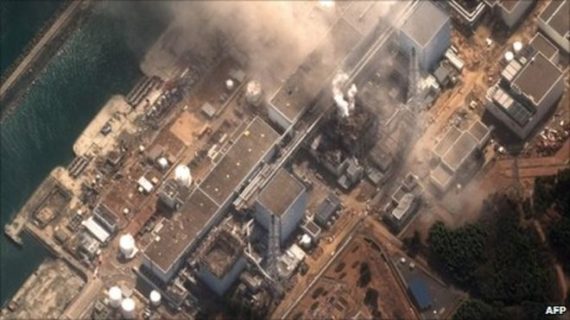
The Fukushima tragedy, seven years later, is still flooding the Pacific with tons of intensely radioactive water daily. Not to mention this report re disbursed radioactive airborne particles, some lasting billions of years.
1
March 5th, 2018
A new study by a team of international researchers has for the first time “explicitly revealed” uranium and other radioactive materials in the surrounding environment of the damaged Fukushima Daiichi nuclear reactors following the nuclear accident at the site in 2011.
In a study published in the journal Environmental Science & Technology last month based on research conducted by an international team of scientists, explicit evidence of uranium and other radioactive materials — such as caesium and technetium — have been found in the surrounding environment of the Fukushima Daiichi nuclear reactors after being released from the damaged reactor.
We have to turn our attention all the way back to March of 2011 when the magnitude 9 Tōhoku earthquake unleashed a tsunami on the east coast of Japan which, unfortunately, caused an accident at the Fukushima Daiichi Nuclear Power Plant. A cascade of issues resulted in three nuclear meltdowns, hydrogen-air explosions, and the release of radioactive materials from Units 1, 2, and 3.
2
Ever since, scientists have been keenly observing the site and its surrounding environment for signs of nuclear radiation, and it was almost a year ago that we received our first direct images of the damaged nuclear fuel rods.
3
The new study published last month, however, focuses further afield from the Fukushima Daiichi Nuclear Power Plant in the search for nuclear materials. While there have been various discoveries in the immediate vicinity of the nuclear meltdown, this is the first time that nuclear reactor fuel debris has been “explicitly revealed” in the surrounding environment, which means that the impact from the fallout might last much longer than had previously been expected.
Among the international team of scientists were experts from The University of Manchester, who explained their research late last month:
“The scientists have been looking at extremely small pieces of debris, known as micro-particles, which were released into the environment during the initial disaster in 2011. The researchers discovered uranium from nuclear fuel embedded in or associated with caesium-rich micro particles that were emitted from the plant’s reactors during the meltdowns. The particles found measure just five micrometres or less; approximately 20 times smaller than the width of a human hair. The size of the particles means humans could inhale them.”
“Our research strongly suggests there is a need for further detailed investigation on Fukushima fuel debris, inside, and potentially outside the nuclear exclusion zone,” further explained Dr Gareth Law, Senior Lecturer in Analytical Radiochemistry at The University of Manchester, and an author on the paper. “Whilst it is extremely difficult to get samples from such an inhospitable environment, further work will enhance our understanding of the long-term behaviour of the fuel debris nano-particles and their impact.”
4
Prior to this most recent research, it had been assumed that only volatile, gaseous radionuclides such as caesium and iodine were released from the damaged reactors. However, the new research is clarifying that small, solid particles were also emitted from the fallout and that some of these particles contain long-lived radionuclides.
How long lived is “long lived”? Uranium, for example, has a half-life of billions of years.
That doesn’t bode well.

March 7, 2018 Posted by | Fukushima 2018 | , , | Leave a comment



